Category: General

Retail News Asia is committed to providing both local and global retailers with the latest General Retail news throughout the Asian market. This on a daily base.

  • PAL, Cebu Pacific hope to resume regular operations soon

    PAL, Cebu Pacific hope to resume regular operations soon

    Philippine Airlines (PAL) is hoping it can resume international and domestic operations in limited capacity flights on May 16.

    “We are preparing and identifying routes for possible bookings, but we still need the go-signal from the government to operate our commercial flights,” said PAL spokesperson Cielo Villaluna. “We have complete sets of masks, gloves, goggles, and personal protective equipment (PPE) which our crew will wear during and every flight for the protection of everyone on board.”

    On the other hand, Cebu Pacific Corporate Communication Director Charo Lagamon said they have been coordinating with the Department of Tourism (DOT) and other organizations to mount sweeper and repatriation flights.

    “We have finalized sweeper flights with the DOT, starting May 1, between Manila and key domestic destinations to fly stranded passengers,” Lagamon said.

    Cebu Pacific continues to operate all-cargo flights to keep vital goods moving across the country during the enhanced community quarantine.

  • March retail sales in Singapore down

    March retail sales in Singapore down

    March retail sales in Singapore fell 9.7 percent year on year in March 2019, as tourist numbers fell and locals spent less on discretionary items in the wake of the coronavirus pandemic.

    The decline was the largest in a single month in 22 years.

    With motor vehicles included in the total figure, retail sales were down by 13.3 percent, according to Statistics Singapore. March retail sales in Singapore totaled S$3.3 billion (US$2.33 billion).

    Compared to February, however, there was little change in the vehicles-excluded figure, with sales down 1.6 percent in March. In February retail sales excluding motor vehicles fell by 10.2 percent, year on year.

    The impact of the Covid-19 crisis on consumer shopping behavior was evident: online sales accounted for 8.5 percent of total sales, the highest figure ever recorded in the city-state. It followed a 7.4-per-cent share in February.

    Year on year, March retail sales in Singapore of apparel and footwear, food & alcohol, in department stores and of watches & jewelry declined by between 34.4 percent and 41.6 percent – mainly due to the decline in tourists spending.

    However – reflecting the trend towards eating at home more to ensure social distancing during the onset of the pandemic, turnover through supermarkets & hypermarkets rose by 35.9 percent and through mini-marts & convenience stores by 4.7 percent.

    The pandemic’s impact was also highlighted by data from sales of food & beverages. Sales fell 23.7 percent in March, to an estimated $678 million. Of those, online purchases comprised about 15.6 percent.

  • South Koreans move from malls to markets in Covid-19’s wake

    South Koreans move from malls to markets in Covid-19’s wake

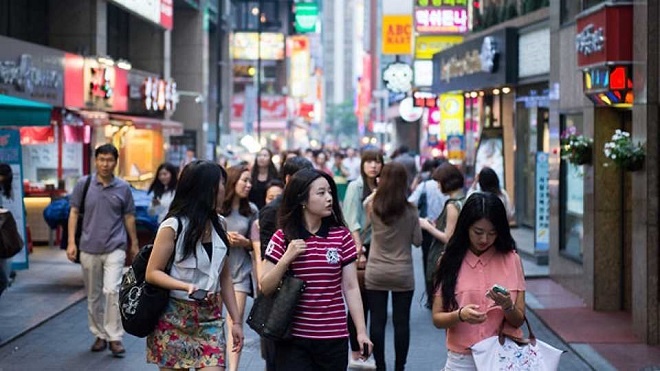
    Offline retailers in South Korea, once on the verge of a crisis after consumers flocked to e-commerce vendors following the coronavirus outbreak, are now seeing a chance to make a comeback.

    As people remain indoors for extended periods due to work-from-home policies and delays to the school year resumes, a growing number of South Koreans are going to local supermarkets and stores to do their shopping.

    Local discount retailers and large-sized malls saw sales increases of 1 to 5 percent after South Korea raised the public health alert to its highest level.

    After the World Health Organization declared Covid-19 a pandemic, local supermarket sales jumped by more than 14 percent between March 8 and 21, while large-sized malls and discount retailers saw their sales drop.

    “As the coronavirus outbreak dies down, more people are choosing to go to local supermarkets or convenience stores that are close by, rather than going to large malls that tend to be located further away,” said Hwang Hee-yeong, CEO of Opensurvey, a local pollster.

    In other words, South Korea has seen an initial surge in demand at large distributors fragment into demand for products offered at smaller distributors.

    Experts argue that this trend may continue even after the coronavirus outbreak is over.

    “As the coronavirus is expected to be around for a long time, people are choosing to go to local supermarkets instead of large-size malls and discount retailers. More people are also visiting local stores that sell side-dishes,” said Hwang.

    “The coronavirus outbreak has set up a basis for localized consumption, a trend commonly observed among advanced nations.”

  • Telegram has now been downloaded over 500 million times on Google Play

    Telegram has now been downloaded over 500 million times on Google Play

    Messaging app Telegram now boasts over 500 million downloads on the Google Play store. Sure, this pales in comparison to alternatives like WhatsApp and Facebook Messenger, which have racked billions of installs, but the important distinction here is that Telegram doesn’t come pre-installed on any device.

    Moreover, the app had around 300 million users until last year, so the growth is pretty impressive. If you also count the other client called Telegram X, the tally reaches around 510 million. This version of Telegram has a slightly different interface and features smoother animations.

    Last month, Telegram reached 400 million users. The developers of the app also revealed that 1.5 million new customers sign up every day. Telegram developers say that the services offered by the app facilitate remote work and study, and this has helped with popularity during the quarantine.

    Cross-platform support is also available, allowing users to seamlessly switch between different devices. Telegram is also free and does not contain any ads.

    The messaging app is also joining the likes of Facebook and Google to give some competition to Zoom. It has revealed plans to roll out secure group video calls this year.

    The developers also threw shade at Zoom, which has come under fire for its lax security measures, by saying that video calls today are either secure or usable and it would like to fix that.

  • Suning opens ‘smart-retail experience centre’ in Nanjing

    Suning opens ‘smart-retail experience centre’ in Nanjing

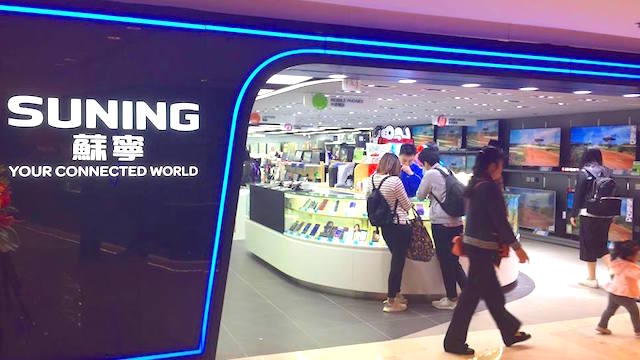
    Chinese retail giant Suning has launched a smart-retail experience centre in Nanjing.

    The venue is the first of its kind for the brand, opening in Suning.com Plaza as an upgrade of the Suning.com flagship store and what it describes as a new benchmark for its strategic retail development. Offline shopping is “considered optional” in the store, and product experience is core to differentiating the concept from traditional shopping outlets.

    The new flagship achieved a gross merchandise volume of RMB10 million (US$1.4 million) within 58 seconds of opening for trading and hit RMB100 million ($14 million) in just 13 hours.

    According to a statement from the company, the store is conceived as a way to “accelerate the promotion of consumption, optimize consumption structure, and improve the quality of economic development”.

    The new store will allow 24-hour sampling across all categories and consumers will be able to purchase products from a smart screen “virtual shelf”, providing an O2O channel that allows shopping experiences via internet tools such as applets, communities, and live streaming.

    The store’s hi-tech showroom features a 400sqm L-shaped interactive LED screen, mainly reserved for product launches and PR events.

  • Outlook’s anti-spam feature available on Android finally arrives on iOS

    Outlook’s anti-spam feature available on Android finally arrives on iOS

    It’s not unusual for developers to launch apps on multiple platforms with a different set of features. Microsoft is no exception, as many of its Android apps aren’t as well-developed as their iOS counterparts and vice-versa.

    For example, Outlook offers a feature called “Ignore Conversation” on just about every compatible platform except iOS. Ignore Conversation lets Outlook users avoid getting those spam or annoying emails that they don’t want in their inboxes.

    When used on an email that you received, Ignore Conversation will automatically reroute all emails to the deleted items folder instead of inbox. It will not delete the emails completely, but you’ll be able to focus on what’s important to you.

    The good news is Ignore Conversation is finally making its way to Outlook users on iPhones and iPads. The latest update for Outlook is now available for download on the Apple App Store. You can even check out the official changelog to learn more about the updated app.

  • Charles & Keith Hong Kong expands footprint further

    Charles & Keith Hong Kong expands footprint further

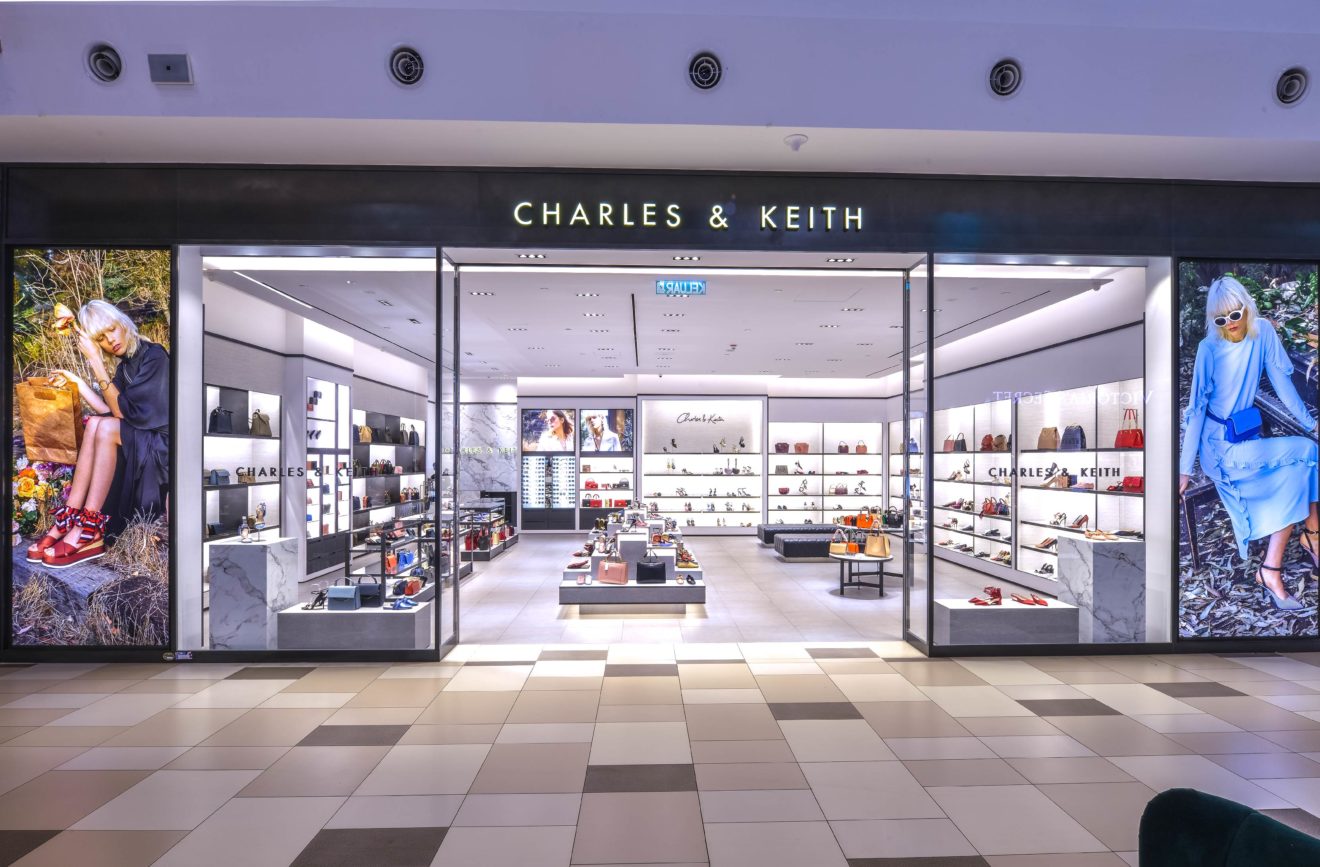
    Charles & Keith Hong Kong is opening a new store at Harbour City, its seventh in the territory.

    Apparently undeterred by the Covid-19 pandemic, the Singapore-headquartered retailer of footwear and accessories, is continuing its rapid rollout in the territory after opening three stores over the summer holidays – at APM mall, DFS T Galleria Sun Plaza Canton Road and Langham Place, Mongkok. It made its debut in the territory in October 2018.

    The seventh Charles & Keith Hong Kong store to open, it is the first to introduce mobile point-of-sale devices, offering customers the convenience of being able to make payments anywhere in the shop. That enables faster checkouts and better sustainability practice by reducing the use of paper receipts.

    The store’s aesthetics feature limestone fixtures and dark grey powder furnishing, aimed at creating a “sophisticated simplicity” to complement the style of the brand’s trend-focused collections.

    Each section of the store communicates the different “stories of the season”, from footwear and bags to lifestyle accessories, including the brand’s Little Collection for kids.

  • J Crew enters bankruptcy, weighed down by US$2 billion of debt

    J Crew enters bankruptcy, weighed down by US$2 billion of debt

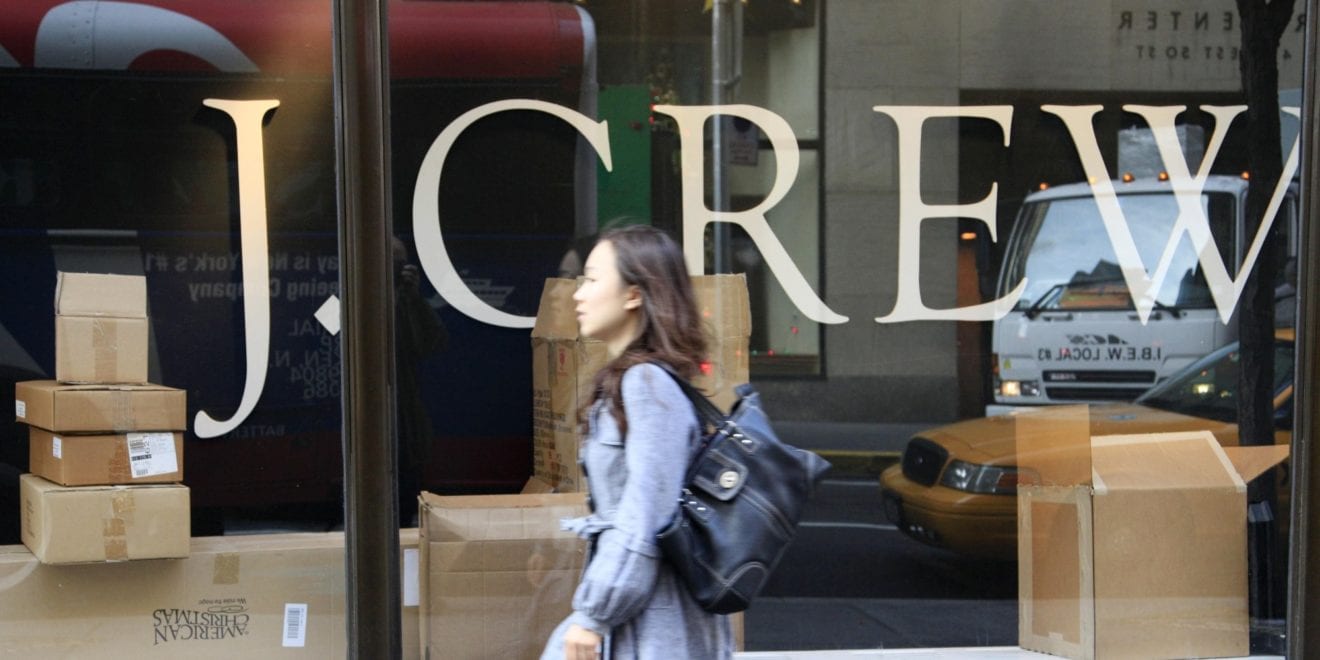
    US fashion-retailing icon J Crew has collapsed under the weight of US$2 billion of debt and with all 492 stores closed due to the Covid-19 epidemic.

    The company, founded in 1947, entered Chapter 11 bankruptcy protection this week allowing it to restructure its debt and business operations to survive in the post-Covid-19 era.

    In a letter to customers, the company reassured it was business as usual during the bankruptcy process with e-commerce sites of its namesake brand and its denim label Madewell continuing to operate.

    “We are there for our customers and fully operational throughout this restructuring process. We will continue operating under the Covid response measures currently in place and look forward to reopening our stores in accordance with CDC (US Centers for Disease Control) guidance as quickly and safely as possible.”

    Much of J Crew’s crippling debt relates to the company’s acquisition by private-equity investment companies TPG Capital and Leonard Green & Partners back in 2011. Under the Chapter 11 process, $1.65 billion of the company’s debt will be converted into equity

    “This agreement with our lenders represents a critical milestone in the ongoing process to transform our business with the goal of driving long-term, sustainable growth for J. Crew and further enhancing Madewell’s growth momentum,” said CEO Jan Singer.

    Neil Saunders, MD at GlobalData Retail, said that although J Crew had been making progress in reducing its losses, the company still ended its last fiscal year $78.8 million in the red.

    “The primary source of this financial woe is the $1.7 billion of long-term debt that sits on the company’s balance sheet like a millstone around its neck. Quite simply this is crippling the business which, at an operating level, is profitable.”

    Saunders described the move into Chapter 11 as “prudent” suggesting it should have been done years ago.

    “The coronavirus crisis has forced the situation to a head. It has also given J Crew some justification to ask lenders to make the unpalatable choice of having their debt converted into equity. In the current trading environment, the alternative would have been defaulted, putting J Crew on the path to liquidation.”

    However, Saunders warns that when J Crew emerges from Chapter 11 – and the pandemic – it has other challenges to overcome.

    “The J Crew brand still isn’t resonating with consumers – especially across the full-price part of the business. J Crew’s products are not terrible in either quality or design. However, ranges are samey and lack the embellishments and twists of more contemporary brands that would allow them to stand out. The consequence of this is that a growing number of shoppers see J Crew as both boring and bad value for money and refuse to pay full price for garments.”

    Madewell, he says, is performing better, with sales up strongly, driven by a growing loyal base of shoppers.

    “While the brand is smaller than J Crew it is an important driver of the company’s overall value. As such, it is not surprising that it will now remain a part of the group and not be spun off via an IPO.

    “Before Chapter 11, J Crew was on a slow march to ruin. This process gives the company a chance to survive. However, that survival is not just dependent on reduced debt; it requires a reinvention of the J Crew brand. Given the apparel market will be highly subdued, extremely promotional, and intensely competitive as the coronavirus crisis abates, the reinvigoration of the ailing label will be an order of the tallest magnitude.”


  • AirAsia sets up special recovery flights in the Philippines

    AirAsia sets up special recovery flights in the Philippines

    AirAsia released a schedule of special recovery flights in the Philippines for those who are affected by the lockdown or enhanced community quarantine in parts of Luzon and in different areas of the country.

    The flights are in response to requests from various organizations, including local and international government agencies.

    Those who intend to book these flights must get in touch with the relevant government agency.

    The airline is arranging more flights as required.

    AirAsia added that flight schedules may change at short notice, as new regulations may have to be met in response to the COVID-19 pandemic.

    “AirAsia assures that the safety and wellbeing of our guests and Allstars is our top priority. AirAsia is complying with advice and regulations from the local government, civil aviation authorities, global and local health agencies, including the World Health Organization,” it said.

    It added, “AirAsia is closely monitoring this situation and reserves the right to announce further policies according to the latest developments.”

  • Muji Japan moves online as Covid-19 crisis closes stores

    Muji Japan moves online as Covid-19 crisis closes stores

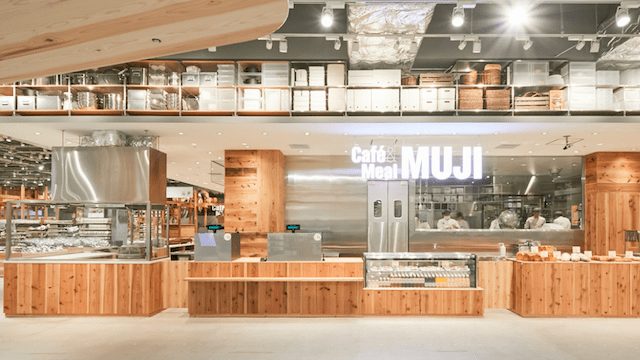
    Muji Japan has launched an online store on Amazon, strengthening its e-commerce presence as the Covid-19 crisis closes stores.

    According to the Nikkei Asian Review, the new Muji Japan online store will feature 250 items, mostly beauty products, storage containers, and cooking utensils.

    It is the first time Japan’s Ryohin Keikaku has sold Muji products via an online platform outside its own e-commerce store. With Amazon’s extensive user base, the company hopes to attract more potential customers.

    The launch with Amazon follows the closure of 280 physical stores across Japan and many others having to trade for reduced hours due to social-distancing requirements in the wake of the Covid-19 pandemic.

  • The Shoppes at Marina Bay Sands launches E-commerce concierge

    The Shoppes at Marina Bay Sands launches E-commerce concierge

    The Shoppes at Marina Bay Sands has launched a ‘click-and-deliver’ digital shopping concierge for online shoppers.

    The new service – the first of its kind among Singapore’s luxury shopping malls – features hundreds of selected fashion items that can be delivered free anywhere on the island. It launches with more than 10 participating brands including Bally, Boss, Bottega Veneta, Fendi, Jimmy Choo, Loewe, Manolo Blahnik and Moncler.

    “This new service is an extension of The Shoppes Edit portal,” said Marina Bay Sands VP of retail Hazel Chan. “Beyond simply reserving products online, shoppers can now choose to have them delivered directly to their doorstep. Through this service, we want to make luxury shopping an effortless pursuit for our customers.”

    A shopping voucher promotion is currently on offer to celebrate the launch of the service until May 31.

  • 500,000 Zoom logins are being sold on the dark web

    500,000 Zoom logins are being sold on the dark web

    According to its listings in the App Store and the Google Play Store, the Zoom Cloud Meeting app delivers the best iPhone, iPad, and Android video meeting quality and screen sharing quality. Those using the iOS app on the iPhone 8, iPad 5, iPad Pro, and all later models can add a virtual background to their video teleconference. This is an amazing time for Zoom as the pandemic is forcing wedding receptions to be held on the platform. Zoom was even used to help direct the cast of the “Parks and Recreation” reunion that NBC broadcast last week.

    Zoom has been the subject of several complaints. Founder and CEO Eric Yuan explained some security problems that Zoom had by stating that the platform was designed for large firms that have an IT department. This past March, the Zoom iOS app was caught sending user information to Facebook without the user knowing. Zoom responded by saying that Facebook’s SDK was collecting data related to the make and model of the device and the operating system being used to login to the app. An update removed the SDK. A lawsuit was filed that same month accusing Zoom of passing user information to third parties including Facebook.

    Last month, a data-mining feature on Zoom, using a tool designed to match Zoom users’ names and email addresses with their LinkedIn user profiles, was discovered by the New York Times. Other people in the same video meeting using LinkedIn Sales Navigator were able to see other participants’ LinkedIn profiles without permission by tapping on an icon next to their names. Both Zoom and LinkedIn ended this feature.

    In an attempt to earn back user trust, CEO Yuan recently announced a 90-day security plan. One of the new initiatives allows users to decide which regions their data will be run through. Previously, all data was run through China which made ears perk up in Washington D.C. among the anti-Huawei crowd.

    Could things get worse for Zoom users? More than 500,000 Zoom logins have been offered for sale on the dark web. The price for each login is a penny (1.25 U.S. cents) or $6,250 USD for the entire list. Cybersecurity intelligence company Cyble purchased the logins from a Russian-sounding person over the Telegraph app. A Zoom spokesman said, “We continue to investigate, are locking accounts we have found to be compromised, asking users to change their passwords to something more secure, and are looking at implementing additional technology solutions to bolster our efforts.” The company has also hired intelligence firms to find who is responsible for selling the passwords and the tools used to collect them. It is also investigating an unnamed company that has tricked people into downloading malware and revealing their login information on certain sites.

    The company recently had to walk back a claim that it had 300 million daily users and said that it actually has “300 million daily meeting participants.” These are two different metrics because a person can take part in more than one meeting in a day. Zoom has yet to release the number of active daily users, although to be fair this is a number that is constantly changing because of the pandemic. Zoom’s growth during the COVID-19 outbreak can easily be seen in the jump from 10 million daily participants in December to 300 million last month.

    Yuan recently said that the company is working hard to prevent Zoombombing. The latter takes place whenever an uninvited person crashes a Zoom video conference without an invitation and has become a major annoyance for users of the Zoom platform. Zoom investors also have been cashing in. The company’s stock (ZM-Nasdaq) has more than doubled since the end of last year closing Friday at $138.56.

  • Meal kits drive strong sales and profit growth for GS Retail

    Meal kits drive strong sales and profit growth for GS Retail

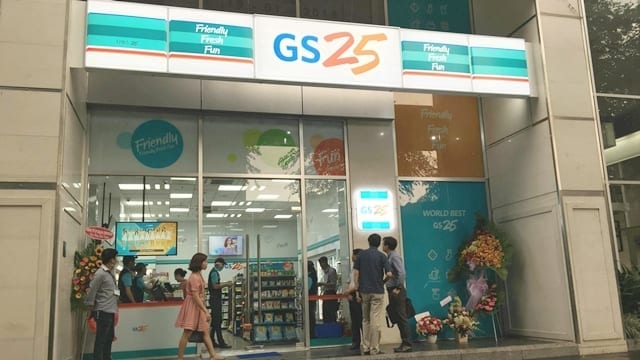
    GS Retail, which operates the South Korean convenience-store chain GS25, has reported a huge profit increase for this year’s first financial quarter, boosted by sales of pre-packed meal kits popular during the coronavirus lockdown.

    GS Retailreported a KRW88.8 billion (US$72.1 million) in profit from January to March, a 314.7-per-cent increase over last year’s figures. The result was considerably higher than the projected KRW23.9 billion ($19.5 million) profit for the period and sparked a 16.6-per-cent rise in its share value.

    A 98.7-per-cent surge in online sales was also a significant contributor to the firm’s first-quarter good fortune, with overall sales totaling KRW1.6 trillion ($1.3 billion).

    Last year, in the same period, GS Retail recorded a loss of KRW4.8 billion ($3.9 million).

  • Covid-19 exacerbates apparel-sales down in Japan

    Covid-19 exacerbates apparel-sales down in Japan

    Sales of apparel and accessories at Japanese department stores plummeted 40 percent last month compared with a year earlier.

    The figures were released by the Japan Department Stores Association showing the impact of the coronavirus outbreak on its member businesses. Data showed ¥97,548 million (US$911.5 million) in revenues for the month, compared to ¥243,870 million ($2.28 billion) for March last year.

    According to the association’s data, based on member polls, womenswear sales fell 44.2 percent during the period, with menswear falling 39.7 percent and kidswear 24.9 percent.

    Covid-19 is not the sole factor in the industry downturn, with sales figures already dropping since October last year, well before the coronavirus was discovered.

    The downward trend was aggravated by the Japanese administration’s restrictions on movement and by temporary store closures during the pandemic.

  • Singapore Press Holdings sells its Buzz convenience-store chain

    Singapore Press Holdings sells its Buzz convenience-store chain

    Singapore Press Holdings has sold its wholly-owned convenience-store chain Buzz Shop to Thai-Pore Enterprise.

    “This divestment of a non-core business will sharpen SPH Group’s strategic focus on its main business segments of media, retail real estate, purpose-built student accommodation, and aged care,” the firm said in a statement. “SPH will continue with its disciplined approach as it reviews its investments and businesses on an ongoing basis to maximize shareholder value.”

    As part of the deal, the price of which was not disclosed, the publisher retains the rights to distribute its publications through the Buzz Shop network.

    The move sees Thai-Pore expanding from its core business of liquor imports into the convenience-store business.

    According to CEO Wee Eng Tee, the acquisition “supports our growth strategy and enhances our presence in the retail market”.

    “We look forward to growing the Buzz brand which SPH has laid a strong foundation (for) in the past decades,” he said.