Category: General

Retail News Asia is committed to providing both local and global retailers with the latest General Retail news throughout the Asian market. This on a daily base.

  • Google Maps updated with new ways to report driving incidents

    Google Maps updated with new ways to report driving incidents

    Google has just announced that a new update is making its way to the Maps app on mobile. The update brings new ways for Google Maps users to report driving incidents and will be available globally starting this week.

    The most important change included in the update is the addition of a new ability that allows Maps users to report crashes, speed traps, and traffic slowdowns directly from their iPhones. The same features proved to be extremely popular among Android users, which is why Google has decided to bring it to iOS as well.

    The next major improvement is the ability to report four new types of incidents: construction, lane closure, disabled vehicles, as well as objects on the road. The new option lets Maps users know whether or not they’ll encounter one of these obstructions on their ride.

    If you stumble upon such an obstruction, the easiest way to reports with the new version of Google Maps is to simply tap on the + sign and then on “Add a report.” The update revealed today by Google will be rolled out globally on Android and iOS starting this week.

  • Thai Airways eyes passenger growth

    Thai Airways eyes passenger growth

    Financially struggling Thai Airways is eyeing 8% in passenger growth by year’s end as it plans to launch new routes.

    Nond Kalinta, Vice President of Sales at Thai Airways International Public Company Limited (THAI) told the media the airline’s financial situation is likely to improve. The airline’s debts by the end of the year will be reduced to under six billion baht thanks to the steady rise of passengers throughout the year.

    Over the past nine months, the airline has achieved passenger growth of 4%-5%, which is higher than last’s year figure year-on-year. The national carrier is hopeful of growth as projected passenger numbers for the last quarter shows an 8% uptick.

    Mr Nond said more routes will be launched by the end of the year, especially popular routes to Europe such as Bangkok-Vienna, Bangkok-Brussels, and Bangkok-Paris, as the airline seeks to make the most of the recent improvement in passenger numbers.

    Mr Nond said business will be brisker next year thanks to the well-performing baht as well as positive signs from the economy. He added that THAI has already seen advanced bookings for the first quarter of next year. Next year, THAI will also place emphasis on routes to East Asia, maintain its hold over Europe, and nourish growth in emerging markets such as India.

    “The Japan route has been a potential market for some time now, so more routes to Japan will be available to serve the needs of a certain group of passengers,” he said.

    “Also, flights to Europe should not be ignored as 80% of these flights have been booked in advance.”

  • Nok Air gets serious about turnaround

    Nok Air gets serious about turnaround

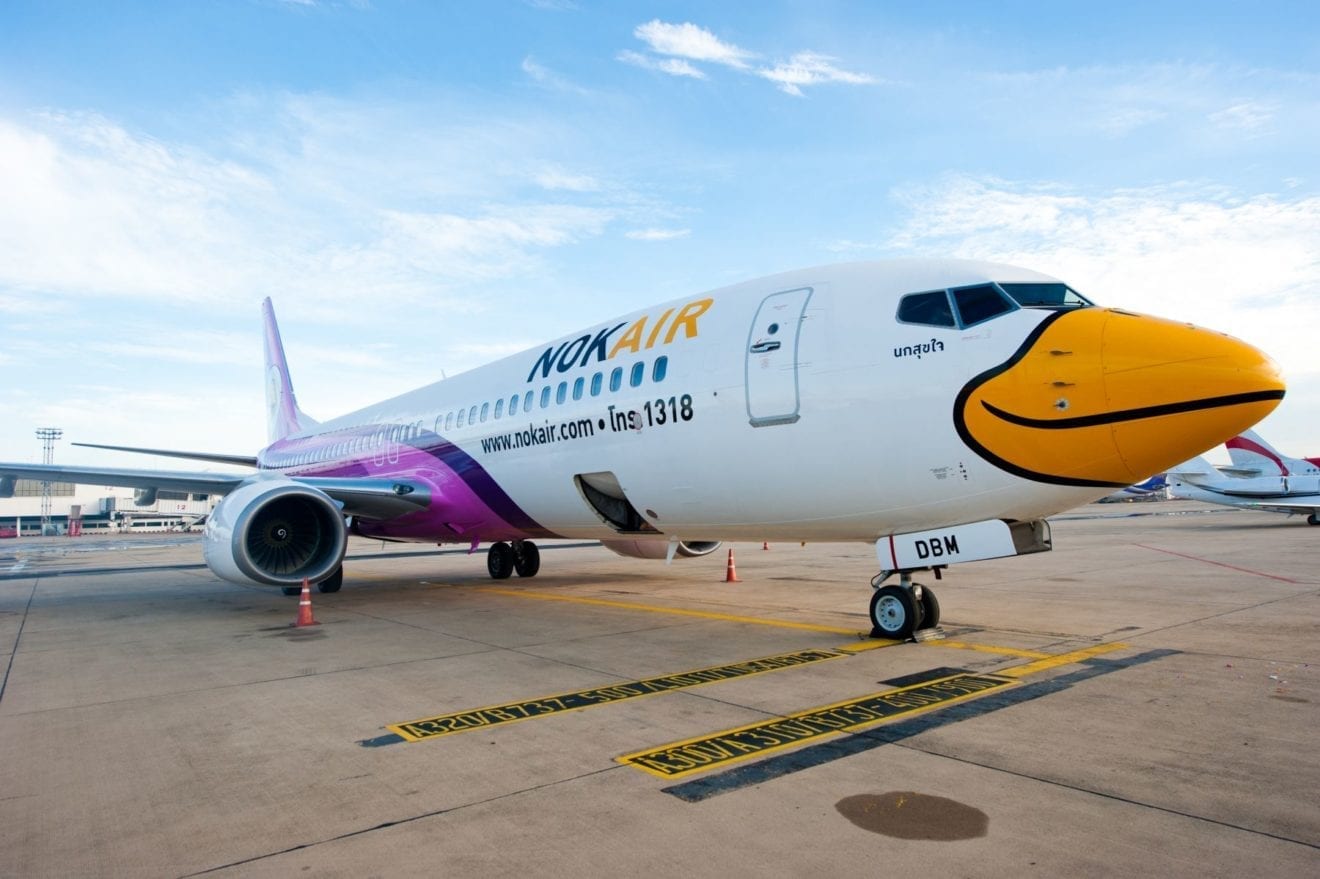
    Nok Air, a loss-ridden budget airline, has pledged to implement plans to revive its business, increasing income and overhauling flights to prevent delays that have damaged the carrier’s image.

    The turnaround is set to start in the final quarter this year, said chief executive Wutthiphum Jurangkool.

    He said apart from airfare, the airline plans to create additional revenue from value-added services by partnering with tourism operators such as hotels, car rental companies, department stores and tour agencies on domestic routes.

    To prevent flight delays, Mr Wutthiphum said the airline has invested in a home-based stock worth 100 million baht at Don Mueang airport to install spare parts for immediate use if needed. Spare parts from abroad take around three days to reach Thailand, which is the main reason for the delays, he said.

    “Nok Air’s home-based stock will not only speed up maintenance work, but also reduce maintenance expenses by 30% in the latter half of this year,” said Mr Wutthiphum.

    Rearranging flight schedules and adding spare aircraft to stand by in the morning or busy times should also help avoid delays, he said.

    “Even though the airline will reduce flight numbers and income by operating with only 22 aircraft, we must fix this urgent problem,” said Mr Wutthiphum.

    He said the airline is set to increase aircraft utilisation from red-eye flights to international destinations, aiming to use them for 12 hours of operation in the fourth quarter, up from 10-11 hours.

    In November, the carrier plans to launch a Bangkok-Hiroshima route. On Sept 21 it added a flight from Bangkok to Guwahati in Assam state, India. Other second-tier cities in China will be added to the airline’s expansion plans, said Mr Wutthiphum.

    He said Nok Air will not open new international routes to popular destinations to avoid price wars with other airlines.

    The Jurangkool family is the major shareholder of SET-listed Nok Airlines, holding about a 52% stake, while Thai Airways International holds 15.94%.

    Nok Air’s cabin factor stood at 88% in the first half this year, down from 91% year-on-year because of a lower number of aircraft, from 28 to 22. The reduced fleet saw lower volumes of flights and passengers in the second quarter by 10.3% and 8.18%, respectively.

    Mr Wutthiphum said Nok Air expects to expand its fleet with two new aircraft this year and at least two more in 2020.

    Nok Air reported a loss of 470 million baht in the second quarter, down from a loss of 742 million in the same period last year, and a net loss of 751 million for the first six months, down from a loss of 774 million year-on-year.

    On Thursday, the budget airline announced a partnership with Bangpakok 9 International Hospital, the Social Development and Human Security Ministry and Ruamkatanyu Foundation to support rescue operations in the flooded areas of Ubon Ratchathani province, while other affected provinces will be considered later.

  • Cebu Pacific gives travelers flexibility to rebook flights

    Cebu Pacific gives travelers flexibility to rebook flights

    Available starting October 22, 2019, CEB Flexi gives CEB passengers the freedom to rebook flights until (2) hours before departure, offering convenience and peace of mind. This add-on can be purchased during booking through the airline website, www.cebupacificair.com or the official mobile app.

    “CEB Flexi is a great complement to year-round low fares as it provides the power and option to rebook flights should the need arise. We encourage passengers to book in advance to avail of great low fare deals, now we also provide the ability to change travel dates, giving peace of mind that the flights they booked won’t go to waste,” said Candice Iyog, CEB Vice President for Marketing and Customer Experience.

    Compared to current rebooking fees, CEB Flexi is 60% cheaper, and travelers only have to pay the difference in fare (if applicable). CEB Flexi is priced at PHP499 for domestic flights, PHP799 for international short-haul flights, and PHP1,099 for international long-haul flights. Along with the roll-out of CEB Flexi, all new flights booked starting October 22, 2019 will be non-refundable.

    CEB Flexi is the newest add-on that Cebu Pacific passengers can avail of, giving the power to choose conveniences that best fit their travel needs. Other options include prepaid baggage allowance, in-flight meals and buy-on-board snacks, seat selection, travel insurance, and the CEB WiFi kit.

  • Instagram gives iPhone users more control over data they share with other apps

    Instagram gives iPhone users more control over data they share with other apps

    Instagram is doing what Facebook did a long time ago, it gives users more control over the data they share with third-party apps. New in-app features are available starting today for iPhone users, which allows them to protect the data they share on Instagram.

    Many third-party apps ask you to connect with your Instagram account to provide you with services or additional features. After connecting your account to a third-party service, you may grant them access to some of your profile information, including usernames and photos.

    With the new features introduced today, Instagram is making it easier for people to manage all of the third-party services they connect to their accounts. You can do that by going to Settings in the Instagram app, then Security, tap Apps and Websites and should you see a list of any third-party services that are connected to your Instagram account.

    The list includes the option to remove any third-party service that you no longer wish to have access to new data on your Instagram account. Apart from the option to remove third-party services, Instagram also added an updated authorization screen that lists all the info that these apps request to access. You will then have the option to “cancel” or “authorize” the access directly from the authorization screen.

    Instagram announced these updates will be rolling out gradually over the next six months, so it looks like it will take quite a lot of time for everyone to be able to use them.

  • Google Assistant bug is draining the battery on Android phones

    Google Assistant bug is draining the battery on Android phones

    If you’re a fan of the Google ecosystem, you might own more than one device with the Google Assistant on board. And surely there have been times when you used the hotword to open the Assistant on one device only to have it activate the digital helper on the second device as well. But there seems to be a bug that has affected Google Home and Pixel devices and some have complained about it on the Assistant Community page dating back to this past September.

    To reiterate, the problem is that when saying “Ok, Google,” or “Hey, Google” it not only awakens the Assistant on one device, it also does so for the second device. And with this bug, Google Assistant will remain in “listening mode” on the second device until the owner of the device intervenes. The original post was followed up with some responses by others with the same problem. The issue also was discussed on Reddit with more than one person shocked to find the battery on their Android phone down to as low as 1% with the Assistant still listening for instructions hours after the hotword was spoken to a Google Home speaker.

    “Wondering if anyone else had this experience where the Google app stays active if you say “Hey Google” and your request was answered by another Home device (i.e., you say “Hey Google,” phone and Home device both pick it up, but the request is handled by the Home device). Quite a few times, I’ve found that my phone battery is completely drained a few hours later, with the Google app being active the whole time, and I think it’s because Assistant on the phone was left hanging. I can’t be sure though, and I was wondering if this was something other people had noticed, and if there’s a solution.”-u/qdatk, Reddit

    The bug doesn’t seem to be a problem every time two Assistant-enabled devices are close enough for both to hear the hotword. But you don’t want to put yourself in a situation where you need the phone and the battery has been unknowingly depleted. So until Google comes up with a way to exterminate this bug, it is best to check your phone every time you activate Google Assistant on your Google Home/Nest device. You need to check especially if the phone is inside your pants pocket or sitting on a table where you might not notice that the Assistant is stuck in listening mode.

  • Crown Casino Scandal in China

    Crown Casino Scandal in China

    Australia’s biggest casino company, Crown Resorts is responsible for the horrible memories Jenny Jiang will have to live with as she spent four weeks in a Chinese prison with prostitutes, pickpockets and drug dealers.

    Shanghai resident, Ms. Jiang says that having a criminal record whilst living in China is a huge obstacle, although where is it not?

    Jiang is the first employee of Crown Resorts, belonging to one of Australia’s top billionaires James Packer, to break ranks and openly talk about the incidents that happened to her and her colleagues. Jiang is claiming that Crown Resorts set up multiple offices across the mainland in China back in 2010 and the casino cashback bonuses for Australians were given to staff as huge incentives. This resulted in breaking Chinese law but the company abandoned them as authorities closed in and got involved.

    Jiang’s claims regarding the incentives can be backed up in Chinese court documents. The latter describes how the Crown’s sales staff received their appropriate incomes as commissions to be paid out when their high-roller customers presumably reached appraisal targets by in turn gambling billions of dollars.

    The information revealed by Jiang is important in many ways. One reason could potentially question the fitness and compatibility of the Crown to hold gaming licenses. Some of the revelations additionally raise questions about corporate governance practices within the gaming company.

    Bigger Problems

    Ms. Jiang, alongside her 18 colleagues were convicted of breaching mainland Chinese laws and was held in custody. The said laws prohibit gambling as well as its promotion. This involves tempting the groups of high rollers to offshore casinos.

    The issue is problematic enough in and of itself. However, matters with the aftermath of the Casino scandal may be far more reaching than we can imagine. According to Jiang, the false promise made by Crown to bring revenue to the Australian government through its gaming operations led to the rubber-stamping of visas for a multitude of Chinese nationals, vouched for by Crown, for they had promised to gamble tens or even hundreds of millions of dollars on single trips to its casinos in Melbourne or Perth. Apparently, some applications were rubber-stamped and some visas got fast-tracked by Australian consulate offices in China.

    The spokesperson from the Department of Home Affairs declared that all visa applications were assessed against the law. The department did not seem to have a hold of evidence in relation to the conditions being waived for Crown. The appropriate offices in China, he added, are doing everything to properly scrutinize and manage applications accordingly.

    Jiang made continuous remarks with regard to the way staff members are treated under Crown Resorts. The vivid analogy used by her compared staff to a used napkin that can safely be discarded in a garbage bin. She went on to add that money matters far more than human beings who are employed. Reportedly, Jiang refused a $60,000 payment which was offered to her from Crown. As if it were not scandalous enough already, the sources claim that the condition required her to remain quiet on the matter. It seems like she is taking quite a bit of risk by breaking the silence in order to report the story of a police crackdown which is still cloaked in secrecy.

    Exclusive interview with 60 minutes came amid separate accusations directed towards Crown. It appears that the company has worked with tour operators that are backed by international organized crime syndicates. This includes a triad-controlled drug trafficking group.

    Surprisingly, and despite such blatant exhibitions of evidence and revelations, Crown Resorts does not want to admit to any sort of breaching of the Chinese law. The company refutes any suggestion that it deliberately introduced its staff members to the risk of detention in China

    While Crown employees were detained, the company’s share price plunged considerably followed by lodging a class action by law firm Maurice Blackburn. This action is defended by Crown Resorts which seems like a good base for the allegation that it should have known better about the probable risks.

    As for the relationships with junket individuals and operators, Crown’s statement implied that the company is not willing to comment in any way about its business affairs with concrete individuals or businesses. Nevertheless, it has a legible program that finances counter-terrorism and is aimed at decreasing money laundering subjected to regulatory supervision by AUSTRAC.

    Indifference or Ignorance

    The most notable shareholder of Crown Resorts, Mr. James Packer, on the other hand, claims that he had no knowledge of the company’s conduct in China which does not seem like an effective statement considering the fact that it led to the prosecution of the company’s employees accompanied with numerous controversial revelations. Packer has not worked as an executive director at the Crown Resorts since 2012 and officially resigned from the position of chairman in August of 2015. According to his lawyer’s letter, Pecker is not to be blamed since he is not even a board member and only had a passive role at Crown.

    Although, Jiang accused the company of not only violating Chinese law but also disregarding the welfare of Chinese employees as senior managers continuously offered sales staff bonuses with the intention of luring Chinese high-rollers to gamble at Crown’s Australian casinos.

    Multiple internal sources additionally reported that the largest VIP gamblers were offered help securing immigration in Australia and not only that. The property investments in Melbourne and Sydney, as well as their children’s schooling, would also be taken care of. The staff members who would refuse to comply with such conditions, claims Jiang, were sacked. Higher management authorities were pushing every single sales staff member to meet more customers and drum up business in questionable ways, recalls ex-employee.

    Finally, Jiang reflects on how the Crown treated them even when it became clear that the Chinese police had gotten their hands on the matter. The directive implied the promotion of gambling but doing so under the radar while refusing to assist police in the event they were raided.

    Numerous sources confirm the truth of Jiang’s claims as it appears that before the events, Resorts casino repeatedly told its Chinese staff to make false claims with regards to their job locations when communicating with the Chinese authorities.

  • Vietnam Airlines to launch inflight Wi-Fi service

    Vietnam Airlines to launch inflight Wi-Fi service

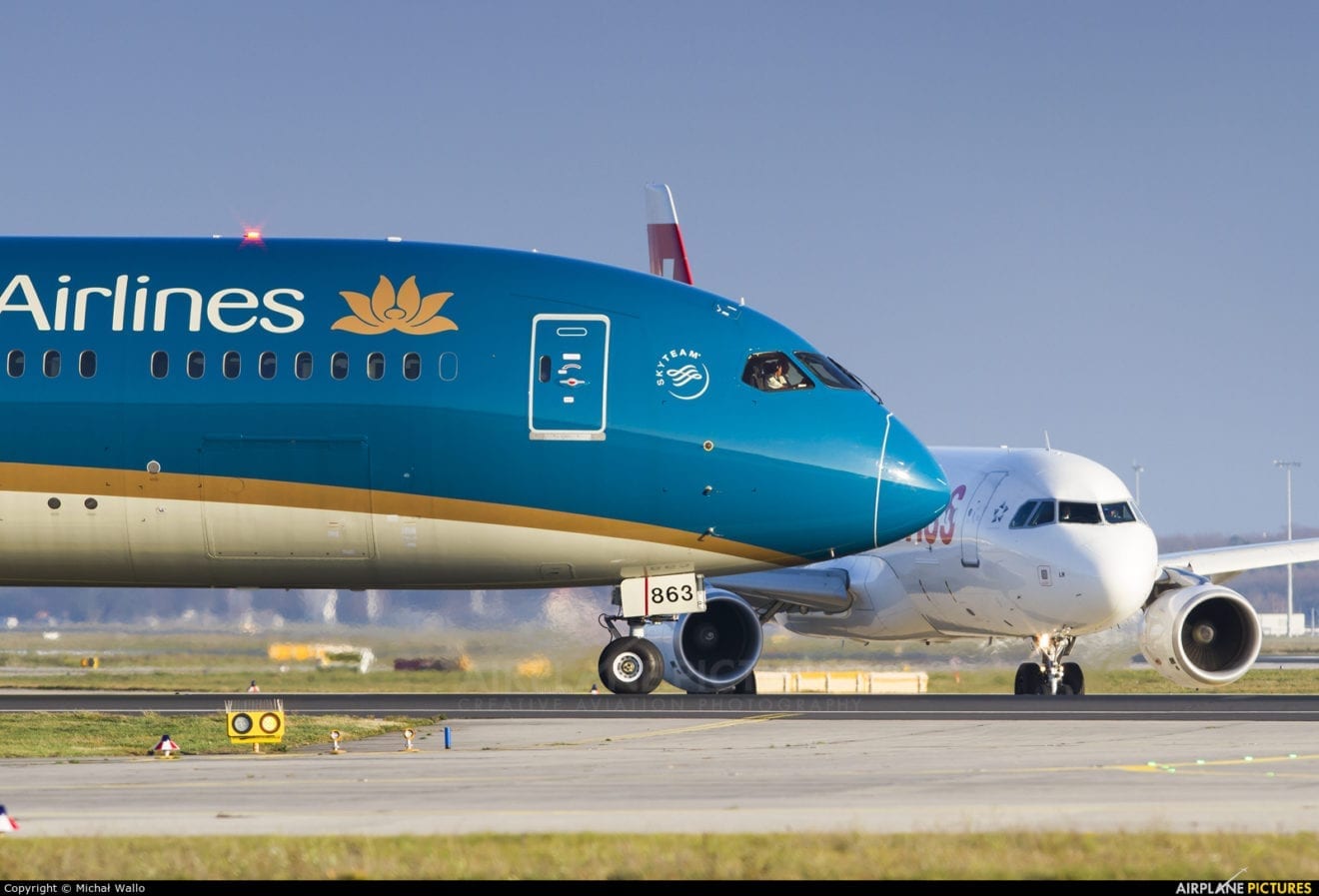
    Vietnam Airlines will launch inflight Wi-Fi service on some flights connecting Hanoi and HCMC with cities in China, Japan and Singapore.

    Passengers will be charged VND75,000-735,000 ($2.95 -$29.95) depending on usage time and capacity.

    Providing inflight Wi-Fi service is one of the steps that Vietnam Airlines is taking towards becoming a digital airlines by 2020 and an international five-star airline in the future.

    The Wi-Fi service will be available on the domestic route from Hanoi to Ho Chi Minh City and international flights from Hanoi to China’s Shanghai and Japan’s Osaka and between HCMC and Osaka and Singapore, the airline said in a statement Monday.

    In the coming months, the airline will continue upgrading and expanding this service to Boeing 787 and other Airbus A350 aircraft with faster speeds, it said.

    Le Hong Ha, deputy general director of Vietnam Airlines, said that when using the service, passengers can send text messages on popular applications such as Viber, iMessage, Messenger and Whatsapp.

    “This is part of Vietnam Airlines’ efforts to catch up with the development trends of the world aviation industry, with many 5-star airlines like Singapore Airlines, Qatar Airways, Cathay Pacific Airways and Lufthansa providing similar services,” Ha said.

    Vietnam Airlines operates flights on 60 international and 33 domestic routes.

  • Hong Kong street-front rents are down

    Hong Kong street-front rents are down

    Hong Kong street-front rents have plunged by 54 percent from their peak in the first quarter of 2013, according to data from real-estate advisor Savills.

    Much of that decline has occurred in recent months since the Sino-US trade war broke out and amidst growing social unrest on Hong Kong’s streets, triggered in June by the now-axed extradition bill.

    According to Savills, Hong Kong street-front rents in all prime areas experienced double-digit declines during the third quarter of this year. Causeway Bay was hit hardest, down 17.5 percent, as weekend and public holiday trade was disrupted by protest activities. Retail categories popular among mainlanders have seen significant retrenchment.

    Hong Kong Street-front rents in Tsim Sha Tsui and Mong Kok fell by 15 percent quarter on quarter, and in Central by 13.9 percent.

    Mall rents have also been hit hard, dropping by 14.2 percent overall. By region, Hong Kong Island mall rents were down by 13.6 percent, Kowloon by 12.7 percent and in the New Territories by 16.4 percent.

    “Amid the doom and gloom, the positive news is Sheung Shui continues to see mainland visitors, and sales in the area are down ‘only’ 10 to 20 percent in the absence of disruption,” observed Savills.

    More locally-oriented centres in Tseung Kwan O and Tuen Mun Town Plaza are also bearing up, while local restaurants are proving relatively immune, said Savills.

    ‘Difficult to see any upside’

    Simon Smith, senior director, research & consultancy at Savills, said poor macroeconomic conditions compounded by social unrest are undermining Hong Kong’s traditional role as a retail hub in Asia.

    “It is difficult to see any upside at this point.”

    With more than 10 countries and regions have issued travel advisories for Hong Kong; several major events have been canceled or postponed and August’s hotel occupancy rate dropped to 66 percent, he said.

    “But, looking ahead, it is worth noting that Hong Kong is expected to remain a key market for retailers in the region and that while the trade war has undermined local and overseas consumption, the local residential market has remained relatively resilient and interest rates remain low.”

    Savills believes that without a resolution in sight to either issue affecting Hong Kong retail, the current market conditions could prevail into next year. The negative impact of the Occupy Movement in 2014 was felt for at least 12 to 18 months, although day-trippers are expected to be the first to return when things returned to normal.

    Nick Bradstreet, MD, head of leasing at Savills, said some street-front landlords are offering short-term and ad-hoc rent relief, cutting rents by 15 to 20 percent for three months, or occasionally longer.

    “Mall landlords are less forgiving and are tending to wait and see. At Pacific Place, Swire has proved the exception, offering 10 to 30 percent reductions on a case-by-case basis,” said Bradstreet.

    As earlier reported, Hong Kong retail sales plunged by a record 23 percent in August, with the luxury goods sector hit hardest, with sales down about 50 percent year on year.

    On a more positive note, given the weaker Renminbi, lower taxes and less inclination to travel, some luxury retailers are expecting record sales in mainland China in 2019.

  • Singapore retail rents will remain subdued

    Singapore retail rents will remain subdued

    With growing economic headwinds and weak retail sales, islandwide Singapore retail-rental rates are projected to remain subdued, according to real estate company Edmund Tie.

    The company is projecting mixed fortunes across the city, ranging from a 2-per-cent decline to a 1-per-cent improvement this year.

    “However, the limited supply pipeline from next year onwards will provide some support to rents and occupancy,” the company said in its quarterly report Real Estate Times.

    “In addition, the continued investment sales activity since early 2019 suggests investors’ confidence in the sector, although the landlords and retailers’ ability to transform and adapt to the changing retail landscape is increasingly becoming more important.”

    Edmund Tie says the net absorption and supply rose of space rose significantly, largely underpinned by the opening of Jewel Changi Airport and Funan malls in the second quarter of this year, and PLQ Mall in the latest quarter.

    “Nonetheless, given current geopolitical uncertainties, islandwide rental rates are projected to remain subdued and mixed,” the report concluded.

    Totalling more than 1 million sqft of retail space, these malls were more than 90-per-cent pre-leased before opening. Accordingly, occupancy rates increased by 1.1 percentage points quarter on quarter to 91.2 per cent.

    However, Edmund Tie sounded a warning.

    “Despite the improved occupancy rates, the retail environment remains challenging with further closure and down-sizing of departmental stores and bookstores. Conversely, food & beverage appears to be ‘bucking the trend’ and continues to play an increasingly important component as part of a mall’s retail mix.”

  • Cebu Pacific to launch Clark-Guangzhou flights

    Cebu Pacific to launch Clark-Guangzhou flights

    Cebu Pacific said it is set to launch in November direct flights between Clark in Pampanga and Guangzhou, China amid increasing demand for leisure and business travel.

    “Cebu Pacific will launch next month direct flights between the Clark International Airport and Guangzhou, China, becoming the first Philippine carrier to link the two cities,” the low-cost carrier said in a statement on Saturday.

    Flights between Clark and Guangzhou will be operating four times a week beginning Nov. 11: Monday, Wednesday, Friday, and Saturday.

    “The flight departs Clark at 11:35pm; while the return flight departs at 3:15am of the next day,” it said.

    Cebu Pacific said the new route will cater to “increasing demand for leisure and business travel” and it will “further enhance the potential for investments in the special economic zones in Central Luzon, including the 9,450-hectare New Clark City.”

    It noted that the Clark International Airport is within proximity to Manila-Clark passenger railway connecting Manila to Clark and a cargo railway connecting Subic to Clark, which are both expected to be operational by 2022.

    “With direct air service between Clark and Guangzhou, it will be easier for entrepreneurs and businessmen in the e-commerce space to meet up with suppliers, Cebu Pacific Vice-President for Commercial Alex B. Reyes was quoted as saying in the statement.

    Guangzhou, one of China’s nine National Central Cities, is a wholesalers’ “haven for retail and popular consumer goods,” the budget carrier noted.

    The low-cost airline currently flies 27 times weekly between the Philippines and mainland China, with direct flights between Shanghai, Manila and Cebu; as well as Manila and Beijing, Guangzhou, Xiamen and Shenzhen.

    Cebu Pacific operator Cebu Air, Inc. recorded a 116% growth in its net income in the first half to P7.14 billion, driven by its increased passenger volume and higher average fares.

    Shares in Cebu Air went up 20 centavos or 0.22% to close at P92.20 apiece on Friday.

  • Strandbags owner invests $8 million in luggage startup

    Strandbags owner invests $8 million in luggage startup

    Direct-to-consumer luggage brand July has received $10.5 million from investors, including $8 million from Strandbags’ owner Michael Lewis, to take on luggage giant Samsonite.

    The online retailer, which opened its first brick-and-mortar store in Melbourne Emporium in August, says it will use some of the capital to launch in Singapore by the end of the year. It also plans to launch in New Zealand in the next six months and further Asia Pacific markets in 2020.

    “We’re not just opening stores [in these markets],” Athan Didaskalou, July’s co-founder, told Inside Retail. “We’re setting up warehousing and local teams.”

    According to Didaskalou, Australian brands that operate in Asian markets remotely are “arrogant”.

    “They think they can do everything from Australia,” he said. “It’s not just about [providing] local delivery and customer service, it’s about understanding the mindset of the country you’re in.”

    The elephant in the room

    The retailer, which currently offers three sizes of a hard-shell suitcase – carry-on, checked and ‘plus’ – is investing the rest of the capital into product development. Didaskalou declined to provide specific details about forthcoming products but said they would “shock” market leader Samsonite when released next March.

    “Samsonite is known for being ‘strong and light’. We’ll be tackling them on that ground,” he said.

    Didaskalou said the company is more focused on taking market share from Samsonite than competing with US-based direct-to-consumer rival Away, which entered the Australian market via a Sydney pop-up earlier this year.

    “Everyone wants to either talk about Away or Horizn Studios,” he said, referring to a Berlin-based brand in the same vein as July and Away, which was valued at more than US$1.4 billion this year.

    “The elephant in the room is the 90 percent market share-holder, which is Samsonite,” he said.

    “They own something between 10 and 15 brands and absolutely dominate the market, especially in Asia Pacific. These are the people we’re going after.”

    July has another trick up its sleeve. The brand has developed a new method of monogramming its suitcases using ultraviolet light, which will enable the retailer to offer new fonts and designs from artists and personalize products at scale. It currently takes about an hour to hand paint each design.

    The new system will launch in three weeks, and Didaskalou anticipates being able to personalize every suitcase it sells in 2020.

    Didaskalou said he and fellow July co-founder Richard Li, who also co-founded online furniture brand Brosa, have received “phenomenal” insights and advice on the luggage business from Felicity McGahan,
    Strandbags’ managing director, and Lewis, its owner.

    “I wouldn’t say it was a formal part of the deal for them to mentor us, it was more that they really know the space and wanted to help support [us],” he said.

    Strandbags currently is undergoing a digital transformation, and July is providing the bricks-and-mortar retailer with feedback on how it could operate better online and what today’s customers want in terms of delivery and e-commerce, according to Didaskalou.

    July is on track to reach $5 million in sales this year, its first full year in business, and working towards profitability. The company is in the process of opening new stores in Melbourne, Sydney and Singapore, and employs 24 people. It will continue to sell its products exclusively through its own channels.

  • ‘Unprecedented’ South Korean boycott damaging Japan’s retailers

    ‘Unprecedented’ South Korean boycott damaging Japan’s retailers

    Having now run for more than 100 days, the scale and impact of the South Korean boycott movement against Japanese products is unprecedented.

    It is costing retailers, importers, airlines and travel companies millions of dollars as a largely volunteer group of consumers rally citizens to their cause, popularised by its slogan ‘I Will Not Buy, I Will Not Go, and I Will Not Wear”.

    The South Korean boycott is rooted in discord between the two countries dating back to Japan’s colonial occupation of the Korean Peninsula before and during the Second World War and controversy over forced labor and sexual slavery. It expanded into a diplomatic crisis in July after Japan threatened to throttle exports of materials essential to South Korean industries.

    Prior to July, Japan was South Korea’s largest source of imports by value. Shortly after the boycott began, its ranking fell to third in July and to 13th in August. Last month it fell to 28th.

    Emforce, a South Korean digital marketing firm, has reported that the word ‘boycott’ appeared 1.18 million times on social media networks this year, which was 10 times the size of the previous boycott movement following Japan’s celebration of Takeshima Day in 2013.

    Japanese retailer Uniqlo is a prime example of the impact of the ‘I Will Not Wear’ boycott movement. Uniqlo has closed four Uniqlo stores since July and the number of people visiting stores that remained open has plummeted.

    According to records from eight credit-card companies, Uniqlo sales plunged by 70.1 percent to 1.77 billion won (US$1.49 million) in the fourth week of July from 5.94 billion won ($5 million) in the last week of June.

    However, amid the decrease in brick-and-mortar store sales, there is a sign of consumption picking up at Uniqlo’s online mall, with its popular winter products, heat-retaining underwear called Heattech and light-weight padded jackets selling out.

    Uniqlo is still expected to experience mixed fortunes in Korea this winter, as social media is still awash with messages urging users not to buy Japanese products and support the boycott.

    According to the Emforce analysis, among some 1.28 million posts on Twitter related to the boycott movement between July and August, 93.3 percent were retweets, and 6.7 percent were new posts. While retweets still account for the majority, there were 85,000 new posts about the boycott movement between July and August, which was eight times more than the total number of relevant tweets posted in the entire year of 2013.

    “It shows the scale of the movement and how each participant is taking deep interest in the matter from various standpoints,” said the report.

    “Netizens retweeted posts made not by the media or civil groups, but by other netizens advancing their own opinions and sharing the boycott list of Japanese products.”

    Data Lab, Line parent Naver Corp’s big-data platform, reported a decrease in the number of clicks on Japanese products throughout almost all sectors at online shopping malls.

    “The initial drive that’s been leading the movement is weakening. Nevertheless, it is now being replaced with a collective habit of rejecting Japanese products since more consumers are less inclined to buy due to the bad economy,” Data Lab said.

    “The aftereffects of the movement are expected to continue.”

    While some South Koreans are still purchasing Japanese products, the voluntary participation of the public still leaves little room for Japanese companies, according to Korea Bizwire.

    Japanese beer has all but disappeared from store shelves, with the Korea Customs Service, reporting just $6000 worth of Japanese beer crossed the border in September.

    The South Korean boycott of travel to Japan has also sent shockwaves through the Japanese economy. Passengers on flights bound for Japan dropped 30 percent in September from a year earlier during the Chuseok holiday season, the peak travel season.

    According to the Korea Economic Research Institute, there was a 27.6-per-cent drop in the number of South Korean tourists visiting Japan in July-August which cost the Japanese economy an estimated US$292 million.

    The October reservation rate also dropped and despite a reduction in the number of flights, occupancy was just 60 per cent on those still scheduled.


  • Mobile app Ritual launches in Hong Kong to organize pickups

    Mobile app Ritual launches in Hong Kong to organize pickups

    Mobile pickup app Ritual has launched in Hong Kong as it expands its global footprint, targeting cities with strong restaurant industries.

    At the same time, the Canadian-and US-headquartered tech company is launching in Amsterdam, Hamburg and Berlin.

    “Whenever we expand into a new city or country, we look for population density, strong restaurant coverage, and a food-focused culture,” said Ray Reddy, co-founder and CEO of Ritual. “Hong Kong, Berlin, Hamburg and Amsterdam met that criteria for us while also allowing us to maximize on how much we could learn from new, non-English speaking markets.”

    Ritual provides restaurants with real-time data on store experience, food quality and customer satisfaction metrics so operators can increase their customer base, and keep up with customers’ favorites and run a better business, overall. The company’s social-ordering feature Piggyback connects more than 150,000 teams globally to connect and collaborate on lunch and coffee orders, making ordering more social and convenient.

    The mobile pickup app Ritual now covers more than 50 cities in seven countries globally. The company was founded in 2014 and has raised US$127.5 million in venture funding to date with headquarters in San Francisco and Toronto.

  • Pokemon GO Halloween event kicks off on October 17

    Pokemon GO Halloween event kicks off on October 17

    Niantic has revealed the Pokemon GO Halloween event, which will begin on October 17 and run through November 1. During the event, Pokemon GO players will receive a handful of bonuses, avatar items and a chance to catch rare Pokemon.

    So, starting October 17, players will be able to rescue more Shadow Pokemon from Team GO Rocket. The following Pokemon will be available at PokeStops near you: Weedle, Kakuna, Beedrill, Electabuzz, Magmar, Lapras, Mareep, Seedot, Nuzleaf, Sableye, Trapinch, Cacnea, Shippet, and Duskull.

    New dreadful avatar items will be available in the Style Shop, including Zubat Bag, Pikachu Onesie, Cubone cap, Litwick Cap, and Mimikyu Bag. Also, if you’re lucky enough, you might encounter Shiny Yamask.

    But that’s not all, as Niantic announced that more Ghost- and Dark-type Pokemon will appear in the wild, in Eggs, and in raids, including Gastly and Murkrow. In addition, Yamask, the Spirit Pokemon will make its Halloween debut.

    To make things even more fun, Pokemon wearing Halloween costumes will appear in raids and in the wild. Don’t be surprised to encounter Bulbasaur wearing Shedinja costumes, Charmander wearing Cubone costumes, and Squirtle wearing Yamask costumes in raids. On the other hand, you’ll find Pikachu wearing Mimikyu costumes in the wild.

    Other Halloween-related activities include some fun Field Research tasks, which will be available for a limited time, and the ominous Darkrai that will appear in five-star raids. Finally, once the Halloween events start later this week, players should check their Special Research for a chance to face a Forbidden Pokemon.

    As far as the bonuses go, Niantic announced that throughout the entire Halloween event, players will receive the following bonuses: 2x Catch Candy, 2x Hatch Candy, and 2x Transfer Candy.