Category: General

Retail News Asia is committed to providing both local and global retailers with the latest General Retail news throughout the Asian market. This on a daily base.

  • Facebook reportedly working on a new app called Threads

    Facebook reportedly working on a new app called Threads

    In an attempt to catch up with Snapchat, Facebook is reportedly working on a new app called Threads, which will allow users to share their status, location, and other information with closest friends.

    The app will be designed as a companion app to Instagram is meant to let users share information with their “close friends” list on Instagram. The app is already being tested internally at Facebook, but the company declined to comment for the time being.

    Illustrated screenshots from Threads, the new messaging app from Facebook and Instagram have already been obtained by the media. Although they’re not captured in-app, some of the features are visible such as automatic sharing between users and the people on their “close friends” list on Instagram.

    Users will be able to opt in to automatic sharing, while the app will update the status of the user sharing information with their friends such as location, speed and more. Apparently, Facebook chose no to let the app share your actual real-time location, instead, it will notify your friends that you’re “on the move.”

    There’s also an option that will allow Threads users to update their status manually. However, sharing information is just a secondary focus, as the app’s core remains messaging. All messages from friends will appear in a central feed and there will be green dots showing which of your friends are active.

    Whenever one of your friends posts a story on Instagram, you’ll be able to see that within Threads. Also, the app has a camera that lets users capture photos and videos, which can be sent to close friends.

    Unfortunately, it’s unclear when and if Facebook will actually release Threads to the general public. The internal testing is meant to determine whether or not the app might be useful, so it will take some time before we’ll hear about it again; or not.

  • AirAsia Good hub opens in Kuala Lumpur

    AirAsia Good hub opens in Kuala Lumpur

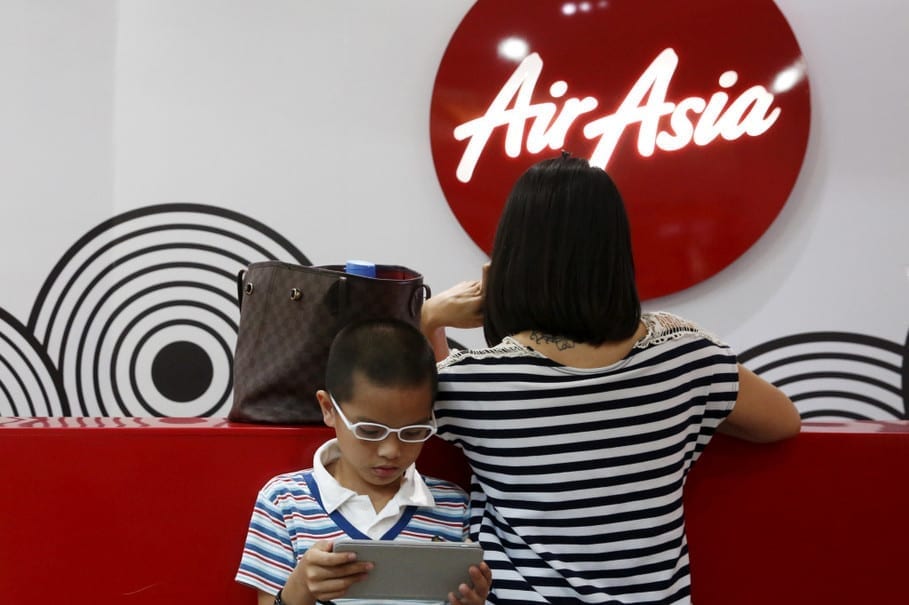
    AirAsia Foundation opened its first social enterprise hub, Destination: GOOD, at the weekend, marking a new milestone in its social entrepreneurship advocacy.

    Located downtown Kuala Lumpur in the former Rex Cinema premises now called REXKL, Destination: GOOD retails more than 400 responsibly and ethically produced goods sourced from over 30 social enterprises from around ASEAN.

    More than a shop, it aims to be an exchange that fosters collaboration between ASEAN social entrepreneurs and community-based enterprises.

    “In the last seven years, we have awarded 24 grants to innovative ASEAN social enterprises to help them grow. We realised that to expand our reach, we needed to create broad-based platforms to speak to new markets and audiences. Through Destination: GOOD, we hope to do just that and make social enterprise goods and services accessible to anyone seeking sustainable travel and lifestyle solutions,” said AirAsia Foundation executive director Yap Mun Ching.

    Malaysia’s Minister of Finance, YB Lim Guan Eng, joined AirAsia Group executive chairman Datuk Kamarudin Meranun and AirAsia Group CEO Tony Fernandes at the opening ceremony.

    Also present to share their stories were 10 of AirAsia Foundation’s Malaysian social enterprise partners, including The Basikal, Langit Collective and The Picha Project.

    On the sidelines of the shop opening, AirAsia Foundation signed a Memoranda of Understanding (MoU) with Kraftangan Malaysia to bring Malaysian crafts to a new audience and with Minconsult Sdn Bhd, the AirAsia philanthropic arm’s first corporate partner, to jointly fund social enterprise outreach activities in Kuala Lumpur. Over the past two years, AirAsia Foundation has operated Destination: GOOD as a pop-up store in various locations, including Kuala Lumpur International Airport (klia2). This is the first time the shop will have a permanent address in the city centre.

  • New Pricerite at MegaBox embraces omnichannel, accepts cryptocurrencies

    New Pricerite at MegaBox embraces omnichannel, accepts cryptocurrencies

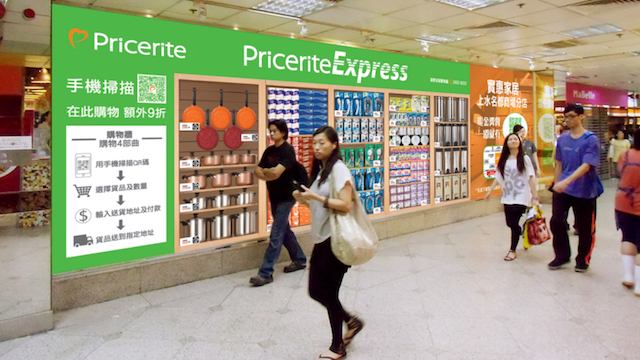
    Pricerite has opened its third new New Retail concept store, at MegaBox in Kowloon Bay.

    The 36,000sqft Pricerite at MegaBox has been designed to seamlessly merge the furniture retailer’s physical store offer with its omnichannel approach.

    And it claims to be the first retail chain store in Hong Kong to accept cryptocurrencies.  All Pricerite stores are now accepting Bitcoin (BTC), Ethereum (ETH) and Litecoin (LTC) as payment method. The store’s cash registers will instantly convert the cryptocurrencies into Hong Kong dollars according to the real-time exchange rate. Customers with a Lightning Network-supported cryptocurrency wallet can finish the BTC transaction in several seconds.

    “Following the immense success brought by the opening of Pricerite’s first-of-its-kind New Retail concept store last year, we are making another big leap forward,” said CEO James Leung. “Continuing with our commitment to the integration of advanced technologies with human talent, we … adopted a wide range of state-of-the-art retail technologies, providing customers with an all-rounded shopping experience.”

    One of the technologies the company has employed is a Virtual Store online, which simulates the actual environment of the Pricerite at MegaBox store. Customers can browse the aisles and click on a product on the shelf to read its details and price, before adding it to their cart should they wish to buy it.

    Leung says the online shopping experience runs 24 hours a day and offers an almost totally true-to-real-life experience.

    Another technical highlight is a smart kiosk in the new store which provides information such as inventory levels in the store and the availability of products in nearby stores if they are out of stock at MegaBox.

    Pricerite’s Pepper the robot, has been updated, offering far more information than the loyalty program advice the first generation Pepper in Nathan Road was known for. Pricerite says the new-generation Pepper is the first retail robot in Hong Kong developed to provide and search the information of more than 10,000 products.

    And the company’s 3D mobile app has been upgraded to provide a more fluid customer experience when customers are measuring if a furniture item will fit inside their home. The app merges the simulated apartment with the actual environment captured via the phone camera before it shows a 1:1 display of all furniture pieces in the real home environment. Users can ‘browse’ the apartment at his or her own pace in a first-person view. This app then offers typical apartment templates and a wide range of furniture options.

    The Pricerite at MegaBox offers delivery services in as little as four hours.

    During launch phase, the service will be available only for Kowloon customers who buy products with the ‘Pricerite Speed Delivery’ tag online or at the MegaBox outlet.

  • Flagship Razer store in Las Vegas opens next month

    Flagship Razer store in Las Vegas opens next month

    A flagship Razer store in Las Vegas is set to open next month’s, the gaming brand’s largest outlet anywhere in the world and its second in the US after San Francisco.

    The 2400sqft Linq Promenade outlet will open to gamers and the general public on September 7 in a location that sees nearly 22 million global visitors annually.

    “It was totally natural for us to build our next retail presence in Las Vegas, where so many of our fans would be able to experience and enjoy our entire gaming ecosystem,” said RazerStores global director Christine Cherel. “Together with Caesars Entertainment, we have been scouting for the perfect spot for over a year – and now we have found it, right at the heart of one of the best places for entertainment in the world.”

    Dubbed RazerStore LV, the Razer store in Las Vegas will aim to encourage and foster an avid gaming community, with esports and gaming events organised weekly.

    “The introduction of Razer to The Linq Promenade will create an immersive destination for gamers at the heart of the Strip,” said Caesars Entertainment’s senior VP of attractions, retail and leasing, Shaun Swanger. “With the addition of Razer, The Linq Promenade and Las Vegas continue to thrive as the global epicenter of tourism, technology and entertainment.”

    The new two-level brand gallery and retail store features a massive 16-HD-panel-display wall broadcasting interactive live streams and tournaments in full surround sound to onlookers inside and outside.

    PC gamers can set new records playing blockbuster titles on Razer Blade gaming laptops, while console gamers can compete head-to-head in fighting games on Panthera Evo arcade sticks or Wolverine controllers. Mobile gamers can also compete on the 120-Hz display-powered Razer Phone 2.

    Razer, which is co-headquartered between San Francisco and Singapore, opened its first US RazerStore at the Westfield Mall in Downtown San Francisco in May 2016. Two more stores are located in Hong Kong and Taiwan.

  • Toddler dies at Urban Revivo store in Jewel Changi

    Toddler dies at Urban Revivo store in Jewel Changi

    An 18-month-old girl has died following an accident at Urban Revivo fashion store at Jewel Changi Airport, according to reporting in The Straits Times.

    The toddler suffered fatal injuries after a standing mirror fell on top of her. She died in hospital after staff at the store administered first aid while paramedics were en route. Police stated that the child was unconscious while being transported to Changi General Hospital, where she was pronounced dead.

    “We are working closely with the tenant to ascertain the details of the incident,” said an airport spokesperson. “Out of respect for the privacy of the family, we are unable to comment further.”

    Urban Revivo stated that it was “deeply saddened by the tragic accident”. It is currently assisting police in investigating the incident.

    Media reports say the parents of the child are visitors from Mainland China.

  • Just google Amazon fire

    Just google Amazon fire

    The rainforest is burning. So much so, that it can be seen from space and people are starting to get worried over the unprecedented forest fire spread, just like in Siberia or Alaska this year, which is shaping up to be the hottest on record.

    The thing with Brazil’s rainforest, however, is that it not only gobbles vast amounts of greenhouse gases, but also serves as a vast cloud highway that helps maintain the global climate balance. You’ll hear varying opinions on the level of disaster in our divided society – either that July and August are the typical forest fire months and the intensity is actually below average, or that the scale is unprecedented, and 85% higher than last year.

    In any case, we are not here to argue about climate change but to note one amusing fact that happened around South America’s fires. The most famous natural wonder there is undoubtedly the amazonian rainforest, so, naturally, people who were interested to read more on the matter keyed into Google the words “Amazon fire” as one does.

    With Google, Facebook and Amazon occupying nearly 80% of the online advertising space and budgets, however, the first and subsequent search results were about the Amazon Fire tablet. The law of unintended consequences kicked in for Amazon, and it must have sold a boatload more of its budget slates than usual in this back-to-school month.

    Google quickly fixed that wrong, and when you search for Amazon fire now, that’s exactly what comes up as the first result – information about the flames running through the rainforest, as well as various musings whether they are caused by climate change.

    The Amazon Fire tablet and various Bezos-endorsed gadgets, however, are still strong in the news search as you can see from this current snippet below – oh, the world we live in!

  • Retail bankruptcies dent Li & Fung turnover

    Retail bankruptcies dent Li & Fung turnover

    Retail bankruptcies and destocking impacted Li & Fung turnover during the first half of this year, but the world’s largest supply-chain solutions provider returned to profit.

    On a like-for-like basis, turnover decreased 8.4 per cent to US$5.356 million as brands and retailers continued to face pressure on sales and margins. However, those factors were offset by growing market share for some of Li & Fung’s key customers and new customer wins.

    Core operating profit decreased 18.6 per cent to US$105 million due to a decrease in turnover and total margin in the Supply Chain Solutions business, and continued investment in digitalisation in line with the company’s long-term plan.

    However, profit attributable to shareholders swung back to positive, at US$21 million compared with a loss in the same period last year of US$86 million.

    “We are facing increasing geo-economic instability and uncertainty,” said group chairman William Fung. “Regardless of other factors, the acceleration of the migration of production out of China will continue given China’s upgrading of its industrial base from a manufacturing exporter to a high-technology service provider.”

    Fung said the company has experienced constant fluctuation in global trade over its long history and the current challenge was not entirely new.

    “That is why we continued to maintain a well-diversified sourcing network spanning more than 50 economies and avoided over-reliance on any single market, even when the environment appeared benign. This continues to be the right approach. Our ability to leverage this extensive network puts Li & Fung in the best position to help our customers optimise their sourcing and production and minimise tariff impact. The proliferation of bilateral free trade agreements has become the new norm, and this presents Li & Fung with opportunities not seen for the past 20 years.”

    Spencer Fung, group CEO of Li & Fung, said the company’s new management team has been focused on restructuring the company and all operational KPIs are now improving for both customers and suppliers.

    “We are starting to gain momentum and winning market share and new customers due to our operational excellence, global diversified network and 3D virtual-design services. As a result, turnover decline is stabilising and beginning to bottom out.”

    The new management team has been focused on accelerating the company’s turnaround and digital transformation, a strategy already producing positive results, he said.

    The digitalisation transformation has continued to make significant progress with more customers approaching Li & Fung for digital services and assistance in integrating digital product development into their work processes. The company is helping brands and retailers “take their own digital leap” into digital design and development, digital planning and assortment, and digital selling.

    Meanwhile, the logistics business continued its profitable growth momentum in the first six months of this year. In-country logistics services had strong top-line and bottom-line double-digit growth, the company said.

    China continued to lead the way, supported by an upsurge of domestic consumption, especially via e-commerce for which LF Logistics enjoyed first-mover advantage due to its early investment in e-logistics. Accelerated development in LF Logistics’ Asean operations contributed to high growth rates and the new markets of South Korea, Japan and India recorded “impressive results”.

    During the half year, Singapore’s Temasek completed a US$300 million investment to take a 21.7-per-cent stake in LF Logistics, valuing the business at $1.4 billion.

  • AirAsia eyes flights to Guam by 2020

    AirAsia eyes flights to Guam by 2020

    AirAsia Philippines is planning flights to Guam by 2020 as rival budget airline Cebu Pacific pulls out.

    AirAsia Philippines’ newly appointed CEO Ricardo Islas said the airline would seek a permit to fly to the United States territory once it had secured regulatory approval to be designated an official carrier to the United States.

    “Upon receipt of designation, AirAsia will be ready to apply for an operating permit to operate flights specifically to Guam,” Isla said in a text message.

    “With a fleet of 24 Airbus A320 aircraft, AirAsia is capable of launching flights as soon as permits are ready,” he added.

    AirAsia Philippines earlier filed a petition before the Civil Aeronautics Board (CAB) for designation and allocation of entitlements to the United States currently held by Air Philippines, an affiliate of Philippine Airlines. A CAB hearing on the matter has been set on Sept. 10 this year.

    “We are hopeful the Civil Aeronautics Board will grant our petition,” Isla said.

    Guam, about three and a half hours away from the Philippines, has a population of more than 160,000 people—a quarter of which are Filipinos. This made it attractive for Cebu Pacific, which launched flights between Manila and Guam on March 2016.

    “It was a good market but it’s more of us concentrating efforts on North Asia and Southeast Asia,” Cebu Pacific vice president Alexander Lao said in a recent interview. Lao said the carrier would end Manila-to-Guam flights by Dec. 8 this year.

    AirAsia Philippines earlier announced plans to aggressively expand its fleet and add more destinations. Cebu Pacific, the country’s biggest budget airline, is also on expansion mode.

    Cebu Pacific expects to receive more than 60 aircraft in the next eight years. This will include new orders from the Paris Air Show in June for 31 new planes, comprised of 16 Airbus A330neos, 10 A321XLRs, and five A320neos. The new aircraft has a list price of $6.8 billion.

  • CDF Beauty duty-free megastore opens at Citygate

    CDF Beauty duty-free megastore opens at Citygate

    A CDF Beauty duty-free megastore has opened in Hong Kong’s Citygate Phase II.

    Spanning more than 10,000sqft, CDF Beauty houses 45 beauty brands, including cosmetics, skincare products and beauty appliances. Citygate is located near Hong Kong International Airport.

    The CDF Beauty concept store is a merging of two adjacent stores with an open facade presenting international skincare and cosmetics. Its Colour cosmetics store invites shoppers to try makeup products among its showcase of top designer and make-up artist brands, including the latest seasonal palettes and textures from Giorgio Armani, Tom Ford Beauty and Mac with fragrances by Jo Malone London and Burberry.

    Central to the CDF Beauty duty-free megastore’s strategy is its Best Price Offer, a collection of leading beauty brands selected for discount on a monthly basis.

    Promotions for the store feature the CDF Beauty Bestie Gang – Carol, Donna, Frank and Bella – virtual brand ambassadors created with distinct personalities and favourite makeup styles.

    The store’s opening is being celebrated with a range of privileges and deals.

  • New stores openings deliver Lovisa good sales

    New stores openings deliver Lovisa good sales

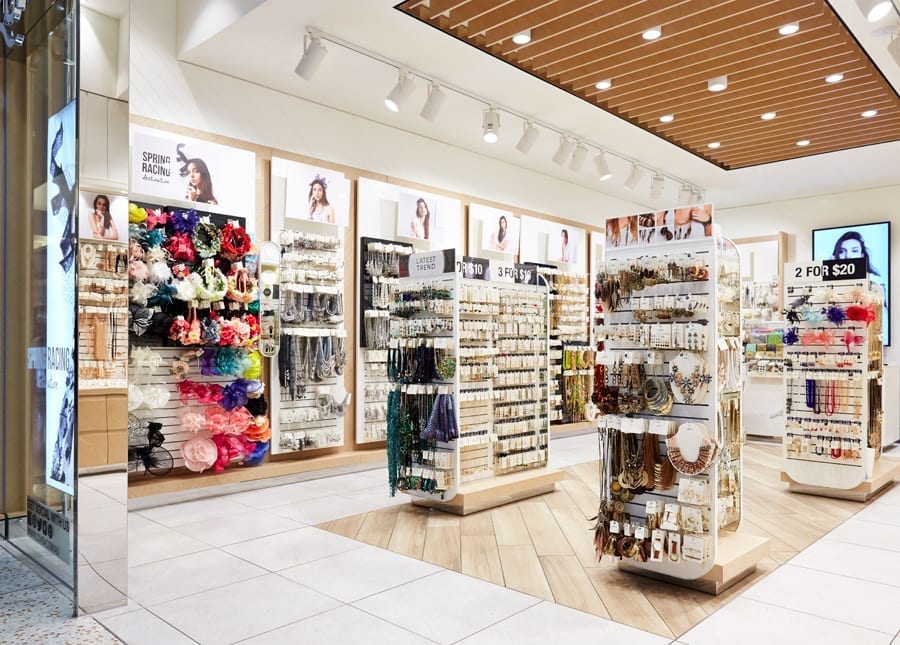
    Lovisa managing director Shane Fallscheer told investors on Thursday he was pleased to deliver a “solid result” for FY19 in one of the more difficult trading environments the fashion jewelry retailer has experienced in recent times.

    Revenue was up 15.3 percent year on year to $250.3 million, thanks to the addition of 64 new stores in FY19. The retailer’s total store count as at June 30, 2019 was 390.

    Same-store sales, however, were down 0.5 percent on the previous corresponding. Fallscheer attributed the weak result to softer trading conditions in the first half of FY19, especially in Australia, and the lack of major trends in the fashion jewelry space, which have helped drive strong same-store sales growth in the past.

    He also noted that Lovisa “overperformed” in FY18 – especially in the first half, when same-store sales increased 7.4 percent – which made it harder to deliver comparable sales growth in FY19.

    The retailer reported an increase of 50 basis points in gross margin to 80.5 percent, thanks to higher USD hedge rates and its focus on inventory management and promotional effectiveness. Gross profit increased by 16 percent to $201.4 million.

    The hiring of several senior executives, the relocation of Lovisa’s third-party logistics hub from Hong Kong to China, the launch of e-commerce capabilities in Australia and New Zealand and continued store rollouts in new territories, however, drove up to the cost of doing business as a percentage of sales.

    The retailer reported a 2.8 percent increase in earnings before interest and tax to $52.5 million and a 3 percent increase in net profit after tax to $37 million.

    Lovisa finished the year with a cash balance of $11.2 million and a strong balance sheet, Chris Lauder, Lovisa’s CFO told investors.

    Looking ahead, the key driver of growth for Lovisa is the continued expansion of stores around the world.

    The retailer currently has 404 stores (it has opened 14 so far in FY20) in around a dozen countries, including Australia, New Zealand, Singapore, Malaysia South Africa, the UK, Spain, France, the US, the Middle East and Vietnam.

    Lovisa’s biggest market is Australia, where it has 154 stores, followed by South Africa with 61 and the UK with 38, but growth is accelerating in the US, Fallscheer said, where it currently operates 28 stores in California, Texas, Florida and Illinois.

    “The eventual size and timing of the store rollout [in the US] will depend on being able to deliver quality stores that meet criteria rather than a [specific] number target,” Fallscheer told investors.

    He noted that Lovisa is beginning to gain traction with US landlords, and that it is targeting “small wins” to offset the higher cost of doing business and currency headwinds in the market, including minimizing markdowns and looking at the price.

    “We constantly review each market, each style and how all of that interacts with each other. We’re constantly looking at the price…as we mature in the US market, there are probably some slight wins there,” Fallscheer said.

    But he admitted, “there’s going to be a gap between price increase and currency decline”.

    Same-store sales growth in FY20 so far is within the retailer’s target range of 3 to 5 percent, Fallscheer said. He attributed this to price gains and increased volumes.

  • Bath & Body Works delivers big sales numbers for L Brands

    Bath & Body Works delivers big sales numbers for L Brands

    As usual, the latest results from L Brands show a tale of two companies: Bath & Body Works put in a blistering performance of 8 per cent comparable growth, while Victoria’s Secret posted a highly negative drop of 6 per cent in comparable terms.

    Combined, this pushed total comparable sales for the group down by 1 per cent for the second quarter.

    The results from Victoria’s Secret are particularly disappointing, especially as the company has been actively improving ranges and trying to inject more fashion into its product mix. However, this does not necessarily indicate the company is on the wrong track. Among existing customers of Victoria’s Secret, the changes have been well received, but some shoppers are still drifting away from the brand, which has yet to win back much of the trade that it has lost over the past few years.

    Such a win-back will only come with time and more of an effort to recast the brand image of the firm. Fortunately, management appears to have now started to understand this – hence its hesitancy on initiatives such as the annual Fashion Show. That said, the lack of clarity about whether not the show will go ahead underlines the fact that Victoria’s Secret still doesn’t have a clear view as to what it actually wants to stand for, let alone how it will go about executing such a change.

    Until such clarity emerges, the performance of Victoria’s Secret will continue to suffer. The brand is still not connecting and resonating with large swathes of its target market. Indeed, Victoria’s Secret continues to be tarred with the negative connotations that surround its overt sexuality and its focus on airbrushed glamour.

    Standing in marked contrast to Victoria’s Secret is Bath & Body Works. The company’s wholesome brand image and its focus on small indulgences is paying real dividends.

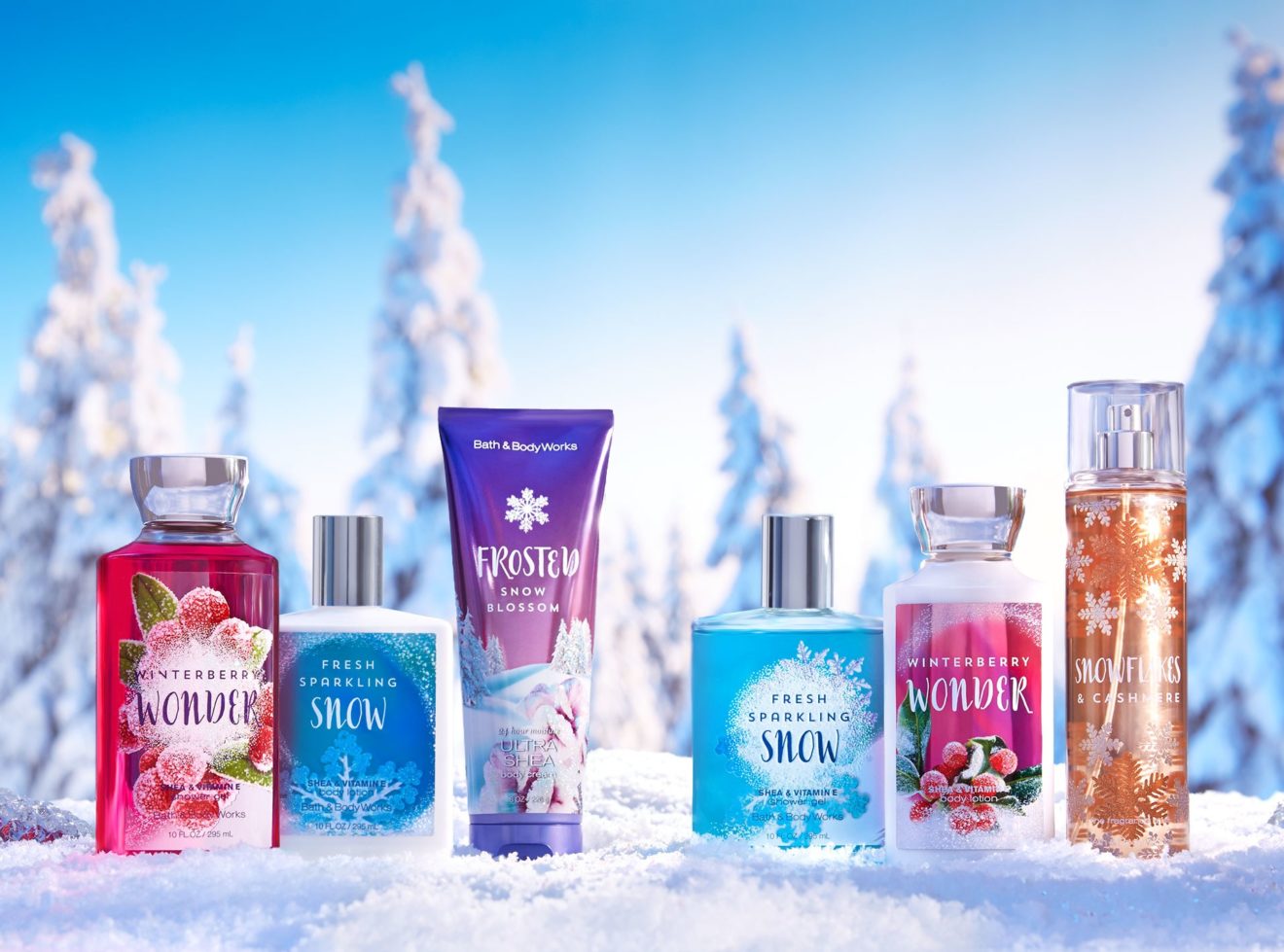
    One of the main strengths of the chain is its range development, where seasonal lines and takes on hot trends like aromatherapy are driving repeat visits from consumers as well as lifting basket sizes. The integration of the White Barn concept in some refurbished stores is also proving to be successful and there is clearly much more potential for Bath & Body Works to develop its home scents and candles business.

    From GlobalData’s customer data it is also clear that Bath & Body Works is popular due to the value for money it offers. Many items feel premium but are sold at reasonable price points, something that generates loyalty and bulk purchasing. On top of this, regular promotions also help to drive volumes through the business.

    Ultimately, success at Bath & Body Works stems from the fact that the team is much more attuned to the market and consumer trends than is the case at Victoria’s Secret. The cultures at the two divisions could not be more different: Victoria’s Secret should take a leaf out of its sister brand’s playbook as it looks to reinvent itself.

  • KrisShop marks rebranding by taking to the ground

    KrisShop marks rebranding by taking to the ground

    Singapore Airlines’ inflight and online travel retail store KrisShop has revamped its brand and launched a new website.

    To mark the launch, KrisShop is curating a pop-up exhibition in downtown Singapore, divided into several experiential zones, each showcasing a different retail feature of the new site. KrisShop.com now sports a cleaner look with a new interface that includes more intuitive features for swift and smooth navigation.

    KrisShop has also introduced multiple initiatives for convenient payment and pre-order and delivery services, aiming to provide personalised experiences to suit the varying lifestyles of customers. It is targeting both travellers and non-travellers.

    “Over the years, the travel retail industry has experienced a radical disruption driven by digitalisation,” read a statement from the firm on the rebranding. “KrisShop seeks to embrace a holistic omnichannel approach to deliver an integrated shopping experience that engages its customers at every step of the journey – both online and offline.

    “Advancing beyond a retail catalogue, KrisShop.com aims to re-invent itself as the go-to lifestyle e-commerce website that caters to the needs of all shoppers, whether they are travelling or not.”

    In the coming months, the firm will progressively roll out the site’s new features, including multiple payment options, pre-ordering up to 60 minutes before flight, hotel delivery, in-flight entertainment, and self-collection at PopStations.

    “Beyond being a retail e-commerce site, KrisShop seeks to establish itself as a one-stop shopping destination, and is continually evolving to meet the needs and demands of today’s consumers,” said KrisShop CEO Chris Pok. “Leveraging our expertise in retail, we are proud to unveil the new Krisshop.com that aims to modernise the consumer shopping journey.”

    The KrisShop popup is located at Raffles Hotel’s Palm Ballroom, and will be open to the public from August 23 to 24.

  • Miniso signs six new partnerships to fuel expansion

    Miniso signs six new partnerships to fuel expansion

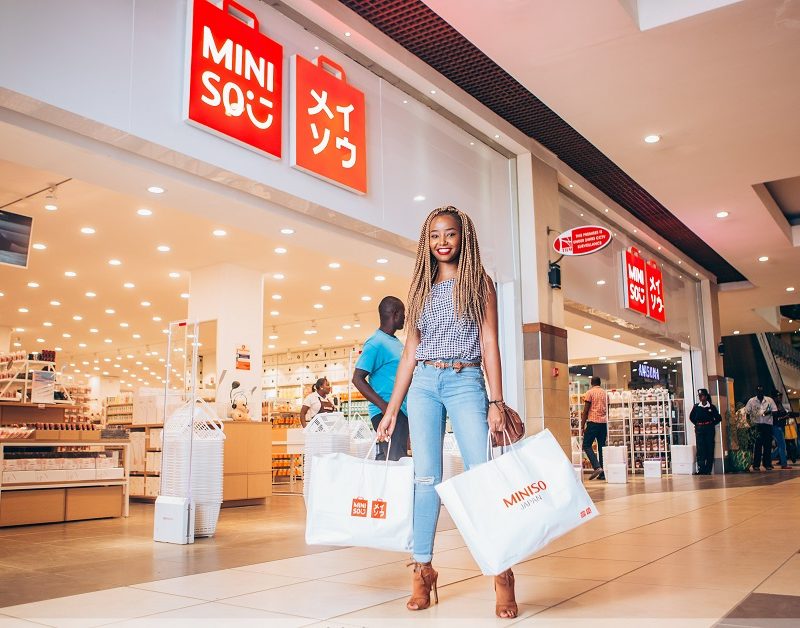
    Chinese discount merchandise chain Miniso has signed cooperation agreements with partners from six new countries and regions – the UK, France, Maldives, Reunion Island, Aruba and Curacao.

    Miniso now operates in more than 90 countries and regions, taking it closer to its target of opening “10,000 stores in 100 countries with 100 billion sales volume” by 2022.

    Miniso has been moving into the European market since last year, opening physical stores in Spain, Germany and Ireland.

    In overseas markets, Miniso has adopted a differentiation strategy with its products, setting up an international commodity department to develop diversified international products ranging from food to kitchen supplies, travel supplies, perfume, dolls, toys and makeup lines.

    The firm also set up a “Europe pavilion” in the exhibition area at its recently held Miniso 2020 Global Spring and Summer New Product Ordering Fair. Nearly 1000 SKUs more in line with European consumption habits and design aesthetics have been developed by the commodity centre team for the European market over the past six months.

    Miniso says it aims to simultaneously promote the upgrading of branding, products and stores across all its markets.

  • Tumi set fire to Samsonite’s Asian growth

    Tumi set fire to Samsonite’s Asian growth

    High-performing travel lifestyle Tumi drove Samsonite Asia sales in the first half of this year, compensating for an unusual decline in the core Samsonite brand’s business regionally.

    For the six months to June 30, net sales of the Tumi brand increased by 11.9 per cent in Asia, as the brand continued to make inroads in key markets across the region. Net sales of the Samsonite brand decreased by 1.3 per cent year-on-year, primarily due to challenging trading conditions in China and South Korea, while net sales of the American Tourister brand fell by 3 per cent.

    Samsonite Asia achieved a 4.8 per cent net sales gain in Japan and 9.2 per cent in India. The group continued to experience challenging market conditions in South Korea, where net sales decreased by 8.7 per cent. Excluding net sales in South Korea and B2B sales in China, Samsonite Asia recorded a net sales increase of 4.6 per cent during the first half.

    Globally, Samsonite had a tough half, impacted by increased tariffs on products imported from China and sold in the US and lower tourist traffic. First-half adjusted net income fell 12.8 per cent year on year to $97 million on sales of $1.756 billion, down 5 per cent.

    CEO Kyle Gendreau said the company’s fortunes improved in the second quarter with most markets showing signs of stability.

    In China, wholesale turnover reduced as the group continued to pursue a direct-to-consumer business model through its own stores and online. Net sales in China increased by 5.1 per cent year-on-year, (and by 11.2 per cent excluding B2B) in the second quarter, compared to an 8.3-per-cent decline in the first quarter.

    Gendreau said the global outlook remains uncertain entering the second half of the year, with US-China trade tensions rising, Brexit still unresolved, economic growth slowing in parts of the EU, the recent events in Hong Kong, and a general increase in political volatility and economic uncertainty impacting consumer sentiment worldwide.

    “Considering these ongoing challenges, we will continue to invest in the business to position ourselves for long-term growth while maintaining our focus on controlling costs, managing working capital, generating cash and strengthening the balance sheet.

    “We will continue to diversify our sourcing base and to renegotiate pricing with vendors to address the recent US tariff increases. In addition, we intend to temporarily reduce advertising spend for the second half of the year to help offset the pressure on our profitability caused by current headwinds.”

    The advertising scale back will spare the fast-growing Tumi brand and direct-to-consumer e-commerce initiatives.

  • Google Hangouts transition for G Suite gets delayed until 2020

    Google Hangouts transition for G Suite gets delayed until 2020

    Google confirmed back in December that it will replace Hangouts with Chat and Meet, and announced that the transition will start in October 2019. However, the search giant revealed that the transition for G Suite has been postponed and that the new deadline is June 2020.

    According to Google, the decision to delay the move is based on the feedback received from many Hangouts users, who apparently need more time to migrate their organizations from classic Hangouts to the new Hangouts Chat.

    That being said, Google has officially postponed the final transition date to no sooner than June 2020, which means that it could happen later, but definitely not sooner. In the meantime, Google will continue to improve the transition experience of classic Hangouts group conversations, and add new Chat features like Read receipts.

    In case you need a more definitive date, Google said that it will provide advance notice once it figures out when it’s the right time to start the final transition of classic Hangouts to Hangouts Chat.

    Also, for those who want to migrate sooner, Google has already kicked off the Accelerated Transition Program, so simply request an invitation and the classic Hangouts will be disabled and you’ll be migrated to Hangouts Chat.