Category: General

Retail News Asia is committed to providing both local and global retailers with the latest General Retail news throughout the Asian market. This on a daily base.

  • Microsoft brings its SMS Organizer app to the US

    Microsoft brings its SMS Organizer app to the US

    The SMS Organizer app is one of the many projects that took shape under Microsoft Garage’s umbrella, but it’s only been available in India since release. Starting this week, Microsoft has expanded the availability of SMS Organizer to more countries, including the US, UK, and Australia.

    As the name suggests, SMS Organizer will sort all your incoming text messages into categories. Microsoft’s app is a bit more advanced when it comes to sorting text messages, as it uses machine learning to filter them into categories like personal, transaction, and promotional.

    But the app goes even further and prevents promotional messages from popping up on your phone’s screen. While you will find these on the promotional tab, you also have the option to automatically delete these messages every few days or weeks.

    On the other hand, whenever you receive text messages related to trains, flights or payments, SMS Organizer will notify you every time and even helps you keep track of your account balance. More importantly, you can use SMS Organizer to backup and restore chats to and from Google Drive.

    Unfortunately, SMS Organizer does not feature support for multimedia messaging (MMS), so it’s limited to standard text messages. If you want to use the app, which is available for download via Google Play Store, you must register using your phone number.
  • Google thinking to remove the ability to message directly on YouTube

    Google thinking to remove the ability to message directly on YouTube

    Google has confirmed it will kill off another of its obsolete chat service – YouTube messages. The decision is probably related to the fact that not many people are using the ability to message directly on YouTube.

    Although it’s a relatively old feature having been launched back in 2017 after one year of testing, Messages on YouTube will no longer be available after September 18. The announcement mentions that since the feature was launched two years ago, YouTube focused on public conversations with updates to comments, posts, and stories.

    Unfortunately, that was not enough to convince users to take advantage of the feature as often as YouTube would’ve wanted. After re-evaluating its priorities, Google has decided to discontinue the messaging option hidden inside YouTube and start focusing on improving public conversations instead.

    Even though the ability to direct message on YouTube will no longer be available after September 18, you will still be able to share YouTube videos by heading to the video watch page, clicking Share, and then tapping the “social network icon” from which you want to share a video.

  • Samsung has responses for Android users to send to green bubble haters

    Samsung has responses for Android users to send to green bubble haters

    Apple iPhone, iPad, Apple Watch and even Mac users know that when they are using the Messages app to communicate with others using the Apple ecosystem, they are sending and receiving iMessages. This is signified by the blue bubble that the conversations are housed in. And iMessages are encrypted from end-to-end.
    But when someone using an Apple device sees their conversation in a green bubble it means that the person on the other side of the chat is probably using an Android device. The green bubble means that the conversation is being handled as a SMS or a text message. Besides the lack of encryption, the special features offered for those chatting via iMessage (such as Animoji) cannot be used. And that doesn’t sit well with many iPhone, iPad, Apple Watch or Mac users.
    If you use an Android device and are sick and tired of getting scolded by your Apple wielding buddies in the middle of a group or individual chat simply because they can’t use iMessage, Samsung has your back. The manufacturer has created a GIPHY page containing more than 30 GIFs that you can use to send back a salvo after taking a hit from a green bubble hater.
    Perhaps one day in the future, people won’t be discriminated against simply because they create a green text bubble instead of a blue one on a device screen. Would Apple ever offer iMessage to Android users? We wouldn’t hold our breathe.
  • AirAsia India to start direct Delhi-Chennai flight from September

    AirAsia India to start direct Delhi-Chennai flight from September

    Budget carrier AirAsia announced a new direct Delhi to Chennai flight. The new flight will be introduced from September 2019. The sale of tickets will begin on 20 September. The tickets can be booked through airasia.com or the AirAsia mobile app.

    “The new daily direct flight between Chennai and New Delhi will help boost our operations in Chennai. We have also increased the frequency between Chennai and various other destinations like Bangalore, Hyderabad and Kolkata,” the airline said in a statement.

    AirAsia will also operate a third daily flight between New Delhi and Kolkata.

    The Bengaluru-headquartered airline is also set to launch additional flights on New Delhi-Kolkata route from 20 September.

    The airline has also increased the frequency and introduced a fourth service on the Delhi-Bengaluru route.

    AirAsia India currently flies to 19 destinations with a fleet of 22 aircraft.

    Air Asia India, which started operations in June 2014, is a joint venture between Tata and AirAsia Berhad. It currently operates 164 flights a day, covering 19 destinations and carrying over 25,000 passengers.

    The budget carrier has already started daily direct flight on the Delhi-Chandigarh route from 1 August onwards. The launch fare on Delhi-Chandigarh route is 1,365, the airline mentioned. The flight would leave from Delhi at 10.40 am every day and would reach Chandigarh at 11.50 am.

    The return flight would depart from Chandigarh every day at 12.50 pm and arrive at the Delhi airport at 1.55 pm, the low-cost carrier said.

  • Kaufland acquires third Queensland site

    Kaufland acquires third Queensland site

    Kaufland Australia is pressing forward with its Australian expansion with the acquisition of its third Queensland site, in a location that may concern local players.

    On Wednesday, the German retail giant confirmed that it has taken ownership of Morayfield Village Retail Centre at 177-189 Morayfield Road, a suburb of Moreton Bay Region in north Brisbane.

    The property listing on the Commercial Real Estate website indicates that the center is next to Morayfield Regional Shopping Centre, which houses major market players including Coles, Woolworths, Target, Kmart and Big W, with an Aldi store and two additional Woolworths supermarkets also situated in the precinct.

    The 16,690sq m site, described as “a well-established, modern, single-level retail center”, includes a 6,939sq m building which is more than enough for a Kaufland supermarket, which generally occupies a total store area of 4,000 square meters.

    Earlier this month Kaufland announced that it was making its first foray into the Toowoomba region in southern Queensland, along with the purchase of a site at Burleigh Heads on the Gold Coast.

    A spokesperson for the retailer said that it is planning to explore further opportunities in the area.

    “We are committed to long term, sustainable investment in Queensland, and we are delighted to be looking at all sites and opportunities that are available, ” a Kaufland spokeswoman said

    “We look forward to continuing to work together with Moreton Bay Regional Council and all key stakeholders with the goal to deliver high quality, great service, and amazing value to the wider region.”

    Kaufland has advised that its supermarkets will be stocked with local, regional and international products at discount pricing, with each store including a bakery, butcher and liquor areas.

    In March, Kaufland Australia received planning approval for its first three stores in Victoria at Chirnside Park, Dandenong, and Epping as well as its Melbourne headquarters and Australia’s largest distribution center to be located at Mickleham.

    The following month, the retailer was granted development approval to build its first South Australian store in Prospect, an inner northern suburb of greater Adelaide.

  • Lego announces very first Victorian store

    Lego announces very first Victorian store

    The first Lego store in Victoria will be in Westfield Doncaster, according to local rights-holder Alceon Group.

    The announcement follows the opening of Lego stores in New South Wales, as well as the news that more stores will be opened across Queensland and New Zealand in 2019 – with South Australia and Western Australia in 2020.

    “Victoria is home to one of the country’s largest Lego fan communities and, as a result, a strategic priority of our growth,” Alceon Group executive director Richard Facioni said.

    “We look forward to unveiling a truly world-class retail experience at Westfield Doncaster, as the first of a number of Lego certified stores planned for Melbourne.”

    Facioni said recently that the introduction of further stores in key locations would accelerate the reach of the retail concept, and build on the iconic Lego brand.

    Alceon Group is an investment firm that is one of the biggest retail companies in Australia, following its acquisition of Specialty Fashion Group’s Katies, Millers, Autograph, Crossroads and Millers brands, James Packer’s Pretty Girl Fashion group and Pumpkin Patch.

    The company also has a controlling stake in Noni B and recently acquired a stake in ethical fashion brand Ginger & Smart.

  • AS Watson unfolds the power of Generation Z

    AS Watson unfolds the power of Generation Z

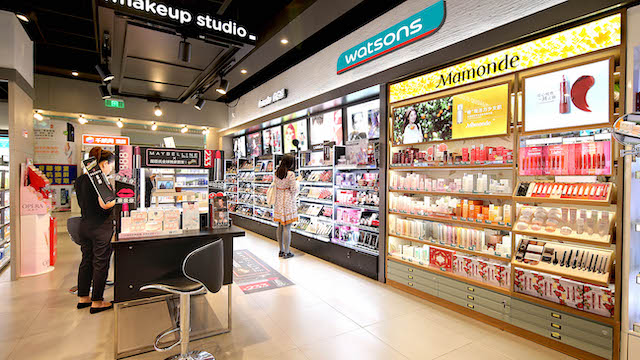
    Health and beauty retailer AS Watson has gathered insight from its businesses around the world to compile an overview of what is driving Generation Z customers and how they can be attracted to its retail brands across the globe.

    “Generation Z is shaping up to have great spending power and they are the future of modern retail,” said AS Watson Group COO Malina Ngai. “It’s important to stay relevant to them, not only focusing on the products they want but also the stories and experiences that go with them. To best meet the demand of Gen Z, customer insight plays a vital role in helping us understand their needs, perceptions and even their shopping behavior.”

    This year, Gen Z became the largest consumer segment—now accounting for 32 percent of the global population of 7.7 billion. AS Watson operates more than 15,200 stores under 12 retail brands in 25 markets and using this extensive network the group’s insight shows a 23-per-cent increase in Gen Z’s spending power in last year’s figures.

    This shows that on average 86 percent of Gen Z are beauty shoppers, and more than 70 percent of Gen Z spending is on beauty, the highest among all generation groups. Essentially, Gen Z has become the growth driver of AS Watson’s business, and the linchpin of the firm’s current and future plans.

    While Gen Z is the first generation of digital natives, insight data shows that they prefer in-store shopping and they love the social and experiential aspects of browsing and shopping at physical stores with their friends. ASW’s customer insight shows that 99 percent of Gen Zers shop offline, and they like shopping in “destination stores” – stores in shopping malls and city centers.

    The digital natives spend most of their time on screen and they look for brick-and-mortar shopping coupled with technology, so in-store digital devices are key drivers to sales success. These include the introduction of AR and AI in the store environment, as well as the linking of offline and online experiences through apps and social media.

    Gen Zers choose their beauty products based on the trend, price, and quality and use their phones to read other users’ feedbacks and reviews while browsing in stores.

    Sustainability concerns are a big factor for Gen Z customers. Since 2014, AS Watson Group has banned the use of microplastic in its rinse-off own-brand cosmetics and personal care scrub products, and by the end of this year, this ban will extend to all brands, meaning no microplastic will be found in any rinse-off cosmetics or personal care products sold in the stores.

    “Generation Z is a very different customer to the Millennials that came before them,” said Ngai. “They are reinvigorating the retail industry with their desire for experience and activities, while at the same time helping shape a more sustainable future with their emphasis on the environment and doing good.”

  • Microsoft approaches former Siri chief from Apple

    Microsoft approaches former Siri chief from Apple

    Bill Stasior, longtime head of Apple’s Siri team, has left the company to join Microsoft’s AI division. After nearly a decade at Apple, Stasior will step into the shoes of a corporate vice president at Microsoft later this month. At his new job, the former Siri chief will lead an artificial intelligence group.

    Last year, Apple poached Google’s former head of search and AI, John Giannandrea. The served as further indication of Apple’s woes with Siri, which beat the competition to the AI assistant race, but was relegated to a firm third place behind Google Assistant and Amazon Alexa.

    Stasior’s reasons for leaving Apple aren’t clear at this point, but Giannandrea’s hiring is a likely guess. Since his hiring last summer, Giannandrea became very involved with the development of Siri and was eventually promoted to a senior vice president, reporting directly to Apple CEO Tim Cook.

    Although Stasior was in charge of Apple’s Siri team since the assistant’s initial launch, he won’t be working on Cortana at Microsoft. The company behind Windows is lagging far behind the competition, as far as AI assistants are concerned, with Cortana being a distant fourth to Google’s, Amazon’s, and Apple’s offerings. However, Stasior’s talents apparently won’t be used to better Cortana, but rather in Microsoft’s broader AI efforts. The Information reports that people familiar with the matter have said that the former Siri chief will head a special AI group at Microsoft

  • Google brings new spelling and grammar correction capabilities to Gmail app

    Google brings new spelling and grammar correction capabilities to Gmail app

    Google has announced a couple of nifty features will soon be rolled out to Gmail on all platforms. Although the app does feature predictive text, users are still prone to typos or grammar mistakes.

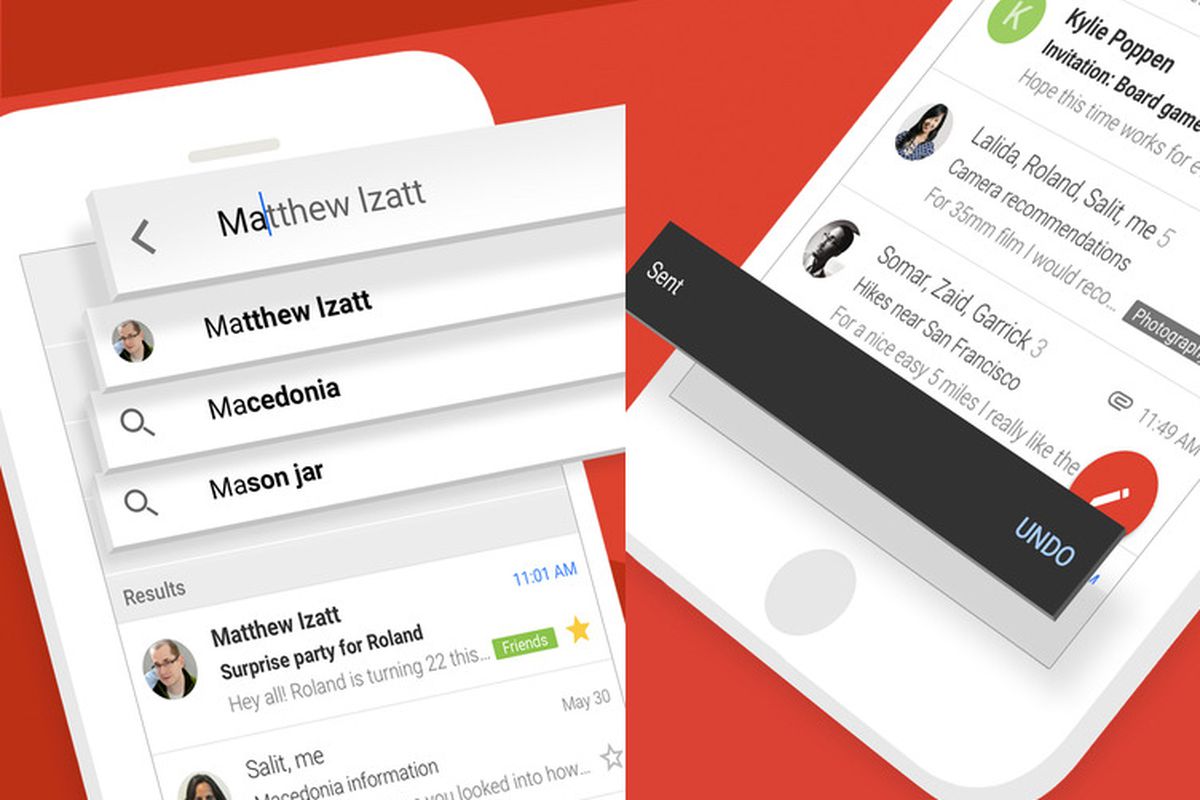
    To correct that issue, Google announced it will introduce new spelling and grammar correction capabilities for Gmail which are meant to help users with G Suite accounts compose emails faster.

    The new capabilities will trigger ones you start typing a message and will use artificial intelligence to make smarter spell-check suggestions while detecting potential grammar issues at the same time. Moreover, Google mentions that it has added as-you-type autocorrect.

    Google says these new features will be rolled out gradually to all G Suite accounts starting today, but the full deployment will last until mid-September. Unfortunately, the new features are not yet available for regular users, although we can safely assume they will be made available to all Gmail users at some point, just like it happened with the Smart Compose function.

  • Facebook launches tool that lets users see and control data shared

    Facebook launches tool that lets users see and control data shared

    Facebook is making it easier for users to see and control the data that apps and websites share with the social network by launching a new tool called Off-Facebook Activity. The new feature will be gradually rolled out to Facebook users in Ireland, South Korea, and Spain. However, Off-Facebook Activity will be made available to everywhere over the coming months, so don’t lose hope if you’re not living in any of these countries.

    But what exactly is Off-Facebook Activity and is it as useful as Facebook claims? Well, first off, you can see a summary of the information other app and websites have sent Facebook through its online business tools, including Facebook Pixel and Facebook Login.

    Also, you will be able to disconnect all the information you see from your account if you want to. On top of that, you can choose to disconnect future off-Facebook activity from your account. Facebook says that you’ll be able to do that for all your off-Facebook activity, or just for specific apps and websites.

    Once you clear your off-Facebook activity, the social network will remove your identifying info from the data that apps and websites choose to send to Facebook. Basically, Facebook will no longer know which websites a user visits or what they did during their visit.

    Also, Facebook says that it will not use any of the data that users disconnect to target ads to them on apps like Facebook, Instagram or Messenger. The social network expects some impact on its business but believes giving people control over their data is more important.

  • Information hidden in app reveals how much Apple will charge for Arcade

    Information hidden in app reveals how much Apple will charge for Arcade

    Back in March, Apple introduced Apple Arcade. This service will allow subscribers to pay a monthly fee for unlimited gameplay. There will be over 100 new titles that will be available, all exclusive to the app. Apple could release a launch date and pricing for Arcade on September 10th; that is when the company’s fall event is expected to be held according to a screenshot found on the most recent iOS 13 beta. But it appears that we might already know the pricing. The latter discovered information inside one of the APIs used by the App Store app that apparently reveals how much Arcade will cost (an API, or Application programming interface, is used to help two applications communicate with each other).

    According to the information discovered by 9to5Mac, Apple will charge $4.99 a month for the service after a one-month free trial. All members in a Family Sharing account will have access to the games inside the Arcade app, and since subscribers are paying for the service, there will be no in-app purchases offered. Arcade subscribers can start a game on an iPhone, iPad, Mac or Apple TV and switch devices without missing a beat.

    Apple Arcade will join Apple Music, Apple News+ and Apple TV+ as features that bring in recurring revenue to Apple. It’s all part of the company’s plan to take advantage of the 900 million+ iPhones active around the world while lessening its reliance on new iPhone sales, which peaked in 2015. The services unit, which includes the aforementioned subscription-based features, the App Store, Apple Pay, AppleCare, iCloud and more, is Apple’s second-largest in terms of revenue and is it’s most profitable. Apple is targeting $50 billion in services revenue for next year, which would double the $25 billion the unit grossed in 2016. During its most recent earnings announcement covering the fiscal third quarter (April through June), the firm took in a record $11.5 billion in revenue for the division, up 12.7% from the $10.2 billion it took in during the same quarter in 2018.

    Apple has been using its employees to test Arcade and get some feedback before it is released for public use. This past weekend, we told you that after a one-month free trial, the company is asking employees for 49 cents a month to test early builds of some of the games. This early access program will end once iOS 13 is officially launched.

    Banking firm HSBC expects Arcade to garner as many as 29 million subscribers by 2024, raking in $4.5 billion. However, that estimate is based on a monthly subscription rate of $12.99 a month; that would seem to be too steep a price hike over a short period of time if Apple does indeed debut the service at $4.99 a month. So HSBC’s analysts are going to have to go back and rework the estimate.

    Some of the titles that you should expect to find when Apple Aracade launches include:

    • Hot Lava
    • Oceanhorn 2: Knights of the Lost Realm
    • Beyond a Steel Sky
    • Sonic Racing (yes, starring “that” Sonic)
    • LEGO Brawls (yes, starring those LEGO)
    • No Way Home
    • Yaga

    These are games that you won’t find elsewhere. And by offering you a free trial period, Apple is looking to get you hooked on the service. It is the same approach that the company takes with Apple Music. And if Apple does price Arcade at $4.99 a month, it might seem like a bargain to those who were expecting it to be priced at $9.99 a month or more. The failure or success of Arcade will go a long way toward determining whether Apple hits its goal of $50 billion in services revenue next year.

  • Microsoft confirms Gears of War mobile game drops this month

    Microsoft confirms Gears of War mobile game drops this month

    Unveiled more than a year ago, Microsoft’s Gears of War mobile game will be released on August 22, just a few weeks before Gears 5 hits PC and consoles in September. Dubbed Gears Pop!, since it’s a collaboration between Microsoft and Funko Pop!, the game will be available on both Android and iOS devices, Microsoft announced earlier.

    After a brief soft-launch, Gears Pop! will be fully available for everyone around the world with a compatible phone. The game features more than 30 Gears of War characters, ready to take your orders, all brought to life from authentic Funko Pop designs.

    In Gears Pop!, you’ll be building your squad mixing and matching COG and Locust units, use ultimate abilities, as you strive for supremacy on popular Gears maps. You can play against AI opponents to try out new squads before you take on real players.

    Since this is a free-to-play game, expect Gear Pop! to be heavy on in-app purchases, especially if you want to build a pretty solid team of Gears of War heroes and villains. You can still pre-register for the game via Google Play Store and App Store before the game launched on August 22.

  • Crocodile Garments wary of double whammy

    Crocodile Garments wary of double whammy

    Chinese apparel retailer Crocodile Garments has warned investors it expects its annual results to “deteriorate greatly” from last year due to a double whammy.

    On the one hand, there has been a decrease in gains from the revaluation of its investment properties, while on the other retail sales are down due to falling consumer confidence and Hong Kong protests.

    The company has warned that consumers in Hong Kong, where it is listed, and other markets, are spending less due to the global economic downturn and “social chaos”, an apparent reference to the ongoing protests in Hong Kong.

    Last year the company reported a profit attributable to shareholders of HK$162.5 million.

    “If the negative impact of existing social chaos becomes seismic, results of the garment business are possibly foreseen to worsen,” the company said in a stock exchange filing.

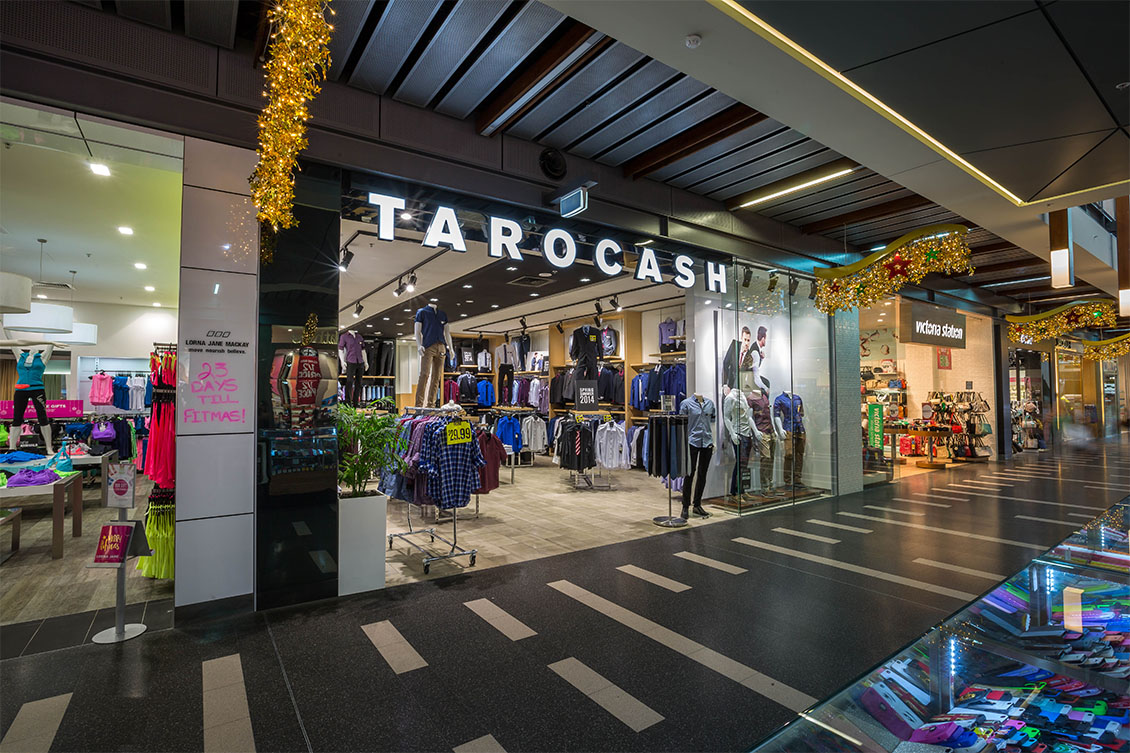
  • Tarocash, owner of YD looking to expand

    Tarocash, owner of YD looking to expand

    Retail Apparel Group-owner The Foschini Group has lauded the Australian retail market and indicated it is gearing up for further expansion throughout Australia and New Zealand.

    The South African retail group, which owns local brands such as yd., Connor, Tarocash, Johnny Bigg, and Rockwear, said topline growth in Australia is in the double-digit, and it’s planning to introduce more of its brands to the region – namely jewelry brand American Swiss.

    TFG chief executive Anthony Thunström told a media roundtable the company sees significant opportunity in the Australian and New Zealand market.

    “Australia has not been in a recession since 1990 – it is almost the polar opposite to SA with unemployment also at record lows,” Thunström said.

    “Retail is not by any means easy there with the high costs around rentals and other operational costs, so there is little margin for error to get it right or wrong.”

    While David Jones-owner Woolworths Holdings has struggled in the Australian market, having recently booked a $437.4 million impairment against the department store due to economic headwinds, The Foschini Group has found success in multiple markets by focusing on delivering a more niche offering.

    Thunström said the business doesn’t dictate from afar what will be successful in the Australian market but instead purchased the business with strong leadership teams in order to allow them to steer the local offering.

    “If we went to Australia or the UK and tried to run the business ourselves, we would end up in tears,” Thunström said.

    “There are too many local nuances.”

    According to Business Report, the retail group said it will inject R500 million ($48 million) into technology in order to get ahead of the changing retail market – having witnessed its online sales increase 57.2 percent over the year to March.