Category: General

Retail News Asia is committed to providing both local and global retailers with the latest General Retail news throughout the Asian market. This on a daily base.

  • Technology, Zoff boost Retail Asia’s bottom line

    Technology, Zoff boost Retail Asia’s bottom line

    Technology adoption, contributions from fast-growing eyewear chain Zoff, and burgeoning loyalty programs for Circle K and Saint Honore have been credited with boosting Convenience Retail Asia’s half-year profit by 22.4 percent.

    CEO Richard Yeung said a major part of the group’s success was the effectiveness of Circle K’s online-to-offline (O2O) business model, along with lower production costs at Saint Honore resulting from the depreciation of the renminbi. The group’s O2O CRM programs continued to lead business strategy; Circle K’s OK Stamp It and Saint Honore’s Cake Easy had memberships of 1.4 million and 0.6 million, respectively as at the end of June.

    Circle K ended the half-year with 582 stores, including 339 Circle Ks in Hong Kong, 32 in Macau and 14 in Zhuhai. It also had 127 Saint Honore cake shops in Hong Kong, Macau and Guangzhou and seven Zoff eyewear stores in Hong Kong.

    During the first half, Circle K’s comparable-store sales increased 4.4 percent, contributing to total sales of HK$2.185 billion against the $2.061 billion during the first six months of last year. The group’s OK Stamp It program drove sales by serving as the core platform for almost all of Circle K’s sales and marketing efforts. OK Stamp It members can download an app to receive exclusive promotional deals and loyalty offers that can be fulfilled instore.

    The group also worked with JD to launch a pilot test for a self-checkout service powered by artificial intelligence (AI) at two Circle K locations. The experimental service uses an AI algorithm that can recognize up to five products in just one second with a high degree of accuracy.

    “Designed with the new generation of consumers in mind, it marks the first checkout solution in Hong Kong to feature image recognition, and it promises to reduce checkout times significantly,” said Yeung.

    Circle K also introduced a Scan & Pay self-checkout counter trial at a pilot store in Kwun Tong that allows customers to scan and pay for their own items.

    Saint Honore achieved a single-digit increase in sales despite the macroeconomic uncertainty and depressed consumer sentiment during the half-year. The brand’s Guangzhou store network is being consolidated and it is enhancing its Shenzhen factory operations to implement “lean manufacturing” to reduce baking space, simplify workflow and improve operational efficiency for faster responsiveness between markets.

    Convenience Retail Asia remains the only international franchise of Japanese fast-fashion eyewear brand Zoff, which Yeung said “continued to achieve remarkable results” during the half-year.

    “Just a year and a half since its launch in Hong Kong, Zoff once again made positive contributions to the group’s results. Its store network also continued to grow: There are now seven Zoff stores in Hong Kong, all strategically located in high-traffic areas popular with younger consumers.”

    In April, the largest Zoff store yet in Hong Kong opened at Taipo Mega Mall, carrying more than 1800 stock-keeping units.

    Group-wide, Yeung said Convenience Retail Asia will be cautious given the macroeconomic uncertainty in the market. Priorities for the second half of the year are to continue building its O2O strategy for Circle K and Saint Honore and to open more Zoff stores.


  • Apple is charging employees to get their feedback on Apple Arcade

    Apple is charging employees to get their feedback on Apple Arcade

    Back in March, Apple introduced its new Apple Arcade service. For a yet to be decided monthly fee ($4.99, $9.99?) subscribers will be able to choose from over 100 new mobile games. Apple says that it expects to launch Arcade this fall, but in the meantime, the company is giving employees a preview of the service. Those toiling for the tech giant are getting a one-month free trial; once the trial period expires, they are paying 49 cents a month to test early builds of some of the games that will be offered to subscribers once the platform launches. This early access program is expected to end once the final version of iOS 13 drops.

    The games that are available for the early access program include Way of the TurtleDown in BermudaHot LavaSneaky SasquatchKings of the CastleFrogger in Toy Town and Lame Game 2. Apple Arcade will allow subscribers to play any title available for as long as they want, and players can switch devices from the iPhone to an iPad, a Mac and Apple TV without missing a beat. Users will also be able to play games while offline and a family with up to six members will be able to share a family subscription. Because players will be paying monthly, there are no in-app purchases offered.

    After iPhone shipments peaked in 2015 at 231.22 million units, the company decided to focus on its services unit. This was a smart move because many of the businesses under the services umbrella, like Apple Music and Apple News+, require recurring payments from subscribers. And these businesses are less reliant on new iPhone sales, depending instead on the large number of active iPhone users which at last count totaled 900 million people. The company has targeted $50 billion in services revenue by 2020 which would be twice the $25 billion that the division grossed in 2016. For the recently announced fiscal third quarter, covering April through June, the services unit took in a record $11.5 billion in revenue. That is a 12.7% year-over-year gain from the $10.2 billion that the division took in during the same quarter in 2018. Overall, the services unit is Apple’s second-largest business unit and is it’s most profitable. The success or failure of Apple Arcade will go a long way toward determining whether Apple meets its $50 billion revenue goal next year.

    Earlier this year, a report claimed that Apple has spent $500 million on Apple Arcade; analysts at HSBC Bank see the subscription service generating $370 million in revenue next year before jumping to $2.7 billion by 2022 and a whopping $4.5 billion by 2024. The bank’s analysis forecasts Apple Arcade having 29 million subscribers by 2024 with individual subscriptions costing $12.99 a month.

    Besides paying the monthly subscription price, Arcade members are expected to shell out the cash required for them to pick up accessories for their Apple devices such as controllers. While subscribers will be able to navigate through Arcade games using the buttons on their iPhone, iPad or Mac, picking up an MFi (Made for iPhone, iPad) controller could make gameplay a little easier for some.

    It seems a little strange that Apple is asking employees to pay 49 cents a month so that the company can collect feedback from them; after all, the point of the early access program is to find out where Apple and the game developers can make changes to improve the user experience. While we have no data revealing how many have signed up for the short-lived program, we’d bet that it was more than enough for Apple and its developer partners to get a good idea of the work that still needs to be done on Arcade before its launch.

  • Apple sues company that sells a virtual iPhone complete with iOS

    Apple sues company that sells a virtual iPhone complete with iOS

    We know that Apple is giving away special iPhones to certain security researchers who are looking for a big payday that could add up to as much as $1.5 million. The big jackpot will go to the researcher who finds a flaw in the iPhone and iOS that will allow a hacker to take full control over an iPhone without the phone’s owner having to touch any part of the device. That discovery is good enough for $1 million dollars. Any vulnerability found on beta software will reward the researcher with a 50% bonus. That’s because the discovery is taking place before the software has been disseminated to the public.

    To help researchers find flaws in iOS, a company called Corellium has been offering them a virtual version of the iPhone and iOS over the last few years. Apple is not taking this sitting down and has filed a lawsuit in the United States District Court for the Southern District of Florida for what it calls “a straightforward case of infringement of highly valuable copyrighted works.” Apple points out that without obtaining a license or permission from Apple, Corellium offers a “virtual” version of Apple’s devices with “fastidious attention to detail.” The tech giant says that not only does the facsimile look and respond the same on a web browser as the mobile device that its customers pay for, Corellium also includes the appropriate computer code.

    And sure, you might say that Corellium is doing Apple a big favor by selling the virtual iPhone because it will help researchers pass along their findings to Apple. However, as Apple points out in the suit, those who paid to use the virtual iPhone ended up selling discovered flaws to third-party exploit traders. This makes sense because a private installation of the virtual iPhone costs as much as $1 million according to the court papers filed by Apple.

    “This is a straightforward case of infringement of highly valuable copyrighted works. Corellium’s business is based entirely on commercializing the illegal replication of the copyrighted operating system and applications that run on Apple’s iPhone, iPad, and other Apple devices. The product Corellium offers is a “virtual” version of Apple mobile hardware products, accessible to anyone with a web browser. Specifically, Corellium serves up what it touts as a perfect digital facsimile of a broad range of Apple’s market-leading devices—recreating with fastidious attention to detail, not just the way the operating system and applications appear visually to bona fide purchasers, but also the underlying computer code. Corellium does so with no license or permission from Apple.”-Excerpt from Apple’s lawsuit.

    Apple claims that at the Black Hat security conference that took place earlier this month, Corellium “specifically emphasized” that its Apple Product is an exact copy of Apple’s copyrighted works and was created to help researchers and hackers test iOS for vulnerabilities. Apple even points out that 15 days after unveiling the iPhone XS, iPhone XS Max and iPhone XR on September 12, 2018, Corellium announced that its Apple Product supported the new phones and the latest version of iOS.

    An image included in the suit shows how Corellium subscribers can even choose which virtual iPhone they want to use and then select the version of iOS that they want to run on it. Once a subscriber has created a virtual iPhone, copies of the virtual device and the iOS version selected can be made. Apple alleges that Corellium’s servers contain “numerous copies of iOS.”

    Apple is seeking a permanent injunction against Corellium and an order preventing the company from marketing, selling, and distributing its Apple Product. Apple also wants to stop all subscribers from using the virtual iPhone and wants the defendant to issue a notice to past and present subscribers telling them that use of the product infringes on Apple’s copyrights. Apple also wants all infringing material destroyed and is seeking damages, lost profits, court costs and attorney’s fees.

  • AirAsia cleared to start five new Asian services

    AirAsia cleared to start five new Asian services

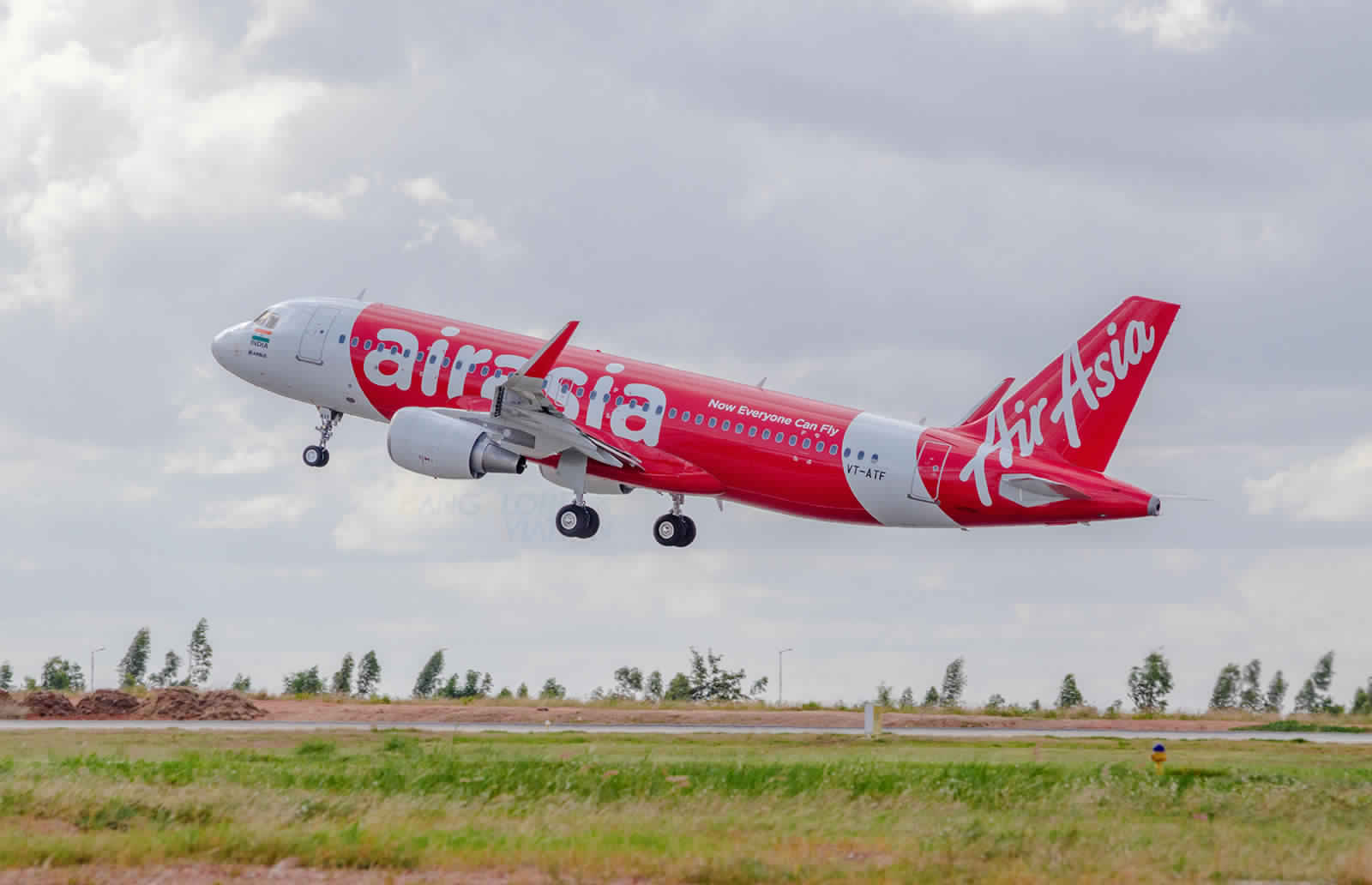
    AirAsia was granted traffic rights by the Malaysian Aviation Commission (MAVCOM) to start five new Asian services from August onwards.

    Mavcom’s latest bulletin shows that these flights will operate from Kuala Lumpur to Guangzhou, Jambi and Tanjung Pandan, alongside Sibu-Singapore and Penang-Kuala Terengganu routes.

    The low-cost airline was also cleared to raise frequencies on two domestic services, while both Malaysia Airlines and Malindo Airwere permitted to add flights internationally.

    Traffic rights on nine domestic and international routes were also returned in July, although Mavcom did not specify operators whose traffic rights were given back. This covers three routes to China, two routes to Nepal, one domestic route, as well as one route each to Indonesia, Japan and Vietnam.

  • AirAsia launches new route to Belitung, Indonesia

    AirAsia launches new route to Belitung, Indonesia

    AirAsia has launched a new route connecting Kuala Lumpur to Belitung, an island off the east coast of Sumatra, Indonesia.

    In a statement today, AirAsia said its four times weekly direct service will commence on Oct 2, 2019.

    AirAsia regional commercial head Amanda Woo said Belitung is a place with huge untapped tourism potential.

    “We hope that with this new direct service, more and more people will be able to discover this hidden gem.

    “The new route is also a testament to our firm commitment to support the Indonesian government in its efforts to develop 10 new priority tourism destinations,” she said.

    To celebrate this new route, AirAsia is offering special all-in AirAsia BIG member fare from as low as RM79 from Kuala Lumpur.

    Passengers were advised to book their flight on airasia.com or the AirAsia mobile app from today until Aug 25 for travel between Oct 2 and March 28, 2020 to enjoy these special fares.

    BIG members will enjoy zero processing fees when making payment using BigPay.

    In addition to the new route, AirAsia also operates daily flights to Belitung from Jakarta beginning Oct 1, 2019.

    AirAsia currently connects Kuala Lumpur to 14 other Indonesian destinations — Jakarta, Surabaya, Medan, Bali, Lombok, Yogyakarta, Pekanbaru, Pontianak, Padang, Palembang, Semarang, Makassar, Bandung and Banda Aceh.

  • Vision Fund Makes $110 Million Bet On Renewable Energy Storage

    Vision Fund Makes $110 Million Bet On Renewable Energy Storage

    Softbank Group’s Vision Fund has made its first foray into energy storage technology with a $110 million investment in Switzerland-based Energy Vault.

    While many countries are keen to use renewable energy as part of efforts to cut carbon emissions in the fight against climate change, the challenge has been to find a way to store it for later use, particularly overnight or when demand surges.

    Inspired by the physics and mechanical engineering used in hydro plants, Energy Vault says its technology enables renewable energy to be stored in 35-ton bricks and delivered as baseload power for less than the cost of fossil fuels at any hour of the day.

    Most rival solutions focus on some form of battery storage, be it lithium ion, sodium-sulphur, lead-acid, among others. While costs have been falling – by nearly 40% since 2015 according to Wood Mackenzie – most degrade over time.

    “Energy Vault solves a long-standing and complex problem of how to store renewable energy at scale,” Akshay Naheta, managing partner at SoftBank Investment Advisers, said in a statement on Thursday, announcing Vision Fund’s $110 million investment. “Energy Vault is highly complementary to SoftBank’s existing energy portfolio and we are pleased to further the company’s global development.”

    Energy Vault launched in late 2018 and has already partnered with Mexican materials company CEMEX and India’s The Tata Power Company as it looks to complete a test phase and then build its first commercially functioning site.

    Despite normally investing at a later stage in a company’s development, Softbank believed Energy Vault could scale quickly and potentially not need to do a later funding round, hence the drive to take an early stake, Naheta said.

    The potential rewards are large. The global energy storage market is expected to reach 22.2 GW in 2023, from nearly 5 GW at the end of 2018, according to a report in May by data and analytics company GlobalData.

    Robert Piconi, chief executive and co-founder of Energy Vault, said despite planning to grow the business country by country, the scale of pent-up global demand for a scaleable solution convinced them to move faster.

    “The Vision Fund shares our passion to combat climate change through innovation in energy storage technologies and, with its support as a strategic partner, Energy Vault is well positioned to meet the large and currently unmet demand for sustainable and economical energy storage worldwide,” Piconi said.

  • AirAsia playing a big role in travel and tourism

    AirAsia playing a big role in travel and tourism

    Tun Dr Mahathir Mohamad acknowledged AirAsia’s significant contribution to Malaysia’s tourism sector since starting operations in 2001 besides creating numerous milestones along the way and being a trendsetter in air travel.The Prime Minister said the evolution of low-cost carriers in the region has been quite phenomenal and that AirAsia’s role in this was obvious.He is confident that the emergence of new technologies in the aviation industry would further propel AirAsia to improve its standing as one of the world’s leading brands.“I was informed that this is the centre of AirAsia’s operations across the Asia Pacific and congratulate AirAsia for spearheading the budget air travel revolution in this region,” he said, when visiting the AirAsia headquarters known as Red Q or Red Quarters, a stone’s throw from the Terminal Two which it operates.

    Mahathir said his last visit to the LCCT (low-cost carrier terminal) was in 2011 and was proud of the Malaysian success story the airline has become.It not only emerged as the world’s best low-cost carrier for the 11th time at the Skytrap World Airline Awards this year but was also briefed that its headquarters even matched those of Google and Facebook.“Obviously this is not the usual office. There is no partition between the staff and heads. Even the top management don’t have partitions,” he said, adding in jest that he thought it was because AirAsia had no money to install partitions. “It reminded me of a phrase that was meaningful to me at one time, i.e nothing to hide,” he quipped and hoped AirAsia would continue to remain open and transparent.

    He noted that AirAsia sets many firsts in the industry such as being the first to sell flights online when the rest of the industry was still using travel agents, the first in Asia to have a mobile app and engage in social media seriously, the first to implement self-service facilities including check-in kiosks, self-bag tag and self-bag drop machines.“Today it is taking its guest experience one step further by showcasing the possibility of future air travel and digital airports in line with Industry 4.0 that involves enhanced connectivity and automation which leads to the creation of smart autonomous systems fuelled by data and machine learning that are more efficient and less wasteful.”He was confident that AirAsia’s innovations like AVA (Airasia Virtual Allstar, AI-powered Chatbots and Faces (Fast Airport Clearance Experiencei) will help propel the industry into the future and hoped to see all these creative innovations in all airports.

    Mahathir also hoped that the new technologies would help AirAsia to continue to put Malaysia on the map as the nation forges ahead with 4.0.“The potential for growth is tremendous and it comes down to knowledge in applications.”Mahathir said businesses should not only arm themselves with new knowledge but also take risks to apply this new-found knowledge to create new products and services to boost productivity and efficiency.In this, he was glad to note that AirAsia was constantly challenging itself in its quest for continuous improvement and innovation.

    As a word of advice, he said success will always bring higher expectations and place one under more scrutiny.“If not careful and unable to meet and resolve some of the more reasonable expectations and criticisms, it may turn against you.“Its all about managing success and this is what AirAsia should give much consideration,” he said, adding that if it remains focussed and innovative, AirAsia is destined for even greater heights.Earlier at the presentation, guests were briefed on how AirAsia grew from just two planes serving two domestic routes in 2011 to 260 planes and over 390 routes across the Asia-Pacific and US with some 600 million people having travelled on it.It also prides in being one of the largest recruiters of women pilots, now numbering 220.Among those present were Transport Minister Anthony Loke, AirAsia x Chairman Tan Sri Rafidahn Aziz, AirAsia Group Exec Chairman Datuk Kamarudin Meranun and AirAsia Group CEO Tony Fernandes.

  • Facebook users will now see reminders and showtimes in movie ads

    Facebook users will now see reminders and showtimes in movie ads

    Facebook has just started to roll out two new ad solutions aimed at film studios that want to increase ticket sales, as well as people who want to find movies they want to see. The new ad solutions, movie reminder, and movie showtime are now available for all film studios in the United States and the UK.

    But what does that mean for consumers? It’s quite simple, if you discover a film that you like months before its release, you will probably need a reminder for when the movie will hit theaters.

    With movie reminder ads, when you see an ad for a film in your News Feed, you will be able to tap an Interested button to receive a reminder in your Facebook notifications when the movie hits theaters. The notification will send you to the movie detail page on Facebook where you will be able to see showtimes and purchase tickets if this feature is available.

    Movie showtime ads for films that are already in theaters is another new feature rolling out today. If you’re interested in a certain movie that appears in an ad on your News Feed, you can tap a Get Showtimes button to go right to the Facebook movie details page to learn more about where and when to see the film.

  • AirAsia launches new sustainability livery

    AirAsia launches new sustainability livery

    Air Asia unveiled its new livery design for their Airbus A320 in Bangkok last week, to promote the message of “Sustainable ASEAN Tourism”.

    The launch coincided with the ASEAN Day celebrations on August 8, marking the 52nd anniversary of the original declaration in 1967, and was attended by Thailand’s Director General of the Department of ASEAN Affairs, the AirAsia Group CEO Tan Sri Tony Fernandes, as well as staff and press from around the region.

    Alongside its signature red wings and tail, the fuselage portrays a stylistic green landscape with a river linking all the major ASEAN landmarks – from the Marina Bay Sands in Singapore to the boats of Ha Long Bay in Hanoi. Myanmar’s famous Kyaikhtiyo and Shwedagon pagodas sit at the very top of the design, beside the tail.

    The ASEAN logo is embedded in the puang malai garland, which is associated with good luck and hospitality in Thailand, appropriately located beside the front passenger door. “Ten trestles hanging from the garland symbolise the ten member states. They collectively form the shape of an outward arrow, representing their striving together in advancing partnership towards sustainability,” said Mr. Vijavat Isarabhakdi, Director General of the Department of ASEAN Affairs in Thailand.

    The design was chosen from over 300 submissions by groups of young artists across Thailand, and will now feature on two aircraft based in Thailand and Malaysia.

    Sustainability has been at the forefront of the company’s brand image in recent years, from its aims to reduce carbon emissions to the recycling of aircraft parts and life-vests.

    The company also participates in engagement programs like the recent Journey-D promotion, which challenges travelers to stay in a community in rural Thailand to help clean up the environment, and “live in peace” for two days – without a mobile phone.

  • Facebook introduces new Group Privacy settings

    Facebook introduces new Group Privacy settings

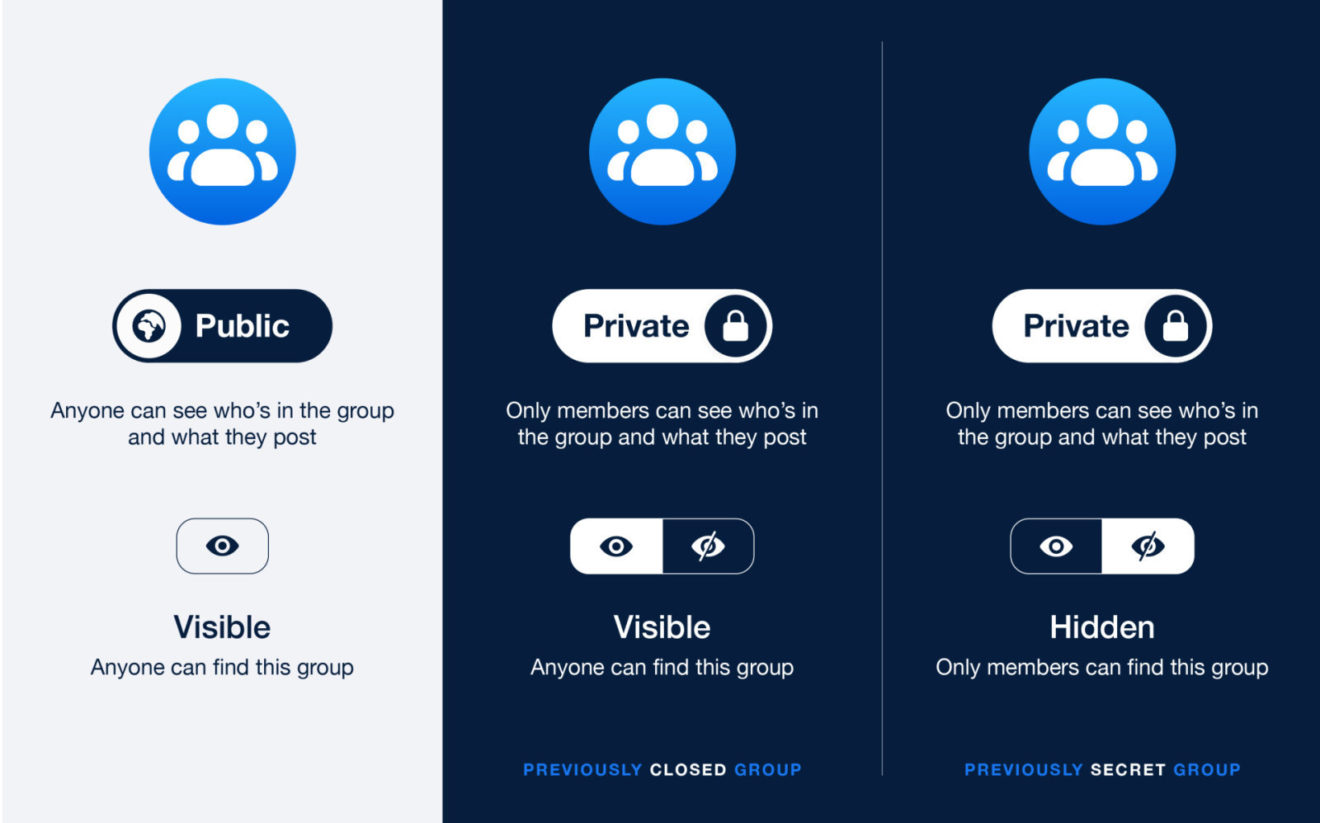
    In an attempt to make Groups easier to understand, Facebook announced the launch of a new simplified privacy model for the feature, public and private. The new Groups Privacy settings include two clear options, which should make the privacy model much more intuitive.

    For example, public groups allow anyone to see who’s in the group and everything that’s shared there. However, in private groups, only members can see who else is in the group and what they’ve posted.

    Also, with the new settings, admins will be able to clearly choose whether or not the group can be found in search and other places. It’s also worth mentioning that by default, a group that was formerly “secret” will now be “private” and “hidden.” On the other hand, groups that are “public” will remain “public” and “visible.”

    All the new options are now available for all admins in their Group Settings, but keep in mind that there are restrictions to if and when an admin can change the privacy setting of a group. However, all the updates made by an admin to the group’s privacy setting will be highlighted for all group members via notifications.

  • Cebu Pacific poised to become largest airline out of Clark

    Cebu Pacific poised to become largest airline out of Clark

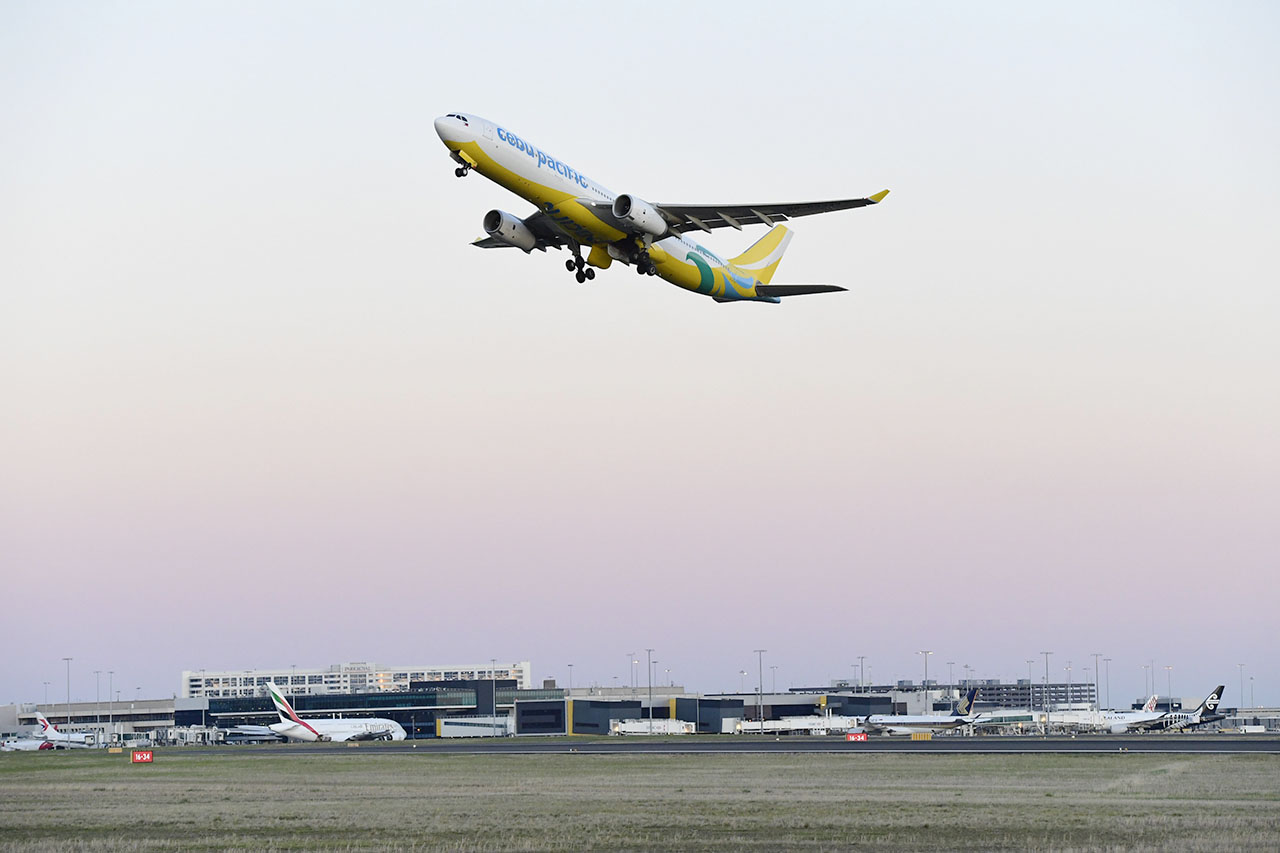
    Philippine low-cost carrier, Cebu Pacific (CEB), is poised to become the country’s largest airline operator out of the Clark airport.

    CEB President and CEO Lance Y. Gokongwei said last week that by October, CEB will be starting the Clark-Puerto Princesa flights and by the end of December, CEB will be the largest airline operator out of Clark.

    He said CEB will fly to seven domestic and four international destinations, about 170 flights per week with almost 30 percent into Clark.

    “We’re very eager to grow here because we inaugurated Clark in 2006 and it is now our 13th year, and we are very supportive of Clark as a tourist and business destination,” Gokongwei said.

    He said next year CEB will add even more destinations as it is set to receive seven more aircraft this year and about 15 more in the next five years.

    “So definitely Clark is in our plans,” he added, especially with the opening of the new Clark passenger terminal which has a capacity of 8 million passengers plus the original four million.

    “So, a lot of room to grow. I do expect that Clark will be our fastest-growing hub in the next five years and I think it will easily triple in the next five years,” Gokongwei said.

    “I think the infrastructure to Clark has definitely improved and by 2024 and 2025 with the railway, it’s going to grow and the constraints in Naia are also supporting the growth of Clark,” he observed.

    “Because if you want to serve Luzon or you want an international hub to the Visayas and Mindanao, then Clark is the place to do it,” he added.

    CEB is the biggest airline with four international destinations out of Clark but domestically, it’s Philippine Airlines, said Alexander Lao, CebGo president and CEO.

    CEB flies to Cebu, Davao, Boracay, Tagbilaran, Bacolod, Iloilo and soon Puerto Princesa domestically. “Our strategy is to keep increasing the number of frequencies on those thicker routes,” Lao said.

    CEB’s future plans include making the four times weekly Narita flights daily and mount flights to Kansai since it is the second largest city in Japan.

    However, long-haul flights out of Clark are not yet in the horizon for CEB because “it is not viable for us,” Gokongwei said.

    “But I think there is enough catchment basin in this area to service domestic and short haul international flights,” he added.

  • Cebu Pacific to begin Cebu-Busuanga flights in October

    Cebu Pacific to begin Cebu-Busuanga flights in October

    Budget carrier Cebu Pacific announced on Thursday, August 15, that it is launching direct flights from Cebu to Busuanga (Coron) in Palawan.

    Cebu Pacific’s subsidiary Cebgo will fly twice daily between the Mactan-Cebu International Airport and Francisco B. Reyes Airport, beginning October 27 this year.

    • 1st flight
      • departing Cebu at 7:25 am, arriving in Busuanga at 9 am
      • (turnaround flight) departing Busuanga at 9:20 am, arriving in Cebu at 11 am
    • 2nd flight
      • departing Cebu at 10:25 am, arriving in Busuanga at 12:05 pm
      • (turnaround flight) departing Busuanga at 12:25 pm, arriving in Cebu at 2:10 pm

    “We believe that these twice daily flights will enable residents from Cebu and other parts of Visayas and Mindanao to explore Palawan, without having to make the trip to Metro Manila to catch their flights,” said Cebgo president and chief executive officer Alexander Lao in a statement on Thursday.

    “With this direct Cebu-Busuanga route, the islands of Coron and Culion are easier to get to. This will also allow locals from the rest of Southern Luzon to easily connect to Cebu and its network of over 20 domestic and 6 international destinations,” he added.

    Cebu Pacific is having a seat sale for the new route from Thursday until Saturday, August 17, with a base fare as low as P299. The travel period is from October 27, 2019 to March 28, 2020.

    Aside from Cebu, Cebu Pacific operates flights out of Manila, Clark, Kalibo, Iloilo, Davao, and Cagayan de Oro.

    Its network covers over 100 routes and 64 destinations, spanning Asia, Australia, the Middle East, and the United States.

  • Wesfarmers to reposition Target

    Wesfarmers to reposition Target

    In a move to differentiate itself from sister brand Kmart, department store Target will see an accelerated transformation to offer higher quality apparel, soft homewares and toys.

    This shift will reposition the department store to compete against more specialty and middle-market offerings, and could keep Kmart and Target from potentially cannibalising one another’s sales.

    As a result, however, approximately 80 head office roles have been restructured. A Target spokesperson confirmed it is aiming to redeploy some of these staff into other parts of its business, or into the wider Wesfarmers group.

    Kmart Group managing director Ian Bailey said he believed it was the right time to recast Target against higher-quality competitors such as Cotton On, Myer, or Country Road, though at a more affordable price.

  • Ariana Grande perfume launched, named after her anthem

    Ariana Grande perfume launched, named after her anthem

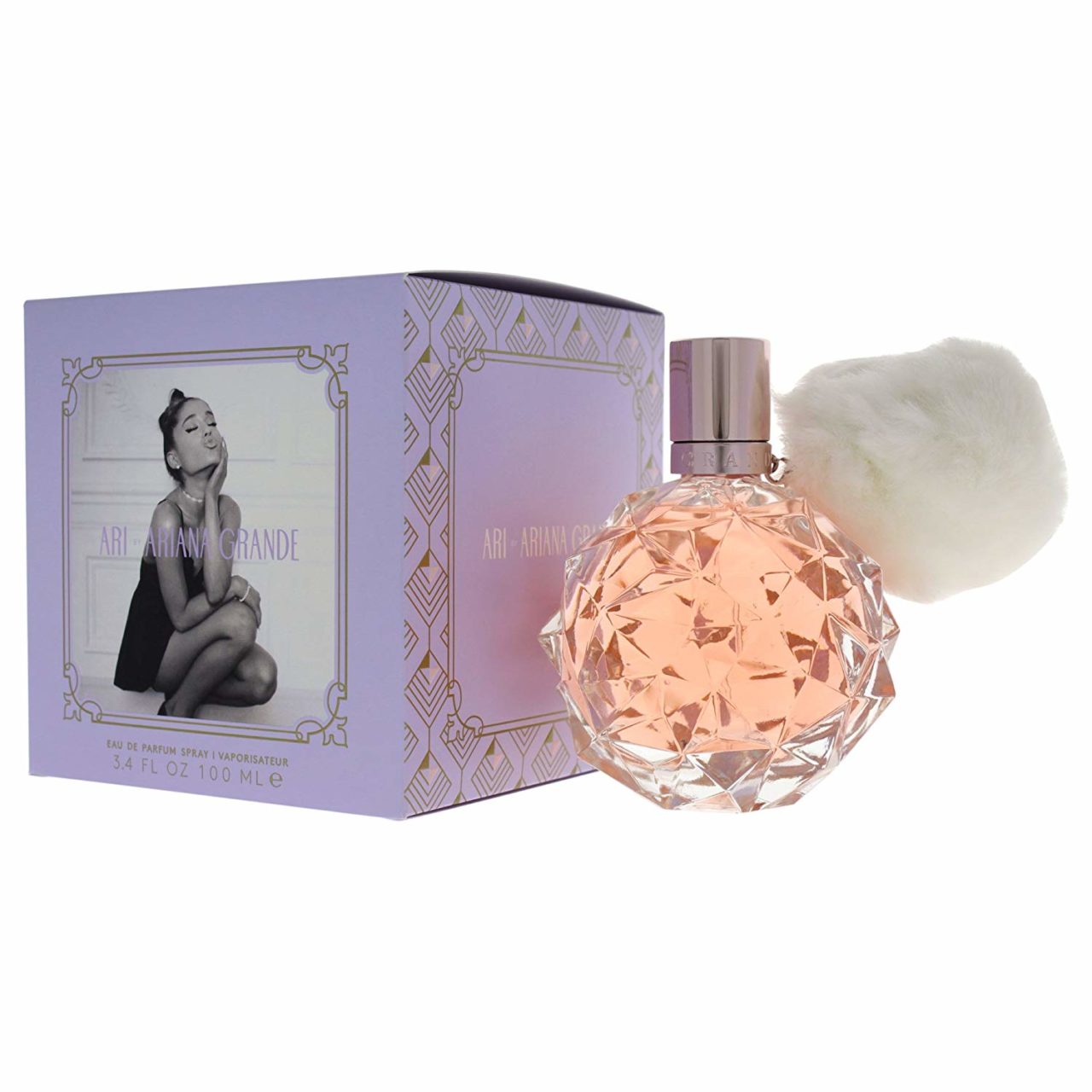
    An Ariana Grande perfume has gone on sale, named after her hit song Thank U Next.

    The fragrance, released in partnership with Luxe Brands, will launch exclusively on Ulta.com on August 18 before going on shelf in Ulta Beauty retail stores US-wide and at Shoppers Drug Mart in Canada on September 1.

    Grande’s hit song debuted at number one on the Billboard Hot 100 and went on to break the record for the most-watched music video with 55 million YouTube views in under 24 hours. Thank U, Next has been regarded as the phrase of the year, symbolising moving on and taking control in a self-affirming way.

    Following her 2019 Fragrance of the Year win for Cloud, Grande has moved to build a stronger platform for her brand by extending the Thank U, Next franchise into a fragrance.

    “For the Thank U, Next fragrance campaign, Grande and Luxe Brands partnered with Hannah Lux Davis to seamlessly weave Grande’s newest fragrance creation into the Thank U, Next world,” said Luxe CMO Noreen Dodge. “Ariana’s creative vision for Thank U, Next perfectly communicates the combination of sexiness and sweetness, while cleverly conveying the details of Ariana’s latest fragrance in a fresh, modern way that is both authentic to Ari and unique to the category.”

    “I wanted to make a fragrance that smells related to my first fragrance Ari but more summery,” said Grande. “So I revisited Ari’s fruity pear and raspberry notes and changed it up by adding some coconut. I was inspired to design a bottle that represented the message of my song – the emergence of the perfume from the broken heart represents moving forward from a challenging chapter.”

    Crafted by Robertet’s Jerome Epinette, the perfumer and artisan behind Byredo and Atelier Cologne, Jerome was inspired to develop new territory with the new fragrance.

    “Each of Ariana’s fragrances surpasses the last and Thank U, Next will be no exception,” said Luxe CEO Tony Bajaj. “The scent, packaging and campaign are all a perfect representation of Ariana’s globally embraced message. It is remarkable how Ariana connects with her fans and shares her incredible passion through everything she does.”

    “Building on the global appeal and success of Ariana Grande, we have strategically grown the international footprint of her fragrance franchise,” said Designer Parfums CEO Dilesh Mehta. “Our success is in partnership with Luxe Brands and our key retail partners Boots and Superdrug in the UK and exclusively with Douglas in over 12 countries.”

  • US retail sales up solidly

    US retail sales up solidly

    The US Commerce Department says retail sales rose a healthy 0.7 per cent last month, a sign of consumer confidence.

    US consumers have spent more at retail stores and restaurants in July, a sign that concerns over slower global growth that have roiled financial markets haven’t dampened consumer confidence.

    The Commerce Department says retail sales rose a healthy 0.7 per cent last month, after a 0.3 per cent gain in June. Online retailers, grocery stores, clothing retailers and electronics and appliance stores all reported strong gains.

    Consumer spending, the primary driver of the US economy, remains healthy even as other sectors of the economy, such as business investment, have weakened amid growing uncertainty over the US-China trade war.

    Job growth is steady, the unemployment rate is near a 50-year low, and wages are rising modestly, which bolsters Americans’ spending power.

    Even department stores reported solid sales increases despite Wednesday’s anaemic earnings report by Macy’s.