Category: General

Retail News Asia is committed to providing both local and global retailers with the latest General Retail news throughout the Asian market. This on a daily base.

  • HMV liquidation sale starts Thursday

    HMV liquidation sale starts Thursday

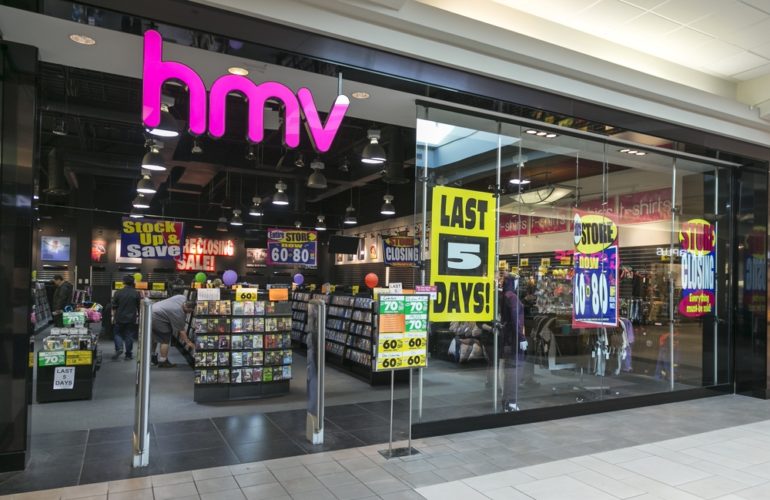
    A giant HMV liquidation sale kicks off on Thursday in Wan Chai as the failed retailer’s liquidator tries to recover some cash to return to creditors.

    Wong Sun-keung of Vision AS, who is overseeing HMV’s liquidation, had originally planned to sell several containers-full of stock recovered from shuttered stores by way of a tender. However he says the prices submitted by 10 bidders were so low, it was decided to proceed with an HMV liquidation sale instead, despite the high overheads of leasing space and hiring staff.

    Vision AS says 50,000 DVDs will go on sale along with 20,000 music CDs, 24,000 Blu-ray discs and 9000 vinyl records. The remainder of the stock includes headphones, iPhone and tablets and other electronic goods.

    The HMV liquidation sale will run from August 15 to August 29 at W Square in Wan Chai. Doors will open between 11am and 9pm.

    Former employees of the company and creditors will have access to a restricted presale on Wednesday night.

    It is expected that only cash will be accepted as payment.

  • Cebu Pacific launches P99 domestic seat sale starting Monday

    Cebu Pacific launches P99 domestic seat sale starting Monday

    Budget carrier Cebu Pacific on Monday announced a P99 seat sale for domestic flights one-way from Clark International Airport.

    In an advisory, the airline said the sale started Monday, August 19, and will end on Wednesday, August 21.

    The travel period is from October 1, 2019 to January 31, 2020.

    The P99 one-way flights are Clark to Bacolod, Bohol, Boracay (Caticlan), Cebu, Clark, Davao, Iloilo, and Puerto Princesa.

    Aside from Clark, Cebu Pacific operates flights out of six other strategically placed hubs in the Philippines: Manila, Kalibo, Iloilo, Cebu, Cagayan de Oro (Laguindingan) and Davao.

    The carrier operates over 2,000 weekly flights across 37 domestic and 26 international destinations.

  • Singapore retail sales slip in June

    Singapore retail sales slip in June

    Singapore retail sales – excluding motor vehicles – decreased by 2.7 percent in June, according to Statistics Singapore.

    The headline figure, which includes motor vehicles, was down 8.9 percent, reflecting the high volume of cars sold in June last year and a lower COE quota for May to July this year.

    Month-on-month, Singapore retail sales were down 0.4 percent, excluding vehicles.

    Online accounted for 5.5 percent of the S$3.5 billion in retail spending for June.

    Sales of furniture & household equipment declined 15.1 percent year on year, attributed to higher sales in the sector during last year’s Hari Raya festive season. Similarly, the computer & telecommunications equipment and watches & jewelry sectors reported sales down by 7.7 percent and 4.8 percent respectively, driven in part by lower demand for handphones and jewelry.

    Sales of medical goods & toiletries and of apparel & footwear both grew by 1.4 percent.

    Compared to the same period last year, sales of food & beverage services grew by 5.3 percent in June, estimated at $864 million, compared to $820 million in June last year.

    Sales by fast-food outlets grew by 10.6 percent compared to June last year, due partly to the opening of new outlets by some major fast-food chains. Food caterers, restaurants and other eating places (such as cafes)were up by between 3.2 percent and 5.7 percent during the period.

  • Changes force all Android reminders to go through Google Assistant

    Changes force all Android reminders to go through Google Assistant

    In addition, Google is now forcing all reminders to go through Google Assistant. Android users were once able to add a reminder or edit one through the Google app if Assistant was disabled. Now, if you try to do this, a prompt appears telling you to turn on Google Assistant since the virtual digital assistant “is ready to help you get things done.” You won’t be able to do anything reminder-wise unless Google Assistant is turned on. If you have your phone set to a language not supported by Google Assistant, you won’t be able to set reminders on the phone.

    Also changed is the user interface which is now done up in Material Design. The new UI eliminates the gray dividers, and the blue floating button is now in Google’s four-color plus sign. Each reminder includes a checkbox replacing a swipe. And reminders that are overdue will jump out at users thanks to a big red badge that says “OVERDUE” in caps. Additionally, the UI for creating a reminder no longer automatically asks you to choose a place where you want to be reminded. If you want the reminder to appear at a certain location, you will have to ask Assistant to “remind me to (fill in the blanks) when I get to (a specific location).”

    The changes have already hit our Pixel 2 XL and could very well be on your Android phone as well.

  • Google Maps AR navigation is rolling out in beta on Android and iOS

    Google Maps AR navigation is rolling out in beta on Android and iOS

    Google Maps Live View—a new AR navigation mode that uses imagery from your phone’s camera—will be rolling out in beta on Android and iOS in the coming weeks. Live View takes advantage of your phone’s camera and Google Maps’ vast database to deliver a unique AR (augmented reality) navigation experience that layers the Maps interface over a real-time feed from the camera. It was previously demoed last year, and has been available to Google Local Guides level 5 and up, as well as Pixel phone owners, but it’s about te see a broader release later this month.

    To use Google Maps Live View, you’ll need a phone that supports ARKit, in the case of iPhones, and ARCore, in the case of Android devices. Of course, Live View is also going to be available only in regions where Street View is available, TechCrunch reports.

    To use Live View, you’ll need to tap the “Start AR” button and hold up your phone like a viewfinder. This brings up a screen that’s quite reminiscent of a video game, in that you’ll see the world around you, but with virtual elements (like arrows and signs) layered over your surroundings.

    To pinpoint your coordinates, Maps uses your phone’s rough GPS location and Street View’s vast image database to determine exactly where you are. To achieve this, the app takes a series of images, which have a known location, and analyzes them for key visual features (like the outlines of buildings and bridges), in order to create a large-scale index of these features. Then, to localize you, the system compares features in the database to imagery from the live camera feed. Using machine learning, it is able to discern between transient features, such as dynamic lighting and construction work, and the permanent features of the scene.

    Google warns that using Live View in Maps will lead to slightly increased battery and mobile data consumption. The feature is expected to roll out in beta on Android and iOS in the coming weeks.

  • New iMessage exploit allows hackers to hijack your iPhone by simply sending you a message

    New iMessage exploit allows hackers to hijack your iPhone by simply sending you a message

    A new, “interaction-less” bug in iMessage was recently discovered that could allow hackers to gain access to your iPhone. The exploit being interaction-less means that you don’t need to do anything—download any files or click any suspicious links—to get your device compromised. What’s even worse, you don’t even need to open the iMessage app for the exploit to work.

    At the Black Hat security conference in Las Vegas this week, Google Project Zero researcher Natalie Silvanovich showed off a number of these so-called interaction-less bugs in iMessage that could be used to gain remote access to an iPhone. Apple has already patched five of them, but there are a handful that are yet to receive the company’s attention.

    Following the recently uncovered vulnerabilities in WhatsApp, Silvanovich and her colleague Samuel Groß started investigating for similar exploits in SMS, MMS, and voicemail but found none. Then, they shifted their attention to iMessage and started reverse-engineering the app, which lead to some worrisome discoveries.

    According to the researchers, the vulnerabilities that they uncovered in iMessage are likely a result of the complex (and ever-expanding) nature of the app. Apple’s messaging client not only allows users to send each other files, voice messages, photos, and Animojis, but also has many integrations with third-party apps, like OpenTable and Airbnb. This makes securing every potential backdoor increasingly difficult, though the researchers claim that Apple is actually doing a good job.

    Silvanovich says that iOS has many security checks in place, but the bug she and Groß discovered takes advantage of the underlying logic of the operating system, which makes it possible to bypass the security net. A potential attacker could send a targeted iMessage with specific content in it that Apple’s servers would interpret in a certain way and send the target a message that would then automatically trigger the exploit, granting the attacker access to the phone.

    Interaction-less bugs are highly sought after in the hacking community, as they don’t require the target to do anything. The iMessage vulnerabilities discovered by the Google Project Zero members could fetch prices in the vicinity of “millions or even tens of millions” on the exploit market.

  • Coles claims former employee stole $1.9 million

    Coles claims former employee stole $1.9 million

    Coles is suing a former employee for allegedly stealing more than $1.9 million from the company.

    The supermarket claims that Aaron Baslangic, former head of strategic initiatives and B2B for Coles Online, submitted phoney invoices requesting payment to third parties, and in some cases faked the approval of his supervisor for payments that were above his authority limit.

    In documents filed with the Supreme Court of Victoria over the past two weeks, the supermarket said it has identified 13 questionable payments made to BMW Australia, the Autralian Taxation Office and other businesses from February to June of this year.

    The amounts range from $48,000 to $413,139. More than $1.5 million was paid to a business called Katana Services, whose assets were frozen by the Victorian Supreme Court on July 30, alongside Baslangic’s assets.

    Coles said it first discovered the questionable transactions during a review of payments prior to its migration to a new platform.

    “Irregularities were detected by our internal finance checks and we promptly obtained a freezing order from the Victorian Supreme Court,” a spokesperson for Coles told Inside Retail.

    The transactions caught the eye of Coles’ finance team because some were unsupported by invoices, some were supported by invoices sent from a personal email address for Baslangic and some were for amounts above Baslangic’s authority limit.

    Five of the 13 payments were for more than $75,000, which was Baslangic’s personal authority limit. Payments above this amount required the approval of his line manager Karen Donaldson, general manager of Coles Online.

    But while the accounts team received emails from Baslangic indicating Donaldson’s approval, Donaldson said in an affidavit that she had no prior knowledge of those emails and did not approve the payments.

    Cameron Newell, head of corporate business protection for Coles Online, said in an affidavit that he could find no emails from Baslangic to Donaldson requesting approval, or from Donaldson to Baslangic granting it, suggesting that Baslangic faked his supervisor’s go-ahead.

    Donaldson said she has worked closely with Baslangic since February 2017, when he was employed by Coles’ finance team and worked as a senior finance business partner with Coles Online. He was appointed head of strategic initiatives and B2B for Coles online on July 1.

  • Google Search update lets users find their favorite Podcasts easier than ever

    Google Search update lets users find their favorite Podcasts easier than ever

    The Search app is getting even more changes, Google announced earlier. This time all the changes are aimed at those who are often looking for podcasts to listen to via Search. Currently, there are more than two million podcasts on the web, which makes it harder to find the one you want.

    Luckily, the latest update makes searching for podcasts easier than ever. Starting today, those who search for a podcast about a specific topic on Google will get results in the form of playable episodes alongside web pages, news, images, and videos.

    According to Google, these results will be displayed based on the company’s understanding of what’s being talked about on a podcast, which will provide users to even more relevant info about a topic in audio format. Moreover, Google says that we’ll soon no longer need to use the term “podcasts” when we search to see episodes.

    But there’s more, as Google confirmed that the same feature will come to Google Assistant and Google Podcasts for web, which will allow users to ask the Assistant for podcasts about a certain topic.

    It’s important to mention that these new features will be available starting today, beginning with people using English in the United States.

  • Retail sales in Indonesia decline

    Retail sales in Indonesia decline

    Retail sales in Indonesia declined 1.8 percent in June, compared with an annual growth rate of 7.7 percent a month earlier, a central bank survey showed on Thursday.

    The last decline from a year earlier was in January last year when retail sales also dropped 1.8 percent.

    The survey predicted retail sales would rise 2.3 percent on an annual basis in July, when the new school year begins.

  • Cebu Pacific to assess Mati City flights when airport is ready

    Cebu Pacific to assess Mati City flights when airport is ready

    Budget Carrier Cebu Pacific is ready to assess the viability of flights to Mati City, the capital of Davao Oriental province, as soon as the development of the airport for commercial operations starts. Cebu Pacific Director for Corporate Communications Charo Logarta-Lagamon said in an interview last week that they have always been open to that opportunity.

    “Mati has always been on our radar. But as of now, there is nothing concrete yet given that the airport is not 100% done and there is still a lot of technicalities that need to be ironed out before we can use it for commercial flights,” she said. Ms. Lagamon noted that an online campaign a few years back indicated interest for Mati among travelers. “Mati is one of the choices of netizens. Obviously, there is some market but how big the market is and will that market be viable and sustainable, that is something we need to assess,” she said.

    Last month, Mati City Mayor Michelle Nakpil-Rabat said they are working on land ownership issues relating to the airport so that they can undertake the runway expansion and open it for commercial flights. Meanwhile, Ms. Lagamon said they continue to evaluate potential routes to and from Davao City while “beefing up our Cebu and Clark hubs.” “In fact, we are launching new routes on August 9,” she said.

  • Cebu Pacific offers P88 fare promo for domestic flights

    Cebu Pacific offers P88 fare promo for domestic flights

    Cebu Pacific early Thursday announced a seat sale promo for all domestic and international flights.

    Passengers can avail of the P88 one-way base fare for local flights while one-way base fare for international flights starts at P888.

    Booking period is only available from Aug. 8 to Aug. 9, the airline said.

    Travel period for promo flights are from Dec. 1, 2019 to April 30, 2020.

  • AirAsia may face fines for charging processing fees for card and online banking transactions

    AirAsia may face fines for charging processing fees for card and online banking transactions

    low-cost carrier AirAsia could still face fines for charging passengers additional processing fee for card and online banking transactions. This comes right after AirAsia Group CEO, Tan Sri Tony Fernandes had announced that the airline will scrap the processing fee beginning October 2019.

    The Malaysian Aviation Commission (Mavcom) had made it compulsory for all airlines in Malaysia to remove hidden charges such as card payment charges and administrative fee effective 1st June 2019. The amendments to the Malaysian Aviation Consumer Protection Code 2016 (MACPC) also require airlines to refund the passenger service charges, taxes, fees and charges prescribed under any written law for both refundable and non-refundable tickets if a passenger did not travel. Refunds must be reimbursed within 30 days and airlines are only permitted to charge a maximum of 5% processing fee if the ticket is non-refundable.

    It was also reported that the Mavcom will issue a show-cause letter to airlines on the violation of the MACPC and the commission will then determine if the airline has contravened the said provision. The commission highlights that it is compulsory for airlines to remove the processing fee and airlines must also disclose the final price of the airfare both at the point of advertisement and prior to the consumer purchasing the flight tickets.

    They added that the final price must include the base fare and all required charges to be paid to the airline, government-imposed taxes, fees as well as fuel surcharge. This, according to the commission, will eliminate hidden charges such as card payment charges and administrative fees.

    The regulator said that it has been a practice in the past where the price increases after selections are made due to additional charges that were not disclosed upfront. The Edge Markets had reported that it may seem that AirAsia and AirAsia X would be liable for contravening the MACPC as they continue to charge processing fees until 30th September 2019.

    As mentioned earlier, AirAsia charges card processing fee as high as RM12 per passenger per flight depending on the destination. This means a return ticket could cost as high as RM24 for processing fee and if you’re travelling in a group of four, that’s equivalent to RM96 for processing fees alone.

    When Tony Fernandes was asked if Mavcom had ordered AirAsia to remove the transaction fees, he denied it on Twitter.

    At the moment, AirAsia encourages its passengers to pay by BigPay prepaid Mastercard to enjoy zero processing fees for their flight tickets. It is also worth pointing out that Bank Negara Malaysia had decreed that merchants cannot impose surcharges for payments using debit and credit cards.

    The same report also highlighted that AirAsia had stopped charging a RM3 klia2 fee on passengers departing from klia2 after it was made illegal by Mavcom. According to AirAsia, the extra fee was to cover the huge amount of extra cost klia2 has created such as aerobridges and the SITA check-in/boarding systems. Although it wasn’t disclosed in AirAsia’s annual report, The Edge Markets estimated that the airline would have collected RM45.24 million from the RM3 fee based on the number of passengers carried by the group from Malaysia Airports Holdings Bhd’s 2018 annual report.

  • Qatar Innovation Week is celebrating the value of Future Technologies This November.

    Qatar Innovation Week is celebrating the value of Future Technologies This November.

    Reiterating what the CEO of Google, Sundar Pichai had said, “AI may become more profound than fire or electricity.” Artificial Intelligence, in all probabilities, is becoming an economic arsenal for most countries around the world today, including the West Asian country that sits on the Arabian Peninsula. Yes, we’re talking about Qatar, the country with one of the richest economies in the world. With a blueprint already in place to set the nation in the right direction, Qatar has joined the AI revolution among other leading countries of the world.

    For what can serve as a powerful technological enabler for the Qatar National Vision 2030, the country could harness all the innovation narratives around future cutting edge technologies from top experts to make this vision a reality.

    Talk about a festival that celebrates the value of future technologies. That is exactly what Qatar Innovation Week aims to deliver this November 2019. In what is going to be one of the biggest, grandest and most flamboyant technology festivals for avid tech enthusiasts, and for the best interest of Qatar – governments, enterprises, sports, investors, researchers, academicians, policymakers, startups and solution providers, the 3-day comprehensive innovation festival will centre on three separate technology events in a row that include World 5G Show (Inaugural edition under the theme of ‘5G Rollout to Propel Qatar’s Goal’), World AI Show (As part of the global series, WAIS is to be introduced in Qatar this year for the first time) and the Industry 4.0 Masterclass by Henrik von Scheel, all in all to usher Qatar towards producing world-class AI applications in areas of national interest.

    Given that the 2022 FIFA World Cup is just around the corner and the first World Cup ever to be held in the Arab world, Qatar-the host country is reinvigorating its AI-enabled infrastructure to accommodate the massive influx of visitors for the upcoming world cup. By synergizing artificial intelligence-based applications and the power of 5G technology in areas such as transportation, logistics and live video streaming –  immersive Virtual Reality (VR) and Augmented Reality (AR) of the game to enhance viewing experience, Qatar Innovation Week is designed with the specific goal of stimulating strategies among stakeholders to catalyse the creation of AI-based solutions.

    When asked about the inspiration behind such an ambitious project, the CEO and founder of Trescon, Mohammed Saleem said, “Qatar is the first nation to launch the 5G network commercially, and with the 2022 FIFA World Cup that is set to take place, it is the perfect time to create a platform that can drive opportunities for new businesses based on AI and 5G technology. Qatar Innovation Week will support the Qatar National Vision 2030 by bringing together governments, AI solutions providers, renowned international experts and foreign investors to strengthen the nation’s infrastructure capacity.”

    In a bid to attract the world’s brightest minds from across the globe, Qatar’s first edition of World AI Show will also play host to the regional finals of the Startup World Cup, organised in association with Pegasus Tech Ventures, a Silicon Valley-based multinational VC firm. There will be 40+ regional events across North America, South America, Europe, Africa, Asia, and Australia, leading up to the Grand Finale in the US Silicon Valley, where the global champion will be awarded a US$ 1 million investment prize.

  • AirAsia Wants Tools to Engage Customers Moving to Messaging Apps

    AirAsia Wants Tools to Engage Customers Moving to Messaging Apps

    Consumers now want to talk to businesses and find resolutions the way they talk to their friends and family, and this is pushing a big transition towards messaging channels, according to Adam Geneave, chief customer happiness officer for the low-cost Asian airline.

    The carrier added support for Tencent’s WeChat in China earlier this year and was seeing significant adoption for the platform, Geneave said in an interview. In fact, the messaging tool since had grown to become AirAsia’s biggest communication channel in the Chinese market, he noted.

    The airline’s engagement with customers through such channels played a key role in its business strategy as they enabled consumer queries to be addressed quickly, he said, and urged technology and other solutions providers to integrate messaging tools into their products.

    According to Geneave, AirAsia currently provides WeChat support via a plugin developed by Salesforce.com, which suite of products had been rolled out over the past year as part of the airline’s overhaul of its customer service infrastructure. These included Salesforce Sales Cloud, Marketing Cloud with Social Studio, Service Cloud, and Community Cloud.

    The deployment enabled AirAsia service agents across eight markets to access a unified view of customer cases from all communication channels, encompassing online, email, live chat, phone, and airport communications.

    With the transition into messaging evolving so rapidly, though, it has been difficult for the airliner and its technology partners to keep pace, Geneave said. For instance, support for Facebook’s WhatsApp still was lacking, he noted.

    “We have been very vocal in wanting such support, including for Line and KakaoTalk,” he said, noting that WhatsApp processed 65 billion messages a day worldwide and there were 1 billion active WeChat users. “The way people are interacting is changing.” He attributed AirAsia’s plans to close all its call centers this year in part as a response to this trend.

    The airline is estimated to fly 100 million passengers this year and 20 million of its service cases each year are facilitated on Salesforce platforms, which currently support more than 22,000 AirAsia employees in nine languages.

    The data that runs through these systems also allow the airline to deliver personalized experiences and facilitate better decision-making.

    Geneave explained that the different datasets were collated onto a single platform and managed at AirAsia’s command center. This was manned by duty managers who would track Salesforce dashboards to identify patterns that could affect its business and monitor tweets as well as other social media messages coming through on Social Studio.

    This provided valuable learnings about its customers and, with these insights, enabled his team to work on projects and improve processes and systems to further enhance customers’ engagement with AirAsia, he said.

    The ability to study the data and identify emerging trends also meant his team could be aware of service outages even before the IT team was alerted of it, he noted, adding that his team also tracked other relevant developments such as airports and other airlines that might and might not compete directly with AirAsia.

    The airline in January also introduced its artificial intelligence-powered (AI) chatbot, named AVA, which could handle eight languages including Bahasa Indonesia, Vietnamese, and Simplified Chinese.

    Geneave said the chatbot had been performing well and handled a significant chunk of queries coming through on its live chat. AVA also was deployed on the airline’s Facebook Messenger platform.

    Apart from operating on a strong knowledge base, he said the chatbot also continued to learn from conversations it had with customers. His team also trained it on a daily basis, he added.

    AVA’s deployment was critical to enable the airline to be more agile in the way it managed its customers, he said, noting that the chatbot could take on a significant volume and allow queries to be handled more quickly.

    Geneave also pointed to the emergence of AI and machine learning technologies as a crucial development as these would further enable AirAsia agents to react more quickly and identify trends that otherwise would have taken hours to analyse.

    Beyond customer services, too, it would give airlines the ability to save fuel – for example, by improving the way it scheduled crew rosters and managed its resources, he said.

  • South Koreans start boycotting Japanese retail goods

    South Koreans start boycotting Japanese retail goods

    As a South Korean consumer boycott of Japanese goods gains momentum, consumers are starting to share information on new and upcoming Japanese retailers coming to the country.

    The intention, reports Korea Bizwire, is to include the retail brands on the boycott list and hurt sales as soon as the stores open. Among them, Japanese brands GU and Muji are being mentioned online as possible targets.

    GU is Uniqlo’s sister brand, owned by Fast Retailing. It plans to open its second and third stores in Yongin, Gyeonggi Province and Seoul’s Times Square Mall by early next month.

    Netizens are posting articles that emphasize the relationship between Uniqlo and GU as well as FRL Korea, which currently operates the Uniqlo Korea business.

    Discord between the two countries dates back to Japan’s colonial occupation of the Korean Peninsula before and during the Second World War and controversy over forced labor and sexual slavery. It expanded into a diplomatic crisis last week when Japan threatened to throttle exports of materials essential to South Korean industries.

    Last weekend, thousands of protestors marched in Seoul, accusing Japan of an “economic invasion”. The boycott campaign against Japanese retailers has stemmed from there.

    South Korea’s Lotte Shopping and Japan’s Fast Retailing invested US$19.7 million to establish FRL Korea, owning 49 percent and 51 per cent of the company’s shares, respectively.

    That business partnership is being subject to public criticism for taking the lead in importing Japanese goods into South Korea after GU set up its flagship store at Jamsil’s Lotte World Mall and its second franchise at Lotte Mall in Yongin.

    Muji, one of the best-known Japanese brands on the boycott list, is planning to renovate its store in Times Square Mall later this month.

    The news is being shared on social media, and many netizens are already calling for a boycott of the new store.

    GU and Muji have no current plans to suspend expansion or shut down stores already in operation. However, experts who spoke to Korea Bizwire agree that the new stores won’t be able to attract customers through the ‘grand opening’ effect unless the boycott movement subsides.