Category: General

Retail News Asia is committed to providing both local and global retailers with the latest General Retail news throughout the Asian market. This on a daily base.

  • Singapore Airlines, Silkair and Vistara to expand codesharing to international flights

    Singapore Airlines, Silkair and Vistara to expand codesharing to international flights

    Passengers traveling with Singapore Airlines (SIA), Silkair and Vistara will have more international flight options as the Singaporean flag carrier and its regional arm, Silkair, signed an agreement with Indian carrier Vistara to expand codesharing to international routes.

    Under the expansion of an existing codeshare agreement which covers Indian domestic flights, SIA and Silkair will add nine new codeshare destinations within India on Vistara-operated flights. The following destinations will be added: Chandigarh, Dibrugarh, Jammu, Leh, Pune, Raipur, Ranchi, Siliguri and Srinagar. SIA will add its ‘SQ’ designator code to Vistara’s new international flights.

    Vistara will add its ’UK’ designator code to SIA and Silkair-operated flights between Singapore and eight destinations in India, including Ahmedabad, Bengaluru, Chennai, Cochin, Hyderabad, Kolkata, Mumbai and New Delhi. As part of the arrangement, Vistara will codeshare on services to more than 40 destinations from Singapore to Australia, New Zealand, Cambodia, Indonesia, Malaysia, Vietnam, Thailand, Taiwan, Japan and the US.

    “These codeshares will be implemented in phases and are subject to regulatory approvals,” reads a press release from the airline.

    “We’re happy to deepen this strategic partnership which means a more seamless flying experience for travelers from India to destinations across Asia, Oceania and the United States,” said Vistara’s chief strategy officer Vinod Kannan.

    The codeshare flights will progressively be made available through SIA and Vistara booking channels once necessary regulatory approvals are obtained, according to the airline.

    Vistara is a joint venture between Singapore Airlines (SIA) and Indian company Tata Sons. It will begin its first international flights by offering daily flights to Singapore from Delhi and Mumbai operated by a Boeing 737-800NG aircraft, starting 6 and 7 August respectively.

    Earlier this year, Vistara signed a codeshare agreement with United Airlines. This agreement expanded the US carrier’s network to over 20 destinations throughout India. Over the past two years, Vistara has also signed codeshare deals with Japan Airlines, British Airways, as well as Singapore Airlines and Silk Air.
  • Singapore Airlines launches new mobile app

    Singapore Airlines launches new mobile app

    Singapore Airlines has launched a new mobile app for Android and iOS smartphones.

    The app, based on a ground-up rebuild and all-new underlying technical architecture, is designed to significantly enhance booking and check-in flows, and improve transaction time by up to 60%.

    In addition to significant improvements in existing functions, the new app introduces several entirely new features, including:

    • ‘Capture & Discover’ – a new search function that uses image recognition as well as speech and natural language processing to identify user intent, match it to a Singapore Airlines destination, and present relevant destination content and fair deals.

    • ‘Translation Assistant’ – a feature that uses real-time language translation by voice to help travelers communicate better when they are overseas.

    • ‘Measure Your Baggage’ – to help travelers determine if the size of their bag is within cabin baggage limitations.

    Amongst the many improvements in existing functionality, real-time information such as boarding gate details, the destination’s weather, and currency, and baggage belt information have been added to the “My Trips” function.

    The new app also sees enhancements such as a newly designed KrisFlyer account dashboard and the introduction of an ‘Inbox’ feature, which stores push notifications as well as KrisFlyer messages for easy reference.

    “Singapore Airlines has been investing heavily to enhance our digital capabilities. With new user interface designs and insourcing of developer and customer experience talent, we are working to provide faster and more customer-centric products and services to improve the customer experience,” said Senior Vice President Sales and Marketing, Mr Campbell Wilson. “The launch of our new app follows many other digital innovation initiatives, such as KrisPay, the world’s first blockchain-based airline loyalty digital wallet, and the progressive redesign of our website and its underlying architecture. Improvements to our mobile app will not stop here and we will continue to invest our efforts to add value to our customers’ experience.”

    The new app will be available for download progressively, following the beta launch that began in October 2018. For Android users, the new app is being released by countries progressively between July and September 2019, while iOS users may download the new app from the App Store in September 2019. The beta version will continue to be available for download in the meantime.

  • Singapore Airlines picks crucial fight against Emirates in India

    Singapore Airlines picks crucial fight against Emirates in India

    Singapore Airlines Ltd just picked a fight with Emirates in a grab for India’s international travelers, and a slice of one the world’s fastest-growing aviation markets.

    Singapore Air’s unprofitable Indian venture, Vistara, launched its first overseas service between New Delhi and Singapore late on Tuesday. It’s the start of an uphill battle against Middle East airline giants, led by Emirates and Etihad Airways, that dominate India’s offshore routes.

    For Singapore Air, ambushed all over South-east Asia by budget airlines, the prize is clear. The number of passengers in India will more than triple to 520 million by 2037, the International Air Transport Association says. And of the 63 million people that flew to and from the country last year, two-thirds were carried by foreign airlines.

    Vistara’s maiden offshore flight is due to touch down at Changi airport early on Wednesday.

    Vistara, 49 percent owned by Singapore Air and 51 percent by Indian conglomerate Tata Group, started out in January 2015. India doesn’t allow foreign airlines to fly between local airports unless they partner with a local company to start a domestic airline.

    The carrier operates 30 Airbus SE and Boeing Co jets and has a local market share of 5 percent, the smallest among six major players. It also plans to fly to Dubai and Bangkok. According to the CAPA Centre for Aviation, Vistara could break even in the year ending March 2020.

    Vistara is a key element of Singapore Airlines’ multi-hub strategy, and the launch of international operations offers additional opportunities to it, a spokesman for the South-east Asian carrier said. He declined to comment on competition. A representative for Vistara referred queries to Singapore Airlines, while Emirates declined to comment.

    Still, airlines from the Middle East have history on their side. They’ve traditionally flown westbound Indians to Dubai and Abu Dhabi on ultra-cheap fares, before putting them on a flight to Europe or North America. Emirates, often dubbed the “unofficial national carrier of India”, controlled almost 15 percent of the market to and from India last year, regulatory data compiled by Bloomberg showed.

    The fares offered by low-cost airlines in India’s notoriously price-sensitive market are another challenge for Singapore Air. A Vistara flight to Singapore from New Delhi on Aug 28 costs 17,379 rupees (S$338), according to online travel agent Makemytrip.com. In comparison, AirAsia Bhd was offering a flight at less than half that price, at 7,745 rupees, albeit with a stop in Kuala Lumpur.

  • AirAsia names new Philippines CEO

    AirAsia names new Philippines CEO

    AirAsia has named telecommunications executive Ricardo RickyIsla as the new CEO of AirAsia Philippines.

    Isla joins AirAsia after more than a decade of international product development, sales and distribution experience with telecommunications giant PLDT Global Corporation.

    In addition to his most recent role as regional head of operations for the United Kingdom and Europe, Isla has held general manager positions in its international retail business, as well as in the US, Italy and Singapore.

    AirAsia Philippines’ chairman Maan Hontiveros said: “I am thrilled to welcome Ricky to our senior leadership team. Ricky has an outstanding track record of leading and transforming businesses, especially when it comes to increasing revenue and market share.”

    He commenced his role as CEO of AirAsia Philippines 31 July.

    AirAsia Philippines operates a fleet of 24 aircraft on more than 500 weekly domestic and international flights from its hubs in Manila, Clark, Cebu, and Kalibo.

  • Fung Group sells Circle K retail network

    Fung Group sells Circle K retail network

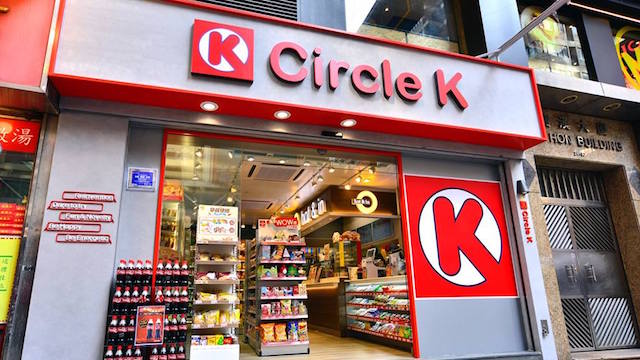
    Fung Group has sold its Guangzhou Circle K-store network to Chinese retailer Suning for an undisclosed sum.

    Facing intense competition in the mainland convenience-store market, the network of 61 outlets has failed to make a profit since the brand’s launch there in 2002. The Guangzhou Circle K business recorded a net loss of HK$21.4 million in 2014 before then parent Convenience Retail Asia sold the business to its 41-per-cent shareholder Fung Group the following year for $48 million (US$6.12 million). Since then, Fung Group has closed at least 12 stores there.

    Suning Xiaodian, Suning.com’s convenience-store business, will take over the Guangzhou Circle K stores, broadening its footprint in the city.

    Convenience Retail Asia continues to own and operate more than 300 Circle K stores in Hong Kong, Macau, and Zhuhai.

    The president of Suning’s consumer-goods business, Bian Nong, said Circle K’s experience in merchandising, supply chain and store management will supplement Suning’s existing operations in Guangzhou.

    Suning has been rapidly expanding its brick-and-mortar store business in recent months, acquiring supermarkets from Carrefour and the Chinese business of Spanish grocer Distribuidora Internacional de Alimentacion.

  • FamilyMart Taiwan rolls out small railway-station stores

    FamilyMart Taiwan rolls out small railway-station stores

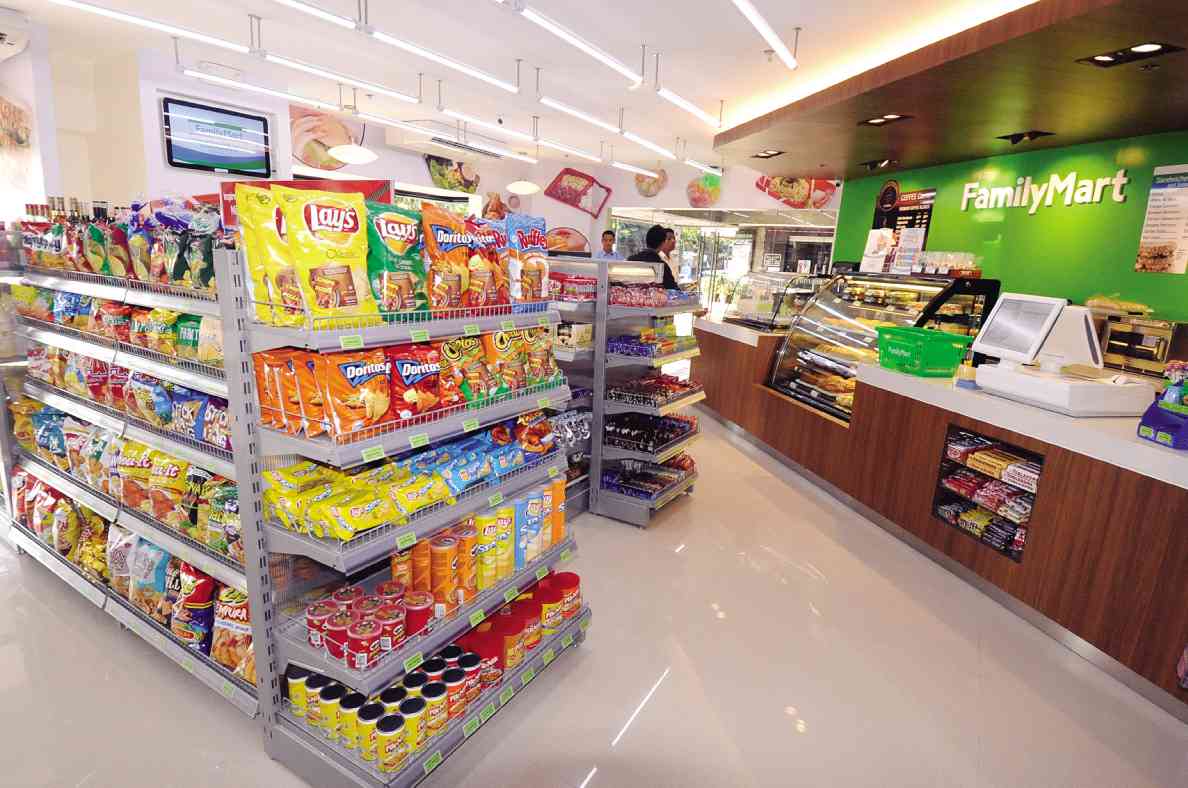
    Convenience-store operator FamilyMart Taiwan plans nearly 40 new stores in railway stations this year.

    The Japanese-headquartered company has just opened three new outlets in Taiwanese stations at Badu, Wanhua, and Luodong. Two more are about to open at the main Taipei station, with another 32 planned for 23 stations within two months. Once complete, the network will serve 20 million rail travelers per year.

    FamilyMart Taiwan is also catering to local tastes by selling snacks in partnership with various Taiwanese firms, such as bakery shop Master Fang, which will sell desserts at Kaohsiung Railway Station.

  • Double-digit leap for General Vietnam retail sales

    Double-digit leap for General Vietnam retail sales

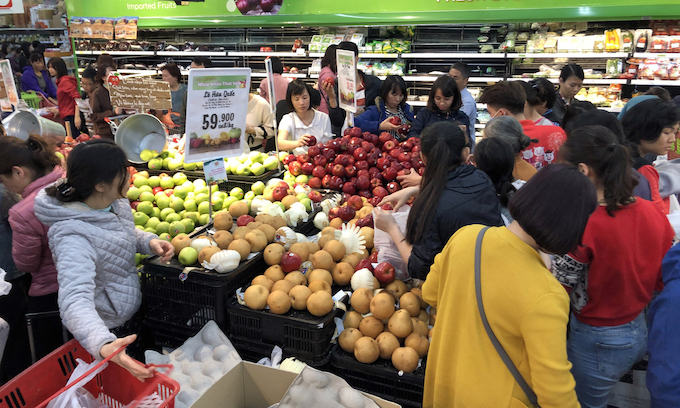
    Vietnam retail sales surged by 11.6 percent in the first seven months of this year, according to figures from the nation’s government.

    According to the General Statistics Office of Vietnam, sales of goods and services reached US$120.57 billion from January through July, with 76.1 percent of that figure ($91.76 billion) spent on goods – 12.5 percent up year on year.

    In July alone, according to the government estimates, sales of retail goods and services reached $17.84 billion, 1.7 percent up on June and 12.4 percent ahead of July last year.

    By category, Vietnam retail sales of food and foodstuffs rose by 12.8 percent year to date, with clothing and textiles up by 10.7 percent.

    Accommodation and restaurant services grew 10 percent year on year to $14.51 billion. Travel services rose 12.5 percent to $1.1 billion.

  • Android updates don’t matter anymore

    Android updates don’t matter anymore

    There was a time when waiting for the next big Android update meant getting new and exciting features coming to the most popular and widespread mobile OS in the world, but things have cooled off in the past two or three years and Google has been coming up with some pretty forgettable Android updates.

    In my opinion, it doesn’t really matter if your Android device isn’t running on the latest major Android version at hand. I feel that Android has already peaked and the rate of software innovation has been declining for a few years now. Google is seemingly scraping the barrel as far as innovative software features are concerned. In fact, most of the “new” features that are coming to Android Q are inspired from iOS and other custom Android skins, while others are quite irrelevant. I’m sorry, but as far as my personal excitement list is concerned, Digital Wellbeing doesn’t exactly cut it.

    It doesn’t really matter if you’re running Android Nougat, Oreo, or Pie anymore – you’re not really missing any groundbreaking new feature or functionality. Actually, ever since the Android 5.0 Lollipop update, you can probably count the really important features Android has scored on your hands, with the rest being easily forgettable fluff. Let me do this real quick:

    – Doze Mode (Android Marshmallow);
    – ART runtime (Android Marshmallow);
    – Vulkan API (Android Nougat);
    – Bundled notifications (Android Nougat);
    – Picture-in-Picture (Android Oreo);

    – Project Treble (Android Oreo);
    – Gestures (Android Pie).A much, much more important thing to fluster about are the essential monthly security patches. Now, these are key for worry-free smartphone experience. I’m pretty far from the thought that once you get the latest security patch you’re effectively invulnerable to any security breach – whatever you do, you can never really be 100% certain of your digital safety while using your phone, just like your data is never secure on the Internet. Whatever security features get implemented, there always be some deep exploit that would allow wrongdoers to gain access to people’s most sensitive data. It has happened in the past, and it will most certainly happen again.  Still, having a phone that’s up-to-date in terms of monthly security patches can help achieve a certain peace of mind.

    OEM skins have long surpassed stock Android anyway

    I feel there’s another important point to be made here – custom Android skins have surpassed stock Android in terms of features and functionality a long time ago. Samsung, Huawei, and OnePlus have all developed much more useful and feature-packed Android spin-offs. In fact, most of the major new features that you see added to stock Android have debuted and thrived on custom Android versions for longer. Split-screen, gestures, dark mode, and many others were only implemented into stock Android after Samsung, Huawei, LG, OnePlus, Xiaomi, and the others had experimented with these features for some time.

    Those manufacturer updates are the ones we really should keep our collective breath for – not only do they introduce major new features, but also your manufacturer’s major software updates are a much more important thing to hold your breath for. These might have a much bigger impact on your smartphone experience – not only do these deliver full interface overhauls (like with Samsung’s OneUI), but they could also bring important improvements to the camera performance, battery optimization, and other beneficial updates. Such updates of such caliber are more often than not tied to a major Android update, but it’s not a requirement set in stone.

    Personally, I stopped caring about Android updates a couple of years ago, sometime in the Android Nougat-Oreo interim. The only software update I’ve legit been hyped about ever since has been Samsung’s OneUI update, which is the best Android skin in my humble opinion.

  • Pola chooses Changi for first airport duty-free counter outside Japan

    Pola chooses Changi for first airport duty-free counter outside Japan

    Pola will open its first airport duty-free store outside Japan at The Shilla Duty-Free Changi Airport Store in a move to strengthen its brand presence in the global market.

    Pola is accelerating efforts to open new stores, primarily in ASEAN countries, so as to expand its travel-retail business outside Japan.

    Pola counters are centered around its top-line “B.A” brand and are decorated primarily in a modern black design. The counter design at The Shilla Duty-Free Changi Airport Store follows the design at department stores, extending the brand’s unified look and theme while aiming to match the travel retail environment so that customers can quickly identify the product range and best-sellers even during a short stay in the stores.

    The sales for Pola’s travel retail business are driven by the B.A brand, such as B.A Lotion, B.A Wash, and B.A Eyezone Cream.

    “We are certain that opening our new store at The Shilla Duty-Free Changi Airport Store, which is the biggest hub airport in Asia, will be a great step toward increasing Pola’s brand presence,” said Pola’s global business division director Tamotsu Sato. “The new store will be an important step for Pola to strengthen our brand presence in the global market and further expand our business.”

    The counter will be open at The Shilla Duty-Free Changi Airport Store at Terminal 2.

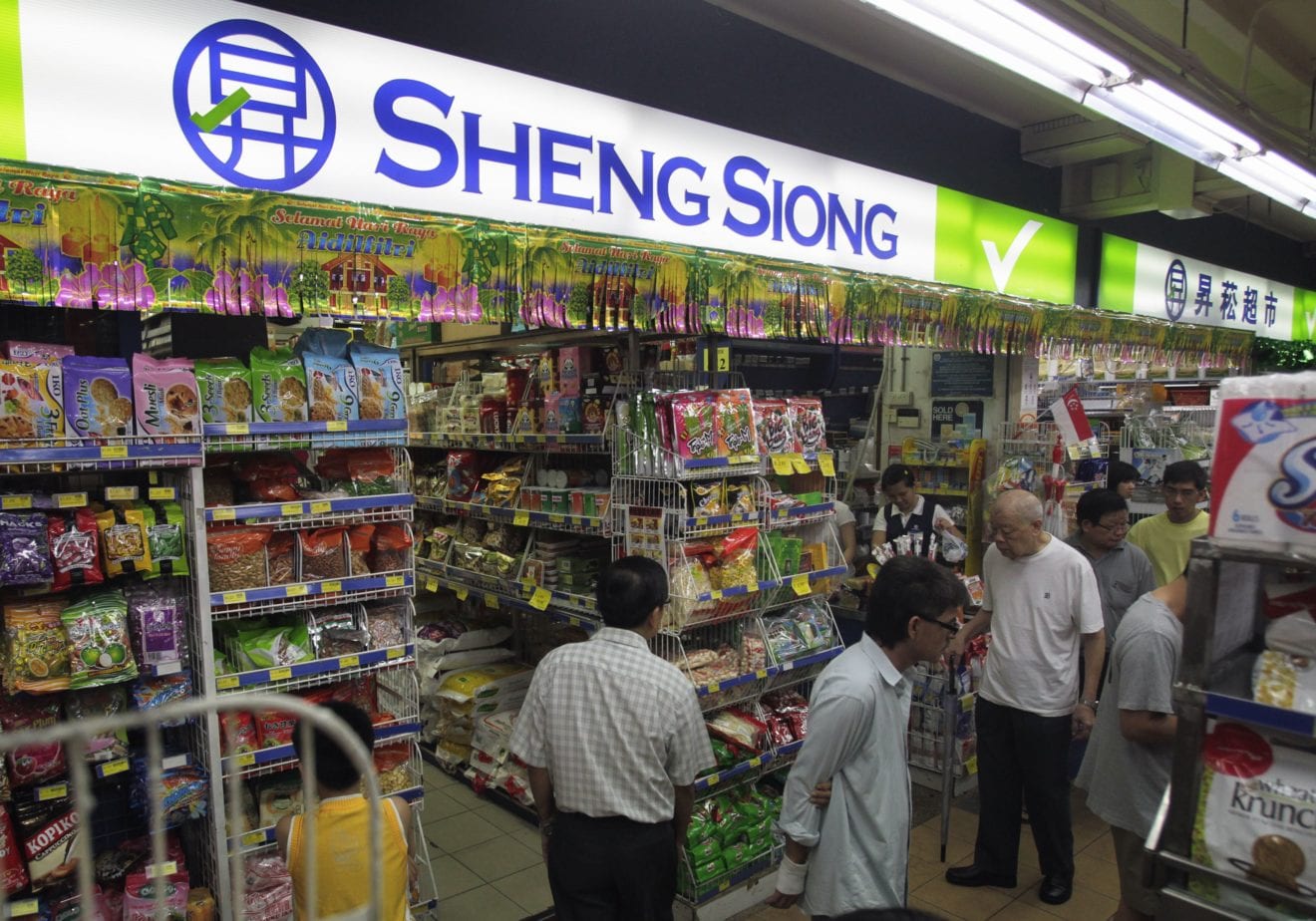
  • Singapore supermarket operator Sheng Siong reports profit boost

    Singapore supermarket operator Sheng Siong reports profit boost

    Singapore supermarket operator Sheng Siong boosted its net profit by 7.4 percent in the June quarter, to S$18.42 million.

    Sales rose 11.8 percent to $238.16 million on the back of 13 new store openings.

    However, the company has warned investors that competition in the Singapore supermarket sector is tough, from both online retailers and rival supermarket chains. Worse, consumer spending may be impacted by a soft economic outlook.

    In the half-year to date, Sheng Siong recorded a 6.6 percent increase in net profit to $37.78 million, on sales up 11 percent to $489.59 million.

  • Decline in Hong Kong retail sales in June less as forecasted

    Decline in Hong Kong retail sales in June less as forecasted

    Hong Kong retail sales in June fell – but not by as much as many were expecting.

    Official figures from the Census and Statistics Department (C&SD) show a 6.7 per cent decline year-on-year in June, somewhat higher than the 1.4 per cent revised figure for May, but well short of the double-digit predictions some pessimists were picking late last month.

    Year-to-date Hong Kong retail sales are down 2.6 per cent compared with a year ago.

    June was the month when rolling protests began on Hong Kong Island, particularly affecting retailers in Admiralty, Wan Chai, Central and Causeway Bay. Watsons this week confirmed some of its stores in those areas had recorded double-digit declines in sales.

    A government spokesman said that retail sales registered an enlarged decline in June, as local consumer sentiment turned more cautious and growth in visitor arrivals moderated.

    He expects sales would remain subdued in the near term, as a weakened global and local economic outlook and other headwinds continue to weigh on consumption sentiment.

    “The recent mass demonstrations, if continued, would also dent the retail business further,” he said.

    Predictably, sales of jewellery, watches and valuable gifts in June were hit the hardest, plunging 17.1 per cent. Due to their high value, that category traditionally has the greatest impact on the overall figures.

    Other categories to decline – in descending order of impact – were medicines and cosmetics (down 4.1 per cent); apparel (down 8.2 per cent); commodities in department stores (down 6 per cent); food, alcoholic drinks and tobacco (down 1.3 per cent); electrical and consumer durable goods (down 16.1 per cent); footwear and accessories (down 1.4 per cent); books, newspapers, stationery and gifts (down 4.5 per cent); Chinese drugs and herbs (down 0.1 per cent); and optical shops (down 11.9 per cent).

    In contrast, supermarket sales increased by 1.6 per cent in June, while sales of other consumer goods not elsewhere classified rose by 0.3 per cent, and furniture and fixtures rose by 1.1 per cent.

    C&SD said that after netting out the effect of price changes year-on-year Hong Kong retail sales in June decreased by 7.6 per cent and by 3.1 per cent in the year to June.

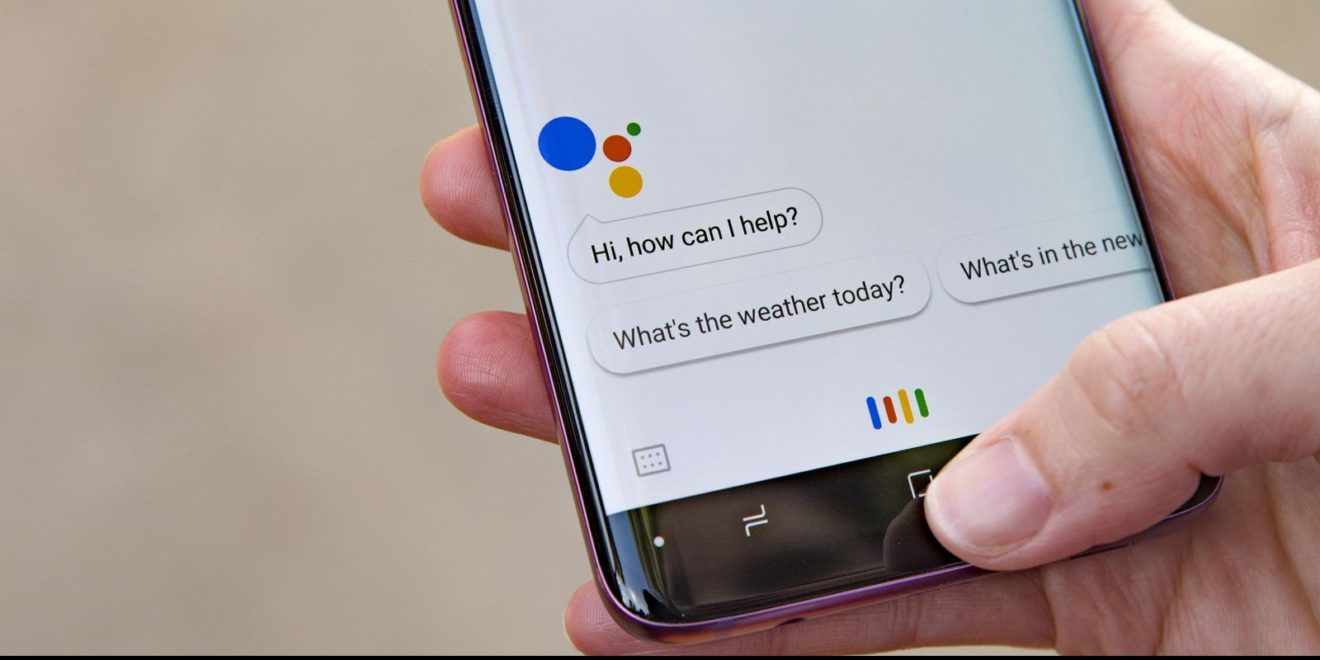
  • Google Assistant can now read texts from third-party apps

    Google Assistant can now read texts from third-party apps

    Google Assistant is at the center of the Google ecosystem, which is why Google keeps giving it more and more things to do. It used to be that when you summoned Google Assistant and asked it to read your messages, you’d hear the content inside SMS texts that you received from Android Messages and Hangouts. But it wouldn’t read messages that you received from third-party apps like WhatsApp and Telegram.

    According to this tipster, Assistant will now read the text messages sitting in third-party messaging apps such as WhatsApp, Telegram, Slack, Discord, GroupMe and more. Not only will the virtual digital helper read these messages to you, but it will also allow you to dictate a response to these missives. To set up your phone to do this, awaken the Assistant and say “read my messages.” You’ll have to allow the Google app to have access to your notifications. Once this is done, asking the virtual helper to read your messages will show a card that pops up containing the last text message received. Assistant will read it and include the name of the sender and the app that it came from. Google Assistant will then give you the option of dictating a response or typing one out. When your response is completed, it is immediately sent out and the text marked as read.

    There is a caveat that you need to know about. A text message containing media, such as a photo, a video or audio will not be read. Instead, Google Assistant will tell you that “the message just contains an audio attachment.” Hopefully, Google plans on having Assistant read such audio attachments in the future.

    This feature is apparently just rolling out now. Unfortunately, we couldn’t get it to work on our Pixel 2 XL running Android 9 Pie. We kept receiving a message that said: “Something went wrong.” We will continue to try it again from time to time, and if there are any changes we will update this story.

  • RFG director taking on operational role

    RFG director taking on operational role

    Retail Food Group director Jessica Buchanan has resigned from her position in order to transition to an operational consulting role.

    The move, announced in a statement to the ASX on Thursday, will enable Buchanan to execute some of the strategic initiatives she has helped to formulate in her capacity as a director.

    These include a strategy for the rollout of 62 new product campaigns, which are now being delivered to franchise partners by the company’s brand general managers.

    The first of these campaigns are showing significant improvements, a company spokeswoman said.

    According to RFG, the new Gloria Jean’s ‘Kit Kat Chiller’ promotion so far has lifted sales by 9 percent, and the Brumby’s ‘Gourmet Donut’ campaign has lifted sweet category sales by 8 percent.

    Buchanan, who founded consumer research agency Consumerology, which counts Autograph, Katies, Millers, and Crossroads as clients, has many years of experience in consumer product marketing and retail franchising.

    She was also a non-executive director of Banjo’s Bakery Cafes for four years from 2008 to 2012, according to LinkedIn.

    Earlier this month, The Age and The Sydney Morning Herald reported that Buchanan had sought to stock products from Naytiv, a food brand she started in 2017, in some of RFG’s franchises.

    The company ultimately decided not to move forward with the idea, according to a statement given to the publications.

    “Jessica has served on the RFG Board for eight years and as we close out the end of another financial year, she has decided the best use of her time at this point is to step into the company and commit more of her time to help drive the successful execution of these campaigns for our franchisees,” the spokeswoman said about her transition to operational consultant.

    RFG executive chairman Peter George thanked Buchanan for her contribution as a director and said he looks forward to working with her as a contributor.

    “Innovative product offerings and campaigns will be critical to the revitalization of the RFG’s franchisee network which will, in turn, underpin the operational turnaround of RFG,” he said.

    The franchisor, which owns the Gloria Jean’s, Donut King, Crust, Pizza Capers and Brumby’s Bakery businesses, has faced ongoing challenges since it got caught up in the parliamentary inquiry into the franchising sector.

    In March 2018, the company revealed plans to close more than 200 stores and posted a $306.7 million loss later in the year, after it was forced to make impairments and provisions to the tune of $402.9 million to cover store closures and restructuring and a reduction in brand value and assets.

    Over the last 12 months, RFG has renegotiated its financial covenants with lenders, gaining some breathing room while it seeks to reduce debt levels, including the potential sale of its Crust, Pizza Capers and Donut King businesses.

    The company’s stock price spiked in early July after it received a $160 million refinancing proposal subject to various conditions from Soliton Capital Partners, which it did not make public despite the ASX’s continuous disclosure rules.

    The company defended this decision, citing the fact that it has said numerous times that it is exploring various ways to reduce its debt.

  • Facebook’s plan to avoid getting split up might be too late

    Facebook’s plan to avoid getting split up might be too late

    More than seven years have elapsed since Facebook bought Instagram for $1 billion. At the time, Instagram was known for its photo filters and was just reaping the rewards of dropping its Android version of the app. In hindsight, that was a spectacular deal for Facebook as Instagram now has over 1 billion monthly active users and some estimate that it takes in $2 billion a month in advertising revenue.

    In October 2014, Facebook closed on its purchase of messaging app WhatsApp. The final price was over $21 billion. At the time of purchase, the messaging app was free to users for a year and $1 a year thereafter, although that charge was removed in 2016. Annual revenue, estimated by Forbes, is $5 billion and the app will start running ads next year on its own version of Stories called “Status.” WhatsApp has more than 1.5 billion daily active users.

    Because Facebook didn’t go around and promote its ownership of Instagram and WhatsApp, it is quite possible that the vast majority of the smartphone-wielding public doesn’t even know that all three are owned by the same company. But that apparently is going to change. The Information cites three unnamed sources who revealed that Facebook’s properties are going to have new branding. The two apps will be known as “Instagram from Facebook” and “WhatsApp from Facebook.” The report notes that employees have already been informed about this surprising move that comes as a shock since the two have been running autonomously since their acquisitions.

    So why would Facebook do this now? After all, Instagram and WhatsApp both have achieved strong growth without having the Facebook name included with their branding. There is an answer. Reportedly, Facebook CEO Mark Zuckerberg is upset that the company doesn’t get enough credit for the two apps’ success. But another reason might have to do with the FTC’s investigation into Facebook and the calls from some presidential candidates to split up the company into separate units. By adding the “…from Facebook” line, it could appear to FTC staffers that those using Instagram and WhatsApp realize that they belong to one big happy Facebook family. Before adding the new branding, the FTC could have pointed out that most Instagram and WhatsApp users didn’t know who owned the apps and therefore breaking up Facebook wouldn’t matter to them.

    It is doubtful though that such a strategy will stop those calling for Facebook to be split up. With great power comes great responsibility and that is something that Facebook has yet to prove it can handle.

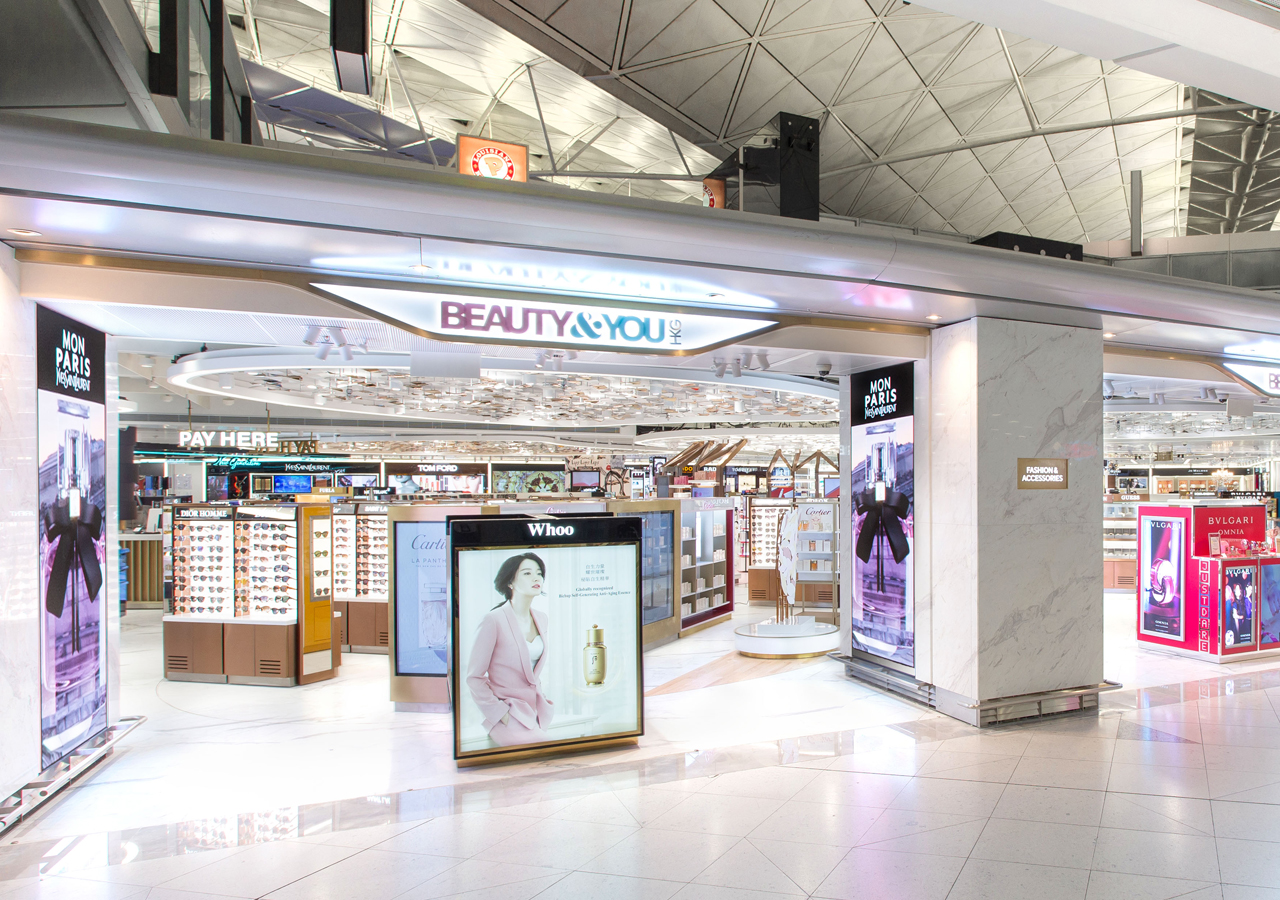
  • K-Pop group Red Velvet marks Beauty&You’s first year at HKIA

    K-Pop group Red Velvet marks Beauty&You’s first year at HKIA

    The Shilla Duty-Free’s 2019 brand ambassador, K-pop group Red Velvet, performed at Hong Kong International Airport to celebrate the first anniversary of travel-retail concept Beauty&You.

    The performance coincided with a new pop-up store at the airport, an all-immersive space featuring several experiential zones, including Beauty&You’s DIY Mobile Sticker Photo Booth and weekly exclusive zones by YSL Beauty, Sulwhasoo, Marc Jacobs fragrances, and Ray-Ban.

    The Shilla Duty-Free plans to continue in-store activities and promotions throughout the summer.

    Beauty&You’s anniversary celebration event, featuring an exclusive performance by K-pop group Red Velvet, was attended by The Shilla Duty-Free’s senior management, representatives of the Airport Authority Hong Kong and brand and business partners.