Category: General

Retail News Asia is committed to providing both local and global retailers with the latest General Retail news throughout the Asian market. This on a daily base.

  • Facebook’s Study program pays for information about the apps you use

    Facebook’s Study program pays for information about the apps you use

    Facebook announced today that it has launched a new app for Android users called Study from Facebook. The app will be used to help the company conduct market research and all participants will be paid. This isn’t an app that you can download from the Google Play Store at any time. Instead, Facebook will be running ads online and if you click on one, you can register to download Study. But you still have to qualify, and if you do, the app will then show up in the Play Store like magic.

    Those who do sign up will learn how the app works and what information it will collect. As the late Robin Williams might have said, “Transparency. What a concept.” Facebook also is now sensitive to the use of teen data and will require that those installing Study be 18 years of age or older. And yes, participants will be able to opt out at any time. Right now, the program will be available only in the U.S. and India.

    Facebook says that the information it collects will include:v
    • Apps you’ve installed on your phone.
    • How much time you’ve spend on each app.
    • The country you live in, the device you use and the type of network your phone runs on.
    • App features that you employ.

    The Study app will not collect user ID’s, passwords, or content stored on your phone. The information is not sold to third parties, used to serve optimized ads, or added to a user’s Facebook account if they have one.

    “Approaching market research in a responsible way is really important. Transparency and handling people’s information responsibly have guided how we’ve built Study from Facebook. We plan to take this same approach going forward with other market research projects that help us understand how people use different products and services.”-Facebook

    While Facebook doesn’t say how much it will pay you for this data, it does say that participants will earn money for sharing how they use apps.


  • iMovie for iOS now has a green screen feature

    iMovie for iOS now has a green screen feature

    The new feature allows you to take footage recorded against a green screen (a blue screen will also work) and easily replace the background while keeping the subject. You can adjust the strength of the effect and adjust it precisely with a 4-point mask.
    In addition to that, you can now also import images with a transparent background in your project, and also use photos to create a picture-in-picture effect or a split-screen effect in your video projects. Add to this 80 new soundtracks that automatically adjust to fit the length of your video project, adds support for ClassKit so students can deliver assignments easily to their teachers and delivers a few bug fixes along the way.
    This is a big update to one of the best casual video editing apps out there, and considering that iOS 13 will also add features like rotating video, this will solidify Apple’s leading positions when it comes to video editing on mobile devices.
    And here is a full list of the new features that come with this update:
    • Transform your video with the new green screen effect that lets you instantly remove the background of clips shot in front of a green or blue screen
    • Adjust the green screen effect with a 4-point mask and strength slider
    • Choose from 80 new soundtracks in genres including pop, chill, and sentimental that automatically adjust to match the length of your movie
    • Drop in still images with transparent backgrounds to use as logos or custom graphics on top of your video
    • Add photos as overlays to create picture-in-picture and split-screen effects
    • Choose to hide the border that surrounds picture-in-picture and split-screen effects
    • Instantly return to the edit screen of your project when switching back to iMovie from other applications
    • ClassKit support lets students deliver video assignments to teachers using the Schoolwork app
    • For users with videos in iMovie Theater, the Theater window is now accessible from the ••• menu at the bottom of the Projects screen
    • Sharing to iMovie Theater is no longer supported; save your movies and trailers to iCloud Photos to watch them on other devices including Apple TV
    • Resolves an issue that could lead to a black viewer when previewing your video fullscreen on an external display
  • Valiram opens duty-free store at Kota Kinabalu

    Valiram opens duty-free store at Kota Kinabalu

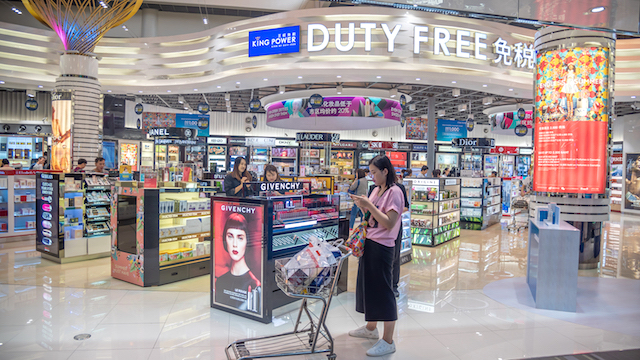
    Malaysian luxury and lifestyle retail specialist, Valiram, together with East Malaysian property developer, Jesselton Waterfront Holdings, has opened a duty-free store in the Jesselton Mall in Kota Kinabalu.

    The 37000sqft sea-front mall presents the first downtown travel-retail concept in the vicinity, offering international travellers an opportunity to shop in a duty-free environment and bringing luxury beauty, fashion and timepiece brands to the Kota Kinabalu city centre.

    “Valiram continues to invest in Sabah and is excited with the opening of our latest venture, the Jesselton Duty-Free,” said Valiram executive director Sharan Valiram.

    “This exception offering redefines the shopping experience for tourists in Kota Kinabalu. We are indeed privileged to be able to partner Jesselton Waterfront Holdings in developing this first-of-its kind downtown duty-free retail in East Malaysia. The shopping experience here is set to reshape the retail environment in Sabah.”

  • Cebu Pacific Began Manila-Shenzhen flights on July 1

    Cebu Pacific Began Manila-Shenzhen flights on July 1

    Cebu Pacific will launch direct flights from Manila to the Chinese city of Shenzhen in July, citing “increasing demand for leisure and business travel.”

    In a statement on Monday, June 10, the budget carrier announced that its Manila-Shenzhen route will have flights 4 times a week – every Monday, Wednesday, Friday, and Saturday – beginning July 1.

    “At only two hours and 40 minutes’ flying time, the evening departure of the flights will enable travelers to make full use of business hours, both in Manila and in Shenzhen,” Cebu Pacific said.

    The airline is holding a seat sale for the new route from Monday to Tuesday, June 11, with a base fare of as low as P1. The travel period is from July 1 to October 26 this year.

    Cebu Pacific said Shenzhen is its 5th destination in mainland China, and its 27th international destination.

    “We want to provide our travelers with a viable option to reach some of the most crucial commercial centers in the world. Our new direct service between Manila and Shenzhen will enable faster movement of people and products,” said Cebu Pacific vice president for marketing and distribution Candice Iyog.

    Cebu Pacific and its subsidiary Cebgo currently fly to 37 domestic and 26 international destinations, with over 107 routes spanning Asia, Australia, the Middle East, and the United States.

    The airline had enforced dozens of flight cancellations in April and May, however, citing “an unprecedented level of disruption” to its operations.

    President Rodrigo Duterte conducted a “surprise inspection” at the Ninoy Aquino International Airport Terminal 2 on Monday, and promised to find a solution to flight cancellations and delays within a month.

  • Singapore retail sales in April fell

    Singapore retail sales in April fell

    Singapore retail sales in April decreased by 2 percent year on year (motor vehicles excluded), with the apparel sector the only category to post growth.

    On a seasonally adjusted basis, sales decreased by 0.1 percent on March’s figures.

    The worst-affected categories were computers and telecommunications equipment, down 6.7 percent, and furniture and household equipment, down 6.5 percent. Statistics Singapore said this was due in part to lower sales of mobile phones and furniture. Sales by food retailers, of optical goods and books and in department stores decreased by between 3.1 percent and 3.5 percent year on year.

    However, sales of the apparel and footwear grew by 3.4 percent, due in part to a higher demand for bags and footwear.

    Singapore retail sales in April were estimated at S$3.5 billion, with online sales accounting for  about 5.4 percent of that figure

    Sales of food and beverage services grew by 3.1 percent year on year in April, reaching $826 million. Fast-food outlets, food caterers and other eating places (such as cafes) registered growth of between 3.6 percent and 8.2 percent. Sales of restaurants increased by a marginal 0.1 percent.

  • New Facebook Portal devices are launching this year

    New Facebook Portal devices are launching this year

    New versions of Facebook’s Portal home smart speakers are coming out this year, while the first-gen models that launched in November 2018 will be making their way outside of the US. The Portal product lineup is the social network’s attempt to grab a piece of the smart home speaker market, where competition from Amazon and Google is stiff. Facebook’s take on the gadget is very camera-centric and allows users to make encrypted video calls through Messenger, while Portal’s camera follows them around.

    At the Code Conference in Scottsdale, Arizona, Facebook’s Vice President of AR/VR, Andrew “Boz” Bosworth, announced that the next-gen Portal speakers are coming “this fall.” There will be “new form factors” available as well, Bosworth said, though he didn’t elaborate on what this means, exactly. “Hardware is coming to the home, and we want to make sure that human connection, connection between two people, is a first-party experience on that hardware,” Bosworth added.

    Since one of the product’s differentiating features is the camera tracking, it’s not going anywhere, but the new models might make it even more prominent. According to rumors over the past months, Facebook may be working on a considerably smaller device than the first-gen Portals—pretty much just a camera—that can be attached to TV sets. This will also make the device cheaper and allow people to use their TVs as smart displays.

    The success of Facebook Portal was questioned ever since the company announced it. On the heels of some big privacy scandals over the past couple of years, having doubts over a Facebook-branded tracking camera isn’t all that far fetched. However, at the conference in Scottsdale, the company reassured that the first generation of Portal smart speakers sold “very well,” although the claim wasn’t backed by official numbers.

  • Google app soon to receive dark mode

    Google app soon to receive dark mode

    Google is determined to bring the dark theme to all its apps by the time Android Q is officially released. A couple of Google apps such as Calendar and Keep have already been updated with a dark mode, but the Google app has yet to receive a similar function.

    The good news is the Mountain View company isn’t very far from delivering a full-fledged dark mode to the Google app.

    Google app beta v10.4.3 is the most recent version that should include the new dark theme, although it doesn’t seem that all users who have it installed are able to see it. Since this is a server-side update, the availability of the new feature is randomized among users.

    Anyway, if you have the Google app beta mentioned above, you can head to More / Settings / General and check whether or not a Dark theme option is available. If it’s there, you can choose to enable, disable or simply make it follow the system setting.

    Apparently, this is a full-fledged dark theme, which means the dark grey color will appear in searches, the in-app Discover feed, collections, recent searches, and, of course, all settings. Moreover, all Google Assistant related features benefit from the same dark mode, along with the Explore area.

    Even though the new dark mode isn’t widely available yet, the update is a clear sign that the Google app will soon get the highly-anticipated feature.

  • AI-powered retail store We9go opens

    AI-powered retail store We9go opens

    Accrelist-owned AI retail store We9go has fully launched after an eight-month trial.

    The Geylang Road shop uses AI, facial recognition and radio frequency identification to track inventory, collect data on shopper preferences, facilitate payment processes and recognise product movements.

    When it soft launched last October it was open only to invited customers, so as to test and demonstrate its features.

    Accrelist says it will now focus on strengthening AI solutions and facial-verification services.

    “The company intends to move beyond smart retail-technology solutions,” said Terence Tea Yeok Kian, Accrelist’s executive chairman and MD.

    “We aim to offer a wider range of smart-and-secure cloud-based solutions as a systems integrator through its collaboration with technology companies to broaden the group’s revenue stream.”

    After its full launch, the 24/7 We9go store has an AI-powered robot that greets shoppers and assists them with product information and availability.

  • AirAsia Offers Cheap Perth to Lombok Flights

    AirAsia Offers Cheap Perth to Lombok Flights

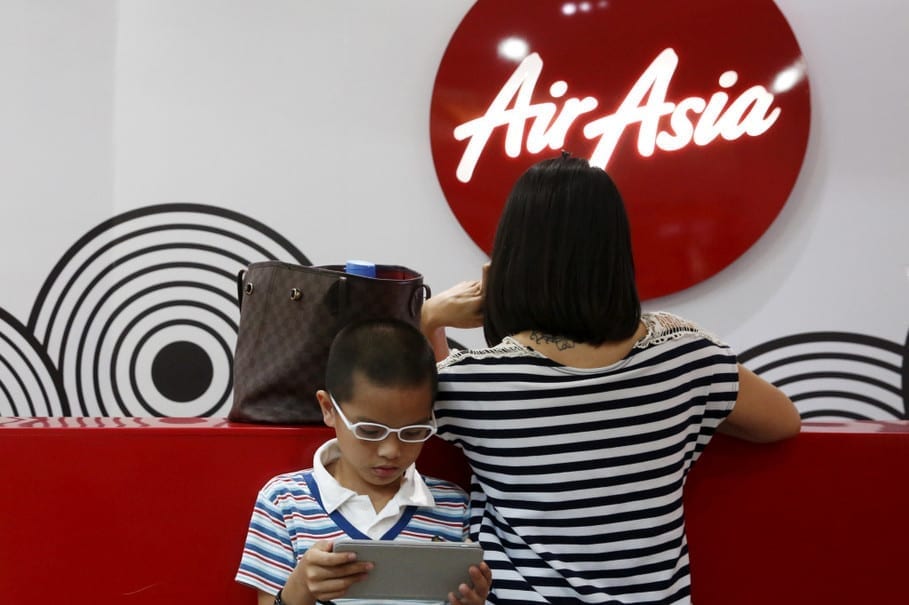
    AirAsia has launched a four-times-a-week service between Perth and Lombok, with the inaugural flight touching down on Sunday night.

    With fares starting at just $99 one way, the flights are set to be popular with Aussie tourists keen to sample the destination known as “the new Bali”.

    Dendy Kurniawan, AirAsia Indonesia CEO, said the flights would introduce healthy competition for the region and an additional option to much-loved Bali.

    “Blissful beaches, top surfing and dive sites, and picturesque mountains are now easily accessible for Australians and I encourage those looking to book their next holiday to consider Lombok,” he said.

    Perth Airport CEO Kevin Brown said the new service consolidated AirAsia’s position in the Perth market by adding more than 74,000 seats annually.

    “AirAsia has been in the vanguard of a low-cost carrier revolution that has delivered more affordable and accessible travel options for many Western Australians,” Mr Brown said.

    “Western Australians have a great propensity for travel and Indonesia represents Perth Airport’s largest outbound market as it offers an easily accessible and attractive destination for travellers.

    “This new service also provides an opportunity to grow the Indonesian inbound tourism market for Perth and Western Australia.”

    Indonesia represents WA’s eighth largest visitor market. Last year 31,000 Indonesian visitors arrived, injecting more than $56 million into the WA economy.

    AirAsia operates 25 flights per week between Perth, Australia and Indonesia, which includes Bali, and Lombok.

  • AirAsia India announces new route

    AirAsia India announces new route

    AirAsia India is on an expansion spree, it plans to add its first route to Chennai, from Kolkata. AirAsia India will now connect Kolkata and Chennai with one daily flight with effect from 1 June 2019. The launch fare for the new route between Kolkata and Chennai is 3,299.

    “Kolkata is a key market for AirAsia India as we currently operate 18 flights to 11 different destinations. The addition of this new route will strengthen up our connectivity in the east,” Sanjay Kumar, COO, AirAsia India, said.

    According to AirAsia’s release, the flight i541 will depart from Kolkata at 3. 30 pm and will reach Chennai at 5.55 pm. The return flight i542 will take off from Chennai at 6.25 pm and will reach Kolkata at 8.55 pm.

    High air fares and capacity constraints slowed India’s domestic air passenger traffic growth rate in March. As per the data of the Directorate General of Civil Aviation (DGCA), air passenger traffic growth rate in March rose a mere 0.14% to 115.96 lakh from 115.80 lakh reported for the corresponding month of the previous fiscal. According to the data, GoAir led the industry with 95% punctuality rate (on-time performance) at the four major airports of Bengaluru, New Delhi, Hyderabad and Mumbai. It was followed by Vistara (91.9%), AirAsia India (91.9%) and IndiGo (89.5%).

    Air Asia India, which started operations in June 2014, is a joint venture between Tata and AirAsia Berhad. It currently operates 164 flights a day, covering 19 destinations and carrying over 25,000 passengers.

  • King Power Thailand Acquires More Monopolis

    King Power Thailand Acquires More Monopolis

    King Power Thailand has won extended exclusive rights to operate at three additional Thai airports for a further 10 years.

    The firm won tenders for Phuket, Chiang Mai and Hat Yai airports, just a week following a win at the country’s main international airport at Suvarnabhumi near Bangkok.

    The contracts were subject to some criticism from observers such as the Thai Retailers Association, who were hoping to see Airports of Thailand bring greater competition to the US$2.1 billion duty-free retail sector. The airport operator responded to criticism in saying King Power had submitted the best proposal above close rivals Lotte Group and Dufry.

    In short, King Power bought the rights, the cost of which will inevitably be passed on to travellers. Rival companies have called for a “more opaque” tender process.

    The tenders reaffirm King Power’s status as effectively the only duty-free store provider at major airports in Thailand.

  • Second Innisfree store opens in SM Megamall Philippines

    Second Innisfree store opens in SM Megamall Philippines

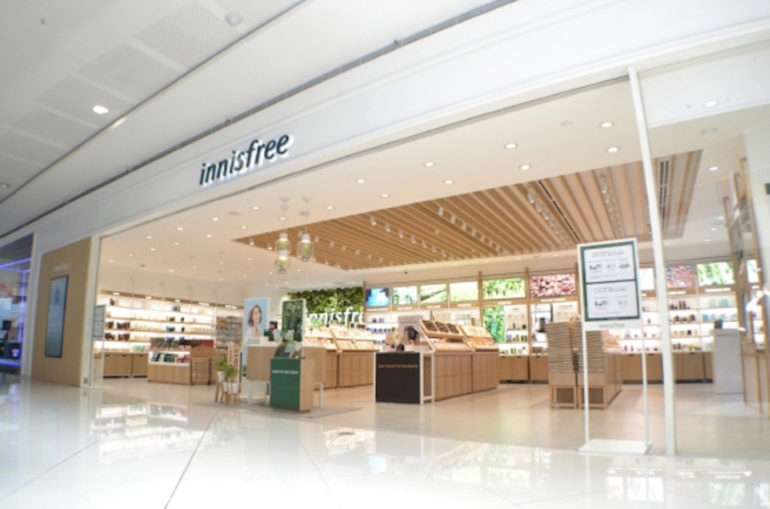
    Innisfree Philippines has opened its second outlet, at SM Megamall, a year after first launching at Mall of Asia.

    One of Korean beauty-and-skincare giant Amorepacific’s fastest-growing brands, Innisfree’s key ingredients are sourced from popular South Korean destination Jeju island. The new store will stock some of the brand’s best-selling products.

    “In today’s culture, Filipinos are naturally drawn to Korean influences, especially the K-beauty skin care regimen,” said Innis­free Philippines brand GM Stephen Lee. “With our brand, we are excited to offer our Filipino consumers skincare with quality selection of products and green sustainable practices. We are also committed to expanding and establishing a long-term presence here.”

    The new Innisfree Philippines store opening coincided with the launch of Innisfree’s empty bottle recycling campaign, which encourages customers to donate their empty Innisfree bottles to either branch.

  • Metro Wholesale Myanmar Looking for Expansion

    Metro Wholesale Myanmar Looking for Expansion

    The German-headquartered wholesale food-and-grocery retailer is looking to open in Mandalay, Nay Pyi Taw, Taunggyi and other major metropolitan locations in the region.

    “We are constantly expanding our customer base and have set a very ambitious target. You will see good news in the very near future,” said Metro Wholesale Myanmar CEO Jens Michel. “The market response to our launch in March has been absolutely phenomenal. We have experienced huge customer interest in what we are doing, and have seen an enormous amount of new customers coming.”

    The firm now has more than 300 customers in the region’s hotel, restaurant and catering industries. The majority of Metro’s customers are local companies, including mega-hotel groups and big names as well as small and medium-sized enterprises.

    “We are here in a highly emerging market,” said Michel, “and do not underestimate its potential. We are always looking at how to achieve our target by working closely with local partners and our customer base.

    “We are conducting general and modern trade. This will enable our customer base to benefit from a wide range of products. We help customers to spend more time on their own businesses, focus on their own vision and strategies, while we take care of all food and non-food items they require as well as delivery to their businesses.”

    Metro Myanmar currently has a 5800sqm warehouse in the Thilawa special economic zone, and employs 150 staff of which 92 per cent are locals. It has invested about €10 million (US$11.33 million) and intends to keep boosting its investment in the territory.

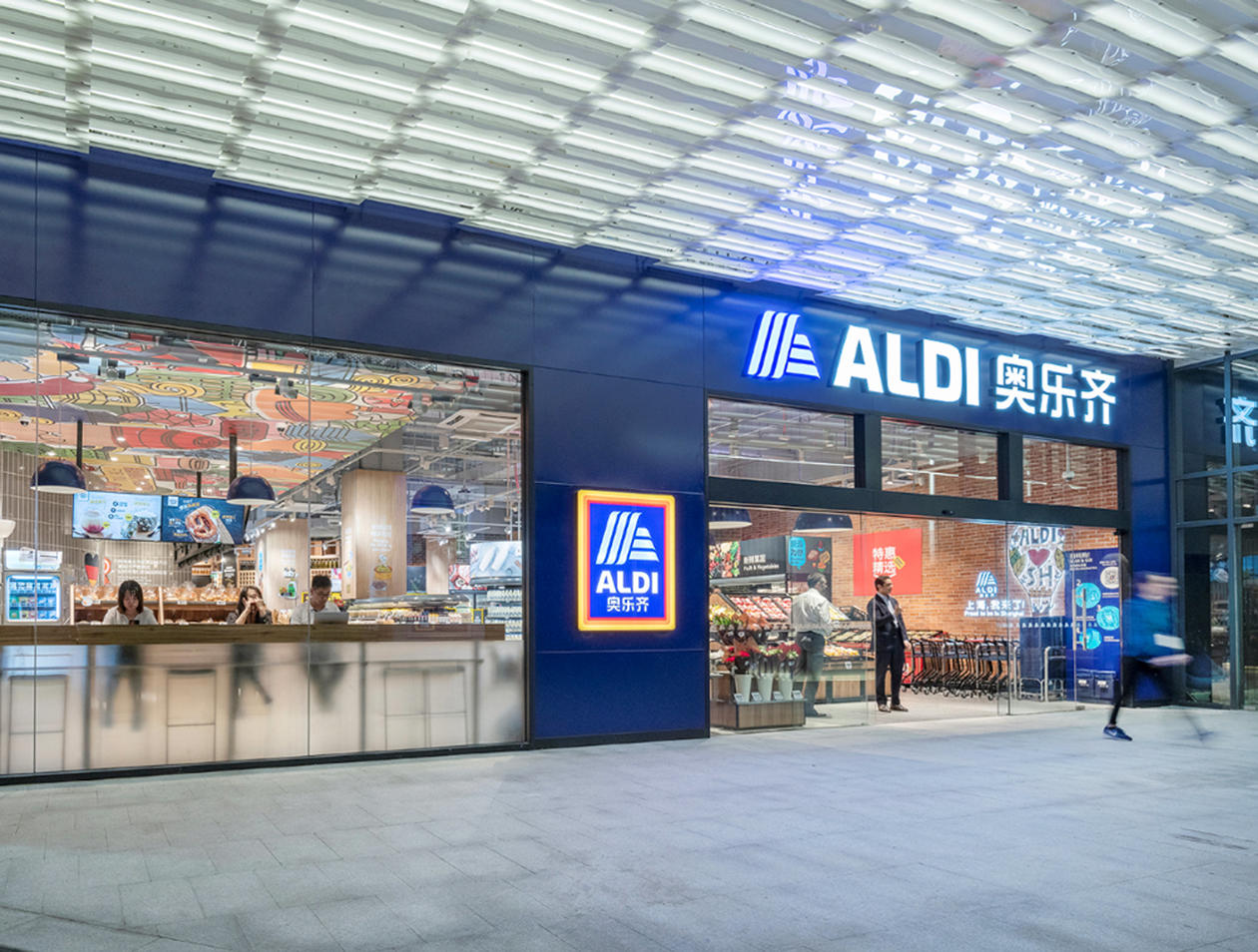
  • Aldi China where Quality meets Value

    Aldi China where Quality meets Value

    The first professional photos have emerged of Aldi China’s two pilot stores in Shanghai, which opened weeks ago.

    Designed by Australian-headquarted Landini Associates for Audi Sud (South), the two stores are both about 336sqm in size. They feature a more upmarket look than Aldi’s European stores and are described by Landini as “an evolution of Landini Associates’ work for Aldi Australia, aimed at celebrating and conveying product quality and value”.

    The stores represent a new trading format for Aldi and are the first of up to 100 planned for the city. Aldi has been testing the Chinese market online for about two years, selling its own-brand products on Alibaba’s Tmall to gain an understanding of consumer buying preferences and acceptance to hitherto unknown brands.

    But as the photos show, the store is very obviously targeted not only at Chinese consumers, but the burgeoning expat community in the city – all signage is in English as well as Chinese.

    Landini highlights key differences in the scale, layout and tone of the Aldi China stores, compared to the latest designs implemented in Australia.

    “In line with Chinese consumer habits, where the preference is to visit multiple small shops per week, the stores are a much smaller format. The emphasis is on fresh produce and ready meals, with certain categories articulated for greater consistency, and key products placed at the entry of each aisle alongside messaging to appeal to and drive shoppers,” the company says.

    “Key departments developed were snacks, produce, bakery, alcohol, imported goods, health, and beauty. The most noticeable difference for the Chinese market is the development of an on-site Food Station, as well as the addition of ready meals to take away or consume at the in-store dining kiosk.”

    Low cost yet “real” materials were specified for the fitout, including locally sourced brick, terrazzo, an open concrete ceiling, warm timbers, and yellow accents which add to the perception of freshness throughout the stores.

    LED lighting reduces glare and running costs while improving ambience and colour rendering, changing from day to night. Landini says the lighting was designed to create a pleasant atmosphere and let the products speak, enhancing colour, texture, and freshness. Energy-saving LED has also been incorporated in the fridges and wine displays.

    Landini also designed an extensive series of messaging and graphic illustrations that are entirely unique to the Aldi China stores. More than 40 messaging boards were developed to communicate the brand ethos, product freshness, value, quality, and European and Australian products on sale.

    There is no signage or ticketing displayed from the ceiling. Instead, category signage around the store perimeter offers greater visibility across the stores and thus encourage cross-store shopping. A vibrant, colourful mural on the ceiling above the service counter and checkouts is a playful hero graphics feature.

    “Our two new stores are designed as pilot stores where retail approaches will be trialled and adjusted according to data and feedback from customers,” said an Aldi spokesperson. “This new store format has been customised and tailored specifically for the China market to better understand and interact with Chinese consumers.”

    Ben Goss, design director at Landini described the project as “a significant milestone for the brand”.

  • Wesfarmers to purchase Catch Group

    Wesfarmers to purchase Catch Group

    Australian retail conglomerate Wesfarmers has entered an agreement to acquire Catch Group for $230 million.

    Should the deal be cleared by the Australian Competition and Consumer Commission, the online marketplace will continue to operate as an independent business unit under the leadership of Kmart Group managing director Ian Bailey.

    Bailey noted Catch has built a successful marketplace underpinned by leading technology and data capabilities, and that these capabilities would be leveraged to grow the capabilities and accelerate the consumer-driven, omni-channel initiatives across department stores Kmart and Target.

    “This will further drive best practice in supply chain, fulfilment and online execution across our brands, including opportunities for Target to secure online fulfilment capability and productivity benefits,” Bailey said.

    “Catch will also benefit from the support of Kmart Group’s scale and capabilities to drive its continued growth in its existing marketplace business.”

    Catch Group managing director and chief executive Nati Harpaz said the Catch team was looking forward to working with Kmart, and that the marketplace would continue to focus on delivering great value and savings to its customers.

    The merger, according to Wesfarmers managing director Rob Scott, is consistent with Wesfarmers’ approach to capital allocation, focus on improving its digital and data capabilities, and investment in opportunities adjacent to its existing businesses.

    “Catch Group has a high calibre management team and a leading e-commerce platform with quality fulfilment assets,” Scott said.

    “This acquisition represents an opportunity to accelerate Wesfarmers and Kmart Group’s digital and e-commerce capabilities whilst continuing to invest in the unique customer and supplier proposition provided by Catch Group.”

    Wesfarmers confirmed the acquisition will be funded by existing debt facilities, and is not expected to affect the business’ existing credit ratings. The business completed a demerger from Coles last year, providing further capital for investments, while retaining a minority ownership in the supermarket.