Category: General

Retail News Asia is committed to providing both local and global retailers with the latest General Retail news throughout the Asian market. This on a daily base.

  • Ex-AirAsia executive joins Malaysia Airports as COO

    Ex-AirAsia executive joins Malaysia Airports as COO

    Malaysia Airport Holdings (MAHB) has appointed former AirAsia executive Mohammed Shukrie Mohammed Salleh as its new chief operating officer.

    MAHB says that Shukrie will oversee strategies related to airport operations, safety and security, as well as planning and development.

    Shukrie was formerly AirAsia Malaysia’s chief operating officer, before moving to the current position.

    It is the second senior leadership appointment at the airport operator in 2019. In January, MAHB appointed its former finance chief Raja Azmi Raja Nazuddin as its chief executive.

    On Twitter, AirAsia group chief executive officer Tony Fernandes lauded the move, saying that he was “thrilled” that Shukrie would be joining MAHB.

    “He values partners, can communicate well and is a positive human being and a team player. These are qualities that have been lacking in MAHB so I’m sure with him there now things will improve,” he adds.

    AirAsia and MAHB have been embroiled in a legal spat over passenger service charges and service levels at Kuala Lumpur International airport. MAHB has initiated court action against the budget carrier over unpaid passenger service charges, while the low-cost carrier then responded with a counter-claim against the airport operator and has been pushing for mediation.

    MAHB manages 39 Malaysian airports, including those in Kuala Lumpur, Penang, Kuching, and Kota Kinabalu.

  • AirAsia flies to Lanzhou and Quanzhou

    AirAsia flies to Lanzhou and Quanzhou

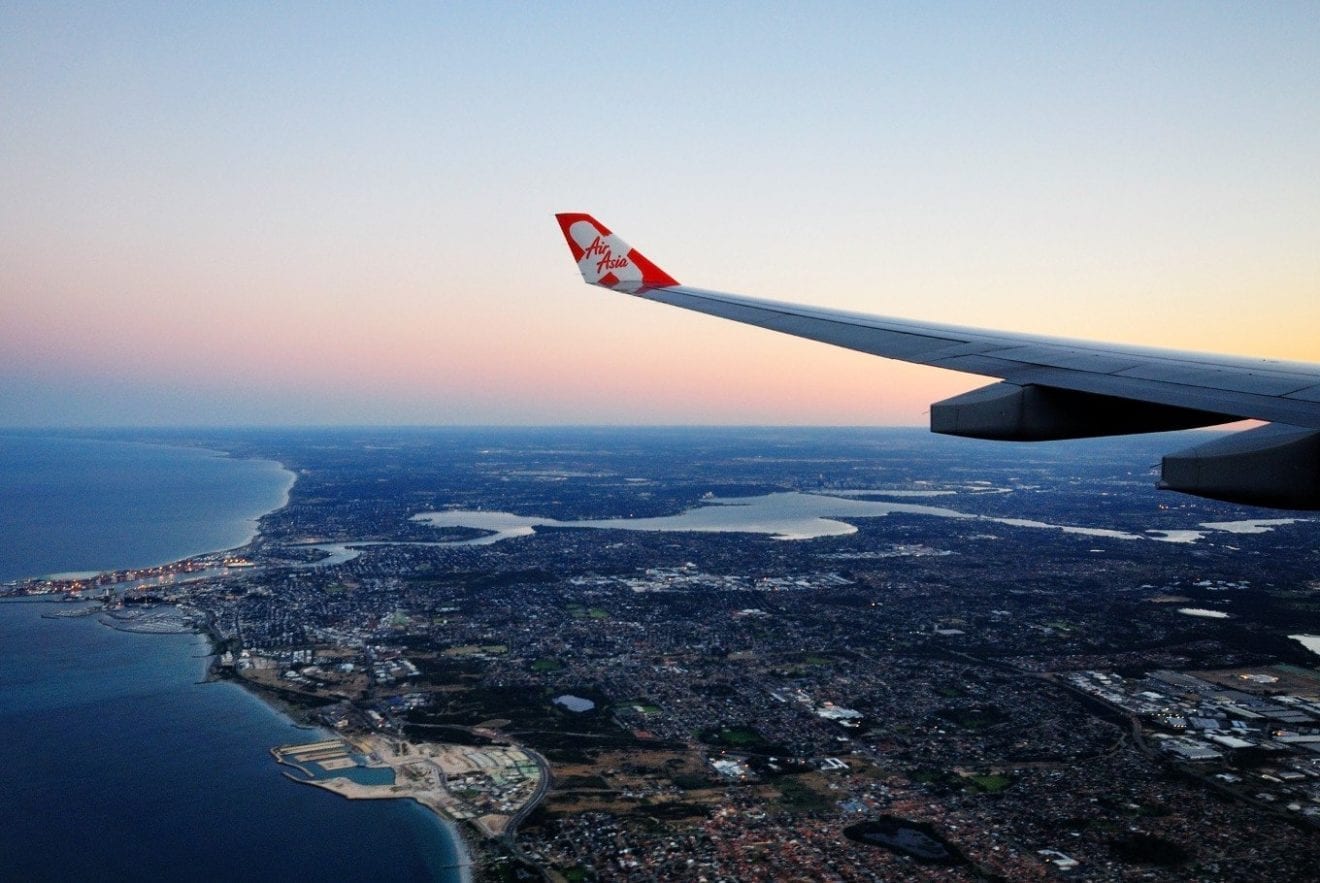
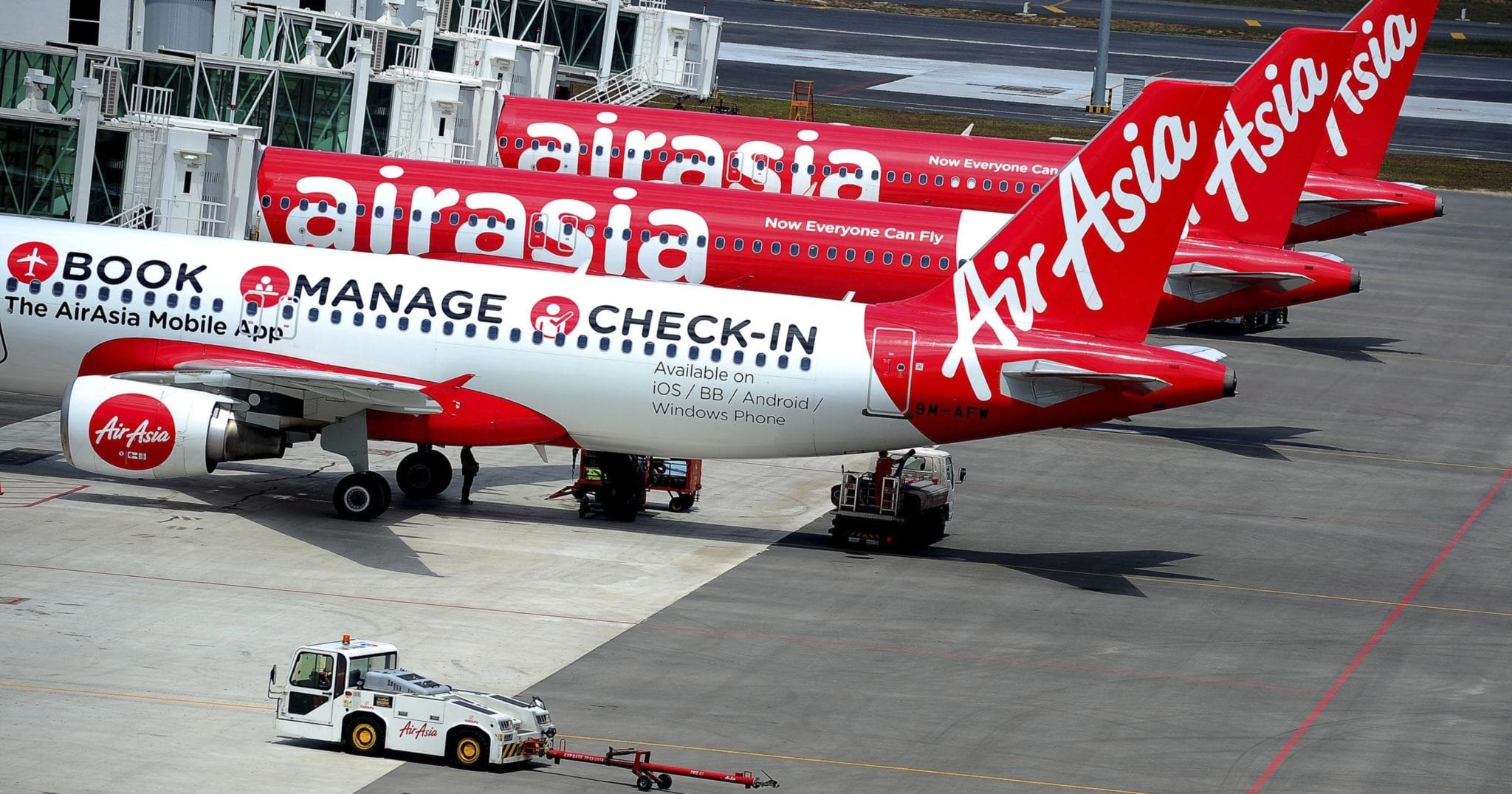
    AirAsia continues its expansion into China with two new services from Kuala Lumpur to Lanzhou and Quanzhou. These new services take the number of AirAsia destinations in China to 24, firmly cementing the airline’s position as the largest foreign carrier by capacity operating in China with over 400 weekly flights.

    “Malaysia and China are celebrating 45 years of bilateral relations this year. These exclusive direct services from Kuala Lumpur to Lanzhou in the north-west and Quanzhou in the south-east will deliver an additional 280,000 seats per annum to and from China, allowing us to forge even stronger ties between both nations,” said AirAsia X Malaysia CEO Benyamin Ismail.

    AirAsia China CEO Tassapon Bijleveld said: “AirAsia has grown its footprint in China for more than 14 years now, connecting millions of people from Asean to underserved second and third-tier Chinese cities at low fares.

    And China remains a key market for our future growth. Just recently, we launched our new Bangkok-Shenyang service and we continue to review a number of other potential Chinese routes that we hope to be in a position to announce soon.”

    Book all-inclusive AirAsia BIG member fares from as low as RM209 (one-way) to Lanzhou and RM129 (one-way) to Quanzhou on airasia.com or the AirAsia mobile app from now until May 5, 2019, for travel until Sept 30, 2019.

    Enjoy the award-winning premium flatbed to Lanzhou for all-inclusive AirAsia BIG member fares from as low as RM889 (one-way) during the same booking period.

  • AirAsia India Desire Jet Airways’ Boeing 737s

    AirAsia India Desire Jet Airways’ Boeing 737s

    A joint venture of Tata group and Malaysian Air Asia, AirAsia India is planning to induct some of the Jet Airways’ Boeing 737s that have now been repossessed by lessors. The move comes at the time when full-service Vistara is also planning to induct some of Jet’s Boeing 737s in its fleet.

    AirAsia India Pvt Ltd’s (AAIPL) flying license has listed Airbus fleet for its operations. The low-cost carrier (LCC) has applied for operating Boeing aircraft and the ex-Jet B737s to aviation regulator Directorate General of Civil Aviation (DGCA), according to a ToI report.

    It is to be noted that currently, AAIPL has 20 Airbus A320s and may also add five more of these planes. It is looking at ex-Jet B737s as well.  The suspension of operations by Jet Airways has suddenly freed up slots at India’s busiest airports- Delhi, Mumbai, and Bengaluru. The government has linked a temporary granting of these slots to other airlines’ to add to the capacity and to help to control the fares. The domestic market shares of AAIPL was 5.9 percent and that of Vistara was 4.2 percent in March 2019.

    This summer, AAIPL will complete its five years and become eligible to fly abroad. Full-service Vistara has already got government’s nod to fly abroad. Vistara was the first private carrier to get permission for overseas flights under the amended rules. In 2016, the government amended the 5/20 rule, which required an airline to complete fives years of operations and has 20 planes in its fleet, to fly abroad to 0/20.

    Worth mentioning here is that Jet Airways had a significant number of flights to the Gulf and Southeast Asia, and bilateral to both these places had been exhausted. If in the coming weeks and months, Jet Airways does not revive then its rights for international flights would also be distributed to other airlines.

    Air India was also looking at ex-Jet B777s and AI Express at B737s, but so far they have not taken these planes.

    In a circular dated April 25, Pawan Hans management stated to its employees that the company is not in a position to disburse employees’ salaries for the April month due to the uncomfortable financial position in Pawan Hans.

  • YouTube Music can now play local files on Android

    YouTube Music can now play local files on Android

    The phase-out of Play Music in favor of YouTube Music has been a long time coming, though Google’s actions towards this goal haven’t been particularly quick or decisive up to this point. However, with the latest update, YouTube Music has gained an important feature that brings it closer to being Google’s one and only music streaming service. We’re talking about the ability to play local files on your Android phone – something so basic, yet so elusive.

    The latest update for YouTube Music has added local music integration to the app. The feature can be found under the “Library” tab and allows you to play music files that are stored on your SD card or the internal memory of your Android device.

    Previous updates to Google’s up-and-coming music streaming app allowed it to be used for playback when opening audio files on your phone, but it didn’t have a built-in local content browser, which is the biggest change in the latest iteration.

    Upon launching the local content browser in YouTube Music, you’ll notice a message that reads, “These songs can be played on their own, but can’t be added to queues or playlists with songs from YouTube Music. They also can’t be cast to another device.” This limitation is rather odd, considering the Google Play Music allows for playlists that seamlessly mix on-device songs with tunes from the cloud. This could change in future updates, or could be a strategy to bolster the streaming subscriber base.

    Another omission that should (hopefully) eventually make it into the YouTube Music app is the ability to migrate your library from Google Play Music.

    The local music browser is not yet available worldwide, and seems to be enabled by a server-side switch on Google’s part.

  • First Asian Samsonite Premium store Coming to The Jewel

    First Asian Samsonite Premium store Coming to The Jewel

    The first Samsonite ultra-premium store in Asia is to open at Jewel Changi.

    The luggage brand is also planning one more outlet at Changi, raising its store network at the airport to five.

    “Every time we come up with something new, something big, we launch it first in Singapore,” Subrata Dutta, president and CEO of Samsonite Asia-Pacific told.

    “This is a new retail concept that further elevates the look and feel of the brand to something more luxurious. At Jewel, we get travel traffic from around the world. When you do something in Singapore, you get noticed by the right people.”

    Samsonite has also opened an American Tourister outlet at Jewel Changi, and will open a store at the revamped Funan mall, scheduled to open in the second half of this year.

  • Outdoor Retailers Fighting for Market Share

    Outdoor Retailers Fighting for Market Share

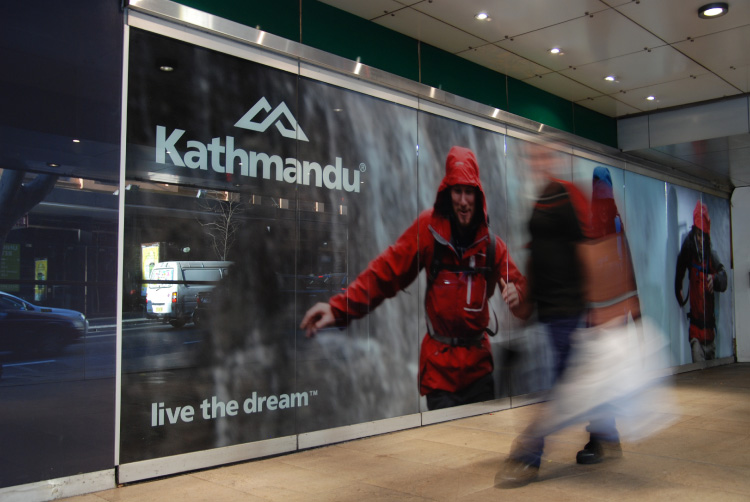
    Outdoor retailers Kathmandu and Decathlon are vying for a piece of Australia’s ski and snowboard market this winter.

    Both businesses are launching inaugural snow collections, despite the fact that less than a million Australians regularly or occasionally ski or snowboard, according to 2018 data from Roy Morgan.

    On Thursday, Kathmandu launched its inaugural snow collection called Styper, which includes ski jackets and pants for adults and kids, as well as goggles and snow luggage.

    “Designed to suit beginner and intermediate levels, as well as the more sophisticated skiers, the pieces connect seamlessly together to keep warmth in and snow out, and are made with sustainable, state of the art ngx2 fabric technology that is waterproof, wind-proof and breathable,” the retailer said in a statement.

    The launch comes on the heels of Decathlon’s announcement that it is introducing more than 100 ski and snowboard-specific product lines from its Wed’ze brand available in Australia this year.

    The European discount retailer described its offer as an affordable option for people who want a trusted brand and good advice. The range will include adult ski jackets and pants for under $100, adult ski gloves for less than $40, kids’ ski gloves for less than $20, neck warmers and beanies for $10 and ski and binding packages for under $500.

    The price point is considerably lower than Kathmandu, which starts at $199.98 for kids and $349.98 for adults.

    Kathmandu’s collection is available in-store in Australia and New Zealand, while Decathlon’s collection is available in-store and online in Australia.

    Fashion brand SuperDry has been selling its snow range in Australia and New Zealand for the past three years.

  • Personalisation trend hits photo booths With Disney

    Personalisation trend hits photo booths With Disney

    Kmart shoppers are now able to personalise a range of stationery, mugs, photos and other products with characters and motifs from Disney, Pixar, Star Wars and Marvel movies, cartoons and comics.

    The offering is the result of a partnership between Kodak Moments, which operates the photo kiosks in Kmart stores nationwide, and The Walt Disney Company in Australia and New Zealand.

    It is the latest example of brands’ and retailers’ efforts to differentiate their products, and convert customers, by forging an emotional connection wtih shoppers and giving them the option to put their personal stamp on items.

    “This fantastic collaboration not only provides children with a fun photo and learning opportunity… but also allows our cherished characters to be part of Australian stories,” Megan Sanders, vice president and general manager for Star Wars and consumer products commercialisation at The Walt Disney Company Australia and New Zealand, said.

    The customisable range includes 2800 designs for educational charts, party invitations, greeting cards, border prints, posters, magnets, and mugs.

    “Everyone has a favourite photo that instantly delivers warmth, comfort and a special memory,” Gavin Wulfsohn, Kodak Moments sales and marketing manager for Australia and New Zealand, said.

    “Adding these Kodak Moments – alongside a touch a Disney magic – to our educational charts can make all the difference in encouraging children to read and count while developing a lifetime love of learning.”

    Kodak has served as the in-store photo provider for Kmart’s photo centres since 2015, allowing customers to create a range of photo products including prints, posters, books, canvas and mugs.

  • Muji Singapore opens Large store at The Jewel

    Muji Singapore opens Large store at The Jewel

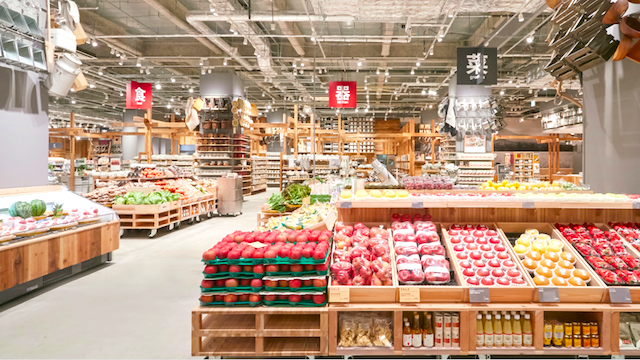
    Muji Singapore has opened a two-storey store at Jewel Changi. The 12th outlet of the popular Japanese minimalist brand houses more than 4000 products and an 88-seat Cafe&Meal dining area.

    The product range includes apparel, furniture, kitchenware, toiletries, stationery and food items.

    Designed by Tokyo-based design company Super Potato, the store also offers the largest range of Muji’s fitness line, the Walker series.

    The store also features an interior-advisory service, available to recommend customisable solutions to customers.

    Muji Singapore chose Jewel Changi as its newest location to showcase the ‘world of Muji’ to Southeast Asian customers.

    Naoki Kadoike, MD at Muji Singapore and Malaysia, expects about 40 per cent of customers will be tourists, the remainder locals.

    “When I was posted here in January, I realised how similar Singaporeans are to the Japanese. People are very conscious of having a good lifestyle and there is a common understanding of Muji’s philosophy,” Kadoike said.

    Meanwhile, Muji Singapore plans to introduce the Muji Passport app, providing local customers with information about the brand and promotions, along with weekly newsletters.

  • Asean countries fight against Counterfeit Goods

    Asean countries fight against Counterfeit Goods

    Enforcement officials, investigators, and prosecutors from across the Asean region discussed best practices for addressing the trade in counterfeit goods at a workshop on the enforcement of intellectual property rights held in Manila last week.

    The talks covered online business models used for the infringement of IP rights, investigative techniques and intelligence gathering, as well as measures to combat infringement, particularly in the online environment.

    According to a statement released by the workshop, the trade in counterfeit products diverts revenue from legitimate businesses, depletes innovation and development, and underpins organised crime networks. In addition, counterfeits are generally of low quality and are potentially harmful to consumers.

    A wide range of products are affected, including footwear, clothing, electrical machinery, pharmaceuticals, cosmetics, and toys.

    A report released this year by the European Union Intellectual Property Office and the OECD estimates that counterfeit and pirated goods represented up to 3.3 per cent of world trade in 2016. This share has grown significantly, from up to 2.5 per cent estimated in 2013.

    “Strong IP enforcement legislation in the EU provides police and customs agencies with the powers they need to successfully intercept counterfeit goods,” said IP enforcement expert Erling Vestergaard, highlighting a number of EU initiatives that address the issue.

    World Intellectual Property Day is held annually on April 26 to highlight the importance of IP in encouraging innovation and creativity. The global theme for this year is IP and Sports.

  • Gome profit warning issued to Shareholders

    Gome profit warning issued to Shareholders

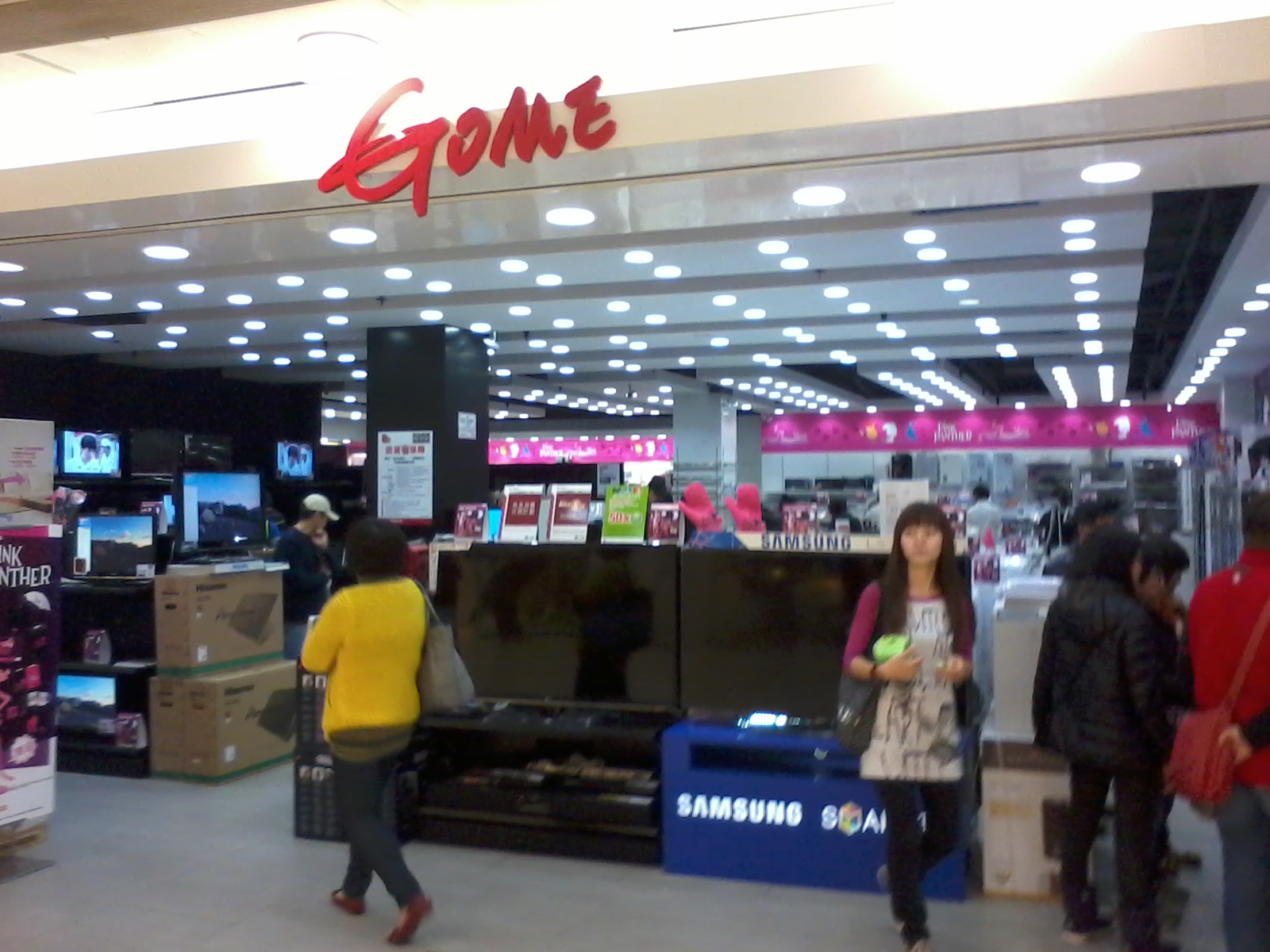
    Another Gome profit warning has been issued as the company’s massive restructuring program continues.

    However the group says the reforms are beginning to show results and while a loss is anticipated for the latest quarter, it will be less than that of the previous period.

    According to a stock exchange filing, Gome says its loss attributable to owners is expected to range somewhere between RMB20 million (US$3 million) and RMB90 million ($13.4 million), as compared with a profit of RMB113 million for the corresponding period last year. The loss will be “significantly reduced” compared with the loss for the December quarter, the company said. Last full year, Gome lost RMB4.887 billion ($728 million).

    The group says it continued to actively pursue its transformation into an integrated home solution, service solution and supply chain provider based on its strategy of ‘Home • Living’. It expects the group’s total GMV for both online and offline to grow about 5 per cent year on year for the March quarter.

    Of that, GMV from Me Shop is expected to grow by more than 200 per cent, service GMV by more than 30 per cent, GMV from smart products by more than 50 per cent; and GMV from new businesses such as home solution and integration of kitchen cabinets with electrical appliances, by more than 100 per cent.

  • Google adds Dark mode to an Android Apps

    Google adds Dark mode to an Android Apps

    If your eyes feel strained at the end of every day, it could be because of Google’s Material Design, which it is using on many of its core apps. Because Material Design uses plenty of bright white background, it can be blinding to look at at night or in a dark room. Not only can the light hurt a phone user’s eyes, but it can also be annoying to other people in a dark room.

    To combat this, Google started adding a Dark mode feature on apps that it gave a Material Design makeover. This changes the appearance of an app from having black text on a white background, to show white text on a black background. While many only use Dark mode at night or in a movie theater, others just like the look and keep the setting enabled on all compatible apps at all times.

    And thanks to the use of the black background, those using a phone sporting an AMOLED screen could end up extending their battery life. The color black is created on an AMOLED display by turning off the RGB sub-pixels in the screen. This means that battery power is not needed to make an OLED panel display the color black. An LCD screen uses a backlight and when the color black is called for, the pixel turns opaque blocking the LED light from being seen on the display. In this case, there is still a draw on the battery to power the backlight.

    The latest Android app to receive the Dark mode option is the Google Calculator app for Android. This is a must-have for the calculator, which has a huge white box that covers the top 40% of the screen. Dark mode can be found in version 7.6 of the utility app, although only version 7.5 is currently available from the Google Play Store. Once the new version is installed on your Android phone, open it and tap on the three-dot overflow menu in the upper right corner. You’ll see a box with several options; click on Choose theme. You can select from the regular retina melting Light theme, Dark theme or Set by Battery Saver. The latter is supposed to turn on the Dark theme once the battery saver feature is enabled.

    Android Q and iOS 13 are both supposed to include a system-wide Dark mode. We should learn more at Google I/O and WWDC, which start May 7th and June 3rd, respectively.

  • Easter spending up 4.6 per cent over Last Year

    Easter spending up 4.6 per cent over Last Year

    While nationwide spending was down year-on-year over the week to Easter Monday, the holiday period performed better compared to its 2018 counterpart, according to nationwide spending data from Paymark.

    The seven days to Monday, April 22, 2019, saw spending increase by 4.6 per cent compared to the Easter week in 2018, which ran to April 2. This is down slightly from the 4.9 per cent year-on-year spending increase in 2018.

    Gisborne saw the strongest growth at 14.6 per cent, followed by Marlborough at 13.3 per cent, when comparing Easter periods.

    Spending was also up across clothing and footwear stores (13.8 per cent), and liquor retailers (9.9 per cent).

    Compared to the exact same week in 2018, rather than last year’s East period, spending in the Canterbury region was down 7 per cent, with Kiwis spending a total of $125.1 million in the region over the week.

    Wellington brought in $106.2 million, a 5.9 per cent drop, while Auckland brought in $454.1 million – a 6 per cent drop compared to the same period in 2018.

    Auckland made up about a third of the spending in the country, with Paymark recording $1.19 billion spent over the week (0.8 per cent down on 2018), though the region was far outstripped in terms of overall growth.

    The Bay of Plenty saw spending grow to $92.9 million – a 14.5 per cent increase year over year. Gisborne enjoyed 19.6 per cent spending growth to $11.7 million, while Otago brought in $76.6 million, or an increase of 7.1 per cent.

    According to Paymark, grocery, fuel and hospitality providers, drove almost all of the spending increase.

    “This year these merchants recorded $43 million more spending (up 15.7 per cent) outside of the three largest Paymark regions,” Paymark said.

  • AuMake doubles digit Profit

    AuMake doubles digit Profit

    AuMake more than doubled its profit and nearly doubled sales in Q3, compared to the previous corresponding period.

    The daigou-focused retailer reported $1.68 million in profit in the March quarter, 104 per cent up on the same period last year, and $9.9 million in sales, up 93 per cent on the same period last year.

    Almost a third of AuMake’s total sales in Q3 were made online, primarily coming from the Chinese social media app, WeChat.

    AuMake grew its online customer database more than six times over, from 20,000 to 130,000 over the quarter, and is investing heavily in its online infrastructure to continue such growth. This includes a larger online customer service team, improvements to its various online sales platforms, such as WeChat and JD.com, and a new packaging facility.

    According to AuMake, the March quarter is typically a slower one for the business, as it includes a four-week period surrounding Chinese New Year when Chinese logistics companies close, and a large number of daigou shoppers return home for the holiday.

    As such, the brand expects to see a material improvement over the upcoming June quarter, particularly as the recent $14.2 million acquisition of competitor Broadway will take effect in June.

    AuMake said the acquisition makes it the “largest China-focused offline and online retail platform in Australia”, and that it will utilise Broadway’s existing relationships with over 100 travel agencies in China to reach new customers.

    “The acquisition of Broadway has transformed AuMake into a significant and influential business in the ANZ Chinese tourist and diagou market,” AuMake executive chairman Keong Chan said.

    “However, AuMake is more than a simple retail business. AuMake’s Chinese focussed retail platform is underpinned by a unique business model that utilises the strength of its online and offline sales to incubate, promote and sell ANZ brands to Chinese consumers.”

    According to a strategy update issued by AuMake on Tuesday, the retailer aims to grow its online channel to half of total sales, and to grow its own-brand product revenue to $15 to $20 million by FY20. Own-brand products brought in $4 million in FY19.

    The retailer is also exploring opportunities to open co-branded offline stores and products with JD.com, and to synergise the supply chains of the two brands.

  • Aldi takes Union to court over misleading Commercials

    Aldi takes Union to court over misleading Commercials

    Aldi has taken the Transport Workers Union to Federal Court, following what the supermarket claims is a string of false and misleading claims.

    The TWU has made a number of claims toward Aldi, including that its drivers have faced harassment when they have raised concerns over fatigue with management, with one driver quoted as being told, “Everyone else is doing it. You are the only one with a problem.”

    However, the supermarket has refuted these claims and said it will let the courts determine the matter.

    “The TWU has made a series of allegations against Aldi,” an Aldi spokesperson told. “We say these allegations are false.”

    According to the TWU, the supermarket’s alleged actions could have far-reaching consequences for those who raise concerns about safety in the workplace, environmental or rights abuses.

    “Transport workers are sending a clear message to Aldi to take road safety seriously and make sure its transport workers, the transport workers in its supply chain, and other road users can return home to their families in one piece,” Nick McIntosh, TWU national assistant secretary, said in a statement to Aldi over the Christmas period.

    “Coles and Woolworths have recognised their critical role in improving road safety. Aldi needs to stop attacking truck drivers and instead sit down in good faith and be part of the solution.”

  • Four Bidders shortlisted in Metro China sale

    Four Bidders shortlisted in Metro China sale

    Germany’s Metro has shortlisted four prospective bidders for its China business, including two of Mainland China’s largest retail groups.

    The Metro China sale has been in planning since last September, with formal bids invited in March as the German retail giant looks to quit the challenging market.

    Metro AG has invited Suning Holdings, Yonghui Superstores, Wumart stores and Meicai to submit bids before a deadline of late May, early June. Some of the bids may be lodged in partnership with private equity investors.

    Meicai is an unexpected inclusion in the shortlist. A local startup that acts as a conduit between farmers and restaurants, Meicai was founded by Liu Chuanjun, a local entrepreneur in 2014. According to a Bloomberg News report last October, the startup last year raised at least $600 million in a funding round led by Tiger Global Management and Hillhouse Capital, which would have valued the business then at about $7 billion.

    The Metro China sale is expected to net the Germany owner about $1.5 billion. The cash-and-carry business has 95 stores and reported $3 billion last financial year.