Category: General

Retail News Asia is committed to providing both local and global retailers with the latest General Retail news throughout the Asian market. This on a daily base.

  • Carrefour China Sale not on the Agenda

    Carrefour China Sale not on the Agenda

    Carrefour has denied business media reports it is considering selling all or some of its Chinese retail business.

    According to an article, quoting “people familiar with the matter”, the French retail giant is mulling options for the future of the Carrefour China business where sales fell 10 percent last year to €3.6 billion.

    Carrefour “is working with an adviser and has begun reaching out to potential suitors”. Its sources asked not to be identified because the deliberations are private.

    However, a spokeswoman for Carrefour responded saying a sale of the business is “not on the agenda.”

    Analysts estimate the Carrefour China business could fetch about US$1 billion if it was sold in total, however, options being considered to include selling a share to a local partner – or do not sell any of it. No final decision has been made as yet.

    The first Carrefour China supermarket was opened in 1995 when the French company was one of the first foreign retailers to enter the market. Since then it has opened about 245 stores, mostly large-format hypermarkets.

    In March, Carrefour reported its Chinese business had boosted profit 11-fold to €45 million.

    “China is a retailing laboratory for the world,” said Thierry Garnier, president and CEO of Carrefour China at the time. “For Carrefour, China is a specific market that has helped us to learn and to understand the future.”

    And last month the company said it was partnering with local electronics retail Gome to open stores-in-stores in Carrefour hypermarkets selling electrical goods after a successful trial in 11 stores.

  • South Korean retail sales surged during Holidays

    South Korean retail sales surged during Holidays

    The unprecedented extension of the Japanese Golden Week holiday to 10 days has seen a surge in tourists visiting South Korea.

    The holiday was extended to mark the enthronement of Crown Prince Naruhito from the usual April 29 to May 5 period.

    Duty free businesses saw big jumps in sales during the period compared to the previous year. Lotte Duty Free in Sogong-dong saw a 45 per cent sales increase, while Shinsegae Duty Free in Myeongdong saw an 80 per cent year-on-year increase.

    Hotels in the main commercial districts of Seoul also saw double-digit occupancy boosts during the period above Golden Week figures for last year.

    Tourism from China was also up 25 per cent during the period, although this rise was lower than in the first four months of this year.

  • Cat Opening First Australian Store

    Cat Opening First Australian Store

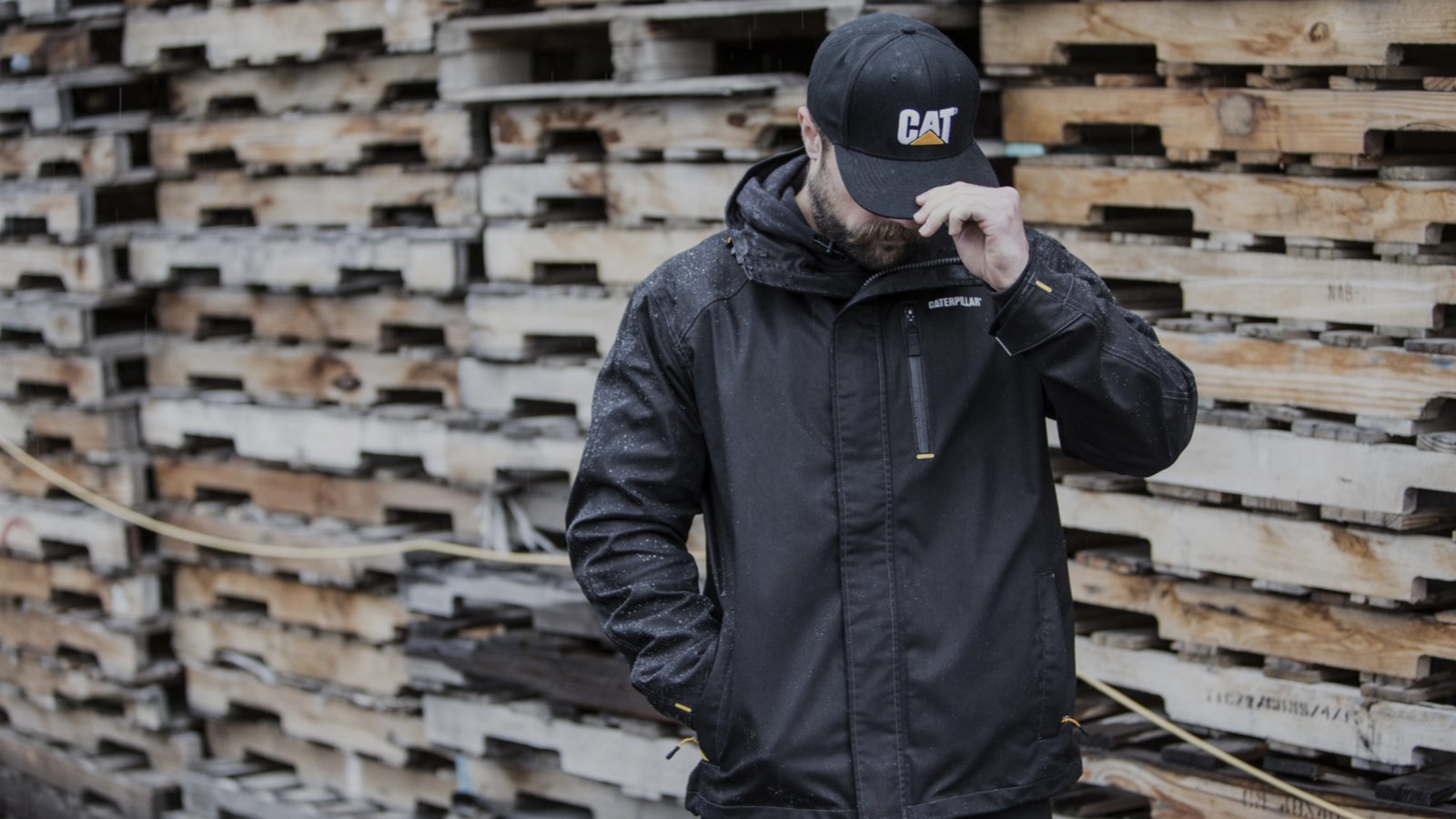
    Global workwear brand, Cat, will open its first flagship store on Australian soil this weekend, on Saturday, May 11, at Pacific Werribee shopping centre in Victoria, according to owner Accent Group.

    For a brand that is all about “being on the tools” it was important to create a physical space that reflects the brand’s dedication to Australia’s trade business, according to Accent Group chief executive officer Daniel Agostinelli.

    “We’re committed to growing our local offering to be a leading player in the Asia-Pacific region,” Agostinelli said, noting that Cat was one of the group’s most successful brands.

    The grand opening will offer a free in-store barber service, as well as coffee and donuts to new members, and exclusive gifts for the first 20 visitors to walk through the doors on Saturday and Sunday.

    This is the first standalone store for the brand, though it has traded online and through retail partners, including The Athlete’s Foot, which is also owned by Accent Group, Totally Workwear, Shoes2U and The Hardware Store.

    Wesfarmers has also invested recently in the workwear space, with its commitment to a partnership with custom workwear brand ONTHEGO.

    The partnership initially involved the brand being offered through Officeworks’ website, but has since been expanded to include in-store kiosks at several Officeworks sites, allowing customers to create their own workwear on the spot.

  • Rituals Hong Kong Store About To Open

    Rituals Hong Kong Store About To Open

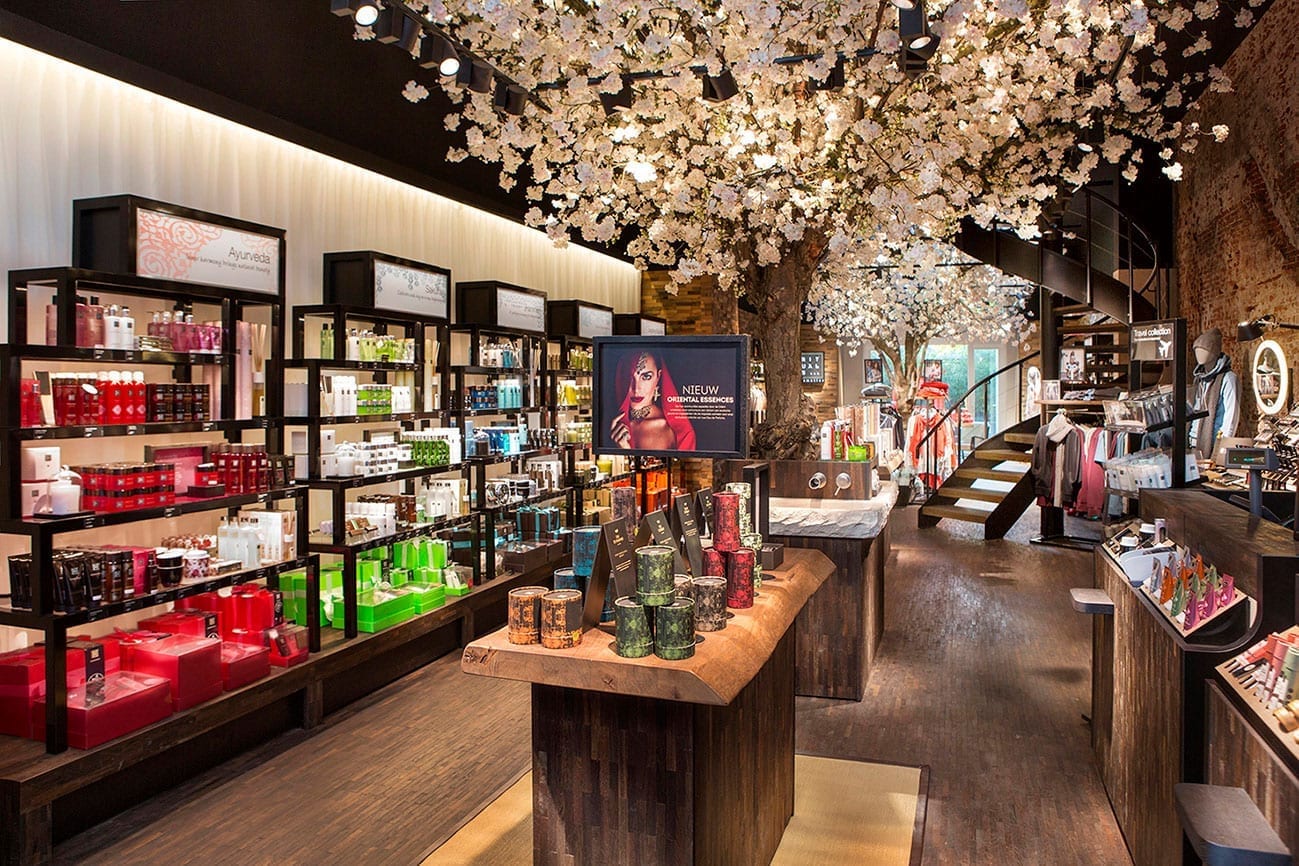
    The first standalone Rituals Hong Kong store is slated for opening in July as the Dutch cosmetics retailer ramps up its presence in Asia.

    The company has promoted business development manager of travel retail, Marjet de Vlieger, as head of travel retail Apac. She will take up the newly created role on July 1 and relocate to the city in January. A Rituals Hong Kong office and warehouse are set to open next month.

    Until now, Rituals has only been sold in the region through concessions, including one at the T Galleria by DFS stores on Kowloon’s Canton Road. But that is about to change. Along with the Hong Kong store, the first in Asia, Rituals plans 10 new points of sale in the region, including a debut in South Korea.

    “Opening the Hong Kong office and warehouse facility is a major investment and steps forward as we look to convert the Asia opportunity,” said Rituals director of travel retail Neil Ebbutt.

    “For Rituals, travel retail is leading the way in building the brand’s presence in Asia, which not only shows the power of the channel but also allows airports and retailers to better differentiate themselves by being the gateway into the Rituals world.

    “Our vision is to build a truly global lifestyle brand and we’re ready to capitalize on this travel retail-first approach,” he said.

    Rituals has a five-year plan to build sales across Asia encompassing travel retail, standalone stores, and e-commerce. It will seek partnerships with airlines and hotels through a network of distributors.

  • Indonesian Retail Sales Down Last Month

    Indonesian Retail Sales Down Last Month

    Indonesian retail sales grew by 10.1 percent in March following a 9.1 percent increase in February, according to central bank survey data.

    The strong March performance was underpinned by sales of apparel along with automotive parts and accessories.

    However, the bank’s survey predicted that Indonesian retail sales growth will rise by a more modest 5.7 percent in April, the same figure it projects for the full year.

  • APAC leads global convenience sector

    APAC leads global convenience sector

    The Asia-Pacific region is the largest and fastest-growing region in the global convenience market, according to a new report by GlobalData.

    The research firm forecasts a compound annual growth rate of 10.6 per cent over the 2017-2022 period, due to local retailers increasing focus on store modernisation, the inclusion of technology, and a shift in consumer spending encouraging an investment in the channel.

    International retailers are beginning to see the necessary changes, GlobalData retail analyst Honor Strachan said, but their efforts are far from the transformation seen in Asia.

    “In a bid to attract new customers and prevent shopper desertion as the market becomes more competitive, convenience retailers are …refurbishing stores to incorporate new ranges (fresh, organic, and free-from are all gaining shelf space),” Strachan said.

    “[As well as] new concepts such as food service, mobile charging points and online purchase collection desks to help drive footfall, average basket size and customer satisfaction.”

    Strachan adds that these changes benefit store sales and profitability in a time that retail space is becoming more and more expensive, and margins come under pressure for inflation and discounting.

    7-Eleven is one such chain, having invested heavily into innovating its convenience offering over the last few years in order to get ahead of the competition – opening unstaffed stores in the region, as well as focusing on improving its delivery service in more populated areas.

    According to 7-Eleven chief executive Angus McKay, customers today want a different retail experience from what has long been expected from convenience chains.

    “You have to be patient and really be on your game and know what the customer wants, and be prepared for them to change their minds,” McKay previously told Inside Retail.

    “We’re investing in becoming better retailers.”

  • Retail sales rise at slower Pace Last Month

    Retail sales rise at slower Pace Last Month

    Retail spending rose 0.3 percent in March in seasonally adjusted terms, according to the latest trade figures from the Australian Bureau of Statistics (ABS), beating market expectations of 0.2 percent growth.

    This is a slowdown from February’s upwardly-revised increase in retail sales of 0.9 percent month on month, but March spending was still up 3.5 percent compared to the same time last year, representing the fastest year-on-year increase since October 2018.

    Monthly sales growth was driven by spending at cafes, restaurants and takeaway food services (up 1.4 percent in seasonally adjusted terms) and clothing, footwear and accessories stores (up 1.2 percent in seasonally adjusted terms).

    Spending on food retailing, including supermarkets, was up 0.4 percent and spending on households goods was up 0.2 percent in seasonally adjusted terms, while spending on department stores was down 1.5 percent and spending on other retailing, including pharmacies and newsagents, was down 0.4 percent in seasonally adjusted terms.

    By state and territory, spending was up across the board in March, excluding Western Australia, where retail sales fell 0.7 percent in seasonally adjusted terms. Victoria and the Northern Territory each saw a 0.7 percent increase, Queensland saw 0.6 percent increase, followed by Tasmania, up 0.4 percent, New South Wales, up 0.2 percent, and South Australia, up 0.1 percent, in seasonally adjusted terms.

    Online retail sales were also up in the month, with NAB’s Online Retail Sales Index showing a 1.7 percent increase from February after the index recorded the sharpest ever drop in monthly online sales.

    NAB measures e-commerce sales as representing around 9 percent of total retail turnover in Australia, while the ABS pegs it at around 5.7 percent.

    Quarterly spending shrinks for the first time since 2012

    On a quarterly basis, however, retail turnover in the three months to March fell 0.1 percent in seasonally adjusted volume terms, following a flat December quarter. This represents the first quarter of negative growth since the September quarter of 2012.

    The fall was led by household goods retailing, according to the ABS, which fell 0.6 percent, and department stores, which fell 1.2 percent. The other categories all rose in seasonally adjusted volume terms for the quarter.

    According to Westpac analyst Matthew Hassan, the figures show that retail sales growth in the month was driven by price increases rather than volume.

    “The undershoot vs expectations was due to a stronger than expected rise in retail prices which rose, up +0.8%qtr vs +0.7%qtr in Q4,” he said.

    “The sub-category detail shows a particularly big rise in food prices (+1.4%qtr vs 1.2% in Q4). Non-food retail prices posted a 0.2%qtr gain.”

    According to Hassan, broader economic headwinds are still hampering consumer spending.

    “Overall the March retail report points to downside risks to the wider consumer spending estimates in the March quarter GDP, the headwinds that emerged in the second half of last year clearly carrying into 2019,” he said.

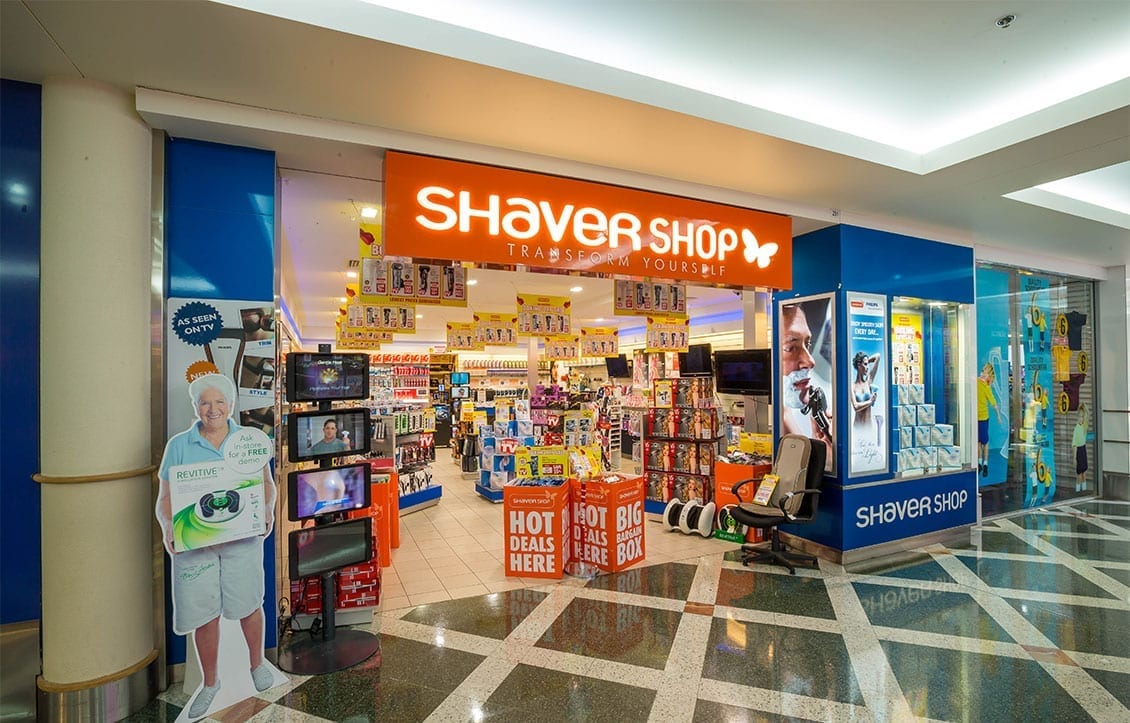
  • Core categories boost Shaver Shop’s Profit

    Core categories boost Shaver Shop’s Profit

    Strong performance in Shaver Shop’s core hair removal and hairstyling categories has delivered 8.7 percent like-for-like sales growth in the four months ended April 30, 2019, up from 0.8 percent in the same period last year, enabling the specialty retailer to narrow its full-year profit guidance.

    Shaver Shop now expects normalized EBITDA to be between $12.5 million and $14 million for FY19. It previously was expecting between $12 million and $14.5 million EBITDA.

    “I am very pleased that our like-for-like sales growth is predominantly being driven by a number of our core hair removal categories which is where our store teams excel,” Cameron Fox, chief executive and managing director of Shaver Shop, said in a statement on Tuesday.

    “Hairstyling, following the launch of the ghd range around the same time last year, is also performing very well.”

    Big-name brands drive foot traffic

    Ghd, or Good Hair Day, is a leading global brand of hair straighteners, blow dryers and other styling tools. Shaver Shop started selling a range of the high-end products in Australia in late May 2018, and launched a range in New Zealand on Monday.

    Shaver Shop has previously said the addition of the ghd brand is an effort to grow its female customer base. Ghd, along with other big-name – and big-ticket – brands like Dyson, also drives foot traffic to stores, since customers tend to want to touch and feel the products and get expert advice from staff before shelling out hundreds of dollars on the equipment.

    Flair, Shaver Shop’s private label brand launched last year, is gradually replacing the entry-level brands the retailer previously offered. Finding the balance between more profitable private-label sales and foot-traffic-driving brand sales will be a key focus for Shaver Shop going forward, according to Fox.

    “Flair is only going to replace the commodity brands we had in the past. We don’t want it to be a market leader. Those big brands will continue to be the brands that bring shoppers into stores,” he told.

    Shaver Shop’s private label range also includes the Shaver Guard line of lubricants and cleaning products for shavers and beard trimmers and the LumiSkin line of skincare products.

    Investment in CRM solution to drive loyalty

    On Tuesday, the retailer also announced the implementation of its first-ever CRM solution, which it expects will significantly enhance its ability to engage with customers on a more personalized and timely basis across any retail channel.

    Fox told that the solution, provided by software giant Salesforce, will deliver a “quantum lift” in its already 120,000-strong customer database. The solution will also enable the retailer to offer a loyalty program in the future.

    “This is actually something that’s incremental to us,” he said.

    Shaver Shop’s investment in Salesforce represents its commitment to omnichannel retail, which Fox said has delivered solid online sales growth so far this half. Online sales now represent 11-12 percent of total revenue, he said, and the channel continues to grow.

    Besides its own e-commerce site, Shaver Shop also sells through eBay. Fox noted that it has taken some time for the retailer to get its marketplace range right to minimize the erosion of gross profit margin on the sale of exclusive products through this channel.

    “There is the commercial consideration that you’re paying more transactional fees and potentially eroding gross profit margin…but there is a shopper who solely shops through eBay,” he said.

    Store network expanding

    The retailer has also been investing more in staff training and adding more staff to stores to improve its level of customer service, and the effort is paying off, according to Fox.

    “We’re not just measuring whether store staff hit their sales target, but we’re measuring the level of customer service [provided] and how many customers who walk through the door are being converted into a transaction,” he said.

    Shaver Shop currently has 121 stores across Australia and New Zealand. It will open its 122nd store, and its 7th in New Zealand, in Westfield Newmarket in Auckland in early FY20.

  • Spotify starts testing voice ads on Android and iOS devices

    Spotify starts testing voice ads on Android and iOS devices

    Spotify has decided to be more aggressive with its ads and announced over the weekend that it will launch voice-enabled advertisements. They are meant to encourage customers to use verbal commands to take action on the ad’s content available through Spotify.

    TechCrunch reports the audio ads will initially redirect listeners to a branded Spotify playlist or a podcast. These voice ads will only be available to a limited number of Spotify’s free mobile listeners on both Android and iOS platforms, but they required users to have voice controls enabled.

    The good news is Spotify users can opt out of voice ads in the Settings menu by turning off the Voice-Enabled Ads option. Moreover, the app will also allow users to completely disable microphone access via the mobile device’s Settings.

    The voice ads will enable Spotify users to check out the content advertised by saying “Play Now.” If the user doesn’t say the voice command within the required amount of time or says something else, the mic will be turned off and the ad break will continue.

    The voice ads test is live in the United States for free users of the Spotify app and uses the company’s built-in house technology. It doesn’t have a pricing model yet since it’s too early at this time.

  • Twitter Allows Media Retweeting

    Twitter Allows Media Retweeting

    We would love to tell you that Twitter now offers an editing tool, making it easier to correct mistakes and spelling errors. We know of at least one guy wearing a long red tie, living in a white house that would really appreciate the ability to go back and change tweets. And we’d love to be able to tell you that Twitter has added such a feature, but alas we can’t. We can, however, tell you about something that Twitter did add to its iOS app, Android app, and its mobile website.

    Twitter announced that it will now allow users to add images, videos, and GIFs to their retweets. It’s easy to do, actually. On a tweet you’re viewing, tap on the retweet icon on the bottom toolbar. Click on “retweet with comment” and add your photo or other media. Twitter says that as easy as it is to do, it actually was hard for it to design in a way that wouldn’t look too crowded to the user.

    “We found it was challenging for people to quickly understand all the content in a Retweet with media. This was due to the layout; two large tweets stacked on top of each other.”-Twitter

    To make sure that a retweet with media attached doesn’t look overwhelming, Twitter puts the original tweet, including the author’s avatar, inside a smaller box. This allows the image, video or GIF you’ve added to your retweet to appear in full size.

    While Twitter users are going to be happy with this new feature, they might be much happier if tweets could be edited. Perhaps that will be the next shoe to drop.

  • China’s most valuable brands Disclosed

    China’s most valuable brands Disclosed

    No prize for guessing who tops the list, but some surprises come further down.

    There is no prize for guessing which brand is China’s most valuable… but there are surprises further down the top-10 list. Alibaba tops the list of China’s most valuable brands for the first time, recording annual growth of 59 percent to US$141 billion.

    The accolade was awarded in the annual BrandZ Top 100 Most Valuable Chinese Brands ranking, published by WPP and Kantar. In the past five years, Alibaba has outperformed the WPP/Kantar Top 100 overall, with it’s brand value climbing 136 percent, compared to the Top 100’s 92 percent rise.

    In the second spot on the list of China’s most valuable brands was Tencent, parent of WeChat. Perhaps the biggest surprise was JD which managed only 10th. (The full table is published below)

    Despite China’s slower economic growth and international trade tensions, the total value of the BrandZ Top 100 increased 30 percent to $889.7 billion, the highest annual rise since the ranking launched in the year 2011. The growth has been fuelled by brands accelerating their expansion into China’s lower-tier cities, which have seen rapid development and rising consumer buying power, and increase positive attitudes to Chinese consumer brands with a global presence.

    On this year’s list of China’s most valuable brands, 13 of the 24 categories increased in value, with entertainment seeing the largest year-on-year growth of 186 percent, followed by education (57 percent) and retail (55 percent). Technology accounted for the most brands out of the Top 100 (11), contributing 26 percent of the ranking’s total value and dominating the top 10 leaders in terms of overseas presence with six brands – double the number last year.

    Innovators in AI, e-commerce, New Retail, and social media performed strongly in the study. The success of many high-performers, according to BrandZ, has been driven by a mobile-centric, convenience-driven Chinese lifestyle.

    There is vast potential for further brand growth overseas as China moves beyond the industrial focus of its Belt and Road initiative towards establishing leadership in areas including AI, robotics, Internet of Things and green energy. The report also shows the investments brands make to build value are measurably rewarded in the stock market.

    “China’s stock market volatility over the past year has provided a real-life stress test for valuable brands, which continued to outperform the market,” said WPP CEO David Roth. “Put simply, valuable brands deliver superior shareholder returns. $100 invested in the MSCI China Index in 2010 would be worth around $128 today. That $100 invested in the BrandZ China Top 100 would now be worth $211.

    “The threshold to enter the BrandZ China Top 100 has more than doubled from $311 million in 2018 to $681 million this year, demonstrating the continued pace of growth for Chinese brands increasingly recognized as leading the way in innovation. Against a backdrop of heightened competition and disruption, building stronger brands is what it takes to stay in the game.”

    Since first appearing in the ranking in 2015 following its IPO, Alibaba’s rise to the number one spot in 2019 reflects the growth of a brand which has contributed to transformational changes in the Chinese market.

    In BrandZ’s ‘Brand Power’ metric of brand equity, Alibaba scored particularly strongly for being ‘meaningful’, suggesting the brand known for coining the term ‘New Retail’ has successfully created closer connections with its consumers.

    The Brand Power metric also looks at how brands perform in being different (distinctive), and salient (coming to mind at the moment of consideration). While Chinese brands generally score well for being meaningful and salient, they do not perform as well in being viewed as truly distinctive from the competition or as trendsetters.

    “Whether going abroad or expanding domestically, the potential for brand growth is huge for China’s most valuable brands,” said the global head of BrandZ at Kantar Doreen Wang, “but realizing it requires the knowledge and expertise needed to surmount new challenges. This report highlights the importance of Chinese brands to build a difference in the domestic and global marketplace.”

  • Robinsons Retail plans 150 new stores in Philippines

    Robinsons Retail plans 150 new stores in Philippines

    Robinsons Retail Holdings will launch up to 150 new stores in the Philippines this year.

    The firm published a presentation online revealing plans to invest PHP3–5 billion (US$57.8–96.3 million) on the store openings, following expenditure of PHP4.41 billion ($85 million) on openings last year. As at December, it had 1910 stores, including supermarkets, department stores, do-it-yourself stores, specialty stores, drugstores, and convenience stores. The entire network covers a gross floor area of 1.48 million sqm.

    Robinson’s achieved a 5.9 percent same-store sales growth last year, with help from a 1.5 percent uptick in transaction count and a 6.1 percent increase in basket size in its supermarket business. The group is targeting a 2-4 percent same-store sales growth this year.

    The firm’s net income reached PHP5.11 billion ($98.5 million) last year, an increase of 2.6 percent on the year previous, with a 15.1 percent increase in net sales.

  • Shinsegae launched coworking space in Seoul

    Shinsegae launched coworking space in Seoul

    Shinsegae International has launched a new coworking space in Seoul it expects will boost its retail business.

    The new 278sqm “Scale Up” space in Cheongdam-dong is targeted at startups in the lifestyle-related industry. With seven offices and meeting rooms, it is loosely modeled on the firm’s earlier coworking space S.I Lab for fashion enterprises.

    “Scale Up’s main purpose is not to provide space, but rather to support startups with growth potential,” said Shinsegae International executive director Park Seung-seok. “With our infrastructure, we aim to make a win-win situation for both Shinsegae International and small startups.”

    Shinsegae has reserved one of the Scale Up offices for foreign business operators visiting the country. Four other members will pay a monthly fee of KRW1.5 million (US$1280) to use the space, which includes support services such as opportunities to use the company’s retail channels and potential cooperation with Shinsegae brands.

  • Outlook for Android and iOS gaining Fresh Feature

    Outlook for Android and iOS gaining Fresh Feature

    Microsoft is bringing support for a new feature to Outlook for mobile – Actionable Messages. The new feature will be available once the latest update goes live in the App Store and Google Play Store, and it’s meant to allow Outlook users to act fast while on the move.

    For example, whenever you receive an email that has an option to take action (i.e. approving a timesheet, granting system access, answering a survey), you will now be able to respond right inside the email without leaving your inbox or switch apps.

    Moreover, Actionable Message with Adaptive Cards will allow developers to deliver messages in Outlook so that users can stay in context and act fast when they need to. The first brands to work with Microsoft on Actionable Messages are SurveyMonkey, Freshworks, ServiceNow and Sage.

    However, Microsoft is expected to partner with additional brands in the coming months. It’s also worth mentioning that Microsoft will be rolling out Actionable Messages to Android devices in the coming week, while iOS users will be able to take advantage of the new feature starting today.

  • Senators want FTC to send a Massive Fine to Facebook

    Senators want FTC to send a Massive Fine to Facebook

    A couple of days ago we told you that the Federal Trade Commission (FTC) could be days away from announcing a fine against Facebook in the amount of $3 billion to $5 billion. The FTC is trying to decide how much to punish Facebook and is negotiating a settlement with the company. While there have been a number of privacy issues involving the social media app/site over the last few years, back in 2016 it violated a previous FTC consent decree it had signed five years earlier. Under the terms of that deal, Facebook agreed not to use subscribers’ personal data without obtaining consent; however, during the 2016 presidential campaign, 87 million members had their profiles used without permission by political consultancy Cambridge Analytica.

    Two U.S. senators want the FTC to fine Facebook more than $5 billion and force the company to make “sweeping changes.” Senator Richard Blumenthal (D-CT) and Senator Josh Hawley (R-MO), both members of a sub-committee that oversees the FTC, wrote a letter to the regulatory agency today. In the letter, the senators said that Facebook should receive a large enough fine that it would act as a deterrent to prevent future violations. They also want to put limits on Facebook’s use of consumer data, force the deletion of tracking data, stop the practice of collecting certain consumer information and revise its advertising policies. In addition, Blumenthal and Hawley want Facebook to put up a firewall blocking its other apps (like Instagram and WhatsApp) from sharing consumer data with each other.

    “The Commission should pursue deterrent monetary penalties and impose forceful accountability measures on Facebook, including limits on the use of consumer data, managerial responsibility for violations, and other structural remedies to stop further breaches of consumer trust.”-Letter to FTC from Senators Blumenthal and Hawley.

    Considering that the company took in more than $56 billion last year, a $5 billion fine might not be high enough to deter Facebook from committing future privacy violations. In addition, the senators say that Facebook co-founder and CEO Mark Zuckerberg must be held accountable for failing to keep Facebook members’ profiles private. The FTC is also considering taking action against the executive.

    In anticipation of the fine, Facebook took a $3 billion charge against its first-quarter earnings. Even with this adjustment, Facebook reported $2.4 billion in net profits during the three month period running from January through March.