Category: General

Retail News Asia is committed to providing both local and global retailers with the latest General Retail news throughout the Asian market. This on a daily base.

  • Coles claims former employee stole $1.9 million

    Coles claims former employee stole $1.9 million

    Coles is suing a former employee for allegedly stealing more than $1.9 million from the company.

    The supermarket claims that Aaron Baslangic, former head of strategic initiatives and B2B for Coles Online, submitted phoney invoices requesting payment to third parties, and in some cases faked the approval of his supervisor for payments that were above his authority limit.

    In documents filed with the Supreme Court of Victoria over the past two weeks, the supermarket said it has identified 13 questionable payments made to BMW Australia, the Autralian Taxation Office and other businesses from February to June of this year.

    The amounts range from $48,000 to $413,139. More than $1.5 million was paid to a business called Katana Services, whose assets were frozen by the Victorian Supreme Court on July 30, alongside Baslangic’s assets.

    Coles said it first discovered the questionable transactions during a review of payments prior to its migration to a new platform.

    “Irregularities were detected by our internal finance checks and we promptly obtained a freezing order from the Victorian Supreme Court,” a spokesperson for Coles told Inside Retail.

    The transactions caught the eye of Coles’ finance team because some were unsupported by invoices, some were supported by invoices sent from a personal email address for Baslangic and some were for amounts above Baslangic’s authority limit.

    Five of the 13 payments were for more than $75,000, which was Baslangic’s personal authority limit. Payments above this amount required the approval of his line manager Karen Donaldson, general manager of Coles Online.

    But while the accounts team received emails from Baslangic indicating Donaldson’s approval, Donaldson said in an affidavit that she had no prior knowledge of those emails and did not approve the payments.

    Cameron Newell, head of corporate business protection for Coles Online, said in an affidavit that he could find no emails from Baslangic to Donaldson requesting approval, or from Donaldson to Baslangic granting it, suggesting that Baslangic faked his supervisor’s go-ahead.

    Donaldson said she has worked closely with Baslangic since February 2017, when he was employed by Coles’ finance team and worked as a senior finance business partner with Coles Online. He was appointed head of strategic initiatives and B2B for Coles online on July 1.


  • Google Search update lets users find their favorite Podcasts easier than ever

    Google Search update lets users find their favorite Podcasts easier than ever

    The Search app is getting even more changes, Google announced earlier. This time all the changes are aimed at those who are often looking for podcasts to listen to via Search. Currently, there are more than two million podcasts on the web, which makes it harder to find the one you want.

    Luckily, the latest update makes searching for podcasts easier than ever. Starting today, those who search for a podcast about a specific topic on Google will get results in the form of playable episodes alongside web pages, news, images, and videos.

    According to Google, these results will be displayed based on the company’s understanding of what’s being talked about on a podcast, which will provide users to even more relevant info about a topic in audio format. Moreover, Google says that we’ll soon no longer need to use the term “podcasts” when we search to see episodes.

    But there’s more, as Google confirmed that the same feature will come to Google Assistant and Google Podcasts for web, which will allow users to ask the Assistant for podcasts about a certain topic.

    It’s important to mention that these new features will be available starting today, beginning with people using English in the United States.

  • Retail sales in Indonesia decline

    Retail sales in Indonesia decline

    Retail sales in Indonesia declined 1.8 percent in June, compared with an annual growth rate of 7.7 percent a month earlier, a central bank survey showed on Thursday.

    The last decline from a year earlier was in January last year when retail sales also dropped 1.8 percent.

    The survey predicted retail sales would rise 2.3 percent on an annual basis in July, when the new school year begins.

  • Cebu Pacific to assess Mati City flights when airport is ready

    Cebu Pacific to assess Mati City flights when airport is ready

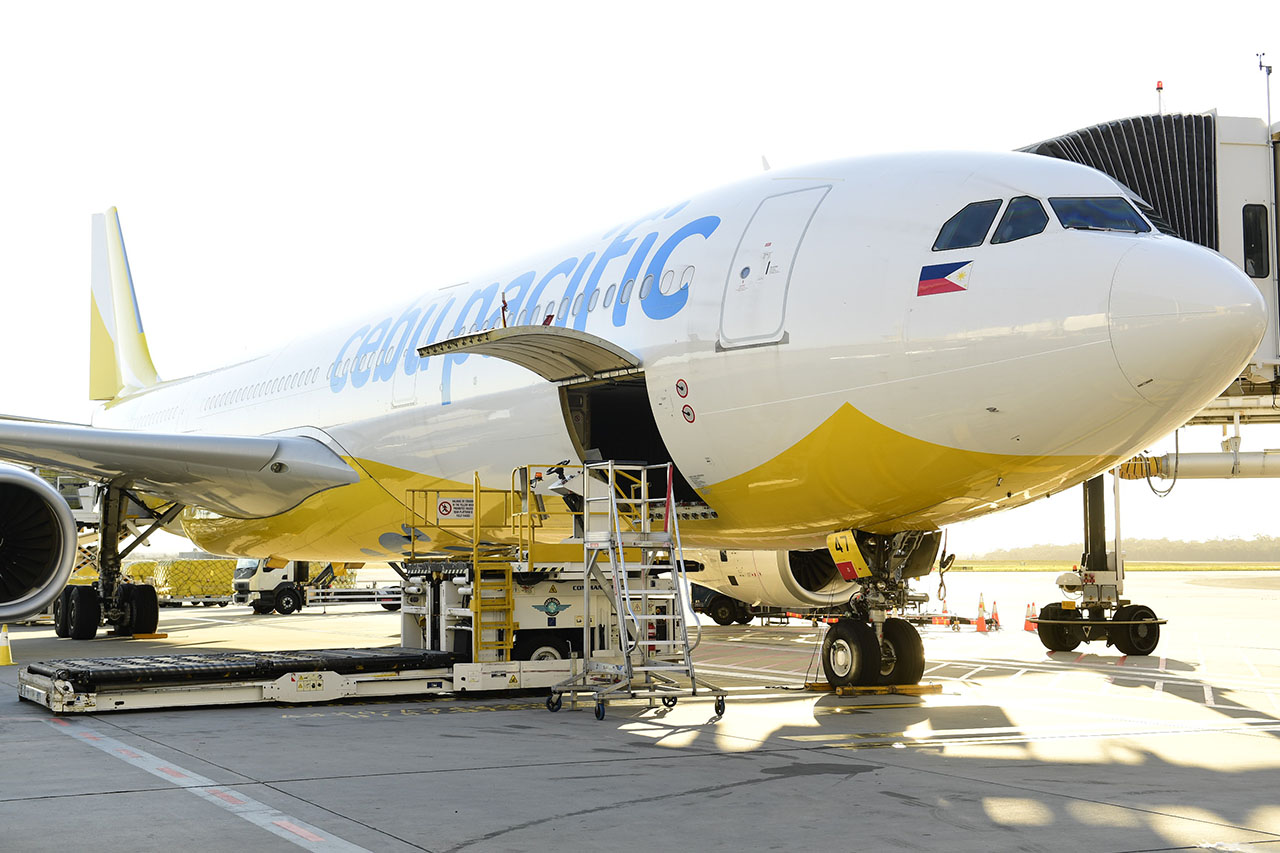
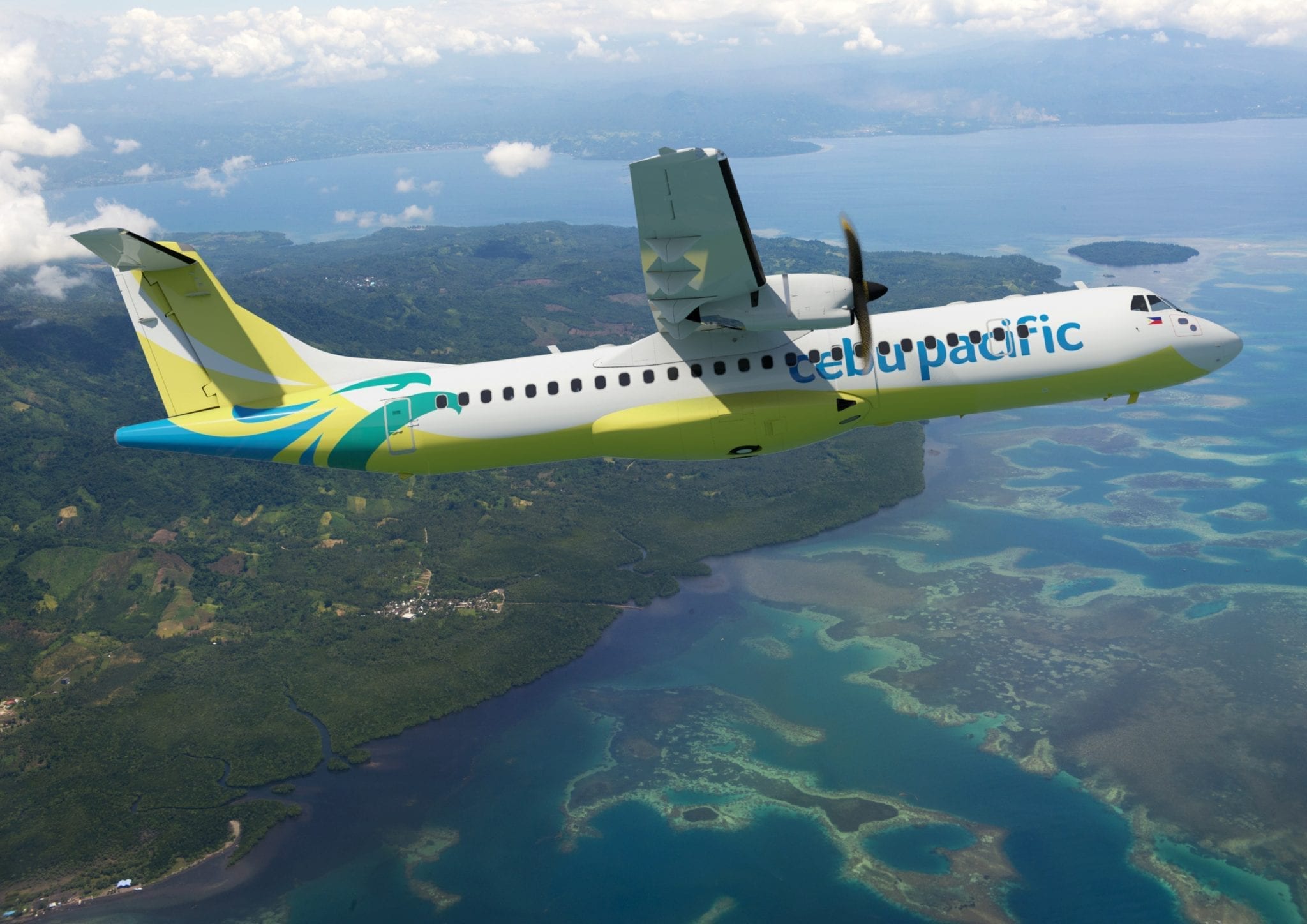
    Budget Carrier Cebu Pacific is ready to assess the viability of flights to Mati City, the capital of Davao Oriental province, as soon as the development of the airport for commercial operations starts. Cebu Pacific Director for Corporate Communications Charo Logarta-Lagamon said in an interview last week that they have always been open to that opportunity.

    “Mati has always been on our radar. But as of now, there is nothing concrete yet given that the airport is not 100% done and there is still a lot of technicalities that need to be ironed out before we can use it for commercial flights,” she said. Ms. Lagamon noted that an online campaign a few years back indicated interest for Mati among travelers. “Mati is one of the choices of netizens. Obviously, there is some market but how big the market is and will that market be viable and sustainable, that is something we need to assess,” she said.

    Last month, Mati City Mayor Michelle Nakpil-Rabat said they are working on land ownership issues relating to the airport so that they can undertake the runway expansion and open it for commercial flights. Meanwhile, Ms. Lagamon said they continue to evaluate potential routes to and from Davao City while “beefing up our Cebu and Clark hubs.” “In fact, we are launching new routes on August 9,” she said.

  • Cebu Pacific offers P88 fare promo for domestic flights

    Cebu Pacific offers P88 fare promo for domestic flights

    Cebu Pacific early Thursday announced a seat sale promo for all domestic and international flights.

    Passengers can avail of the P88 one-way base fare for local flights while one-way base fare for international flights starts at P888.

    Booking period is only available from Aug. 8 to Aug. 9, the airline said.

    Travel period for promo flights are from Dec. 1, 2019 to April 30, 2020.

  • AirAsia may face fines for charging processing fees for card and online banking transactions

    AirAsia may face fines for charging processing fees for card and online banking transactions

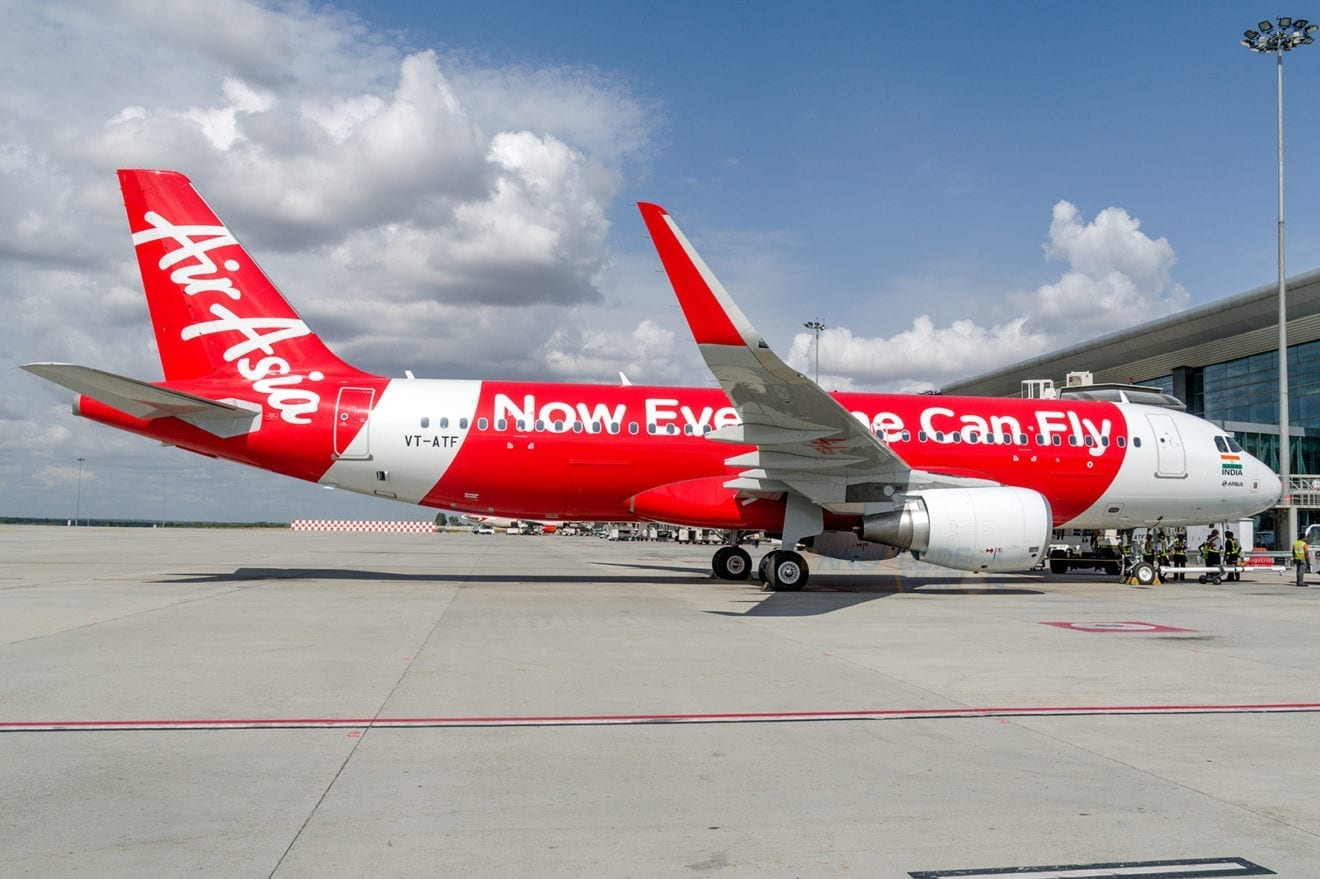
    low-cost carrier AirAsia could still face fines for charging passengers additional processing fee for card and online banking transactions. This comes right after AirAsia Group CEO, Tan Sri Tony Fernandes had announced that the airline will scrap the processing fee beginning October 2019.

    The Malaysian Aviation Commission (Mavcom) had made it compulsory for all airlines in Malaysia to remove hidden charges such as card payment charges and administrative fee effective 1st June 2019. The amendments to the Malaysian Aviation Consumer Protection Code 2016 (MACPC) also require airlines to refund the passenger service charges, taxes, fees and charges prescribed under any written law for both refundable and non-refundable tickets if a passenger did not travel. Refunds must be reimbursed within 30 days and airlines are only permitted to charge a maximum of 5% processing fee if the ticket is non-refundable.

    It was also reported that the Mavcom will issue a show-cause letter to airlines on the violation of the MACPC and the commission will then determine if the airline has contravened the said provision. The commission highlights that it is compulsory for airlines to remove the processing fee and airlines must also disclose the final price of the airfare both at the point of advertisement and prior to the consumer purchasing the flight tickets.

    They added that the final price must include the base fare and all required charges to be paid to the airline, government-imposed taxes, fees as well as fuel surcharge. This, according to the commission, will eliminate hidden charges such as card payment charges and administrative fees.

    The regulator said that it has been a practice in the past where the price increases after selections are made due to additional charges that were not disclosed upfront. The Edge Markets had reported that it may seem that AirAsia and AirAsia X would be liable for contravening the MACPC as they continue to charge processing fees until 30th September 2019.

    As mentioned earlier, AirAsia charges card processing fee as high as RM12 per passenger per flight depending on the destination. This means a return ticket could cost as high as RM24 for processing fee and if you’re travelling in a group of four, that’s equivalent to RM96 for processing fees alone.

    When Tony Fernandes was asked if Mavcom had ordered AirAsia to remove the transaction fees, he denied it on Twitter.

    At the moment, AirAsia encourages its passengers to pay by BigPay prepaid Mastercard to enjoy zero processing fees for their flight tickets. It is also worth pointing out that Bank Negara Malaysia had decreed that merchants cannot impose surcharges for payments using debit and credit cards.

    The same report also highlighted that AirAsia had stopped charging a RM3 klia2 fee on passengers departing from klia2 after it was made illegal by Mavcom. According to AirAsia, the extra fee was to cover the huge amount of extra cost klia2 has created such as aerobridges and the SITA check-in/boarding systems. Although it wasn’t disclosed in AirAsia’s annual report, The Edge Markets estimated that the airline would have collected RM45.24 million from the RM3 fee based on the number of passengers carried by the group from Malaysia Airports Holdings Bhd’s 2018 annual report.

  • Qatar Innovation Week is celebrating the value of Future Technologies This November.

    Qatar Innovation Week is celebrating the value of Future Technologies This November.

    Reiterating what the CEO of Google, Sundar Pichai had said, “AI may become more profound than fire or electricity.” Artificial Intelligence, in all probabilities, is becoming an economic arsenal for most countries around the world today, including the West Asian country that sits on the Arabian Peninsula. Yes, we’re talking about Qatar, the country with one of the richest economies in the world. With a blueprint already in place to set the nation in the right direction, Qatar has joined the AI revolution among other leading countries of the world.

    For what can serve as a powerful technological enabler for the Qatar National Vision 2030, the country could harness all the innovation narratives around future cutting edge technologies from top experts to make this vision a reality.

    Talk about a festival that celebrates the value of future technologies. That is exactly what Qatar Innovation Week aims to deliver this November 2019. In what is going to be one of the biggest, grandest and most flamboyant technology festivals for avid tech enthusiasts, and for the best interest of Qatar – governments, enterprises, sports, investors, researchers, academicians, policymakers, startups and solution providers, the 3-day comprehensive innovation festival will centre on three separate technology events in a row that include World 5G Show (Inaugural edition under the theme of ‘5G Rollout to Propel Qatar’s Goal’), World AI Show (As part of the global series, WAIS is to be introduced in Qatar this year for the first time) and the Industry 4.0 Masterclass by Henrik von Scheel, all in all to usher Qatar towards producing world-class AI applications in areas of national interest.

    Given that the 2022 FIFA World Cup is just around the corner and the first World Cup ever to be held in the Arab world, Qatar-the host country is reinvigorating its AI-enabled infrastructure to accommodate the massive influx of visitors for the upcoming world cup. By synergizing artificial intelligence-based applications and the power of 5G technology in areas such as transportation, logistics and live video streaming –  immersive Virtual Reality (VR) and Augmented Reality (AR) of the game to enhance viewing experience, Qatar Innovation Week is designed with the specific goal of stimulating strategies among stakeholders to catalyse the creation of AI-based solutions.

    When asked about the inspiration behind such an ambitious project, the CEO and founder of Trescon, Mohammed Saleem said, “Qatar is the first nation to launch the 5G network commercially, and with the 2022 FIFA World Cup that is set to take place, it is the perfect time to create a platform that can drive opportunities for new businesses based on AI and 5G technology. Qatar Innovation Week will support the Qatar National Vision 2030 by bringing together governments, AI solutions providers, renowned international experts and foreign investors to strengthen the nation’s infrastructure capacity.”

    In a bid to attract the world’s brightest minds from across the globe, Qatar’s first edition of World AI Show will also play host to the regional finals of the Startup World Cup, organised in association with Pegasus Tech Ventures, a Silicon Valley-based multinational VC firm. There will be 40+ regional events across North America, South America, Europe, Africa, Asia, and Australia, leading up to the Grand Finale in the US Silicon Valley, where the global champion will be awarded a US$ 1 million investment prize.

  • AirAsia Wants Tools to Engage Customers Moving to Messaging Apps

    AirAsia Wants Tools to Engage Customers Moving to Messaging Apps

    Consumers now want to talk to businesses and find resolutions the way they talk to their friends and family, and this is pushing a big transition towards messaging channels, according to Adam Geneave, chief customer happiness officer for the low-cost Asian airline.

    The carrier added support for Tencent’s WeChat in China earlier this year and was seeing significant adoption for the platform, Geneave said in an interview. In fact, the messaging tool since had grown to become AirAsia’s biggest communication channel in the Chinese market, he noted.

    The airline’s engagement with customers through such channels played a key role in its business strategy as they enabled consumer queries to be addressed quickly, he said, and urged technology and other solutions providers to integrate messaging tools into their products.

    According to Geneave, AirAsia currently provides WeChat support via a plugin developed by Salesforce.com, which suite of products had been rolled out over the past year as part of the airline’s overhaul of its customer service infrastructure. These included Salesforce Sales Cloud, Marketing Cloud with Social Studio, Service Cloud, and Community Cloud.

    The deployment enabled AirAsia service agents across eight markets to access a unified view of customer cases from all communication channels, encompassing online, email, live chat, phone, and airport communications.

    With the transition into messaging evolving so rapidly, though, it has been difficult for the airliner and its technology partners to keep pace, Geneave said. For instance, support for Facebook’s WhatsApp still was lacking, he noted.

    “We have been very vocal in wanting such support, including for Line and KakaoTalk,” he said, noting that WhatsApp processed 65 billion messages a day worldwide and there were 1 billion active WeChat users. “The way people are interacting is changing.” He attributed AirAsia’s plans to close all its call centers this year in part as a response to this trend.

    The airline is estimated to fly 100 million passengers this year and 20 million of its service cases each year are facilitated on Salesforce platforms, which currently support more than 22,000 AirAsia employees in nine languages.

    The data that runs through these systems also allow the airline to deliver personalized experiences and facilitate better decision-making.

    Geneave explained that the different datasets were collated onto a single platform and managed at AirAsia’s command center. This was manned by duty managers who would track Salesforce dashboards to identify patterns that could affect its business and monitor tweets as well as other social media messages coming through on Social Studio.

    This provided valuable learnings about its customers and, with these insights, enabled his team to work on projects and improve processes and systems to further enhance customers’ engagement with AirAsia, he said.

    The ability to study the data and identify emerging trends also meant his team could be aware of service outages even before the IT team was alerted of it, he noted, adding that his team also tracked other relevant developments such as airports and other airlines that might and might not compete directly with AirAsia.

    The airline in January also introduced its artificial intelligence-powered (AI) chatbot, named AVA, which could handle eight languages including Bahasa Indonesia, Vietnamese, and Simplified Chinese.

    Geneave said the chatbot had been performing well and handled a significant chunk of queries coming through on its live chat. AVA also was deployed on the airline’s Facebook Messenger platform.

    Apart from operating on a strong knowledge base, he said the chatbot also continued to learn from conversations it had with customers. His team also trained it on a daily basis, he added.

    AVA’s deployment was critical to enable the airline to be more agile in the way it managed its customers, he said, noting that the chatbot could take on a significant volume and allow queries to be handled more quickly.

    Geneave also pointed to the emergence of AI and machine learning technologies as a crucial development as these would further enable AirAsia agents to react more quickly and identify trends that otherwise would have taken hours to analyse.

    Beyond customer services, too, it would give airlines the ability to save fuel – for example, by improving the way it scheduled crew rosters and managed its resources, he said.

  • South Koreans start boycotting Japanese retail goods

    South Koreans start boycotting Japanese retail goods

    As a South Korean consumer boycott of Japanese goods gains momentum, consumers are starting to share information on new and upcoming Japanese retailers coming to the country.

    The intention, reports Korea Bizwire, is to include the retail brands on the boycott list and hurt sales as soon as the stores open. Among them, Japanese brands GU and Muji are being mentioned online as possible targets.

    GU is Uniqlo’s sister brand, owned by Fast Retailing. It plans to open its second and third stores in Yongin, Gyeonggi Province and Seoul’s Times Square Mall by early next month.

    Netizens are posting articles that emphasize the relationship between Uniqlo and GU as well as FRL Korea, which currently operates the Uniqlo Korea business.

    Discord between the two countries dates back to Japan’s colonial occupation of the Korean Peninsula before and during the Second World War and controversy over forced labor and sexual slavery. It expanded into a diplomatic crisis last week when Japan threatened to throttle exports of materials essential to South Korean industries.

    Last weekend, thousands of protestors marched in Seoul, accusing Japan of an “economic invasion”. The boycott campaign against Japanese retailers has stemmed from there.

    South Korea’s Lotte Shopping and Japan’s Fast Retailing invested US$19.7 million to establish FRL Korea, owning 49 percent and 51 per cent of the company’s shares, respectively.

    That business partnership is being subject to public criticism for taking the lead in importing Japanese goods into South Korea after GU set up its flagship store at Jamsil’s Lotte World Mall and its second franchise at Lotte Mall in Yongin.

    Muji, one of the best-known Japanese brands on the boycott list, is planning to renovate its store in Times Square Mall later this month.

    The news is being shared on social media, and many netizens are already calling for a boycott of the new store.

    GU and Muji have no current plans to suspend expansion or shut down stores already in operation. However, experts who spoke to Korea Bizwire agree that the new stores won’t be able to attract customers through the ‘grand opening’ effect unless the boycott movement subsides.

  • Singapore Airlines, Silkair and Vistara to expand codesharing to international flights

    Singapore Airlines, Silkair and Vistara to expand codesharing to international flights

    Passengers traveling with Singapore Airlines (SIA), Silkair and Vistara will have more international flight options as the Singaporean flag carrier and its regional arm, Silkair, signed an agreement with Indian carrier Vistara to expand codesharing to international routes.

    Under the expansion of an existing codeshare agreement which covers Indian domestic flights, SIA and Silkair will add nine new codeshare destinations within India on Vistara-operated flights. The following destinations will be added: Chandigarh, Dibrugarh, Jammu, Leh, Pune, Raipur, Ranchi, Siliguri and Srinagar. SIA will add its ‘SQ’ designator code to Vistara’s new international flights.

    Vistara will add its ’UK’ designator code to SIA and Silkair-operated flights between Singapore and eight destinations in India, including Ahmedabad, Bengaluru, Chennai, Cochin, Hyderabad, Kolkata, Mumbai and New Delhi. As part of the arrangement, Vistara will codeshare on services to more than 40 destinations from Singapore to Australia, New Zealand, Cambodia, Indonesia, Malaysia, Vietnam, Thailand, Taiwan, Japan and the US.

    “These codeshares will be implemented in phases and are subject to regulatory approvals,” reads a press release from the airline.

    “We’re happy to deepen this strategic partnership which means a more seamless flying experience for travelers from India to destinations across Asia, Oceania and the United States,” said Vistara’s chief strategy officer Vinod Kannan.

    The codeshare flights will progressively be made available through SIA and Vistara booking channels once necessary regulatory approvals are obtained, according to the airline.

    Vistara is a joint venture between Singapore Airlines (SIA) and Indian company Tata Sons. It will begin its first international flights by offering daily flights to Singapore from Delhi and Mumbai operated by a Boeing 737-800NG aircraft, starting 6 and 7 August respectively.

    Earlier this year, Vistara signed a codeshare agreement with United Airlines. This agreement expanded the US carrier’s network to over 20 destinations throughout India. Over the past two years, Vistara has also signed codeshare deals with Japan Airlines, British Airways, as well as Singapore Airlines and Silk Air.

  • Singapore Airlines launches new mobile app

    Singapore Airlines launches new mobile app

    Singapore Airlines has launched a new mobile app for Android and iOS smartphones.

    The app, based on a ground-up rebuild and all-new underlying technical architecture, is designed to significantly enhance booking and check-in flows, and improve transaction time by up to 60%.

    In addition to significant improvements in existing functions, the new app introduces several entirely new features, including:

    • ‘Capture & Discover’ – a new search function that uses image recognition as well as speech and natural language processing to identify user intent, match it to a Singapore Airlines destination, and present relevant destination content and fair deals.

    • ‘Translation Assistant’ – a feature that uses real-time language translation by voice to help travelers communicate better when they are overseas.

    • ‘Measure Your Baggage’ – to help travelers determine if the size of their bag is within cabin baggage limitations.

    Amongst the many improvements in existing functionality, real-time information such as boarding gate details, the destination’s weather, and currency, and baggage belt information have been added to the “My Trips” function.

    The new app also sees enhancements such as a newly designed KrisFlyer account dashboard and the introduction of an ‘Inbox’ feature, which stores push notifications as well as KrisFlyer messages for easy reference.

    “Singapore Airlines has been investing heavily to enhance our digital capabilities. With new user interface designs and insourcing of developer and customer experience talent, we are working to provide faster and more customer-centric products and services to improve the customer experience,” said Senior Vice President Sales and Marketing, Mr Campbell Wilson. “The launch of our new app follows many other digital innovation initiatives, such as KrisPay, the world’s first blockchain-based airline loyalty digital wallet, and the progressive redesign of our website and its underlying architecture. Improvements to our mobile app will not stop here and we will continue to invest our efforts to add value to our customers’ experience.”

    The new app will be available for download progressively, following the beta launch that began in October 2018. For Android users, the new app is being released by countries progressively between July and September 2019, while iOS users may download the new app from the App Store in September 2019. The beta version will continue to be available for download in the meantime.

  • Singapore Airlines picks crucial fight against Emirates in India

    Singapore Airlines picks crucial fight against Emirates in India

    Singapore Airlines Ltd just picked a fight with Emirates in a grab for India’s international travelers, and a slice of one the world’s fastest-growing aviation markets.

    Singapore Air’s unprofitable Indian venture, Vistara, launched its first overseas service between New Delhi and Singapore late on Tuesday. It’s the start of an uphill battle against Middle East airline giants, led by Emirates and Etihad Airways, that dominate India’s offshore routes.

    For Singapore Air, ambushed all over South-east Asia by budget airlines, the prize is clear. The number of passengers in India will more than triple to 520 million by 2037, the International Air Transport Association says. And of the 63 million people that flew to and from the country last year, two-thirds were carried by foreign airlines.

    Vistara’s maiden offshore flight is due to touch down at Changi airport early on Wednesday.

    Vistara, 49 percent owned by Singapore Air and 51 percent by Indian conglomerate Tata Group, started out in January 2015. India doesn’t allow foreign airlines to fly between local airports unless they partner with a local company to start a domestic airline.

    The carrier operates 30 Airbus SE and Boeing Co jets and has a local market share of 5 percent, the smallest among six major players. It also plans to fly to Dubai and Bangkok. According to the CAPA Centre for Aviation, Vistara could break even in the year ending March 2020.

    Vistara is a key element of Singapore Airlines’ multi-hub strategy, and the launch of international operations offers additional opportunities to it, a spokesman for the South-east Asian carrier said. He declined to comment on competition. A representative for Vistara referred queries to Singapore Airlines, while Emirates declined to comment.

    Still, airlines from the Middle East have history on their side. They’ve traditionally flown westbound Indians to Dubai and Abu Dhabi on ultra-cheap fares, before putting them on a flight to Europe or North America. Emirates, often dubbed the “unofficial national carrier of India”, controlled almost 15 percent of the market to and from India last year, regulatory data compiled by Bloomberg showed.

    The fares offered by low-cost airlines in India’s notoriously price-sensitive market are another challenge for Singapore Air. A Vistara flight to Singapore from New Delhi on Aug 28 costs 17,379 rupees (S$338), according to online travel agent Makemytrip.com. In comparison, AirAsia Bhd was offering a flight at less than half that price, at 7,745 rupees, albeit with a stop in Kuala Lumpur.

  • AirAsia names new Philippines CEO

    AirAsia names new Philippines CEO

    AirAsia has named telecommunications executive Ricardo RickyIsla as the new CEO of AirAsia Philippines.

    Isla joins AirAsia after more than a decade of international product development, sales and distribution experience with telecommunications giant PLDT Global Corporation.

    In addition to his most recent role as regional head of operations for the United Kingdom and Europe, Isla has held general manager positions in its international retail business, as well as in the US, Italy and Singapore.

    AirAsia Philippines’ chairman Maan Hontiveros said: “I am thrilled to welcome Ricky to our senior leadership team. Ricky has an outstanding track record of leading and transforming businesses, especially when it comes to increasing revenue and market share.”

    He commenced his role as CEO of AirAsia Philippines 31 July.

    AirAsia Philippines operates a fleet of 24 aircraft on more than 500 weekly domestic and international flights from its hubs in Manila, Clark, Cebu, and Kalibo.

  • Fung Group sells Circle K retail network

    Fung Group sells Circle K retail network

    Fung Group has sold its Guangzhou Circle K-store network to Chinese retailer Suning for an undisclosed sum.

    Facing intense competition in the mainland convenience-store market, the network of 61 outlets has failed to make a profit since the brand’s launch there in 2002. The Guangzhou Circle K business recorded a net loss of HK$21.4 million in 2014 before then parent Convenience Retail Asia sold the business to its 41-per-cent shareholder Fung Group the following year for $48 million (US$6.12 million). Since then, Fung Group has closed at least 12 stores there.

    Suning Xiaodian, Suning.com’s convenience-store business, will take over the Guangzhou Circle K stores, broadening its footprint in the city.

    Convenience Retail Asia continues to own and operate more than 300 Circle K stores in Hong Kong, Macau, and Zhuhai.

    The president of Suning’s consumer-goods business, Bian Nong, said Circle K’s experience in merchandising, supply chain and store management will supplement Suning’s existing operations in Guangzhou.

    Suning has been rapidly expanding its brick-and-mortar store business in recent months, acquiring supermarkets from Carrefour and the Chinese business of Spanish grocer Distribuidora Internacional de Alimentacion.

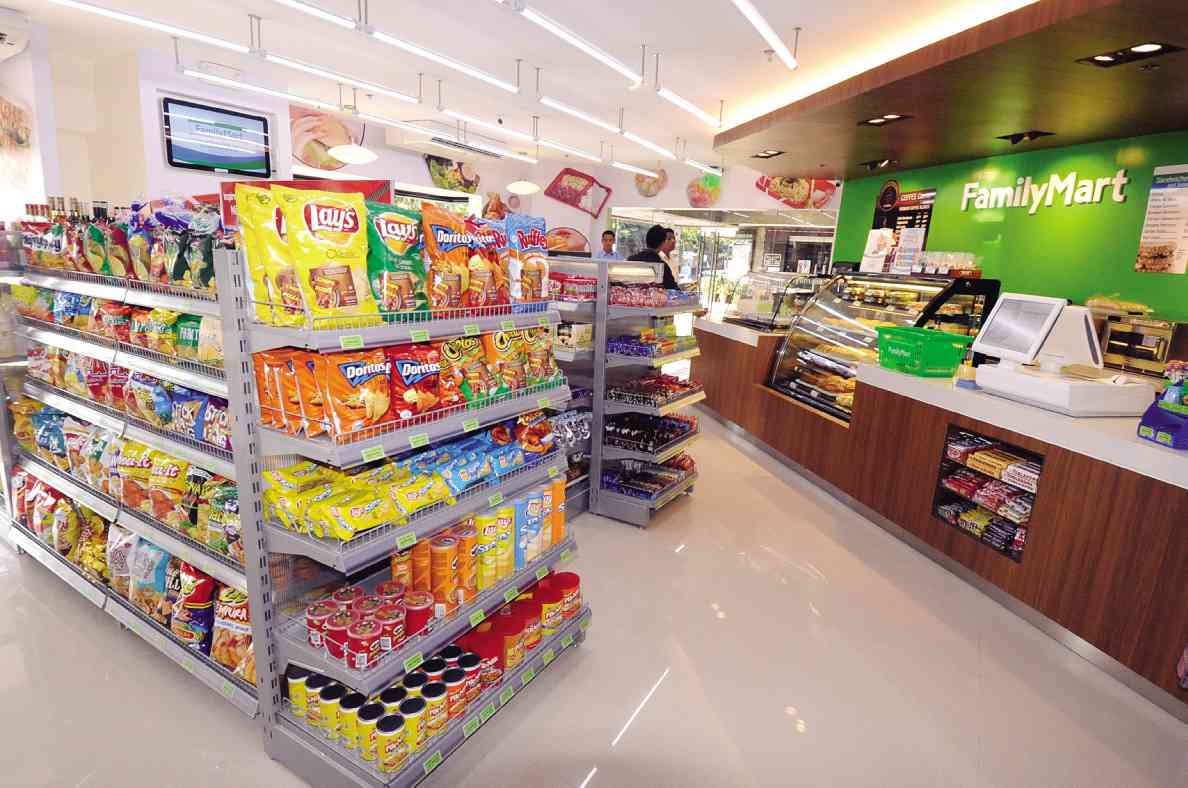
  • FamilyMart Taiwan rolls out small railway-station stores

    FamilyMart Taiwan rolls out small railway-station stores

    Convenience-store operator FamilyMart Taiwan plans nearly 40 new stores in railway stations this year.

    The Japanese-headquartered company has just opened three new outlets in Taiwanese stations at Badu, Wanhua, and Luodong. Two more are about to open at the main Taipei station, with another 32 planned for 23 stations within two months. Once complete, the network will serve 20 million rail travelers per year.

    FamilyMart Taiwan is also catering to local tastes by selling snacks in partnership with various Taiwanese firms, such as bakery shop Master Fang, which will sell desserts at Kaohsiung Railway Station.