Category: General

Retail News Asia is committed to providing both local and global retailers with the latest General Retail news throughout the Asian market. This on a daily base.

  • Singapore retail sales lags last Month

    Singapore retail sales lags last Month

    Singapore retail sales slid by 1.5 percent in March, after excluding motor vehicle sales from the data. According to Statistics Singapore, most retail categories recorded lower sales for the month compared with the same period last year. Sales of optical goods and books fell by 6.4 percent and of computers and telecommunications equipment by 4.9 percent.

    Food retailers, watch and jewelry retailers, and department stores reported sales declines of between 4.6 percent and 5.7 percent.

    In contrast, sales of medical goods and toiletries rose by 2.8 percent, due in part to higher demand for cosmetics. Supermarkets and hypermarkets registered sales growth of 0.9 percent.

    Month on month, Singapore retail sales were essentially stable.

    The total market for March was estimated at $3.8 billion, with online sales comprising about 5.3 per cent.

    Year-on-year sales of food and beverage services in Singapore rose by 0.7 percent in March.

    On a seasonally adjusted basis, sales of food and beverage services increased 1.3 percent month on month.

    Total sales value for the sector was $868 million, compared to $863 million in March last year.

  • WhatsApp vulnerability allowed government-grade spyware to be installed

    WhatsApp vulnerability allowed government-grade spyware to be installed

    WhatsApp, one of the most popular messaging apps out there, has once again been the subject of hacking, but this time the method used involves government-grade spyware. Although we have no information that would confirm who’s behind the attack, the spyware used is usually sold to governments.

    The vulnerability discovered by WhatsApp just a few weeks ago would allow a caller to install spyware on the device being called, regardless of whether or not the could be answered.

    The spyware installed was made by Israel-based NSO Group Pegasus, and is usually licensed to governments that want to hack targets of investigations and gain access to multiple aspects of their devices.

    It’s unclear how many Android and iOS devices were affected by the vulnerability, but as you can imagine, anyone with access to the spyware could hack any WhatsApp user. On the bright side, WhatsApp said that it took less than 10 days after it discovered the security issue to patch it. The company also believes that only a relatively small number of users were targeted by the attack.

    This attack has all the hallmarks of a private company known to work with governments to deliver spyware that reportedly takes over the functions of mobile phone operating systems. We have briefed a number of human rights organizations to share the information we can, and to work with them to notify civil society.

    If you have WhatsApp installed on your phone, installing the latest version of the app will render the attack inoperable, even if it was infected with the government-grade spyware.

  • Hong Kong online retailers ‘ignoring’ Gen Z consumer needs

    Hong Kong online retailers ‘ignoring’ Gen Z consumer needs

    Hong Kong online retailers are ignoring Gen Z consumers, according to a new report on the local payments market by unified commerce platform Tofugear and financial technology firm Wirecard.

    The research found that the territory’s e-commerce sites are not catering to Gen Z consumers when it comes to the payment options they offer.

    In contrast to older millennial and Gen X consumers, credit-card ownership rates among this demographic – those born between 1997 and 2012 – are low. As a result, one in three Gen Z consumers (35 percent) prefer to make online purchases via a cash-on-delivery option.

    The Digital Payments Landscape in Hong Kong 2019 report finds that while Hong Kong online retailers such as Zalora are already catering to this trend, they are in the minority as only around 5 percent of all retailers in the territory offer a cash-on-delivery option for online purchases.

    “Retailers should ignore Gen Z at their own peril,” says Tiffany Lung, retail analyst at Tofugear.  “Much focus has been on millennials, but the consumer behaviors of Gen Z are radically different – particularly when it comes to payment preferences. They think traditional payment methods are as lame as Facebook.”

    Digital wallets such as AlipayHK are also an important means of transaction for this young demographic, with 86 percent using this payment method – typically for purchases of less than HK$500.

    “Rather than passively waiting for years to qualify for a credit card like millennials have done, Gen Z has been much more proactive,” says Lung. “They have turned to digital wallets to solve the barriers they face when it comes to in-store and online payments. I believe this habit will stay with them as they come of age.”

    Based on a survey of 1000 Hongkongers, the report compares the payment habits of Gen Z, millennial and Gen X consumers and finds that while many perceive Hong Kong to be a laggard when it comes to smart payments, there is a genuine willingness to adopt new payment methods such as digital wallets – regardless of the consumer’s age.

    “After years of complacency, the payments ecosystem in Hong Kong is finally waking up to the fact that cash might be knocked off its throne – or at least see its dominance challenged by a plethora of new payment methods,” says Lung.

    Alongside the consumer survey, key players in Hong Kong’s digital payment industry were interviewed including Google Pay, Octopus Card, TNG FinTech Group, BBPOS Merchant Services, as well as online retailers such as Zalora and SkyMart.

  • Facebook’s Opens Lawsuit against an app developer

    Facebook’s Opens Lawsuit against an app developer

    Kettle, meet pot. Or perhaps we should say, man bites dog. Either way, it symbolizes news announced on Friday by Facebook. The company, which faces an FTC fine of $3 billion to $5 billion for allegedly using members’ personal data without consent, filed a lawsuit against a company for doing the same thing. The suit was filed this past Friday in California Superior Court for the County of San Mateo against a South Korean company called Rankware.

    Rankware is an app developer; the company and its apps have been suspended from Facebook. Despite the suspension, it appears that the company still has in its possession some Facebook user data. In the suit, Facebook asks the court to demand that Rankware delete the user data it obtained and hints that the defendant might have sold this information to other firms. The social networking company says that Rankware refuses to say who it turned over the user data to, and would not “[p]rovide a full accounting of Facebook user data in its possession.”  The filing adds that while Rankware had agreed contractually to follow Facebook’s rules, it “failed to comply with Facebook’s requests for proof of Rankwave’s compliance with Facebook policies, including an audit.”

    The filing goes on to note that since 2014, Rankware has been “us[ing] Facebook Pages data associated with its apps for its own business purposes, which include providing consulting services to advertisers and marketing companies.” The filing claims that the defendant has generated $9.8 million by selling Facebook members’ user data to advertisers. The social networking firm sent a cease and desist letter to Rankware earlier this year, and while the developer said it did not violate Facebook’s terms of service and policies, it would not provide any proof of this.

    “By filing the lawsuit, we are sending a message to developers that Facebook is serious about enforcing our policies, including requiring developers to cooperate with us during an investigation.”

    The suit says that Rankware’s actions harmed the reputation, public trust and goodwill of Facebook. It seeks an injunction that would prevent Rankware from accessing Facebook’s platform, force the South Korean developer to show proof of its compliance, and delete any user data that it obtained in violation of Facebook’s rules. Despite asking the court to award it financial damages and any money that Rankware received “unjustly,” Facebook says that money isn’t enough to make up for the harm caused by Rankware’s actions.

  • Apple TV and AirPlay 2 are now available on Samsung smart TVs

    Apple TV and AirPlay 2 are now available on Samsung smart TVs

    Earlier this year, news broke that Apple would bring the Apple TV app to all Samsung smart TV models from 2018 and 2019. Today, alongside the redesign of the Apple TV app, support for it and AirPlay 2 is going live on Samsung’s smart TVs, turning the South Korean tech giant into the first TV manufacturer to natively support Apple’s services without a set-top box.

    In order to gain access to Apple TV and AirPlay 2, Samsung Smart TV owners will have to install a new firmware update that enables the services. Users in Australia have already started receiving the update, though there’s no official schedule for when the update will be rolled out in other regions.

    Starting this year, all new Samsung smart TVs should have AirPlay 2 and Apple TV integration out of the box, meaning that the app will be compatible with Samsung’s TV search function, Bixby Voice, and the Universal Guide feature, which surfaces shows and movies based on your interests and preferences. The update also enables casting content from iPhones and iPads to Samsung TVs via AirPlay 2.

    The redesigned Apple TV app now features a Channels tab, where users can find their favorite content from various networks and streaming services, as well as a curated section, where content will be surfaced on a per-user basis, depending on interests.

    If Apple TV is available in your country, and you own a Samsung smart TV model from the last year, keep an eye out for the firmware update. If you’d like to manually check for an update, go to Settings > Support > Software Update on your TV and select “Check for updates.”

  • Singapore retail sales slipped last Month

    Singapore retail sales slipped last Month

    Singapore retail sales slid by 1.5 percent in March, after excluding motor vehicle sales from the data.

    According to Statistics Singapore, most retail categories recorded lower sales for the month compared with the same period last year.

    Sales of optical goods and books fell by 6.4 percent and of computers and telecommunications equipment by 4.9 percent.

    Food retailers, watch and jewelry retailers, and department stores reported sales declines of between 4.6 percent and 5.7 percent.

    In contrast, sales of medical goods and toiletries rose by 2.8 percent, due in part to higher demand for cosmetics. Supermarkets and hypermarkets registered sales growth of 0.9 percent.

    Month on month, Singapore retail sales were essentially stable.

    The total market for March was estimated at $3.8 billion, with online sales comprising about 5.3 percent.

    Year-on-year sales of food and beverage services in Singapore rose by 0.7 percent in March.

    On a seasonally adjusted basis, sales of food and beverage services increased 1.3 percent month on month.

    Total sales value for the sector was $868 million, compared to $863 million in March last year.

  • Coles reshaping 200 stores around convenience

    Coles reshaping 200 stores around convenience

    Coles is ramping up its convenience strategy, with a plan to grow sales on the back of “food-for-now” and “food-for-later” products. As part of this strategy, the brand will convert around 200 Coles supermarkets to a more premium, convenience-focused format, as shift 200 lower-volume stores to a more value-centric format, while adding around 75 new product lines to its existing range for ready-to-eat meals – such as breakfast foods, curries, soups, roast vegetables and stir-fry kits.

    According to the report, Coles chief executive Stephen Cain sees an opportunity through this strategy to grow another billion dollars in sales over the next five years.

    “It’s high growth and it mainly happens outside supermarkets at the moment,” Cain told.

    “Some of it will come from other players in the convenience market, but because it’s value-added it’s also growing the market as well.”

    Cain previously told analysts that the brand was changing rapidly in the space, but was still lagging behind the competition.

    “We are growing our baskets, and we are growing our transactions. We believe that we can do a better job with the convenience customers, and we’re setting up the business to do that going forward,” Cain said.

    Coles’ focus on convenience is not surprising, given the number of partnerships it has forged with third parties, since splitting from former-parent company Wesfarmers in late 2018, to ensure customers can get its products how they want when they want.

    Deals with online marketplace eBay and meal-delivery service Uber Eats are other incentives for Coles to improve its food-for-now and food-for-later offerings by allowing several pillars of the business to utilize the expanded range.

    “Making life easier for our customers means enabling our customers to fulfill their shopping needs ‘anytime, anywhere’,” a Coles spokesperson said.

    “We know our customers’ needs are changing rapidly and we are evolving our offer accordingly.”

    The convenience market is growing rapidly in Asia Pacific, with the region having been named the “largest and fastest-growing” convenience market in the world in a report by GlobalData.

    According to GlobalData retail analyst Honor Strachen, the changes being seen in the region’s convenience offers, such as those outlined by Coles, have been improving store sales and profitability at a time that retail space is becoming more expensive, and margins are increasingly under pressure from inflation and discounting.

  • Temple & Webster posts strong Sales during First half of the Year.

    Temple & Webster posts strong Sales during First half of the Year.

    Temple & Webster’s revenue grew by around 40 percent to roughly $32 million in the first four months of the year, the online furniture and homewares business said in a trading update to analysts.

    With two months still go in the second half of fiscal 2019, the retailer indicated it has seen the continued uptake of online furniture shopping due to demographic changes, something chief executive Mark Coulter previously explained when the business revealed its $3 million profit during the first half of its 2019 financial year.

    “The trend to online actually accelerated during a tougher retail environment, and I think we’re benefiting from that trend,” Coulter told.

    “Irrespective of any macro-economic trend, there’s still that shift toward online. Millennials are still growing up, and are still moving out of home and are buying their first or second property. That’s going to happen regardless of any downturn.”

    The business’s focus on improving and increasing its range has allowed it to sell across multiple demographics, and the number of active customers grew 36 percent to approximately 260,000 as of April 30, 2019.

    In the first four months, the company also launched its first by-appointment trade and commercial showroom in Sydney.

    The showroom is described as the brand’s first permanent physical experience, offering customers the ability to touch and feel products, view samples, and review designs prior to large scale purchases.

    “I think as the order value gets bigger and as the order gets more complicated, having a physical space for someone to meet an account manager will help,” Coulter previously told.

    “From a customer point of view, we don’t envisage having many showrooms around the country… I think the main game for us is going to online for a very long time.”

  • Gmail on Android gets Google Tasks integration

    Gmail on Android gets Google Tasks integration

    Google Tasks has been around for years, though it was largely neglected and forgotten by both its creators and users alike. This, however, changed last year, when Google realized that it needs an up-to-date “to-do” platform that puts the focus on getting things done. That’s when the company revived Tasks as a mobile app, alongside the big redesign of the web version of Gmail.

    Said redesign also brought Tasks integration to Gmail for web, which proved to be a very convenient feature, indeed, but it didn’t appear in the Gmail app for reasons unknown. This changes with the latest update, which finally introduces Google Tasks integration to the Android Gmail app.

    Adding important emails to Tasks is quite easy. All you need to do is open the email you want to add, tap the three-dot menu in the top right corner of the screen, and select “Add to Tasks.” If you don’t have the Tasks app installed on your device, doing this will send you to the Google Play Store page of the app. If you already have and use Tasks, this will add the email to your to-do list. You can also add details, change the date and time for reminders, and include subtasks on a per-email basis, which is pretty neat.

    Tasks integration should be going live in the latest update for the Gmail app on Android, though as we’ve come to expect from Google, it’s likely going to be a staged roll-out, which means that not everyone is going to get it on the same day. We’ve already received the update, but you may have to wait a bit longer, depending on your region.

  • Apex Legends is coming to mobile

    Apex Legends is coming to mobile

    Respawn’s wildly successful battle royale shooter, Apex Legends, is likely getting a mobile version, EA revealed in its quarterly earnings report. Unsurprisingly, the game was a huge hit and turned into “the fastest-growing franchise we’ve ever had,” the report says.

    During today’s call, the publisher said that it has entered “advanced negotiations to bring Apex Legends to China and to mobile.” This is a strategy that both PUBG and Fortnite—Apex Legends’ biggest competitors in the battle royale genre—followed to great results, so it’s no wonder that EA is looking to replicate their success and keep Apex’s momentum going.

    Fortnite’s approach is unique, however, as it is essentially the exact same game across mobile devices, consoles, and PC, which allows for seamless cross-platform play, while PUBG’s mobile outing is a separate entity that’s limited to smartphones and tablets. Unfortunately, it is yet unclear which approach EA is planning to take with the mobile version of Apex Legends, or when the game is going to release. Seeing as how the publisher has entered an advanced stage of negotiations to port the title to mobile devices, we might see something by the end of this year, though it depends entirely on how scalable the experience is going to be.

    Respawn Entertainment, the game’s developer, further added that it is committed to “updating the game with seasonal updates, with a focus on the quality of content over novelty or speed of release.” This seems to be in an attempt to address complaints that the game is not getting enough new updates.

  • Thai AirAsia parent Q1 operating profit halves

    Thai AirAsia parent Q1 operating profit halves

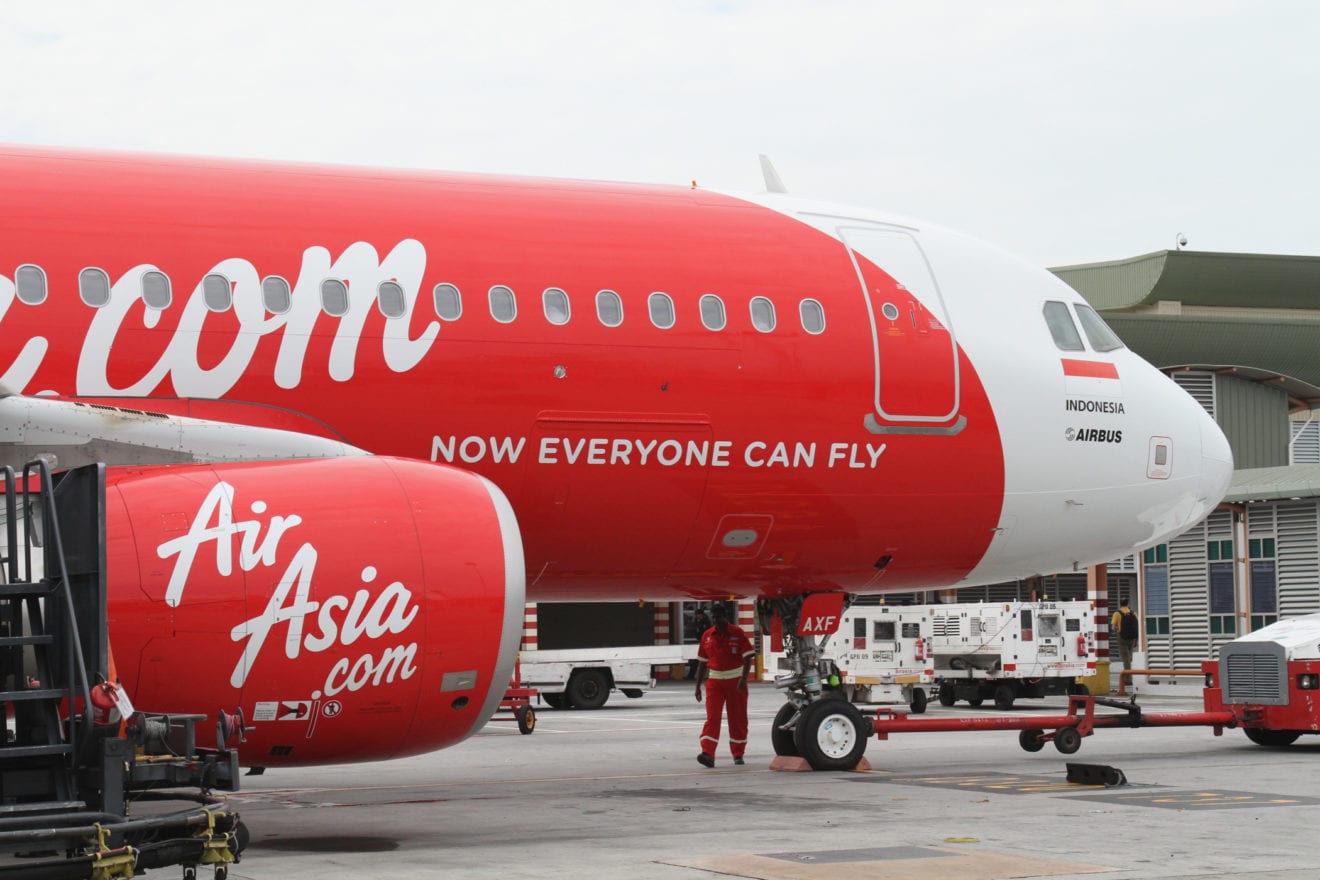
    Revenue for the quarter ended 31 March was flat at Bt11.6 billion, but expenses rose 10% to Bt10.5 billion. Net profit fell 50% to Bt497million. The company says that fuel costs rose during the quarter, as did airport and MRO costs. Despite this, the carrier’s CASK was flat compared with a year ago at Bt1.53 due to a 10% increase in ASKs and a longer average stage length.

    RPKs grew 9%, while load factor was flat at 91%. The carrier’s average fare for the first quarter was Bt1554, down 7%.b Cash and cash equivalents were Bt4.1 billion on 31 March, down from Bt5.97 billion a year earlier.

    In its outlook, the carrier notes that international trade frictions could hurt the global economy and affect exchange rates.

    “As the company has revenues and expenses in various different currencies such as passenger fares, repair, and maintenance as well as aircraft rental, the company has adopted the practice of natural hedging by matching cash expenses and revenues in the same currency as practically possible,” it says.

    It believes that global crude prices could fall in the second half of the year, but has hedged 52% of its 2019 fuel conception at cost of $80 per barrel.

    It adds that Thailand’s tourism industry will remain strong in 2019. It plans to add new routes later this year from Bangkok Don Mueang to new Vietnam destinations such as Can Tho and Nha Trang, as well as the addition of a Chiang Mai-Da Nang service.

    It plans two Cambodia services, Bangkok Don Mueang-Sihanoukville, and Phuket-Phnom Penh. In addition, it will add a Bangkok Don Mueang-Ahmedabad service.

    “This diversified strategy tends to minimize the risk of dependence on the major customer base, enhancing the company and Thai AirAsia’s sustainable revenue growth in the future and maintain its leading low-fare airline in Thailand,” it says.“In 2019, Thai AirAsiamaintains a target of 23.15 million passengers, with a solid load factor at 86%, and plans to acquire more energy efficient aircraft during the year to bring its fleet to 63 aircraft.”

  • Cebu Pacific Q1 profit more than doubles

    Cebu Pacific Q1 profit more than doubles

    Budget airline Cebu Pacific saw profit in the first quarter of the year more than doubled on strong demand and as fuel costs, which weighed on earnings in 2018, eased during the period.

    Cebu Pacific, owned by the Gokongwei family’s JG Summit Holdings, said in a stock exchange filing that net income from January to March this year hit P3.43 billion, up more than 138 percent compared to the same period in 2018.

    The airline, which signaled its intention to expand aggressively this year, also saw total revenues hit P21.18 billion, up 16 percent. Most of this came from passenger ticket sales, which rose 14.6 percent to P15.68 billion. Cebu Pacific, which recently took delivery of newer planes such as the next-generation A321neo, saw passenger volume increase 8.5 percent to 5.3 million. Average fares also ticked higher to P2,965, an increase of 5.7 percent.

    The airline also improved cargo revenues by 12.7 percent to P1.44 billion as well as ancillary revenues, which increased 22.7 percent to P4.1 billion.

    As noted, the carrier’s bottom line was propped up by the 4.3-percent decline in oil prices, a major operating expense.

    The company’s flying expenses alone rose 3.8 percent to P7.17 billion mainly as it ramped up operations.

    Overall, operating expenses went up 8.4 percent to P17.34 billion.

    “The increase was driven by its expanded operations, growth in seat capacity from the acquisition of new aircraft and the weakening of the Philippine peso against the US dollar,” Cebu Pacific said in its filing.

  • Instagram test designed to make users more trusting of content

    Instagram test designed to make users more trusting of content

    When Instagram first launched, it was known for the filters that users could apply to their photos, which would then be shared among members. The company was acquired by Facebook in 2012 for a reported $1 billion. Instagram is not as well known as Facebook is for inflaming the passions of subscribers by spreading fake news and political propaganda. Still, a report published says that steps are being taken to prevent the dissemination of false posts over the platform. Instagram is currently running tests with fact checkers.

    Facebook currently employs 52 firms that it has partnered with to conduct fact checks. If content found on a particular Facebook post is proven to be false by one of the fact checkers, the post’s distribution through users’ news feed is reduced. And not surprisingly, Instagram’s policy is basically the same. Stephanie Otway, a spokesperson for the app says, “Our approach to misinformation is the same as Facebook’s — when we find misinfo, rather than remove it, we’ll reduce its distribution.” That means flagged posts will be removed from the Explore tab and the hashtag result page, but it will stay up on the author’s page. That limits the readership of these polarizing posts to those who have made a decision to subscribe to authors who disseminate such information.

    But there is a big difference between the two sites. The content on Instagram is not nearly as news-oriented as it is on Facebook, especially since the platform doesn’t have hyperlinks inside captions or member comments. Thus, the hysteria is more subdued than on Facebook where a single lie could turn millions of members into a foaming at the mouth crazy. So unlike Facebook, photos that are fake won’t be labeled and there will be no warning shown to Instagram members who want to share these images.

    “We all know any kind of images and pictures are a main driver of misinformation in any platform. Alerting those who share (false posts) like they do on Facebook would be best. But perhaps it is only the beginning of their actions there, I suppose. Even though there are plenty of problems regarding misinformation inside Facebook’s many platforms, they are still the ones who are taking the combat of misinformation more seriously.”-Tai Nalon, Director Aos Fatos

    Lees ook:

  • Cebu Pacific’s income jumped 138% to P3.4b in first quarter

    Cebu Pacific’s income jumped 138% to P3.4b in first quarter

    Cebu Air, the operator of low-cost carriers Cebu Pacific and Cebgo, said net income jumped 138.4 percent in the first quarter from a year ago, on the back of strong passenger and cargo revenues. The airline unit of the Gokongwei Group said it posted a net income of P3.4 billion from January to March, up from P1.4 billion it earned in the same period last year. Revenues increased 16 percent in the three-month period to P21.17 billion from P18.26 billion it generated a year earlier.

    Passenger revenues increased 14.6 percent to P15.67 billion from P13.67 billion. The increase was attributed to the 8.5-percent growth in passenger volume to 5.289 million from 4.876 million last year as the group added bigger A321 aircraft to its fleet. The average fare went up 5.7 percent to P2,965 in the first quarter from P2,805 a year ago, contributing to the higher revenues. Cargo revenues grew 12.7 percent to P1.44 billion from P1.279 billion following the increase in both yield and volume of cargo transported in 2019. Operating expenses went up 8.4 percent to P17.34 billion from P15.997 billion a year ago.

    Cebu Air said the increase was driven by expanded operations, growth in seat capacity from the acquisition of new aircraft and the weakening of the Philippine peso against the US dollar. The peso depreciated to 52.36 per US dollar in the first quarter from an average of 51.49 a dollar last year. Flying operations expenses increased 3.8 percent to P7.173 billion from P6.910 billion.  “This was mainly accounted for by the increase in pilot training costs,” CEB said. Fuel expenses also went up as the fuel volume increased by 7.9 percent in the quarter.  The MOPS price of fuel slightly went down to $76.50 per barrel in the first quarter from $79.99 a barrel in the same period last year.

  • Eraman and AirAsia’s Ourshop.com announce partnership to transform travel retailing in Malaysia

    Eraman and AirAsia’s Ourshop.com announce partnership to transform travel retailing in Malaysia

    Duty-free operator Eraman Malaysia and AirAsia-controlled online retailer Ourshop have entered into a major new partnership. It allows travelers to collect products pre-booked on Ourshop.com at a dedicated pick-up point, located at the Eraman duty-free outlet in klia2 at Kuala Lumpur International Airport.

    Owned by airport operator Malaysia Airports, Eraman is Malaysia’s largest airport travel retailer. It operates more than 50 shops and F&B outlets at airports including Kuala Lumpur International, Kuching, Kota Kinabalu, Penang, Langkawi and Labuan.

    Ourshop, launched in July last year, is AirAsia’s online marketplace offering a wide selection of products from duty free, high street and local retailers from across the world.

    The partnership has the added benefit of allowing access to passenger trends and travelers’ departing and arrival destinations, enabling more precise marketing and product selection.

    Travelers purchasing products on ourshop.com can earn AirAsia BIG Points, which can be used to redeem free flights on airasia.com. AirAsia said it was thereby creating a “cycle of value”, as the more miles traveled or items bought, the more travelers earn points.

    AirAsia added that passengers can enjoy the peace of mind that they are purchasing from an official retailer or brand directly, thus removing any doubt of product authenticity that it says has plagued e-commerce traditionally.

    Eraman General Manager Zulhikam Ahmad said his company is thrilled to be part of the Trinity collaboration with parent company Malaysia Airports and Ourshop. “This initiative is very timely as we have just undergone a brand refresh exercise,” he said. “We fully understand that e-commerce is fast becoming significant in the travel retail and duty-free market space.

    “Hence, Eraman is embarking on this journey to ensure we too do not miss out on providing the convenience and keeping up with the trends.”

    Malaysia Airports Senior General Manager Mohammad Nazli Abdul Aziz commented: “The partnership between the nation’s key players in the travel retail industry will undoubtedly elevate the shopping experience for all travelers passing through our doors.

    “This is just a taste of the many exciting activities and initiatives that we have lined up as part of Malaysia Airports’ Commercial Reset strategy.

    “We want to bring excitement and joy to our guests when they are at the airport; and in doing so, we hope to change the traditional perceptions of the airport as a mere hub for connectivity, becoming also a place to enjoy the vast retail offerings available – both at our airports and now digitally.”

    Ourshop General Manager Hassan Choudhury said: “What used to be a 20-minute shopping experience as travelers rush to their boarding gates is now 365 days of shopping indulgence.

    “I want to thank Eraman for exploring this unique online shopping experience for travelers with us. We look forward to sharing incredible success together.”