Category: General

Retail News Asia is committed to providing both local and global retailers with the latest General Retail news throughout the Asian market. This on a daily base.

  • Cebu Pacific is Recruiting New Cabin Crew

    Cebu Pacific is Recruiting New Cabin Crew

    One of the Philippines fastest growing airlines, Cebu Pacific is currently recruiting new cabin crew in c, Bacolod, Pampanga and Davao.  Cebu Pacific is aiming to fly more than 200 million passengers by 2020 and currently serves 36 domestic and 26 international destinations across Asia, Australia, the Middle East, and the USA.

    The airline says 2019 will be a year of major expansion as it plans to take delivery of 12 brand new aircraft including Airbus A321neo, five A320s and a regional ATR 72-600.  “2019 is the year we accelerate growth. On average, we will be receiving one brand-new aircraft per month which we can use to increase capacity in key markets or even launch new routes,” explained Lance Gokongwei, the airline’s chief executive.

    Interested candidates will already need to have the right to live and work in the Philippines, as well as the ability to speak and write in both English and Filipino.  Female candidates must be at least 5’3″ tall, while male candidates must a minimum of 5’7″ tall.

    Candidates in Bacolod, Pampanga and Davao can apply via the official Cebu Pacific careers website, while those in Manila can either submit an online application or attend an Open Day.

    Walk-in screenings are taking place every day between Monday and Friday from 9:00am to 11:00am Cebu Pacific Building, along Domestic Road, Pasay City.  Candidates must attend in full business attire and have a copy of their updated resume/CV.

    Cebu Pacific has also made headlines recently after it offered the opportunity for 16 lucky candidates to undergo a “study now, pay later, zero-interest” pilot training program to become fully fledged commercial pilots with guaranteed employment with the airline.

    Here’s how Cebu Pacific describes the opportunity:

    “The Cebu Pacific Cadet Pilot Program is open to all Filipino citizens who are college graduates who are proficient in English. There are no preferred college degrees, and applicants need only have an average grade of at least 70% or its equivalent in subjects related to Math, Physics and English.”

    “The program entails 52 weeks of week integrated flight training, theory and education at Flight Training Adelaide (FTA) in Australia. They will undergo learning modules, train in a flight simulator and then on to an actual aircraft. Successful candidates will receive Diplomas of Aviation for Commercial Pilot License – Aeroplane, Instrument Rating, and for Pilot in Command. They will also undergo an additional four weeks of training to obtain a Pilot’s License under the Civil Aviation Authority of the Philippines.”

    “CEB cadet-pilots need not worry about expenses related to the flight training, as the airline will shoulder the costs first—including a stipend, and amortize the payment for the course while they are employed. The entire program will be financed by Cebu Pacific, and successful cadet-pilots who enter the CEB corps of pilots will reimburse the cost of the program through salary deduction over a maximum of ten years at zero-interest.”

  • Facebook could combine two important parts

    Facebook could combine two important parts

    Facebook is split into so many products these days that it’s hard to keep track to everything the social app has to offer if you’re not a hardcore user. News Feed, Stories, Messenger are just some of the features that Facebook has made available to users throughout the years.

    The reason Facebook split its app into so many pieces is quite simple: monetization. Well, it appears that the social giant has found a way to make even more money by combining, rather than dividing, two of these features: News Feed and Stories.

    The changes spotted by software engineer Jane Manchun Wong indicates that Facebook is testing a new format that will combine News Feed and Stories into a one swipeable, hybrid carousel.

    It will allow standard feed posts and ads to be placed inside Stories in the same carousel so that users would be tempted to swipe through them more often than not, which translates in more views and better monetization of content.

    The GIF posted by Jane shows how a user seamlessly switches between a News Feed story and a Stories video, inside the hybrid carousel. The feature has been discovered in the Android version of Facebook, but if the company does indeed plan to make it available, it will be present on all supported platforms.

  • Cebu Pacific Expands Horizons to Australia

    Cebu Pacific Expands Horizons to Australia

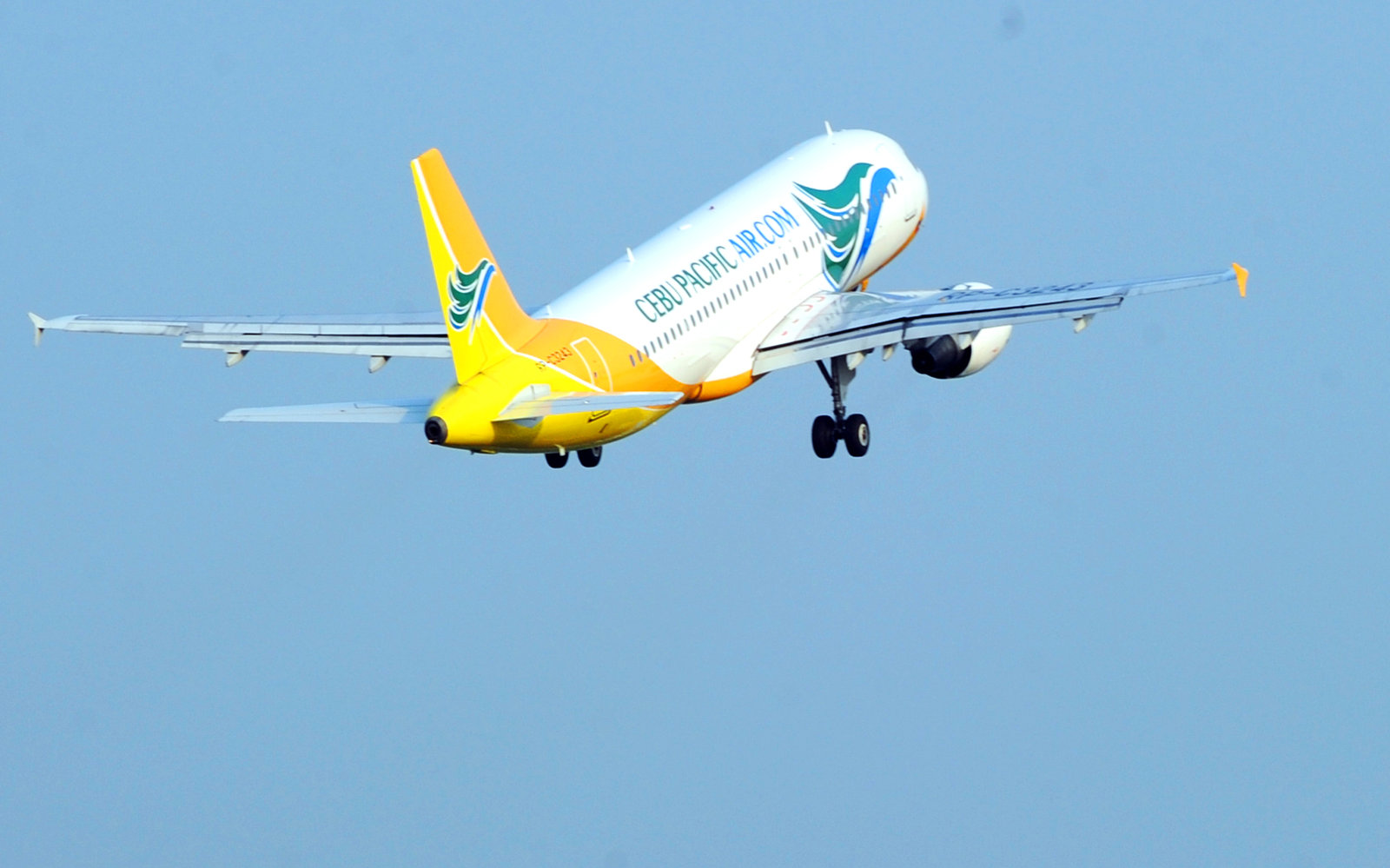
    Australian cities such as Perth and Cairns, as well as destinations in Japan and India, are on the radar for Philippines budget carrier Cebu Pacific as it expands its fleet of Airbus A321neos. Cebu, which already flies direct to Sydney and Melbourne from Manila, is stepping up its re-fleeting program and took delivery of the first of 32 A321neos at the end of January.

    It expects at least five more of the longer-range, fuel-efficient planes during 2019 to support its expansion plans.

    Cebu is known for packing seats into its bigger Airbus A330s and has followed that strategy with the smaller plane.

    The budget carrier has opted for the Airbus Cabin Flex fuselage modifications to give the A321neo 236 ergonomically-designed Recaro seats, slightly below the 244-seat Airbus maximum.

    It expects and Pratt & Whitney  GTF-powered planes to achieve a 20 percent savings in fuel costs as well as other advantages such as a significantly reduced noise footprint and lower maintenance requirements.

    The January delivery brought the total size of its fleet to 72 aircraft, including 43 Airbus A320s and A321s, eight A330s and 20 ATR turboprops.

    While the airline also has mid- and long-term plans for widebody aircraft, its primary focus is currently on the neos.  It is looking to grow its fleet to 83 aircraft in 2022, with 27 of those neos.

    “This year, we’re taking in 12 new aircraft, (the) bulk of it will be the A321neo,’’ Cebu vice president Lance Gokongwei told AirlineRatings.

    “We are continuously studying new routes and destinations, especially with the A321neo that has Northern Japan, India, and other cities in Australia like Perth and Cairns within its capabilities, but plans are not concrete for now.

    “While the A321neo will give us the capability to possibly service a direct route from the Philippines to Perth, we will make announcements on new routes and destinations in due time.”

    Cebu is the Philippines’ biggest carrier by passengers carried and claims a roughly 50 percent market share in terms of domestic travel and cargo.

    Competitor Philippine Airlines (PAL) is also expanding and received a boost in January when Japan’s All Nippon Airways announced it would invest $US95 million to a 9.5 percent stake in the Filipino carrier. PAL is already using the A321neo to service Brisbane.

    However, Cebu is unfazed by the deal and Gokongwei says it is good for the Philippines aviation industry.

    Gokongwei said the two had been partners for many years, including on code-sharing flights, and the investment was something Cebu had factored into its strategy.

    The low-cost carrier was also looking at tapping opportunities in Japan after establishing an office there in 2018.

    “As for the Philippines, we firmly believe that despite the massive growth in Philippine aviation over the past 20 years, there is still much room for expansion,” Gokongwei said.

    “Less than 50 percent of the Philippine population have traveled via air, as compared with Malaysia or Singapore.

    “People here are used to taking the bus and the boat–whereas air travel can be exponentially convenient and not as expensive as it used to be.”

    The airline executive sais there was still “much room”’ to develop Clark International Airport, the former US air base, as a secondary domestic hub.

    “There is also strong demand for inbound flights from North Asia into Cebu, which we have turned into our beach hub as we fly to key island destinations from there, ‘ he added.

    A key to Cebu’s low-cost model is the ability to offer fares that are up to 40 percent lower than those of its competitors, partly through its investment in new and more efficient aircraft and technology.

    But it isn’t all smooth sailing: net income for the airline’s first nine months of 2018 fell 36 percent to 2.78 billion pesos as it grappled with higher fuel costs and a weakening currency.

    “Despite challenges brought on by volatile fuel prices and the foreign exchange of the Philippine Peso, Cebu Pacific has managed to keep sound fundamentals,’’ Gokongwei said.

    “Revenues have been growing by 12 percent annually for the past eight years and we have maintained healthy operating margins.”

  • Apple is spending Millions on new Games for Arcade

    Apple is spending Millions on new Games for Arcade

    Last month, Apple Arcade was unveiled. Set to launch this fall, the service will offer subscribers access to over 100 “groundbreaking” new games. The Arcade will be available on all Apple devices including the iPhone, iPad and the Mac. And the only cost will be the monthly subscription fee; there are no in-game extras that Arcade members will have to shell out for. Besides allowing a family with up to six members to share, a whole new family of accessories certified MFi (made for iPhone, iPad), such as game controllers, will make playing games on an iOS device much easier.

    With iPhone sales struggling, the company is looking to take advantage of the large number of active units (nearly 1 billion at last count) by selling owners of these handsets subscription services such as Apple Music, Apple News+, Apple TV+ and Apple Arcade. Apple is looking to double its services revenue from the $25 billion it collected in 2017 to the $50 billion it hopes to garner next year. For the fiscal first quarter of 2019, the period covering October through December of last year, Apple grossed nearly $11 billion from its services unit, putting it on track to meet its goal for fiscal 2020.

    Apple has budgeted more than $500 million this year to spend on games for Arcade. In other words, the company is spending millions of dollars on each game. Will there be a payoff for the company after it keeps cutting such large checks? Global banking giant HSBC believes so. The firm’s analysts see Apple Arcade grossing $370 million next year, overtaking Apple TV+ by 2022 with $2.7 billion in sales, and generating $4.5 billion in revenue by 2024. In that year, HSBC expects Apple TV+ to bring in $4.1 billion in revenue, while Apple News+ takes in approximately $2.7 billion.

    To help generate business for Arcade, Apple is offering incentives to developers who are willing to give the new service exclusivity on new games for a few months. That would keep popular titles off of other platforms, including the Google Play Store, for a period of time. Apple is hoping that this will lead to developers debuting their games on Arcade first, which was a pattern seen years ago when App Store users spent much more money on games than Android users. Now, with Android’s huge global market share, new games are apt to launch on both platforms at the same time.

    The $500 million Apple has reportedly budgeted for Arcade is half the $1 billion it originally expected to lay out for Apple TV+. Games already announced for Arcade include one based on Sega’s popular Sonic the Hedgehog character. Subscribers will also be able to select titles from Cartoon Network and Lego. There will even be a new version of Frogger available. Independent developers, who have proven themselves with games listed on the App Store, have received larger than normal advances from Apple to deliver new titles for Arcade.

    HSBC forecasts that Apple Arcade will have 29 million subscribers by 2024, paying $12.99 a month for the service. But that is only an estimate. Only time will tell whether Apple has made the right move by laying out half a billion dollars for new, unproven games for its service. And if Arcade ends up being a big money maker for Apple, competition will surely follow. Still, Apple will have the advantage of plucking apples from the low hanging trees. Those are the nearly one billion owners of an active iPhone who will be receptive to Apple’s marketing of Arcade.

  • Facebook Messenger dark mode now Available

    Facebook Messenger dark mode now Available

    Facebook has been widely testing Messenger’s dark mode for about a month now, and while the feature might have been available for everyone, you couldn’t enable it from the settings menu.

    The only way to enable dark mode in Messenger was to send a crescent moon emoji in any chat, an Easter Egg activation available on both Android and iOS platforms.

    Starting today, Facebook is making it easier for everyone to enable and disable the dark mode in Messenger by adding a toggle in the Settings menu. To activate the feature, simply tap your profile photo in Messenger to access settings and toggle dark mode to switch the chat from white to dark.

    According to Facebook, the new dark mode for Messenger should provide lower brightness while maintaining the same contrast and vibrancy. The new feature should also remove the glare from the phone for use in low light situations, which should allow users to take advantage of Messenger regardless of where they are.

    Facebook mentions that the dark mode is already available globally in Messenger settings, although some users may have to wait a few more days for the new feature to arrive.

  • Selected unveils Future You store concept

    Selected unveils Future You store concept

    Retail design agency Dalziel & Pow has created an elevated retail experience for Bestseller Fashion Group China’s “Selected” brand.

    The new premium Future You store concept is to be launched initially in a series of stores in Beijing, delivering a space “ready to connect, change, and dress the future consumer”. The design is an attempt to raise Selected’s profile as the destination for on-trend, quality workwear, as well as building an aspirational lifestyle model around the brand.

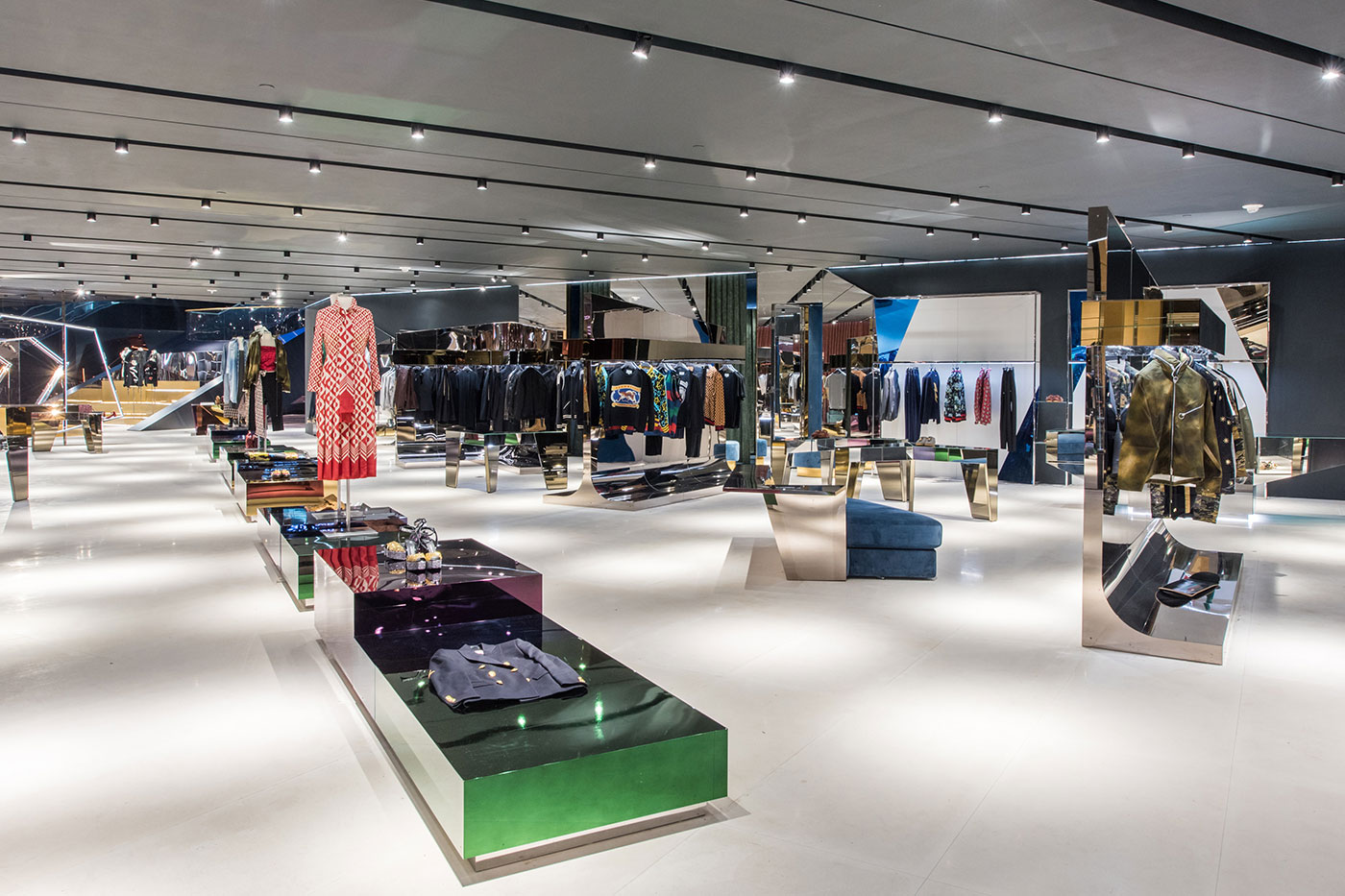
    Integrating a dynamic, hyper-connected experience to impress China’s digital natives, the store includes projections, kinetic signage and a live social media feed behind the cash desk to evoke a sense of change and “newness”. A “magic mirror” within the fitting rooms area allows customers to swipe through products to find their perfect outfit, which once chosen can then be shared via WeChat.

    Integrated throughout the store on the perimeter rails are pocket-sized screens, called “Debriefs” which showcase bite-sized snippets of product information, education on materials and fashion inspiration.

    The design language for the store was developed to create a feeling of “one space”, a concept designed for people and not for genders; a fluid space creating flow between categories and reflecting the fact that Chinese couples often shop together. A single product rail flows through the whole store, symbolically unifying the space.

    Selected’s fitting rooms form a key architectural feature as well as a social space, as is the cash desk. There are also separate shop-in-shop areas for Chinos and Denim, enhanced by miniature screens detailing fit and fabric qualities.

  • Singapore retail sales plunge due to Chinese New Year

    Singapore retail sales plunge due to Chinese New Year

    Singapore retail sales plummeted 10 per cent year on year in February – but the sudden drop was largely due to the timing of Chinese New Year celebrations.

    After excluding motor vehicles from the figures, sales dropped by a slightly higher 10.7 per cent.

    Chinese New Year fell in the middle of the month last year, and early in the month this year, resulting in a shifting of some seasonal spending back into January this time around. Figures combining January and February sales in both comparable periods were not released.

    According to Statistics Singapore, sectors such as food retailers, apparel & footwear, supermarkets & hypermarkets, department stores, furniture & household goods, and medical goods & toiletries registered declines in retail sales of between 10.4 per cent and 24.8 per cent this year.

    Sales of watches & jewellery, optical goods, and books fell by between 7.2 per cent and 9.2 per cent.

    Statistics Singapore estimated total retail sales in February this year at $3.3 billion, with online retail sales comprising about 5 per cent of those.

    Sales of food & beverage services decreased 2.3 per cent year on year. The total sales value of food & beverage services in February was estimated at $855 million, compared to $875 million in February last year.

  • Easter 2019 trading hours Unveiled

    Easter 2019 trading hours Unveiled

    The Australian Retailers Association expects shoppers to turn out in force to buy Easter-related food and gifts this week.

    According to the ARA, most Easter sales do not occur until the week before Good Friday, which this year falls on April 19.

    Although the Easter trading period is shorter than the Christmas period, it is still recognised as a busy event for retailers, ARA executive director Russell Zimmerman said.

    “As Easter is celebrated widely, many Australians will be heading to retail outlets to buy fresh produce to cater for Easter lunches and feed their friends and families,” Zimmerman said.

    The ARA predicts that sales of traditional Easter items, including hot cross, buns, seafood, fresh produce, liquor and chocolate will increase during this time.

    Bryan Skepper, Sydney Fish Market general manager, said he expects 50,000 people to visit the iconic market on Good Friday and estimates over 650 tonnes of seafood will be sold during the day.

    Skepper said the fish market will open its doors for extended trading hours on Good Friday. It will open at 5am on April 19 and will close at 5pm.

    Steve Plarre, CEO of Ferguson Plarre Bakehouses, said hot cross buns, unsurprisingly, are top-sellers during the Easter period.

    He said the last few years have seen a rise in the sale of their raspberry and white chocolate and apple and cinnamon varieties.

    Restrictions on trading during the Easter period, which begins on Good Friday and lasts until Easter Monday, vary by state. The National Retail Association has provided the following information on trading restrictions:

    ACT

    There are no trading restrictions any day from April 19-22.

    Northern Territory

    Trading hours are not regulated in the Northern Territory, however, individual restrictions may apply to certain shopping centres based on centre management.

    Trading hours for the sale of liquor products are regulated.

    NSW

    Shops are closed on Good Friday, April 19, and Easter Sunday, April 21, except for small shops and exempt shops, and shops in exempt areas.

    There are no trading restrictions on Saturday, April 20, or Monday, April 22.

    Queensland

    Independent retail shops are closed on Good Friday except if they are a predominantly food and/or grocery store, which can trade unrestricted. There are no restrictions from April 20-22.

    Non-exempt shops must not open on Good Friday. Trading may be permitted for non-exempt shops in certain areas of Queensland on the other public holidays during the Easter period.

    Tasmania

    Shops are closed on Good Friday, April 19, but are open from April 20-22.

    South Australia

    Shops in the CBD tourist precinct are closed on Good Friday, April 19. Trading is permitted on Saturday, April 20, until 5pm, and between 11am and 5pm on Sunday, April 21, and Monday, April 22.

    Shops in the Greater Adelaide Shopping District are closed on Good Friday, April 19, and Easter Sunday, April 21. Trading is permitted on Saturday, April 20, until 5pm, and between 11am and 5pm on Monday, April 22.

    Shops in Proclaimed Shopping Districts, excluding shops selling hardware, building materials, furniture floor coverings and motor vehicle parts and accessories, are closed from April 19-22.

    Trading is permitted for the exempted categories listed above on Saturday, April 20, until 5pm, and between 9am and 5pm on Sunday, April 21, and Monday, April 22. These shops are closed on Good Friday, April 19.

    Victoria

    Shops are closed on Good Friday, April 19, except for exempt shops. There are no restrictions on trading from April 20-22.

    WA

    Shops are closed in the Perth metro area on Good Friday, April 19, and trade is permitted on Saturday, April 20, between 8am to 5pm. On Sunday, April 21, trade is permitted between 11am to 5pm, and on Monday, April 22, trade is permitted between 8am to 6pm.

    Outside of the Perth metro area, shops are closed on April 19-22, except for Saturday, April 20, when trade is permitted between 8am and 5pm.

  • Jail Sentence for trade-show Fraudsters

    Jail Sentence for trade-show Fraudsters

    Two trade-show fraudsters have received jail sentences after Customs caught them selling fake goods at the Hong Kong Convention & Exhibition Centre.

    A person in charge of an exhibition booth and a salesperson were sentenced to three months’ imprisonment and three months’ imprisonment suspended for 12 months respectively on March 15 and April 12 at the Eastern Magistrates’ Courts for offering to supply goods with false trade description and possession of goods with a forged trademark for the purpose of trade or business.

    They had contravened the Trade Descriptions Ordinance (TDO), according to a spokesperson for Customs.

    The sentence imposed on the person in charge of the exhibition booth is the heaviest penalty in the past decade among similar cases of infringement that took place at exhibition fairs.

    Customs earlier received the trademark owner’s information alleging the display of counterfeit handbags for order at a booth in a leather fair held at the Hong Kong Convention and Exhibition Centre.

    After investigation, Customs officers conducted a test-buy operation and successfully ordered 500 counterfeit handbags and seized five counterfeit handbag samples at a booth with an estimated market value of about $40,000 in total. A 36-year-old man in charge and a 29-year-old saleslady were arrested and prosecuted.

    The Customs spokesperson promised to continue to take “stringent enforcement action” to combat infringing activities. Booth exhibitors are reminded to respect intellectual property rights and not to sell counterfeit goods.

    Under the TDO, any person who sells or possesses for sale any goods with a forged trademark commits an offence. The maximum penalty upon conviction is a fine of $500,000 and imprisonment for five years.

    Despite stringent vetting of exhibitors, fake products at major Hong Kong exhibitions has been concerning authorities for some time. In September 2016, Customs officers seized a fake branded jewellery at a trade show in the Hong Kong Convention & Exhibition Centre.

  • Subscribers to Facebook, Instagram and WhatsApp faced over 2 hours Downtime

    Subscribers to Facebook, Instagram and WhatsApp faced over 2 hours Downtime

    If you mosey on over to DownDetector.com you’ll notice something interesting. The graphs that measure the number of complaints received by Facebook, Instagram, and WhatsApp users all look the same. That’s because the trio was down world-wide for over two hours today. And of course, all three apps are owned by Facebook.

    Starting at about 6:30 am EST, complaints about all three started to roll in, peaking about 90 minutes later. Some Facebook users could not access the app at all, and others could not refresh their news feeds. Instagram users had the same issues, and WhatsApp members could not send or receive messages. Almost a month ago to the day, all three were down in North America, Europe, and Latin America for as long as 24 hours. Facebook blamed the problem on a “server configuration change.”

    After the issue was resolved today, Facebook released a statement apologizing for the inconvenience. So far though, the company has not revealed the reason for Sunday’s outages.

    “Earlier today, some people may have experienced trouble connecting to the family of apps. The issue has since been resolved; we’re sorry for any inconvenience.”-Facebook

    Facebook purchased Instagram for $1 billion back in April 2012. It closed on the purchase of WhatsApp in October 2014. The final purchase price amounted to more than $21 billion.

  • Vietjet launches new service to Indonesia with Ho Chi Minh City-Bali route

    Vietjet launches new service to Indonesia with Ho Chi Minh City-Bali route

    New-age airline Vietjet is giving people more reason to travel with the announcement and addition of its newest international route connecting the biggest city of Vietnam, Ho Chi Minh City with Bali (Indonesia). The first and only airline to operate this service, the Ho Chi Minh City – Bali route will serve as a crucial link between the two cultural centers, meeting the increasing travel demands of locals and tourists as well as boost regional trade and integration.

    The Ho Chi Minh City – Bali route will operate five return flights per week on Mondays, Wednesdays, Thursdays, Fridays and Sundays starting 29 May 2019. The flight duration is approximately four hours per leg. The flight will depart from Ho Chi Minh City at 08:05 and arrive in Bali at 13:05. The return flight takes off from Bali at 14:05 and lands in Ho Chi Minh City at 17:05 (All in local time).

    Vietjet Vice President Nguyen Thanh Son said: “Vietjet has the advantage of an ever-expanding flight network and professional aviation services; therefore, I believe not only does this new route create ease and increased opportunities for both locals and tourists to travel conveniently by safe, modern air transportation, it will also contribute to promoting tourism and economic integration in the region, all while introducing the beauty of Vietnam to the world.”

    Ticket sales for the new route are now open and available on all channels. Those hungry for promotional deals should be sure to check out Vietjet’s daily golden hour promotion which runs from 1.00pm to 3.00pm (Malaysian time) on the airline’s website.

    Vietjet operates its domestic and international routes with a dynamic and friendly flight crew, serving its passengers with fresh and hot meals, while its aircraft is equipped with comfortable leather seats with a technical reliability rate of 99.64% — the highest rate in the Asia Pacific region. As a fully-fledged member of International Air Transport Association (IATA), Vietjet has obtained the IATA Operational Safety Audit (IOSA) certificate and has been awarded a 7-star ranking, the world’s highest rate for safety, by AirlineRatings.

  • Deliveroo Supports 2K+ Jobs and Adds HK$1.3 Billion Revenue to Hong Kong Economy

    Deliveroo Supports 2K+ Jobs and Adds HK$1.3 Billion Revenue to Hong Kong Economy

    Showcasing its positive influence on the Hong Kong economy, Deliveroo today published a new report assessing its impact on partner restaurants and the wider market. Amongst other findings, the research indicates that Deliveroo supports 2,100 jobs in Hong Kong and adds HK$1.3 billion in revenue.*

    The major, independent study was commissioned by Deliveroo and conducted by leading independent economic consultants Capital Economics. It shows the full, positive economic impact of Deliveroo’s activities in Hong Kong and globally, examining increased revenues received by restaurants and their suppliers as a result of partnering with Deliveroo; the impact of spending of Deliveroo riders and employees; the impact of spending by Deliveroo on suppliers; and the tax generated by Deliveroo’s operations.

    The report reveals that in Hong Kong:

    • Deliveroo supports approximately 2,100 jobs across the Hong Kong economy. This is on top of the approximately 2,500 riders and walkers in Hong Kong to whom Deliveroo currently offers flexible, well-paid work delivering meals.
    • Deliveroo supports 1,700 additional jobs in the Hong Kong restaurant sector, of which 1,200 are in chain restaurants and 490 are in independent restaurants.
    • Deliveroo generates HK$956 million in additional revenue for the restaurant sector in Hong Kong, of which HK$668 million is in chain restaurants and HK$288 million is in independent restaurants.
    • In total, Deliveroo supports HK$1.3 billion in revenue across the economy of Hong Kong.
    • 54% of restaurants who partner with Deliveroo in Hong Kong say that, as a result, they have seen increased revenue from people dining in at their restaurant.
    • Deliveroo’s tax contributions in Hong Kong amount to HK$29 million in employee taxes and HK$74 million in corporation taxes.
    • Deliveroo’s contribution to economic growth (measured by Gross Domestic Product) in Hong Kong is HK$596 million.
    • Capital Economics project that if Deliveroo continues to grow at its current rate, the report projects that the company’s operations would support somewhere in the region of 4,500 jobs and HK$1.1 billion of economic output (measured by Gross Domestic Product) in Hong Kong by 2020.

    The report was conducted across all of Deliveroo’s 13 markets worldwide. Globally, the report found that:

    • In total, Deliveroo supports 67,000 jobs across the economies of the markets in which it operates, which is on top of the 130,000 riders to whom Deliveroo provides flexible, well-paid work.
    • Deliveroo supports 59,000 additional jobs in restaurant sectors across the economies of the markets in which it operates, of which 41,000 are in or from chain restaurants and 18,000 are in or from independent restaurants.
    • Deliveroo generates a total of HK$22.2 billion in additional revenue for restaurant sectors across the economies of the markets in which it operates, of which HK$15.4 billion is in chain restaurants and HK$6.8 billion is in independent restaurants.
    • Capital Economics project that if Deliveroo were to continue to grow at the same rate it is today, the report estimates that it would support somewhere in the region of 200,000 jobs and HK$41.1 billion of economic output globally by 2020.

    Brian Lo, General Manager of Deliveroo Hong Kong, said, “Hong Kong boasts one of the most dynamic F&B markets in Asia, with fierce competition, demanding diners and an ever-evolving landscape of local, regional and international players. In this context, Deliveroo is proud to be an innovative and influential force for the restaurant sector, making a positive economic impact. Deliveroo helps to increase restaurants’ sales, increase the number of people employed in restaurants and ultimately helps restaurants to grow their businesses.

    This, as a result, brings more choice and food options to local communities, so more people can have more amazing food whenever and wherever they want it.”

    *         NB: all figures cover the output arising from Deliveroo’s operations/activities over the 12 months to November 2018.

  • Cebu Pacific to launch flights Between Clark, Philippines and Narita

    Cebu Pacific to launch flights Between Clark, Philippines and Narita

    Cebu Pacific has unveiled plans to launch flights from its rapidly growing hub in Clark, Philippines to Narita Airport.

    The airline will operate four flights per week between Clark and Narita on Mondays, Wednesdays, Fridays and Sundays, beginning Aug 9.

    Cebu Pacific will also begin direct flights between its hubs in Clark and Iloilo; as well as between Clark and Bacolod on Aug 9; as well as daily flights between Clark and Puerto Princesa in Palawan by Oct 9 October 2019.

    The four new routes will boost Cebu Pacific’s total capacity in Clark by 40% in 2019 alone, following a 75% increase in 2018 with the launch of direct flights to and from Davao and Panglao (Bohol); as well as additional frequency for the Clark-Macau route.

    “There is so much untapped potential in Clark, and we are committed to expanding our Clark hub to expand tourism, trade and investment opportunities. This will open up the areas around Clark to more investors and entrepreneurs,” said Candice Iyog, Vice President for Marketing and Distribution of Cebu Pacific.

    With a population of over 23 million in its catchment area, Clark International Airport is one of Asia’s fastest-growing airports, with passenger volume reaching about 2.5 Million in 2018.

    Cebu Pacific has been operating flights in and out of Clark since 2006 and today has direct flights to Cebu, Caticlan, Tagbilaran, Davao, Singapore, Macau and Hong Kong.

    “With direct air service between Clark and Narita, it will be easier for Japanese tourists to access destinations in Pampanga, Pangasinan, Baguio, La Union and the rest of Luzon. Conversely, it will also be easier for residents in these areas to enjoy Tokyo, with a direct flight from Clark,” added Candice Iyog.

    Japan is one of the Philippines’ top sources of inbound tourists, with 631,801 Japanese visiting the country in 2018.

    In 2018, Cebu Pacific flew 20.3 million passengers on over 2,130 weekly flights across 37 domestic and 26 international destinations.

  • A narrative-driven Retail Concept Shop Opened by Macy’s Story

    A narrative-driven Retail Concept Shop Opened by Macy’s Story

    US department store Macy’s has opened its “narrative-driven retail concept shop” Story in 36 locations across the US.

    The store concept takes an editorial approach to retail, launching with “colour” as an inaugural theme, inviting customers to explore and experience colour through a rainbow of curated, giftable products and more than 300 colour-inspired events.

    “The discovery-led, narrative experience of Story gives new customers a fresh reason to visit our stores and gives the current Macy’s customer even more reason to come back again and again throughout the year,” said Macy’s chairman & CEO Jeff Gennette.

    Story themes will change every few months with new concepts featuring unique collaborations, narrative-driven merchandising and dynamic event programming.

    “The simultaneous launch of Story at Macy’s in 36 stores across 15 states is the successful outcome of a reimagined approach to cross-functional collaboration and the work of more than 300 Macy’s colleagues who contributed to creating this new, scalable business model nationwide,” said Story founder and Macy’s brand experience officer Rachel Shechtman.

    In the lead up to launch, more than 270 dedicated Story managers and “storytellers” were hired and participated in an experiential retail training program that immersed staff with integrated roles on everything from building fixtures to customer engagement and event production.

    Story at Macy’s averages 1500sqft, cumulatively representing more than 55,000sqft of main-floor retail space across all 36 stores. Herald Square serves as the flagship location, where Story at Macy’s covers more than 7500sqft of continuous retail space on the main floor and mezzanine levels. The expanded space showcases a broader range of partners and interactive experiences than in other locations.

    “The Story at Macy’s experience feels a lot like a real-life version of scrolling through Instagram,” added Shechtman. “You discover things you weren’t looking for, but are inspired by all the fun finds – the second you see it, you need it!

    “We aspire to create that feeling with the breadth of the narrative-driven merchandise edit we are bringing to life with the launch of Story at Macy’s across the country.”

  • Cebu Pacific income dives in 2018

    Cebu Pacific income dives in 2018

    Cebu Air reported its net income plunged 50.6% to P3.9 billion in 2018, from P7.9 billion in the previous year, due to the “challenging macro environment.”

    In a statement over the weekend, the operator of Cebu Pacific noted the high fuel prices, volatile Philippine peso, rising interest rates, increased competition, six-month closure of Boracay, and operational limitations of key airports as factors that affected its bottomline last year.

    Airlines around the world took a hit from rising jet fuel prices last year, which only started going down in the fourth quarter, based on data from the International Air Transport Association (IATA). The average price of jet fuel during the nine-month period was at $85.37 per barrel, 36% up from $62.89 per barrel in the same period in 2017.

    Adding to Cebu Air’s problem is the weakening of the Philippine peso, which recorded an average of P52.66 per dollar in 2018, a steep decline from the P50.40-per-dollar it recorded in 2017.

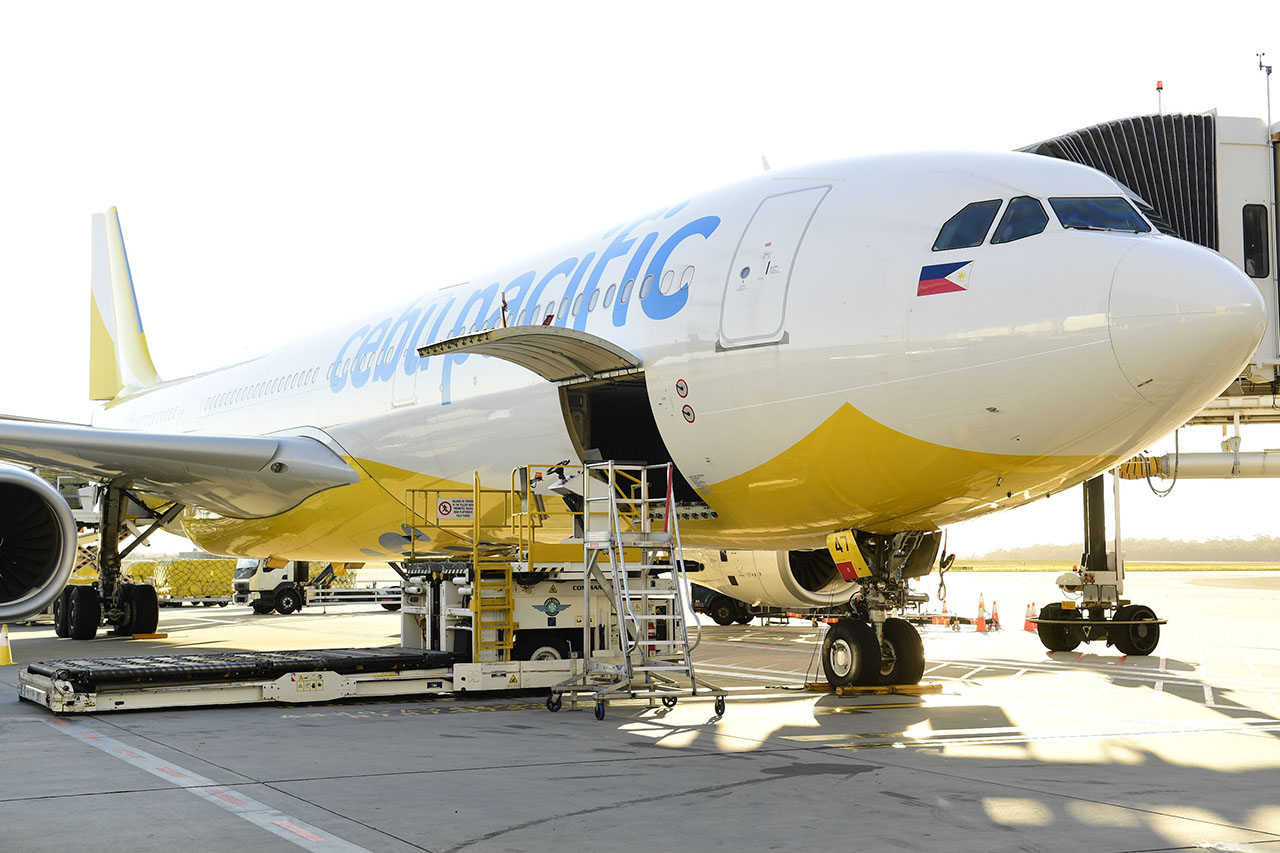
    But despite the slump in its net income, Cebu Air said its revenue grew by 9% to P74.1 billion in 2018, driven mostly by its cargo business which posted a 19% growth. Passenger revenue was also up 9% to P54.3 billion in 2018.

    “Despite the pressures posed in 2018, we remained resilient. We were able to expand our network by upgauging our flights touching congested airports,” Cebu Pacific Chief Operations Officer Michael Ivan S. Shau was quoted as saying.

    In aviation, “upgauging” is a strategy used by airlines to increase capacity by replacing smaller planes with larger ones.

    Cebu Pacific said it ferried 20.3 million passengers last year, 2.7% higher than the previous year.

    The budget carrier said it is hopeful it will bounce back in 2019 with the acquisition of fuel-efficient planes and opening of new routes.

    “We will continue to pursue our fleet upgauging strategy and invest in the latest aircraft technologies, as well as develop secondary hubs like Cebu and Clark. We will also continue to grow our cargo business with the incoming ATR freighters as well as continue our digital transformation for us to be more agile and adaptable to changing customer expectations,” Mr. Shau said in the statement.