Category: General

Retail News Asia is committed to providing both local and global retailers with the latest General Retail news throughout the Asian market. This on a daily base.

  • Canon Philippines redesigns concept store in Pampanga

    Canon Philippines redesigns concept store in Pampanga

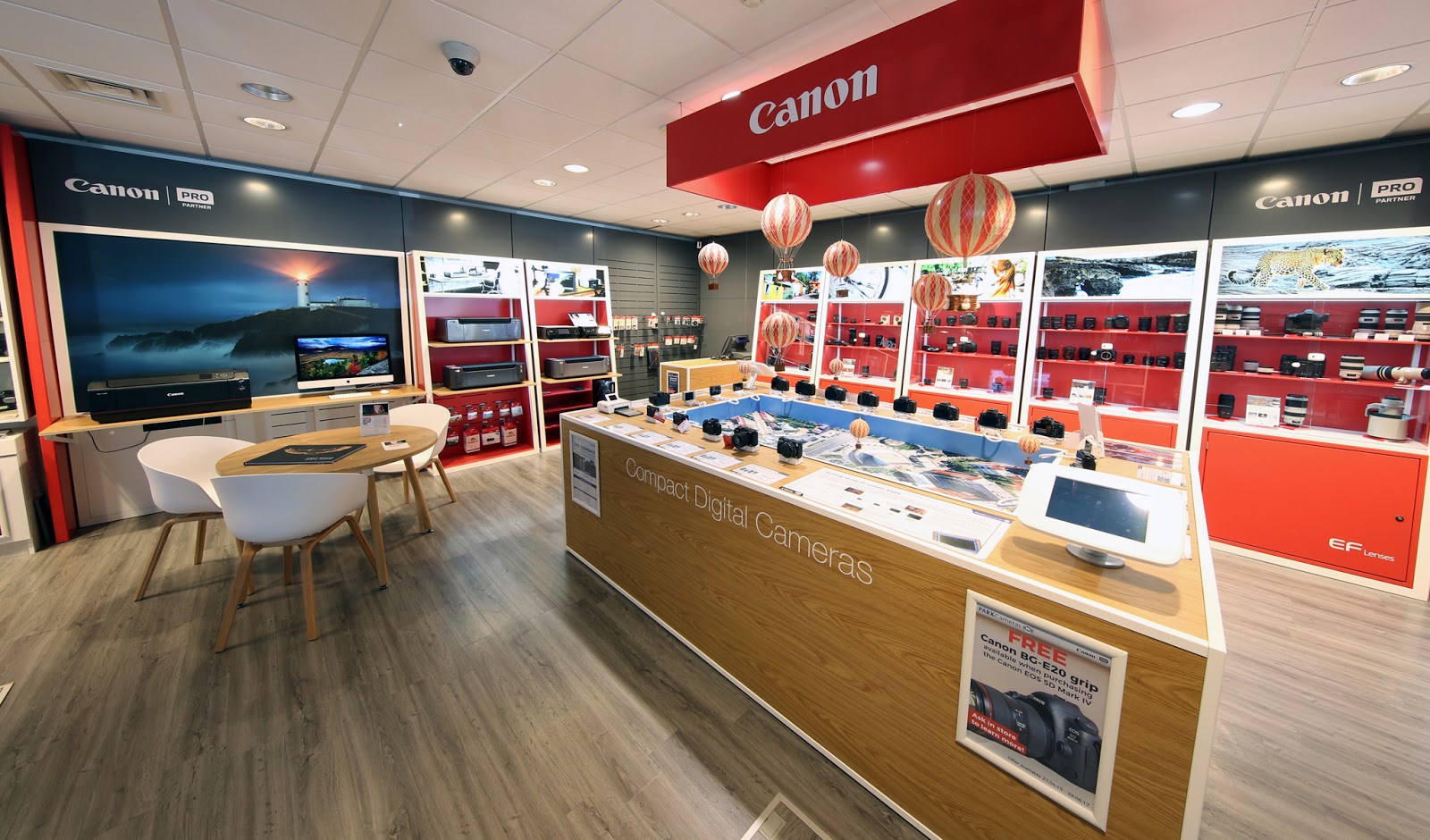
    Canon Philippines has opened its redesigned “Image Square” concept store at SM City Pampanga.

    The outlet, located near the entrance to the mall’s Cyberzone area, showcases a full line-up of Canon’s products and includes a service centre.

    “The logic behind this is that after version 1.0, we jumped into version 3.0”, said Canon assistant sales manager Roshan Daryani. “This is a one-stop shop for all Canon lovers and from the input to the output, we have it all here because our goal is to provide everything our clients need the moment you step inside the booth.”Canon Philippines

    Featured among the products on offer are Canon’s new mirrorless cameras and a pocket-sized Bluetooth printer. Canon’s personnel on-site are fluent in the technologies as well as related image-specific elements such as post-processing.

    “The booth is really made for a wide-range of markets,” added Daryani. “We have products for professional photographers and even just the hobbyists who wanted to upgrade their skills in photography. The Image Square is basically covering all the needs in the camera industry.”

  • Daesang to sell Ministop stake to partner Aeon

    Daesang to sell Ministop stake to partner Aeon

    South Korean food manufacturer Daesang is reportedly exiting the convenience store business, selling its stake in the Ministop chain.

    A cut-throat industry in the territory, competition between players has become so intense that legislation is now in effect to forbid the opening of new convenience stores within 50 metres of existing outlets.

    Daesang’s withdrawal will likely result in the sale of its 20 per cent shareholding in the Ministop Korea brand to its Japanese partner Aeon, which attempted unsuccessfully to sell its own shares in the business last year.

    Insiders familiar with the transaction have revealed that talks between the partners are well-progressed and that the shares are likely to be transferred for KRW80–90 billion (US$70.8–$79.6 million).

    Daesang established Ministop with Aeon in 1997, but courted Aeon to purchase a majority stakeholding plus management rights to the business in 2003. The current transaction would remove Daesang from the business entirely, leaving Aeon with a 96.06 per cent stake of the country’s weakest contestant in the nationwide convenience-store playing field.

    Ministop achieved KRW2.6 billion ($2.3 million) in profits in 2017, compared with KRW13.3 billion ($11.76 million) in 2015.

  • Stationery retailer Smiggle targets Asia

    Stationery retailer Smiggle targets Asia

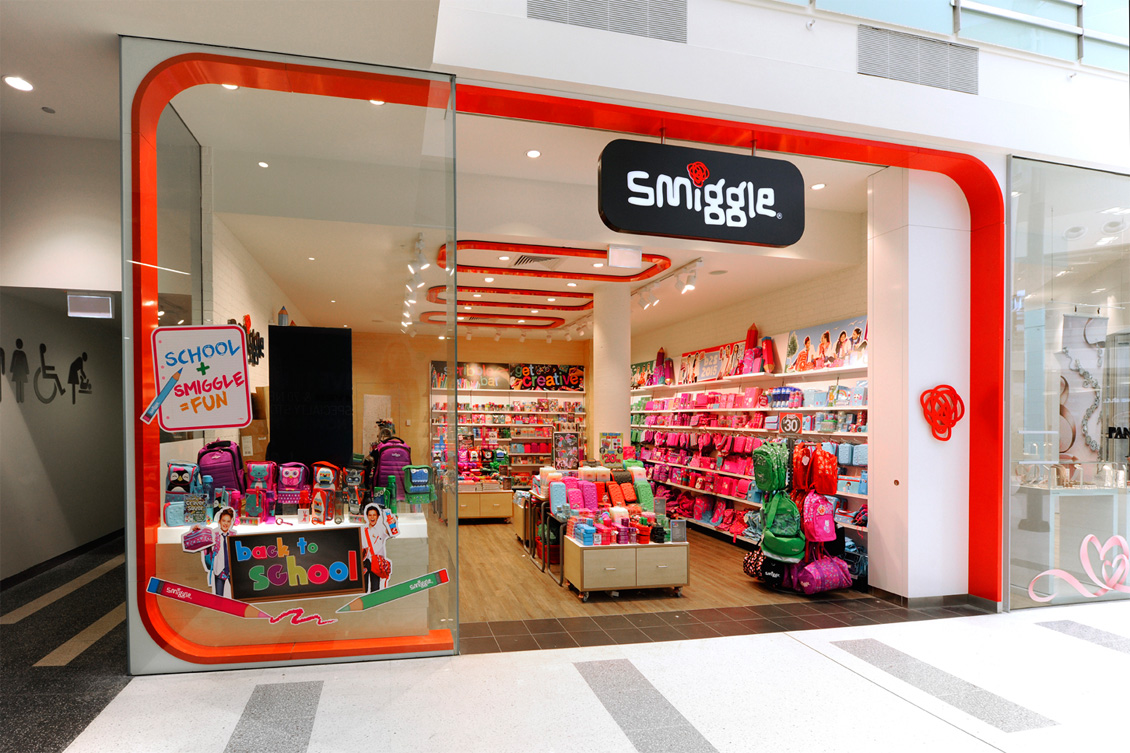
    Vibrant stationery retailer Smiggle is expanding within Asia following a record global performance reaching 34.8 per cent sales growth in the territory.

    Brand owner Premier Investments will be pushing Smiggle in South Korea, Thailand, Indonesia, and the Philippines, as well as the UAE, making the brand available in over 100 new locations by July this year.

    Smiggle will also be expanded to Canada in late 2019, giving the brand its first exposure to a “key North American market.”

    The brand’s total sales for the first half of the current fiscal year reached US$126.59 million, contributing to Premier’s increased group net profit of 13 per cent over the period to $62.87 million.

    Due to “major structural changes to the global retail industry,” the brand will partner with Amazon Europe to launch in France, Italy, Germany and Spain between April and July 2019, and is in talks with Alibaba to bring the brand to countries where the brand does not currently operate.

  • WhatsApp building a New Feature Allowing Users to detect spam and fake news

    WhatsApp building a New Feature Allowing Users to detect spam and fake news

    Facebook owned WhatsApp is testing a new feature that will allow a user to see how many times a message has been forwarded. The beta update to version 2.19.80 includes a new functionality allowing a user to view how many times a message he or she received has been forwarded. To obtain this information, the user needs to forward a received message, open up the Message info section, and the data will be there. A message that has been forwarded five or more times will receive a bubble that says “Frequently Forwarded.”
    The number of times that a message you sent via WhatsApp has been forwarded is something that can already be found in the Message info section. If you install the beta version of the messaging app on your Android or iOS phone (via TestFlight) you will be able to see the number of times both a sent and received message has been forwarded. WhatsApp is adding this feature to help a user see whether a message is spam. Some messages that have been forwarded a number of times are spam, or might be “fake news.”
    Facebook acquired WhatsApp in a blockbuster deal that closed in October, 2014. Originally valued at what was considered an outrageous amount of money at the time the deal was announced ($16 billion), by the time the transaction closed eight months later the purchase was valued at $21 billion.
  • Alleged fastest messaging app adds new privacy features

    Alleged fastest messaging app adds new privacy features

    Messaging app Telegram features end-to-end encryption for messages, and claims to deliver said messages faster than any other app. It has no limits on the size of media sent using the service, and is free. Today, Telegram announced a new privacy feature. Users can now delete, if they so desire, any message sent or received in a private chat. Telegram says that deleted messages will disappear from both sides of the conversation and there will be no trace of them left at all.
    This new functionality is basically an expansion of the “unsend” feature that Telegram first debuted two years ago. This originally limited “unsend” to be used by a Telegram user who sent a message, and only for the first 48 hours. Now, with two taps, users can remove any message they sent or received with no time limit. The messages are erased from both the sender’s and recipient’s device.
    In addition, Telegram is limiting who is allowed to forward messages you’ve sent. When a user toggles on the new anonymous forwarding feature, forwarded messages won’t be linked back to the sender’s Telegram address. Instead, an unclickable name will appear in the “from” field. Messages a Telegram user forwards will no longer be linked backed to his or her account.
    Telegram has also added a search option for settings, allowing members to quickly find the particular setting that they want to change. It will also answer users’ questions based on the app’s FAQ page. Speaking of search, the emojis and GIFs search feature has been upgraded. Any selected GIF can be previewed by tapping and holding on the image. On Android, keywords can be used in multiple languages to help find a specific emoji. When typing a message, a list of emoji related to the context of the message will surface. And on Android, if you send an emoji without any text, it will appear larger in the chat. This will soon be available for the iOS app.
    Lastly, Telegram has added VoiceOver on iOS and TalkBack on Android, which are both controlled by gestures. Both provide spoken feedback so that Telegram can be used without seeing the screen on a mobile device.
    Telegram is available on iOS and Android, where it has over 100 million installs.
  • Police smash massive China counterfeiting gang

    Police smash massive China counterfeiting gang

    Police have shut down a huge China counterfeiting ring estimated to have raked in some US$15 million.

    Chinese police have arrested 32 people believed to be part of the operation, which focused on counterfeiting luxury-branded goods.

    The Shanghai raid led to the seizure of more than 4000 items of luxury apparel and accessories bearing Louis Vuitton, Kenzo and Loewe labels, among other top brands. Two assembly lines producing the counterfeit items were shut down.

    The raid was in response to a tip-off to the Shanghai Qingpu district public security bureau that fake Louis Vuitton bags were selling on Chinese social media platform, WeChat.

    Estimates held that the ring had sold more than 100,000 fake luxury items at a value of around RMB100 million (US$14.9 million). Each item would have cost around RMB200 ($30) to produce.

    The rise of online markets all over the world has been blamed for a general increase in fake products sold globally. The counterfeit industry is now worth an estimated $590 billion a year, and accounts for around 3.3 per cent of total international trade.

    According to customs officials, the most frequently seized fakes are items of footwear, clothing, leather goods and IT equipment. China is by far the world’s largest source of pirated goods.

  • Hanoi plans to offer 15-day free travel on first metro line

    Hanoi plans to offer 15-day free travel on first metro line

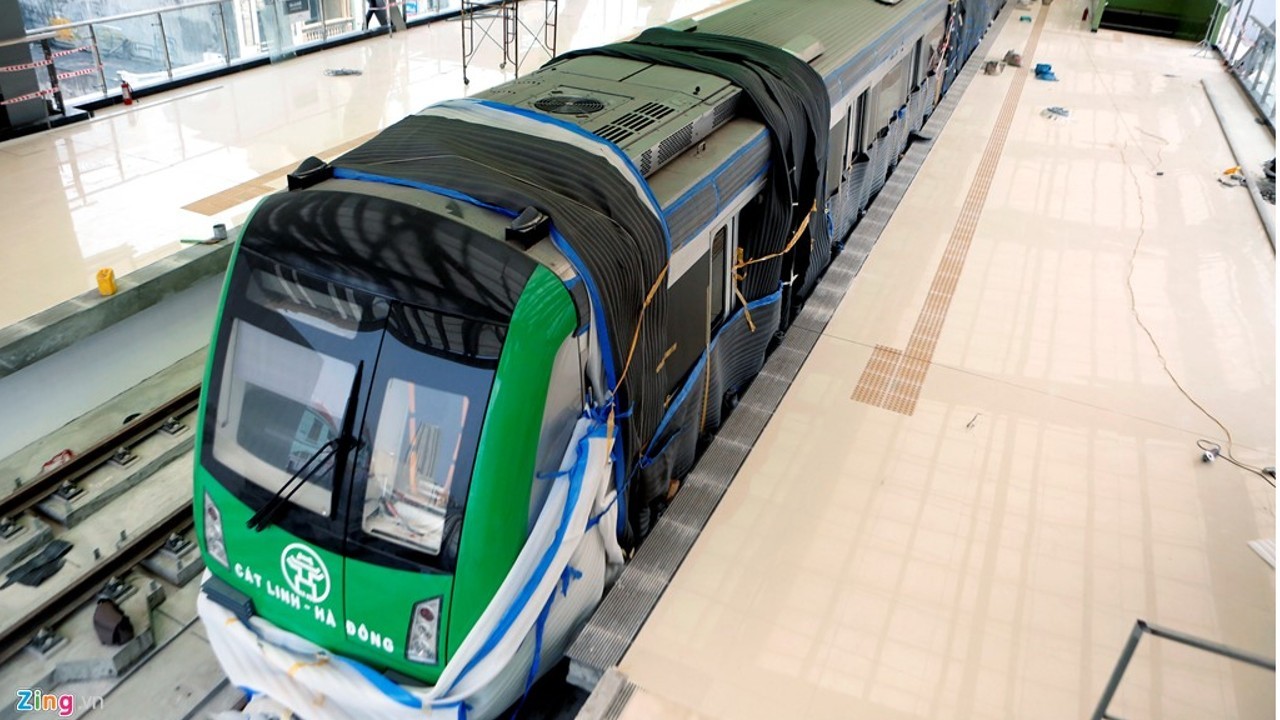
    The Hanoi People’s Council has proposed 15 days of free travel after the first metro line opens. The proposal, released for public comment Friday, will apply once the Line 2A: Cat Linh-Ha Dong elevated railway starts operating commercially.

    The city also plans to subsidize 50 percent of the monthly fare for students, workers from industrial parks, and senior citizens. Officials and employees working outside industrial zones would get a discount of 30 percent if they buy group monthly tickets.

    Individual passengers can buy monthly season tickets for VND200,000 ($8.61) or daily tickets for VND30,000 ($1.29), both allowing unlimited trips. Single trips will cost from VND7,000-15,000 ($0.3-0.65) per person depending on the distance travelled.

    Tickets can be paid for with cards or cash. Card payments will get discount of VND500 (2.2 cents) per single trip. Although the price is higher than a bus ticket, the train runs twice as fast. From one end of the 13km Cat Linh – Ha Dong route to the other, the journey takes just 22 minutes, he said.

    The route runs from Cat Linh Station in downtown Dong Da District to the Yen Nghia Station in the south-west Ha Dong District. The Chinese contractor of the metro, China Railway Sixth Group Co., Ltd, plans to finish trial runs this month, and begin commercial operations in April.

    However, according to a recent inspection by the Ministry of Transport, installation of devices and machinery on the metro line is only 90 percent complete.

    Vu Hong Phuong, deputy director of the metro project, said several parts of the project, including sanitation, air conditioning, water supply system and drainage system in stations along the line have not been completed.

    Hanoi, a city of more than 7.5 million people, has 5.2 million motorbikes and around 550,000 cars, besides some 1.2 million vehicles brought by non-residents, according to police figures.

  • Cebu Pacific offers P299 promo fare for all domestic flights

    Cebu Pacific offers P299 promo fare for all domestic flights

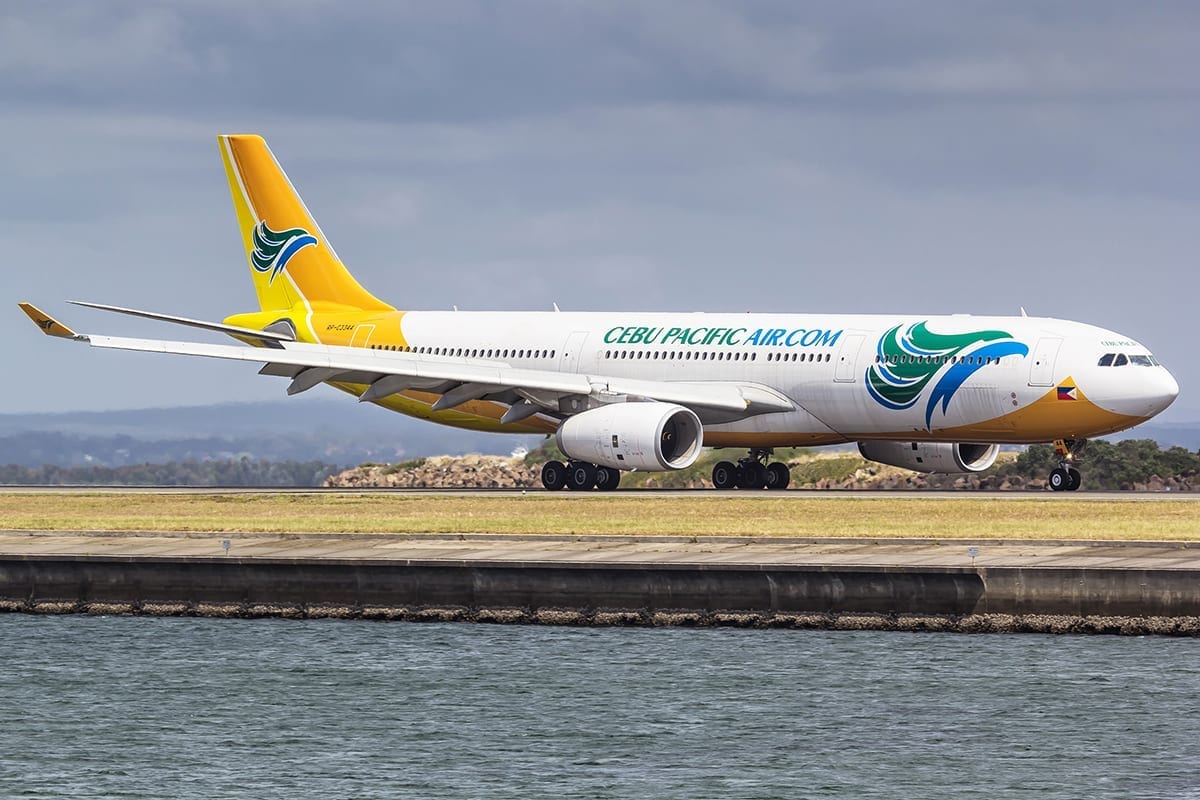
    Cebu Pacific on Friday announced a P299 seat sale promo for all domestic flights as part of its “Super Seat Fest” that kicked off on March 1.  Flights to all domestic destinations are available for as low as P299 from March 1 to March 2, the country’s largest carrier said in a Twitter post. No promo code is needed to book discounted seats.

    Travel period for the availed flights are from April 1 to July 31, 2019, the airline said.

    Cebu Pacific earlier said “1 million seats and deals” would be available for the entire month of March to mark its 23rd anniversary.

    Philippine Airlines, meanwhile, announced a P78/$78 base fare promo for domestic and international flights to mark its 78th anniversary.

  • South Korea’s SK Group to buy $1 bln stake in Vingroup

    South Korea’s SK Group to buy $1 bln stake in Vingroup

    South Korean conglomerate SK Group plans to acquire a $1 billion stake in Vietnam’s largest private  conglomerate Vingroup. SK plans to make the investment as early as next month, it said. Vingroup recently sought its shareholders’ vote on a plan to raise at least VND25 trillion ($1.08 billion) through a private placement to five foreign investors.

    It plans to sell the shares at a minimum price of VND100,000 ($4.32) and stipulate a lockup period of one year, during which time the shares cannot be resold by the buyers.

    It plans to use VND10 trillion ($432.34 million) of the proceeds to restructure its debts, VND6 trillion ($259.41 million) to invest in its auto company VinFast, technology firm VinTech and smartphone maker Vinsmart.

    Vingroup is Vietnam’s largest listed company by market capitalization and is worth VND377 trillion ($16.23 billion).

    Last September SK Group acquired a 9.5 percent stake in Vietnam’s diversified business Masan Group for $470 million.

  • Why does the Vietnam Economy lags behind?

    Why does the Vietnam Economy lags behind?

    The core of the doi moi (renovation) in Vietnam is the shift from single-ownership into a multi-ownership economy, where the central planned regime no longer exists. The 1987 Law on Foreign Investment, the 1990 Corporate Law & the Law on Private Enterprises, and the 1999 Enterprise Law have encouraged the development of Vietnam’s private economic sector.

    One of the revolutionary viewpoints of the 1999 Enterprise Law was that ‘people can do anything that are not prohibited by the laws’, rather than ‘people can only do the things allowed by the laws’, which was one of the major reasons hindering economic development in many decades before.

    Khai then set a goal that Vietnam would have 1 million businesses by 2010.Soon after the Enterprise Law took effect, the then PM Phan Van Khai set up a task force in charge of implementing the Enterprise Law, which deserved credit for removing half of sub-licenses, considered obstacles on businesses’ development way.

    However, the business environment did not improve as expected to pave the way for the development of private enterprises. The ask-and-grant scheme still existed and businesses still had to ‘ask for grant’ from state management agencies.

    News vendors also had to obtain licenses valid for 3 months and scrap dealers needed to have licenses for six months.

    Old sub-licenses were removed, and new licenses have come out. One chocolate bar must obtain 13 kinds of licenses to be able to hit the market, while farmers complain that it takes longer to obtain a license to sell chicken than to raise chicken.

    As a result, the private enterprise network is shrinking and their competitiveness is getting weaker, while Vietnam is more deeply integrating into the global economy.

    The 2017 master economic survey conducted by the General Statistics Office (GSO) found that as of January 1, 2017, Vietnam had 517,924 operating enterprises. Vietnam had 800,000 enterprises already in 2008.

    The GSO’s report on the socio-economic situation in the first 11 months of 2018 showed that the number of businesses suspending operation or awaiting to get dissolved increased sharply by 64 percent, while the number of newly established businesses increased by 4.5 percent only, compared with the same period 2017.

    The report pointed out that the number of small & medium enterprises (SMEs) increased sharply, now accounting for 98 percent of total enterprises. Of SMEs, 74-75 percent are micro businesses.

    The Communist Party Politburo Resolution No 39 released on April 17, 2015 said that the number of state officers must be cut by 70,000 a year, or 140,000 after two years, to streamline the civil service However, in reality, the number of officers has increased by 96,000.

    As a result, the ratio of civil servants per 1,000 people in Vietnam is 43, not including policemen and military officers, much higher than other countries. In the Philippines, there are only 13 civil servants, including policemen and military officers for every 1,000 people.

    Vietnam has 30 ministries and ministerial-level agencies, while Japan has 11, Singapore 15 and China 20.

    Vietnam has more than enough deputy heads of divisions. A report shows that there are 81,492 ‘deputy heads’, from deputy head of divisions to Deputy Minister, accounting for 21.7 percent of total civil servants from the central to district levels.

    The cumbersome apparatus requires a huge budget to feed it. In 2011-2015, regular spending accounted for 65 percent of total spending, increasing by 2.2 times compared with five years before.
  • AppsFlyer Performance Index puts Facebook and Google on top

    AppsFlyer Performance Index puts Facebook and Google on top

    acebook and Google may rule the rankings but persistent challenges and rampant fraud are mixing things up, according to the latest Performance Index from Appsflyer.

    According to Appsflyer’s study, Apple Search Ads and Snap are continuing to grow despite trailing behind the reigning champs. Meanwhile, high fraud rates are hitting rankings and budgets all around, encouraging a re-evaluation of strategies like affiliate marketing.

    The mobile attribution and marketing analytics company looked at mobile activity in the latter half of 2018, drawing on 370 media networks, examining 20 billion app installations and 39 billion app openings, across 11,500 apps. It was a worldwide study spanning North America, Latin America, Asia, Europe, Africa, and the Middle East. App categories surveyed included shopping, utilities, lifestyle and culture, and gaming. Gaming was split into subcategories of casual, mid-core and strategy, and social casino apps.

    Shani Rosenfelder, head of mobile insights at AppsFlyer said, “As marketing campaigns become more dynamic, complex, and transcend various media platforms, marketers are looking for ways to engage audiences across a diverse range of media sources, regions, platforms and channels in order to build messages that resonate — and to connect the dots across the user journey.”

    The other main findings from the study are as follows:

    Continuing its success at sustaining user demand for games, Facebook held onto its position as the top network for mobile apps, driven by its performance in gaming. Google, meanwhile, saw higher growth in non-gaming apps compared to the social media giant, likely a reflection of Google’s search intent model.

    The search giant’s 190%  jump in its share of the app retargeting landscape marked an impressive showing for Google, while Facebook maintained its No. 1 perch on this metric.

    AppLovin cemented its No. 3 spot in gaming rankings behind Facebook and Google, having made significant strides the last two years in its share of the gaming app install pie. When it comes to driving gaming app installs, ironSource has almost doubled its market share, surpassing Unity Ads with the 4th largest piece of the pie. Having said that, Unity Ads held its #4 position in the universal power ranking in the gaming category overall, compared to ironSource’s 5th spot.

    Among the networks to see the biggest changes were Snap, which rose to fourth place from ninth in the non-gaming ranking, while declining from the top spot to No. 12 in casual games; CrossInstall, which plunged from first to sixth in universal gaming; and Vungle, which rocketed from 12th to fifth place in universal gaming.

    Among the networks appearing in AppsFlyer’s previous Growth Index, which showcases performance of up-and-coming media sources in a specific region, 40% saw absolute negative growth, and only 10% remained in the rankings of the current and previous editions of the Index. All were emerging media sources.

    At 30% worldwide, app install fraud remained high, impacting some rankings and underscoring the magnitude of the threat to marketers’ budgets and decision-making based on polluted data.

    Amid growing attention to mobile ad fraud, the second half of 2018 saw a shift away from the affiliate model, with a 12% drop in affiliate-driven app installs, even as overall app installs increased by 32%.

    Making its first appearance on the index, the Africa/Middle East region showed substantial growth, reflecting the region’s continued economic development. As the number of smartphone owners increases in the area at breakneck speed, the region represents fertile ground for marketers vying to attract and retain new customers.

  • Microsoft Asia’s senior director of comms Andrew Pickup to exit after many years

    Microsoft Asia’s senior director of comms Andrew Pickup to exit after many years

    Microsoft Asia’s senior director, communications, Andrew Pickup (pictured) will be leaving the company after 26 years of service. Pickup said that in June 2019, he will be leaving Singapore for personal reasons and is looking forward to new adventures in the UK. He said, “I can honestly say I’ve enjoyed every day of my long career at Microsoft (not necessarily every minute or hour because there are always challenges in any job). But every day? Yes.”

    Helming the role of a senior comms director for six years, Pickup was in charge of leading the communications for Microsoft in Asia. He covered the Asia Pacific region, as well as Japan, India and China. According to his LinkedIn, his responsibilities included managing all media relations, analyst relations, internal and executive communications, crisis and change management and government/citizenship outreach. He was also managing the regional team in Singapore and led a community of 40 communications professionals across 17 countries in Asia. 

    Previously, Pickup was chief marketing and operations officer, a role he held for five years focusing on the ASEAN and ANZ markets. He was responsible for the revenue, market share and P&L performance of all Microsoft Business Groups for the Asia Pacific region and the overall orchestration of regional go-to-market sales, marketing and services plans.

    Pickup also oversaw the long-term growth planning, the management of the regional core business processes – business and marketing planning, target setting, marketing budget management – market intelligence, competitive initiatives, integrated marketing communications and public relations. He had a team of 32 reporting directly to him.

    Prior to this, he was chief of staff, Microsoft Asia Pacific, for over two years. The role tasked him to establish core process infrastructures to support executive decision-making(fiscal-planning, process-management, governance and operational models) and manage large-scale projects (geographic expansion). Before this, in 2003, he was chief marketing and operations officer of Singapore operations. 

    Some of his previous accolades with the company include head of desktop marketing, group marketing manager and relationship marketing manager in the UK. Before joining Microsoft, Pickup had a stint with Saatchi & Saatchi in 1988. Helming the role of senior account director, he was responsible for maximising revenue, profitability and client satisfaction from existing blue-chip accounts, as well as identifying and winning new business. At that point in time, he handled clients such as British Airways, Vodafone and Avis.

  • Google’s new lab lends news publishers a hand in digital subscription

    Google’s new lab lends news publishers a hand in digital subscription

    Google News Initiative is preventing traditional print publishers from dying with the launch of the GNI Subscriptions Lab. In partnership with the Local Media Association and FTI Consulting, the lab seeks to develop a sustainable and thriving business model for newspapers across North America powered by digital subscriptions.

    While Local Media Association president Nancy Lane noted in a post on Google’s blog that publishers have been putting digital subscription at the center of their business transformation, she said that there has yet been “a clear template at the metro and local levels.”

    “One local publisher told me that his organisation’s existence is being threatened like never before, and that seeing his community lose the kind of journalism they produce is not an option. Another said if we as an industry can’t figure out the digital subscription model, then the end could be near,” added Lane.

    Eight publishers will be chosen to participate in an experience designed by the GNI Subscriptions Lab addressing every step of the digital subscriptions process. They are said to “represent a cross-section of the local news industry, with a mix of both chain-owned and independent community and metro titles,” said the blog post. On the selection criteria, Lane said that the publishers must be ready to involve their higher management and be dedicated to figuring out a subscriptions strategy.

    Over six months, the publishers will undergo a mix of quantitative and qualitative market research in existing and potential reader segments to understand the market, readers willingness to pay and more. The learnings will be shared with the industry at large, including at the LMA-LMC Elevate Summit in September, through experiential learning, playbooks and conference workshops. Lane said,

    The future of community journalism is indeed at stake. I can’t think of a project more important at this moment in time. This is a powerful group effort, and our expectations are high.

    Google teams will be supporting the initiative with its expertise in data, technology, product and subscriptions, while FTI Consulting will perform a full diagnostic evaluation of each participating publisher across multiple dimensions. Additionally, FTI Consulting will provide a detailed scorecard to show how each publisher sizes up, and a dashboard for measuring ongoing progress.

  • Why you need to change your Facebook and Instagram password

    Why you need to change your Facebook and Instagram password

    If you didn’t think that Facebook could go lower than sharing personal information from 87 million users with third party sites, violating a signed FTC consent decree in the process, maybe you’re not giving the social media company enough credit. Hundreds of millions of Facebook users could have had their passwords discovered by Facebook employees. These passwords were stored by the company in plain text dating back as far as 2012. Facebook engineers noticed the mistake when reviewing new code back in January of this year.

    While 2018 was not a great year for Facebook, 2019 has started just as poorly for the company. Earlier this month, the company was accused of using data provided by subscribers for two-factor authentication, like phone numbers, for advertising and marketing purposes. And The New York Times revealed last week that Facebook is the subject of an investigation for deals it made with other tech firms for data.

    We don’t know if this is going to make you feel better, but an internal investigation by Facebook reveals that there is no sign that employees took advantage of this oversight. Still, if you are a Facebook or Instagram user, or even if you were a Facebook or Instagram user and still have an active account, it might be a good idea to change your password now.  Facebook does not feel that such a move is required and company engineer Scott Renfro said, “We’ve not found any cases so far in our investigations where someone was looking intentionally for passwords, nor have we found signs of misuse of this data.” Still, the number of accounts that are involved could number somewhere between 200 million and 600 million, and the number of Facebook employees with access to them was approximately 20,000. We’d suggest that you ignore Facebook’s recommendation and change your password.

    “We’ve not found any cases so far in our investigations where someone was looking intentionally for passwords, nor have we found signs of misuse of this data,” Renfro said. “In this situation what we’ve found is these passwords were inadvertently logged but that there was no actual risk that’s come from this. We want to make sure we’re reserving those steps and only force a password change in cases where there’s definitely been signs of abuse.”-Scott Renfro, engineer, Facebook

    A statement made by Facebook says that it plans on notifying “hundreds of millions of Facebook Lite users, tens of millions of other Facebook users, and tens of thousands of Instagram users.” But when it comes to Facebook and its associated apps and sites, your best bet is to get out in front of whatever privacy issue the next shoe to drop will expose.

  • Li & Fung Announces 2018 Annual Results

    Li & Fung Announces 2018 Annual Results

    Li & Fung Limited, the world’s leading supply chain solutions partner for brands and retailers, today announced its annual results for the year ended 31 December 2018.

    For the year under review, the Company was affected by the rapidly changing retail landscape, with record store closures and customer bankruptcies. Owing to the Company’s investments in a speed-enabled supply chain, its customers have been able to reduce their inventory levels, although this produced short-term negative impacts on the Company’s turnover. The ongoing US-China trade war had a minimal impact on Li & Fung’s business due to the company’s diversified sourcing network outside of China.

    On a like-for-like basis and excluding the impact of the strategic divestment of the three Product Verticals in April 2018, which triggered a one-off disposal loss of US$114 million, core operating profit (“COP”) of Continuing Operations decreased by 20% to US$285 million. This was largely due to decreases in turnover and total margin in the Supply Chain Solutions business, as well as continued investment in digitalization in line with the Company’s long-term strategic plan. Turnover decreased by 6.2% to US$12.7 billion, mainly due to customers’ ongoing destocking, customer turnover and bankruptcies. Total margin percentage improved by 0.4% to 10.6%, primarily a result of the increased contribution from the higher-margin Logistics business. Adjusted Profit Attributable to Shareholders decreased 15.9% to US$117 million, excluding gain on remeasurement of contingent consideration payable. Profit attributable to shareholders for Continuing Operations decreased by 26.2% to US$126 million. The Board of Directors has proposed a final dividend of 4 HK cents (2017: 2 HK cents). This brings the full-year total dividend to 7 HK cents per share.

    Spencer Fung, Group CEO of Li & Fung, said: “2018 was a demanding year and we’ve made a fundamental reorganization of our business in line with our Three-Year Plan to build the Supply Chain of the Future. We initiated a structural change with a new management team to focus on our core customers and operational excellence. This includes a new Group President, a new Chief Operating Officer and an entirely new Chief Digital Officer position. We have the right strategy, and now the right structure and people in place. With all three elements in place we have built the right foundation for the future. I am confident that we are on the right track.

    Mr Fung continued, “Group President, Joseph Phi, has a strong track record having organically grown LF Logistics over the past decade. In his new role, Joseph will focus on account management and business development. As a team, we are focused on driving greater productivity in our global production platform by truly leveraging the scale of Li & Fung for our customers, capitalizing on our clear leadership in 3D design, and accelerating the build-out of our end-to-end digital platform. These initiatives are already helping to strengthen relationships with core customers and to convert new customers.”

    The Logistics business continued to grow organically with double-digit increases. With strong demand for in-country logistics services, turnover and COP increased 10.2% and 14.6% to US$1.13 billion and US$86 million respectively. The growth of the Logistics business continued to be driven by strong growth momentum in China; e-logistics growth; accelerating growth in ASEAN across all services; and rapid expansion in the newer geographies of Japan, Korea and India. To further accelerate the pace of its growth, preparation is underway for the potential spin off and separate listing of LF Logistics to take place in 2019 depending on market conditions and other factors.

    In addition, 2018 was a turnaround year for the Onshore Wholesale business in the Americas, Europe and Asia with its turnover increasing by 7.4% to US$1.7 billion with recovery at major US customers and growth in the Asia onshore wholesale business. Furthermore, operating costs as a percentage of turnover improved by 80 basis points.

    Joseph Phi, Group President of Li & Fung, said: “The strong organic growth of LF Logistics is due to active engagement with our people and close collaboration with our customers. At Li & Fung, we are well positioned to integrate logistics with our traditional sourcing and supply chain solutions offering. This provides a faster and more digital supply chain, enabling us to cultivate closer and longer-lasting customer partnerships. We are pursuing market share gain and pipeline conversion as the twin drivers for our growth.”

    Group Chairman, William Fung added, “With ongoing trade uncertainties, we continue to help existing and new customers optimize their production across over 50 countries of export. This provides the best defense against fluctuations in trade policy and mitigates any negative impact from tariff increases. I am confident that our new leadership team and organizational structure will help us drive productivity, strengthen customer relationships and, in turn, grow market share.