Category: General

Retail News Asia is committed to providing both local and global retailers with the latest General Retail news throughout the Asian market. This on a daily base.

  • Google Maps speed camera alerts and speed limit indicators rolling out

    Google Maps speed camera alerts and speed limit indicators rolling out

    One of the important features that differentiate Waze from other navigation apps like Google Maps is the possibility to see in-depth traffic information and get alerts about speed cameras and speed limits indications.

    Surprisingly, the feature didn’t make it to Google Maps yet, even after the search giant acquired Waze. Well, the anomaly is about to be completely dissipated as Google Maps users in a bunch of countries report they are now getting speed camera alerts and can now see speed limit indicators.

    Speed camera alerts should now be available for many users in the following countries: Australia, Brazil, Bulgaria, Canada, Czech Republic, Finland, Greece, Hungary, India, Indonesia, Israel, Italy, Mexico, the Netherlands, Portugal, Romania, Russia, Saudi Arabia, Slovakia, Slovenia, South Africa, Spain, Sweden, the UK, and the US.

    Furthermore, another new Google Maps feature, the option to see speed limits while driving, is now live in Denmark, Poland, the UK, and US. However, we expect these features to roll out to all Google Maps users worldwide, it’s just that this appears to be a released gradually, so we’ll just have to wait until Google enables it for more people.

  • Google to shut down YouTube Gaming App

    Google to shut down YouTube Gaming App

    Google announced last year that the YouTube Gaming app will go away at the end of March. However, for reasons that elude us, Google has decided to prolong YouTube Gaming’s life for two more months.

    Today, the Mountain View company announced that it will shut down the YouTube Gaming app on May 30. Since we’re so close to the deadline, we doubt that Google will further delay the closure of the app.

    The YouTube Gaming app will go away on May 30, but you’ll be able to find all of your favorite gaming videos in the YouTube main app at www.youtube.com/gaming.

    If you’re using YouTube Gaming app on a regular basis, then you should know that Google plans to merge it with the standard YouTube platform. After May 30, all YouTube Gaming visitors will be directed to a new channel for games on the may YouTube website.

    Unfortunately, any content that you might have saved or viewed on the YouTube Gaming will be gone after May 30, as Google announced that it’s not possible to transfer games between platforms. According to YouTube, the merger of the two platforms will allow the company “to build a stronger home for the gaming community” on YouTube, not just the YouTube Gaming app. In other words, YouTube is putting all the eggs in one basket to better compete with the likes of Twitch.

  • Network expansion boosts Berli Jucker Profit

    Network expansion boosts Berli Jucker Profit

    Berli Jucker, the operator of Thailand’s Big C retail stores, has reported revenue of THB30.9 billion (US$979 million) in the first quarter, gaining THB1.6 billion (US$50.5 million) over the same period last year.

    Network expansion was the main driver of the revenue growth, reported IGD, with 27 Mini Big C stores opening during the quarter, more than compensating for the closure of 13 convenience stores.

    The company’s gross-profit margin decreased from 16.3 per cent to 15.9 per cent due to lower business-to-business sales.

    Net profit declined 2.3 per cent due to increased staff costs due to store expansion and yearly bonuses, together with increased store-opening and closing expenses and rising utility prices.

    As at the end of March, the company had 147 hypermarkets, 61 supermarkets, 797 Mini Big C and 140 Pure drugstores trading.

    Like-for-like sales grew 1 per cent year on year while other income including rental increased 4.7 per cent over the same period, reported IGD.

  • Google Chrome on Android is getting a seriously useful new feature

    Google Chrome on Android is getting a seriously useful new feature

    Opening a ton of tabs in Chrome, even the mobile version, is something that many of us are all too familiar with. The current card-style interface of the Chrome app is alright when you have only a few opened tabs, but going over 10 often leads to confusion and excessive scrolling to find what you’re looking for. A new feature headed to Google Chrome on Android aims to resolve this issue by introducing tab grouping and a redesigned tabs screen.

    The long-press menu will offer a new option, “Open in new tab group,” that allows you to bunch sites together in groups. Starting a group makes a bottom navigation bar appear where the various tabs in the group are displayed as favicons for easy switching between them. Tapping the “Tab” icon next to the search bar brings you to the new tabs screen. The card stack interface is gone, and in its place is a thumbnail view that shows snapshots of where you left of on different pages in a vertical gallery style.

    Tab groups are displayed like folders, each showing the total number of tabs inside the group, alongside thumbnail previews and favicons for the first four pages. Taping on a group opens an expanded view, which is very similar to the tabs screen. This really helps when you have quite a few tabs opened in Chrome, and you want to group some of them based on topic.

    The new interface is currently a work in progress, so it’s lacking some polish, but should be ironed out in the near future. Like most other features added to Google Chrome, this one is already accessible in the Canary version on Android. As such, it is still in the testing stages and may not perform as it will in the final release. Still, if you’re eager to try it out, you can do so by typing “chrome://flags” in the URL bar in Chrome Canary, and searching for “enable-tab-groups-ui-improvements.” Enable the option, restart the browser twice, and you should be ready to go.

  • Eight bidders left to Take Over Metro China

    Eight bidders left to Take Over Metro China

    Eight, not four, bidders have until June 10 to lodge a non-binding bid for the cash-and-carry business.

    Yonghui Superstores – part-owned by Dairy Farm Group – is among at least eight bidders shortlisted by Metro AG to tended for its Chinese business.

    The Metro China business is estimated to be worth between US$1.5 and $2 billion, but with eight consortiums in the running, the price is more likely to be at the higher end of the scale.

    Alibaba – in partnership with Taiwanese retailer RT-Mart International – and US retail giant Walmart, which already has 400 hypermarkets in China, are also on the shortlist.

    The other finalists are Suning Holdings, supermarket chain Wumart Stores, private equity group Primavera Capital, a consortium of Boyu Capital and property developer China Vanke and fresh-food delivery group Meicai.

    None of the shortlisted companies commented about the Metro China sale.

    With the sale process shrouded in secrecy, there have been differing reports to date on the progress. Last month, four companies were shortlisted.

    The sale process is expected to be completed in September, with the shortlisted bidders given until June 10 to lodge non-binding offers.

  • Vietnamese retailers Growing at a Lightning Fast Pace

    Vietnamese retailers Growing at a Lightning Fast Pace

    Local retail firms are expanding quickly while foreign counterparts stagnate or quit due to fierce competition. The number of convenience stores in the country from April last year to April this year had risen by 72 percent year-on-year to over 3,100, according to Ho Chi Minh City market research firm Q&Me. That means 1,300 convenience stores came to the market in just one year.

    Half of them, 660, came from Vinmart+, a convenience store chain of Vietnam’s largest conglomerate Vingroup. This is a growth of 82 percent. In the same period, supermarket chain Vinmart saw its number of store risen by 82 percent to 120 outlets.

    Bach Hoa Xanh, a retail unit of the country’s major phone seller Mobile World (MWG), now has over 500 department stores after incorporated in 2015. It is seeing strong growth with VND4.3 trillion ($184 million) in revenue last year, three times that of 2017.

    The market has recently seen strong merger and acquisition activities, with Vingroup’s retail arm VinCommerce buying out convenience store chain Shop&Go last month and supermarket chain Fivimart last October.

    Vietnam’s retail market has become increasingly crowded with both local and international players over the last five years. Although experts have said that the market has a lot of growth potential, many foreign businesses have quit or scaling back expansion plans.

    French supermarket group Auchan Retail might be the newest player to withdraw from the market.

    Auchan’s 15 out of 18 supermarkets will stop operating on June 3. Its CEO Edgar Bonte said that their business in Vietnam generated revenues of 45 million euros ($50.4 million) last year, but was making losses. He did not provide figures of the losses.

    A source from the company, who wished not to be named, said the firm is negotiating with a few retailers to sell the outlets and the negotiations “are expected to end before Auchan withdraws from Vietnam early next month.”

    Germany-headquartered Metro was sold to a Thai investor in 2014 and disappeared from the market ever since, while Malaysia’s Parkson has been closing down its malls since 2015.

    Other convenience store chain has failed or will unlikely meet its initial expansion target. Japanese Ministop had only 115 stores as of April, even though it had planned to have 800 by last year.

    Japanese convenience store chain FamilyMart saw its store number dropped by nine to 151 from last April to this April, while its initial plan was to have 1,000 stores by next year.

    Vietnam’s revenue from selling goods last year rose by 11.7 percent from 2017 to $142 billion, up 12.4 percent from 2017.

  • Spotify finally adds long-requested feature to its Android app

    Spotify finally adds long-requested feature to its Android app

    To fend off increasingly aggressive competition from the likes of Apple, Amazon, Google, and Deezer, the global leader of the music streaming industry is constantly trying new things, going so far as testing in-house hardware that could allow it to control and monitor your in-car listening patterns.

    It’s therefore pretty mind-blowing (and certainly not in a good way) that it’s taken Spotify this long to add an incredibly basic sleep timer feature to its Android app. After all, the platform has been around since 2008, and users haven’t exactly been shy in expressing their impatience and dissatisfaction with the lack of this handy functionality over the years.

    To get a sense of how badly people wanted to go to sleep while streaming their favorite tunes on Spotify, you only need to do a quick Google Play search. It will take you just a few seconds to discover that there are multiple third-party apps available through the search giant’s official Play Store with the sole purpose of enabling sleep timer capabilities for your favorite music streaming service. The aptly titled “Sleep Timer for Spotify, Music, and Video” has over 500,000 installs to its name, while another “Sleep Timer” app that works with YouTube, Google Play Music, TuneIn Radio and “many more” in addition to Spotify has even managed to break the 1 million download barrier.

    At long last, there’s no need to go through that trouble anymore. The native Spotify for Android sleep timer feature is as simple to use, straightforward, and convenient as you would expect.

    You should easily find it by tapping on the three-dot icon in your Now Playing screen (below the “share” option), with settings for different times when your phone can automatically stop your audio (ranging from 5 minutes to an hour), as well as an option to “go to sleep” after streaming a single track. If you can’t find the feature yet, you should just wait for a wider rollout of the latest Spotify version.

    It’s also worth pointing out that the app doesn’t technically support this functionality on iOS yet, but iPhones come with a Clock app pre-installed that can essentially and effortlessly do the same thing already.

  • AirAsia appoints Kris Taute to global communications role based in Kuala Lumpur

    AirAsia appoints Kris Taute to global communications role based in Kuala Lumpur

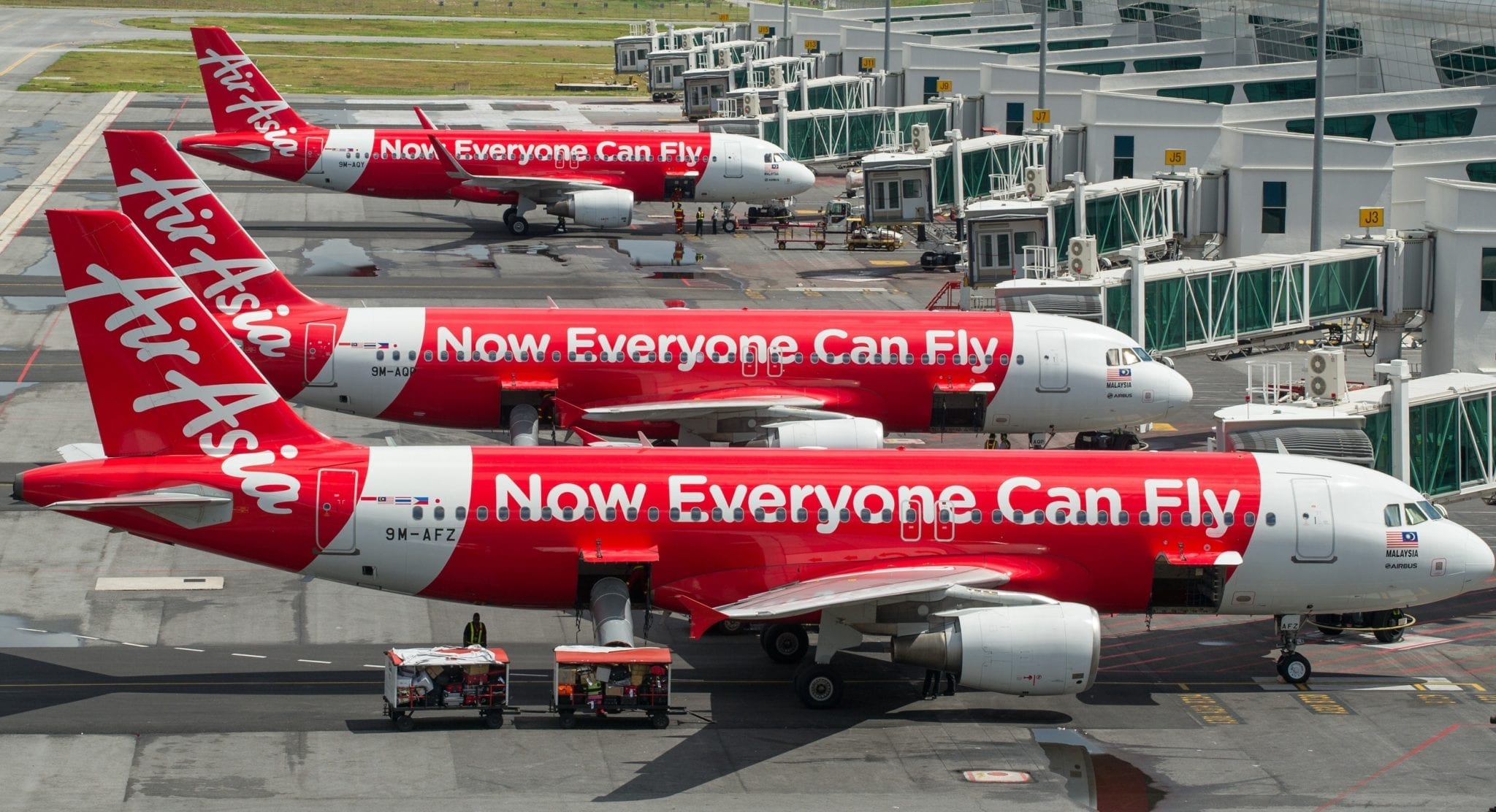
    AirAsia Australia PR and communications manager Kris Taute has moved to the airline’s Kuala Lumpur headquarters for a new global communications role.

    Taute had joined Air Asia last year, moving from the New South Wales state government, having worked for both Transport for NSW and for the state tourism body.

    In his new role as group manager communications for editorial, Taute will be responsible for the editorial communications of the airlines and its subsidiaries including  AirAsia and AirAsia X group of airlines, as well as lifestyle brands such as AirAsia Big Loyalty, travel360.com, Vidi, BigPay, RedCargo Logistics, Rokki, and Ourshop.

    In addition, Daphne Cheah is now ASEAN communications manager moving from a previous role as regional head green and sustainability.

    Taute has been replaced by Sarah Quinn who moves from Destination NSW and takes charge as PR and communication manager for AirAsia Australia.

  • Stosa Cucine opens first Singaporian store

    Stosa Cucine opens first Singaporian store

    Italian kitchen-design studio Stosa Cucine has opened its first store in Singapore.

    Located at the Apex @ Henderson building, the showroom spans 140sqm, displaying four kitchen models: Aliant, Natural, Infinity, and Aleve, for customers to experience.

    Products on display add a hi-tech touch to the kitchen as well as a functional solution for shelves, baskets and drawers.

    Customers can also get personalized options and design their own Stosa Cucine kitchens.

    The brand says it chose Singapore for its first international store because the city is one of the world’s most cosmopolitan, and an important hub for international trade.

    After Singapore, Stosa Cucine plans to expand into other Asian markets.

  • AirAsia, beyond 1Q19 and headline numbers

    AirAsia, beyond 1Q19 and headline numbers

    Tan Sri Tony Fernandes tweeted two months ago that AirAsia Group Bhd will have its “best year” in 2019, and so far headline numbers look okay, if not promising, at least for the first quarter ended March 30, 2019 (1QFY19). Jet fuel prices are at around its hedging price — 52% of its fuel needs in FY19 has been hedged at an effective exercise price of around US$78 (RM326.82) of jet fuel — while passenger load factor is expected to stay solid at 87.9%. The group chief executive officer (CEO) has also hinted that its Asean joint ventures would “perform well”.

    Notwithstanding that, AirAsia’s share price has been underweight so far this year ahead of the release of its 1QFY19 results, scheduled on Wednesday, probably because investors remain wary after the airline’s biggest loss-making quarter last year.

    MFRS16 on pricier sale-leaseback model

    AirAsia made two sale-leaseback deals with BBAM Ltd Partnership for US$1.185 billion (RM4.62 billion) in 2018 and Castlelake LP worth US$768 million (RM3.17 billion) in 2019 to lease back a combination of 108 planes to free up cash, pare debt and fund its digital venture.

    The higher operating lease expenses partly caused AirAsia’s RM394.97 million loss in 4QFY18, despite its 6.2% year-on-year (y-o-y) rise in revenue to RM2.82 billion on the back of a 16% jump in passenger count. Other main factors were higher fuel costs and a stronger US dollar against the ringgit in the period — both of which retreated temporarily in 1Q this year.

    But in 1QFY19, AirAsia will adopt the Malaysian Financial Reporting Standards 16 (MFRS16). This accounting practice recognises all lease assets and liabilities, including planes that are currently treated as off balance sheet operating leases.

    With the change, AirAsia’s operating lease expenses — which rose 73% y-o-y to RM1.13 billion in FY18 because of the sale-leaseback model — will be removed from the calculation.

    On the flip side, estimates show that MFRS16 will result in AirAsia’s profit before tax retreating by around RM400 million y-o-y for the whole of FY19. It may also front-load the lease expense of these planes at a depreciation of around RM3.5 billion and interest expense of RM1.1 billion in the same period.

    Fernandes, in his Twitter account, said the adoption of MFRS16 has no impact on the airliner’s cash position, arguing that the non-cash impact is “not very material” at around RM35 million a year.

    CGSCIMB Research, in an April 8 note, estimated that the group would book a net gain of RM174.3 million from the Castlelake deal in its profit and loss statement, with net cash proceeds of around RM891 million.

    Still, AirAsia is set to expand its fleet size from 226 planes in 2018 to 399 units in 2024, as it fully adopts the sale-leaseback structure from this year onwards. With 244 planes this year, AirAsia will book over RM11 billion of lease assets and liabilities on its balance sheet, while net gearing is expected to jump to 1.5 times. Analysts, meanwhile, confirmed that AirAsia management has guided there will be another special dividend this year, although the quantum has yet to be determined.

    AirAsia is committed to pay special dividends every two years. Recall its bumper FY18, which declared total dividends of 64 sen, inclusive of a 40 sen special dividend in 3QFY18, for a total of over RM2.14 billion.

    As at end of last year, AirAsia held cash equivalents of RM3.35 billion. TA Research in a note dated May 9 published its in-house estimate of AirAsia’s FY19 total dividend at 70 sen per share, ahead of the conclusion of the Castlelake deal.

    Others are more conservative until 1QFY19’s results are out. Full-year dividend estimates among analysts covering the stock, according to Bloomberg, average at 15.5 sen. CGSCIMB’s special dividend assumption was trimmed to 13 sen per share, from 19 sen per share previously, after lowering expectations on net cash proceeds from the Castlelake deal.

    Of 17 analyst calls on Bloomberg, AirAsia has seven “buy”, six “hold” and four “sell”. Twelve-month target prices (TPs), which range from RM1.50 to RM5.20, average at RM2.84. Of the total TPs, 35% were below its last close of RM2.45.

    The group, meanwhile, announced on April 26 that it is seeking shareholders’ approval for the proposed share buy-back of up to 10% of its total issued share. The last time it did so was in 2015.

    As in the past, AirAsia’s minority shareholders may approve both the special payout and the share buy-back.

    Beyond 1QFY19, the strengthening of the greenback against the ringgit and rising fuel costs are some of the things to watch out for. Amid strong load factors across its subsidiaries, market competition continues to put pressure on yields.

    In the horizon is the group’s digital venture, which Fernandes appears to be quite stoked about, given the number of his tweets referring to it of late. Come Wednesday, AirAsia could provide a breakdown of its digital businesses, which includes mobile payment app BigPay and one-stop travel platform, AirAsia.com.

    Fernandes told investors as early as March 1 to “look out” for AirAsia’s 1QFY19 results, which will provide a gauge on its operational changes. With its digital venture and changing market movements thrown into the mix, it remains to be seen if the stock will stay a darling among investors in the long run.


  • China is experiencing a convenience-store Expansion

    China is experiencing a convenience-store Expansion

    China is experiencing a convenience-store boom.

    Nearly 12,000 new convenience stores were opened on the mainland last year, according to the China Urban Convenience Store Index, an increase of 18 percent.

    The index, released by the China Chain Store and Franchise Association, showed that new convenience stores took up 62 percent of all new openings in the territory. Around two-thirds of these were opened under a franchise arrangement.

    Typically, franchised convenience stores in China show a return on investment at the two-year mark.

    While first-tier cities are thought to have reached saturation point in terms of convenience-store market penetration, the field remains open for second and third-tier cities.

    “There is a big potential for more regional players to deepen their market penetration,” said secretary general of the China Chain Store & Franchise Association Peipei Liang, adding that hypermarket operators are now turning to smaller-scale and community stores for a new growth point.

    Association figures show that the top 100 chain stores reached sales of CNY240 billion (US$34.9 billion), and an increase of 7.7 percent on the previous year’s results. These players also benefited from a 55.5 percent increase in online revenue.

  • Privacy browser Tor is now available on Android

    Privacy browser Tor is now available on Android

    With online privacy becoming an increasingly rare luxury these days, most all browsers offer some sort of “incognito” mode that’s supposed to help bypass various “surveillance” methods employed on the web. The demand for online anonymity has spawned a whole new breed of privacy-focused browsers that promise to offer better security and cover your traces in a more efficient manner than incognito modes. Among those, the Tor browser is the most popular (and infamous) choice for people looking to really erase their online presence.

    Connecting to the Tor network was possible in the past on Android, by using apps like Orbot and Orfox, but the release of the Tor browser on the Google Play Store eliminates the need of such workarounds. The browser has been in beta for close to a year now, but it’s finally ready for prime time.

    If you’re not familiar with Tor, here’s a simplified explanation. Instead of connecting directly to a website, like a regular browser would, Tor channels your request through a network of encrypted computers all around the globe, called “nodes,” before reaching your desired destination. This way, your identity and IP address remain hidden. Not to mention that this can also help when trying to view content that is blocked on a per-region basis, like music videos on YouTube for example.

    The Tor browser is based on Firefox, so its interface should be immediately recognizable to Firefox users. The browser is now available on Android, but an iOS may never see the light of day, according to the Tor Project. This is due to “restrictions by Apple,” though the blog post doesn’t go over any of them in detail.

  • VinMart Vietnam opens first virtual store

    VinMart Vietnam opens first virtual store

    Vietnamese supermarket chain VinMart claims to have opened Vietnam’s first virtual store.

    Run by VinGroup’s subsidiary VinCommerce, the new concept is being tested in 20 locations, including apartments, office buildings, schools and at bus stops, both in Hanoi and Ho Chi Minh City.

    Each store provides images and QR codes of more than 100 product groups for customers to scan and order via VinID app. The products will be delivered within two to four hours.

    VinMart launched the Scan&Go function in its app in March, applying it in 73 supermarkets across the country.

    Customers can also shop via VinMart’s printed shopping manual or online.

  • Waze is getting a new celebrity voice for driving directions

    Waze is getting a new celebrity voice for driving directions

    If you’re a long time Waze user, then you’re probably familiar with the app’s habit to bring in celebrities to give you driving directions. Of course, if you haven’t tried out the popular navigation app yet, this is a great chance to give it a go since the hip hop musician DJ Khaled is going to give you all the warnings about hazards and advises while you’re driving.

    Starting May 22 and until June 30, Waze users will be able to set DJ Khaled as the new navigation voice for the app. Aside from lending his voice to Waze, DJ Khaled will also provide drivers with precious advises like “Stay focused,” “Don’t play yourself,” and “The top’s off the Mayback!”

    We are beyond excited to launch the DJ Khaled voice in partnership with our friends at Deezer. DJ Khaled has one of the most recognizable voices in the industry and is beloved by many of our 115+ million users around the world, so we can’t think of anyone better to safely and entertainingly guide Waze drivers on their journeys.

    Obviously, you’ll be getting DJ Khaled’s voice on both Android and iOS versions of the app, so regardless of what smartphone you’re using, make sure to head to Settings / Voice Directions, and select DJ Khaled to be blown away.

  • Apple agrees to notify users when iOS updates impacts performance

    Apple agrees to notify users when iOS updates impacts performance

    Following the last year debate about whether or not Apple should have informed consumers that some of its updates will slow down their iPhones, the UK Competition and Markets Authority kicked off an investigation to learn more about the matter.

    The investigation only started after Apple admitted that the iOS update it pushed in late 2017 throttled down the performance of older iPhones. Fast forward more than one year and it looks like the UK government and Apple have found common ground. Apple has officially agreed to notify consumers when an iOS update will affect the performance of their iPhones.

    To ensure compliance with consumer law Apple has formally agreed to improve the information it provides to people about the battery health of their phones and the impact performance management software may have on their phones.

    The official statement on UK government’s website also mentions that Apple has agreed to provide easily accessible information about battery health and unexpected shutdowns, which the company has already done, along with guidance on how iPhone users can optimize the health of their phone’s battery.

    Everything that Apple agreed to applies both for current and future iPhones. In case any of the commitments made by Apple will be breached at any time in the future, the company could be sanctioned by the CMA (Competition and Markets Authority).