Category: General

Retail News Asia is committed to providing both local and global retailers with the latest General Retail news throughout the Asian market. This on a daily base.

  • Chinese New Year to drive sales for businesses

    Chinese New Year to drive sales for businesses

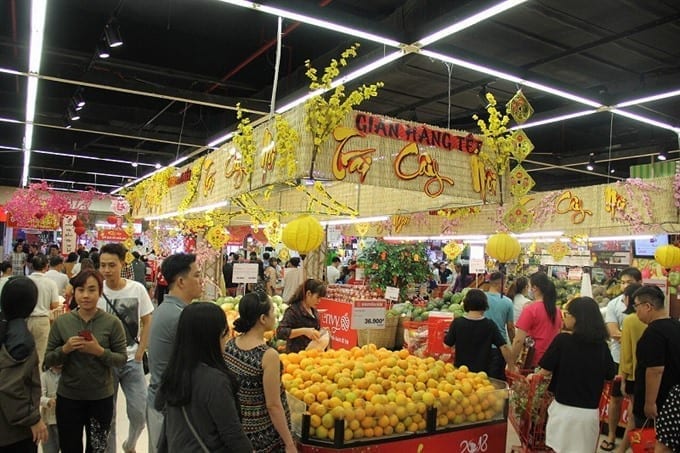
    Despite lacklustre consumer sentiment, businesses are gearing up for brisk sales as consumers do their Chinese New Year (CNY) shopping for the much celebrated festival next week, with many businesses citing CNY as an important sales contributing season. LG Electronics Malaysia general manager of marketing Kong Mun Keen said festive season campaigns, whether CNY or Hari Raya, contributes bigger sales for LG.

    “We often see a spike in sales whenever festive seasons are fast approaching,” he said, adding that this year, LG Electronics Malaysia has allocated a “substantial amount of budget” for its CNY campaign.

    Although only a month into 2019, he said LG Electronics is “on the right track” in terms of sales.

    By distinguishing itself with its technology and product experience, Kong said LG’s strategy has always focused on reaching out to all Malaysians, evident through its brand store openings in 2018, where it works with partners to drive new consumer touchpoints.

    “Malaysia has always been a priority market, given that LG has secured and maintained a strong position in the home appliances and home entertainment segments here. With our premium and unique positioning coupled with innovative and consumer-centric products line-up, we are confident that there will always be a demand for our products here,” said Kong, adding that it is constantly ensuring that its products can integrate seamlessly into consumers’ lives.

    For big-ticket items like cars, Edaran Tan Chong Motor Sdn Bhd (ETCM) executive director Tan Keng Meng expects its CNY sales to be about the same as last year’s or better.

    “It’s always CNY and Raya. These are the two peak seasons,” said Tan.

    In conjunction with CNY, ETCM added the new imperial red colour to the popular Nissan Serena 2.0L S-Hybrid Premium Highway Star, featuring a two-tone theme. Additionally, ETCM continues the introduction of Nissan X-Trail X-Tremer in passion red and two additional colour options.

    Meanwhile, a Uniqlo Malaysia representative said festive periods are traditionally good opportunities for retailers to grow their sales, adding that it continues to experience healthy sales growth this year.

    “We believe this is due to our commitment to produce high-quality products at accessible prices while keeping with today’s fashion trends. Customer service is also a top priority to ensure that our customers have the best shopping experience possible.”

    As with previous years, it believe that customers are always looking for something new and fresh to start their new year.

    “We are bringing many new items to the store for customers to choose. We will also be launching the Uniqlo U collection on Feb 1 for last minute shoppers to get their new year clothes.”

    The representative said customers are consistently looking for items that are value for money and Uniqlo is well positioned to meet their needs.

    Tohtonku Sdn Bhd head of marketing Vicky Lim said CNY is one of the peak seasons for sales with its back-to-back promotions in December and January.

    But instead of spending on CNY promotional campaigns, Lim said, the company, which markets personal care and household products with brands like Follow Me, Nutox and Nanowhite, still focuses on brand communications.

    A representative for The Body Shop said although CNY is not its largest festive season sales contributor, it dresses up its stores with decorations that symbolise the blooming of spring and the festive mood of CNY.

    “We offer prosperous gifts such as hampers. This year we picked British rose as the main product that appeals to a wider target audience and with its colour of pink, it’s in line with the colour scheme that represents CNY.

    “Our staff are also dressed in mandarin Oriental tops and we play both instrumental and vocal music that reminds you of CNY.”

  • Companies, workers struggle as cracks appear in China’s economy

    Companies, workers struggle as cracks appear in China’s economy

    Cracks are opening in China’s mighty economy: investors are backing away from deals, factories are moving abroad and companies are shedding jobs. The world’s second-largest economy is losing steam, hitting its slowest growth in almost three decades last year, and flagging further in recent months. While gross domestic product grew at 6.6% in 2018 – a rate that would be the envy of most nations – China’s efforts to cut its debt mountain have weighed on the economy.

    Private businesses in particular face new hurdles as costs rise and financing becomes harder to come by, while the trade war with the United States has not helped.

    Here is a look at some of the struggles faced by Chinese companies and people:

    Game over for gamers

    Feeding China’s addiction to video games seemed an easy bet for Beijing Yixin Technology, a tech startup behind the mobile game Farm Take Home.

    The game allows players to harvest wheat, raise chickens and plant apple trees – a bucolic refuge from the pressures of urban China.

    But in real life, the tech firm has struggled to find investors.

    “In December our company’s funding ran out, we had an investment lined up, but the money never came through,” said chairman Cui Yi. “This month I arranged another investor, then he backed out too. I think we can’t hold out.”

    His company is not alone.

    Venture capital funding dried up at the end of last year. Total investment in the fourth quarter fell 13% from a year earlier, according to data from Preqin market research.

    Policymakers are partly to blame, pushing a war on debt and financial risk that has cut the funding flowing into investment firms, industry insiders say.

    Another government diktat halted new video game approvals for months – officially due to youth gaming addiction concerns – sending firms like Beijing Yixin into a deep freeze.

    Trade war

    Other companies are facing the fallout from the trade war with the United States.

    More than a handful of exporters have sought to get around US tariffs by building factories outside China, according to a review of public stock filings.

    Others are sending workers home early for Chinese New Year or cutting overtime.

    Last month China’s exports fell.

    “It has hit our profits,” Harry Shih, manager of Runfine Bearings in eastern Zhejiang province, said of the trade war.

    Washington slapped 25% taxes on many types of ball bearings in July. Shih said he had shared the cost increase with his customers, roughly half of whom are from the US.

    “Business is going down for most companies including factories. Like me they have the same problems, profits are going down” as costs rise, said Shih.

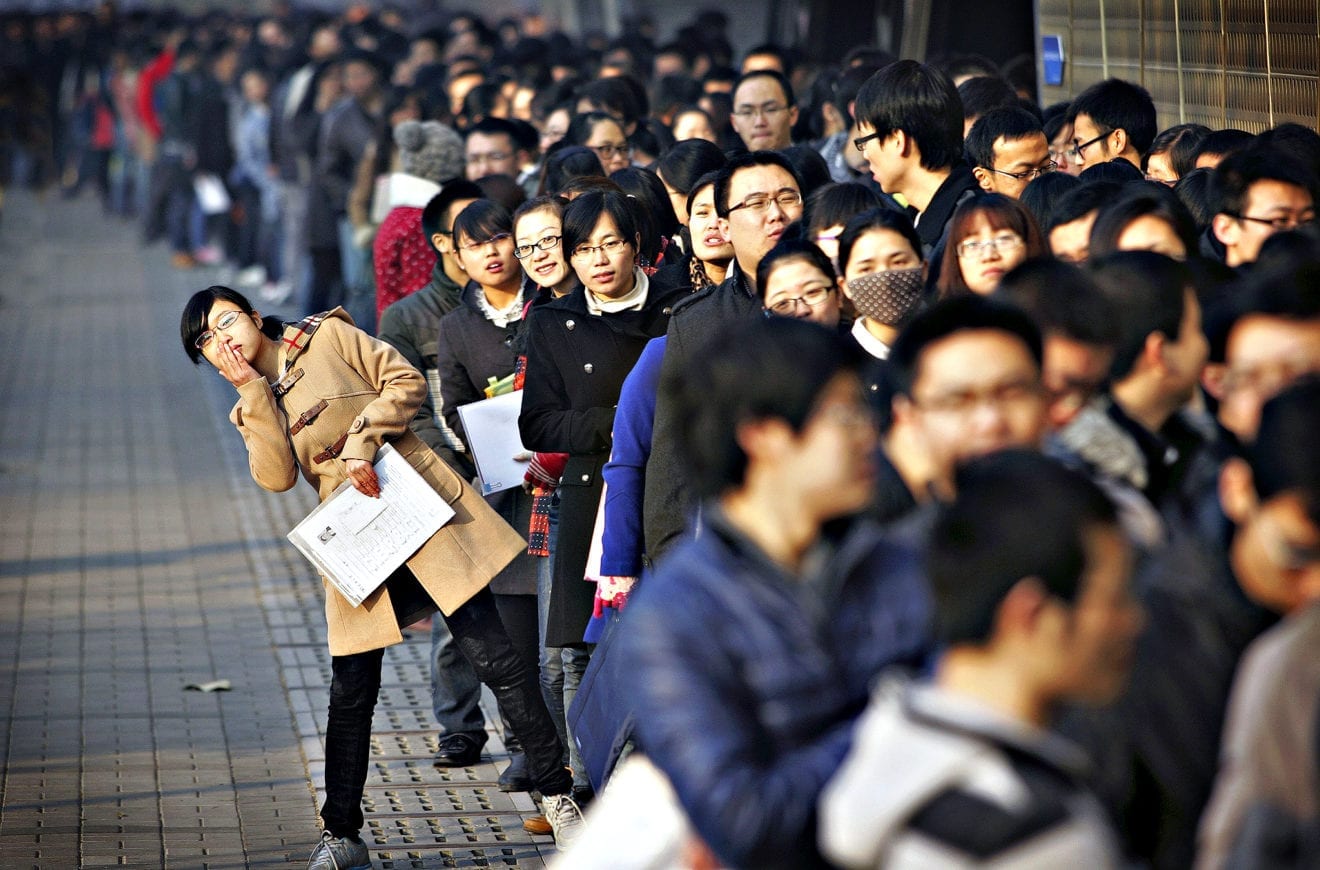
    Job crunch

    Official data shows unemployment at a stable rate, rising slightly to 4.9% last month. But independent data paints a different picture.

    In October-December advertised tech positions fell by 20% from a year earlier, after declining 51% in the third quarter, according to data from Zhaopin, China’s largest recruitment website and Renmin University.

    China’s economy “faces downward pressure, and to some extent this pressure will be transmitted to the job market,” said Meng Wei, a spokeswoman for the National Development and Reform Commission, China’s state planner.

    A lawyer who consults on labour disputes, Guo Xuehai of Beijing Zhonghai Law Firm, said, “there are definitely more employees coming for help than before,” but added this was usually the case at this time of the year.

  • China will flood US with its product

    China will flood US with its product

    Turnover in the Chinese retail industry will eclipse that of the US later this year, according to analyses. “Nothing is going to stop them,” said one commentator as new data emerged showing a fast-narrowing gap between the two markets. The fact China would overtake the US was never in doubt – China’s population of 1.4 billion is vastly more than the US population of 325 million.

    According to data from eMarketer, total Chinese retail sales will grow 7.5 per cent this year to reach US$5.636 trillion. But growth in the US is likely to be significantly slower at just 3.3 per cent, reaching $5.529 trillion.

    Not even the slowdown in China’s economic growth is likely to affect the figures – a rebound may even hasten the milestone.

    GlobalData Retail MD Neil Saunders says a big factor in the speed of China’s retail growth is the way the industry has evolved. In the US, retailers were established well before the advent of the internet meaning adapting to the new online environment has meant managing their brick-and-mortar stores while pursuing growth online.

    But in the US, the market began to mature in an online world, and online spending there will account for more than 30 per cent of total retail sales this year. In the US, online is predicted to account for less than 11 per cent.

    “The US retail environment grew up in a very different era,” says Saunders. “It grew up before the internet. There is a historical difference and an evolutionary difference, which has created this very different backdrop to retail.”

    The rapid rise of the Chinese retail industry has been fuelled by rising incomes across the country, the urbanisation of the population and a burgeoning middle class.

  • Reliance Retail is 94th on Deloitte’s top retailer list

    Reliance Retail is 94th on Deloitte’s top retailer list

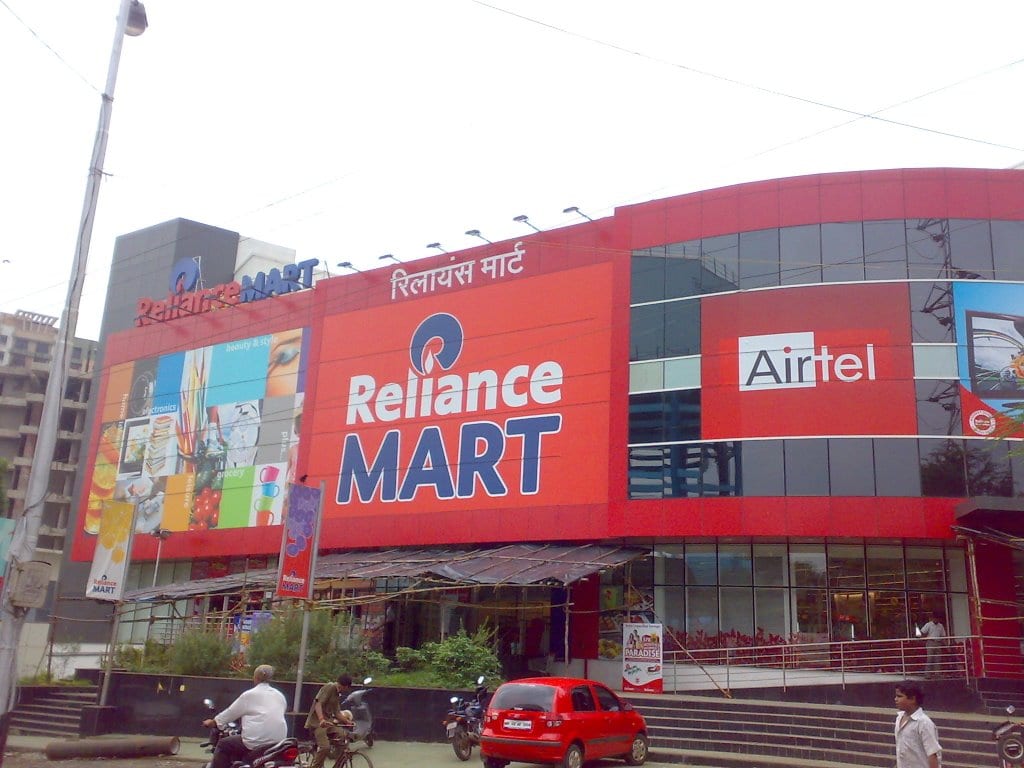
    The global retailing industry saw a record growth in revenue in 2017 with the top 250 companies increasing their revenue by over 83 percent, according to a latest report by a professional services multinational that said Reliance Retail was the only Indian company in the list. The Deloitte’s ‘Global Powers of Retailing 2019’ said that with the fast moving consumer goods (FMCG) being the main growth drive for the top 250 global retailers, the retail revenue increased by over 83.2 percent generating aggregate revenue of US$ 4.53 trillion in fiscal 2017.

    “Despite the deceleration in the global economy, the consumer and investor sentiment continues to remain positive.

    “Our global reports highlight that of the top 10 companies on the top 250 list, eight were FMCG companies and that sector has been a strong reason for the India retail story,” Deloitte India Partner Anil Talreja said.

    According to the report, Europe had the highest number of top 250 retailers.

    Companies such as Amazon and Reliance doing exceptionally well by climbing 2 and 95 spots, respectively, on the back of exceptional retail growth.

    Reliance Retail as the only Indian company in the top 250 list came in at the 94th position and was also placed sixth among the 50 fastest growing retail companies.

    In fiscal 2017, the company doubled its annual revenue to $10,649 million over the previous year.

    Walmart retained its position as the world’s largest retailer with an improvement in retail revenue growth by three per cent in 2017. Its major growth drivers were the acquisition of e-commerce firms such as Jet.com, ModCloth, Shoes.com, Moosejaw, and Bonobos, besides greater investments in store remodelling and investment in store wages.

    Walmart has recently acquired Indian e-commerce major Flipkart.

    The Deloitte survey reported sluggish growth in Europe, China and Japan, but said retailers continued to grow as a result of increased merger and acquisition (M&A) activity, new store openings, and robust e-commerce activity.

    “The global economy is currently at a turning point. Until early 2018, the global economy displayed strong growth.

    “With inflation accelerating in major markets, governments making shifts in monetary and fiscal policies, and most of the emerging markets experiencing significant currency depreciation the global economy will slow down in the near future,” Deloitte Global Chief Economist Ira Kalishsaid in the report.

    “For retailers, this change will mean slower consumer spending growth, higher consumer prices, and disrupted global supply chains,” he added.

  • Lotte to pursue reforms and investment in 2019

    Lotte to pursue reforms and investment in 2019

    Lotte Group Chairman Shin Dong-bin told affiliate CEOs that he wants reform and aggressive investment in 2019 during a biannual meeting on Wednesday. Shin missed the last meeting in July as he was serving time in prison for bribery related to former President Park Geun-hye. The first meeting of the year typically deals with each affiliate’s annual goals and direction.

    In the first meeting with CEOs after his return, the chairman emphasized that the company was in need of innovation strong enough to rattle its existing business structure.

    “We are about to face immense change in the future that is difficult to imagine,” he stressed to affiliate heads at the meeting. “Therefore we have to be thorough in predicting the future and devising preparations according to different scenarios. If we can’t come up with a clear vision or concrete plans, there will be an immense crisis.”

    Shin pointed out that the group had been “passive” recently when it comes to making investment decisions, missing opportunities and waiting for too long.

    He added that investment decisions have to be made continuously, even when revenue is low and in businesses that the company is doing well in so as to maintain an upper hand in the market.

    He also mentioned the possibility of downsizing unprofitable businesses, citing Microsoft becoming global No. 1 by market cap last year after conducting reforms on its business portfolio.

    “We should focus on areas with future growth potential and push for rationalization,” said Shin.

    Digital transformation, an initiative he has been pushing for in the last few years, also reappeared in Wednesday’s speech.

    “Compared to global companies, Lotte has a low investment rate in the IT sector and the fields invested in so far are [relatively] narrow,” he said, urging that the company needs to find ways to get one step closer to customers using existing assets like big data, brick-and-mortar stores and logistics infrastructure.

    Recently recruited IT professionals were also called into the meeting to share their opinions on Lotte’s current situation regarding digitalization and areas that can be improved.

  • Lotte Mart’s distribution fees scrutinized

    Lotte Mart’s distribution fees scrutinized

    Korea’s antitrust body is examining the practice of retailers unfairly shifting distribution costs to their suppliers. The Fair Trade Commission (FTC) has started evaluation proceedings against Lotte Mart for transferring this burden and charging an onward transportation fee after a product has been delivered. The regulator could fine the retailer 400 billion won ($353.92 million) if it is found to have violated the law. It has the authority to prosecute and punish companies that contravene the Fair Trade Act and other statutes related to anti-competitive practices.

    The FTC’s Distribution Division, which monitors the activities of retailers, submitted an evaluation report, equivalent to a prosecutor’s indictment, to the commission early last month. The document outlined Lotte Mart’s infractions over five years.

    Lotte Mart has until early February to respond.

    This will be the first time the FTC has taken action against a company for shifting distribution costs to suppliers. Lotte Mart’s practice of transferring the costs, commonly known as post-distribution costs, is widespread.

    The action comes amid FTC Chairman Kim Sang-jo’s drive to root out unfair practices in the retail industry.

    Lotte Mart’s shifting of post-distribution cost to suppliers is likely to have far-reaching implications in the industry as the practice is common.

    “When signing a contract, there are requests to supply products at a price three to five percent lower than the actual price to account for the post-distribution costs,” explained Mr. Lee, who operates a company that supplies to retail stores. “It’s not just Lotte. It is common for large retail stores such as Emart, Homeplus, department stores, convenience stores and even e-commerce companies, such as Coupang.”

    The 400 billion won fine, if charged, would be an unprecedented amount. If other companies are fined, the total sum could rise to the trillions.

    “Unlike sales promotion fees, distribution costs have to be paid,” said Mr. Kim, the president of a large food company. “We struggled as it’s impossible to know the exact figure, but the FTC took on this matter for the first time.”

    From the FTC’s perspective, large retail stores use distribution centers for their own benefit, and it is unfair to force suppliers to take on costs incurred after products are delivered to the centers.

    “Suppliers that just want to deliver to distribution centers are forced to deliver to branches,” explained a senior FTC official. “If the final delivery destination is a branch store, the supplier should be able to manage their products as they want at the distribution center, but that is not the case.”

    “From a common-sense perspective, distribution costs apply only until the delivery location, not costs after the delivery,” the official added.

    Other experts disagree with the FTC’s assessment.

    “If the retailer and supplier haven’t agreed on the location of the delivery, the supplier burdening the delivery cost abides by civil law,” said Lee Ho-young, a law professor who specializes antitrust law at Hanyang University.

    Lotte is going all out on its defense, hiring Kim & Chang’s fair-trade team to represent it.

    “In the past, when there weren’t distribution centers, suppliers used to be burdened with the distribution costs,” said a Lotte Mart official. “Post-distribution costs are paid after distribution centers were established.”

    The FTC is looking into other cases.

    “The retail business cannot work if post-distribution costs are shifted to retailers,” said an executive at a large retail company who is in charge of fair trade matters.

    The FTC could make a final decision as early as March.

  • Supermarket, apparel sales not looking good in Japan

    Supermarket, apparel sales not looking good in Japan

    Japanese supermarket sales edged down 0.2 per cent in a third consecutive year of declines, according to figures released by an industrial body this week showing last year’s financial performance. The data for last year shows sluggish consumption regardless of the country’s current period of economic growth. Observers have attributed the slump to a low demand for apparel in supermarkets relative to stronger sales in food.

    Apparel sales fell 5.3 per cent, the 27th straight year of declines, influenced by the warm winter and increased competition with retailers online. Food, by comparison, saw 0.4 per cent higher sales with an uptick in prices for vegetables and sweltering summer temperatures.

    While total sales rose 0.5 per cent to ¥12.99 trillion ($118.71 billion) last year, they still fell short of the hoped-for ¥13 trillion mark for the second year in a row.

    “Spending is weak as a deflationary mindset is still deeply rooted among consumers”, said Atsushi Inoue, a senior official of the Japan Chain Store Association.

  • Tech sector forecast to see slower growth ahead

    Tech sector forecast to see slower growth ahead

    Hong Leong Investment Bank (HLIB) Research anticipates slower growth in the technology sector due to downside risks in the macro environment coupled with waning data trends. However, it expects automotive and Internet of Things (IoT) to take the forefront while smartphone takes a backseat. The research house said in a note that for the first 11 months of 2018 (11M18) global semiconductor sales were outstanding after growing 16%, thanks to the explosive growth of memory followed by discrete and optoelectronics.

    As for 2019, consensus is projecting 3% growth for that segment.

    “However, we see further downside to this projection considering the US-China trade conflict, stagnant smartphone demand, industry-wide inventory adjustment and weaker memory prices,” HLIB said.

    The automotive sector is expected to be the major growth driver for global technology industry supported by its development towards full autonomy. The equipment industry remained solid with billings increasing 11% in 11M18, supported by heavy investments in all regions except Taiwan.

    “However, year-on-year growth has been on a snail’s pace for the past five months, translating into a significant deceleration from past 20 consecutive months’ double-digit growth rates,” the research house explained.

    According to SEMI, this reflected the near-term weakening demand for personal computers, mobile phones and servers as well as pulled back investments in response to recent softening of memory prices.

    “This is in line with its expectation of expansion in capital spending not outpacing sales growth on the long run and potentially lead to industry-wide overcapacity,” said HLIB.

    The research house also highlighted that local semiconductor players may experience strong demand to support the disrupted global supply chain should the procurement levy and technology transfer restriction from US take effect.

    Note that China sources substantial fabrication equipment from US players for its expansionary semiconductor industry towards the “Make in China 2025” vision. Vice versa, US fabless semiconductor players outsource their product fabrication and some are produced in China.

    With strong greenback, HLIB expects tech firms to be marginally boosted thanks to their US dollar-denominated sales while partly offset by the US dollar cost items.

    It estimates the ringgit to be weaker in FY19 with at full-year average of RM4.20 against US dollar.

    Nonetheless, pricier commodities, compounded by stronger US dollar projection, will exert pressures on margins for traditional packaging.

    Maintaining a “neutral” call on the sector, HLIB displayed a cautious stance in the absence of near-term catalyst as it expects global sales and capital spending to grow moderately.

    As for stock picks, it gave Frontken a “buy” call at a target price of RM1.05 on the back of bullish global semiconductor market outlook, robust fab investment, leading edge technology, oil and gas recovery and strong balance sheet.

  • Google was fined for $57 million under the GDPR

    Google was fined for $57 million under the GDPR

    The CNIL, the French data protection watchdog, has issued its first GDPR fine of $57 million (€50 million). The regulatory body claims that Google has failed to comply with the General Data Protection Regulation (GDPR) when new Android users set up a new phone and follow Android’s onboarding process. Two nonprofit organizations called ‘None Of Your Business’ (noyb) and La Quadrature du Net had originally filed a complaint back in May 2018 — noyb originally filed a complaint against Google and Facebook, so let’s see what happens to Facebook next. Under the GDPR, complaints are transferred to local data protection watchdogs.

    While Google’s European HQ is in Dublin, the CNIL first concluded that the team in Dublin doesn’t have the final say when it comes to data processing for new Android users — that decision probably happens in Mountain View. That’s why the investigation continued in Paris.

    The CNIL then concluded that Google fails to comply with the GDPR when it comes to transparency and consent.

    Let’s start with the alleged lack of transparency. “Essential information, such as the data processing purposes, the data storage periods or the categories of personal data used for the ads personalization, are excessively disseminated across several documents, with buttons and links on which it is required to click to access complementary information,” the regulator writes.

    For instance, if a user wants to know how their data is processed to personalize ads, it takes 5 or 6 taps. The CNIL also says that it’s often too hard to understand how your data is being used — Google’s wording is broad and obscure on purpose.

    Second, Google’s consent flow doesn’t comply with the GDPR according to the CNIL. By default, Google really pushes you to sign in or sign up to a Google account. The company tells you that your experience will be worse if you don’t have a Google account. According to the CNIL, Google should separate the action of creating an account from the action of setting up a device — consent bundling is illegal under the GDPR.

    If you choose to sign up to an account, when the company asks you to tick or untick some settings, Google doesn’t explain what it means. For instance, when Google asks you if you want personalized ads, the company doesn’t tell you that it is talking about many different services, from YouTube to Google Maps and Google Photos — this isn’t just about your Android phone.

    In addition to that, Google doesn’t ask for specific and unambiguous consent when you create an account — the option to opt out of personalized ads is hidden behind a “More options” link. That option is pre-ticked by default (it shouldn’t).

    Finally, by default, Google ticks a box that says “I agree to the processing of my information as described above and further explained in the Privacy Policy” when you create your account. Broad consent like this is also forbidden under the GDPR.

    The CNIL also reminds Google that nothing has changed since its investigation in September 2018.

  • Henry Sy passes away at 94

    Henry Sy passes away at 94

    The founding father of Philippine retail, Henry Sy, has passed away. Sy, who has topped the Philippines Rich List for the last seven years, was chairman emeritus of SM Investments, one of the country’s largest business conglomerates. A Chinese immigrant who arrived in the Philippines at the age of 12 with his parents, his introduction to retailing began with helping out in his father’s neighbourhood store. He saved enough money to open a shoe store which he named ShoeMart, and whose initials later became the most recognisable brand name in the nation.

    From a single shoe store, his business expanded into department stores, the first of which opened in 1972, then into malls, with 70 shopping centres bearing the SM brand in the Philippines and more in Mainland China.

    SM Investments also owns supermarkets, BDO Unibank, almost 50 residential developments, six hotels and nine office towers.

    Sy, who died on Saturday, stepped down as chairman of the company in 2017, taking on the title chairman emeritus and leaving the business under the leadership of his family and his long-time business partner Jose Sio, who is now chairman.

    He had six children: Teresita Sy-Coson, Elizabeth, Henry Jr, Hans, Herbert and Harley. Teresita and Henry Jr are vice chairpersons of SM Investments and Harley serves as executive director of SM.

    Forbes last year estimated the 94 year old’s net worth at US$19 billion, ranking him the most wealthy Filipino and 53rd richest man in the world.

  • Era when eggs taking over Instagram

    Era when eggs taking over Instagram

    Eleven days ago, the anonymous Instagram account world_record_egg posted its first image, what appears to be a simple stock photo of a brown egg. “Let’s set a world record together and get the most liked post on Instagram,” the caption read. The photo has now reached that goal, with over 42 million likes as of Tuesday afternoon. It blew past the previous record holder over the weekend, the first photo Kylie Jenner shared of her daughter Stormi, which garnered only around 18.5 million likes after it was posted last year.

    It is easy to root for the Instagram egg and its other nihilistic siblings, like the halved white onion that only wants more Twitter followers than President Donald Trump.

    These accounts are not inherently interesting or important—many of them post barely any content at all—but they are made so because the internet decides they should win the attention lottery. In an era of rampant spam, thirst traps, and stolen memes, the egg became popular by straightforwardly asking for likes and nothing else. It is absurd. It is delightful. It feels righteous, charitable even, to help these accounts amass larger online followings than those of world leaders or members of the Kardashian family.

    Anything can be mapped onto the canvas of a blank brown egg, and so thousands of remixes have predictably been created that riff on the original. Ellen DeGeneres, for her part, put Kylie Jenner’s face on the egg on Monday, in the hopes that by putting them together, she can attract more engagement than the two most popular Instagram posts combined.

    Why did this egg take off where others have failed, that’s not clear. But the creator is clearly familiar with some of the engines of online fame. They tagged a number of people and publications that regularly cover viral memes like LADBible, Mashable, BuzzFeed, the Daily Mail, and YouTube star PewDiePie in the egg photo itself. Once the account took off, they began to sell “official” merchandise, including T-shirts that say “I LIKED THE EGG,” which go for $19.50. A request for comment sent to the email listed on the egg’s Instagram page went unanswered.

    The account behind the egg, which has nearly 6 million followers, is also an incredibly valuable marketing vehicle. Brands could spend thousands of dollars to advertise with it, according to sources in the influencer marketing industry who spoke with Recode. When the egg goes out of style, its creator could also sell the account or pivot to sharing another type of content with the massive audience they’ve already attracted.

    The egg’s creator may instead simply continue to try to profit off the popular meme, as other viral food sensations have before them. In 2014, after Zack Brown went viral for raising more than $55,000 on Kickstarter to make potato salad, he threw a potato-themed party and two years later released a potato salad cookbook. Carter Wilkerson—the teen who became famous in 2017 after Wendy’s promised a year of free chicken nuggets if he achieved 18 million retweets—went on to sell nugget-themed apparel for charity. Max Miller, the guy behind the half onion, also sells merchandise and claims a portion of sales are donated to charity too.

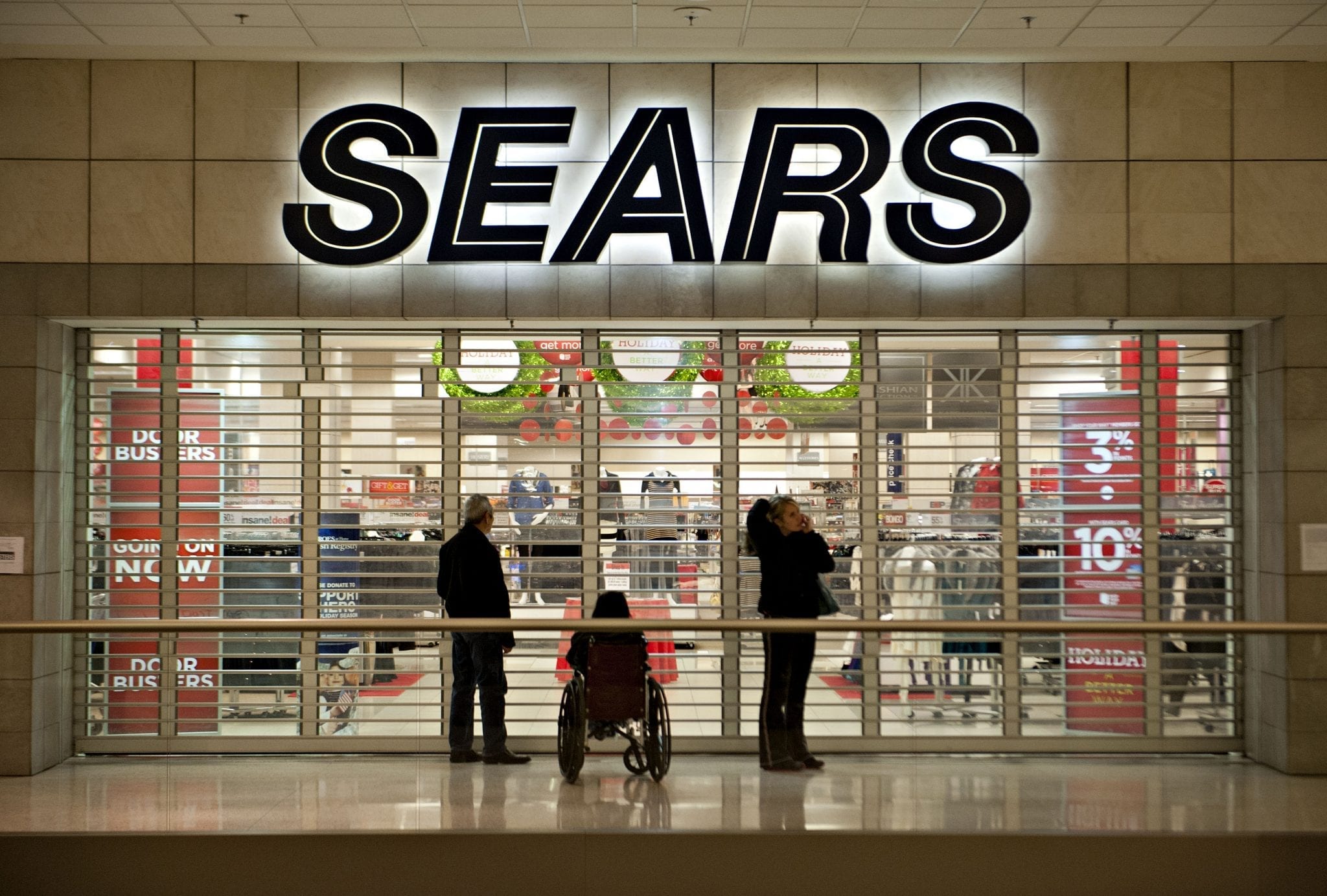
  • Sears saved by chairman’s last minute $5.2 billion bid

    Sears saved by chairman’s last minute $5.2 billion bid

    Bankrupt US retailer Sears has been saved from liquidation following a successful, last-minute US$5.2 billion bid by chairman Eddie Lampert, subject to court approval. The acquisition includes substantially all of the company’s assets as an on-going concern and preserves the positions of 45,000 employees.

    “We are pleased to have reached a deal that would provide a path for Sears to emerge from the chapter 11 process,” Sears’ restructuring committee of the board of directors wrote in a release to investors.

    “Importantly, the consummation of the transaction would preserve the employment for tens of thousands of associates, as well as the relationships with many vendors and suppliers who provide Sears with goods and services.”

    Provided the sale is approved by the Bankruptcy Court, the transaction is expected to close on February 8, 2019.

    The retailer had previously announced plans to close up to 120 stores, though it is not clear whether these closures will go forward with the successful bid.

    Lampert made the last-minute bid after several prior offers were turned down for being “administratively insolvent” – unable to cover fees and vendor payments owed by the retailer.

    After initially offering US$4.4 billion to purchase the business, as well as a secondary offer to purchase just 250 of its locations, Lampert was forced to raise his bid to US$5 billion in an effort to get the sale completed.

    But even this bid was deemed insufficient, and Lampert, through bidding vehicle ESL Investments, upped the offer to US$5.2 billion.

    The new bid, while successful, will mean roughly 5000 fewer staff able to keep their jobs as a result of the bankruptcy.

    Sears applied for bankruptcy in October 2018, citing a failing turnaround effort to transform the business and unlock the value of its assets.

    GlobalData Retail managing director Neil Saunders pointed to Sears’ efforts to “shrink its way to profitability”, and that continuing to do so under the guise of bankruptcy was unlikely to result in a successful outcome for the business.

    “Ultimately, Sears needs not just to fix its financial problems,” Saunders said.

    “It also needs to repair the deficiencies in terms of retail strategy… only a complete change of management will bring this about.”

  • App-store spending to surpass US$120 billion this year

    App-store spending to surpass US$120 billion this year

    App-store spending by consumers is expected to surpass more than US$120 billion this year according to global mobile data and analytics provider App Annie. The firm’s annual The State of Mobile 2019 report found consumers downloaded 194 billion apps last year, spending $101 billion in app stores and averaging three hours per day on mobile.

    Time spent in-app grew 50 per cent over the past two years, with downloads up 35 per cent over the same period. Mobile consumed 62 per cent of global digital-ad spend last year, up from 50 per cent in 2017. Sixty per cent more apps will monetise through in-app advertising this year.

    The report also found that 10 minutes of every hour spent consuming media this year will be spent streaming video on mobile – and Generation Z consumers spend 20 per cent more time in apps than the rest of the population.

    “Mobile is no longer an add-on channel – it is the engine fueling digital transformation,” said App Annie CEO Theodore Krantz.

    The report looks at macrotrends, app rankings, and a number of industries including mobile marketing, shopping and retail, travel, gaming, social networking, media and entertainment, banking and fintech, video streaming, dating and more.

    The firm’s global marketing and insights EVP Danielle Levitas said consumers spending on apps globally last year was larger than the global live and recorded music industry and double the size of the global sneaker market.

    “Mobile experiences are so central to how we live, work and play and with consumers spending three hours a day on mobile, it’s clear how vital this platform is for all businesses in 2019 and beyond.”

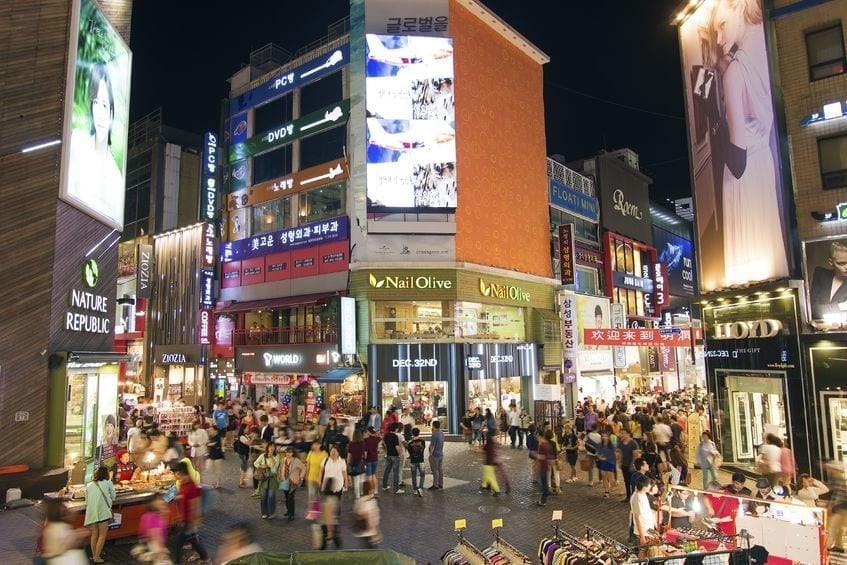
  • Korea Grand Sale gears up for kick off

    Korea Grand Sale gears up for kick off

    Korean tourism authorities were set on January 14 for the official opening of the Korea Grand Sale, an annual event for foreign shoppers with events, promotions and sales across the country. This year’s event, jointly hosted by the Ministry of Culture, Sports and Tourism and the Visit Korea Committee, will be held from January 17 until February 28.

    The theme of this year is “Travel, Taste, Touch,” and will offer benefits of varying degrees from 51,497 businesses. According to the ministry, around 850 enterprises will hold sales, including discounts of up to 97 percent on flights to Korea from airlines including Air Seoul.

    Up to 25 percent discount will be provided at eateries at the top-notch hotels across the country.

    According to a survey on what foreigners did while visiting Korea conducted by the ministry, 72.5 percent of all foreign visitors in 2017 said shopping, while 58.2 percent said eating and tourism.

    A tourism program featuring restaurants with over 50 years of history — including “Cheongjinok,” “Ureok,” “Hadongkwan,” “Joseonok” and “Yeolchajib” will be held with Korean celebrity chefs as guides. Other packages include Korean food and temple food for foriengers, and ski packages.

    For those who need assistance, a welcome center will be open throughout the festival period at Cheonggye Plaza in Jongno-gu, Seoul from 12 p.m. to 8 p.m. Tour guides will circulate popular tourist areas like Hongdae or Dongdaemun, accompanied by interpretation services.

    A welcome booth for foreigners will operate at Incheon International Airport and Gimpo International Airport from February 1-8, to coincide with the Chinese and Korean Lunar New Year holidays.

    At the welcome center, Korea Tour Card will be given free to the first 50 visitors every day. The 10,000th visitor will receive a coupon for a stay at a local hotel.

  • 7-Eleven Malaysia appoints Tsai Tzung-Han as director

    7-Eleven Malaysia appoints Tsai Tzung-Han as director

    Convenience store chain operator 7-Eleven Malaysia Holdings Bhd has appointed Tsai Tzung-Han (pix) as a non-independent and non-executive director, effective Jan 16, 2019. Tsai, 42, is currently the vice chairman of Cathay United Bank, a subsidiary of Cathay Financial Holdings which is listed in Taiwan. He also serves as a director on the board of Cathay Life Insurance, the largest life insurer in Taiwan and also a subsidiary of Cathay Financial Holdings.

    Tsai had previously served in various capacities at Cathay Life Insurance, including senior vice president in charge of alternative investments and executive vice president in charge of real estate acquisitions and development, human resources and strategic planning.

    He also ran the strategic planning department for Cathay Financial Holdings from 2010 until 2016 and oversaw the strategic investments into Bank Mayapada in Indonesia, Rizal Commercial Banking Corporation in Philippines and Conning Asset Management in the US.

    He joined Cathay United Bank in 2015 and served as the head of strategic planning until he became the vice chairman in 2016, where he continues to oversee the strategic planning, wealth management, digital banking, data analytics and overseas banking departments.

    Prior to returning to Taiwan, Tsai worked briefly in private equity at Goldman Sachs in New York and in venture capital at Pacific Venture Partners in San Francisco.

    From 2001 until 2003, he was a practicing attorney in the real estate department at Hale and Dorr LLP, currently known as Wilmer Hale, in Boston. Tsai has over 10 years’ experience in investment and business development in finance industry.