Category: General

Retail News Asia is committed to providing both local and global retailers with the latest General Retail news throughout the Asian market. This on a daily base.

  • Flights from Da Nang to Osaka for Vietnam Airlines

    Flights from Da Nang to Osaka for Vietnam Airlines

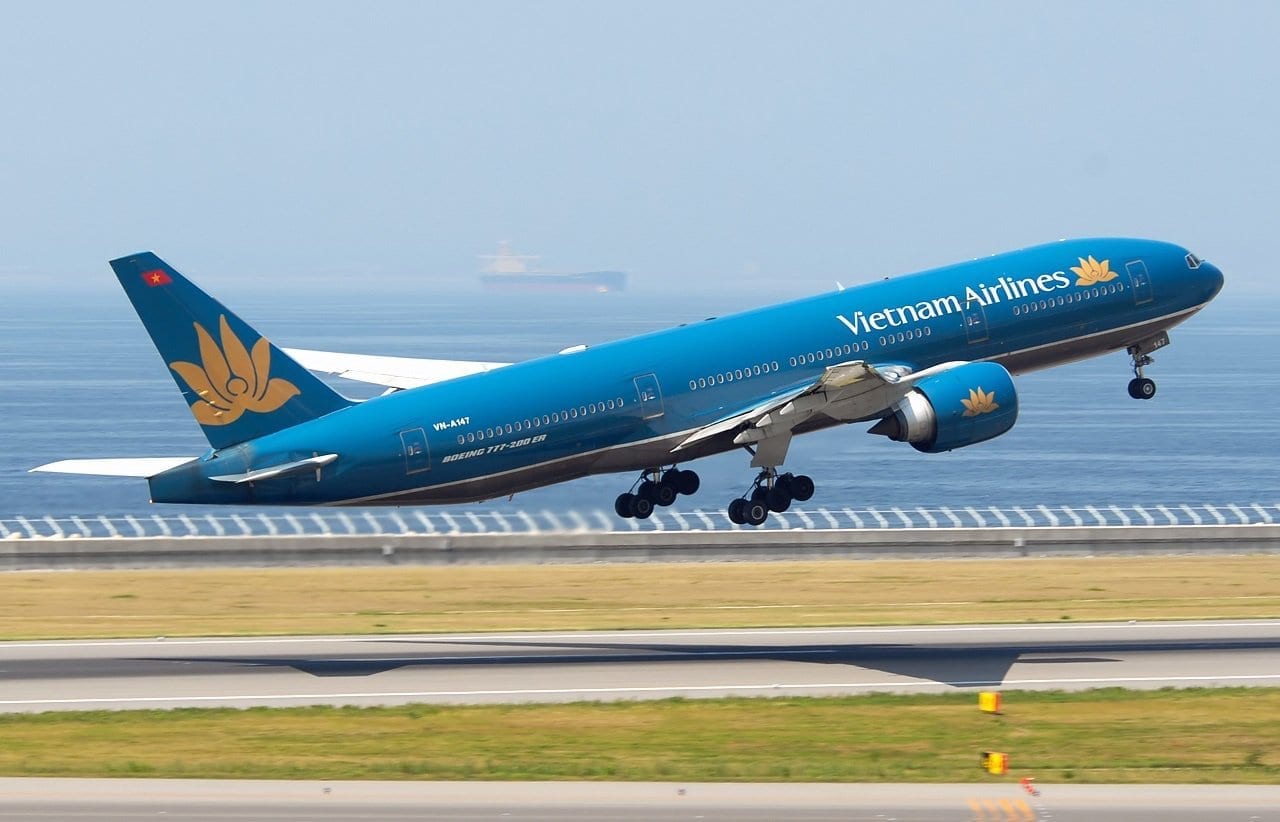
    The first non-stop flights from Da Nang to Japan will begin on 28 October, the national flag carrier Vietnam Airlines has confirmed. The airline will use an Airbus A321 with services meeting 4-star standards to cover the 2,114 miles (3,403 kilometers) from Da Nang to Japan’s Osaka City, with flights taking around four and a half-hour.

    The airline will operate 7 return flights each week. The non-stop flights will depart from Da Nang at 00:20 am, and from Osaka at 09:30 am local time. This will be the 11th air route to Japan operated by the Vietnam Airlines after those from Ha Noi, Ho Chi Minh City, and Da Nang to Japanese cities of Tokyo, Osaka, Nagoya, and Fukuoka.

    Mr. Nguyen Duc Quynh – Executive Vice Chairman of Danang Hotel Association, Deputy General Director of Furama Resort Danang, opined: “The Japan market recently makes up 10% of Danang tourism industry and continue to increase strongly. Thanks to this new direct air-route that we will have more opportunity to attract this potential market, as well as introduces the “fantastic-city” of Danang to Japan. We need to take advantage of this chance by providing more Japan-friendly services, promoting our venue as not only Leisure but also an ideal MICE destination. Danang tourism colleges and Hotels in Danang should provide more Japanese language training to their tour guides and staff to welcome more and more tourists from Japan to the City.”

    As reported, from 2011 – 2017, the number of visitors from Japan had increased 18 times, especially, 2016 – 2017 period eyes a rise of 23,000 tourists. Not only Japan market, overview the snapshot of Danang tourism, air travelers to Da Nang increased 40% over the same period last year. The number of international visitors to Da Nang is concentrated mainly in North East Asia (Korea, China, Japan) through direct flights to Da Nang. The number of international flights this year at Da Nang International Airport is 183, an increase of 76 flights over the same period of 2017.

  • Suite sounds for Singapore Airlines first class with Bang & Olufsen

    Suite sounds for Singapore Airlines first class with Bang & Olufsen

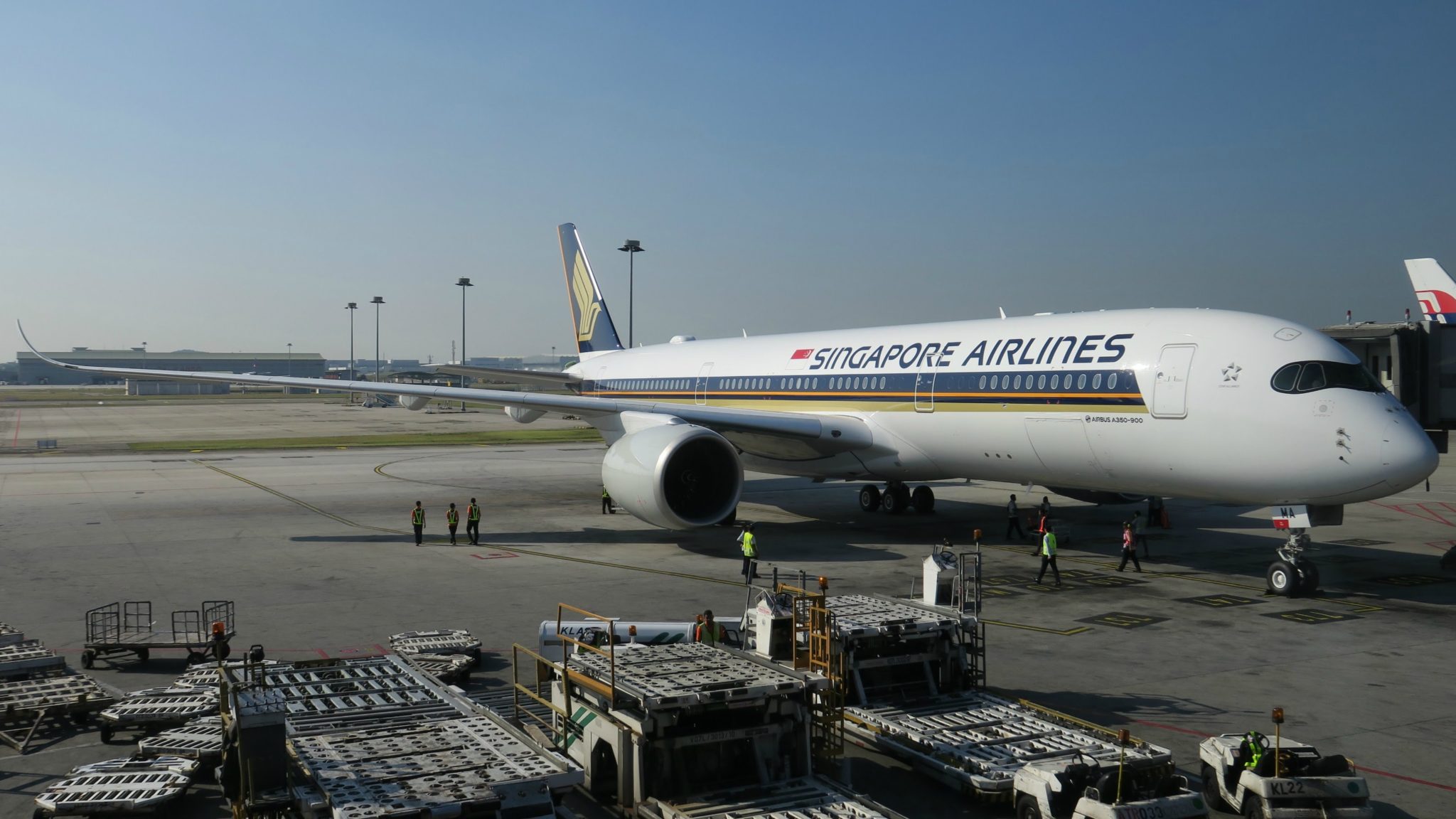
    Passengers in Singapore Airlines’ Airbus A380 first class suites will soon enjoy sweeter sounds through a partnership with Bang & Olufsen.

    From October, travellers on Singapore Airlines’ newest A380s – the ones with the spacious room-like first class suites – will find a pair of Bang & Olufsen’s Beoplay H9i noise-cancelling headphones tucked away and ready to use with the suites’ massive 32 inch screen and KrisFlyer inflight entertainment system.

    Designed by Jakob Wagner, the Beoplay H9i headphones have a simple touch interface on the aluminium surface of the right ear cup to change the volume, pause the music and skip tracks, and are made from premium materials including genuine leather and adaptive memory foam.

    These will be progressively rolled out to the rest of Singapore Airlines’ A380 suites and Boeing 777 first class cabins from November.

    And, sometime later, selected A380 routes will see the suites upgraded to wireless version of the H9i.

    “Singapore Airlines is excited to embark on this partnership with Bang & Olufsen, an established and highly respected name in audio,” enthused Singapore Airlines’s Acting Senior Vice President for Customer Experience, Mr Yeoh Phee Teik.

    “With Bang & Olufsen’s assurance of high quality, precision sound as well as ergonomic comfort of its headphones, we are confident our customers will benefit greatly from this collaboration.”

  • King Power Traveler to launch inflight duty free with Vietnam Airlines

    King Power Traveler to launch inflight duty free with Vietnam Airlines

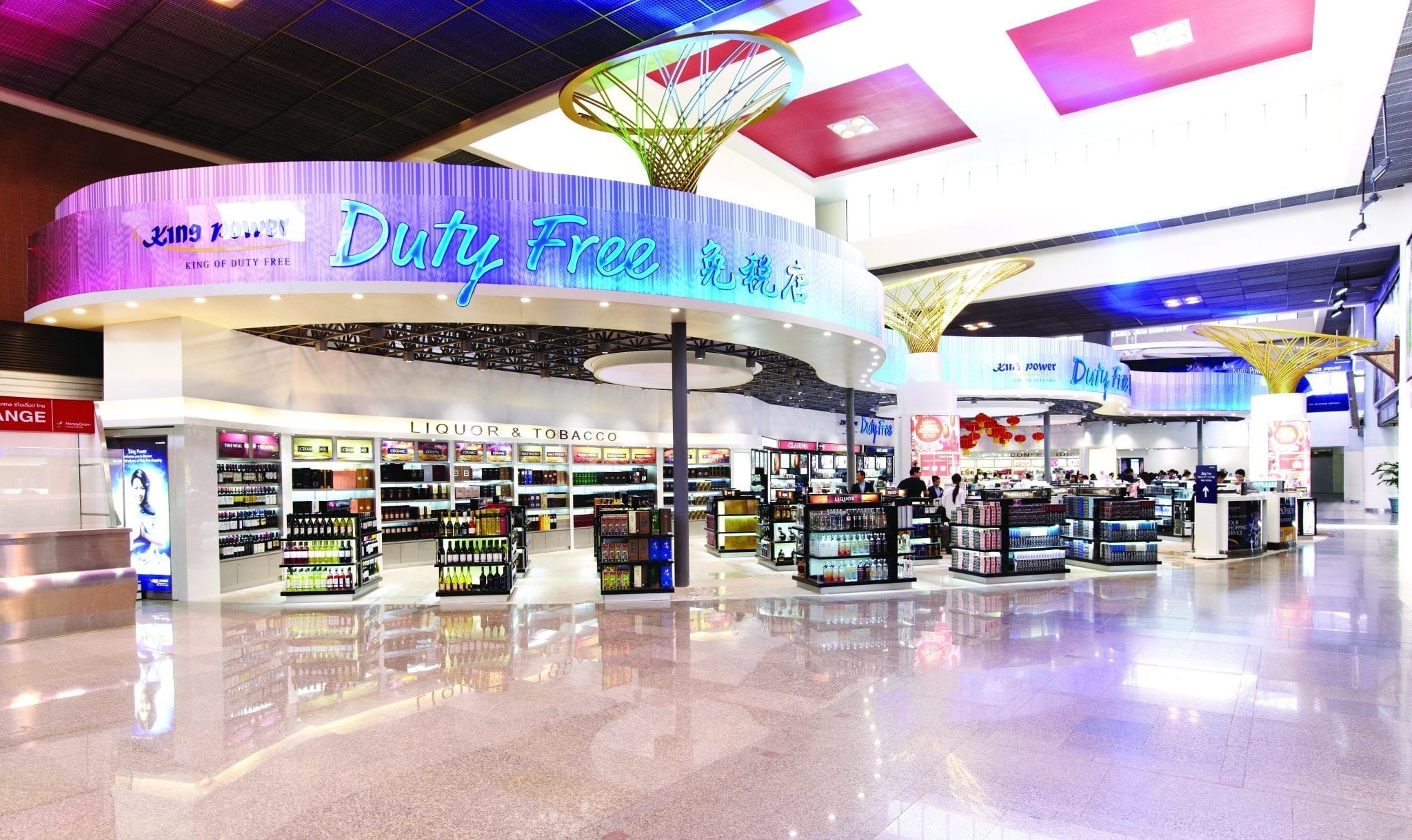
    National carrier Vietnam Airlines is set to officially establish an inflight duty free service from October in cooperation with inflight specialist King Power Traveler, the Rakhita Jayawardena-run subsidiary of Hong Kong-based travel retailer King Power Group.

    Over the next five years, the SkyTeam alliance member will cooperate with King Power Traveler to expand and upgrade its Lotushop services to meet Skytrax four-star service standards.

    Skytrax – the well-known airline and airport rating organisation – has ranked Vietnam Airlines as a four-star airline for three consecutive years.

    Vietnam Airlines Executive Vice President Le Hong Ha, said: “The partnership with King Power Traveler demonstrates our efforts to provide passengers with an enhanced duty free retail service, thereby consistently upgrading our four-star service quality through every aspect of the business. We are taking great strides to reach five-star status.”

    The enhanced duty free offer covers categories such as perfume, cosmetics, watches, suitcases and bags. Passengers will be able to shop from their seats on 30 of Vietnam Airlines’ international routes including to the UK, China, France, Germany, Japan, South Korea and Russia. The airline said that passengers would benefit from average discounts of -5% to -15% compared to domestic retail prices.

    King Power Traveler will also provide extensive training to flight attendants to enhance their sales skills and application of technology.

    Vietnam Airlines operates 90 routes to 20 domestic and 29 international destinations with an average of 400 flights per day.

  • U-Tapao Rayong-Pattaya International Airport joins with AIS to develop Smart Terminal Pioneering

    U-Tapao Rayong-Pattaya International Airport joins with AIS to develop Smart Terminal Pioneering

    U-Tapao Rayong-Pattaya International Airport has entered into a partnership with AIS to support and develop its air transport system through the introduction of new innovations. AIS will take part in the pre-construction period and the opening of the Passenger Terminal 3, upgrading the airport to become the Bangkok’s third major commercial airport in the future. It will serve passengers connecting to Don Muang International Airport and Suvarnabhumi Airport in line with the Eastern Economic Corridor (EEC) Plan, which is one of key strategies of the Thailand 4.0 initiative.
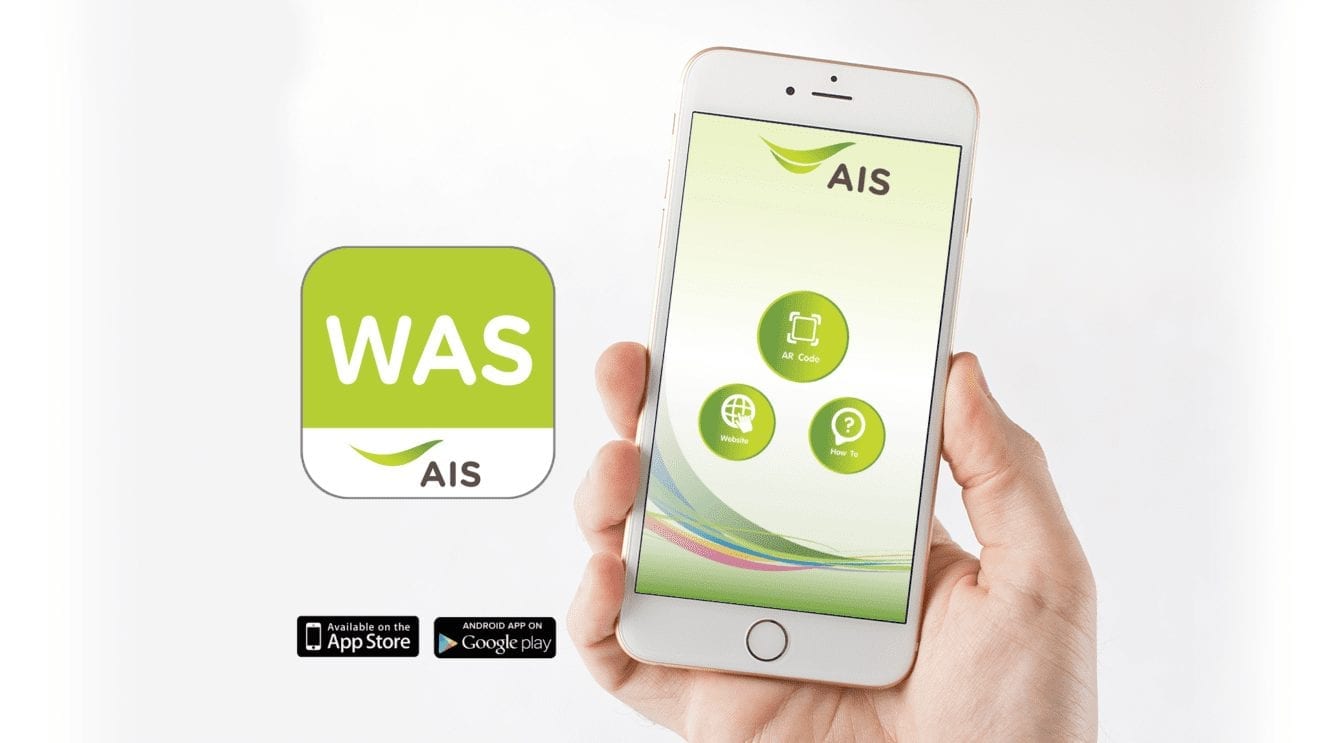
    U-Tapao Rayong-Pattaya International Airport has entrusted AIS to provide integrated digital solutions for the development of the second passenger terminal into a Smart Terminal. The initial phase is centered on 2 key goals: 1) improve passenger services through the U-Tapao Application that provides all aviation information including flight status, airport transfers from/to the airport, and car parking. In addition, the app will provide a map notifying service spots that complementthe navigation systems within the airport via Augmented Reality (AR) technology. This new service is designed to allow passengers to enjoy maximum convenience for the first time in Thailand; 2) enhance the terminal management system with Video Analytics technology, which is comprised ofa digital closed-circuit camera network and complemented by an AI-based image processing program and Big Data for application in the development of a Face Recognition system to verify persons in the airport. The Face Recognition system will raise the standard of security and allow for the identification of both suspicious persons and objects, as well as VIPs. Moreover, Heat Map Analytics will be adopted to identify the volume of passengers in the airport areas in order to enhance the efficiency of the security system and the airport’s management and services.Rear Admiral Luechai Sri-eamgool, U-Tapao AirportAuthority Director, says: “We are delighted with the public-private partnership to deploy digital technology in upgrading services and management of Passenger Terminal 2 into a Smart Terminal. This is in accordance with the government’s Digital Economy policy to develop U-Tapao Airport as Bangkok’s third commercial airport. In addition, the development project is a part of the EEC framework that serves passengers connecting with Don Muang International Airport and Suvarnabhumi Airport. Finally, U-Tapao Airport aims to be the major aviation hub of the region.”

    U-Tapao Rayong-Pattaya International Airport is thus partnering with Advanced Wireless Network Company Limited (AWN), a subsidiary of AIS – Thailand’s No. 1 mobile network and digital technology provider- to develop a Mobile Application and Video Analytics as well as computerized and IT systems for airport communication services in the second passenger terminal. The goal is to increase the service capability of the airport through the effective deployment of digital technologies. The airport needs to provide convenience and deliver the ideal experiences for users with its integrated services. Moreover, the airport will increase its efficiency in safety and security as well as building management systems.

    Mr. Yongsit Rojsrikul, Chief Enterprise Business Officer, adds: “As a leading digital life service provider, AIS is providing thevery best communications service to Thais. Another key goal of the company is to apply digital technology in its utmost capacity to strengthen all aspects of the country. Through the partnership with U-Tapao Airport, AIS has invested in the development of 2 systems which will be ready for service in the last quarter of this year. AIS expects it will be a model for the development of airport passenger terminals into full-range Smart Terminals in the future. We believe that the EEC is crucial to revolutionizing the country’s economy, and that a partnership between the public and private sectors is required to make concrete developments and drive Thailand’s sustainable economy.

    “Today, AIS is very glad and proud of being entrusted by U-Tapao International Airportand be its partner in adopting digital technology for upgrading the services and management system of the Passenger Terminal 2,” concludes Mr. Yongsit.

  • Asian firms shuffle production around the region as US tariffs hit China

    Asian firms shuffle production around the region as US tariffs hit China

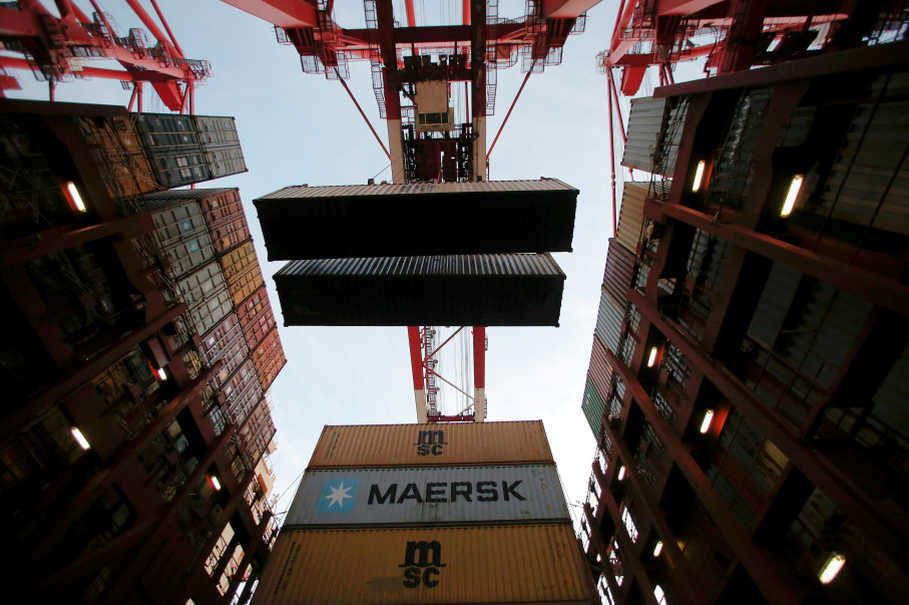
    A growing number of Asian manufacturers of products ranging from memory chips to machines tools are moving to shift production from China to other factories in the region in the wake of US President Donald Trump’s tariffs on Chinese imports.

    Companies including SK Hynix of South Korea and Mitsubishi Electric, Toshiba Machine Co and Komatsu of Japan began plotting production moves since July, when the first tariffs hit, and the shifts are now under way, company representatives and others with knowledge of the plans said.

    Others, such as Taiwanese computer-maker Compal Electronics and South Korea’s LG Electronics, are making contingency plans in case the trade war continues or deepens.

    The company representatives and other sources spoke on condition of anonymity because of the sensitivity of the issue.

    The quick reactions to the US tariffs are possible because many large manufacturers have facilities in multiple countries and can move at least small amounts of production without building new factories. Some governments, notably in Taiwan and Thailand, are actively encouraging companies to move work from China.

    The United States imposed 25% duties covering US$50 billion (RM206.5 billion) of Chinese-made goods in July, and a second round of 10% tariffs covering another US$200 billion of Chinese exports will come into effect this week. The latter rate will jump to 25% at the end of the year, and Trump has threatened a third round of tariffs on US$267 billion of goods, which would bring all of China’s exports to the United States into the tariff regime.

    The tariffs threaten China’s status as a low-cost production base that, along with the appeal of the fast-growing China market, drew many companies to build factories and supply chains in the country over the past several decades.

    At SK Hynix, which makes computer memory chips, work is under way to move production of certain chip modules back to South Korea from China. Like its US rival Micron Technology, which is also moving some memory-chip work from China to other Asian locations, SK Hynix does some of its packaging and testing of chips in China, with the chips themselves mostly made elsewhere.

    “There are a few DRAM module products made in China that are exported to the United States,” said a source with direct knowledge of the situation, referring to widely used dynamic random-access memory chips. “SK Hynix is planning on bringing those DRAM module products to South Korea to avoid the tariff hit.”

    Most of SK Hynix’s production won’t be affected, the source added, since China’s dominance in computer and smartphone manufacturing makes it by far the largest market for DRAM chips.

    Toshiba Machine Co says it plans to shift production of US-bound plastic moulding machines from China to Japan or Thailand in October.

    The machines are used for making plastic components such as automotive bumpers. “We’ve decided to shift part of our production from China because the impact of the tariffs is significant,” a spokesman said.

    Mitsubishi Electric, meanwhile, says it is in the process of shifting production of US-bound machine tools used for metal processing from its manufacturing base in Dalian, in northeastern China, to a Japanese plant in Nagoya.

    In Taiwan, an executive at notebook PC maker Compal, who declined to be named, said the trade war’s impact had been limited so far, but the company was studying its options.

    “We can also use facilities in Vietnam, Mexico and Brazil as alternatives,” the person said. “It won’t be easy because our majority production is in China; no other country can replace that at this moment.”

    Smaller companies are exploring their options too. South Korean medical equipment manufacturer IM Healthcare, which makes products including air purifiers, is studying a move to Vietnam or South Korea if the trade conflict intensifies, a source with direct knowledge of the matter said.

    Some Asian governments hope for an economic and strategic boost from the US-China conflict. In Taiwan, the government is actively encouraging companies to move production out of China, pledging last month to speed up its existing “Southbound Policy” to reduce economic reliance on China by encouraging companies to move supply chains to Southeast Asia.

    Taiwan economics ministry official William Liu said that the trade war was “a challenge and an opportunity” for the self-ruled island. Taiwan depends on China as an export market, he noted, but at the same time could see a boost in jobs from companies moving operations back home.

    Thailand also hopes to benefit from the “flow of technology and investment leaving China during the trade war”, said Kanit Sangsubhan, secretary-general of the Eastern Economic Corridor (EEC) Office of Thailand, which is coordinating a US$45 billion project to attract investment into the country. The EEC last month took some 800 representatives of Chinese companies on a tour around the eastern industrial heartland, and the country’s Board of Investment has done seven roadshows in China this year to woo investors.
  • IconSiam Bangkok due to open November 9

    IconSiam Bangkok due to open November 9

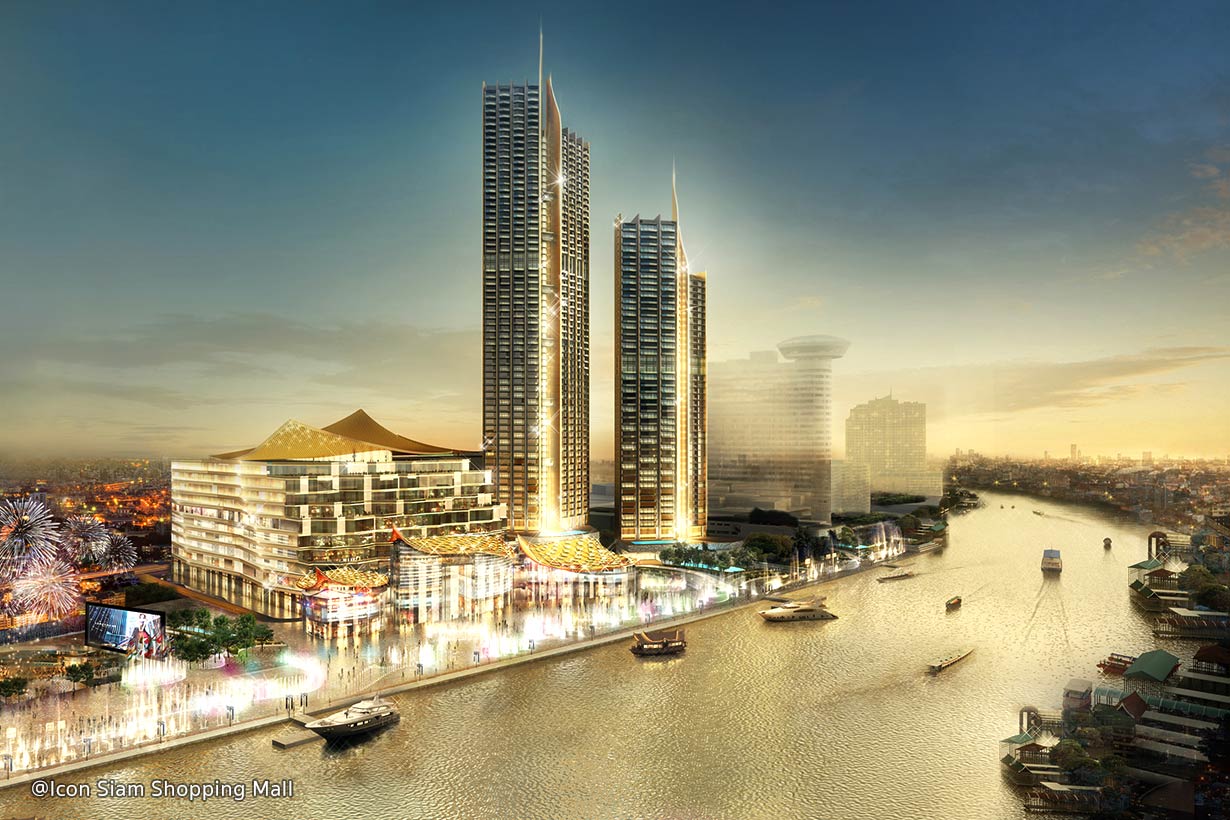
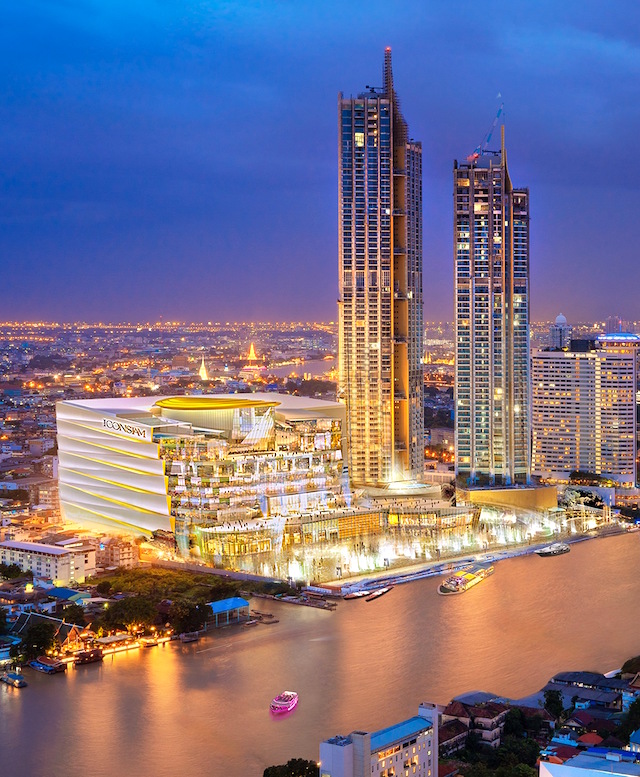
    Bangkok’s massive IconSiam development will open on November 9, its developers have confirmed.

    The US$1.67 billion complex being constructed on a 400-metre-long stretch of the Chao Phraya River will feature 14 flagship stores of internationally renowned brands, many of them taking space in the ultra-luxury 25,000sqm glass pavilion called IconLuxe, located next to the river and featuring the longest pillarless glass facade in the world.

    The development will be home to two shopping centres, whose tenants will include 188 brands and store concepts from around the world making their debut in Thailand, including duplex maisons for luxury brands.

    IconSiam CEO Supoj Chaiwatsirikul says IconSiam will represent “a completely new business model for destination development” in Thailand.

    “We are committed to making IconSiam a new national landmark and an exciting global destination. We have therefore placed particular emphasis on becoming the location of choice for the flagship stores of the world’s finest brands as well as introducing many firsts and innovations at the various outlets.”

    The development will comprise a 750,000sqm mega-destination featuring not only two shopping precincts, but theme parks, a museum, hotel and apartment towers.

    “IconSiam will excite visitors with a rich diversity of offerings, including art and culture, in addition to extraordinary dining and shopping possibilities,” said Chaiwatsirikul. “The project is co-designed and co-activated in collaboration with enterprises of all sizes and with people from all walks of life, and the benefits of the project are shared among all parties.

    “We have made every participant in IconSiam – whether they be outlets selling products, or designers and artists showcasing their creations, or even neighborhood communities helping in our operations – an inseparable part of our business model and they play a part in shaping our development.”

    Flagships line up

    Flagship stores at IconSiam will include the largest Adidas Original store in Asia, H&M-owned fashion label Cos, an Aland lifestyle concept store from Korea, and local accessories brand Naraya. H&M will open a three-level store.

    UK retailer JD Sports will open its first Thai store at the development and Nike’s store will be the first in Asia with a Kicks Lounge.

    The retail development is anchored by Thailand’s first Takashimaya department store from Japan which plans to introduce 170 brands into the market for the first time.

    Details have yet to be released about world-class restaurants and a rooftop bar planned for the complex. Besides those, IconSiam will feature seven food and beverage zones, each with a different atmosphere and concept. Tenants will include Singapore’s Jumbo seafood restaurant and Taiwan’s Harbour restaurant.

    Fitness First will open its largest Thai venue yet.

    Opening festival

    Chaiwatsirikul says IconSiam has budgeted THB1 billion (US$31 million) on an opening and launch festival, including extensive international communications.

    “Because IconSiam will be a showcase for the very best that Thailand has to offer and serve as a platform to propel Thai brands, products, artists, artisans and Thai culture onto the global stage, we are investing heavily to make IconSiam globally visible. We want IconSiam to be a magnet for the country, capable of drawing hundreds of thousands of international and local visitors a day, and to bring honour to Thailand,” he said.

    Meanwhile, the development’s two luxury residential towers remain under construction. The 70-floor, luxury Magnolia Waterfront Residences with 379 residential units is 90 per cent complete, while the 52-floor, super luxury The Residences at Mandarin Oriental Bangkok with 146 units is 80 per cent complete.

    IconSiam is being developed by three Thailand companies: shopping centre operator Siam Piwat, which owns Siam Center, Siam Paragon and Siam Discovery; residential developer Magnolia Quality Development Corporation; and multinational conglomerate Charoen Pokphand Group.

  • Walmart India opens 22nd cash and carry store in India

    Walmart India opens 22nd cash and carry store in India

    Walmart India, the wholly-owned subsidiary of Walmart Inc, Saturday announced the opening of its 22nd business-to-business Cash and Carry store in the country, making it the second Best Price Modern Wholesale store in Ludhiana and the sixth in Punjab.

    The new store simultaneously got integrated with the B2B e-commerce platform, making it the 22nd Best Price store to go online, a release said here.

    “I am very excited about opening the 22nd Cash and Carry store in India. It reiterates our commitment to India and our growth plans. Setting up a second store in Ludhiana and sixth one in Punjab reinforces our belief in the ease of doing business here in the state,” Krish Iyer, President and CEO, Walmart India said.

    The Best Price Modern Wholesale Store stocks over 5,000 items, including a wide range of fresh, frozen and chilled foods, fruits and vegetables, dry groceries, personal and home care items, hotel and restaurant supplies, apparel, office supplies, electronic goods and other general merchandise items.

    Punjab is an important sourcing destination for Walmart India and the company sources food items such as fresh vegetables, agri-commodities, staples, meat, and beverages and non-food items including plastic-ware, glassware, decor items, brooms, mattresses, among others.

  • Asia-Pacific retailers plan overseas expansion

    Asia-Pacific retailers plan overseas expansion

    Asia-Pacific retailers as increasingly embracing overseas expansion, according to new research by commercial real estate company CBRE.

    The report, Rise of Apac Retailers 2018, analysed 600 openings in the region, showing the proportion of Apac retailers (predominantly F&B operators, fashion and beauty brands) had increased from 17 to 30 per cent between 2014 and last year, accounting for almost a third of new regional entrants. The strongest target markets are China, Hong Kong, Taiwan and Singapore, while the expansion itself has been shown to strengthen brands in their home markets.

    Most retailers expanding into Apac territories are from Australia, Japan and Korea.

    The firm’s  head of retail, advisory and transaction services Asia Vivek Kaul said: “Apac retailers are becoming a driving force in the region, spurred on by potential revenue growth and the need for stronger brand awareness. This expansion is not focused on one single market – instead, it reflects the diversity and dynamism within Asia Pacific’s retail sector.”

    Associate director of Asia Pacific research Liz Hung said whether they are establishing flagship stores in gateway cities or testing the waters in emerging markets, Apac brands are “increasingly adopting a savvier approach” to regional expansion.

  • GS25 brings facial recognition to new shop

    GS25 brings facial recognition to new shop

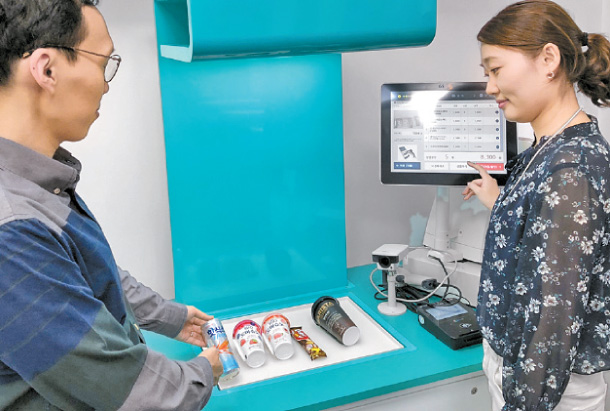
    Convenience store chain GS25 has opened up a cashier-less store in Seoul that uses face-recognizing cameras to handle payments.

    The company’s first Smart GS25 started operation at LG CNS’ headquarters in Gangseo District, western Seoul, on Monday. LG CNS is a long-time provider of electronic systems to GS25 and one of the companies working to add state-of-the-art technology to the convenience store chain.

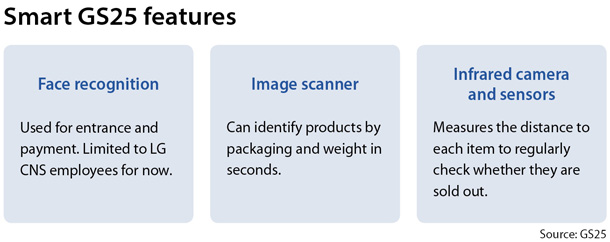
    The unmanned branch is only accessible to LG CNS staff. The store’s front entrance will allow customers to enter through face recognition after they register with a camera in front of the store. Payments can also be made through the face-scanning technology, and the store automatically charges customer’s bank accounts.

    “We aim to introduce and test 13 new smart solutions by the end of this year at the Smart GS25,” the convenience store said in a statement on Monday. “The [long-term] purpose is to apply them to our branches to reduce our franchisees’ labor costs.”

    The experimental GS25 has eight new tech features. Although GS25 is late to the game, as its competitors CU, 7-Eleven and Emart24 have already rolled out their own automated technologies, some of GS25’s features are new to Korean convenience stores.

    One is the aforementioned face recognition technology for entrance and payments. Another is the image scanner at the cash register. Most convenience stores without a human cashier use barcodes to identify the products. GS25’s new system instead identifies an item by its packaging and weight.

    This allows customers to simply place items on the table before paying using facial recognition or a credit card. The company says it takes only about a second for the system to recognize five items at once, whereas with the conventional bar code system it would take 15 seconds to scan them one by one.

    An infrared camera and sensors are also installed at the store to regularly check which items need to be restocked.

    This system measures the distance to products to see whether there are any left on the shelf and automatically reports this information to the store supervisor.

    Other features include a smart CCTV that will track where customers spend the most time. This can help the store owner to decide where to place different items.

    “The Smart GS25 is not just an unmanned convenience store packed with tech gadgets,” said Lee Hyun-gyu, a manager of the new shop. “Its main function is to prove technologies that will enhance the convenience of store operation and relieve franchisees of the burden of labor costs. We expect some of the technologies tested here will be shown at our franchises by next year.”

    A GS25 spokesman added, however, that a Smart GS25 open to the public would probably not be autonomous.

  • Online retailers open brick and mortar stores

    Online retailers open brick and mortar stores

    While many traditional retail stores have embraced technology by having an online presence, online retailers are now opening physical stores (mainly concept stores) in Malaysia, in line with global trends, to gauge feedback on products.

    Retail consulting firm Retail Group Malaysia (RGM) managing director Tan Hai Hsin (pix) said there are still many customers who want to see, feel and touch the products before they decide to buy.

    “They cannot do this online. Customers do not want the hassle of returning products and re-ordering again. To meet this need, online retailers open physical stores,” he said.

    “Also, you can get better feedback on your products and services when you interact with your customers face-to-face. It is easy to give feedback online, but it tends to be short and not comprehensive,” he added.

    Tan said this is not just a trend in Malaysia, but also around the world, with the trend becoming common in the US, the most matured market for online retail.

    Online fashion retailers that have opened physical stores in Malaysia include Christy Ng (five stores), FashionValet (four stores), Bawal Aidijuma (22 stores), Poplook (three stores), Imaan Boutique (six stores), Reebonz (one store) and Finelycup (one store).

    Online foods & beverage retailers that have physical presence here include Fatbaby ice cream (one store), Foodmarket (one store) and Epic Fit Meals Co (three stores).

    Other online retailers that have joined the bandwagon include online grocery store Redtick (three supermarkets), electronics company Xiaomi (five Mi stores) and online jewellery store Jeoel (four stores).

    Tan pointed out that the main difference between (stores of) brick-and-mortar retailers and online retailers is that customers can order online while they are in the physical stores of online retailers.

    “Some customers may like a fashion item but the colour is not available in store but online.

    “They can order online immediately after they have inspected the product. Some customers do not want to carry the products with them after payment as they still want to walk around and visit other places. Some are buying the products for others and instead of carrying the items themselves, they can arrange for it to be delivered directly to the recipients,” Tan explained.

    In terms of locations, he said online retailers open their physical stores anywhere, with some choosing quality shopping malls to build their brand image. Some choose to open in shoplots that can be used as their office, distribution centre, central kitchen and/or storeroom. Some opt to open in locations where most of their customers are residing. Some select locations near their homes.

    “For traditional brick-and-mortar stores, the opening of physical stores by online retailers is seen as new competition to them. If they (brick-and-mortar retailers) do not offer e-commerce facility to their existing customers, they will be left out in the near future,” Tan said.

    Online retailers are setting up physical stores in shopping malls, but the number is still relatively low, he noted.

    “Retail trends change over time. Retailers need to change with time. Or else, they will be phased out.”

    Just like grocery trade in the last 50 years, Tan said it all started with provision shop, then evolving to mini-market, supermarket, overseas supermarket, foreign hypermarket, gourmet food hall, to today’s online grocery store.

    He pointed out that e-commerce would not be replacing physical stores anytime in the near future. In recent years, both sides of the retailing formats crosses over each other’s territory and this trend will continue.

    “The future of retailers should be multi-channel. A retailer is no longer able to operate solely based on physical store, they need to sell their products via other channels as well. Thus, winning retailers are those who are able to offer not only physical stores, but also online shopping sites,” said Tan.

  • Google, Facebook executives meet Vietnam PM, offer to help digitize economy

    Google, Facebook executives meet Vietnam PM, offer to help digitize economy

    Google and Facebook have been among the tech giants discussing cooperation with Vietnam on the sidelines of the WEF on ASEAN 2018 in Hanoi.

    At a meeting Wednesday with Google’s Asia-Pacific president Karim Temsamani, Prime Minister Nguyen Xuan Phuc stressed that Vietnam, with a population of nearly 100 million, has great potential in information technology, which is also spearheading the country’s industrialization and modernization.

    He urged Google, which has a very large user base in Vietnam, to pay more attention to helping maintain and promote Vietnam’s cultural identity.

    The PM expressed hope that the tech giant would collaborate with his country to foster the development of start-ups, train human resources and invest in research and development for growing its technology ecosystem.

    Temsamani emphasized the importance of digitizing the economy, a key global trend, saying Google is willing to help Vietnam achieve it.

    Through its Vietnam Digital 4.0 program, Google aims to provide free training in digital skills to 500,000 owners of small and medium businesses in the country by 2020 to help them improve their competitiveness, he said.

    Temsamani also promised it would help Vietnam build a technology ecosystem and come up with initiatives to help farmers digitize agriculture and promote their products more effectively through YouTube.

    Facebook’s vice-president of public policy for the Asia-Pacific, Simon Milner, also met with Phuc Wednesday. He said his company is committed to maintaining a long-term presence in Vietnam and expressed interest in joining the government’s effort to create a digital nation.

    It would take part in the programs of digital citizen, digital economy, digital government and digital connectivity, and assist and collaborate with small and medium businesses and start-ups, he said.

    Phuc also received Cees’t Hart, CEO of beer company Carlsberg Group, and Alex Dimitrief, president and CEO of General Electric Company’s (GE) Global Growth Organization.

    He told them Vietnam is speeding up equitization and divestment of the government’s stakes in enterprises based on the principles of transparency and openness, which offers opportunities to foreign investors like Carlsberg.

    Speaking about plans to divest stakes in Hanoi Beer, Alcohol and Beverage JSC (Habeco), he said Carlsberg and Habeco should soon resolve any remaining issues so that they can go ahead with purchase of stakes and strategic cooperation.

    Hart said Carlsberg, which has been Habeco’s strategic investor since 2008, is looking to buy a bigger stake in the Vietnamese brewer and has been working with the Ministry of Industry and Trade and other agencies to speed up the process.

    Dimitrief of GE said his firm plans to expand its investment in the power sector in Vietnam.

    Phuc told him his government attaches great importance to investors and is working to improve the business environment so that investors can do business effectively.

  • Retailers acknowledge the new paradigm shift in consumer behavior

    Retailers acknowledge the new paradigm shift in consumer behavior

    Indian retail is coming to terms with the digital disruption that is converging the online and offline retailers to explore customer insights using artificial intelligence in the new landscape for retail that is set to usher.

    At the two-day conclave of India Retail Forum 2018 that concluded today, experts across the spectrum deliberated on the affluence index and retail potential in the country and the tectonic shift in changing space allocation at shopping malls towards food and entertainment as online takes precedence in shopping.

    With the advent of the online shopping, malls are getting reconfigured with food and beverage along with entertainment now allocating for up to 40 percent for the space compared to 15-17 percent in the past few years, said Ashutosh Limaye, Director & Head, Consulting Services, ANAROCK Property Consultants.

    Mobile penetration on the other hand has boosted online shopping with lower cash on delivery and more through payment gateways. Moreover, with messaging on the rise, the internet linked mobile usage is set to reshape the retail business with mobile moving from being a mere technology to consumer behavior.

    “By 2020 mobile will drive the majority of all sales but 90 percent plus of these sales will still occur in stores,” said Prateek Sinha, Industry Manager, Retail & E-commerce, Facebook India.

    Further, mobile is increasingly reshaping the retail business with 2.2 hours per day mobile usage per young adult and 80 percent users using net on their mobile while watching TV, he said.

    Over the past four years, share of e-commerce transaction over mobile has rose to 29 percent from 7 percent while Cash on Delivery has declined to 16 percent from 31 percent.

    “Decreasing data prices and a ubiquitous mobile penetration is driving the always online consumer with attractive online deals and discounts,” said Anurag Mathur, Partner & Leader – Consumer Goods & Retail, PwC Strategy.

    Amid the rising online shopping fueled by internet and mobile penetration, the digital disruption has impacted the brick and mortar retail malls, that had seen record supply and absorption in 2011.

    Since then there has been a rationalization of supply in recent years. However, the future looks promising with healthy supply pipeline and robust absorption going forward, said Shajai Jacob, Director and Head, Marketing, JLL India.

    The two-day conclave also gave indications about increasing amicable relationships between offline and online players with global retail giants like Walmart, Amazon, IKEA showing interest in the Indian growth story.

  • Japan retail sales continues positive result

    Japan retail sales continues positive result

    Retail sales in Japan have reportedly risen for the ninth straight month year on year, reflecting the importance of private consumption to the world’s third largest economy.

    However while the news has prompted enthusiasm in the Japanese central bank, claiming it reflects improved consumer confidence, other commentators suggest the pace of gains is slowing.

    A senior economist at BNP Paribas Securities Azusa Kato said employment and household incomes are not so robust as the Bank of Japan thinks.

    “As such, private consumption is likely to pull back from a rebound seen in the April-June quarter.”

    Senior Japan economist at Capital Economics Marcel Thieliant said the upshot is that private consumption started Q3 on a soft note.

    “However, the fundamentals for a continued improvement in spending remain in place. Both employment and wages are growing strongly, so household incomes are expanding rapidly.”

    Wages are on the increase in Japan with the gradual aging of the working population.

  • Fosun International hits $1bn in net profit

    Fosun International hits $1bn in net profit

    Fosun International post on Tuesday that company net profit reached Rmb 6.86bn ($1bn) for the first half of 2018, on the back intense acquisition activity, which saw the Chinese firm snap up local and international assets, including luxury brand Lanvin earlier in the year.

    The Chinese investment firm said net profit increased 17% over the last six months, which was slower than previous years, however, with a 33.6% uptick recorded for the first half of 2017.

    Revenue reached RMB43.51 billion for the January to June period, an increase of approximately 20% over the same period last year.

    The company said it “continued to focus on maintaining a healthy and stable balance sheet” and achieved a net gearing ratio of 53.6% with an overall financing cost of 5.18%.

    Since the turn of 2018, Fosun has bought a stake in French confectionery company St Hubert, a minority stake in China’s Tsingtao Brewery and majority stakes in European luxury brands Wolford and Lanvin.

    Fosun’s long-term portfolio also includes Club Med, a stake in Cirque du Soleil and the UK’s Wolverhampton ‘Wolves’ football team.

    Co-founded by Chinese billionaire Guo Guangchang in 1992, Fosun has evolved from an entrepreneurial start-up into a leading investment group taking roots in China with a global foothold.

    Listing on the Shanghai Stock Exchange in 2007, Fosun now forms part of Chinese active investor cohort, which also boasts the firms HNA, Dalian Wanda and Anbang Insurance.

  • Into the minds of Hong Kong’s online shoppers

    Into the minds of Hong Kong’s online shoppers

    Consumers in Hong Kong are accustomed to online shopping, with two thirds of shoppers completing purchases within the day if they were to complete the shopping journey, demonstrating decisiveness compared to shoppers in other markets.

    SAP Consumer Propensity surveyed Hong Kong shoppers to gain insights into their online shopping behaviour, including their motivation to purchase online, and their views on how brands can improve the overall customer experience.

    E-commerce companies looking to enhance the online shopping experience for people in Hong Kong should do three things:

    1. Provide easy exchange and return services (free return labels or nearby lockers) (58%)
    2. Include comparison tools to compare prices and specifications (50%)
    3. Offer different sizes or types of the item to try out before deciding which version to purchase (44%)

    Besides the wishlist provided by by customers, Hong Kong shoppers also shared what drive them to make the decision to purchase. The top three drivers are:

    1. Receiving discount or promotion notifications (56%)
    2. Receiving discount with purchase notifications (36%)
    3. Receiving timely response to a query (25%)

    However, when it comes to abandoning virtual shopping carts, 51% of Hong Kong consumers discard their carts sometimes or all the time, just as likely as other shoppers across Asia Pacific (52%) – ahead of the Americas (46%) and Europe (43%) on average.

    When probed further, around two-fifths (42%) of people surveyed said that they abandon carts because they are concerned with shipping costs.

    The second and third most common reasons was the lack of promotions or discounts (39%) and price-savvy customers preferring to use online sites for price comparisons only (39%).

    “Reviewing cart abandonment data provides a starting point for retailers to identify friction points in the consumer journey and make improvements to the overall purchasing experience for Hong Kong’s customers,” said Frank Zhang, General Manager of Greater China, SAP Customer Experience.

    “The results point toward a deeper demand from Hong Kong consumers for engaging yet simplified buying experiences tailored to their individual needs and lifestyles, which extends to ongoing service and support.”