Category: General

Retail News Asia is committed to providing both local and global retailers with the latest General Retail news throughout the Asian market. This on a daily base.

  • Suning Holdings to open its first office in Milan

    Suning Holdings to open its first office in Milan

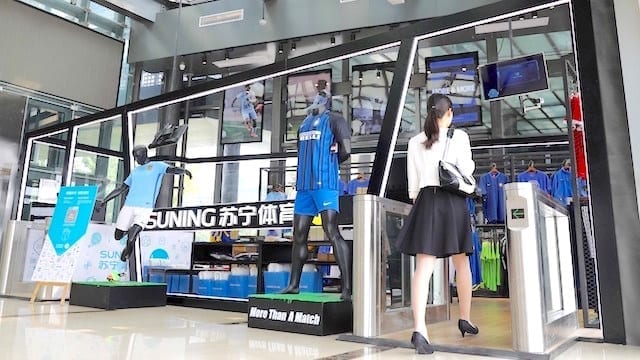
    China’s Suning Holdings will open an office in Milan within the next two months, to be followed by offices in the UK, France and Germany by the end of the year.

    In its latest sourcing plan, the firm has set aside RMB10 billion (US$1.5 billion) to source products on the Continent over the next three years.

    Suning announced the move during Milan Design Week, where it has been exploring deals with overseas designers to help it create products for its new Suning Jiwu (“ultimate creation”) stores. It aims to introduce stylish, high-quality home and fashion products from Europe into China.

    The new format features popular brands, original designs, life essentials and creative interactions. The first store, covering 400sqm, opened in Nanjing last month, with more than 300 set to open throughout China within the next three years, including at least 50 large-scale flagship stores.

    Suning International VP Steven Zhang says Jiwu caters for a “personalised consumption culture”.

    Already the company has partnerships with Italian brands across different industries including Furla, San Benedetto, TechnoGym and Versace Home. Its new sourcing plan in Europe highlights luxury fashion, health, household and FMCG products. Representatives of Chateau D’Ax, Cova, Kartell, Kiko, Versace and YNAP were among the guests at its opening event at Milan Design Week.

    Suning already has an established network covering Hong Kong, Japan and the US. The group expects 30 per cent of its revenue will come from international business by 2020.

  • Tianjin Tianhai plans a Dangdang takeover

    Tianjin Tianhai plans a Dangdang takeover

    Tianjin Tianhai Investment, a unit of Chinese conglomerate HNA Group, plans to acquire Chinese company Dangdang’s e-commerce assets for RMB7.5 billion (US$1.19 billion).

    The acquisition will allow Tianjin Tianhai to tap into China’s e-commerce market via Dangdang, which is known for its online marketplace for books, clothes, furniture and other consumer goods.

    Tianjin Tianhai plans to buy 100 per cent stakes in two e-commerce companies owned by Dangdang, a rival to Amazon in China, via cash and an issue of shares, it says in a filing to the Shanghai stock exchange.

    Trade in Tianjin Tianhai’s shares were suspended in January because of a restructuring by owner HNA.

    The shares remain suspended.

    HNA Group is under scrutiny over its opaque ownership and tactics during  buying spree over the past few years.

    Tianjin Tianhai’s deal requires approval from authorities such as the China Securities Regulatory Commission.

  • How Muji can resist in a world of brands

    How Muji can resist in a world of brands

    In an era when branding has never seemed so important, the enduring success of Japan’s Muji might seem perplexing to many retailers.

    Almost every day fashion houses reveal new collaborations – often with unlikely bedfellows, like Louis Vuitton and Supreme or Gucci and a hitherto little-known cassette-tape retailer Waltz in Tokyo.

    But Kei Suzuki, director and executive officer of Muji parent Ryohin Keikaku, has no fears that Muji’s anti-brand format is under threat. He told in an interview on the sides of the MarketingPulse conference in Hong Kong that Muji’s approach will survive the current brand era.

    “I think we can continue what we are doing because the reason why other people enter into brand collaborations is because they want exposure to the customer by helping each other – because maybe they can broaden their customer range.”

    Muji, he says, was born from a concept: producing simple, stylish products that make their customers’ lives easier and are not expensive. “So what we want to do is realise the concept and make our customers more happy.”

    So while other retail brands and fashion labels are pursuing partnerships, Muji would rather work on expanding its categories. That is why it designed a minimalist house in 2015, a Muji campsite and, this year, its first truly fresh grocery concept store.

    “Always we think: what can we do for the people, and how can we make their lives easier?” This is instead, he explains, of focusing purely on the business side.

    “By applying this concept to many different categories, we believe we can broaden our exposure to our customer or potential customer. Eventually, that will help us increase the size of the business, or sales. We will not collaborate with brands, but we believe in collaborating with somebody else with the expertise who shares the Muji concept. An example of that is the new Muji Hotel in Shenzhen.

    Suzuki says investing in and running hotels is not Muji’s speciality, but if it could find a partner to run a hotel it would want to implement its design and functionality skills into the project. “We provide the concept, they provide the hotel.”

    Despite its anti-brand position, it is no urban myth that Muji engages some of the world’s best-known designers to help develop products – it just never tells anyone about them.

    “We collaborate with designers who have sympathy with the Muji concept so they are happy to be involved, but their names are never to be disclosed.”

    Muji’s rationale is that if customers do not know a product is designed by someone they know by name, they will focus on the product.

    “Some designers are already too famous, so if we sold a product with their name, everybody would buy it. But at Muji, there are no names… They can get very nervous, because people judge only from the product.

    “We do not want the consumer to be misled just for the sake of a name.”

    He says some of the designer products have become best-sellers for Muji, while others have been less successful. This, he concedes, can make the exercise more than a little nerve-wracking for the invisible partners.

    Suzuki is in charge of Muji in China, Hong Kong and Korea, the fastest-growing of the company’s markets internationally. In the mainland, Muji now has more than 230 stores, and is opening new ones at the rate of about 40 a year.

    Hong Kong was one of the first markets outside Japan, along with the UK, where Muji ventured.

    “Opening stores in Hong Kong and the UK helped the company, because both cities are very cosmopolitan and many people visit. So they see Muji and some of them understand the concept. Then awareness increases. That helped us when we started opening stores in France and other new markets.”

    Hong Kong is also proving a great testbed for new concepts, like the Muji Travel store, of which there are two in the territory – one at Hong Kong Station, the other at the airport. Both are trading “very well”, selling travel essentials and convenience products. “I think they provide very good solutions for travellers.”

    Online is another area where Muji is treading positively but cautiously.

    “E-commerce is very important because if somebody wants to buy something from Muji we want to make it easy. But at the same time, we think it is important from the customer’s standpoint to have an actual connection or experience. So our stores are not just for retail, but also for the experience, and for engagement with the customers.”

  • AirAsia starts Clark–Cebu flights on May 11

    AirAsia starts Clark–Cebu flights on May 11

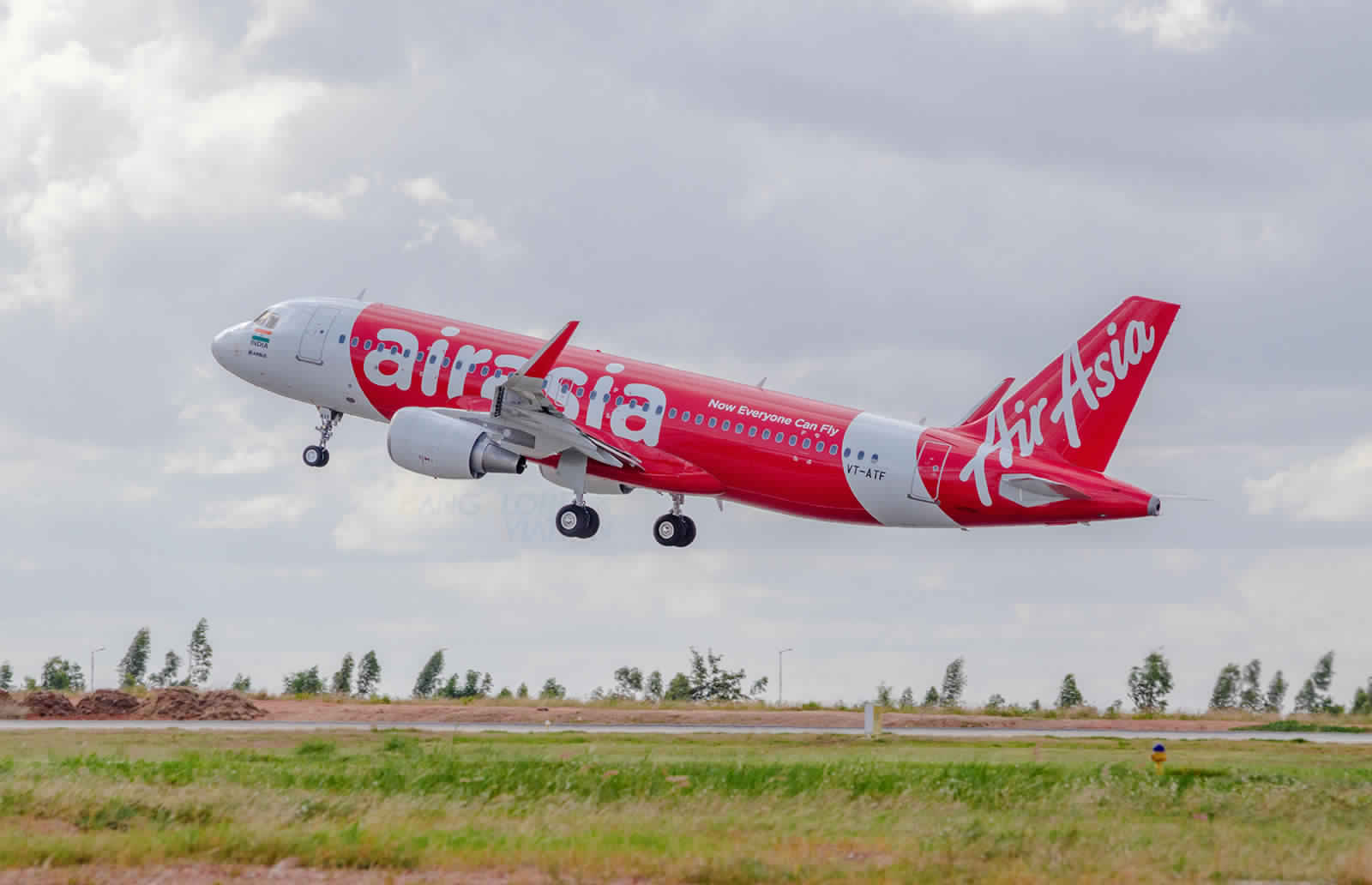
    AirAsia continues to expand its domestic network in Clark Airport in Pampanga with new flights between Clark and Cebu starting May 11, 2018. AirAsia Philippines CEO Captain Dexter Comendador said their commitment is to make air travel more affordable, convenient and accessible to travelers especially outside Metro Manila with “superb service and signature low fares.”

    “We are thrilled to be painting Clark and Cebu skies red with introductory fares now up for grabs from as low as P17 only!” To celebrate AirAsia’s newest flight, “all-in promo fares for Clark to Davao are now available from as low as P17.00, one-way fare only, until 22 April 2018 at www.airasia.com for travel period between 11 May 2018 and 26 October 2018,” he said. At a recent Philippine Economic Briefing 2018, the Philippine government has envisioned the New Clark City to be a hub of agro-industrial activities, cutting-edge technology and logistics companies and government centers with world-class sports facilities. Alongside this development, Clark International Airport (CIA) will have a new terminal building to accommodate a projected 8 million passengers per year and a new railway system connecting to Manila and neighboring provinces.

    The expansion of CIA according to government transport authorities will help decongest Ninoy Aquino International Airport (NAIA) in Manila. The expansion project for the Clark airport broke ground last December. “AirAsia is here to support the government’s flagship projects to boost tourism and trade. We aim to better connect Clark to secondary cities within the Philippines like Iloilo, Davao, Tacloban and Cebu followed by inter-Asean connectivity where the AirAsia Group has massive network covering over 120 destinations in the whole of Asean, in greater Asia, Australia, United States and beyond,” Comendador added. Aside from Clark-Cebu route, AirAsia also offers several flights to and from Clark, Iloilo, Davao, and Puerto Princesa.

    AirAsia launched its first commercial flights from Clark with only two planes in March 2012 before transferring its hub to Metro Manila following a strategic partnership with a local carrier in 2013. AirAsia has since been operating on a much larger scale with a fleet of 20 aircraft from Metro Manila and has expanded its domestic and international network with flights from hubs in Manila, Cebu, Clark and Kalibo.

  • Four barriers to digital transformation

    Four barriers to digital transformation

    Consumers are increasingly using digital channels for part, if not all, of the path to purchase. As a result, retailers are shifting from a product-driven approach to a more customer-centric model, allowing them to deliver a personalised experienced regardless of which channel is used.

    Investment in digital transformation is required to successfully make this transition. Think for instance of the data capture capabilities that are required to deliver a personalised experience in stores. However, innovation is easier said than done and many retailers have experienced difficulties on their digital transformation journeys.

    Here are four major barriers that retailers often encounter in their digital transformation projects are as follows:

    Overcoming resistance to change

    Digital transformation often leads to significant changes within organisations and that can provoke strong reactions. It is only human nature to resist change after all. This can manifest itself through issues such as difficulties in pushing through budgets, unsettled staff and a lack of consensus. If change is not managed carefully and communicated clearly to all staff, projects can easily derail.

    Understanding the connected customer

    Before embarking on digital transformation, it is crucial for organisations to truly understand the challenges they face. Why do customers choose to buy online and what expectations do they have when they visit a store? Technology on its own is not the answer and retailers need to be very careful to ensure digital initiatives meet their customers’ needs.

    Achieving departmental cooperation

    Digital transformation can and should touch all facets of the organisation. However, too often digital initiatives are driven by one department and key internal stakeholders are not consulted throughout the process. For changes that may disrupt the entire business model of a retailer, it is critical to get buy-in across the entire organisation, from the executive board to store staff.

    Attracting the right talent

    Digital transformation requires forward-thinking pioneers and getting the right talent on board can accelerate a retailer’s digital strategy and even provide a competitive edge. With the entire sector facing disruption, highly skilled professionals are in demand and retailers are increasingly having to look outside the sector to find the expertise they need.

    • Philip Wiggenraad is head of research with Tofugear and will be a speaker at next month’s Millennial Masterclass.

    What barriers does your organisation face when it comes to developing a digital strategy and driving organisational change? Inside Retail and Tofugear have kicked off the 2018 Asia Digital Transformation Survey and are inviting retail executives and managers in Asia to participate in the survey. Respondents will also be given exclusive access to the findings as well as a free hard copy of the final report.

  • China edges ahead in 5G race

    China edges ahead in 5G race

    China has edged slightly ahead of both South Korea and the US in the race to deploy 5G, according to a new report by Analysys Mason.

    China leads the world in 5G readiness, followed by South Korea, the US and Japan in that order, according to the report, which was commissioned by US-based trade organization for the wireless industry CTIA .

    The countries were ranked based on nations’ respective 5G spectrum and infrastructure policies as well as commercial plans by their respective wireless sectors.

    The report found that all three major Chinese operators have committed to specific 5G launch dates. The government has also committed to providing at least 100 MHz of mid-band spectrum and 2,000 MHz of high-band spectrum for each operator.

    In South Korea, the government is soon expected to free up a combined 1300 MHz of both mid-band 3.5-GHz and high-band 28-GHz spectrum, with an additional 2 GHz of high-band spectrum capable of being utilized for 5G.

    While all major US wireless providers are trialing 5G technologies and a number have committed to small-scale fixed wireless 5G launches by the end of the year, the country has yet to announce plan to allocate mid-band spectrum exclusively for mobile by the end of 2020.

    “The United States will not get a second chance to win the global 5G race,” CTIA president and CEO Meredith Attwell Baker said.

    “Today’s research highlights the importance of policymaker action in 2018 to reform local zoning rules and unlock access to mid-band spectrum as part of a broader spectrum pipeline plan. I’m optimistic we will leapfrog China because key leaders in the Administration, on Capitol Hill, and at the FCC are focused on the reforms needed to win the race.”

    In Japan, wireless providers are investing in 5G testing and regulators have committed to releasing mid- and high-band spectrum by early 2019.

  • We need to look beyond the dollars and assets to value Amazon, Facebook correct

    We need to look beyond the dollars and assets to value Amazon, Facebook correct

    Investors and business people usually value companies based on the balance of assets and debts at the end of a financial year. But our research found they should be valuing their employees’ ability to innovate while using their existing physical assets.

    This is what actually creates value for our economy. For example manufacturing, an example of using assets to create value, is on the decline in Australia. Contrast this to services, using the skills of employees, which are increasing.

    We came up with a modified way to predict the value of companies, removing the emphasis on assets and instead using measures of spending on research and development and copyrights.

    We tested this revised model with accounting data from companies in countries like China, Malaysia, Russia, South Africa and Turkey. We also tested it with companies in more developed countries like Australia, Austria, Netherlands, Singapore and Sweden.

    Research and development was positively associated with return on assets in Australia, Austria, the Netherlands, Singapore, Sweden, China, South Africa and Turkey, according to the model. This means that companies in these developed and emerging economies use their resources more efficiently because of their investments in research and development and copyrights.

    For some of the biggest technology companies like Amazon and Facebook, the unique combination of their people, their invented systems and processes, and their physical presence creates value for the company and their investors.

    If we can improve how we predict potential economic value, we can help companies and our economy to grow and become more efficient.

    Traditional accounting methods

    Today, the traditional accounting system has lost its relevance, because many of the resources companies use to do business cannot be owned and become an asset.

    Traditionally companies calculate how much they own (assets) and subtract how much they owe (liabilities). The remaining amount, or book value, is what the company is worth.

    But people are a key resource in any company, yet companies do not own people. The wages paid to them are an expense, but their value cannot be recorded in the company’s accounts.

    Similarly, accounting rules state that most research and development is expensed when it occurs, meaning it is counted as a cost immediately. The problem is that investments in people and research and development may not pay off until the future.

    What this means for long-term investments

    Amazon, for example, is spending billions of dollars on research and development. This would involve spending money on intangible resources such as copyrights, market research, branding and designing systems and processes. It will also invest in marketing to potential customers, training staff and hiring managers.

    According to current accounting rules, most of these costs are treated as expenses now. It is only physical assets such as buildings, computers, furniture and equipment that are counted as a cost over time.

    However, Amazon’s investment in its new distribution network is likely to reap significant returns in the future. The fact that accounting reports analyse the past year, six months or quarter, shows how accounting is too focused on the short term. In the long term, Amazon is actually worth about 25 times more than accounting suggests.

    Because investors are interested in the future returns from their investments, not what was spent in the past, the stock market values most modern companies at several times their book value. This makes modern accounting even less relevant in explaining economic value.

    A new approach

    Our research found that to understand how economic value is created, you need to look at what businesses are spending on long term resources such as research and development and copyright and treat it as an investment, rather than a cost.

    Even if a company is not making a profit because it is investing in research and development in the short term, this does not mean it is not capable of making money in the long term.

    Many companies like Amazon never made a profit in their early years as they burned cash to create their foothold in the market. But their investors were convinced these companies would create economic value by way of profits and increased share prices in the future.

    If we look beyond the book value of companies, we can truly understand how they create economic value.
  • Celebrations at Opening of a New T Galleria by DFS, Sydney

    Celebrations at Opening of a New T Galleria by DFS, Sydney

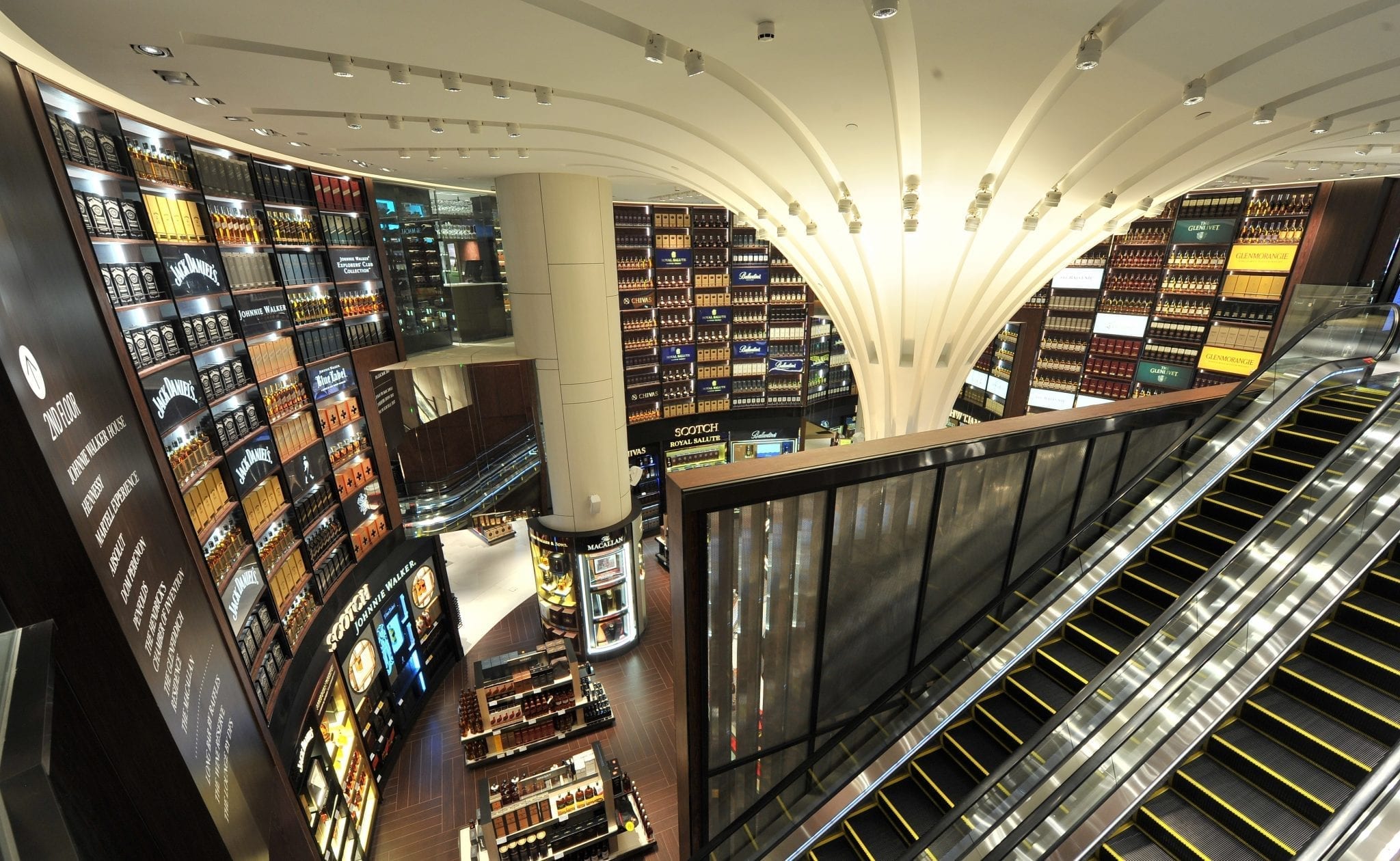
    DFS Group, the world’s leading luxury travel retailer, has officially opened its newly renovated T Galleria by DFS, Sydney on George Street in Sydney’s Central Business District. A gala celebration was attended by more than 400 VIPs, customers, travel and hotel partners, and luxury brand representatives.

    The event included a spectacular performance by the Sydney Dance Company, an exclusive shopping experience for customers with DFS’ leading luxury brands, and an appearance by acclaimed British artist Boyarde, who also hosted a VIP customer workshop.

    “Our newly renovated four-storey T Galleria by DFS, Sydney store is truly exceptional, and the opening event was a great opportunity to showcase what DFS does best, combining unique personalization and artistic design with the very best quality products,” said Robert Calzadilla, DFS Managing Director, Australia, New Zealand, Cambodia, Myanmar, and Vietnam. “DFS is always committed to finding new ways to surprise and delight our loyal traveling customers, and there is something for everyone to discover at T Galleria by DFS, Sydney.”

    Located in the heart of the historic precinct of The Rocks for 29 years, T Galleria by DFS, Sydney is the city’s only downtown duty-free destination, just steps away from the famous Sydney Opera House and Harbour Bridge.

    Spanning over 70,000 square feet, the store features more than 150 of the world’s most desirable brands and is a one-stop retail paradise that entices customers with its stylish layout and carefully curated collections. It showcases an extensive selection of products across DFS’ five pillars of luxury: Wines and Spirits, Beauty and Fragrances, Watches and Jewelry, Fashion and Accessories, and Food and Gifts, with many items available exclusively at T Galleria by DFS, Sydney, such as the Michael Kors x DFS collection and Tiffany & Co.’s Keys.

    With its double-height ceiling and black-and-white checkered flooring, Watch World on the third floor is the ultimate in retail elegance as befitting the 57 luxury watch brands that are showcased here. More than 20 of the world’s most prestigious and iconic sunglasses brands are also available on the third floor, ensuring that travelers can find their perfect holiday look. Beauty and fragrance lovers are well catered for on the fourth floor with some of the beauty world’s biggest color and beauty brands.

    The refurbishment of T Galleria by DFS, Sydney began in August 2016 under the direction of Australian design company PMDL, which was also responsible for the design of T Galleria by DFS, Macau, City of Dreams, and T Galleria by DFS, Angkor.

  • PAL readies nonstop flights to New York, India

    PAL readies nonstop flights to New York, India

     Philippine Airlines (PAL) will mount nonstop flights to New York and India as well as boost its operations in Davao, Cebu, and Clark in Pampanga, as the flag carrier expects the arrival of 21 new planes by 2019.

    PAL, the country’s only 4-star airline, will have 15 new aircraft within the year, and another 6 planes in 2019, to mount more long-haul flights.

    “We are no longer just a Manila-centric airline,” PAL president and chief operating office Jaime Bautista said in a statement.

    New routes and increased flight frequencies will be introduced, as the flag carrier is set to receive 5 additional Next-Generation Bombardier Q400s and 6 new Airbus A321neos starting in May, along with 4 Airbus A350-900 trans-oceanic aircraft starting in June. 

    “Our new aircraft and our new hubs are a winning combination that will help expand our market reach both domestically and worldwide. This is imperative for a global airline, and we must sustain and build on our hard-won 4-star rating,” Bautista said.

    He added that introducing new routes to India is the airline’s response to the call of Tourism Secretary Wanda Teo for a direct link to the country – a potentially rich source of future tourists for the Philippines.

    PAL’s expansion in 2018 also includes the following new routes:

    • Manila to New York (John F. Kennedy Airport), nonstop flights beginning October 28
    • Manila to New Delhi and Mumbai (Bombay) in India, nonstop flights by last quarter of 2018
    • Manila to Sapporo (Chitose) in Japan’s northernmost island of Hokkaido, by last quarter of 2018
    • Davao to Siargao, 4 flights per week since March 25

    Bautista said PAL also plans to add more flights between Cebu and Siargao, Davao and Tagbilaran, Davao and Clark, Cebu and Bangkok, Cagayan de Oro and Clark, Cebu and Busuanga, Clark and Busuanga, as well as Cebu and Clark.

    The airline will also add frequencies from Manila going to Dumaguete, Cagayan de Oro, Iloilo, Cebu, Puerto Princesa, and Bacolod, starting in April or May. 

    100 planes by 2020

    PAL is also planning to launch international routes directly from the Davao International Airport to Bangkok or a point in Japan.

    The flag carrier flies to 16 domestic and 7 international destinations from Cebu, 14 domestic and one international from Clark, 6 domestic from Davao, as well as one international from Tagbilaran.

    “Comprehensive marketing and sales studies are ongoing for the introduction of new destinations in Europe and the US mainland, including Chicago and Seattle,” PAL said.

    Aircraft expected to join the PAL fleet in 2019 include two more Next-Generation Q400s, two A350s, and two more A321neos.

    “Our current fleet of 85 aircraft is already the largest in the Philippines,” Bautista said.

    “We are aiming for 100 aircraft by 2020, which places us in the category of a major carrier. But we are not merely adding more planes, we are constantly upgrading the cabins, seats, amenities, inflight entertainment, and technology,” he added.

    The airline’s fleet upgrade will continue until 2024, as it aims to become a 5-star airline. PAL is the country’s first and only 4-star airline, joining the ranks of 42 other carriers, like British Airways, Emirates, KLM, and Japan Airlines. 

  • AirAsia X won’t buy “too expensive” Airbus A350

    AirAsia X won’t buy “too expensive” Airbus A350

    AirAsia X group co-chief executive Tony Fernandes has thrown the carrier’s order for 10 Airbus A350-900s into doubt.

    Speaking in a Facebook video he says, “The A350 is not an aircraft we will buy. Too expensive. Fares would go up.”

    AirAsia X is understood to have been eyeing an order for additional A350s or Boeing 787s to complement its fleet of A330-300s, and 66 on-order A330-900s.

    Its 10 A350-900s on order are scheduled to start delivering in 2019, Flight Fleets Analyzer shows.

    In the same video, however, Fernandes also appeared to throw cold water on a return to flying to London, saying that there were “no plans” to resume services to the UK capital.

    His comments appear to contradict comments from carrier’s head of network and regulatory Venggatarao Niadu, who recently indicated that the carrier would look to expand its network to Europe and the United States “in about 2019”.

    AirAsia X previously flew from Kuala Lumpur to London and Paris using A340s, but those routes were dropped in 2012.

    Airbus indicates that an A350-900 costs around $317 million at list prices.

  • Tmall Luxury Pavilion launches loyalty program

    Tmall Luxury Pavilion launches loyalty program

    The Tmall Luxury Pavilion has launched a New Retail-driven loyalty program allowing brands to create a personalised and seamless online-to-offline experience for customers.

    Launched in August, the Pavilion aims to deliver the same brand exclusivity and tailored shopping experience online for China’s high-end consumers they would expect at a brick-and-mortar store. Through the new Luxury Pavilion Club, customers will also have access to exclusive offers, celebrity events, flexible payment options, priority purchases and door-to-door returns.

    “This is the latest move from Alibaba to bring the online shopping experience to a new level with a premium touch,” Tmall fashion and luxury president Jessica Liu said at a launch ceremony in Shanghai.

    With nearly 50 brands, including Burberry, Givenchy, Hugo Boss, La Mer, Maserati, LVMH-owned Guerlain and Zenith, the Pavilion offers products ranging from apparel and beauty products to watches and luxury cars. According to Tmall’s latest figures, more than 100,000 shoppers on the Pavilion each spend more than RMB1 million (US$159,000) a year.

    All shoppers on the invitation-only Luxury Pavilion automatically become members of the new club. A premier option offers the most-exclusive offerings from the Pavilion as well as offline services, such as spa sessions at the Four Seasons in Shanghai courtesy of Guerlain or a personal shopping concierge.

    Nearly half of the luxury consumers on Alibaba’s e-commerce platforms were born after 1990 and account for more than 45 per cent of luxury purchases on the sites, says Tmall. A third of the shoppers on the Luxury Pavilion are in the same age group. Over the next three years, Tmall will focus on connecting luxury brands to this younger demographic and their rising buying power.

    “We want to better serve the 100 million consumers that form the ‘new middle class’ and help them move closer to the lifestyle of their dreams,” Tmall president Jet Jing said.

    One way Tmall plans to make those connections is through Alibaba’s digital-marketing capabilities. Its Uni Marketing platform uses analytics and insights from more than 500 million users to help brands find and engage with potential customers.

    Alibaba Group chief marketing officer Chris Tung said that 28 of the brands on the Pavilion had signed on to use the platform, through which they had reached an average of 6.5 million consumers. One brand reached 30 million users during one of its campaigns by using Uni Marketing.

  • Hong Kong Airport seeks tenders for cafe concession

    Hong Kong Airport seeks tenders for cafe concession

    F&B companies have been invited to offer tenders for a lifestyle cafe concession in a restricted area at Hong Kong International Airport (HKIA).

    It covers 100sqm on level six of the Northwest Concourse of Terminal 1.

    HKIA has air, sea and land links and works around-the-clock serving more than 100 airlines and 72 million passengers.

    Tenders close on 24 May, and requests for tender documents must be accompanied by a non-refundable cashier’s order of $500.

  • Carrefour Taiwan performs well in sagging Asia market

    Carrefour Taiwan performs well in sagging Asia market

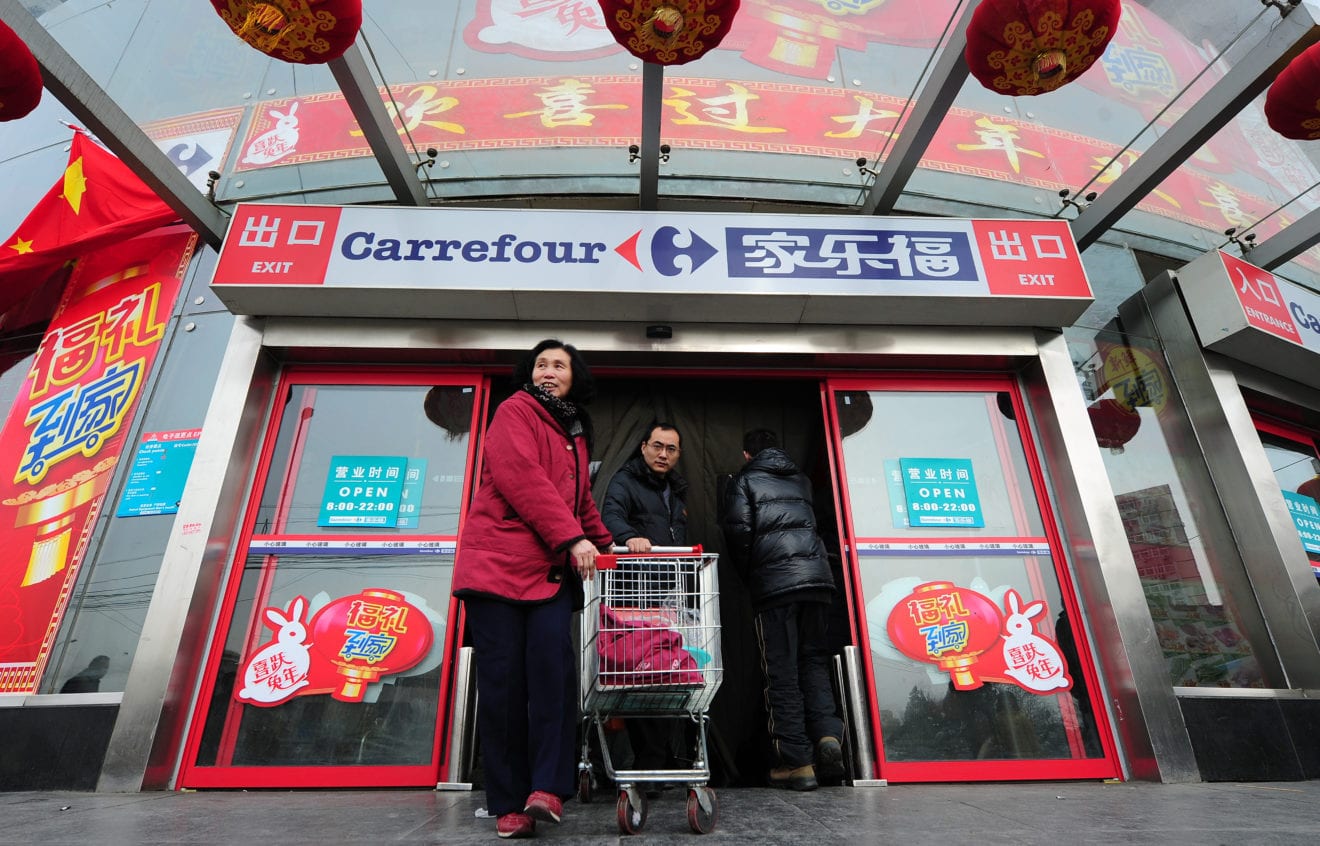
    Carrefour Taiwan showed growth for the 13th consecutive quarter while in the rest of Asia first-quarter sales sagged for the French hypermarket operator.

    Taiwan’s like-for-like sales rose by 3.3 per cent.

    A strategic partnership formed with Tencent in China rapidly materialised, says the group, including the launch of a WeChat app.

    However, like-for-like sales in China fell by 6.6 per cent in a competitive environment especially in e-commerce, notably during the Chinese New Year celebrations.

    Sales for Asia overall were down by 4.5 per cent at constant exchange rates and 3.9 per cent like-for-like, in line with trends in previous quarters.

    Overall, Carrefour’s first-quarter sales reached €20.7 billion (US$25.5 billion), up 2.6 per cent at constant exchange rates. On a like-for-like basis, the rise was only 0.4 per cent, impacted by less dynamic markets in Europe, continued deflation in Brazil, strong competitive pressure in the group’s main markets, and business disruptions in Belgium and France.

  • Singapore retail sales buoyed by Lunar New Year

    Singapore retail sales buoyed by Lunar New Year

    Singapore retail sales – excluding motor vehicles – rose 14 per cent in February, reflecting the changed timing of Lunar New Year observation.

    Compared with January, they rose 1 per cent.SG Feb retail sales

    Statistics Singapore estimated the total value of retail sales in February – including motor vehicles – at S$3.7 billion. Online sales accounted for 3.9 per cent of total retail sales.

    Food retailers (excluding supermarkets) recorded the biggest increase by category – up 61.2 per cent as people prepared for celebrating the New Year. Apparel sales rose 42.4 per cent. Sales at supermarkets and department stores rose by an average of 25 per cent.

    Meanwhile, sales of food and beverages at cafes and restaurants rose 4.9 per cent year-on-year.

    SG Feb retail sales FB

  • Fast Retailing Group’s profit soars despite efforts

    Fast Retailing Group’s profit soars despite efforts

    Fast Retailing Group’s profit soared 30.5 per cent in the six months to the end of February – on sales up a healthy 16.6 per cent.

    The Japanese fast-fashion company, which owns Uniqlo and GU, among other brands, said consolidated revenue totalled ¥1.1867 trillion (US$11.05 billion) while operating profit reached ¥170.4 billion (US$1.587 billion).

    Uniqlo’s international business drove the growth, with both Uniqlo Japan and the fast-growing GU brand performing strongly as well.

    As it pursues its medium-term vision to become the world’s largest apparel retailer, the company is focusing on Uniqlo and GU. It sees opening global flagships and large-format stores in major cities around the world as a key strategy “to help consolidate Uniqlo’s position as a key global brand”.

    “Within the Uniqlo International segment, Greater China (Mainland China, Hong Kong and Taiwan), Southeast Asia and South Korea are entering a new stage of growth as the key drivers of operational growth for the Fast Retailing Group,” the company said in an earnings statement.

    Operating losses at Uniqlo USA contracted, putting that business on track to turn a profit going forward.

    “In terms of the GU operation, we plan to open more GU stores in Japan, while expanding the brand’s international presence, especially in Greater China.”

    Uniqlo’s domestic Japanese operation also achieved an increase in sales and profit in the first half year. Revenue totalled ¥493.6 billion (up 8.5 per cent) and operating profit ¥88.7 billion (up 29 per cent). In the six months to February 28, same-store sales, including online sales, expanded by 8.4 per cent year-on-year. Online sales increased 31.6 per cent to constitute 7.5 per cent of total revenue.

    Uniqlo International’s profitability improved in Greater China and South Korea on higher sales, driven by strong sales of winter ranges such as HeatTech and down. Uniqlo Southeast Asia and Oceania continued to generate a strong performance, with solid demand for summer clothing and firm demand from travellers for winter clothing resulting in significantly higher first-half revenue and profit.