Category: General

Retail News Asia is committed to providing both local and global retailers with the latest General Retail news throughout the Asian market. This on a daily base.

  • DFI agrees 10% equity stake disposal to Heinemann ASPAC

    DFI agrees 10% equity stake disposal to Heinemann ASPAC

    Malaysian duty free retailing group Duty Free International (DFI) is primed to sell a minority stake of its business to Heinemann Asia Pacific.

    The sale and purchase agreement includes the disposal of a 10% equity interest plus one share – comprising an aggregate 20,996,384 shares – in wholly-owned subsidiary DFZ Capital Berhad (DFZ) to Heinemann Asia Pacific for a consideration of €19,700,000.

    Under the terms, Heinemann Asia Pacific are also entitled to purchase a second tranche of shares in DFZ Capital Berhad (DFZ) via a call option (€1 per share) in an 18-month period beginning on the date that the first tranche of sales are completed.

    A further option to purchase a third tranche of shares in a 12-month period will begin on the date of expiry of the second tranche call option period – taking the total share eligibility of Heinemann Asia Pacific to 25% in a potential overall transaction of €52.21 million.

    The completion of the sale and purchase of the first tranche of shares is expected to take place on 1 June.

    A DFI statement read: ‘The company views HAP as a strategic investor, and the proposed disposal is expected to enable the company to benefit from the resources and expertise of Gebr. Heinemann and HAP in the areas of product assortment and costing, retail store management, distribution and logistics management of DFZ products.’

    ‘HAP’s investment in DFZ will allow Malaysians and visitors to Malaysia an enhanced travel retail experience, one on par with the best available in the world. The proposed disposal is also expected to further strengthen the group’s financial strength, enabling the group to consider future business opportunities.’

    Heinemann Asia Pacific CEO Max Heinemann is confident the joint venture with DFZ will realise synergies and new growth opportunities in Malaysia.

    Gebr. Heinemann says the joint venture agreement will not only strengthen the presence of the company in Malaysia but will ‘realise gross margin and operational synergies for DFZ Capital Berhad’, with Heinemann Asia Pacific involved in day-to-day operations and overall decision making.

    Max Heinemann, CEO of Heinemann Asia Pacific said: “Looking at the similar business models and corporate cultures of both companies, Gebr. Heinemann and DFI believe this joint venture to be a great strategic fit for growth together in Malaysia.”

    Malaysia’s fast-growing retailing group has more than 30 years’ experience operating at airports, seaport, downtown, border towns and popular tourist destinations at entry and exit points on the peninsular.

    DFZ operates duty free retail, duty free wholesale and duty paid outlets throughout the region in areas such as Pedang, Besar, Langkawi, Bukit Kayu Hitam, Kuala Lumpur International Airport and Johor Bahru.

  • Bali to Host Web in Travel Conference

    Bali to Host Web in Travel Conference

    Web in Travel (WIT) Indonesia Conference will be held in Bali on April 28, 2016. The conference on online tourism industry will invite speakers from world’s leading brands.

    Grace Kurnadi, CEO of Revata – the organizer of Web in Travel in Indonesia – said that she believed that the conference will attract prominent and influential players in online tourism industry, include in distribution and marketing. “It’s a good momentum for Indonesia to develop tourism, particulary through the channel of online media,” Grace said in her press conference on Thursday, March 17, 2016.

    WIT is adapted from WIT Conference in Singapore, Asia-Pacific’s biggest online tourism event. The conference to be held by WIT and Revata Cipta Kreasi will be the fourth ever.

    The event will feature a number of speakers to discuss the latest trends and issues in online tourism industry, Grace said. In addition, they will discuss market opportunities in Indonesia.

    Grace said that Indonesia has the potentials to attract tourists through its natural beauty. However, emphasis must be given on adaptation in technology for promoting and selling tourism package in line with the global technological advancement. “Tourism sector is expected to become the leading sector to enhance foreign exchange earnings,” Grace said.

    The government is hoping to achieve 20 million foreign tourist visit in Indonesia by 2019. The President had asked all relevant ministries and agencies to support tourism sector in Indonesia. “To support the target, we have to expedite the use of technology as one of the means of promotion as well as to market a wide range of tourism packages in Indonesia,” Grace said. Moreover, Grace considered that various industries are currently dominated by millenials who are familiar with technology, including in tourism industry.

    Listed below are speakers who have confirmed their presence in next month’s conference:

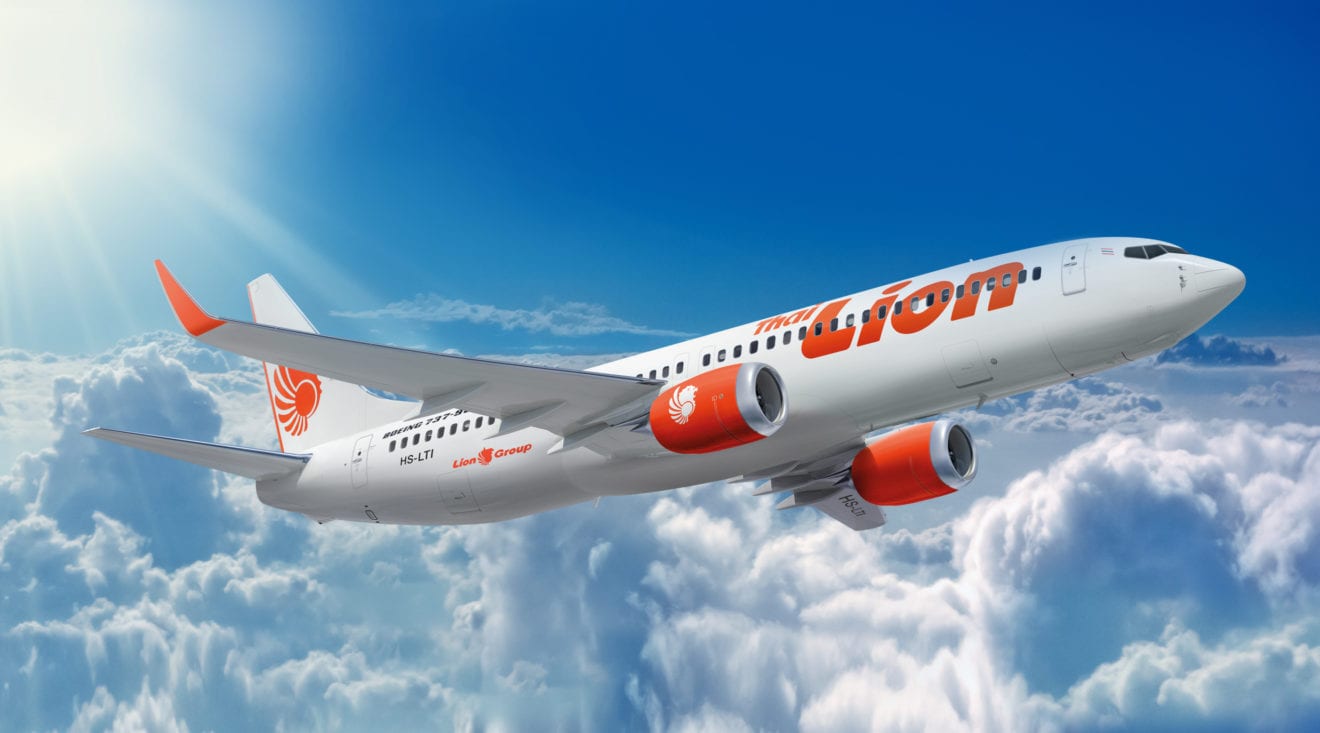
    1. Rusdi Kirana, Founder of Lion Air

    2. Oliver Hua, Managing Director of Asia Pacific Booking.com

    3. Mieke De Schepper, Vice President of Asia Pacific Expedia

    4. Robin Harries, Head of APAC Trivago

    5. Rama Mamuaya, Founder of Dailysocial.id

    6. Eric Tjetjep, Founder of Ezytravel, former CFO of PT Dwidaya

    7. Gaery Undarsa, Managing Director & Co-founder of Tiket.com

    8. Dennis Adishwara, CEO of Layaria

    9. Alamanda Shantika Santoso, Go-Jek’s Vice President of Product

  • Fitch Asia appointed new chief

    Fitch Asia appointed new chief

    Fitch Asia, the retail and brand consultancy, has appointed a new regional CEO to cover north and southeast Asia.

    UK-born and Australian-raised Andrew Crombie will lead the company’s growth across the region from its Singapore hub, reporting to worldwide CEO Simon Bolton. Crombie will work closely with China GM Nikki Lin to expand opportunities in that market. He takes over from Ian Bellhouse, who is moving on to a new venture.

    Crombie has spent 25 years working in Singapore, Taiwan, Hong Kong and Malaysia in regional and global roles for agencies including Batey Ads, FCB, Havas and Ogilvy. He began his career in Australia working for such brands as American Express, Banyan Tree Resorts, BMW, Carlsberg, Dell, Dunhill, Guinness, Hennessy, IBM, Mercedes Benz, Porsche, Qantas, TagHeuer and Visa Gold.

    Most recently, he has been MD and partner at healthcare agency H&T Asia.

    “Andrew’s brief is to make Fitch famous in this region, and he’s the person to do that,” says Bolton. “No-one thinks about the customer journey more, and he will bring this expertise to Fitch along with his extensive understanding of the diversity and rich potential for retail and experience design within the region.”

    “It’s great to be joining Fitch at this time of profound change in how consumers are engaging with brands,” says Crombie, who takes up his new position on May 3.

    “Asia is poised to be at the forefront of innovation in retail and brand experience.”

  • Risk takers and growth makers look to China

    Risk takers and growth makers look to China

    With a theme of risk takers and growth makers it was inevitable that anecdotes about Australian business and China would feature heavily at The Australian Financial Review Business Summit, presented by BHP Billiton.

    China presents risks that are beyond the pale for boards of directors of most S&P ASX 200 companies and for many influential equity fund managers.

    Insurance Australia Group’s decision to pull the plug on a $1 billion investment in China said a lot about risk aversion on major company boards. The Telstra decision to not invest $1 billion in the Philippines suggests that capital will not be deployed in China even though the country wants to open up its telco market to competition.

    Risks in China that are rarely found in Australia include sudden regulatory changes, the blatant stealing of intellectual property and government decisions tied to China’s increasingly aggressive foreign policy.

    But the growth opportunities on offer in the world’s fastest-growing economy are so extraordinary that many smaller companies believe the rewards far outweigh the risks.

    That was the clear message from a range of speakers and panellists on the first day of the Financial Review Business Summit in Melbourne on Tuesday.

    Power of social media

    The most stunning anecdote came from Richard Henfrey, chief operating officer of Blackmores, the vitamins company which has stormed the Chinese market thanks to its “clean and green” image.

    Henfrey says sales of a Blackmores Vitamin E cream were running at about 3000 tubes a month when Chinese film star, Fan Bingbing, was photographed with a tube in her handbag.

    The photo was shared on social media and within weeks sales of the cream soared to 100,000 tubes a month. Today sales are running at about 500,000 tubes a month and still growing.

    Henfrey says the incident highlighted the power of social media in China. Blackmores has not had to pay the film star any money for her public endorsement of the product.

    But when asked by Chanticleer about the expansion of other Australian companies in China, Henfrey expressed surprised that others had not followed in the footsteps of Blackmores.

    He says other Australian vitamins companies had not invested in people and infrastructure inside the country.

    Blackmores has 25 people in its office in Shanghai and Henfrey is confident that staff numbers will grow to more than 100 within a year. He says Australians need to get over their fear of investing on the ground in China.

    In carving out a profitable niche in the Chinese vitamins market, Blackmores has had to navigate through tricky government regulations.

    Its success is partly due to bypassing tough government regulations in relation to medicines. Many of its vitamins are classified as food rather than medicines and this has helped to clear the way to its sales success.

    Its products are sold in about 10 per cent of the 50,000 pharmacies in China.

    Free trade zone a catalyst

    Henfrey says the establishment of the Shanghai Free Trade Zone had delivered a significant increase in sales because Blackmores could now used bonded stores to directly import products not covered by local regulations.

    This carries a strong message for other companies in Australia pondering expansion into China. The Shanghai Free Trade Zone, which was established on a pilot basis in 2013, presents growth opportunities for financial services companies.

    These opportunities were outlined in a recent paper by Jeff Schubert on behalf of the Australian Chamber of Commerce in Shanghai.

    However, the focus of discussion at the summit on Tuesday was in relation to food, tourism, education and property transactions.

    The enormous opportunities for Australian food companies in China were laid out in compelling presentation by Shaun Rein, managing director of China Market Research Group.

    Rein meticulously dissected the major drivers of consumer demand in China ranging from the impact of pollution on shopping habits to the shift in luxury purchasing habits from Louis Vuitton bags to international travel.

    He provided several embarrassing examples of international firms that had attempted to crack the Chinese market with ill-thought through advertising campaigns that showed a total misunderstanding for local consumer culture.

    Rein says CMR research showed that Polo Ralph Lauren totally missed the mark with its ads featuring blonde American models. These turned off Chinese buyers who thought the clothes would not fit.

    GAP made the same mistake by using a male model with tattoos, which are normally associated with Triad gangsters.

    He says one high-profile global manufacturer of fast moving consumer goods had made a grievous error by lowering its production standards in its Chinese factories with the inclusion of carcinogens banned in the United States.

    Pollution huge issue

    Pollution, according to Rein, is the single biggest issue transforming shopping habits in China. The air in Beijing and to a lesser extent Shanghai is often so toxic that it has forced an increasing number of people to shop online.

    Rein says that switch in consumer behaviour has not necessarily been reflected in the retail sales numbers published in China. He says traditional retail sales measures underestimate the strength of demand.

    Rein said research by CMR of people in China with a minimum of $10 million in assets showed that at least 60 per cent were making preparations to leave China, partly because of the fear that the pollution problem would get much worse.

    Pollution, says Rein, is one reason why Chinese do not trust products made in their own country. It is this distrust which is driving the demand for Australian beef, dairy and honey products.

    Raymond Yeung, a senior economist, Greater China Economics with ANZ Banking Group, told the summit that consumers now accounted for more than half of economic growth in China. He agreed with Rein that tourism presented a good opportunity for Australia.

    Australia must welcome Chinese tourists

    About 5 million Chinese visited Japan last year, about 6 million visited Korea but  only 1 million visited Australia.

    Simon Henry, the co-chief executive and founder of the top international real estate website in China, Juwai.com, says he is horrified at the low number of Chinese tourists visiting Australia.

    Juwai.com facilitated an estimated US$4.2 billion ($5.5 billion) in Chinese international real estate purchases in the 2013 calendar year, according to Henry.

    Henry’s contribution to the discussion related mainly to China’s insatiable appetite for foreign real estate. He has not found any lessening in demand despite the gradual decline in China’s economic growth.

    Demand for foreign property, according to Henry, has risen from $US5 billion in 2010 to $US52 billion in 2015. He says demand will reach $US220 billion by 2020.

    He says there are only two assets that are trusted by China’s “mum and dad” investors – gold and property. That is why the recent stock market gyrations had no impact upon demand for property.

    Yeung from ANZ provided a sobering assessment of the likely Chinese response to the possible election of Donald Trump as president of the United States.

    He says it is no surprise that China’s international priority over the past two years has been the One Belt, One Road infrastructure strategy. This policy focuses on Chinese investment in infrastructure in about 65 countries, most of which are to the west of the country.

    In fact that One Belt One Road strategy presents partnership opportunities for Australia’s major construction and engineering companies based on the experience of General Electric.

    John Rice, vice chairman of GE, told Chanticleer that GE did a deal at the end of last year in Pakistan which involved a Chinese electric power company, Chinese financing and a gas turbine from France.

    “The EPC was a Chinese company we have done business with for 20 years – Harbin – so we can bring partnerships we have established over decades in some cases to bear to win deals along the One Belt, One Road,” he said.

    “It was good for GE, good for the customer in Pakistan and good for China.”


  • Tram in Berlin Promotes Wonderful Indonesia

    Tram in Berlin Promotes Wonderful Indonesia

    Transportation in Berlin known as tram help promotes “Wonderful Indonesia” with images of various tourist attractions in Indonesia including Borobudur, Bali and Komodo Island.

    “I am proud to witness tram in Berlin decorated with various tourist attractions of Indonesia,” said Lina Berlina, Indonesian designer living in Berlin, Tuesday, March 8.

    The promotion is due to Indonesia’s participation in the world’s largest promotional exhibition ITB Berlin which will be held from March 9-13.

    Deputy Director for International MarComm of Tourism Ministry Agustini Rahayu said that Wonderful Indonesia promotion in Berlin trams will be from March 7 to April 25.

    The routes that are passed by the trams with Wonderful Indonesia promotion go through Zone AB/ABC or Berlin’s community activity center and have become Berlin’s city attraction. Tram No. M6 and M4 pass Alexanderplatz, which is the heart of Berlin, and Hackeser Markt.

    There are images of tourist attractions in Bangka Belitung, images traditional dancers from Nias Island and Barong from Banyuwangi, as well as images of traditional custom of Balinese, etc.

    Agustini Rahayu said the tram with “Wonderful Indonesia” promotion have a registration number of 1033, 1068, 1092, 1070, 1503, 1575, 1520, 4007, 4008, 4010, 8014, 8015, 8016, 8017, 8018 and also in two subways; number 1011-1 and 1011-4.

    The promotion of Wonderful Indonesia was decided to be applied on trams and subways since the 352 trams in Berlin have 181.1 million passengers per year.

    This means there are about 513,031 passengers per tram and the campaign from March – April is expected to cover 1,282,578 passengers.


  • Indonesia International Furniture Expo Targets US$350 Million

    Indonesia International Furniture Expo Targets US$350 Million

    The Indonesian Rattan Furniture and Craft Association (AMKRI) has set a target for the 2016 Indonesia International Furniture Expo (Ifex), held in Jakarta on April 11-14, 2016 with a theme of “The Essence of Infinite Innovation”, to attract 10,000 visitors with a total transaction value of US$350 million.

    “We also set a target to achieve a follow up transaction value of US$1 billion,” AMKRI chairman Rudi Halim told us on Saturday, March 12, 2016.

    Last year, the international furniture expo managed to attract 8,595 visitors with an on-the-spot transaction value of US$270 million and a follow up transaction value of US$700 million.

    The furniture industry has an important role for the national economic growth, since the transaction value of this sector is quite significant. In 2015, Indonesia recorded US$1.902 billion in furniture exports, increasing by 1.3 percent when compared to the previous year.

    Rudi explained that the Indonesia has a huge opportunity to expand its furniture and handicraft market.

    “The global furniture market is currently valued at US$141 billion. Indonesia’s contribution to the global market value stands at US$2 billion, while Vietnam’s stands at US$6.8 billion,” Rudi added.

    The Industry Ministry recorded an increase in the value of wooden and rattan furniture exports. In 2012, the value stood at US$1.4 billion and increased to US$1.8 billion in 2013. The figure continued to rise to US$2.2 billion in 2014. The positive trend reflects optimism that the furniture export value over the next five years will worth US$5 billion.

  • Is French Company Decathlon Looking to Invest $500M in Indonesia?

    Is French Company Decathlon Looking to Invest $500M in Indonesia?

    Indonesia’s struggling textile and garment sector could get a badly needed dose of investment. A French company specializing in sports apparel has plans to pump $500 million into the archipelago.

    Franky Sibarani, chairman of the Investment Coordinating Board (BKPM), did not disclose the name of the company, but revealed that it’s based in Lille in northern France.

    “Not only will the company market its products domestically, it will also export to other department stores overseas,” Sibarani said, noting that the unnamed company had reached out to BKPM’s representative in London and the organization intended to communicate directly with the potential investors.

    Nurul Ichwan, BKPM’s investment promotion rep in London, told Jakarta Post that the company expects to operate its first department stores in Malaysia and Indonesia this year.

    All signs point to Decathlon, a 40-year-old sporting goods and apparel retailer that sells several of its own brands and has more than 1,000 stores worldwide. It has its head office in Villeneuve-d’Ascq, close to Lille, and the company raked in 9.1 billion euro (or $10.1 billion) in 2015. It’s also opening its first Malaysian location in April and is currently hiring retail staff in Indonesia.

    A half-million dollar investment is money the country’s textile industry could do with. According to government data, garment shipments dropped by almost 11 percent last year, as Indonesia fell to fourth place as a source of U.S. apparel imports (behind China, Vietnam and Bangladesh) in the first 11 months of 2015 with just 5.8% of the year-to-date total.

    That could fall further if the 12-nation Trans-Pacific Partnership (TPP), which Indonesia is not part of, comes into force. To that end, BKPM is urgently pursuing European investors, targeting the U.K., Germany, Netherlands, France, Spain and Switzerland.

  • President Jokowi receives visiting Belgian princess

    President Jokowi receives visiting Belgian princess

    Indonesian President Joko Widodo (Jokowi) received the visit of Princess Astrid of Belgium, who led a business delegation to discuss opportunities to enhance economic cooperation between the two countries.

    During the courtesy visit to the Presidential Palace here on Tuesday, Princess Astrid was accompanied by five Belgian ministers and some 205 representatives from 127 Belgian companies and 40 organizations operating in the fields of infrastructure, ports, energy, chemical industry, and telecommunications.
    Several potential business-to-business agreements and educational cooperation between universities of the mission are ready to be discussed and signed.

    While in Jakarta, Princess Astrid has a hectic schedule, traveling to several areas in the capital city, Karawang, Bogor, and Bandung. Besides being received by President Jokowi and Vice President Kalla, Princess Astrid also met the minister of transportation, maritime affairs and fisheries minister, minister of commerce, as well as several other ministers.

    Princess Astrid will also meet Jakarta Governor Basuki Tjahaha “Ahok” Purnama, West Java governor, and Bandung Mayor Ridwan Kamil during the four-day visit.

    She is also scheduled to attend a series of seminars including the Belgium-Indonesia Clean-Tech Summit, Belgium-Indonesia Maritime Summit, and Belgium Indonesias gateway to the EU Market.
    Princess Astrid will also attend some seminars titled Smart City, Innovative Partnership and International University-State Business-DRIVE.

    During her visit to Jakarta, Princess Astrid will be accompanied by Deputy Prime Minister and Foreign Minister Didier Reynders Belgium; Vice President and Minister of Economy Jean-Claude Marcourt; as well as several other important officials.

    Minister Didier is also scheduled to meet Foreign Minister Retno Marsudi, and there are plans to discuss economic, trade, and security cooperation, including tackling radicalism.

  • Indonesia, Belgium agree to enhance economic cooperation

    Indonesia and Belgium have agreed to intensify economic cooperation, particularly in the fields of trade and investment.

    Both nations reached the agreement during a meeting between Indonesian President Joko Widodo (Jokowi) and Princess Astrid of Belgium at the Merdeka Palace here on Tuesday.

    Princess Astrid is in Indonesia to lead a 300-strong Belgian business delegation from March 12 to 19. The business delegates are representing 127 companies.

    The companies are engaged in the fields of construction, infrastructure, energy, clean technology, communication and information technology, food and beverage, financial services, transportation, logistics, marketing, and education.

    Speaking to the press after accompanying President Jokowi at the meeting, Foreign Minister Retno L.P. Marsudi stated that Belgium is Indonesias key partner in terms of trade and investment.

    “For instance, in 2015, Indonesia-Belgium bilateral trade reached US$1.67 billion, while (Belgian) investment (in Indonesia) reached more than US$7 million,” she noted.

    Until now, some two thousand Belgian companies have been operating in Indonesia, she remarked.

    At the meeting, President Jokowi briefed the Belgian business delegation on the governments efforts to make the economy more open and competitive.

    “The president touched on the 10 economic policy packages that the Indonesian government has issued so far. One of the packages deals with the Negative List of Investment,” she added.

  • Honeywell to tap into Indonesia’s infrastructure projects

    Honeywell to tap into Indonesia’s infrastructure projects

    US-based technology and manufacturing firm Honeywell plans to tap into Indonesia’s robust infrastructure development, especially of airports and railways, that is aligned with President Joko “Jokowi” Widodo’s vision for the coming years.

    The company acknowledges Jokowi’s ambitious program to execute infrastructure construction worth more than US$400 billion from 2015 to 2020 to spur economic growth in the country and therefore make the nation with Southeast Asia’s largest economy one of the 10 top countries for the firm globally.

    “We know that Indonesia needs new bridges and railways, that infrastructure is something the government is discussing,” Honeywell Indonesia president director Alex J. Pollack said on Thursday.

    He has referring to the government’s target to build as many as 49 new dams over the course of five years, as well as 1,000 kilometers of new toll roads, among other projects.

    With the development, the company aimed to provide advanced technology for the country’s infrastructure projects, including for its airports.

    The firm boasted about its smart airport technology, claiming that it would be able to improve the efficiency and safety for the airports, as its technology would enable air traffic controllers to handle the number of aircraft landing in an hour with improved traffic management.

    “With growth of 11 percent in the numbers of passengers annually and as the Soekarno Hatta International Airport already has to manage 22 million passengers currently, we think it will need an advanced technology and integrated system,” Pollack said.

    The company also cited Jokowi’s policy to waive advanced visa requirements for 90 countries, which was expected to increase foreign tourist numbers, as the government aimed to attract 20 million foreign tourists by 2019.

    The company would look to work with related companies such as state airport operator Angkasa Pura (AP) I and Angkasa Pura II, as it aims to get the technology applied in the country’s busiest airports such as Soekarno Hatta and Ngurah Rai International Airport in Bali, as well as in six to 25 other major airports in Indonesia.

    Honeywell International last year booked $15.2 billion in revenues globally from its aerospace business, a decrease from $15.6 billion in 2014.

    The company set the revenue growth to be double the gross domestic product (GDP) growth this year. The government itself aimed for 5.3 percent economic growth for 2016, as the country scored merely 4.79 percent last year.

    It currently runs an aerospace manufacturing facility in Bintan, Riau, which had started to operate in 2005. It has also supported an existing maintenance, repair and operations (MRO) facility for aircraft owned by national flag carrier Garuda Indonesia and the largest low-cost carrier, Lion Air Group.

    Honeywell is also seeking involvement in railway projects in Indonesia, as it recently worked with the Transportation Ministry on radar scanner technology for automatic detection and warnings at railway crossings.

    It recently wrapped up the technology’s trial at the Bintaro railway crossing, Jakarta, and the company expected to follow that up with installation of the products.

    The company would also try to get involved in the country’s mass rapid transit (MRT) project, currently under construction in Jakarta, as it would want to apply its safety scanner system, which would also support Transportation Minister Ignasius Jonan’s aim to have a safer transportation system.

    The ministry allocated Rp 12.5 trillion ($957.8 million) for transportation safety and security improvement this year.

  • Vietnam joins world`s largest rubber producers to cut exports

    Vietnam joins world`s largest rubber producers to cut exports

    Vietnam will join worlds largest natural rubber producers to cut exports in a bid to shore up the shrinking price of that commodity.

    Vietnam will follow Thailand, Indonesia and Malaysia to cut its imports of natural rubber by 15 percent starting March 1 until August 31, the Indonesian association of rubber companies (Gapkindo) said.

    Earlier the three member countries of the International Tripartite Rubber Organization (ITRO) which control 70 percent of the world supply of natural rubber agreed to cut exports by 615,000 tons from March to August.

    With Vietnam joining the cartel the price of natural rubber is expected to rise in international market, Executive Secretary of the North Sumatra branch of Gapkindo Edy Irwansyah said here on Monday.

    Under the arrangement, Thailand, the worlds largest producer is to reduce its exports of natural rubber by 324,005 tons, Indonesia, the second largest producer by 238,736 tons, and Malaysia, the third largest by 52,259 tons.

    North Sumatra, one of Indonesias largest natural rubber producing provinces, contributes to the scheme by cutting exports 38,000 tons.

    The decision of the four ASEAN countries would have impact on the rubber market, as they control more than 70 percent of the supply of natural rubber in the world, Edy said.

    Edy said rubber price has remained low but in March the price began to climb, adding, he was confident the price of that commodity would continue to increase .

    In January 2016, North Sumatras exports of natural rubber and rubber products fell again by 16.43 percent year-on-year in value.

    The province earned only US$78.083 million in January 2016 down from US$93.375 million in the same period last year, head of the regional office of the Central Bureau of Statistics (BPS) Wien Kusdiatmono said here last week.

    The production and price of rubber and rubber goods have continue to shrink, Wien said.

    According to Edy though rising, the price of natural rubber is still much below the level considered ideal of around US$1.90 per kg.

  • Indonesia to Cut Rubber Export Volume

    Indonesia to Cut Rubber Export Volume

    The world’s three largest rubber producing countries Indonesia, Thailand, and Malaysia, have agreed to start reducing rubber exports. As members of the International Tripartite Rubber Council (ITRC), the three countries decided on this policy to boost rubber prices in the global market.

    The Indonesian Rubber Companies Association (Gapkindo), the government’s official partner in implementing the ITRC agreement, said that members have been reducing the number of product shipment overseas.

    “We have cut back on crumb rubber exports to comply with regulations,” Gapkindo executive director Suharto Honggokusumo Suharto said in Jakarta, yesterday.

    The agreement to cut rubber exports was made on February 4, 2016. The ITRC will cut export volume by 615,000 tons starting on March 1 until August 31, 2016. Thailand will lower its exports by 324,025 tons, Indonesia by 238,736 tons, and Malaysia by 52,249 tons.

    In Indonesia, the unexported volume will be reallocated to the domestic market, including for infrastructure projects. “The government has promised to seek price improvement to help improve the condition of the rubber farmers,” said Suharto.

    In 2015, Indonesia’s natural rubber exports reached 2.6 million tons. Trimming the volume of exports is expected to push up prices. In February, the price of natural rubber in the global market was US$1.04 to US$1.09 per kilogram. This price range is too low, because farmers can only profit if global prices are between US$2 and US$3 per kilogram.

  • Indonesia to boost investment through easy, fast licensing service

    Indonesia to boost investment through easy, fast licensing service

    The Indonesian government held a closed-door meeting to discuss efforts to boost investment and business through the implementation of an easy and fast licensing service.

    “We should improve all aspects of licensing in relation to issuing building and environmental permits as well as authorization,” President Joko Widodo stated during the opening of the meeting here on Tuesday.

    The president remarked that the government should improve the licensing process as part of the efforts to improve the business climate in Indonesia.

    In the 2016 Ease of Doing Business 2016 survey, the World Bank ranked Indonesia 109th out of 189 countries. Singapore topped the list, with Malaysia ranking 18th, Thailand 49th, Brunei 84th, and Vietnam 90th.

    The president also called for the integrated management of the business licensing and registration process to improve efficiency and boost the business climate.

    The meeting was attended by Coordinating Minister for Economic Affairs Darmin Nasution, Coordinating Human Development and Culture Minister Puan Maharani, Coordinating Political, Legal and Security Affairs Minister Luhut Binsar Pandjaitan, Public Works and Public Housing Minister Basuki Hadimuljono, Agrarian and Spatial Planning Minister Ferry Mursyidan Baldan, as well as Justice and Human Rights Minister Yasonna Laoly.

    Earlier, the Indonesian government had decided to prepare guidelines and revise various regulations that will make it easier to do business as part of the efforts to facilitate investors who want to start a business in Indonesia.

    “These guidelines should be formulated soon and will be tabled in a cabinet meeting,” Coordinating Minister for Economic Affairs Darmin Nasution remarked after a coordination meeting here on Thursday.

    The 10 indicators, which are being assessed, include the ease of starting a business, building permits, registration of ownership, payment of taxes, access to credit, and a cooperation agreement.

    Other indicators are the ease in getting an electricity connection, cross-border trade, problem-solving for bankruptcy, and protection for Micro, Small and Medium Enterprises (SMEs).

    One of the rules that has been fixed is the basic capital for the establishment of a Limited Liability Company (PT).

    The government will then revise Trade Regulation No. 90 of 2014 concerning the organization and development of warehouses. As a result, a warehouse registration certificate can be obtained in just a single day.

    However, a warehouse, with an area of less than 98 square meters, will not require a warehouse registration certificate.

    The Ministry of Public Works and Public Housing (PUPR) will also revise Ministerial Regulation No.24 of 2007 on Technical Guidelines for Building Permits (IMB). The IMB will be processed in seven days, and the costs will be reduced by half.

    “We will disseminate information on all regulations in relation to the ease of doing business. The dissemination will be conducted by ministries and other institutions,” the minister affirmed.

    Meanwhile, state-owned electricity company PLN will improve its procedures for granting an electricity connection. The procedures will be divided into four stages. Obtaining a new connection will take 22 days.(*)

  • Indonesia Jan retail sales grow 12.5% year on year

    Indonesia Jan retail sales grow 12.5% year on year

    Indonesia’s retail sales in January grew 12.5 per cent from a year earlier, bolstered by information and telecommunication equipment especially electronics, a Bank Indonesia survey showed on Friday.

    December annual retail sales growth was revised up to 11.4 per cent from the previously reported 10.4 per cent.

    The survey of 700 retailers in 10 major cities predicted slower February retail sales growth of 11.9 per cent.

    Respondents were optimistic over retail sales in the next three months in line with higher demands ahead of and during the Muslim fasting month in June.


  • French business delegation studies possible cooperation in maritime

    French business delegation studies possible cooperation in maritime

    A French business delegation met the Coordinating Minister for the Maritime Affairs Rizal Ramli to study possible investment in maritime sector in the country.

    “We received a 20-member delegation of business people grouped in Maritime Cluster from France. They are interested in business cooperation in maritime , energy, technology and other sectors, Rizal said.

    The delegation was interested in doing business in Indonesia as they believed the country is serious in bringing to reality its vision to become a worlds maritime axis, he said here on Monday.

    “Relations between Indonesia and France have been mutually beneficial and expanded. It is important for us to continue to promote the relations,” he said.

    He said the delegation had not decided to invest in any sector but it plans to hold a workshop here in October.

    “There would be a workshop between French and Indonesian companies on maritime sector. We will facilitate the plan that concrete business cooperation could be created,” he said.

    On the same occasion, French Ambassador to Indonesia Corinne Breuz’ said France is interested in taking part in the program to develop the maritime sector in Indonesia.

    Part of the delegates represent companies already doing business in Indonesia for more than 20 years, the ambassador said.

    “The companies want to take part in the development of the maritime sector in Indonesia,” he said.

    A deputy at the office of the coordinating minister for maritime affairs Agung Kuswandono said the French companies are interested in venturing in shipping, port, energy and technology sectors.

    “The delegates represent companies operating in various sectors, but no details have been discussed,” Agung said.

    He said similar interest had been expressed by companies from other countries such as the Netherlands, Japan and South Korea.