Category: General

Retail News Asia is committed to providing both local and global retailers with the latest General Retail news throughout the Asian market. This on a daily base.

  • Singapore’s SME retail exporters can now gain better access to US market

    Singapore’s SME retail exporters can now gain better access to US market

    The revised de Minimis Threshold increases the limit to the United States from US$200 to US$800.

    Web-based small and medium enterprises (SMEs) retail exporters in Singapore can now gain better access to the United States market with the revision of de Minimis Threshold.

    The revised de Minimis Threshold – the amount at which US import duties apply – increased the limit from US$200 to US$800. This means that sellers no longer need to pay the US import duties when the price of their products is under US$800.

    “The revised de Minimis Threshold provides a timely opportunity for local businesses to internationalise. The US is the number one export destination for eBay Singapore sellers with its strong consumer purchasing capacity and high expenditure in e-commerce,” said Teri Canayon, country manager of eBay Singapore Cross-Border Trade. “With a lower barrier for cross-border e-commerce for our Singapore SMEs, there will be even greater incentives to boost exports to the US market, ultimately driving greater growth.” 

    Sellers can also mail higher value products directly to the US market, which allows them to better manage their supply chain and inventory costs.

    In addition, the cost of products to American consumers is lowered. This encourages them to buy more overseas, which may eventually give Singapore businesses a better chance to grow sales in the US market.

  • Real Singapore retail sales rise

    Real Singapore retail sales rise

    Real Singapore retail sales recovered slightly in January, rising 1.4 per cent year-on-year.

    The headline figure widely reported by business media of a 7.5 per cent increase included motor vehicles.

    Real retail sales fell 0.5 per cent from December to January, and by 1.2 per cent with vehicles included.

    The total retail sales value in January 2016 was estimated at $4.1 billion, higher than the $3.8 billion in January 2015.

    Retail sales Jan 2016 Singapore

    Medical goods and toiletries and department stores showed the strongest year-on-year gains, while telecommunications goods and computers accounted for by far the largest fall.

    The accompanying charts show the sales trends by product category.

    Sales of food & beverage services (seasonally adjusted) increased 2.4 per cent month-on-month in January Year-on-year, they declined by 0.6 per cent in January.

    The total sales value of food & beverage services in January 2016 was estimated at $685 million.

  • Australia Strengthens Presence in Indonesia

    Australia Strengthens Presence in Indonesia

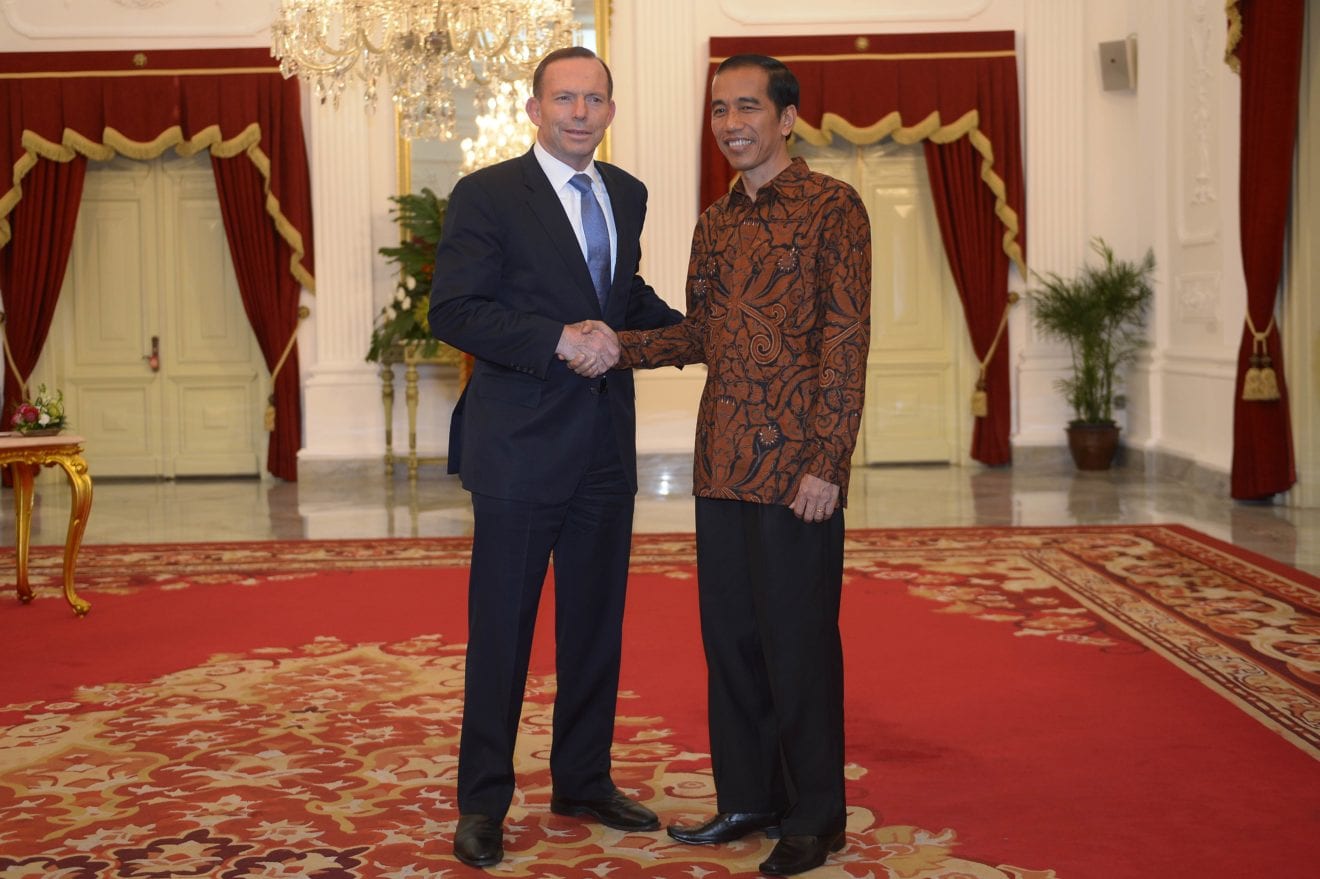
    Australian Foreign Minister Julie Bishop, as part of her busy schedule, visited Jakarta, Makassar in South Sulawesi Province, and Bali during a working visit on March 20-23, 2016.

    Bishop started her agenda by holding meetings with her Indonesian counterpart Foreign Minister Retno Marsudi and Vice President M. Jusuf Kalla in Jakarta to discuss efforts to boost bilateral, political, trade, and investment cooperation.

    Foreign Minister Bishop then formally inaugurated Australias newly constructed embassy in the Patra Kuningan area, South Jakarta, which includes a five-storey Chancery, accommodation for some Embassy staff, and a recreation and medical center covering an area of more than 50 thousand square meters.

    “The state-of-the-art building and joint project between Australian and Indonesian companies symbolizes our commitment to strong and enduring ties with Indonesia. The new embassy facility will accommodate Australias increased presence in Indonesia and will provide a secure working environment for our personnel,” she stated.

    The new embassy complex was built by Indonesian company Total Bangun Persada in partnership with Leighton (Asia) and continues to make a positive contribution to the local economy.

    Some 2.5 thousand local workers were employed at the site during the construction process. The Australian government is also upgrading infrastructure in the embassys neighborhood.

    “The embassy showcases the best in Australian innovative design and cutting-edge technology to make the most out of Indonesias environment while minimizing the impact on local water and energy sources,” Australian Ambassador to Indonesia Paul Grigson noted.

    The new embassy is the largest ever to be constructed by an Australian government in the world and reflects the depth of the relationship between Australia and Indonesia, he remarked.

    The embassy complex uses low-resource technologies such as rainwater harvesting and solar water heating systems.

    Extensive landscaping was carried out during construction. Four mature Banyan trees were also relocated. This relocation is the biggest of its kind to be ever undertaken and has been recognized by the Indonesian Guinness Book of Records. The effort also won a Museum Rekor Indonesia Award.

    The distinctive colors chosen for the Chancery are designed to represent Australias wealth in minerals and metals such as copper, zinc, brass, steel, and aluminum.

    “The new Australian Embassy complex is not only a tribute to the countrys creative design and innovation but is also a tangible example of a very successful Australian-Indonesian construction partnership,” Grigson emphasized.

    Bishop expressed hope that more number of Indonesian tourists would visit her country.

    “Every year, a million Australians visit Indonesia. We wish to push for an increase in the number of Indonesian tourists visiting Australia,” Bishop stated here on Monday after inaugurating the new Australian embassy.

    She said Australia applies a universal visa system across the world. Currently, Australian tourists do not require a visa to visit Indonesia.

    From January to November 2015, the number of Australian visitors to Bali was the highest, reaching 876,748 out of the total of 3,631,195 foreign tourists arriving on the island.

    Australia is a potential market for Bali, or even Indonesia as a whole, largely due to its proximity. It has always been one of the three biggest sources of tourists to Bali.

    On March 22, Bishop opened the new Australian Consulate General in Makassar, Australias third diplomatic post in Indonesia.

    “Australia is committed to building trade and investment partnership with Indonesia and expanding our people-to-people contacts. The Consulate General will deepen our business, education, and cultural links with the provinces of eastern Indonesia,” the minister noted.

    On the occasion, Bishop announced the appointment of Richard Mathews as Australias first Consul General in Makassar, which is Indonesias fifth-largest city and a key commercial hub for Australians doing business in eastern Indonesia.

    Eastern Indonesia is an increasingly popular destination for Australian trade and investment, particularly in the resources, agribusiness, and food processing sectors.

    Mathews is a career officer with the Department of Foreign Affairs and Trade and was most recently the director of the Nuclear Policy Section. He had earlier served overseas as deputy representative in the Australian Commerce and Industry Office, Taipei; deputy head of Mission in Athens; and as second secretary in Bandar Seri Begawan.

    In Canberra, Mathews has worked in the India, Sri Lanka, Bangladesh, and Europe sections.

    He has also worked as director at the Centre for Defence and Strategic Studies; Indonesia director in the Northern Territory Government; and as a visiting fellow and Indonesia Merdeka fellow at the ANU.

    Mathews claimed that the new diplomatic facility will help to reinforce and strengthen trade and investment ties with eastern Indonesia.

    “I want to build a network of business, educational facilities, and Australian alumni in eastern Indonesia,” Mathews emphasized.

    He promised to promote sound relations between the two sides.

    Meanwhile, South Sulawesi Deputy Governor Agus Arifin Numang stated that the consulate general would help strengthen trade relations between his administration and Australia.

    “We hope that trade relations with Australia would be improved,” he noted.

    Earlier, Vice President Kalla had expressed hope to lure more Australian investments in Makassar.

    “Australia is relatively closer to the eastern part of Indonesia,” the vice president pointed out.

    Grigson listed trade, education, and culture as the three priority sectors that the consulate general in Makassar would pursue.
  • Jakarta Convention Center to hold biggest marine tourism expo

    Jakarta Convention Center to hold biggest marine tourism expo

    The Tourism Ministry supports the countries biggest marine adventure tourism exhibition, “Deep & Extreme Indonesia 2016”, which will be held at the Jakarta Convention Center, from March 31 to April 3, 2016.

    “The Tourism Ministry supports the organizing of the event. Lets explore the beauty of Indonesias underwater world,” Tourism Destination Development Deputy of the Tourism Ministry Dadang Rizki said here on Sunday.

    Organized since ten years ago, the exhibition is the biggest and most complete of its kind held in the country. It explores marine tourism markets in various regions to be developed into world best diving tourist destinations.

    It is admitted that Indonesia is best for its beautiful undersea world with various diving destinations such as Raja Ampat in West Papua; Bunaken in Manado (North Sulawesi); Lembeh Bitung in Lombok (West Nusa Tenggara/NTB); Labuan Bajo in East Nusa Tenggara (NTT); Wangi-Wangi, Kaledupa, Tomia and Binongko in Wakatobi (Southeast Sulawesi); and Morotai as well as Halmahera in Ambon (Maluku).

    Indonesia has thousands of places of this kind that are scattered across the country from Sabang in Aceh Province to Marauke in Papua Province, he said.

    Dadang explained that the Indonesian underwater world is host to various coral reefs which serve as habitat for more than 2,000 fish species and various sea biota.

    Different fish species such as wrasse, dansel, trigger, sweetlip and unicorn are all can be found there. There are also various big fish species such as tuna, marlin, hammer head sharks, sailfish, yellowfin tuna, barracuda, dolphin and whales.

    Different tourism operators and diving organizers, government organizations, tourism promotion boards and travel bureaus will take part in the exhibition.

    The operators and diving organizers will display diving operator ship and various diving accessories, and other water sport devices. They will also exhibit underwater photography equipment.

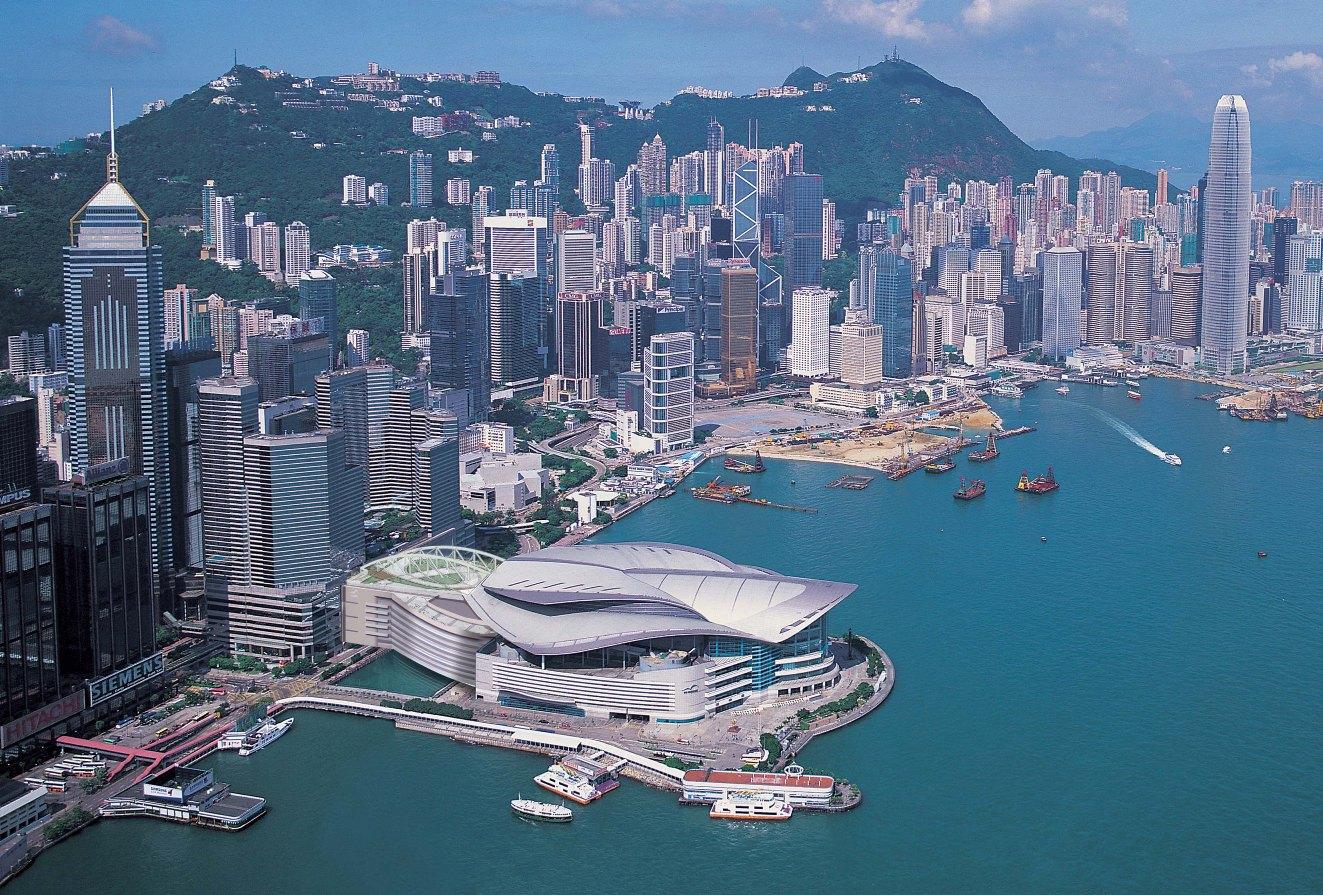
  • Hong Kong keeps close eye on Singapore’s moves

    Hong Kong keeps close eye on Singapore’s moves

    Faced with a cloudy economic outlook, Hong Kong is casting a keen eye on action taken in Singapore, a fellow open economy buffeted by external forces – and an old rival.

    Thursday offered a good look. Finance Minister Heng Swee Keat announced a Budget that includes government spending of $73.4 billion.

    It comes a month after Hong Kong’s Financial Secretary John Tsang announced its Budget with an expenditure of HK$490 billion (S$87 billion). The reaction here is that, at first glance, the two financial czars – both men coincidentally have a Master’s in Public Administration from Harvard – might have been studying the same playbook.

    Given tough times ahead, they announced near-term relief mainly in the form of tax rebates and loan schemes for small and medium- sized enterprises (SMEs), and handouts for people to help boost consumption. Buzzwords such as innovation, robotics, and research and development also liberally litter the duo’s respective long-term visions.

    Ernst and Young’s Hong Kong tax managing partner Tracy Ho puts it thus: “They (Singapore) watch us, and we are watching them too.”

    Hong Kong is facing headwinds from a mix of political tensions and economic trends. Its retail sales recently suffered the worst decline in 13 years. Tourist numbers are down. The economy will grow between 1 and 2 per cent this year, Mr Tsang has said. But a greater anxiety is over the city’s long-term prospects. One nagging worry is the lack of diversity in its economy, in terms of its dependence on China and in its industry mix. Hong Kong is heavily dominated by the financial, hospitality and other services sectors, with a negligible manufacturing presence.

    It is in this broader vision that Singapore’s Budget on Thursday offers takeaways for Hong Kong, say those interviewed. Businessman David Ting, past president of the Chamber of Small and Medium Business, laments that unlike in Singapore, Hong Kong SMEs “do not have a clear direction on where we should go”. In particular, he lauds the Singapore Budget for being “very focused”. The $4.5 billion Industry Transformation Programme offers targeted industries a road map for how they can grow.

    On why Hong Kong businesses, known for their entrepreneurial spirit, will need such guidance now, Mr Ting says the landscape has changed. With China closed off in the past, it was easier for businesses to suss out opportunities, he adds.

    Lawmaker Charles Mok, an IT entrepreneur, says that while there are superficial similarities between both Budgets, given the emphasis on R&D, there was a distinct difference in how it is to be applied. In Singapore, the focus is on how to reinforce the manufacturing industry by introducing automation, he says.

    “In Hong Kong, we talk of developing R&D. But who is it for? Factories in China? What about our domestic industry – how do we help them get restarted?” says Mr Mok.

    On the flip side, Singapore’s Silver Support Scheme to help the elderly does not go far enough, notes social work expert Nelson Chow. “It helps the bottom 20 per cent. But in Hong Kong, this is something we’re already doing. The next step is to introduce a universal pension.”

  • Gokongwei retires as chair of Robinsons Retail

    Gokongwei retires as chair of Robinsons Retail

    Taipan John Gokongwei Jr., the country’s second richest man according to Forbes,  has stepped down as chairman and CEO of Robinsons Retail Holdings Inc. (RRHI), which is in charge of the family’s retail business which include supermarkets and household brands Toys “R” Us, True Value, and Mini Stop.

    His only son Lance Gokongwei, 49, took his place on March 18, while his brother James Go remains as vice chairman.  Go is the chairman and CEO of JG Summit Holdings as of March 21.

    Gokongwei, who will turn 90 years old on Aug. 11, has promised to retire when he reaches 90 and just focus on his philantrophic work.

    In a rare chat with reporters in December last year, Gokongwei said Lance was doing a good job running the family-owned business empire.

    The elder Gokongwei, however, will remain chairman of the Gokongwei Brothers Foundation, which was launched in 1992 with his three brothers. It has helped schools such as Ateneo, La Salle and soon the University of the Philippines.

    Gokongwei, who was born in China to Filipino parents,  arrived in Cebu as a one year old toddler. He then built his multi-billion dollar empire in Cebu by trading goods off on a bicycle and on board a small boat off the pier of the province.

    For someone turning 90, Gokongwei said the only thing he could ask for himself is good health.

    RRHI reported a net income of P3.12 billion in the first nine months of 2015, up 18.8 percent year on year as net sales rose 12.7 percent to P63.3 billion.

    As of the end of September last year, RRHI had a total of 1,466 stores with the addition of  208 new stores. This translated to a 10.7 percent increase in gross floor area to approximately 939,00 square meters over a year ago.

  • Pop-up stores giving shopping malls a boost

    Pop-up stores giving shopping malls a boost

    Hit by rising vacancy rates and competition from e-commerce websites, shopping malls are turning to a temporary solution to attract shoppers – pop-up stores.

    At least two companies have sprung up in recent months to play middleman between retailers looking for temporary shopfronts and malls with vacant spaces.

    Invade, launched last month, has a pool of 38,000 retailers and 100 landlords. The four-month-old PopUp Angels has more than 100 spaces on its platform and several hundred brands on board.

    Those looking to rent a retail space for a short term, usually between three months and a year, can browse a list of available spaces on both websites, which will earn a fee when there is a successful match.

    Pop-up stores offer a win-win solution. Landlords can fill spaces in malls while looking for long-term tenants, and retailers get to reach out to new customers without committing to costly multi-year leases.

    Shoppers benefit as well, because pop-up stores tend to have more diverse offerings, retail experts say.

    Invade founders Kent Teo, 30, and Koh Cheng Guan, 29, started out as flea market organisers seven years ago and later ventured into multi-label pop-up stores. The idea for a real-time retail booking system came when more malls started approaching them with underused spaces.

    “Two to three years ago, we would get about one landlord a month asking (for our help). But now, we get three to four,” said Mr Teo, likening Invade to a “retail space Airbnb”. Airbnb is a popular holiday rental site.

    Invade’s pool of retailers, gathered from flea-market-organising days, include online fashion labels, artisans and tech start-ups.

    PopUp Angels was set up by Mr Adrian Chan and Mr Kit Chan, the duo behind food and beverage businesses Best Fries Forever and Cloud & Cream. The two 37-year-olds wanted to ease the “cumbersome” process of finding space and setting up and marketing pop-up stores.

    More malls have been offering short-term leases in the past two years, as the supply of retail space outpaces demand, said Mr Adrian Chan.

    Urban Redevelopment Authority data shows the islandwide vacancy rate for retail space rose from 4.5 per cent at the end of 2013 to 5.8 per cent a year later. At the end of last year, it was 7.2 per cent.

    Retail space here grew in volume by 22,000 sq m in the fourth quarter of last year. Malls that have come on the scene recently include Capitol Piazza, which opened in Stamford Road last year, and Waterway Point, which opened in Punggol in January.

    But demand for retail space has dampened, given high labour costs and growing competition from online platforms and regional shopping destinations.

    Both online and brick-and-mortar retailers are starting pop-up stores, albeit for different reasons.

    Furniture and lifestyle company HomesToLife last year opened two pop-up stores, at I12 Katong and Westgate, with leases of a year each – to “build momentum” in the lead-up to launching its flagship store, which opened in Mohamed Sultan Road early this month.

    “The stores offered a sneak preview of our products and, by monitoring the sales there, we could better design our marketing campaign,” said senior branding consultant Sotiria Kostavara.

    Ms Samantha Soh, 27, who owns online clothing store Ellysage, opened her first standalone store at Orchard Gateway in January, with the help of Invade. She hopes to extend the three-month lease, which ends this month.

    “For any fashion label, a physical store is important. A lot of my customers tell me they want to try on the clothes first,” she said.

    “It’s also a very useful touchpoint… I can interact with my customers.”

    Singapore’s largest mall operator, CapitaLand Mall Asia, which owns and manages 18 malls here, said pop-up stores form about 1 per cent of its tenants. In 2014, it opened retail zone J.Avenue at its JCube mall to cater to such stores, providing an electronic point-of-sale system and basic shop fittings to make it easier for first-time retailers.

    Ms Sulian Tan-Wijaya, a senior director for retail and lifestyle at Savills Singapore, said the trend for such stores started three to four years ago, “but it was rare and not obvious to shoppers”.

    The trend is now more evident as more online, multi-label and indie brands are sprouting up in malls alongside established global retailers, she said.

    “Pop-up stores will not pay high rents, as their business model does not allow for high margins,” she said. “But they add diversity to the mall mix with their eclectic offerings and generate shopper traffic.”

    Mr Gary Nonis, property consultancy JLL’s national director for retail, warned that too many pop-up stores in one mall could hurt the mall’s branding in the long run. He said: “It might be deemed less attractive by seasoned operators, which would rather have strong branding, and this could also hurt their potential performance in the mall.”

  • Indonesia Asks Ride-Hailing Apps Like Uber, Grab To Register Cars By May

    Indonesia Asks Ride-Hailing Apps Like Uber, Grab To Register Cars By May

    Indonesia asked ride-hailing apps such as Grab and Uber to partner with a transport business and register their cars by the end of May if they want to continue to operate in the country, Indonesia’s Transportation Minister Ignasius Jonan.

    “Uber, Grab are app companies. If they want (to operate), they have to partner with a transportation business entity, like a car rental company,” Jonan told reporters.

    Traffic in the capital Jakarta came to a complete halt Tuesday as taxi drivers caused traffic jams by blocking off several main roads to protest in response to the Indonesian government’s apparent refusal to regulate or outright ban ride-hailing services.

    Local news footage as well as videos posted on social media sites reportedly showed enraged taxi drivers pulling fellow drivers who were not part of the protest out of their vehicles and assaulting them on Tuesday.

    Similar protests have erupted against ride-hailing apps such as Uber in London, Paris, the U.S. and parts of Brazil among other places as the apps have ushered in cheap taxis and threatened the business model of traditional taxi drivers.

    “Even before the demonstration, we had started the process to help our drivers form a cooperative unit and meet the requirements,” Ridzki Kramadibrata, managing director of Grab Indonesia.

    Donny Sutadi, Uber Indonesia’s commissioner, reportedly said that they would partner with a car rental company.

  • China’s Consumers Spend Up On Spas, Travel and Entertainment

    China’s Consumers Spend Up On Spas, Travel and Entertainment

    China’s consumers are ignoring the bears.

    Consultancy McKinsey & Co. is tipping that China’s shoppers will increase their spending by 10 percent per year through the end of the decade as incomes rise. Some 55 percent of consumers expect a significant wage increase over the next five years.

    It’s not just staple goods that will be filling the shopping trolleys. Consumers are spending more on luxury items like spa visits, travel and entertainment.

    The shift is just another sign of China’s economy changing away from one that is fueled by heavy industry and exports and towards one where consumers and services drive growth.

    The chart below shows how shoppers plan to spend more on leisure and travel.

    Here’s another sign of the burgeoning market: consumers are adopting new products, services and retail experiences at rates unseen in developed markets. Mobile payment in China went from zero in 2011 to 25 percent of the population in 2015.

    “Gone are the days of indiscriminate spending on products,” according to McKinsey. “The focus is shifting to purchasing more premium products, and living a more balanced, healthy, and family-centric life.”

    China’s leadership have prioritized economic growth of between 6.5 percent and 7 percent this year and have promised to ensure the economy, which grew by its slowest in 25 years in 2015, will avoid a hard landing.

    While China’s retail sales slowed in the first two months of the year, they remain in a double-digit growth range.  Annual sales of cinema tickets could overtake the U.S. as early as 2017 and outbound tourist trips is on course to reach 200 million by 2020, according to CLSA Ltd.

    Still, for foreign competitors hoping to capture greater market share, the outlook is mixed. While foreign brands dominate the premium segment, local companies are increasing their market share in the mass segment of the market.

    “While scale, speed, and simplicity proved advantageous during the past 15 to 20 years, the changing shape of Chinese consumption is set to topple some giants of the past, and elevate new champions,” McKinsey said.

    McKinsey surveyed 10,000 shoppers aged between 18 and 65 in 44 cities across China.

  • Chance to tap into ‘silver market’ in China

    Chance to tap into ‘silver market’ in China

    With its rapidly ageing population, China offers the world’s largest “silver market” – and trade shows are seen as the best way for foreign companies to start to tap into these consumers.

    About one third of the Chinese economy is now “silver”. There are more than 220 million people 60 years and older – more than the populations of France, Germany and the UK combined. This is set rise to 480 million by 2050 – about a quarter of the world’s elderly.

    This growing consumer segment has greater spending power, more leisure time and improved lifestyles, according to Intex Shanghai, which is the lead organiser for the annual ChinaAid exhibition, which will have its 17th edition at Shanghai New International Expo Centre (SNIEC) from June 8 to 10.

    Managed by the Shanghai Ageing Development Center, the show is supported by the Ministry of Civil Affairs of the People’s Republic of China and such organisations as the China National Committee on Ageing. Other organisers include the Shanghai Municipal Committee on Ageing, China Silver Industry Association and the Shanghai Health Industry Development Association.

    Offering promotional and networking opportunities for businesses seeking a foothold in China, the show has had 66 per cent growth over the past three years.

  • Manchester’s LSE Retail Group drives global growth with China office launch

    Manchester’s LSE Retail Group drives global growth with China office launch

    Manchester online lighting distributor, LSE Retail Group , has launched an office in China as it pushes ahead with ambitious growth plans and expands its global supplier network.

    The company behind brands Value Lights, Iconic Lights and MiniSun has opened the office in Shekou, in the Shenzhen province close to Hong Kong, and has recruited three people from the local area, with plans to hire a fourth staff member by the end of 2016.

    It comes as LSE was named the fastest-growing medium-sized business by the 2016 Ward Hadaway Greater Manchester Fastest 50 Companies list and was ranked number one on the Investec Mid-Market 100 league table in 2015.

    David Gutfreund, managing director of LSE, said: “With the vast majority of LSE’s products sourced in China, the role of the new team will be to maintain our high quality standards, oversee logistics and source new suppliers to extend our ever-increasing range of lighting.

    “The business is going from strength to strength and we’re seeing a 50% year-on-year growth rate, with each financial year performing at a record level. We’re constantly recruiting at our head office in Eccles, Greater Manchester, in order to keep up with increasing demand for products across all three of our brands.”

    All staff members at the China office were recruited locally and LSE sourced the candidates directly, using contacts made through its existing supplier chain. The team will also be responsible for product development and will work closely with members of the Manchester team.

    “With the new direct flight routes between Manchester and China and the Airport City industrial park under construction, links between the north west and the Far East, have arguably never been stronger.

    “We’re extremely excited to be part of this powerful relationship at a time when the region’s economy is flourishing and setting a strong example to the rest of the UK and Europe,” David said.

  • Indonesia Sees Tourist Visit Increase in Early 2016

    Indonesia Sees Tourist Visit Increase in Early 2016

    Three big events namely, the Lunar New Year, cross-border promotion of Wonderful Indonesia Festival and total solar eclipse have boost the number of inbound tourists, particularly from China.

    I Gde Pitana, Deputy of Marketing Development of Foreign Tourism (Deputy BP3M) of Tourism Ministry, said that the majority of foreign tourists from China spent the Lunar New Year holiday in early February by visiting Bali as favorite destination, most of them came from Beijing and Heilongjiang Province using chartered planes.

    “People from those regions, which temperature were under 15 degrees celcius at that time, preferred to celebrate the Lunar New Year at warm places such as Bali,” he said.

    During the Lunar New Year, 23,000 tourists from 11 cities in China came to Bali using 65 units of chartered AB330 aircraft.

    Foreign tourist visits through Immigration Checkpoint of Bandar Bintan Telani (BBT) in Lagoi stood at 8,700 people, whereas 580 Chinese tourists visited Sulawesi to spent their winter holiday.

    The number of foreign visitors in January 2016 were 814,303, rose by 3.6% compared to the same period in 2015 of 785,937 foreign visitors. Besides China, Singapore and Europe are among the top countries on the list of countries of origin of foreign tourists.

    Pitana also hoped that total solar eclipse on March 9 could boost this year’s number of foreign tourist visits to Indonesia which is targeted to reach 12 million people.

  • Lippo Partners With GrabTaxi to Expand E-Commerce in Indonesia

    Lippo Partners With GrabTaxi to Expand E-Commerce in Indonesia

    Lippo Group, the Indonesian conglomerate founded by billionaire tycoon Mochtar Riady, will partner with GrabTaxi Holdings Pte for e-commerce deliveries in Southeast Asia’s largest economy.

    The founder’s grandson, John Riady, is spearheading Lippo Group’s foray into e-commerce with a $500 million investment in MatahariMall, an online version of its Matahari department store chain. Grab, a regional ride-hailing company, will help transport and deliver goods to bolster MahatariMall’s services, the companies said in a statement Monday.

    The partnership shows how local companies, familiar with consumer preferences, regulations and infrastructure challenges, are trying to tailor services to stay ahead of foreign rivals as competition heats up. Japanese e-commerce company Rakuten Inc. closed down its Indonesian unit as of March 1, while China’s JD.com Inc. has recently set up shop in Indonesia.

    “Speed is really important in this business,” said Ridzki Kramadibrata, managing director of Grab Indonesia. “You need to be able to do multiple things at the same time because if you can’t do that, the market will outgrow you and you will lose your opportunity.”

    Rising Incomes

    MatahariMall’s site allows customers to buy on the Web and pick up items from Lippo’s stores. Its rival Tokopedia, which is backed by Japan’s SoftBank Group Corp. and Sequoia Capital, has already formed a similar alliance with Go-Jek, a motorcycle taxi booking company, to deliver purchased items to customers.

    “Our combined knowledge of the Indonesian market will help us build the most effective online-to-offline experience — to ensure that online shoppers anywhere in Indonesia can receive or collect their purchases easily,” John Riady, a Lippo Group director, said in the statement.

    Grab’s alliance with Lippo also underscores its aggressive market-share acquisition strategy in Indonesia, where it competes with Uber Technologies Inc. and Go-Jek. Grab’s private car-hailing service grew 30 percent in Indonesia in February, according to the statement. It has more than 50 percent of the country’s motorcycle taxi market in March, it said.

    Technology startups are trying to capitalize on rising incomes and growing mobile-phone use in Southeast Asia, where 250 million consumers are now connected via smartphone and 100 million engage in online transactions, according to a report by Bain & Co. and Google Inc. released last week. The report predicts online sales across Southeast Asia to surge to $70 billion by 2020 from $6 billion now.

  • Some 2,000 foreign companies pay no taxes

    Some 2,000 foreign companies pay no taxes

    Some 2,000 foreign companies in Indonesia did not pay taxes in the past 10 years on the pretext of having suffered losses, Finance Minister Bambang Brodjonegoro reported to President Joko Widodo (Jokowi).

    “They always claimed that they suffered losses,” the minister said at the Presidential Office here on Monday.

    Several of the foreign companies should have paid an average of Rp25 billion in taxes per year, he said.
    As a result, the state lost Rp500 trillion in taxes during the past 10 years, he said.
    He said the government will make every effort to minimize tax evasion.
    The minister also reported to the president that many residents who have more than one income source do not comply with tax obligation.

    “Only 900 thousand of 5 million taxpayers really pay taxes. In total, they pay almost Rp9 trillion in taxes,” he said.

    He said the Finance Ministry, through the Directorate General of Taxation, will coordinate with the Center for Financial Transaction Report and Analysis (PPATK) to trace the transaction data of taxpayers.
    PPATK Chief Muhammad Yusuf said the center is committed to helping the Directorate General of Taxation.

    “Everyday, PATK receives reports of 150 thousand financial transactions. We are trying to develop this information, analyze it and cooperate with the tax authorities so that we can take certain steps,” he said.

  • IKEA donates Rs 92 crore for safe water projects in India, Indonesia

    IKEA donates Rs 92 crore for safe water projects in India, Indonesia

    Swedish furniture retailing giant IKEA will contribute 12.4 million euro (Rs 92.84 crore) to provide safe water and sanitation to one million people in India and Indonesia through Water.org. IKEA Foundation has announced a new grant of 12.4 million euro to Water.org on the occasion of the World Water Day, it said in a statement.

    “IKEA Foundation is committing 12.4 million euro to Water.org to expand its WaterCredit model, helping families have access to small, affordable loans so they can get safe water and sanitation,” it added. IKEA Foundation is the philanthropic arm of INGKA Foundation, the owner of the IKEA Group of companies.

    Commenting on the development, Matt Damon, co-founder of Water.org said: “Our work at Water.org has never been more important, and thanks to this grant and to IKEA Foundation, we are going to help hundreds of thousands of kids gain access to safe water and sanitation and impact their lives forever.”

    IKEA Foundation CEO Per Heggenes said: “We believe that every child deserves a healthy start in life and this is why we are supporting Water.org’s innovative programmes to help families in India and Indonesia access safe water and better sanitation facilities, giving them improved health and a life of dignity.”

    The World Bank estimates that 21 per cent of communicable diseases in India are linked to unsafe water and the lack of hygiene practices, and 50 per cent of India’s population continues to practice open defecation, the statement said. In Indonesia, more than 33 million people lack access to safe water and 100 million lack access to improved sanitation facilities.