Category: General

Retail News Asia is committed to providing both local and global retailers with the latest General Retail news throughout the Asian market. This on a daily base.

  • South Korea retail sales easing upwards

    South Korea retail sales easing upwards

    South Korean retailers are breathing a sigh of relief as consumers return to stores in the wake of the MERS scare receding.

    South Korea retail sales rose 0.5 per cent in July to 30.14 trillion won (US$25.6 billion) after receding 0.6 per cent in June.

    Statistics Korea said sales rose month on month as well as year on year.

    “The fallout of the MERS outbreak that caused demand to slump seems to have receded in July, leading to a slight rise in consumer spending,” a spokesman for Statistics Korea said.

    “While things have not returned to normal, sales are rising in areas that were most affected by the outbreak.”

    The MERS outbreak hit in late May. Thirty-six people subsequently died and a further 186 were infected before the outbreak was brought under control and confirmed over by health officials in July.

    The value of online transactions rose by 21.2 per cent, driven by sales of food and cosmetics as cautious shoppers opted to have products delivered rather than visit stores and risk exposure.

    Online shopping accounted for 15.8 per cent total retail sales in July.

    In stores, food and beverage sales rose 3.8 per cent year on year in July and electronics sales by 3.2 per cent. Department store sales rose 0.4 per cent, having fallen 12 per cent in June.

    Sales at convenience stores rose 33.6 per cent and at supermarkets by three per cent.

  • Hong Kong retail sales remain stagnant

    Hong Kong retail sales remain stagnant

    Falling spending by Mainland tourists and softened consumer sentiment saw lacklustre Hong Kong retail sales in July.

    Data from the Census and Statistics Department (C&SD) showed the total value of retail sales decreased 2.8 per cent year on year. After netting out the effect of price changes over the same period, the volume of total retail sales rose 1.9 per cent year on year.

    Those figures compared with a decrease of 0.4 per cent in revised figures for June and a net increase (after adjusting for price changes) of 4.3 per cent.

    Based on the seasonally adjusted series, the value of total retail sales decreased by 1.4 per cent in the three months ending July 2015 compared with the preceding three-month period, while the volume of total retail sales decreased by 0.9 per cent.

    A government spokesman said retail sales growth in volume terms moderated in July, “partly dragged by the further slowdown in inbound tourism and partly also due to the impact of stock market correction on consumer sentiment”.

    “The near-term performance of retail sales will continue to hinge on inbound tourism growth and on whether there would be any negative spillover from the increased stock market volatility of late. The government will monitor closely how the rapidly changing external environment may affect the retail business going forward,” he said.

    The value of total retail sales in July was provisionally estimated at $37.6 billion.

    For the first seven months of 2015 taken together, the value of total retail sales decreased by 1.8 per cent compared with the same period in 2014. After netting out the effect of price changes for the first seven months, sales increased by 1.7 per cent year on year.

    Analysed by broad type of retail outlet (in descending order of value of sales and comparing July 2015 with July 2014), the value of sales of jewellery, watches and clocks, and valuable gifts decreased by five per cent. This was followed by sales of wearing apparel (-13 per cent), commodities in department stores (-7.3 per cent), medicines and cosmetics (-5.4 per cent), other consumer goods, not elsewhere classified (-8.1 per cent); motor vehicles and parts (-3.2 per cent), fuels (-9.6 per cent); footwear, allied products and other clothing accessories (-7.9 per cent); books, newspapers, stationery and gifts (-6.4 per cent); furniture and fixtures (-8.5 per cent); Chinese drugs and herbs (-6.1 per cent) and optical shops (-5.9 per cent).

    In contrast, the value of sales of commodities in supermarkets increased by 0.4 per cent, of food, alcoholic drinks and tobacco (+7.0 per cent), electrical goods and photographic equipment (+4.9 per cent) and miscellaneous consumer durable goods (+67 per cent).

  • Hong Kong Retail Sales Growth Slows More Than Expected In July

    Hong Kong’s retail sales growth eased at a faster-than-expected pace in July, preliminary figures from the Census and Statistics Department showed Monday.

    The retail sales volume rose 1.9 percent year-over-year in July, much slower than previous month’s 4.3 percent climb, revised from the 4.4 percent gain reported earlier.

    Economists had expected a 2.8 percent increase for the month. Sales have been rising since February.

    Meanwhile, in value terms, retail sales declined 2.8 percent annually in July, exceeding economists’ expectations for a 1.3 percent drop. In June, sales had fallen 0.4 percent.

    On a seasonally adjusted basis, the value of total retail sales decreased by 1.4 percent in the three months ended July compared with the previous three-month period and the volume of retail sales also fell by 0.9 percent.

    The value of sales of jewellery, watches and clocks, and valuable gifts decreased by 5.0 percent in July from a year ago, while sales of commodities in supermarkets grew by 0.4 percent.

    “Retail sales growth in volume terms moderated in July, partly dragged by the further slowdown in inbound tourism and partly also due to the impact of stock market correction on consumer sentiment,” a government spokesman said.

    “The near-term performance of retail sales will continue to hinge on inbound tourism growth and on whether there would be any negative spillover from the increased stock market volatility of late.”

    “The Government will monitor closely how the rapidly changing external environment may affect the retail business going forward.”


  • Indonesia’s Alfamart to expand retail footprint in the Philippines

    Indonesia’s Alfamart to expand retail footprint in the Philippines

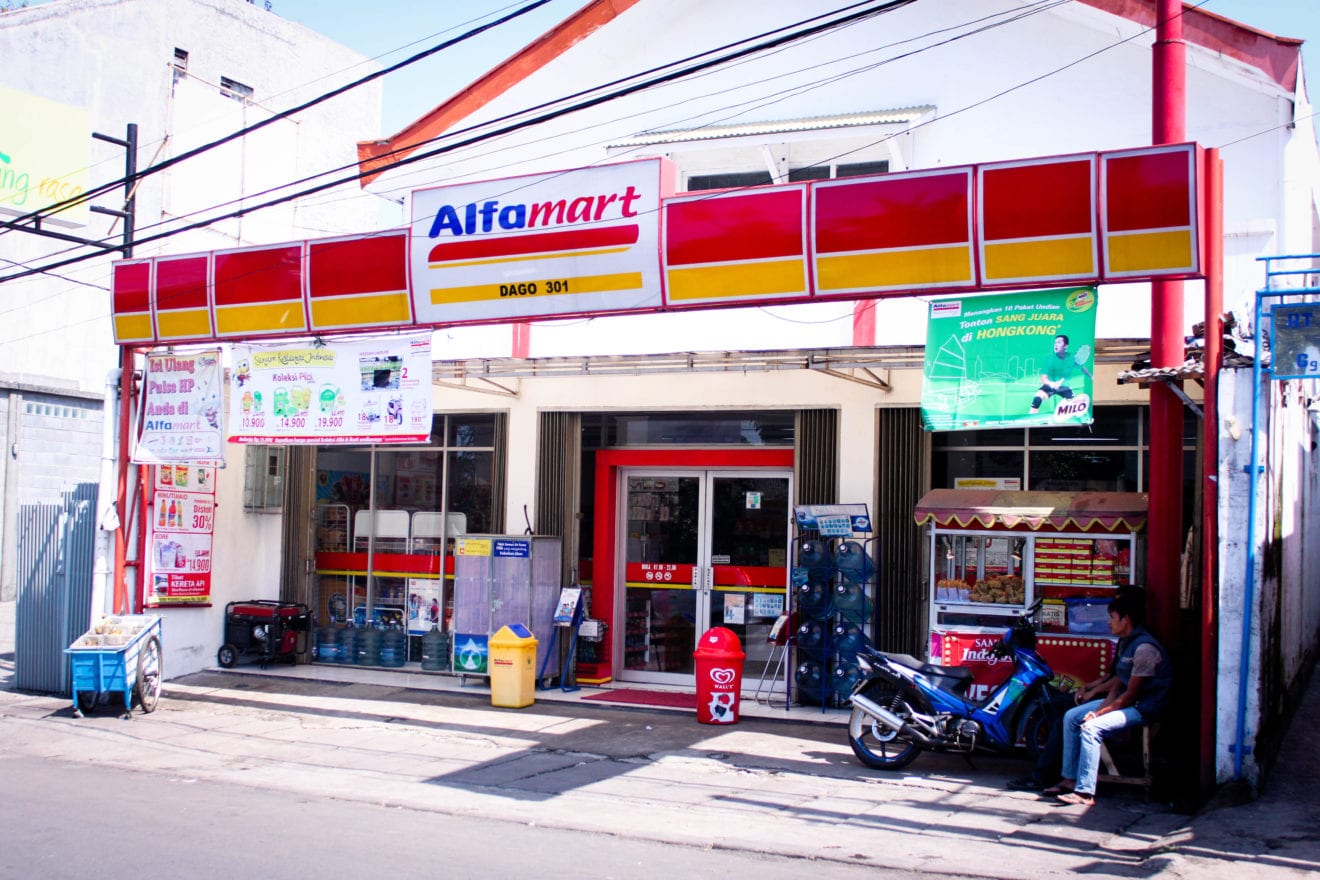
    PT Sumber Alfaria Trijaya Tbk (Alfamart), an Indonesia based convenience store chain operator, is planning to expand its footprint in the Philippines to about 160 stores by the end of this year. The move is expected to help strengthen the company’s presence in the south east Asian region and help boost income from exports.

    As of August, the company has 60 Alfamart outlets in the Philippines.

    According to Hans Prawira, president director of Alfamart, the company is targeting to operate over than 100 outlets in the Philippines, through its unit, Alfamart Retail Asia. “The project will be funded by loans from Philippine banks,” he added in an official statement.

    Alfamart and Philippine-based SM Retail Supermarket, a subsidiary of SM Group has set a joint venture company (JVC) to operate the retail outlets. Alfamart holds a 35 per cent stake in the JV and SM Retail Supermarket holds 65 per cent.

    Indonesia’s heavily regulated retail market – particularly relating to the aspects of franchising and foreign investment  – may have driven Alfamart to look for growth overseas.

    Indonesian franchise regulation requires 40 per cent of all stores to be company-owned and the remaining shares owned by franchisee holder, while 80 of product offerings have to be locally sourced for two years.

    The smaller format of mini-marts will provide SM with the flexibility to foray into urban area. At the same time, it will be able to rely on Alfamart’s know-how and experience of operating the stores under comparable market conditions in Indonesia.

    In Indonesia, the company plans to open 1,200 new outlets by the end of this year. “More than 50 per cent will be opened outside Java. We already have a distribution channel in Pontianak, Banjarmasin, Manado, and the latest one, in February, in Batam,” Hans said.

    As of March 31, the company had 10,068 Alfamart outlets, of which 2,958 are managed under a franchise scheme, while the rest are owned by the company.

    The company also operates 809 Alfamidi and 48 Lawson convenient stores with larger size than Alfamart.

    With over 10,000 stores in the portfolio, Alfamart controls about 50 per cent of Indonesia’s convenience store market through multiple brands – Alfamart, Alfamidi, and Lawson.

  • European Markets Dropped On Renewed China Worries

    European Markets Dropped On Renewed China Worries

    The European markets ended Monday’s session in negative territory, as renewed concerns over China weighed on investor sentiment. Concerns over the upcoming snap elections in Greece and the likelihood of a near-term U.S. interest rate hike also contributed to the negative mood at the start of the new trading week.

    The Financial Times reported that the Chinese government has decided to abandon attempts to boost the stock market through large-scale share purchases. Senior regulatory officials told the Financial Times China’s leaders feel they mishandled their efforts to rescue the stock market.

    The Chinese government resumed large-scale stock buying late in the trading day last Thursday to help the Shanghai Composite Index finish sharply higher, but officials said the government will refrain from further large-scale buying of equities.

    The Euro Stoxx 50 index of eurozone bluechip stocks decreased by 0.52 percent, while the Stoxx Europe 50 index, which includes some major U.K. companies, lost 0.30 percent.

    The DAX of Germany dropped by 0.38 percent and the CAC 40 of France fell by 0.47 percent. The SMI of Switzerland finished higher by 0.45 percent, but the FTSE of the U.K. was closed for a banking holiday.

    In Frankfurt, Volkswagen decreased by 1.14 percent. Japan’s Suzuki Motor Corp said that it would buy back the 19.9 percent stake it sold to the German automaker after an international court settled a dispute between the automakers over their soured partnership.

    BMW fell by 0.90 percent and Daimler lost 0.97 percent.

    Insurer Allianz rose by 0.18 percent, on reported that its infrastructure arm is weighing bids for London City Airport.

    RWE sank by 4.25 percent and E.ON dropped by 1.60 percent.

    In Paris, Renault surrendered 2.28 percent and Peugeot weakened by 1.19 percent. Car parts maker Valeo also decreased by 1.45 percent.

    Total tumbled by 0.91 percent and Technip lost 0.99 percent.

    Givaudan gained 0.73 percent in Zurich, after it agreed to acquire Induchem Holding, a cosmetic ingredient producer.

    Shares of NeuroVive Pharmaceutical AB plunged by 39.13 percent in Stockholm after the mitochondrial medicine company announced that it would not pursue development of CicloMulsion in the indication of acute myocardial infarction.

    Eni SpA climbed by 1.53 percent in Milan. The company announced over the weekend that it has discovered a massive natural gas discovery off the coast of Egypt.

    Eurozone inflation remained unchanged at a very low level in August as further fall in oil prices curbed its ability to move upward. Inflation came in at 0.2 percent in August, the same rate as seen in July and June, preliminary data from Eurostat showed Monday. It was forecast to ease to 0.1 percent.

    Germany’s retail sales rebounded in July to grow at the fastest pace in nine months, signaling that consumer spending boosted economic growth at the start of the third quarter. Retail sales advanced 1.4 percent on a monthly basis in July, Destatis reported Monday. This was the fastest growth since October 2014, when sales climbed 1.8 percent.

    Italy’s retail sales dropped for the second straight month in June, figures from the statistical office Istat showed Monday. Retail sales fell a seasonally adjusted 0.3 percent month-over-month in June, following a 0.2 percent decrease in the previous month. In April, sales had risen 0.7 percent.

    Greece’s retail sales declined in June after rising in the previous month, preliminary figures from the Hellenic Statistical Authority showed Monday. The volume of retail sales decreased 0.4 percent year-over-year in June, in contrast to a 4.1 percent sharp gain in May, which was revised down from 4.2 percent. In April sales had fallen 1.8 percent.

    China’s trade deficit in services widened in July, the State Administration of Foreign Exchange said Monday. The deficit on trade in services increased to $17.6 billion in July from $14.9 billion in June. At the same time, the merchandise trade showed a surplus of $46 billion in July.

    Business activity in the Chicago area unexpectedly grew at a slower rate in the month of August, according to a report released by MNI Indicators on Monday. MNI Indicators said its Chicago business barometer dipped to 54.4 in August from 54.7 in July. While a reading above 50 indicates growth, economists had expected the index to inch up to 54.9.

  • Garuda tickets available at Indomaret

    Garuda tickets available at Indomaret

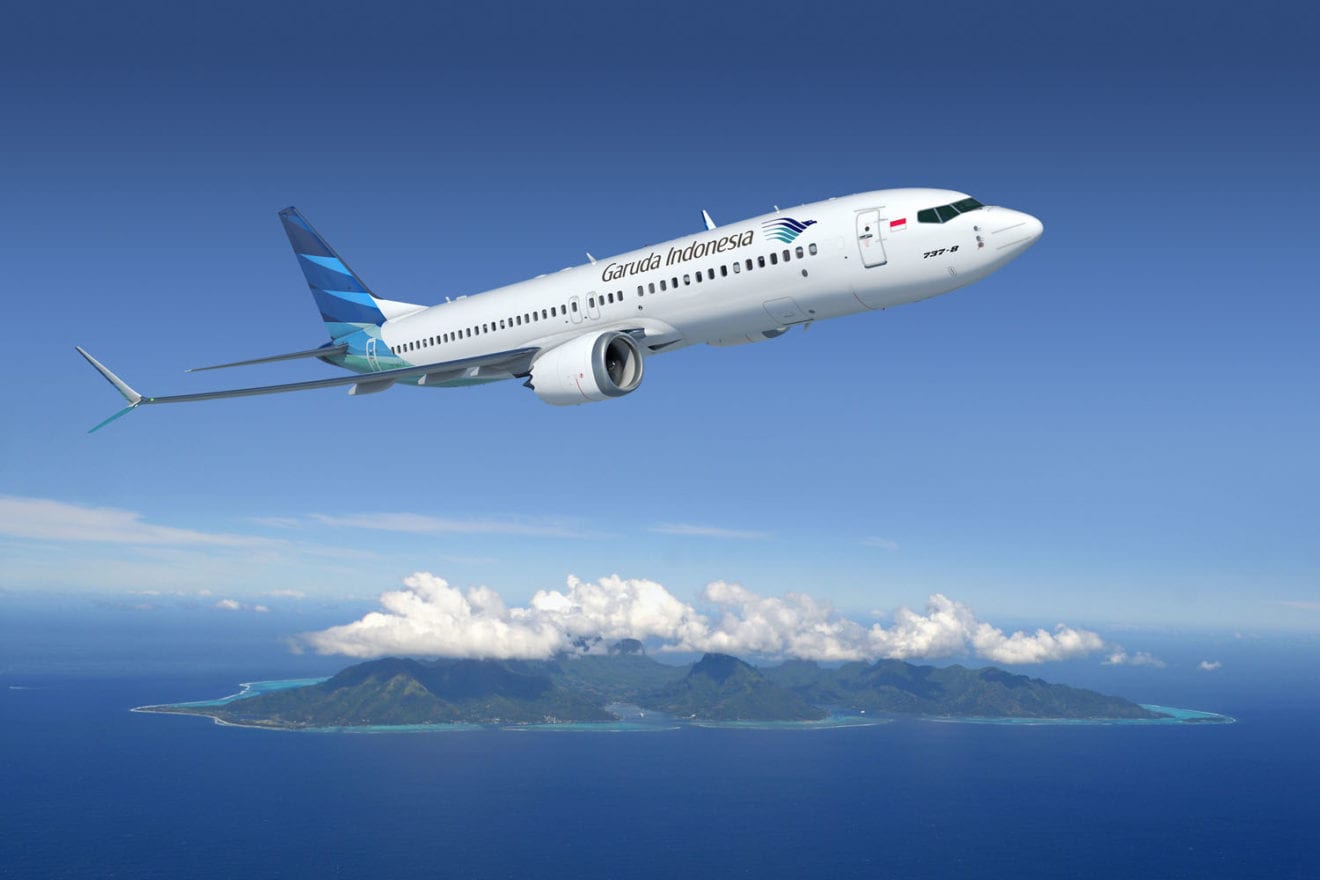
    National flag carrier Garuda Indonesia is teaming up with minimarket chain Indomaret to allow air passengers to buy tickets from the chain’s outlets across the country in a bid to boost the airline’s sales.

    For payments, Garuda works with electronic payment provider Finnet, a subsidiary of state telecommunications company PT Telekomunikasi Indonesia (Telkom).

    Garuda Indonesia commercial director Handayani said the company expected passengers would buy tickets from at least 20 percent of Indomaret’s 11,400 outlets.

    In ticket sales, the company expects the partnership to account for 830,000 transactions a year, or around 1.6 million tickets assuming that each buyer buys two tickets.

    “With their strategic sites, Indomaret outlets will open up consumer access to our services, including in places with little access to the Internet and ATMs,” Handayani said in a statement on Wednesday.

    She added that Indomaret ticketing services would be focused on domestic flights for individual customers.

    “People who go to Indomaret will tend to buy small numbers of tickets for domestic flights. The average ticket price will be between Rp 400,000 and Rp 500,000,” she said.

    Garuda’s low-cost subsidiary carrier Citilink has cooperated with Indomaret since January 2014.

    Indomaret records around 150 million transactions with 37.5 million customers monthly, according to Wiwiek Yusuf, the marketing director of PT Indomarco Prismatama, which runs the chain.

    “Of that figure, 15 million transactions, or 10 percent, are virtual,” he said, adding that Garuda would add to the list of the chain’s virtual payments, which currently includes electricity bills, phone credit and concert tickets.

    Online ticket purchasing makes up 28 percent of Garuda’s total transactions, with the remainder carried out through traditional channels such as travel agents.

    The airline’s partnership with Indomaret adds to its current relationship with Telkom, which runs Garuda’s call center. However, Garuda customers who book tickets through the call center can only pay with credit cards or through the ATMs of 18 banks.

    Telkom enterprise and business service director Muhammad Awa-luddin said the cooperation would mark the first non-bank channel for Garuda.

    “Finnet has hundreds of dealers and is connected to 77 banks, so we envision no problems,” he said.

    The cooperation is part of Garuda’s efforts to meet a target of carrying 25 million passengers this year.

    The airline carried 11.55 million passengers in the first half of the year, up 15.3 percent from last year, of which 9.4 million were domestic passengers.

    “With this cooperation, we should reach more than 20 million,” Handayani said.

    She added that she would rely on the growth of Indomaret outlets for expanding consumer access, with the firm looking to reach 12,000 outlets this year.

    Other than the domestic market, Garuda is also eyeing increased inbound flights after Coordinating Maritime Affairs Minister Rizal Ramli announced on Tuesday the waiving of visas for citizens of 47 more countries, adding to 30 countries granted visa exemptions in June.

    “We will engage with foreign tourist boards and travel agents. We have to be aggressive in introducing Indonesia to those countries, beyond Bali and Jakarta,” Handayani said.

    The company booked US$27.7 million in net income in the January-June period, a sharp increase from its net loss of $203 million in the same period last year, on the back of lower operating expenses and strong passenger growth.

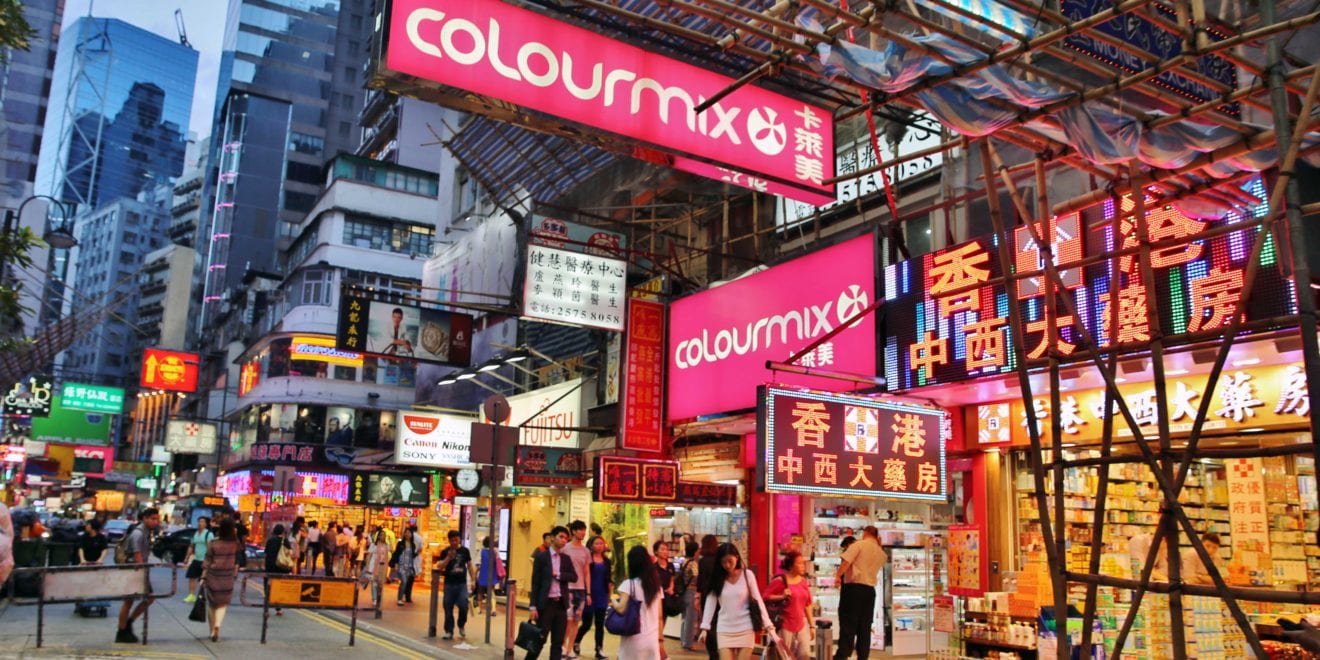
  • A 10-day sports extravaganza awaits in Singapore

    A 10-day sports extravaganza awaits in Singapore

    Singapore’s winning sporting streak continues with the upcoming BNP Paribas Women’s Tennis Association (WTA) Finals Singapore presented by SC Global at the Singapore Sports Hub from October 23 to November 1, 2015.

    In a culmination of what has been an exciting season, the top names in women’s tennis will come together for the WTA Finals. Household names like Serena Williams, Martina Hingis, Sania Mirza and many more will face off for court supremacy and a grand prize of US$7 million.

    A host of other events will also take place to complement the main action on court. The WTA Legends Classic will see tennis icons like Martina Navratilova and Arantxa Sánchez-Vicario playing for the fans’ delight while the WTA Rising Stars Invitational will give up-and-coming talents from Asia and the rest of the world a chance to play on Centre Court and make their mark on a world-class stage.

    Between matches, fans will have multiple opportunities to get closer to the action than ever before. Spectators can visit the outdoor Fan Zone, which will feature interactive tennis-themed games and star-studded player appearances. They can also witness the preparation secrets of their favorite tennis stars at the player practice sessions.

    Beyond the activities at the Singapore Sports Hub, fans can expect a star-studded extravaganza at the Singapore Tennis Evening at Marina Bay Sands on October 30. Fans and tennis stars alike will convene to celebrate the annual achievements of the best women’s tennis players, alongside the Southeast Asian debut of UK artiste Paloma Faith who will perform her hits.

    With Singapore’s Golden Jubilee in full swing, a slew of exciting flight, hotel, dining and retail deals have been lined up for this festive occasion. Singapore’s location at the heart of Southeast Asia also makes it easily accessible to tennis fans from around the region to catch all the action.


  • Henry Sy still Philippines’ richest man

    Henry Sy still Philippines’ richest man

    Property, retail and banking tycoon Henry Sy whose conglomerate owns the chain of SM Supermalls in his country and China has retained the title of the Philippines’ richest person for the eight consecutive year, with his net worth up $1.7 billion from last year to $14.4 billion.

    Forbes Philippines, which puts together the list, said Thursday that the value of Sy’s publicly traded conglomerates SM Investments rose 17 percent and SM Prime Holdings 20 percent over the past year. His companies announced record income from banking and retail businesses and two new mall partnerships in 2014. Sy also has a stake in privately owned power supplier National Grid Corp.

    John Gokongwei Jr. of JG Summit conglomerate that owns SM’s rival, mall chain Robinsons, is the second richest with a net worth of $5.5 billion.

    Forbes said Gokongwei moved up three spots after his company’s stocks rose 30 percent, boosted by revenue growth in its petrochemical business and investments in Meralco, the Philippines largest power distributor.

    JG Summit also has interests in food and beverage, airlines, telecoms, property development, banking, retail, and hotels.

    Forbes compiles the net wealth of the Philippines’ richest based on stock prices and exchange rates, with the value of private companies based on similar companies that are publicly traded.

    Alliance Global’s Andrew Tan climbed a notch to the third place despite a drop in his net worth to $4.5 billion from the previous $5.1 billion. His company’s stock price is 11 percent lower due to a drop in income from its resort and casino operations.

    Lucio Tan of LT Group whose businesses include stakes in beverages, tobacco, distilled spirits, banking and property was fourth with a net worth of $4.3 billion. Tan is also chairman of Philippine Airlines.

    Fifth was International Container Terminal Services’ Enrique Razon Jr., who is worth $4.1 billion.

    Rounding out the top 10 are George Ty, the Abotiz Family, Jaime Zobel de Ayala, David Consunji, and Tony Tan Caktiong.

  • Twitter Looks to Indonesia to Boost Growth

    Twitter Looks to Indonesia to Boost Growth

    A year after announcing it would open an office in Jakarta, Twitter has finally hired a team to develop business in the market of 250 million people as the company works to overcome weak global growth in users and advertising revenues.

    The Indonesia team will focus on business development and marketing, with staff dedicated to building media partnerships, selling advertising and public policy development, Parminder Singh, managing director for Twitter in Southeast Asia, India, North Africa and the Middle East said in an interview.

    Mr. Singh wouldn’t give the number of new staff, saying only that hiring is at an early stage but is growing “very rapidly.”

    “Across a spectrum of functions, we are staffed here to do business,” he said.

    In March, Twitter’s then-Chief Executive Dick Costolo visited Jakarta to announce the office opening, but Mr. Singh said it took time to get the regulatory approvals needed and set up the physical office infrastructure.

    Rick Mulia, the country business head appointed in March, resigned in June citing personal reasons. He’s since been replaced by Roy Simangunson, former country manager for Yahoo Indonesia.

    Twitter is looking to emerging markets like Indonesia that are fast embracing smartphones and social media as user growth levels off in more developed markets and revenue bounces back from a hit it took last year after the company made changes to some of its ad functions.

    In the second quarter of the year the microblogging site recorded revenues of $502 million, growth of 61% from a year earlier and well above its own projections. But user growth has been sluggish.

    Core monthly active users– those who access Twitter via the Web or mobile at least once a month–stood at 304 million in the first quarter, up from 302 million in the first three months of the year.

    Boosting those numbers is where Indonesia matters. The world’s fourth most populous country has gained global attention for its voracious use of social media, and Jakarta has been deemed the world’s most active Twitter city.

    While the company doesn’t give out user numbers by country, it considers Indonesia one of its top emerging markets and Mr. Singh called it a “bright spot” in the Asia-Pacific, a region he dubbed Twitter’s “growth engine.”

    Indonesia is “the next phase of our growth,” said Mr. Singh.

    A key part of the company’s business strategy in Jakarta, he said, will focus on building partnerships with agencies and big-name advertisers, such as banks and telecom companies, and on launching new products to draw in users.

    While more than three-fourths of the company’s users are outside the U.S., only 36% of its revenue is derived internationally.

    Targeting mobile users will also be a focus in Indonesia, since about 88% of the company’s overall advertising revenue comes from mobile. Although Internet penetration rates remain low in Indonesia, the majority of people get online through their mobile phones, and the number of smartphones is seeing rapid growth.

    Twitter’s acquisition of India-based ZipDial earlier this year could also potentially be used to help it reach millions more on feature phones. The platform allows users to access Twitter through mobile messaging. When these users were included in the company’s second quarter user data, its user base grew to 316 million from 308 million.

    “For a lot of people their first experience on the Internet will be using a mobile phone,” Mr. Singh said. “That makes us very well placed to leverage the entire mobile revolution and mobile popularity in this region.”

    In March, the company opened an office in Hong Kong to build up advertising dollars and reach out to rapidly growing developers and smartphone makers. Mr. Singh said the company “would love to be in China from a usage point of view,” but is currently focused on business development through Hong Kong.

    In June the company announced plans to double its staff in Singapore. It also has offices in India Australia, Korea, and Japan.

  • Mövenpick Hotels & Resorts Highlights Expansion Plans in Indonesia

    Mövenpick Hotels & Resorts Highlights Expansion Plans in Indonesia

    Mövenpick Hotels & Resorts unveiled its ambitious expansion plans in Indonesia and Southeast Asia at the 2015 Tourism, Hotel Investment & Networking Conference (THINC Indonesia) in Bali on 2-3 September.

    The upscale Swiss hospitality group will make its debut in Indonesia in the third quarter of 2016, with the opening of Mövenpick Resort & Spa Jimbaran, overlooking picturesque Jimbaran Bay in the south of Bali.

    “As the company’s first hotel in Indonesia, this is a perfect place to start,” said Andreas Mattmüller, Chief Operating Officer for Mövenpick Hotels & Resorts in the Middle East and Asia. “Bali is a holidaymaker’s paradise, and the exclusive beach location of this resort with its unrestricted views of the bay is certainly set to be hugely popular.”

    He said the hospitality management group plans further expansion in Indonesia, with ongoing discussions about new partnerships including Jakarta, Surabaya and Bandung. “Indonesia is a key market for our expansion in this exciting region for the hospitality sector,” Mattmüller said.

    Inspired by traditional Balinese design and reflecting the fabled natural wonder of the region, the upcoming Mövenpick Resort & Spa Jimbaran is an idyllic haven of 295 rooms, including six suites, amid meandering pools and lush landscaped gardens.

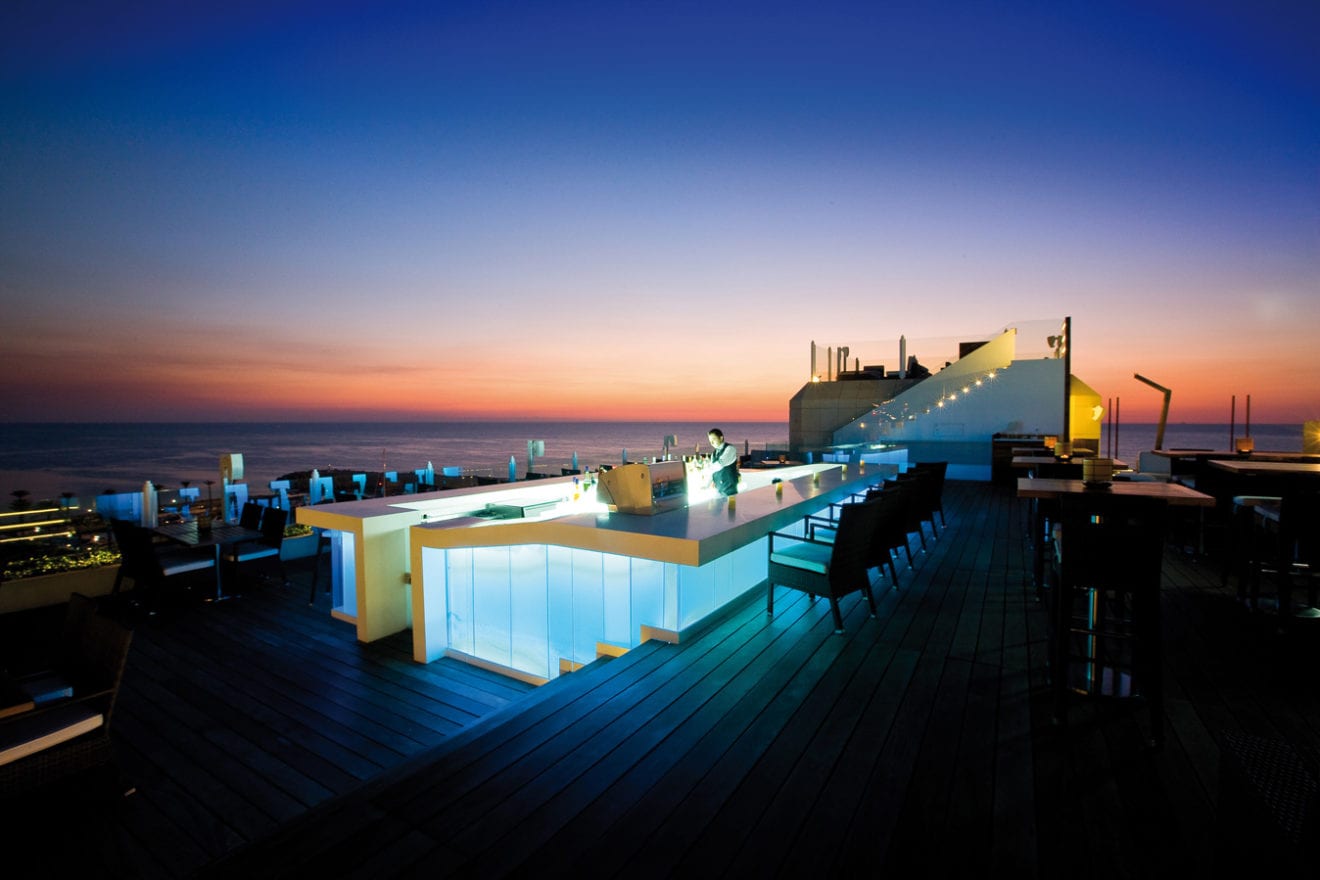
    With breath-taking sunset views from the rooftop lounge and hotel restaurant, the resort also features a 500-sqm ballroom, custom-designed kids’ club, business centre and meeting rooms, gym, library and spa, along with the Samasta Mall, which consists of a wide collection of boutiques, restaurants, gourmet market and a Mövenpick ice cream parlour.

    Mövenpick Resort & Spa Jimbaran is amongst eight hotels and resorts the group is opening over the next three years in the region, with expansion also in Thailand, Malaysia, the Philippines and Vietnam.

    Thailand is also a major focus, with the recent opening of Mövenpick Hotel Sukhumvit 15 Bangkok, followed in the first quarter of next year by the 264-room Mövenpick Siam Hotel Pattaya positioned for families and business meetings on Jomtien Beach. They add to an existing portfolio of three Mövenpick hotels in Phuket and Koh Samui, for a total of five hotels in Thailand by 2017.

    Further hotels to open across the region are Mövenpick Hotel & Convention Centre Kuala Lumpur and Mövenpick Resort & Spa Kuala Terrengganu in Malaysia; Mövenpick Resort Boracay in the Philippines; Mövenpick Hotel & State Guest House Chifeng, China; and Mövenpick Resort & Spa Quy Nhon, Vietnam.

    The existing eight-property portfolio of Mövenpick Hotels & Resorts in Asia includes four in Thailand and one each in Singapore, Vietnam, China and the Philippines.

    Hosted by HVS and co-hosted by the Ministry of Tourism of Indonesia and the Indonesia Investment Coordinating Board (BKPM), this year’s second edition of THINC Indonesia once again brings together hospitality and tourism industry stakeholders, business leaders and key decision-makers from across 17 nations to explore growth and investment opportunities in the region.

  • ‘M’ Retaurant groups up the glam factor on the Shanghai Bund

    ‘M’ Retaurant groups up the glam factor on the Shanghai Bund

    ‘M’ Restaurant Group is pleased to announce the launch of Glam, a sophisticated new Shanghai dining lounge & bar at 5 on the Bund – the same address that has been home to Shanghai institution and Bund pioneer, M on the Bund restaurant.  

    ‘M’, spearheaded by Shanghai’s legendary entrepreneur Michelle Garnaut, is famed for setting new standards of dining in Asia. Her restaurant collection began with the opening of M at the Fringe in Hong Kong (1989), from which she went on to pioneer the revival of sophistication in Shanghai with world famous M on the Bund (1999), and then further enhance Shanghai’s glamorous nightlife scene with the launch of The Glamour Bar (2006).  From here, she brought fine dining to the heart of Beijing’s Tian’anmen Square, with the opening of Capital M, (2009).

    “We look forward to bringing renewed life and energy to the heart of The Bund with an intoxicating mix of innovative and contemporary sharing plates (different from M on the Bund), fabulous cocktails, and the most extensive selection of wines by the glass offered in Shanghai.  There’s something for everyone…over 18 years of age. It’s a fun place for grownups!” says Michelle Garnaut.

    The menu, created under the watchful eye of Executive Chef Hamish Pollitt offers a delicious array of modern food designed for sharing, at prices that will have guests coming back often. With each menu, he respects the seasons, highlights local ingredients and introduces something new every month.

    Depending on the size of their appetites, guests are advised to choose one or two items from each of the sections, where favourites include the Veggie Pakoras andSweet Eggplant Pickle (RMB 36), Smoking Salmon and Salmon Caviar (RMB 48), Chili Salt-Crusted Bean Curd & Black Beans (RMB 38), Thai Tah Tah (RMB 68), 18-hour Lamb Shoulder Rogan Josh (RMB 128), and Ginger-Glazed Duck Dome Pie (RMB 108).

    The playful ‘Folly Trolley’ is stacked with a revolving selection of desserts including sweet Verrines (RMB 42) served in M’s beautiful colourful cut glasses, Alfonso’s Exploding Mango Pannacotta, Carmen Miranda’s tres fash Iles Flotante, Josephine Baker’s Chocolat Mousse, and Pavlov’s Dog … in a glass.

    A selection of madly modernistic and dramatically eclectic cocktails are on offer alongside the classics. At the vintage bar experienced mixologists are busy concocting delicious creations, many showcasing Glam Manager David’s crafted bitters, such as Saffron & Spice, Fellini Martini, Evening Thyme, Fire & Ice, or Mrs Peacock’s Folly.

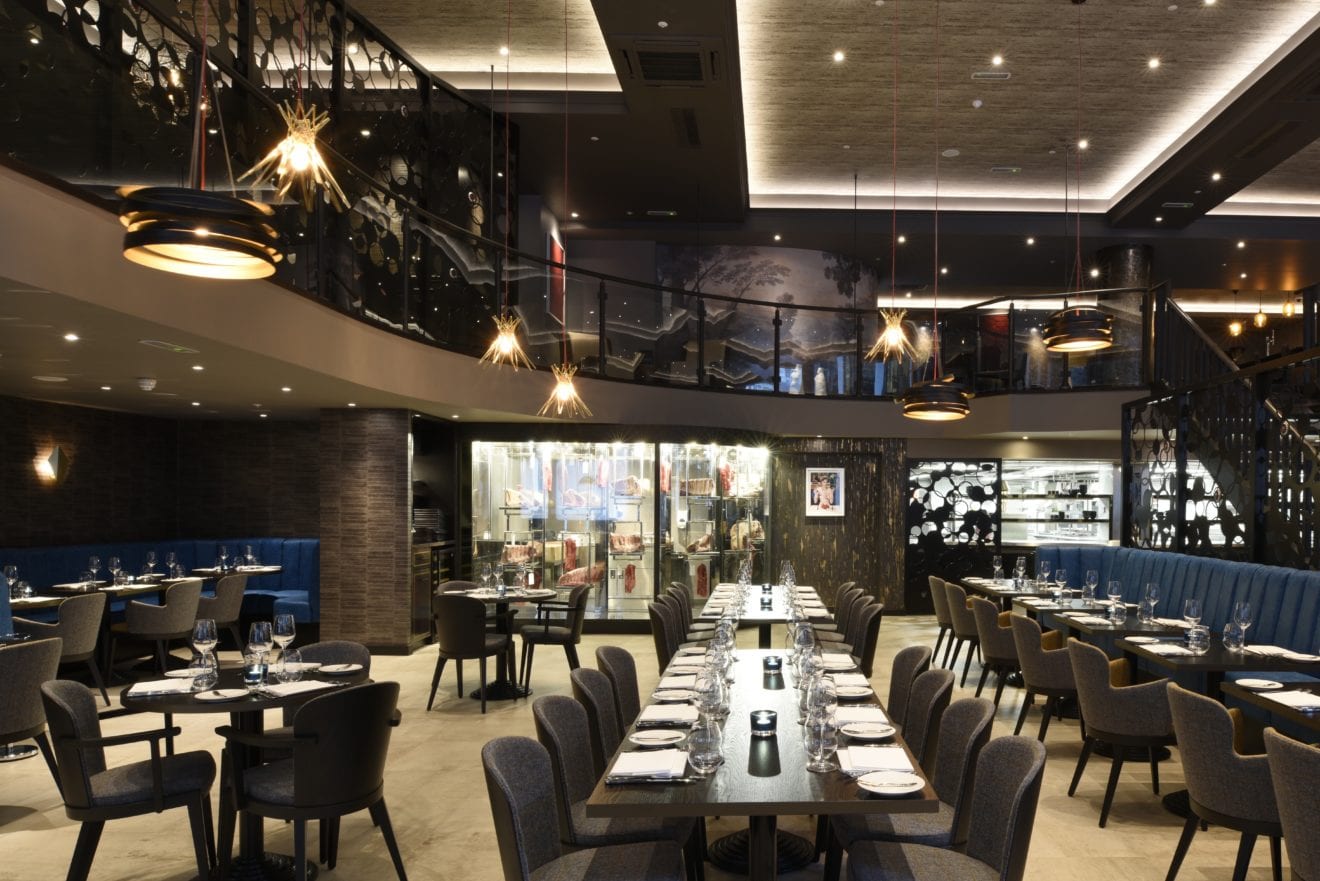
    Guests enter the sensuous space through a glittering crystal waterfall, revealing low tables and dark jewel tone interiors inspired by the feathery tail of a Peacock. Designers Duncan Miller Ullmann (DMU) have ultimately created a warm and alluring interior. A comfortable mix of bespoke furniture and dark mirrored ceilings emphasize a series of works exclusively designed for Glam by famed cinematographer / artist / writer Christopher Doyle. It’s Glam on the Bund!

  • Parkson’s shares hit 9 ½-year low after sinking into red

    Parkson’s shares hit 9 ½-year low after sinking into red

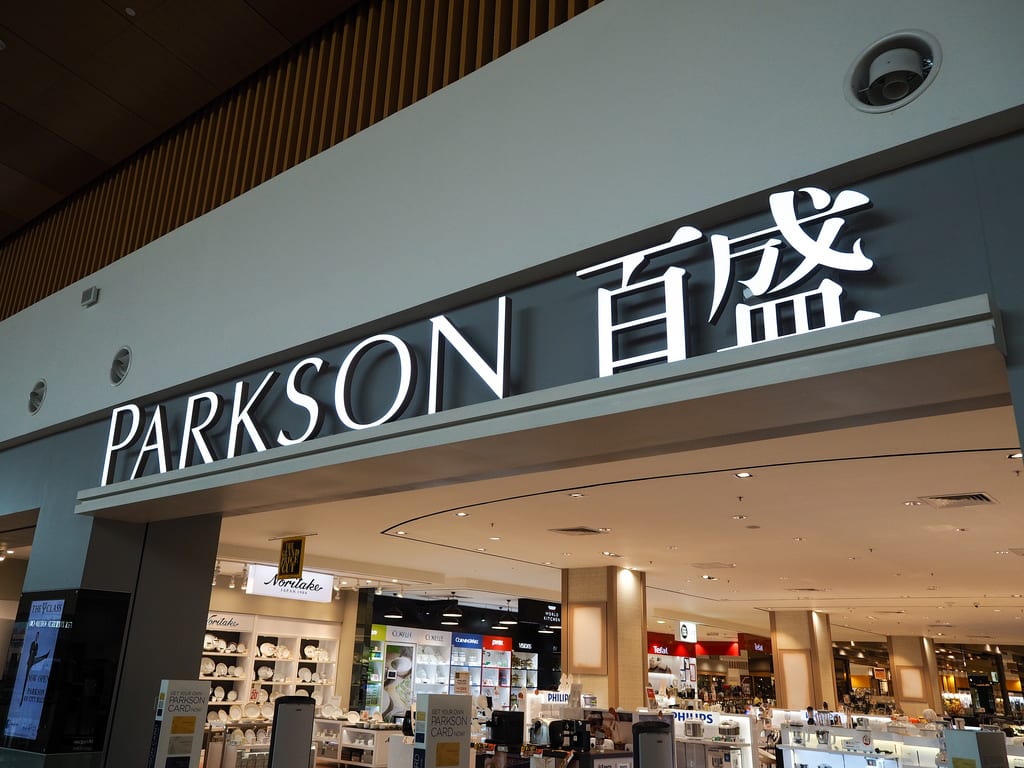
    Parkson Holdings Bhd’s share price contracted as much as 7.14% to its nine-and-half-year low in the morning trade, making it one of the top losers across the bourse, after the department store operator sank into losses in its latest quarterly results.

    At 2.41pm, Parkson rebounded a little from its intra-day low (RM1.04) to trade at RM1.06, still down six sen or 5.36%, after some 571,800 shares changed hands.

    The current price gives Parkson a market capitalisation of RM1.16 billion.

    In its fourth quarter ended June 30 (4QFY15), Parkson posted a net loss of RM90.95 million or 8.75 sen per share, compared with a net profit of RM26.76 million or 2.56 sen per share last year, largely on weaker retail sentiments.
    This is despite revenue for 4QFY15 rising 5.2% to RM859.04 million, from RM816.51 million last year, mainly due to slightly better figures from China, Vietnam, Myanmar and Indonesia.

    The group’s retailing division registered a weaker set of results for FY15, with revenue increasing only by 4% to RM3.64 billion; while operating profit contracted by 41% to RM190 million, compared with FY14.

    Parkson said its operation in Malaysia saw same-store sales contracting 4.5% for FY15, as consumer sentiments were affected by rising cost of living and the depreciating ringgit.

    For the full year, Parkson’s net profit plunged 69% to RM42.84 million or 4.06 sen per share, against RM138.15 million or 13 sen per share in FY14; while revenue rose 5.4% to RM3.74 billion, against RM3.55 billion last year.

    Despite the lower earnings, Public Investment Bank has upgraded Parkson to ‘outperform’, as it views its weak share price as an opportunity to accumulate, but lowered its target price to RM1.48.

    “We believe the recent slump in share price has deemed Parkson attractive, considering there is still growth in sales and profits going forward, assuming no one-offs incurred,” said the investment bank.

    “We think further weakness in Parkson’s share price is not justified, as the group’s fundamentals remain intact, with more than RM2.7 billion cash and undemanding valuation of 10.6 times and 10 times of financial year 2016 (FY16) and financial year 2017 (FY17) respectively,” it added.

    Additionally, PIVB said the recent announcement of 10 sen per share cash distribution, which will come after its internal reorganisation is completed, is fairly rewarding to shareholders, yielding 8.9% of its current share price


  • Pantaloons to invest Rs 125 cr this fiscal, add up to 35 stores

    Pantaloons to invest Rs 125 cr this fiscal, add up to 35 stores

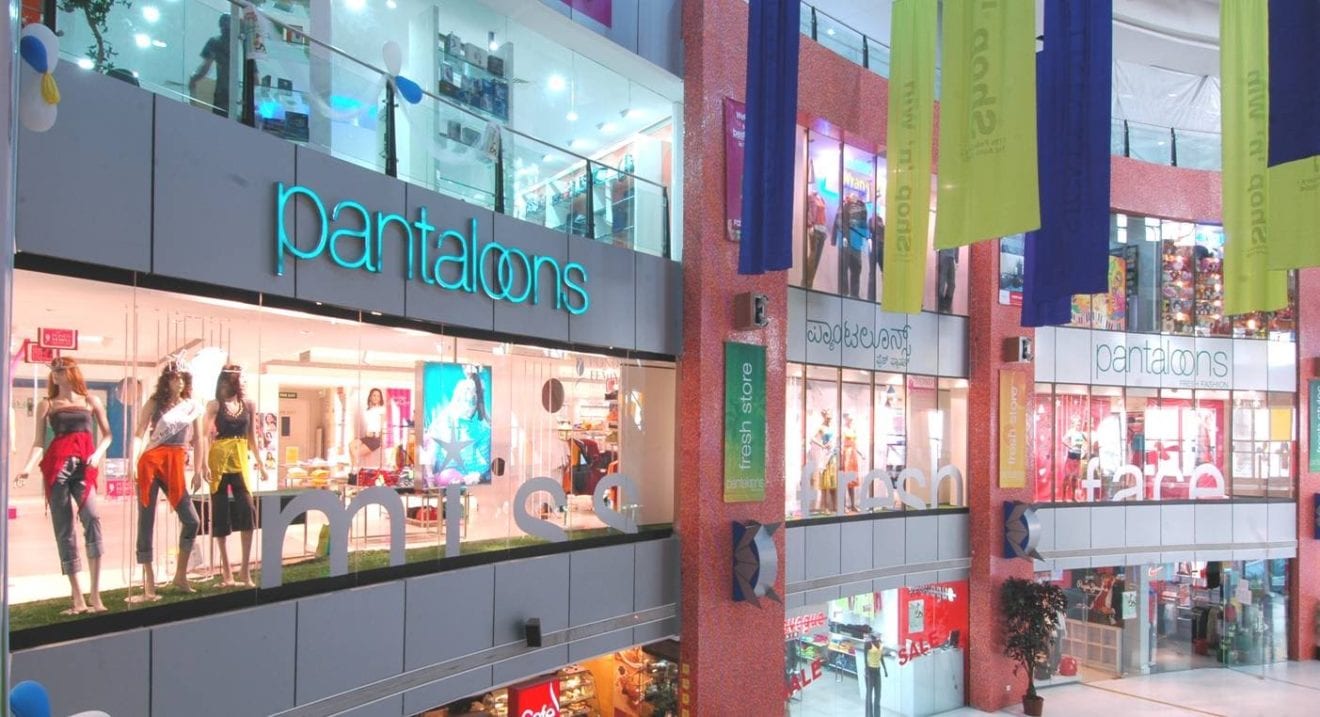
    Retail chain Pantaloons plans to invest Rs 125 crore this fiscal as it plans to add up to 35 stores across the country.

    In an investor update, Pantaloons Fashion & Retail’s parent company Aditya Birla Nuvo said: “Financial year 2015-16 capex guidance (for Pantaloons) stands at about Rs 125 crore mainly towards launch of new stores.”

    “The company is targeting to launch 30-35 stores during 2015-16 and focus will be on expanding customer reach and portfolio enrichment,” it said.

    Pantaloons, which has over 100 stores across the country, reported net sales of Rs 433.70 crore for the quarter ended June 30, 2015.

    In May, in a major restructuring exercise, Aditya Birla Group announced merger of all its branded apparel businesses into one entity, Aditya Birla Fashion and Retail Ltd.

    Under the scheme of arrangement, the apparel businesses of group holding company Aditya Birla Nuvo and of another group firm Madura Garments Lifestyle Retail would be demerged into listed firm Pantaloons Fashion & Retail Ltd (PFRL).

    Madura owns and retails brands such as Louis Philippe, Van Heusen, Allen Solly, Peter England and People and operates 1,759 stores across the country.

    In 2012, Aditya Birla Nuvo had entered into an agreement with the Future Group to infuse Rs 1,600 crore into Pantaloons and acquire a majority stake in the store chain.

  • Twitter appoints new boss for Indonesia

    Twitter appoints new boss for Indonesia

    Twitter has appointed Roy Simangunsong as the company’s country business head in Indonesia.

    “It’s my first day at work, so there’s no strategy to apply yet, but what is important for the audiences and advertisers are my confidence in running and developing this company. Because, at the end of the day, Twitter wouldn’t want us to innovate on things that disrupt the users’ experience,” said Roy as quoted by Antara news agency on Tuesday.

    Indonesia has around 80 million Internet users, according to Roy, and around 150 million smartphone subscribers and almost 80 percent of Twitter users worldwide access the application from their mobile phones.

    Prior to Roy, the business head position had been held by Rick Mulia from November 2014. Rick resigned in June, leaving the position vacant for two months.

    Roy was previously the country business head at Yahoo! Indonesia and other multinational companies like Microsoft and IBM. His last position before becoming Twitter Indonesia’s number one person was chief executive officer for Okezone digital media company.

  • Connell Brothers Awarded Distribution Agreement by Graminex in Australia and New Zealand

    Connell Brothers Awarded Distribution Agreement by Graminex in Australia and New Zealand

    Connell Brothers (CBC), the largest specialty chemicals and ingredients marketer and distributor in Asia-Pacific, announced today that, effective September 1, 2015, it is appointed to manage the sale and distribution of Graminex(R)’s products in Australia and New Zealand, including finished goods and ingredients, such as flower pollen extract, saw palmetto and cranberry.

    The U.S.-based Graminex(R) is the exclusive grower and manufacturer of solvent-free Rye Grass Flower Pollen Extract(TM), and a leader in the international dietary supplement industry. Their products are sold in more than 44 countries on six continents. Graminex’s vertically integrated manufacturing ensures quality, consistency and efficacy of their products. CBC Australasia will represent Graminex(R) Flower Pollen Extract active ingredients, as well as the dietary supplements, primarily focusing on the areas of prostate, immunological and women’s health support.

    “We are pleased with our success promoting Graminex’s products in Taiwan, and look forward to maximizing similar marketing and distribution opportunities Australasia,” said Alex Grantz, regional manager, Food & Nutrition. “Our Food & Nutrition portfolio continues to grow in this region, allowing us to better serve our customers’ needs to differentiate their health and wellness product lines.”

    Cynthia May, CEO of Graminex(R) said, “Connell Brothers has a reputation of unmatched customer service and technical capabilities, including lab testing and product formulation. They have proven an efficient distributor for Graminex Products and I am confident that through their expertise and attention to product safety and quality assurance, they are the right distribution partner for Graminex in Australia and New Zealand.”

    About Connell Brothers

    Founded in 1895, Connell Brothers is a division of Wilbur-Ellis Company and is the largest marketer and distributor of specialty chemicals and ingredients in Asia-Pacific with a keen focus on technical service, customer support, and environmental, health, and safety. Connell Brothers provides complete supply chain management from transportation, documentation, warehousing, and sales and distribution in 17 countries and in 37 offices located throughout Asia-Pacific.