Category: General

Retail News Asia is committed to providing both local and global retailers with the latest General Retail news throughout the Asian market. This on a daily base.

  • Dollar struggles in Asia after lift from US retail sales

    Dollar struggles in Asia after lift from US retail sales

    The dollar was steady on Friday after China’s central bank appeared to have stopped guiding the yuan lower for now, easing concerns that a weaker Chinese currency could derail plans by the US Federal Reserve to raise interest rates.

    The dollar traded at 124.40 yen, flat from late US levels and above this week’s low of 124.21 yen. For the week, it was up about 0.1 per cent.

    Volume in Tokyo was relatively thin, with many businesses winding down for the mid-August Obon holiday. Although there are no public holidays, many people take summer vacations around this time, and some offices close.

    “Company people have gone on their breaks and left their orders with banks,” said Kaneo Ogino, director at foreign exchange research firm Global-info Co in Tokyo.

    Some commercial accounts would sell dollars above 125.50, he added.

    The euro fetched $1.1143, down slightly from late US levels. Still, it was up 1.6 per cent on the week, as the dollar has been hit by speculation that the US might not want a stronger dollar either if China pushes down the yuan.

    The euro got a lift this week as investors unwound euro-funded carry trades in the yuan and other emerging market currencies, which were hit hard by the devaluation.

    Emerging Asian currencies continued to fall on Friday, on track for steep weekly losses, with the Malaysian ringgit skidding to a fresh pre-peg 17-year low.

    On Friday, the People’s Bank of China set the yuan midpoint at 6.3990 yuan to the dollar, slightly stronger than Thursday’s levels.

    The central bank said on Thursday there was no reason for the yuan to fall further given the country’s strong economic fundamentals.

    Beijing’s moves some eased concerns that a cheaper yuan could trigger a “currency war”, or a competition among the world’s biggest economies to cheapen their own currencies to seek a competitive edge.

    US interest rate futures prices edged down and US bond yields bounced back as investors priced in an increased likelihood of a Fed rate hike in September. Solid US retail sales data also supported the case for an early rate hike.

    The dollar index, which tracks a basket of six major currencies, stood at 96.420 , off a one-month low of 95.926 hit on Tuesday.

    Still, market players are not sure how much more the dollar can gain, assuming the yuan could fall further in the face of a slowdown in the Chinese economy.

    “The latest concerns triggered by the sudden policy action may be subsiding a tad. But there is no change in the fact that the Chinese economy is slowing,” said Masafumi Yamamoto, senior strategist at Monex Securities.

    “I think the yuan has become overvalued as other countries tried to cheapen their currencies and it will keep falling, playing catch-up,” he added.

    While most major currencies saw limited moves on Friday, the New Zealand dollar fell after domestic retail sales had the slowest increase in two years, cementing expectations the Reserve Bank of New Zealand will cut rates.

    The New Zealand dollar traded down 0.5 per cent at $0.6535 , down about 1.3 per cent for the week.
  • Indonesian president Joko Widodo officially opens Indonesia Convention Exhibition

    Indonesian president Joko Widodo officially opens Indonesia Convention Exhibition

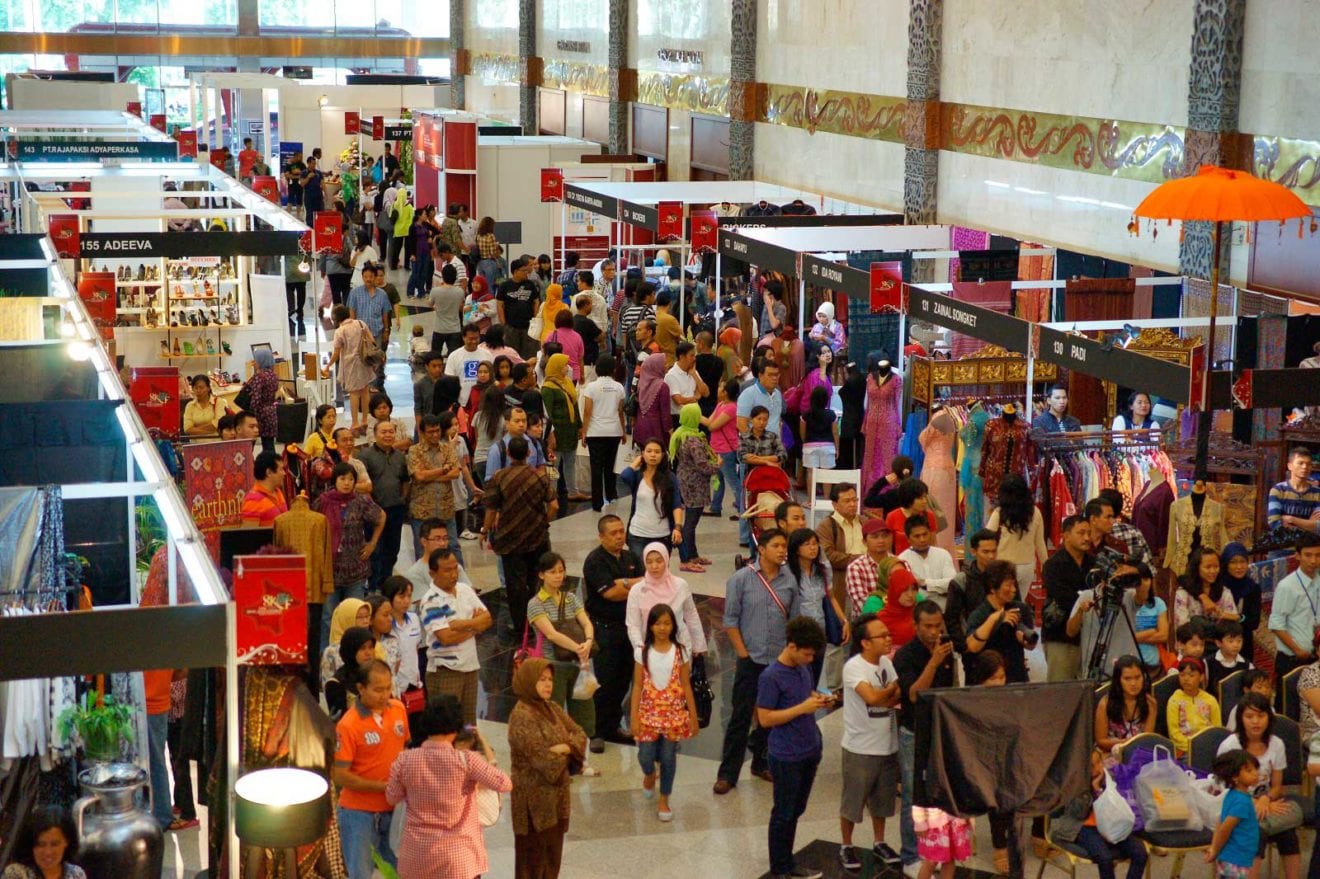
    Joko Widodo, President of Indonesia, participated in the grand opening ceremony of Indonesia Convention Exhibition, officially launching Indonesia’s newest trade fair and convention center. Indonesia Convention Exhibition was built by PT. IIE (Indonesia International Expo), a joint venture between Sinar Mas Land and Kompas Gramedia Group, Indonesia’s leading real estate developer and the country’s leading media enterprise, respectively. Deutsche Messe AG, one of the world’s largest trade fair companies, operates the facility.

    Indonesia Convention Exhibition is a 22-hectare project located in BSD City in the South Tangerang district. After stage one of construction, Indonesia Convention Exhibition currently offers 116,000 square meters of display area for events of all sizes. Attributes such as strategic location; capacity for hundreds of thousands of people; a large, user-friendly parking area; convenient transportation connections; and eco-friendly and energy-efficient infrastructure set new standards in the Indonesian exhibition landscape.

    Mark Schloesser, President Director of Deutsche Messe Venue Operations, said, “ICE features 10 exhibit halls on 50,000 square meters, 50,000 square meters of outdoor display area and a 4,000-square-meter convention center with 33 meeting rooms. With a broad range of facilities and world-class service, ICE fulfills the needs of all event organizers and represents the largest exhibition and convention center in South East Asia. Indonesia can be proud to be home to this international attraction. 

    Deutsche Messe AG

    With revenue of 280 million euros (2014), Deutsche Messe AG ranks among the world’s ten largest trade fair companies and operates the world’s largest exhibition center. In 2014, Deutsche Messe planned and staged 134 trade fairs and congresses around the world – events which hosted more than 41,000 exhibitors and 3.6 million visitors. The company’s event portfolio includes such world-leading trade fairs as CeBIT (IT and telecommunications), HANNOVER MESSE (industrial technology), BIOTECHNICA (biotechnology), CeMAT (intralogistics), didacta (education), DOMOTEX (floor coverings), INTERSCHUTZ (Rescue, fire prevention, disaster relief, safety and security), and LIGNA (wood processing and forestry). With about 1,200 employees and a network of 66 representatives, subsidiaries and branch offices, Deutsche Messe is present in more than 100 countries worldwide.

    Indonesia International Expo (IIE)

    Indonesia Convention Exhibition was built to promote further growth in Indonesia’s MICE (meetings, incentives, conferences, events) industry. To realize the project, Sinar Mas Land and Kompas Gramedia Group established a joint venture, PT. IIE (Indonesia International Expo), to manage the 22-hectare development in BSD City, South Tangerang. The newly opened 220,000-square-meter first phase includes Indonesia Convention Exhibition as well as a 4-star hotel with 295 rooms and parking facilities. Additional hotels, office buildings and additions to Indonesia Convention Exhibition will follow in the second stage of construction.

    Sinar Mas Land

    Sinar Mas Land is a leading property developer in South East Asia with more than 40 years’ experience in Indonesia. Sinar Mas Land is listed on the Indonesian Stock Exchange with the name PT. Bumi Serpong Damai Tbk (BSDE). With more than 50 large-scale projects in Indonesia plus 10,000 hectares of land holdings, Sinar Mas Land is recognized as the biggest and best-known property developer in Indonesia.

  • Fusionex eyes Philippines, fuelled by 26% jump in revenue

    Fusionex eyes Philippines, fuelled by 26% jump in revenue

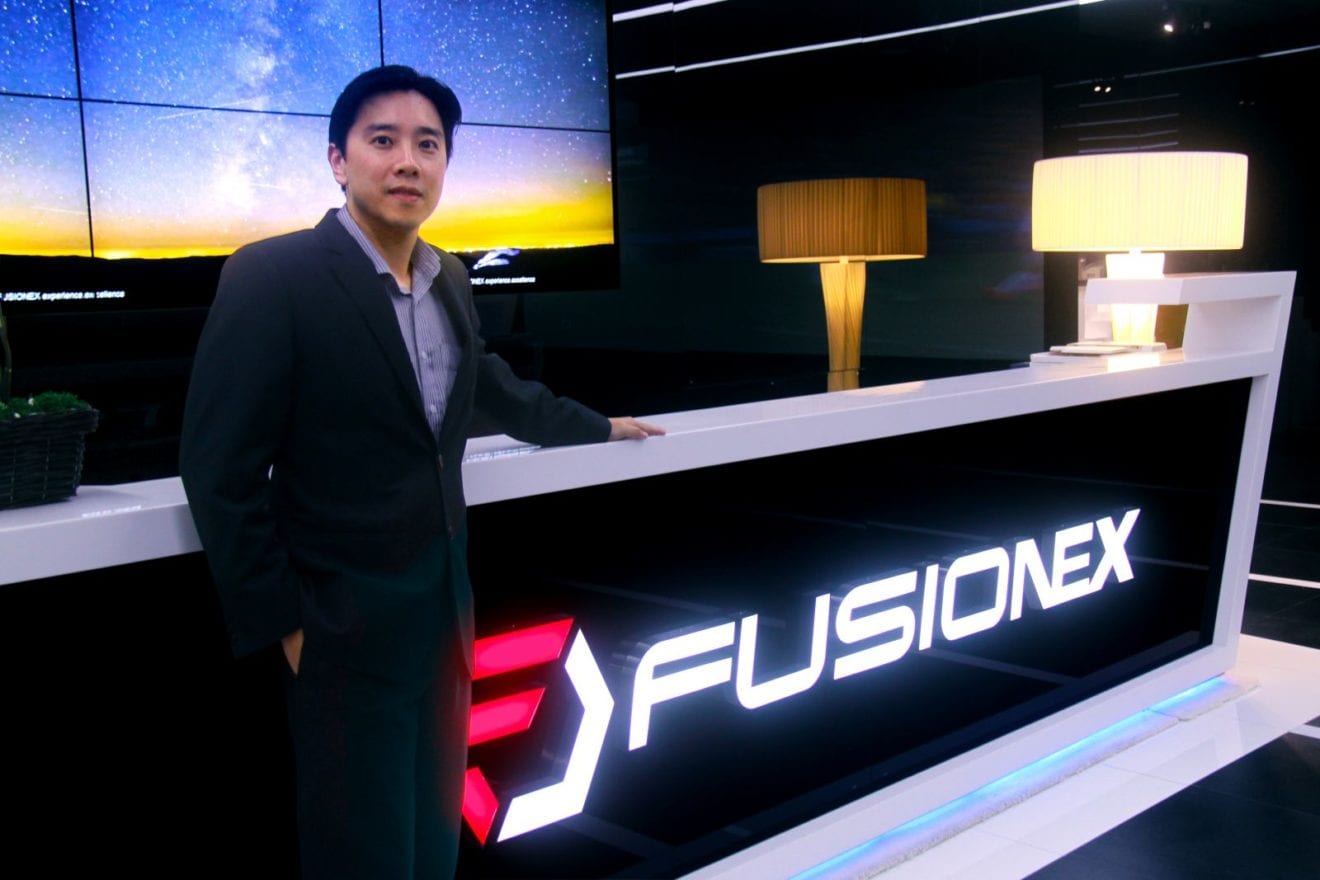
    BIG data and analytics software company Fusionex International Plc will be widening its footprint in South-East Asia by expanding to the Philippines over the next few months, its fourth market in the region.
    The company, listed on the London Stock Exchange’s Alternative Investment Market (AIM), has a presence in Hong Kong, Macau, the United Kingdom and the United States; as well as its home base of Malaysia and South-East Asian neighbours Singapore and Thailand.

    Its expansion strategy is somewhat conservative, but it is already close to securing an anchor customer, Fusionex cofounder and managing director Ivan Teh told Digital News Asia (DNA) in Kuala Lumpur recently.

    “We have been spending time to ensure that we got the right partner, the right place, the right kind of ecosystem, infrastructure and setup.

    “We want to know the market first, so we don’t want to go in and waste two years only to realise the market is not suitable,” he said.

    One may wonder why Fusionex is eyeing the Philippines, where ICT spending is significantly lower than its home market even though its population is triple Malaysia’s.

    According to an IDC report, Philippines’ ICT spending is expected to reach US$6.76 billion this year. In contrast, according to a Gartner report, Malaysia’s ICT spending is estimated to be around RM65.1 billion (US$16.42 billion).

    But Teh, an inaugural DNA Digerati50, said Philippines is a good expansion destination for various reasons.

    “The retail market is booming over there. The shared services and outsourcing markets are exploding too,” he argued.

    According to a Manila Bulletin report, citing the Philippines Retailers Association, the country is expected to see 40 new malls open in 2014 and 2015. The association projected retail sales would reach P1.61 trillion (US$35 billion) by 2016 and P1.78 trillion (US$38 billion) by 2017.

    “Malaysia will remain to be our centre of excellence – a lot of the research and development will be done from Malaysia. Nevertheless, the Philippines is undeniably a booming market,” said Teh.

    For the six months ended March 31, 2015, Fusionex’s revenue increased 26% to RM31.6 million, while gross profit jumped 31% to RM24.9 million. [RM1=US$0.25 at current rates]

    The strong performance was mainly driven by its flagship big data analytics product Fusionex Giant , which has found over 25 customer wins since launch. These companies include the domestic unit Japanese retailer Aeon.

    Fusionex has managed to get other big-name customers this year, including AirAsia; Brother Industries Ltd, a multinational electronics and electrical equipment company headquartered in Nagoya, Japan; and Islamic insurer Syarikat Takaful Malaysia Bhd in Malaysia.

    But for now, all of Teh’s attention will be on ensuring its Philippines expansion goes according to plan, and also that the business runs smoothly post-launch.

    “It’s important for us to set up the right team and to hire the right people. We will also get some of our Malaysian employees to be there for a period of time, just to make sure we have a cultural transition.

    “Then, we want to grow the local talent as well,” he said.

  • Commissary reintroduces cooked poultry products in South Korea by Labor Day

    Commissary reintroduces cooked poultry products in South Korea by Labor Day

    Commissary shoppers in South Korea will begin to see cooked poultry products back on shelves by Labor Day.

    On July 13, the U.S. Department of Agriculture issued a revision to Korea’s embargo to allow heat-treated poultry and poultry products from the U.S. Learning the news, the Defense Commissary Agency quickly placed orders with its U.S. suppliers to restock the shelves of commissaries in South Korea with cooked poultry products.

    “Frozen dinners, pot pies, nuggets, lunch meats, franks, Lunchables and other popular cooked poultry products will begin to arrive by early September,” said Wayne Walk, DeCA’s zone manager in Korea. “With school starting back up, this is great timing for parents packing lunches and for anyone looking for easy-to-prepare meals.”

    South Korea’s embargo had restricted the entry of all poultry products into the country since last December when the U.S. announced the presence of avian influenza in live poultry flocks in Oregon and California, followed by additional outbreaks in other U.S. states.

    Uncooked poultry from the U.S. is still restricted by the embargo, but DeCA has alternate sources for uncooked poultry to replace many of the items it previously received from U.S. suppliers.

    “We offer fresh, uncooked chicken and eggs from Korea,” said Walk. “We have whole chickens, chicken breasts, boneless thighs and drumsticks. These products are not frozen and are ready to take home and cook immediately.”

    Commissaries also began offering chicken from Australia this month.

    “Shoppers will find Steggles of Australia chicken in the freezer section in tray packs,” said Walk. “Steggles is supplying our commissaries here in Korea with chicken products that have historically been popular with our shoppers – skinless, boneless breasts and thighs; tenderloins; wings and drumsticks.”

    “We’re working continuously to provide our customers with the very best service and product assortment,” said Walk. “The embargo has been an opportunity for DeCA to work a little harder to ensure military members and their families stationed in Korea have the products they need when they use their commissary benefit.”

    The USDA advises consumers to always follow proper handling and cooking processes when working with poultry. Food safety and avian influenza information can be found in the USDA Food Safety and Avian Influenza Questions and Answers, April 2015.

  • Hong Kong fund sales slide by 50%

    Hong Kong fund sales slide by 50%

    The Hong Kong fund industry saw net sales drop by almost a half in the first six months of 2015, new figures reveal.

    The Hong Kong Investment Funds Association (HKIFA) published data on Wednesday which cited a sharp fall in funds to $3.71bn (£2.38bn, €3.34bn).

    Bruno Lee, the chairman of HKIFA, blamed the decrease in sales on global market uncertainty, particularly around China mainland’s A-Share market, the Greek debt crisis, and the potential US interest rate rise. He said volatility in the global currency market was also to blame.

    “Retail investors should review their investment position regularly to ensure their investment strategy is aligned with their long-term personal financial objective and seek for professional investment advice if needed,” Lee said.

    Though net sales fell dramatically, gross sales saw a rise of 14% to $47bn in the first half of 2015, after hovering at $7bn in the first quarter, soaring up by more than $10bn in April, and then dropping back to $7bn towards the end of the second quarter.

    HKIFA said China-related and European equity funds were the key sectors which contributed to the surge in gross sales in the second quarter of this year.

    “The moderate growth in gross retail fund sales and higher equity fund sales percentage indicate a higher risk appetite amongst retail investors,” said Lee.

    HKIFA members are comprised of 82 fund management companies.  It also has 43 associate members, including lawyers, accountants, trustees and other professionals that are involved in the creation and administration of funds.

  • Lotte Group head issues apology for feud, vows reform

    Lotte Group head issues apology for feud, vows reform

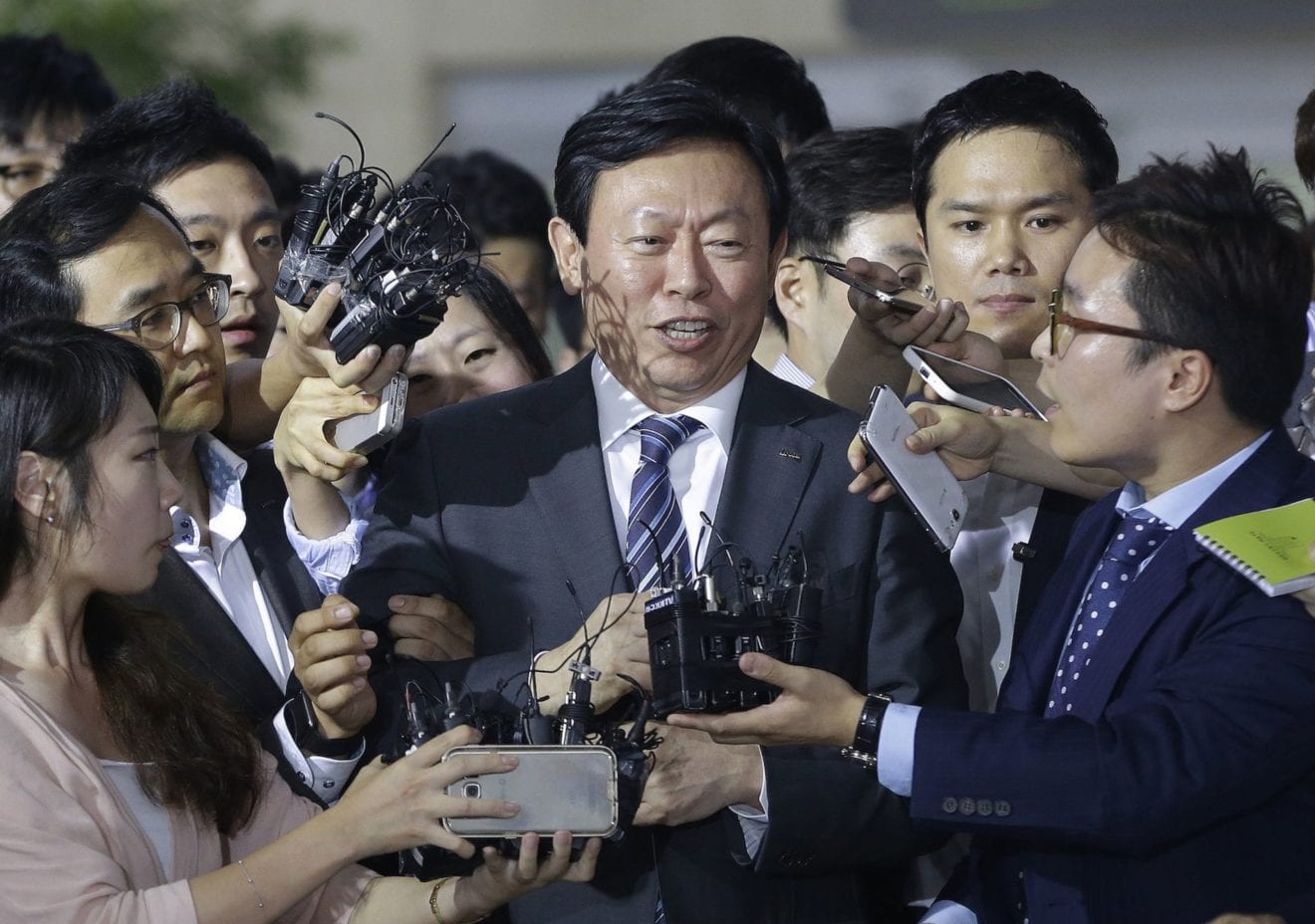
    The head of South Korea’s Lotte Group yesterday vowed a new era of corporate governance and transparency as he apologized for the family feud engulfing the beleaguered retail giant.

    In an address broadcast live on TV, group chairman Shin Dong-bin also sought to deflect growing anti-Japanese sentiment surrounding Lotte, which was founded in Japan, but does 80 percent of its business in South Korea.

    Talking in accented Korean, the native Japanese speaker twice bowed deeply before the cameras in a show of contrition for the bitter and very public battle for corporate control that has pitted him against his father and elder brother.

    “The current dispute has occurred as we have failed to make efforts to improve corporate governance and enhance transparency,” Shin said.

    “We will be bold in reform in order to address concerns held by the people of Korea, our shareholders, contractors and employees,” he added.

    At stake in the Lotte feud is control of a sprawling conglomerate with 80 units across South Korea — spanning retail, amusement parks, hotels and chemicals — and total combined assets of about US$90 billion.

    Among other reforms, Shin said he would push for the public listing of the conglomerate, which effectively controls the South Korean business, while also streamlining the group’s complicated web of cross-holdings to enhance transparency.

    “Lotte belongs to Korea,” the chairman said, stressing that the group’s South Korean interests dwarfed the Japanese-based side of the business in terms of employee numbers and sales.

    “There has been little flight of capital back to Japan,” Shin said, adding that earnings made in South Korea had been plowed back into the domestic business.

    Lotte was founded in Japan in 1948 by Shin Dong-bin’s father — South Korean-born Shin Kyuk-ho, now 92 — and grew from a seller of chewing gum to a confectionary giant. It expanded to South Korea after Tokyo and Seoul normalized relations in 1965.

    The row within the Shin family has fanned the embers of the anti-Japanese public sentiment the group has long contended with in South Korea — largely due to the family members’ awkwardness with the Korean language.

    The battle for control of the conglomerate has pitted Shin Dong-bin against his father and his elder brother, Shin Dong-ju, with accusations of dirty tricks and attempted boardroom coups.

  • CNN Indonesia begins broadcasting today

    CNN Indonesia begins broadcasting today

    CNN Indonesia began broadcasting today marking a historic day for CNN International, Transmedia and the people of Indonesia.

    From brand new state-of-the-art news facilities located in the Transmedia broadcast centre in Jakarta, CNN Indonesia offers viewers a mix of national and international news, plus the latest in business and sport in Bahasa Indonesia.

    The start of CNN Indonesia TV follows the launch of CNNIndonesia.com in October last year. The digital platform is an integral component of the CNN Indonesia brand with the ability to reach Indonesians at home and abroad.

    Jeff Zucker, CNN Worldwide President: “This is an incredibly important day for us. To be able to extend our footprint locally and reach millions of Indonesians is hugely exciting and humbling. We are confident Transmedia will deliver first-class content that appeals to Indonesians all across the country.”

    Gerhard Zeiler, President of Turner Broadcasting International: “Turner is committed to Indonesia and committed to growth and development in the Asia-Pacific region. We welcome CNN Indonesia to the family and look forward to a long and successful partnership.”

    CNN Indonesia is part of a strategic effort by CNN International Commercial’s Content Sales and Partnerships Group. Its core business is to explore ways to reach more consumers locally, regionally and internationally by partnering with other leading media organisations. CNN Indonesia is the latest addition to the CNN family that includes CNN Philippines, CNN Turk and CNN Chile.

  • Singapore economy grows by 1.8% in Q2

    Singapore economy grows by 1.8% in Q2

    Singapore’s Ministry of Trade and Industry (MTI) announced on Tuesday that the Singapore economy grew by 1.8 per cent on a year-on-year basis in the second quarter, slower than the 2.8 per cent growth in the previous quarter.

    On a quarter-on-quarter seasonally-adjusted annualised basis, the economy contracted by 4.0 per cent, a reversal from the 4.1 per cent growth in the preceding quarter.

    The manufacturing sector contracted by 4.9 per cent year-on-year, extending the 2.4 per cent decline in the previous quarter. The sector was primarily weighed down by declines in the output of the biomedical manufacturing and transport engineering clusters.

    The construction sector expanded at a faster pace of 2.5 per cent year-on-year, supported by a pick-up in public sector construction works, compared to the 1.1 per cent in the previous quarter.

    The wholesale & retail trade sector grew by 5.0 per cent year-on-year, slightly slower than the 5.3 per cent expansion in the previous quarter. Growth was driven by both the wholesale trade and retail trade segments, with the latter being supported in turn by robust motor vehicle sales.

    The accommodation & food services sector contracted at a faster pace of 0.6 per cent year-on-year compared to the 0.1 per cent decline in the previous quarter. The slowdown in the sector was largely due to sluggish performance in the food & beverage segment.

    The finance & insurance sector posted growth of 7.1 per cent year-on-year, extending the 7.8 per cent growth in the previous quarter. Growth was largely underpinned by the fund management segment.

    The information & communications sector grew by 4.5 per cent year-on-year, moderating from the 4.9 per cent growth in the previous quarter. Growth was mainly driven by the IT & information services segment.

  • Mood darkens for trade in China

    Mood darkens for trade in China

    The business sentiment of Korean companies in China has worsened in the second quarter – particularly in the automotive and electronics sectors – mainly due to the slowdown in overall consumption in the Chinese market on the heels of a wobbling stock market.

    It was the second straight quarter that the business sentiment index remained below the 100 mark.

    According to a report by the Korea Institute for Industrial Economics and Trade (KIET) on Monday, the companies’ business survey index in the second quarter was 71, lower than 77 in the first quarter this year.

    The index reflects business sentiment, considering different business environments like quarterly profit performance, sales, costs and business regulations. As the index ranges from 0 up to 200, a number smaller than 100 means more survey participants expressed negative answers, while the index larger than 100 means more positive answers.

    The slump in business sentiment was the largest in automotive and electronic devices, two industries in which Chinese rivals are quickly catching up on Korean technologies and in which consumer demands change quickly.The survey was taken for a month from June 15, by the Korea Chamber of Commerce & Industry’s Beijing office and a Korean business association in China, on some 226 Korean companies operating in China. They were doing business in seven different sectors, ranging from electronics and automotive to chemical, textile and retail.

    Korean auto companies in China gave 45 points in the second quarter, a lot lower than the 94 points in the first quarter, during which the Chinese auto taste has quickly moved to favor sports utility vehicles (SUVs) that are more affordable than Korean autos.

    Korean electronics companies gave 54 points in the second quarter, also much more negative than the first quarter’s 88 points, after Samsung smartphones lost market share to Xiaomi and Huawei.

    Only Korean chemical and retail industries expressed positive assessments regarding their businesses in the second quarter, each giving 103 points and 100 points, respectively.

    Survey participants said the slowdown of demand in the Chinese domestic market was the main reason for their business hardships in the second quarter, followed by competition with Chinese rivals and elevated labor cost, which raised overall production costs.

    In the first quarter, a steep increase in labor costs was the main reason Korean companies found it hard to do business in China, reflecting the slowdown in the growth of the domestic economy.

    However, the Korea International Trade Association (KITA) rolled out a positive outlook on Monday that the Chinese economy will maintain its growth rate at the 7 percent range in the latter half of the year and Chinese investment is on its way to recovery thanks to state-led infrastructure building projects, which bring up both imports from other companies as well as local real estate transactions.

    The outlook said Korea’s export to China and local production of Korean companies will stay contracted until the third-quarter due to the unstable Chinese stock market and contracted consumption sentiment.

    The Chinese economy is forecast to rebound to last year’s level by the fourth quarter at the latest, the KITA outlook forecast, as the central government there is pushing policies to boost cash liquidity and the real estate market.

    “The sagging domestic economy made Chinese consumers lean towards frugal consumption, which helps local Chinese companies with advanced product quality gulping up market share against foreign products,” said Lee Bong-geol, a senior researcher at the Institute for International Trade at KITA

  • The Lanesborough Reopens After 18-Month Renovation

    The Lanesborough Reopens After 18-Month Renovation

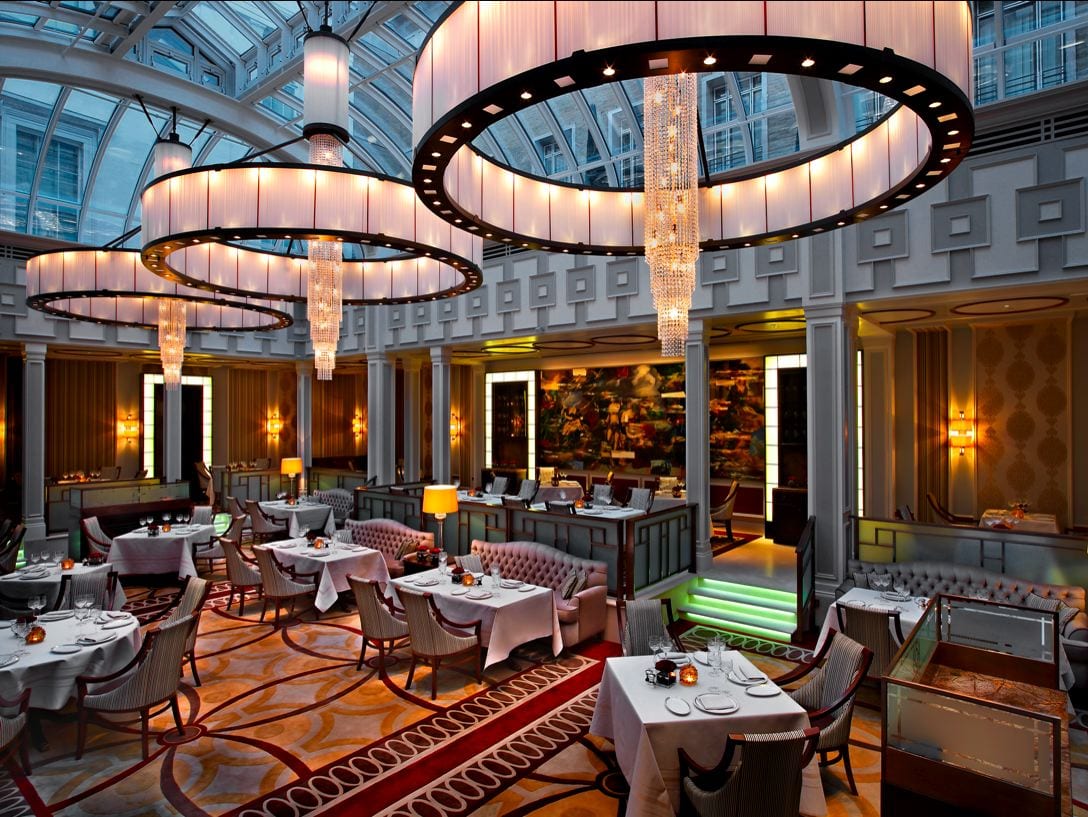
    The Lanesborough, the latest masterpiece hotel of Oetker Collection, has opened its doors following an extensive 18-month renovation project by late interior designer Alberto Pinto. Located just moments from Knightsbridge, Buckingham Palace and Hyde Park, The Lanesborough is London’s finest residence and one of the city’s most iconic hotels. The new hotel emulates the style and impeccable service of its French sister Le Bristol while staying true to the hotel’s strong British roots.

    Having closed its doors on 20th December 2013, the Grade II* listed building was taken back to its shell and has been totally transformed by Cabinet Alberto Pinto. The renovation honours the building’s architectural heritage as one of London’s most revered Regency landmarks. The hotel comprises 93 rooms and suites including The Royal Suite, which extends to seven bedrooms. Executive Chef Florian Favario oversees The Lanesborough’s new restaurant, Céleste, hailing a new culinary era for the hotel. Strengthening the relationship with Le Bristol, Favario is the former Head Chef of Le Bristol’s three-Michelin starred restaurant Epicure and the protégé of Chef Patron Eric Frechon who will oversee the menu. French inspired, the cuisine is modern and imaginative, using only the best of British ingredients. Daily afternoon tea is a traditionally British affair, with a Tea Sommelier on hand to guide guests through an extensive tea menu.

    To add to the extensive services offered to all guests, 23 private butlers are on call day and night to care for the individual needs of every guest, while a fleet of 14 luxury cars including a Rolls-Royce Phantom can chauffeur residents around London in impeccable style. Each one of The Lanesborough’s seven new private dining rooms possesses a character and atmosphere of its own – from the intimate feel of The Wine Cellar to the palatial setting of The Belgravia.

    With a sizable collection of Cuban and pre-Castro cigars as well as rare Cognacs dating back to 1770, The Garden Room is the ideal setting for a night of relaxed sophistication. With a celebrated walk-in humidor and knowledgeable team, this garden terrace is a favourite amongst cigar connoisseurs. For cocktails, The Library Bar offers a touch of grandeur in a warm and welcoming setting. A live pianist plays each night from 6-9pm creating an intimate, club-like atmosphere.

    A team of artisans using age-old techniques, often used in decorating Palaces, were entrusted to deliver a distinctive form of luxury, befitting for The Lanesborough. The craftsmen were all specialists in their fields and include embroiderers, crystal specialists, cabinetmakers, bronzers, lacquerers, gilders, mirror specialists, and makers of decorative trimmings. Over 300 people were involved in the day-to-day transformation of the hotel’s 93 rooms, allowing for exceptional time and care to be taken into each detail. Everything is handcrafted to perfection, with over 2,000 hours of stenciling in the public areas of the hotel as well as 5,500 original stencils showcased throughout guest rooms and within The Library Bar.

    Particular focus has been paid to the ceilings through restoring original detailing such as ceiling roses, coffering, cornicing and fresco painting. Award-winning British artisans in plaster produced a unique plasterwork design for each room upon Cabinet Alberto Pinto’s request and control. 2,100 books of 23 ¼ carat gold leaf were used to elaborately dress the ceilings of public areas and guest rooms, reimagining the Regency period and reflecting the heritage of the building. The majority of suppliers used for the renovation are British with over 95% made bespoke for The Lanesborough. Every trimming and finishing is made to measure, before going through specialist procedures to meet hotel safety standards.

    The Royal Suite has been reinstated as The Lanesborough’s largest suite, extending across 4,485 square feet, with seven bedrooms and bathrooms, two living rooms and a dining room exuding exquisite taste, impeccable British craftsmanship and attention to period detail. The Lanesborough Suite carries every hallmark of its distinguished designer, with four bedrooms and five bathrooms, two living rooms and a dining room as well as a kitchen and private entrance for the butler.

    Cabinet Alberto Pinto imagined guest rooms being grouped into five design schemes, reflecting the Regency period, with each group consisting of three rich jewel colour ways to create warmth, harmony and comfort. 14 different types of bed canopies hang within the rooms, with over 3 million hand stitches and bespoke tailoring using the highest quality fabrics. Each marble block for the new bathrooms was individually chosen and acute attention was given to ensure that each slab was perfectly book matched. World-renowned British perfumer Roja Dove has created bespoke fragrances and bathroom amenities for every guest room.

    The Lanesborough is recognised as a building of special architectural and historic interest with a Grade II* listed status.  ReardonSmith acted as Lead Design Consultant and Architect with responsibility for coordinating the renovation of the hotel in close collaboration with the interior designer, Cabinet Alberto Pinto.

  • Indonesia retail sales surge in June

    Indonesia retail sales surge in June

    Indonesia’s retailers appear to be among Asia’s most pessimistic.

    One month ago after government data showed a 19.8 per cent rise in May retail sales, the 700 retailers polled to create the index said they expected sales growth would slow in June.

    This week, the government has released revised figures showing a 20.6 per cent increase in May – and a massive 22.9 per cent rise in June, only just behind April’s 23.1 per cent.

    In this month’s poll, they said they expected sales growth to slow in September as demand returned to normal after the Ramadan festivities.

    The Bank of Indonesia said June’s Indonesia retail sales  increase was largely attributable to greater demand for food, beverages and tobacco, in line with increased consumption during the Muslim fasting month of Ramadan.

  • Korean retail sales recover post MERS

    Korean retail sales recover post MERS

    Korean retail sales are returning to normal as the impact of the MERS outbreak fades.

    Data released by South Korea’s finance ministry shows combined sales at department stores run by Hyundai Department Store, Lotte Shopping and Shinsegae Co rose 0.9 per cent in July, year on year.

    That contrasts with a drop of 11.9 per cent in June, as shoppers stayed home to avoid possible exposure to the Middle East Respiratory Syndrome (MERS) virus.

    South Korea’s government has officially declared the MERS outbreak over.

    Sales at major discount store chains also improved, but still recorded a year on year decline. In July they fell 1.9 per cent which compares favourably with a fall of 10.2 per cent in June.

    In its statement, the ministry said while consumption was showing signs of a recovery, there was “insufficient” improvement in the service industry.

  • Dairy Farm buys more Yonghui shares

    Dairy Farm buys more Yonghui shares

    Dairy Farm International has agreed to acquire a further 143 million shares in a placement by Yonghui Superstores for about US$210 million.

    The investment by DFCL is being made in conjunction with JD.com acquiring a 10 per cent interest for consideration of about US$700 million and protects Dairy Farm’s existing 19.99 per cent stake.

    Zhang Xuansong, Yonghui’s chairman, is acquiring a two per cent interest in the enlarged share capital in the placement for US$140 million, and his brother, Zhang Xuanning, the deputy chairman of Yonghui, will between them hold a reduced 29.15 per cent interest.

    Dairy Farm Group CEO Graham Allan, said his company was pleased to support Yonghui and its leadership team with the transaction.

    “The co-operation with JD.com will accelerate Yonghui’s participation in the rapidly expanding

    eCommerce space in China and offer significant opportunities for Yonghui. The related capital raising will strengthen Yonghui further as it implements its store development plans, builds a leading food supply chain in China and invests in an integrated online-to-offline business model.”

    The placement to JD.com requires the approval of Yonghui’s shareholders and certain regulatory approvals in the PRC which will take up to six months to complete.

    Shanghai-listed Yonghui operates hypermarkets and supermarkets from its Fuzhou, Fujian province, headquarters and operates 351 retail outlets across 17 provinces in China.

  • Singapore in recovery mode

    Singapore in recovery mode

    Singapore has bounced back from a drop in new business formations, with a nine per cent increase in the second quarter of this year.

    According to official data, 15,964 new businesses were registered in the three months to June 30, underscoring the confidence in Singapore as an international business centre.

    Jacqueline Low, COO of Hawksford Singapore, says, the significant quarter on quarter growth rate reflects the improving confidence of the entrepreneurial community and investors alike.

    “Despite various global challenges, the numbers have shot up in this quarter. This is reflective of the high business confidence and the trust in the strong business fundamentals of Singapore and the business community’s proactive mind-set to capitalise on the early signs of economic growth,” she said.

    Though the numbers contracted by more than 28 per cent in quarter one, compared to the last three months of 2014, in this second quarter it appears to be returning to normal.

    Singapore, with its strong business-friendly fundamentals and its strategic location amidst the burgeoning Asian markets, continues to attract foreign investors and enterprises. One third of the new business formed in the second quarter had foreign shareholders, while 47 new foreign company branch offices were set up – 11.9 more than in the first quarter.

    Entrepreneurs continue to take advantage of the favourable share capital clause of the Singapore Company Act that provides for businesses to be formed with share capital as low as S$1. As a result, in this quarter 74 per cent of the businesses were formed with less than $10,000 share capital.

    International enterprises continue to set up their subsidiaries in Singapore. The share of US companies setting up subsidiaries increased in this quarter by two per cent to five per cent.

    “For the second half of 2015 we anticipate the economic growth to remain muted yet the business incorporation numbers will continue to grow at the present level aided by strong domestic consumption, sustained recovery of the west and the regional growth pockets,” added Low.

    Private limited companies continued to be the dominant type of business formation, accounting for 54.7 per cent of the total registration, with Sole Proprietorship the second most popular type of entity, with 6021 new business formations.

    More detailed analysis and information can be found in the Q2 2015 Singapore Business Formation Statistics Report here.

  • E-Mart calls time on closures

    E-Mart calls time on closures

    South Korea’s largest discount supermarket operator E-mart says it is recommitting to the China market and will stop closing stores there.

    E-Mart once operated 27 discount grocery stores in the mainland, but for the last five years has been constantly returning its model and shutting down underperforming outlets.

    However this week, an E-mart executive signalled a change of course.

    “After the August 3 closure of a branch in Shanghai, there will be no additional shutdowns of the remaining eight branches in east China,” a media spokesperson said.

    E-Mart, part of the Shinsegae corporation, says the restructuring and closures will reduce its net loss by 35 per cent this year and a greater focus on eCommerce will help it approach a hitherto elusive profitability.

    “The region continues to be one of the most profitable regions and some of our branches there are even posting a profit. China is a market that we cannot give up,” the spokesperson said.

    In 2011, E-Mart lost US$95 million on its China operations. It has not made a profit there since and in the first three months of 2015 it reported a $10.4 million loss.

    Despite the company’s poor fortunes in China, E-Mart is planning to open its first store in Vietnam in December and is also targeting Mongolia.