Category: General

Retail News Asia is committed to providing both local and global retailers with the latest General Retail news throughout the Asian market. This on a daily base.

  • Singapore-based DBS mulls expanding retail banking in India

    Singapore-based DBS mulls expanding retail banking in India

    Global turmoil may have forced many foreign banks to exit non-profit making India businesses but Singapore-headquartered DBS Bank has a different story to sell: retail banking.

    The lender is now planning to expand its retail footprints through remittance business between Singapore and India, and domestic secured and unsecured loans business.

    DBS is the only bank to have applied to RBI to convert its branches into a wholly-owned subsidiary.

    “The online remittance volumes from Singapore to India through our platform, DBS India Remit, have doubled over the past one year,” said Rahul Johri, managing director, head – consumer banking. “This not only generates fee income for DBS but also creates a platform to attract customers to other banking services of DBS.”

    “We are also planning to introduce personal loans, credit cards and multiple-currency foreign exchange cards in the next nine to 18 months,” he told ET.

    DBS India Remit, the online platform for inward foreign exchange remittances to India for DBS Singapore non-resident Indian clients, has brought down funds transfer time to just four hours for DBS India account holders. This service is now available in five metros.

    But it takes 48 hours to transfer funds in far-flung cities and towns in India. DBS will soon extend the service to smaller cities and towns as well.

    DBS now sees 60,000 transactions involving $150-160 million per month. The size and scale were half a year ago.

    “The service will become a differentiator for us to attract Singapore-based NRIs to bank with us as we grow our distribution reach,” Johri said. About 2.5 lakh NRIs bank with DBS in Singapore.

    DBS India offers home loans and loan against properties, launched last December. The lender expects to attain a book size of Rs 3,000 crore in the next three years from Rs 100 crore now. So far, it is selling such products primarily to affluent customers in five cities, including Pune, Mumbai, Delhi, Kolkata and Bengaluru.

    “As we garner more business and the processes become robust, we will enter new markets,” said Johri.

    “We would define a road map for branch expansion once we start operating under the subsidiary route subject to central bank approvals.”

    During 2014-15, the bank incurred a loss of Rs 275 crore as it wrote off loans in the construction and infrastructure sectors, which had gone bad. In the previous year, it had posted a profit of Rs 2 crore. Its overall loan book grew 4.55 per cent to Rs 15,845 crore. The bank did not grow its construction and infrastructure portfolio during the year.

    Asset quality improved due to write-offs and increased provisioning. Net non-performing asset ratio reduced to 4.15 per cent during the year, from 10.19 per cent in the previous year.

  • Rising wealth in Hong Kong, mainland China boosts Hang Seng Bank

    Rising wealth in Hong Kong, mainland China boosts Hang Seng Bank

    From its base in Hong Kong, Hang Seng tops Bloomberg Markets’ ranking of the world’s strongest banks for the second year in a row —by being everything HSBC isn’t. While the two share roots in Hong Kong, HSBC embarked on a global expansion to become Europe’s largest lender. It moved its headquarters to London in 1993 and set up shop in almost every major country.

    Now, HSBC is struggling to reduce costs. The 150-year-old bank, which bought its first stake in Hang Seng in 1965 and today owns 62 per cent, has announced about 87,000 job cuts since 2011. “The time of the global financial conglomerates is coming to an end,” says Ismael Pili, a Hong Kong–based analyst at Macquarie Group who rates Hang Seng underperform. “What you should really be doing is trying to be strong in your domestic market.” Gareth Hewett, an HSBC spokesman in Hong Kong, declined to comment.

    Hang Seng is embracing that strategy, Bloomberg Markets magazine reports in its September issue. It has peppered Hong Kong’s subway stations and malls with its lime-green signage. More than half of residents 18 and older bank at its 240 outlets in Hong Kong. That presence makes Hang Seng Hong Kong’s No. 2 bank in terms of branches and provides a solid base of deposits from which to expand corporate lending and wealth management. CEO Rose Lee, 62, caters to her most-valued clients in the company’s 24th-floor dining room over a broth infused with five kinds of finely chopped snake meat. Hong Kongers swear the brew nourishes their blood.

    The invigorating powers of snake soup aside, Hang Sengis benefiting from rising wealth in Hong Kong and mainland China. It’s one of six Asian banks in Bloomberg’s top 20—five of them in the top 10. Japan’s Norinchukin Bank repeats in second place, after having tied for that spot a year ago.  Singapore’s Oversea-Chinese Banking is No. 3 in our fifth annual ranking of lenders whose assets total US$100 billion (RM381.37 billion) or more. Two other Singapore banks are ninth and 10th.

    Across Asia, the International Monetary Fund expects gross domestic product growth to average 5.6 per cent this year, triple the European Union’s 1.8 per cent. And Asia’s rich are getting richer. The 4.69 million individuals in the Asia-Pacific area with at least US$1 million in assets boosted their combined wealth11 per cent last year to a total of US$15.8 trillion, the fastest pace in the world, Royal Bank of Canada and Cap Gemini say. “Asian banks stand out because of the huge wealth creation in the region,” says Arthur Kwong, head of Asia-Pacific equities at BNP Paribas Investment Partners in Hong Kong. “A lot of the banks are well capitalised.”

    Asia’s strongest lenders, and their global counterparts, are improving the quality of their capital. Cooperative bank Norinchukin lost ¥1572 billion (RM17.54 billion) in the fiscal year that ended in March 2009 when it bet the cash of its members, mostly farmers and fishermen, on toxic US mortgage-backed securities. Today, CEO Yoshio Konois investing in high- grade bonds at home and abroad, including sovereign debt. “Our goal is to keep capital at a level that’s sufficiently above what is required globally,” says Shinichi Saitoh, a senior managing director at Norinchukin. The bank has a 17.6 per cent ratio of Tier 1 capital to risk-weighted assets for the ranking period, putting it fifth in the high-quality-capital category that includes equity and some subordinated debt.

    The Basel Committeeon Banking Supervision has been pushing all banks to improve capital standards. The latest measures, known as Basel III, more than triple the minimum amount of core capital lenders need to at least 7 per cent of their risk- weighted assets. National regulators can set stricter rules. Bloomberg’s ranking considers capital strength among its five ranking criteria. The others are nonperforming assets, loan-loss reserves, deposits, and efficiency. Bloomberg is displaying a bank’s assets in the chart for the first time this year.

    If Hang Seng has a weakness, it’s mainland China. Its Shanghai-based unit has about 50 outlets in major cities. The bank focuses largely on Hong Kong companies that want to do business on the mainland rather than on retail customers. Those companies are facing slowing growth: China’s GDP increased 7.4 per cent last year, down from an average of 9.8 per cent during the past four decades. Chinese banks’ bad loans surged in the first quarter by the most since at least 2004, with defaults spreading to state-owned giants. Because of China, Hang Seng more than doubled its provision for bad loans last year to HK$1.14 billion (RM560.61 million). Even so, it isn’t retreating from the world’s second-largest economy. “We won’t scale back our China business,” Lee said during an earnings press conference in February. “Instead, we will focus more on customers that are doing business in both China and Hong Kong.” She declined to comment for this story.

    Capital strength buoyed the top banks of Europe. No. 13 Swedbank suffered the biggest losses of any major lender in the Nordic countries in 2009. CEO Michael Wolf took the helm that March and raised a total of 27.5 billion kronor (RM12.20 billion) in two share sales to improve the bank’s capital ratio. Today, Swedbank is the ranking’s best capitalized, with a 22.4 per cent Tier 1 capital ratio.

    Europe tied Asia with six lenders in the top 20 — thanks primarily to Nordic banks. Sweden’s regulator has been raising capital requirements for the biggest banks since 2011. Swedbank and two other Swedish banks posted the highest capital ratios in our ranking. “Nordic banks are as safe as they could be,” says Wilhelm Heinrichs, a fund manager at Allianz Global Investors in Frankfurt.

    It wasn’t always that way. Annika Falkengren, chief executive of No. 12 SEB, is focusing on high-quality capital and cautious domestic lending after leading the bank through the financial crisis. When Falkengren, 53, became CEO in 2005, she says, she knew of potential risks in the Baltic states of Estonia, Latvia, and Lithuania from a credit-fueled housing boom. But she didn’t anticipate the shock that followed Lehman Brothers’ bankruptcy in 2008. To shore up the bank after losses in the Baltics, Falkengren raised 15.1 billion kronor in a 2009 share sale. She cut 1,500 jobs and reduced the bank’s reliance on short-term borrowing to improve its funding profile. Then she began building capital buffers and has continued to bolster equity to this day. “Ever since Lehman, I had a very strong focus on creating a rock-solid balance sheet,” Falkengren says.

    At the end of 2014, SEBhad a 19.5 per cent Tier 1 capital ratio, a low ratio of nonperforming assets to total assets, and a 15.3 per cent return on equity, profitability most major European banks can only dream of. HSBC and Deutsche Bank, Germany’s biggest bank by assets, are struggling to hit 10 per cent.

    Falkengren remains careful as she seeks to grow in the Nordic countries and Germany and slowly moves into the U.K. In corporate banking, SEB lends mainly to blue-chip clients such as Electrolux, Europe’s biggest home appliance maker, and others it knows well. For retail customers, it’s limiting the sum Swedes can take out in mortgage loans to five times their household’s gross annual income. “We’re trying to make sure our clients are not taking too much risk,” she says.

    Like Hang Seng and Norinchukin, Singapore’s strongest banks are targeting markets they know well. That’s helping them curb bad debts and build a strong capital base, says Jean-Charles Sambor, Asia-Pacific director at the Institute of International Finance. The Tier 1 capital ratio at Oversea-Chinese Banking and the other Singapore banks exceeded the Basel III guideline at the end of 2014.

    Oversea-Chinese Banking, Southeast Asia’s second-largest lender by market value, has ambitions beyond plain banking in Asia. It operates in 18 countries and territories from Malaysia to China and was among the first to reopen a branch in Myanmar this year after 49 years of military rule. “Our strategic direction is to become a leading, well-diversified Asian financial services group with a broad geographical footprint,” CEO Samuel N. Tsien says. He says the ability to get funding and revenue from both developed and emerging Asian markets helps stabilize the bank’s capital base when regional economies fluctuate.

    Canada, which dominated the 2012 ranking that considered banks’ 2011 fiscal years, has two entries in the top 20: Desjardins at No. 5 and Canadian Imperial Bank of Commerce at No. 18. CIBC is the only North American bank to appear in the ranking all five years.

    The US has three entries: newcomer Capital One Financial in McLean, Virginia, at No. 6; No. 14, Citigroup; and No. 15, Winston-Salem, North Carolina–based BB&T, the ninth-largest US commercial bank by assets. New York–based Citigroup, the world’s twelfth-largest bank in terms of assets in the ranking period, is the only large global lender among the 20 strongest. The biggest US banks by assets, led by JPMorgan Chase and Bank of America, didn’t make the list.

    Capital One—with its quirky ads that ask, “What’s in your wallet?”— gets its strength from US consumers and their prolific credit card spending and abundant auto loans. Richard Fairbank, the only CEO of a top US lender who’s still running the company he founded, has transformed the business. Starting with a credit card consulting firm in 1988, Fairbank has built one of the biggest US regional banks and consumer finance companies. His method: announcing acquisitions including Hibernia in 2005, North Fork Bancorp in 2006, and biggest US online lender ING Direct in 2011.

    Capital One’s consumer push helped it top the loan-loss- reserves-to-nonperforming-assets category. It’s benefiting from low credit card delinquencies as US banks’ quarterly write- offs on the cards slid to less than 3 per cent last year, the US Federal Reserve says. The bank’s consumer focus has also brought scrutiny. In 2012, the Consumer Financial Protection Bureau ordered Capital One to pay US$210 million to settle charges of deceptive marketing of such credit card products as identity theft monitoring. The bank didn’t admit or deny wrongdoing. The US Justice Department and others are investigating Capital One’s subprime-auto-financing business. Julie Rakes, a spokeswoman for Capital One, declined to comment.

    Another newcomer, National Commercial Bank, joins the top 20 at No. 4, the only Saudi Arabian lender ever to make the ranking. Controlled by the government, it’s the second-largest Middle Eastern bank, with assets of almost US$120 billion. Saudi oil wealth — a projected US$172 billion in export revenue this year — buoys the bank: About 8.4 per cent of its deposits, or 28 billion riyals (RM28.69 billion), come from the government.

    NCB has taken a conservative approach to investments. Its rising nonperforming loans, a significant portion made to the former owners, led the government to take over the bank in 1999. Since then, it’s pushed into Saudi Treasuries and expanded retail outlets. “The bank has maintained a very liquid balance sheet,” says Murad Ansari, director of equity research at EFG Hermes Holding in Riyadh, Saudi Arabia. “It uses its scale to its advantage, whether that’s in retail, where it can attract inexpensive deposits and do more lending, or in corporate, where it uses its large equity base to do bigger deals.” The bank could suffer from declining oil prices and slow loan growth amid an economic downturn, Ansari says.

    Even top banks in Asia face similar risks. Sluggish credit growth, rising competition, nonperforming loans, and the challenge of maintaining high-quality capital are potential problems, BNP’s Kwong says. Macquarie’s Pili attributes his underperform rating on Hang Seng to its declining interest margins and shrinking market share in non-consumer loans, among other things.

    For Rose Lee and Hang Seng, such issues might mean it’s time to reach out to clients over a few more bowls of strength- promoting snake soup.
  • Implications of China’s Stock Market Crash

    Using extreme measures, the Chinese regime eventually managed to stabilize the stock market crash that started in mid-June, during which both the Shanghai and Shenzhen stock market indices fell more than 30 percent in three weeks.

    While many retail investors have begun to show signs of relief, even expressing gratitude to the government for “saving” the stock market and their investments, the episode has a very different meaning to foreign governments and investors alike.

    Most importantly, it reveals that China’s stock market is still at a very premature stage, and the Chinese authorities’ inclination to exercise control is overwhelmingly strong. Many analysts and international media are beginning to cast doubts on the future direction of China’s economic and financial reforms.

    In recent years, China has made great efforts to liberalize its stock market. Reform measures have been implemented, such as the gradual introduction of Renminbi Qualified Foreign Institutional Investors (RQFII) to participate in the A share market, as well as the launch of the Shanghai-Hong Kong Stock Connect last November that allows investors in each market to trade shares on the other market.

    China has never shied away from its aspiration to transform Shanghai into a regional or even international financial center.

    However, the meltdown of the stock market and the regime’s drastic responses—which include banning any new IPOs, prohibiting major shareholders to dispose of their shares within a 6-month period, and allowing listed companies to suspend trading without any valid reasons—have undoubtedly damaged the confidence of international investors.

    Unlike the more mature stock markets, China’s stock market is dominated by retail investors who have little investment knowledge and experience.

    Increasing the participation of institutional investors, particularly from the West, will be an important step for the market’s further growth and development. The pace of such reforms will definitely be stalled in the aftermath of the stock market crash.

    Another of China’s important financial goals is the internationalization of the yuan. According to the International Monetary Fund (IMF), the opening of its capital account might help Beijing meet IMF’s criteria to join its Special Drawing Rights currency basket, which would greatly enhance the yuan’s popularity and status.

    Yet again, one possible consequence of the stock market turmoil is that China’s chance of success in this endeavor might be compromised.

    What lessons the Chinese authorities have learned and what direction they choose will be the focus of international attention.

  • Thai products flood Vietnam market

    Thai products flood Vietnam market

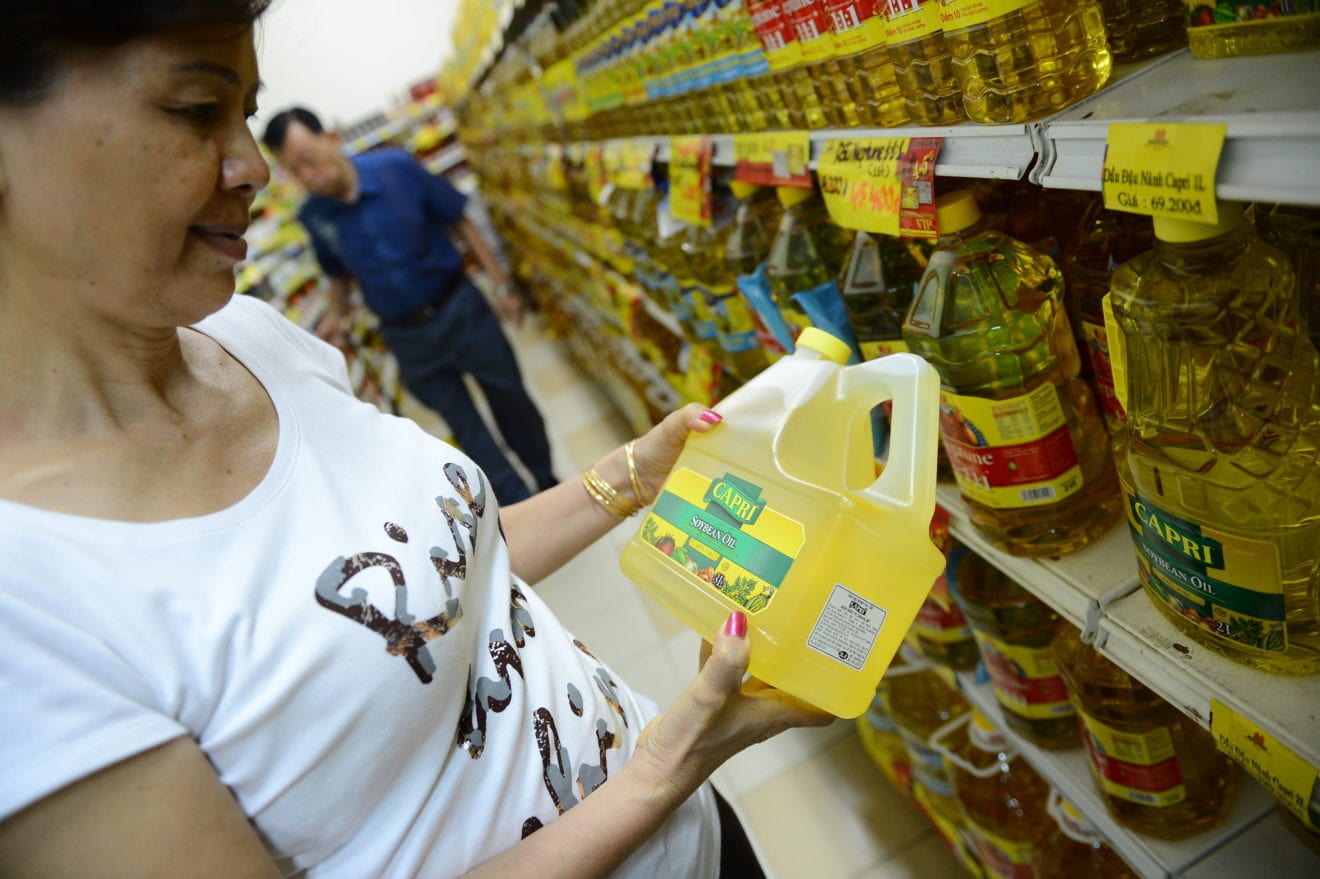
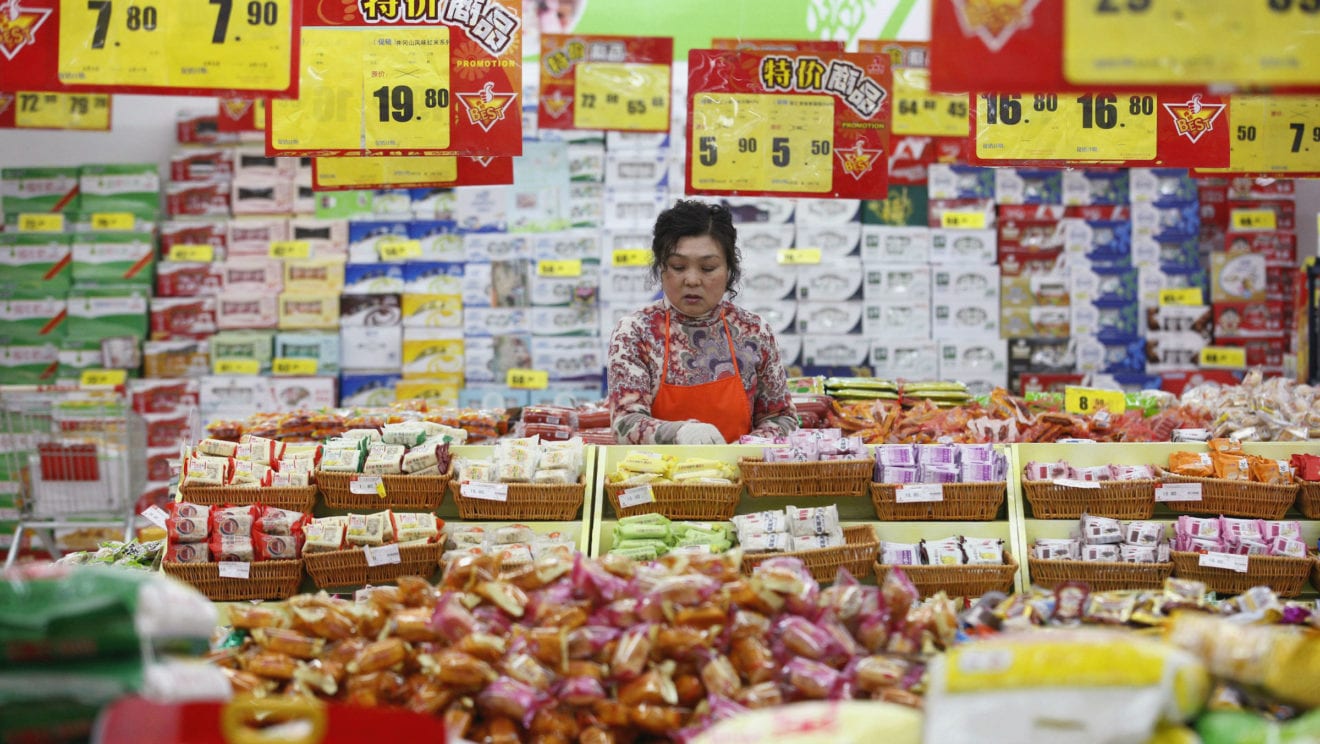
    Thai products can be seen everywhere, gradually replacing cheap Chinese low-quality goods on supermarkets’ shelves and at pavement shops.

    “In the past, Chinese motorbike accessories flooded the domestic market, but 70-80 percent of the products available in the market are from Thailand,” said Hai, a distributor of Michelin tires, a Thai brand well known in Vietnam.

    Thai tycoons in recent years have been flocking to Vietnam, taking over a series of Vietnamese distribution chains. The move were described as a step to clear the way for Thai products to penetrate the home market.

    Thai BJC Group, for example, spent $876 million to take over Metro Cash & Carry Vietnam. Meanwhile, Thai Corporation International, a subsidiary of BJC, bought 51 percent of Phu Thai Group, which ran 42 Family Marts.

    Thai products, however, usually cost more than Chinese and Vietnamese products.

    “Thai goods fit Vietnamese tastes and they are not too expensive,” said Le Thi Thanh Lam, deputy general director of Saigon Food.

    The greatest success of Thai businessmen is that they are very professional in penetrating the Vietnamese market.

    Robert Tran from Robenny, a Canadian consultancy firm, noted that the cementing of firm positions in the market with the retail growth rate of 15 percent and Vietnam’s high population of 90 million can help Thai retail groups increase the number of shops in Vietnam.

    “This allows the companies to have an advantage in negotiating with manufacturers about commissions and prices,” he explained.

    Meanwhile, Pham Ngoc Hung, deputy chair of the HCM City Business Association, noted that Thai businesses followed sound business strategies.

    “The distributors develop their chains in a 5-10-year term plan, and do not do ‘hit-and-run’ business,” he said. “The larger the distribution networks expand, the more easily they can bring Thai products to Vietnam.”

    While Thai businessmen have conducted rapid-fire attacks at the Vietnamese market, domestic businesses remain ‘bewildered’.

    Tran said he was surprised about the way Vietnamese do business.

    “Vietnamese businesses say they can completely satisfy requirements set by foreign partners. However, they cannot show sample products,” he noted.

    “A large business even said it would only make an investment if the partner agreed to sign the contracts first,” he said.


  • Lotte Group Founder Loses Japan CEO Title Amid Succession Battle

    Lotte Group Founder Loses Japan CEO Title Amid Succession Battle

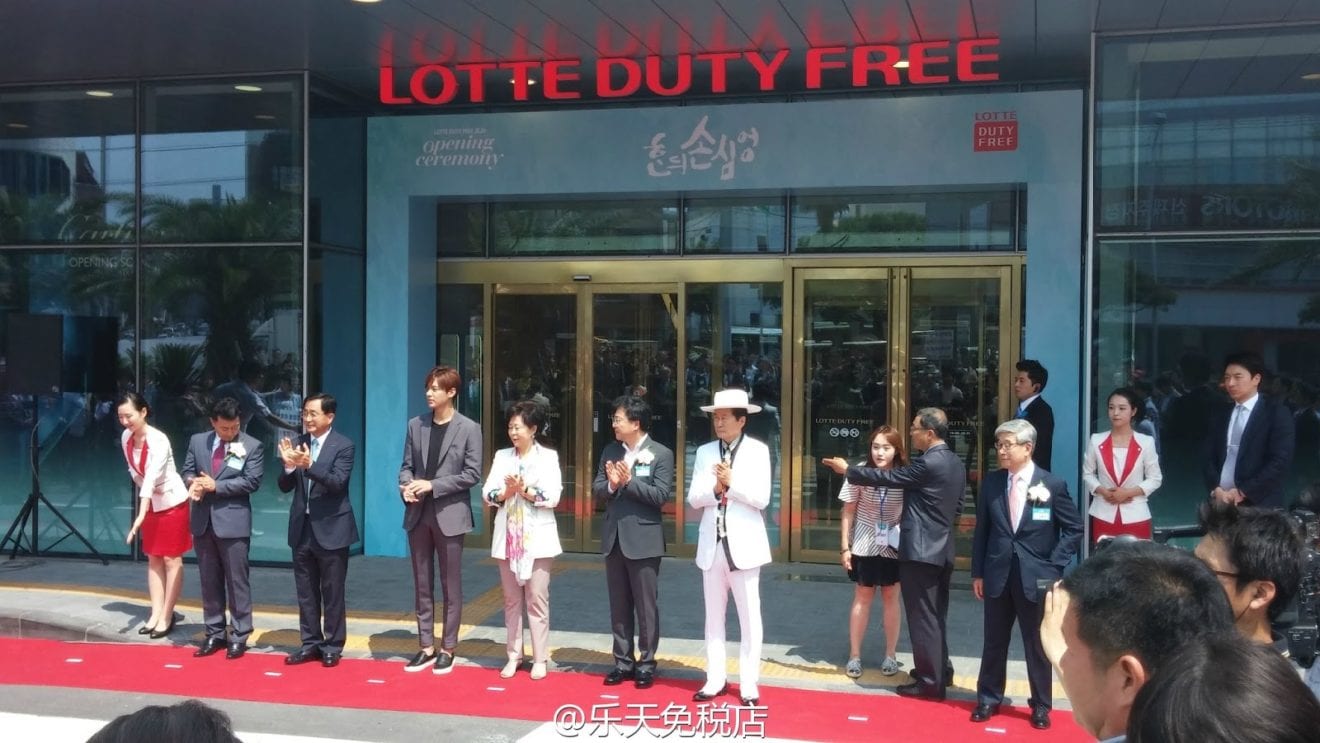
    Turmoil has erupted atop South Korea’s largest retail giant Lotte Group, shining a spotlight on one of the biggest family feuds the country has seen.

    The week began with 92-year-old Lotte founder Shin Kyuk Ho and his eldest son flying to Japan to fire a group of senior managers at a key unit, a maneuver that backfired and left the patriarch sidelined the next day. By Wednesday, Shin Dong Bin had successfully fended off his elder brother’s attempt to derail him from taking over control of the group.

    At stake is leadership over a conglomerate with 80 units across Korea, operating everything from department stores, amusements parks to hotels with 112 trillion won ($97 billion) of assets. Though the country saw sibling rivalries tear up Hyundai Group more than a decade ago, power struggles at businesses of Lotte’s size are rarely displayed in public in a corporate landscape dominated by family-run businesses, known locally as the chaebol.

    “It was an unexpected move as everyone had assumed that the founder had already selected Shin Dong Bin as his heir,” said Chae Yi Bai, an analyst at corporate watchdog Center for Good Corporate Governance. “This puts Lotte’s succession plans back in debate.”

    The drama at Lotte Group comes at a time when concerns over dynastic succession is fresh in people’s memories. Less than two weeks ago, Samsung Group narrowly defeated billionaire activist investor Paul Elliott Singer in a hotly-contested proxy fight, paving the way for the founding Lee family to tighten its grip over the nation’s largest conglomerate.

    Back at Lotte, co-chairman Shin Dong Bin apologized to employees on Wednesday for the turmoil brought by the dispute and urged them to put faith in him.

    “I am very sorry for causing uncertainties and turmoil to you all — the corporate value that Lotte has held up for a long time should not be rattled simply by an individual’s family issues,” 60-year-old Shin said in a note to employees, a copy of which was distributed to the media.

    The founder’s act to support elder son Shin Dong Joo, 61, had been unexpected as the younger Shin had been heir-apparent after executive titles including the vice chairman role at the parent group were stripped from Dong Joo in January.

    Lotte declined to make Shin Kyuk Ho or Shin Dong Joo available for comment.

    Shares Spike

    Shares of Lotte’s listed South Korea affiliates spiked on speculation the contesting Shin brothers would snap up the shares to solidify their control, Kim Tae Hong, an analyst at Yuanta Securities Korea Co. said by phone.

    Lotte Shopping Co. rose for a second straight session to end 6.6 percent higher by the close of trading in Seoul, the largest gain since 2010. Lotte Confectionery Co. closed up 4.7 percent, after jumping as much as 16 percent. The benchmark Kospi index ended little changed.

    In an earlier statement sent to media Wednesday, Lotte Group said the older son and his father’s July 27 act to fire executives at the closely held Japan unit Lotte Holdings Co. didn’t follow legal procedures.

    Tokyo-based Lotte Holdings’ board of directors held a meeting a day after to nullify the dismissals, and decided to move the founder into an honorary chairman role, according to the statement. Such a role typically carries no specific duties or voting rights.

    The older Shin brother’s attempt to gain influence over the Japan unit is aimed ultimately at capturing control over the entire group, due to the conglomerate’s shareholding structure, according to Chae.

    Attack Blocked

    “Whoever holds Lotte’s holding companies in Japan pretty much holds the entire group because of how the group’s corporate governance structure is designed,” Chae said. “It’s too early to say who won the crown, but Shin Dong Bin seems to have successfully blocked the attack this time around.”

    The founder holds a 28 percent stake in Lotte Holdings Co., Dong Joo holds 20 percent and Dong Bin has 19.1 percent, while a company called Kwang Yoon Sa holds 27.65 percent, according to data compiled by Bloomberg. Kwang Yoon Sa, a packaging company also based in Tokyo, is said to be owned by the founder, according to the Korea Economic Daily.

    Lotte Holdings spokeswoman Ruka Mizuno declined to comment on the governance structure of Lotte Holdings and Kwang Yoon Sa. when reached by phone, saying the companies aren’t listed.

    Shin Kyuk Ho, born in Ulsan, South Korea in 1922, started Lotte in Japan in 1948 after completing his university studies there. The company started off selling chewing gum in postwar Japan and quickly grew into a major confectionery company.

    When diplomatic relations normalized between Korea and Japan in 1965, Shin began investing in his home country and established Lotte Confectionery Co. in 1967, according to the Seoul-based Center for Good Corporate Governance.

  • China’s shoppers may take 10 years to step up

    China’s shoppers may take 10 years to step up

    Chinese policymakers are gung-ho to transition their economy away from investment and toward consumption, but that may not happen for another decade, new data shows.

    “Without a substantial intervention, we believe consumption’s share of China’s economy is unlikely to rise substantially before 2025,” The Demand Institute, a non-profit organization operated by The Conference Board and Nielsen, said in a new report.

    Private consumption as a share of gross domestic product (GDP) will average 28 percent from now until 2025, the think-tank said.

    To be sure, the mainland has long underperformed the global average in this regard as Beijing previously focused on export-led growth.

    Consumption as a share of GDP was 37 percent last year, according to the Brookings Institution, compared with around 70 percent in the U.S. and 60 percent in fellow emerging market, India.

    The indicator has only recently started to stabilize in recent years. Consumption relative to GDP declined 48 percentage points from 1952 to 2011, one of the longest and largest drops of any nation on record.

    Based on an examination of 167 countries between 1950 and 2011, the report found that nations with similar economic characteristics to China saw consumption remain flat relative to GDP for a considerable period following previous declines.

    China’s desire to rebalance its economy stems from the need to avoid the dreaded “middle-income trap,” in which developing countries are unable to graduate into high-income countries after achieving a certain level of per capita GDP.

    While many economists believe the economic transition is already underway, albeit at a gradual pace, they also expect it will take a while before consumption’s share of GDP spikes higher.

    “Only towards the end of decade, when the economy slows further to 5-6 percent, consumption’s share of GDP will become more important,” said Jian Chang, China economist at Barclays. “But we have seen investment slow significantly and I think total consumption as a share of GDP could near 50 percent this year.”

    Beijing’s strategic vision of boosting consumption was first outlined in 2011’s 12th Five-year Plan and since then, the government has unleashed a slew of measures, including raising wages and slashing import tariffs on high-demand goods.

    But The Demand Institute warns that the burden can’t rest on the government alone: “It is up to business to nurture the demand that policy unleashes, aligning goods and services with consumers’ shifting preferences.”

    Ensuring access to products and services via reliable distribution channels, satisfying demand across different income, regional and age groups as well as offering more financial services to support consumption are some of the factors that businesses can embrace, the report said.

  • Lawson to open 450 stores in Japan this year

    Lawson to open 450 stores in Japan this year

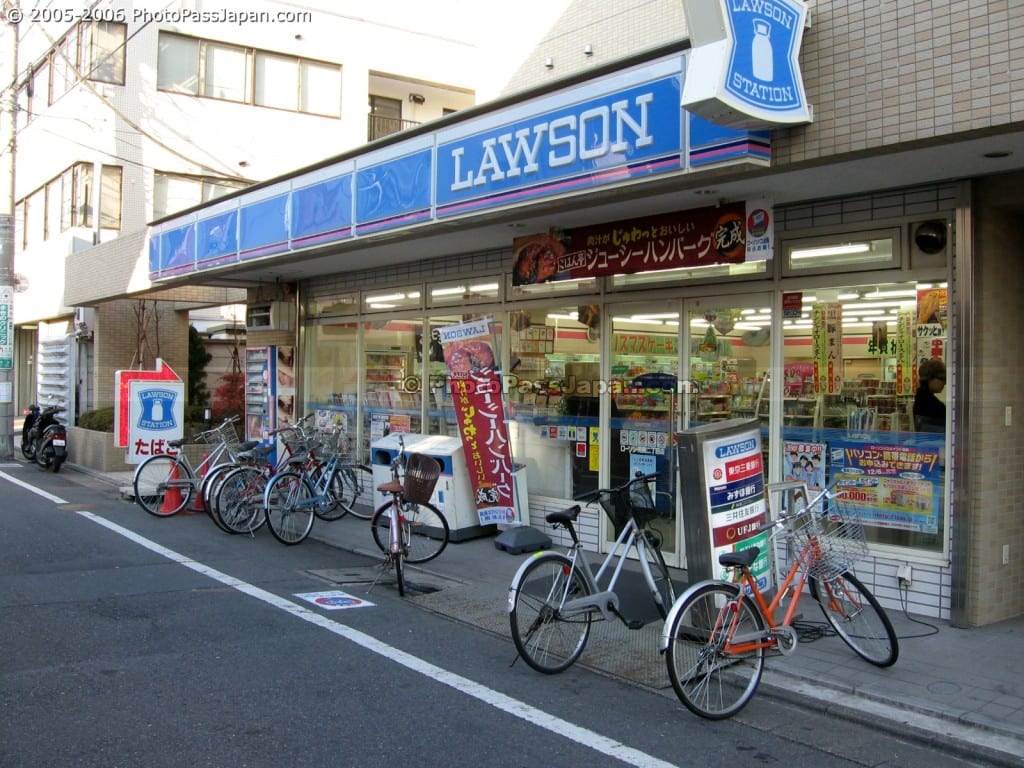
    Even though Japan’s convenience store sector faces numerous challenges, the country’s second-largest operator, Lawson, plans to open another 450 stores this year, the company’s CEO has revealed.

    Genichi Tamatsuka said there are 55,000 convenience stores in Japan but the market has not yet reached saturation point.

    He sees massive potential for growth because of demographic and other social changes that are altering consumers’ buying behaviour.

    “Whereas people used to go to a big supermarket and prepare meals for a family of four or five, now they’re busier, they’re older, and they prefer to buy in a small neighbourhood store,” he explained.

    Lawson currently runs a network of 12,000 stores – soon to be expanded – and, combined with its logistical muscle, Tamatsuka expressed confidence that it would be able to meet the needs of these “combini” neighbourhood stores.

    “With our scale of 12,000 stores, our supply chain and platform, we can supply food and necessities to these neighbourhoods,” he said.

    Expansion overseas is another source of potential growth, he indicated, considering the value placed on the high level of customer service provided by Japanese retailers.

    Lawson has 500 stores in China and has also started up operations in Thailand, Indonesia and the Philippines.

    Despite Tamatsuka’s confidence, research group Euromonitor earlier this year published a more downbeat assessment of Japan’s retail landscape.

    “Japanese grocery retailers are expected to face numerous challenges imposed by such factors as changing demographics and operational difficulties,” it warned.

    However, in what could be seen as endorsement of Tamatsuka’s expansion strategy, the report went on to say, “in order to fight against such negative circumstances, grocery retailers may attempt to expand in size and diversify business portfolios”.

  • Hero to open more stores  to boost revenues

    Hero to open more stores to boost revenues

    Retail company PT Hero Supermarket (Hero) will spend up to Rp 640 billion (US$48 million) this year for business expansion with retail plans to open stores in several cities across the country.

    The move will be made to restore the company’s disappointing financial performance earlier this year.

    Hero, which operates hypermarkets, supermarkets, convenience stores, drug stores and furniture stores, plans to open four Giant Ekstra hypermarkets and six mid-sized Giant Ekspres supermarkets in several regions, including Bangka and Lombok. Arief Istanto, a director with Hero, said each Giant Ekstra would cost between Rp 100 billion and Rp 150 billion while the Giant Ekspres would cost about Rp 20 billion. It means the company will allocate between Rp 440 billion and Rp 640 billion in capital expenditure to build the stores this year.

    Arif said the company aimed to improve its financial performance and hoped to book profits like it did in previous years. The company will use its internal funds for the expansion.

    “We would like to expand our network so that it can attract more customers. Thus, our top line will also increase,” he said after an extraordinary shareholders’ meeting on Tuesday. At the meeting, they agreed not to disburse the Rp 43.75 billion in dividends to shareholders and instead spend it on the company’s business expansion plan.

    Hero Supermarket previously suffered Rp 33.19 billion in net losses during the first quarter of this year amid a 14 percent increase in net revenues of Rp 3.57 trillion, making it the worst performer in the country’s retail industry.

    Last year, the company saw its net profit dive to Rp 43.75 billion from Rp 671.13 billion in 2013. A 13.94 percent increase in revenues, which stood at Rp 13.56 trillion at that time, could not ease the ballooning operating expenses, which hit Rp 3.31 trillion.

    “Our 2014 financial results were disappointing with weak sales growth and a significant increase in operating costs across all businesses as well as higher overhead and store pre-opening costs,” Stephane Deutsch, Hero’s president director, said in a statement.

    In 2014, the company launched a flagship furniture store under Swedish brand IKEA in Alam Sutera, Tangerang, Banten, some 25 kilometers west of Jakarta’s city center.

    Arief confirmed Hero has planned to build five more IKEA stores in the future as the company was upbeat about the prospects of the franchise furniture store.

    “At the moment, we are looking for land for the second store. It is supposed to be done this year,” Arief said, adding that the second store would be located in Greater Jakarta.

    According to him, IKEA has contributed around Rp 200 billion to Hero’s revenues in the first quarter of this year,

    Hero says it hopes to book 30 to 40 percent growth in revenues during the fasting month of Ramadhan this year. The company currently operates 33 Hero supermarket stores, 341 Guardian healthcare stores, 98 Starmart convenience stores, 53 Giant Ekstra stores, 121 Giant Ekspres stores, two Jason supermarket stores and one IKEA store.

  • Gap narrows for Chinese brands

    Gap narrows for Chinese brands

    Chinese brands are closing the gap with international brands as consumers become more concerned about product quality rather than the origin of the brands, according to a latest study.

    As high as 67 percent of consumers said they favor domestic brands, consumer research firm Mintel said in a research report yesterday.

    The study covered 3,000 consumers aged between 20 and 49 in 10 cities.

    The domestic food and beverage brands have a strong following, with 42 percent of the respondents favoring them over foreign products compared with 25 percent that prefer imported snacks.

    For domestic ready-to-drink beverage brands, 44 percent of consumers prefer them against 27 percent that favor foreign products.

    Baby food is an exception with 45 percent of respondents saying they would choose international brands against only 31 percent who favor domestic products.

    “We’ve seen Chinese consumers becoming more value-driven, as they’re more likely to judge a product by its content and quality instead of checking whether it’s an international or domestic brand,” said Laural Gu, Mintel China’s senior lifestyle analyst.

    The study also found that 47 percent of the consumers were more willing to indulge themselves by paying for services instead of products.

  • Jakarta Great Sale Casts Its Net Beyond Indonesia

    Jakarta Great Sale Casts Its Net Beyond Indonesia

    Last month, Jakarta celebrated its 488th anniversary. The capital, which was established by Indonesian national hero, Fatahillah, in 1527, is definitely getting old. But despite being home to more than 10 million people, the city never slows down.

    New high-rises pop up on every corner of the city. And each of them outdoes the previous in size and grandeur. Major developments are currently underway, promising that the city is on track to become one of the most glam and sophisticated in Southeast Asia.

    To celebrate its birthday, the city’s modern landmarks and shopping malls again present the Festival Jakarta Great Sale (FJGS). FJGS has been held annually since 2008.

    “FJGS has always been an important highlight of the city,” said Ellen Hidayat, chairwoman of the executive committee of FJGS 2015. “And it’s going to be much bigger and better this year.”

    This year, the event is organized by Association of Shopping Mall Management in Indonesia (APPBI), in collaboration with 12 other shopping and tourism-related associations in the country.

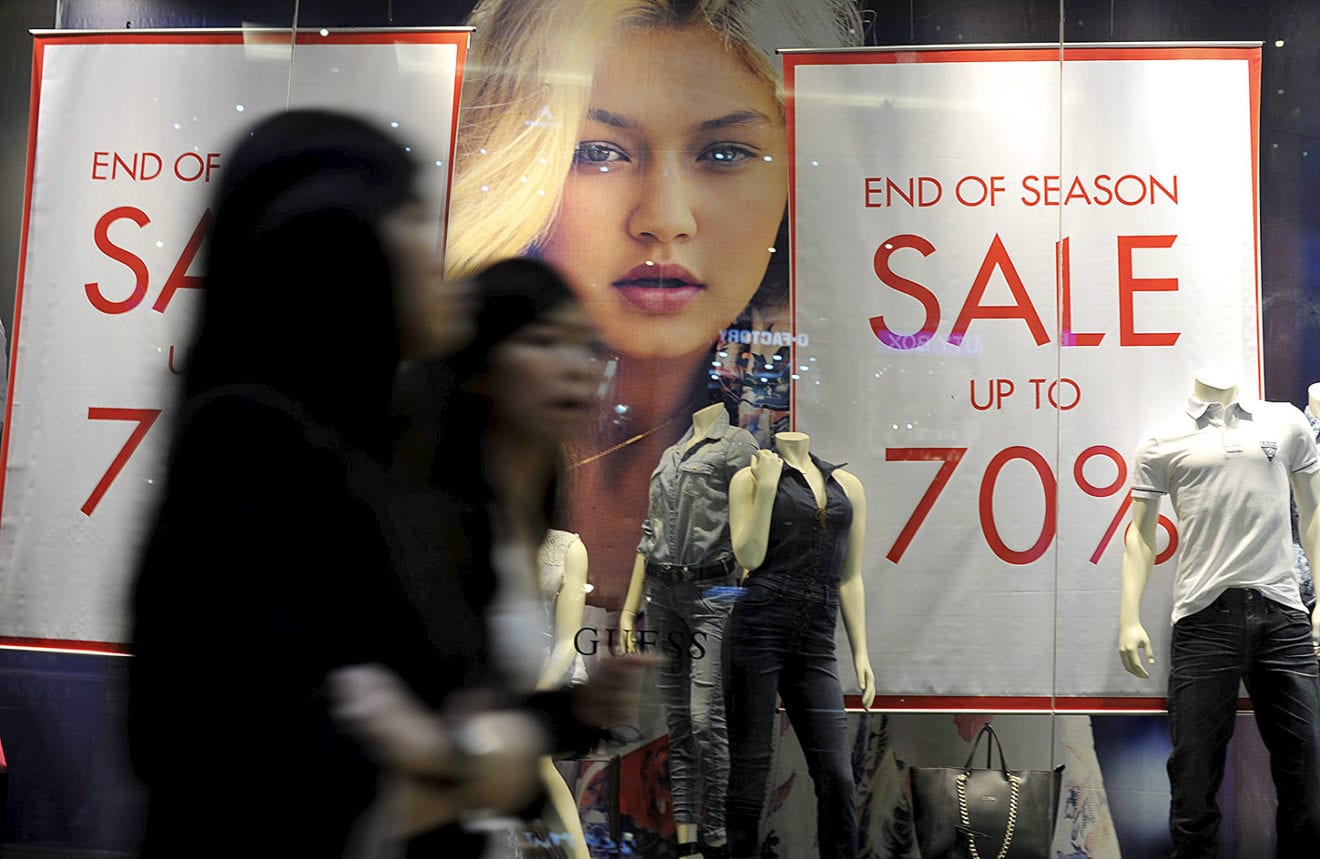
    Until mid-July this year, 78 malls in Jakarta will offer discounts on their merchandise by up to 70 percent.

    The event is also supported by Jakarta’s Tourism Office and featured in its official calendar of events.

    “Our office fully supports FJGS,” said Purba Hutapea, chief of Jakarta’s Tourism Office. “We hope to attract more local and international tourists with the event.”

    Jakarta is targeted to attract three million tourists this year — a 25 percent increase on tourist arrivals last year, which were about 2.4 million.

    “And FJGS is indeed a great way to attract more visitors to the city,” said Purba.

    Among the top five international tourists visiting Jakarta are Malaysians, Chinese, Singaporeans, Japanese and South Koreans. And their main reason of visit is to go shopping.

    “Malaysians love our Muslim attire, as they have very good quality at affordable prices,” said the chief of the tourism office.

    Besides Malaysians, according to Purba, the Chinese, Japanese and South Koreans are currently eyeing our fashion products.

    FJGS is also targeting Indonesian shoppers.

    “Indonesians have a habit of going to Singapore for shopping, as Singapore usually offers more products of international brands at cheaper prices,” said Ellen Hidayat. “But it’s a different story this year.”

    Ellen and her team have recently surveyed the malls in Singapore during the currently ongoing The Great Singapore Sale.

    “With today’s foreign exchange rate [between the Singaporean dollar and the rupiah], the prices of the branded products in Jakarta are actually a lot cheaper,” said Ellen. “So, this year, we hope that the locals will choose to shop in Jakarta instead of going to Singapore.”

    Ellen believes that FJGS and a series of fun activities organized in the malls during the event will see an increase in visitors by 30-40 percent to the city’s malls.

    The executive committee of FJGS 2015 hopes to achieve a total transactions of Rp 14.3 trillion this year, or about a 10 percent increase from last year’s transactions of Rp 13 trillion.

    It seems a high aim during Indonesia’s current economic slow-down, but the chief of Jakarta’s economic bureau, Adi Ariantara, remains optimistic.

    “FJGS, which is held during the school holiday season, as well as the fasting month, will surely encourage people to spend more,” said Adi. “And hopefully, it will also instigate positive economic growth for us.”

    A series of attractive events have been prepared to draw more visitors to the malls during FJGS 2015.

    One of them is Jakarta’s iconic Midnight Shopping events. During FJGS this year, a total of 19 shopping malls will take turns to hold ‘Midnight Shopping’ on weekends.

    “It’s one of the most awaited events during FJGS, as the malls will usually offer a series of entertainment, as well as special prizes for shoppers,” said Ellen.

    This year, Jakarta’s shopping malls also open their doors to traditional craftsmen and small-to-medium enterprises (SMEs) belonging to the National Handicraft Council (Dekranasda) of Jakarta.

    During FJGS 2015, these craftsmen and SMEs are allowed to offer their products at stalls dedicated to them along the corridors of the malls.

    This year, BayWalk Mall, Puri Indah Mall and Grand Indonesia Shopping Town will host these craftsmen and SMEs.

    “In the future, Dekranasda will work together with all shopping malls in Jakarta and encourage them to dedicate a special section within their malls for the craftsmen and SMEs in their regions,” said Veronica Basuki Tjahaja Purnama, chairwoman of Dekranasda Jakarta.

    But the excitement of FJGS 2015 is not only felt within the glitzy malls and shopping centers of Jakarta.

    For the first time ever, the event will also be held in traditional wet markets in Jakarta.

    “We want every layer of the community to feel the excitement of FJGS,” said Djangga Lubis, director of PD Pasar Jaya, government-owned company that manages traditional wet markets in Jakarta.

    There are currently 153 traditional wet markets in Jakarta. But only 10 are featured in FJGS this year.

    “These 10 markets are those that are most ready, in terms of cleanliness and comfort, to present the ‘Pasar Murah’ (Affordable Market) bazaars during FJGS this year,” said Djangga. “And these 10 markets also represent Jakarta’s five main regions.

    Among the 10 wet markets are Pasar Santa in South Jakarta, Pasar Gembrong in Central Jakarta, Pasar Pos Pengumben in West Jakarta, Pasar Cibubur in East Jakarta and Pasar Koja Baru in North Jakarta.

    During FJGS 2015, these traditional wet markets will take turns to present ‘Pasar Murah’ on weekends.

    The items offered during Pasar Murah are staple food items, including rice, eggs and meat. These items will be offered discounts of about 20 percent.

    It seems that FJGS is indeed getting more solid this year. Unfortunately, the growth of shopping destinations has yet to be supported by proper infrastructure development that could further push the city to become a destination that is on par with neighboring countries such as Singapore.

    Recognizing this issues, Jakarta Governor Basuki Tjahaja Purnama ensured during the opening night of FJGS 2015 that projects are underway.

    “We’ve just designed seven routes for the Light Rapid Transportation (LRT), which will connect major shopping centers and hotels in Jakarta,” said Basuki. “We’re also buying a lot of new buses for Jakarta as we plan to provide 24-hour bus transportation in the capital,” said Basuki.

    Ahok also plans to develop 12 new traditional markets in Jakarta to accommodate street-side peddlers.

    “On top of these traditional markets, we’ll also build apartments for rent at affordable prices for the peddlers,” he said.

    With these plans, Jakarta promises to be a much nicer city to visit and live in.

    “We’re planning to save Rp 10-15 trillion from corruption each year and use the money to build more infrastructure, parks and public facilities for Jakarta,” said the governor.

    “Once they are in place, we can confidently announce that Jakarta is a shopping paradise to the whole world,” said Basuki.

  • Fast Retailing, Seven & I mull partnership

    Fast Retailing, Seven & I mull partnership

    Two of Japan’s largest retail businesses are eyeing a “comprehensive business alliance” according to Japanese news reports.

    A strategic relationship currently under discussion could see a range of mutually beneficial co-operations spanning physical stores and eCommerce.

    Details are still sketchy, but according to news reports, Fast Retailing, the parent of Uniqlo, could work with Seven & I, parent of 7-Eleven convenience stores and the Ito-Yokado supermarket chain, on areas including product design, house brands, marketing and distribution.

    Uniqlo may use 7-Eleven stores as collection points for online purchases.

    The two companies may also launch a joint venture clothing brand outside the Uniqlo network.

    To date, that’s as much information as has leaked out.

  • 7-Eleven Vietnam plans 1000 stores

    7-Eleven Vietnam plans 1000 stores

    The world’s largest convenience store operator has confirmed the signing of a master franchisee in Vietnam and now plans 1000 stores over the next decade.

    7-Eleven Vietnam will be a partnership between the Japanese-headquartered US subsidiary and a new venture called Seven System Vietnam Co. While the US announcement did not identify the parties behind Seven System, Japan’s Nikkei news agency identified the partner as IFB Vietnam, which owns the Pizza Hut franchise in Vietnam.

    Nikkei says the first store will open in the nation’s commercial hub, Ho Chi Minh City, with a target of 100 stores within the first three years and 1000 within 10.

    7-Eleven has 56,400 stores globally and Vietnam will mark its 18th international market.

    Japan’s Seven & I Holdings has openly been assessing a Vietnam entry for some years. The convenience store sector is still at an early development stage with Circle K and FamilyMart the early entrants and Thailand’s B-smart, part of the Berlei Jucker Group, playing a cameo role.

    Given the booming convenience store market in other Southeast Asian countries, especially Thailand, the Philippines, Indonesia and Malaysia, 7-Eleven’s superior logistics, product mix, marketing and location selection should see it assume market leadership there well within the first 10 year window.

    7-Eleven’s US statement says, somewhat enigmatically, the new Vietnam business will “construct 7-Eleven stores [and] convert existing locations to the 7-Eleven brand” without disclosing which brand is to be swallowed up.

    While the initial stores will be company-owned, the company says it will eventually franchise stores to local entrepreneurs.

    “7-Eleven’s entry into the country aims to enhance the convenience-shopping experience for Vietnamese customers and contribute to modernizing small retailers in the world’s 13th most populous country.”

    7-Eleven US and its parent company, Seven-Eleven Japan, will provide start-up support for its newest master franchisee by assisting Seven System Vietnam in implementing 7-Eleven’s strategies of market concentration, team merchandising and item by item management. Vietnam marks 7-Eleven’s first new market in the Pacific Rim since it entered Indonesia in 2009.

    It already operates in the US, Canada, Mexico, Japan, Thailand, South Korea, Taiwan, China, The Philippines, Australia, Singapore, Malaysia, Indonesia, Norway, Sweden, Denmark and the UAE, where the first 7-Eleven store will open in the third quarter of this year.

  • Laucala Island welcomes a new managing director

    Laucala Island welcomes a new managing director

    Laucala Island, the luxurious private island resort located in the Fijian Pacific archipelago, is pleased to announce the appointment of Christoph G. Ganster as its new Managing Director commencing July 2015. Austrian born and veteran of the luxury hospitality industry, Ganster has more than 23 years of experience as an international hotelier, most recently serving the last 11 years with FRHI Hotels & Resorts.

    “It is an extreme pleasure and honor having been entrusted to manage one of the world’s most prestigious private islands. The philosophy of the owner to establish the ultimate in luxury and privacy, combined with the holistic approach of self-sustainability, make this one of the most unique destinations. All of us are fully committed to provide true Fijian hospitality and create beautiful moments that last for eternity” said Ganster.

    “Ganster has a body of knowledge and depth of experience in the luxury industry that he will share with the island and in turn will further enhance guest experience. We are delighted to have the opportunity to work with such a consummate professional and leader in the industry.” stated Laucala Island owner Dietrich Mateschitz.

    Previously, Ganster was General Manager in Seychelles, Ukraine and Egypt with Raffles Hotels & Resorts as well as Fairmont Hotels & Resorts. Prior to that he worked in various senior management positions in United Arab Emirates, Caribbean, Maldives, Mauritius, Switzerland, USA and Germany. Most recently he was based in Seychelles as General Manager of Raffles Praslin. In addition to his role he was a Member of the Board of the Seychelles Hospitality & Tourism Academy as well as the Seychelles Tourism Board, the Government Body, promoting Seychelles. Ganster graduated from the School of Tourism & Hotel Management Schloss Klessheim, Salzburg, Austria.

    About Laucala Island

    Set in 3,500 exclusive acres on its own 12 sq km island in the Fiji archipelago in the South Pacific, Laucala Island brings a new meaning to the term “all-inclusive resort”.

    This private island paradise, accessible by its own airport has just 25 luxurious villas, each individually designed with an eye to traditional Fijian style and all with private pools, which are set amidst the swaying palms of coconut plantations, powdery white sand beaches, turquoise lagoons, lush green mountains and breathtaking natural beauty.  

    True luxury comes in the complete privacy of the villas and in the freedom to enjoy an outstanding range of sports and leisure activities with spontaneity, from a round of golf on the island’s 18-hole 72-par championship course, to water sports and beachside horseback riding.

    Laucala Island features 5 exclusive restaurants and bars overseen by top international chefs and offers a superb choice of Western, Asian and local cuisines, complemented by an impressive cellar of fine wines.  

    With over 385 staff, the highest staff-to-guest ratio in the world, as well as on-island professionals such as a PGA Golf Professional from New Zealand, a spa manager from Thailand, diving and fishing experts, and a Super Falcon Hydrobatic Craft, there is no other private island in the world which offers such a range of leisure facilities.  

    In its mission to offer a sublime tropical experience, Laucala Island prides itself on a philosophy which brings elements of the island into each guest experience, through produce which is raised and grown organically on the island.

  • Strong Vietnam retail sales growth

    Strong Vietnam retail sales growth

    Vietnam retail sales growth reach 8.3 per cent in the first half of this year, according to government data.

    In the first seven months of this year, the private sector accounted for 85.6 per cent of total retail sales, earning $73.4 billion or a year-on-year increase of 9.5 per cent, according to the Vietnam News Service..

    Vu Manh Ha of the General Statistics Office, says the nation’s retail sales stabilised during the first quarter. Sales rose eight per cent in the first four months, 8.2 per cent in the first five months and 8.3 in the first six.

    He attributed the stabilisation in the growth rate to a low increase in the Consumer Price Index.

    Total retail sales reached US$85.8 billion.

  • Indonesia’s Bank Mandiri partners ASCO, Tunas for multifinance biz JV

    Indonesia’s Bank Mandiri partners ASCO, Tunas for multifinance biz JV

    PT Bank Mandiri Tbk (BMRI), the largest bank by assets in Indonesia, is planning to tap the growing automotive credit market through a joint venture (JV) with a multifinance firm PT Mandiri Utama Finance (MUF).

    The bank plans to collaborate with automotive distribution company ASCO Automotive and Tunas Group for establishing the JV company. In the new JV, Bank Mandiri will hold 51 per cent, while US ASCO will hold 37 per cent stake and Tunas Group 12 per cent.

    MUF expects the new JV firm to begin operations in September.

    MUF was established in January 2015 as a leasing sub unit of Bank Mandiri, which has 10 subsidiaries, including Syariah lender PT Bank Syariah Mandiri (BSM), securities firm PT Mandiri Sekuritas and life insurer firm PT AXA Mandiri Financial Services.

    Hery Gunadi, Consumer Banking Director for the bank told that Bank Mandiri intends to capture market share of 30 per cent by 2018. Currently, the bank has around 10 per cent market share in the multi finance sector.

    MUF plans to open between five and eight branches (Jakarta, Bandung and Surabaya) in the second half of this year.

    Meanwhile, Mandiri Tunas Finance will provide financing for car, heavy equipment and motorcycles, while Mandiri Utama Finance will focus on new and used car and motorcycle financing, said Gunadi.

    President Director and CEO Group of Bank Mandiri, Budi Gunadi Sadikin added that the potential market for automotive credit could reach Rp200 trillion ($14.93 billion) this year with estimated car sales around 1 million units and motorcycle 8 million units.

    “There are a lot of multifinance firms that are encountering funding difficulties. This creates opportunities for us to enter (the financing) business. At present, income contribution from multifinance business, on average grows, by around 31 per cent per annum; and it is the third largest income contribution from subsidiaries after AXA Mandiri and Bank Syariah Mandiri,” he said.

    ASCO Automotive and Tunas Group are among largest automotive distributors in the country. ASCO Automotive, previously called Adira Mobil, was jointly established by former CEO of PT Astra International Tbk (ASII) Teddy P Rahmat and former CEO of financing firm PT Adira Finance TbkStanley Setia Atmadja in 1989.

    Tunas Group was established by businessman Anton Setiawan in early 1970s. In 1980, he establishedPT Tunas Ridean Tbk (TURI) as holding company of Tunas Group and listed the firm in 1995. In 2009, Bank Mandiri acquired 51 per cent shares of PT Tunas Financindo Sarana, a subsidiary of Tunas Group and later changed the company’s name to PT Mandiri Tunas Finance (MTF).