Category: General

Retail News Asia is committed to providing both local and global retailers with the latest General Retail news throughout the Asian market. This on a daily base.

  • APRCE Manila to attract 2500 delegates

    APRCE Manila to attract 2500 delegates

    Retailers and businessmen looking to expand to Asia Pacific markets will find up to date developments in the world’s fastest-growing region at the Asia Pacific Retailers Convention and Exhibition (APRCE) in October.

    The biennial event will this time around be held in Manila at the SMX Convention Center in the Mall of Asia in Pasay City from October 28-30.

    The APRCE is the largest and longest running retail industry event in APAC and is expected to attract some 2500 foreign and local, retailers and executives.

    APRCE-2015-Lorenzo-Formoso-236x300The president of the Philippine Retailers Association, Lorenzo C Formoso, who is the COO of Duty Free Philippines, said the 17 member economies of the Federation of Asia Pacific Retailers Association (FAPRA) will present their respective country reports during the APRCE breakout sessions. These include reports from Australia, China, Japan, Korea, Chinese Taipei, Singapore, Thailand, Malaysia, Indonesia, Vietnam, Hong Kong, New Zealand, India, Mongolia, Fiji, Turkey and the Philippines.

    The Philippines last hosted this biennial event – the biggest conference and expo of retailers in the region 20 years ago.

    “The member-associations will present and discuss the retail environment and situation in their respective countries, retail and investment opportunities as well as the laws governing foreign investments in their respective retail industries,” Formoso emphasised.

    APRCE-2015-Frederick-Go-191x300Frederick D Go, Manila APRCE 2015 chairman and president of Robinsons Recreation, said through the country reports, FAPRA member-associations will get the chance to present the strengths and opportunities their markets offer that attract international retailers to consider them in their expansion plans.

    “If you are looking to expand and need a good market intelligence about Asia Pacific and the 17 member- economies, the APRCE is a must-attend event for you this year. This is like a one-stop shop for all the market intelligence that you’ll need for your expansion in Asia-Pacific markets,” Go stressed.

    On Day two of APRCE, the retail associations of Australia, Vietnam, China, India, Fiji, Chinese Taipei, Hong Kong, Indonesia and South Korea will present their country reports during breakout sessions, to be followed on Day three by Malaysia, Mongolia, New Zealand, the Philippines, Japan, Singapore, Thailand and Turkey.

    Aside from the country reports, over 30 experts will speak and share their insights on the trends and updates on the global retail and marketing industries during the event.

    Formoso said the three-day event aims to explore and discover new approaches to issues facing the region’s retailers and highlight innovative solutions that can help them differentiate themselves from competitors, and to deliver greater value to consumers.

    Organised by the Federation of Asia Pacific Retailers Association (FAPRA), the Manila APRCE 2015 is co-presented by the Tourism Promotions Board, The SM Store, Wyeth Nutrition. With Bench, Flight 001, and Penshoppe as platinum sponsors, Robinsons Malls and Ayala Malls,

    PLDT Alpha, Megaworld, Unilab, Mercury Drug as gold sponsors; Duty Free Philippines, HP, Wilcon Depot, Kojie-san,Celine, MET Tathione as silver sponsors and Araneta Center as bronze sponsor.
     

  • Lotte China closes stores

    Lotte China closes stores

    South Korea’s Lotte is finding the Chinese retail market tough to crack.

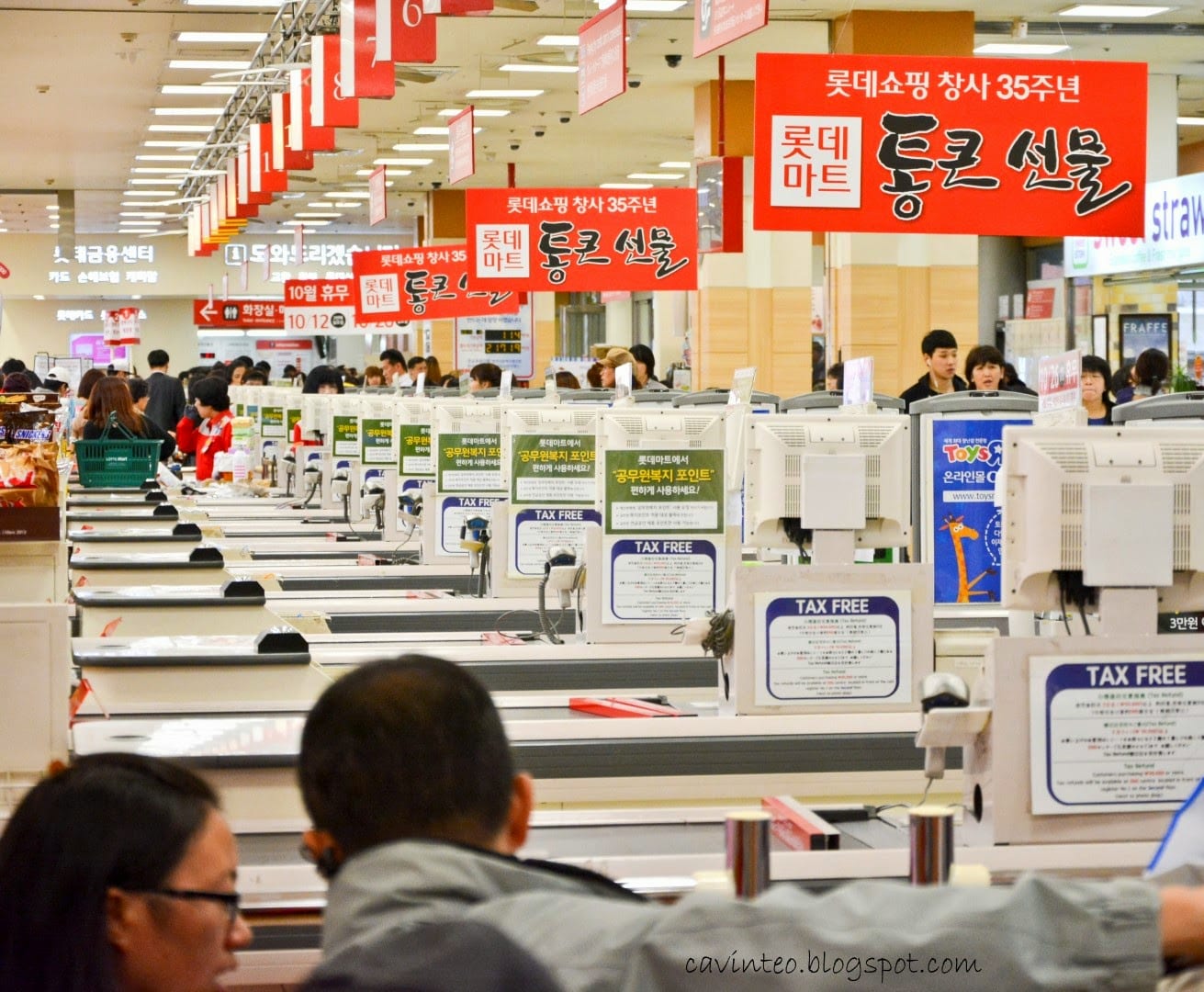
    Lotte Mart, the supermarket arm of South Korea’s Lotte Group, is to close four underperforming supermarkets in East China’s Shandong Province, according to the China Business Journal newspaper.

    Lotte is said to be losing market share in Mainland China unable to differentiate itself in the middle ground between local retail chains and the growing power of online retailers such as Alibaba and JD.com.

    Two of the stores to close are located in Qingdao, a second tier city located on the coast. A third is located in Weihai and the fourth in Weifang, an industrial city in central Shandong.

    Another source observed Lotte Mart did not provide a compelling food offer with its supermarkets.

    “For young people, Lotte Mart is not a good choice if they want to eat out as well as shop. There are not many fancy restaurants in Lotte Mart compared with other markets,” the customer told The Global Times on Sunday.

    Lotte Mart has 120 stores in China, 116 in Korea, 39 in Indonesia and 10 in Vietnam.

  • China’s 2Q economic growth steady at 7 percent

    China has released figures of its economic growth for the second quarter showing the country’s economy has grown at a steady seven percent, its weakest performance since the global crisis but slightly better than expected. Citibank said recently that it believes China’s actual growth rate could be closer to 5%.

    The Chinese economy has posted a 7-per cent growth in the second quarter compared to a year ago quarter, beating market predictions of a 6.8-per cent expansion and demonstrating that the world’s second-largest economy is on a stable path. They suggested the Chinese government would need to continue implementing a “proactive fiscal policy”, including further interest rate cuts, in the second half of the year, in order to hit its investment targets.

    Suan Teck Kin, an economist at UOB, took the data at face value, raising his full-year growth forecast to 7.1 percent from 6.8 percent. Late last month, the People’s Bank of China (PBOC) cut interest rates and the reserve requirement ratio (RRR) for some lenders in a bigger-than-expected easing package.

    Slowing growth in trade, investment and domestic demand has been compounded by a cooling property sector, deflationary pressure, and the recent equity market panic, so signs of improvement may help buttress faltering investor confidence in the effectiveness of Beijing’s management.

    China’s total trade declined in the first half of this year, official data showed Monday, falling well short of the government’s targets.

    The National Bureau of Statistics data showed that growth in the June quarter was 1.7 per cent, up from an upwardly revised 1.4 per cent in the previous quarter.

    Retail sales quickened to 10.6 per cent, compared with expectations for a 10.2 per cent gain.

    In light of the figures Nomura lifted its annual GDP forecast from 6.8 percent to 6.9 percent.

    Retail investors have sent $3.4 billion to China-focused mutual funds and ETFs for the year to date, the largest amount since 2009, according to Lipper data.

    It is not only the government reporting a warmer second quarter; the recent independent China Beige Book survey also reported signs of a broad-based recovery for the period, which it said was largely driven by growth in the interior provinces.

    It is higher than the growth rate of the industrial sector, or the secondary industry, that expanded by 6.1 percent.


  • Understanding is key to cracking Asia

    Understanding is key to cracking Asia

    It’s important for investors to be aware of the subtle differences between key Asian countries, according to a survey by BNY Mellon and analytics and advisory firm Oxford Metrica.

    The study looked at trends across Singapore, Taiwan, Hong Kong and South Korea, and noted that the differences between the markets also applies to distribution channels, and other factors that have an impact on the market.

    For example, Hong Kong retailers showed a preference for low-cost fund complexes that could meet all of their needs, while Taiwanese retailers appeared to be more inclined towards appointing specialist managers for each category.

    The report also highlighted the comparatively high costs faced by retail investors in South Korea, compared to institutional investors, and noted that in Singapore and Taiwan, more importance is placed on investment performance, while in Hong Kong, the security of a well-known brand takes prevalence.

    There were also differences in price sensitivity. While retail investors in Singapore, Hong Kong and South Korea that invest cross-border are sensitive to pricing by investment firms, this is not such a concern in Taiwan.

    South Korean institutional investors enjoy the lowest fund prices and, at the same time, regulatory developments in South Korea are geared towards attracting more international assets.

    Product range preferences also vary – a one-stop shopping solution is popular among retail investors in Hong Kong, and they tend to favour firms that can provide funds suitable throughout different market cycles. Hong Kong institutions, however, generally favour niche providers that can provide specialist expertise.

    Retail investors in Taiwan and South Korea were more inclined towards funds offered by specialist providers, and the retail market in Taiwan has even greater product diversity than Hong Kong.

    For retail and institutional investors in Singapore and Taiwan, and, to some extent, South Korea, the report suggested that a fund’s relative performance to the index as important. In Hong Kong, however, brand security tends to hold more weight.

    In Hong Kong, brand security appeared to hold greater weight than outperforming the benchmark in the long-term, however cumulative returns over one-year, three-year and five-year periods were shown to be a strong driver of sales for retail investors across all four markets.

    Singapore, Hong Kong, Taiwan and South Korea are all markets where the European UCITS structure is widely accepted, and so represent accessible entry-points for non-Asian investment managers looking to sell funds.

    Daron Pearce, global investment manager segment head for investment services at BNY Mellon, said: “Sales success in Asia’s major cross-border funds markets requires a deep understanding of the different factors that inform retail and institutional demand.”

    He added: “As one might expect, retail investors are generally more price sensitive than institutional investors. However the interplay between price, product range and performance is finely balanced across all markets analysed and, as such, close attention to the realities of individual markets is required by fund promoters.”

  • Hong Kong Is Key Link in Ivory Trade

    Hong Kong Is Key Link in Ivory Trade

    A new report from conservation group Save the Elephants shows Hong Kong has more ivory products for sale than any other city in the world. The group says the illegal export of these products to mainland China is undermining that government’s efforts to stop the ivory trade.

    According to the report released Thursday in Nairobi, researchers counted more than 30,000 ivory items on sale in Hong Kong in 72 different retail outlets. Most of the items are carved jewelry and figurines, sold to tourists at luxury hotels and shops.

    In Hong Kong, the sale of ivory from registered stocks is permitted by law, but export to mainland China is not.

    Illegal smuggling

    Researchers found 90 percent of the ivory being sold in Hong Kong is being bought by customers from the mainland. Much of it is then smuggled illegally into China.

    Save the Elephants founder Iain Douglas-Hamilton said the practice is damaging to China’s efforts to stop demand for elephant ivory.

    “I think the future of Africa’s elephants actually lie in the hands of China. Hong Kong is part of China, and it is undermining bans that are increasingly being deployed in China,” he said.

    Douglas-Hamilton said 100,000 elephants were killed across Africa for their ivory between 2010 and 2012. Most of the slaughter is driven by demand in Asia.

    Hong Kong has not legally imported ivory since 1990; new items are carved and sold from existing stocks.

    Although the report does not conclude that Hong Kong has been marketing illegal ivory, conservationists have suggested traders in the city may be slipping poached ivory into their stocks.

    Seized shipments

    Report lead researcher Esmond Martin said Hong Kong is a known transit point for illegal ivory, and notes authorities there have seized several large shipments from Africa.

    “With these large consignments being intercepted in Hong Kong, almost all of them, according to the government and to the research that we have carried out, is going to mainland China, almost all of it,” said Martin. “And this is an extremely important point. But the question to ask is how much is going through Hong Kong that is not being picked up? And that is we do not really know much about.”

    Martin said some of the larger shipments recently seized in Hong Kong originated from Kenya, Tanzania and Togo.

    He said corruption along the supply line, starting in the national parks where elephants live, remains one of the most pressing challenges to stopping the ivory trade.

  • Migros to sell private label in Japan

    Migros to sell private label in Japan

    Swiss retailer Migros is to sell private label products into two Japanese retail chains.

    Switzerland’s largest grocer, and one of the world’s 40 largest supermarket chains, is to sell lines to Lawson’s Seijo Ishii stores and Seiyu, which is Walmart’s Japan business.

    According to the Nikkei Asian Review, Migros will start with 16 premium products including Swiss Delice biscuits and iced tea, which will go on sale in 400 supermarkets trading under the Seiyu and Seijo Ishii banners.

    By 2020, Migros hopes to expand the range to 300 items, including desserts, snacks, cosmetics and skincare products, projecting sales of US$16 million annually.

    Retail research house IGD describes the move as “particularly surprising” for Seiyu, whose range already includes private label lines from Walmart’s own network, including Asda’s Extra Special wines.

    IGD describes Japan as “the most sophisticated private label market in Asia,” with strong players including Seven & I, Aeon, FamilyMart and Lawson.

    “These retailers are exploring the higher margin opportunities that premium private label ranges offer, focusing development around high quality, special ingredients and unique products.”

    Those ranges include Seven Gold and FamilyMart’s Platinum Line.

    But IGD says European influenced products are likely to appeal to shoppers’ increasingly cosmopolitan tastes, and the early line-up includes items which are mutually popular in the Swiss and Japanese markets: ice cream and iced tea.

    “Migros follows in the footsteps of European retailers Waitrose and Carrefour, whose private label products are already available in Japan through partnerships with Aeon.”

  • Carrefour China sales slip

    Carrefour China sales slip

    French-headquartered retailer Carrefour says its Asian sales rose 13 per cent in the second quarter of this year.

    But Carrefour China struggled during the quarter, its sales down 11.4 per cent measured organically and 12.3 per cent on same store sales basis.

    The overall Asia figure benefited from a positive currency effect, with organic sales down 8.6 per cent.

    In Taiwan, sales grew for the second consecutive quarter, both same store and organic sales rose, by 2.1 per cent and 1.4 per cent respectively.

    The company said the China market was affected by slowing consumption nationwide.

    “We are continuing the roll-out of our action plan in the country,” the company said in its sales statement.

    That plan includes enhancing its logistics and distribution centers in Mainland China over the next two years. After opening new centers in Kunshan in June 2014 and Chengdu last April, Carrefour China plans two more in Wuhan, Hubei, and another in Beijing serving the capital and the Tianjin region this year.

    Two more will follow in 2016 serving the northeast and South China regions.

    Carrefour says when complete its six center distribution network will be the best in China’s retail industry, based on scale and speed to market. The centres will use advanced voice-picking technology.

  • China retail sales stabilise

    China retail sales stabilise

    China retail sales growth is stabilising.

    Figures from the National Bureau of Statistics show a 10.4 per cent year on year growth rate in the first half of 2015, to US$2.32 trillion.

    That rate is a negligible 0.2 percentage points lower than the rate seen in the first quarter.

    In the latest month, June, retail sales rose by 10.6 per cent, half a percentage point ahead of May.

    The biggest mover was the catering sector, which recorded an 11.5 per cent year on year rise in the first six months of 2015. ‘Other consumer products’ was the next best performing category with growth of 10.3 per cent.

    Online retail sales soared 39.1 per cent.

  • Tourists spend up at Great Singapore Sale

    Tourists spend up at Great Singapore Sale

    While this week’s retail sales figures data may have subdued expectations of Singapore’s retail sector, another set of figures just out will do little to change the mood.

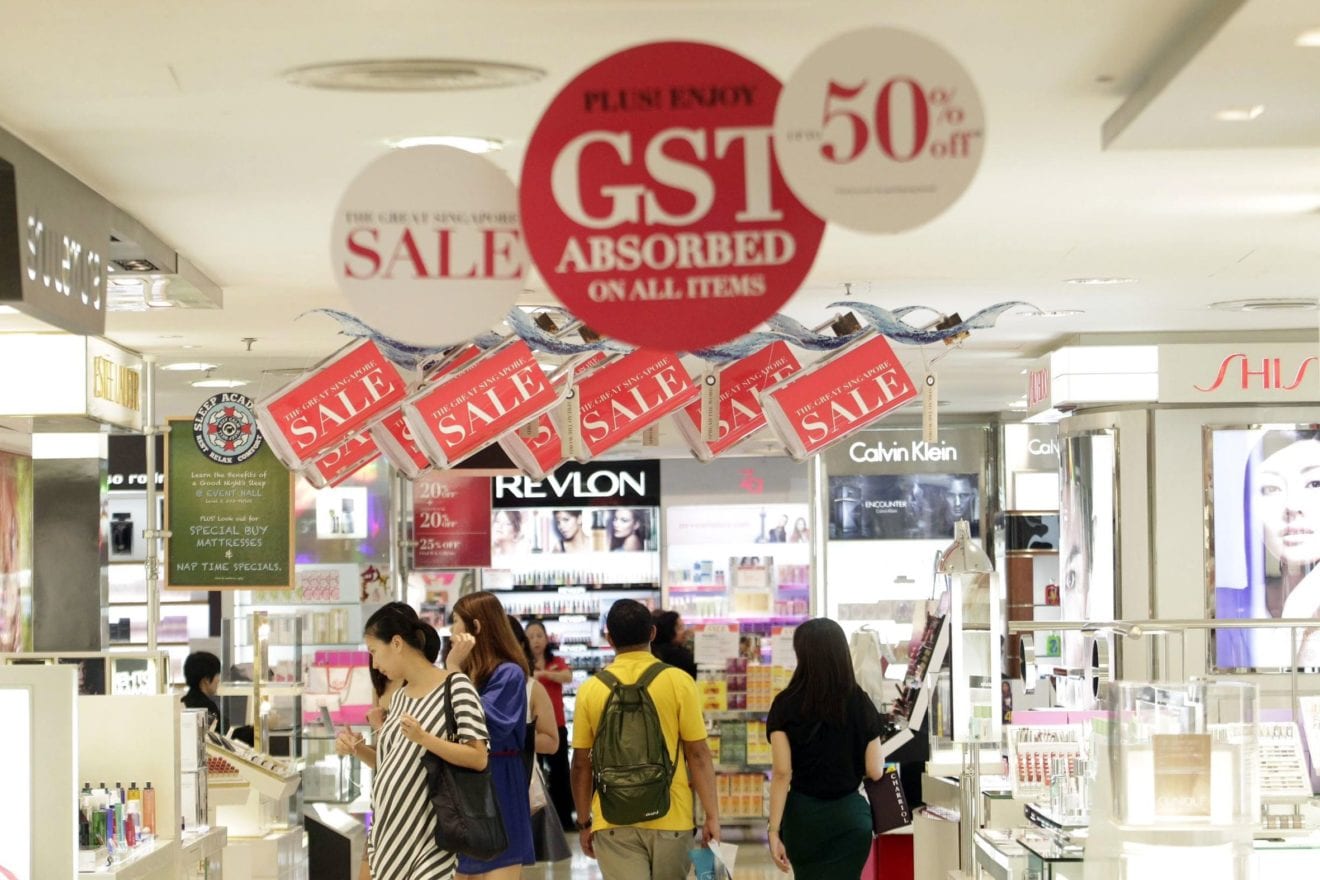
    Spending data from MasterCard suggests the Great Singapore Sale has delivered a significant increase in retail spending by tourists, especially in the food and beverage sector.

    According to MasterCard, the value of goods and services spent by tourists using its cards rose 9.9 per cent year on year, to S$350.6 million during the first month of the promotion.

    The number of transactions rose 17.8 per cent to 2.01 million, compared with 1.7 million last year.

    But Singaporeans failed to respond. Spending by locals fell 12.7 per cent in 5.1 million transactions, about 7.2 per cent less than last year. Spending on Singapore-issued MasterCards represented about double the amount of tourists, or $684.9 million.

    By card origin, Australia was the biggest source of spending during the Great Singapore Sale period from May 29 to June 28, with $39.5 million splurged, mainly at restaurants.

    Malaysians were next, spending mainly on electronics, followed by Chinese in speciality retail stores and Japanese – up from sixth in 2014 – mostly on restaurant meals.

    So while local spending was disappointing the increased cashflow from offshore shows Singapore is retaining its regional appeal as a tourist destination.

  • Parkson HK to take over Singapore assets

    Parkson HK to take over Singapore assets

    Malaysia’s Parkson Holdings is to sell a 67.6 per cent stake in its Singapore-listed Parkson Retail Asia Ltd to its Hong Kong listed subsidiary Parkson Retail Group Ltd.

    The rearrangement of its assets will net it US$167.2 million, according to the financial press.

    The purpose of the exercise is to consolidate the retail business of the Singapore-based business, which operates in Southeast Asia, with the Hong Kong listed business which operates in China.

    All three companies predominantly trade in the department store business with their formats becoming increasingly aligned across markets.

    The move will also allow Parkson Holdings (Malaysia) to raise cash for investment in business expansion which has not been detailed as yet.

    Parkson is a subsidiary of the Lion Group, headed by Malaysian billionaire William Cheng.

  • DFI to list in Hong Kong

    DFI to list in Hong Kong

    Singapore-based travel and duty free retailer Duty Free International (DFI) is seeking to list on the Hong Kong stock exchange.

    DFI is Malaysia’s largest duty free operator, runs 36 stores, including those under the Zon Duty-free brand throughout the country, including new facilities at the recently opened KLIA2 airport outside Kuala Lumpur.

    The company has concessions selling chocolates, fragrances, liquor and tobacco products, gifts and Malaysian souvenirs.

    It has stores in Bukit Kayu Hitam, Padang Besar, Pengkalan Hulu, Langkawi, Rantau Panjang, Penang International Airport, Tioman Airport, KLIA, Melaka Airport and Johor Bahru.

    The company also owns the 18-hole Black Forest Golf & Country Club.

    Hong Kong stock exchange rules require at least 25 per cent of a company’s capital to be traded publicly, and DFI does not meet this condition currently, meaning it will have to issue more shares or existing controlling shareholders will have to divest some of their stake.

    In a statement, Atlan Holdings said the directors believe it is desirable and beneficial for the company to have dual primary listing status in both Singapore and Hong Kong so that the company can tap readily into two of Asia’s most dynamic equity markets when the opportunity arises.

    “Furthermore, the proposed Hong Kong dual listing will widen the investor base of the company so that the company may benefit from its exposure to a wider range of private and institutional investors, and is expected to increase trading liquidity of the ordinary issued shares in the capital of the company.”

  • Real Singapore retail sales stagnant

    Real Singapore retail sales stagnant

    Don’t be fooled by mainstream media headlines reporting a rebound in Singapore retail sales.

    The 6.1 per cent increase headline year on year increase is almost entirely driven by a near 50 per cent surge in motor vehicle sales.

    Core retail sales rose a modest 0.9 per cent in May compared with May 2014, and 1.8 per cent over a lacklustre April.

    Singapore retail sales

    Sales of food and beverage services decreased marginally by 0.3 per cent month on month and by a whole three per cent year on year.

    After seasonal adjustment, retail sales of petrol service stations, cars, medical goods and toiletries, food and beverages, mini-marts and convenience stores, wearing apparel and footwear, watches and jewellery, recreational goods and supermarkets all increased by between one per cent and 8.9 per cent month on month.

    Sales of telecommunications devices and computers decreased 10.9 per cent; optical goods and books, furniture and household equipment declined 0.3 to 0.4 per cent.

    Department store sales remained steady.

    Year on year, medical goods and toiletries sales rose the most at 10.3 per cent.

    Department store sales, supermarkets, mini-marts and convenience stores and watches and jewellery posted increases of between 1.3 per cent and 4.9 per cent.

    Singapore retail sales Index

    Recreational goods sales declined 16.2 per cent and 11.9 per cent year on year, optical goods and books, telecommunications apparatus and computers, food and beverages, furniture and household equipment and wearing apparel and footwear all declined between 1.1 per cent and 8.3 per cent.

    After seasonal adjustment, turnover of fast food outlets and other eating places (such as cafes) decreased 3.6 per cent and 0.1 per cent in May over April. Restaurant turnover was stable.

    Compared to May 2014, turnover at restaurants, other eating places and fast food outlets decreased between 0.8 per cent and 5.9 per cent.

  • Retailers Brace for Gloomy Ramadan Amid Economic Slowdown

    Retailers Brace for Gloomy Ramadan Amid Economic Slowdown

    Indonesian retailers are predicting sales to drop by 36 percent year-on-year during the Muslim holy month of Ramadan and Idul Fitri, the latest sign of the country’s weakening economy.

    Sales are expected to reach Rp 15 trillion ($1.12 billion) during the fasting period, which runs from June 18 through July 17,  compared to Rp 25 trillion in the same period last year, according to estimates from the Indonesia Retailers Association (Aprindo).

    Members of the association range from convenience store chain operators such as Sumber Alfaria Trijaya to hyper market operators like Matahari Putra Prima.

    Aprindo chairman Roy N. Mandey said consumers’ purchasing power has been under pressure this year due to rising inflation stemming from fluctuating oil prices, the weakening rupiah and slow government spending.

    President Joko Widodo shifted government subsidies for fuel prices this year to back up his $21 billion infrastructure projects. However, only 8 percent of the funds were disbursed in the first six months 0f 2014 due to red tape, dragging further on the country’s economy, which is already struggling against low commodity prices and slowing investment.

    Based on current conditions, Aprindo has revised its 2015 sales target to Rp 152 trillion from its initial total of Rp 184 trillion — a 10 percent contraction from last year’s sales of Rp 168 trillion.

    “People are not as enthusiastic [as before]. They are refraining from buying anything now,” Roy said.

    A recent consumer confidence survey from Bank Indonesia, the country’s central bank, showed that consumers have become less optimistic about their income and job availability, holding back on buying durable goods like electronics, motor vehicles and home appliances.

    Still, Matahari Putra Prima, one of the largest retailers in Indonesia and a Jakarta Globe affiliate through the Lippo Group, remains confident it will see an 11 percent increase in sales during Ramadan to Rp 3 trillion from Rp 2.7 trillion last year, banking on its expansion in the eastern part of the country.

    The company now operates 111 stores under the brands Hypermart, Foodmart and Boston Health & Beauty.

  • S.Korea picks Hotel Shilla JV, Hanwha to operate new Seoul duty-free stores

    S.Korea picks Hotel Shilla JV, Hanwha to operate new Seoul duty-free stores

    South Korean retail giants HDC Shilla Duty Free and Hanwha Galleria Timeworld on Friday clinched a high-profile bid to operate duty-free stores in downtown Seoul in what is seen as a golden ticket to bolstering their footing in a retail industry struggling from anemic consumer spending.

    Seven companies had vied for the license, the first of its kind open to large corporations in 15 years. Lotte Duty Free, HDC Shilla Duty Free, a joint venture between Hotel Shilla and Hyundai Development Co., and SK Networks were aiming to increase their market share, while E-land, Hanwha Galleria Timeworld, Hyundai DF and Shinsegae DF were trying to make a fresh entrance into the duty-free sector.

    Currently, four companies run seven duty-free stores in Seoul, whose main customers are foreign tourists, especially those from China. Their insatiable appetite for shopping has been a rare bright spot in the local retail sector grappling with sagging sales amid a weak economy.

    Buoyed by their spending, the duty-free market has been posting double-digit growth in the past five years, compared with crawling sales growth at department stores and hypermarkets.

    In 2014, duty-free stores in Seoul posted a combined sales of 4.4 trillion won (US$3.9 billion), which accounts for more than half of the country’s 8.3 trillion won duty-free market.

    Meanwhile, the customs agency also announced two smaller retailers who will be operating duty-free stores in Seoul and Jeju, South Korea’s southernmost resort island, respectively.

    The new licenses will be valid for five years under a revised customs regulation that shortened the contract period from 10 years. The winning bidders are required to open their stores within six months.


  • DFS opens HK stand alone beauty store

    DFS opens HK stand alone beauty store

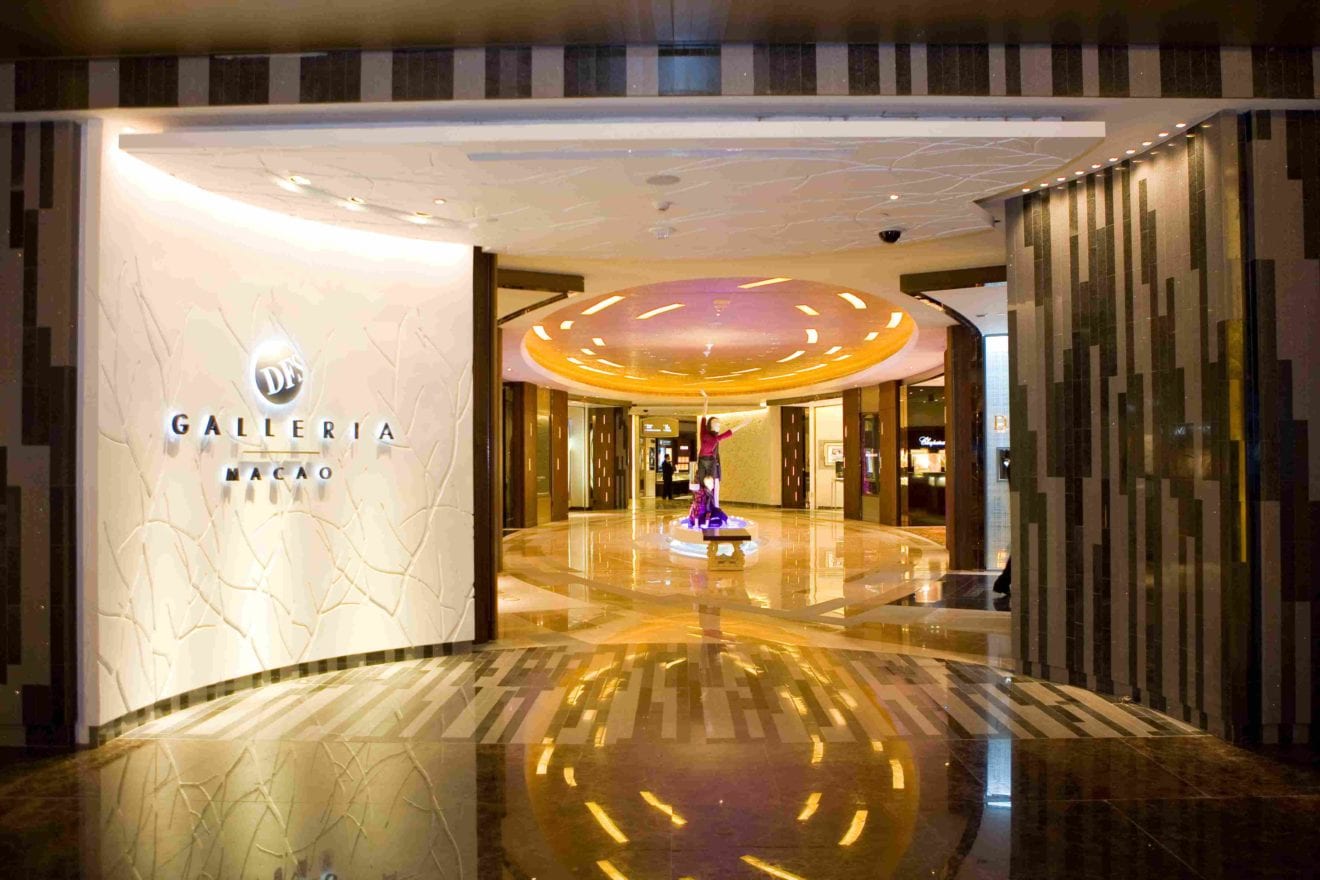
    DFS Group opened its second stand alone 18,000sq ft T Galleria Beauty by DFS store in Hysan Place, Causeway Bay at the end of June, following the earlier opening of its initial store at the Galaxy Macau Asian resort destination in May.

    The store is the first of its kind in Hong Kong concentrating solely on luxury cosmetics, skincare and fragrances, allowing customers interested mainly in personal beauty experiences to experience them in one prestigious location.

    Benjamin Vuchot, Region President, North Asia for DFS Group said: “With T Galleria Beauty by DFS, we’re breaking the beauty shopping mould to bring our customers a whole new level of choice, affordability and excitement.

    “Every element of the concept from the product selection to the store design was inspired by our customers and we’re confident that this innovative, personalized approach to the beauty shopping experience will make T Galleria Beauty the beauty connoisseur’s destination of choice in the heart of Causeway Bay.”

    DFS says the range of products includes more than 100 brands including Dior, Estée Lauder, Hermès, 3CE, Make Up Forever and Nars. It adds that DFS also takes ‘a holistic view of beauty’ through new or expanded product categories such as men’s, wellness, hair, body and nail, as well as a trend area featuring popular Korean brands.

    The retailer adds that T Galleria Beauty by DFS will also exclusively introduce popular trend cosmetic brands Nudestix, IOPE and Cargo Cosmetics in Hong Kong.

    Kitty Choy, Director, Retail, Hysan Development Company Limited said: “We’re thrilled that DFS Group has chosen Hysan Place as the location for its first T Galleria Beauty by DFS store in Hong Kong.

    “With its holistic and innovative approach to the beauty shopping experience, T Galleria Beauty by DFS will be a beauty anchor within Lee Gardens, providing customers with a personalized approach unrivalled in Causeway Bay.”

    DFS is also claiming a ‘first of its kind’ with its new 1,000sq ft Beauty Station which gives customers the opportunity to sample, mix and match products from a wide range in one location. Customers will also have access to the exclusive Beauty Concierge, a complimentary personalized beauty service that focuses on an individual customer’s preferences and personal needs.

    They will also be able to join DFS LOYAL T, which the retailer describes as the world’s most extensive global luxury rewards programme [covering more than 700 brands in 26 airports and T Galleria by DFS stores in 10 countries.

    Customers of T Galleria Beauty by DFS, Hong Kong, Causeway Bay, like all DFS customers around the world, are provided with a 100% Global Guarantee, ensuring that all merchandise is completely authentic and that after-sales service centres will refund, repair and accept the return of merchandise worldwide.