Category: General

Retail News Asia is committed to providing both local and global retailers with the latest General Retail news throughout the Asian market. This on a daily base.

  • Google Chat adds helpful feature to help you pinpoint conversations relevant to you

    Google Chat adds helpful feature to help you pinpoint conversations relevant to you

    Google Chat is launching a new update that will make it even easier to navigate conversations within its in-line threaded spaces. Following last year’s transition to in-line threading, the latest update continues to improve on that functionality in order to boost productivity and efficiency for its users.

    With multiple threads running across different spaces, it can be time-consuming to figure out which messages need your immediate attention. The latest update from Google Chat makes it easier to keep track of conversations by showing participant avatars alongside unread threads in the conversation view.

    This feature allows you to quickly identify the participants in the conversation and determine if their comments are pertinent to you. You can now efficiently prioritize important threads without having to click on them for additional details.

    Google states that it recognizes that dealing with numerous threads across multiple spaces can be overwhelming and that this feature was introduced in order to give you more context upfront. The goal is that it will make it easier for you to prioritize and stay on top of the conversations that matter the most to you. This will ultimately help you stay organized and focused on what’s important.

    This feature is rolling out automatically and gradually for up to two weeks, starting today. For all Google Workspace users, including those with free personal Google accounts, it will be by default enabled on the web, Android, and iOS.

    Google has been steadily introducing improvements to Chat as it continues to compete with other established messaging platforms, such as Slack and Microsoft Teams, and aims to make Chat a more attractive option for businesses looking to improve collaboration and efficiency within their teams. The company hopes that this new feature will enhance productivity and streamline communication for users across all platforms.

  • Another Pokémon game for Android, iOS coming in 2024

    Another Pokémon game for Android, iOS coming in 2024

    Remember the Pokémon GO craze that got people all over the planet to go haywire? Well, another Pokémon game is coming to your mobile phone this year: the Pokémon Trading Game Card.

    Shares in Japan’s developer DeNA jumped 24% in Tokyo trading after the gaming company said it will launch a mobile version of the PTGC (Pokémon Trading Game Card). This 24% jump shows investors think the game will become a hit.

    Coming in 2024 to iOS and Android devices!

    There’s an official announcement on the Pokémon Trading Game Card Pocket site that reads:

    Experience the fun of collecting Pokémon Trading Card Game (TCG) cards with Pokémon Trading Card Game Pocket, an upcoming game for iOS and Android devices from Creatures Inc., the original developers of the Pokémon TCG, and DeNA Co., Ltd.In this game, you will be able to open two booster packs every day at no cost. You can collect digital cards featuring nostalgic artwork from the past and brand-new cards exclusive to Pokémon Trading Card Game Pocket.

    The Pokémon trading card game, itself based on the popular Nintendo video game franchise, launched in 1996 in Japan and later gained popularity in the United States, with more than 50 billion cards printed.

    The business model, pioneered by American designer Richard Garfield in the 1990s, sees players battle head-to-head with decks of character cards aided by buying sealed booster packs containing various designs and with degrees of rarity.

    In recent years, trading cards have gained greater attention, with rare cards in pristine condition attaining frothy valuations in the volatile market for alternative assets, the report reads and adds that digital collectible card games have also become well-established with popular titles including versions of “Magic”, “Yu-Gi-Oh!” and “Hearthstone”, which is based on the “Warcraft” franchise.

  • Inside the first made-in-China jet to arrive in Vietnam

    Inside the first made-in-China jet to arrive in Vietnam

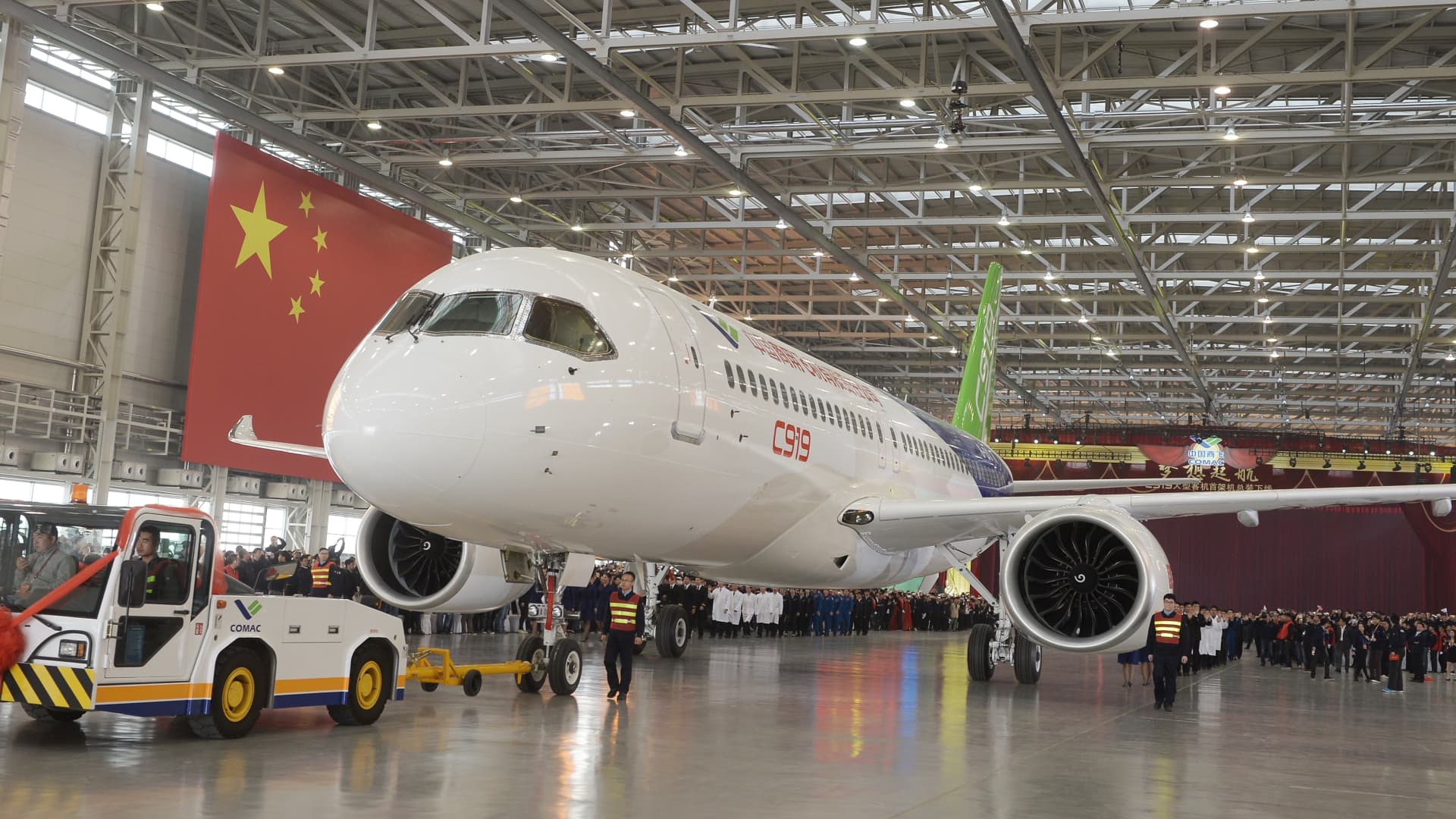
    At 10 a.m. Van Don International Airport in the northern province of Quang Ninh opened its doors for any visitors to look inside the C919 and another Comac aircraft ARJ21 in an exhibition of the company.

    Comac showcased its jets at Singapore last week but limited entry to only some business representatives.

    Comac chairman He Dongfeng said at the exhibition opening ceremony that the appearance of Comac at Van Don is an important step for its jets to reach the global market.

    C919 is a narrow-body jet with a capacity of 168 passengers and flight range of over 4,000 kilometers. The aircraft’s seat configuration is similar to the Boeing 737 Max and A320/321 models. With the jet China eyes to break the domnance of the U.S. and France in making passenger aircraft.
    A C919 costs around $99 million, cheaper than Airbus A320neo and Boeing 737.

    It is 2.25 meters from floor to ceiling, and the lighting color can be changed between 10 presets.

    The aisle is more spacious than other passenger jets of the same category. Behind each seat is a safety instruction written in Chinese and English.

    The communication and navigation system uses parts from U.S. manufacturer Rockwell Collins.

    Some other parts are made by U.S. companies. Tires and brakes are manufactured by Honewell, the aluminum body by Acronic, and the black box by GE Aerospace.

    The two engines were covered during the exhibition. Comac has announced earlier that it uses the LEAP turbofan engines produced by CFM International, a joint venture between American GE Aerospace and French Safran Aircraft Engines. The same engines are used on the Airbus A320neo.

    The ARJ21 jet, the first to be designed and manufactured by Comac, was placed nearby. It uses two engines made by an U.S. company and other key equipment from a German firm.

    ARJ21 seats up to 97 passengers and can fly 3,700 kilometers. Chinese airlines have used the aircraft on many domestic routes and have served 13 million passengers. Comac delivered the first ARJ21 to an international buyer in Indonesia in 2022.

    ARJ21 has similar luggage design as other medium-range jets such as ATR72 and Embraer 190. It can also be modified as a private jet.

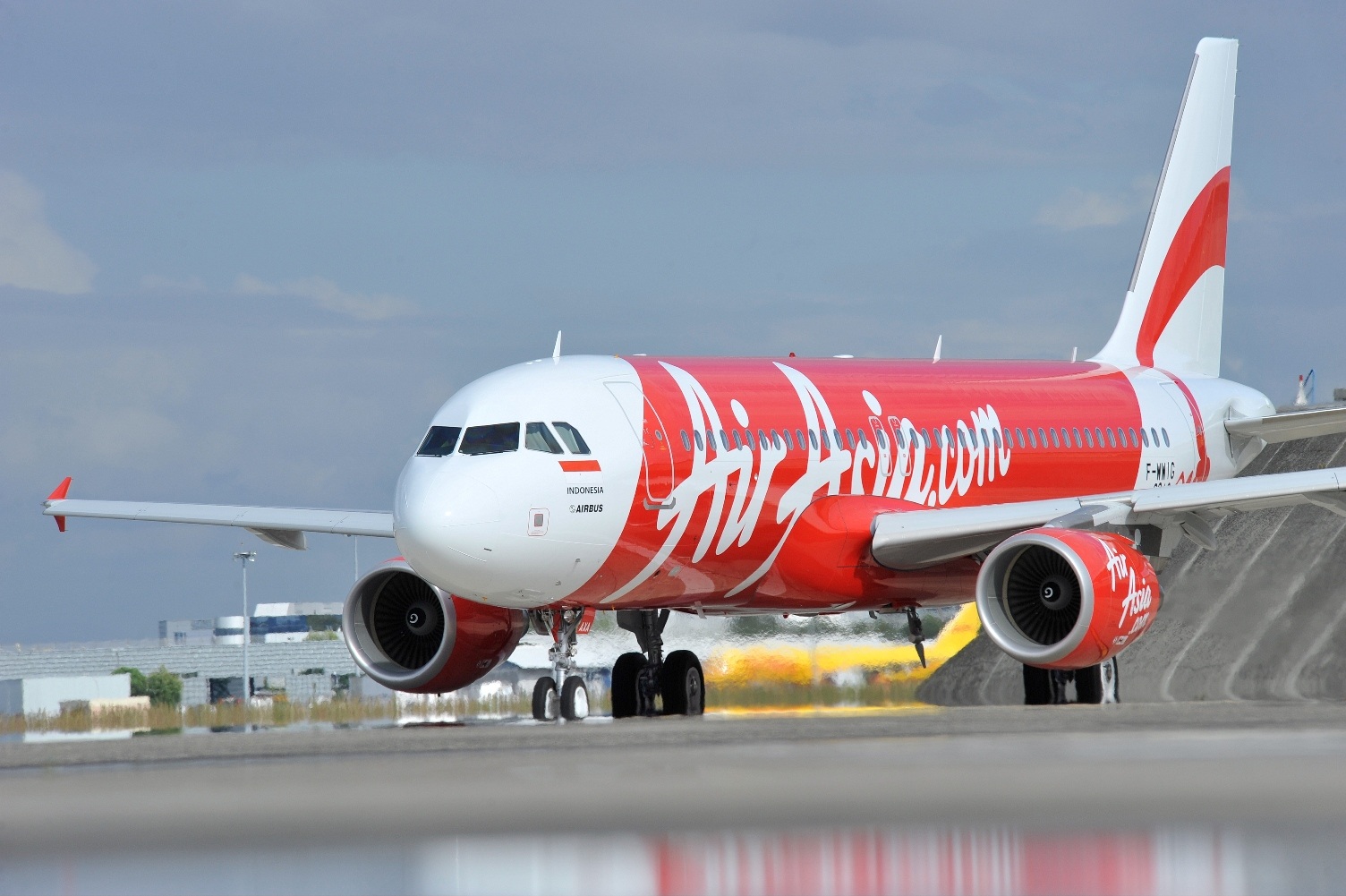
  • Thai AirAsia flight faces panic following power bank explosion

    Thai AirAsia flight faces panic following power bank explosion

    The Bangkok Post reported that the incident, which occurred on Saturday, led to a united effort by passengers and crew to extinguish the flames that broke out mid-flight.

    Despite the chaos, the 186 passengers on board remained unharmed, and the flight landed safely at its destination in Nakhon Si Thammarat Airport on schedule.

    An immediate probe into the event identified burn marks on the seat near the explosion site, and it was determined that the exploded device belonged to a family traveling on vacation.

    A Feb. 19 Royal Air Philippines flight from Boracay to Shanghai underwent a similar incident when a passenger’s power bank exploded mid-air, forcing the plane to divert to Hong Kong and resulting in a three-hour delay in reaching the Chinese city.

  • South Korean hypermarket Emart to launch in Laos

    South Korean hypermarket Emart to launch in Laos

    Emart, the South Korean hypermarket retailer, will expand into Laos this year through a master franchise deal with U-Dee, an investment entity owned by LVMC Holdings.

    The move follows the company’s announcement earlier this month that it would expand into Cambodia in June.

    The agreement includes opening one Emart discount retail outlet and three hard-discount outlets under the brand name No Brand – Emart’s house label – in Laos later this year.

    Emart operates three Emart stores in Vietnam, four in Mongolia, and 17 No Brand stores in the Philippines.

    The firm intends to open 20 E-Mart locations and 70 No Brand stores in Southeast Asia during the next 10 years.

    LVMC Holdings, originally known as Kolao Group, was founded in 1997 by South Korean businessman Oh Se-young. The group debuted its footprint in the retail market with a local hypermarket chain dubbed Kok Mega Mart in Laos last year.

  • Philippines’ Clark airport makes pitch as aviation hub

    Philippines’ Clark airport makes pitch as aviation hub

    Last week, Philippine delegates pitched Clark International Airport’s viability as an attractive regional hub for global aerospace and aviation companies

    Airport developer Berthaphil is calling on maintenance, repair and overhaul (MRO) companies to consider setting up at Clark, where SIA Engineering has already established its own airframe maintenance operations. 

    Located 80 kilometres north of the capital Manila, the international airport can be accessed via the expressway and is situated within the free trade zone. This means interested parties can get favourable tax concessions, including up to a 7-year tax holiday and then a 5 percent corporate income tax rate.

    Berthaphil, which also built the first bonded warehouse and logistics centre at Clark, is offering a 10-hectare airfield site, with access to the primary runway, which can accommodate large widebody aircraft. The developer said the vacant property is available ‘as is’ or for a ‘a build to suit’ project.

    Apart from MRO companies, the groups are also targeting cargo airlines, logistics companies, fixed-based operators, business aviation companies, original equipment makers, regional and international airlines, and training organisations.

    Companies that have established operations at Clark include Singapore-based SIA Engineering and Hong Kong-based MetroJet. With a new terminal building, the airport has capacity for 80 million passengers, It is also an air cargo gateway for UPS, DHL and FedEx.

  • Tax evasion by wealthiest Americans tops $150B a year

    Tax evasion by wealthiest Americans tops $150B a year

    The U.S.’s Internal Revenue Service estimates that the country’s millionaires and billionaires are evading over US$150 billion in taxes annually.

    Audits of taxpayers earning over $1 million a year have declined by more than 80% over the last decade despite a 50% rise in the number of taxpayers with this income, according to IRS statistics last week.

    IRS Commissioner Danny Werfel blamed the decline on a prolonged lack of funding, which has left the agency understaffed and lacking the necessary technology and resources to conduct audits, particularly for intricate and sophisticated returns.

    In response to these challenges, the IRS has initiated an extensive crackdown on wealthy individuals, partnerships and large companies.

    The Treasury Department estimates that improved IRS enforcement could generate an additional $561 billion in tax revenues between 2024 and 2034, a figure higher than initially projected.

    The IRS estimates that for every additional dollar invested in enforcement, it can generate approximately $6 in revenues.

    It has reported success in a program targeting unpaid taxes from millionaires, collecting over $480 million from 1,600 millionaire taxpayers who failed to pay at least $250,000 each in assessed taxes.

    Another area of potential tax evasion highlighted by Werfel is in limited partnerships.

    Werfel said the IRS is not only focused on finding instances of tax evasion but is also using AI to avoid unnecessary audits for taxpayers who are following the rules. It has urged taxpayers to report any income received through illegal activities, such as dealing drugs.

  • Parkson Retail Asia books lower net profit amid weak consumer spending

    Parkson Retail Asia books lower net profit amid weak consumer spending

    Parkson Retail Asia booked a lower net profit last year with two fewer stores and weak consumer spending.

    The department store chain’s net profit fell 8.5 percent to S$26.3 million (US$19.6 million), while revenue fell 4 percent to S$221.6 million (US 165 million).

    The company ended the year with 37 stores, down from 39 in the prior year.

    Its gross sales proceeds from continuing operations slid 9.1 percent to S$535.7 million (US$398.8 million) as total merchandise sales and consultancy/management service fees fell 9.2 percent and 0.7 percent, respectively.

    Meanwhile, rental income grew 5.5 percent to S$1.6 million (US$1.2 million), and food and beverage increased 6.2 percent to S$2.2 million (US$1.6 million).

  • Twitch is raising subscription prices for the first time

    Twitch is raising subscription prices for the first time

    Twitch is raising prices for its channel subscriptions for the first time. Just over a month ago, Twitch announced that one in three of its employees will have to go in a 35% layoff spree.

    In two rounds of job-cutting fiesta, Amazon’s Twitch laid off about a thousand workers in total. By the way, in 2022, Amazon initiated its own workforce reduction, which affected some 27,000 positions across the company, and parallels with the “Red Wedding” episode from “Game of Thrones” were drawn.

    Before that, Twitch announced that it was ceasing its operations in Korea (South Korea, not North Korea, duh!) in February 2024.

    The Amazon-owned streaming platform says it has been operating at “significant losses” because of high local costs. The company specifically pointed to the high network fees in the country. Korea introduced legislation that would force major content providers to pay to use networks in the country.

    Apparently, Twitch has some money problems. Now, the platform says that “updating prices in several countries” will “help streamer revenue keep pace with rising costs and reflect local currency fluctuations”. The first markets to feel the impact of those changes are the UK, Canada, Australia and Turkey.

    As of March 28, Tier 1 subscriptions and gift subs will be more expensive in the UK, Canada and Australia. A base/gift sub is going up from £5 to £6 in the UK, $7 CAD to $8 in Canada and $8 AUD to $9 in Australia. Tier 2 and 3 prices will remain the same in those countries.

    In Turkey, Twitch is significantly increasing the price of all three tiers. For instance, a Tier 1 sub will soon cost 43.90 lira ($1.42) instead of 9.90 (32 cents). Don’t be shocked by these figures – the value of the Turkish lira has plummeted over the last decade. However, a 343% jump isn’t funny if you’re the one paying for it.

  • WhatsApp rolling out new text formatting features to everyone

    WhatsApp rolling out new text formatting features to everyone

    WhatsApp has been testing additional text formatting features for quite some time now. The last report involving this set of new features dates from January and included details about what new options WhatsApp users will eventually get if the app decided to give these the green light.

    Thankfully, it looks like WhatsApp is done texting these new text formatting features, at least according to The Verge. No less than four new text formatting options are now rolling out to WhatsApp users on Android, iOS, Web, and Mac.

    Starting today, WhatsApp users will be able to use block quotes, inline code, as well as bulleted and numbered lists. These new options are self-explanatory, but it’s worth noting that the inline code option allows users to highlight specific information in a wall of text. To actually enable inline code, you’ll have to wrap the text with the “’” symbol.

    In addition to these four new options, WhatsApp offers four text formatting features: Bold, Italic, Strikethrough, and Monospace. Also, each of the new text formatting option has a shortcut to make use of it on the fly.

  • Signal announces support for usernames to hide your phone number

    Signal announces support for usernames to hide your phone number

    Signal, the popular messaging app, is introducing usernames to its platform. This optional feature allows you to connect with others without revealing your phone number, enhancing privacy on the app.

    As announced today in its blog, Signal users will be able to head to their settings and select “Profile” to create a unique username. The app will then allow its users to share said username by either generating a shareable QR code or a link. Alternatively, users can connect by typing your username into the new chat bar.

    Traditionally, Signal required the use of a phone number in order to register for an account and use its features. This translated to having to reveal your phone number to others that you exchanged messages with. While the app will still require a phone number in order to create an account, you will now have the option to shield it and instead use a username as your alias.

    Signal is also rolling out other security features, such as the ability to restrict who can find you using your phone number. This means you can prevent people from messaging or calling you on Signal, even if they know your phone number and know you have an account. Additionally, the app will now hide your phone number by default if users don’t already have it in their contact list. You can change this setting within Privacy > Phone Number > Who can see my number.

    These privacy-focused additions come after Signal began testing usernames last fall. Should you choose to go the route of creating a username, that also wouldn’t be visible on your profile details page or in chats unless you actively share it. As Randall Sarafa, Signal’s Chief Product Officer, explains, “Someone will need to know your unique username to start a chat with you on Signal.”

    While these features bolster privacy, Signal is aware of the potential for impersonation and emphasizes safety features like comparing safety numbers for verification. Currently, these features are only available in the app’s beta version, but will be rolling out to everyone in a few weeks. Your move WhatsApp!

  • ECS Group wins Thai VietJet cargo contract in Asia

    ECS Group wins Thai VietJet cargo contract in Asia

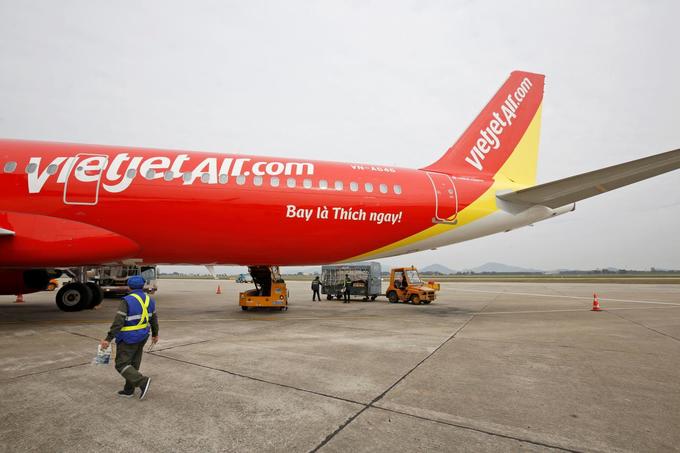
    Low-cost carrier Thai VietJet Air has awarded the tender of its cargo operations to ECS Group with a signed master GSSA agreement with subsidiary AVS GSA Thailand, on 01 February 2024.

    ECS Group said it aims to increase revenue and cargo volumes for the airline, which operates flights across Thailand and Asia. 

    Thai VietJet Air currently operates a fleet of 18 A320-200 and A321-200 aircraft, focusing primarily on transporting general cargo and perishables. Destinations include Singapore, Malaysia, Indonesia, China, Taiwan, Korea, Japan, and Vietnam.

    “Thai VietJet Air has carved a solid cargo market share for itself on the Thai domestic market and offers an impressive international network across Asia – and all that without a freighter in its fleet,” said Monchai Jirakiertivadhana, CEO Indochina at AVS GSA.

    “AVS GSA therefore has an excellent base on which to further develop the airline’s cargo activities and improve its revenue performance,” he added.

  • Vietnam’s agricultural exports to China expected to rise

    Vietnam’s agricultural exports to China expected to rise

    According to the Agency of Foreign Trade at the Ministry of Industry and Trade, Vietnam expects to increase its agricultural exports to China as the neighboring country agreed earlier this year to review regulations permitting the official export of Vietnamese poultry meat.

    The agency cited statistics by the General Department of Vietnam Customs showing that Vietnam shipped abroad 22,450 tonnes of meat and meat products worth US$110.35 million last year, up 19% in volume and 30.4% in value from 2022.

    The products were delivered to 28 markets around the world, with Hong Kong, China, Belgium, Papua New Guinea, Malaysia, Cambodia, France, and the U.S. among the biggest importers.

    Vietnam exported 4,770 tonnes of poultry meat and edible by-products valued at $12.04 million, representing year-on-year increases of 136.1% in volume and an 214% in value.

    China, Papua New Guinea, Malaysia, South Korea, and Hong Kong were the main buyers.

    At present, Vietnam ships two products of the livestock industry to China, including bird’s nests and milk, under official export according to the protocol on exporting bird’s nest signed in 2022 and another on exporting milk signed in 2019 between the two countries.

  • Luxury airline plans to give select passengers a Vision Pro to use as in-flight entertainment

    Luxury airline plans to give select passengers a Vision Pro to use as in-flight entertainment

    At least one airline is planning on offering the Apple Vision Pro to some passengers as part of its in-flight entertainment offerings. Beond is a Maldivian airline that flies to five destinations and calls itself the world’s first “premium leisure airline” with business class service that includes gourmet meals, seats that fold down completely allowing passengers to sleep more comfortably during a flight, and soon, in-flight entertainment led by the Apple Vision Pro.

    In a press release dated Thursday, Beond said that it will start  offering the Vision Pro to select customers on its flights to the Maldives. Beond’s fleet has just doubled to two after the airline took possession of its second jet and in the middle of this year, it will start flights from Milan, Dubai, and Bangkok to the Maldives.

    Tero Taskila, Beond’s Chairman and CEO, said, “The Apple Vision Pro will transform the inflight entertainment experience, and we will be first to offer it to select passengers. In addition to our existing and ever-growing library of inflight content such as movies and games, Beond will showcase stunning resort destinations and activities in the Maldives. We are working now with partners in the Maldives to prepare truly amazing footage.”

    The executive continued, “The inflight experience will build anticipation for passengers before they arrive in the Maldives. Offering the Apple Vision Pro is another step in our vision of delivering a premium travel experience to our customers, from the start to finish of their journey. We’re proud to be the first airline to deploy the technology.” The press release didn’t mention how many Vision Pro units would be aboard each flight, nor did it mention how the airline would determine which passenger(s) would get the opportunity to don the headset.

    Now that Beond has become the first airline to announce plans to offer the Vision Pro to passengers, we could see the larger commercial airlines add the Vision Pro to their in-flight entertainment offerings. Considering the number of larger capacity planes that airlines could order the headset for, Apple could get a windfall.

  • Embraer gears up for Singapore Airshow

    Embraer gears up for Singapore Airshow

    Embraer is set to display its growing portfolio of aircraft at the Singapore Airshow on 20-25 February, as the company looks to strengthen its presence in Asia Pacific

    The Brazilian aircraft manufacturer, which also has an office in Beijing, will showcase its aircraft solutions for defense and security, commercial aviation, and business aviation, including the Asian debut of subsidiary Eve Air Mobility.

    The biennial industry event in Singapore gathers the most influential players in international aerospace and defense, and Embraer excited to show the collective strength of its aircraft lineup.

    Making their debut at the show are Embraer’s C-390 Millenium for military transport aircraft and the Praetor 600 business jet. The C-390 was recently selected by South Korea’s Defense Acquisition Program Administration (DAPA), whilst the Praetor 600 was delivered to South Korea’s flight inspection centre at end-2023.

    On its debut, Eve Air Mobility will be presenting an overview of its eVTOL, services and operations solutions including its Urban Air Traffic Management software solution.

    The company will have its full-size eVTOL cabin mockup on display, marking its first trip to Asia Pacific as part of its world tour. Eve and will also offer visitors a unique virtual reality (VR) flight experience.

    Also joining the lineup at this year’s Airshow with a brand new ‘Tech Eagle’ livery is the E195-E2 commercial jet, which doubled in deliveries last year and got firm orders from Scoot.

    “Our presence in Asia Pacific is growing and the Airshow provides us a great platform to further interact with the aerospace and defense communities across the region,” said Francisco Gomes Neto, President and CEO at Embraer.