Category: General

Retail News Asia is committed to providing both local and global retailers with the latest General Retail news throughout the Asian market. This on a daily base.

  • You can now add music to your photo carousels on Instagram

    You can now add music to your photo carousels on Instagram

    Sometimes pictures just don’t cut it when trying to express yourself, so that’s where music comes in handy. Instagram has introduced a new feature that gives you even more control over the music in your posts.

    In a recent blog post, Instagram announced that you can now include music in your photo carousels. Moreover, you’ll also be able to invite up to three collaborators to work together on a feed post, carousel, or reel.

    Adding music to your photo carousels follows the launch of music for feed photos feature introduced last year. With this new feature, Instagram wants to give its users more ways to express themselves when sharing memories and experiences.

     The updated Collabs feature also has a similar goal. Previously, you could only invite one friend to collaborate on your post or reel. Now, you can include up to three collaborators. Once they accept your invitation, the content will be shown to each collaborator’s audience and appear on their profile grids.
    Both private and public accounts can collaborate on a post or reel. If your account is private, you can initiate your own post or reel and invite a collaborator as long as they follow you back. This Collabs update could be a big deal for influencers, as their audiences could grow even more through collaborations with other influencers.
  • Big data to help collect tax from foreign service providers

    Big data to help collect tax from foreign service providers

    Big data on e-commerce would help the tax watchdog to efficiently collect tax from foreign cross-border IT services providers, a tax official said.

    Statistics showed that cross-border IT services and social network providers, including Google, Apple, Facebook, Netflix, TikTok and Microsoft, paid around VND4 trillion (US$169.5 million) in taxes in the first half of this year, compared to VND3.5 trillion for the full last year.

    The tax that Vietnam collected on the providers remained modest compared to the revenue of the retail e-commerce market which reached $16.4 billion in 2022, statistics of Vietnam E-commerce and Digital Economy Agency showed.

    It was estimated that Vietnam’s retail e-commerce market would expand by 25% to hit $20.5 billion this year.

    On the e-commerce market, six foreign providers namely Meta (Facebook), Google, Microsoft, TikTok, Netflix and Apple, accounted for about 90% of the revenue on cross-border digital platforms in Vietnam.

    In the field of digital advertising, according to Kantar Media Vietnam, the revenue on platforms such as Facebook, Youtube and TikTok reached $2.5 billion in 2023 and is forecast at $3.4 billion this year.

    Nguyen Bang Thang, director of Tax Management Department of Large Enterprises, said that the tax watchdog would continue to create favorable conditions for foreign providers and domestic establishments which were seriously developing business in Vietnam. At the same time, strict punishments would be applied to violations, he stressed.

    He added that the tax watchdog regularly cooperated with relevant agencies to analyze risks related to tax declaration of foreign providers and authorized organizations for handling measures. Experiences from other countries, including the U.S. and the EU, showed that the development of big data on e-commerce would be critical to ensure efficiency in tax management on cross-border platforms.

    Admitting tax loss in e-commerce, Nguyen Thi Minh Huyen, deputy director of Vietnam E-commerce and Digital Economy Agency, said that the legal regulations on tax collection in the industry were still in the process of being improved.

    Huyen said that a mechanism for data sharing between relevant management agencies must be raised to prevent cross-border tax loss.

    According to Hoang Van Cuong, deputy of the National Assembly’s Finance – Budget Committee, the focus must be placed on strengthening digital transformation to have an adequate data for easy and efficient tax management.

    The Ministry of Finance targeted to increase domestic tax collection by 5-7% in 2024 with one of the focuses on enhancing the efficiency in tax collection from cross-border e-commerce.

  • Vietnam aluminum mining to increase exponentially

    Vietnam aluminum mining to increase exponentially

    The government plans to mine for bauxite, the ore used to produce aluminum, at three new locations in the north.

    It plans to develop by 2030 one site in Lang Son Province and two in Cao Bang, the Ministry of Industry and Trade said Wednesday.

    Their combined capacity will be within 1.55-2.25 million tons of ore annually.

    Besides, at least two existing mines in Lam Dong Province in the Central Highlands will be upgraded to increase production.

    The government will also explore the possibility of mining 68-112.2 million tons of bauxite annually in four central highlands provinces.

    At 5.8 billion tons, Vietnam has the world’s second-largest bauxite reserves behind only Guinea (7.4 billion), according to the U.S. Geological Survey.

    The majority of bauxite in Vietnam is found in the Central Highlands, especially Dak Nong Province.

  • WhatsApp’s multi-account support feature is now available for select beta users

    WhatsApp’s multi-account support feature is now available for select beta users

    WhatsApp has been rolling out a lot of new features lately, but we’re expecting the messaging app to get even more in the coming weeks. Meta’s successful acquisition is testing new features all the time, but only select beta testers have access to these.

    The folks over at WabetaInfo made a habit of dissecting every new beta version of the app WhatsApp releases to discover all the new stuff the company plan to bring sooner, later, or sometimes, never.

    WhatsApp beta for Android 2.23.17.8 is very important because it brings one of the most requested features, the ability to add multiple accounts to the app.

    As per WabetaInfo’s findings, the new feature is fresh out of the oven and is now going through the usual beta testing before being released worldwide. Only select beta testers have access to multi-account support, but its availability might expand as the testing process progresses.

    With multi-account support, WhatsApp users can add a new account to their app by tapping the arrow icon next to the QR code button. Switching between accounts can also be done from the same menu. New accounts will remain attached to your WhatsApp app until you log out.

    The addition of multi-account support will make it easier for WhatsApp users to keep all their conversations from multiple accounts on a single device. It’s an incredibly useful feature for those with more than one WhatsApp account and currently using two devices to handle them.

    Since the feature is now going through the testing process, it might get some changes, but at least we know it’s in the pipeline. Regardless of the form it will take in the end, multi-account support is coming folks, so be ready to throw away that second phone that you’ve been keeping to manage your multiple WhatsApp accounts (or not).

  • Air New Zealand’s ‘Mission Next Gen Aircraft’ calls for airports

    Air New Zealand’s ‘Mission Next Gen Aircraft’ calls for airports

    Air New Zealand is looking for two airports to further support its efforts towards decarbonization and has opened an expression of interest as part of selecting a route to fly its commercial demonstrator aircraft from 2026. 

    The move is part of the airline’s ‘Mission Next Gen Aircraft’ launched in December last year, where the carrier announced partnerships with Eviation, Beta, VoltAero and Cranfield Aerospace with plans to launch the first-zero emissions demonstrator flight by 2026. 

    Air New Zealand is working towards its ambition of flying next-generation aircraft on its domestic network from 2030. The airline will work with its partners to develop the technology and associated infrastructure required to make this a reality. The commercial demonstrator aircraft will be either electric, hybrid or hydrogen fuel celled, initially operating as a cargo-only service. The airline said it will announce the type of demonstrator aircraft it will use from 2026 by early next year. 

    “Decarbonising aviation is not easy, and we’ve got a lot of work ahead of us, but we’re committed to reducing our emissions as quickly as we can, and this process is another step in the right direction,” said Kiri Hannifin, Air New Zealand’s chief sustainability officer. 

    “While we’re looking forward to bringing two frontrunner airports on board, it’s also important to note that all airports in New Zealand play an important role as we work towards bringing next-generation aircraft into our network here in Aotearoa at scale.  

    “The selected airports will be leaders in supporting the implementation of this new technology and will be the conduit of information between airports across the motu as we drive the change required in advance of our larger fleet replacement needs from 2030.” 

  • AirAsia to ramp up China services

    AirAsia to ramp up China services

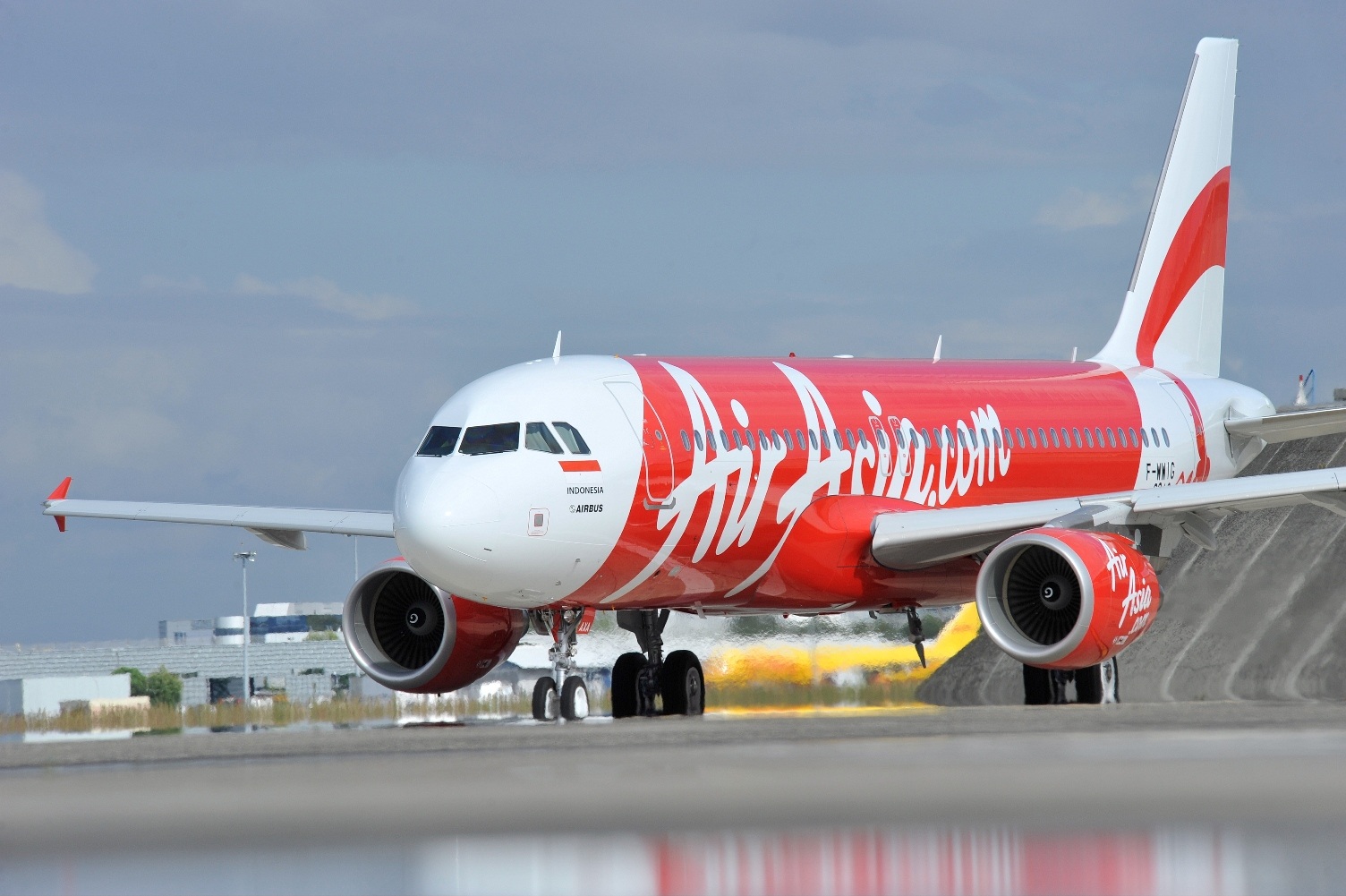
    AirAsia is all set to elevate its flight offerings between Malaysia and China as it anticipates a continuous surge in forward sales over the upcoming months.

    The travel landscape has been undergoing a remarkable transformation, with travel demand bouncing back after the challenges posed by the pandemic.

    As part of its strategic response, AirAsia is poised to tap into this burgeoning demand and cater to the increasing number of travelers between these two countries.

    July reports have revealed that the average load factor, representing the number of guests carried per flight, for AirAsia Malaysia (AK) and AirAsia X Malaysia (D7) flights to and from China, has reached an impressive 80 percent.

    This marks a substantial rebound and signals a positive momentum for the aviation industry.

    Notably, several key routes such as Kuala Lumpur-Shanghai, Kota Kinabalu-Guangzhou, Kuala Lumpur-Nanning, and Kota Kinabalu-Wuhan have witnessed load factors soaring as high as 95 percent, showcasing the strong resurgence in travel interest.

    Between March and early July this year, both airlines have successfully sold over 320,000 seats for flights connecting China and Malaysia. This remarkable figure constitutes around 30 percent of the equivalent period pre-Covid in 2019.

    Notably, about 75 percent of these seats have been purchased by Chinese nationals, reaffirming Malaysia’s status as a preferred destination for tourists from China. This trend underscores the nation’s allure and underscores the rekindled traveler enthusiasm.

    AirAsia Malaysia (AK) is geared to reintroduce another route, offering flights from Kota Kinabalu to Hangzhou, with a three-flight-per-week schedule commencing on September 2, 2023.

    In parallel, AirAsia X Malaysia (D7) is preparing to bolster its services, increasing flights from Kuala Lumpur to Beijing (Daxing) from four to five flights weekly, starting September 1.

    Additionally, flights between Kuala Lumpur and Shanghai will elevate from four to seven flights per week, commencing September 15, and services from Kuala Lumpur to Hangzhou will escalate from three to four flights weekly, beginning September 30, 2023.

    Riad Asmat, the CEO of AirAsia Malaysia, was pleased with the heightened travel interest between the two countries. He emphasized the airline’s commitment to serving second-tier cities and expanding connectivity.

    The additional flights to Hangzhou and plans for further frequency increases reflect AirAsia’s dedication to accommodating growing demands and boosting both international and domestic travel.

    Benyamin Ismail, CEO of AirAsia X Malaysia, also acknowledged the persistent strong demand for China travel across their network. The move to add more frequencies and optimize popular Chinese routes underscores their commitment to trade, tourism, and investments between the two nations.

    This approach aligns with the company’s goal of enhancing guest experiences, maximizing fleet utilization, and providing greater exploration opportunities for travelers.

    In tandem with its route expansions, AirAsia is also launching discounted fares for travelers. These fares extend to North Asian destinations, encompassing Guilin, Guangzhou, Nanning, Shantou, Beijing, and Shanghai, with prices starting from RM319 all-in one-way.

    AirAsia Malaysia (AK) is currently operating 14 routes to and from China, boasting over 104 weekly flights. These routes connect Kuala Lumpur to various destinations such as Guilin, Quanzhou, Guangzhou, Kunming, Shenzhen, Nanning, Shantou, and Macao.

    Additionally, flights from Kota Kinabalu to Guangzhou, Shenzhen, Wuhan, Beijing, and Macao and Johor Bahru to Guangzhou further solidify the airline’s comprehensive connectivity.

    AirAsia X Malaysia (D7) is also making its mark, offering four routes to and from China with more than 22 weekly flights.

    The routes include Kuala Lumpur to Chengdu (Tianfu), Beijing (Daxing), Shanghai, and Hangzhou, all of which contribute to AirAsia’s mission of bridging nations and fostering unparalleled travel opportunities.

  • Meta faces new legal hurdles in Europe

    Meta faces new legal hurdles in Europe

    Social media platforms have often faced issues with European laws, particularly regarding data privacy and tracking. Recently, TikTok had to change its privacy rules to match the new Digital Service Act (DSA). Some time ago, Meta got hit with a $423 million fine from Ireland’s Data Protection Commission, which made the tech company allow EU users to turn off ad tracking.

    Now, Meta is facing legal troubles again in Europe, this time in Norway. Starting from August 14, Meta will be fined $97,700 per day for privacy breaches. The fine comes from the Norwegian data regulator, Datatilsynet, and will be in effect until November 3.

    With the timeframe and amount of money at stake, the fine might be challenging, even for a tech giant like Meta. As a result, Meta is reaching out to a court in Norway, seeking to put a stop to the fine. A petition for a temporary injunction against the order will be put forth on August 22 during a two-day hearing. Whether the court leans in favor of Meta or not is still up in the air.

    Datatilsynet says that Meta can’t gather users’ data in Norway, like their physical locations, and then use it to aim ads at them, known as behavioral advertising. Behavioral advertising is a strategy that tailors online ads to users based on their web activity and interests. It uses data analysis to create personalized ads for better engagement but also raises privacy concerns about user data usage.

    The regulator also dangles the possibility of turning the fine into a long-term fixture by passing its judgment to the European Data Protection Board, which has the authority to take such action if it aligns with the Norwegian regulator’s stance. If the board backs this move, it could imply that the decision starts to have an impact across Europe.

    In May of this year, the EU slapped Meta with a whopping $1.3 billion fine for breaching privacy rules. It appears that European lawmakers aren’t exactly aiming to be gentle with the big tech giant.

  • Microsoft extends AI-powered Bing Chat to Chrome and Safari mobile

    Microsoft extends AI-powered Bing Chat to Chrome and Safari mobile

    Six months ago, Microsoft announced its AI-powered Bing search engine and Edge browser, and the tech giant certainly does not intend to stop there. Microsoft has the ambition to implement AI in all of its products and services, and not only that but also to go beyond its own products.

    Microsoft shared that Bing Chat will soon be available in Chrome and Safari on both web and mobile. Bing Chat is also available as a standalone Android and iOS app, which will also receive some new features. The company’s goal is to allow more people to access Bing’s capabilities, such as summarized answers and image creation.

    While Microsoft may open Bing Chat for usage in third-party browsers, it still recommends using the Microsoft Edge browser if you want to experience the AI chatbot capabilities at their best. Chrome and Safari will have limitations, such as offering only 2,000 words per prompt on Chrome and Safari, compared to 4,000 on Edge. Features such as longer conversations and chat history will be available only on Edge.

    Along with announcing the availability of Bing Chat for Chrome and Safari, Microsoft also shared that the AI-powered Bing mobile app will now have a dark mode option. The company also reminded users of the newest Bing Chat features that were recently added, such as Visual Search.

    Visual Search is a feature powered by AI that allows you to enter a visual prompt. For example, you can take a picture of the inside of your fridge with all the products you have at the moment and ask Bing Chat to give you some ideas on what to cook. In other words, Bing Chat can understand the context of an image, interpret it, and answer questions about it.

    These new features and updates to Bing Chat availability were announced in a blog post celebrating 6 months of the new AI-powered Bing. Microsoft shares that during this time, more than 1 billion chats were initiated, and people generated over 750 million images.

    AI is undoubtedly developing rapidly, entering more and more products daily. One of the most popular AI chatbots, OpenAI’s ChatGPT-4, actually powers Bing Chat, but the latter offers even more accurate and up-to-date information since it has access to Bing Search. With Microsoft working hard to improve its AI products, its biggest competitor, Google is also stepping up its game with its Google Bard and updating its Assistant using AI.

  • Thai AirAsia X resumes Sapporo flights

    Thai AirAsia X resumes Sapporo flights

    Thai AirAsia X (XJ) will resume its Bangkok (Suvarnabhumi) – Sapporo route starting from 29 October 2023 to capture the winter season tourist traffic to Japan’s gateway city for winter sports and snow attractions.

    Flying a direct daily service Thai AirAsia X presents promotional fares starting at THB6,990 available for booking through 30 September 2023 for travel from 29 October 2023 to 30 March 2024 via the AirAsia Superapp.

    Thai AirAsia X chief executive officer Tassapon Bijleveld said: “Sapporo and the island of Hokkaido are high potential destinations beloved by Thai travellers. The island can be visited all year round with different attractions during the summer and winter periods and is home to wonderful seafood, including the famed Taraba crab.”

    Various experiences are available on Hokkaido, especially during the transition from autumn to winter, when it is most beautiful. Visitors can enjoy Sapporo’s winter festival, ski resorts, Moiwa Mountain, and Sapporo Beer Museum. Or they can venture to nearby cities such as Otaru, Asahikawa and Niseko, each offering end-of-year activities.

    “Resuming flights to Sapporo brings more choice to Thai and international travellers and Japanese travellers looking for economical ways to visit Thailand. This route has always received significant interest, and we are bringing it back at a wonderful AirAsia price,” Tassapon concluded.

    Thai AirAsia X flies Bangkok (Suvarnabhumi Airport) directly to Tokyo (Narita) 14 times a week and Osaka 10 times a week.

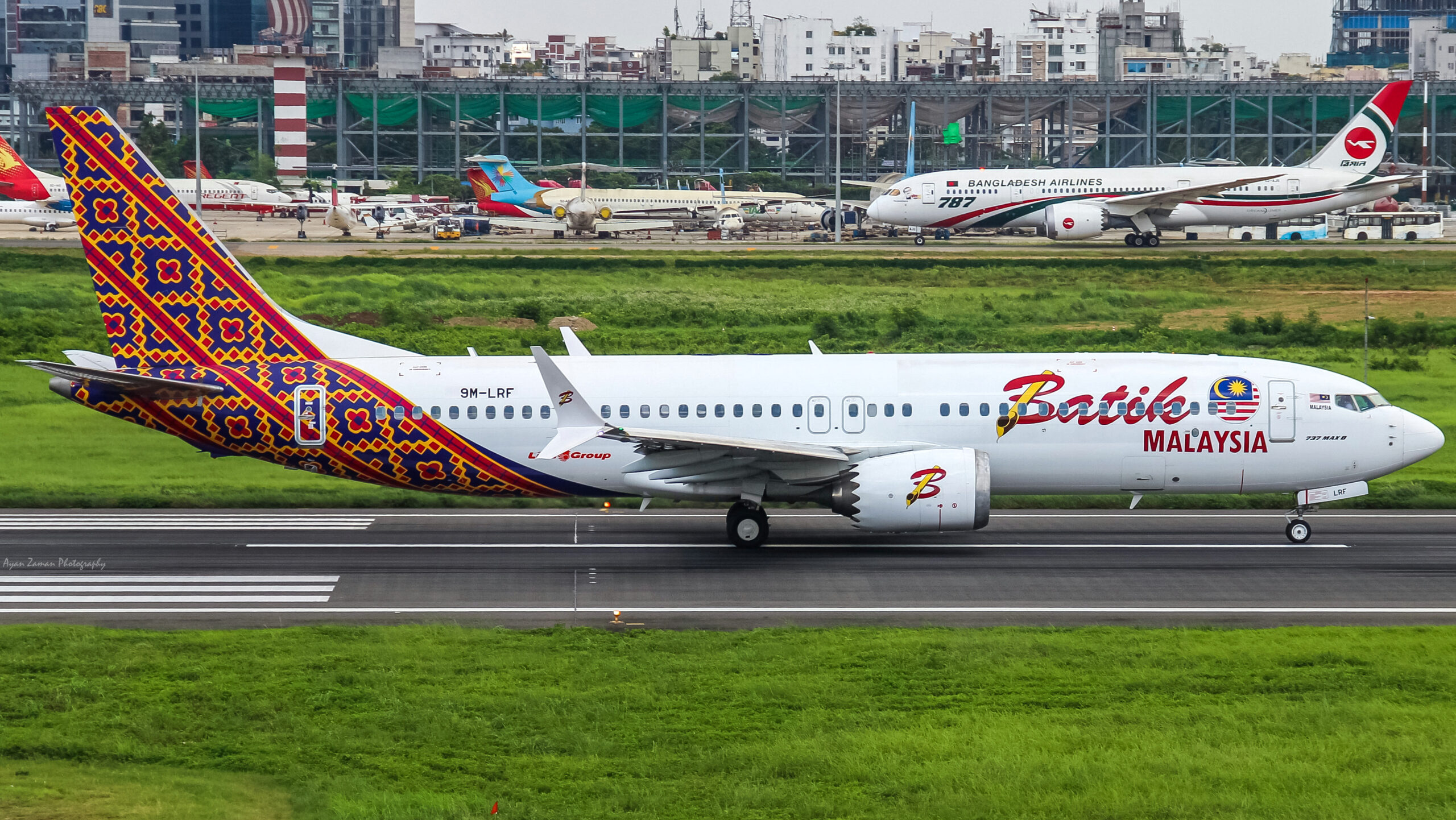
  • Batik Air Malaysia, AirAsia X Cleared To Launch Central Asia Routes

    Batik Air Malaysia, AirAsia X Cleared To Launch Central Asia Routes

    The Malaysian Aviation Commission (MAVCOM) has granted air traffic rights to Batik Air Malaysia and AirAsia X, enabling them to expand their networks into Central Asia.

    Under these newly awarded rights, Batik Air has received approval to initiate scheduled flights linking Kuala Lumpur and Tashkent, Uzbekistan. Concurrently, AirAsia X has been given the go-ahead to inaugurate a route connecting Kuala Lumpur with Almaty, Kazakhstan. The move paves the way for both Batik Air and AirAsia X to launch their first flights to Central Asia.

    According to data provided by OAG Schedules Analyser, Batik Air has already scheduled the launch of the Tashkent service, with flights set to operate twice a week from Nov. 1 using Airbus A330 aircraft. The carrier will compete on the sector with Uzbekistan Airways, which resumed the route in November 2022 after a hiatus of more than two years because of the pandemic. It currently provides a 2X-weekly service aboard A321neos.

    In the Kuala Lumpur-Almaty market, AirAsia X will be the sole operator of nonstop flights between the cities if the route launches as planned. Air Astana previously provided a direct link, but last operated the flights in October 2020.

    Alongside awarding the traffic rights for Kuala Lumpur-Tashkent and Kuala Lumpur-Almaty, MAVCOM says it approved 55 other requests between April and June 2023, consisting of 43 international and 12 domestic routes. The total represented an 87.5% increase year-on-year, signalling “an invigorated momentum within the aviation sector.” The number of air traffic applications during the second quarter of 2023 was also 5.3% higher than during the same period in 2019.

    “As part of the commission’s continued efforts to ensure that Malaysia’s aviation industry remains dynamic and responsive to global travel trends, we have approved [air traffic rights] for various new destinations as well as to establish new hub connections,” says MAVCOM Executive Chairman Datuk Seri Hj. Saripuddin Hj. Kasim.

    “These decisive measures are specifically tailored to enhance connectivity, spur economic growth and catalyse the recovery of the aviation sector. We are particularly encouraged to see airlines seizing these opportunities for expansion.”

    In addition to securing permission to fly to Tashkent, Batik Air also gained rights to serve Okinawa, Japan. The airline intends to open a Kuala Lumpur-Taipei, Taiwan-Okinawa route on Aug. 16, operating four times per week using Boeing 737-800s.

    Elsewhere, Malaysia Airlines’ LCC subsidiary Firefly has been approved to launch flights from Kota Kinabalu, on the island of Borneo, to Tokyo Narita and Taipei, while AirAsia has been awarded a host of rights, including a routing from Kuala Lumpur to Jaipur, India, and from the northwestern Malaysian state of Penang to Hong Kong.

    MYAirline has also been cleared to serve several destinations in Indonesia, Thailand and Vietnam from Kuala Lumpur. These include Ho Chi Minh City and Da Nang, Vietnam; Jakarta, Indonesia; and Krabi, Thailand. Airlines are required to utilize the air traffic rights allocated within six months from the approved date.

  • AirAsia India takes over Air India Express Sharjah flights

    AirAsia India takes over Air India Express Sharjah flights

    AirAsia India will begin operating flights to Sharjah on behalf of Air India Express on August 28. This follows the carrier beginning to operate codeshare flights on Air India’s behalf earlier this month.

    According to ch-aviation schedules data, from August 28, AirAsia India will deploy one of its A320-200Ns onto a daily Delhi International – Sharjah – Varanasi – Sharjah – Delhi rotation, replacing the B737-800 service operated by Air India Express. It comes ahead of the merger of the two low-cost airlines. Following recent approval from India’s Directorate General of Civil Aviation, that merger is now expected to finalize in early 2024. The Sharjah flights also mark AirAsia India’s sole foreign foray. Presently, it only flies within India.

    As recently reported in ch-aviation, AirAsia India also began operating some domestic codeshare flights for Air India on August 1. AirAsia India is putting the full-service carrier’s flight designator on selected flights between Bangalore International and Bhubaneswar, Mumbai International – Goa Dabolim, Delhi International – Lucknow, and Delhi International and Pune.

    The closer cooperation comes as Tata Sons seeks to consolidate its Indian airline interests. In addition to the AirAsia India – Air India Express merger, it also intends to merge Vistara with Air India, in the process creating one large low-cost carrier and one large full-service carrier.

  • Gold prices down

    Gold prices down

    SJC gold price fell 0.07% to VND67.35 million ($2,838.18) per tael Tuesday morning.

    Gold ring price was stable at VND57 million per tael.

    Globally gold prices rose on Friday after a slightly weaker-than-expected U.S. jobs report pushed the dollar and Treasury yields lower, offering some respite to bullion which was still on track for its worst week in six.

    Spot gold was up 0.4% at $1,940.86 per ounce by 2:52 p.m. Bullion, however, was down 0.9% so far this week.

    U.S. gold futures settled 0.4% higher at $1,976.10.

    “The jobs report has allowed the market to propose that the Federal Reserve is not as likely to raise interest rates. As a result, we’ve seen bond yields drop along with the dollar and that is certainly supporting the price of gold,” said David Meger, director of metals trading at High Ridge Futures

    Following the data, the dollar fell 0.5% against its rivals, making gold less expensive for other currency holders. Benchmark U.S. 10-year yields retreated from a nine-month high.

  • Singapore records minor retail sales growth in June

    Singapore records minor retail sales growth in June

    Singapore retail sales (excluding motor vehicles) grew by 2.5 per cent to SG$3.4 billion (US$2.5 billion) in June, following May’s 1.7 per cent increase.

    The country’s seasonally adjusted retail sales were up 0.2 per cent month over month, data from the Department of Statistics Singapore shows.

    Online retail sales accounted for 14.3 per cent of the total sales, it added.

    The food and alcohol sector reported a 30.7 per cent jump in sales year over year, attributed to higher demand for alcoholic beverages, including those in duty-free shops.

    While most of the remaining sectors posted a year-on-year increase in sales, petrol service stations saw a 24.2 per cent dip. Sales of motor vehicles also declined by 8.4 per cent in June.

    The sales increase of food and beverages services continued to slow down for the month, up 7.2 per cent compared to the 8.7 per cent growth in May and 15.3 per cent in April.

    The sales value of food and beverages services was $956 million, with 23.4 per cent coming from online transactions.

  • Instagram’s new feature puts an end to DM requests spamming

    Instagram’s new feature puts an end to DM requests spamming

    Instagram is finally adding one of the most requested features since it introduced the ability to send direct messages. A new update makes it possible for Instagram users to restrict who can send them DM requests.

    The new feature was tested last month and now it’s rolling out to all Instagram users. The first limitation introduced with the new feature prevents you from sending more than on DM request to a person who doesn’t follow you on Instagram. If they accept your request, then you will be able to continue to send them new DM requests.

    The second limitation is that DM invites can’t contain images, videos or voice notes, so you can send text-only DM requests to those who don’t follow you on Instagram.

    “We want people to feel confident and in control when they open their inbox. That’s why we’re testing new features that mean people can’t receive images, videos or multiple messages from someone they don’t follow, until they’ve accepted the request to chat. We’re grateful for the feedback we hear from our community — and we’ll keep listening to find ways to help everyone feel safer on Instagram.

    Apart from introducing these new limitations that basically remove DM requests spamming, Instagram also added a Restrict setting that makes it possible to monitor an account that you don’t want to block, but still want to restrict their presence on your Instagram page.

    Once you restrict an account, their comments on your posts will only be visible to them. More importantly, they won’t know that no one can see their posts, and their DMs will be automatically sent to your DM requests folder. It’s a middle-ground solution in case you don’t want to outright block an account, but still want some protection against bullying.

  • How to Use Human Resource Software to Create and Manage Your Workforce Planning

    How to Use Human Resource Software to Create and Manage Your Workforce Planning

    Workforce planning is a crucial aspect of strategic human resource management. It involves assessing current and future workforce needs, identifying skill gaps, and creating strategies to meet organizational goals effectively. In today’s digital age, where technology plays a significant role in optimizing business processes, human resource software has emerged as a powerful tool for creating and managing workforce planning.

    In this article, we will explore how to leverage human resource software to streamline your workforce planning efforts, enhance productivity, and make informed decisions for your organization’s success.

    Understanding the Role of Human Resource Software in Workforce Planning
    Human resource software, often referred to as HR software or HRIS (Human Resource Information System), is a technology solution designed to manage various HR functions efficiently. These software systems are equipped with a wide range of features, including employee data management, recruitment and onboarding, performance evaluation, payroll processing, and, most importantly, workforce planning.

    The role of human resource software in workforce planning can be summarized as follows:

    1. Data Centralization and Organization
    HR software allows you to consolidate all employee-related data into a centralized database. This data can include personal information, job roles, qualifications, performance history, training records, and more. Having this information readily available and organized makes it easier to analyze your workforce’s current composition and identify areas that need improvement.

    2. Real-Time Insights
    With HR software, you can access real-time data and generate reports on various workforce metrics. This capability enables you to make data-driven decisions when developing your workforce planning strategies. From understanding employee turnover rates to identifying high-performing teams, HR software provides valuable insights to guide your planning process.

    3. Succession Planning
    Effective workforce planning involves anticipating future talent needs, including identifying potential leaders and successors for critical roles within the organization. HR software can assist in succession planning by helping you assess employee performance, skills, and potential for growth. This way, you can proactively groom internal talent for future leadership positions.

    4. Recruitment and Talent Acquisition
    To meet your workforce requirements, effective recruitment and talent acquisition strategies are essential. HR software often includes applicant tracking systems (ATS) that streamline the recruitment process, from posting job openings to screening candidates and managing interviews. This ensures you attract the right candidates for your organization.

    5. Skills Gap Analysis
    Identifying skill gaps is crucial for effective workforce planning. HR software can facilitate skills gap analysis by comparing required skills for a job role with the skills possessed by employees. This analysis helps you identify areas where additional training or external hiring may be necessary to meet your organization’s goals.

    Steps to Use Human Resource Software for Workforce Planning
    Step 1 Evaluate Your Current Workforce
    Before you start creating your workforce planning strategies in software such as the Payboy management system, it’s essential to assess your current workforce’s strengths and weaknesses. HR software comes in handy for this task:

    Use the HR software to collect and organize relevant employee data, such as job roles, performance evaluations, certifications, and skills.

    Leverage the HR software to analyze employee performance metrics, such as productivity, attendance, and engagement. This analysis will help you identify top performers and areas where improvement is needed.

    Step 2: Define Future Workforce Requirements
    Once you have a clear understanding of your current workforce, it’s time to define your organization’s future workforce requirements

    Use the HR software to generate reports and forecasts based on historical data, market trends, and organizational goals. This will help you estimate the number and types of employees you’ll need in the future.

    Identify the skills and competencies that will be critical for your organization’s future success. HR software can assist in conducting skills gap analysis to determine which skills are lacking within your current workforce.

    Step 3: Develop Recruitment and Succession Strategies
    With the future workforce requirements in mind, it’s time to develop recruitment and succession strategies:

    Utilize the HR software’s ATS capabilities to plan and execute your recruitment efforts. From creating job postings to managing candidate applications, the software streamlines the hiring process.

    Identify key positions within your organization that require strong successors. The HR software can assist in evaluating potential candidates based on their performance, skills, and career aspirations.

    Step 4: Training and Development
    To bridge the skills gap and prepare your workforce for future challenges, invest in training and development programs.

    Use HR software to conduct training needs analysis and determine the skills that employees need to develop. This analysis will help you design targeted training programs.

    Implement a learning management system (LMS) through your HR software to deliver training content efficiently. The LMS can track employee progress and ensure that everyone completes the necessary training.

    Step 5: Monitor and Adjust
    Workforce planning is an ongoing process that requires continuous monitoring and adjustments:

    Regularly update employee data in the HR software to ensure that your analysis and planning are based on the most current information.

    Use the HR software to track the progress of your workforce planning strategies. Assess whether your organization is moving toward its goals and identify areas that may need further attention.
    Be prepared to adjust your workforce planning strategies as the business landscape evolves. HR software’s real-time insights will help you make data-driven decisions during the process.

    Conclusion

    In conclusion, workforce planning is a critical aspect of human resource management that requires careful analysis, forecasting, and strategic decision-making. Human resource software can significantly enhance the effectiveness of your workforce planning efforts by centralizing employee data, providing real-time insights, aiding in succession planning, facilitating recruitment, and supporting skills gap analysis.

    To utilize HR software effectively for workforce planning, follow the steps outlined in this article: Evaluate your current workforce, define future workforce requirements, develop recruitment and succession strategies, invest in training and development, and continuously monitor and adjust your strategies.

    By leveraging the power of HR software, your organization can create a robust workforce planning strategy that aligns with its goals, improves productivity, and positions itself for long-term success in a competitive business environment.