Category: General

Retail News Asia is committed to providing both local and global retailers with the latest General Retail news throughout the Asian market. This on a daily base.

  • WhatsApp will give you more control over video messages with a small update

    WhatsApp will give you more control over video messages with a small update

    Ever get annoyed when something just doesn’t work quite right? It might be handy, it might have its uses, but there’s still that feeling of having to scoot the chair to crack open the fridge, you know what I mean? Well, sometimes, these irritating quirks come from apps, and it’s a relief when they get fixed, even if it is a minor update. Small updates can make a big difference and it seems like WhatsApp gets that.

    WhatsApp is introducing additional control options for its instant video messages feature. If you’ve updated to the latest WhatsApp beta for iOS (version 23.18.1.70) or the WhatsApp beta for Android (version 2.23.18.21), you might spot a new setting in the app. This setting allows beta testers to turn off, if they want, instant video messages.

    WhatsApp had already made it possible for its users to record and share video messages through the app’s latest updates in July. Without this new toggle, the feature is active by default, which means you can switch between video messages and voice notes by tapping the voice note button.

    But for some users who prefer not to use video messages, having to select voice messages over video messages every time manually can be quite annoying. So, with this update, users can turn the toggle off, and tapping the voice note button won’t switch to video messages anymore.

    However, it’s important to note that this option won’t block short video messages. You’ll still be able to receive and play them, but you won’t be able to send video messages when this option is turned off.

    It’s worth mentioning that even if you don’t plan to disable video messages, it’s good to check that toggle. Some beta users have reported finding it turned off unexpectedly, even if they’ve sent video messages before.

    The toggle for managing instant video messages is now available to some beta testers who’ve updated their WhatsApp beta for Android via the Google Play Store and WhatsApp beta for iOS through the TestFlight app, and it will reach more people in the next few days.

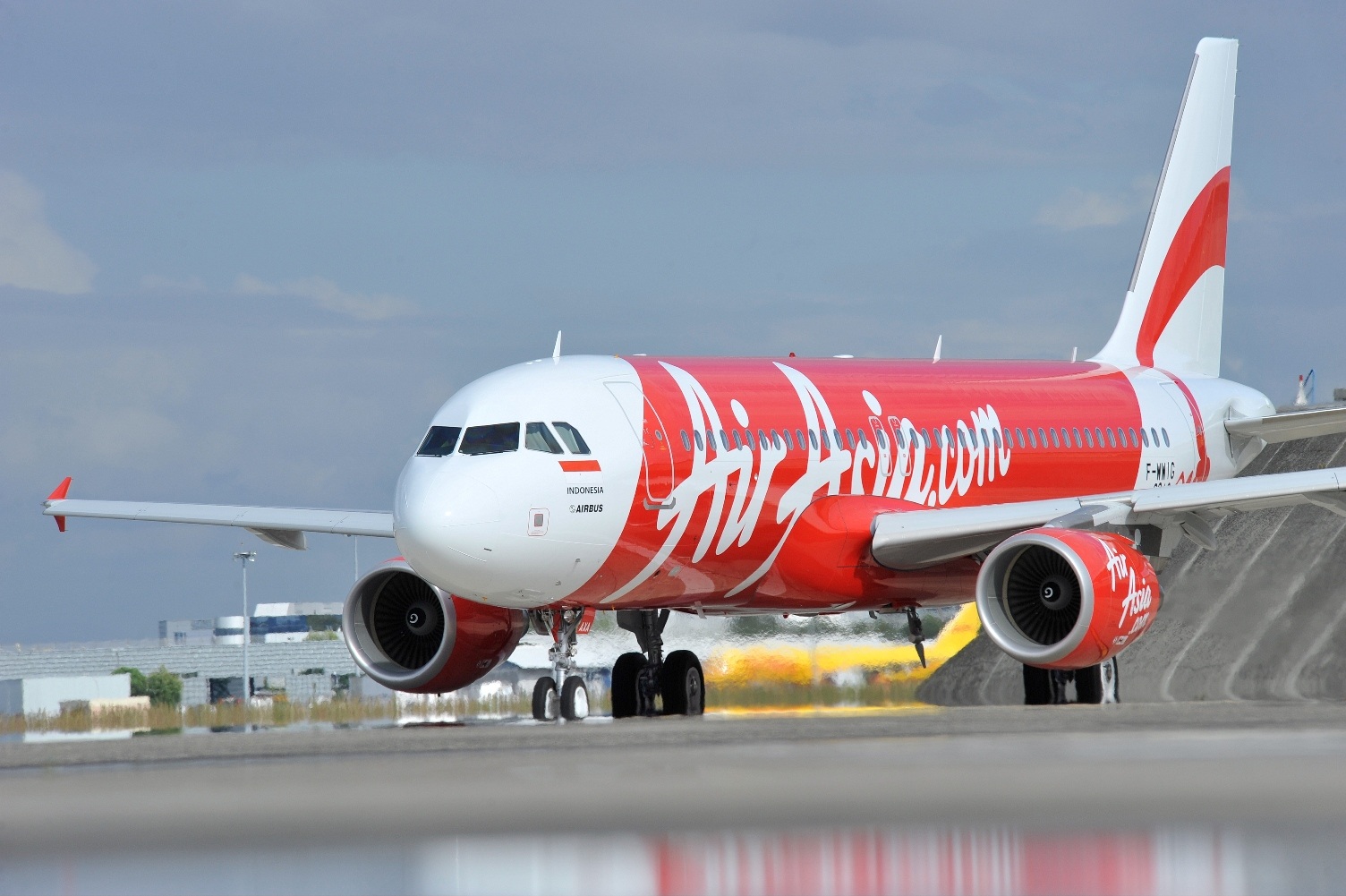
  • AirAsia Indonesia to more than double fleet in 3 years

    AirAsia Indonesia to more than double fleet in 3 years

    Capital A plans to more than double its fleet in Indonesia in the next three years to capture a growing tourism market after the Covid-19 pandemic, its chief executive Tony Fernandes said on Monday (Sep 4).

    AirAsia Indonesia, a unit of Capital A, currently has around 28 planes in its fleet. Fernandes told reporters on the sideline of an Asean business forum in Jakarta that he plans to grow the fleet to 75 by 2026, bringing in more wide-body aircraft.

    Fernandes said that the company’s main goal after the pandemic has been to grow its fleet as travel returns to normal levels quickly.

    “I’m very excited and we want to do as much direct connectivity, we want to open routes that we haven’t opened up before,” Fernandes said, citing Indonesia’s plans to develop destinations beyond the popular holiday island of Bali.

    Last year, Malaysia’s AirAsia Group changed its name to Capital A to reflect its growing portfolio of businesses beyond the core budget airline.

    Fernandes stepped down as AirAsia X CEO in October 2022, but has been the CEO of its parent company since 2018.

  • Apple creates a new website to promote its own apps

    Apple creates a new website to promote its own apps

    In a bid to promote its own apps, Apple has created a website titled “Apps by Apple” that mentions homegrown apps that Apple developed for its products such as the iPhone, iPad, Apple Watch, Mac, and Apple TV. Apple has a good reason to promote its own apps with iPhone units in the 27 European Union (EU) countries being opened for sideloading thanks to the EU’s Digital Markets Act (DMA).
    Sideloading is the process of installing an app from a third-party app storefront. Apple has always claimed that its ban on sideloading was done for security reasons so that it could prevent users from installing malware-laden apps. But in some countries, the sideloading ban is seen as a way for Apple to force app developers to use its own App Store payment platform, giving Apple a 15% to 30% cut of in-app transactions and subscriptions generated in the App Store.
    By promoting its own in-house app selection, Apple hopes to keep these titles in the minds of Apple device users who might consider sideloading a similar third-party app from a third-party app storefront.
    Communication: “Apps to keep you connected.” Such apps include Phone, Messages, FaceTime, Mail, and Contacts.
    Creativity: “Tools for pros and passionate creatives.” These apps include Photos, Camera, GarageBand, iMovie, and Final Cut Pro for iPad.
    Productivity: “All you need to make your work of art.” Apps in this category include Notes, Reminders, Calendar, Freeform, and Pages.
    Exploration: “Discover the world and navigate it with ease.” Such apps feature Safari, Maps, Weather, Find My, and Wallet.
    Entertainment and Home: “Brilliant ways to watch, read, listen, and relax.” Apps in this category feature Apple TV, Apple Music, Apple Arcade, Apple Music Classical, and Podcasts.
    Health and Fitness: “Wellness for your mind and body.” Such apps include Apple Health, Fitness, Workout, Sleep, and Cycle Tracking.
    Features: Siri, iCloud, CarPlay, Continuity, and Family Sharing.
    Apple says that “Every app by Apple comes with powerful privacy features to help protect your data and give you control over your information.” The teach giant adds, “Accessibility features are built into every Apple product and app — to help all people learn, create, and do what they love.”
    As for the App Store, Apple states, “The App Store has millions of apps that bring you amazing experiences. And every one of them meets Apple’s standards for privacy, security, and content.” If you do not live in one of the 27 EU member countries (the U.K. is not a member), you still will not be allowed to sideload apps on your Apple devices at this time.
  • Record number of new firms seen in eight months

    Record number of new firms seen in eight months

    A record number of 103,658 new firms were established in the first eight months of this year, a rise of 2.3% year on year, the Ministry of Planning and Investment (MPI) reported.

    In August alone, the country saw more than 14,000 newly established businesses, up 17.9% year on year. However, the number of firms returning to the market in the month dropped 3.1% year on year and 10.9% month on month.

    In the January-August period, 149,400 enterprises newly joined and returned to the market, a slight drop of 0.03% year on year, but 1.2 times higher than the average figure recorded in the period from 2018-2022, the ministry said.

    The education sector saw the highest rise in the number of new firms at 35%, followed by the healthcare sector at 18.9%, and employment services, tourism, machinery and equipment rental and other supporting services 16.3%.

    However, the total registered capital of the newly established firms fell 14.7% year on year to VND969.61 trillion (over $40.2 billion).

    Meanwhile, in the reviewed period, 124,684 businesses withdrew from the market, up 19.5% year on year, including 71,833 businesses halting operations, 41,064 logging dissolving requests and 11,787 others dissolved.

    In order to support business development, Deputy Minister of MPI Tran Quoc Phuong said that along with applying flexible, active and effective monetary and fiscal policies and measures to remove difficulties for business and production activities, the ministry will propose adjustments and supplementations to some relevant mechanisms and policies.

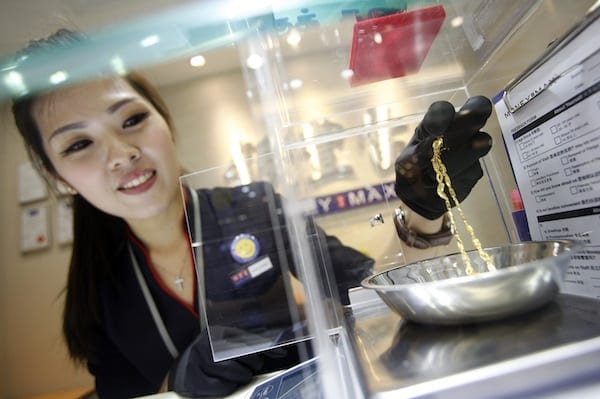
  • Pawnshop chain F88 reports H1 loss following investigation

    Pawnshop chain F88 reports H1 loss following investigation

    F88 Business JSC recorded a loss of VND368 billion (US$15.3 million) in the first half after police launched investigations into wrongdoings at the company.

    Representatives of the pawnshop and loan firm cited the high cost of risk as the main reason for the loss.

    The cost of risk means the cost of incurring losses because of risk and managing risks. The total of this cost is the sum of every aspect of a company’s functions relating to risk.

    According to F88, a recent inspection into debt collection conducted at businesses in the financial sector, including the company itself, had affected customers’ tendencies towards debt payment. This forced businesses to tighten their risk appetite, which means the amount of risk an organization is willing to take in pursuit of objectives it deems valuable.

    At the same time, results of the investigations limited F88’s ability to open new offices.

    In the past time, police have probed a number of F88 branches across the country, including those in HCMC, Binh Duong and Can Tho, after detecting several violations. The violations included mismanagement of data and insufficient business activity reports.

    In HCMC alone, investigations have been launched into 10 individuals who are either managers or staff at the company.

    Founded in 2013, F88 has claimed to be the fastest-growing financial service provider in Vietnam. It has 830 branches throughout the country. After the latest investigation, the firm said it has developed processes, regulations, and sanctions in debt collection activities, ensuring it would comply with the law and not cover for individuals who break the rules.

    F88 reported continuous profits in the 2019-2021 period, with the average annual figure hovering in the tens or hundreds of billions of dong (VND10 billion equals US$415,000).

    Last year, after tax profits peaked at more than VND200 billion.

    During the period, many financial companies reported decreased profits or even heavy losses ranging from hundreds of billions to thousands of billions of dong as their customers face financial difficulties and could not pay their debts.

    The company plans to issue more private bonds in the last six months.

    In March, F88 received investment funds of $50 million from two investors – Vietnam-Oman Fund and Mekong Enterprise Fund IV.

  • Hong Kong retail sales rose for the eighth month in a row in July

    Hong Kong retail sales rose for the eighth month in a row in July

    Hong Kong’s July retail sales rose 16.5 percent from a year earlier helped by an increase in visitor arrivals and positive consumption sentiment, government data showed on Thursday.

    Sales increased to HK$33 billion, marking an eighth consecutive month of growth. That compared with a revised 19.5 percent rise in June.

    In volume terms, retail sales increased 14 percent year-on-year in July, compared with a revised 17.4 percent of growth in June.

  • Google Maps tests the use of some colors that copy Apple Maps

    Google Maps tests the use of some colors that copy Apple Maps

    While Google Maps is still considered the top mapping and navigation app for mobile devices, Apple Maps has made an incredible turnaround after the fiasco that was the original launch of the service back in 2012 with the release of iOS 6. Apple was forced to start from scratch to revise the app and has done a pretty decent job of doing so, And now Google appears to be testing some new color options for Google Maps that match some of the shades used by Apple Maps.
    Google Maps is testing a lighter blue color to represent water and any difference to the hue used by Apple is very minor. On the other hand, Google appears to be moving away from Apple by using a darker green color to indicate areas like parks and forests. Previously, Google and Apple both used a lighter shade of green to represent such areas.
    But Google Maps is also testing the use of gray, instead of white, to signify a road, and dark gray to represent a highway. All of these color changes being tested bring Google Maps in line with Apple Maps’ color scheme. And if you use Dark theme on both apps, Google Maps’ implementation of it remains darker than Apple Maps. Dark theme on the mapping apps is an acquired taste with some drivers complaining that it is harder to view the maps on the apps using a darker background
    You can go into the settings for both apps and keep them in Light mode if that is what you prefer. Additionally, Google Maps is also giving the driving directions at the top of the screen a darker green background color although you will have to use it under real-world conditions to see what impact the darker color has on you.
    The updated version of Google Maps is reportedly rolling out today to Android users although it has yet to hit my Pixel 6 Pro running Android 14 beta 5.2.
  • Meta took down more than 7,000 fake accounts related to pro-China propaganda

    Meta took down more than 7,000 fake accounts related to pro-China propaganda

    Fake accounts on social media aren’t something new. Most likely, many of us have come across at least one fake account during our time on social media. Facebook reportedly holds the largest number of fake accounts compared to any other social network in the world. However, it appears that Meta has managed to eliminate at least some of them.

    Meta shared details about a network of fake accounts that had spread pro-China propaganda on Facebook. The company mentions that the takedowns were tied to “individuals associated with Chinese law enforcement” who also ran similar fake accounts on other platforms.

    The company often shares updates about taking down fake accounts that are up to no good, but what Meta’s security researchers found this time is pretty big. Meta got rid of 7,704 Facebook accounts, 954 Pages, 15 Groups, and 15 Instagram accounts, making it one of the largest networks of fake accounts ever discovered by the company.

    Meta found several groups of fake accounts from various parts of China. The way the groups acted, made it seem like they might have been working together from a shared place, maybe an office. Each group had a specific schedule, being most active in the morning and afternoon. They took breaks for lunch and dinner and then had another burst of activity in the evening, so basically, they had a full-time job.

    Ben Nimmo, who’s in charge of global threat intelligence at Meta, calls this move “the most prolific covert influence operation that we know of in the world today.” He also points out that the people running these accounts were also busy on X, Reddit, YouTube, TikTok, and Pinterest.

    As per Meta, the fake accounts aimed to share pro-China messages, including positive commentary about China, criticisms of the US, and Western foreign policies. The company did verify that it discovered proof connecting these fake accounts to an earlier pro-China operation cleverly called Spamouflage that showed up in 2019.

    In addition, the company also shared that it stopped numerous malicious domains and efforts to create fake accounts and Pages linked to the Russian Doppelganger operation, which aims to mimic official news and government websites to spread false articles undermining support for Ukraine. This operation has broadened its scope from France, Germany, and Ukraine to the US and Israel.

  • Vietnamese firms look to Thailand amid export challenges

    Vietnamese firms look to Thailand amid export challenges

    Many Vietnamese companies are looking to the Thai market to export their products this year as demand declines in the U.S. and EU.

    Puripan Bunnag, senior vice president of the Thailand Convention and Exhibition Bureau, said in the first half of this year around 35,000 people from Vietnam have visited Thai exhibitions and fairs to explore opportunities to sell their products, a 20-30% increase from last year.

    Vietnam’s exports to Thailand have risen by 2% year-on-year this year to US$4.3 billion. Some main products included crude oil, metals, machinery, vegetables, and seafood.

    Bunnag said Thai consumers like Vietnamese agriculture produce.

    Nguyen Huu Nam, deputy head of the Vietnam Federation of Commerce and Industry in HCMC, said exports have been plagued by difficulties this year, including a decline in orders from the U.S. and the E.U., two key markets.

    Large Thai companies such as Central Retail, CP and SGC have been helping Vietnamese businesses export to Thailand, he said.

    Some fruits such as mango, longan and lychee have been sold in Central Retail’s supermarkets in Thailand at four or five times higher prices than in Vietnam, he added.

    Central Group has also recently partnered with 19 Vietnamese companies including King Coffee, Trung Nguyen Group, Napoli Coffee, Bibica (snacks), and Acecook and Vifon (instant noodles) to sell their products in Thailand.

    Napoli Coffee CEO Nguyen Duc Hung said that there are great opportunities for Vietnamese businesses to partner with Thai firms when they attend fairs in that country.

    “We have learned a lot of marketing and packaging techniques from Thai firms to attract international buyers.”

    Vietnam runs a trade deficit with Thailand. Last year it exported $7.5 billion worth of goods to Thailand but imports topped $14.1 billion.

    Industry insiders said Thailand protects its own businesses, making it hard for Vietnamese products to find their way there.

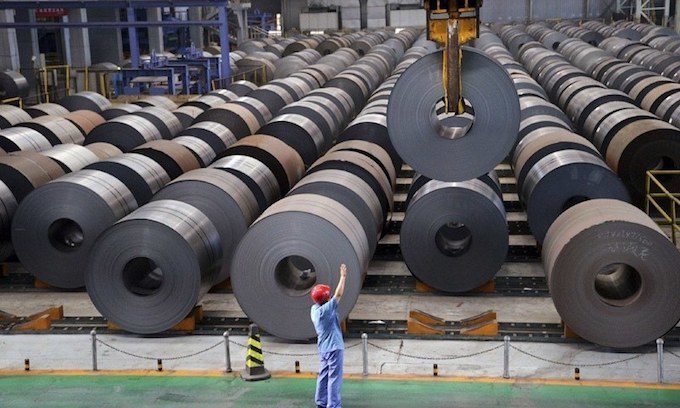
  • Steel prices hit 3-year low

    Steel prices hit 3-year low

    The price of steel has plunged to the lowest in three years to around VND13.5 million ($562.09) per ton amid declining demand.

    Hoa Phat Group, which accounts for 30% of the domestic market, has lowered its rolled steel prices by 2.17% from a week ago to around VND13.53 million per ton.

    Other companies such as VAS, Tungho and Thep My sold their steel at the same price. This is the 18th decline in steel prices this year.

    Although August is considered a high time for construction work, sellers have been posting low sales.

    Hung Vu, a steel seller in Hanoi’s Ha Dong District, said that since early July sales have plunged 60% year-on-year. Most manufacturers have cut production.

    Hoa Phat in the first seven months produced nearly 3.5 million tons of steel, down 30% year-on-year. Its sales also dropped 23% to 3.46 million tons.

    In the first seven months, Vietnam imported 31% less steel than last year, according to the Ministry of Industry and Trade.

    The Vietnam Steel Association expects the price drop to persist in the coming months.

    Vietcombank Securities said in a note that prices would not recover this year as demand from China remained low.

  • Google Chrome may finally be getting a massive upgrade to reading mode

    Google Chrome may finally be getting a massive upgrade to reading mode

    Reading mode is awesome, but it has gotten stagnant. Most of the best phones available right now have Google Chrome pre-installed and while it is awesome that the browser comes with a reading mode for text-heavy pages, it feels… Stagnant.

    Not only that, but if you are on any of the Chrome beta channels, your experience becomes even weirder. Sometimes you can’t turn on reading mode and other times, it cuts off big chunks of the content that you’re there to read in the first place.

    So, it is obvious that it is time for an upgrade. And given that Google seems to be running an experiment over on the Canary version of Chrome for desktop, we may actually know what we’re in for. And that’s a reading mode that can also read aloud.

    So, Chrome Canary. What is it? Well, it’s a developer-first version of Chrome. It’s plenty experimental, it changes often and if you’d like to join in on the fun: you can run it on your phone and computer. Oh, and its users get to test out features ahead of time.

    Now, hold on to that last bit, because — as someone who uses Canary on the daily, just out of preference — not all changes stick. And it is a real bummer, because some of them are totally awesome, but oh well. You can’t win ‘em all!

    Anyway: reading mode. The latest update on the desktop version of Canary, as you can see above, comes with a new secret treat: a reading mode that can actually read text aloud to you.

    Right now, the voice that executes that role is being described as monotone and robotic, but this is Google we’re talking about. They have the power and prowess to improve that… As long as the feature sticks.

    What are the chances of this actually making its way to the mobile version of Canary and then Chrome stable? Well, pretty big, as long as testing goes well. But, before that happens, let me raise you this:

    Did you know that your Android phone can already do this? If not, know that as long as you’ve got Google Assistant installed and running, you can prompt it — while on the article page in question, such as this one — and ask it to read it aloud. It works quite well.

    So, while adding such a feature to phones may sound redundant, it may also serve as a shortcut to prompting Assistant to do that. Plus, it may solve another issue: granting phones that aren’t really compatible with Google Assistant such a feature. Will that be the case?

    We’ll see if the testing period goes well.

  • Google announces rich text formatting for Keep Notes on Android

    Google announces rich text formatting for Keep Notes on Android

    Last week code was found within Android which revealed a feature in progress for Google Keep. This alluded to the possibility of adding rich text formatting to notes within Google Keep, a highly requested feature for those that use the app regularly.
    However, as the discovery had not rolled out to any users yet, all we had to go on at the time were the screenshots and notes provided by by Mishaal Rahman on his X post. Thankfully, we didn’t have to wait long for official word, as Google has now announced via its Google Workspace Updates Blog.
    In the official announcement, Google revealed that Google Keep will be gaining new text formatting options to notes on Android devices. The company cites the amount of users requesting this feature as its motivation for following through.
    The new formatting options allow for users to customize notes by making text bold, italic, or underlined. You can also choose from heading styles like H1 and H2.
    The new formatting options will only be available for new notes, although support for existing notes is expected to be added in the coming weeks. The rollout begins today for all Google Workspace customers and users with personal Google Accounts, although it make take up to two weeks for the feature to reach all users.
    To use the new formatting options, tap on the text you want to format and then select the desired option from the toolbar. However, keep in mind that text formatting is only available on Android devices, so if you open a note with formatting on a desktop browser or an iOS device, any formatting you had previously applied won’t be visible there.
    Even though the addition of formatting options to Keep does not bring it up to the same level as more advanced note-taking apps such as Microsoft’s OneNote or Squid, especially when you can only see the formatting changes on Android, it is definitely a good start to a feature that has been so highly requested for such a long time.
  • Italian products thriving in the Australian market

    Italian products thriving in the Australian market

    The Australian market has seen a great surge in Italian imports in recent years, indicating broad consumer taste for all things “Made in Italy”, with special emphasis on authentic Italian-made food products.

    Whilst there remains a shortage of official data on Italian product consumption in Australia, import records reveal a compelling story – a diverse range of products, from processed tomatoes to fine wines, pasta to chocolate, have garnered substantial attention from Australian consumers.

    According to data from the Australian Bureau of Statistics, F&B imports from Italy to Australia have reached a value of $1.13 billion in the year ending December 2022, a year-on-year increase of 15.6 percent.

    “Across the past 10 years, we have seen the value of all Australian F&B imports double,” says Simona Bernardini, director of the Italian Trade Agency’s Sydney office, “with Italy maintaining fifth position in the world rank as one of the major trade partners for Australia in front of other European countries.”

    Italy has emerged as Australia’s top trade partner for processed tomatoes, securing a substantial 71 percent market share valued at $123 million. It is also Australia’s primary supplier of pasta – the quintessential Italian food product for most Australian consumers – with a 19 percent share at $90 million. Italy is also at the front of the pack in multiple F&B categories, including wine ($131 million), chocolate and products containing cocoa ($89.5 million), cheese ($80.5 million), baked products ($50.6 million), sauces and mix condiments ($65 million) and olive oil ($32 million).

    “Major Italian players such as Lavazza, Barilla, Ferrero, and Campari have successfully navigated the Australian market by strategically focusing on marketing and communication”, observes Bernardini.

    Despite these achievements, she maintains that there is a vast untapped potential beyond pasta, citing the diversity of Italian culinary delights: “Italy has a huge variety and number of food products to offer, still unknown to Australian consumers,” she emphasizes. “The food processing industry plays a vital role in the economy of our country.

    “Over the years, manufacturing processes have become more advanced, and many companies continue to invest in cutting-edge technologies. We also offer an extensive range of organic and ‘free-from’ products designed for people with food intolerance and allergies.”

    Italy’s dedication to sustainability aligns well with Australian consumer preferences. However, Bernardini acknowledges the need for more transparent regulations in Australia, saying: “Clear regulations are needed, firstly in product labelling and to limit greenwashing practices.” Scrutiny from the Australian Competition and Consumer Commission – which has clamped down on claims of sustainability – underscores the importance of authentic communication in this area.

    Italy’s agricultural sector is considered amongst the greenest in Europe, with the least number of agri-food products containing irregular chemical residues. It is the second country in the EU for agricultural land dedicated to organic farming, and the second country in the world for the export of organic products. Italy features about 840 geographical indications certified as “protected designations of origins” (PDO) and “protected geographical indications” (PGI) also recognised by EU regulations, and which guarantee high-quality standards of a wide variety of food products, wines, and spirits.

    E-commerce remains a pivotal avenue for Italian businesses to broaden their reach in the Australian market. Whilst in other countries Italian food companies have been working actively on digital platforms and marketplaces, accessing the Australian online market involves long-term planning due to transport, food perishability, standards, quotas, and import duties’ impact on imported products.

    “We hope that in the future there will be further development in the Australian market,” says Bernardini, “with an expansion of marketplaces and digital platforms more focused on the F&B segment that could become the springboard for more gourmet food available through online channels.”

    As far as Bernardini sees, there lies significant potential ahead for the Italian/Australian trade relationship, especially in the F&B category. The Australian demographic features a good number of dual-income households, with poor time for cooking and a steady demand for ready-to-eat foods. At the same time, Australians are becoming more oriented to freshness, wholesomeness, and healthy lifestyles – to a large extent, they are willing to pay a “premium price” for food with those characteristics. For these reasons, many Australian importers visit Italy at least once a year to see what’s new, and to place orders if they find products that fit the demand.

    “As educated and affluent consumers, Australians are willing to try new products,” she says. “Furthermore, the country receives a growing number of immigrants from all over the world, bringing with them different food tastes and boosting the diversity of the culinary scene in Australia. In addition, Australians love to travel, and often they take time to visit Europe and Italy, bringing back memories of the food and flavours they enjoyed abroad.”

  • Recycling fees in Vietnam higher than in Europe

    Recycling fees in Vietnam higher than in Europe

    Fourteen business associations have petitioned nine ministers to complain about Vietnam’s unusually high recycling fees, which are several times higher than that in Europe.

    The associations, which include American Chamber of Commerce in Vietnam, Vietnam Association of Seafood Exporters and Producers, and Vietnam Textile and Apparel Association, said that a recent draft bill on recycling required fees higher than in developed countries.

    Vietnam’s recycling fee for aluminum packaging is 1.26 times higher than the average of 14 countries in Western Europe, they said.

    The fee for recycling glass is 2.12 times.

    The ideal cost should be 30-50% of that in European countries as workers’ salary in Vietnam is only 10% of their counterparts in European countries.

    The associations estimate that their combined recycling fee for paper, plastic and metal is at VND6.13 trillion ($257.35 million) annually.

    This is unusually high as it does not take into account the profit that recycling companies get from the materials they receive.

    Recyclers of aluminum cans, for example, post profits between VND700 billion and 1.29 trillion annually.

    It is unreasonable that manufacturers and consumers are paying trillions of dong every year to support recyclers, the associations said.Recycling

  • Thailand’s Big C to enter Hong Kong

    Thailand’s Big C to enter Hong Kong

    Big C Supercenter, the Thai supermarket chain owned by one of the richest families in the Southeast Asian nation, will enter Hong Kong next month and also seek a dual listing in the city and Thailand as early as the fourth quarter, according to a top executive.

    The Bangkok-headquartered retailer has acquired grocery chain AbouThai, which operates 24 outlets in the city, and will rebrand them as Big C starting next month, Aswin Techajareonvikul, CEO and president of Big C Retail Corp, said in an exclusive interview with the Post on Monday.

    Aswin also separately met Financial Secretary Paul Chan Mo-po and Hong Kong Exchanges and Clearing (HKEX) CEO Nicolas Aguzin to discuss the group’s listing plan during his visit.

    “We all believe in Hong Kong’s prospects and growth potential,” he said. “Even though there were some challenges during Covid-19, Hong Kong can bounce back quickly. Hong Kong is a leading financial hub in Asia linking Southeast Asian markets with mainland China.”

    Hong Kong is Big C’s first foray outside Southeast Asia, taking on some the city’s retailers including Wellcome and ParknShop. The retailer is part of billionaire Charoen Sirivadhanabhakdi’s business empire, which includes Thai Beverage, the nation’s largest brewer and maker of Chang beer. Aswin is Charoen’s youngest son-in-law.

    Big C operates about 2,000 retail stores under the Big C Supercenter, Big C Market, Big C Foodplace and Mini Big C brands in its home market of Thailand, Laos, Cambodia and Vietnam.

    Big C, which did not disclose the acquisition price for AbouThai, will invest HK$158 million (US$20.2 million) in the next three years to open 25 stores a year for a total of 99 stores by the end of 2026 and hire more than 500 additional staff, Aswin said.

    “Ninety-nine is a lucky number, which means longevity in Chinese culture,” he said. “We also have a very long-term vision in Hong Kong, which is to turn Big C into the best premium Thai supermarket.”

    Big C Supercenter was founded in 1993 by Thai retail conglomerate Central Group and listed on the Stock Exchange of Thailand (SET) in 2012. It was delisted in 2017, a year after it was taken over by trading house Berli Jucker, owned by the Sirivadhanabhakdi family, for over US$6 billion. Berli Jucker’s sales rose 3.4 per cent in the second quarter to 39.4 billion baht (US$1.1 billion).

    Aswin said the group plans to have a dual listing in Hong Kong and Bangkok. Earlier this year it filed an application with SET to list Big C Retail Corp (BRC), the holding company of the Big C Supercenter. It is exploring a listing application in Hong Kong, he added.

    He expects the listings to take place as soon as the fourth quarter, but the final decision will depend on market conditions. Aswin declined to comment on the fundraising, but analysts expect the firm to raise as much as US$1 billion.

    “A listing in Hong Kong will pave the way for future opportunities to cooperate with other leading companies listed in the city,” Aswin said. “Hong Kong’s active trading volumes and exposure to Chinese and global investors make it an ideal location for BRC to list outside our home market.”

    The China Securities Regulatory Commission in March added international firms listed in Hong Kong to the southbound Stock Connect for mainland Chinese investors to trade.

    Aswin said the plan to list in the city was largely because of the active marketing efforts of the Hong Kong government and the HKEX.

    “Last year, when Chief Executive John Lee came to Thailand for the Apec meeting, he held a dinner meeting with a few Thai business executives, where a Hong Kong stock exchange representative invited us to list our company in Hong Kong,” he said. “Which is why we explored opportunities to list here.”

    Big C’s listing will be a huge achievement for Aguzin, a former JPMorgan banker who has helmed the HKEX since 2021, as he has been keen on attracting international companies. Towards that end, Aguzin has overseen the opening of HKEX offices in New York and London and has also visited the Middle East and Southeast Asia to market the city.

    The listing will also boost Big C’s links with mainland China, whose outlets are widely visited by Chinese tourists in Thailand, Aswin said.

    The Sirivadhanabhakdis have been operating a family office in Hong Kong for many years, through which they have been making investments. Aswin said the investments will increase in the coming years after the Hong Kong government in March offered additional benefits, including tax incentives, to encourage wealthy families to expand their family offices.

    “Both my father-in-law and I are of Chinese origin,” Aswin said. “We speak Chinese at home; all my three children speak Putonghua. We always travel to Hong Kong for good food and visit the Wong Tai Sin Temple. It is happy memories in Hong Kong.”