Category: Living

Retail News Asia is committed to providing both local and global retailers with the latest Living news throughout the Asian market. This on a daily base.

  • Xiqu Centre finally opens in Hong Kong

    Xiqu Centre finally opens in Hong Kong

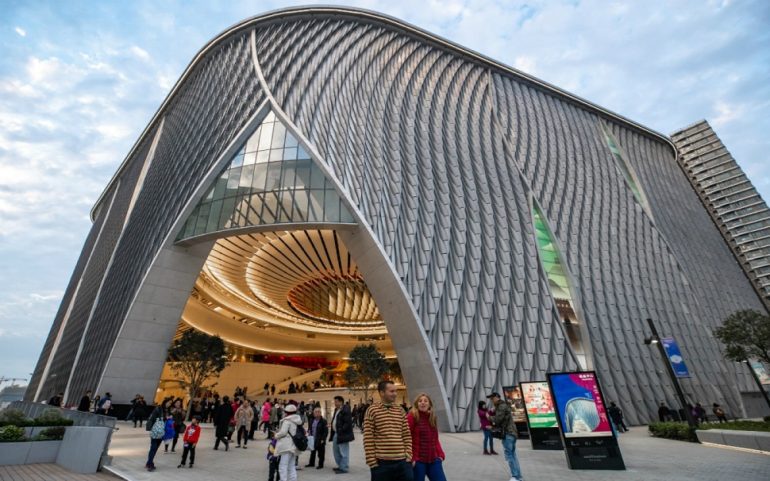
    Hong Kong’s new performing arts venue dedicated to Xiqu (Chinese Opera), has just opened. Located on the Eastern edge of the West Kowloon Cultural District, at the junction of Canton Road and Austin Road, the Xiqu Centre is directly accessible from the Hong Kong West Kowloon Station and Austin MTR station, and easy to reach by public transport from all parts of Hong Kong.

    The building’s striking design, created by Revery Architecture (formerly Bing Thom Architects) and Ronald Lu & Partners, was inspired by traditional Chinese lanterns and blends traditional and contemporary elements to reflect the evolving nature of the art form.

    Stepping through the main entrance, shaped to resemble parted stage curtains, visitors are led directly into a lively atrium with a raised podium and space for presenting the rich and ancient culture of Chinese traditional theatre.

    The eight-storey building has a total area of 28,164 sq m and houses a Grand Theatre, accommodating 1,073 seats, a Tea House Theatre, with a capacity of up to 200 seats, eight professional studios and a seminar hall, all specially designed for different types of xiqu-related functions and activities.

    The design details of each of the facilities have also been created in response to the practical requirements and aesthetic features of the art form. A unique feature of the venue is the location of the Grand Theatre at the top of the building, which allows for a large open atrium below with space for exhibitions, stalls, and xiqu demonstrations and workshops.

    Carrie Lam Cheng Yuet-ngo, the Chief Executive of Hong Kong, gave a speech at the opening ceremony of Xiqu Centre. “The launch of Xiqu Centre is not only a significant international cultural event, but Hong Kong also takes it as a great honor and we all are very proud of it.”

    In fact, Chinese opera has been inscribed in the UNESCO Intangible Cultural Heritage Lists for a decade, Carrie Lam hopes the Xiqu Centres would help promote Hong Kong as an international arts hub and consolidate the city’s position in the development of Cantonese opera.


  • ​Vietnam’s FastGo eyes US, Brazil expansion

    ​Vietnam’s FastGo eyes US, Brazil expansion

    Vietnamese ride-hailing company FastGo plans to enter the U.S. and Brazil this year as it seeks to quickly expand overseas. Its CEO Nguyen Huu Tuat said that he is keen to compete with other ride-hailing apps in foreign countries. “Our investors are located in the U.S. and Brazil, that’s why we have chosen those places as the next markets,” he said without disclosing who they are.

    The announcement comes a month after it expanded into Myanmar. FastGo now has over 1,000 partner drivers in Yangon and Tuat wants to have 2 million users in Myanmar this year.

    But the company wants to expand even faster to other markets this year, with Indonesia, where ride-hailing Go-Jek is based, being the first location.

    “We plan to start operating in Jakarta in March, and will also expand to Singapore this year,” Tuat said.

    The investors want the company to “go global as soon as possible,” he said to explain the rapid expansion plans.

    The company hopes to raise $50 million in the second round by June this year possibly from investors in South Korea and the U.S., he said.

    “Grab and Uber might have deep pockets, but FastGo wants to grab market share by offering better options to customers.”

    FastGo does not collect commissions from drivers but instead charges them an amount of money if they earn a minimum amount per day. FastGo also claims to not increase fees during rush hour but allows users to tip drivers.

    It became Vietnam’s first home-grown ride-hailing app last June and now has 40,000 drivers in 12 cities and provinces.

    FastGo last August received $3 million from Vietnamese fund VinaCapital Ventures, according to reports.

  • Northern Vietnam casino reports first profit in three years

    Northern Vietnam casino reports first profit in three years

    Royal Casino, the largest in the northern Quang Ninh Province, last year reported a profit for the first time in three years. Royal International Corporation, its operator, said revenues grew by 48 percent from the previous year to VND288 billion ($12.39 million), and profit after tax to VND17 billion ($731,263) in 2018. This is the company’s first profit since 2015.

    The owner of the company is Khai Tiep International Investment Limited, registered in the Cayman Islands.

    The casino accounted for VND178 billion ($7.66 million) with the rest coming from hotel, villas and hospitality-related services.

    The company’s management said in a financial report that the growth in the casino’s revenues was due to the sharp increase in the number of customers after an expressway connecting Quang Ninh’s Ha Long town  with northern Hai Phong City was built last September.

    Linking up with the Hanoi-Hai Phong expressway, it cuts the travel time from the capital to Ha Long by half to just 90 minutes.

    The company also saved VND16 billion ($688,192) last year in sales and management costs.

    At the end of last year the casino had 1,346 employees, 80 fewer than at the beginning of the year.

    On Saturday Corona Resort and Casino in the southern Phu Quoc Island became the first casino in Vietnam to allow Vietnamese to gamble.

    The government has allowed a three-year trial period.

    Vietnamese who gamble here must be over 21, earn a minimum of VND10 million ($430) a month and have no criminal record or objections from family.

  • Singaporean ride-hailing startup TADA launches in Vietnam

    Singaporean ride-hailing startup TADA launches in Vietnam

    Singapore-based tech firm Mass Vehicle Ledger (MLV) launched its ride-hailing app TADA in Ho Chi Minh City Monday. HCMC is the third Southeast Asian market that the firm is entering after Singapore and Cambodia. Instead of billing commissions from drivers like other major players Grab and Go-Viet, the app aims to profit off advertising as well as fees from B2B (business to business) partners that participate in their ecosystem.

    This ecosystem will operate on blockchain technology to store records such as payments and vehicle maintenance, and will engage transport-related companies such as traditional taxis, insurance, repair services, and car dealers.

    Kay Woo, the South Korean founder of MLV, said that among its current partners are Lotte Rental, a rental company of cars and equipment belonging to South Korean conglomerate Lotte Group, local insurance provider PTI and local taxi firm Vinataxi.

    The app will also not offer promotions like its rivals.

    “They throw promotions everyday but this won’t last forever, and prices will eventually go up. We focus on stability, and without commission our prices will be lower.”

    The MLV founder revealed that over 2,000 drivers had signed up with the company. After HCMC, the firm plans to expand the app to Hanoi and Da Nang.

    TADA plans to get 25,000 drivers to register this year but has no plans to join the motorcycle segment in the near future.

    Currently, MVL is registered as a technology company in Vietnam. Operations manager Peter Nguyen explained that because it does not charge drivers, it is only a technological solution. However, the company is willing to comply with transport tax and regulatory guidelines should they apply, he said.

    TADA, which means “let’s ride” in South Korean, opened in Cambodia just last month, and in Singapore in July 2018.

    MVL Technology Co., Ltd, formerly known as MVL Foundation Pte. Ltd, was founded in March 2018 in Singapore by Kay Woo.

    It aims to connect different sectors in the car industry.

    TADA has over 25,000 registered drivers and made more than 970,000 trips in the last 6 months.

    Vietnam’s ride-hailing market has seen new entrants after Uber’s departure early this year, including Vietnamese firm FastGo, GoViet – a subsidiary of Indonesia’s Go-Jek, Aber, Be Group, and the latest, TADA.

    Grab, which counts Chinese ride-hailing firm Didi Chuxing and Japan’s SoftBank Group Corp among its backers, had 175,000 drivers and bikers in Vietnam as of last September and is the most prominent player in Vietnam after it pushed out Uber.

    Rival GoJek entered Vietnam last August, eyeing to grab a share of the fast-growing market. Vietnam has 95 million people, most of whom use smartphones.

    A number of local taxi companies in Vietnam have come together to compete against ride-hailing firms, Grab has been in a legal battle for more than a year with local taxi firm Vinasun Corp.

  • Vietnam’s first casino for locals opens on three-year trial basis

    Vietnam’s first casino for locals opens on three-year trial basis

    The first casino in Vietnam that allows locals to gamble has opened in Phu Quoc Island off the country’s southern coast. The Corona Resort and Casino is part of an ecotourism and amusement complex built by Phu Quoc Tourism Investment and Development JSC at a cost of VND50 trillion ($2.15 billion). The casino will remain open 24 hours a day during a three-year pilot, and Vietnamese who want to gamble must be over 21, earn a minimum of VND10 million ($430) a month and have no criminal record or objections from family.

    The entry fee is VND1 million ($43) for 24 hours or VND25 million ($1,000) a month (with a maximum play time of 720 hours). Three months ago the government approved the three-year trial period allowing Vietnamese to enter the casino.

    Vietnam, which treats gambling as a “social evil”, has hitherto prohibited locals from gambling in the seven casinos around the country. Only foreign passport holders can enter them.

    Vietnam’s per capita income was around $2,500 last year.

    One of Vietnam’s biggest real estate developers Sungroup is currently building another casino in Van Don in northern Quang Ninh Province, home of popular Ha Long Bay.

    Phu Quoc, Vietnam’s largest island, is one of the top holiday destinations in the country.

  • Tinder sees Korea as stepping stone to region

    Tinder sees Korea as stepping stone to region

    Korea is the test bed for Tinder services in the rest of Asia, the dating app’s CEO said during his first press conference in the country on Tuesday.  “South Korea is an important market for us because of the market itself, but also because of the cultural influence it has over the broader Asia region,” said Tinder CEO Elie Seidman. Seidman previously served as the CEO of OkCupid, another popular American dating service.

    “Not only do most Koreans have smartphones and use social media, but the country wields a lot of influence in Asia through K-pop and the Korean wave.”

    Korea’s potential to raise the brand awareness of Tinder across Asia has already been demonstrated, according to the app’s regional director.

    “We once worked together with Korean celebrities Kim Jong-kook and Haha to have them use Tinder during a trip in Vietnam” for a reality TV show, said Lyla Seo, regional director, East Asia. “We saw a huge surge in Tinder users in Vietnam following the program.”

    Seo, who is Korean, oversees the dating service’s business in Korea, Japan and Indonesia. Seo worked as a marketing manager for Google Korea before joining Tinder.

    “Tinder has the so-called passport service, which allows people to view and match with users from other countries. The top five countries that used the passport to meet Koreans were Singapore, Japan, Thailand, Indonesia and Malaysia, reflecting the popularity of Korean culture,” she added.

    In Korea, the dating app first launched in 2015 and has been growing rapidly since. Tinder in Korea reported over 2.5 times more downloads last year compared to 2016. The service is especially popular among women, and over 80 percent of the users here are millennials.

    According to Tinder, the three biggest reasons Koreans use the app are to meet new types of people from different backgrounds, find users with similar hobbies and meet users in the same area.

    Users in Korea are most active on the app around 10 p.m. on Monday after they come back from work or school, Tinder also said.

    Tinder’s plan in Korea this year is to draw in more college-aged students and promote the idea that the app can be used to meet friends under the “Find a friend on Tinder” campaign.

    “In Korea, we are planning to introduce more marketing activities targeting college students and contribute to society by launching a scholarship program,” Seo said.

    Tinder, founded in 2012, has around 4.1 million paying users and generated $800 million in revenue last year worldwide.

  • Brands planning to cash in on rising menswear trend

    Brands planning to cash in on rising menswear trend

    This week, Nike launched its new collection of yoga wear for men. While this was the company’s first foray into men’s yoga apparel, the move was very much in line with competitors who have been making a push into the menswear apparel market recently. Lululemon, whose bread and butter has long been women’s yoga trousers, is one of those competitors. Former CEO Laurent Potdevin described menswear as one of the brand’s “best-kept secrets.” The company is now looking to grow this division into a billion-dollar business.

    Gap also jumped on the bandwagon last year, with its new casual menswear brand Hill City. But a push into menswear stretches beyond the athletic wear market – Madewell rolled out menswear in September, Saks Fifth Avenue recently closed its womenswear store in Brookfield Place but kept its menswear location open, sisters Mary-Kate and Ashley Olsen launched their own menswear collection for fashion brand The Row last year, and the list continues.

    These brands are all looking to capitalise on a big change in fashion, and that is that in the not too distant future, menswear may outgrow womenswear.

    Business intelligence firm Gartner L2 estimated that in just two years, revenue growth of men’s clothing will surpass that of women’s clothing. This data is backed up by Euromonitor International, which estimated that men’s lines will outperform women’s over the next six years. 

    “Fashion has always been about women but men are finally having their time,” says Lizzy Bowring, catwalk director at trend-forecasting agency WSGN.

    Bowring believes that the rise of a young, fashion-conscious male consumer is a key reason for this. “It’s the younger men that are driving the push for menswear,” she says. “These men are more savvy and aware, and there is a lot of competition to look the part.”

    Ayako Homma, beauty and fashion consultant at Euromonitor International, echoed these thoughts in an email.

    “One key trend is men’s changing perception of fashion. Men are spending more time, effort and money on their grooming and appearance,” she wrote.

    Experts say that this peak in menswear can be traced back to a boom in streetwear clothing, which has been driven by brands such as Supreme, Yeezy, and Off-White. These brands have experienced explosive growth in recent years and are considered to be redefining the fashion landscape.

    These labels have been embraced by luxury players, a move that has in turn given new life to some of the luxury brands.

    Louis Vuitton recently hired industry pro Virgil Abloh to become its new artistic director. Abloh is responsible for setting up perhaps the buzziest streetwear brand of all, Off-White, which was recently ranked the hottest label in the world.

    “The men’s business has exploded in the past five years,” Roopal Patel, fashion director of Saks Fifth Avenue said. Patel said the focus had shifted to bringing in newer menswear-focused labels such as Off-White.

    “We’ve gone from just category addressing to designers looking at how they’re going to wardrobe a man’s lifestyle, everything from work to evening to weekend to sport,” she said.

    Industry insiders say this trend is here to stay. “It’s more than a buzz. It’s a deeper trend,” said Sidney Toledano, head of LVMH’s fashion group. He continued: “There’s strong demand across the men’s fashion industry, in all its shapes and forms, and which comes in part from a younger clientele. We see it very clearly in the sales.”

  • Decathlon Singapore Lab now open

    Decathlon Singapore Lab now open

    Sporting goods retailer Decathlon has opened a landmark 5000sqm retail space at Kallang’s Stadium Boulevard, its largest store in Singapore. Designated the Decathlon Singapore Lab, the outlet includes a running area with four different surface types – including a gravel hiking path – for in-store shoe testing. Robotic inventory monitoring and a conveyor belt that immediately transports products once ordered online, allowing two-hour pickups from a customer’s preferred store, are also key features. An Active Health Lab hosted in the store provides free health assessments for customers in partnership with Sport Singapore.

    “A lab is a disruptive and innovative place where we test new solutions”, said Decathlon Singapore CEO Yves Claude in explanation of the store’s name. “We have to give new reasons for customers to come back to our store”, he said.

    “Retail used to be monotonous. Now because our customers are moving to more digital means of shopping, our jobs will also have to evolve”, said Decathlon Singapore Lab store leader Nathaniel Gregory. “In the last three years, my job was very brick-and-mortar style. Tomorrow I need to learn about SEO and digital marketing”.

  • Courts Asia gets buy offer from Japan retailer Nojima

    Courts Asia gets buy offer from Japan retailer Nojima

    Japanese electronics retailer Nojima Corp has launched a conditional takeover bid for Courts Asia. The deal is conditional upon Courts Asia’s majority owner Singapore Retail Group (SRG) agreeing to the deal. Offering 20.5 cents a share for the business, the offer represents a 35 per cent premium over the price shares were trading at before the bid was revealed.

    Nojima is listed on the Tokyo Stock Exchange. Like, Courts Asia, it is an electrical appliance retailer, boasting more than 8000 employees and a market capitalisation of S$1.4 billion. Sales in the year to March 31 last year were $6.1 billion.

    Courts Asia has 80 stores trading in Singapore, Malaysia and Indonesia and besides electronics sells furniture and IT products as well. The company has enjoyed mixed fortunes in recent years, impacted by external factors such as the imposition of GST in Malaysia. It reported a net loss of $3.1 million in its second quarter, a stark contrast to the net profit of $1.5 million during the same period a year earlier. Sales for the three months to September 30 fell 6.4 per cent to $165.1 million.

    Nojima says if it wins control of the company it may carry out a “strategic and operational review” of the business to realise “synergies, economies of scale, cost efficiencies and growth potential”. It will most likely delist the company in Singapore.

  • Ikea to open Vietnam store with US$450 million investment

    Ikea to open Vietnam store with US$450 million investment

    Ikea Vietnam plans to invest US$450 million on a retail centre and warehouse system in Hanoi, according to a government official. Nguyen Duc Chung, chairman of the Hanoi People’s Committee, told a recent conference held by the Ministry of Industry and Trade that the Swedish furniture giant’s local subsidiary is well advanced with plans to launch in the country.

    Once completed, the centre will be Ikea’s main supply hub for its Southeast Asian market.

    “At present, all parties involved are [in] the process of negotiation,” Chung added.
    The centre is expected to boost Ikea’s e-commerce business in the region.

    During an interview in 2017, Torbjorn Loof, chairman and CEO of Inter Ikea Holdings said the company was planning potential expansion in Vietnam “within five years”.

    Ikea is steadily expanding its Southeast Asian footprint, the latest largest store planned in Philippines.

    Founded in 1943, Ikea is the world’s largest furniture retailer with 400 stores in 49 countries all over the world.

    In recent years, Vietnam has been a potential hub for retailers to build warehouses. Last November, Lazada finished a 4000sqm warehouse in Danang.

  • Japan offers most overseas jobs for Vietnamese workers

    Japan offers most overseas jobs for Vietnamese workers

    Japan is expected to receive more Vietnamese workers this year, having become the most attractive labor export market in 2018. Last year marked the first time Japan became the most popular destination for Vietnamese migrant workers with over 68,700 people finding jobs there, beating Taiwan with nearly 60,400 people and South Korea with over 6,500, according to statistics released by the Department of Overseas Labor.

    The department’s deputy director, Nguyen Gia Liem, said the Japanese market’s rise in popularity was due to the implementation of a new law that allows migrant workers to stay for five years instead of three.

    Furthermore, Vietnam was the first country to sign with Japan a memorandum of cooperation on the latter’s technical intern training program, which came into effect last June.

    In 2018, a total of 13 Vietnamese businesses were also licensed to directly bring Vietnamese citizens to Japan to work as caregivers. The long language and skill training required, however, limited the number of Vietnamese citizens taking this route last year.

    However, Liem asserted: “These establishments would help increase even further the number of Vietnamese laborers going to Japan.”

    Deputy Minister of Labor, Invalids and Social Affairs, Doan Mau Diep, has said the ministry will reduce the number of labor export firms. The move follows last October’s request by Japan’s Prime Minister Shinzo Abe that Vietnam shut down bad labor export agencies and reduce costs for people wanting to work abroad.

    “The country currently has 2,000 companies taking workers overseas, which is too many, causing companies to compete with each other for contracts, and they collect high fees,” Diep said.

    The ministry would also review current regulations on overseas students to prevent this system from being abused as many Vietnamese citizens wanting to work in Japan have been using student visas in recent years to reduce cost and time spent on language and skills training.

    Last year, Japanese authorities already reviewed and suspended multiple companies for taking Vietnamese workers to Japan under the guise of international students.

    Diep also warned that citizens wanting to work overseas need to use legal labor export firms and not use tourist visas, as happened in the recent infamous case in Taiwan.

    “If going on a worker’s visa the fees can be expensive, such as about VND80 million [$3,400] for Taiwan. The travel route meanwhile only costs flight tickets and visa fees so many still choose to travel then escape to work, but they will face many risks,” he said.

    A Vietnamese migrant worker can make $1,000 to $1,200 a month in Japan and South Korea, four times the average monthly salary in Vietnam, which was VND6.5 million ($290) last year.

    A total of over 142,800 Vietnamese laborers went to work overseas in 2018, a six percent increase compared to the previous year.

    With this number, which includes about 50,300 female workers, 2018 became the fifth consecutive year in which the number of Vietnamese working overseas exceeded 100,000 people.

  • Singapore’s Grab begins using Hyundai Motor’s Kona

    Singapore’s Grab begins using Hyundai Motor’s Kona

    Hyundai Motor, Korea’s largest carmaker by sales, said Wednesday that Singapore-based Grab began using its Kona Electric for its ride-hailing service this month. In November, Hyundai Motor and its affiliate Kia Motors jointly invested $250 million in the Southeast Asian company for a business partnership in ride-hailing service markets, the carmaker said in a statement.

    “The company is aiming to enter electric car markets in Southeast Asia through the partnership with Grab and gain a share of those markets,” the statement said.

    Grab has initially purchased 20 Kona electric vehicles (EVs) from Hyundai for its service and plans to increase the number to 200 by the end of this year, Hyundai said.

    The Kona EV can travel up to 400 kilometers (248.5 miles) per charge. The driver can charge the all-electric car to around 80 percent full in about 30 minutes, it said.

    In partnership with Grab, Singapore Power has granted Kona EV drivers a 30 percent discount when powering the emission-free car at charging stations, the statement said.

    This week, the Kona EV grabbed a coveted North American Car, Utility and Truck of the Year award at the Detroit auto show.

  • Indonesia to Regulate Ride-Hailing Rates Threatens Grab, Go-Jek Expansion

    Indonesia to Regulate Ride-Hailing Rates Threatens Grab, Go-Jek Expansion

    The government is preparing to launch regulations fixing the rates drivers and riders for ride-hailing services such as Grab and Go-Jek receive, two officials said this week, creating potential obstacles for the companies’ expansion. The regulations would meet drivers’ demands for more oversight and higher rates but there are concerns that the rising costs to the companies could stifle their development as they battle to dominate the ride-hailing market in Southeast Asia’s biggest economy.

    Singapore-based Grab and homegrown Go-Jek have been locked in price wars in Indonesia, part of a wider fight to bring banking, e-commerce, ride-hailing, food-delivery and other services to every corner of Southeast Asia.

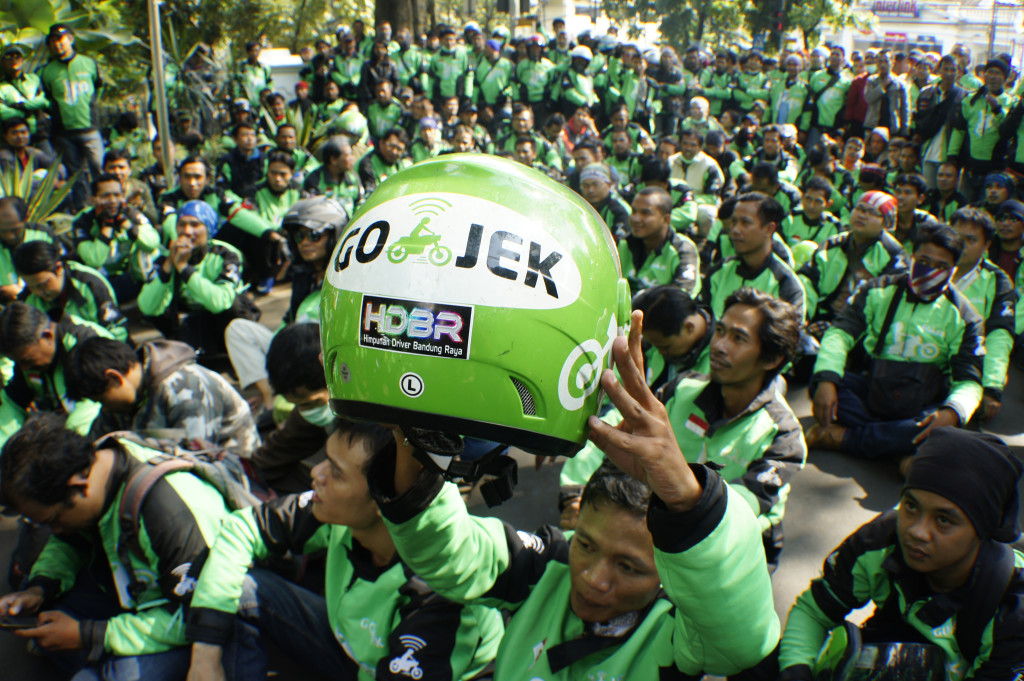
    However, since 2018, motorcycle taxi drivers working for Grab and Go-Jek in Jakarta have held protest rallies calling for higher fares and better conditions.

    The Ministry of Transportation plans to implement minimum and maximum tariffs for car and motorbike ride-hailing that will be “higher than Go-Jek and Grab’s current rates” and impose limits on promotional price cuts, said Budi Setyadi, director general of land transportation at the ministry.

    “This is for the safety and protection of drivers,” he said.

    Ahmad Yani, public transportation director at the ministry, said dependency on incentive-driven payments and low fixed rates per kilometer created a safety risk as it led to drivers overworking.

    He said Grab paid Rp 1,200 (8 US cents) per kilometer with a focus on bonuses, while Go-Jek’s rate was Rp 1,400 per kilometer.

    The officials said fixed fare ranges for motorbikes were still being finalized but would be implemented from March.

    Fixed rates for ride-hailing cars will start in June and be set at between Rp 3,500 and Rp 6,000 per kilometer on the islands of Java, Sumatra and Bali.

    The drivers were pushing for increases to a standard fare of Rp 3,000 to Rp 4,000 per kilometer.

    New Rules

    The firms said they welcomed the new rules, though they had not seen details of the motorbike regulations.”Grab believes the government will develop the best regulatory framework and hopes that all stakeholders will be included in the process,” said Tri Sukma Anreianno, the company’s head of public affairs .

    A Go-Jek spokesman said: “We support the government’s spirit to encourage our driver partners … and hope the regulation will have a positive impact on the sustainability of drivers’ income … and fair business competition.”

    However, both transportation officials said the companies are worried about the pending regulation since they have spent heavily on driver subsidies to slash their customer rates and build their businesses.

    “Grab and Go-Jek have told me they would prefer there was no regulation,” Ahmad said. “Due to the competition between them … they are scared what could happen if they don’t keep up with each other.”

    The Supreme Court blocked a previous attempt in 2017 by the transportation ministry to fix ride-hailing rates after drivers sued, saying the rules favored the taxi firms.

    Both ministry officials said the new regulations met anti-competition standards and followed extensive discussions with driver syndicates.

    Grab and Go-Jek drivers welcomed the prospect of standard fares.

    “I have been working for Grab since 2015. Before, I could earn Rp 300,000 to Rp 400,000 per day. Now, I can only get Rp 150,000,” said Hermansyah, a Grab motorcycle driver partner.

    Another driver, who had worked for both companies, said neither provided much protection, leading drivers to bear operational costs. He asked not to be identified since he had a role in organizing protests.

    The fixed rates will be a challenge to a business model that has depended on cheap passenger prices for growth and could undermine innovation.

    “Cheap fares has been the firms’ main way to attract customers,” said Yayat Suprityatna, urban and transportation observer at Trisakti University in Jakarta.

  • AS Watson reports success with predictive modelling marketing

    AS Watson reports success with predictive modelling marketing

    International health and beauty retailer AS Watson Group says its use of predictive modelling technology is delivering successful product launches. The firm has worked in close partnership with brands to help them penetrate specific demographics or enter new markets. Recently this included Jeffree Star Cosmetics launching exclusively at ICI Paris XL in Europe, and in Asia a continuing long-term partnership with Maybelline at Watsons Thailand – both of which achieved targeted results.

    “At AS Watson, due to our extensive global knowledge of the beauty industry and CRM data, we are able to help niche brands like Jeffree Star and major brands including Maybelline launch products onto the market,” explains Malina Ngai, AS Watson Group COO.

    “Using our integrated online and offline model, this allows us to create these types of brand partnerships to specifically target and engage the right customers.”

    L’Oreal and AS Watson Group developed a long-term partnership working together to drive sales, while in 2018, Watsons Thailand partnered with Maybelline on a year-long CRM program.

    Supported by the AS Watson DataLab, the group’s customer intelligence team, this campaign was designed to communicate offers to relevant customers through electronic direct mail. Watsons targeted members in three phases in order to recruit new category shoppers, grow each customer’s basket value and engage customers in new product offers.

    To ensure the campaign built on data insight to target the right members, Watsons used a three-stage approach to accurately identify customers and ensure they were provided with the most attractive offers.

    This three-stage campaign saw more than 3.5 million emails delivered to members, attracting more than 170,000 customers to buy into the brand. This targeted and focused approach saw double-digit percentage of the brand’s sales directly attributable to this campaign. In addition, Maybelline’s sales and the number of members recorded double-digit growth compared to the previous year.

    L’Oreal Thailand’s GM consumer products division Geoff Bellingham said two of the biggest challenges a brand faces are acquiring new customers and then having those customers shop again with the brand.

    “Our Watsons Thailand CRM program allowed us to successfully achieve both of those goals for Maybelline. All customers and especially beauty shoppers want relevant, more personally curated offers and this partnership was carefully created to ensure the right offers for right people.

    “The activity is just one example of the close and successful collaboration between Watsons and L’Oreal”.
    ICI Paris XL launched world-renowned beauty influencer Jeffree Star’s cosmetic range in November, exclusively to customers in The Netherlands and Belgium. To launch the brand ICI Paris XL created a digital campaign to target customers whose data and insight profile indicated they would love the new brand, as well as looking to capture new customers. The digital campaign was created to specifically target those under 35, as this is the brand’s core target market.

    Predictive modelling technology was used to identify and communicate with members who had a high tendency to shop for new makeup brands and trends, and these people received customised emails announcing the launch, bringing the social media personality to life, as well as highlighting hero elements of the cosmetics range. This targeted approach saw more than 300,000 customers receive personalised emails, leading to an open rate of 25 per cent.  Following this, 40 per cent then visited the brand’s page on the ICI Paris XL website with the result that 70 per cent of members under 35 bought into the range during the launch period.

    “Following the success of my brand in the the US, I really wanted to extend my brand’s reach into Europe,” said Jeffree Star. “AS Watson has provided me with an efficient distribution platform as well as the tools to be able to target my fans and beauty lovers that like to create bright, fun and innovative beauty looks.”

  • Ikea to open first New Zealand store in Auckland

    Ikea to open first New Zealand store in Auckland

    Ikea will open a store New Zealand in the coming years, opting for the city of Auckland to bow its debut store. The Swedish firm, known for its buy-and-assemble furniture, will open up a pop-up shop in the coming months in the lead up to a fully-fledged flagship store, which would create 400 jobs in the city, according to local media reports With no an exact time frame for the megastore launch, Ikea’s New Zealand manager, Will Edwards, said that Ikea would open a pop-up shop in central Auckland, as a physical store would take a number of years to set up.

    “It does take time to build a truly big blue and yellow iconic Ikea store, it will take a number of years to get the full offer up and running but we don’t want to keep people waiting,” Edwards told media on Friday at a press conference, which also saw the attendance of Ikea’s global chief execute, Jesper Bodin.

    “It makes sense to be in Auckland where many people are living and also commuting in and out of. We’d like to give a piece of Ikea before the full meal comes along,” added Edwards.

    Ikea requires some 300 to 400 employees to run the Auckland store, as well as several hundred more staff to support logistics.

    Bodin said that New Zealand will get the “whole shebang”, with a product range of about 7000 items at least in the warehouse store.

    While price-points weren’t disclosed, Bodin said that “our ambition is always to be affordable for people and competitive with other retailers in New Zealand.”

    Ingka Group, Ikea’s largest franchisee and operator of Ikea stores in 30 markets around the world, was granted exclusive rights to explore options to expand into New Zealand.

    Founded in 1943 in Sweden, Ikea sells furniture and homewares to 1.2 billion customers around the world.