Category: Living

Retail News Asia is committed to providing both local and global retailers with the latest Living news throughout the Asian market. This on a daily base.

  • Cathay Pacific to honor premium Vietnam-US tickets sold by mistake

    Cathay Pacific to honor premium Vietnam-US tickets sold by mistake

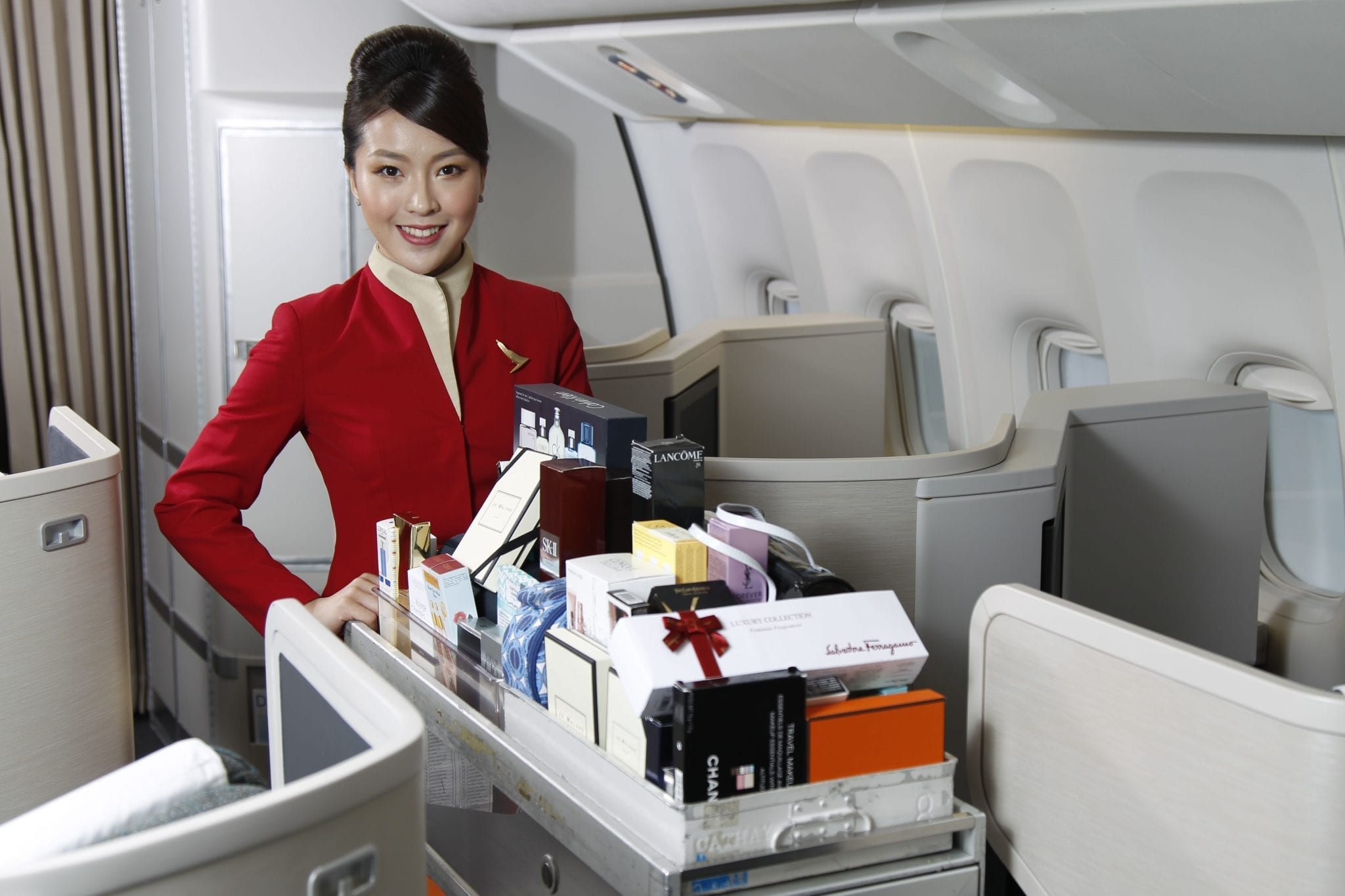
    Cathay Pacific Airways mistakenly sold Vietnam-U.S. first class and business class tickets at economy prices, but will honor them. The Hong Kong flag carrier made this announcement in a Twitter post Wednesday after customers reported Tuesday that they were able to purchase first class and business class tickets at unusually cheap prices from Vietnam to North American destinations such as San Francisco and New York in the U.S. and Vancouver, Canada.

    Cathay, Asia’s largest international airline, offered return business and first seats from Vietnam’s central city of Da Nang to New York at the price of $650 and $845 respectively, while typically these tickets cost $16,000 and $31,000.

    Hanoi-based pastor Jacob Bloemberg was one of the lucky customers who were able to purchase the tickets, which only lasted “for minutes.”

    “My wife and I travel from Hanoi to the U.S. every year, but we are very excited this time as we enjoy business class seats at the price of an economy seat,” he said.

    The number of tickets sold during the computer error is believed to be several thousand. Cathay Pacific blamed the mistake on an individual entering the wrong fares into the company’s system. Although Cathay has not revealed the cost of this error, it is calculated that the airline should have collected at least $685,800 from 11 customers that it spoke to.

    However, Cathay said it hoped the move would make this year special for its customers.

    “Yes – we made a mistake, but we look forward to welcoming you on board with your ticket issued. Hope this will make your 2019 ‘special’ too!,” the airline said on its Twitter account.

    It added #promisemadepromisekept, and #lessonlearnt at the end of the post.

    Last summer, a similar situation happened with Hong Kong Airlines when business class tickets were sold for $587, much lower than the usual price of $3,800. The airline honored its mistakes and covered all bookings.

    Bloemberg said that Cathay’s move was “honorable.”

    “If there are similar errors in the future, I’d like to find out right away.”

  • Kakao T signs MOU with premium taxi service

    Kakao T signs MOU with premium taxi service

    Kakao Mobility is partnering with premium taxi provider Tago Solutions to improve customer service quality and drivers’ income levels. The move comes as tensions continue to boil over with much of the taxi industry fiercely protesting the company’s carpooling business. On Thursday, Kakao’s mobility subsidiary announced that it signed an MOU with Tago Solutions, a company co-established by some 50 taxi companies and 5,000 taxi drivers last September with the goal of offering distinguished and premium taxi services like pet-friendly options.

    Tago hit headlines last month for requesting the Seoul Metropolitan Government’s approval to offer Korea’s first women-only taxi services. The service, dubbed Waygo Lady, will only allow female drivers and customers.

    Kakao is expected to give customers the option to choose Tago’s services via the Kakao T taxi-hailing app.

    “We hope to create an environment where drivers are friendly and do not refuse customers,” Kakao added in a statement. One of Tago’s stated missions is to accept all customers regardless of destination. Though refusing customers is illegal in Korea, some drivers still do it if the requested destination is unprofitable.

    Kakao is also hoping to improve drivers’ working environment with Tago. The premium services, which are expected to come at a premium price, will improve drivers’ income levels while the services for women will provide new opportunities for female taxi drivers – a minority in Korea.

    The move comes as many other taxi drivers and unions are boycotting Kakao for its plan to launch a carpooling service that potentially threatens the taxi industry. A Kakao spokesman said the company and Tago are on good terms and have been working on the partnership for months.

    Ahead of launching the premium services, Kakao said it will focus on developing technology that will allow for the seamless matching of users to taxis, while Tago will focus on training and educating drivers to provide high quality services.


  • Vietnamese Airbnb startup raises $3 mln from venture capitalists

    Vietnamese Airbnb startup raises $3 mln from venture capitalists

    Vietnamese homestay platform Luxstay has raised $3 million from CyberAgent Ventures and other foreign investors in its bridge round. Representatives of Luxstay, the Vietnamese homestay booking start-up, said the total capital raised could rise to $5 million as negotiations are still ongoing with interested investment funds. CyberAgent Ventures (CAV), a Japan based investment firm specializing in incubation and investment in early-stage companies, played a leading role in directing the structure and execution of this funding round, the third for the firm after the seed and pre- Series A rounds.

    This is also the second time the firm has injected capital in Luxstay, after its initial investment in the company’s pre-Series A round in early 2018.

    Dzung Nguyen, CyberAgent managing director for Vietnam and Thailand, believes that the “sharing economy” is a development trend in many business areas, and it will impact both tourism and real estate markets.

    “We believe the Luxstay model capitalises on this trend, and will create a major impact on the market in the coming time,” he said.

    According to Luxstay, there may be millions of townhouses, condominiums and holiday villas that are willing to participate in the short-term accommodation market.

    Therefore, the company has targeted having several hundred thousand properties participating in its home-sharing platform over the next 5 years.

    The founder of the application, Nguyen Van Dung, said that with the current development speed and market potential, Luxstay will focus on accumulating resources to speed up technological development towards building an effective ecosystem to lead this new industry.

    The startup plans to find new investors for its next Series A round in mid-2019 with a potential scale of $10 million.

    Launched in 2016, Luxstay now has a network of nearly 10,000 properties across the country. This is a short-term rental booking platform for apartments, villas and other homestay accommodations positioned in the mid and high-end segments of Vietnam’s real estate market.

    A pioneer in building a platform allowing Vietnamese homeowners to participate in the rental market, the company has created new accommodation facilities for increasing numbers of youth and professionals who travel for work or leisure.

    Luxstay had also received much attention from foreign funds in its previous venture rounds. According to Crunchbase, an online database on investment activity, Luxstay raised $500,000 in its seed round in June 2017 from Vietnam-based ESP Capital and Japanese Genesia Ventures.

    Another $2.5 million was raised in May 2018 in its pre-Series A round from CyberAgent Ventures (Japan), Genesia Ventures (Japan), ESP Capital (Vietnam) and Nextrans (South Korea).

    In September 2018, the startup became a Vietnamese strategic partner of Rakuten Travel, the tourism branch of Japanese e-commerce giant Rakuten. Y1 Venture and other firms were also involved in the bridge round.

  • AirAsia to freeze launches for next 3 years barring Vietnam

    AirAsia to freeze launches for next 3 years barring Vietnam

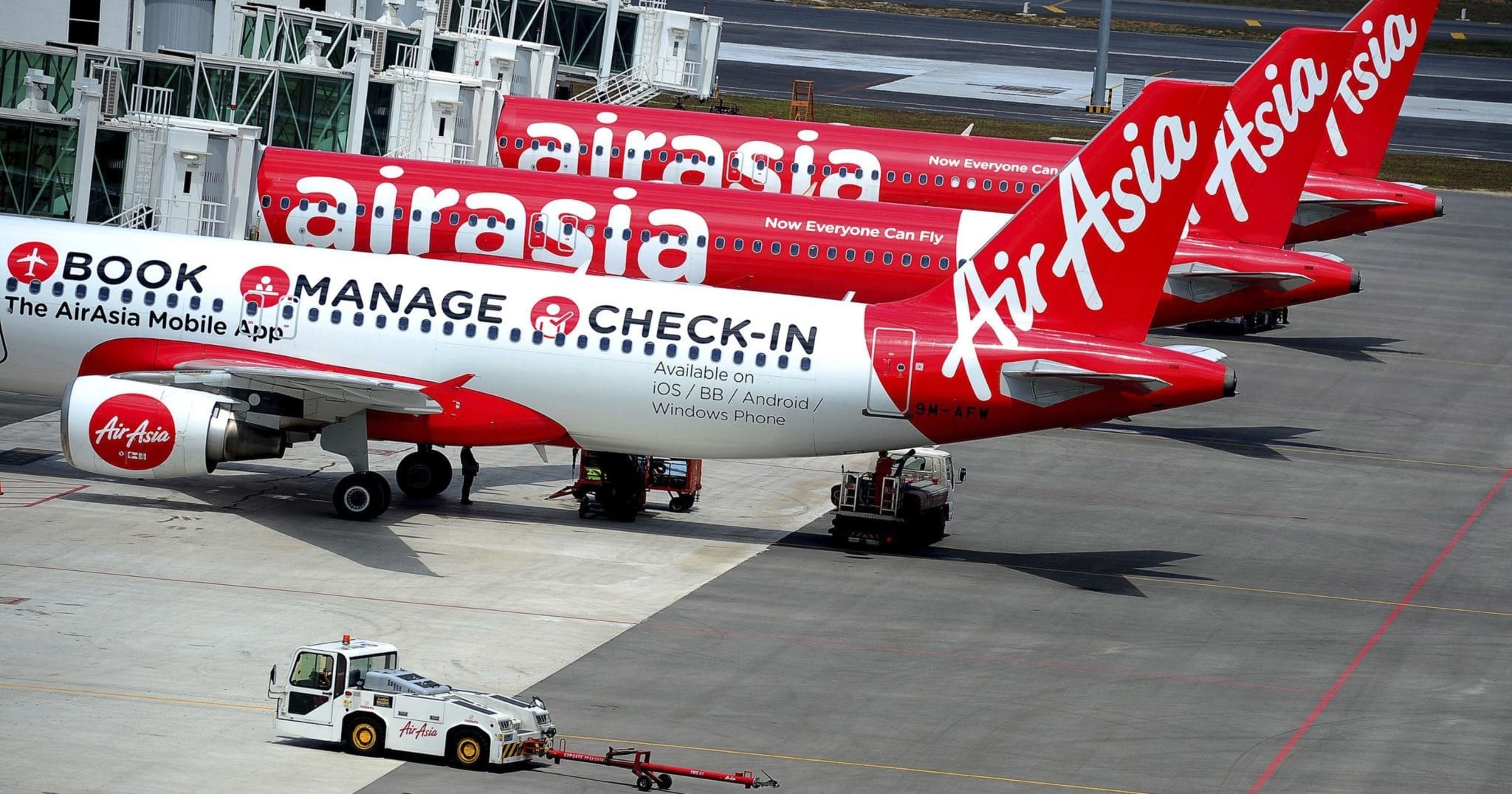
    Malaysian discount carrier AirAsia Group won’t open any new airline in the next three years and will focus on current operations after its proposed Vietnam launch, Group CEO Tony Fernandes said Wednesday. “After Vietnam, we will focus on what we have,” Fernandes said in a twitter post. “Focus this year is to make Indonesia and Philippines very profitable.” Fernandes said he is confident of India and Japan operations turning profitable in 2021, noting that the company’s strong franchise in Southeast Asian markets such as Indonesia, Malaysia, Thailand, Philippines and Vietnam will help fuel growth.

    According to September data, AirAsia operated 127 planes flying to over 130 destinations. The Southeast Asia’s largest budget carrier by fleet has also placed orders for 100 Airbus A330neo wide-body jets for long-haul flights. The company most recently signed a pact “reaffirming” its intention to set up a low-cost carrier in Vietnam with its local partner Tran Trong Kien in his capacity as CEO of Thien Minh Travel Joint Stock Company and General Director of Hai Au Aviation Joint Stock Company.

    Analysts doubt certainty of Indonesian and Philippines operations turning profitable this year as intense competition in both the markets amid highly-volatile fuel prices will continue to weigh on AirAsia’s operations. While Indonesia AirAsia could be slightly profitable in 2019 thanks to robust demand, the company’s Philippines unit will likely remain in the red, said Nomura analyst Ahmad Maghfur Usman. Fallout from a recent crash of Lion Air flight could help drive traffic to AirAsia Indonesia, he said. It is possible for AirAsia’s Indian operations to turn in a profit as early as next year although its business in Japan could remain in the red until the end of

    2020, he said. Global airlines have grappled with fickle input costs in 2018 as crude oil swung between a gain of nearly 30% and loss of 23% before ending the year at $66.73 a barrel. Jet fuel price averaged $86.8 per barrel for 2018, according to the International Air Transport Association.

    Every one dollar increase in crude oil prices could potentially lower AirAsia’s profit by as much as 47.5 million ringgit, according to Nomura’s Ahmad’s estimates.

    Fuel cost will largely determine whether Indonesia and Philippines operations would be profitable for AirAsia, said TA Securities research analyst Tan Kam Meng. Among the risks facing AirAsia is a rebound in crude oil prices to $70 a barrel, he flagged. Still, Malaysia remains key for AirAsia, said Tan. “Although profitability of Thailand, Philippines and Indonesia is a concern, it would not change valuation of the company significantly,” Tan said. Shares of AirAsia, which have added 6.94% over the past year, are currently trading 0.34% lower at 2.96 ringgit apiece.

  • AirAsia targets 100 million passengers in 2019

    AirAsia targets 100 million passengers in 2019

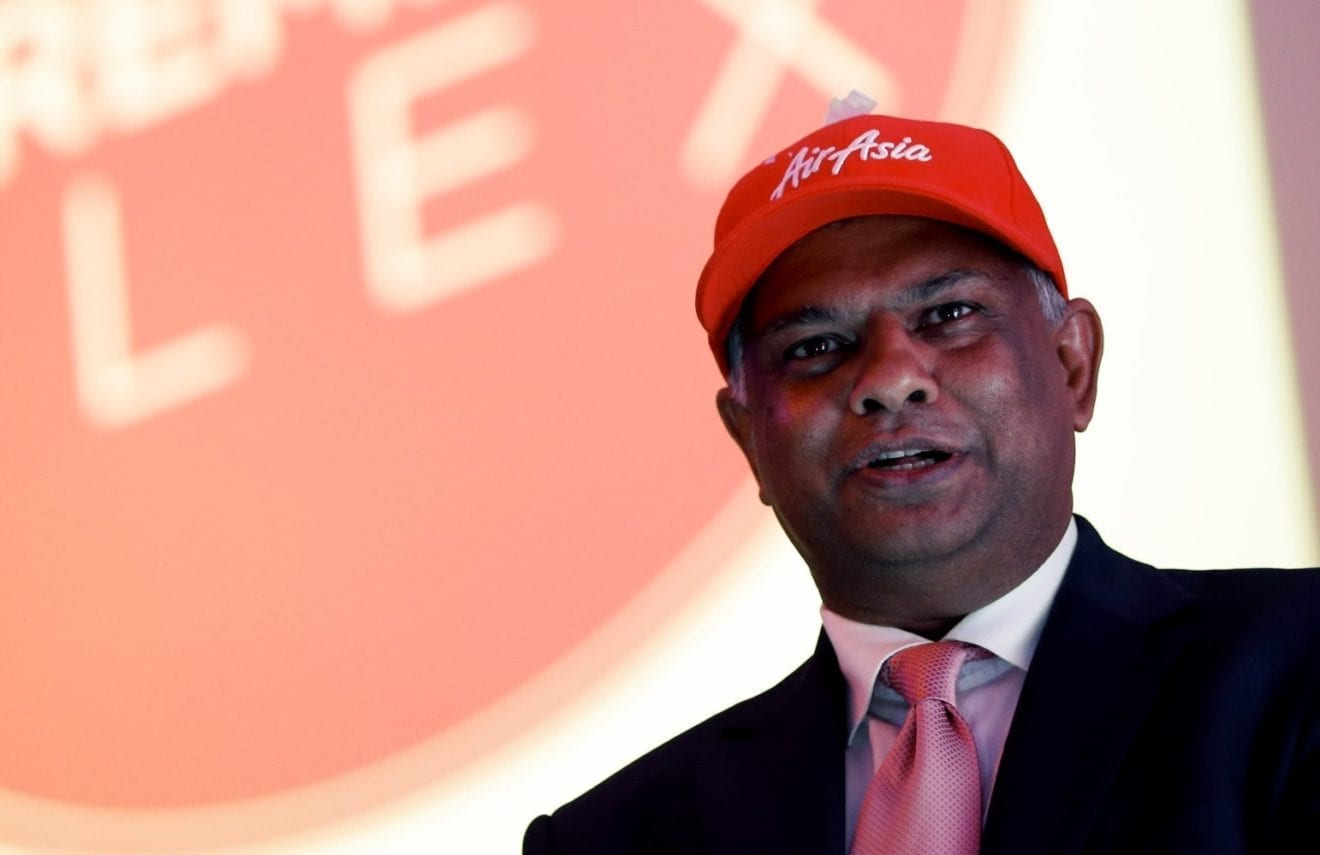
    AirAsia Group is out to monetise its digital businesses and broaden the group’s digital footprint this year but has no plan to open more new airlines over the next three years. The airline wants to focus on growing its existing business especially in Indonesia and Philippines. “As 2019 approaches I would like to confirm that AirAsia will not be opening up any more new airlines for the next 3 years,’’ AirAsia Group chief executive officer Tan Sri Tony Fernandes (pic) said in his series of posts on Twitter yesterday.

    He added that “after Vietnam, we will focus on what we have. Focus this year is to make Indonesia and Philippines very profitable.’’

    There is where “all the major population and growing economies (are), coupled with two great countries (India and China) to enable us to cover the world,’’ he added.

    Fernandes added that he was confident the airline’s operations in India and Japan would be profitable in 2021.

    This year Fernandes is hoping that his airline group would be able to carry over 100 million passengers.

    When contacted he merely said it is “around there”.

    In the first nine months of 2018, the airline group carried 61.4 million passengers across its network. The target set for 2018 was 90 million passengers.

    “We are on track to achieve a group load factor target of 85%,’’ Fernandes had said earlier.

    With fuel prices falling, the airline also expects to maintain its cost this year and hopefully offers more low fares to travellers. It was reported that AirAsia group has hedged 48% for Brent at US$67.24 bbl for the first quarter (1Q19) and 27% for 2Q19 at US$65.40 bbl to manage volatility of fuel prices.

    Turning to the digital side of the business, Fernandes said in a tweet “this is the year people will begin to see our strength in digital’’.

    He would not go into details but earlier he has been talking about the BigPay app, which is a digital alternative to bank accounts and it comes with a card that allows users to use and spend it anywhere in the world.

    AirAsia Group has in mid-December completed the transfer of its non-digital businesses to Redbeat Ventures, its wholly owned subsidiary. The digital-related services include AirAsia BIG Loyalty, BigPay, travel360, ROKKI, Ourshop, RedCargo Logistics, RedBox Logistics, Vidi and RedTix.

    That is the first step towards monetising the digital business and allow AirAsia to broaden the digital footprint.

    In an announcement to Bursa Malaysia earlier, AirAsia deputy group CEO (digital, transformation and corporate services) Aireen Omar said that by placing the digital assets under Redbeat Ventures, they hope to more effectively expand and monetise the digital businesses and broaden AirAsia’s digital footprint.

    The vision for Redbeat Ventures was to connect with the start-up community globally through collaboration to foster entrepreneurship and stimulate market-driven innovation that would benefit not just AirAsia’s ecosystem but help lead the digital economy and lifestyle in Asean.

    Redbeat Ventures will work with tech start-ups and look out for investment opportunities in the high-tech and digital space to remain competitive and relevant in these rapidly changing commercial and technological environments.


  • Vietnam struggles with paucity of AI engineers

    Vietnam struggles with paucity of AI engineers

    IT firms are offering artificial intelligence (AI) engineers salaries of $22,000 a year, but are still struggling to recruit enough people. IT recruiting firm TopDev said in a recent report that companies are having difficulty finding the right people due to a paucity of talents. Salaries are going up as a result. An AI/machine learning engineer could earn up to $1,678 a month, or around $22,000 a year including bonuses and benefits.

    This is higher than what a data scientist ($1,537 a month) or DevOps engineer ($1,505) gets. The latter handles both the development and operations of a product.

    The report said the IT sector generally faces a big shortage as demand is set to go up from 320,000 engineers this year to 400,000 in 2020. The shortfall is 75,000 this year, and set to increase to 100,000 in 2020.

    But they face a struggle as 53 percent of 15,000 IT employees polled for the report are happy with their current job, and 59.8 percent do not want to change their job. This leaves employers considering paying higher salaries to lure away people. The average salary for experienced IT engineers now is $1,318.

    Managers with over five years’ experience can earn from $1,550 to $2,350, while directors with over 10 years’ experience earn at least $2,300.

    But there is a dearth of quality managers and engineers, the report added.

    Gaku Echizenya, general director of Navigos Group, a leading recruitment company, recently said: “The market is experiencing major changes with the fourth industrial revolution. Therefore, businesses need to keep up-to-date with market information from reputable sources to respond promptly to changes, allowing them to set out a strategy to recruit and attract talented people.”

    Employees need to actively educate themselves in IT and digital knowledge, and develop crucial skills such as cooperation with others and people management to increase their competitiveness, he added.


  • Western Australia to stop using plastic bags

    Western Australia to stop using plastic bags

    The ban on the use of plastic bags in Western Australia has started as of January 1, 2019, with retailers no longer be able to provide customers with lightweight plastic bags when shopping in their stores. Retailers who fail to comply with the new laws will face substantial fines and disruptions to their business operations. The National Retail Association (NRA), which has partnered with the state government to assist the sector to make a smooth transition ahead of the ban, has issued a statement to consumers earlier reminding them to be prepared for the change when they shop starting the new year.

    David Stout, NRA manager of Industry Policy, said the bag ban applies to all retailers operating in Western Australia regardless of size or type – ranging from newsagents to food outlets, to pharmacies and petrol stations.

    Stout said shoppers need to make sure that they have alternative options in place, like reusable bags, to safeguard against any inconvenience.

    “The NRA has visited thousands of retailers in all parts of the state over the past few months to ensure that retailers are as ready as possible,” Stout said.

    He added that the NRA will continue to assist retailers with any teething issues after the ban comes into effect.

  • Vietnamese platform FastGo expands to Myanmar

    Vietnamese platform FastGo expands to Myanmar

    FastGo, Vietnam’s first ride-hailing service, has kicked off operations in Myanmar as part of its Southeast Asia expansion plans. Its joint venture with Myanmarese conglomerate Asia Sun Group began offering services on December 28. CEO Nguyen Huu Tuat said at the launch that Myanmar is a promising market with the e-commerce, travel and retail sectors all growing rapidly. With a population of 50 million, transport demand in the country is expected to rise, he said.

    FastGo targets major cities and provinces and expects to sign up two million users and 100,000 drivers.

    It pursues the same business model as in Vietnam, only taking a fixed service cost from drivers and not commissions on each ride and guaranteeing them higher fares during rush hour and bad weather.

    It allows users to tip drivers, and offers a priority service for certain customers.

    Tuat said FastGo has tied up with Asia Sun because the group has experience in various sectors, deep pockets and an understanding of the local market and culture.

    He expected the venture to benefit Myanmar’s digital economy.

    FastGo was launched in Vietnam last June and now has over 40,000 partner drivers in 10 provinces and cities.

    It aims to be more than just a ride hailing app, offering other services such as food delivery.

    FastGo Vietnam Joint Stock Company was established in April 2018 with its headquarters in Hanoi. The company belongs to a wide network of services provided by Nextech, a leading tech firm in Vietnam.

    The Nikkei Asian Review reported that the company hopes to make its service available in 20 cities in Vietnam and five other Southeast Asian markets, including the Philippines, Cambodia and Thailand, by the end of 2019.

  • AirAsia eyes Vietnam launch, turnaround India and Japan units

    AirAsia eyes Vietnam launch, turnaround India and Japan units

    AirAsia Group chief executive Tony Fernandes says the group has no plans to establish new subsidiaries over the next three years, apart from a unit in Vietnam. In a series of tweets, Fernandes says the low-cost carrier will focus its efforts on launching AirAsia Vietnam, as well as making Indonesia AirAsia and AirAsia Philippines “very profitable”. Last December, AirAsia signed a memorandum of cooperation with Thien minh Travel for a Vietnamese joint venture.

    Meanwhile, AirAsia‘s Indonesia and Philippines units, which have suffered losses over the years, have had their financials incorporated into the Group since the start of 2017. AirAsia has said that it is planning for a secondary listing for its Indonesia operations in fiscal 2019.

    Fernandes is also expecting AirAsia India and AirAsia Japan to be profitable by 2021. AirAsia India is working towards launching international services while AirAsia Japan plans to start connecting to points in North Asia.

    “We have a great seam[less] franchise. Indonesia, Malaysia, Thailand, Philippines and Vietnam… All the major populations and growing economies. Coupled with two great countries to enable us to cover the world – India and Japan.”

    The AirAsia Group previously had plans to launch a China unit and signed a MoU in May 2017. The pact with China Everbright Group and the Henan Government Working Group however lapsed in August 2018.

  • China’s first ‘Audio Library’ in a shopping mall opened

    China’s first ‘Audio Library’ in a shopping mall opened

    In the age of digitalization, shopping malls have evolved from a place for consumption to the “Third Space” in people’s everyday lives. Shopping malls provide a comfortable and relaxing environment with humanitarian touches by truly connecting with customers. CityOn.Xi’an has recently collaborated with the nationwide famous audio sharing platform Himalaya to build China’s first ‘Audio Library’ in a shopping mall, enabling customers to enjoy a literary cultural experience while shopping.

    As a well-known audio sharing platform in China, Himalaya currently has 480,000,000 mobile users and its market value grew 1,000 times since its establishment five years ago. As a typical unicorn company, the Xi’an Municipal People’s Government signed a strategic agreement with Himalaya in 2018, in which the ‘Audio Library’ created by CityOn.Xi’an and Himalaya has brought the consumption culture in Xi’an to the next level.

    CityOn.Xi’an creates a real-life library setting through its infrastructure development. Customers just need to scan the QR code upon entrance of the audio library, and they can gain access to Himalaya’s different free audio book channels created exclusively for CityOn.Xi’an customers. The wide variety of selection includes literature, education, food and beverage, travel, fiction, etc. allowing customers to enjoy extraordinary audio entertainment as they shop or dine.

    In addition, the best-seller reads that are popular among young customers that would normally require payment such as ‘Ma Dong’s Career Plan B’ or ‘Kevin Tsoi’s 201st EQ Lesson’ are free to listen for customers in CityOn.Xi’an. To provide a better interactive experience, CityOn and Himalaya exclusively created ‘audio card’, where customers at CityOn.Xi’an can design and customize their own audio greeting cards to send blessings to their loved ones just through a scan of the QR code.

    CityOn.Xi’an’s extensive collaboration extends beyond offline to online, where customers are offered a brand-new way to receive messages from the mall. CityOn.Xi’an utilizes Himalaya’s platform to create an exclusive radio channel for CityOn.Xian, enabling customers to receive messages, member benefits, brand details, and customer service information immediately. Customers can either use offline QR code scan or manual search on Himalaya APP to gain first hand information on the happenings of CityOn.Xi’an.

    The breakthrough approach completely transforms communication between a shopping mall and customers, where message delivery is now easier and livelier.

    CityOn.Xi’an’s General Manager Xu Jing Dong said, “CityOn.Xi’an has always been at the forefront of new retail and has achieved numerous firsts in the nation. For example, CityOn.Xi’an innovatively implemented APP technology in a wide variety of services, such as launching the world’s first offline experience store for DiDi, China’s first SF Express delivery customer service store, and the first to have a smart electric bike stop, motorcycle charging facility, and Ponycar flagship store in China’s north-west region.

    These O2O collaborations have brought CityOn.Xi’an and customers closer together, successfully converting online traffic to offline footfall and achieved record-breaking performance in customer traffic and sales.

    ‘Audio Library’ represents CityOn.Xi’an’s mission of being customer-centric and innovative, striving to be the commercial landmark of Xi’an and the whole of China’s north-west region. The collaboration truly reflects CityOn.Xi’an’s commitment and effort in bringing outstanding retail experience to customers through partnerships with different third parties, and to set the benchmark of customer service in the industry.

  • Korea to ban plastic bags in supermarkets

    Korea to ban plastic bags in supermarkets

    Large supermarkets are banned from giving or selling plastic shopping bags to customers. The Ministry of Environment announced Monday that it will completely prohibit grocery franchises and supermarkets over 165 square meters (1,776 square feet) from selling or giving away single-use plastic bags from New Year’s Day. While it discouraged stores from providing plastic bags before, the ministry enforced a total ban through a revision to the Act on the Promotion of Saving and Recycling of Resources in an effort to cut plastic waste.

    Some 13,000 supermarkets are affected. If they offer disposable plastic bags, they risk fines of up to 3 million won ($2,690). The only kind of one-use bags stores can sell are the disposal bags accepted by district waste collectors. Stores will be encouraged to sell or offer paper and other non-plastic grocery bags instead.

    Supermarkets can continue to offer customers small plastic bags for wrapping items like fish and meat.

    The revision to the law also prohibits some 18,000 bakeries from handing out plastic bags free of charge.

    The ministry said it will give a grace period of around three months to help stores adjust to the change and work with local government bodies to ensure that the regulations are followed.

    Earlier this year, seven of Korea’s largest grocery and bakery franchises, including E-mart and Lotte Mart, signed voluntary agreements with the ministry to reduce disposable waste.

    That initiative has produced notable results. Paris Baguette and Tous Les Jours, for example, used 74 percent fewer plastic bags in November last year compared to the same period 2017, according to the ministry.

    “It’s necessary to reduce use of disposable waste for the environment and future generations,” said a spokesman from the ministry. “We request the people’s active participation to promote a green consumer culture.”

  • Korean drug companies anticipate a strong 2019

    Korean drug companies anticipate a strong 2019

    Korean pharmaceutical companies are entering 2019 with high expectations as several domestic drugs are expected to gain approval from overseas regulators this year. Though the Samsung BioLogics accounting fraud scandal made 2018 a less-than-stellar year for the pharmaceutical industry, bio firms are ready to get back on their feet with new drugs and licenses.

    Daewoong Pharmaceutical is one firm hoping to get the green light for sales of a product in the United States and Europe this year. Nabota, a botulinum toxin, or botox product, was submitted for approval to the U.S. Food and Drug Administration (FDA) and the European Medicines Agency in 2017.

    Last August, Nabota became the first domestic botox product to gain sales approval in Canada after Daewoong acquired the necessary permit from the country’s health authorities.

    Green Cross is another company awaiting FDA approval. Its I.V.-Globulin SN, an immunoglobulin product that treats immune deficiencies, is being reviewed by the agency.

    Though the FDA postponed approval of the drug last September when it requested supplementary documents from the company, Green Cross is optimistic that it will eventually get the go-ahead since I.V.-Globulin SN is already being sold in both Korea and overseas markets, such as Brazil.

    SK Biopharmaceuticals is waiting for the FDA to approve Cenobamate, an antiepileptic drug. Cenobamate is the first drug for which a Korean company has applied for FDA approval independently without going through global partner companies.

    If the drug is approved, SK expects that Cenobamate will become a huge cash cow that can generate up to 1 trillion won ($898.8 million) in annual sales just in the United States. The United States is the world’s largest market for epilepsy drugs.

    Last Thursday, Hanmi Pharmaceutical filed a license application for Rolontis, a drug intended to treat chemotherapy-induced neutropenia, with the FDA through Spectrum Pharmaceuticals. Hanmi is hoping to gain approval by the first half of 2020.

    Korean drug makers are hoping to make progress with clinical trials and technology exports this year.

    Yuhan is currently working with Janssen Biotech to conduct clinical trials for lung cancer drug Lazertinib. Two months ago, Janssen purchased out-licensing rights from Yuhan for Lazertinib in a deal valued at $1.25 billion.

    One of Chong Kun Dang Pharmaceutical’s most highly anticipated drug candidates is the CKD-702 bispecific antibody, an artificial protein used for cancer immunotherapy. Given the growing interest in bispecific antibodies around the world, industry experts predict Chong Kun Dang will be able to export the drug technology as early on as the pre-clinical stage.

    Hanmi and Jeil Pharmaceutical are also expected to complete Phase 2 clinical trials for their obesity drug HM15211 and stroke treatment JPI-289 this year, while SillaJen is due to complete Phase 3 clinical trials for its cancer treatment Pexa-Vec in the coming months.

    “Domestic pharmaceutical firms have tried to venture into the United States, the world’s biggest drug market, and their efforts will lead to real results next year,” said one spokesman from a pharmaceutical firm.

  • Korean Air’s jets get name of East Sea badly wrong

    Korean Air’s jets get name of East Sea badly wrong

    Korean Air, the country’s flag carrier, displayed maps with the “Sea of Japan” aboard some its flights rather than the East Sea, the name supported by the Korean government. The Japanese name of the sea, which is opposed by Korea, was found on a number of passenger-entertainment monitors. According to news reports Sunday, 3-D maps on the displays aboard 787-9 Dreamliner aircraft were found to make the designation.

    Korean Air confirmed Monday that seven of its nine B787-9 planes had the problem. All other aircraft marked the location as the East Sea.

    A spokesman explained that a software upgrade was undertaken to change the maps into 3-D visuals, and that the company failed to notice the wording supplied by the developer.

    “The developer of the 3-D map is a company in the United States,” he said.

    Adjustments to replace the Sea of Japan by the East Sea in the seven aircraft were to be finalized Monday.

    “I was told that the modified version was sent to us today and delivered to the division in charge by 5 p.m,” added the spokesman, saying that the changes would be made by the end of the day.

    He said the company did not know why the other two B787-9 aircraft did not have the same problem.

    The controversy is the result of an ongoing dispute between Korea and Japan over the name of the sea located between the two countries. Both argue that their respective names had been used historically.

    Since South and North Korea first raised objection to the “Sea of Japan” name in 1992, the research on the subject has yielded conflicting conclusions.

    Korean Air received similar criticism in 2012, when its official homepage used the “Sea of Japan” name instead of the East Sea. The problem resulted from the company’s use of the Google Map service.

  • Vietnam court orders Grab to pay Vinasun $208,000

    Vietnam court orders Grab to pay Vinasun $208,000

    Grab should pay Vinasun VND4.8 billion ($208,000) for damage it has caused the top taxi firm, a court ruled Friday.

    The People’s Court of Ho Chi Minh City said in its verdict that Grab had committed many mistakes in its operations in Vietnam, tantamount to unfair competition, which damaged Vinasun’s business.

    Before 2016, Grab had registered almost 300 contract cars in Ho Chi Minh City, which increased to 23,000 by the end of last year. This led to a decrease in the number of active Vinasun cars, causing damage worth VND4.8 billion, the court found.

    By June 2017, Vinasun had provided 1.1 million trips to its customers, while Grab had over 2 million. This shows that the number of Grab cars has continuously increased causing many Vinasun cars to stay unused in parking lots, the court said.

    Grab’s entrance into the Vietnamese market has also lowered Vinasun’s market share, a damage of VND81 billion ($3.49 million).

    Although its entrance has negatively affected Vinasun, the taxi firm could not prove that Grab was the only company to cause this damage, the court said.

    For this reason, the court only required Grab to pay Vinasun the sum of VND4.8 billion for unused cars.

    Change Grab’s status

    The court also proposed that Vietnamese authorities start defining Grab as a transport business.

    Grab has said in many documents to Vietnamese authorities that it is only a technology company and not a transport company. It has also said it only provides electronic transactions and free technology for customers via electronic receipts, which has been approved by the Ministry of Transport.

    But the electronic contracts that Grab mentioned did not confirm to definitions under Vietnam’s Law of Electronic Transactions, the court said.

    It noted that Grab’s contracts did not say who the parties to them were and there were no dispute resolution terms.

    “Grab claims to be a company which provides technology and does not conduct a taxi business nor manage the drivers. But in fact, Grab does manage the drivers and charges transport fees,” the verdict said.

    “When customers order a ride, they transfer their money to Grab or pay via the driver a sum from which Grab takes a percentage. Grab also determines the bonus and punishment for drivers,” it added.

    Furthermore, Grab’s business activities do not follow the law, which requires an automobile transportation business to ensure the number of vehicles and service quality, the court said. The law also requires the business to provide employees with labor contracts, traffic safety training and social security.

    Grab does not follow these regulations and does not pay the taxes it should as a transport business, the court said.

    Since 2016, the Inspectorate of the HCMC Department of Transportation has listed 29 violations committed by Grab concerning not having a business registration certificate, list of transport contracts, and taxi signs, the court said.

    Grab has also ignored twice the Ministry of Transport’s documents asking the company to stop its service with contracted vehicles, it said.

    The ride hailing firm has also violated the law in how it gives out promotions and increase and decrease transport fees multiple times a day, the court added.

    Vinasun had filed the suit against Grab in June last year. It said Grab’s illegal activities were responsible for nearly VND42 billion ($1.8 million) of the VND76 billion ($3.25 million) in losses it had suffered in 2016 and the first half of 2017.

    The trial began in February, but was adjourned a month later to allow for more evidence to be gathered. Grab had protested the valuation of Vinasun’s losses.

    Last October, prosecutors asked the court to accept Vinasun’s petition for compensation of nearly VND42 billion, rejecting Grab’s claim it was a tech firm and not a taxi company.

    Grab responded by writing to Prime Minister Nguyen Xuan Phuc, saying that identifying it as a taxi firm would be “a step backward from Industry 4.0.”

    The latest draft of a Ministry of Transport decree requires firms offering taxi services to register as taxi firms before they can apply ride-hailing technology.

    This means that Grab and other ride-hailing firms have to register afresh as taxi businesses and comply with legal requirements related to operating licenses, drivers’ profiles and taxes.
  • Bamboo Airways postpones maiden flight again

    Bamboo Airways postpones maiden flight again

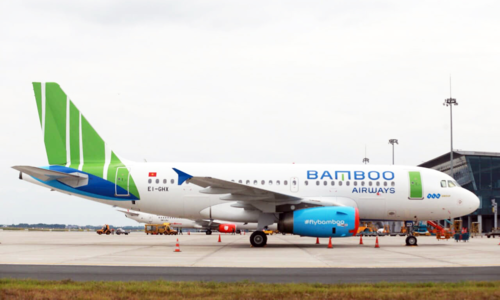
    Vietnam’s newest airline Bamboo Airways will not operate its maiden flight Thursday as scheduled, the second time it has been delayed. Its CEO Dang Tat Thanh said Bamboo Airways could not take off since it is going through “the most difficult examination ever.” “Bamboo Airways is currently going through the final stage of a tight examination by authorities before taking off,” he said, adding that the first flight would now be in mid-January. The airline aimed to launch the first flight on December 29, after failing to launch services in October as previously planned.

    The carrier, owned by conglomerate FLC, received a license last November but is still awaiting an aircraft operator certificate (AOC).

    It was established in May last year with a charter capital of VND700 billion ($30 million), which it increased two months later to VND1.3 trillion ($55.68 million).

    It has signed deals to buy 24 Airbus A320neo and 20 Boeing B787-9 Dreamliner aircraft worth a total of $8.6 billion. Earlier this month it took delivery of the first aircraft, an Airbus A319 leased from an Irish company.

    The airline plans to operate on 100 routes, connecting major cities and travel destinations in Vietnam with the rest of the world.

    FLC chairman Trinh Van Quyet said earlier that the first routes could be between Hanoi and Ho Chi Minh City and from the two cities to Quy Nhon.

    Vietnam has four other carriers still in operation: Vietnam Airlines, Vietjet Air, Jetstar Pacific, and VASCO.