Category: Living

Retail News Asia is committed to providing both local and global retailers with the latest Living news throughout the Asian market. This on a daily base.

  • Palm falls on weak export demand

    Palm falls on weak export demand

    Malaysian palm oil futures fell at the midday break today, as weak export demand and losses in US soyoil weighed.

    The benchmark palm oil contract for September delivery on the Bursa Malaysia Derivatives Exchange was down 0.8% at RM2,266 per tonne, its sharpest intraday loss since June 19.

    Palm gained in the previous session, snapping four consecutive days of losses. It is down nearly 7% so far this month.

    Trading volumes stood at 19,531 lots of 25 tonnes each at noon.

    “The market is lacking demand, this is the primary cause of price declines,” said a Kuala Lumpur based trader.

    “Exports have been bad since the export tax was reinstated, and Indonesian prices are more competitive than ours,” added the trader, referring to Malaysia’s tax on crude palm oil exports.

    Malaysia resumed export taxes on crude palm oil in May, after suspending it for four months at the start of the year to increase demand and boost prices. It announced a 5% rate for the month of July.

    Exports of palm oil and related products from the world’s second largest producer declined 12.5% from June 1-25, reported inspection company AmSpec Agri Malaysia today, versus the corresponding period in May.

    Palm’s decline could also be due to weakness in US soyoil on the Chicago Board Of Trade, another trader said. The Chicago July soybean oil contract was last down 0.2% today.

  • Merchandise from K-pop is popular with Chinese

    Merchandise from K-pop is popular with Chinese

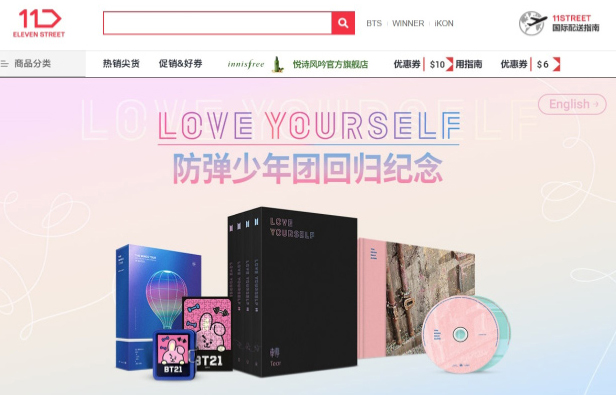
    K-pop merchandise is selling well on e-commerce platform 11st’s global website, boosted by fans from the greater China region, which account for 43 percent of the products’ sales.

    According to figures for the first five months of the year, 43.2 percent of customers for K-pop merchandise online are from China, Hong Kong, Macau and Taiwan.

    A large part of that demand – 30.7 percent – came from Taiwan, which was the No. 1 destination for goods bought on 11st. Japan was second place (10.8 percent), followed by the United States (10.6 percent), China (6.6 percent) and Hong Kong (6.2 percent).

    “Until last year, cosmetics and beauty products were the majority of items bought by foreign customers on our website,” said a spokeswoman for 11st. “But recently revenue from idol-related products, apart from CDs, has started to account for a significant proportion of our sales.”

    The company just started this year to launch promotion and marketing events to sell K-pop merchandise in partnerships with domestic entertainment companies.

    11st sold K-pop merchandise to 60 countries worldwide that included South America, Europe, Middle East and Africa.

    Taiwanese customers had a big preference for merchandise featuring Super Junior, SHINee, TVXQ, Blackpink, iKON and GOT7, while Japanese were keen on merchandise related to Eun Ji-won, a member of Korea’s first-generation idol group SechsKies.

  • Korea advances in the Asian entertainment market with 3D technology

    Korea advances in the Asian entertainment market with 3D technology

    Korea Creative Content Agency organised the 3D VFX pavilion at the recently concluded Asia TV Forum 2010 held in Singapore from 8-10 December, in hopes of promoting Korean 3D contents technology.

    The 3D VFX was further demonstrated at the 3D conference thus promoting not only the technology but also the so-called Korean Wave.

  • Vietnam slams brakes on GrabTaxi plan to expand operations

    Vietnam slams brakes on GrabTaxi plan to expand operations

    The Transport Ministry has shot down a GrabTaxi plan to extend its services to provinces like Ninh Thuan, Dong Thap and Gia Lai.

    The ride-hailing firm now is allowed to operate in the five cities and provinces of Hanoi, Ho Chi Minh, Da Nang, Khanh Hoa and Quang Ninh.

    However, the firm said its GrabTaxi service is quite different from the GrabCar, so GrabTaxi should be allowed to operate nationwide.

    Both GrabTaxi and GrabCar operate under the same Grab application, but GrabTaxi offers a run-of-the mill taxi service, while GrabCar is a service which connects customers with private cars for ride-hailing purposes.

    In January, a GrabTaxi representative said: “The firm always abides the law and we do not allow GrabCar to operate outside the Ministry of Transport’s designated cities and provinces.”

    Grab is currently under an investigation by Vietnamese authorities after its acquisition of Uber’s Southeast Asia operations shows signs of breaching local antitrust laws.

    The investigation, which began on May 18, is estimated to take 180 days and can be extended by another 120 days, said the Vietnam Competition Authority (VCA) under the Ministry of Industry and Trade.

    Prior to the statement, a VCA investigation had found that Grab’s market share in Vietnam had exceeded 50 percent since its ride-hailing rival Uber left the Southeast Asian market in April.

    Vietnam’s 2004 Competition Law requires that all mergers and acquisitions (M&As) that result in a company gaining over 30 percent of market share must be reported to competition authorities.

    M&As that result in a company gaining over 50 percent of market share are restricted.

  • Malaysian freelancer now can get jobs at a swipe with DuitDo-it

    Malaysian freelancer now can get jobs at a swipe with DuitDo-it

    Looking to earn extra income for Malaysians has just become easier with the launch of DuitDo-it.

    Working like the dating app Tinder, job seekers can apply for part-time and contract or freelance work with just one swipe.

    DuitDo-it is developed and owned by recruitment agency AP Symphony Search, as part of their CSR efforts to help Malaysians earn more while meeting the needs of employers nationwide who need part-time, contract or freelance staff desperately.

    The agency said in a statement here today that with the big pool of Malaysians like unemployed youths, school leavers, students, retirees and stay-at-home mothers available, companies can now fill their temporary manpower gap easily. This should help reduce the country’s high reliance on foreign labour which is causing a huge outflow of funds, it said.

    DutiDo-it is free for job seekers. It may be downloaded from Google Play. Individuals can also post jobs such as looking after their cats or plants, or doing sewing.

    Symphony said DuitDo-it also meets the workforce trend of freelancing. “More and more people are looking for non-nine-to-five jobs that allow them to have more flexibility and control over their time,” the agency added.

    Work such as website design, accounts preparation and make-up artist can be found on DuitDo-it.

    One of the unique features of DuitDo-it is the use of video resumes to allow for quick hiring.

    Every job seeker will have his own individual rating to help employers make fast hiring decisions. If selected by the employer, the job seeker has three hours to accept, according to the statement.

  • Taschen debuts in Asia, starts with Hong Kong

    Taschen debuts in Asia, starts with Hong Kong

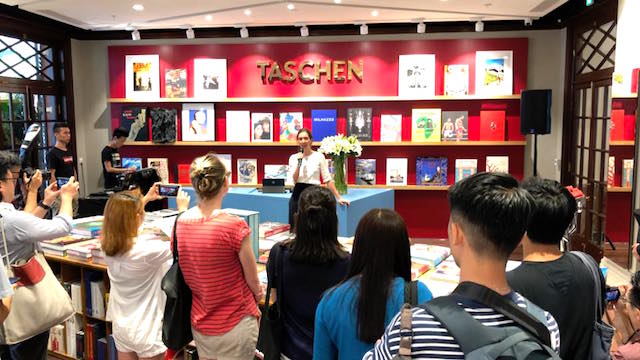
    German publisher Taschen is selling a book about Ferrari for HK$250,000 (US$32,000) in its first-ever Asian bookstore.

    The Ferrari book is just one of the special-edition volumes on offer in the store, and contains a collection of rare images that traces more than 70 years of the Italian car manufacturer’s history.

    While the book alone costs $47,000, buyers who pay full price will receive a copy sealed in an aluminium case bearing the Ferrari horse logo and mounted on a podium designed to evoke the cylinders of a race car engine.

    Opening in Hong Kong’s Tai Kwun Centre for Heritage and Arts, Taschen’s 1700sqft store operates a books-only retail model, which aims to distinguish it from competing stores trading in the region’s troubled print publishing market. Different sizes and editions of the same books, exclusively image-driven volumes, are being sold to be affordable to people of all income levels.

    The firm’s MD Marlene Taschen said that Hong Kong constitutes a tentative first move into the region for the publisher. “We want to make the Hong Kong store a success first before going to the next market in Asia,” she said. Taschen Hong Kong is the firm’s 14th location.

    Hong Kong’s book market has been beset recently by multiple store closures in a high-on-overheads retail environment that now contends with digital products. Prominent book stores Page One and Dymocks are recent departures from the market.

    CLSA’s head of China education and Hong Kong consumer research Mariana Kou said that limited and special print editions would attract book fans in an industry that has been transformed by consumers’ ability to cross-check prices conveniently online.

    “These books can become collectibles,” she said, noting Amazon’s moves to launch physical bookstores. “I am optimistic about the book industry.”

  • Vietnam’s renewable energy yet to get wind in its sails

    Vietnam’s renewable energy yet to get wind in its sails

    Vietnam is far away from realizing its short and medium term wind power goals, with no ready solution in sight to several impediments, experts say.

    They said at a recent conference on wind energy development in Vietnam that high interest rates, low selling prices and inadequate power purchase agreements from the investors’ point of view were major stumbling blocks to realizing set targets.

    Vietnam plans to produce 800 megawatts of wind energy by 2020 and 6,000 megawatts by 2030.

    However, the country has just 7 functioning wind energy projects with a total capacity of 190 megawatts, noted Nguyen Van Thanh from the Ministry of Industry and Trade.

    Tran Vinh Thong, technical officer for wind energy firm Thuan Binh, which is currently investing in the Phu Lac wind energy project in southern Binh Thuan Province, said the project’s initial cost was VND1.1 trillion ($49 million) and it generated an annual revenue of about VND100 billion, of which VND70-80 billion goes for just interest payments.

    “We only have VND20-30 billion left each year to pay our employees’ salaries and meet maintenance costs,” he said.

    Low electricity selling prices are also an issue, Thong added.

    Currently, electricity derived from wind energy costs about 7.8 cents per kilowatt per hour. At this price, the Phu Lac wind energy project would need 14 years to recoup its initial cost, while a typical wind energy project only lasts 20 years before it is replaced as maintenance costs soar, he said.

    Meanwhile, the buying price for wind power is 20 cents in Thailand, 29 cents in the Philippines and 30 cents in Japan.

    However, disadvantageous power purchase agreements remain the biggest obstacle to grow Vietnam’s wind energy industry, said Bui Vinh Thang, business development officer for Irish sustainable energy firm Mainstream.

    Currently, businesses in Vietnam who want to produce electricity can only sell their output to national distributor Vietnam Electricity Corporation (EVN), which has a monopoly on the service. Worse still, EVN can cancel the power purchase agreement at any time, regardless of the time agreed upon in the contract.

    “That is too much of a risk,” Thang said.

    Moreover, EVN unilaterally gets to temporarily suspend electricity distribution for energy grid maintenance should it deems necessary to do so.

    “During the time electricity distribution is temporarily suspended, we don’t make any money. And EVN doesn’t have to reimburse us at all,” Thang said.

    Last year, the Ministry of Industry and Trade proposed an increase in selling prices for wind energy. Land and sea projects would have their selling prices increased to 8.77 and 9.95 cents per kilowatt per hour, respectively.

    Vietnam is trying to generate enough energy to sustain the country’s growth and connect those who still do not have access to power, while gradually shifting towards clean and low-carbon energy.

    It aims to produce 10.7 percent of its total electricity through renewable energy by 2030, mainly through solar and wind sources.


  • AirAsia strongly refutes India CBI allegations

    AirAsia strongly refutes India CBI allegations

    AirAsia Group Bhd (AAGB) lambasted the Indian Central Bureau of Investigation’s (CBI) first information report (FIR) lodged against the low-cost airline, based on information from an unnamed “reliable source.”

    “We question the motives of the unnamed person, persons or organisation that lodged this FIR but we will cooperate fully with the Indian authorities in accordance with due process provided in law,” it said in a filing with the stock exchange.

    AAGB refuted strongly all the allegations made in the FIR as baseless, unsupported and unjustified and will vigorously challenge these allegations.

    The FIR claimed that unknown public servants have engaged in a criminal conspiracy involving AAGB, AirAsia India, group CEO Tan Sri Tony Fernandes, deputy CEO Bo Lingam, four other named parties and unknown public servants and unknown private persons, to expedite the approval process and change in aviation policies to suit AirAsia India, by lobbying with stakeholders in the Indian government through non-transparent means.

    AAGB explained that its move, together with other aviation players, to lobby the Indian government to remove the 5/20 rule was done in compliance with the law and without any unlawful payments. The 5/20 rule inhibits competition and the development of a healthy aviation sector that endures for the benefit of the Indian consumer.

    “Further, AAGB has had an internal review and concluded that there has been no wrongdoing by either Fernandes or Lingam.”

    AAGB said the joint venture with Tata Sons Ltd to set up its low cost carrier in India carrying the AirAsia brand, was primarily due to the sterling reputation and integrity of Tata Sons in India.

    “All required approvals were obtained through normal channels and it took more than a year to get these approvals. Given Tata’s more than 100 years track record and that of AirAsia’s reputation, we refute any inference of impropriety in obtaining these approvals.”

    AirAsia Investments Ltd holds 49% equity in AirAsia India, while the remaining 51% is owned by Tata Sons (49%) and two individuals on the board (2%) who are Indian nationals.

    AAGB reiterated that all the allegations in the FIR are unfounded and are without any rational basis and are wholly inconceivable in the context of corporate governance norms in Malaysia.

    “Accordingly AAGB denies all allegations of wrongdoing and will pursue all legal remedies available to address these allegations.”

    Meanwhile, AAGB said AirAsia India lodged an FIR against former CEO Mittu Chandilya last year over the contract with HNR Trading Pte Ltd which was unauthorised by the company.

    It also submitted a forensic audit report by an accounting firm in India to show that funds were illegally siphoned out of the company through that unauthorised contract.

    “We believe that the Bangalore police are still investigating although much time has lapsed.”

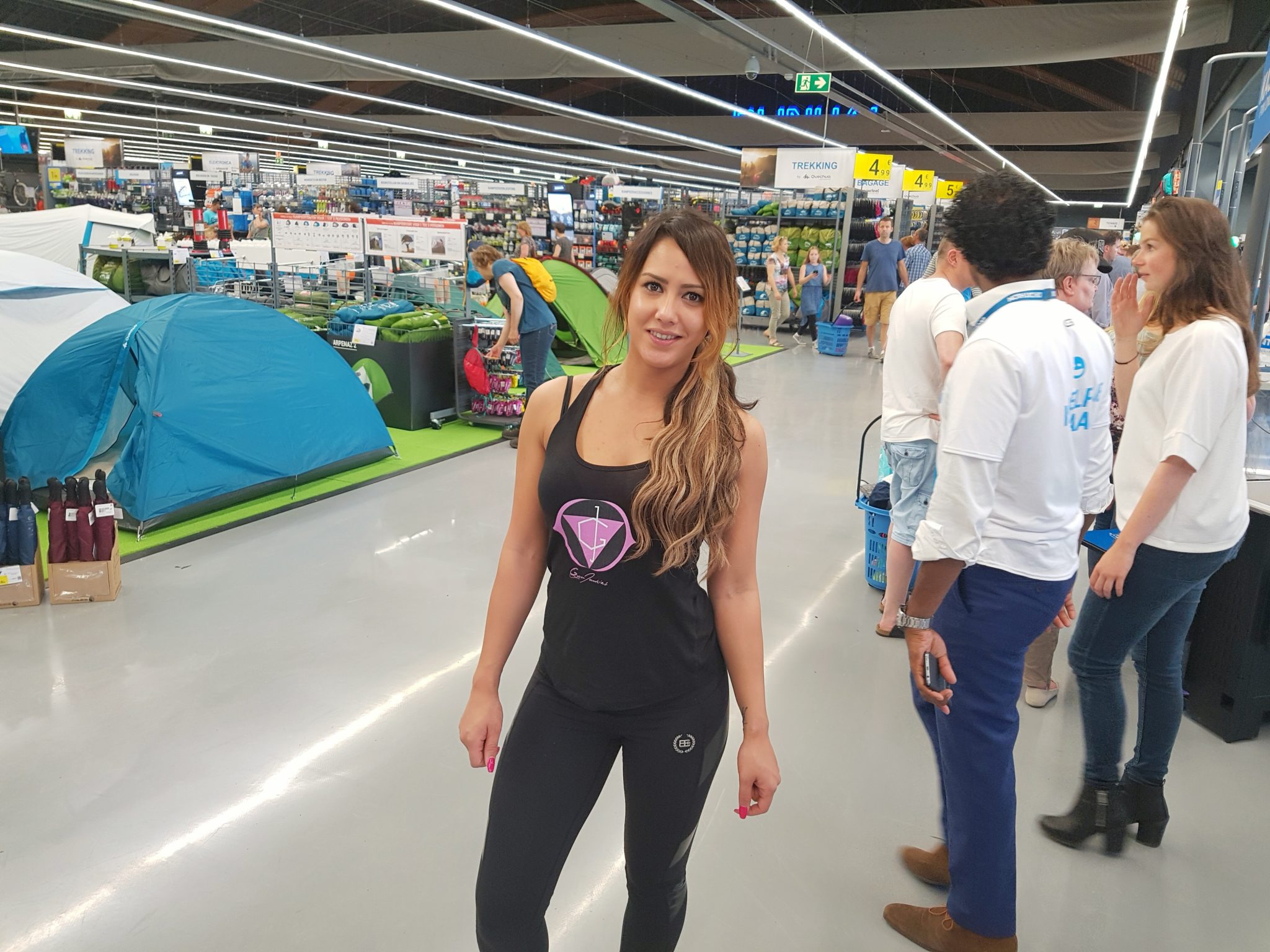
  • Decathlon announces first store in Victoria

    Decathlon announces first store in Victoria

    International sporting brand Decathlon has announced the launch of its first store in Victoria, Box Hill South, today confirming the store will open in late November 2018.

    The brand is one of the world’s largest sporting retailers, often likened to the Ikea of sporting goods, and originates from France.

    With 1200 stores across the globe in 30 countries and 80,000 staff worldwide, the sports giant said it’s focused on expansion in Australia.

    “We are extremely pleased to be expanding our presence across Australia,” CEO of Decathlon Australia, Olivier Robinet said today.

    “Building on the success of our website and our first store in Tempe, Sydney, we want to maintain the momentum by opening further stores across Australia.  The people of Australia have embraced our brand and we are excited about this.

    “Today, I am announcing that we will be opening up to five stores in Victoria over the next two years.”

    Arriving in Australia in 2017, Decathlon opened its first store in Tempe, New South Wales late last year. Since opening, the store has sold over 60,000 items on average per month, attracting 500,000 visitors per month and selling over 600,000 items to date in total including online sales.

    The first Victorian store will open in Box Hill South, 249 Middleborough Road, in late November 2018.

    “At the same time, we will also open our second store in New South Wales, 300 Parramatta Road, Auburn,” said Robinet.

    “In keeping with our generous warehouse design, the stores will be over 3800 square metres in size, represent over 70 sports and carry more than 7,000 different products, with walls and aisles lined with an endless array of unique and innovative items.

    “Australians are some of the most active people in the world, the whole country is like a playground. Prior to our arrival, many Australians had to spend hundreds of dollars to get a quality product. Decathlon has now changed this.

    “We offer high quality products at affordable prices with great service and interactive experiences in store.   Customers can try and test out our wonderful products in our ‘active zones’ and even take products home to try them for up to a week.

    “We employ many local staff and our whole team is focused on assisting customers to fall in love with sport and benefit from our great products, affordable prices and wonderful service.

    “Sport is a key ingredient for good health, good relationships and community engagement and we are excited to be opening stores in Victoria.”

  • One in five Australian Shoppers opposed to Plastic Bag ban

    One in five Australian Shoppers opposed to Plastic Bag ban

    One in five Aussie shoppers are opposed to retail giants Woolworths and Coles introducing bans on single-use plastic bags.

    While the bans have been welcomed by green groups and many shoppers, research by Canstar Blue shows 20 per cent don’t agree.

    Woolies introduces its ban on Wednesday, when the retail giant’s supermarkets, BWS, Metro and petrol outlets will stop offering free disposable bags to shoppers in NSW, Victoria, Queensland and Western Australia.

    Coles stores will follow suit on July 1.

    Canstar says more than half of shoppers have already begun stockpiling plastic bags at home, based on a survey of more than 2,200 people.

    While 71 per cent of those surveyed back the ban, 21 per cent disagree and eight per cent are undecided.

    Nearly half expect that taking their own bags to the shops would be a hassle.

    “While the plastic bag ban is supported by most, the supermarkets can expect some frustrated customers in the weeks ahead,” Canstar Blue Editor Simon Downes said on Monday.

    “While Coles and Woolworths have been trying to get the message across, there will still be lots of shoppers turning up unprepared and shocked that they’ll need to purchase one or more bags to carry their groceries home.”

  • No betting on World Cup matches in Vietnam allowed

    No betting on World Cup matches in Vietnam allowed

    Sports betting is legal, but a betting operator has not been selected for premier football event. Football fans and punters in Vietnam cannot bet on World Cup matches this year, even though sports betting has been legalized.

    Only a few companies have shown interest in operating a betting business in Vietnam, and none of them have actually submitted bidding documents.

    The lack of agreement between relevant ministries on how to organize the bidding process is among the reasons for the delay, an unnamed Finance Ministry source told Tuoi Tre.

    Limited betting options are another reason. Vietnam only allows betting on international soccer games recognized by the governing body FIFA and approved by the sports ministry. These include the World Cup, the Confederations Cup, Copa America, Champions League and Europa League. These are all short tournaments with limited number of matches, leaving a lot of “idle time.”

    Meanwhile, the most popular football leagues in Vietnam, the English Premier League (EPL), La Liga (Spanish League), German Bundesliga, Serie A (Italia) and Ligue 1 (France), are out of the betting pool.

    If a bookmaker were to operate for just FIFA recognized tournaments, they would suffer heavy losses, said economist Nguyen Tri Hieu.

    According to a government decree that took effect on March 31, 2017, Vietnamese citizens can bet on international football games and horse and greyhound races. Only those above 21 years old are allowed to gamble and bookmakers have to be at least 500 meters away from schools and other public venues for children. The minimum bet value is VND1,000 (4.42 cents) and the daily maximum limit is VND1 million ($44).

    Bookmakers will have to meet strict charter capital requirements: VND1 trillion ($44.2 million) for horse racing and soccer and VND300 billion ($13.2 million) for greyhound racing. It is planned that one soccer betting provider will be selected for a five-year trial phase through a bidding process.

    On Thursday, Vietnam’s National Assembly approved a new law that allows locals to bet on sports events. The law is based on the 2017 government decree. Under the new law, betting will be allowed for other sports when the government approves a decree proposed by the Ministry of Culture, Sports and Tourism. The new law will not come into effect until next year.

    Vietnamese are known for their love of gambling. It is estimated that they spend at least $800 million a year on gambling overseas, mainly in Macau, Singapore and Hong Kong.

    Official figures show that Vietnamese citizens spent $13 billion on the lottery between 2011 and 2015, driving an average 12 percent gain in annual revenues of lottery companies over that period, according to Nikkei.

    The Tuoi Tre report quoted a source from the Ministry of Culture and Information as saying that for now, “It is unclear when soccer betting will start.”

  • Internet streaming one up on traditional TV in Vietnam

    Internet streaming one up on traditional TV in Vietnam

    Industry insiders say local Over-The-Top service providers should act together instead of against each other. Vietnam is seeing a trend of people switching from traditional TV to over-the-top (OTT) media services which allow them to watch movies and other shows on the internet.

    In a recent survey done by Kantar Media Vietnam, an information and consultancy group, 84 percent of the respondents aged 15-54 said they use the internet every day. In Hanoi, people spend 229 minutes each day on the internet, almost an hour and a half higher than the time for TV, which is only 145 minutes, the survey found.

    A significant 45 percent of respondents in Hanoi, Ho Chi Minh City, the central city of Da Nang and southern Can Tho said they watched video on demand (VOD).

    Vietnam is one the leading countries in the online video trend, with 90 percent of the respondents saying they watch online videos every week, said market research firm Nielsen.

    “People nowadays want to watch what they want, whenever and wherever they want,” said Bui Huy Nam, CEO of state-owned cable TV provider VTVCab, adding that this trend makes the transition from traditional TV to OTT inevitable.

    YouTube remains the largest OTT service in the country, with 87.3 percent of respondents in the Kantar Media survey saying they use this website frequently to watch videos online.

    Local sites such as PhimMoi.net [New Movie] and ZingTV rank second and third with 28.9 percent and 26.4 percent respectively, the report said.

    With such a large market demand, local OTT providers are adopting different strategies to eke out an advantage in this tight race.

    National broadcaster VTVCab is looking to work with internet service providers to provide free content to users, earning revenue from advertisements. The company’s ambition is to create a platform where users can share their own video content.

    FPT Play, a cross-platform application which allows users to watch TV shows and movies online, is focusing on improving its content by working with strong media production companies in the country.

    While there is strong competition between legal OTT providers, they also need to fight the battle with illegal ones. Illegal content makes up about 95 percent of OTT services in Vietnam, said Ngo Thi Bich Hanh, vice chairwoman of media firm BHD.

    “There is an intense competition between OTT firms in the country. It’s a competition between local firms and between them and foreign providers,” Hanh said.

    To ensure the success of OTT services in Vietnam, local businesses need to cooperate on a shared platform, said Nguyen Thanh Lam, director of the Department of Radio and Television Communication and Electronic Information. “They should not go alone in this market,” he added.

    Echoing Lam, Le Quang Minh, director of the VTV24 News Center, said that working together will keep OTT businesses from “hitting the bottom.”

    “We want local OTT providers to sit down together to create a sustainable market which is strong enough to compete with the leading video streaming services in the region and in the world instead of racing against each other,” Minh said.

    A study by OTT provider Muvi estimates Southeast Asia market revenues reaching $650 million a year in the next three years. On the global scale, Netflix, Hulu, Amazon and Youtube have a total of 2 billion subscriptions, taking 40 percent of the world’s OTT market share, the study said.

  • Israeli brand Sabon expands to Singapore

    Israeli brand Sabon expands to Singapore

    Israel-based bath and body brand Sabon has opened its first Southeast Asia flagship boutique, in Singapore.

    Located in Takashimaya in the Ngee Ann City shopping centre, the store carries a full range of products for the body, face and the home.

    Soaps handmade from fresh herbs, fruit peels and rose petals are included in the range.

    The boutique features an experiential ‘Wishing Fountain’ where customers are invited to freshen up, make wishes, and “dive into an experience of sound and sense, texture, and scent”.

    Staying true to the brand’s philosophy, the store’s interior is decorated with natural products and materials such as whole wood and stone.

    Founded in 1997 in Tel Aviv, Sabon now has 180 stores globally.

  • National Airlines of Qatar treats fans to football match

    National Airlines of Qatar treats fans to football match

    As an Official Partner of FIFA, Qatar Airways is keen to bring fellow football fans across the globe with their #OnYourFeet challenge on social media sites. The winners of the challenge will receive two Business Class tickets to any destination on the award-winning airline’s global route network.

    Qatar Airways Group Chief Executive, His Excellency Mr. Akbar Al Baker, said: “The 2018 FIFA World Cup RussiaTM has begun, marking an entire month of excitement as fans from around the world gather in Russia to celebrate their love for football. Whether you are a football enthusiast, dedicated to supporting your national team or even your favourite local team, the World Cup is a global event that unites us all, and we are thrilled to be supporting such a world-class sporting occasion.”

    The award-winning airline recently captured the excitement of the upcoming tournament by launching its new 2018 FIFA World Cup RussiaTM campaign, featuring a re-recording of the classic song ‘Dancing in the Street’ sung by renowned singer and TV star Nicole Scherzinger. The upbeat TV commercial has seen tremendous global success, with more than 20 million views across the airline’s social media platforms, including Facebook, Twitter, Instagram and YouTube.

  • Cirque du Soleil to create mall-based events with ‘Creactive Centres’

    Cirque du Soleil to create mall-based events with ‘Creactive Centres’

    Circus-cum-theatre company Cirque du Soleil has developed a family entertainment concept suited to shopping malls.

    The first show will open in Toronto in September next year after a deal was struck with property group Ivanhoe Cambridge. Talks are ongoing about additional locations inside Canada and the entertainment company is also scouting for locations internationally.

    Cirque du Soleil is renowned for stunning multi-sensory shows featuring combinations of dance and traditional human circus acts like high-wire walking, trapeze stunts, trampoline acts, juggling and clown performances. Traditionally its shows are held in giant circus tents which travel the world for short-term runs and longer-term contracts in casinos. The image above is from a Russian show.

    The family entertainment centre is the latest example of traditional shopping centre operators looking for a new drawcard to malls suffering from declining foot traffic and shrinking department store chains.

    The Cirque du Soleil ‘Creactive Centres’ will help the company diversify, build its brand recognition and most importantly help landlords fill empty spaces once filled by department stores. It will also sell Cirque-branded merchandise.

    Marie-Josee Lamy, Creactive’s producer, says the centres will take up about 2200sqm of space (24,000sqft).

    “Our fans regularly express their wish to experience Cirque du Soleil from an insider’s perspective. We make that possible by inviting families to jump on stage, offering them another way to explore our creativity beyond our live shows.”