Category: Living

Retail News Asia is committed to providing both local and global retailers with the latest Living news throughout the Asian market. This on a daily base.

  • A.S. Watson announces slew of new tech vendors to support its digital transformation

    A.S. Watson announces slew of new tech vendors to support its digital transformation

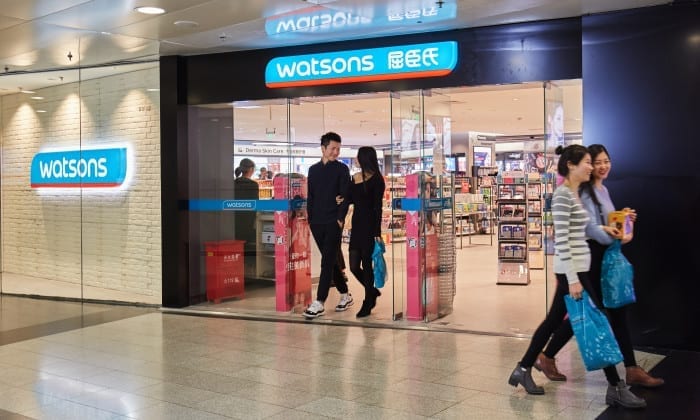
    Health and beauty retailer AS Watson (ASW) has launched a Technology Partnership Programme as part of a move to speed up its digital transformation globally.

    The program brings together a wide range of international technology providers and recognises them as strategic partners rather than suppliers, explained Malina Ngai, group COO of ASW.

    “We believe every technology partner whom we have chosen to work with is more than just a vendor. Traditional client-vendor relationship is short-term. There is lack of transparency and continuity in the way we work with each other. Besides, project base contract makes it difficult for their resource planning.

    “The partnership program is designed to transform the short term contractual relationship to a longer term strategic relationship to create a win-win for both parties. Our tech partners will have access to senior management, visibility on our growth strategy and technology roadmap, as well as a longer term financial commitment from us. We can benefit from their commitment in providing consistent resources, expert advice and services, as well as first hand access to innovation they develop,” said Ngai.

    ASW, which has more than 15,000 stores globally, embarked on its digital transformation journey in 2011 when it introduces its Customer Strategy initiative. The company invested US$70 million initially, dedicated to CRM, eCommerce and mobile experience.

    It subsequently established eLab in 2015, an in-house digital agency focusing on supporting all operating businesses to develop e-commerce and digital marketing.  This year, ASW kicked off a further $70 million investment in big data to build new capabilities in analytics and machine learning.

    “The goal of our digital transformation is to enable AS Watson Group to build on our solid retail foundation to fuel further growth through a smarter and more efficient organisation,” said Ngai.

    “Our purpose of putting customer first and putting a smile on their faces continues. We recognise that our customers are changing rapidly and technology has become an ever more critical ingredient to deliver our purpose.”

    The first batch of tech partners comprises expertise in the areas of e-commerce, store systems, data science, AI, data visualisation, technology ecosystem and services.

    The partners include Microsoft, Epam, Ovolab, Rubikloud, Mtel, Infosys, NCR, Zebra Technologies, SAP and Oracle.


  • Rich Data and Midea Smart Home Partner to Improve the Lives of Customers

    Rich Data and Midea Smart Home Partner to Improve the Lives of Customers

    Global leaders in using data science and AI to solve real business problems and make a tangible difference to people, Rich Data Corporation (RDC) is now working with China-based Fortune 500 company Midea Smart Home to support its app development and drive more innovation around consumer data and artificial intelligence. This five-year partnership is set to positively impact the lives of millions through data and smart home technology.

    The promise of the smart home is finally ready to be realised in 2018, with connected devices now capable of monitoring our appliances to anticipate malfunctions, detecting utility usage patterns to provide energy-saving recommendations, and making a range of everyday appliances more fun and convenient to use. Market-leading researchers Ovum have predicted that 2018 will represent an inflection point for smart home technology, with many businesses already primed to explore the retail impact of the smart home.

    RDC is leveraging artificial intelligence (AI) to bolster Midea Smart Home services; in order to enrich the lives of consumers who increasingly demand a tech-enabled, smart home experience to match the digital lives they lead outside the home. Consumers in APAC are some of the most digitally-forward in the world – expecting convenient payment, shopping, and communication services at their fingertips, and increasingly looking for the same conveniences within their home.

    To preempt consumer needs and provide a holistic, tech-enabled lifestyle ecosystem, RDC has deployed an AI-based personalised recommendation engine within Midea Smart Home’s Meiju app. Now, consumers can enjoy compelling, proactive recommendations tailored to their dynamic smart home needs. This superior customer experience is made possible through advanced machine learning algorithms via RDC’s innovative platform.

    “The Midea Smart Home team is changing the conversation with our customers and providing them with products and services that are highly relevant for their daily life via our Meiju app,” stated Mr Qiang Li, General Manager of Midea Smart Home. “RDC’s ability to add intelligence to our deep reserves of consumer data, and their rapid deployment of AI technology enables us to service and engage our customers in a more personalised and meaningful way.”

    Ada Guan, CEO of Rich Data Corporation stated, “Our ultimate vision is to use our data skills to make a difference for people and business; helping enterprises unlock new opportunities while improving everyday life for consumers through data and AI smart home solutions. We are thrilled to be working with a prestigious, global brand like Midea Smart Home. This is the first step in an ongoing journey to leverage AI, consumer and household data in order to set smart living standards for millions of home globally.”

    The RDC Recommendation Engine is currently live for all 3 million Meiju app users within China. The partnership also marks RDC’s entry into the Chinese market, furthering the company’s expansion into the Asia region.

  • Hong Kong International Airport Christmas Big Rewards

    Hong Kong International Airport Christmas Big Rewards

    To celebrate the upcoming Christmas holiday, Hong Kong International Airport (HKIA) is launching a series of shopping promotions, including delightful rewards of HKIA cash coupons worth up to HK$15,000.

    Instant Rewards Promotion

    From 20 December 2017 to 2 January 2018, travellers can redeem and enjoy rewards of cash coupons worth up to HK$15,000 when making purchases by electronic payment at HKIA. Passengers making purchases with their UnionPay cards can enjoy additional rewards.

    HKIA’s mascot will be dressed up in full Christmas outfit and walk around in the terminal, ready to meet, greet and take snapshots with travellers to spread the festive spirit.

    Shopping and Dining Offers

    During the promotional period, HKIA will also collaborate with retailers to provide a whole host of fabulous shopping and dining offers. Travellers can get more details simply by scanning the QR code on promotional materials or by visiting our website:
    https://www.hongkongairport.com/eng/shopping/special-offers.html

    Free Delivery Service

    Travellers spending HK$1,000 or more in a single transaction at HKIA can enjoy complimentary local delivery service. Free delivery service to Mainland (for clothing, bags and accessories only), Japan, South Korea, Indonesia, Macao, Malaysia, the Philippines, Singapore, Taiwan, Thailand and Vietnam is also offered to travellers who spend HK$2,500 or more in a single transaction. For details, please check with the staff at the retail outlets.

  • Airbnb pushes back on Singapore’s tough home rental rules

    Airbnb pushes back on Singapore’s tough home rental rules

    Short-term home rental service Airbnb on Friday called Singapore’s regulatory framework “untenable” as authorities said they planned to hold discussions with home-sharing platforms and resident groups soon on how such accommodation may be allowed.

    The reaction by Airbnb to the latest regulatory hurdle came amid its efforts to work with authorities around the world keen to minimize its impact on private housing and the hotel industry.

    While Singapore has been an early adopter of the sharing economy, it has strict rules regarding property rentals in the city-state and charged two men with unauthorized short-term letting of apartments earlier this week.

    “The current framework is untenable and does not reflect how Singaporeans travel or use their home today,” Airbnb said on Friday in a statement addressing Singapore’s regulations.

    “Nearly three years since the URA’s first public consultation, it’s disappointing that the discussion has not moved forward,” it said, referring to the Urban Redevelopment Authority.

    Private homes in Singapore are subject to a minimum stay of three consecutive months, under rules revised earlier this year, and cannot accommodate transient occupants.

    While saying there was space for short-term accommodation in Singapore, the URA told Reuters the government will review and consider safeguards to ensure it does not negatively affect the “amenity” of residential estates.

    It said it would soon start a public consultation on the matter. A previous consultation in 2015 did not reach a clear consensus on short-term rentals.

    Airbnb may be conscious of the knock-on effect that Singapore’s tough stance may have on other cities in the region, said Brian King, associate dean of the School of Hotel and Tourism Management at Hong Kong Polytechnic University.

    “They may be feeling like they need to take a slightly more aggressive stance this time to avoid this leading to crackdowns elsewhere,” King said.

    This week, Singapore charged two men with unauthorized short-term letting of four apartments in the first such prosecution. If found guilty, the two are liable to a fine of up to S$200,000 ($148,150) per offence.

    The rentals were arranged through Airbnb, which was not referred to in court documents.

    In a message seen by Reuters, Airbnb this week alerted hosts in Singapore to the court case and asked them to “share” their reason for hosting and why it is important the government pass laws that permit short-term home sharing.

    Airbnb, which matches people wishing to rent out all or part of their homes to temporary guests, said it has 8,700 listings in the city-state. Singapore has high population density, and its limited land area means a majority of the 5.6 million people live in apartments.

    Hunreds investigated

    The URA said part of the public consultation will involve working with key stakeholders such as representatives of home-sharing platforms, resident groups and other accommodation providers.

    The planning agency said it investigated 985 cases of unauthorized short-term accommodation in private homes in 2015 and 2016, and about 750 cases in 2017’s first 11 months.

    The firm, founded in 2008 in San Francisco, has clashed with hoteliers and authorities in cities including New York, Amsterdam, Berlin and Paris, which in some cases are limiting short-term rentals. Critics accuse Airbnb of exacerbating housing shortages and driving out lower-income residents.

    One host in Singapore, who has listed on Airbnb for the past two years after failing to find a long-term tenant and uses the income to pay the mortgage, is considering pulling the apartment from Airbnb’s website due to the authority’s increased scrutiny.

    “I am worried that I will have an empty apartment sitting there, that is not going to generate any income,” said the person, who spoke to Reuters on the condition of anonymity. “Any income that I earn doesn’t justify this kind of risk.”

  • Chinese co-working space operator opens second Singapore hub

    Chinese co-working space operator opens second Singapore hub

    Prominent Chinese co-working space operator UrWork is opening a second Singapore location in the first quarter of next year. The company, which is backed by Alibaba’s Ant Financial and Sequoia Capital among others, launched its first overseas branch at Ayer Rajah Crescent in July. Its new outlet will be at Suntec City and is part of the firm’s efforts to become a bridge between South-east Asia and China, founder and chief executive Mao Daqing said.

    Beijing-based UrWork, which has been billed as China’s answer to Silicon Valley co-working giant WeWork, has been valued at about US$1.5 billion (S$2 billion).

    It has 100 co-working sites in 33 Chinese cities and is the country’s largest co-working space operator.

    The company plans to expand globally into 35 cities with 160 locations over the next three years.

    To stand out in the increasingly crowded co-working market, UrWork positions itself as a provider of key services to start-ups looking for global growth.

    It runs a series of acceleration programmes to help new firms scale, and has also developed a proprietary scheme partnering Chinese government agencies and service suppliers to help foreign start-ups enter the Chinese market.

    Its second location in Singapore will span 1,300 sq m in Suntec City and will take in South-east Asian start-ups looking to expand into China, as well as Chinese firms keen on growing in the region.

    UrWork also invested in Jakarta-based co-working space Rework earlier this year as part of its regional strategy.

    The company signed a memorandum of understanding with trade agency IE Singapore and property giant CapitaLand last December to help Singapore firms break into the China market by offering co-working spaces as well as business advisory services.

    South-east Asia has become a market with plenty of opportunities for investors in China “due to a strong supply of high-potential tech start-ups, big market volume, surging amount of freelancers, low operational cost and high rate of digital penetration”, said Mr Mao.

    “As a Chinese home-grown company, we know the needs of Chinese entrepreneurs in China and overseas, laying a solid foundation for our fast-scaling and service integration,” he added.

    Key sectors of interest for UrWork in Singapore and South-east Asia include artificial intelligence, the Internet of Things and fintech, Mr Mao said.

  • Boots buys US$400m stake from Sinopharm

    Boots buys US$400m stake from Sinopharm

    Pharmacy and healthcare company Walgreens Boots Alliance has paid RMB2.76 billion (US$417 million) for a 40 per cent stake in a drugstore chain owned by Sinopharm Group.

    Sinopharm is China’s largest retailer of pharmaceutical and healthcare products and Walgreen will take a stake in its Sinopharm Holding Guoda Drugstores subsidiary. The transaction is subject to review and approval from regulatory authorities in China.

    “We have had a presence in China for around 10 years, initially through Alliance Boots, and are excited with the opportunity to further invest in the country’s fast-growing retail pharmacy sector,” says Walgreens chief executive Stefano Pessina.

    Sinopharm says Walgreens Boots Alliance’s pharmacy expertise and international retail experience will help Guoda improve efficiencies and transform its business model to differentiate from domestic competitors. The partners will also explore opportunities in the broader Asian and global markets, in keeping with Beijing’s Belt and Road Initiative.

    China, the world’s second-largest pharmaceutical market, has made moves to speed up approvals of medicines and medical devices.

  • AEON Scholarship Ceremony 2017

    AEON Scholarship Ceremony 2017

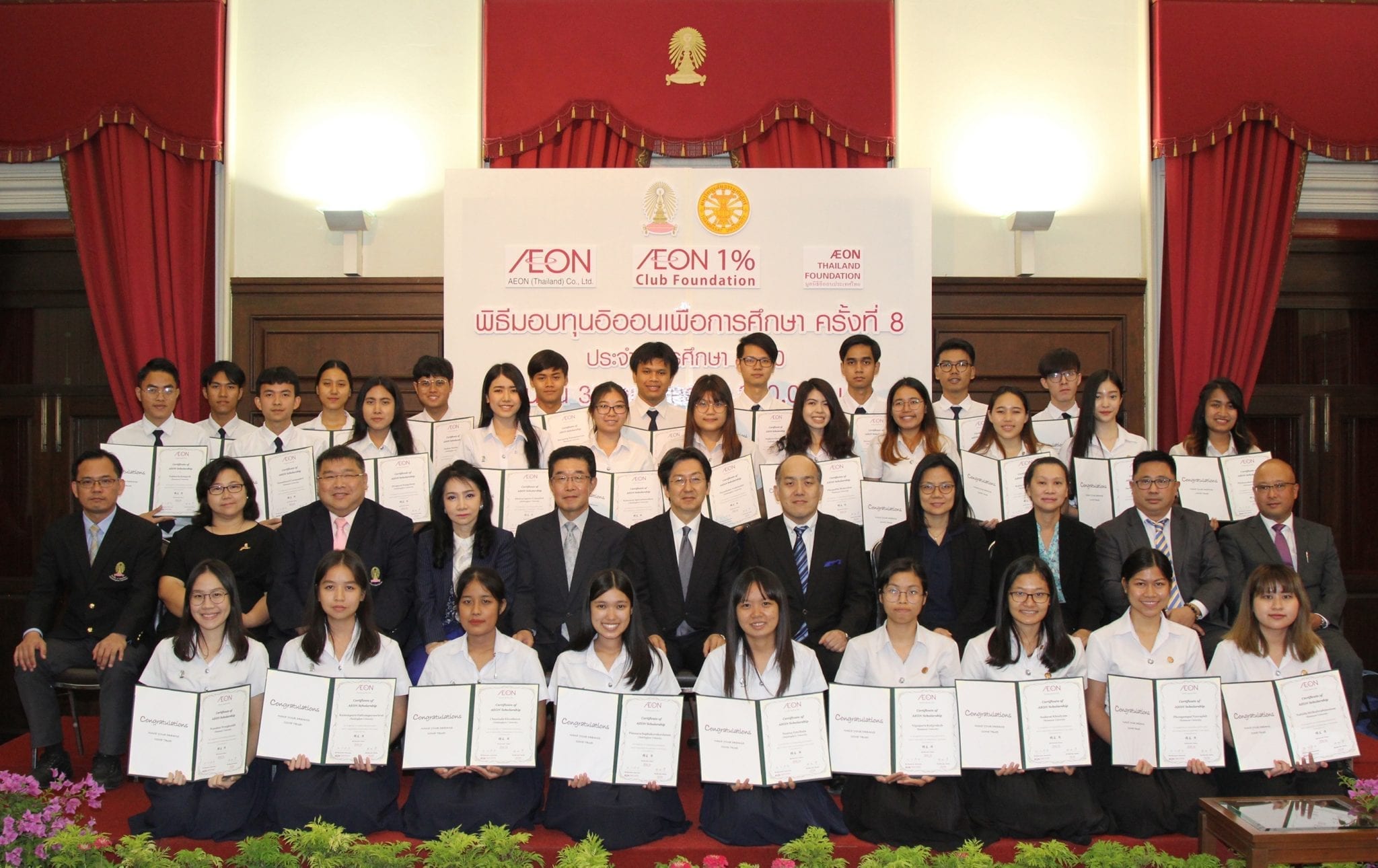
    Mr. Kiyoyasu Asanuma, Chairman of AEON Thailand Foundation, and Ms. Suporn Wattanavekin, Vice Chairman of AEON Thailand Foundation together with Mr. Yohsei Honda, Secretary General of AEON 1% Club Foundation and Mr. Manabu Boike, Managing Director of AEON (Thailand) Co., Ltd. arranged AEON Scholarship Ceremony 2017 to grant 32 scholarships in amount of THB 2,240,000 to student of Chulalongkorn University and student of Thammasat University at Chulalongkorn University.


  • Vietjet inaugurates Nha Trang – Seoul route

    Vietjet inaugurates Nha Trang – Seoul route

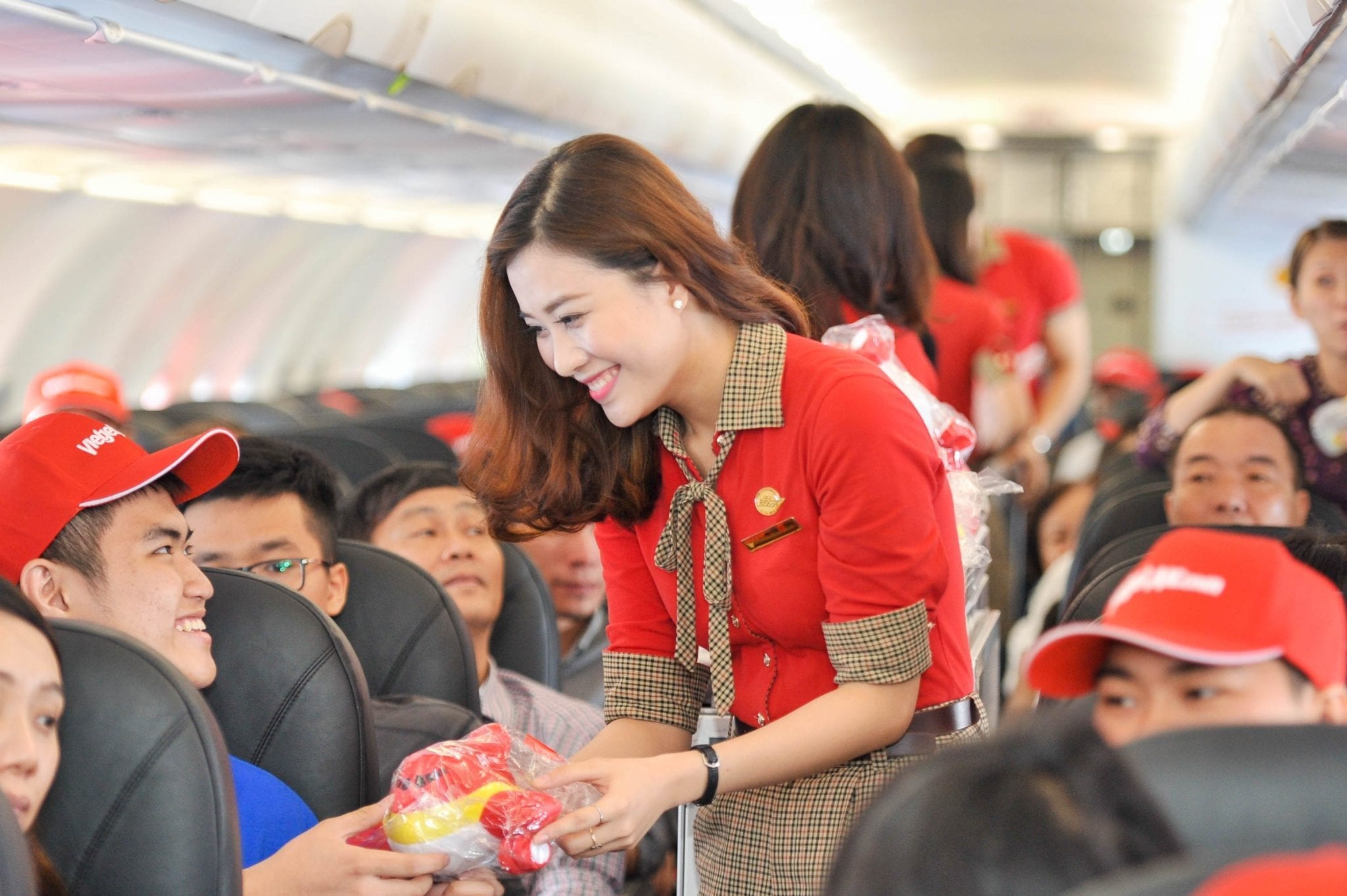
    Vietjet yesterday celebrated the inauguration of its Nha Trang – Seoul route launch at the Cam Ranh International Airport (Khanh Hoa Province). This new route will serve the traveling demands of both the local people and tourists, connect the two famous travel destinations and contribute to the promotion of trade and integration in the region.

    The Nha Trang – Seoul route is operated with a daily return flight at around 5 hours per leg. The flight will depart Nha Trang at 16:15 and arrive in Seoul at 22:45 (local time). The return flight takes off in Seoul at 01:50 (local time) and lands in Nha Trang at 05:25.

    South Korea is always a popular tourist travel destination because of its beautiful natural sceneries, exciting entertainment industry, traditional cultural features and many shopping centers etc. With the inauguration of this new route, Vietjet now operates a total of six international routes connecting Vietnam and South Korea with the offer of more travel saving opportunities for travelers.

    With high-quality services, diverse ticket classes, special low-fare tickets, Vietjet offers its passengers flying experiences on new aircrafts, comfy seats, delicious hot meals, beautiful and friendly flight attendants and other interesting added-on services.

  • K11 art mall to open Pokemon Hub soon

    K11 art mall to open Pokemon Hub soon

    A Pokemon Hub will open in Tsim Sha Tsui’s K11 art mall in time for Christmas.

    Few details have been released, including the opening date, but the official Facebook page has been publishing images of items on their way from Tokyo.

    Pokemon stores in Japan offer themed sweets, tableware, trading cards and plush toys.

    Pokemon Hub is the first official and permanent Pokemon store outside of Japan licensed by The Pokemon Company.

  • China Jo-Jo expansion plan in Hangzhou

    China Jo-Jo expansion plan in Hangzhou

    China Jo-Jo Drugstores has added seven more retail outlets in Hangzhou.

    Chairman/CEO Liu Lei says the stores offer convenient access to best-in-class pharmacy products and services.

    All stores are full-service pharmacies staffed with licensed pharmacists. They offer prescription and OTC medicines, traditional Chinese medicines, dietary supplements, medical devices, health and beauty products and general merchandise.

    A rewards program offers members exclusive discounts and enhanced customer experience.

    The seven new stores are in the Binjiang (two), Jianggan, Lin’an (two),  Shangcheng and Yuhang districts. The company opened two stores in Lin’an just three months ago.

  • Toys R Us UK close its operational despite it is still active worldwide

    Toys R Us UK close its operational despite it is still active worldwide

    As a raft of UK Toys R Us closures were announced, management moved to reassure customers it is business as usual, globally.

    With the Toys R Us US parent trading under Chapter 11 bankruptcy protection, the company is moving to restructure the business globally. The UK division has initiated a process by which it is seeking creditor approval to “reposition its real estate portfolio for future growth and profitability”. That would lead to 26 stores closing, equal to about a quarter of its retail network in the market.

    Toys R Us head office has issued a statement assuring customers the UK Company Voluntary Arrangement (CVA) process will not impact any Toys R Us entities or stakeholders outside the UK, including employees, vendors and customers.

    “The company’s approximately 1600 Toys R Us and Babies R Us stores around the world, including all stores in the UK, are currently open for business and continuing to operate as usual. Customers can also continue to shop for the toy and baby products they are looking for online.”

    Toys R Us in Asia, a joint venture with the Fung Group, continues to trade unaffected by the US company’s problems. A partial float of the Asian business is being discussed as a means of reducing the parent company’s debt.

    Dave Brandon, chairman and CEO of Toys R Us, said the closure of stores in the UK would “put our UK operation on stronger financial footing”.

    “Through the CVA process, we hope to receive authorisation to restructure our UK lease obligations so that we will be better able to invest in our UK business and further improve the customer experience. Importantly, our stores and operations in our other global markets will not be impacted by this process.

    “We are confident that we are taking the right steps to ensure that the iconic Toys R Us and Babies R Us brands live on for many generations in the UK and around the world. We remain committed to championing play for kids and serving as a trusted resource and friend for parents around the world. Today’s proactive measure better positions us to achieve these goals and ensures customers can continue to shop us with confidence over the Holiday season and beyond.”

    Under the UK CVA process, Toys R Us UK has submitted a restructuring plan to its creditors and will solicit their approval of this plan over the next 14 days. It will need approval by 75 per cent of the creditors to proceed

  • Mattel Indonesia exports toys worth $150m per week

    Mattel Indonesia exports toys worth $150m per week

    Toy maker PT Mattel Indonesia produces about 2 million toys, including Barbie dolls, a week with total exports worth US$150 million.

    The products of its factory in Cikarang, West Java, account for about 60 percent of the global market, said Mattel Indonesia vice president and general manager Roy Tendean on Monday during the celebration of the company’s anniversary.

    Mattel Indonesia, a subsidiary of Long Angeles’ based Mattel Inc., celebrated its 25 years of operation in Indonesia on Monday.

    He said that the company, which produces Barbie dolls, Hot Wheels, Thomas & Friends, etc., planned to set up a link-and-match program with five vocational schools (SMK) in West Java.

    “We want to contribute to human-resources development as education is the responsibility of educational institutions, the business community and the government,” said Roy.

    The five SMK involved in the program are SMK 1 Cikarang Pusat, SMK 1 Cikarang Barat, SMK 1 Cikarang Selatan, SMK Kerawang and SMK Mitra Industri Cibitung.

    “The link-and-match program is to ensure that students receive balanced teaching materials between the theory and real working experience at a company,” he added, during the event attended by Industry Minister Airlangga Hartanto and the Mattel Inc. chief supply chain officer and executive vice president, Peter Gibbons.

  • Indonesia to promote tourism in Melbourne

    Indonesia to promote tourism in Melbourne

    The Tourism Ministry is going to host Business Gathering event on Dec. 14-15 in Melbourne, Australia.

    The ministry has invited travel agents, tour operators and media to take part in this event.

    “The distance between Australia and Indonesia is not that far and Australians are very interested in destinations in Indonesia. Moreover, 90 percent of them have their own holiday schedule and high buying power for holiday tour packages,” said the ministry’s deputy minister for overseas promotion I Gde Pitana.

    “Our target is to inform the Australian people that Bali is safe now; the eruption has come down. The distance between Mount Agung to Denpasar is 65 kilometers. Bali Promotion is back. If nothing gets in the way, the 15 million target can be achieved,” Pitana added.

    During the gathering, the ministry will conduct a presentation about destinations in Indonesia and entertain visitors with traditional dance performance and souvenirs.

    “Melbourne is chosen because it’s the best business and shopping center in Australia,” told the ministry’s deputy assistant for Asia-Pacific tourism promotion, Vinsensius Jemadu.

    The number of tourism visits from Australian tourists is the four highest in Indonesia.

    This year, the ministry is aiming to welcome 1,816,000 tourists from Australia, an increase by 29 percent from last year’s target, which was 1.4 million people. (kes)

  • FamilyMart expands to 24hrs gym

    FamilyMart expands to 24hrs gym

    Japan’s FamilyMart is about to launch a fitness club chain, Fit & Go.

    Like its convenience stores, the gyms will be open 24 hours a day.

    Around-the-clock gyms have been growing in popularity in Japan, mainly supported by the age range of FamilyMart’s primary customer demographic, as reported. While equipment may vary, all locations will offer treadmills and weight machines, as well as personal trainers, says FamilyMart. There will also be showers.

    A certain amount of synergy is expected by the company as customers can buy workout-related items such as towels, soap and dietary supplements in the neighbouring convenience store.

    Attached to FamilyMart in Tokyo’s Ota ward, the first Fit & Go is expected to open in February.

    “While the gyms won’t have as much floor space as larger fitness centres, the aim is to provide a convenient place for people to get in a quick 30-minute workout at the start or end of their daily commute,” says Sora News 24. “It could be a great way to stay in shape, provided you don’t make a habit of rewarding yourself with a piece of FamilyMart’s fried chicken after you’re done.”

  • Vietnam’s PV Oil hoping to strike it rich with $92 million share sale in January

    Vietnam’s PV Oil hoping to strike it rich with $92 million share sale in January

    Vietnamese state oil distribution firm PetroVietnam Oil Corp (PV Oil) plans to offer 20 percent of its shares in an initial public offering (IPO) in January that aims to raise at least $92 million, its parent firm said on Friday.

    PV Oil will also offer up to an additional 44.72 percent to strategic investors and another 0.18 percent to employees, state oil and gas group PetroVietnam said on its website.

    The sale is part of Vietnam’s broader privatization program that seeks to divest from hundreds of state-owned enterprises to improve their performance and to help raise funds for the tight state budget that is struggling to support growth.

    The government plans to reduce its stake in PV Oil to 35.1 percent, PetroVietnam said. Nineteen companies have submitted applications to become strategic investors, three quarters of which are foreign, the firm added.

    PV Oil is Vietnam’s sole crude oil exporter and among the country’s top oil products retailers with a 22 percent market share, the company said on its website.

    PV Oil is one of several state energy firms earmarked for privatization, along with PetroVietnam Power Co and refinery operator Binh Son Refining and Petrochemical Corp (BSR), whose IPO is also targeted for January at the latest.

    PV Oil said earlier this year its first half pre-tax profits reached an estimated VND202 billion ($8.89 million), down 6 percent from the same period in 2016, while its revenue rose 43 percent on-year to VND23.4 trillion.