Category: Living

Retail News Asia is committed to providing both local and global retailers with the latest Living news throughout the Asian market. This on a daily base.

  • Japanese baby products firm Ficelle makes full-scale Thai debut

    Japanese baby products firm Ficelle makes full-scale Thai debut

    Japanese baby products retailer Ficelle has launched its first outlet in Thailand.

    In partnership with distributor K-AG Kin All Gen, it has opened a store in Bangkok’s Central Embassy shopping mall. This follows a six-month trial of online sales in Thailand last year, which raked in THB5 million (US$155,000).

    Ficelle offers a range of brands, including Japan’s 10mois, with such items as baby and maternity clothes, sleeping vests, bibs and portable chairs.

    K-AG Kin All Gen executive director Lukkana Jaovisidha says the luxury goods market in Thailand, particularly babycare products, is expected to grow. The trend of having fewer children means parents are likely to spend more on infant apparel and baby accessories per child.

    Nearly a third of customers are expected to be expatriates in Thailand.

    Two more stores are planned for Bangkok this year, including a flagship in a Takashimaya department store. The partners hope to have five shops in Thailand by 2020.

    Ficelle has also just opened an outlet in Singapore following product launches in Hong Kong, South Korea and Taiwan.

  • India paves way for foreign stakes in Air India

    India paves way for foreign stakes in Air India

    Foreign investors will be allowed to own 49 per cent of Air India when it is privatised, opening the path for companies such as Singapore Airlines to take a stake in the country’s flag carrier.

    The Indian government announced it would allow foreign companies to take a non-controlling stake in the struggling company as part of long-running plans to sell it off.

    The cabinet in New Delhi last year gave its approval for a sale, but ministers have been grappling for the past few months with how exactly to do so.

    One of the most politically sensitive decisions has been whether to allow foreign companies to bid for part or all of the airline.

    While many officials think it will be difficult for domestic carriers to swallow the company whole given it has $8bn of debt, some politicians are reluctant to see what they view as a prized national asset fall into foreign hands.

    Many still talk of the role the airline played in helping to airlift nearly 200,000 Indians from Kuwait before the war in 1990.

    A parliamentary panel this week reportedly recommended the government find “an alternative to disinvestment of our national carrier which is our national pride”.

    Atul Anjan, national secretary of the Communist Party of India, said of Wednesday’s decision: “Air India is not merely an air carrier, it is our national pride.”

    Despite Air India’s status in the country’s national consciousness, it has struggled in recent years to keep up with no-frills domestic airlines and better resourced international ones.

    The company has made losses for almost the entire past decade, and received a Rs422bn ($6.6bn) government bailout in 2012.

    Government officials are hoping several foreign companies might enter the bidding for the company, but so far only Singapore Airlines has indicated possible interest.

    Last week Leslie Thng, chief executive of Vistara — an Indian joint venture between Tata and Singapore Airlines — said the two companies were open to making an offer.

    Kapil Kaul, chief executive in South Asia for the Centre for Asia-Pacific Aviation, said: “I would expect a significant interest from foreign airlines, though the offer and conditions attached will determine the level of participation in the bids.

    “What’s more, this is a major reform and national economic policy decision — not just limited to aviation. It sends a very important signal to the global investors.”

    At the same time, ministers also decided to make it easier for foreign retailers to set up in India, without having to partner with local companies.

    The cabinet in New Delhi said foreign investors would no longer require government approval to invest more than 49 per cent in an Indian single-brand retail business.

    It did not decide to do the same for retail chains who sell more than one brand, a move that would have allowed major chains such as Walmart and Carrefour, both of which have previously operated in India, to open their own stores.

  • Natuzzi, Kuka signed JV agreement

    Natuzzi, Kuka signed JV agreement

    Natuzzi has signed a preliminary agreement to form a JV with China’s Kuka furniture company with the aim of expanding the Italian brand’s retail network in Greater China.

    “We have known Kuka for many years and have always admired its growth-oriented entrepreneurial spirit and approach,” says Natuzzi chairman/CEO Pasquale Natuzzi. “This partnership will enable Natuzzi and Kuka to become the leading player in the emerging and growing market for branded luxury home furnishings in Greater China.”

    Kuka chairman Jiangsheng Gu says Natuzzi is the right product and brand for the new growth in the Chinese home-furnishing market.

    Subject to certain terms and conditions in the preliminary agreement, and to applicable authorisations, it is expected Natuzzi will contribute exclusive perpetual distribution rights for the Natuzzi Italia and Natuzzi Editions trademarks into a Chinese corporate entity, and that Kuka will invest €65 million (US$77.5 million) to sustain the expansion of the Natuzzi retail network in Greater China, particularly Mainland China, Hong Kong and Macao.

    Of Kuku’s investment, €15 million is in exchange for Natuzzi’s trademark contribution. Natuzzi and Kuka will own 49 and 51 per cent respectively of the entity.

    The preliminary agreement also envisages Natuzzi will contribute its existing stores and commercial organisation in China. Further, the venture will employ Natuzzi’s retail management team.

    It is also expected the JV will take over existing distribution agreements related to the Natuzzi network of franchised stores.

    If the parties fail to reach a final agreement by March 31, the preliminary agreement will be voided.

  • Japan’s new cryptocurrency crooners sing the bitcoin beats

    Japan’s new cryptocurrency crooners sing the bitcoin beats

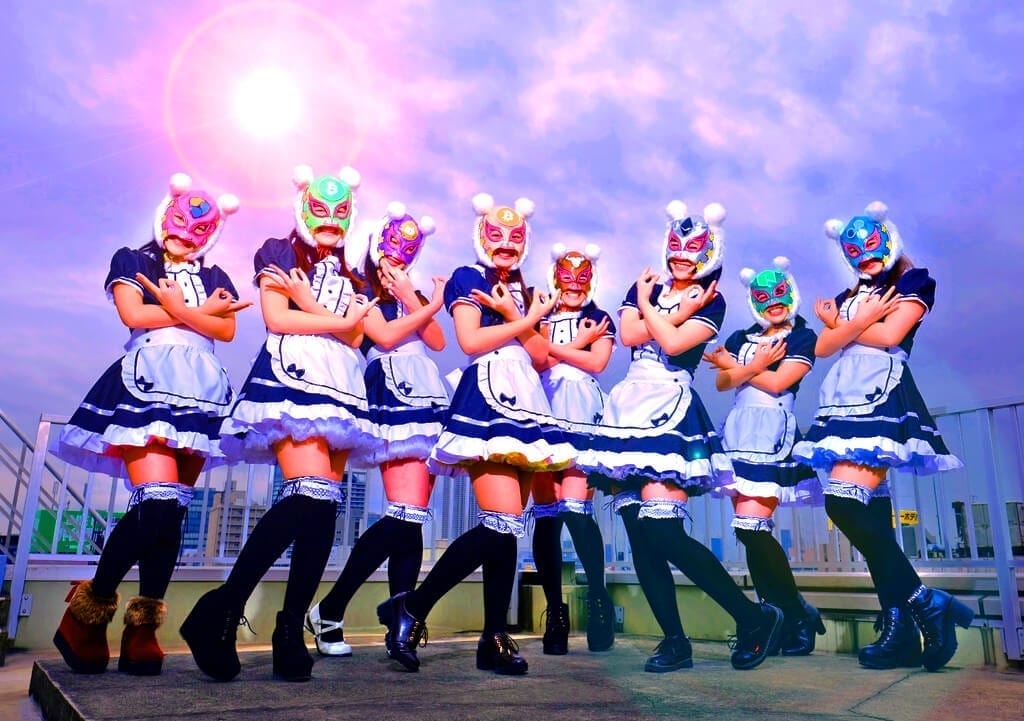
    Move over AKB48, Japan has a new all-girl “idol” band – the Virtual Currency Girls – on a mission to educate the public about bitcoin and other cryptocurrencies.

    Each of the eight girls in the band, known in Japanese as “Kasotsuka Shojo”, plays a character representing a virtual currency such as bitcoin, ethereum or ripple.

    Promotional material shows the performers wearing character masks, frilly mini-skirts and “maid” aprons complete with knee-high socks.

    The Virtual Currency Girls are due to hold their debut live concert in Tokyo on Friday (Jan 12), according to their management company Cinderella Academy.

    In keeping with the theme, payment for merchandise will be accepted only in virtual currencies.

    “We want to promote the idea through entertainment that virtual currencies are not just a tool for speculation but are a wonderful technology that will shape the future,” said the group’s leader Rara Naruse, 18, in an online statement.

    In their debut song, The Moon and Virtual Currencies and Me, they warn against fraudulent operators and urge people to make sure of their online security.

    The group is tapping into a rich seam in Japan, where bitcoin is recognised as legal tender.

    Nearly one-third of global bitcoin transactions in December were denominated in yen, according to specialised website jpbitcoin.com.

    The group’s launch comes on the heels of a recent market frenzy which boosted bitcoin up to nearly US$20,000.

  • Masquespacio takes inspiration from a laboratory for its colourful store

    Masquespacio takes inspiration from a laboratory for its colourful store

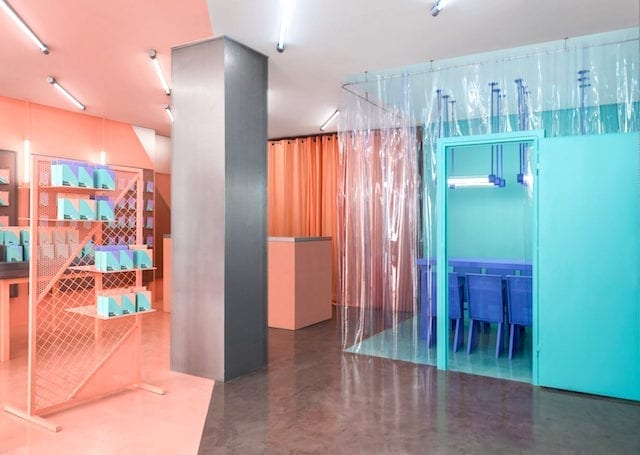
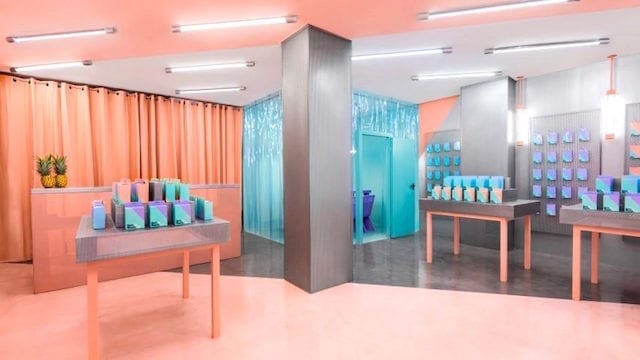
    Clashing colours and sharp angles characterise a unique retail interior created by Spanish design studio Masquespacio, giving little away as to the store’s purpose.

    The space is home to smartphone and gadget repair shop Doctor Manzana, the company’s second store, located in Valencia’s university district.

    Online design magazine Dezeen reports that having already designed Doctor Manzana’s first retail store back in 2013, Masquespacio wanted to use the same bold colours and patterns they had introduced four years ago, but with the addition of some new elements.

    While one half of the space is painted salmon pink, the other has a silver metallic finish, reports Dezeen.  The blocks of colour are applied to the walls, floor, ceiling and fixtures at 54-degree angles, which the designers say is a reference to the angle that a touchscreen device is held at.

    “Besides the four different colours – green and blue as a reference to the doctor, salmon for the fashionistas and purple for the geeks – the metal adds an industrial touch that reminds us of the laboratories,” explained the designers, Ana Milena Hernandez Palacios and Christophe Penasse.

  • Inside the “Musée de KAKAO FRIENDS”

    Inside the “Musée de KAKAO FRIENDS”

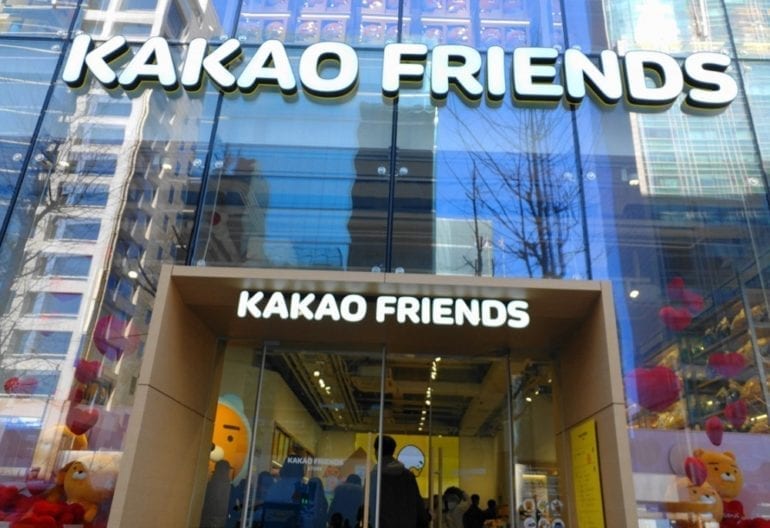
    Kakao Friends is holding a second exhibition at the “Kakao Friends Concept Museum” in Hongdae, Seoul from 15 December 2017 to 27 May 2018.

    This exhibition is dedicated to the cultural icon Kakao Friends which represents modern times.

    Kakao Friends’ second exhibition project theme is ” Musée de KAKAO FRIENDS”, which is a parody of the space and classic works reminiscent of famous museums through the Kakao Friend Character. It is characterized by the reinterpretation as a witty artwork.

    Through this, Kakao Friends, the most popular character in the daily life of the tech-savvy Koreans, has expanded into aesthetic form, expressing the process of being born into a cultural time characterized by artistic inspiration.

    In the seven-section exhibition, visitors can see the parody works of Kakao friends characters Ryan, Muzi, Apeach, Frodo, Neo, Tube, Jay. Each section features a variety of interesting spaces where visitors can experience photo spots and characters all over the body to make unique experiences with Kakao Friends characters.

    The second basement floor of the exhibition hall is a well-coming space that welcomes visitors. It embodies the mysterious character sculpture park with a vague border between outdoor and indoor areas, with the motif of the Versailles Palace in France and the Moma Museum in New York.

    Additionally, in the central ceiling, a large chandelier lighting installation art utilizing the “Ryan Mood Lamp”, a standard product of Kakao Friends, is placed to enlighten the scene.

    The first floor of the exhibition hall is a full-scale work experience space, and the overall concept is composed of an art deco style that can be seen in a typical classical museum.

    In the last section of the exhibition, Kakao friends character illustration is placed on the entire wall to provide a large coloring space where visitors can paint their own characters, giving visitors the opportunity to complete their own works.

    “This exhibition is designed to create opportunities for consumers to experience cultural contents from different perspectives through the Kakao Friend character, which is based on emoticons and is loved by the people,” said Kakao Friends. “I hope that it will be an opportunity to experience a new type of exhibition that combines familiar characters and art.”

    Kakao Friends second exhibition, “Musée de KAKAO FRIENDS”, is operated as an online reservation system, and other details can be found on the official site of the Kakao Friends Concept Museum.

  • Miniso store chain eyes Canadian expansion in 2018

    Miniso store chain eyes Canadian expansion in 2018

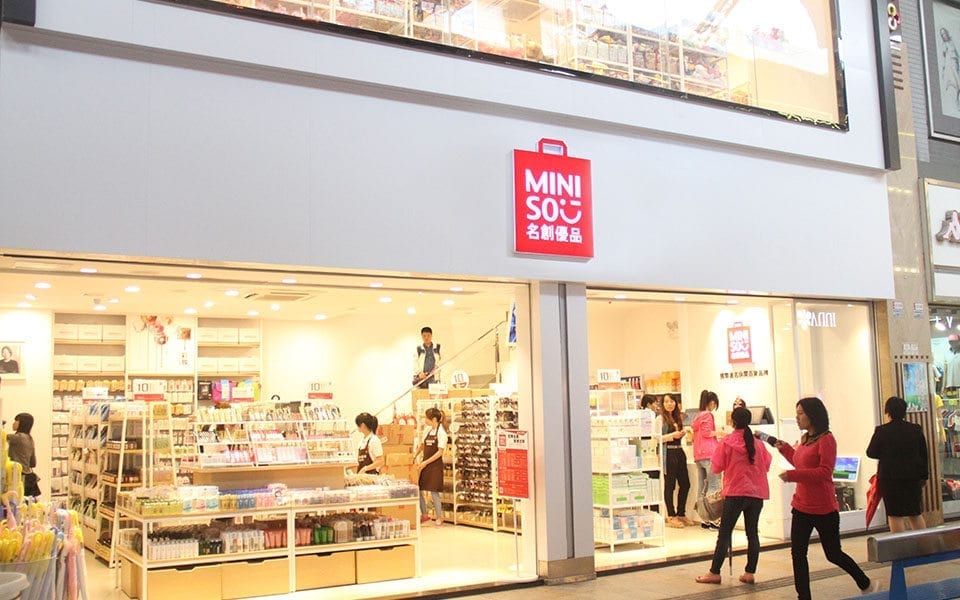
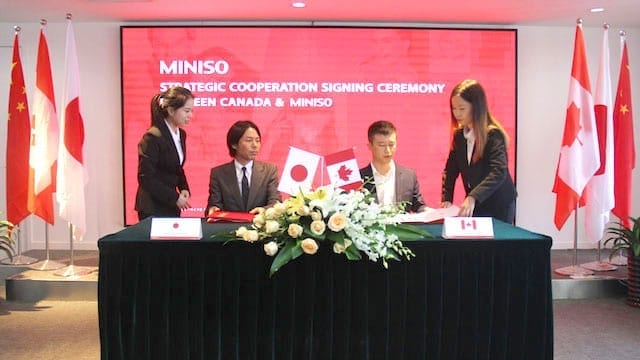
    Chinese discount retailer Miniso is playing a major assault in Canada with 100 stores targeted by year end and 500 within three years.

    Miniso is growing so fast it is difficult to keep an accurate count of its global network, but co-founder/chief designer Miyake Junya said in November he planned to have 10,000 stores trading in 100 countries by 2019, and targets global revenue of US$15 billion. It already has stores in China (1000), Vietnam, Singapore, Hong Kong, the Philippines, Australia, the UAE, Mexico, the US and Europe, among other marketins.

    The first Miniso Canada store opened in Pickering Town Centre last October in a compact 1500sqft (140sqm) space. More have opened since, including a large 4300sqft site in Bramalea City, taking the national tally to about 18.

    “Our philosophy is high-quality goods at an affordable price,” Sherman Leung, district manager, Miniso Canada Investments, said in an interview this month. “We’re a variety-retail, lifestyle store at a very reasonable price.”

    In Canada, concepts like Miniso are seen as a succession of the traditional dollar store model which specialises in cheap goods at just a few rounded-off price points – in the case of Canada’s market-leading Dollarama, which has about 1500 stores, all under C$5. Globally, dollar stores are starting to suffer from quality perceptions in the wake of Miniso’s competitively priced yet reasonable quality goods across many product categories.

  • From clicks and bricks strategy for Courts Singapore

    From clicks and bricks strategy for Courts Singapore

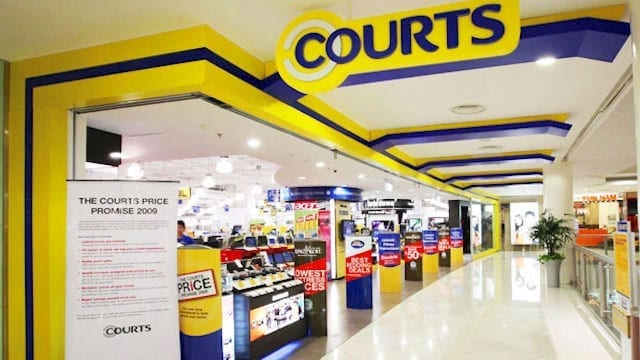
    Electronics, IT and furniture retailer Courts Singapore has relaunched its website and reopened its Tampines megastore after transforming it to offer customers an omni-channel experience.

    Built by e-commerce agency SmartOSC, the new Courts Online store has more than 17,000 SKUs and offers improved navigation and searching, plus faster checkout. New mobile-first and user-centric features connect the retailer’s digital and physical stores. Customers can research and buy online, and pick up purchases in-store or have them delivered.

    Combining omni-channel retailing, automated marketing and content management, the e-commerce system offers Courts a real-time view of inventory and customer profiles.

    Courts Asia chief strategy officer Stan Kim says the website was launched in time for last month’s Black Friday and Cyber Monday retail events, with sales for both almost doubling from the previous year.

    Meanwhile, the Courts Megastore in Tampines offers experiential retail spaces designed to offer memorable and informative experiences for customers.

    Courts has more than 80 stores across Singapore, Malaysia and Indonesia.

  • Pokemon Go game set to launch in China

    Pokemon Go game set to launch in China

    Pokemon Go maker Niantic has announced plans to launch its monster-catching game in China.

    The firm said it would bring the augmented reality game to China after striking a partnership deal with a local company NetEase.

    Chinese regulations covering online content demand that foreign firms find a partner to launch digital ventures in the country.

    Niantic gave no specific date for when Pokemon Go would be turned on in China.

    Competition time

    John Hanke, chief executive of the US firm, told the FT that it “absolutely” intended to take its games to China – the worlds largest mobile market.

    The 2016 launch of Pokemon Go and its massive popularity had left the company cash rich, he said, and in a good position to expand.

    Also, he added, a recent funding round had raised $200m (£148m) from investors that would also fuel expansion.

    The Pokemon game involves players using their smartphones to find and catch the game’s titular monsters in the real world. They then use the captive creatures to battle other players. Augmented reality (AR) technology inserts the monsters when people view the world through their phone’s camera.

    Player numbers had dwindled sharply since Pokemon’s launch, said Mr Hanke, but there was a “solid” core of players who had stuck with the game.

    The technical and policy expertise Niantic had amassed while launching Pokemon Go would serve it well as it developed more games, he said.

    The next big game it plans to launch will be based around the hugely popular Harry Potter series of stories. That game had the potential to appeal to a very wide range of people, he said.

    The game is due to be released in the second half of 2018.

    Niantic could face increased competition in 2018 from Google, Apple, Facebook and Snap all of whom have released AR toolkits for developers. Additionally, in China online retail giant Alibaba has announced plans to use AR to help commercial partners.

  • Petron investing $3.5b in Malaysian oil refinery

    Petron investing $3.5b in Malaysian oil refinery

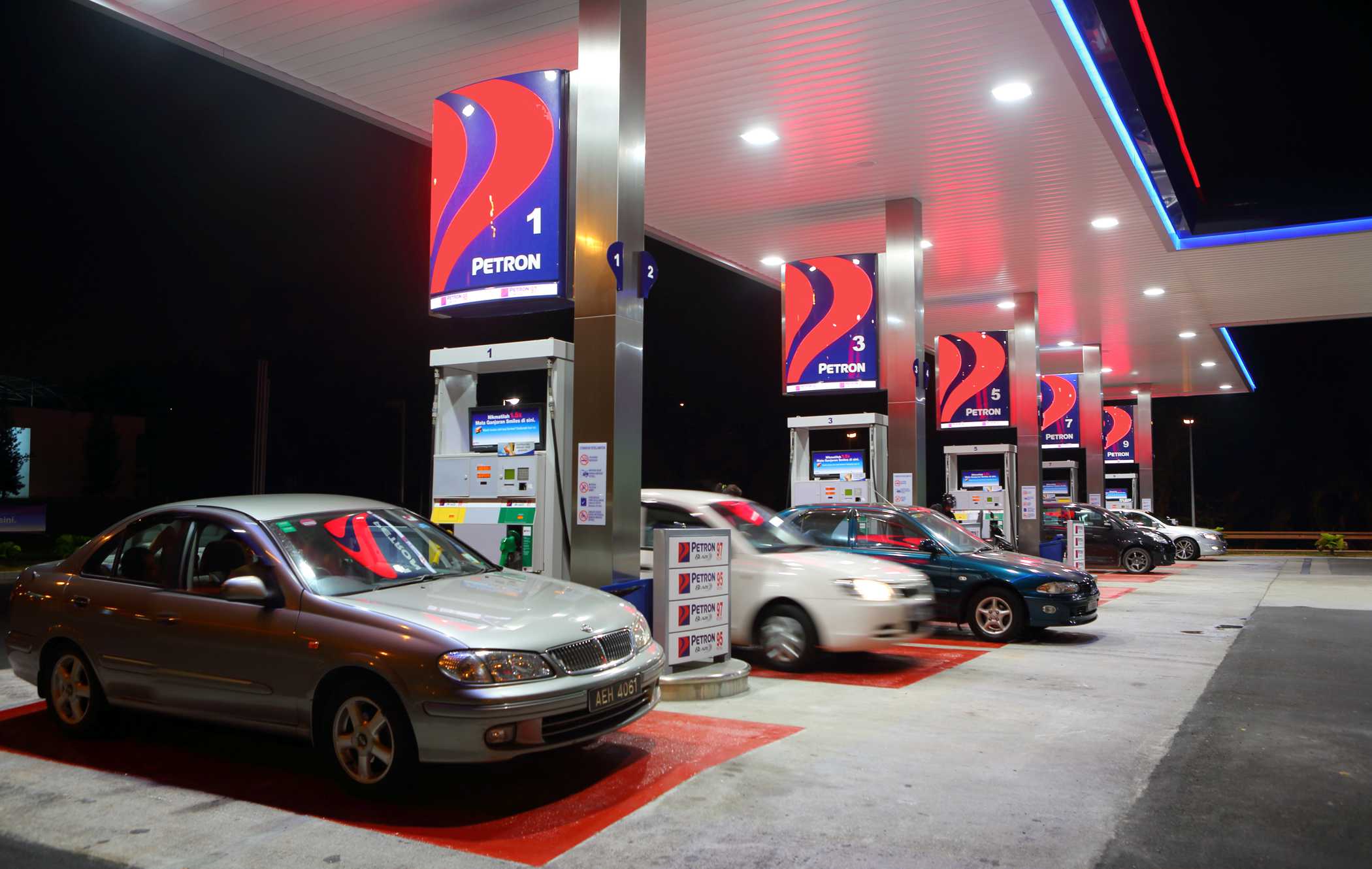
    Petron Corp. is pursuing a $3.5-billion expansion of its refinery in Malaysia that would significantly improve the company’s bottomline, a top executive said.

    “One we complete the expansion there, we are projecting that it will give $600 million a year from $20 million,” Petron president Ramon Ang said.

    Petron acquired Esso Malaysia’s Port Dickson refinery and fuel retail network in Malaysia  in 2011.

    Ang said Petron Malaysia showed consistent strong financial results.

    “We acquire Malaysia before with $20 million Ebitda [earnings before interest, taxes, depreciation and appreciation]. This year, we will end at $270 million Ebitda,” Ang said.

    Ang said once the planned expansion was given an approval, the construction would be completed by 2020.

    The Malaysian refinery currently produces around 80,000 barrels per day. Petron ranks third in terms of market share in Malaysia.

    “It will add  another 90,000 [barrels] a day,” Ang said.

    “The Malaysia expansion, if we will add 90,000 barrels per day, [would cost] $3.5 billion,” Ang said, adding that most equipment in the refinery needed to be replaced and upgraded.

    Petron is also embarking on a $5-billion refinery expansion in the Philippines that will bring the existing capacity of its Bataan refinery to 360,00 barrels per day in  three years.

    Ang said the expansion of the existing Bataan facility would be done in phases at 90,000 barrels per day for each phase. The first phase is expected to be completed by 2019 and the next phase by 2020.

    “[For] the next expansion of our refinery, we will be adding another 90,000 bpd.  So from 180,000 bpd, we will be hitting 270,000 bpd,” Ang said earlier.

    Petron owns the existing 180,000 bpd refinery in Limay, Bataan.

    “We can start [the first phase] in 2018, to be completed in 2019. We forecast an increase in income,” he said.

    Ang said the first phase of the expansion would cost $1.5 billion while the second phase would amount to $3.5 billion.

    He said the expansion would help produce more  petrochemical products.

    Petron already invested $2 billion to upgrade its Bataan refinery and make it at par with the most advanced refineries in the region.

  • Petron sees $600M in annual earnings

    Petron sees $600M in annual earnings

    Petron Corp., the largest oil refining and marketing company in the Philippines, is projecting earnings of about $600 million a year once the planned expansion of its refinery in Malaysia is completed.

    “Once the expansion is finished, we are expecting earnings before interest, taxes, depreciation and amortization (EBITDA) of $600 million annually from $20 million [in 2012],” Petron President and Chief Operating Officer Ramon Ang said.

    For 2017, the Malaysian business is expected to generate EBITDA earnings of $270 million.

    He added that expanding the capacity of the Malaysian refinery will entail an investment of $3.5 billion and would add 90,000 barrels per day (bpd) to its output. The current crude distillation capacity is 88,000 bpd.

    Petron is currently running the Port Dickson Refinery, which is located about 90 kilometers from Kuala Lumpur in Port Dickson, Negeri Sembilan. It is equipped with a crude distillation unit, a naphtha hydro treating unit, two semi-regeneration reformer units, and a kerosene hydro treating unit.

    The complex has amenities such as wastewater treatment facilities, steam generator, cooling water plant, flare and safety relieving unit, crude storage tanks, refined petroleum products storage tanks, as well as spheres for liquefied petroleum gas (LPG) storage.

    Petron, which supplies almost 40 percent of the country’s oil requirements, has a combined retail network of almost 2,900 service stations, more than a fifth of which are in Malaysia. Since 2012, the company has rebranded and built an extensive retail network of nearly 600 stations in Malaysia.

    The oil company also exports different petroleum and non-fuel products to Asia-Pacific countries including India, Japan, Malaysia, Singapore, South Korea, Thailand, and Pakistan, as well as to the United Arab Emirates.

    Shares of Petron slipped 1.19 percent to P9.17 on Friday.

  • Handmade World brings Hawaii Thai to India

    Handmade World brings Hawaii Thai to India

    Handmade World, a leading name in the handmade outdoor furniture and interior décor in India, has tied up with world’s hi-end handwoven furniture brand, Hawaii Thai, to be the sole dealer and distributor for India market. Having received the India market rights for the lifestyle outdoor furniture brand, Handmade World has started looking for channel partners in key markets like Ahmedabad, Pune, Bengaluru, Ludhiana, Chandigarh, etc.

    Talking about the new development, Adarsh Mishra, Founder of Handmade World said that it was an achievement of sorts for the company that they have been able to persuade the Thailand-based global brand to partner for India market. “They are masters in handwoven outdoor furniture and acknowledged world over for quality. Hawaii Thai is the only brand which offers five-year complete warranty for outdoor furniture, including the fabric and the colour,” he said. Even in outdoor conditions, even the colour of the fabric doesn’t fade, he added.

    When asked about the value that will be bringing to Handmade World’s portfolio in India market, Mishra said, “Hawaii Thai will be a strong partner for us which will drive our outdoor furniture business in India in coming years. It will definitely change the outdoor furniture landscape in India.” The weaving technology they use, the colour combinations they have and offer are far ahead of the competition, he said. “We will now be able to cater to all range and budgets in the market,” he added.

    Started seven years ago as a retail outdoor handcrafted furniture brand, Handmade World later expanded into interior décor as well. “99% of our products are handcrafted by artisans and weavers from different parts of the country. We offer materials and get the work done,” he said. Handmade World offers outdoor furniture to both households and institutional customers like hotels, restaurants, corporate offices, etc.

    When asked about the latest fad in outdoor furniture which is more towards rustic and recycled, which is also Handmade World’s forte, Mishra said that the trend is yet to pick up momentum in India. “We are yet to develop that taste for rusticness compared to the US or Europe. Lot of modern cafes and bars are following the trend, but it is still a very small market,” he said.

  • Ban on ivory sales in China to take effect on Sunday

    Ban on ivory sales in China to take effect on Sunday

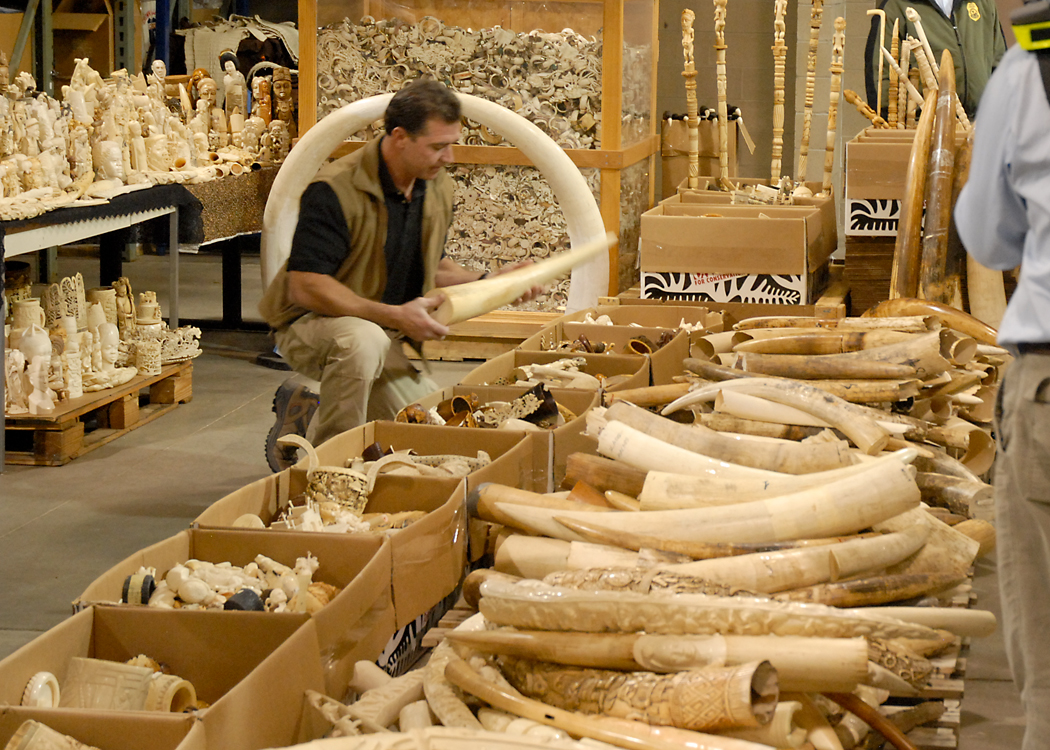
    A ban on ivory sales in China, the world’s largest importer and end user of elephant tusks, takes effect on Sunday. Wildlife activists have described the move as a vital step towards reducing the slaughter of the endangered animals.

    It is estimated 30,000 elephants are killed by poachers in Africa every year. China has made a big push to eradicate ivory sales and demand has fallen since early 2014 due to a crackdown on corruption and slower economic growth.

    Public awareness campaigns featuring celebrities have helped boost awareness of the bloody cost of ivory. “It is the greatest single step toward reducing elephant poaching,” said Peter Knights, chief executive of the conservation group WildAid.

    Legal ivory

    China has allowed the sale of pre-convention ivory, which refers to products such as carvings and crafts acquired before the 1975 Convention on International Trade in Endangered Species of Wild Fauna and Flora (CITES), as long as it is accompanied by certificates.

    The trade in pre-convention ivory has legally thrived in China and Hong Kong since 1975, but environmental activists have long asserted that it has spurred demand for all ivory.

    The ban on all ivory sales has already led to an 80 per cent decline in seizures of illegal ivory entering China as well as a 65 per cent decline in raw ivory prices, according to WildAid.

    Under the ban, China’s 172 ivory-carving factories and retail outlets will also close. Some factories and shops started closing in March.

    This year, ivory prices in China were about 65 per cent lower than 2014 levels, said WildAid, with retailers in some places trying to sell off stocks and offering heavy discounts before the ban.

    Hong Kong

    The Chinese ban has been hailed by activists but they warn that Hong Kong, an administrative region of China, remains a big obstacle to the eradication of elephant poaching.

    China’s ban on sales do not apply in the former British colony, which has the largest retail market for ivory and has traded it for more than 150 years.

    Hong Kong is a prime transit and consumption hub for ivory with more than 90 per cent of consumers from mainland China.

    Since 2003, Hong Kong has intercepted about 40 tonnes (40,000kg) of illegal ivory, only about 10 per cent of what is believed to have been smuggled in, WildAid said in a paper to the city’s legislature in May.

    Hong Kong set a timetable for a ban on ivory trading last year, with a phase-out time of five years. A final vote on the ban is expected in the city’s legislature in early 2018.

    Conservationist Zhou Fei said the Chinese ban could be a catalyst for the closure of ivory markets across Asia.

    However, Kenya-based conservation group Save the Elephants said this year that neighbouring Laos has expanded its retail market more rapidly than any other country.

  • Japanese, Thai goods reach every corner of Vietnamese market

    Japanese, Thai goods reach every corner of Vietnamese market

    Several years ago, fans of Thai and Japanese goods had only several choices – either buying the products carried across border gates, or going to a few select shops. But now, they can freely choose products at many specialized stores. Specialized shops are mushrooming

    A report from MOIT (Ministry of Industry and Trade) shows that the deficit in trade with Thailand in the first eight months of the year reached $3.5 billion.

    Thai products are available at 9,000 traditional markets, supermarkets and home appliance distribution centers. In large cities, Thai goods account for 30-50 percent of the market share.

    The others are run by world giants such as Lotte, Aeon and Emart. Metro alone has 19 retail points, while Big C has 32.There are about 100 retail points belonging to foreign invested supermarkets in Vietnam, half of which belong to Thai investors.

    Meanwhile, Japanese have been penetrating deep into Vietnam through big retail chains such as Aeon, Ministop, Family Mart, Tokyo Deli, Gyu Kaku, Oshaka Ohsho and 7-Eleven.

    The Sakura chain has opened 10 shops after six years in Vietnam, while Tokyo Life has 18 shops in Hanoi, two in HCMC and 35 in other provinces.

    Pham Chi Lan, a renowned economist, said Thai firms had been following a strategy to enter the Vietnamese market for a long time.

    Thai businesses understand that Vietnam, with high economic growth rate, young population and increasingly high consumption, will be a vast market once tariff barriers are removed.

    They have spent time studying Vietnamese consumer psychology and followed professional methods to win over customers.

    Vietnam imports a wide range of products from Thailand, from household electrical appliances to vegetable and fruits, and CBU cars and cosmetics.

    Vietnam also imports products which are locally made, such as household-use products, computers and plastics.

    Minister of Industry and Trade Tran Tuan Anh once asked why Thais could bring their products to the Vietnamese market but do not do this with other ASEAN countries, including Indonesia and the Philippines.

    Analysts believe the most important reason is the large distribution networks that Thais have set up in Vietnam.

    Thai corporations like Central Group and TCC Group have spent big money to take over the largest distribution chains in Vietnam, paving the way for Thai products to enter Vietnam.

    Meanwhile, a branding expert commented that Thai and Japanese goods can thrive in Vietnam because manufacturers receive support from their government agencies.

    “Japanese agencies have set up dedicated divisions to support small and medium enterprises in their country,” he said.


  • What Hong Kong should do to boost our tourism sector

    What Hong Kong should do to boost our tourism sector

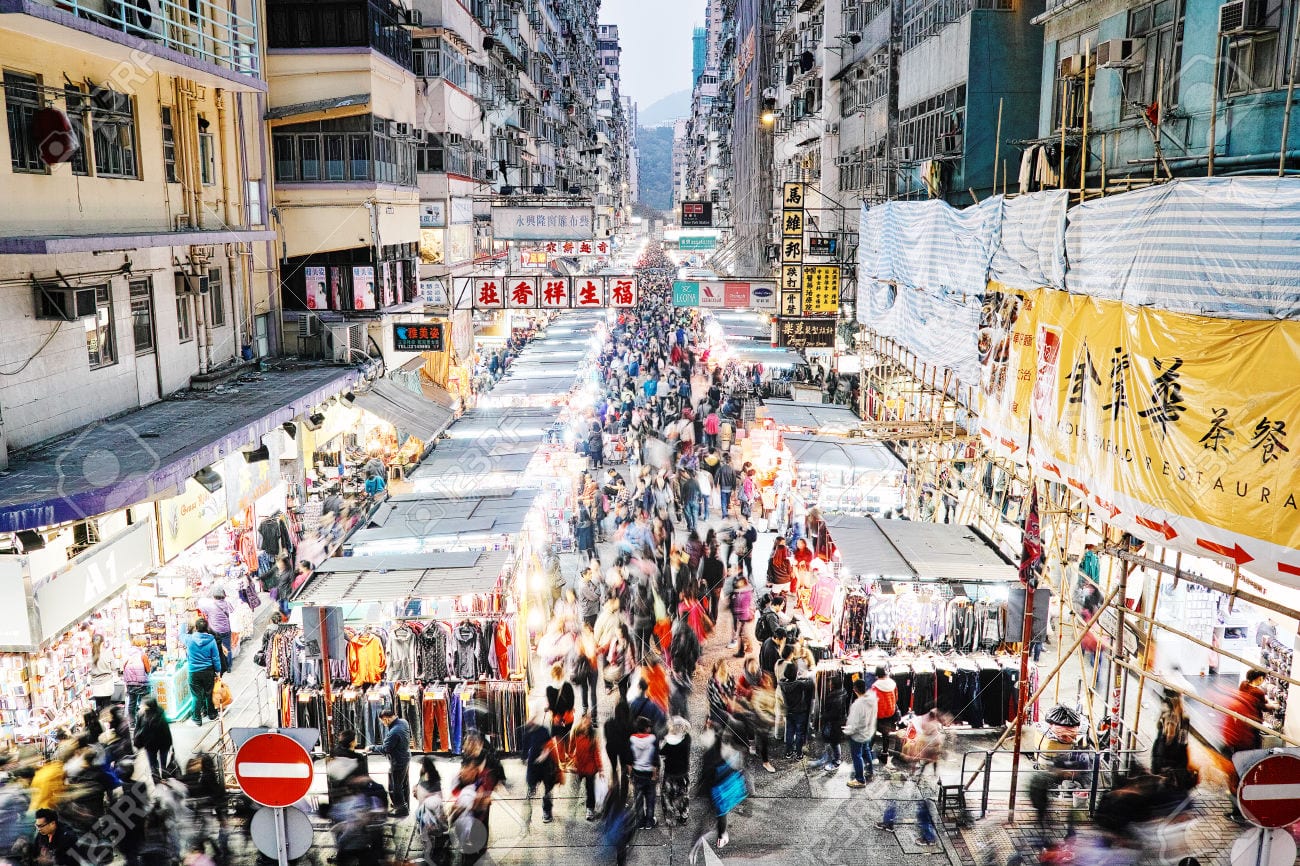
    People from other places may find it hard to imagine, but Hong Kong, although such a small city, can accommodate more than 50 million tourists each year. Of course, most of them are from the mainland.

    But the government should think of how to overhaul our tourism industry and rebuild Hong Kong into a place for cultural nourishment and entertainment activities, rather than just a big shopping mall.

    Chief Secretary Matthew Cheung said more than 52 million tourists visited Hong Kong in the first 11 months of 2017. That’s a 3 percent increase from the same period last year.

    He revealed in his blog that visitors from the mainland and the rest of the world both registered increases. The number of overnight visitors went up by 5 percent in the first 10 months of 2017, from the same period a year ago.

    More than 70 percent of the tourists came from the mainland, while those from other countries including Taiwan, South Korea, Japan and Europe just accounted for 30 percent.

    Hong Kong’s tourism industry, which employs more than 280,000 people, remains heavily dependent on mainland tourists, even after the sector has been hit hard by Chinese President Xi Jinping’s far-reaching anti-corruption campaign since 2012, which caused big-spending mainland shoppers to stay away from the territory. 

    But there are signs they are returning to the city this year. In fact, tourists from across the border treat Hong Kong as their supermarket rather than a place for leisure activities, given the perception that the quality of products and level of consumer protection in the city are higher than those on the mainland.

    But this over-reliance on mainland tourists has distorted the development of local tourism as landlords turn shopping malls originally intended to cater for the needs of the local community into attractions for mainlanders. Such orientation has not only affected the daily lives of local residents but has also turned Hong Kong into a shopping mall city, with malls housing similar retail shops and restaurants offering the same goods and services in all districts from Central and Mong Kok to Sheung Shui and Tung Chung.

    Chief Executive Carrie Lam’s administration understands the challenges facing the tourism industry, but it has not veered away from its old strategy of pouring money into hardware rather than building the city’s “soft power” to highlight the city’s uniqueness as a former British colony and China’s global gateway.

    One of the government’s biggest mistakes in trying to boost the city’s tourism industry is its decision to invest another HK$5.45 billion in Hong Kong Disneyland for its expansion plan. The investment only benefited Walt Disney while Hong Kong is left holding an empty bag as other Disneyland resorts in the region, i.e., in Shanghai and Tokyo, proved to be tough rivals.

    The government should instead promote its own uniquenes through a light show featuring our old districts.  We could, for example, try to bring back nostalgic memories of the old Hollywood Road in Central, showcasing the old office building of Wah Kiu Yat Po newspaper, the Dr. Sun Yat-sen Historical Trail, and other aspects of our storied past.

    While those buildings no longer exist in the real world, we could make use of new technologies such as augmented reality or virtual reality that allow tourists to visit the past by using their mobile phones or other smart devices.

    Perhaps, the government can partner with the newspaper society to come up with gimmicks like giving away old copies of Chinese newspapers – with the tourists’ pictures published on the front page – as souvenirs as well as a reminder of our rich history of press freedom.

    Such a model can be replicated in other different districts of Hong Kong to highlight the colorful tapestry of our culture and society that is older than the British colonial period.

    Another initiative to revive our tourism industry is to sponsor international sporting, cultural and entertainment events. The West Kowloon Cultural Zone could play a leading role in boosting our tourism industry by promoting Hong Kong as a cultural and entertainment hub.

    The government said it will come up with a comprehensive development plan for our tourism industry with new attractions and offerings. It’s about time we did.