Category: Living

Retail News Asia is committed to providing both local and global retailers with the latest Living news throughout the Asian market. This on a daily base.

  • Prime Minister Albanese Extends Petrol Price Relief for Australian Motorists Amid Middle East Crisis

    Prime Minister Albanese Extends Petrol Price Relief for Australian Motorists Amid Middle East Crisis

    The Australian government has announced plans to further alleviate the financial strain on motorists impacted by the ongoing conflict in the Middle East. The Prime Minister, Anthony Albanese, is expected to confirm that the nation’s petrol price relief measures will be extended.

    Australia, heavily reliant on imported fuel, has taken decisive action to mitigate the impact of soaring global oil prices on its citizens. In response to significant disruption to oil shipments via the Strait of Hormuz, the country reduced its petrol tax for motorists by half and slashed a levy for truck drivers in March. These interim measures, set to expire at the end of June, will now be prolonged for another month, offering some financial respite for drivers throughout July.

    Government’s Commitment to Economic Relief

    Prime Minister Albanese’s decision underlines the government’s commitment to providing economic relief to those affected by the international crisis. “We are cognizant of the continued pressures our citizens face,” Albanese noted in a pre-emptive statement, due to be publicly released soon. The extension of these measures offers a tangible reflection of the government’s efforts to support its citizens during these challenging times.

    Questions & Answers

    What measures has the Australian government taken to alleviate financial pressures on motorists?
    The government has halved the petrol tax for motorists and reduced a levy for truck drivers.

    Why were these measures introduced?
    These measures were introduced in response to rising global oil prices, caused by significant disruption to oil shipments via the Strait of Hormuz.

    Until when will these relief measures be available?
    Originally set to expire at the end of June, these measures will now be extended through the end of July.

  • Asia’s High-Net-Worth Travellers Now Have a World-First Option: A Private Sailing Membership That Moves With Them

    Asia’s High-Net-Worth Travellers Now Have a World-First Option: A Private Sailing Membership That Moves With Them

    NAORA, the world’s first membership-based private sailing expedition, is disrupting the luxury travel market with a model that gives Asia’s most discerning travellers recurring, flexible access to a five-year global voyage — with a significant portion of the route unfolding across the waters of Southeast Asia, Indonesia, the Maldives, and the South Pacific.

     The luxury travel industry has long sold the same product under different names: a booking, a departure, and a reset. For Asia’s growing class of globally mobile, high-net-worth travellers — founders, family office principals, tech entrepreneurs, and location-independent professionals who have outgrown the five-star hotel and the private charter — that model has quietly stopped being enough.

    NAORA was built to replace it.

    Launching in 2025, NAORA is the world’s first membership-based private sailing expedition: a continuously moving five-year global voyage aboard the Fountaine Pajot Thira 80, an 80-foot luxury catamaran, spanning 183+ destinations and 45,000+ nautical miles. Members join anywhere along the route, leave when their schedule demands, and return as many times as their membership tier allows throughout the year. No booking references. No itinerary negotiations. No starting from zero.

    It is not a cruise. Not a charter. Not a resort at sea. It is a new category of luxury access — and Asia is at the heart of it.

    Southeast Asia, Indonesia, the Maldives: The Route Asia’s Travellers Have Been Waiting For

    A significant portion of the NAORA five-year route unfolds across Asian waters — and the team’s familiarity with the region goes well beyond navigation. With 11 years of accumulated experience across nearly every country in Southeast Asia, the founding team brings local networks, cultural knowledge, and access to remote anchorages that no booking platform can replicate.

    The Asian legs of the NAORA route include the outer atolls of the Maldives, the Andaman Sea, the Mergui Archipelago, the Indonesian archipelago and the world-renowned waters of Raja Ampat — one of the most biodiverse marine environments on earth — followed by the island chains of Southeast Asia and the passage into the South Pacific. Each leg is timed with prevailing wind systems to ensure members arrive in each region at its most extraordinary.

    For Asia’s high-net-worth community, NAORA offers something that no five-star resort or private charter in the region can match: depth. Not a curated surface of popular destinations, but genuine access to the places, people, and experiences that most travellers will never find.

    “We don’t discover places. We return to them. That is the difference NAORA members will feel from day one. — Sven, Founder & Captain”

    Disrupting Luxury Travel with Membership-Based Access

    NAORA positions itself not against the cruise industry or the charter market, but against the access economy — the same market logic that produced Soho House, NetJets, and Pelorus. Asia’s high-net-worth consumers, particularly in Singapore, Hong Kong, Japan, and across Southeast Asia, are among the most sophisticated adopters of membership-based access models globally. NAORA brings that logic to sea for the first time at this level.

    The membership model is structured across three tiers. The Coastal tier offers approximately one week of access per year — an introduction to the vessel, the community, and the rhythm of offshore life. The Offshore tier provides approximately 40 days per year. The Navigator tier, the most comprehensive, offers approximately 90 days per year with priority on route selection — a recurring lifestyle presence aboard the vessel that is closer to a second home than a travel subscription.

    Entry fees range from €3,000 to €5,000. Annual access fees run from €9,000 to €59,000 depending on tier. The Bluewater Private tier offers exclusive use of the entire vessel for up to 45 days — the only tier that welcomes families with children aboard, and the natural choice for those seeking the privacy of a superyacht experience without the burden of ownership.

    All membership funds are held in dedicated escrow accounts, segregated from operational capital and released only on confirmed service delivery. Payment is accepted by bank transfer in EUR, USD, and GBP, as well as Bitcoin and major cryptocurrencies — a feature that resonates strongly with Asia’s new-wealth and crypto-native community.

    Built by Explorers, for Explorers

    NAORA is founded by four Belgian co-founders whose combined experience spans 25+ years of offshore sailing, 11 years across Southeast Asia, and deep professional networks across European and Middle Eastern high-net-worth communities. Founder and captain Sven is a commercially licensed Master Mariner with GMDSS, STCW ’95, and CMAS dive instructor credentials, and over 2,800 dives. The founding team does not discover the places NAORA visits. It returns to them.

    Aboard the Fountaine Pajot Thira 80 — one of the world’s largest production catamarans at nearly 24 metres, with six to seven private en-suite cabins, a 340m² sail plan and full-time crew including a captain, private chef, and stewardess — NAORA offers an experience that is, by design, the antithesis of everything that feels like a cruise. Privacy is absolute. Guest photos are never shared. The community is curated by invitation only.

    The Membership Waitlist Is Now Open

    NAORA is accepting founding members across all tiers, with the global voyage departing from Bodrum in May 2027. For Asia’s high-net-worth travellers, the opportunity to join the founding cohort — with the greatest access to route input, community shaping, and founding member terms — is available now.

    Every membership begins with a private conversation, not a checkout flow. There is no “Book Now” button. There is only an introduction.

    To learn more or to begin the conversation, visit www.naora.world or contact hello@naora.world.

  • Thriving Puppy Preschools: Chinas New Trend in Pet Pampering

    Thriving Puppy Preschools: Chinas New Trend in Pet Pampering

    In the bustling city of Shanghai, a unique business model is quickly gaining popularity. Paw, a self-proclaimed preschool for dogs, is leveraging a new trend among Chinese millennials who are increasingly viewing their pets as family members and investing more in their care and wellbeing.

    A Day at Paw

    Pets start arriving at Paw by 9 a.m. daily. Unlike traditional dog daycares where focus is put primarily on training or age-specific activities, Paw provides a varied schedule of activities suited to each dog’s needs and interests. The daily routine includes interactive games, challenges on obstacle courses, and even leisurely strolls on specially designed dog treadmills. The pups are also treated to freshly made snacks and calming nap times accompanied by soothing classical music played by a pianist. Pet owners can rest assured knowing their beloved companions are well taken care of and can pick them up at around 7 p.m.

    Qian Yi, a regular patron of Paw, explained how she treats her one-year-old Border Collie, Harry, like a child. “We raise our dog like a child,” she said, adding that she spends approximately 4000 yuan (US $560) each month on Harry’s daycare, meals, grooming, swimming, and visits to dog parks.

    Emerging Trend in China’s Pet Industry

    The launch and growth of Paw reflects larger shifts in China’s consumer economy. Young, urban consumers are increasingly prioritizing spending on experiences and emotional fulfillment. This is particularly true in the pet care sector, where services like daycare, grooming, and training are seeing significant growth.

    Pet Data, a local industry research firm, estimates the urban pet consumption market reached 312.6 billion yuan (US $46 billion) in 2025, with projections to exceed 405 billion yuan by 2028.

    Paw’s founder, Jann Zhang, explains that the idea for this doggie preschool came about after he struggled to find help for his anxiety-ridden Golden Retriever, Fuzai. He felt that lack of socialization was the primary issue and wanted to provide a space where dogs could interact and play. He started Paw with less than 20 pups and has since grown his clientele to 200. He charges a daily fee ranging from 98 yuan to 138 yuan, depending on the size of the dog.

    Questions & Answers

    What is Paw?
    Paw is a unique dog daycare business in Shanghai, China, that treats dogs as pupils, providing them with a variety of activities, socialization opportunities, and care services.

    What services does Paw offer?
    Paw offers a range of services including interactive games, obstacle courses, freshly made snacks, nap times with soothing music, and walks on specially designed dog treadmills.

    How does Paw reflect larger trends in China’s consumer economy?
    The rise and success of Paw mirrors a larger shift in China’s economy, where young, urban consumers are spending more on experiences and emotional fulfilment. In the pet care sector, this translates to growth in services like daycare, grooming, and training.

  • Ease Your Cost-of-Living: Singaporean Households Grab $390 Support Vouchers!

    Ease Your Cost-of-Living: Singaporean Households Grab $390 Support Vouchers!

    From June 11, all Singaporean households will be eligible to receive S$500 (US$380) in Community Development Council (CDC) vouchers. This initiative is set to ease the financial burden of living costs for approximately 1.38 million households across the country.

    Voucher Validity and Usage

    The CDC vouchers can be claimed online via the official website and remain valid until the end of 2027. They can be used across a broad range of establishments, half of which are participating local merchants and hawkers. The remaining vouchers are applicable at around 400 outlets run by eight major supermarket chains throughout Singapore. These include Ang Mo Supermarket, Cold Storage, Giant Singapore, HAO Mart, NTUC FairPrice, Prime Supermarket, Sheng Siong, and U Stars Supermarket.

    This allotment of vouchers was originally set to be distributed in January 2027, as per Singapore’s 2026 national budget. However, it was advanced by six months to help households manage the cost-of-living pressures exacerbated by the ongoing Middle East conflict.

    About the Voucher Scheme

    The CDC voucher program was established in 2020 and expanded the following year. It was devised to aid households in managing living expenses while simultaneously supporting businesses hit by the COVID-19 pandemic. These vouchers have been distributed annually, with this latest disbursement marking the ninth cycle.

    As of June 3, more than $4.64 billion has been utilized through the previous eight CDC voucher rounds and two rounds of SG60 vouchers. The SG60 vouchers were similarly designed and distributed last year in celebration of Singapore’s 60th anniversary. About $2.43 billion, or 52% of the total sum, was spent at local merchants and hawkers, while the remaining was used in supermarkets.

    Over 94% of the 1.36 million eligible households claimed the most recent S$300 voucher tranche disbursed in January. More than 80% of these claimed vouchers have already been spent, indicating a high utilization rate. The CDC voucher scheme has proven to be both practical and accessible to the Singaporean populace.

    Alongside the CDC vouchers, a S$200 increase to a cash handout scheme known as the Cost-of-Living Special Payment was announced in April. Consequently, qualifying Singaporean adults will receive a payout of S$400-600 in September, an increase from the previous S$200-400.

    Questions & Answers

    What is the purpose of the CDC voucher scheme?
    The CDC voucher scheme was designed to assist households in coping with living costs while also supporting local businesses affected by the COVID-19 pandemic.

    Where can the CDC vouchers be used?
    Half of the vouchers can be used at participating local merchants and hawkers, while the remainder can be spent at around 400 outlets run by eight major supermarket chains throughout Singapore.

    When will eligible Singaporean adults receive the Cost-of-Living Special Payment?
    Eligible Singaporean adults will receive the Cost-of-Living Special Payment, which has been increased to S$400-600, in September.

  • Fuel Frenzy: Indonesia Suffers Sudden 32% Surge in Popular Gasoline Prices Amidst Middle East conflict

    Fuel Frenzy: Indonesia Suffers Sudden 32% Surge in Popular Gasoline Prices Amidst Middle East conflict

    In response to the ongoing conflict in the Middle East, Indonesian public corporation Pertamina has substantially elevated its fuel prices, marking the first rise since hostilities commenced. The price of 92-octane gasoline, popularly referred to as Pertamax and frequently used by Indonesia’s middle class, rose from Rp12,300 per liter to Rp16,250. This represents a substantial 32.1% increase.

    Pertamax Green, a 95-octane fuel variant mixed with ethanol, underwent a similar increase, with the price rising from Rp12,900 to Rp17,000 per liter, registering a 31.8% increment. It’s noteworthy that Pertamax fuels typically do not receive subsidies, and it remained unclear if Pertamina would receive compensation for managing to keep the prices constant since the conflict erupted.

    Financial Implications and Public Reaction

    The decision to implement these price increases was made following Bank Indonesia’s surprising move to increase interest rates for the second time within a month. This move was intended to bolster the nation’s economic health, especially considering that budget data from last week revealed a 208% surge in fuel, power, and fertilizer subsidies from the previous year.

    Finance Minister Purbaya Yudhi Sadewa opined that the inflationary impact of these price hikes would probably be minimal, given that these fuels are not typically used for public transportation. However, the annual headline inflation rate had already spiked to a record eight-month high of 3.08% in May.

    Radhika Rao, a senior economist at DBS Bank, stated that the fuels impacted by these changes represent approximately 7% of domestic fuel sales and 7.5% of energy usage in the transportation sector in 2023. She suggested that due to these changes, both monetary and fiscal policies should adopt a defensive approach to bolster the economy.

    The sudden increase in fuel prices came as a shock to many, with Masgal Carta, a resident of Bandung, West Java, expressing his concern over the financial strain that this could impose. He noted, “My earnings have remained static, but the prices of basic commodities have begun to rise, and now the cost of fuel, our primary mode of transportation to work, has also increased unexpectedly.”

    However, the price of the subsidized 90-octane fuel, known as Pertalite, remained unchanged, as confirmed by Pertamina.

    Questions & Answers

    What are the new prices for Pertamax and Pertamax Green fuels?
    The price of Pertamax fuel has risen to Rp16,250 per liter, while Pertamax Green now costs Rp17,000 per liter.

    What is the projected inflationary impact of these price increases?
    Finance Minister Purbaya Yudhi Sadewa believes that the inflationary impact of these price increases will be kept in check as these fuels are not typically used in public transportation.

    How have the price hikes affected everyday consumers?
    The sudden price increase has contributed to the financial pressure on consumers, with some expressing shock and concern over the possible tightening of their personal budgets.

  • Naora Opens Its Doors: A Membership-Based Global Sailing Journey Across 183+ Destinations

    Naora Opens Its Doors: A Membership-Based Global Sailing Journey Across 183+ Destinations

    From the outer reefs of the Maldives to the hidden anchorages of Raja Ampat, from the wild coast of Patagonia to the Society Islands of the South Pacific — NAORA offers its members a world that goes far beyond what any itinerary can contain.

    Anchored in a remote bay in the Azores, the only light coming from a sky full of stars. Diving the outer reefs of the Maldives, where the coral runs so deep you cannot see the bottom. Watching the sun rise over the Society Islands from a deck that is still warm from the night before. These are not highlights from a travel itinerary. They are Tuesday for a NAORA member.

    Today, NAORA announces its launch: a private, invitation-only sailing expedition membership that gives a curated circle of modern explorers flexible, recurring access to a continuously moving global journey spanning 183+ destinations and 45,000+ nautical miles over five years. It is the most ambitious membership-based sailing concept ever brought to market — and it is built, from the hull up, for people who are not satisfied with what a hotel can offer.

    45,000+ Nautical Miles. Five Years. One Continuous World.

    The NAORA route is not a circuit of popular anchorages. It is not designed around tourism seasons or marina availability. It is designed around one thing: putting its members in the most extraordinary places on earth at the moment those places are most extraordinary.

    The route follows trade winds and seasonal weather patterns, refined over 25+ years of accumulated offshore sailing knowledge. It begins in the Mediterranean — the Balearics, Sardinia, the Adriatic, the Aegean — before crossing the Atlantic via the Canary Islands and Cape Verde. From the Caribbean, it passes through the Panama Canal into the Pacific. Southeast Asia. The Maldives. The Indian Ocean. The Red Sea. The South Pacific. Patagonia. And back again — a five-year loop that never quite repeats, because the world does not.

    Each leg is timed with the prevailing wind systems and anchored in each region during its peak season. Members who join the Mediterranean leg experience the sea at its most vivid. Those who join for the Indian Ocean leg arrive during the perfect sailing window. Those who make the South Pacific passage with NAORA experience one of the most transcendent crossings available to any sailor, private or otherwise.

    And at every stage, NAORA members are not experiencing these places as tourists. They are experiencing them as people who belong there — because the crew does, the captain does, and the community does.

    The Vessel: Home on the Open Ocean

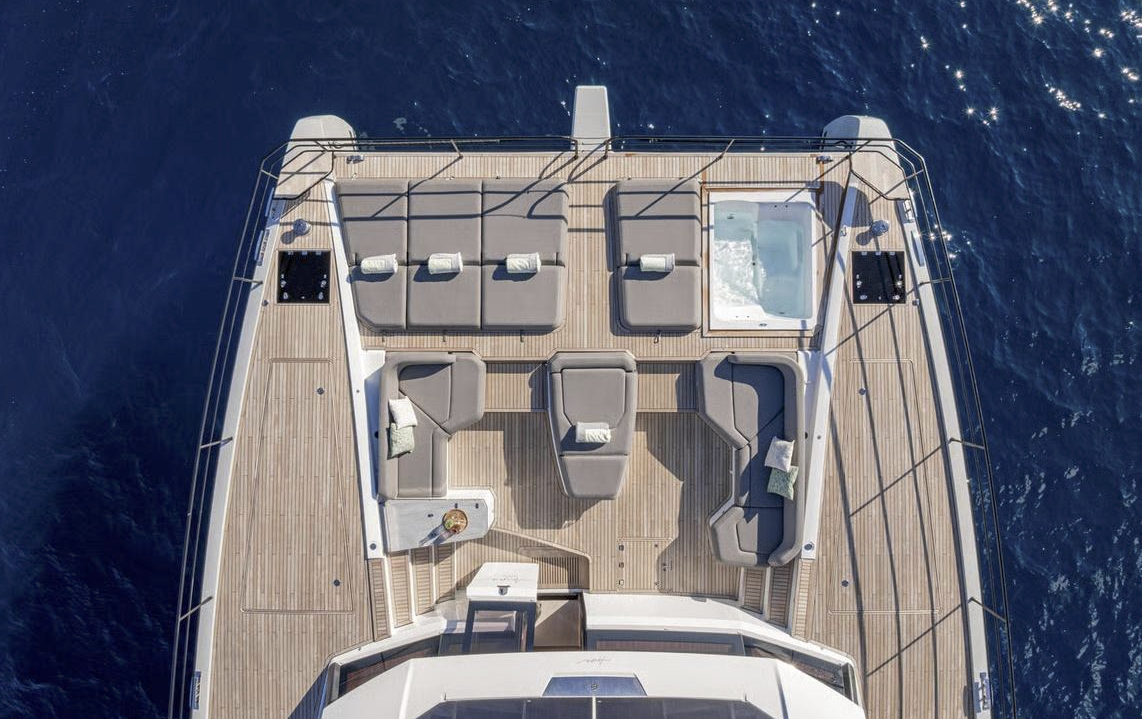
    Every NAORA journey takes place aboard the Fountaine Pajot Thira 80 — one of the largest production catamarans in the world, built for exactly the kind of long, deep, ocean-crossing lifestyle that NAORA is designed around. At nearly 24 metres in length, with a displacement of 66 tonnes and a sail area of 340 square metres, the Thira 80 is not a day-tripper. It is an offshore passage-maker of the highest order, wrapped in the interiors of a luxury private villa.

    Six to seven private en-suite double cabins. Wide teak decks for morning yoga and midnight conversations. A salon designed for the kind of dinner party that only happens when the nearest land is two hundred miles away. A professional galley from which a private chef produces three-course meals with ingredients sourced at every port. The Thira 80 is, quite simply, one of the finest environments in which a human being can spend time — and it is moving, always, toward somewhere remarkable.

    The catamaran design is not a compromise. It is the correct answer for this model. Two to three times the living space of a monohull of equivalent length. Minimal heel, smooth passages, dramatically reduced motion sickness. Wide decks and a shallow draft that allows NAORA to anchor in remote bays that deeper-keeled vessels cannot access. The Thira 80 delivers comfort without sacrificing reach — which means NAORA members can go further, stay longer, and arrive more refreshed than any comparable vessel would allow.

    “We don’t discover places. We return to them. That is the difference NAORA members will feel from day one. — The NAORA Founders”

    The Destinations Others Cannot Reach

    There is a version of global travel that is available to anyone with a credit card and a premium booking platform. Beautiful hotels in beautiful places, populated by other people with beautiful credit cards. NAORA is not that. NAORA is the version of global travel that requires local knowledge, earned trust, and years of relationship-building to access.

    The founding team has spent 11 years across Southeast Asia — not as tourists, but as residents. They have friendships in fishing villages that do not appear on any map, and access to anchorages that are not listed in any cruising guide. They know the chef at the restaurant that has no sign. They know the fisherman who knows the reef that the dive boats have not found yet. They have sat at tables in communities that most travellers will never find, not because of money, but because of time.

    That accumulated knowledge and those relationships are what NAORA members are buying access to when they join. Not a boat. Not a route. A world that the founding team has spent decades learning to navigate — and that deepens, for every member, with every return.

    On Board Life: Designed, Not Improvised

    The NAORA onboard experience is curated with the same level of intention as the route itself. Water sports equipment is maintained to professional standard — diving gear, kites, paddleboards, and exploration tenders are available whenever conditions allow. Shore excursions are arranged in advance, drawing on local networks to provide cultural access and private experiences that are unavailable to independent travellers.

    The community aboard NAORA is deliberately international. Members speak French, German, Spanish, Arabic, Mandarin, Dutch, and many other languages — but English is the official language of all navigation, safety briefings, and crew communication. The diversity of the community is a feature, not a coincidence. When extraordinary people from extraordinary backgrounds share an extraordinary environment, what results is a quality of conversation and connection that no land-based club or conference can replicate.

    Between voyages, the community continues. Regional gatherings in key cities. Private dinners. Cultural events at port. NAORA is not a place its members visit. It is a world they belong to.

    Membership: The Door Is Open

    NAORA membership is structured in three tiers. Coastal members receive approximately one week of access per year — an introduction to the vessel, the community, and the rhythm of offshore life. Offshore members receive approximately 40 days per year, building lasting relationships and experiencing the full depth of the expedition. Navigator members receive approximately 90 days per year, with priority on route selection and scheduling, and a level of integration into the NAORA world that is closer to a second home than a holiday.

    A one-time entry fee of €3,000–5,000 opens the door. Annual fees range from €9,000 for Coastal membership to €59,000 for Navigator access. Extended and bespoke arrangements are available for members who want a more permanent presence within the system.

    Every membership begins with a private conversation. Not a sales call. A conversation. NAORA wants to understand who you are and what you are looking for. You want to understand where the boat is going and who is aboard. Only from that mutual understanding does the question of membership arise.

    To begin that conversation, visit www.naora.world

    About NAORA — NAORA is a membership-based private sailing expedition founded by four Belgian adventurers with 25+ years of offshore sailing expertise. Its five-year global journey spans 183+ destinations and 45,000+ nautical miles, covering the Mediterranean, Atlantic, Caribbean, Indian Ocean, Southeast Asia, and South Pacific. Membership tiers — Coastal, Offshore, and Navigator — offer flexible, recurring access to life at sea aboard the Fountaine Pajot Thira 80, one of the largest luxury production catamarans in the world. NAORA is not a travel company. It is a new category of living.

  • Vietnam Fuel Prices Plunge Amid Global Rate Fall: Transition to Green Energy in Focus

    Vietnam Fuel Prices Plunge Amid Global Rate Fall: Transition to Green Energy in Focus

    In response to decreasing global rates, Vietnam has adjusted its fuel prices downwards as of Thursday afternoon. RON95 gasoline, the country’s most commonly used fuel, decreased by 5.4%, taking it from its price last week to VND24,150 (US$0.54) per liter. Other fuels have also seen a reduction in their prices: Biofuel E5 RON92 has dropped 4.5% to VND23,250, while Diesel has witnessed a 3.9% decline to VND27,650.

    Global Fuel Market Influences

    The global fuel market has experienced substantial changes recently due to a variety of factors. These include the ongoing negotiations between the U.S. and Iran and the increased U.S. inflation, which is driven by significant fluctuations in energy prices. This information is based on reports from the Ministry of Industry and Trade and the Ministry of Finance. For instance, RON95 gasoline saw a decrease of 9.2%, bringing it to $127 per barrel, diesel dropped 5.5% to $146.70, and mazut decreased by 9.2%, making it US$655.20 per ton.

    New Fuel Sales and Implementation

    Starting June 1, E10 RON95 gasoline will be available for sale on a larger scale, replacing the mineral-based RON 95. E5 RON92 gasoline will remain available until the end of 2030. The Deputy Minister of Industry and Trade, Nguyen Sinh Nhat Tan, stated that the decision to sell mineral-based gasoline and biofuel simultaneously over the past few years was intended to assist the market in adjusting gradually and to support businesses in enhancing their distribution infrastructure.

    However, Tan also mentioned that based on international experience, maintaining a large variety of fuel types over an extended period could lead to higher logistics, storage, and distribution costs, difficulties for retailers, and a reduction in the effectiveness of transitioning to green energy. He reassured that the switch to E10 gasoline has been well assessed by regulators and does not impose restrictions or limit consumers’ choices. According to compatibility assessments, most cars and motorcycles in Vietnam can use E10 gasoline, as per manufacturers’ recommendations.

    Questions & Answers

    What are the new prices of various fuels in Vietnam?
    The price of RON95 gasoline has dropped 5.4% to VND24,150 per liter, Biofuel E5 RON92 has fallen 4.5% to VND23,250, while Diesel has declined 3.9% to VND27,650.

    What will replace mineral-based RON 95, and when will this happen?
    E10 RON95 gasoline will replace mineral-based RON 95 starting June 1. E5 RON92 gasoline will continue to be sold until the end of 2030.

    What potential problems could arise from maintaining a variety of fuel types for a long period?
    According to Deputy Minister of Industry and Trade Nguyen Sinh Nhat Tan, maintaining a variety of fuel types for an extended period could lead to issues such as increased logistics, storage, and distribution costs, difficulties for retailers, and reduced effectiveness in transitioning to green energy.

  • Naora Revolutionizes Maritime Expeditions: Discover the World with a Private Sailing Membership

    Naora Revolutionizes Maritime Expeditions: Discover the World with a Private Sailing Membership

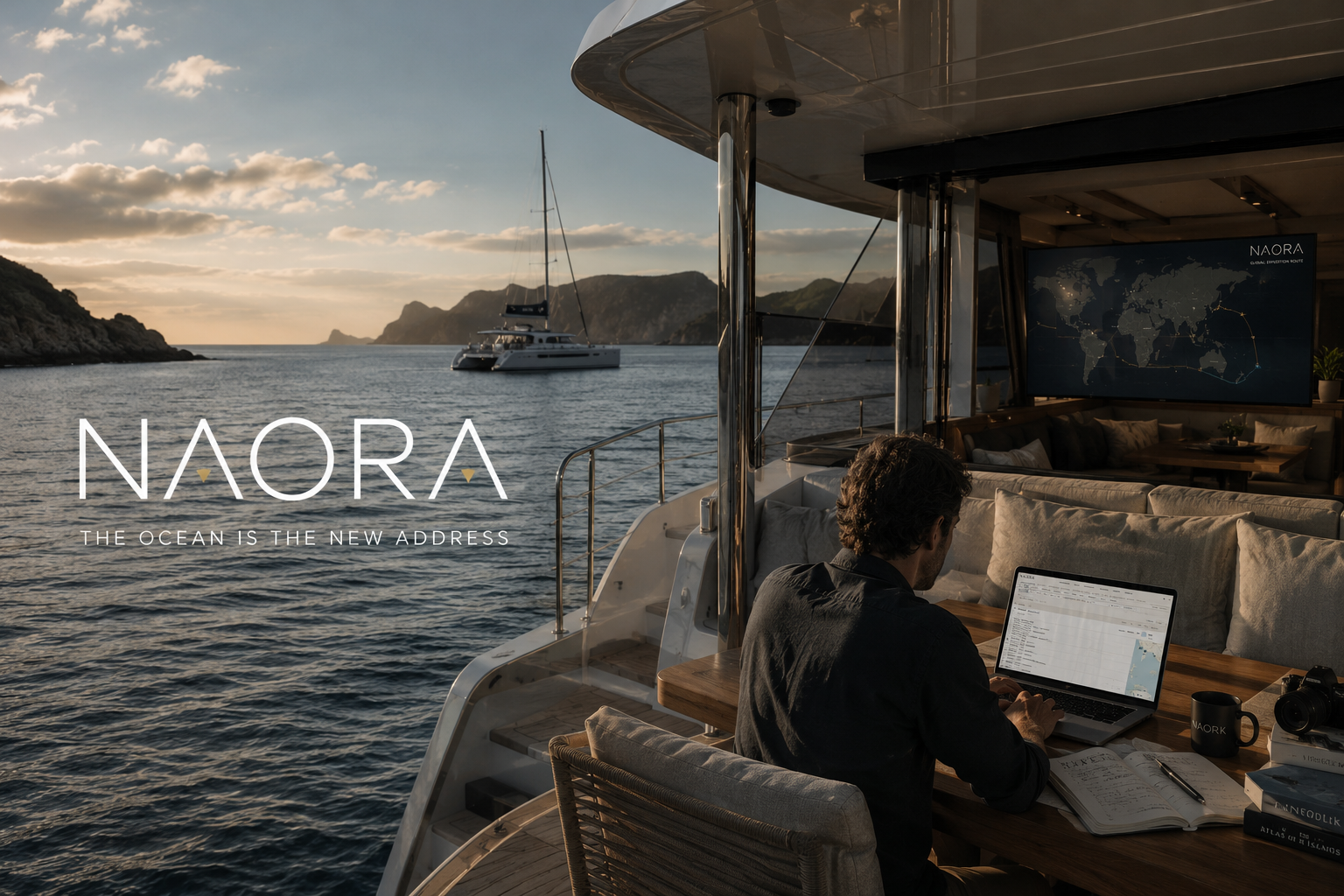
    Naora, an innovative private expedition venture established by seasoned maritime professionals from Belgium, is transforming the way individuals experience extended sea voyages. Instead of operating as a charter company, Naora serves as a membership-based platform, providing access to a continuous, multi-year sailing expedition across some of the world’s most secluded and culturally diverse areas.

    Contrary to the conventional travel approaches, Naora does not trade in travel packages. Instead, members have the privilege of joining a living expedition, a five-year journey impacted by the seasons, trade winds, and the amassed experience at sea. Participants can join and depart at various points during the journey, aligning their time on the vessel with their individual schedules and preferences.

    A Venture Driven by Experience, Not Fixed Plans

    Naora’s foundation is built on over twenty years of practical maritime experience, which includes professional sailing, global yacht deliveries, and previous expeditions on vessels like Discovery and Sueño, exploring areas like the Mediterranean, Caribbean, and northern waters.

    This strategy represents a transition from fixed itineraries to a more dynamic, experience-driven model. Routes are not predetermined but are modified based on conditions, timing, and local knowledge, allowing for a more profound interaction with each destination.

    Rather than designing a route on a map, Naora uses its years of maritime experience to return to significant places, ensuring the timing of these visits is perfect for maximum exploration and enjoyment.

    Appreciating Access Over Ownership

    Naora operates on a membership structure where members have access to the journey for a specific duration rather than to particular destinations. Members can choose segments of the trip based on availability and personal preferences, ranging from brief coastal passages to extended ocean crossings.

    The experience is intentionally designed to achieve a balance between structure and freedom. While a professional crew takes care of all operational aspects, participants are encouraged to engage with the environment at their leisure, whether this involves sailing, diving, surfing, or exploration ashore.

    From secluded anchorages to lesser-visited coastal regions, the focus is on immersion rather than consumption. This approach allows access to places that are often unreachable, including pristine environments and respectfully approached indigenous cultures.

    A Thriving Community, Onboard and Beyond

    Beyond the journey itself, Naora emphasizes the importance of community and continuity. The expedition is not only an offshore experience but extends into a broader ecosystem developed to keep members connected. This system includes curated gatherings both at sea and on land, along with a digital platform that allows members to stay engaged, no matter where they are on the route.

    In support of the community emphasis, Naora has introduced a dedicated role within the structure – a Commodore. This person is responsible for maintaining the connection between members and ensuring the community experience is consistent across all touchpoints, from onboard interactions to onshore gatherings and digital communication.

    The mission of Naora is not only about reaching new places but is also centered on the people who share the experience and the connection that continues long after the expedition ends. Besides, Naora is committed to preserving and continuing maritime traditions, not just as a concept, but as a lived practice. Knowledge, seamanship, and respect for the ocean are shared among participants, contributing to the overall experience.

    At the heart of Naora’s positioning is a strong emphasis on privacy and alignment. Participation is application-based, ensuring that all members share the same mindset. The onboard environment is deliberately small-scale, promoting trust, discretion, and a sense of belonging that’s vastly different from commercial travel experiences.

    Questions & Answers

    What is the concept behind Naora?
    Naora is a private sailing expedition membership that offers access to a continuous global journey across various oceans, seasons, and cultures. The emphasis is on experience rather than destination, and members can join and leave at different points along the route.

    What makes Naora unique?
    Naora differs from traditional travel models in that it does not sell trips but provides a living expedition that members can join. The routes are dynamic, and the focus is on immersion and engagement with each destination. It also operates on a membership structure rather than a charter model.

    What is Naora’s approach to community?
    Beyond the journey itself, Naora places a strong emphasis on community and continuity. They organize gatherings both at sea and on land, and have a digital platform to keep members connected. A dedicated role, the Commodore, is responsible for maintaining the connection between members and ensuring a consistent community experience.

  • HBO Go Bids Farewell to Vietnam, Makes Way for HBO Max Arrival

    HBO Go Bids Farewell to Vietnam, Makes Way for HBO Max Arrival

    HBO Go, the previously ubiquitous streaming service, will officially withdraw its operations from Vietnam as of June 15. Its absence will pave the way for the introduction of HBO Max, a formidable competitor to streaming giant Netflix.

    The HBO Go service was first introduced to the Vietnamese market in 2019, targeting cable, satellite, and live TV streaming subscribers who were already receiving HBO channels as part of their television package. However, the service was discontinued in multiple markets in 2020, and replaced by HBO Max. This new platform allows users to access the full range of HBO content without a cable TV connection.

    In Vietnam, the termination of HBO Go also implies the end of collaborations with local streaming platforms such as TV360 and VieON. A noticeable change is already apparent on TV360, which now presents a “Failed” notification upon attempts to subscribe to a new HBO package. However, users can continue to view HBO content through traditional television channels via cable and satellite services.

    An anonymous industry analyst suggests that this strategic move is most likely intended to enable American film studio Warner Bros. to introduce HBO Max in direct competition with Netflix. The HBO Max homepage now displays a Vietnamese language notice teasing its launch on June 16.

    The HBO Go platform had gained traction among Vietnamese viewers with popular original series such as Game of Thrones and House of the Dragon, and films produced by Warner Bros.

    Questions & Answers

    What is happening to HBO Go in Vietnam?
    HBO Go will cease operations in Vietnam as of June 15, and be replaced by HBO Max.

    What changes are expected with the introduction of HBO Max?
    HBO Max will allow users to access a broad range of HBO content without the need for a cable TV connection. The service is seen as a strong competitor to Netflix.

    Will users still be able to view HBO content via traditional channels?
    Yes, HBO content can still be accessed through traditional television channels on cable and satellite services.

  • Malaysia Contemplates Axing Fuel Subsidies for Wealthier Citizens: A Strategic Move Towards Economic Resilience

    Malaysia Contemplates Axing Fuel Subsidies for Wealthier Citizens: A Strategic Move Towards Economic Resilience

    The Malaysian government is currently evaluating a proposal aimed at revising petrol subsidies for the country’s high-income households. This proposition was initially presented roughly four weeks ago and has been under close scrutiny by the respective authorities over the past three weeks.

    Government’s Standpoint on the Proposal

    Malaysia’s Prime Minister, Anwar Ibrahim, disclosed that a final resolution has not yet been reached on the matter. Although, he emphasized that fundamentally, the government concurs with the necessity to reassess the subsidy system for higher-income Malaysians. The government is expediting efforts to finalize the proposal at the earliest.

    The consideration of this revision comes in response to increasing demands for the realignment of the nation’s fuel subsidy policy. The goal is to ensure that aid is appropriately directed towards the deserving recipients.

    Public voices are advocating for the exclusion of high-income groups from receiving subsidies on RON95 petrol. They suggest that this support should be redirected towards middle- and lower-income groups who are feeling the brunt of escalating living expenses.

    The Need for Proposal in Present Economic Climate

    The proposal is seen as a critical requirement in the prevailing economic environment. It is expected to aid in effectively utilizing national resources and bolstering the country’s resilience against global economic uncertainties.

    Questions & Answers

    Why is the Malaysian government considering a revision of petrol subsidies for high-income earners?
    The government is considering the revision in response to increasing calls for a realignment of the fuel subsidy policy, aiming to ensure aid is properly directed towards deserving recipients.

    What are some of the reasons driving the demand for this revision?
    Public voices have been advocating for the exclusion of high-income groups from receiving subsidies on RON95 petrol. They suggest that this support should be redirected towards middle- and lower-income groups who are comparatively more affected by the rising cost of living.

    What is the expected outcome of this proposal?
    The proposal is expected to aid in the effective utilization of national resources and strengthen the country’s resilience against global economic uncertainties.

  • Singapore Cruise Operators Navigate Rising Fuel Prices with Speed Cuts and Route Adjustments

    Singapore Cruise Operators Navigate Rising Fuel Prices with Speed Cuts and Route Adjustments

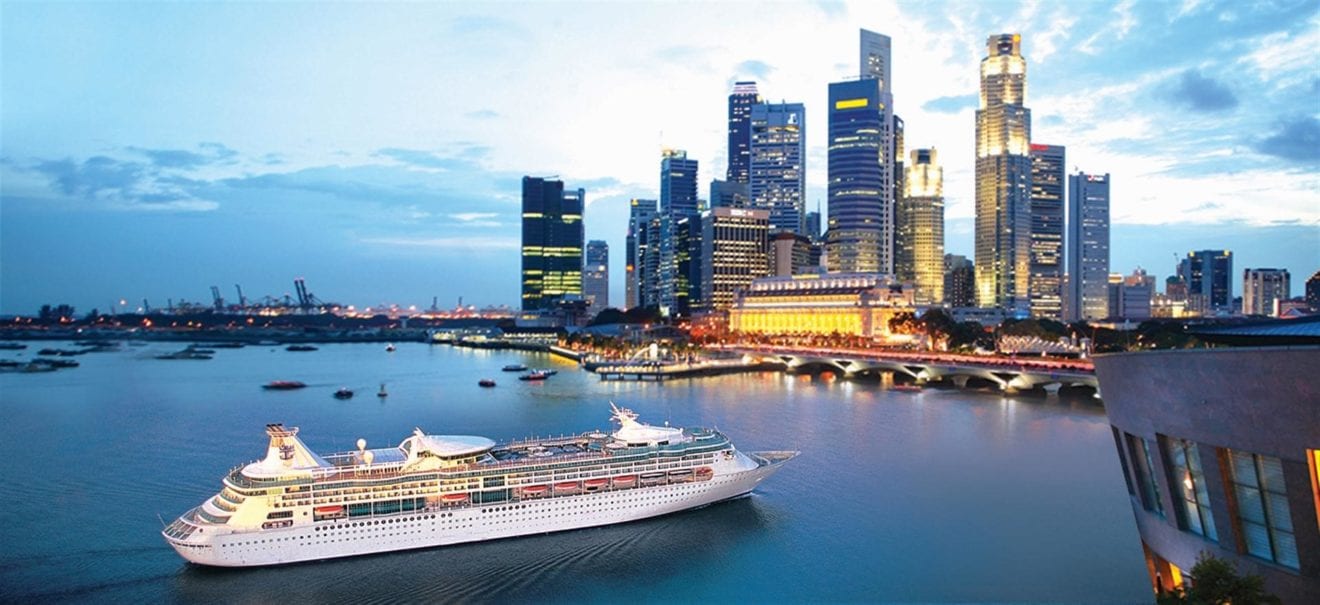
    Cruise operators in Singapore are taking measures such as reducing sailing speeds, modifying routes, and discontinuing promotional offers in an effort to mitigate the effects of surging fuel prices triggered by the ongoing conflict in the Middle East. StarDream Cruises, which operates three vessels, disclosed that its operational expenses have increased primarily due to the global surge in fuel prices.

    The company’s president, Michael Goh, noted that while there have been minor adjustments made in certain areas of their network, the Asia itineraries, including those stopping in Singapore, have generally remained steady. These changes, made as part of regular operational optimization, have been managed carefully to ensure that the overall guest experience remains unaffected.

    In response to the escalating costs related to the Middle East conflict, StarDream Cruises announced a fuel surcharge of SGD15 (US$11.82) per person in March. The company has also implemented measures such as itinerary and route adjustments, speed management, and energy efficiency initiatives across its fleet.

    Cruise Industry Resilience Amidst Rising Costs

    Despite the rising fuel costs, international cruise arrivals to Singapore saw a 10% year-on-year increase in March, as stated by the Singapore Tourism Board. The board’s director of cruises, Chitra Rajesh Kumar, highlighted Indonesia, mainland China, and Malaysia as the top three source markets, with passenger numbers from these markets also seeing an increase.

    The primary marine fuel used by cruise ships experienced a global price surge from approximately $550 per tonne in February to around $1,060 per tonne in March. As of May 5, the price stood at $975 per tonne. This has prompted some operators to revise their routes in response to the geopolitical situation and the energy crunch.

    Several cruise operators have made similar moves, revising their schedules and routes to avoid areas of conflict and minimize exposure. For instance, Oceania Cruises has rerouted its ship Oceania Vista, originally set to transit the Suez Canal on a voyage from Singapore to Southampton in the United Kingdom, to now sail via Cape Town, South Africa, and up the continent’s west coast.

    Despite the challenges, the demand for cruise holidays has proven resilient. The Singapore Tourism Board noted that the cruise industry has demonstrated resilience with steady bookings for future months. This continues to be supported by sustained global interest in cruising, the strength of regional source markets, and excellent air connectivity.

    Questions & Answers

    What measures have Singapore’s cruise operators taken to manage rising fuel costs?
    Singapore’s cruise operators are reducing sailing speeds, modifying routes, and discontinuing promotional offers to manage the impact of rising fuel costs. They are also implementing energy efficiency initiatives across their fleets.

    How has the increased fuel price affected the cruise industry?
    While the price of marine fuel has significantly increased, the cruise industry has demonstrated resilience, maintaining steady bookings for future months. Cruise operators have adjusted their operations, such as rerouting ships and adding fuel surcharges, to manage these costs without significantly impacting the guests’ experience.

    How is the demand for cruise holidays in the current climate?
    The demand for cruise holidays remains strong, as indicated by steady advance bookings. The strength of regional source markets, sustained global interest in cruises, and excellent air connectivity contribute to this resilience. Despite the challenges, more travellers are exploring cruising as a convenient and value-driven option.

  • Gasoline Prices Skyrocket Amid Ongoing Middle East Conflict and Peace Talks Uncertainty

    Gasoline Prices Skyrocket Amid Ongoing Middle East Conflict and Peace Talks Uncertainty

    Biofuel E5 RON92 has experienced an upsurge of 5.17%, setting its current price at VND23,790. On the contrary, the cost of Diesel has seen a decrease, falling by 2.42% to VND27,490.

    Global Oil Market Trends

    Shifting focus to the global oil market, it continues to be influenced by several geopolitical factors. Foremost is the ongoing conflict in the Middle East, which has dramatically impacted oil prices. Additionally, the continued peace negotiations between U.S. and Iran, coupled with the tensions in the Strait of Hormuz, are also consequential.

    A positive shift was observed on Thursday when oil prices surged by over $1, bouncing back from the considerable losses experienced the day prior. This rise was due to the market’s contemplation over the potential success of a Middle East peace deal. Brent crude futures experienced an increase of 54 cents, or 0.5%, reaching $101.81 per barrel. Similarly, U.S. West Texas Intermediate saw a 45 cent gain, or 0.5%, bringing it up to $95.53 per barrel.

    Future Speculations

    Hiroyuki Kikukawa, the chief strategist at Nissan Securities Investment, indicated that peace negotiations will likely persist until at least the upcoming U.S.-China summit. However, he expressed that the outlook beyond this event remains uncertain. Kikukawa’s primary prediction is that oil prices will continue to stay at a heightened level for the foreseeable future.

    Questions & Answers

    How much has the price of Biofuel E5 RON92 increased?
    The price of Biofuel E5 RON92 has increased by 5.17%.

    What factors are currently influencing the global oil market?
    The global oil market is primarily influenced by the ongoing Middle East conflict, peace negotiations between the U.S. and Iran, and tensions in the Strait of Hormuz.

    What predictions have been made for future oil prices?
    The prevailing expectation, as per Hiroyuki Kikukawa of Nissan Securities Investment, is that oil prices will remain elevated in the foreseeable future.

  • Weight-Loss Medications Boost Mint and Gum Sales: Hershey Rides the ‘Ozempic Breath’ Wave

    Weight-Loss Medications Boost Mint and Gum Sales: Hershey Rides the ‘Ozempic Breath’ Wave

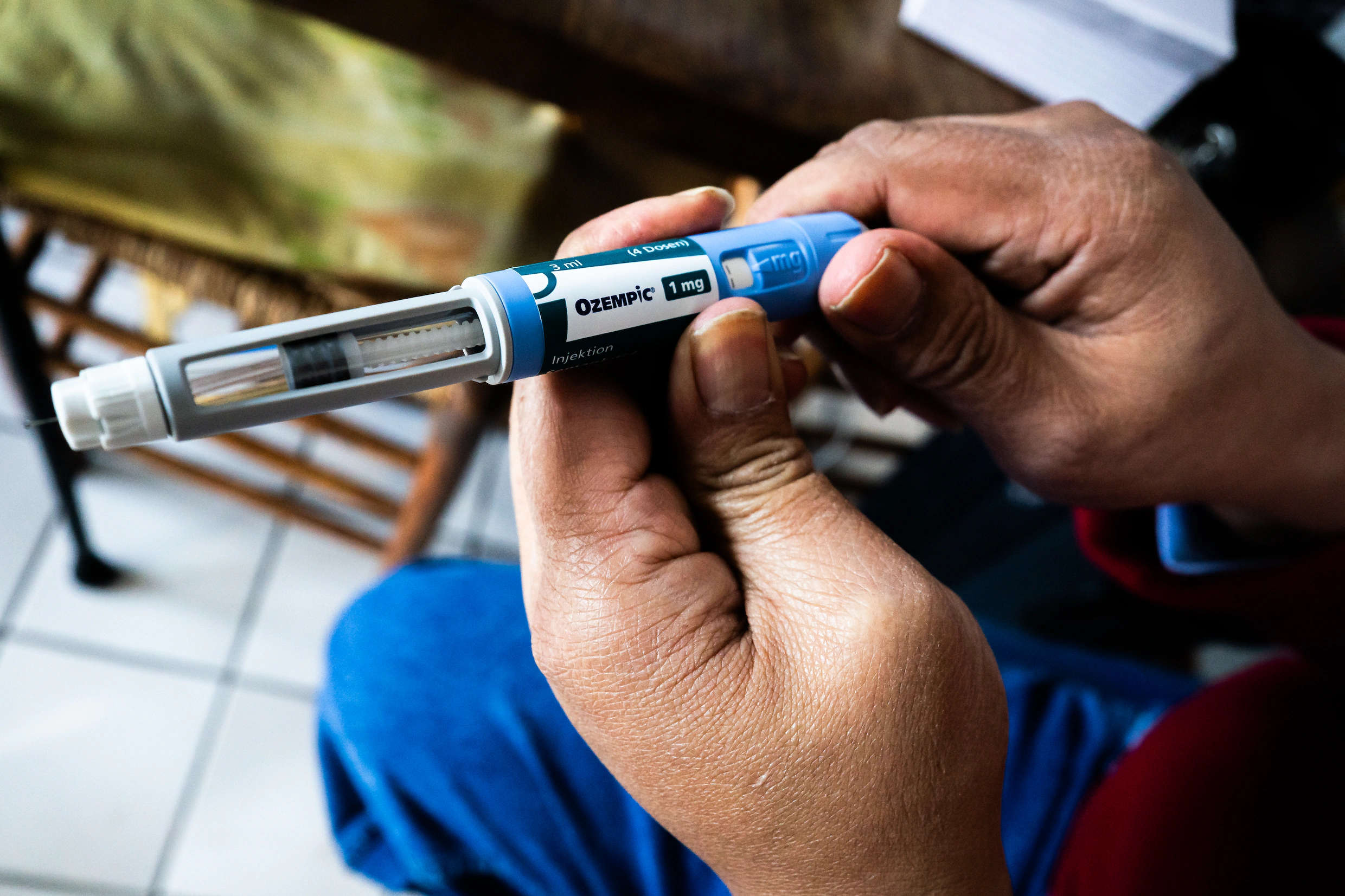
    The Hershey Company recently highlighted a surprising uptick in their sales of mints and gum, which they attribute to the rising prevalence of weight-loss drugs and the consequent shift in consumers’ snacking habits. The company noted that the demand for products that freshen breath has grown in tandem with the trends toward “functional snacking” associated with the consumption of medications like Ozempic and Wegovy.

    Kirk Tanner, Hershey’s CEO, stated, “We’ve noticed a robust demand for gum and mints as they benefit from the tailwinds of functional snacking, influenced by the adoption of GLP-1 medications.” He also pointed out that the retail sales for Ice Breakers, the company’s third-largest confection brand, saw an increase of over 8% during the quarter.

    While the Hershey Company did not directly associate this trend with specific side effects, it is worth noting that some consumers taking GLP-1 medications have reported experiencing halitosis, colloquially referred to as ‘Ozempic breath’. Medical professionals suggest that this could be due to dry mouth resulting from dehydration or changes in saliva production, notwithstanding the fact that it is not officially listed as a side effect.

    This shift in consumption habits has not only impacted the mint and gum market but has also influenced other sections of the snacking industry. For instance, premium chocolate manufacturer Lindt & Sprungli has reported a marked increase in US sales among GLP-1 users. Similarly, Magnum Ice Cream Company has noticed that the trend is bolstering the demand for smaller, higher-quality snacks.

    Peter ter Kulve, the CEO of Magnum Ice Cream Company, said, “As consumers who use GLP-1s are eliminating lower-quality snacking options first, categories such as premium chocolate, premium ice cream, and protein snacks could potentially acquire a larger share of the overall snacking market.”

    Questions & Answers

    **What has been the trend in Hershey’s sales of mints and gum?**
    Hershey’s has observed an unexpected surge in their sales of mints and gum, which they attribute to changing consumption patterns due to the increased use of weight-loss drugs.

    **What are the potential reasons for the ‘bad breath’ experienced by some users of GLP-1 medications?**
    Medical professionals suggest that the bad breath experienced by some users of GLP-1 medications could be due to dry mouth resulting from dehydration or changes in saliva production.

    **How has the shift in snacking habits influenced other sectors of the snacking industry?**
    The shift in consumption patterns is supporting the demand for smaller, higher-quality snacks in other sectors of the industry. Companies like Lindt & Sprungli and Magnum Ice Cream Company have reported increased sales among users of GLP-1 medications.

  • Ikea’s Strategic Shift: Smaller Stores Propel China Expansion

    Ikea’s Strategic Shift: Smaller Stores Propel China Expansion

    Swedish furniture giant, Ikea, is intensifying its expansion strategy in China by launching a more compact store model in the eastern part of Beijing. This move is part of the company’s shift from its traditional large-scale stores towards smaller and more accessible locations.

    The New Small-Format Store

    The new Ikea outlet is managed by the Ingka Group and situated in Beijing’s Tongzhou District. It spans over an area of approximately 1,500 square meters, quite a downsize from the standard Ikea store which generally covers around 30,000 square meters. Despite its smaller size, the store still offers an impressive assortment of about 3,000 products.

    Ikea’s latest outlet puts more emphasis on services like home planning, rather than maintaining a large-scale inventory on-site. This innovative approach marks Ikea’s fifth presence in Beijing, and its inaugural location in the city’s eastern region. It also signifies a broader shift in the way the company is tackling the market.

    Shifting from Megastores to Compact, Accessible Locations

    Instead of depending on large-scale destination stores, Ikea is pivoting towards smaller, more accessible locations that are in closer proximity to residential areas.

    Javier Quiñones, the global commercial manager at Ingka Group, commented on this strategic shift. He noted, “The one-size-fits-all approach no longer applies. This makes our current expansion more relevant. We are getting closer to more people than ever, and continually learning how to fine-tune our offerings and presence.”

    This compact store model has already been successfully piloted in Shenzhen, with plans to introduce similar outlets across other major cities.

    Ikea’s Global Expansion

    So far in the current year, Ikea has inaugurated 21 new outlets worldwide, with sizes ranging from a few hundred square meters to over 4,000 square meters. These new outlets are spread across Europe, North America, and Asia. The company also plans to unveil additional locations in forthcoming months.

    Questions & Answers

    What is the size of the new Ikea store in eastern Beijing?

    The new Ikea store in eastern Beijing covers approximately 1,500 square meters.

    What differentiates the new Ikea store from the traditional ones?

    The new Ikea store emphasizes more on services like home planning rather than maintaining a large on-site inventory, and it’s located closer to residential areas.

    How many new Ikea locations have opened globally this year?

    Ikea has opened 21 new locations globally this year.

  • Global Condom Shortage Looms as Leading Manufacturer Karex Bhd Raises Prices Amid Iran War Supply Chain Disruptions

    Global Condom Shortage Looms as Leading Manufacturer Karex Bhd Raises Prices Amid Iran War Supply Chain Disruptions

    Karex Bhd, the globally recognized top producer of condoms and supplier to major brands like Durex, has recently announced plans to increase prices by 20% to 30%. This price hike is a possible response to the ongoing supply chain disruptions, which could extend further depending on the duration of the Iran conflict.

    Increasing Demand and Costs

    The Malaysia-based company’s CEO, Goh Miah Kiat, shared that the current situation is precarious, with high prices being a significant concern. Goh stated that the company has no choice but to pass on these additional costs to the customers. An unexpected surge in demand for condoms, exacerbated by increased freight costs and shipping delays, has left many clients with unusually low stockpiles.

    Karex, the producer of over 5 billion condoms a year, supplies to leading brands like Trojan and Durex, as well as state health systems such as the NHS in Britain and the United Nations’ global aid programs.

    Supply Chain Bottlenecks

    The condom manufacturer is just one amongst numerous other companies, including medical glove makers, that are bracing themselves for supply chain bottlenecks. The ongoing conflict in Iran is straining energy and petrochemical flows from the Middle East, leading to procurement disruptions of raw materials.

    Since the commencement of the conflict in late February, Karex has witnessed cost increases for a variety of materials. These include synthetic rubber and nitrile used in condom manufacturing, packaging supplies, and lubricants such as aluminium foils and silicone oil.

    Boosting Output in Response to Rising Demand

    Despite these challenges, Karex has assured that it has sufficient supplies for the coming months. The company is also planning to increase output in response to the growing demand. The global stockpiles of condoms have witnessed a significant decrease following substantial spending cuts in foreign aid, particularly from the U.S. Agency for International Development in the previous year.

    Goh noted that demand for condoms has risen approximately 30% this year, with shipping disruptions further straining the supply. Shipments to areas like Europe and the United States now take almost two months to arrive, as compared to a month previously.

    Goh expressed concern over the high demand for condoms in developing countries where the local stock is insufficient due to extended product delivery times.

    Questions & Answers

    How much is Karex planning to raise its prices by?
    Karex has plans to increase its prices by 20% to 30% due to ongoing supply chain disruptions and rising operational costs.

    What has caused the rise in demand for condoms?
    The demand for condoms has surged due to rising freight costs and shipping delays which have resulted in lower stockpiles for many of Karex’s customers.

    How is the Iran conflict affecting Karex’s operations?
    The Iran conflict has strained the procurement of raw materials, leading to supply chain disruptions. This has caused a significant increase in the cost of materials like synthetic rubber, nitrile, packaging supplies, and lubricants which are essential in condom manufacturing.