Category: Living

Retail News Asia is committed to providing both local and global retailers with the latest Living news throughout the Asian market. This on a daily base.

  • Spotify promises to completely overhaul its Wear app

    Spotify promises to completely overhaul its Wear app

    Google announced this week it has teamed up with Samsung to revamp Wear OS. Along with the complete redesign of its wearable platform, Google promised to bring even more of its apps to Wear and update those that are already available.

    Due to the radical changes that Wear will be going through in the coming weeks, third-party apps like Spotify will be updated too. The good news is the Spotify app for Wear will also get a handful of new features, not just some much-needed visual changes.

    During Google I/O’s keynote, Spotify confirmed that it’s working on the option to download music and podcasts directly to your Wear smartwatch, which will allow users to leave their phones home they’re going for a run.

    Up until now, the Spotify app for Wear only allows users to control music played on other devices. The upcoming update will allow users to control playback from their Wear smartwatches if Spotify is playing on other devices, such as PC, smartphone, or smart speaker.

    Although we don’t know when exactly the new Spotify app will roll out to Wear smartwatch users, we doubt that will happen before Google releases the new version of its wearable platform later this year.

  • Yet another streaming service beats Spotify to the Apple Watch offline listening punch

    Yet another streaming service beats Spotify to the Apple Watch offline listening punch

    Apple, Amazon, and even Google’s music streaming platforms have been in the limelight of late for a couple of different reasons, and now it’s Deezer’s turn to make headlines as it (ineffectively) tries to keep up with the world heavyweight champion of the thriving industry.

    Unfortunately for audiophiles, the French service, which is mainly popular on the old continent and less so stateside, is not ready for an Apple and Amazon Music-rivaling discount of its existing HiFi tier… just yet.

    While you still need to pay $19.95 a month (in the US) to access a library of around 36 million tracks in FLAC quality, the latest killer feature added to Deezer’s Spotify-challenging arsenal is available completely free of charge… for “premium” subscribers.

    We’re talking about offline listening functionality delivered straight to your wrist by the Apple Watch Series 6, and in case that doesn’t sound like such a big deal, you may want to know the world’s most popular smartwatch is actually not in the same boat as far as Spotify integration is concerned.

    Of course, Deezer is not breaking entirely new ground here either, following in the footsteps of Apple Music (duh) and Pandora while beating the likes of YouTube Music and Tidal in addition to Spotify to the offline punch (the latter of which doesn’t even have an official Apple Watch app to begin with).

    As long as you own the newest high-end edition of the immensely successful Apple Watch and are already paying Deezer for a Premium, Student, Family, or HiFi subscription, it should be extremely easy to start using the feature.

    All you have to do is choose the playlist you want to download to your intelligent timepiece, and depending on its amount of free storage space, you can then listen to your favorite tunes on the fly without keeping your iPhone nearby or staying connected to the internet.

    The Apple Watch Deezer app was obviously already capable of controlling your iPhone’s music streaming action, and on top of everything else, each member of a paid Family account can now download playlists and favorites from their own individual profiles.

    In case you’re wondering, Deezer also allows offline listening on select Tizen-powered Samsung Galaxy Watches while lacking the functionality on Google’s Wear OS platform, which could well change in the very near future.

  • Spotify updates Android and iPhone apps to improve accessibility

    Spotify updates Android and iPhone apps to improve accessibility

    With 365 million users around the world, Spotify is now one of the biggest music streaming services. Such a title always comes with certain responsibilities, especially when it comes to accessibility.

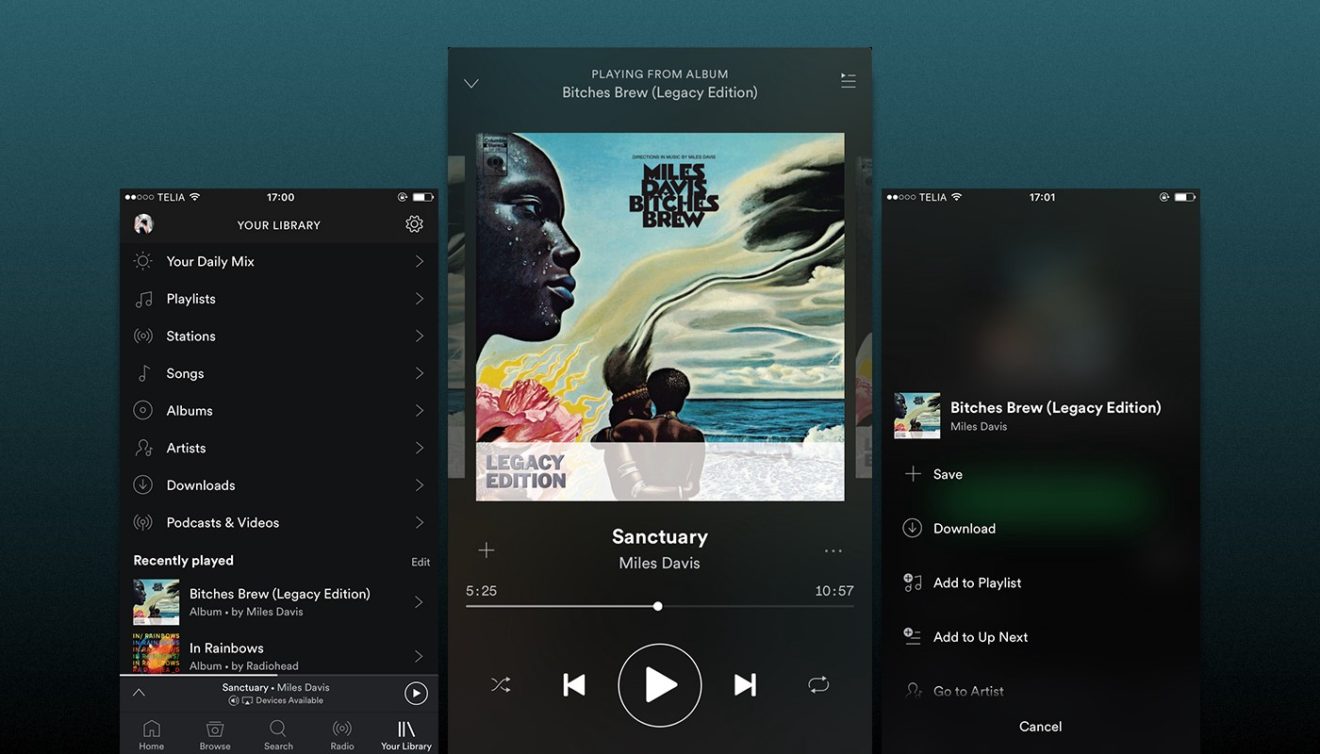
    Spotify introduced many changes to improve the experience of its users while they’re enjoying their favorite songs and podcasts. The most recent updates for Spotify on iOS and Android introduce three accessibility improvements to the user experience: buttons with increased readability features, options for text resizing, and a beta for podcast transcripts.

    Once the update makes it to your phone, you should notice changes to buttons in terms of color, text formatting, and size. These are meant to make it easier for low-vision and visually impaired users to take advantage of various features like shuffling playlists or start listening to a session. Moreover, the update will also help users in situations where there’s low lighting or high screen reflections.

    The next major change introduced today is the option to resize Spotify’s text inside Android and iOS apps. This can be done from the Settings menu on your iPhone:

    • On your phone, head to Settings > Accessibility, then select “Display & Text Size.”
    • Tap “Larger Text” for larger font options.
    • Drag the slider to select the font size you want.

    Last but not least, Spotify is rolling out auto-generated podcast transcripts, which will automatically generate transcripts for Spotify Original and Exclusive podcasts across iOS and Android. The new feature will make it easier for users to read text of the specific podcasts on their phones either with or without sound.

  • Mattel turning old Barbies, Matchbox cars and Mega Bloks into new toys

    Mattel turning old Barbies, Matchbox cars and Mega Bloks into new toys

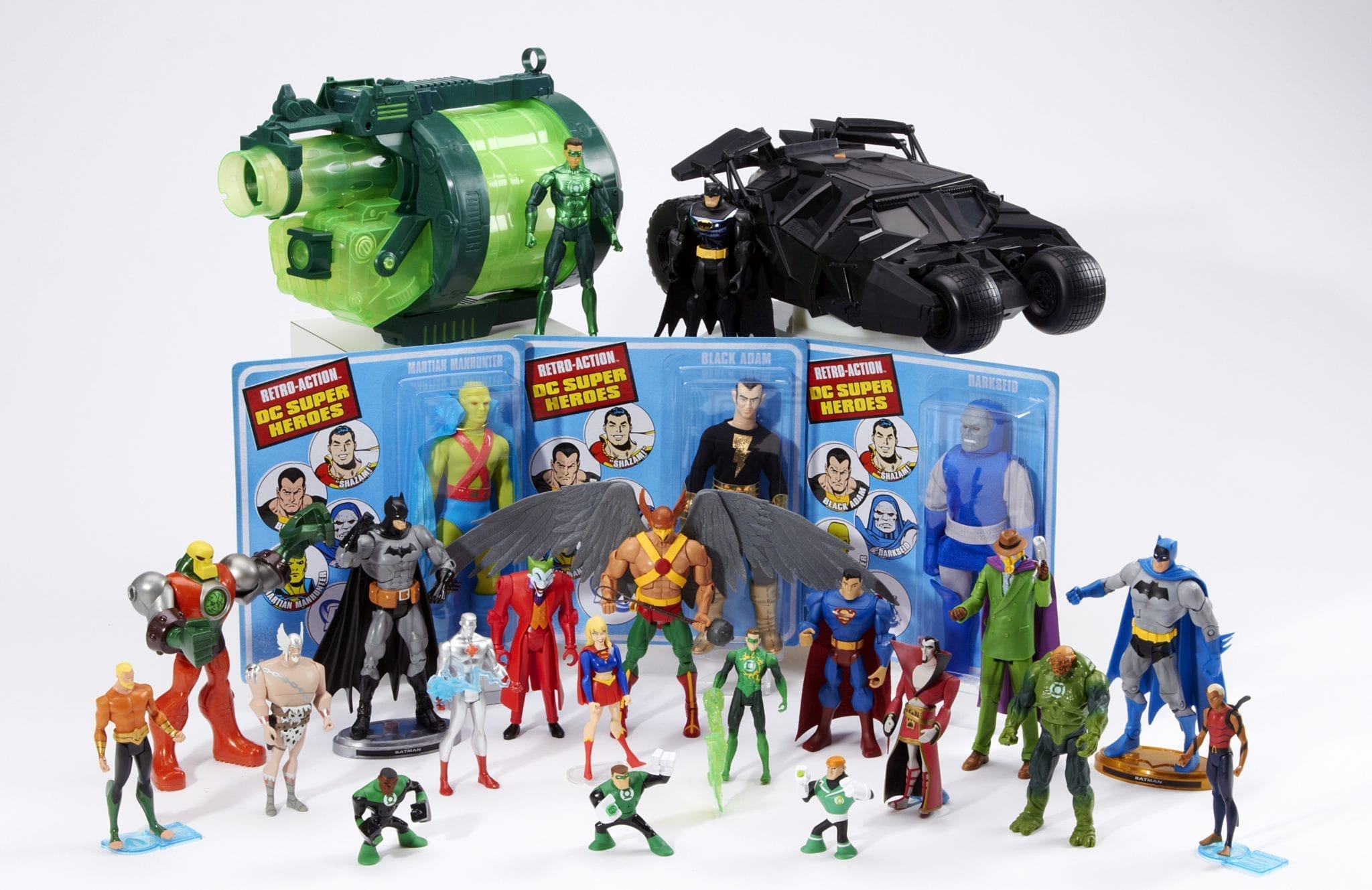
    Toymaker Mattel is encouraging kids to return Barbies, Matchbox cars and MEGA Bloks they no longer play with to the company for recycling into new toys.

    The goal of the company’s new ‘Playback’ program is to recover and reuse materials across all products and packaging by 2030, Mattel said as it announced the program this week.

    “Mattel’s Playback program is a great step,” said Jim Silver, CEO of TTPM, a toy industry research firm. “The consumer is becoming more and more concerned about the future and becoming more eco-friendly; manufacturers are starting to step up and start to try and make the environment better.”

    The company is encouraging consumers to ship their old toys back to Mattel, where they are sorted and separated by material type, processed, and recycled. Materials that cannot be recycled will be either “downcycled” or “converted to energy.”

    Last month, Mattel unveiled the Matchbox Tesla Roadster, its first vehicle made from 99% recycled materials and carbon.

    Mattel is aiming to make all Matchbox die-cast cars, playsets and packaging with 100% recycled, recyclable or bio-based plastic materials by 2030.

    “More and more manufacturers are going to be going down this road,” Silver said. “I think Mattel, being one of the large companies in the industry, to start this recycling program, I think you can see others follow suit.”

    To participate in the program, consumers can visit Mattel.com/PlayBack, print a free shipping label, and pack and mail their outgrown Mattel toys back to Mattel.

  • Disney+ blows past 100 million subscriber milestone even as its growth starts to slow down

    Disney+ blows past 100 million subscriber milestone even as its growth starts to slow down

    As heated as the battle for global supremacy in the crowded video streaming space may have seemed just a couple of years ago, it has become increasingly clear in recent months that the market is largely headed for a duopoly.

    That’s because the likes of Apple TV+, HBO Max, and Peacock are not really going anywhere while Disney+ is practically going everywhere, growing at a Netflix-threatening pace quarter after quarter.

    As expected at the end of last year, the late 2019-released streaming service has concluded the first quarter of 2021 well above the 100 million subscriber mark. Namely, Disney Plus counted a grand total of 103.6 million users around the world as of April 3, up from “just” 94.9 million subscribers on January 2, 2021.

    That’s a huge number for the ever-expanding Walt Disney Company no matter how you look at it, inching closer to Netflix’s industry-leading 208 million paid subscriber base last updated in April for Q1 2021.

    While the gap between the two streaming giants may seem substantial (because it is), Disney+ has impressively managed to eat away at the global champ’s advantage ever since it made its debut back in November 2019. This year’s first quarter is no exception, although for the first time since the beginning of the COVID-19 pandemic, both Netflix and Disney+ failed to meet the expectations of industry pundits.

    Following 29 and 28 percent surges in worldwide subscribers in Q3 and Q4 2020 compared to their previous quarters, Disney+ had to settle for the aforementioned 8.7 million sequential growth, equating to less than 10 percent, which was still more than enough to outpace Netflix’s modest 4 million or so gain during Q1 2021.

    If current projections hold up, Disney+ could reach anywhere between 230 and 260 million paid global subscribers by the end of 2024, which is when the streaming platform’s parent company originally expected the service to sit at no more than 90 million users.

    In comparison (although it’s obviously not a very fair one), Netflix broke the 100 million barrier at some point in 2017 after being founded in 1997 and branching out from the DVD sales and rental business to the online world in 2007.

    Meanwhile, in case you’re wondering, mum’s the word on the paying subscriber figures of Apple TV+, which pretty much tells you everything you need to know about the much-hyped platform that essentially saw daylight at the same time as Disney+.

  • Cleaning the oceans one cup at a time

    Cleaning the oceans one cup at a time

    Sam Stone and Christie Kamphuis have been close friends for a long time, and one of the pillars of their friendship has always been going to events together. “We always hated the overflowing bins, and walking over cigarette butts, chewing gum, and cups all over the ground,” Sam bemoans. “When we heard of a few niche events implementing reusable cups in Europe, we jumped at the chance to bring the idea here.” Fortunately, Sam says, she and Christie have complementary skills that have helped them make the best of being co-founders. “We take on different parts of the business without too much fighting over who does what!” Sam laughs.

    Their business, Bettercup, provides reusable cups in various shapes for both rent and purchase to suit different budgets. “Clients can choose between our Bettercup branding or the branding can be customized to the event,” Christie explains. “We emphasize that the cups should always be designed with longevity in mind so that they can be reused many times,” she adds. So, they eschew branding that includes dates or other details that aren’t suitable for reuse, and after each event they service, they provide a report that analyses the amount of waste saved by using their cups compared to going down the single-use route. “This is a neat way for people to see how a simple change can have a huge positive environmental impact,” Christie explains.

    Sam says that the scope for reusable cups is basically endless. “Any time you’re using a single-use cup, you could be using a reusable one!” he says. Bettercup has been adopted as the provider of choice by local councils, stadia, universities, and breweries as well as many other types of events. “We offer cup washing, either on or off-site, as well as end-to-end consulting for those who want to implement their own reuse systems but aren’t sure where to start,” Sam says. “With reusable, you’ll always get that extra labor factor, so we do our best to make sure our customers are prepared to either take that on themselves or hand it all over to us.”

    In 2020, Christie was the project manager on behalf of the Sustainable Event Alliance for the Global Reusables on that organization’s Events Hygiene Project that led to the creation of a global working group made up of event industry, health and safety and sustainability stakeholders. “The guidelines detail the global best practices for implementing reusables consistently and safely at events and venues, and were released publicly in October 2020,” Christie says. “We also have an amazing partnership with Green Music Australia, a like-minded charity that harnesses the cultural power of the music scene to create a greener future. We’ve collaborated with them on a number of initiatives across various events in order to achieve the common goal – to reduce waste!”

    Despite their work, the enthusiasm for it – Bettercup has recently expanded its operations into New Zealand – and the type of global initiative they’re involved with, Sam and Christie feel that the broader business community needs to go a lot further in the fight against single-use plastics, and waste in general. “At the moment it [waste] seems to be brushed off as a non-issue,” Sam says. “If businesses address this by highlighting areas where waste is a problem – even just by removing single-use cups and stirrers in office kitchens – then workers will start to think about the waste they’re generating and how they can mitigate against it.”

    For her part, Christie believes that making informed, good environmental choices behind the scenes is just as important as what customers see up front. “Using ethical banks, suppliers with active sustainability policies in place and choosing local options wherever possible drive the necessary systemic changes we need for a sustainable future,” Christie avers.

  • Vietnam replaces China as largest furniture exporter to US

    Vietnam replaces China as largest furniture exporter to US

    Vietnam has overtaken China as the largest furniture exporter to the U.S. as tariffs drive manufacturers out of the world’s second-largest economy.

    Vietnam exported $7.4 billion worth of furniture to the U.S. last year, compared to China’s $7.33 billion. This marked a 31 percent year-on-year surge for Vietnam, while that of China fell 25 percent.

    The shift has happened over the past two and a half years with the U.S. imposing tariffs as high as 25 percent on almost all furniture categories from China, pushing manufacturers to move out.

    In 2018 and 2019, Vietnam’s furniture shipments to the U.S. rose by double digits each year, while that of China fell by double digits.

    “That doesn’t surprise me at all,” said Fred Henjes, CEO of Riverside Furniture Corp. “We are no longer buying products out of China, and I know there are many others besides us.”

    Strong import categories of this company from Vietnam include bedroom, dining room, and home office furniture, Furniture Today quoted him as saying.

    Another company, Klaussner Home Furnishings, sources all of its wood furniture from Vietnam now. Its sales in the wood segment from Vietnam were up 10 percent last year.

    The U.S. was Vietnam’s largest export market in the first four months at $30.3 billion, up 50 percent, followed by China at $16.8 billion, up 32.4 percent.

  • Apple Music plans on challenging Spotify

    Apple Music plans on challenging Spotify

    Last week, Spotify announced that during the first quarter of this year, the number of its paid subscribers rose 21% to 158 million. During that quarter, Spotify HiFi was unveiled which will give subscribers the option to listen to lossless streaming music in select markets later this year. Spotify says that the feature will allow subscribers to “listen to their favorite songs the way artists intended,” and that this is “consistently one of the most requested new features.”

    Apple recently released iOS 14.6 developer beta 1. Code found in the release mentioned things like “Dolby Atmos,” “Dolby Audio,” and “Lossless.” The references do not appear in iOS 14.5 and in iOS 14.6 beta 2 which means that Apple could be trying to make this a secret.

    Besides Spotify, whose high-quality stream will be available later this year, Amazon Music HD offers a higher-quality stream at 320kbps for $14.99 a month ($12.99 for Prime members), $5 more a month than its standard plan. Tidal has a lossless service priced at $19.99 monthly that streams at 1,411 Kbps.

    Apple could introduce the lossless streaming tier for Apple Music during virtual WWDC 2021 which is scheduled to kick off on June 7th. Additionally, some believe that Apple will announce the new Apple Music tier at the same time that it introduces new AirPods which might include the AirPods 3, the AirPods Pro 2 and two other possible models. However, TF International analyst Ming-Chi Kuo said back in March that the third-generation “earable” won’t see the light of day until the third quarter (July-September) of this year.

    Speaking of AirPods, if you can’t wait for the next generation models to launch, check out the best sales and deals on the most popular TWS earbuds in the world.

  • Vietnamese studio bags $1 mln funding for new blockchain game

    Vietnamese studio bags $1 mln funding for new blockchain game

    Vietnamese game studio Topebox and its blockchain partner KardiaChain have raised $1 million for an upcoming blockchain game called My DeFi Pet.

    The investors include Shanghai-based venture capital firms Axia8 Ventures, OKEx Blockdream Ventures, and the venture capital fund of cryptocurrency exchange OKEx in Hong Kong. Vietnam-based venture capitalist Megala Ventures and Chinese game developer Animoca Brands have also pitched in.

    Based in HCMC, Topebox is the developer of hit games like Pocket Army, Sky Dancer: Free Falling, and King Rivals. It had bagged $1 million in the seed funding round from Singapore’s mobile game publisher Habby in April last year.

    My DeFi Pet is its first blockchain gaming project, which is set to launch globally in mid-May. The game will include decentralized finance (DeFi) and non-fungible token (NFT) features. NFT is a unit of data stored on blockchain that certifies a digital asset to be unique and therefore not interchangeable.

    Accordingly, players can earn tokens while playing the game, get rewards by participating in the game’s events and make profit from selling in-game characters.

    The Topebox developer team includes experienced game producers from Vietnam’s gaming giant VNG and leading global mobile video games developer Gameloft.

    It aims to have it business appraised and valued at $150 million in the next 3-5 years.

    Before My DeFi Pet, Vietnam had developed another blockchain game called Axie Infinity, released in 2018. It was developed by Vietnamese game developer Sky Marvis and was the first blockchain game developed in Southeast Asia.

  • Huge Rise In Coronavirus Cases Hit India’s April Fuel Demand

    Huge Rise In Coronavirus Cases Hit India’s April Fuel Demand

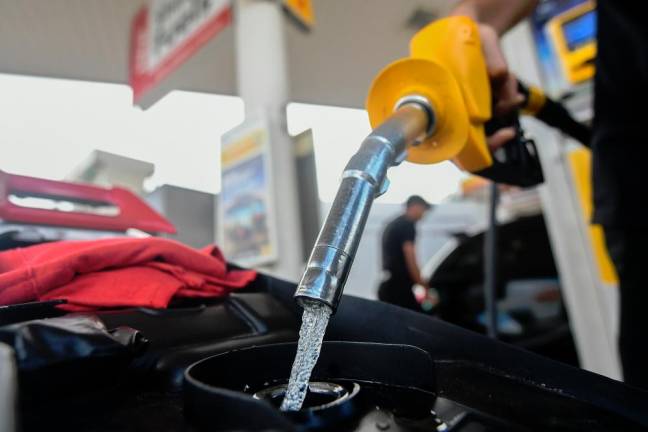
    Indian state refiners’ local fuel sales in April declined due to state-level restrictions aimed at stemming a rampant second wave of coronavirus infections, preliminary data shows. The deadly second wave topped 400,000 new daily cases for the first time on Saturday.

    Authorities reported 401,993 new cases in the previous 24 hours, the highest daily count globally, after 10 consecutive days over 300,000. Deaths from COVID-19 jumped by 3,523, taking the total toll in India to 211,853.

    “Overall fuel demand is down by about 7% from pre-covid level of April 2019,” said A.K. Singh, head of marketing at refiner Bharat Petroleum Corp.

    “We were near pre-covid level in March but new restrictions and covid wave-2 has temporarily reduced demand equivalent to about 10% of March demand for both personal mobility and industrial goods movement,” Singh told Reuters.

    He said the local fuel consumption will ‘start to look up’ in June, by when second wave of coronavirus is expected to weaken.

    Analysts are expecting India’s demand for transportation fuels to witness a sharper slump in May due to more impending restrictions.

    Declining fuel sales will reduce crude intake by refiners. The country’s top refiner Indian Oil Corp is operating refineries at an average 95% capacity.

    State companies – IOC, Hindustan Petroleum Corp and BPCL – own about 90% of India’s retail fuel outlets.

    State retailers’ fuel sales in April declined from their sales in March and April 2019 levels, while posting a sharp rise from the year ago month when there was a nation-wide lockdown.

  • Online concierge pharmacy platform POC raises $4.5 mln to improve services in Vietnam

    Online concierge pharmacy platform POC raises $4.5 mln to improve services in Vietnam

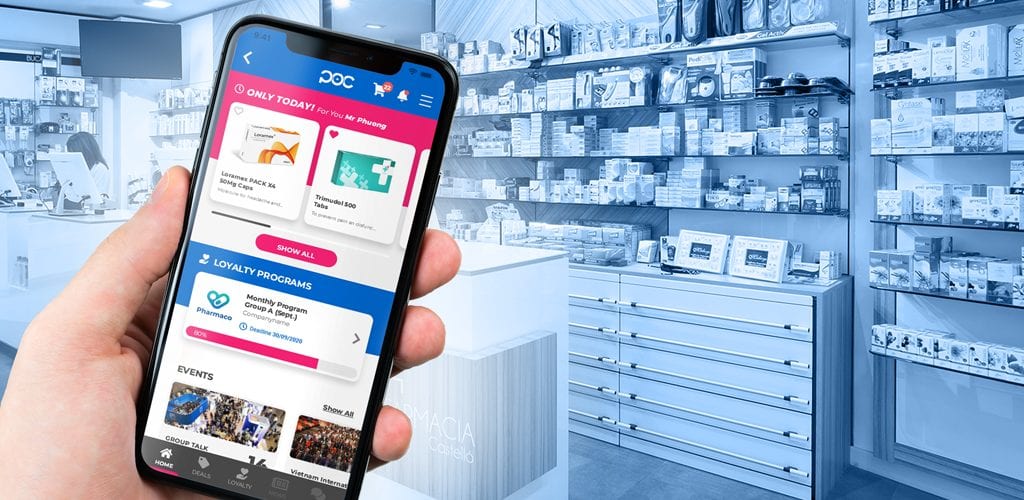
    Pharmacy Online Concierge Pharma has secured $4.5 million in an equity financing round to digitize pharmacies in Vietnam.

    Based in Vietnam and Hong Kong, the platform helps stakeholders such as pharmacies, drug manufacturers, distributors, wholesalers, and consumers to digitally manage their interactions.

    It raised the money from Picus Capital of Germany, Goat Capital and FJ Labs that of the U.S., Febe Ventures 500 Startups Vietnam of Singapore, and several unnamed angel investors. It is one of the biggest rounds at this stage in Vietnam.

    POC Pharma said it would use the money to improve its services in Vietnam, focusing on selling pharmaceutical products online first and then aiming to launch in more countries.

    Its services include trade programs and trade offers management, content and information sharing, data integration and visualization, customized customer engagement, multichannel commercialization, and order management. Established in 2020 by Thomas Miklavec and Charles Defrance, POC helps pharmacists manage all their processes, increasing revenues and profits while improving their quality of service.

    The startup said it has five global pharmaceutical company customers, including Bayer and Pfizer, and more than 20,000 pharmacies in 22 different markets use its platform.

  • HBO Max cheaper ad-supported plan reportedly coming in June

    HBO Max cheaper ad-supported plan reportedly coming in June

    HBO Max is already one of the most expensive streaming services in the United States, and that gave WarnerMedia an idea. Last month, the media giant confirmed plans to introduce a cheaper ad-supported plan for those who can’t afford to pay $15 per month for the regular plan.

    However, WarnerMedia did not say when the plan will be launched and how much it will cost. CBNC claims sources close to the company say HBO Max will introduce a cheaper service in June that will cost just $9.99.

    The new ad-supported plan will be available via AT&T at first, but pay-TV distributors might be willing to accept the cheaper service too, even though they would get a lower revenue percentage per user.

    It’s also important to mention that HBO Max will not run ads during original shows, but everything else will be peppered with commercials; that’s something that WarnerMedia has already confirmed last month.

    Initially, WarnerMedia considered a much cheaper $4.99 ad-supported plan that would offer just HBO Max content, but the company decided to go for a more varied product in the end.

  • Spotify announces paid subscription platform

    Spotify announces paid subscription platform

    Last week we reported on Spotify’s intentions to release an alternative to Apple’s paid podcast subscriptions. Now, the platform is real and soon you’ll be able to pay extra for extra podcast content.

    Apple got on this wagon first, but the offer from Cupertino is far from practical for podcasters. Tim Cook and company will take a 30% commission for the first year, and 15% for the second, in addition to the $20 annual fee for membership. While this is fine for big organizations, small creators may struggle to make money from the scheme.

    Spotify’s offer flips Apple’s business model on its head. It won’t take a cut from creators – at least for the first two years. This excludes transaction fees. After the first two years of the partnership, Spotify gives a word to take only five percent of the revenue.

    The program will be accessible and available through Anchor (app & website). Anchor is the podcast production platform that was acquired by Spotify about two years ago. It allows you to take your podcast from an idea to a finished product, all with just a smartphone.

    Now it will also allow creators to share exclusive content for subscribers. This can in the form of a brand new episode or early access. If you aren’t hosting your podcast on Anchor, don’t worry – Spotify promises to open up the platform for those who host their podcasts elsewhere. More details will be available soon.

    So, what about listeners? The way you’ll be able to recognize paid content is by the lock icon next to the episode (if you aren’t subscribed). This content will still be discoverable, similar to any other podcast episode, and it’ll appear on the feed. From what we understand, the only way to start your subscription is to click on a link found on the show notes on Spotify or head directly to the podcast page on Anchor and sign up.All of this will let you support your favorite podcasters, making sure the money goes directly to them. Then, Spotify promises to “maximize (creators) subscription audience and grow it from their existing listener base”.

    Spotify is going to support independent podcasters to get started with the subscription platform. NPR is on board with some ad-free content for paid subscribers. How I Built This with Guy Raz, Short Wave, It’s Been a Minute with Sam Sanders, Code Switch, and Planet Money will be available as soon as May 4.

    On the other hand, Apple’s version is expected to debut in May too. The tech giant hasn’t announced any exclusive shows or content just yet, but seems to have an advantage when it comes to global availability, as its platform will be available in 170 countries. Spotify’s offer will be available only in the US for now. Plans for global expansion are already on the table, but they’ll take a few months.

    For listeners, you should bear in mind that Spotify recently increased some of the Premium prices for a few regions of the world. Spotify family is increasing from $14.99 to $15.99 per month in the US. The rest of the Premium offers remain untouched as of today.

    However, UK-based users aren’t so fortunate. Spotify Student goes from £4.99 to £5.99 per month, Duo subscription from £12.99 to £13.99 a month, and Spotify Family plan (six accounts) goes from £14.99 to £16.99 a month.

    Ireland and a bunch of countries in Europe are also part of the price increase. Student Premium goes up by €4.99 to €5.99, and Due goes up from €11.99 to €12.99. The Family plan in Europe goes up from €14.99 to €17.99 per month. Countries in Asia and South America will also be affected.

    The changes come into effect on April 30. All existing Spotify subscribers in the US, Europe, and UK users of Spotify will have a one-month grace period before prices are automatically increased, meaning if you are already subscribed, the new prices will affect you from June, not May.

  • Railroad popularity a thing of the past

    Railroad popularity a thing of the past

    Though demand for travel and transportation has grown exponentially in recent years, the railroad has witnessed a sharp decline in popularity since its heydays a few decades ago.

    Some 10.4 million people traveled by trains in 1990, accounting for 3 percent of the total number of commuters using all modes of transport.

    Thirty years later, the number plummeted to 4.7 million passengers or a mere 0.2 percent of commuters, according to the General Statistics Office (GSO).

    Freight transport by rail too has declined though not so dramatically.

    The volume of freight transport grew at 10.3 percent annually during the decade between 1991 and 2000. In the next 10 years, the rate plummeted to 2.3 percent before it declined at 4.7 percent in 2011-20.

    Other modes of transport meanwhile grew at 7.3-11.7 percent a year.

    Outdated infrastructure is a major reason for the decline in the popularity of trains. Of Vietnam’s 3,163 kilometers of track, 84 percent is one meter wide, a gauge that has long been abandoned in most countries.

    They allow speeds of just 50-60 kph for freight trains and 80-90 kph for passenger trains, perceived to be a drawback.

    In developed countries, trains travel at speeds of 150-200 kph on traditional tracks and even 300 kph and higher on high-speed tracks.

    Low budget for railway projects partially results in the sector’ falling behind, according to the GSO. Only 3 percent of the transport infrastructure investment was for the railway network.

    Vietnam has over 3,000 km of track, none of it high speed.

  • Nuclear energy, an option for Vietnam in the long run

    Nuclear energy, an option for Vietnam in the long run

    Clean and reliable nuclear energy could help Vietnam meet its growing power demand over the long term and ensure its development is not derailed, experts say.

    Prof Sheldon Landsberger of the University of Texas at Austin, the U.S., an expert in nuclear and radiation engineering, said: “With a population of nearly 100 million people, Vietnam will need a lot of energy. The country has to figure out what is the best way of getting electricity.”

    It is crucial for Vietnam to sustain the growing standard of living of its people and have competitive industries, he said.

    While renewable energy sources such as solar and wind could be unreliable depending on the climate, nuclear plants could work 24 hours on all 365 days a year, he pointed out.

    It is a stable source like coal, and enables electricity storage as well, he said.

    However, unlike coal, nuclear energy is free from carbon emissions and does not pollute, he said.

    Talking about the status of nuclear energy around the world, he said it is “very mixed” with parts of Western Europe planning to continue with it but others phasing it out.

    The world would run out of coal and gas, maybe later this century, Landsberger said.

    “For that reason, Vietnam, like other countries, has to look not five or 10 years down the road but 30 or 40 years.”

    Dr. Steven Biegalski, nuclear and radiological engineering, and medical physics program chair, Georgia Institute of Technology, the U.S., said in his country nuclear power is still coming out on top today. Americans are seeing a significant reduction in using coal and natural gas, two main competitors of nuclear energy.

    Dr. Sama Bilbao y Leon, director-general, World Nuclear Association, said nuclear energy could help ensure not only the grid stability of a country but also produce heat used in industrial processes and transportation. With this, countries could decarbonize various sectors, she said.

    Vietnam could also use nuclear energy to produce fresh water, something that Middle Eastern countries are looking into, she said.

    Prof Ken-ichi Fukumoto of the Research Institute of Nuclear Engineering, University of Fukui, Japan, said nuclear power is a realistic solution for Vietnam to ensure power supply.

    In fact, despite the Fukushima accident in 2001, Japan still uses nuclear energy because it is reliable and reduces carbon dioxide emissions, he said. However, new plant development is now restricted as the public are concerned about their safety.

    Germany, despite abandoning nuclear power at home, buys nuclear power from neighbor France, he pointed out.

    Author of “A Question of Power: Electricity and the Wealth of Nations,” Robert Bryce, said Vietnam, like other developing countries in Asia, is seeing rapid growth in electricity demand and should include advanced nuclear reactors in plans to expand its electric grid.

    There are several challenges to building new nuclear reactors, including cost, the time required and fuel production and disposal, but if Vietnam is to help reduce global greenhouse gas emissions, it should include nuclear in its electricity portfolio, he said.

    Jennifer Gordon, a senior fellow at the Global Energy Center, Atlantic Council, the U.S., said it is now an important time for Vietnam to start discussions about investment in nuclear energy.

    In 2009 Vietnam had planned to build two nuclear power plants in the south-central province of Ninh Thuan at a cost of several billion dollars, but the National Assembly shot down the proposal in 2016 on cost grounds.

    Vietnam would not build old types of reactors if it is starting a nuclear program now, Gordon pointed out. To ensure safety, the newer types of reactors shut down automatically without human management, she said, citing the example of the sodium-cooled fast reactor.

    “Advanced reactors are in development that should be taken into account by Vietnam.”

    Landsberger said in Vietnam, nuclear energy could be a combination with wind, solar and tide.

    Vietnam should keep in mind that the climate is changing and so being dependent on renewable energies, including hydropower, would be shortsighted, he said, suggesting that Vietnam should consider a baseload, or the minimum amount of electric power delivered, of 30-40 percent from nuclear plants.

    South Korea and Japan are good examples of successful economies partly thanks to nuclear energy development, he said. They have steady electricity prices over long periods of time and do not have to rely on other countries, he pointed out. Vietnam should look at all areas of energy and choose the best path forward based on economics, he said.

    Speaking about costs, he said nuclear power would be expensive, but Vietnam should weigh all factors. For instance, people would have health expenses if the country has pollution (caused by fossil fuels), and Vietnam could get a lot of support as a developing country from the International Atomic Energy Agency.

    “Nuclear power is a very long-term plan.”

    Biegalski said there is a significant and earnest desire in the U.S. to look at the next generation of nuclear power technologies.

    He said he understood there is a fear in various countries after the accident in Fukushima, but when people look at the data they would see no one died as a result of the reactors, whereas the tsunami claimed 15,000 lives.

    Leon said small modular reactors offer an advantage since they are scalable.

    Fukumoto said it is desirable to examine the latest technologies if Vietnam is considering nuclear energy. Small modular reactors, which are being opted in the U.S, Canada and Japan, offer greater economic benefits and have higher safety standards including in the disposal of nuclear wastes and while decommissioning, he said.

    Bryce said nuclear energy is the safest form of electricity generation, adding that Vietnam, like other countries, would need to adhere to safety protocols around the handling of nuclear materials and operation of nuclear plants.

    Biegalski said Vietnam needs to build regulatory frameworks and develop a workforce before producing nuclear power. So it should start investing in training programs in universities, he said.

    “It is a long process; it is not like you can turn a switch and it happens today.”

    Landsberger said Vietnam needs to invest in nuclear engineering programs to train technicians, reactor operators, regulators, and environmental scientists. It should have an open discussion about the public health benefits of nuclear power compared to burning fossil fuels, he said.

    Fukumoto expressed optimism that Vietnam and Japan could begin cooperation in training that had been discussed before when the projects in Ninh Thuan Province were under consideration.

    It is necessary for the Vietnamese government and other related stakeholders to have a deep understanding of nuclear power generation and Japan’s experience, he said.

    Leon said when a country wishes to develop nuclear energy, there is a lot of international support and co-operation, and newcomers could learn best practices from other countries that have effective nuclear power programs.

    Leon said if people in Vietnam and other countries feel uncomfortable about using nuclear energy after the Fukushima accident, it is completely reasonable.

    So, if the Vietnamese government is looking at nuclear energy, the first thing that needs to be done is talking to the public, making sure people understand the facts about nuclear energy, she said.

    “There should be a consensus on how Vietnam wants to move forward with different energy choices.”