Category: Living

Retail News Asia is committed to providing both local and global retailers with the latest Living news throughout the Asian market. This on a daily base.

  • Apple launches in-app subscriptions in its Podcasts app

    Apple launches in-app subscriptions in its Podcasts app

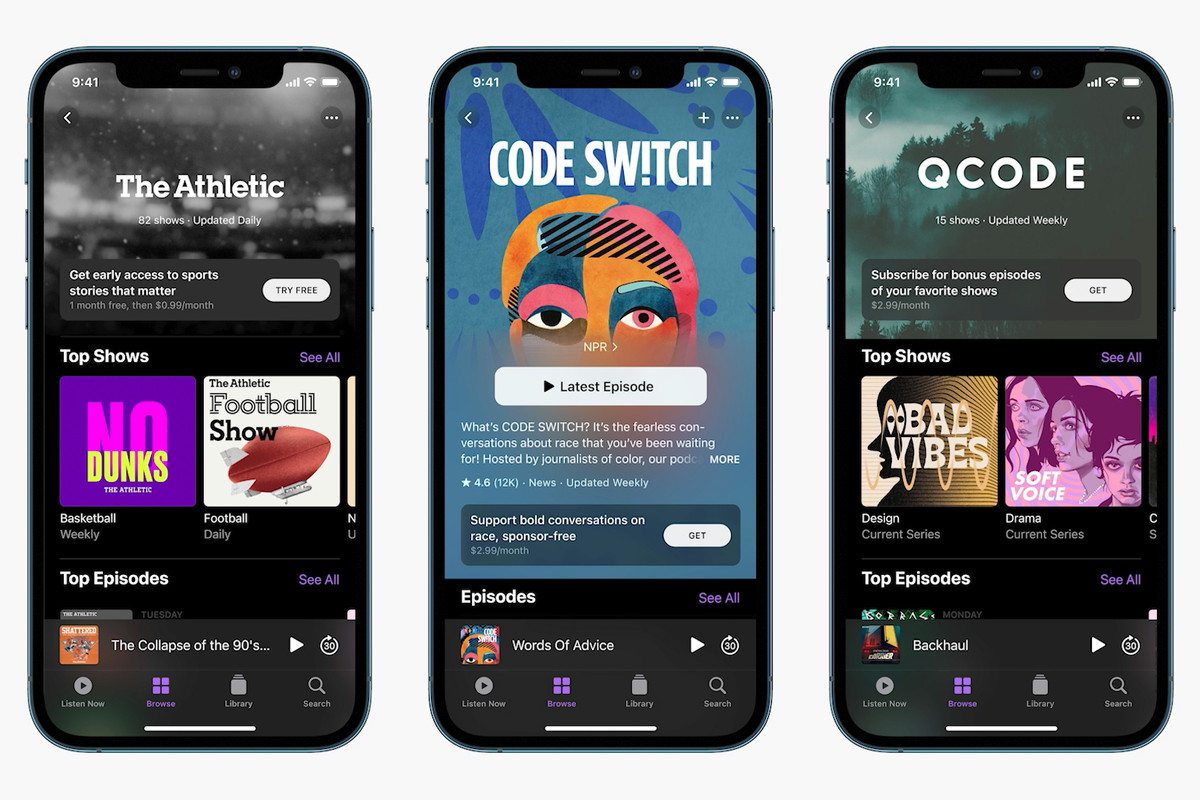
    Apple has just announced a major overhaul to its Podcasts app: within the app, it’s launching Apple Podcasts Subscriptions where people will be able to subscribe to premium content from their favorite creators and get perks like ad-free listening, bonus content, and exclusive access to new series.

    Apple Podcasts Subscriptions launches with partners like Pushkin Industries, QCODE, SME, and NPR, and this list will only grow with time.

    The whole Podcasts app is also getting a fresh design with channels where your favorite creators will recommend you new content, and each channel will have unique artwork, titles and descriptions.

    Initial partners with channels include the likes of Luminary, which was one of the first apps to offer subscription-based podcasts.

    As for prices, they will be set by creators for each subscription, but you will be getting a free trial and sample episodes before you sign up. Billing will happen monthly by default, but creators can also offer annual billing if they decide. On the other side of the fence, content creators will have to pay $20 per year to participate in the program, and Apple will be taking a 30% cut of the revenue the first year and drop that to 15% in the following years.

    Apple Podcasts remains one of the most popular ways listeners reach podcasts, not least because the app comes pre-installed on iPhones. However, Spotify has recently made a big entry in the space attracting some of the big names in the industry like The Joe Rogan Experience, and the latest data from eMarketer showed that this year 28.2 millions of listeners in the US tuned in to Spotify versus 28 million for Apple Podcasts.

    The new Apple Podcasts Subscriptions option is launching in an impressive over 170 countries and it will go live next month.

  • Gold bullion producer SJC reports 11 pct rise in profits

    Gold bullion producer SJC reports 11 pct rise in profits

    State-owned Saigon Jewelry Company reported a pre-tax profit of VND75 billion ($3.2 million) for 2020, up 11 percent from the previous year.

    The company’s revenue rose 26 percent to VND23.49 trillion in 2020, but its financial expenses tripled because of provisions made for the loss of financial investments.

    Established in 1988, SJC is a wholly state-owned enterprise belonging to Ho Chi Minh City. Revenues were up 26 percent at VND23.49 trillion, well below its target of VND25.7 trillion.

    It has been the sole producer of gold bullion in the country since 2012, and has around 90 percent of the bullion market.

  • TikTok, seeking advertisers, reveals info about its subscribers and how they use the app

    TikTok, seeking advertisers, reveals info about its subscribers and how they use the app

    TikTok has been seeking more advertisers for the global and U.S. versions of the short-form video app. As a result, the company has been meeting with potential advertising partners while carrying a B2B pitch book for its TikTok for Business unit. As you might imagine, the pitch deck reveals information about TikTok designed to show off the large number of TikTok users that could be mined by advertisers.

    The pitch deck has leaked online revealing plenty of information about TikTok’s audience. As of October, TikTok’s own numbers show that it’s monthly active users (MAUs) worldwide amount to 732 million. In the U.S., the MAU figure is over 100 million.

    When you consider that those figures are six months old, the numbers are much higher-perhaps tens of millions higher globally. Thanks to a lawsuit filed against the government last year, we know that from the end of July 2020 to October 2020, the app gained approximately 14.3 million monthly active worldwide users each month. If this growth continues over the next 13 months, by May 2022 the app will have over one billion monthly active users globally.

    Some of the data that TikTok is pitching to advertisers should be able to convince them to put some money in TikTok’s till. 47% of users said that they have purchased something that they saw on TikTok in the past while 67% said that TikTok gave them the inspiration to go shopping even if they weren’t planning to do so.

    The pitch deck also revealed the app’s attractive demographics with 42% of active users between 18 and 24 years old. 17% are between 13 and 17 with 22% aged between 25 and 34, 12% between 34 and 44 and only 7% over the age of 45. TikTok users continually return to the app as the average user opens TikTok 19 times a day although it isn’t clear whether this number reflects the actions of global or U.S. users.

    And as of this past January, the average TikTok user views the app 89 minutes a day. 80% of users call TikTok “the most entertaining platform.” The pitch deck is supposed to make TikTok sound like the perfect place for advertisers to spend their money and based on the numbers, many of them will do so on the app.

  • Vietnam Railways pleads for government funding as staff remain unpaid

    Vietnam Railways pleads for government funding as staff remain unpaid

    Vietnam Railways owes its 11,300 workers four months’ salaries due to a funding delay by the government, and fears this could cause many to quit.

    It reminded the government that it was supposed to receive VND2.8 trillion ($121.3 million) at the beginning of this year, but has not, forcing it to pay minimum compensation to staff.

    Vu Anh Minh, its chairman, said the delay could cause barrier operators at grade crossings and patrol staff to quit since they have the lowest incomes.

    “The issue has pushed the company to the end of its road. We might not survive until the end of this month.”

    This is not the first time VNR has been forced to beseech the government for funding. Last year too it owed its staff salary for months but managed to survive that crisis.

    The problem can be tracked to a dispute between two government agencies. Last year VNR became one of 19 state-owned companies whose oversight passed to the Commission for the Management of State Capital at Enterprises (CMSC), an entity that manages the government’s $43 billion investment in various companies.

    The CMSC refused to provide funds, saying maintenance workers should be paid by the Ministry of Transport since it controls the maintenance and infrastructure budget.

    But the ministry cannot provide funds to any entity it does not manage.

    A temporary solution was agreed upon last year and the transport ministry provided the needed sum of VND2.5 trillion.

    But there has been no decision yet on whether the same thing will happen this year, leaving VNR and its staff in the lurch.

    VNR wants the government to provide the money through the CMSC.

  • Trip.com to raise US$1.09bn in Hong Kong listing

    Trip.com to raise US$1.09bn in Hong Kong listing

    Syndicated lending in Asia Pacific plunged to the slowest quarter in eight years as the coronavirus pandemic took its toll with several countries imposing lockdowns and grinding a range of business activities to a halt.

    Loan volumes in Asia Pacific (ex-Japan) dropped 39% to US$68.92bn in the first quarter from US$113.79bn a year ago, while deal flow shrunk to 221 from 377 loans completed in the same period, according to Refinitiv LPC data.

    The volumes for the first three months of 2020 represent the lowest quarterly tally since the first quarter of 2012 when lending in Asia Pacific slumped to US$62.21bn from 231 deals in the aftermath of the 2011 eurozone crisis.

    “Overall, the market has been off to a really slow start and outlook for Q2 is uncertain and changing by the day,” said Bryan Liew, regional head, loan syndications, ASEAN at Standard Chartered Bank in Singapore. “I think we will see more caution and maybe asset repricing.”

    The market volatility from Covid-19 has forced borrowers to shelve fundraising, acquisition, and capital expenditure plans, and seek covenant amendments or waivers from lenders. Every market across the region posted declines with Singapore being the worst hit, nose-diving over 84% year-on-year to US$1.09bn in the first quarter of 2020.

    Two financial sponsors terminated their proposed acquisition of New Zealand-listed dental service provider Abano Healthcare Group, dealing a blow to a NZ$190m (US$107m) five-year loan for the buyout that had been in syndication since November.

    Earlier this month Australian retail property group Vicinity Centres suspended a A$300m (US$176m) seven-year loan until further notice. Lenders to Singapore-listed Eagle Hospitality Trust issued a notice of default and mandatory prepayment on a US$341m loan signed last May. MGM China Holdings asked lenders in February to waive the leverage covenants on a HK$9.75bn (US$126m) loan for the next 12 months after Macau’s government closed all casinos for 15 days that month.

    Although G3 currency bond issuance from Asia Pacific (ex-Japan) has ground to a halt since March 11, the volumes for the first quarter posted only a 5.81% year-on-year decline to US$96.32bn. Bankers expect some bond issuers to turn to loans, which historically have been more resilient during times of crisis.

    “The coronavirus-induced market volatility will create a heightened focus for all corporates on what their funding strategy is going to be for the next 12 months,” said Gavin Chappell, head of syndications Australia at ANZ in Sydney. “I think we will see some transactions that couldn’t have been done in other markets come into the bank market.”

    In a report released on Monday, rating agency S&P warned of a risk of recession across Asia Pacific, likening the current situation to that during the 1997-98 Asian financial crisis. It noted that corporate and institutional borrowers in the region, unlike their US peers, continue to borrow a huge amount from banks rather than from other sources.

    Credits from the hardest-hit industries of aviation, tourism and hospitality, among others, are grappling with challenges, while cash-strapped companies with impending debt maturities in other sectors are also facing the heat.

    “We often see a polarisation effect during times of market disruption – strong credits in stable sectors continue to receive support from their relationship banks, while weaker credits or those in volatile sectors may struggle to raise financing or see their terms become less competitive,” said Andrew Ashman, head of loan syndicate Asia Pacific at Barclays in Singapore.

    The outcome pf syndication for Chinese travel agency Trip.com Group’s US$1.2bn loan will provide a gauge of sentiment. Singapore Airlines, Australia’s Qantas Airways, Air New Zealand and Hong Kong’s Cathay Pacific Airways took steps to lock liquidity with support from their governments and other lenders.

    StanChart said it will commit US$1bn in financing for manufacturers and distributors in the pharmaceutical industry and healthcare providers, as well as non-medical companies that have volunteered to add manufacturing capabilities for goods such as ventilators, face masks, protective equipment, sanitisers and other consumables.

    NOT ALL GLOOM AND DOOM

    Leaders of the Group of 20 major economies pledged on March 26 to inject over US$5trn into the global economy to keep Covid-19 from tipping the world into a recession. Whether this and other stimulus measures are enough to help borrowers survive through the crisis remains to be seen.

    “As perception of credit risk goes up, so too should credit spreads,” said Ashish Sharma, head of loan syndications Asia Pacific at HSBC in Hong Kong. “But as interest rates have come down, and given quantitative easing by a number of central banks, some of the stronger borrowers may see their overall interest cost come down with the significant decline in benchmark rates, even if their credit spreads go up.”

    It is not all gloom and doom, however, with event-driven financings providing the silver lining. Thai billionaire Dhanin Chearavanont’s Charoen Pokphand Group is raising a bridge loan of about US$7.5bn for its proposed acquisition of Tesco’s Asian business, the largest from the South-East Asian country. Freeport Indonesia is preparing launch of a US$2.8bn five-year loan for copper smelter in East Java into general syndication as early as April.

    Vodafone Hutchison Australia and TPG Telecom are forging ahead with a larger A$5.25bn loan for their proposed merger, returning to the loan market after cancelling a A$4.75bn facility that backed the exercise last year.

    “When the situation hopefully settles, the level of activity should come back up,” said HSBC’s Sharma. “Even though things may not be back to exactly as they were in January, there should be opportunities in the loan market, particularly in M&A financing and other financings to help rebuilding in various economies.”

    StanChart’s Liew is also optimistic of the region’s prospects and expects a pick-up of activities from the third quarter.

    “Fundamentally, the outlook in Asia remains intact with three of the largest economies – China, India and ASEAN – all in growth mode and several at the start of industrialisation,” he said.

  • Hanoi to take over metro operation in May

    Hanoi to take over metro operation in May

    Hanoi’s first metro line Cat Linh – Ha Dong is set to be handed over to city authorities in May for commercial operation.

    The company that built it, China Railway Sixth Group Co Ltd., on Wednesday began the process of handing over the Cat Linh – Ha Dong Metro Line to local authorities.

    The handover will take three to four weeks.

    Deputy Transport Minister Nguyen Ngoc Dong told reporters Wednesday that since January, Hanoi authorities have been working to finish the last details of the project, like setting up signs for disabled passengers, installing a device to prevent the conductor from falling asleep and adding more staff at each station to supervise and assist passengers embark and disembark.

    Each train on the route will be capable of carrying 960 passengers. A one-way trip will take 23 minutes, including a 30-second stop at each station.

    There will be a train every 10-15 minutes in the initial period, with higher frequency during rush hours.

    The Cat Linh – Ha Dong Metro Section is set to be the first such project to operate in Vietnam. It runs 13 kilometers on elevated tracks through 12 stations from downtown Dong Da District to Yen Nghia in Ha Dong District in the southwestern part of the city.

    The project has been delayed for years and missed several commercial operation deadlines with the Ministry of Transport blaming the Chinese contractor for its inexperience.

    Last year, its safety evaluation was delayed several times because the Chinese and French experts who had returned home late January and were unable to return to Vietnam since international flights were grounded due to the Covid-19 pandemic.

    The section, one of eight lines planned in the city of 8.3 million, is expected to partly resolve chronic traffic congestion and motivate more residents to use public transportation.

  • First quarter sees 16 percent rise in business closures

    First quarter sees 16 percent rise in business closures

    Around 23,800 are temporarily closed, up 28.2 percent, and more than 5,000 have permanently ceased to do business, a 26.4 percent increase, while 11,300 others are completing dissolution procedures.

    The majority are small, newly-established companies that were vulnerable to the impacts of the Covid-19 pandemic.

    Some 29,300 enterprises were established during the quarter, down 1.4 percent, and 14,700 others resumed operations after temporarily closing.

    A survey of the manufacturing sector by the GSO found 68.6 percent of firms saying their business situation is better than in the previous quarter, and 85 percent believing it would improve next quarter.

    The majority said strong competition was the main factor affecting their business. Other factors included low demand, resource crunch, raw material shortage, and lack of human resources.

    Only 27.8 percent of firms reported an increase in the number of domestic orders from the previous quarter, and 25 percent said there was an increase in exports.

  • Hulu app finally adds support for higher resolutions on Android TV

    Hulu app finally adds support for higher resolutions on Android TV

    It’s hard to understand why Hulu has been limiting streaming resolutions to 720p on Android TV until now, but just about every other streaming service offers at least support for 1080p. Not to mention that most of its competitors in the US have already upgraded their streaming services to 4K resolution at no additional costs.

    Thankfully, Hulu has decided that it finally time to upgrade its streaming service and offer customers at least the same level of quality the competition currently offers. The Hulu app for Android TV now features two additional streaming options: 1080p and 4K.

    Keep in mind though that to benefit from these improvements, your Android TV device must support these resolutions. There’s no official word on the changes, but many Reddit users that own Android TV devices like the 2019 Shield TV noticed Hulu can now stream at 1080p resolution.

    At least one 2017 Sony Bravia TV user confirmed the Hulu app now supports 4K streaming. It looks like these improvements are slowly rolling out to Hulu customers across the US, so we’re not sure when exactly they’ll be available to everyone.

  • HBO Max to offer at least 6,000 hours of described content by March 2023

    HBO Max to offer at least 6,000 hours of described content by March 2023

    HBO Max has big plans for 2021, as the streaming giant is ready to implement lots of major enhancements to its service. One of the first important changes coming to HBO Max this week is aimed at visually impaired users.

    Starting this week, HBO Max will roll out newly 1,500 hours of audio described content on the web and mobile platforms including select HBO originals, Max Originals, Warner Bros movies, and some acquired content, WarnerMedia announced earlier today.

    The new feature will run as a separate audio track that offers a verbal description of visual elements on the screen. Apart from that, HBO Max will include a new Audio Description category in the navigation menu.

    HBO Max also announced that other improvements to the accessibility will be added this week to the Android and iOS apps for visually impaired users that take advantage of the screen reader software to browse the service’s digital content.

    Finally, HBO Max revealed that it will make audio descriptions available across all supported Internet-connected TVs later this year. Also, by March 2022, HBO Max users should expect to get 3,000 hours of described content and at least 6,000 hours by the end of March 2023.

  • Disney+ is raising its US prices today

    Disney+ is raising its US prices today

    Disney+, which as of this month has 100 million subscribers, is nothing short of a global phenomenon thanks to its huge catalog of Disney, Marvel, Pixar, Star Wars, and National Geographic content.

    That catalog keeps growing in size, though, so Disney+ has decided that now’s the right time to raise its prices in the United States, after already increasing them in Europe last month.

    Starting this Friday, March 26, the monthly cost of Disney+ is going up by $1 to $7.99 per month. The Disney subscription service is also raising the price of its yearly subscription plan, from $69.99 to $79.99.

    Disney offers a bundle subscription package that includes Hulu and ESPN+, in addition to Disney+. The ad-supported tier will go from $12.99 to $13.99 a month on Friday, while the ad-free version is going from $18.99 to $19.99 per month.

    The good news is that you still have time to get Disney+ at its original price. Today is your last chance to sign up to Disney+ for $6.99 per month or $69.99 a year. The same can be said for the Hulu & ESPN+ bundle.

    As a reminder, here are some of the popular movies and TV shows Disney+ offers:

    • The Mandalorian
    • Falcon and the Winter Soldier
    • WandaVision
    • Mulan
    • Soul
    • Incredibles 2
    • Avengers: Endgame
    • Marvel Studios: Legends
  • UK and EU regulatory agencies confirm COVID-19 Vaccine AstraZeneca is safe and effective

    UK and EU regulatory agencies confirm COVID-19 Vaccine AstraZeneca is safe and effective

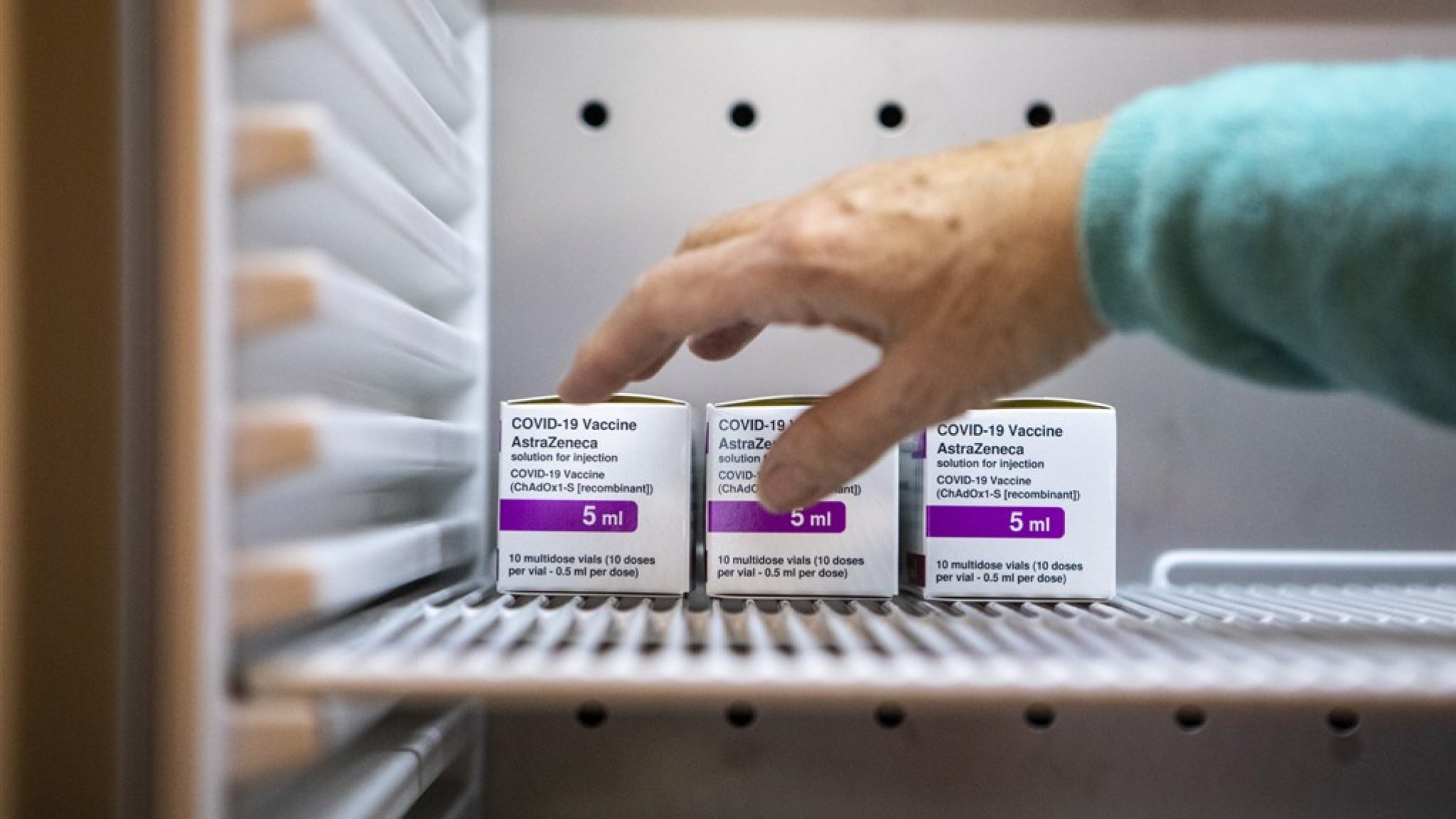
    On March 18, the Medicines Health Regulatory Authority (MHRA) and European Medicines Agency (EMA) reaffirmed the benefits of COVID-19 Vaccine AstraZeneca continue to far outweigh the risks.

    Earlier today, the MHRA announced their review of the small number of thromboembolic events in over 11 million people who received COVID-19 Vaccine AstraZeneca in the UK. The UK regulator confirmed that the benefits of the vaccine in preventing COVID-19 far outweigh the risks, and people should continue to get vaccinated when asked to do so. Following the rigorous scientific review, the MHRA concluded there is no evidence that blood clots in veins are occurring more than would be expected in the absence of vaccination. A detailed review of five UK reports of a very rare and specific type of blood clot in the cerebral veins (sinus vein thrombosis) occurring together with lowered platelets (thrombocytopenia) is ongoing. This has been reported in fewer than one in a million people vaccinated so far in the UK, and can also occur naturally – a causal association with the vaccine has not been established.

    Subsequently, the EMA’s Pharmacovigilance Risk Assessment Committee (PRAC) concluded there was no increase in the overall risk of blood clots (thromboembolic events) with COVID-19 Vaccine AstraZeneca. However, the PRAC also concluded that, for very rare cases of serious thromboembolic events with thrombocytopenia, a causal link with the vaccine is not proven, but is possible and deserves further analysis. Furthermore, there was no evidence of a problem related to specific batches of the vaccine or to particular manufacturing sites.

    AstraZeneca will continue to work closely with health authorities to ensure the appropriate use of COVID-19 Vaccine AstraZeneca. The Company recognises and will implement the recommendations of the PRAC, including the update of the product information, whilst continuing to understand the nature and relevance of these events to ensure the safe delivery of the vaccine continues during this public health crisis. Analysis of AstraZeneca’s safety database on tens of millions of records for COVID-19 Vaccine AstraZeneca did not show that these events occurred any more commonly than would be expected in millions of people.

    Ann Taylor, Chief Medical Officer, said: “Vaccine safety is paramount and we welcome the regulators’ decisions which affirm the overwhelming benefit of our vaccine in stopping the pandemic. We trust that, after the regulators’ careful decisions, vaccinations can once again resume across Europe.”

    Patient safety remains AstraZeneca’s highest priority and the Company has robust processes in place for the collection, analysis and reporting of adverse events and these are shared with regulatory authorities around the world.

  • Buying Art Online Goes Mainstream

    Buying Art Online Goes Mainstream

    While overall art sales contracted in 2020 amid the Covid-19 pandemic, online sales doubled in value. Aggregate online sales reached a record high of $12.4 billion, doubling in value from 2019, while the share of online art sales grew from 9 percent of total sales by value in 2019 to 25 percent in 2020, according to the fifth Global Art Market Report, published by Art Basel and UBS.

    This was the first time the share of e-commerce in the art market exceeded that of general retail. This growth also came despite a 22 percent dip in sales of art and antiques globally, which stood at $50.1 billion in 2020

    According to Christl Novakovic, CEO UBS Europe SE, head wealth management Europe and chair of the UBS Art board, called 2020 a «turning point for digital innovation in the art market, which traditionally relies on discretionary purchasing, travel and personal contact.

    The crisis also provided the impetus for change and restructuring, the most fundamental shift being the rollout of digital strategies and online sales, which had lagged behind other industries up to now, said Clare McAndrew, founder, Arts Economics, who authored the report.

    The report incorporated a survey of 2,569 high-net-worth (HNW) collectors, of which 66 percent felt the pandemic had increased their interest in collecting, while 32 percent reported it had significantly done so. Some 57 percent said they planned on purchasing more artwork in 2021.

    And while the pandemic prompted the cancellation of high-profile art fairs – where the largest deals traditionally are sealed – some 45 percent of collectors also said they made a purchase through an art fair’s online viewing room.

  • HBO Max reveals plans to introduce ad-supported subscription tier in 2021

    HBO Max reveals plans to introduce ad-supported subscription tier in 2021

    HBO Max is the most expensive streaming service of its kind at the moment, as subscribers must pay $14.99 per month to access its offering. However, the company confirmed plans to introduce a cheap alternative for those who can’t afford the high price of a monthly subscription.

    The news was revealed as part of a recent call with investors, along with information about HBO Max’s expansion worldwide. First off, AT&T stated that it expects HBO Max to reach around 150 million subscribers by 2025, which will become possible after expanding the service to 60 international markets this year (39 in Latin America/Caribbean region and 21 in Europe).

    Also, AT&T confirmed plans to launch an ad-supported option (AVOD) in June but didn’t offer any details about pricing. WarnerMedia chief Jason Kilar reaffirmed HBO Max’s commitment to its customers to provide them with original shows and premieres of Warner Bros movies.

    However, he said that the new ad-supported plan will not have access to day-and-date premieres of Warner Bros movies, although everything else will be the same. Also, he confirmed that HBO Max doesn’t plan to put ads on HBO’s original series.

    According to the company’s estimations from October 2019, HBO Max and HBO have around 90 million subscribers. The ad-supported version of HBO Max will only be available in the US in June.

  • IT engineers’ salaries soar as supply cannot meet demand

    IT engineers’ salaries soar as supply cannot meet demand

    IT engineers with five years’ experience are getting paid salaries of VND120 million ($5,200) a month amid rising demand for their skills.

    A software/solutions architect in Ho Chi Minh City earns up to VND160 million while a software engineer gets VND120 million, according to recruitment company Adecco Vietnam.

    A DevOps engineer, who is responsible for software development and IT operations, can get VND90 million and a data engineer, VND80 million.

    As corporations focus on digital transformation, demand for IT personnel is rising, but Vietnam’s pool of qualified candidates is small, it said.

    “With the huge rise in demand for digital media, cloud and security solutions, IT infrastructure roles are highly sought after.”

    IT professionals with good communication skills who adapt quickly to new technology trends have huge opportunities, especially with the rise of artificial intelligence and big data, it said.

    For senior positions such as chief information officer and chief technology officer, the salary could go up to VND400 million.

  • Shell’s 2020 Carbon Emissions Fall On The Back Of Fuel Sales Drop

    Shell’s 2020 Carbon Emissions Fall On The Back Of Fuel Sales Drop

    Royal Dutch Shell, owner of the world’s largest fuel retail network, said on Thursday its total greenhouse gas emissions dropped 16% in 2020 as oil and gas sales fell sharply due to the coronavirus pandemic. Shell said in its annual report that total emissions from its oil wells to forecourt fuel sales fell to 1.38 billion tonnes of carbon dioxide equivalent last year, from 1.65 billion in 2019.

    “One of the major causes of this larger than expected reduction in 2020 was lower demand for energy, especially for oil and gas,” it said.

    Shell said its total greenhouse gas emissions dropped 16% in 2020 as oil and gas sales fell sharply due to the coronavirus pandemic.

    Energy majors’ climate reporting differs in that some emissions data, for example, the data Shell released on Thursday, includes planet-warming gases from the combustion of fuels they produce themselves plus the oil products they sell but are produced by another company. Others, like BP, only cover the former: emissions from the combustion of fuels made from crude oil they produce themselves.

    Net carbon intensity, the main measure the Anglo-Dutch focuses on in its energy transition strategy, dropped last year to 75 grams of CO2 equivalent per megajoules, a 4% reduction from 2019, Shell said. Carbon energy intensity means a company can increase its fossil fuel output while offsetting its carbon emissions or adding renewable energy to its product mix.

    Shell has begun a major overhaul to shift away from oil and gas to low-carbon energy, power trading and retail in order to reduce its greenhouse gas emissions to net-zero by mid-century, including the use of offsets for residual emissions. Shell runs around 46,000 retail fuel stations. Its executives’ pay is linked to its success in reaching its climate targets.