Category: Living

Retail News Asia is committed to providing both local and global retailers with the latest Living news throughout the Asian market. This on a daily base.

  • Government to recommend vaping as healthier

    Government to recommend vaping as healthier

    The New Zealand Government is set to publicly recommend that Kiwis seeking to quit tobacco could use vaping as a healthier alternative, with a media campaign set to begin in August.

    While the New Zealand Ministry for Health website notes it “does not have enough evidence to recommend vaping products confidently as a smoking-cessation tool”, a spokesperson confirmed that vaping is intended to be a safe gateway for those who wish to give up cigarettes.

    “There is a scientific consensus that vaping is significantly less harmful than smoking,” the spokesperson said.

    “It is likely vaping can also be used to stop smoking but the evidence is still emerging. A number of large studies are underway and more information will be available over the next year.”

    The campaign is also set to limit access to vaping devices for non-smokers, especially the under-age, while also focusing on Māori women – who have been shown to have the highest smoking rate in the country at 32.5 percent.

    The shift in thinking is likely to assist with the Government’s ‘Smoke-free 2025’ target.

  • The Body Shop launches plastic recycling Endeavor

    The Body Shop launches plastic recycling Endeavor

    Beauty and body care retailer The Body Shop is stepping up its sustainability efforts with the launch of its new recycling scheme that helps consumers recycle their empty packaging. The new initiative, which will launch in Australia on June 10, allows customers to return their empty bottles, jars, tubs, tubes, and pots in The Body Shop stores for recycling.

    The scheme, established in partnership with recycling company TerraCycle, was introduced in the UK, Canada, and France on May 10. It will be introduced in Germany soon.

    In a bid to tackle plastic pollution, the global personal care brand has also announced it plans to purchase 250 tonnes of community-trade recycled plastic from Bengaluru, India, and use them in nearly three million 250ml haircare bottles by the end of 2019.

    According to The Body Shop, it has already started using community-trade recycled plastic in 250ml haircare bottles in partnership with Plastics for Change and soon, the retailer said it will include its bestselling Ginger Shampoo. The bottles will contain 100 percent recycled plastic, excluding the bottle caps.

    Fifteen percent of that will be community-trade recycled plastic; the remainder will be recycled plastic from European sources.

    “The Body Shop will increase the amount of community trade Recycled plastic over time,” the retailer said. “Working with a start-up company and small waste picker communities means starting small and scaling up in a responsible and sustainable manner.”

    This move marks the start of a wider ambition for The Body Shop, which is to introduce community-trade recycled plastic across all plastic used by The Body Shop within three years.

    The company said over the course of three years the program will scale up to purchasing over 900 tonnes of community-trade recycled plastic and help empower up to 2500 waste pickers in Bengaluru.

    The retailer’s new campaign uses experiential marketing to tell people about the plight of waste-pickers in India and how it aims to help them by paying a fairer price for their work.

    “They will receive a fair price for their work, a predictable income and access to better working conditions,” The Body Shop announced. “They will also get help in accessing services such as education, financial loans and healthcare services, and the respect and recognition they deserve.”

    As part of their campaign, The Body Shop has commissioned a portrait of a female waste-picker made from 1500 recycled plastic items hand-collected by waste-pickers in Bengaluru. The installation was on display in London’s Borough Market from May 10 to 11.

    “As a company, we’ve always had the conviction to stand up for our principles when it comes to helping empower people, especially women while protecting our planet,” said Lee Mann, Global Community Trade manager for The Body Shop.

    “Our new partnership with Plastics for Change and our other partners will not only help support waste pickers but also champion plastic as a valuable, renewable resource when used responsibly.”

  • New Zealand introduces groundbreaking zero carbon bill

    New Zealand introduces groundbreaking zero carbon bill

    New Zealand’s long-awaited zero carbon bill will create sweeping changes to the management of emissions, setting a global benchmark with ambitious reduction targets for all major greenhouse gases.

    The bill includes two separate targets – one for the long-lived greenhouse gases carbon dioxide and nitrous oxide, and another target specifically for biogenic methane, produced by livestock and landfill waste.

    Launching the bill, Prime Minister Jacinda Ardern said, “carbon dioxide is the most important thing we need to tackle – that’s why we’ve taken a net zero carbon approach. Agriculture is incredibly important to New Zealand, but it also needs to be part of the solution. That is why we have listened to science and also heard the industry and created a specific target for biogenic methane.”

    The Climate Change Response (Zero Carbon) Amendment Bill will:

    • Create a target of reducing all greenhouse gases, except biogenic methane, to net zero by 2050
    • Create a separate target to reduce emissions of biogenic methane by 10% by 2030, and 24-47% by 2050 (relative to 2017 levels)
    • Establish a new, independent climate commission to provide emissions budgets, expert advice, and monitoring to help keep successive governments on track
    • Require the government to implement policies for climate change risk assessment, a national adaptation plan, and progress reporting on the implementation of the plan.

    Bringing in agriculture

    Preparing the bill has been a lengthy process. The government was committed to working with its coalition partners and also with the opposition National Party, to ensure the bill’s long-term viability. A consultation process in 2018 yielded 15,000 submissions, more than 90% of which asked for an advisory, independent climate commission, provision for adapting to the effects of climate change and a target of net zero by 2050 for all gasses.

    Throughout this period there has been a discussion of the role and responsibility of agriculture, which contributes 48% of New Zealand’s total greenhouse gas emissions. This is an important issue not just for New Zealand and all agricultural nations, but for world food supply.

    Ministry for the Environment, CC BY-ND
    Another critical question involved forestry. Pathways to net zero involve planting a lot of trees, but this is a short-term solution with only partly understood consequences. Recently, the Parliamentary Commissioner for the Environment suggested an approach in which forestry could offset only agricultural, non-fossil emissions.

    Now we know how the government has threaded its way between these difficult choices.

    Separate targets for different gases

    In signing the Paris Agreement, New Zealand agreed to hold the increase in the global average temperature to well below 2°C and to make efforts to limit it to 1.5°C. The bill is guided by the latest Intergovernmental Panel on Climate Change (IPCC) report, which details three pathways to limit warming to 1.5°C. All of them involve significant reductions in agricultural methane (by 23%-69% by 2050).

    Farmers will be pleased with the “two baskets” approach, in which biogenic methane is treated differently from other gasses. But the bill does require total biogenic emissions to fall. They cannot be offset by planting trees. The climate commission, once established, and the minister will have to come up with policies that actually reduce emissions.

    In the short term, that will likely involve decisions about livestock stocking rates: retiring the least profitable sheep and beef farms, and improving efficiency in the dairy industry with fewer animals but increased productivity on the remaining land. Longer-term options include methane inhibitors, selective breeding, and a possible methane vaccine.

    Net zero by 2050 on all other gasses, including offsetting by forestry, is still an ambitious target. New Zealand’s emissions rose sharply in 2017 and effective mechanisms to phase out fossil fuels are not yet in place. It is likely that with protests in Auckland over a local 10 cents a liter fuel tax – albeit brought in to fund public transport and not as a carbon tax per se – the government may be feeling they have to tread delicately here.

    But the bill requires real action. The first carbon budget will cover 2022-2025. Work to strengthen New Zealand’s Emissions Trading Scheme is already underway and will likely involve a falling cap on emissions that will raise the carbon price, currently capped at NZ$25.

    In an initial reaction to the bill, the National Party welcomed all aspects of it except the 24-47% reduction target for methane, which they believe should have been left to the climate commission. Coalition partner New Zealand First is talking up their contribution and how they had the agriculture sector’s interests at heart.

    While climate activist groups welcomed the bill, Greenpeace criticized the bill for not being legally enforceable and described the 10% cut in methane as “miserly”. The youth action group Generation Zero, one of the first to call for zero carbon legislation, is understandably delighted. Even so, they say the law does not match the urgency of the crisis. And it’s true that since the bill was first mooted, we have seen a stronger sense of urgency, from the Extinction Rebellion to Greta Thunberg to the UK parliament’s declaration of a climate emergency.

    New Zealand’s bill is a pioneering effort to respond in detail to the 1.5ºC target and to base a national plan around the science reported by the IPCC.

    Many other countries are in the process of setting and strengthening targets. Ireland’s Parliamentary Joint Committee on Climate recently recommended adopting a target of net zero for all gasses by 2050. Scotland will strengthen its target to net zero carbon dioxide and methane by 2040 and net-zero all gasses by 2045. Less than a week after this announcement, the Scottish government dropped plans to cut air departure fees.

    One country that has set specific goals for agricultural methane is Uruguay, with a target of reducing emissions per kilogram of beef by 33%-46% by 2030. In the countries mentioned above, not so different from New Zealand, agriculture produces 35%, 23%, and 55% of emissions, respectively.

    New Zealand has learned from processes that have worked elsewhere, notably the UK’s Climate Change Commission, which attempts to balance science, public involvement and the sovereignty of parliament. Perhaps our present experience in balancing the demands of different interest groups and economic sectors, with diverse mitigation opportunities and costs, can now help others.

  • City proposal to slap luxury tax on mobile phones raises hackles

    City proposal to slap luxury tax on mobile phones raises hackles

    HCMC’s proposal to impose a special consumption tax on mobile phones has drawn protests from experts, who said they are not a luxury product. Dr. Nguyen Thanh Binh of the Ministry of Planning and Investment’s Institute of Policy and Development said the proposal should be carefully considered since no other country levies a luxury tax on mobile phones.

    The nature of such a tax is to hit luxury goods or discourage consumption of goods that use up foreign currency for imports or harm the environment or human health, he explained.

    “We have to ask ourselves whether mobile phones are essential or luxury, and what effect it has on the environment and health.”

    Mobiles are now ordinary goods used by everyone, he said.

    The city people’s committee has recently sent to the Ministry of Finance suggestions for a draft proposal on “expanding the tax base and preventing erosion of state revenues.”

    It said mobile phones are not luxury goods but not “very essential” either, and so it wants to regulate consumption to ensure it is “reasonable.”

    It also called on lawmakers to add items such as cameras, perfumes, cosmetics, gaming services, and beauty services to the list of items subject to special consumption tax to target the population segment with above-average income.

    Binh queried this rationale saying the city can simply use income tax for this.

    Nguyen Duc Nghia, chairman of Ho Chi Minh City Tax Agents Club, an association of tax consultants, said the mobile phone has become a commonplace product used by everyone.

    Therefore, a luxury tax would not have the effect of taxing only wealthy individuals and would instead affect everyone, he said.

    Truong Thanh Duc, chairman of Basico law firm, said special consumption tax is normally levied on luxury goods and those that are harmful or which the government wants to discourage people from using.

    In fact, in a quickly developing economy, this tax should be eliminated on many goods since what were once luxury goods gradually become essential items as people become more affluent, he pointed out.

    “Thirty years ago mobile phones were a luxury item but not taxed. Now it has become a popular item, with the number of telephone subscribers equaling the population. Levying a luxury tax on such a good is far from reasonable.”

    Up to 73 percent of the population uses mobile phones, on which 42 percent use smartphones and 50 million people use mobile social media, according to a report by Vietnamese digital advertising firm Adsota earlier this year.

  • YouTube Music reportedly exceeds 15 million subscribers Recently

    YouTube Music reportedly exceeds 15 million subscribers Recently

    We’ve received an official statement that disputes the reports coming from Bloomberg and Wall Street Journal claiming that Google is struggling to attract paying music subscribers. Here is what a Google spokeswoman had to say about these reports: “YouTube aggressively disputes the WSJ report stating YouTube Music subscription growth has plateaued, countering that healthy subscription growth continued through Q1 of this year.”

    Google’s music streaming service recently went through a rebranding process one year ago, as the search giant has decided to merge Play Music and YouTube Music into one product in order to avoid confusion among customers.

    We’re not sure whether or not the results met Google’s expectations, but Bloomberg reports the company’s paid music services have recently exceeded 15 million subscribers, at least according to two persons familiar with the matter.

    The number of subscribers mentioned includes both YouTube Music and Google Play Music services, as well as some consumers that are still using promotional trial accounts. If Google’s YouTube Music has just exceeded 15 million subscribers one year after its rebrand, it’s way behind Apple and Spotify.

    The former reached 50 million subscribers back in January, while Spotify announced late last month that it now has more than 100 million subscribers paying for its premium service.

    Although Google declined to comment on the numbers, it did say that the number of subscribers to YouTube Music grew 60% between March 2018 and March 2019, which is clearly good progress. It remains to be seen whether or not the company will be able to maintain the percentage with which it grew last year or even boost it a little.

  • Caltex profit falls amid rising competition

    Caltex profit falls amid rising competition

    Increased competition and the rising price of crude oil had a negative impact on convenience and petrol station owner Caltex’s first quarter earnings.

    The retailer announced that earnings from both its fuels and infrastructure business and its convenience business were down in Q1 on the same period in 2018, which contributed to a net profit of $94 million, a 42.7 per cent drop on the $164 million in net profit it saw last year.

    Fuel earnings before interest and tax (EBIT) fell to $109 million, down from $156 million last year, while convenience retailing fell by over 50 per cent to $40 million, compared to an EBIT of $90 million in the three months to March 31, 2018.

    “Our result shows the impact of both lower refiner margins and a challenging retail environment this quarter,” said Caltex chief executive and managing director Julian Segal.

    “Our businesses’ strengths, including a strong balance sheet and our extensive network, as well as our steady focus on the execution of our strategy provide the foundation for delivery of our strategy in 2019.”

    Caltex said it will move ahead with the transition of franchise sites into company-owned operations, with over 70 per cent of the retail network now owned internally. The retailer also noted that agreements are in place for it to operate 99 per cent of sites by 2020, allowing the business to “better standardise and optimise the site’s performance.”

    Segal laid out the retailer’s growth plans for the remainder of 2019 for shareholders at its annual general meeting on Thursday, May 9, stating a focus on execution and discipline would assist both facets of its business deliver a stronger result in a challenging retail environment.

    “Fuels and infrastructure will continue to grow its earnings through its international business, [and] we will continue to run Australia’s largest transport fuel network safely and reliably,” Segal said.

    “Convenience retail is refocusing on our core fuel offer and will improve the in-store experience across our network to ensure we attract and retain more customers in a competitive fuels market.”

  • Biofuel consumption rises in HCM City

    Biofuel consumption rises in HCM City

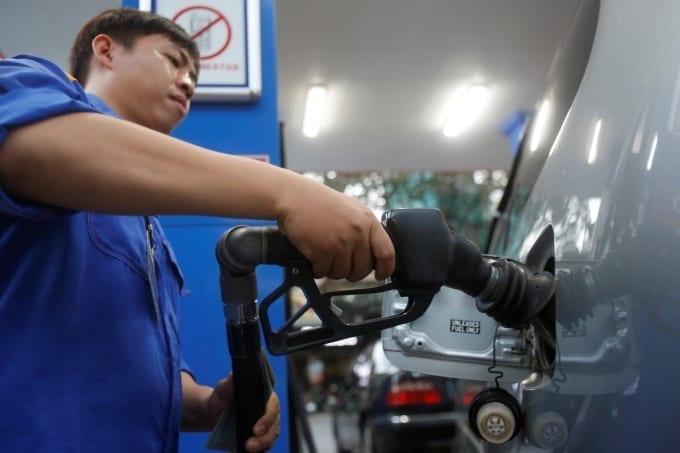
    A survey of multiple HCMC-based filling stations showed that biofuel consumption rose to 40% from the previous 30%, while that of the fossil type RON 95 gasoline declined to 60% from 70%.

    After the price adjustment, the retail price of E5 biofuel was VND1,500 per liter lower than that of RON 95 gasoline, resulting in a rising number of customers using the biofuel. The majority of customers contributing to the increase in E5 biofuel consumption were owners of trucks, coaches, taxis, Grab vehicles and motorcycles.

    To further enhance biofuel consumption to protect the environment from air pollution due to carbon emissions, many fuel outlets have proposed the competent authorities and fuel wholesale firms arrange promotion activities to introduce the quality of biofuel and guarantee the supply and quality of the product to gain customers’ trust.

    A representative of Vietnam National Petroleum Group (Petrolimex) noted that the group is in the process of expanding its direct retail distribution system and cooperating with many traders to boost the sale of E5 biofuel.

    In addition, Petrolimex suggested the Government promote activities that introduce the quality and benefits of E5 biofuel to residents, apart from adopting measures to tighten control over and monitor the quality of biofuel.

    Fuel supply and consumption in the city remain stable, according to the HCMC Department of Industry and Trade.

    The city saw fuel consumption total over 5,700 cubic meters per day, or 171,570 cubic meters per month, last month, with RON 95 gasoline and E5 biofuel amounting to 3,600 and 2,050 cubic meters per day, respectively.

  • Angry Birds augmented reality mobile game Launched

    Angry Birds augmented reality mobile game Launched

    Rovio, the Finnish company behind the Angry Birds smash hit, announced last month that their first augmented reality mobile game is available for pre-order. Dubbed Angry Birds: Isle of Pigs, the game has now been released in the App Store and is available for free.

    Angry Birds AR uses Apple’s ARKit framework and is fully compatible with iOS devices like iPhone 6s and newer, as well as iPad 5th generation and later. Since this an Apple prime exclusive, it’s not available on Android and won’t be for a while. However, Rovio says that it’s exploring other platforms like Android, so we can expect the Finnish developer to expand the game’s availability to Google’s operating system too.

    As far as the gameplay goes, Angry Birds: Isle of Pigs takes players to a remote island where the greedy green pigs vacation in over 40 levels. You’ll meet some of the birds you already know and love, but in a more realistic environment that brings Angry Birds to life like never before.

    Thanks to the augmented reality technology, players can physically walk around structures overlaid onto objects in their own environment to find weak elements, identify different angles for the best accuracy, or discover hidden surprises that will allow them to take on the green pigs, earn more points, as well as unlock additional content.

    Keep in mind that the game may require internet connectivity and subsequent data transfer charges may apply. Even after the initial download, additional content may be downloaded, which may include data charges.

  • Ikea’s first small-format store Without Check-Outs

    Ikea’s first small-format store Without Check-Outs

    Ikea Australia officially opened its first small-format store on Friday at Warringah Mall on Sydney’s Northern Beaches.

    The 98sqm store is the retailer’s first Home Planning Studio, where customers can book one-on-one planning sessions with staff to design their dream kitchen or bedroom storage solution.

    The store lacks many of the signature features consumers have come to associate with the Swedish flatpack giant, including a warehouse, blue plastic ‘Frakta’ bag and meatballs, not to mention checkouts.

    Instead, customers purchase their kitchen or storage solutions online at the studio, with the items delivered directly to their home. Customers can also shop a digital wall of homewares, which they can add to their virtual bag and transfer to their mobile device for checkout.

    This digital-first, highly personalised shopping experience is geared towards a different type of customer than the typical Ikea shopper, according to Jan Gardberg, country manager of Ikea Australia.

    “With the Ikea Home planning studio we have reinvented the traditional Ikea experience for a different audience, with different shopping needs putting digital at the heart of the customer’s journey. However, the digital experience is delivered in our most personalised approach yet,” he said.

    “The customer’s wants and needs for their kitchen or bedroom storage solution are the starting point, and the experience they will receive in the Home Planning Studio will be personalised from there.”

    Customers are advised to book their kitchen and storage consultations in advance, but they can also drop in and browse. It costs $99 for a two-hour kitchen planning session, which is refunded on the purchase of a kitchen within the session.

    The studio also includes a projector tool, which allows customers to envision what their ideal wardrobe will look like by projecting it onto a wardrobe front.

  • Spotify now has 100 million Premium Global Subscribers

    Spotify now has 100 million Premium Global Subscribers

    Twelve months after it first reached 75 million subscribers, Spotify has today announced that 100 million users now pay for its Premium service across the globe. The news represents year-on-year growth of 32% and has helped push Spotify’s revenue figures up an equally impressive 33% to €1.51 billion ($1.67 billion).

    Including users of Spotify’s ad-supported service, the streaming company now has a total of 217 million monthly active users. This figure is up 10 million from last quarter and 44 million when compared to twelve months ago.

    Once again, Europe continued to be Spotify’s most important market followed by North America and Latin America respectively. In North America especially, Premium subscriber growth was driven by Spotify’s continued partnerships with Samsung, Google, and Hulu.

    Specifically, Samsung agreed to pre-install the Spotify app on millions of its smartphones including the recently-released Galaxy S10, buyers of which receive six months of free Spotify Premium. Google, on the other hand, offered Spotify Family Plan users a free Google Home Mini, a promotion which has since been expanded to both the UK and France due to its popularity. Lastly, Hulu and Spotify recently lowered the price of their bundle offer which has boosted interest.

    By the end of this current quarter, Spotify expects to have between 222 and 228 million users, of which 107 to 110 million should be Premium subscribers. Driving this growth will continue to be promotional offers like the ones mentioned above and India, where Spotify registered 2 million users in the month following its launch.

  • Indian Consumers Face Post-Election Fuel Price Shock

    Indian Consumers Face Post-Election Fuel Price Shock

    Surging global oil prices will pose a first big challenge to India’s new government, whoever wins an election now under way, especially as domestic prices have been allowed to lag, meaning consumers are in for a painful surge as they catch up.

    For oil-import dependent India, higher global prices could lead to a weaker rupee, higher inflation, the ruling out of interest rate cuts and could further weigh on twin current account and budget deficits, economists warned.

    But compounding the future pain, state-run fuel suppliers and retailers have held off passing on to consumers the higher prices during a staggered general election, which began on April 11 and ends on May 23, according to sources familiar with the situation.

    That delay is expected to be unwound once the election is over. And there could be additional price increases to make up for losses or profits missed during the period of delayed increases, the sources said.

    In some major Asian countries, such as Japan and South Korea, pump prices are adjusted periodically so they move largely in tandem with international crude prices.

    That was what was supposed to happen in India but the election means there have been many days when pump prices have been unchanged.

    In New Delhi, for example, while crude oil prices have gone up by nearly $9 a barrel, or about 12 percent, in the past six weeks, gasoline prices have only risen by 0.47 rupees a litre, or 0.6 percent.

    State-controlled fuel suppliers and retailers declined to say why they had delayed price increases, or discuss whether there has been any pressure from the government of Prime Minister Narendra Modi.

    A government spokesman declined to comment.

    The opposition Congress party said Modi’s government was violating its own policy of daily price revision by advising the state oil companies to hold prices steady.

    “The government should cut fuel taxes otherwise consumers will have to pay much higher oil prices once the elections are over,” said Akhilesh Pratap Singh, a senior leader of the Congress party.

    Nitin Goyal, treasurer at the All India Petroleum Dealers Association, representing fuel stations in 25 states, said prices were similarly held down for 19 days in the southern state of Karnataka last year, when it held state assembly elections. Only for them to surge after the vote.

    “Consumers should be ready for a rude shock of a massive jump in retail prices, similar to the level we have seen in the Karnataka state election,” Goyal said.

    Sri Paravaikkarasu, director for Asia oil at Singapore-based consultancy FGE, said retail prices of gasoline and gasoil prices would have been up to 6 percent, or about 4 rupee, higher if they had been allowed to rise in line with global prices.

    “Indian pump prices have failed to keep up with the recent uptrend in crude prices,” Paravaikkarasu said.

    “With the country’s general elections underway, the incumbent government has been keeping pump prices relatively unchanged.”

    India had switched to a daily price revision in June 2017 from a revision every two weeks, as the government allowed retailers to set prices.

    But the government faced protests last October when retailers raised prices by up to 10 rupees a litre after the crude oil price went above $80 a barrel, forcing it to cut fuel taxes.

    Global prices rose to their highest level in 2019 on Thursday, days after the United States announced all Iran sanction waivers would end by May, pressuring importers including India to stop buying Tehran’s oil. [O/R]

    Higher oil prices will mean Asia’s third largest economy is likely to see growth of less than 7 percent rate this fiscal year, economists said. Growth slowed to 6.6 percent in the October-December quarter, the slowest in five quarters.

    Rating agency CARE has warned that a 10 percent rise in global oil prices could increase demand for dollars, putting pressure on the rupee and widening the current account deficit.

    India’s oil import bill rose by nearly one-third in the fiscal year ending March 31 to $140.5 billion, against $108 billion the previous year.

    “The increase in international oil prices is a credit negative for the Indian economy,” ICRA, the Indian arm of the Fitch rating agency, said in a note.

    “Every $10/ bbl increase in crude oil prices increases the fiscal deficit by about 0.1 percent of GDP.”

    Any big price rise would also build a case for the central bank to keep rates steady, or even raise them.

    The Reserve Bank of India’s Monetary Policy Committee, which cut the benchmark policy repo rate by 25 basis points this month, warned that rising oil and food prices could push up inflation.

    Policymakers are worried that a sustained increase in the oil price in the range of $70-75/barrel or higher can move the rupee down by 3-4 percent on an annual basis.

    The rupee has depreciated by 1.24 percent against the dollar since a year high in mid-March.

  • Low-cost imports challenge Furniture Retailers

    Low-cost imports challenge Furniture Retailers

    The furniture retailing industry may face a tough trading environment in 2019-20 with revenue expected to decline by 3.3 per cent during the period, according to IBISWorld analysts.

    Mounting internal and external competition is expected to continue to threaten the viability of furniture operators in the current year, with revenue expected to decline to $890.0 million as the industry continues to struggle with a challenging operating environment.

    Bao Vuong, IBISWorld senior industry analyst, said the rising volume of low-cost furniture imported into New Zealand is also forecast to hinder the industry’s performance in the current year.

    “The availability of low-cost furniture imports is projected to heighten industry competition,” Vuong said.

    Industry revenue is also likely to be suppressed by slower growth in residential building construction, which will reduce retail demand for furniture items.

    An IBISWorld furniture retailing industry report last year showed it has faced a tough trading environment over the past five years, with revenue growth stifled by increasing competition.

    Within the industry, players typically compete on the basis of price and product range.

    External competition comes from a range of other operators that sell furniture as part of their operations, including department stores, auction websites and online-only players.

    In the next five years through 2023-24, IBISWorld analysts forecast the furniture retailing industry to be operating within a challenging environment .

    “Mounting internal and external competition is projected to continue threatening the viability of operators over the period,” analysts said.

    The report also showed softer real household discretionary income growth could hinder retail demand for furniture products during the period.

  • Oaktree and Alceon acquire Decor and Willow brands

    Oaktree and Alceon acquire Decor and Willow brands

    Investment companies Oaktree Capital Management and Alceon Group have made a move into homewares with their acquisition of Marlin Management Services (Marlin Brands), a wholesaler whose portfolio includes Decor and Willow, among other leading kitchen and home brands.

    Oaktree and Alceon own a number of iconic Australian apparel brands, including Billabong and Quiksilver (Oaktree), and Noni B (Alceon).

    Marlin Brands owns the more than 60-year-old Decor brand, which makes reusable plastic containers, the more than 100-year-old Willow brand, which makes jugs, coolers and rubbish bins, and the Albi brand, which supplies more than 3000 retailers with home and kitchen products, fashion accessories and jewellery.

    Marlin also owns Independence Studios, a giftware and toy brand, and Pacific Optics, which distributes general merchandise such as sunglasses, hats and phone accessories to petrol and convenience stores.

    The acquisition will see Oaktree and Alceon focus on growing Marlin Brands’ online and international sales.

    “We are excited about the next phase of growth under Oaktree and Alceon’s stewardship,” Greg Kerr, chief executive of Marlin Brands, said.

    The companies’ growth strategy entails growing Decor and Willow’s international operations, particularly its penetration into the US market, and further growing the company’s direct-to-consumer sales through online marketplaces. Marlin Brands already has more than 2600 SKUs listed on Amazon.

    “Together our strategy is to accelerate Marlin Brands’ growth via supply chain transformation and cater to an omnichannel approach to ensure our consumers can be consistently delighted by Marlin’s products in Australia and increasingly internationally,” Kerr said.

    In a statement released on Monday, the investment companies highlighted their expertise in optimising group logistics, warehousing and supply chain management, and branded wholesale and direct-to-consumer sales, as key factors that will enable them to grow the newly acquired business.

    Marlin Brands currently serves more than 18,000 retailers throughout Australia and New Zealand, with more than $260 million of annual revenue.

    Coast2Coast Capital, the South African investment company that owns Marlin Brands, put the wholesaler up for sale last September after abandoning plans for an initial public offering.

  • Decathlon Vietnam opens it’s Very first Store

    Decathlon Vietnam opens it’s Very first Store

    Decathlon Vietnam has opened its first store, at Vincom Mega Mall Royal City in Hanoi. Located on level B1, the store spans 4300sqm, offering more than 14,000 items covering 70 sports for all levels of player.

    Prices meet the market for local customers, such as a VND63,000 (US$3) backpack, or a US$10 tennis racquet.

    Customers can also test products designed for activities like hiking, jogging or basketball at the store before making a purchase.

    “We want our customers to feel satisfied when choosing Decathlon,” said Manu Pirenne, Decathlon Vietnam’s Hanoi CEO.

    “We are willing to exchange to new products or refund if our customers are not satisfied, within six months. Decathlon also has an at least two-year warranty on all products.”

    The second store which spans 2600sqm will be opened in Ho Chi Minh City on May 25, at Aeon Tan Phu.

    Decathlon Vietnam launched as an online-only store, with several Collect Points located in Ho Chi Minh City and Hanoi.

    To cut the prices, the company has set up its factory in Thai Binh province, and partnered with more than 100 retailers and brands.

    Established in 1976, the France-based sports retailer now has 1513 stores in 53 countries.

    It opened the largest store in Singapore earlier this year.

  • Sagara launches online Store Concept

    Sagara launches online Store Concept

    Tableware firm Sagara Inc has opened a global website after setting up a retail store in New York to market its environmentally conscious tableware for children.

    The firm’s Reale brand, made from a new bioplastic raw material blended with native Japanese bamboo, is being made available for the first time across North America, including the US and Canada.

    The company is scheduled to launch business-to-business and business-to-customer online sales in the territory next month, starting with sales through major department stores as well as retail outlets, online shops and other venues across North America dealing in baby and kid goods, interior products, gifts and other items.

    Sagara embarked on developing Reale in 2014 and started selling the tableware in Japan in November 2016. As of March this year, the brand is on sale in Taiwan, Mainland China and Australia.

    More than 20,000 Reale sets in total have been shipped up to this month. Its designs are inspired by traditional silverware in Europe and the US.