Category: Living

Retail News Asia is committed to providing both local and global retailers with the latest Living news throughout the Asian market. This on a daily base.

  • FastGo announces Vietnam’s first helicopter ride-sharing service

    FastGo announces Vietnam’s first helicopter ride-sharing service

    Vietnamese ride-hailing firm FastGo plans to launch the country’s first helicopter ride-sharing service in Hanoi this month, focusing on tourism in northern provinces.

    CEO Nguyen Huu Tuat told that FastSky’s first flight will take off on April 25.

    With 12 passengers to a helicopter, FastSky will operate tours from Hanoi to northern tourist destinations such as the Red River and Ha Long Bay.

    “Apart from SkyTour, we’ll also operate SkyWedding services for wedding photography and SkySOS for emergencies in which helicopters will land on Hanoi skyscrapers to pick up patients,” Tuat said.

    Prices vary for each service. A tour will cost a minimum of $125 per person, which can be paid in installments over a period of 12 months.

    Tuat said: “We offer premium services for business people but also want everyone to have a chance to fly. FastSky will be a game-changer in the transport industry.”

    FastGo only provides technology solutions while helicopters and pilots are provided by a partner who is permitted to fly in Vietnam, he said, but declined to reveal the company’s name.

    FastGo began operations last June, a few months after Uber announced its exit from Southeast Asia.

    The company, part of Vietnamese technology start-up NextTech Group, expanded to Myanmar last December.

    It plans to launch operations in Singapore this month and in five other countries in the region, including Indonesia and the Philippines, by the end of the year.

    With almost 60,000 drivers on board, the company claims to be the second most popular ride-hailing firm in Vietnam after Grab.

  • Ashley Furniture HomeStore Opens Largest Flagship Store in Kuala Lumpur

    Ashley Furniture HomeStore Opens Largest Flagship Store in Kuala Lumpur

    World No.1 selling furniture store brand, Ashley Furniture HomeStore, celebrated the grand opening of its largest flagship HomeStore in Quill City Mall today.

    Owned and operated by HAUSLIFE Furniture Sdn Bhd (HAUSLIFE), the sole licensee and operator of Ashley Furniture in Peninsular Malaysia, Ashley Furniture HomeStore at Quill City Mall marks the company’s fourth store in Malaysia.

    The 1300 square meter HomeStore’s interior architectural design include Ashley Lifestyle collections – ‘Family Spaces’. ‘Vintage Casual’, ‘Urbanology’, ‘New Traditions’ and ‘Contemporary Living’; meandering walkway through the showroom as well as unique and inspiring wall finishes. Product categories include upholstery set, bedroom set, dining room, home office, recliners, mattresses and accessories.

    Yu Kong Ching, Founder and CEO of HAUSLIFE, said, “Clearly, Ashley’s brand of furniture products have struck a chord amongst Malaysian consumers and this is reflected in the tangible growth of the brand’s presence here in Malaysia.”

    “The opening of this flagship store is also a testament to HAUSLIFE’s commitment, dedication and know-how in strengthening Ashley Furniture’s continued success in Malaysia in terms of market share and brand recognition.”

    According to Yu, HAUSLIFE aims to open eight (8) Ashley Furniture HomeStores by 2022. “There is still a lot of room for us to grow in the Malaysian market, more so as we see an ever-growing demand for quality, value, style and excellent service by discerning consumers in the retail furniture market,” Yu added.

    Speaking at the launch of Ashley Furniture HomeStore Quill City Mall today, Mr Robin Lim, VP sales of Asia for Ashley Furniture HomeStore, said, “We are excited to see the Ashley brand expanding aggressively in Malaysia. The ASEAN region, including Malaysia, is essential to Ashley Furniture’s global growth plans.”

    Comprehensive E-commerce platform

    In tandem with the global trend towards embracing the digital lifestyle, Ashley Furniture HomeStore recently launched its e-commerce platform only for the Malaysian market. Developed to be user-friendly yet feature-packed with great deals, this online platform allows Ashley’s customers from all over Peninsular Malaysia to purchase Ashley products from authorized retailer online.

    Exclusive Affiliate Program for Interior Designers

    HAUSLIFE Interior Designer Affiliate (HIDA), an incentive program custom-built by HAUSLIFE for interior designers, was launched in 2015 With over 215 affiliates, HIDA aims to empower interior designers today to have the mean to realise their creative vision and make life better. The program brings lots of benefits including exclusive deals on Ashley and HAUSLIFE products as well as access to new and selected products.

  • Vietnamese supermarkets go back to leave packaging

    Vietnamese supermarkets go back to leave packaging

    Shoppers at Lotte Mart in Ho Chi Minh City’s District 7 were recently surprised to see scallions, okra and other vegetables produce wrapped in banana leaves.

    A representative of the supermarket chain said that the company is experimenting with using leaves to wrap veggies in one outlet, and plans to expand this later to the entire chain in the country.

    This is part of a plan to increase the use of environment-friendly products, not just for vegetables but also for fresh meat, the representative added.

    Local shoppers expressed support for the move. “When I see vegetables wrapped in these beautiful banana leaves I’m more willing to buy in larger quantities. I think this initiative will help locals be more aware of protecting the environment,” said Hoa, a District 7 resident.

    The Big C supermarket chain in Hanoi has also started using banana leaves to wrap veggies since Monday, and plans to do so in its central and southern supermarkets in the next few days. The trial is set to last a month.Saigon Co.op is also using banana leaves to wrap vegetables to replace their biodegradable wraps in some of its outlets in HCMC and other southern localities of Phan Thiet, Tay Ninh, Quy Nhon and Tam Ky.

    The supermarket chains are also providing customers with other environmental-friendly products. Lotte Mart said it is selling paper straws and food boxes made with sugarcane waste. Eggs are wrapped in paper packages instead of plastic boxes.

    Big C is offering shoppers bags made with corn powder which is completely biodegradable.

    These moves come after report highlights the large amount of plastic waste generated by Vietnamese people. The country disposes about 2,500 tons of plastic waste a day, according to official figures.

    Vietnam ranks fourth globally in the amount of plastic waste dumped into the ocean, according to the United Nations Environment Programme (UNEP).

    Some local cafes and restaurants have also been encouraging the reduction of plastic use by offering straws made with recyclable or biodegradable materials.

  • Vietnam cracks down on drugstores selling without prescriptions

    Vietnam cracks down on drugstores selling without prescriptions

    The Ministry of Health has ordered that all drugstores should be connected to the national medicine database via the Internet by Monday, a move aimed at preventing the sales of drugs without prescription.

    But in Ho Chi Minh City, which has the highest number of pharmacies in the country at over 6,000, only 61 percent have linked up, according to the city Department of Health. In Hanoi, 90 percent of its over 4,600 drugstores have done so.

    Many pharmacy owners said they do not have a computer or Internet. Tran Thi Nhi Ha, deputy director of the Hanoi Department of Health, said the regulation requires pharmacies to invest in infrastructure and this takes time.

    Tang Chi Thuong, her HCMC counterpart, said inspectors would soon carry out checks to ensure compliance. “Licenses will be taken away from pharmacies that continue to disobey.”

    Most pharmacies in Vietnam sell drugs without prescriptions. In fact, around 88 percent of all antibiotics sold in urban areas are without prescriptions while the rate is 91 percent in the countryside, the health ministry said.

    The World Health Organization has listed Vietnam among the list of countries with the highest rate of antibiotic-resistant infections, with 33 percent of all patients suffering from them.

  • Nearly half of Aussie workers have experience with harassment

    Nearly half of Aussie workers have experience with harassment

    Australian workplaces have a long way to go in promoting diversity and inclusion, as a recent survey by recruitment company Hays revealed that nearly a half (45 per cent) of Australian professionals have experienced bullying or harassment at work due to gender, age, ethnicity, sexual orientation or disability.

    That’s just the tip of the iceberg, with the figure rising to 64 per cent of people living with a disclosed disability, 58 per cent of people who identify as LGBTIQ+, 50 per cent of women and 50 per cent of mature-age people.

    While less men reported this behaviour than women, the figure is still high at 37 per cent.

    The survey of over 1,000 people across Australia and New Zealand found that 41 per cent of respondents took no action in relation to the bullying or harassment. A further 15 per cent of those who experienced this behaviour chose to leave the organisation rather than report it.

    While some respondents raised the issue to HR, a team leader, supervisor or manager and it was resolved promptly to their satisfaction, this often involved mediation or the appointment of an investigator.

    “Measures range from the formal letter of the law, sanctions and workplace guides to day-to-day awareness of leaders and managers and the behaviours of all employees,” Nick Deligiannis, managing director of Hays Australia & New Zealand said.

    “However, given our findings, it seems that despite a growing awareness of the problem, more needs to be done to stop harassment and bullying at work – for all demographic groups.”

    The recruitment company suggests employers familiarise themselves with anti-bullying laws and follow the correct procedures.

    Free resources are available from Australia’s Fair Work Commission and Safe Work Australia.

  • Hong Kong fitness centres named and shamed

    Hong Kong fitness centres named and shamed

    Expressing deep concern for “unscrupulous sales practices” of some Hong Kong fitness centres, the Consumer Council has named and shamed four operators it says targets young consumers with high-pressure sales tactics.

    “After careful consideration, the council today publicly names four fitness centres and strongly reprimands them for their undesirable sales practices targeting inexperienced young consumers,” the council said in a statement. “The complaint cases levelled against the four centres involved some $40,000 on average and in the most extreme case it stunningly reached the sum of $1.75 million.”

    The council said the centres’ behaviour is “detrimental to consumer rights and interests”.

    The four centres shamed are:

    • SML Studio/TIA Studio, CMB Wing Lung Bank Centre, Nathan Road, Mong Kok.
    • Fitness Express, Mongkok Metro, Nathan Road, Mong Kok and Grand Place, Nathan Road, Mong Kok.
    • Legend Fight & Fitness, Russell Street, Causeway Bay.
    • A Plus Fitness, Argyle Street, Mong Kok.

    More than 90 per cent of the complaints the council has received relating to the Hong Kong fitness centres, related to customers aged 25 or younger, and some of the victims were even mentally incapacitated.

    “High-pressure tactics were deployed throughout the course of the sales process. Young consumers, under threat of personal safety, succumbed to the unrelenting pressure to sign the contracts so as to swiftly escape from the uncomfortable situation. Some traders also resorted to unconventional payment methods, including taking the complainants to major chain stores to buy gift vouchers to pay for fitness centre memberships, or requiring bank transfers or electronic payments and in some cases the funds were transferred to the personal accounts of the salesperson.

    “Consumers were generally given only a copy of the signed contract but not an official payment receipt.  Recent complaints have indicated that they were not even given a copy of the service agreement.”

    The council said most complainants were allegedly forced to have a photo or video taken, or were made to declare and sign a statement that they had signed the contract of their own free will, and that they would not make any claims against the company in the future.

    “Since the payments are made indirectly to the fitness centres, and there are no official receipts, it is incredibly difficult for consumers to seek legal redress in the face of such blatant disregard of consumer rights.”

    Targeting the young

    According to the council there has been a growing emergence of small independent Hong Kong fitness centres in areas frequented by young people, such as Mongkok and Causeway Bay, in recent years.

    “Unscrupulous traders have seized the opportunity to set up fitness centres in small premises with limited gym facilities, so it’s hard to believe they have ever had a long-term development plan to provide quality service to consumers.

    “In general, the modus operandi of these centres involves staff first appealing to the sympathy of complainants to help filling out a questionnaire, and then luring them to a nearby fitness centre. Once inside the premises, another sales team take over and use warm and friendly persuasion to lower the targets’ alertness as much as possible. On the pretext of validating the questionnaire, they then coax the targets to hand over their credit cards and identity cards with the actual intention of drawing up a contract and transferring funds.”

    It was further alleged that any attempts to leave the premises were often met with oral and even physical threats of the staff.

    In the past year, the council received 160 complaints against the four fitness centres, involving $6.78 million.  In the case of the highest amount from A Plus Fitness, within just four months, the complainant was persuaded to buy a 15-year membership and 1050 private coaching sessions, totalling more than $1.75 million.  Hundreds of thousands of this amount was borrowed from a moneylender. After explaining that the fitness centre could not open a credit-card account, its staff asked the complainant to make electronic transfers to pay for the membership and coaching sessions through 20 transfers of some $1 million in total.

    Complaints against Legend Fight & Fitness revealed an even more unusual means of payment method. The complainants were taken to nearby electronic goods and personal care chain stores to buy gift vouchers worth tens of thousands of dollars as payment for the fitness expenses.  As the complainants paid for the fitness centre membership with gift vouchers purchased from a third party and the fitness centre kept the receipts for the gift vouchers without giving a copy to the complainants, this will make it difficult for complainants to seek legal remedy in the future.

    Despite repeated enquiries by the council about how the fitness centre converted the gift vouchers to cash and deposited the cash into the company’s bank account, the centre staff refused to respond.

    Of the 237 complaint cases levelled against the four Hong Kong fitness centres between January last year and last February, the council referred 16 complaints to the Customs and Excise Department (CED) for follow-up whereas 51 complainants approached the CED direct to report their cases. Two other cases are currently receiving assistance from the Consumer Legal Action Fund (CLAF).

    Complaints escalate

    The council says that while the number of complaints about sales malpractices have been declining in recent years, after removing complaints relating to fitness centres closing down, those relating to the fitness sector have shown no signs of declining, running at 500 to 700 cases a year.  Complaints about sales malpractices have continued to rise unabated, jumping 88 per cent last year to 415 cases.

    The council advised consumers who felt coerced into signing a contract for an unreasonable amount to discuss the problem with their family immediately and if necessary, contact the Consumer Council or report the business to the Customs and Excise Department or the police.

  • Sears Opens Multiple New Stores

    Sears Opens Multiple New Stores

    Embattled US department-store icon Sears is about to open three new-format stores.

    Rescued from bankruptcy by its former chairman Eddie Lampert last month, the company closed a further 300-odd stores – those on top of the 1700 it has shuttered since April 2007.

    It has just 425 remaining now.

    But in its new trimmed-down guise, the company plans to open an unspecified number of new shops which will not stock any apparel, focusing instead on categories such as appliances, home services and mattresses.

    The first three of the new stores – branded Sears Home & Life – will open on Memorial Day (May 27). They will open in Overland Park, Kansas; Lafayette, Louisiana; and Anchorage, Alaska.

    A tenth the size of Sears’ traditional big-box department stores, the new ones will range in footprint from 10,000sqft to 15000sqft (900sqm to 1400sqm).

    Sears and Kmart chief brand officer Peter Boutros declined to specify how many of the new-format outlets are planned across the US, but he did confirm sites had been secured.

    A core feature of the Sears Home & Life outlets will be the company’s Kenmore brand, arguably the loss-making retailer’s greatest asset. That brand is likely to be extended beyond appliances into categories such as kitchen accessories and even crockery.

  • The music streaming competition just got Started

    The music streaming competition just got Started

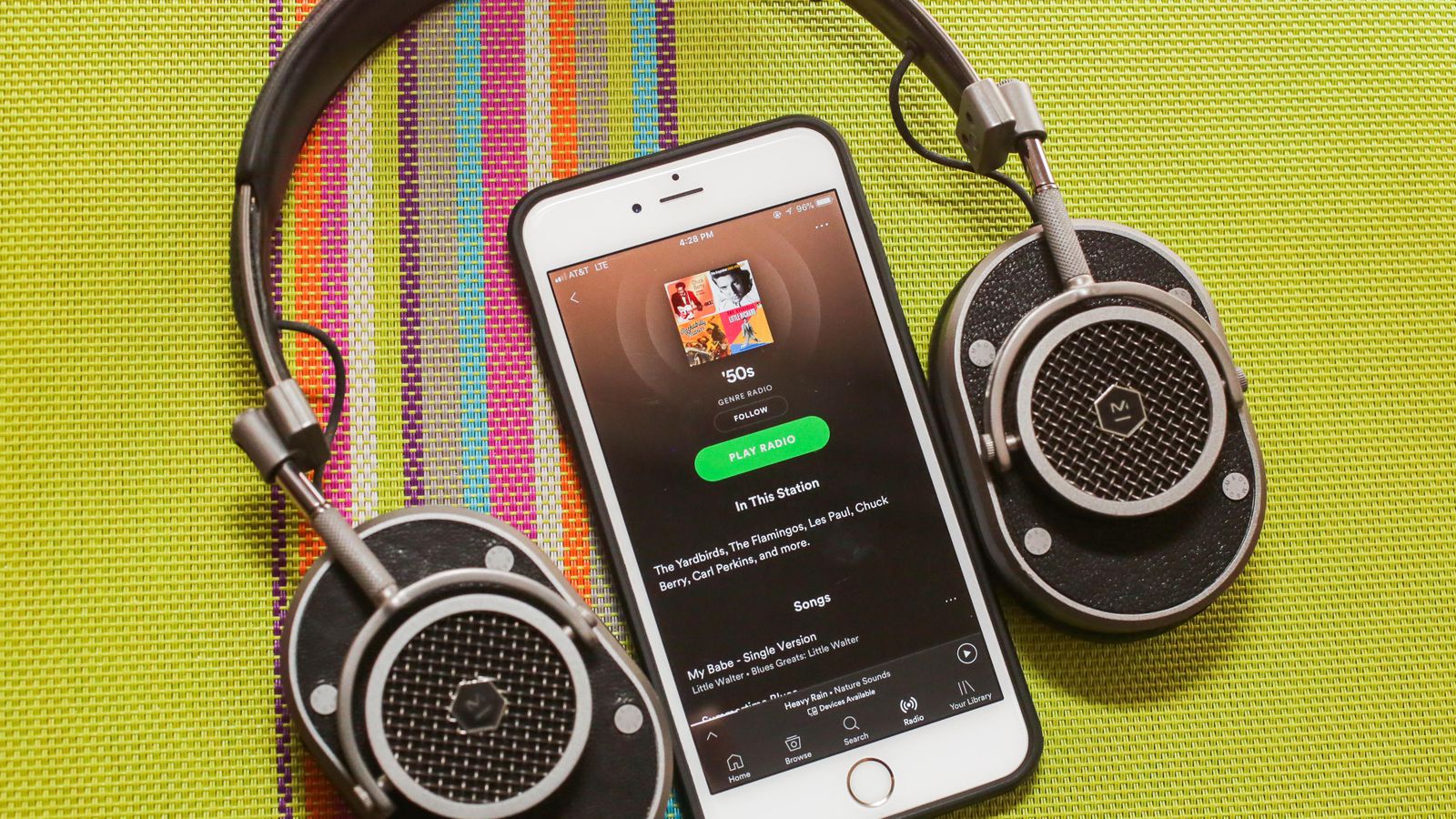
    There is no shortage of players in the music streaming space and the metrics used to determine success are also pretty complex, but from one metric Apple Music just passed Spotify, but it’s too early to say for sure what this means for either company. Even so, it appears to cement Apple Music as a major player in the music streaming space.

    Apparently, in the month of February, Apple Music passed Spotify in terms of paid U.S. users for the first time ever. Apple Music counted 28 million paid subscribers in the U.S. while Spotify had just 26 million, and Apple Music had a faster growth rate than Spotify. That seems good, but for full context there are a few things to keep in mind. First and foremost, Apple Music doesn’t even have a free tier for subscribers, so that 28 million is essentially the entire U.S. user base for Apple Music (not counting anyone on a free trial.) Spotify does have a free/ad-supported version and taking that into account, Spotify does have more users in the U.S. than Apple. The ad-supported tier doesn’t generate as much money for Spotify but it does add up.

    Beyond all that, we’re sorry to say but the U.S. is only one country in the world and Spotify has almost twice as many paid subscribers globally as Apple Music does (98 million to 50 million as of December). And, that gap gets considerably bigger once you include the ad-supported tier which bumps Spotify’s user base to more than 200 million.

    Of course, music streaming is Spotify’s entire business, whereas Apple Music is one service offered by the behemoth. Any paid subscribers Apple gets is just gravy, whereas that’s the lifeblood of Spotify. Still, it’s something to keep an eye on going forward.

  • Netflix removes key feature from its iOS app

    Netflix removes key feature from its iOS app

    AirPlay is a feature found on iOS and Mac devices that allows users to send audio, video, photographs, screenshots and more between Apple devices sharing a similar network. Using Bluetooth and Wi-Fi, AirPlay will let a home with multiple HomePod speakers in different rooms, share the same song throughout the house. And with several smart TV manufacturers adding support for the feature, content from an iOS or Mac device can be viewable on certain large-screen smart TVs.

    There have been a number of complaints from iPhone and iPad users stating that AirPlay was no longer working with Netflix. That was unusual because the iOS version of the streaming video app has supported AirPlay since 2013. The complaints from iOS users state that when they tried to use AirPlay in the Netflix app, a pop-up error message appeared that said, “Cannot play title. Please try again later.”

    But there is a reason why AirPlay no longer works with Netflix. As a result of what it is calling “technical limitations,” Netflix has pulled AirPlay support from its iOS app. This is actually noted by the video streamer on its support page. Considering that this was an iOS feature that Netflix had supported for over five years, it is strange that AirPlay would all of a sudden no longer work with Netflix. The company has not divulged the details of the “technical limitations” that have forced it to stop offering AirPlay support (more on that later).

    This isn’t the end of the world for Netflix subscribers used to employing AirPlay. After all, the Netflix app can be installed or is already installed on a number of smart television sets. But using AirPlay does make it easier for iOS users with Netflix to stream content from their own account to a smart TV that does not have their Netflix login information.

    “We want to make sure our members have a great Netflix experience on any device they use. With AirPlay support rolling out to third-party devices, there isn’t a way for us to distinguish between devices (what is an Apple TV vs. what isn’t) or certify these experiences. Therefore, we have decided to discontinue Netflix AirPlay support to ensure our standard of quality for viewing is being met. Members can continue to access Netflix on the built-in app across Apple TV and other devices.”-Netflix< The Netflix support page lists some other options that iOS users can try in order to cast Netflix from their phone or tablet to a compatible television. With the Netflix 2nd Screen option, subscribers open the Netflix app on their iOS device and television, signing into the same account on both devices. The mobile device and the TV must share the same Wi-Fi network. On the mobile device, the user needs to tap on "Cast" found in the upper or lower right of the screen, and select the television that he/she wants to view Netflix on. After deciding which show or movie to watch, the user hits play and the selected content will appear on the TV. Another option, found on Philips, Polaroid, Sharp, Skyworth, Soniq, Sony, Toshiba, and Vizio TVs, will allow you to Chromecast Netflix from your iOS device to your television. Simply open the Netflix app on your iOS device, and tap on the "Cast" icon in the upper or lower right hand side of the screen. Select the device you want to watch Netflix on, choose a television show or movie, and hit play. Last month, Apple became a Netflix competitor by unveiling Apple TV+. This is a video streaming service that will be available this fall on iOS devices along with certain smart TVs. There will be new, original programming from Apple along with content from HBO, Showtime and others. Could this new rivalry be behind the "technical limitations" that forced Netflix to stop supporting AirPlay? After all, it does seem strange that Netflix was able to support AirPlay for from 2013 until now, just when Apple introduces a service that will compete with it. Netflix, of course, will never admit to this. And regardless what the true reasons are, the bottom line is that iOS users will have to resort to the aforementioned alternatives if they want to cast any streaming Netflix content from their iPhone or iPad to their smart TV.

  • Google Maps is using Waze Features

    Google Maps is using Waze Features

    Google paid almost a billion dollars for the popular Israel-based Waze navigation app back in 2013, but curiously enough, the search giant took an awfully long time to integrate some of the basic features of its daughter service into the main Maps platform.

    For instance, Google Maps users barely started seeing options to report crashes and speed traps added to their navigation service of choice a few months ago, with a wider rollout of these two features subsequently noticed and a handy third option seemingly enabled as we speak. As usual, we’re looking at a staggered release, with a handful of screenshots shared by Android Police proving some people can add reports of crashes, speed traps, andslowdowns, while others are still waiting to get the first two parts of the incident reporting functionality.
    With the traffic slowdown feature, also known as congestion in certain regions, Google Maps users should be able to contribute to a smoother navigation experience, with more realistic ETAs and helpful re-routing suggestions during peak hours. Along with the crash and speed trap reporting functionality, this will make Google Maps bear an even stronger resemblance to Waze, possibly escalating speculation that something might be going on soon.
    Of course, unlike services like Google Plus, Inbox, or Allo, Waze is actually beloved and actively used by millions of people around the world. Specifically, more than 90 million drivers, according to the company’s latest official count, spending an average of 438 minutes in the app each and every month. That’s not something you can afford to throw away very easily, so we’re guessing Google Maps and Waze will remain separate but increasingly similar for many years to come.
  • Integration will define the 2019 smart home

    Integration will define the 2019 smart home

    IDC says the global market for smart home devices will grow 26.9% year over year in 2019 to 832.7 million units shipped. The analyst predicts consumers to adopt multiple devices within their homes, which will result in 1.6 billion devices shipped by 2023.

    “2018 was all about getting products into consumers’ homes and both Amazon and Google excelled at this through low-cost smart speakers and multiple bundles across device categories,” said Jitesh Ubrani research manager for IDC Mobile Device Trackers. “However, 2019 will be more about tying the various devices together to form a more cohesive experience and more importantly, layering in additional services.”

    The smart home will be dominated by the likes of Amazon and Google, with Apple following suite. The popularity of iOS and macOS devices combined with the availability of Apple apps/services on non-Apple products will help the company slowly entice more consumers into their ecosystem while also attracting third parties to build compatible devices.

    “One important trend to watch is how smart assistants become integrated throughout the home,” said Ramon T. Llamas, research director for IDC’s Consumer IoT Program. “Smart assistants will act as the point of contact with multiple smart home devices and essentially become the cornerstone of the smart home experience. Already we’ve been seeing that with smart speakers and this will eventually move on to appliances, thermostats, and all sorts of video entertainment.”

  • Ikea leasing program targets students and employees

    Ikea leasing program targets students and employees

    Swedish furniture and homewares retailer Ikea plans to launch furniture rental services in all of its main markets.

    The Ikea leasing strategy is twofold: firstly it addresses the budgetary constraints of customers who move frequently and cannot afford to replace furniture to suit their new space, and secondly to deliver on its sustainability promise by reducing waste and expanding the lifespan of furniture products.

    “You should be able to have a lovely home, and a good conscience, and you should be able to afford it,” said Ingka Group CEO Jesper Brodin in an interview with Reuters.

    Details of the plan, framed as a subscription-based leasing offer, were revealed during the launch of the company’s first ‘sustainable’ store in Kaarst, Germany, this week. Students in the Netherlands can already use the program, paying €30 a month to lease a table, chairs, a bed and a desk. In Switzerland and Sweden, Ikea is developing a similar plan for office furniture.

    Brodin said many Ikea customers are moving home more often than in the past and buying new furniture to fit new spaces can be a financial burden. Using the new Ikea leasing service, they can simply swap out furniture each time the move without having to worry about how they sell or dispose of their existing items.

    The Ikea leasing concept also taps into the pervasive sharing culture in which younger generation consumers embrace renting items rather than owning – including music, fashion and motor vehicles.

    The program is also in line with Ikea’s mission to be affordable, convenient and look after the planet.

    Ikea says it will test the rental concept in all 30 of its markets by 2020. Furniture items will be repaired or refurbished between leases and when too old to be leased out, recycled.

    Pia Heidenmark, Ikea’s head of sustainability, added another advantage of the program: by taking furniture back, the company will be able to assess the durability of its products and feed that information back to its design team.

  • New Pandora NOW original music experience Went Live last April 4th

    New Pandora NOW original music experience Went Live last April 4th

    SiriusXM and Pandora have just announced a brand new exclusive music experience available for subscribers of the former and listeners of the latter: Pandora NOW. The feature mixes “Pandora’s extensive listener data” and “SiriusXM’s curatorial expertise” to offer users some of the most popular and fast-trending music available at any given moment.

    If you’re a SiriusXM listener, Pandora NOW will be available as a new curated channel (Channel 3), while Pandora users can experience it as an interactive station with song skipping and thumbs up/down rating, or as a continually-updated playlist for Pandora Premium subscribers.

    Another interesting thing about the new feature is that the music played on Pandora NOW will be uncensored and showcase the most listened to and fastest-trending new music on Pandora across all genres, including Pop, Hip Hop, R&B, Dance and Latin.

    Last but not least, to celebrate the launch of Pandora NOW, R&B superstar artist Khalid will be at SiriusXM’s Rockefeller Center studios on April 4 to launch the new channel and station on SiriusXM and Pandora.

  • The dying art of a good conversation

    The dying art of a good conversation

    What with Facetime, Skype, Whatsapp and Snapchat, for many people, face-to-face conversation is used less and less often.

    These apps allow us to converse with each other quickly and easily – overcoming distances, time zones and countries. We can even talk to virtual assistants such as Alexa, Cortana or Siri – commanding them to play our favourite songs, films, or tell us the weather forecast.

    Often these ways of communicating reduce the need to speak to another human being. This has led to some of the conversational snippets of our daily lives now taking place mainly via technological devices. So no longer do we need to talk with shop assistants, receptionists, bus drivers or even coworkers, we simply engage with a screen to communicate whatever it is we want to say.

    In fact, in these scenarios, we tend to only speak to other people when the digital technology does not operate successfully. For instance, human contact occurs when we call for an assistant to help us when an item is not recognised at the self-service checkout.

    And when we have the ability to connect so quickly and easily with others using technological devices and software applications it is easy to start to overlook the value of face-to-face conversation. It seems easier to text someone rather than meet with them.

    Bodily cues

    My research into digital technologies indicates that phrases such as “word of mouth” or “keeping in touch” point to the importance of face-to-face conversation. Indeed, face-to-face conversation can strengthen social ties: with our neighbours, friends, work colleagues and other people we encounter during our day.

    It acknowledges their existence, their humanness, in ways that instant messaging and texting do not. Face-to-face conversation is a rich experience that involves drawing on memories, making connections, making mental images, associations and choosing a response. Face-to-face conversation is also multisensory: it’s not just about sending or receiving pre-programmed trinkets such as likes, cartoon love hearts and grinning yellow emojis.

    When having a conversation using video you mainly see another person’s face only as a flat image on a screen. But when we have a face-to-face conversation in real life, we can look into someone’s eyes, reach out and touch them. We can also observe the other person’s body posture and the gestures they use when speaking – and interpret these accordingly. All these factors, contribute to the sensory intensity and depth of the face-to-face conversations we have in daily life.

    Speaking to machines

    Sherry Turkle, professor of social studies of science and technology, warns that when we first “speak through machines, [we] forget how essential face-to-face conversation is to our relationships, our creativity, and our capacity for empathy”. But then “we take a further step and speak not just through machines but to machines”.

    In many ways, our everyday lives now involve a blend of face-to-face and technologically mediated forms of communication. But in my teaching and research I explain how digital forms of communication can supplement, rather than replace face-to-face conversation.

    At the same time though, it is also important to acknowledge that some people value online communication because they can express themselves in ways they might find difficult through face-to-face conversation.

    Look up from your phone

    Gary Turk, is a spoken word poet whose poem Look Up illustrates what is at stake by becoming entranced by technological ways of communicating at the expense of connecting with others face-to-face.

    Turk’s poem draws attention to the rich, sensory aspects of face-to-face communication, valuing bodily presence in relation to friendship, companionship and intimacy. The central idea running through Turk’s evocative poem is that screen-based devices consume our attention while distancing us from the bodily sense of being with others.

    Ultimately the sound, touch, smell and observation of bodily cues we experience when having a face-to-face conversation cannot be fully replaced by our technological devices. Communicating and connecting with others through face-to-face discussion is valuable because it is not something that can be edited, paused or replayed.

    So next time you’re deciding between human or machine at the supermarket checkout or whether to get up from your desk and walk to another office to talk to a colleague – rather than sending them an email – it might be worth following Turk’s advice and engaging with the human rather than the screen.

  • Consolidation to accelerate in APAC pay TV market

    Consolidation to accelerate in APAC pay TV market

    The Asia-Pacific pay TV market is set to experience a period of accelerated consolidation in the face of deteriorating subscriber and revenue growth, according to research from Media Partners Asia.

    The latest edition of the research and consulting group’s Pay TV Networks Channel Database finds that aggregate revenues across 13 of Asia’s major pay TV networks grew by a mere 1% in 2018 to around $4.9 billion. This compares to a 5% growth in 2017.

    Meanwhile aggregate ebitda across the 13 operators declined by 5% for the second straight year to $900 million.

    “Consumer demand for traditional pay-TV has been impacted forever by high-speed broadband, which is driving rapid increases in online video consumption as well as piracy,” Media Partners Asia executive director Vivek Couto said.

    “These trends have intensified downward pressure across Asia’s pay-TV ecosystem, especially in Southeast Asia, led by Singapore and Malaysia, alongside secular shifts in

    Australia and New Zealand. This will accelerate consolidation as well as major shifts in how channels and content are marketed and sold.”

    The company is predicting that a wave of consolidation will sweep Asia-Pacific over the next year.

    “Future consolidation and rationalization will be defined by global moves and M&A possibilities involving large assets in India,” Couto said.

    “Major players such as Discovery, CBS, Viacom, A+E, Sony and Universal are now competing for the consumer wallet with an increasingly scalable Disney and a newly integrated WarnerMedia within AT&T.”