Category: Living

Retail News Asia is committed to providing both local and global retailers with the latest Living news throughout the Asian market. This on a daily base.

  • AS Watson South Korea health and beauty launched

    AS Watson South Korea health and beauty launched

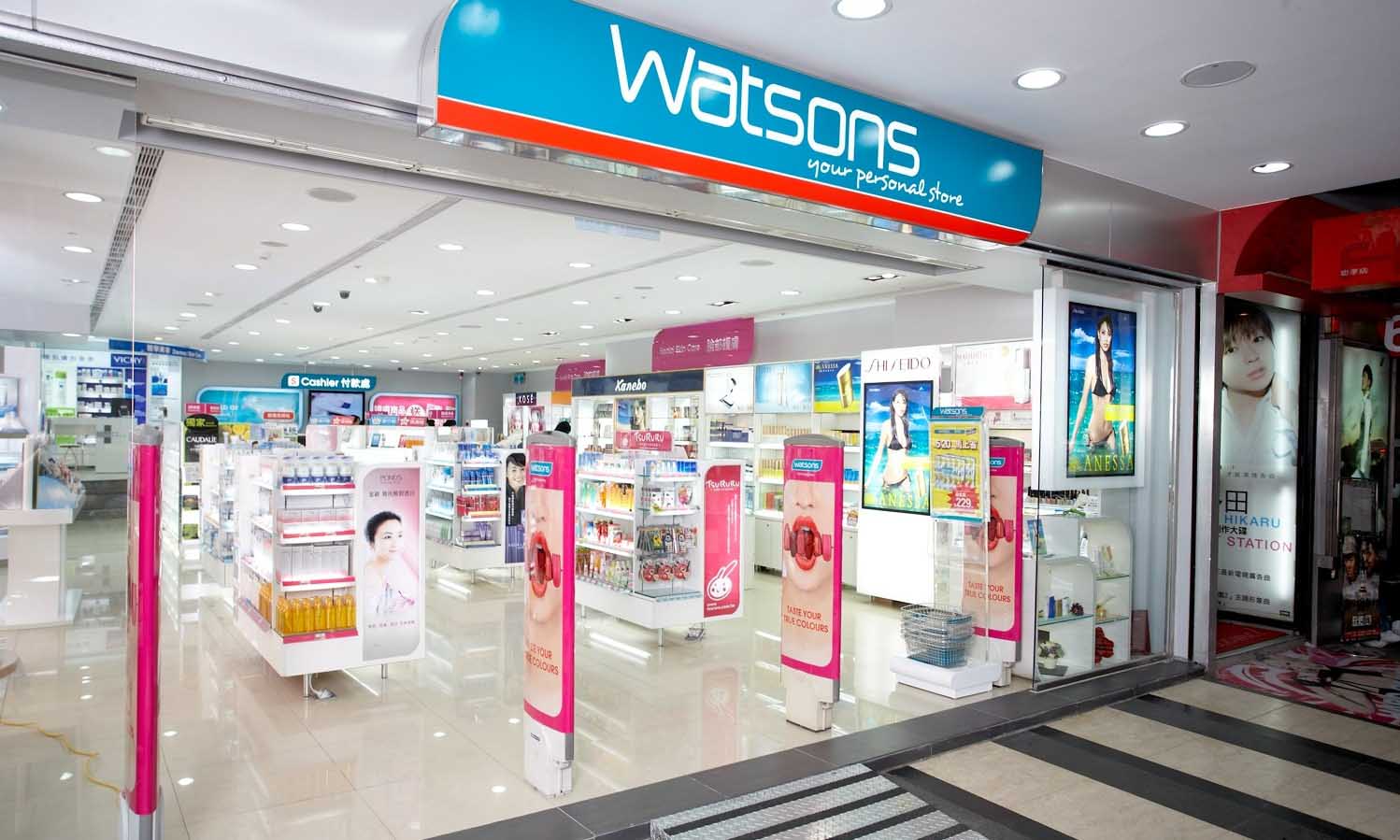
    Hong Kong-based AS Watson has chosen its part-owned German subsidiary Rossmann for its next Asian market debut, South Korea. The German drug-store brand has confirmed it will begin selling products in South Korea on May 1, shipping direct from Germany. It will sell online only. Dirk Rossmann GmbH, named after its founder, is 40 per cent-owned by AS Watson, but the Hong Kong company includes its store network in its fast-growing tally of stores. The company opened its 15,000th store in Kuala Lumpur this week and is currently expanding internationally at a rate of one new store every seven hours.

    A joint venture between AS Watson and Rossmann operates more than 3100 stores in Germany, Poland, Czech Republic, Hungary and Albania. According to a report, the company plans to make “full-scale inroads into the domestic health and beauty market” through Rossmann Korea.

    It will adopt a direct-to-market business model, rather than stock goods in existing retail chains.

    An AS Watson spokesperson told Inside Retail ASia that Rossmann’s Own Brand products are famous not only in countries where they operate a retail network, but also in Eastern Europe where they are distributed in Watsons stores, and in Switzerland where they are distributed in a local supermarket chain. Online, Rossmann sells in China.

    Rossmann chose South Korea as its first Asian market “as Korean consumers were a match with the company’s meticulousness and strictness on their products, where both parties value safe, good quality products offered at reasonable prices”.

    “For South Korea, Rossmann will be launching via online platforms about 100 SKUs of its own products in body and skin care, baby care, and organic food,” the AS Watson spokesperson told.

    According to a Rossmann spokesperson, Korean consumers will experience reliable goods and services through official fast-paced shopping malls. “Rossmann will do its best to help more people make direct transactions with ease.”

    The brand will host quiz events on its Instagram and Facebook pages until April 8 and promotions include prizes of Starbucks coupons and Rossman Korea goods such as water bottles and umbrellas for winners.

    The Rossman family own 60 per cent of the business, which is headquartered in the German town of Burgwedel near Hanover.

  • YouTube Music update brings option to download music to your phone

    YouTube Music update brings option to download music to your phone

    YouTube Music can’t compete with music players with complex, yet easy-to-access, library management when it comes to local playback, but it’s always nice to know that you have more options.

    Up until recently, you wouldn’t have that choice with YouTube Music, Google’s music streaming service. However, Google released several updates that at some point added a new feature that would allow users to play music files from their phones.

    You’ll be able to play just about any type of file that Google Play Music supported, including MP3, Ogg, WAV, M4A, and FLAC. Using YouTube Music to play music files directly from your smartphone is quite easy. Simply use a file manager to get to where your music is stored and choose YouTube Music as the default music player, or opt to open the file with this app “Just once.”

    It’s unclear whether this is the real deal or just a test since the changes don’t appear in any of the app’s change logs in the Google Play Store, but feel free to check it out. Also, don’t forget to give YouTube Music permission to access photos, media, and files on your device when asked.

  • Spotify is going after couples with Duo plan

    Spotify is going after couples with Duo plan

    Spotify and Apple are engaged in a fierce battle over the domination of the thriving global music streaming market, with many other companies, including Google, Amazon, Pandora, Tidal, and Deezer fighting for scraps and trying to find ways to differentiate themselves in order to rise through the ranks. But at the end of the day, all of these services offer essentially the same features and capabilities with extremely similar pricing structures.

    One great way to stand out is to join forces with other tech giants on sweet bundle deals, either temporarily or indefinitely, thus providing more value than the competition for the user’s money. Or you can simply expand your plans to include something rivals haven’t thought of just yet. Enter Spotify Premium Duo, a new service tier currently available only in Colombia, Chile, Denmark, Ireland, and Poland, according to The Verge, which is likely to spread the love around the world soon if these regional “tests” are deemed successful.

    As the name suggests, Premium Duo mainly targets couples that want to save a few bucks compared to both the prices of two individual subscriptions and a family plan. A single Spotify Premium user can get an account at $9.99 a month in the US right now, while Premium for Family costs $14.99, allowing up to six people to stream music without limits, ads, or interruptions.

    Naturally, Spotify Premium Duo sits between the two globally available options, at a €12.49 monthly fee in Ireland that’s likely to equate to $12.49 stateside if this ever becomes a worldwide thing. Like family plans, Duo licenses will allow users on a shared account to keep their playlists separate, as well as get recommendations tailored to their individual tastes.

    Then again, if you’re one of those couples that likes to do everything together, a new Duo Mix playlist will be regularly updated with music you can both enjoy. Just keep in mind the Spotify Premium Duo plan requires two users to share a home address before gaining access, which the service will verify. That shouldn’t come as a big surprise, as Spotify doesn’t like family plan members to live at different addresses either.

  • Apple Music for Android update brings a slight redesign

    Apple Music for Android update brings a slight redesign

    Judging by the reviews left by Android users on Apple Music’s page in the Google Play Store, the app isn’t on par with the iOS version. However, it looks like Apple is making efforts to make the users experience as satisfying as possible.

    The latest update released today brings a slight redesign of the Browse tab and support for more devices. The update adds a new Browse tab that was initially made available on the iOS version of Apple Music.

    The Browse tab contains more editorial highlights which are supposed to make it easier for Apple Music users to find playlists and new music they might like. With the new tab, starting to play music becomes a breeze as it removes a few clicks previously needed.

    The second major change included in the update is support for Chromebooks. If you own one, you’ll now be able to access Apple Music from Chrome OS. Last but not least, Apple mentions that it squashed some bugs as well, so expect fewer issues with the app after you download the update.

  • TV+, News+, Oprah+, Arcade, Apple is on a War trip

    TV+, News+, Oprah+, Arcade, Apple is on a War trip

    After issuing a plethora of new hardware on the hush-hush lass week with simple press releases, starting from new iPads and finishing with AirPods 2, Apple reserved the stage today entirely for its new adventures in content and media. Multimedia.

    It took on cable and Netflix with the upcoming Apple TV channels and TV+ subscription streamer. Game streaming and distribution platforms like Steam or Google’s upcoming Stadia will face the formidable Arcade undertaking. News aggregators and standalone publishers now have another potentially huge platform to consider – News+.

    In one fell swoop, Apple wiggled its way right smack in the center of the news and entertainment industry, moving swiftly from a hardware to a content creation focal point. None of these newfangled Apple services can take on the established players on its own just yet, though.

    While News+ may give you access to 300+ magazines, the most it managed to sign up were the LA Times and WSJ – hardly the a la carte news buffet it envisaged for its freshest offspring. Ditto for the Arcade gaming platform, and the TV+ original video content streamer. The numbers they will start with are a far cry from the established competition in the fields.

    What Apple seems to be betting on, however, is the cumulative power of the platform it has, and the stickiness that will come from offering most everything that your heart desires in the world of infotainment we all live in day in and day out. Once you go that Apple rabbit hole, it imagined, it will be hard to break up with your iPhone, iPad, Mac or even a Samsung smart set with the new Apple TV app on it.

    The ability to have your movie, TV channels and shows, newspaper, magazines, or games access folded into one Apple nexus could certainly sound appealing for many an Apple device owner. If the giants of the competition aren’t worried for their own turfs, Apple’s cumulative assault on the media and content business as a whole seems to have started tonight, and with $250 billion war chest, the folks.

  • Apple takes on Netflix and cable with TV+ streaming service

    Apple takes on Netflix and cable with TV+ streaming service

    Hours before the “It’s show time” event, Apple began streaming a Car Play footage of someone driving from Los Angeles to Cupertino, in a not-so-subtle hint that we are about to see a lot of Hollywood honchos arriving for the announcement of its new Apple TV+ video service against formidable competition. Existing cable packs plus original content – it marks the first time Apple is jumping into a new and established industry in, well, forever. –

    The Apple-goes-Hollywood move is just the next in a long line of reorientations of Apple as a service company, concocted a few years back when CEO Tim Cook started to prepare for the inevitable commoditization of the bread-and-butter iPhone product. Apple’s CEO Tim Cook loves to brag at conference calls with investors that the revenue and profits from its “services” business is growing leaps and bounds, far outstripping the revenue growth in the iPhone department. The App Store alone is now a Fortune 100 company by itself, raking in more than, say, the whole McDonalds franchise.

    On the hook for billions of losses, however, after streaming services like Netflix or Spotify balked or circumvented the 15%-30% cut Apple takes from subscriptions sold via the App Store, the team from Cupertino decided to futureproof its revenue stream from services by taking the fight directly to the competition. Last year, streaming subscriptions outpaced cable, and Apple just went in, announcing its own TV+ video service.

    Apple TV+ streaming and Channels service price, features, markets, and platforms

    Instead of outing an actual TV set, Apple now aims to become an alternative to cable by mixing shows from renowned names like HBO or Showtime with dozens of its own TV+ original series, all from the comfort of the new Apple TV app, online or offline. With the new Channels service there, Apple will bundle your existing subscriptions, and personalize and curate the shows you might like, gleaning from the subscriptions or preferences you already have shown by renting iTunes movies and TV shows. Those will now also be folded into the new Apple TV app, coming in May.
    The Apple TV channels will sport such juggernauts like HBO, Starz, SHOWTIME, CBS All Access, Smithsonian Channel, EPIX, Tastemade, Noggin and some new ones as MTV Hits, with more down the pipe. All of this can be accessed within one app – Apple TV – no separate logins any more.
    The service would be reaching 100+ global markets and will be available not only on Apple iOS devices but also coming to the Mac, Roku streamers, and even Samsung, LG, Sony or Vizio smart TVs. How much? Well, separate subscriptions for HBO or Showtime will run you $9.99/month each, and you can subscribe with a single click. The Apple TV+ release date is scheduled for some time in the fall, with an “ad-free” price yet to be announced.

    With an installed base of more than a billion potential viewers who are used to paying for media, Apple could immediately become the next big thing on the trendy “what to watch” block. Unlike Netflix, however, whose stratospheric rise is fueled by copious amounts of debt, Apple reportedly took a more measured approach, earmarking “just” a billion for testing the original content streaming waters. Eddy Cue, Apple’s senior vice president of Internet Software and Services, piled on today:

    That’s not to say that the team from Cupertino is not ambitious, though – Eddy Cue is on record saying that they want to acquire or produce shows on the level of Game of Thrones, and, knowing Apple’s money, they could very well do so. For comparison, HBO spends two billion on original programming, and Apple could easily double or triple the amount invested if the shoe fits.

    Netflix is way ahead with $11 billion earmarked for spending on own shows and content this year, though there is a lot of fluff in it, while Apple usually takes a more targeted approach when it comes to quality, regardless of what one might think about shows like Planet of the Apps. In any case, it will have way fewer movies and TV shows than the rest of the competition at launch, though, as you can see from the stats below, having the most content doesn’t make for the most popular such service.

    Apple TV+ new original shows list at launch

    Apple has already poached plenty of entertainment industry names, too, so it finally seems bent on building a proper media empire. Here are all the shows Apple said its streaming service will be launching with:
  • Vietnam electricity prices go up again after two years

    Vietnam electricity prices go up again after two years

    Vietnam’s power prices went up 8.36 percent Wednesday after remaining unchanged for two years. A senior official of the Ministry of Industry and Trade told that prices have gone up from VND1,720 (7.4 cents) per kWh to VND1,864 (8 cents), exclusive of VAT.

    The ministry had said earlier this month that the Prime Minister had approved an increase in power prices. Vietnam’s power consumption has been increasing by about 10 percent each year, but generation has not kept pace.

    The hike could lower Vietnam’s GDP this year by 0.22 percent and increase its consumer price index (CPI) by 0.29 percent, the ministry said. Vietnam’s CPI increased 3.54 percent in 2018. Vietnam’s electricity prices have almost doubled in the last decade, but the last time they were raised was in 2017.According to Vietnam Electricity (EVN), its overall production costs rose by VND5.48 trillion ($235.46 million) year-on-year in 2018 mainly due to exchange rate differences in electricity purchase contracts and gas price increases.

    The utility expects costs to rise by VND15.25 trillion ($655.34 million) in 2019. This is not to mention other expected increases in costs of production, as well as coal and electricity imports, EVN said. Hoang Quoc Vuong, Deputy Minister of Industry and Trade, had noted earlier that Vietnam’s electricity prices were 8.1 percent lower than that of China and India, 18 percent lower than Laos and 26.5 percent lower than Indonesia. Even with the latest increase, the prices would only be on par with China and India, he said.

    “The fact that Vietnam’s electricity prices are lower than other countries is also why foreign investors are not interested in investing in electricity projects here,” he said. Vietnam, one of Asia’s fastest-growing economies, has been struggling to develop its energy industry. World Bank country director for Vietnam Ousmane Dione said at a recent forum that Vietnam would need to raise up to $150 billion by 2030 to develop its energy sector. Dione added that electricity demand in the country is set to grow by about 8 percent a year for the next decade.

  • Hanoi to limit new motorbike registration from 2020

    Hanoi to limit new motorbike registration from 2020

    Hanoi is considering limiting the registration of new motorbikes in the downtown area from next year to reduce traffic jams. It will start with the districts of Hoan Kiem, Hai Ba Trung, Ba Dinh, Dong Da, and Tay Ho, and will expand to the districts of Cau Giay, Hoang Mai, Long Bien, Thanh Xuan, Gia Lam, and Dong Anh in 2025.

    The city said that a motorbike ban during rush hour would be trialed on a stretch of Nguyen Trai Street in Thanh Xuan District this year or next year. The stretch runs about 2.2 kilometers from the Nguyen Trai – Third Ring Road intersection to the Nguyen Trai – Lang intersection. A similar ban will take effect on Xuan Thuy Street in Cau Giay District when the metro starts operating after 2020. Other roads the city is considering are Giai Phong, Nguyen Van Cu, Le Van Luong, Tran Duy Hung, and Nguyen Chi Thanh Streets.

    In 2021-2025 Hanoi plans to ban motorbikes on Friday nights and during weekends on six streets near Hoan Kiem Lake: Hang Dau, Tran Nhat Duat, Tran Quang Khai, Tran Hung Dao, Le Duan, and Phung Hung. In the 2026-2030 the city will limit motorbikes in the area enclosed by the first ring road, an area of 26 square kilometers with a population of 700,000.

    From 2030 it will ban motorbikes in most districts and has promised public transport will meet 70 percent of the public’s needs. There will be 180 bus routes with 2,700 buses, nine metro lines, 30,000 taxis, 30,000 contracted vehicles and 10,000 public bicycles available at that time, it has added.

    The city will offer to buy used motorbikes less than 10 years old, said the plan, which was issued at a recent meeting. Vu Van Vien, director of the city Department of Transport, said Hanoi has been dealing with traffic jams by limiting cars in some areas since 2013, and the city has recently restricted taxis and technology taxis (such as Grab) on certain streets.

    “Motorbikes are just one of the vehicles that will be restricted. Our plan limits and manages all vehicles. We do not want to cause trouble to residents and seek to discuss before implementing.”

    The city is still studying the proposal and would consult other authorities, and wherever the ban applies, public transport should be available to meet the public’s needs, he said, adding that the city will seek public opinion on the plan.

    In 2017 the city People’s Committee approved a plan to ban motorbikes in downtown districts by 2030 and restrict the use of all private vehicles in areas well served by public transport. The city said it polled 15,000 respondents in 30 districts at that time and 90 percent supported the ban.

    The city tried in 2003 to stop the registration of new motorbikes in the districts of Ba Dinh, Hoan Kiem, Dong Da, and Hai Ba Trung, and expanded it to Thanh Xuan, Tay Ho and Cau Giay in 2005. However, it later scrapped the ban since it was not effective.

    Hanoi’s plan to ban motorbike has met with opposition from transport experts, who said public transport is inadequate. The capital, with a population of 7.5 million, has 5.6 million motorbikes and around 550,000 cars, besides some 1.2 million bikes brought in from elsewhere, according to police figures.

  • Economic Boost Paying Dividends for J-League and Japanese Soccer

    Economic Boost Paying Dividends for J-League and Japanese Soccer

    Enjoying something of a revival in recent years, Japanese soccer and the J-League once again appear to be the leading light in Asia. However, it’s not only in Asia where the competition is hitting the headlines, with high-profile signings at Vissel Kobe capturing the imagination of soccer fans in Europe and beyond over the last year.

    Since being taken over by e-commerce giant Rakuten in 2014, Japanese side Vissel Kobe has commenced a campaign of star-studded international signings. First to arrive was German star Lukas Podolski, who currently captains the side. Rakuten’s sponsorship deal with Spanish giants, FC Barcelona, has also helped the club sign two more previous World Cup winners. Andres Iniesta arrived last season and David Villa joined for the start of the 2019 campaign, accompanied by former Spain Under-21 international, Sergi Samper.

    Having such star players in their team often makes Vissel Kobe amongst the most popular sides to back in the J-League betting at William Hill, although much improvement in performances and consistency will be needed if they’re going push for silverware this season. Despite the high-profile signings, the team disappointingly finished the 2018 campaign in tenth position; closer on points to the relegation zone than those who finished in the top three and qualified for continental competitions.

    Vissel Kobe haven’t finished higher than 7th in the J-League since the Rakuten takeover, a position achieved in 2016. However, rather than being regarded as a failure of their own, it is perhaps a reflection of the growing competitive strength of the J-League as a whole, given the success other teams have achieved during the same period. It’s also no coincidence that such success has come since the competition itself received a crucial financial boost in 2016.

    During the summer of 2016 the J-League sold domestic online broadcasting rights to UK-based media company, Perform Group, in a deal estimated to be worth $2 billion according to the Asian Times, for a package set to last for ten years. Such an important economic investment in the J-League has inevitably filtered amongst the clubs, with all of them likewise making investments of their own, improving the quality of their playing rosters and club infrastructures.

    Of notable importance since that deal was struck, the competitive profile of the J-League and demand for increased coverage to international audiences, have both raised significantly. Having previously fallen behind leagues in South Korea, China, the Middle East and Australia, both economically and competitively, Japanese side Urawa Red Diamonds won the 2017 AFC Champions League. Last season in 2018, Kashima Antlers achieved the same feat.

    Renewed success on the pitch, combined with the arrival of high-profile soccer stars from around the world, has genuinely revitalized the J-League on and off the pitch. Significantly, and having been on the decline previously, fans are once again packing stadiums. Attendances have continued to rise over the last couple of years, which is also proving to be a boon for club merchandising efforts and local businesses alike.

    Now that Japanese soccer appears to be firmly back on the map once again, further growth and further investment is expected as star-named players increasingly opt to play in the J-League, as opposed to the MLS in the United States, the Australian A-League, or the Chinese Super League. There’s still some catching up to do in terms of the financial wealth of the Chinese game, although the improved strength and attractiveness the Japanese competition now seems to boast once again, is undoubtedly proving itself to be hugely appealing.

  • Apple Music wants to expand your musical knowledge

    Apple Music wants to expand your musical knowledge

    Apple Music doesn’t get a ton of attention compared to services like Spotify, but the service quietly has racked up a ton of subscribers simply due to the fact of Apple’s massive hardware install base. Those subscribers are a diverse set of people from around the globe and now Apple wants to highlight some of that diversity with a new playlist.
    The new Apple Music playlist will be called “Suave” and it will be built around R&B songs in English, Spanish, and Portuguese. The plan is to have a multi-lingual, globally inspired playlist and apparently Apple Music execs were inspired to make the playlist because of the song “Fresh Air” by Melii, which is a pretty catchy tune if you haven’t heard it. The Suave playlist is launching today and will be available worldwide tomorrow.
    Alaysia Sierra, R&B and Hip Hop Programmer for Apple Music, told that the idea was to have the Suave playlist “be the intersection of culture where the music comes first,” because Apple enjoys when music breaks down barriers.
    The plan is to update the playlist with new music weekly with music from artists like by Paloma Mami and Rosalia. Obviously, you’ll need to be an Apple Music subscriber to get the playlist, but the smart money says someone will copy the playlist to Spotify pretty quickly (though we obviously can’t endorse that sort of thing.)
  • Comcast beats Apple by announcing its own TV streaming service

    Comcast beats Apple by announcing its own TV streaming service

    Comcast beats Apple to it and announces its own TV streaming, the Xfinity Flex. Although Apple’s TV service isn’t official yet, the latest report claims it will work just like Comcast’s when it comes to content.

    However, Comcast’s Xfinity Flex is available to Internet-only customers and for an extra monthly fee. The service promises to provide customers with an easy way to use their TV and voice control to manage all their connected devices in their home. Basically, if you’re an Xfinity Internet customer, starting next week, the Xfinity Flex service will be available to you in a package that contains an Internet-connect, 4K HDR streaming TV device.

    Along to the streaming TV device, the retail box will also include a voice remote, one integrated guide for accessing popular streaming video and music choices (Netflix, Amazon Prime Video, HBO, Showtime, Pandora, iHeartRadio), along with Comcast’s home Wi-Fi, mobile, security, and automation services.

    The price is $5 per month and the subscription will give you access to more than 10,000 videos (TV shows and movies), as well as live TV from ESPN3, Xumo, Pluto, Tubi TV, Cheddar, and YouTube.

    On top of that, Comcast said that all Xfinity Flex customers will be able to upgrade to the full Xfinity X1 cable service directly from the guide, to get access to hundreds of live channels, tens of thousands of on-demand titles, and a cloud DVR.

    Keep in mind that if you’re an Xfinity Internet-only customer, you will have to pay the $5/month for the Xfinity Flex on top of what you’re already paying for your existing Internet plan.

  • Hong Kong to have its first Superyacht Management Services Center

    Hong Kong to have its first Superyacht Management Services Center

    Hong Kong Cruise and Yacht Industry Association (HKCYIA) has reached a partnership agreement with the China Merchants Industry Holdings Co. Ltd for the establishment of the Hong Kong’s first Superyacht Management Services Center in Tsing Yi. Located at the Yiu Lian and Euroasia Dockyards, the centre will provide world-class supporting services for superyachts of over 45 meters, including yacht refit, repair and maintenance services.

    Speaking at the signing ceremony witnessed by lawyers of Stephenson Harwood, Kara Yeung, HKCYIA Executive Director said “the establishment of a yacht management services center specifically designed for superyachts has marked a major milestone in the development of the yacht industry in Hong Kong. As more yachts are becoming bigger in recent years, the demand for quality superyacht management services is on the rise. However, existing facilities in Hong Kong are lagging behind leaving some very big space for development in this field.”

    “Currently the majority of the maritime business in Hong Kong is taken up by commercial and cargo ships, with the repair and maintenance systems being mainly designed for these kind of ships. However, yacht management and maintenance is another service segment which the current system cannot cater to meet their specific needs,” She said.

    Yeung remarked that the move is in line with China’s plan to develop the maritime economy. According to the Outline of the 13th Five-Year Plan for the National Economic and Social Development of China, the maritime economy grew by 7.5 per cent annually on average in the past five years reaching 7.8 trillion yuan in 2017. Beijing expects the maritime industry to be worth 10 trillion yuan by 2020 and account for around 15 percent of her GDP by 2035, showing the bright future of the maritime business.

    As Hong Kong is expected to be a “super connector” in the implementation of the Belt and Road Initiative and the strategy to build a 21st century maritime Silk Road, the enhancing of multilateral maritime co-operations and fostering of world-class marine industrial clusters in the Greater Bay Area will be of special significance for Hong Kong.

    Yeung said the HKCYIA Superyacht Management Services Center is set up in response to this national strategy as it will provide a transit point for superyachts to obtain supplies and fuel when they travel to destinations in Asia. Not only will more superyachts come to Hong Kong to help promote tourism, but also more foreign investors are expected to come and develop the related businesses.

    According to Yeung, the HKCYIA Superyacht Management Services Center will collaborate with international yacht brands and top yacht management companies in providing world-class supporting services, including repair and maintenance, audit and survey, bunkering services, crew administration, logistics support, etc. Exclusive onshore tours with tailor-made itinerary can also be provided for ship owners and their crew.

    HKCYIA will also join hands with the Maritime Services Training Institute (MSTI) and RINA Services S.p.A. to develop a superyacht management course, providing hands-on training to young people who have an interest in pursuing their careers in the yacht industry.

    Yeung said this programme will be the first of its kind and the collaboration with RINA will provide training that meets international standards. “Nurturing the next generation is important for the long-term development of the high-end maritime economy. The Superyacht Management Services Center will provide the perfect environment for youngsters to learn the necessary skills from industry practitioners, as well as getting the opportunities to develop their careers.

    Since last year, HKCYIA has been working closely with the relevant associations and organizations, with the plan of fostering the development of the yacht industry in China. A Memorandum of understanding was signed between the association and Asia Pacific Superyacht Association (APSA); Taiwan Yachts Industry Association (TYIA); Shenzhen Boating Industry Association (BIA); Zhuhai Ocean Association; Yacht Industry Development Association of Fujian; Hainan Cruise and Yacht Association and Sanya Yachting Association (SYA) to provide the foundations for future co-operations.

    HKCYIA will also participate in the Singapore Yacht Show 2019 in April and the Versilia Yachting Rendez-vous in Viareggio in May in meetings with industry experts to seek further co-operations. Yeung has been invited as a guest speaker of the Asia Pacific Superyacht Conference 2019 to share her insights on the development of yacht industry in Hong Kong.

  • Yunnan Baiyao Group to Bring Traditional Chinese Medicine to a Global Audience with Manhattan Associates

    Yunnan Baiyao Group to Bring Traditional Chinese Medicine to a Global Audience with Manhattan Associates

    Yunnan Baiyao Group, one of China’s largest pharmaceutical and healthcare companies, has selected Manhattan Associates  Warehouse Management System (WMS) to transform its digital supply chain and power the next phase of its growth strategy. The solution will help the manufacturer optimise its distribution operations and meet rising demand for its products across the globe whilst ensuring compliance with stringent production and traceability regulations.

    Founded in 1971, Yunnan Baiyao has established itself as one of China’s most important pharmaceutical companies, selling a broad range of medicinal and personal care products. Thanks to its unique ability to combine traditional Chinese medicine with new product innovations, the company has doubled revenues over the last five years to CNY24.3 billion (US$3.5 billion) in 2017. With its sights firmly fixed on continuing this trend, it recently set out to modernise its manufacturing and distribution operations.

    The pharmaceutical giant selected Manhattan’s industry-leading WMS solution to help it optimise fulfilment and throughput. The company will initially deploy Manhattan’s WMS in a new distribution centre (DC) adjacent to its toothpaste factory in Kunming, Yunnan province in southwest China. Yunnan Baiyao’s toothpaste is its most important healthcare product and the most popular in the Chinese market with a leading market share. Manhattan’s solution will play a key role in Yunnan Baiyao significantly increasing its toothpaste production to fulfil the growing market demands.

    Xia Feng, General Manager of Yunnan Baiyao’s Engineering System Centre, said, “Manhattan’s WMS will ensure on-time replenishment of our production line, accelerate the shipment of finished goods to our wholesale customers, drive efficiency improvements across our warehouse and factory floor and provide us with the scalability we need for growth. It will also provide real-time visibility of all inventory flows, ensuring we are fully compliant with the Good Manufacturing Practice (GMP) and Good Supply Practice (GSP) codes governing the traceability requirements of pharmaceutical products.”

    Stone Chen, General Manager of Manhattan Associates, Greater China, said, “Yunnan Baiyao is taking the lead in the pharmaceutical sector to replace its legacy systems with state-of-the-art technology that improves the productivity, efficiency, and competitiveness of its manufacturing and supply chain functions. Manhattan’s WMS will play a pivotal role in Yunnan Baiyao’s digital transformation and provide it with the scalable fulfilment platform it needs to be able to fully capitalise on the growth opportunities presented by rising global demand for traditional Chinese medicine.”

  • Sigma confident of turnaround plan

    Sigma confident of turnaround plan

    Pharmaceutical retailer Sigma Healthcare’s net profit fell 33.1 per cent to $37 million in FY19, down from $55 million in the prior corresponding period.

    Total revenue also decreased in the year to January 31, 2019, falling 2.9 per cent to $3.98 billion, compared to $4.09 billion in FY18.

    The business declared a final dividend for FY19 of 2 cents per share, and Sigma chairman Brian Jamieson stated the business remained committed to returning a high proportion of its NPAT to shareholders.

    Sigma also shared with investors further details about Project Pivot, the turnaround initiative it unveiled after dropping its Chemist Warehouse contract in September 2018, including over $100 million of efficiency gains to be enacted over the next two years.

    “Whilst a large proportion of the cost savings come from extracting costs incurred to directly deliver services to, additional cost savings will come from a restructure of functional areas within Sigma, and changes within our DC network,” Sigma chief executive and managing director Mark Hooper said.

    “This work has already commenced with plans and timeframes communicated to our DC team members in March.”

    As part of these changes, Sigma will cut staff and close three distribution centres, in Shepparton, Newcastle and Launceston, by October 2019.

    The retailer recently refused an offer to merge with Priceline owner Australian Pharmaceuticals Industries on the grounds that it undervalued its long term prospects, and that the $60 million of savings the combined company was forecasted to make was not as efficient as its own $100 million savings plan.

    API countered this claim last week, stating that the cost savings Sigma cites are uncertain and unclear, and that the company has so far released little information in regards to its restructure.

    “While the Sigma Board is not philosophically against industrial consolidation, the assessment of management, the Board and our advisors was united – this proposal was not in the best interest of Sigma shareholders,” Jamieson, the company’s chairman, said.

    “Our Project Pivot review and the cost efficiencies to flow from it, along with the structural reforms we are implementing to provide step change to our operations, give us great confidence in the direction we are heading and the future of our business on a standalone basis.”

    Sigma has reaffirmed its EBITDA guidance for FY20 of $55-60 million, with the savings of Project Pivot not likely to come into effect immediately. Hooper had previously stated it was unlikely EBITDA would return to FY19 levels until FY23.

  • Lego store opens with giant figurines in Sydney

    Lego store opens with giant figurines in Sydney

    Lego Group unveiled the first Lego store in Sydney at Westfield Bondi Junction on Tuesday evening, ahead of the official opening on March 21.

    The store includes several features aimed at enabling creativity, including a room with play tables called The Brick Room where kids can build their own creations, the Pick-A-Brick wall, where customers can get exact brick they need and Build-Your-Own Minifigure stations.

    Lego Group vice president and general manager Australia and New Zealand Claus Kristensen said the group was excited about a fantastic year to come.

    “There’s going to be a lot of exciting offerings to all kids and adults,” Kristensen said.

    “It’s fantastic to have a place like this where we can showcase the brand and give everyone that great experience as we continue to inspire the builders of tomorrow.”

    The store features several bespoke creations, including a number of large-scale Lego figurines, some displays of the larger sets that can be purchased, and – as with all Lego stores – a mural showcasing the city the store is located in.

    The Bondi Junction store features a 62,300-brick mural of a Sydney Harbour sunset, which took 282 hours (more than seven standard working weeks) to build.

    “Lego stores around the world are renowned for drawing from local landmarks for a bit of inspiration,” Alceon Group executive director Richard Facioni said.

    The store is the result of a partnership with Alceon Group, which acquired the rights to Lego certified stores in Australia and New Zealand. Kristensen explained that Alceon “understood the importance of the brand”, and noted he believed the group had made the right choice.

    “I’m sure it’s going to be very exciting to see the opening on Thursday,” Kristensen said.

    “I think it’s going to be a bit crazy, we all hope so.”