Category: Real Estate

Retail News Asia is committed to providing both local and global retailers with the latest Real Estate news throughout the Asian market. This on a daily base.

  • Benoy Designs Mixed-Use Precinct for Historic Nanjing Riverfront Site

    Benoy Designs Mixed-Use Precinct for Historic Nanjing Riverfront Site

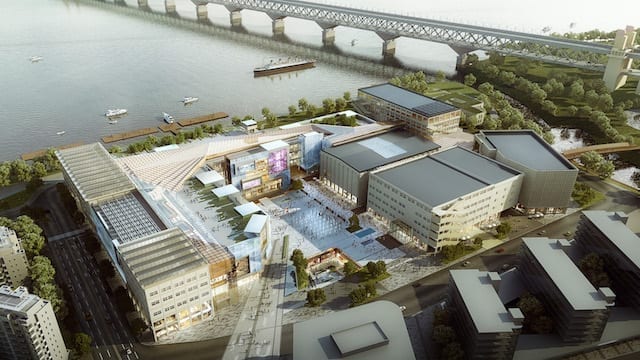
    An historic ice-storage warehouse in Nanjing will be transformed into a commercial destination by Benoy China working with developer MCC Real Estate Group.

    Part of the development of a mixed-use retail and cultural experience for the community in the Yangtze River Bridge area, the riverfront warehouse was built in 1915. “It will become one of the largest commercial developments in the area,” says Benoy China director Qin Pang.

    Retaining the original form of the historical buildings, Benoy will insert modern blocks that will form a cultural plaza at the heart of the site. A refined architectural expression on the outer streetside elevations will be offset with more playful modern cubes. Through careful placement of the new buildings, Benoy can preserve the views of the historical structures, a crucial element of the design brief.

    Construction is scheduled to start this year.


  • Titijaya buys 99% stake in Ampang land owner

    Titijaya buys 99% stake in Ampang land owner

    Titijaya Land Bhd is buying a 99% stake in BJ Properties Sdn Bhd, which owns 6.8 acres of leasehold land in Ampang that it plans to develop into a RM1.5 billion gross development value project.

    In a filing with Bursa Malaysia today, the group said its purchase is in line with its growth strategy in expanding its land bank and investing in strategic property development projects in the Klang Valley.

    The land is expected to be used as mixed development with a focus on the residential component, complemented by some commercial elements.

    Titijaya’s wholly owned subsidiary Tulus Lagenda Sdn Bhd will pay up to RM9.9 million for the stake.

    Based on the audited financial statements for the financial year ended Aug 31, 2017, BJ Properties recorded a net loss of RM1.06 million and negative shareholders fund of RM3.07 million. The land in Ampang has a book value of RM103.67 million.

    Titijaya intends to fund the proposed subscription via internally generated funds and/or bank borrowings. The company’s share price closed 1.5 sen lower to close at 52.5 sen with some 331,100 shares changing hands.

  • Vietnam condotel market promises to boom this year

    Vietnam condotel market promises to boom this year

    Condotels are becoming a hot development target in the real estate market, as international tourists flock to Việt Nam with increasing speed. Condominiums that are operated as hotels, with owners allowed to make their units available for short-term rentals, the properties are attractive for tourists and business visitors.

    The condotel market is forecast to keep booming in 2018. But the rapid development has left many concerned about oversupply.

    Supply exceeding demand?

    According to data from the Việt Nam Real Estate Association (VNREA), in 2017 condotels became the brightest star in the resort real estate sector. The investment in condotel projects has accounted for more than half of total inflows into the real estate market. The supply of condotel products hit 22,837 units across developments throughout the country. Successful transactions account for 65-70 per cent of the volume offered.

    The above numbers show the excitement focused on this segment of the real estate as well as the potential for investors. This year, it is forecast that there will be 29,000-33,000 condotel units available for sale.

    Stephen Wyatt, CEO of global real estate services firm JLL Việt Nam, said the development of this type of resort condominium is in direct proportion to the accommodation needs of tourists. As tourists’ demand grows, this type of asset has a positive future.

    The Việt Nam National Administration of Tourism reported that international visitors to Việt Nam in 2017 reached nearly 13 million, a sharp increase of 29.1 per cent over the previous year. The most attractive tourist destinations include HCM City, Hà Nội, Đà Nẵng, Nha Trang and Phú Quốc.

    In addition, according to the Law on Tourism 2017 approved by the National Assembly, the Government expects the tourism industry to develop into a key economic sector in the future. Supporting policies and investment incentives will create momentum for resort real estate.

    In addition, Việt Nam’s hosting of regional and international conferences also contributes to the development of tourism. For example, hosting APEC 2017 in Đà Nẵng City led the city to perfect its tourism infrastructure as well as attract the attention of visitors and investors from around the world.

    With this foundation, 2018 is expected to be another exciting year for resort real estate as investors simultaneously introduce their projects to capture the wave of development of Việt Nam’s tourism industry, Wyatt said to baotintuc.vn.

    As for the question of whether condotel developments have crossed the threshold into oversupply, Wyatt said the answer was uncertain and depends on the overall future of the tourism industry. And at the moment, tourism was a promising sector thanks to the Government’s commitments to playing a supportive role.

    It is necessary to focus on quality, business strategy and commitment to profitability in order to adapt to the growing market and increasingly tight legal framework of this market, Wyatt suggested.

    Need a plan

    According to Wyatt, there are three main reasons this type of vacation apartment attracts investors.

    First, resort condominiums hit the investment market within the last three years, so the competitiveness of this sector is still low compared to other markets such as apartments, townhouses, villas and land plots. In addition, this type of real estate is attractive to investors because developers typically promise that investors will receive a certain amount of profits.

    Second, like other types of real estate for sale, this type of product offers a rapid return on investment.

    Third, the 2017 Tourism Law identifying tourism as a key economic sector in the future will create momentum for the development of resort real estate.

    However, many management agencies and experts say the condotel boom demands strategy and planning.

    Nguyễn Trần Nam, chairman of VNREA, emphasised that it was necessary to have a soft, flexible plan for condotel development and investment.

    The planning should be based on demand and must be designed to create demand. Some localities report they have experienced dramatic increases in tourism after a condotel is built. Quy Nhơn City in the central coast province of Bình Định is one example, Nam said.


  • Hong Kong retail rents prepare to move into ‘early upswing’

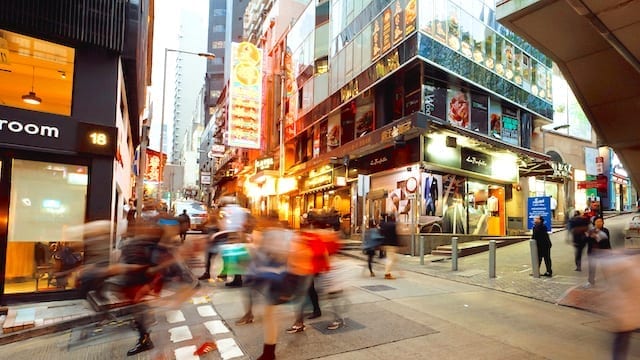
    Hong Kong retail rents prepare to move into ‘early upswing’

    Hong Kong retail rents are expected to move into an “early upswing cycle” this year according to a regional real estate market briefing prepared by Savills.

    The report details commercial and residential property leasing trends across major Asian markets and as the accompanying tables show, compares occupancy costs of space as well.

    It groups major cities by upswing and downswing, late and early, showing that Hong Kong is at the end of its downswing in retail rental rates. Cities currently in early upswing are Manila, Guangzhou, Jakarta and Singapore. Hong Kong is grouped with Taipei, Hanoi, Ho Chi Minh City and Seoul, suggesting all those markets are about to turn.

    Savills says regional prime retail rents moved by between a decline of 1.8 per cent in Beijing and an increase of 5.9 per cent in Guangzhou last year.

    “Strong local retail consumption growth of 9.5 per cent year on year in the second half of the year following 10.5 per cent in the first half of the year supported the Guangzhou leasing market, while prime shopping malls began to re-position and upgrade, focusing more on entertainment and food & beverage,” said Savills in a brief commentary.

    “Again, Hong Kong’s prime shopping mall rents are considerably ahead of all other Asia-Pacific markets and are expected to move into an ‘early upswing’ cycle this year.”

    Savills says economic growth across Asia-Pacific continued to picked-up moderately in the second half of last year and the International Monetary Fund estimates that the “Emerging and Developing Asia” economies grew by 6.5 per cent over the year as a whole while China grew by 6.8 per cent and Japan’s economy grew by 1.8 per cent last year, from 0.9 per cent in 2016.

    “The improving global economic outlook and an accommodative monetary policy created momentum for business expansion,” said Savills.

  • One Raffles Place Shopping Mall To Undergo Asset Enhancement, Welcomes New Tenant

    One Raffles Place Shopping Mall To Undergo Asset Enhancement, Welcomes New Tenant

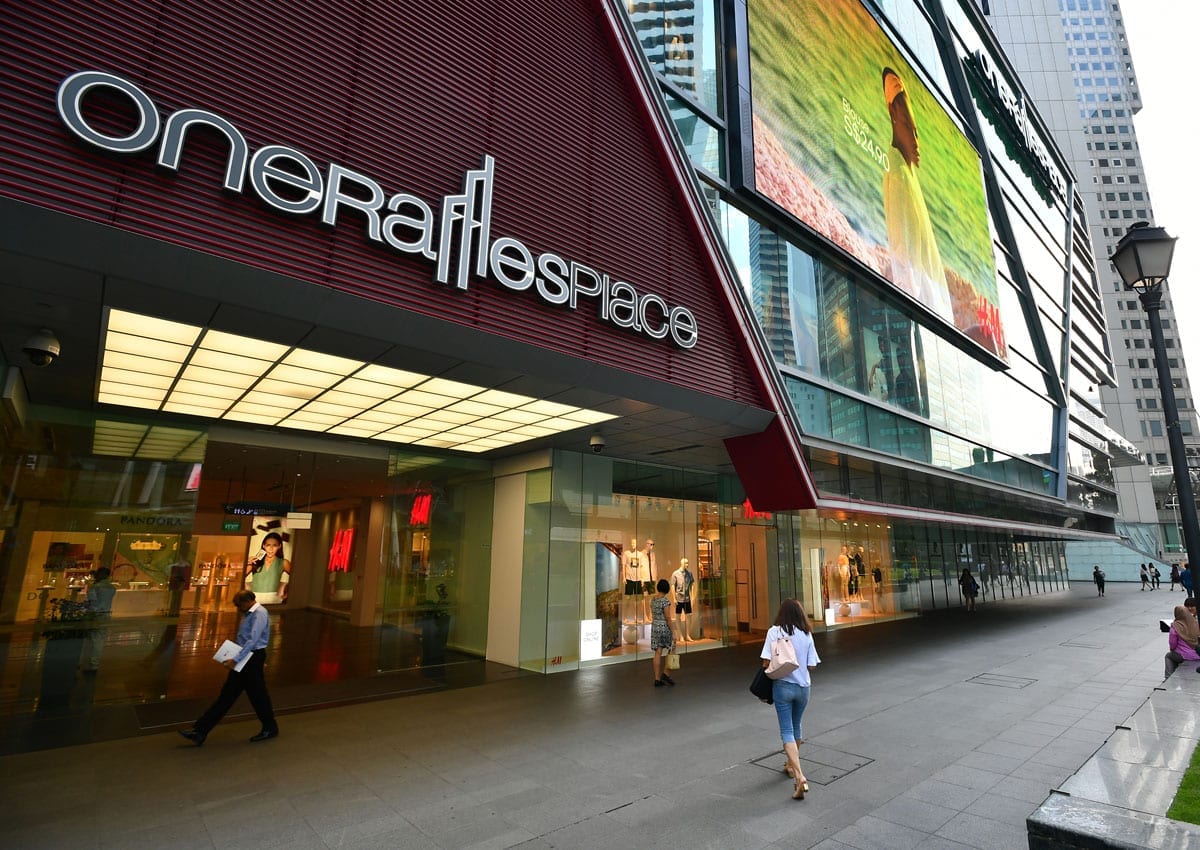
    One Raffles Place Shopping Mall, a six-storey retail mall located in the heart of Singapore’s central business district (“CBD”) in Raffles Place and part of the iconic integrated commercial development One Raffles Place, is set for a revamp as it undergoes asset enhancement works scheduled to start in mid-2018.

    The AEIs include improving the circulation areas of the mall, as well as creating more inviting and open retail space with better visibility. These upgrades will help provide a better shopping experience while simultaneously driving the per-squarefoot productivity of the mall.

    The revitalised One Raffles Place Shopping Mall will create an exciting retail environment that addresses the changing needs and lifestyle preferences of the working population in the CBD. Another exciting change is the opening of a coworking space occupying more than 35,000 sq ft of space across a few levels at the
    mall.

    Spaces, a co-working concept by IWG, the world’s leading provider of flexible workspace solutions, will launch its flagship site at One Raffles Place Shopping Mall delivering a strong lifestyle-led workspace for a creative way of working for entrepreneurs and established businesses alike. The venue will provide a professional working environment founded on the principles of collaboration and inclusivity, while its authentic, European and considered design will reflect the company’s “Inspire to Work” philosophy.

    Spaces at One Raffles Place is envisaged as a focal point for flexible workspaces given its vantage location in the heart of Raffles Place. A unique aspect of Spaces will be its ability to host and launch retail and fashion-related events within a mall setting. Its multi-level layout is expected to improve vertical traffic at One Raffles Place Shopping Mall, whilst direct access to Raffles Place Park and the incorporation of a strong F&B offering on the first level will make it a preferred choice for corporate gatherings and for catching up with colleagues and friends
    after work.

    Ms Tan Shu Lin, Chief Executive Officer of OUE Commercial REIT Management Pte. Ltd. which manages OUE Commercial REIT (“OUE C-REIT”), said, “Coworking spaces have been proven to create bustling work communities, and we are delighted that our partnership with Spaces by IWG will create more diversity and vibrancy for One Raffles Place Shopping Mall.

    As the mall attracts high shopper traffic of close to one million each month, necessity services and food & beverage tenants will remain the mainstay of the retail offering. The presence of a co-working space will further enhance the
    business traffic and synergy for One Raffles Place as an integrated commercial development.”

    “For us, opening a Spaces site at One Raffles Place is such a wonderful moment. This area is well-known for its very high quality and standards; a perfect fit for our community who will expect excellence in the design of Spaces and in our level of hospitality. We also plan to support an energised business community of different industries, which will include the creative industries and fin-tech groups,” says Martijn Roordink, Co-founder of Spaces.

    One Raffles Place Shopping Mall will remain operational during the asset enhancement period and the implementation phases are carefully planned to minimise disruption to both tenants and shoppers. The cost of the AEIs is not expected to have a material impact on OUE C-REIT’s gearing.

  • CapitaLand Retail to Manage Luxury Mall in Phnom Penh, Cambodia

    CapitaLand Retail to Manage Luxury Mall in Phnom Penh, Cambodia

    CapitaLand Retail has signed an agreement to manage a mall in Phnom Penh, the capital of Cambodia and one of the fastest growing economies in Southeast Asia.

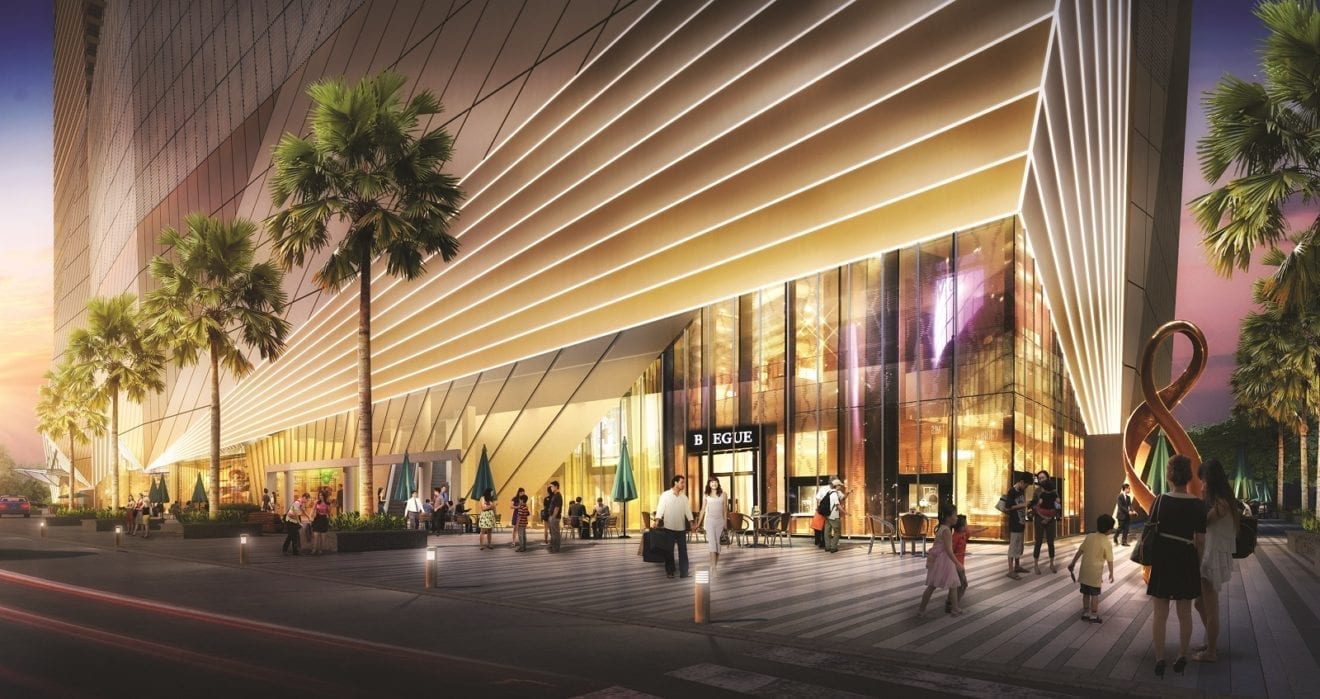
    The mall is the retail component of The Peak, an upcoming high-end integrated development majority owned by Singapore-based developer Oxley, in partnership with Cambodian company Worldbridge Land.

    The deal extends CapitalLand’s expertise in operating shopping malls to a new market after Singapore, China, Malaysia, Japan, India and Vietnam.

    Mr Wilson Tan, CEO of CapitaLand Retail, said, “As the retail operating platform of the group, CapitaLand Retail is focused on growing our premier retail operations into a global platform. Through management contracts, we can scale CapitaLand’s shopping mall network in an asset-light manner. With CapitaLand’s proven track record in running successful malls across Asia, we are well-placed to explore new growth opportunities by offering our professional expertise in retail management to property owners.”

    Located in Chamkarmon District in central Phnom Penh, The Peak is a freehold 55-storey integrated development comprising an office tower, the country’s first Shangri-La Hotel with 300 guest rooms, and two luxury residential towers with 1,014 apartment units sitting atop a mall.

    CapitaLand will oversee asset planning, pre-opening and retail management for the five-storey mall with a Gross Floor Area (GFA) excluding car park of about 420,000 square feet (sq ft) and Net Lettable Area of about 260,000 sq ft.

     Currently under construction, the mall is expected to commence operations in 2020.

    “Cambodia has in recent years attracted the interest of international retailers – including Singapore-based brands – who are keen to tap the country’s rising spending power and growing tourist arrivals. This has led to an increase in demand for well-located and well-designed retail spaces in the country. Given The Peak’s strategic location in central Phnom Penh and high-grade building specifications, it is well-positioned to meet the requirements of quality retailers seeking to serve the growing aspirations of the city’s community. CapitaLand will leverage our expertise in retail asset management and industry leading retailer network of about 17,000 leases to maximise the retail potential of The Peak,” Mr Tan added.

    Located along the river esplanade, The Peak overlooks the Mekong River and Phnom Penh’s bustling cityscape. Surrounded by high-end residential developments and key commercial and government buildings, The Peak’s immediate catchment area covers the prime residential and commercial districts of Chamkarmon and Diamond Island.

    In Phnom Penh, CapitaLand also manages three serviced residences through its wholly owned serviced residence business unit, Ascott. They are CASA Meridian Residence, which is operational, and Somerset Norodom Phnom Penh and Somerset Meridian Square Phnom Penh opening this and next year respectively.

  • Lotte to sell hypermarket chain in China

    Lotte China plans to wrap up the sales of its hypermarket chain in China within the next three months.

    Potential buyers have started to inspect the South Korean retail giant’s stores. While many have reviewed documents, Chinese retailer Liqun Group was the first to carry out on-site inspections of Lotte Mart’s Chinese stores.

    However, a Lotte Mart official says three or four other companies also also planning on-site inspections.

    He says Lotte’s aim is to complete the sales process by June, when about KW700 billion (US$653 million) of emergency funds it has injected into its Chinese retail business is expected to be run out.

    Lotte announced its decision to sell its Chinese stores in September after being hit by major losses in the wake of a diplomatic row between Seoul and Beijing over a US anti-missile system. The retailer bore the brunt of Beijing’s retaliation after signing a land-swap deal with the South Korean government to provide a golf course to host the missile shield system.

    Eighty-seven of its 99 Lotte Mart discount stores in China suspended trading, while sales at the few stores that managed to stay open tumbled more than 80 per cent. The group lost about KW1.2 trillion in lost sales in the process.

  • One Raffles Place Shopping Mall Add Some Blings To Lure Shoppers

    One Raffles Place Shopping Mall Add Some Blings To Lure Shoppers

    This Spring/Summer, One Raffles Place shopping mall brings together wardrobe classics and new favourites, providing style options for every occasion. Shoppers can look forward to attractive promotions from 21 March till 22 April 2018, and enjoy a fashion showcase curated by one of Singapore’s leading fashion stylists, Jerome Awasthi, at the mall’s atrium on Level 1.

    Featuring apparel and accessories from the multitude of fashion brands at the mall, such as Revolte Collective, Rabeanco and S Lady, the fashion showcase will present feminine yet strong and futuristic looks. Shoppers will be able to garner inspiration for a new wardrobe this Spring/Summer, in line with the latest trends.

    With a new wave of stores that have opened within the last quarter, One Raffles Place shopping mall strengthens their fashion, food & beverage (F&B), lifestyle and beauty offerings just in time for the season. Including fashion boutiques such as Butterflies & Marigolds and (X)S.M.L, as well as cult beauty brand Black Paint and F&B favourites like Greendot Café and Marks & Spencer, everyone can enjoy a little something every day at One Raffles Place shopping mall.

  • Property market expected to be stable in 2018

    Property market expected to be stable in 2018

    The country’s real estate market in 2018 will maintain mid-term stability, while merger and acquisition in the sector will continue to see strong development.

    This was revealed in the Top 10 Reputable Property Developers, Building Material Companies and Contractors 2018.

    The surveyed top 10 firms said real estate developers would enjoy opportunities of high economic growth rate, newly-signed Comprehensive and Progressive Agreement for Trans-Pacific Partnership trade agreement to attract more foreign investment and approval for establishment of special administrative economic zones.

    However, the survey also said local property developers would face challenges of macro-economic instability in the region, State divestment making capital dispute more severe and virtual money affecting the market and condotel, officetel and hometel segments with potential risks due to lack of clear management policies.

    The firms said special administrative economic zones would continue to be promising lands to lure large real estate projects.

    The estate, construction and building material sectors will be linked to the Fourth Industrial Revolution.

    The survey revealed that in addition to traditional marketing methods, customers were increasingly getting access to property information through internet.

    More than half the surveyed people said they sought information on websites specialising in real estate and on social networks.

    When the requirements of home buyers become stricter, information in the market will become more transparent. Investors and contractors will pay attention to the sustainability and life span of projects and construction buildings.

    According to experts, the quality of estates in 2017 improved due to the pressure of competition. They said property developers were required to improve their ability while enhancing professionalism and quality in projects.

    Last year, the real estate market saw positive changes in all segments. In Hà Nội and HCM City alone, there were 64,263 successful deals. A range of new products, such as condotel, officetel and hometel were developed, making the real estate market more attractive.

    According to report, prestige was one of the top three reasons for customers in choosing a product in the real estate sector.

    Vingroup and Novaland top the list of the 10 most reputable property developers in 2018.Vingroup has been leading the market with diversified products such as apartment buildings, offices, resorts, shophouses, condotel and officetel.

    Novaland, on the other hand, has been a popular brand in the south, with strong financial abilities and large land funds.

    Coteccons Construction Joint Stock Company and Hòa Bình Corporation occupy the first and second positions in the list of top 10 reputable contractors in 2018.

    Hòa Phát Steel Joint Stock Company and Viglacera Corporation Joint Stock Company top the list of the 10 most reputable building material companies in 2018. Both are large-scale companies in the building material sector with hundreds of construction projects every year throughout the country.

    The award ceremony will be organised on April 18 at the Việt Nam National Convention Centre in Hà Nội.

    Read more at https://vietnamnews.vn/economy/424330/property-market-expected-to-be-stable-in-2018.html#EeieWe0sOIEGm5YD.99

  • Vietnam cement consumption on the rise

    Vietnam cement consumption on the rise

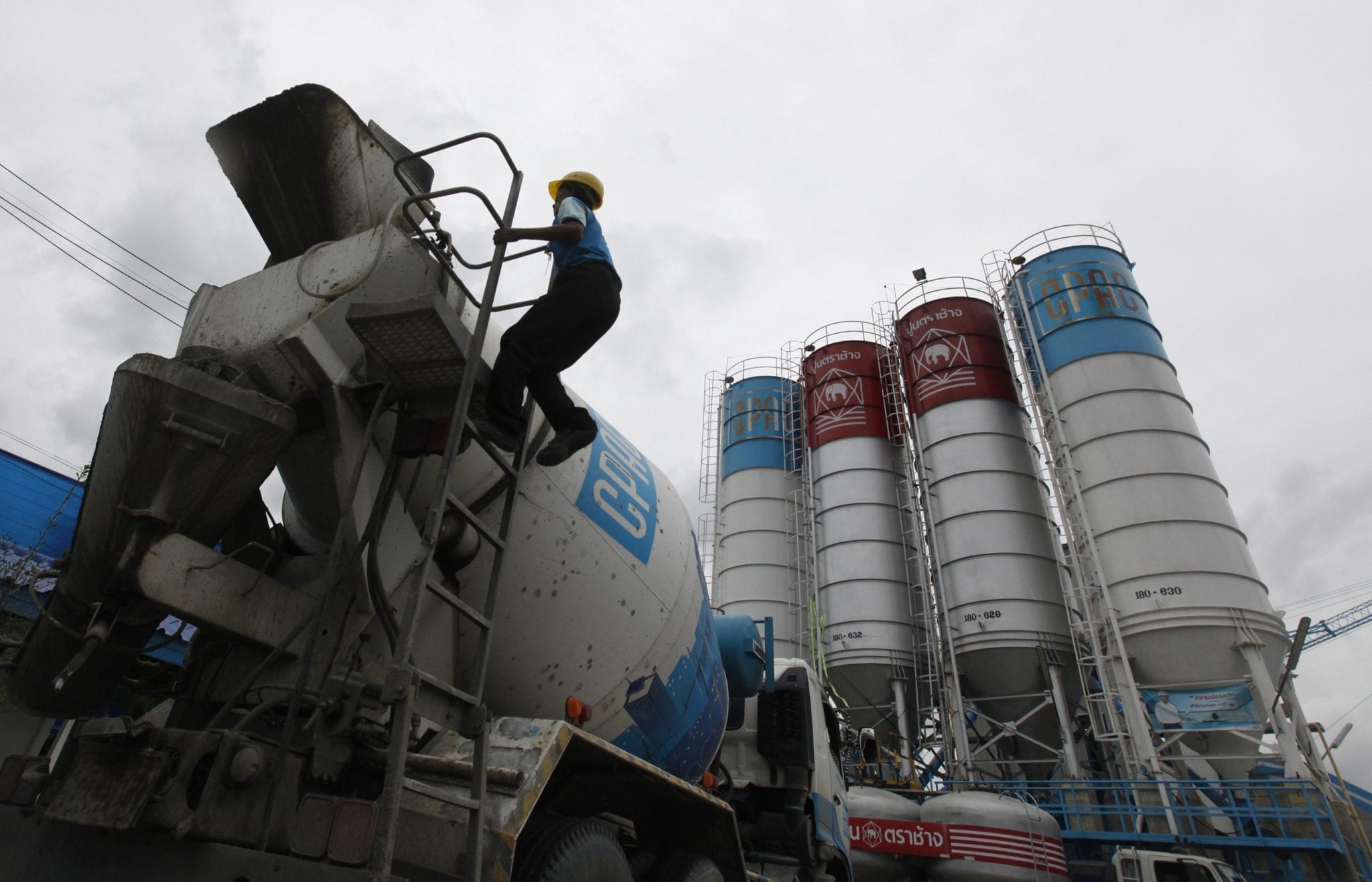
    The country’s cement consumption in the first two months of the year posted a year-on-year increase of 85 per cent to reach 18.55 million tonnes.

    According to statistics of the Department of Building Materials under the Ministry of Construction, cement consumption in the period had surged both in local and export markets. The department attributed this to a halt in cement production in China.

    In February alone, cement consumption reached 7.62 million tonnes, increasing by 38 per cent compared to the same period last year and meeting 23 per cent of the annual target.

    Cement sold in the domestic market rose by 11 per cent over the corresponding period last year to 5.02 million tonnes. The country exported 2.6 million tonnes of cement in February, increasing 30 per cent from last year.

    Cement exports in the first two months of the year reached 5.5 million tonnes, representing a year-on-year increase of 121 per cent.

    Cement prices were stable last month.


  • Vietnam aims to reduce property speculation in HCMC

    Vietnam aims to reduce property speculation in HCMC

    The People’s Committee of HCM City has proposed to impose a tax on apartments and houses which are sold within one year after purchasing, aiming to reduce speculation and ensure stability in the estate market.

    The People’s Committee has submitted the proposal in its property market development project for the 2016-20 period with an orientation to 2025 and a vision to 2030 to the National Assembly and the Government.

    The project was approved by the city by the end of last year. It provided evaluations on advantages and shortcomings of the market as well as development orientation.

    The city’s property market still lacks transparency, causing speculation, it cited. Individual investors buy houses and land not for the purpose of accommodation or rental but with the intention of quickly reselling them for profit. However, the home buyers did not pay for asset taxes and additional income. Sometimes, the investors held a majority of transactions in the market, making land and house prices increase and reducing supply for people seeking to buy homes to live in.

    HCM City therefore proposed that the Government should review regulations relating to taxes on estate transactions to encourage people to truthfully declare the value and additional income from the transactions. This could help the market develop transparently and healthily.

    In addition, the project also suggested building an annual tax collection mechanism for land and estates increasing in value, which would create new funds for the Government to improve infrastructure.

    It also proposed other solutions such as imposing a high tax rate on a buyer’s second home.

    The city asked the Government to issue the urban and construction bonds, mobilising capital from banks and credit institutions as well as a mechanism to attract investment into infrastructure.

    In the short-term, the Government could allow a pilot implementation of some new financial tools such as housing saving funds or a real estate investment trust (REITS) to diversify capital resources in the estate market.

    The city proposed that the Government replace the calculation of land use payments with a fixed tax rate of 10-15 per cent.

    Read more at https://vietnamnews.vn/economy/424089/hcmc-aims-to-reduce-property-speculation.html#eGfjysbqGIY62cdx.99

  • Japan invests big in Vietnamese real estate

    Japan invests big in Vietnamese real estate

    Việt Nam’s real estate sector has witnessed significant participation from Japanese investors through cooperation with Vietnamese businesses recently, promising to bring benefits to the real estate market.

    According to real estate company Savills Việt Nam, over the past years, Asian investors, including Japanese ones, were only involved in commercial real estate like commercial centres, serviced apartments or office buildings. However, at present, these investors are increasing their activity in the residential segment due to the country’s young population and an increasing middle class, presenting an extremely attractive opportunity.

    Presence of big investors

    Shinichi Sakaki, deputy general director of the City Bureau, at Japan’s Ministry of Land, Infrastructure, Transport and Tourism, said the Japanese Government now has policies to support real estate developers promoting investment abroad. In addition, Japan has the experience of developing large-scale satellite towns, so it is trying to ‘export’ that technology abroad.

    One of the projects attracting not only investors but also the governments of Việt Nam and Japan is the cooperation agreement for the development of Nhật Tân – Nội Bài, aiming to build a smart city north of the Red River.

    The project was signed between Việt Nam’s BRG Group Joint Stock Company, Japan’s Sumitomo Corporation Asia and Oceania Group and the People’s Committee of Hà Nội.

    With total investment of nearly US$4.2 billion, this project is considered Japan’s largest foreign investment.

    Prior to that, another large Japanese investor, Mitsubishi Corporation, had co-operated with Vietnamese property developer Bitexco, to develop 240 low-rise housing units and two high-rise condominiums among a total of more than 1,000 low-rise and 17 high-rise condominiums at Hà Nội’s The Manor Central Park project.

    Bitexco and Mitsubishi established a joint venture company, of which Bitexco holds a 55 per cent stake and Mitsubishi holds the remaining 45 per cent.

    Recently, Nidec Group, one of the world’s leading hi-tech corporations and the second largest Japanese corporation on the Tokyo stock exchange (2017), joined forces with escalator firm Alpec to conquer the Vietnamese elevator market.

    With many years of experience in the field of high technology as well as research and development of lifts, Nidec will send foreign experts to support Alpec in quality management, labour safety, as well as the research and development of elevator equipment. The cooperation between the two sides promises to launch modern and environmentally-friendly elevator products, in accordance with the aesthetics and economic conditions of the Vietnamese people.

    Regarding potential cooperation between the two countries, Lê Hoàng Châu, president of the HCM City Real Estate Association (HoREA), said, in 2017, Japan replaced the Republic of Korea as the largest foreign investor in Việt Nam in general, and in the real estate market in particular. Many Japanese enterprises have participated in the implementation of major urban infrastructure projects funded by the Japanese Government, such as Obayashi, Shimizu, Hitachi, Sumimoto Construction, Mitsui and Maeda.

    In addition, there are enterprises that have invested in developing big projects such as Nomura Hải Phòng Industrial Zone, or Idemitsu Kosan Company Limited’s investment in Nghi Sơn Refinery and Petrochemical. Especially, in the past five years, some Japanese investment funds and enterprises have cooperated with real estate companies in Việt Nam in the form of buying shares, contributing to investment or lending for developing real estate projects in accordance with Japanese standards and suitable to consumers’ needs.

    The potential for investment and business cooperation among real estate companies in Japan and Việt Nam is very large, with 1,200 real estate development projects of Vietnamese enterprises in need of cooperation, joint ventures or teaming up with domestic and foreign businesses, especially Japanese ones.

    Potential cooperation

    The cooperation between Việt Nam and Japan will bring benefits to both sides, especially in creating opportunities for Vietnamese consumers to access high quality Japanese housing products, according to Châu.

    Meanwhile, regarding cooperation with Japanese units in the field of building management, Nguyễn Quang Huy, deputy general director of Property and Management Company (PMC), said cooperation with Japanese businesses brought benefits such as giving motivation to develop service standards and customer service strategies in a Japanese style, improving the prestige and company’s brand name, and being able to improve the foundations of implementing management, training or improving the quality of human resources.

    “However, we also face many challenges; the most fundamental difficulty is the different approaches between the two sides. Vietnamese people tend to focus on a short-term approach, expecting to see results quickly. Japanese people, on the other hand, appreciate the importance of long-term planning, so they start with the smallest things,” Huy said.

    “For example, in the field of building management, they teach staff how to cut nails, wash toilets, walk and serve customers. Therefore, Vietnamese businesses intending to cooperate with Japan should also pay attention to differences in the approach and find ways to create a workforce that loves the job, accepting career development on a long-term basis rather than short-term,” he said.

    According to the HoREA chairman, there is enormous opportunity for co-operation between HCM City and Japanese property developers and construction companies since the city now has some 1,200 projects, including infrastructure upgrades and beautifying works,

    Speaking at a meeting with a delegation of executives from 40 Japanese companies, Châu said the projects had been undertaken by local firms who want to tie up with foreign partners.

    Additionally, from 2018, the city was set to implement the National Assembly’s resolution No54 on special mechanisms and policies, which would give it almost complete autonomy in deciding and awarding projects.

    The city had already planned 21 programmes including removing houses along canals and giving itself a facelift.

    He cited the examples of Tokyu investing in Hưng Thịnh Corporation and Becamex’s projects and Hankyu and Nishi Nippon Railways tying up with Nam Long, Misubishi Corporation with Phúc Khang Corporation, and ACA with Sơn Kim Land.

    Concurring, Lê Trần Kiên, deputy director of the city’s Department of Construction, said the city aimed to relocate 20,000 people living along canals and in old apartments by 2020.

    “Some 21,850 houses are located along canals and need to be moved, mostly in Districts 8, 4 and Bình Thạnh,” he said.

    The city was considering ways to attract more foreign investment in public-private partnership projects (PPP), he said, adding that six PPP projects were underway to upgrade the city.

    HCM City is now soliciting Japanese investment in a project to upgrade the Cầu Dừa Canal in District 4.

    Speaking about the potential of co-operating with city-based companies, Keiji Kimura, chairman of J-CODE, said Việt Nam was set for rapid modernisation like Japan achieved 50 years ago.

    So Japanese companies would like to share their experience with HCM City partners in handling problems like traffic jams and pollution, he said.

    They were committed to apply modern technologies to develop HCM City’s infrastructure, he assured.

     

  • Yangon retail sector posted 95% occupancy rate

    Yangon retail sector posted 95% occupancy rate

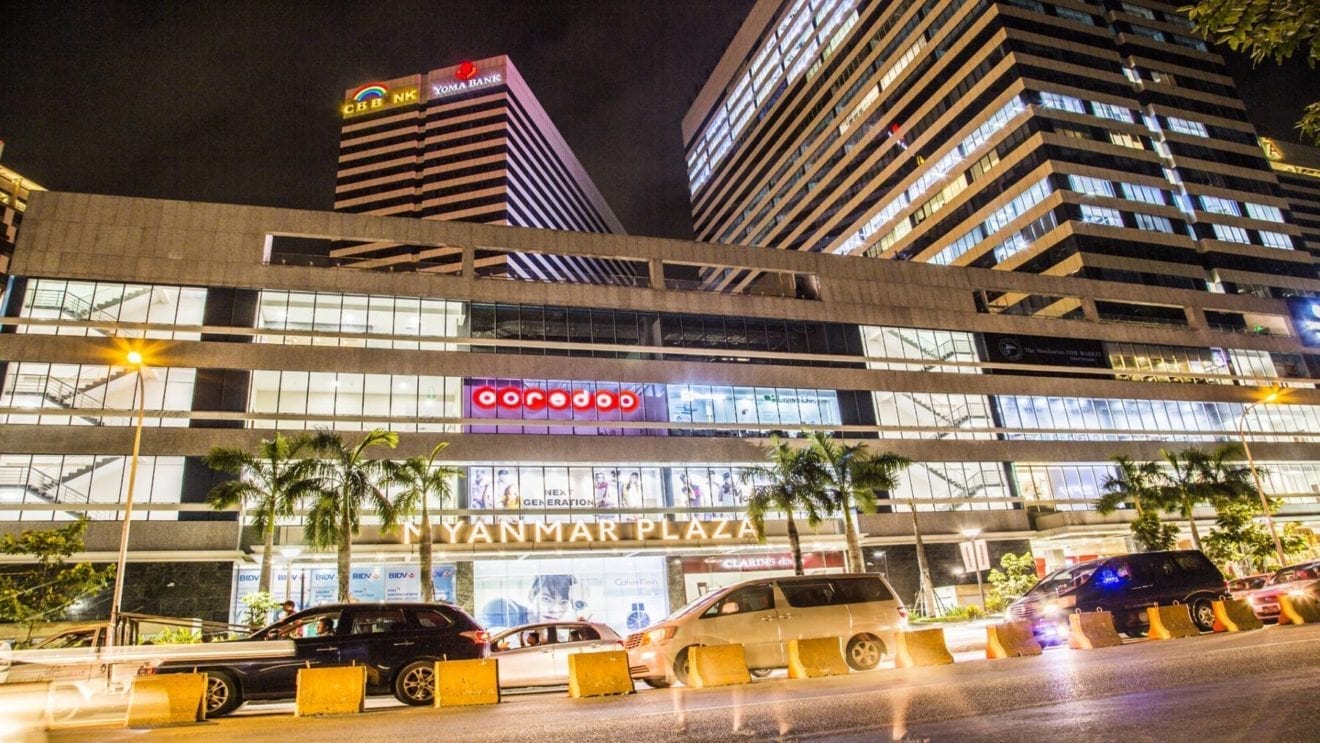
    Prime Yangon retail space remains almost fully occupied despite a record addition of new stock on the market last year.

    As a result, city retail rents are likely to rise by 4 to 5 per cent in the near-term, reflecting high demand.

    “Rents should continue moving upwards in the medium term,” said Joan Mae Lee, analyst for Colliers International’s research and advisory team, in a statement.

    According to a research report from the real estate specialist, more than 79,400sqm of new space opened in the fast-growing economy’s largest city last year – more than double the amount of 2016.

    However the occupancy rate held at 95 per cent which would undoubtedly make it one of the highest rates in Southeast Asia.

    The report said the figure reflected business confidence in the country, where the economy is expected to grow by about 7.5 per cent in the year to March 31.

    Yangon’s retail supply was boosted last year primarily by the opening of Junction City and St John City Mall which combined provided a fresh 67,000sqm of lettable area in the city.

    Lee urged developers to focus on tenant diversity in new or revamped projects.

    “Landlords should aim to lure other prospective tenants, such as aesthetic clinics, wellness centres, showrooms, auxiliary service providers and inclusion of institutional occupiers to boost foot traffic,” she said.

  • Sunway Putra mall Wins Big At Malaysia Tourism Awards 2016/2017

    Sunway Putra mall Wins Big At Malaysia Tourism Awards 2016/2017

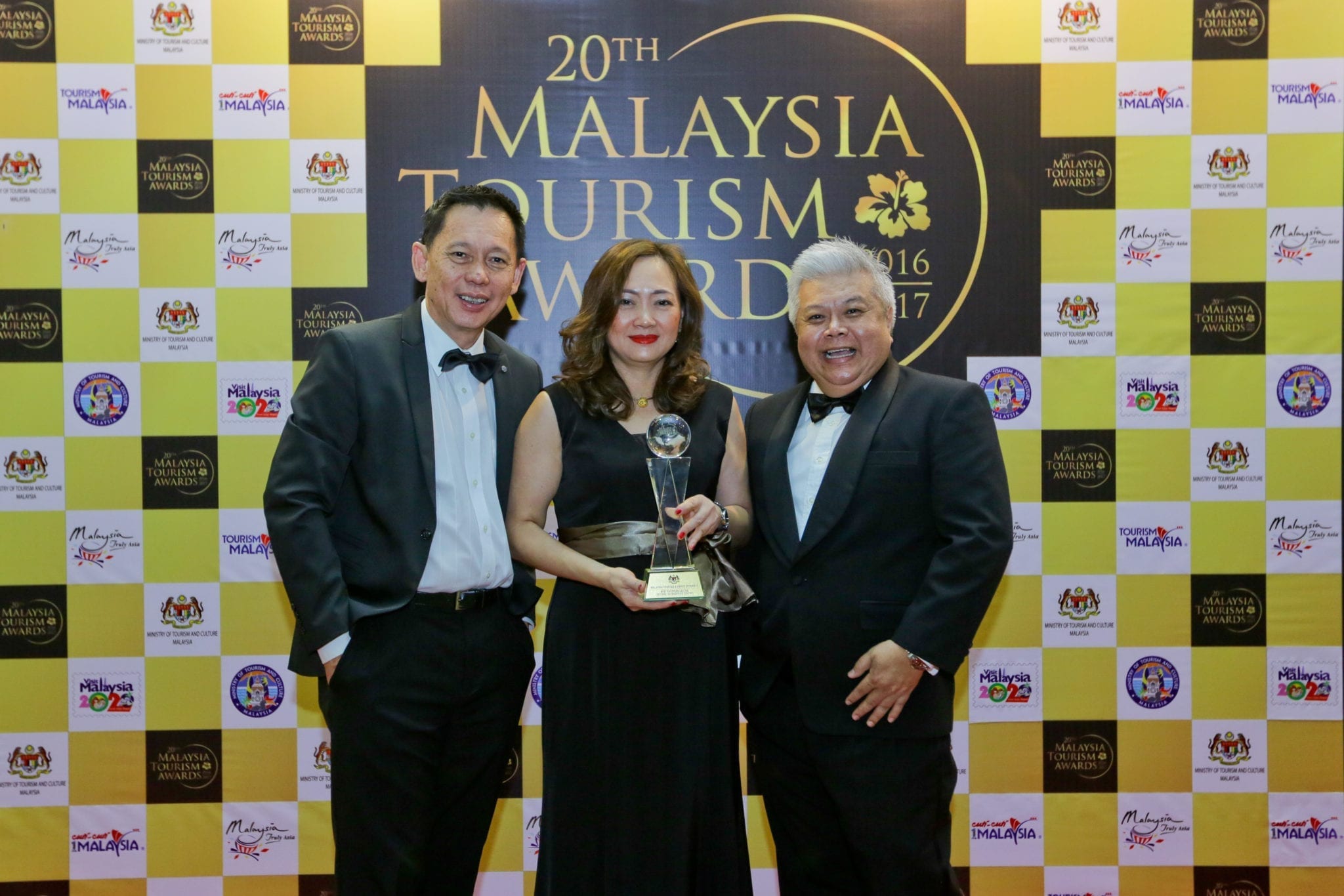
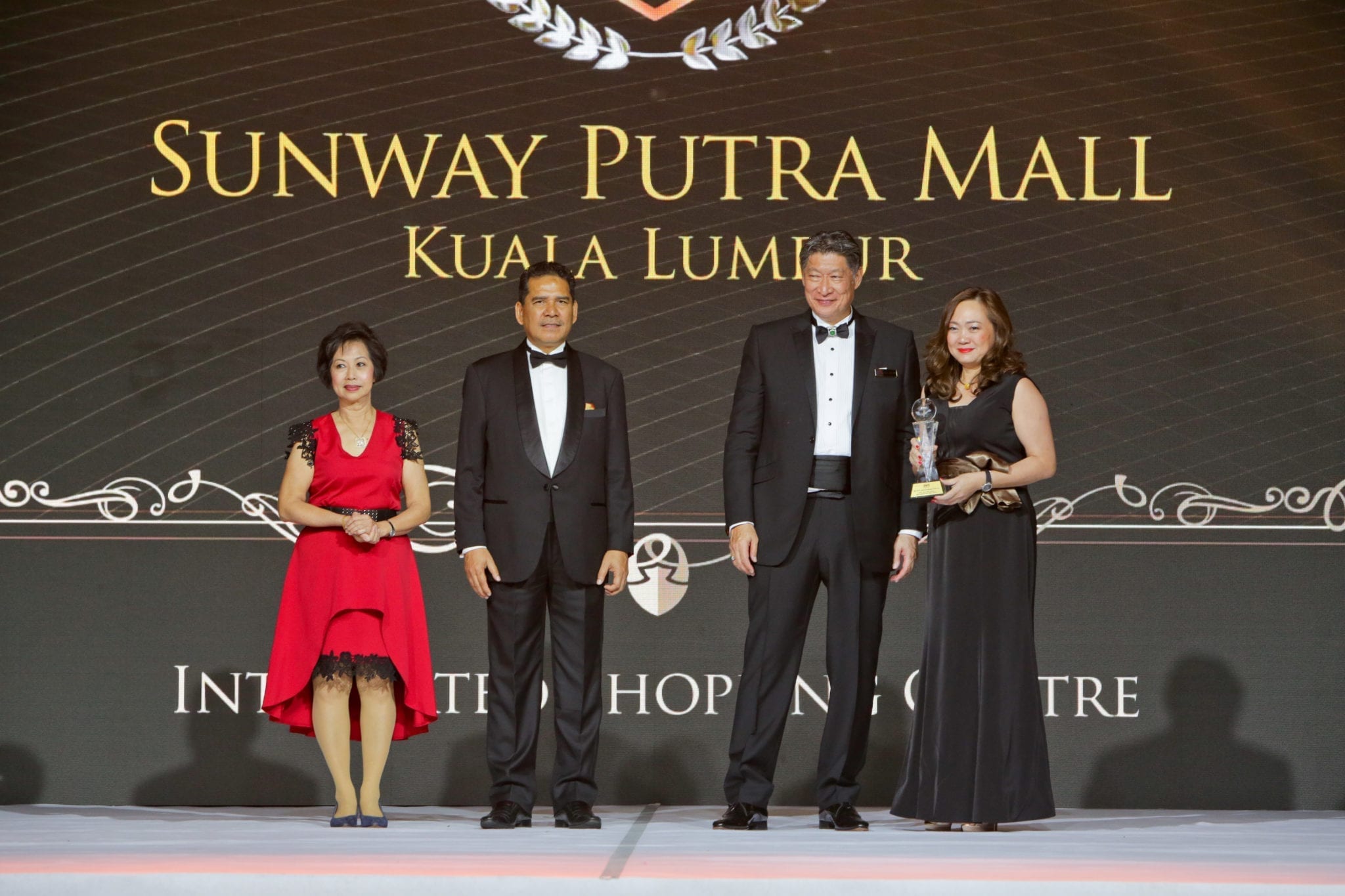
    It was a celebratory affair when Sunway Putra Mall emerged as the winner in the twentieth edition of the Malaysia’s Tourism Awards 2016/ 2017 award presentation ceremony at Putrajaya International Convention Centre (PICC) recently.

    The win saw the refurbished mall being named as the winner for best Shopping Centre under Integrated Shopping Centre category. It was the mall’s maiden attempt for the award.

    Tourism Malaysia chairman, Datuk Siew Ka Wei presented the award to Sunway Putra Mall General Manager Ms Phang Sau Lian alongside with Deputy Director General (Promotion) Tourism Malaysia, Dato’ Sri Abdul Khani Daud and Deputy Director General (Planning) Tourism Malaysia, Dato’ Chong Yoke Har in front of Malaysia’s various tourism industry players and related government agencies.

    Also present at the ceremony was, Minister of Tourism and Culture, Dato’ Seri Nazri bin Abdul Aziz, Tourism Malaysia director-general Datuk Seri Mirza Mohammad Taiyab and  Malacca Chief Minister Datuk Seri Idris Haron.

    The Tourism Minister had earlier paid tribute to industry players and captains for coming together amidst rising regional competition and limited resources towards the country’s tourism sector.  These awards were recognition towards tourism industry players contribution for boosting the country’s tourism attraction.

    Sunway Malls & Theme Parks CEO, Mr HC Chan said the win was meaningful for the mall group as this was the 6th time Sunway Malls was bestowed the prestigious award by the Ministry.

    “We like to thank the Ministry for their continued belief and support towards Sunway Malls. Apart from being the 6th time winning this award, what made it extra special is Sunway Malls has won this award for 8 consecutive years,” he added.

    Sunway Putra Mall picked up this award for year 2016/2017 edition while Sunway Pyramid won the 2010/2011, 2012/2013 and 2014/2015 editions.


    “This tourism award is another milestone for Sunway Putra Mall, despite being only just over two years in operation after the refurbishment, we are now recognized by the Minister of Tourism and Culture as the top Integrated Shopping Centre that promotes Malaysia.” said Phang.

    In addition, Sunway Group garnered the special Prime Minister’s Award at the 20th Malaysia Tourism Awards Ceremony. The award was a personal selection by Prime Minister and the Tourism and Culture Minister for an organisation’s exceptional contributions to the tourism industry.

    The Malaysia Tourism Awards is held once every two years, recognises and honours local and International tourism industry players for outstanding and innovative products and services. It also acts as an incentive for participants to strive for the highest level of professionalism and quality in both products and services. In its twentieth edition, this year’s awards saw over 665 nominations for 14 categories being received. Qualified entries went through a stringent selection by a panel of independent judges.

    The winning of this award added another feather to the cap for the mall tourism offering excellence. Sunway Putra Mall had received a gold award from Kuala Lumpur Mayor’s Tourism Award 2017 and recognised by the Ministry of Tourism & Culture as a Malaysia Tourism Quality Assurance (MyTQA) certified mall that delivered outstanding service quality and tourism products.

    Among the unique initiatives included DBKL Tourism Bureau appointment of the mall’s customer service representative as DBKL’s brand ambassador to promote tourists spots in Kuala Lumpur, promoting at overseas tourism missions alongside Tourism Malaysia and many others.

    The mall among others also partnered with international movies for activation, staging popular artistes appearances and collaborating with Malaysian Airlines and Matta Fair to promote KL as a tourism destination.

    The mall is home to international, regional and national retail brands with the likes of H&M. Uniqlo, Mango, Max Fashion, G2000, MONKI, Braun Buffel, Tissot, Padini Concept Store and many others. Offering more than 60 Food and Beverage outlets including local delights which are popular among tourists such as Dolly Dim Sum, Sepiring, Onde-Onde, Narenj and a food precinct called, ‘Selera Street’, that promotes locals favourites, namely Lorong Seratus Tahun, TeoChew Cendol, Ah Cheng Laksa and more.

    To date Sunway Putra Mall had also picked up the FIABCI 2017 Malaysia Property Award of Best Property for Retail Category, Malaysia Shopping Malls Association’s (PPK) Best Experiential Marketing Awards 2016 (gold award) for Category B (malls with 500,001 to 999,999 sq ft nett lettable area) and MPIM Asia Awards 2015 (bronze award) for best refurbished building category.

  • Central group Thailand expanding property portfolio plan

    Central group Thailand expanding property portfolio plan

    Thailand’s Central Group plans to invest more than THB200 billion (US$6.3 billion) over the next five years on expanding its retail and hotel properties in Thailand and abroad.

    It is especially targeting Vietnam, where it expects its retail business to grow by four times over the period. The group aims for total revenue to reach THB397.3 billion this year, up 14 per cent from last year.

    CEO Tos Chirathivat says the group is studying designs and concepts for two mixed-use commercial projects in Bangkok. A site on Rama IV Road will be developed under a strategic partnership with Dusit Thani and a site in Ploenchit Road will be undertaken in partnership with Hongkong Land. The design process for the projects will take about two years to be fully completed. The mixed-use projects will require investment of about THB25 billion each.

    Tos says Central Group is committed to maintaining its investment at between THB30 billion and THB40 billion every year for the expansion of its retail and hotel properties in Thailand and potential markets abroad, especially in Vietnam and Europe.

    The group will this year invest THB47.5 billion in business expansion both at home and overseas, which is 27.8 per cent more than last year. This excludes the possible acquisition of e-economy businesses.

    Tos says the group is focusing on initiating online platforms so it can transform into a tech company.

    Main focus

    For overseas expansion, however, Vietnam is the group’s main focus. He says Central Group has grown there by an average of 340 per cent over the past five years. It is the largest foreign retailer in the country, with five core business units: 31 malls (Big C), 59 food stores (Big C, Lanchi Mart), 49 fashion stores (Delala, Marks & Spencer, Robins, Supersports), 79 stores for construction materials, home decoration and electrical appliances (including B2S, PowerMall and Nguyen Kim), and three online platforms (B2S.com.vn, NguyenKim.yn, Robins.vn).ins

    “Our penetration in Vietnam is now more than 217 stores with more than 700,000sqm in combined retail space in 37 provinces. By 2022, we expect to have more than 753 stores, and will occupy 2.5 million square metres in 57 provinces in Vietnam,” says Tos.

    The sales contribution from Vietnam would increase significantly from 13 per cent now to about 20 per cent over that period, he says. The company has 17,000-plus employees in Vietnam, serving more than 175,000 customers a day.

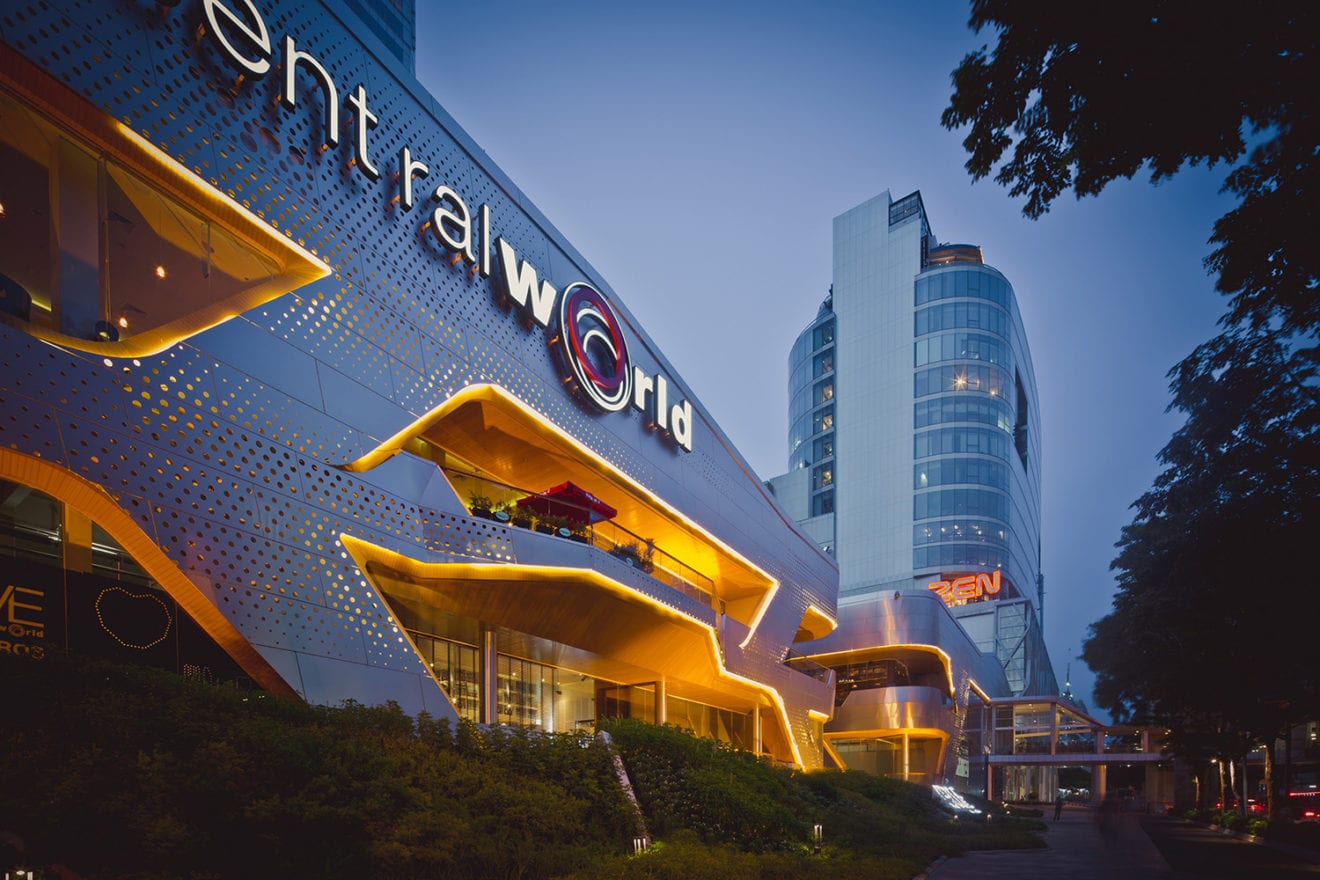
    In Thailand, he says the group will officially open its Tops Plaza in Phayao Province this quarter, followed by the relaunch of its CentralWorld in Bangkok in the second quarter. The group will also open the Robinson Lifestyle complex at Amata Chon Buri, Tops Plaza in Sing Buri, Central Phuket 2 and the Triphum theme park in Phuket.

    Other openings include residences and suites in Qatar, as well as Tops Plaza Amphur Phon, Khon Kaen and Pattalung, Zen Pathong in Phuket, Robinson Lifestyle in Chaiyaphum, and I-City Mall, the group’s first overseas mall, in Malaysia.

    An extra 459 stores will be opened in Thailand and Vietnam this year.