Category: Real Estate

Retail News Asia is committed to providing both local and global retailers with the latest Real Estate news throughout the Asian market. This on a daily base.

  • M101 brings world’s first Monopoly-themed hotel to Malaysia

    M101 brings world’s first Monopoly-themed hotel to Malaysia

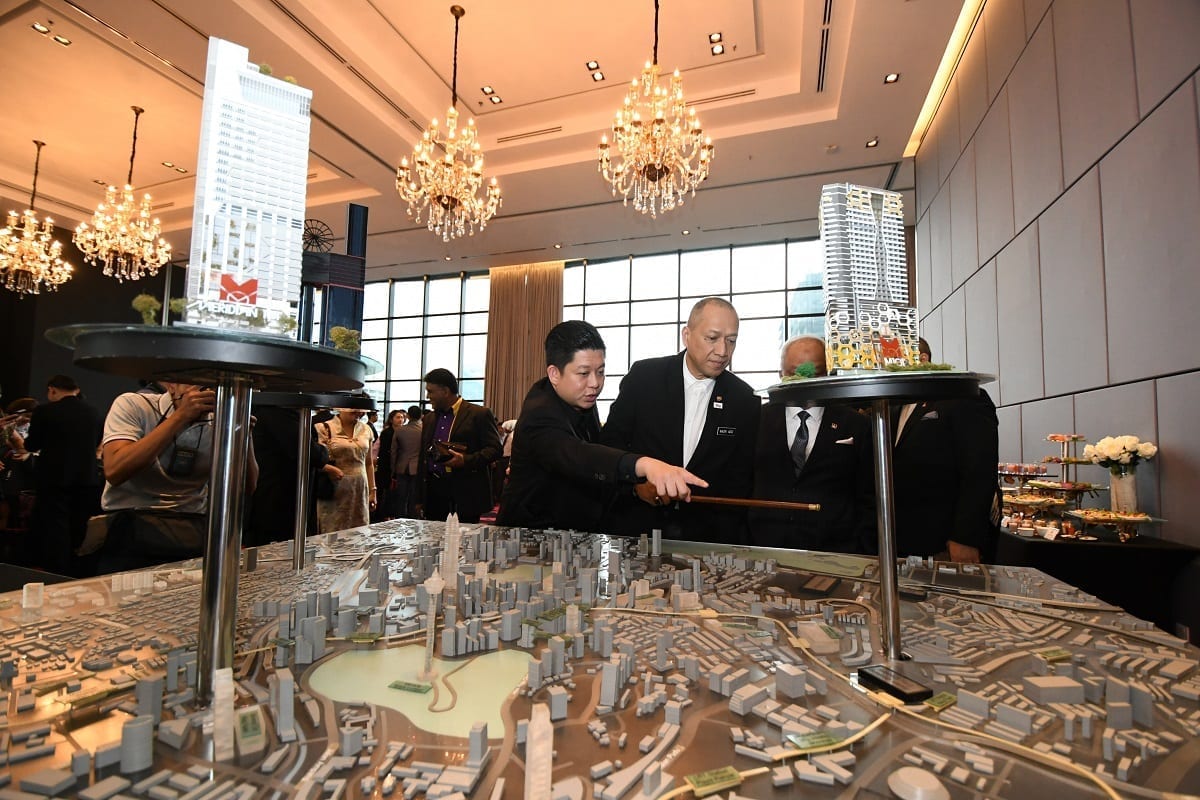
    Property developer M101 Holdings Sdn Bhd is partnering with the US toy company Hasbro Inc for the world’s first Monopoly-themed hotel, which will be located at its existing mixed development project called M101 Bukit Bintang.

    The mixed development project, situated in Bukit Bintang area, include small office flexible office (SoFo), retail lots and hotel suites.

    “The GDV for this development is around RM280 million. We have started construction works two years ago and we expect to hand over the project by end of this year,” M101 CEO Datuk Seth Yap said at the licensing agreement signing ceremony with Hasbro today.

    “Our underlying concept is to collaborate with international renowned brands, a unique and interesting brand that you might not think is possible for a hotel. And there is a lot of international brands that are willing to work with us,” he added.

    M101 had previously announced its collaboration with brands such as Planet Hollywood and Studio F.A Porsche to deliver exclusive suites in its M101 Skywheel project in Kuala Lumpur.

    Upon completion, Yap said the five-star boutique hotel, to be known as Monopoly Mansion by Sirocco, will be managed and operated by the developer’s hospitality arm Sirocco Hospitality Group.

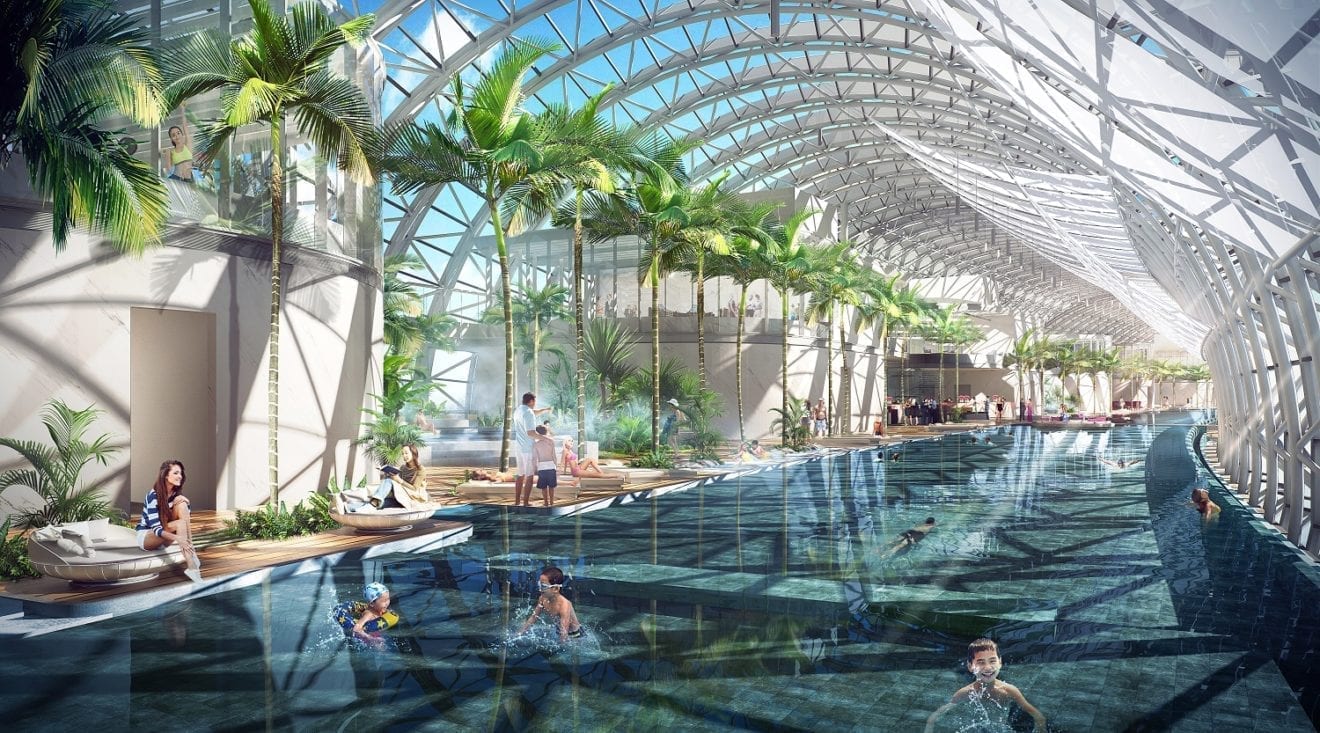
    The Monopoly Mansion will feature 255 luxurious guest rooms, a rooftop pool and sky lounge, a sky ballroom, meeting lounges and a spa.

    To date, Yap said, M101 has launched three projects with a total gross development value (GDV) of RM2.6 billion, namely RED by Sirocco, M101 Skywheel as well as M101 Bukit Bintang.

    On its 2018 outlook, he said this year the group will see a slowdown in terms of sales, as it will be focusing more on its existing projects and project launches.

    He noted that the group’s M101 Skywheel project, which has seen a take up rate of 80% for Phase 1 of its SoFos, registered about half a billion ringgit sales last year.

    The project is targeted to be completed by 2022.

    Going forward, Yap said the group plans to expand its regional presence in Bintan and Bali, Indonesia, as well as Thailand. Currently, the group has presence in 15 countries including China, Brunei, Taiwan, Bangladesh and Sri Lanka.
  • Korea Investment buys 99-yr leasehold of Brussels buildings for $454 mn

    Korea Investment buys 99-yr leasehold of Brussels buildings for $454 mn

    180303-%eb%b2%a8%ea%b8%b0%ec%97%90-egmont-iii

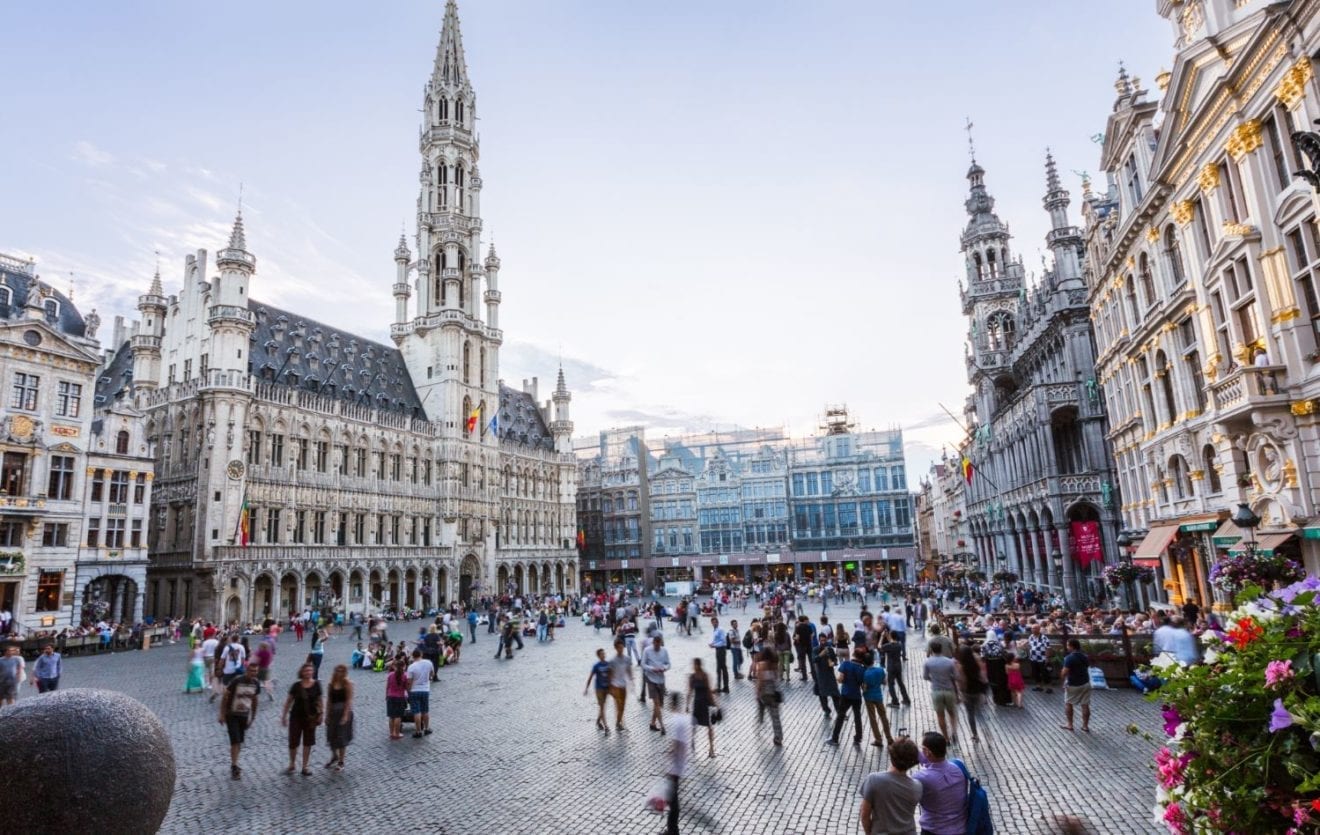
    Korea Investment Management Co. has obtained a 99-year leasehold for €370 million ($454 million) of two buildings in Brussels used as the headquarters of Belgium’s foreign ministry, in the largest property investment by a South Korean investor in the European country.

    The asset manager, a sister company of brokerage Korea Investment & Securities Co. Ltd., will raise €164 million from retail investors in March through public and private funds to finance the deal, the company said in a regulatory filing on Feb. 27.

    For the remainder of the acquisition cost, it plans to borrow €230 million, about 60% of the property’s assessed value, in a three-year loan at a fixed rate of 1.18% per annum. The total financing includes advisory fees and other transaction costs.

    Belgium’s large real estate assets are luring South Korean investors with relatively higher returns. Their annual returns amount to 7-8%, or 2-3% points higher than those of properties in other gateway cities in Europe.

    Korea Investment, part of Korea Investment Holdings Co. Ltd., acquired the leasehold of Egmont I and Egmont II from Cofinimmo, Belgium’s second-biggest listed real estate investment trust company. They were built in 1997 and 2007, respectively.

    It expects to earn annual returns of 6-7% for a five-year investment period.

    Major tenants are Federal Ministry of Foreign Affairs and Foreign Trade and Development Cooperation.

    The two buildings are under a lease agreement with Belgium’s Government Buildings Agency (GBA) which will last until the end of May 2031.

    They have a rentable space of 70,238 square meters and are located in the central business district of Brussels where Belgium’s central bank, stock exchange and supreme court are based.

    The seven-story buildings, valued at €388 million as at end-December 2017 by Savills, generate €13 million in annual rental income which will increase in line with consumer inflation.

    Brussels’ commercial property market quadrupled to €4 billion in value between 2009 and 2016, driven by demand as an alternative to London as a European head office and rent increases.

    Last year, Hanwha Investment & Securities Co. Ltd. acquired Square de Meeus 8, a 11-story office building in Brussels, in a consortium for €210 million.

    The Public Officials Benefit Association, a South Korean retirement savings fund, bought an office complex in Brussels, Brederode, for $120 million via a separately managed account in 2017.

    In early 2016, Korea Investment & Securities and a small-sized domestic asset manager made a joint acquisition of Astro Tower in northeast of Brussels for 230 billion won and resold the interests later to other domestic institutional investors.

  • Aeon Mall to open sprawling new facility at former Space World site

    Aeon Mall to open sprawling new facility at former Space World site

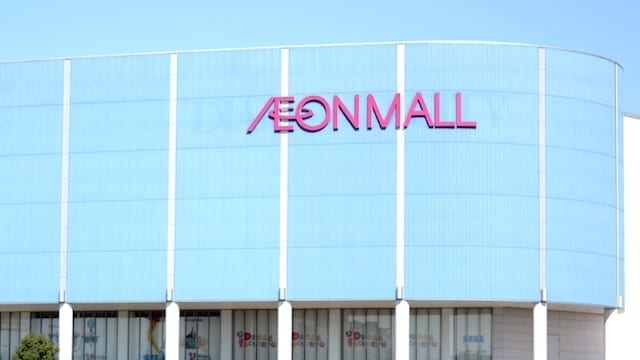
    A Space World amusement park in Kitakyushu city, on Kyushu Island, will be the site of a commercial complex to be developed by Aeon Mall.

    Landowner Nippon Steel & Sumitomo Metal Corp has been discussing development of the Fukuoka Prefecture site with Aeon, with the target of launching a commercial complex by 2021. It will encompass retail, entertainment, culture and dining.

    According to the city government, the two companies have signed a provisional lease contract for the 270,000 sqm lot, with a formal deal expected to be struck after the Space World lease expires at the end of June.

  • Prime retail rents Singapore to stagnate at $35 per sqft

    Prime retail rents Singapore to stagnate at $35 per sqft

    Structural headwinds from e-commerce are blamed for retailers woes.

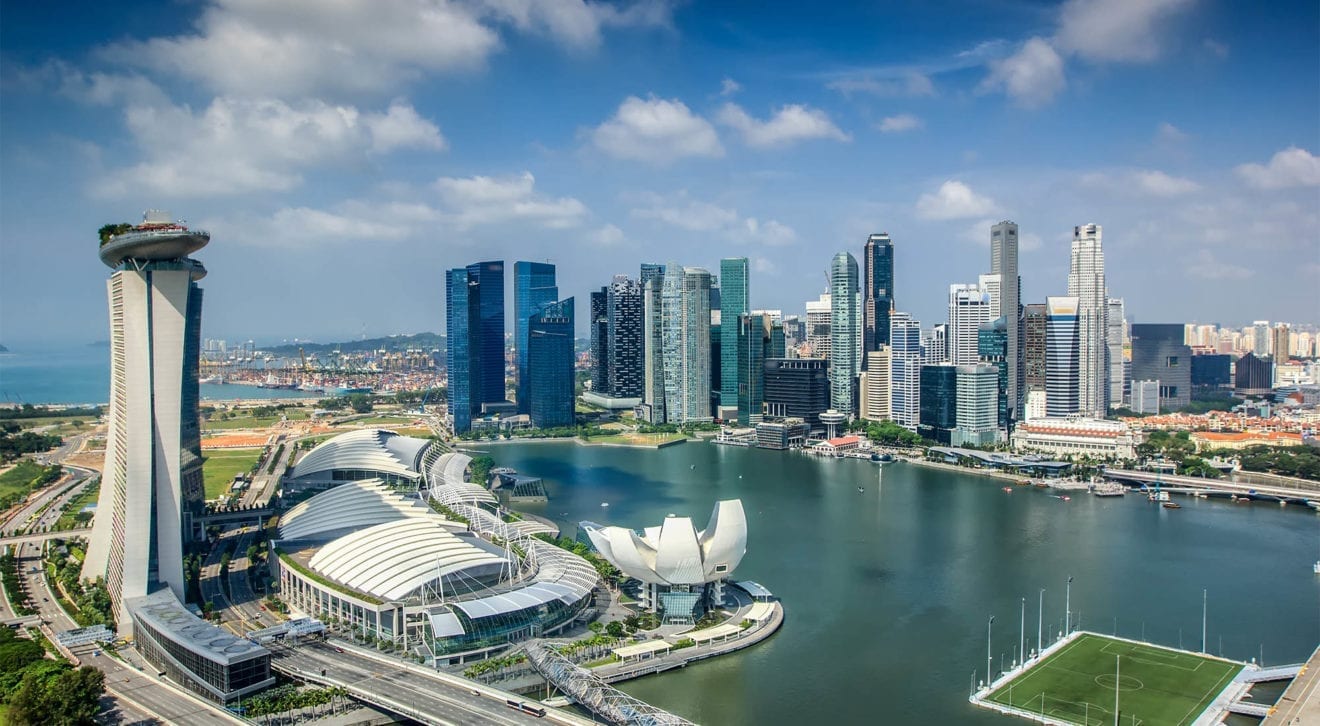
    Despite economic growth in Singapore, prime rents and yields, which reached $35 psf per month and 4.3% respectively, are expected to stay flat, Savills Investment Manager said.

    According to its 2018 outlook, despite a broader recovery in Singapore’s economy, the country’s increasing interest rate environment, elevated household debt and rising inflation mean consumers are likely to spend cautiously. “Structural headwinds from e-commerce, foreign labour restrictions and high operating costs are forcing retailers to re-examine their strategies and close underperforming stores, driving up vacancy rates. Occupier demand, however, should remain, especially for well-managed regional shopping centres near or integrated with subway stations,” the firm said.

    Savills IM noted that shopping centres in secondary locations and strata-titled shopping centres – where ownership is divided into individual units – will likely continue to suffer, underpinning further rental declines in 2018. “Be cautious of prime retail in Singapore, as leasing demand will be tempered by stagnant consumption growth, structural challenges from e-commerce and supply risks through 2019.”

    As a resolve, Savills IM said that retail market focus should be on neighbourhood regional shopping centres that are near major transportation nodes and are more defensive due to their non-discretionary trade.

    The retail rents problem is also present outside prime properties. The growth of online shopping led to rising vacancy rates and lower retail rents in the past few years. The vacancy rate of island-wide retail space has gradually risen from 4.5% in 4Q13 to 8.1% in Q2.

    The bleak rentals for Singapore’s retail sector are expected to remain weak until 2021. Retailers also face margin pressures from the combined challenges of weaker retail spending and labour costs.

    On a positive note, according to the Singapore Tourism Board, tourism growth helped boost retail sales in H1 2017.

  • CapitaLand accelerates growth momentum in Vietnam with massive investments

    CapitaLand accelerates growth momentum in Vietnam with massive investments

    CapitaLand Vietnam plans its first mixed-use project for Hanoi.

    In Tay Ho district with West Lake views, the US$217 million project will comprise 19,000sqm of retail space, about 213,000sqm of office space and 380 residences including SoHo apartments.

    Its 0.9ha site connects to both the new and old business districts and is close to the diplomatic district and new government offices as well as the expatriate enclave of Xuan Dieu. It is less than 20 minutes’ drive from Noi Bai International Airport.

    “This mixed-use development allows us to strategically diversify and optimise our Vietnam portfolio with both good trading returns and a strong recurring income stream,” says CapitaLand president/group CEO Lim Ming Yan.

    The Singapore-based group has also set up its second commercial fund in Vietnam, CapitaLand Vietnam Commercial Value-Added Fund (CVCVF), which has closed at $130 million and will have a life span of eight years. CapitaLand and EA Commercial Holdings each hold a half interest in CVCVF, which will focus on grade-A commercial properties.

    After Singapore and Malaysia, Vietnam is the third-largest Southeast Asian market for CapitaLand. At the end of December it had $717 million worth of gross assets under management in Vietnam.

  • Park Hyatt hotel to occupy top floors at Malaysia’s PNB 118, the world’s 3rd tallest building

    Park Hyatt hotel to occupy top floors at Malaysia’s PNB 118, the world’s 3rd tallest building

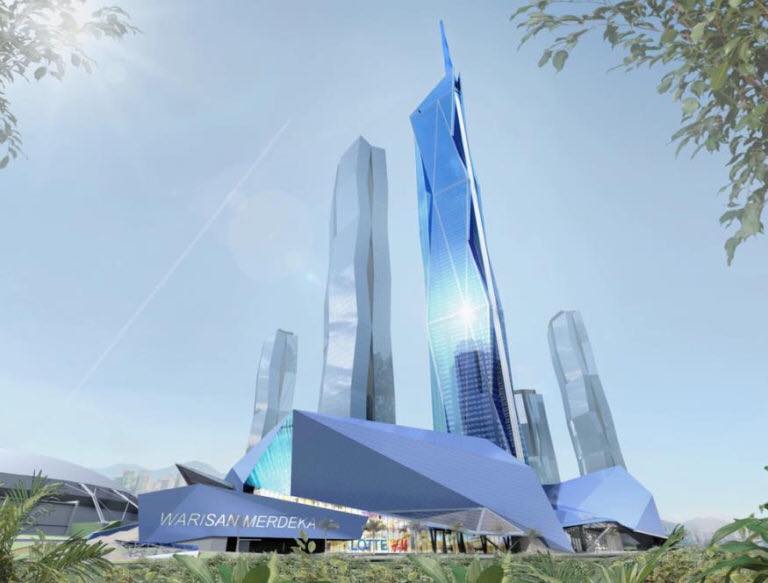
    Malaysia’s largest government-linked fund management firm, Permodalan Nasional Bhd (PNB), has signed Hyatt Hotels & Resorts as the hotel operator for its tower development, expected to be the third tallest in the world when completed.

    The luxury hotel operator’s Park Hyatt brand will occupy the top 17 floors of the tower, called PNB 118, PNB said on Tuesday. Aimed for completion in 2020, the 118-storey building will be the tallest in Southeast Asia.

    PNB 118 will have 1.65 million square feet of rentable office space, a retail mall and other entertainment amenities. The fund itself will take up around half of the office space, and is looking to have its portfolio companies take tenancy as well.

    “From our perspective, this is an investment into real estate, in a historic location,” group chairman Abdul Wahid Omar said at a press briefing.

    In November, PNB said it was looking to raise 2 billion ringgit ($512.03 million) via a green sukuk programme to finance the tower project. The fund’s real estate portfolio also include British and Australian assets.

    Malaysia’s capital has been experiencing an oversupply of office space in recent years. However, new office buildings continue to enter the market. Notably, the construction of a 106-storey building, Exchange 106, is underway in the Tun Razak Exchange and targeted for completion this year.

  • Property still drives SM’s healthy financials in 2017

    Property still drives SM’s healthy financials in 2017

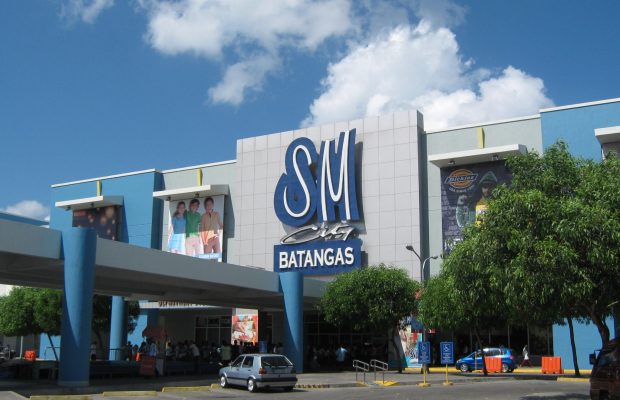
    SM Investments Corporation (SMIC), the conglomerate of Henry Sy Sr, saw its net income increase by 6% to P32.9 billion in 2017, with its property business continuing to contribute most to its earnings.

    SM told the local bourse on Wednesday, February 28, that its consolidated revenues rose by 9% to P396.1 billion in 2017, from P363.4 billion in 2016.

    “Our core businesses continued to deliver strong results in 2017 with recurring net income growth of 9%, driven by overall growth in the economy and our nationwide expansion plans,” SM president Frederic DyBuncio said in a statement.

    The listed conglomerate reported that property accounted for 40% of its total earnings, banks 38%, and retail 22%.

    “Our property and specialty retail businesses delivered particularly strong results,” DyBuncio said.

    Main driver: property

    SM Prime Holdings Incorporated, the conglomerate’s property holding firm, saw its recurring net income grow by 16% in 2017 to P27.6 billion, driven by the increase in rental revenue from malls as well as the strong sales take-up of housing units.

    Consolidated revenues of SM Prime surged by 14% to P90.9 billion in 2017, compared to the level recorded in 2016.

    Revenues of its mall business – which includes rentals, cinema and event ticket sales, and other revenues – increased by 9% to P53.2 billion in 2017, thanks to the rising contribution of rentals from new and expanded malls that were launched in 2016 and 2017.

    SM Prime has 67 shopping malls in the Philippines and 7 in China, as of end-2017.

    The residential group led by SM Development Corporation (SMDC) saw an 18% surge in its consolidated revenues, which ended at P30 billion in 2017.

    “The growth was largely due to higher construction accomplishments of projects launched between 2013 and 2016, namely Shore Residences and Shore 2 Residences in Pasay City, Air Residences in Makati, and Fame Residences in Mandaluyong City as well as continued increase in sales take-up of ready-for-occupancy units,” SM said.

    Meanwhile, BDO Unibank Incorporated posted a net income of P28.1 billion in 2017, from P26.1 billion in 2016.

    Its net interest income grew by 25% to P81.8 billion last year, driven by the 18% growth in gross customer loans to P1.8 trillion.

    China Banking Corporation, meanwhile, saw a 15% net income growth to P7.4 billion in 2017, on the back of sustained growth in core and fee-based businesses.

    China Bank’s net interest income was up 17% to P20 billion in 2017, while gross loans grew 17% to P454 billion on strong demand across all segments.

    Operations under SM Retail Incorporated, which consist of non-food and food stores, saw total revenues grow 7% to P297.4 billion in 2017. Its net income stood at P10.4 billion in 2017.

    “The underlying performance of our retail operations remained good, led by strong growth in our higher margin specialty retailing and with the addition of the successful Miniso variety store chain during the year,” DyBuncio said.

    In 2017, SM’s total assets grew by P100 billion to P960.1 billion.

    SM participated in the rights offerings of BDO and China Bank and invested in the country’s largest integrated supply chain operator, 2GO Group Incorporated, as well as dormitory developer Philippine Urban Living Solutions.

    SM maintains a healthy balance sheet with a conservative gearing ratio of 43% net debt to 57% equity.

    “During 2017, SM made substantial investments in its banks and in new business opportunities, which we expect to contribute to higher earnings growth in future years,” DyBuncio said.

  • Sunway Malls continues to be thronged with shoppers amidst new malls in the Klang Valley

    Sunway Malls continues to be thronged with shoppers amidst new malls in the Klang Valley

    Sunway Pyramid, Malaysia’s most iconic themed shopping destination, has recorded its highest traffic growth in 2017. The mall’s car count saw a positive 5% growth as compared to the year before amidst cautious consumer sentiment, disruption in ecommerce and the opening of more new malls in Klang Valley.

    Kevin Tan, the Chief Operating Officer of Sunway Malls, attributed this positive increase in traffic to multiple reasons.

    “Our Chairman, Tan Sri Dr. Jeffrey Cheah’s foresight to take pro-active steps to ease vehicular traffic congestions within Sunway City and Subang Jaya successfully facilitated better driving experience to Sunway City, said Kevin.
    “Tens of millions were spent to construct a new flyover, which flows traffic from KESAS into Sunway City with ease. More millions were then spent to widen the NPE roads leading to the Kewajipan roundabout, thus reducing congestion and freeing up the NPE road in front of the mall,” he continued.

    The flyover and road expansion were funded by Sunway as part of its community service to visitors of Sunway City. Sunway also contributed substantially to the Bus Rapid Transit, providing the community a cleaner alternative public transportation within Sunway City.

    There is also a plan in the pipeline to ease the congestion due to weaving traffic in front of the gateway entrance to the mall.

    Another co-relating factor is the increased parking capacity with the addition of the mall’s new wing, Sunway Pyramid West, where Sunway Clio Hotel is situated. Currently, the mall has approximately 10,000 parking bays integrated with Sunway Resort Hotel and Spa, Sunway Pinnacle and other Sunway business units nearby.

    “In addition to the 5% traffic growth, we see ride hailing as another key driver that positively contributed to the increase in footfall of the mall. The popularity of ride hailing services such as Grab and Uber is a plus factor providing alternative transportation to the mall without taking up our car park bays. It is estimated that
    these ride service arrivals is as high as 20% of the mall’s average car arrival”, said Kevin, who believes that ride hailing helps lessen the demand of car park bays during peak hours, which in return allow higher turnover of bays with lesser congestion and increasing the mall’s capacity to receive more cars.

    The mall also had a proliferation of non-shopping offerings expanding relative to shopping offerings with the growing trend on F&B and leisure spending.

    “The demand for F&B over the last few years had been so significant that 25%-30% of the today’s malls’ leaseable area is now catered to this trade category. Years ago, F&B took up less than 10% of the malls’ overall leased space. If you combine both the F&B and leisure trade categories today, it can go beyond 50% of the nett lettable area
    in a mall and these are significant traffic contributors,” Kevin explained.

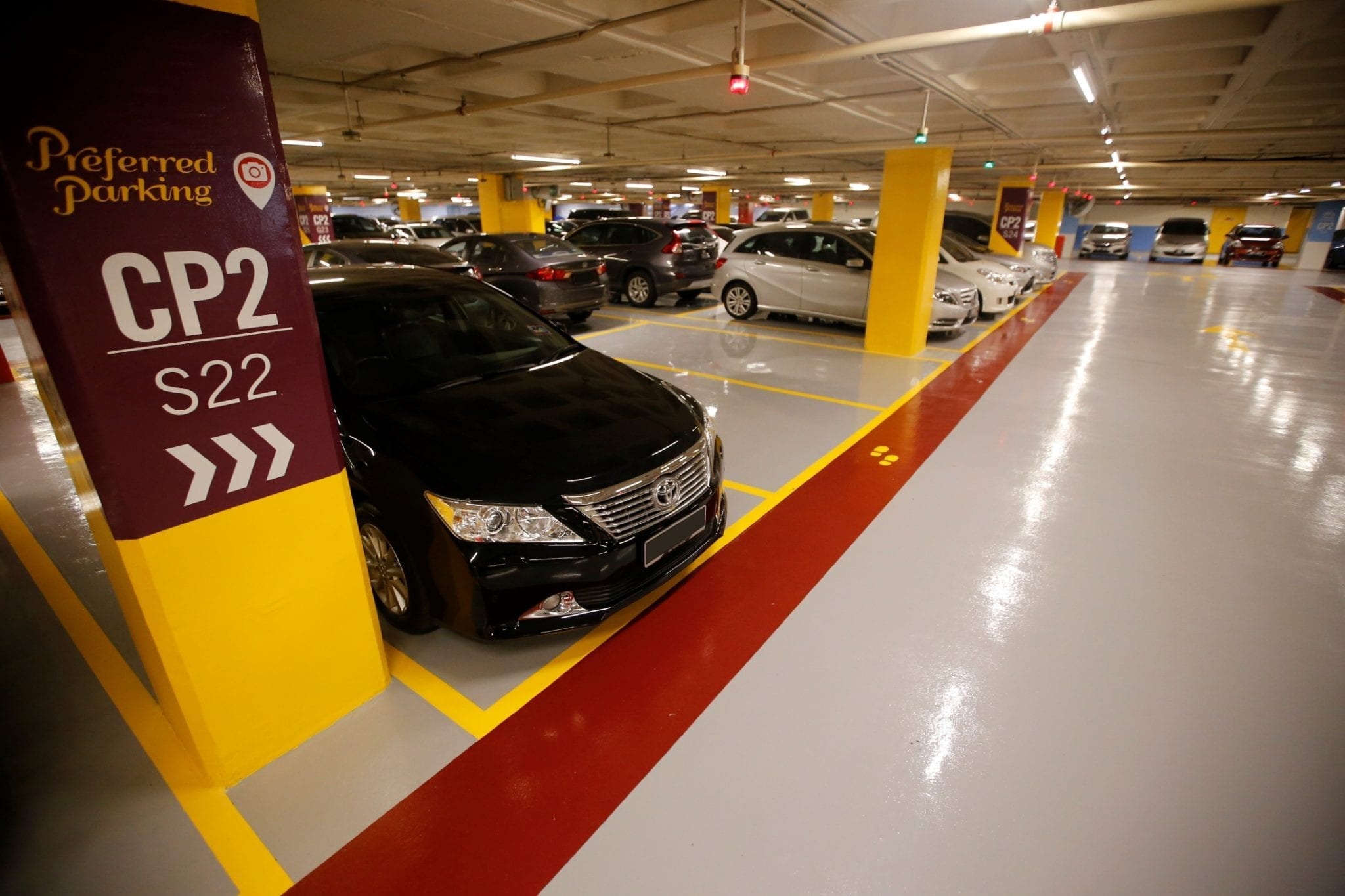
    The growth in traffic complements the mall’s plan to upgrade its parking ambience this year. The mall is uplifting its car park by applying epoxy flooring, starting with the Preferred Parking zone, and allocating charging stations for Mercedes electric vehicles.

    “We are further improvising the driving experience in our car park. A fresh coat of paint and flooring coated with epoxy is currently in progress, starting with our CP2 Preferred Parking. In view of the popularity of the Preferred Parking, we are allocating another zone for shoppers seeking convenience at B1,” said Jason Chin, General Manager of Operations for Sunway Malls, who also said that there is regular security patrol by the mall’s auxiliary police as safety has always been the mall’s top priority.

    “We are striving to create various new experiences to remain relevant to our shoppers. Those who visited the mall recently would be pleasantly surprised by sounds of the nature, especially birds chirping at our car park lobbies. We also decorated the lobby area so it creates a more wholesome ambience that depicts nature,” he
    continued.

    As for the tenants’ sales, the mall so far saw a positive growth for most of the brands. “With increased footfall, tenants have the opportunity to benefit with better sales performance. Our tenants are reporting robust growth in 2017. We cannot deny the challenging times for retailers as shoppers are spoilt for choice today. Those who
    offer value marketing, social retailing and strong brand loyalty appeal to shoppers to spend at their particular store,” said Kevin.

    2017 was a key milestone for Sunway Pyramid as the mall celebrated its 20th anniversary and was accorded The Edge Malaysia Property Development Excellence Award.

  • CapitaLand to build highest “horizontal skyscraper” in the world

    CapitaLand to build highest “horizontal skyscraper” in the world

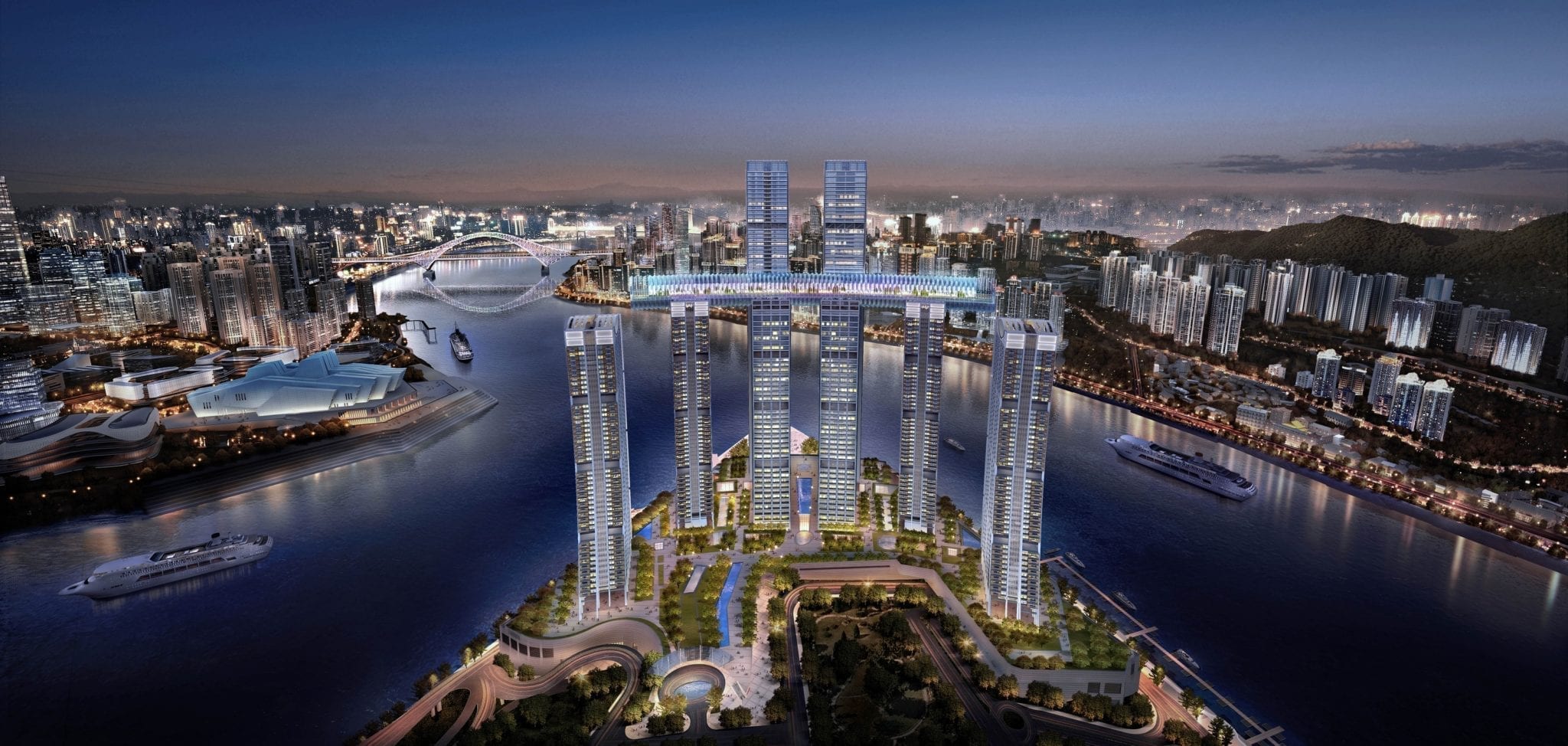
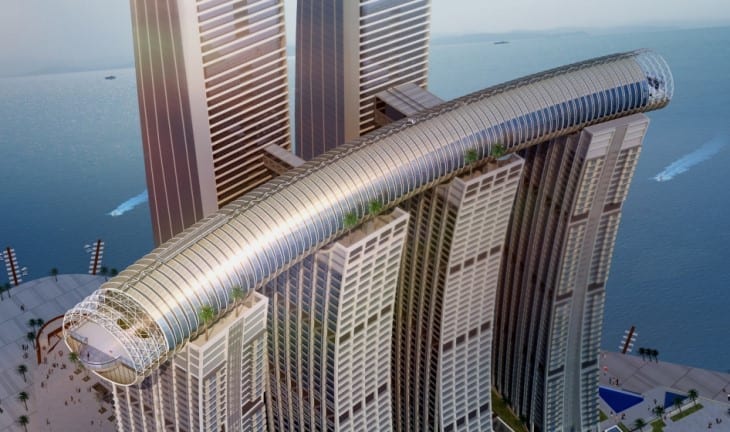
    In its relentless pursuit to redefine urban living with smart design and innovative technologies, CapitaLand has written a new world record as it embarks on the complex crowning process for Raffles City Chongqing, the iconic 1.12 million-square-metre (sq m) urban district located on Chongqing’s famed Chaotianmen riverfront. The crowning process features the extraordinary engineering feat of erecting a curved accordion-shaped “horizontal skyscraper” – measuring 300 m in length, 30 m in width and 22.5 m in height – above four 250 m-tall towers at a total height of more than 400 m above sea level. Raffles City Chongqing now holds the world’s record as the development with the highest sky bridge linking the most number of towers.

    Mr Lim Ming Yan, President and Group CEO of CapitaLand Limited, said: “Raffles City Chongqing is by far the largest and most complex integrated development that CapitaLand has undertaken. Erecting The Conservatory marks the culmination of five years of construction progress and a grand milestone in outlining Raffles City Chongqing’s image of a powerful sail surging forward, as it prepares to welcome the world in 2019. The hoisting of
    The Conservatory is not only a significant moment for Raffles City Chongqing, it marks a global milestone in the field of architecture and engineering. Some of the world’s most advanced construction and engineering techniques have been deployed to install this megastructure on Chaotianmen, known as the crown jewel of Chongqing. CapitaLand is proud to have achieved this phenomenal structural engineering breakthrough of connecting
    skyscrapers, and we will continue to stay ahead of the curve by breaking new grounds in real estate development.”

    Mr Lim added: “More than just a building, Raffles City Chongqing is a landmark urban renewal project that expresses and shapes Chongqing’s global city aspirations. As the master planner of this important site, CapitaLand fully appreciates the historical and cultural significance of Chaotianmen to the people of Chongqing. We have thus gone to great lengths to imbue the project with the highest standards of liveability, connectivity and sustainability by carefully studying the needs of the community and the unique attributes of the site. Our goal is to create a vibrant riverfront urban district that serves as a dynamic city gateway befitting of Chongqing’s growing economic influence.”

    Mr Lucas Loh, CEO of CapitaLand China, said: “As the crowning glory of Raffles City Chongqing, The Conservatory is envisaged as the centre of civic activities where locals and visitors from around the world converge in Chongqing. A highlight is the observation deck, which features an outdoor patio with see-through glass flooring – the tallest of its kind across the whole of west China for the best vantage point to enjoy the stunning views of the Yangtze River and Jialing River merging at Chaotianmen. To ensure the public’s year-round enjoyment of The Conservatory’s facilities, design provisions, such as air-conditioning, have also been catered for. When it opens to the public next year, we are confident that The Conservatory will become a well-loved and well-used community space that lasts for generations.”

    Mr Loh added: “Raffles City Chongqing broke ground in September 2012 and five towers have successfully topped out since. One of these is a 350-m supertall skyscraper, which currently holds two records – China’s tallest residential tower and Chongqing’s tallest building. The development’s luxury residential component Raffles City Residences has begun marketing, with an encouraging take-up for two residential towers that have been launched. Jialing One tower has sold 70% of the 215 units launched, while Yangtze Two tower, which debuted later, has sold more than 40% for its 285 units. Part of Raffles City Chongqing’s office component will begin handover end of this year, while the entire development is targeted to open in phases from 2019.”

    Singapore’s single largest development in China by CapitaLand and Ascendas-Singbridge, Raffles City Chongqing is an ambitious RMB24 billion (about S$4.9 billion) vertically-built urban district comprising a retail podium and eight skyscrapers for residential, office, serviced residence and hotel use. As the ninth “horizontal skyscraper” with 10,000 sq m of gross floor area (GFA), The Conservatory is the heart of Raffles City Chongqing connecting a total of six vertical towers – four towers at its base and two adjacent towers by cantilever bridges. Designed as the centre of attraction, it houses a rich array of amenities, including a themed observation deck and sky gardens, an infinity pool and a food and beverage zone.

    To overcome the site’s unique conditions, which include exposure to strong winds, a wind modelling test was conducted on The Conservatory, together with the eight towers. Building Information Modelling (BIM) technology was also used to coordinate the complex structural and utilities layout of The Conservatory. The support system for The Conservatory’s structure uses advanced frictional pendulum bearings and seismic dampers mounted on the towers. This form of flexibility-driven seismic design dissipates seismic and wind energy more effectively than the conventional rigidity-driven design, and represents a breakthrough in the structural engineering of linked high-rise building clusters.

    The Conservatory is made up of a continuous steel structure weighing 12,000 tons, and enclosed with a ring comprising 3,200 pieces of glass and 4,800 aluminium panels. With a length of 300 m, it is longer than Singapore’s tallest building laid on its side. To erect efficiently, the steel structure is first divided into nine segments – four segments that are built in-situ above the four towers; three middle segments suspended between the four towers that are prefabricated on ground and hoisted into place by hydraulic strand jacks; and two cantilever segments that are assembled in short sections from the two ends of the rightmost and leftmost towers.

    Hoisting the three middle steel segments of The Conservatory – each weighing up to 1,100 tons – to the designated height of 250 m marks a world first. This extraordinary engineering feat was broadcast throughout China during primetime news on China Central Television last December when the hoisting process began. The Conservatory’s steel structure is targeted to be fully erected by mid-2018, which will be followed by the hoisting of the façade enclosure together with gigantic trees and plants for the sky gardens.

    Occupying 9.2 hectares of site area, Raffles City Chongqing brings together a 230,000-sq m shopping mall, 160,000-sq m of Grade A office space, 1,400 residential apartments, Ascott Raffles City Chongqing serviced residence and a luxury hotel – with a total construction floor area of 1.12 million sq m and GFA (excluding car park) of about 817,000 sq m. The development is strategically located on Chaotianmen at the confluence of   Yangtze and Jialing rivers in Yuzhong District, next to the traditional Jie Fang Bei central business district.

    Boasting excellent connectivity, Raffles City Chongqing is fully integrated with a transport hub comprising a metro station, bus interchange, ferry terminal and cruise centre. It is designed by world-renown architect Moshe Safdie, who drew inspiration from the region’s thousand years of waterway transportation culture to create an image of powerful sails upon the river for Raffles City Chongqing to symbolise the host city’s surging growth.

  • Thai mall operator profits up 47 percent on tourism boom

    Thai mall operator profits up 47 percent on tourism boom

    Thai retail property developer Central Pattana Pcl (CPN) reported net profit of 13.6 billion baht ($432.3 million) for its 2017 fiscal year on Wednesday, up 47 percent from a year earlier.

    CPN beat estimates of 12.1 billion baht based on a survey of 11 analysts.

    CPN, which operates 32 shopping malls in Thailand, has been one of the main beneficiaries of the country’s tourism boom, led by Chinese arrivals.

    More direct flights from China, a visa fee discount and waiver incentives led to strong inbound tourism, CPN said in a statement.

    Thailand received 35 million tourists in 2017 and expects 37.55 million arrivals this year.

    Revenue from rent and services were up 3.2 percent from the year earlier, reaching 26 billion baht.

    Average occupancy rates in its retail properties stood at 92 percent, lower than 94 percent a year earlier due to major renovations.

    CPN, part of Central Group, owned by the billionaire Chirativat family, plans a compound annual growth rate of at least 13 percent until 2022 focusing on mixed-use and residential developments, increasing rental rates and new malls in Southeast Asia.

    Hotel revenue grew 10 percent to 1.1 billion baht, with an average occupancy rate of 93 percent, up from 83 percent a year ago, due to a higher number of tourists, it said.

    CPN expects its new mall on the tourist island of Phuket to open by mid-year and another mall in Malaysia to open by year-end.

  • La Perla Faces Eviction, $5.1m Bill Over Unpaid Rent on Asia Flagship

    La Perla Faces Eviction, $5.1m Bill Over Unpaid Rent on Asia Flagship

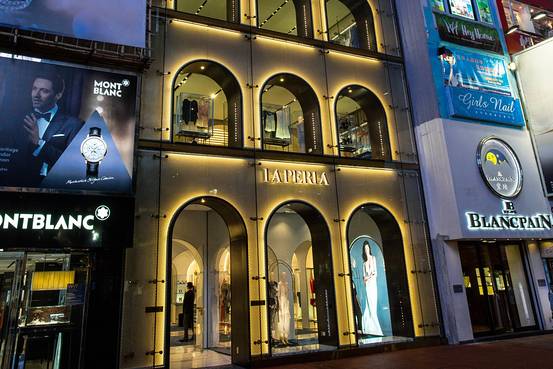
    Italian lingerie label La Perla is facing eviction and further legal action over unpaid rent on its Asian flagship store in Hong Kong, with its landlord seeking upwards of $5.1 million.

    The dispute came to light from a writ filed to a Hong Kong court last Thursday by Century Creations Ltd., the landlord of the premises at 22-24 Russell Street in Causeway Bay, against La Perla Far East Ltd. and its financial guarantor S.M.S. Finance S.A.–and despite the brand being given a rent reduction of more than 30 percent last year.

    La Perla and its prospective new owner Fosun International had not responded as of press time. Chinese conglomerate Fosun said in December it was to complete an exclusive 30-day due diligence period to buy a majority stake the brand from Italian businessman Silvio Scaglia’s Pacific Global Management, which also owns Elite Model Management.

    The boutique is a prominent four-storey location which includes a large LED screen on its facade. At the time of its opening, the 8,000 square foot store was said to the brand’s largest. It was leased commencing Sep. 8, 2015 for five years at the rate of 7.5 million Hong Kong dollars.

  • Japan company to build world’s tallest wooden skyscraper

    Japan company to build world’s tallest wooden skyscraper

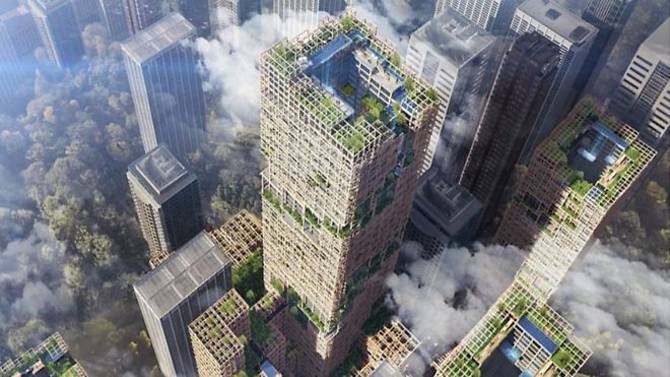
    Japanese company Sumitomo Forestry plans to build the world’s tallest wooden skyscraper to mark its 350th anniversary in 2041.

    Called the W350, the 350-metre-tall tower will be made up of 10 per cent steel, said the company in a news release. The rest will comprise 185,000 cubic metres of timber.

    The “braced tube structure” will have diagonal steel vibration-control braces to “prevent deformation of the building due to lateral forces such as earthquakes and wind”, according to the news release.

    The 70-storey building may house offices, shops and hotels, as well as about 8,000 homes. There will also be balconies and greenery on every level.

    “The interior structure is made of a pure wood, producing a calm space that exudes the warmth and gentleness of wood,” said Sumitomo.

    Construction of the W350 is expected to cost 600 billion yen (S$7.4 billion) – almost double that of a conventional high-rise building.

    Sumitomo said the aim of the W350 – designed in collaboration with Nikken Sekkei – is to “create environmentally friendly and timber-utilising cities that become forests through increased use of wooden architecture”.

    “The devastation of domestic forests due to insufficient maintenance is becoming a problem. Increased timber demand will promote replanting and contribute to the revitalisation of forestry,” the company added.


  • Sunway Developments in bid to redevelop residential estate in Singapore

    Sunway Developments in bid to redevelop residential estate in Singapore

    Sunway Bhd’s unit Sunway Developments Pte Ltd (SDPL) and Singapore-based Hoi Hup Realty Pte Ltd have entered into a sale and purchase agreement with the collective majority owners of a 160-unit private residential estate in Clementi, Singapore for S$530.0 million (RM1.6 billion).

    According to a filing with Bursa Malaysia, SDPL, Hoi Hup and S C Wong Pte Ltd plan to set up a joint venture company to re-develop Brookvale Park, which sits on a 999-year leasehold land measuring 34,654 square meter, into a new private residential development with an allowed plot ratio of 1.6 times. The plan is subject to authorities’ approval.

    Hoi Hup, SDPL and S C Wong Pte Ltd will have 60% : 30% : 10% interests respectively in the joint venture.

    SDPL is expected to pump in about S$70.0 million or RM210.0 million into the venture.

    The proposed project is expected to contribute positively to the earnings of Sunway Group from the financial year ending Dec 31, 2019 onwards.

    The group’s share price closed down one sen at RM1.65 with some 921,500 shares changing hands last week.

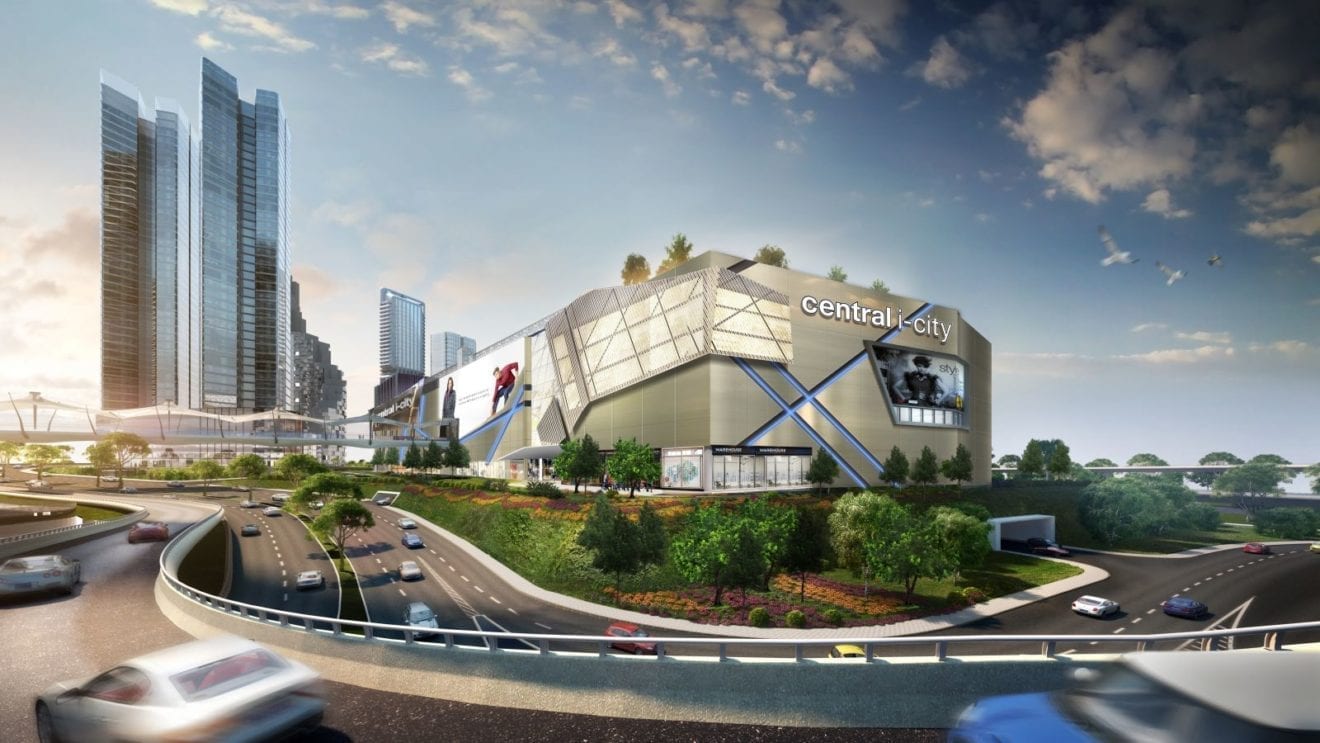
  • Malaysia’s Central i-City shopping centre to open in 2018

    Malaysia’s Central i-City shopping centre to open in 2018

    Selangor’s Central i-City Shopping Centre is scheduled to open in the fourth quarter of the year.

    A collaboration with i-City Properties, it is the first international regional shopping centre for Thai developer/investor CPN and Malaysia’s i-City Properties.

    Among anchor tenants just announced are Sogo Department Store and Village Grocer. TGV Cinemas will offer the first Imax screen in the region, along with eight digital cinemas seating up to 1800 patrons.

    The project has a gross development value of RM850 million (US$216.6 million).

    CPN Thailand COO Pakorn Partanapat says the goal for the shopping centre is to boost the mall/tenant relationship to ensure a win-win for everyone.

    CPN Malaysia COO Anthony Dylan says the 940,000sqft (87,000sqm) shopping centre will have 350 retail shops over six levels.

  • Malaysia property market expected to be flattish in 2018

    Malaysia property market expected to be flattish in 2018

    Property transactions are expected to be flattish in 2018, marking yet another challenging year for the Malaysian property market, according to real estate consultancy firm Rahim & Co International Sdn Bhd.

    However, it said many are hoping that the results of the forthcoming general election would give a firmer direction for the nation, hence re-igniting the momentum in the property sector.

    Although it may be too soon to say that the market has bottomed out, Rahim & Co does not expect the market in 2018 to be much worse off than in 2017.

    The property market is expected to be flat and stable, while waiting for the consumers’ wait-and-see attitude to warm up.