Category: Real Estate

Retail News Asia is committed to providing both local and global retailers with the latest Real Estate news throughout the Asian market. This on a daily base.

  • Bangkok to get 14 new malls as Thailand gets the shopping bug

    Bangkok to get 14 new malls as Thailand gets the shopping bug

    Retail space, in particular shopping malls, will continue to grow this year, with health, beauty and pharmacy stores becoming the new retail battlefield.

    Fourteen retail projects will open in Bangkok and its suburbs this year, adding a total of 272,800sqm of space, said Mr Surachet Kongcheep, associate director of Colliers International Thailand. Of the total, five are shopping malls totalling about 178,640sqm, seven community malls totalling 51,850sqm, one department store of 36,000sqm, and one retail plaza with 6,310sqm in an office building.

    Colliers said the seven community malls due to open in Bangkok this year are We Retail Nana with 2,100sqm on Sukhumvit Road, ZY Walk Chula Soi 5 (4,500sqm) on Banthadthong Road, Happy Avenue Don Muang (4,053sqm) on Songprapa Road, Canapaya (17,094sqm) on Rama III Road, Landmark Mahachai (5,000sqm) on Rama II Road, Muang Thong City Park (phase 1, 17,000sqm) on Chaeng Watthana Road, and Hyde Sukhumvit (2,100sqm) on Sukhumvit Road. Fewer community malls are opening this year compared to the past few years, following the lacklustre performance of some community malls in the past one to two years.

    The five shopping complexes to open are Iconsiam, a luxury retail project developed by a joint venture between Siam Piwat Co, the operator of Siam Center and Siam Discovery, and Magnolia Quality Development Corp, the real estate developer under Charoen Pokphand Group, on Charoen Nakhon Road with 51,500sqm, Show DC on Rama IX Road, Ikea@CentralWestgate in Nonthaburi’s Bang Yai district, Gaysorn II near Ratchaprasong intersection with 6,000sqm and G Tower with 7,140sqm on Ratchadaphisek Road. Meanwhile, one department store to be opened this year is Iconsiam with 36,000sqm. Pearl Bangkok is a retail plaza on Phahon Yothin Road with 6,311sqm.

    Outside of Bangkok, several retail projects are set to open upcountry this year. Central Pattana Plc plans to open at least three shopping complexes with one each in Samut Sakhon’s Maha Chai district, Nakhon Ratchasima and Phuket. Robinson Department Store Plc plans to develop three new branches this year. Two are lifestyle shopping complexes in Phetchaburi and Kamphaeng Phet provinces, and the location of the third has not been disclosed.

    TSCA president Wallaya Chirathivat said new investment in shopping malls during 2016-17 has declined to 70 billion baht (S$2.83 billion), down from 100 billion over the past four to five years. Retail investment slowed due to economic slowdown at home and abroad.

    Mr Chatrchai Tuongrattanaphan, adviser to the Thai Retailers Association, said he believes consumer purchasing power will gradually improve this year.

    “The health and beauty sector will be the new retail battlefield this year because Thailand is gearing towards an ageing society, and when people earn more, demand for health and beauty products also rises,” he said.

    The local health and beauty business in 2016 is expected to be valued over 280 billion baht. Health and beauty store chains are Boots, Watsons, Tsuruha, Pure and Matsumoto Kiyoshi.

    Siam Makro Plc, the operator of Makro cash-and-carry stores under CP Group, will slow the opening of new stores in Thailand and shift focus to nearby countries instead. Siam Makro recently set up a subsidiary, Makro Ros, to operate its cash-and-carry store operations in Cambodia. The opening of Makro stores in Cambodia will be under a joint venture with a local partner.

    Domestically, Siam Makro will focus on opening Makro Food Service stores to cash in on the continuing growth of the hotel, restaurant and catering business.

    Meanwhile CP All Plc, the operator of 7-Eleven convenience stores, is expected to open some 700 new stores this year, on a par with last year. Mr Chatrchai said he expects Thailand’s retail market — currently worth 3.4 trillion baht — to grow by 3 per cent last year, and growth in 2017 will probably be higher.
  • Tender for retail space in Shanghai Pudong airport

    Tender for retail space in Shanghai Pudong airport

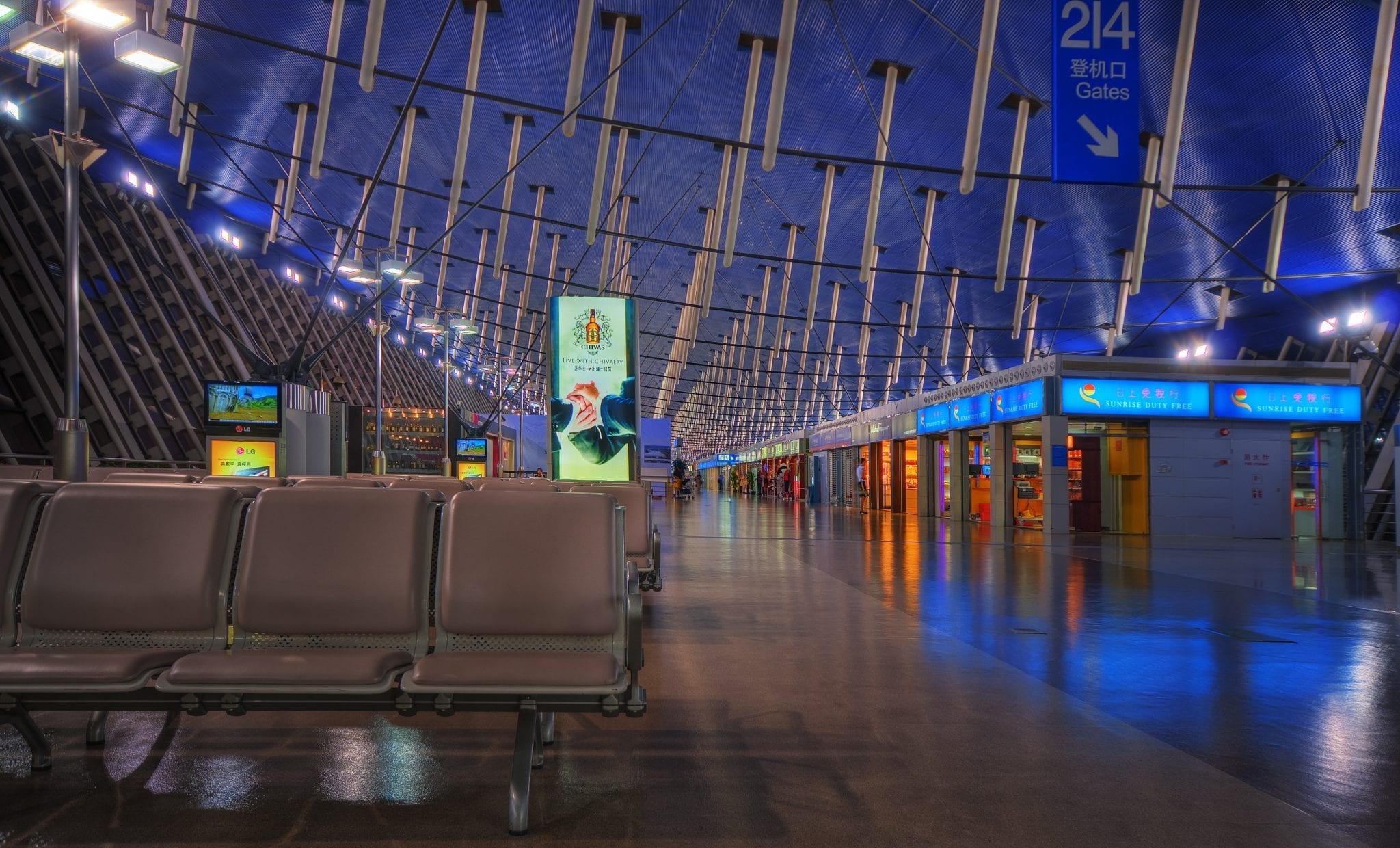
    Shanghai Airport Authority is seeking bidders for retail concessions at Shanghai Pudong International Airport Terminal 2 (domestic).

    It has 38 stores available covering a total of 3300 sqm, with multiple product categories up for tender.

    Likely bidders include Orient King Power, a subsidiary of the Antares Cheng-owned King Power Group (Hong Kong), which expanded its business at Shanghai Pudong Airport last year with fashion and luxury stores, reports The Moodie Davitt Report.

    Saying Orient King Power will target the concessions, GM Mackintosh Feng says it will give it space to introduce more brands into the domestic airside area of Pudong. “In T1 we mainly have China Eastern Airlines and Shanghai Airlines, and in T2 we’ll have Air China and China Southern Airlines.”
    Tenders must be submitted by January 22.

  • Global brands should grow in Philippines

    Global brands should grow in Philippines

    With retail rents still affordable compared to other Asia Pacific countries, the Philippines should be attracting more international brands, says a property analyst.

    This would further fuel the growth of the retail property market this year, says Jones Lang LaSalle Philippines (JLL) regional director Sheila Lobien, who is also the company’s head of project leasing markets.

    She says that while rental rates for ground-floor retail in the Philippines are rising because of high market demand, regionally the country is still the cheapest.

    “If you look at the rental rates in Asia Pacific, Manila is the cheapest. Hong Kong is the most expensive, Singapore may be in the middle and even Kuala Lumpur is twice as high as us,” says Lobien. “So the Philippines is still the cheapest, though the rental is already increasing for ground-floor space.”

    Based on JLL figures for 2015, Manila continues to offer the most affordable shopping centers in the region at US$555 a square meter per annum. In contrast, Hong Kong commands the most expensive retail rents at US$15,661 a square meter per annum.

    Rising incomes

    As well as the lower retail rates attracting more international brands, the rising income of Filipinos is also a magnet.

    “Almost all the big brands that are in Singapore, Hong Kong and even the US are now here,” says Lobien. “We see Forever21, H&M and all the other big brands. Even brands as prestigious as Apple are looking at the Philippines now.”

    According to Jones Lang Lasalle’s Global Cross Border Retailer Attractiveness Index 2016, Manila is classified as a growth retail city, ranking 29th on the list of 50 top cities attractive for retail.

    “Strong retail sales growth is driven by an expanding population, rapidly rising middle classes and fast-track urbanisation,” says JLL.

    Lobien says the Filipino consumer market is becoming more sophisticated and is being more exposed to what is happening abroad, as travelling has become less expensive. “We didn’t know those brands before. Nowadays, we are familiar with all the international brands and we’re looking for them in the Philippines.”

    International brands that have entered the Philippines lately include Fatburger, Morganfield’s, Sugar Factory, Tokyo Milk Cheese Factory and Vera Wang, says JLL.

    To enter the Philippine market, foreign brands need a local retail partner, says Lobien, citing SM, which has partnered with Forever21 and H&M. “There are a lot of others like the Bench Group, which has international brands also.”

  • Sun Group’s resort property projects come with special gifts, privileges

    Sun Group’s resort property projects come with special gifts, privileges

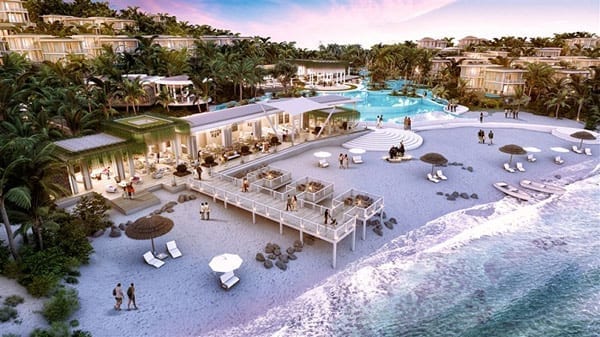
    Sun Group will launch 20 resort villas and condotels next week and buyers will be given valuable gifts and have a chance of winning up to VND1 billion ($44,000).

    The two resort projects, Premier Village Phu Quoc Resort and Condotel Premier Residences Phu Quoc Emerald Bay, will be unveiled at the launch event at JW Marriott Phu Quoc Emerald Bay Resort & Spa between Wednesday and Sunday next week.

    polyad

    Sun Group will launch 20 resort villas and condotels next week.

    Buyers of the Premier Village Phu Quoc Resort project will receive 2.5 ounces of gold worth around VND90 million ($4,000) and a lucky draw ticket for a $44,000 prize.

    Meanwhile, buyers of Premier Residences Phu Quoc Emerald Bay condotels will receive VND50 million and a chance to win five ounces of gold. The promotions are available for deposits made in the first quarter of 2017.

    Customers of the projects will also benefit from attractive perks and benefits.

    polyad

    Customers of the projects will benefit from many attractive perks and benefits.

    Sun Group, in collaboration with Techcombank, offers financing of up to 70 percent, zero-percent interest loans, and a grace period of up to 24 months on the principle. Loans will have terms of 15 years for the Premier Village Phu Quoc Resort and 25 years for the Phu Quoc Emerald Bay. The bank also provides support if customers repay their debt early.

    Real estate experts estimated that thanks to the preferential credit support, people will only need to have around VND1 billion to start living at the luxury Premier Residences Phu Quoc Emerald Bay at Khem Beach. And with the initial investment of just around VND6-7 billion ($270,000), they can own a Premier Village Phu Quoc Resort villa worth as much as $1 million at Ong Doi Cape, facing the sea on both sides.

    A Techcombank representative said it adopts flexible measures to assess customers’ financial capacity. Properties, saving books, stocks and other assets can all be used as collateral.

    polyad

    The projects are developed on prime locations with beautiful scenery.

    According to the developer, customers can expect a profit rate of 9 percent a year in nine years at Premier Residences Phu Quoc Emerald Bay and 10 years at Premier Village Phu Quoc Resort from leasing back the condotels and villas.

    They will receive 15 free night stays during the lease time at the very projects they invest in, or one of many Sun Group hotels or resorts around Vietnam, including InterContinental Danang Sun Peninsula Resort, which is the only resort to have won the prestigious World’s Most Luxury Resort from the World Travel Awards for the past three years.

    Other resorts on the list are Premier Village Danang Resort, one of the most beautiful beachside resorts in the world, Novotel Danang Premier Han River and JW Marriott Phu Quoc Emerald Bay Resort & Spa. They also have the chance to become a member of SOL Club to receive privileges at Sun Group’s parks and golf courses.

    polyad
  • CapitaLand to manage La Botanica mall

    CapitaLand to manage La Botanica mall

    CapitaLand Mall Asia has signed its second management contract within five months, to manage the shopping mall in La Botanica, a township in Xi’an’s Chan-Ba Ecological District.

    The mall is being developed by (Xi’an) Property Development, a JV between CapitaLand and Hong Kong-based Henderson Land.

    The deal follow CapitaLand’s announcement in August that it is managing the retail component of Fortune Finance Center in Changsha, China, for Changsha Pilot Investment Holdings. It also follows the acquisition of CapitaMall Xinnan (formerly Galleria, Chengdu) by CapitaLand Retail China Trust in September.

    “We are fast-tracking the growth of our shopping-mall network in western China to capitalise on the region’s favourable economic prospects, which have been boosted by the Chinese government’s Western China development program One Belt, One Road economic initiative as well as the Sino-Singapore Chongqing Connectivity Initiative,” says CapitaLand Mall Asia CEO Jason Leow.

    “CapitaLand’s asset-light expansion strategy through management contracts will continue to gather momentum with this deal in Xi’an, and complement our core strategy of developing, owning and managing malls.”

    Under the contract, CapitaLand will oversee asset planning, pre-opening and retail management for a five-storey mall – four levels above ground and a basement level – with a gross floor area (GFA), excluding car park, of about 50,000 sqm.

    Expected to open in 2019, the mall will double CapitaLand’s retail presence in Xi’an, where it owns and manages CapitaMall Xindicheng, a 60,000 sqm one-stop shopping mall, about 10km south of La Botanica.

    Flagship developments

    Including the mall in La Botanica, CapitaLand manages a portfolio of 14 malls in western China with a combined retail GFA of about 1.13 million sqm. The region is also home to two CapitaLand flagship Raffles City integrated developments – Raffles City Chengdu, which opened in 2012; and Raffles City Chongqing, Singapore’s single largest investment in China at RMB24 billion (about US$3.4 billion) that will be opening in phases from next year.

    Leow says CapitaLand is preparing to open eight more malls this year, six of which will be in China. “As we continue to enhance our retail scale and network through acquisitions and management contracts, we will also look at reconstituting our portfolio to achieve an optimal asset mix to provide us with stability and a strong recurring income stream. ”

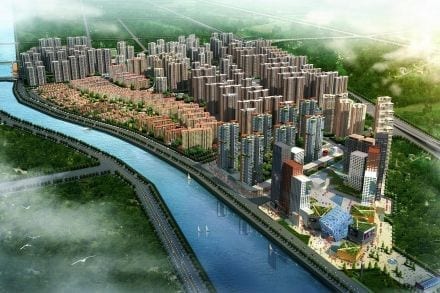
    CapitaLand-Henderson (Xi’an) Property Development GM Wu Xianyue says La Botanica is envisioned as a world-class garden city. It is in the heart of Chan-Ba Ecological District, a planned urban area integrating ecological, commercial, residential and cultural components. Targeted for completion in 2023, the township spans 3 million sqm, of which about 87 per cent is pegged for residential use. There is a commercial zone of more than 310,000 sqm, plus a 50,000 sqm central park, seven community schools and a general hospital.

    The shopping mall is at the heart of La Botanica’s commercial zone and will be served by arterial roads, 20 bus routes and a metro line. It is expected to serve an estimated 600,000 residents and working professionals living within a 5km radius. The population catchment is projected to reach about 1 million in the next four years.

  • Too many Philippine provincial malls, expert warns

    Too many Philippine provincial malls, expert warns

    There is not enough spending power to support the number of Philippine provincial malls being developed, warns a real estate expert.

    This follows a “fantastic” year for the property sector during which most major developers opened malls.

    “Retail has had an incredible expansion in route,” says CEO David Leechiu of Leechiu Property Consultants (LPC) has told The Manila Times.

    Ayala, DoubleDragon, Filinvest, Puregold, Robinsons, SM and Villar all opened malls in new sites, which Leechiu says is unprecedented.

    According to Colliers International Philippines, about 118,000 sqm of retail space was added to Metro Manila’s retail stock in the third quarter of last year, taking the total stock to 6.32 million sqm.

    For Metro Manila alone, total retail stock is forecast to rise by 7 per cent to 6.76 million sqm by the third quarter of this year, says Colliers. Meanwhile, retail vacancy levels have remained low at just 0.57 per cent.

    But Leechiu says it is a different story for the provincial retail market.

    “I think rents are softening because some areas might be ‘over-malled’ now,” he says. “The purchasing power is not there yet.”

    In particular, these Philippine provincial malls cater to the middle-income market. However, he believes the situation will be “very temporary’, with changes and improvements in two to three years’ time as purchasing power continues to grow.

  • Dusit International signs flagship project in Myanmar

    Dusit International signs flagship project in Myanmar

    Leading global hospitality company Dusit International has signed a management agreement with Myanmar V-Pile Group to operate the Dusit Thani Yangon, according to a statement on 13 December.

    Located just 15 minutes by car from Yangon International Airport, and approximately 20 minutes’ drive from the city’s main tourist attraction, the Shwedagon Pagoda, the new property sits at the heart of land earmarked by the Myanmar government to become the former capital’s new Central Business District.

    Dusit Thani Yangon will be positioned as a five-star corporate and MICE city hotel within a pioneering mixed-use development incorporating a convention centre, offices, retail and residential units. The hotel will comprise 338 rooms and feature one all-day-dining restaurant, one specialty Thai restaurant, and one rooftop restaurant and bar. Meeting facilities will include a 400-seat ballroom with adjoining conference rooms. Guests will also have access to a swimming pool, spa and gym.

    Ms Suphajee Suthumpun, Group CEO of Dusit International, said: “Myanmar is a fast-emerging market and we are delighted to partner with Myanmar V-Pile Group for this very special project. Being one of the first five-star corporate and MICE city hotels within Yangon’s new Central Business District gives us a great opportunity to showcase our unique brand of gracious Thai hospitality in one of the ASEAN Economic Community’s largely untapped markets. This should set us up perfectly for further expansion within the country, including key destinations such as Bagan, Mandalay, and Inle Lake, as well as throughout Southeast Asia in general, where we already have over 20 properties in the pipeline.”

    Dr Sone Han, Chairman of Myanmar V-Pile Group, said, “As Myanmar is the last frontier market in Asia, and the hotel and tourism industry is growing very fast, our group is very excited to commence our first phase of the Secondary Central Business District (Mindhama) project, which will include the five-star Dusit Thani Yangon together with the new, international standard Myanmar Convention Centre. We are delighted to partner with Dusit International, and we believe that Dusit Thani Yangon will very much work in synergy with our Second CBD project while delighting visitors with the gracious hospitality for which Dusit is renowned.”


  • Deja vu? Malls reuse Xmas decor for CNY

    Deja vu? Malls reuse Xmas decor for CNY

    If Chinese New Year decorations at shopping malls are looking somewhat familiar, it is likely because they have been up since Christmas.

    Malls have transformed their Christmas ornaments and themes into Chinese New Year trimmings.

    By doing so, the malls say they have saved money, reduced waste and managed to turn over the decorations in a shorter time.

    Orchardgateway’s fantasy underwater world decor was planned to cover both festivals, as the dates were almost “back to back”. This year, Chinese New Year falls on Jan 28, just a month after Christmas.

    “We maintained the fantasy underwater world setting but added koi fish to bring out the Chinese New Year flavour and mood,” said its spokesman.

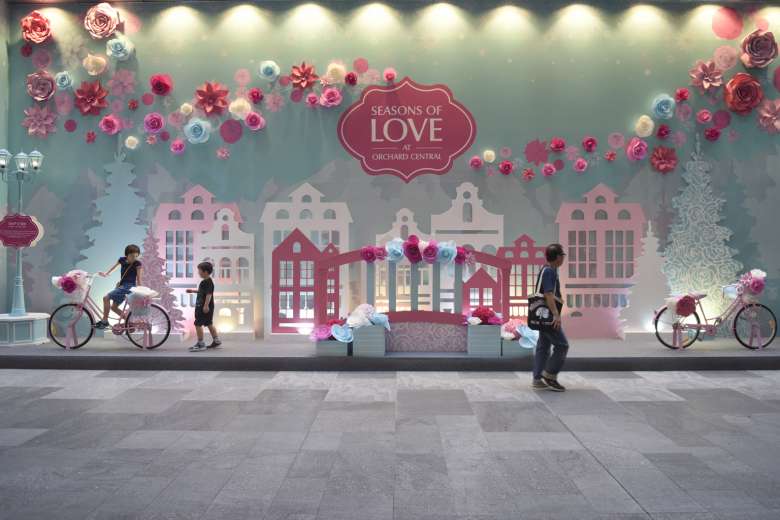
    Orchard Central said it saved up to 60 per cent in cost from repurposing its Christmas ornaments for the upcoming Chinese New Year, instead of replacing them with a new set-up. It has even combined its Chinese New Year decorations with Valentine’s Day decorations, with a turquoise and pink theme. 313@Somerset (above) has also changed its decorations. 

    She added that koi fish, which were added to a seascape of corals, symbolise good fortune, prosperity, longevity and success. The mall managed to save 30 to 40 per cent in cost and wastage as a result.

    Orchard Central, which is owned by Far East Organization, said it saved up to 60 per cent in cost by repurposing Christmas ornaments, instead of putting up a new set-up.

    In fact, the mall has combined its Chinese New Year decorations with Valentine’s Day decorations with a turquoise and pink theme, featuring cages and artificial flowers.

    More than half of the materials from the decor can be recycled. Far East’s other malls, such as Clarke Quay Central and Square 2, are also repurposing decorations.

    Over at CapitaLand Malls’ Bugis Junction, the Christmas tree is now a giant spiral bamboo plant.

    “What used to be whimsical waxed moustaches – not unlike the kind Santa typically sports – have now been turned into the upturned branches of the bamboo arrangement, signifying good luck for the coming Year of the Rooster,” said CapitaLand Mall Asia’s head of retail management in Singapore, Ms Teresa Teow.

    Farther west, the Star Vista converted its larger-than-life Christmas bauble centrepiece into a tangerine, signifying prosperity and fortune.

    The mall has donated some of its Christmas decorations to the Singapore General Hospital, which will sell them to raise funds for the hospital’s Needy Patients Fund.

    Ms Valerie Toh, 29, an office manager, said she did not notice the similarities in the decorations.

    “Given the not-so-good economy, I think people will appreciate the malls cutting down on wastage rather than spending needlessly,” she said.

  • Lotte World Tower duty free store has reopened

    Lotte World Tower duty free store has reopened

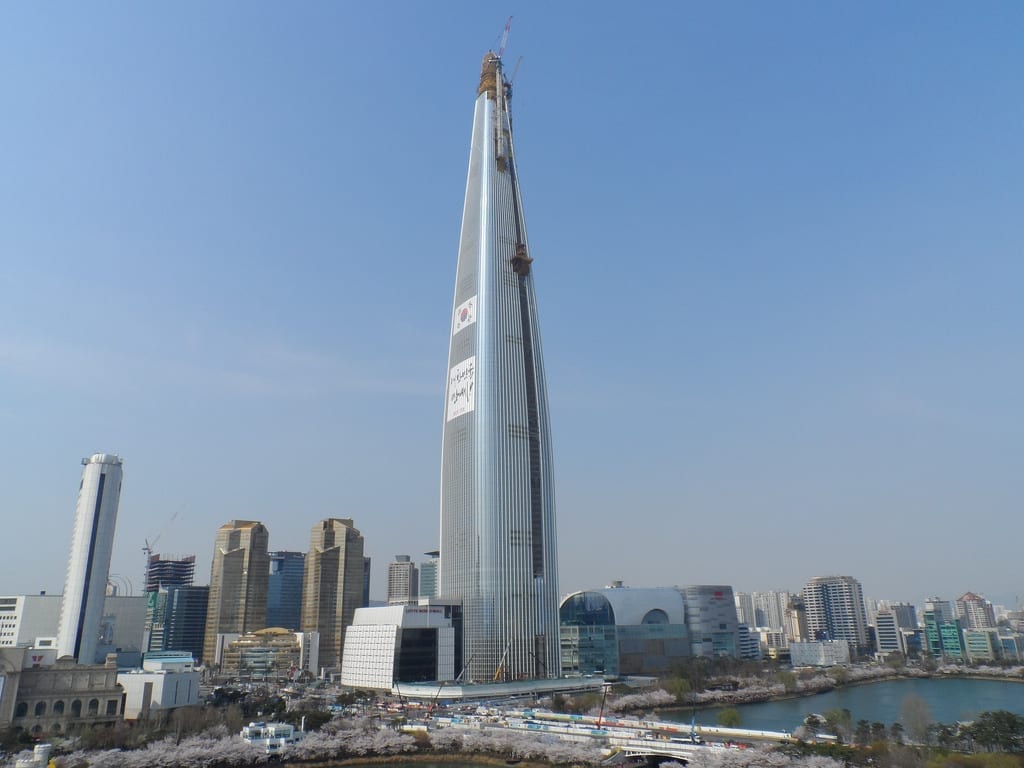
    As expected, Lotte Duty Free opened its World Tower flagship duty free outlet yesterday, following a six-month period of uncertainty caused by last June’s closure of the duty free section in the building.

    The opening follows the well-publicised and controversial shock loss of Lotte’s duty free operating license for this store back in November 2015.

    As reported, the Korea Customs Service (KCS) awarded the 10-year duty free license to Lotte Duty Free on 17 December 2016. However, it has clearly stated since that if the operator is subsequently found guilty of any wrongdoing in its ongoing investigations related to a contributions scandal, then it will revoke the award.

    INVESTIGATIONS CONTINUE OVER ALLEGED CASH FOR FAVOURS

    As reported, this ongoing investigation surrounds requests for multi-million dollar equivalent monetary contributions for foundations, which were made to Lotte and other companies by President Park Geun-hye’s former close friend Choi Soon-sil, who is presently under arrest.

    Park’s relationship with Choi – a friend for 40 years – was also one of the key factors which led up to her impeachment last month, although Choi denies all the charges related to abuse of power and fraud.Park also maintains that she has not been involved with Choi in any wrongdoing, although she has publicly expressed regret at allowing Choi to get too close to matters of government.

    Meanwhile, Lotte has given several bold undertakings to attract foreign tourists and create new jobs alongside the award of this new contract, which the Korean Customs Service – itself under pressure – will doubtless expect it to meet.

    MASSIVE INVESTMENT PROMISES

    As reported earlier this month, Lotte has pledged to invest Won2.3 trillion ($1.97bn) on tourist-related investments in the upmarket Gangnam quarter of Seoul between 2017 to 2021.

    Lotte Duty Free spokesman Jihyun Ethan Choi also formally confirmed to TRBusiness (2 January) that the duty free reopening has naturally come as a huge relief to Lotte’s staff.

    They have had to endure a six-month wait to find out whether they would have jobs or not at the World Tower – subject to winning the license or not. (Lotte employs around 1300 individuals at the World Tower).

    CHINESE TOURIST ARRIVALS CONCERNS

    At this time, Lotte and all other duty free operators in South Korea will also be keenly monitoring the levels of Chinese tourist arrivals over the next few months, since their biggest overseas duty free customers (in sheer spending power terms) registered only +1.8% growth – or 516,956 visitors – in November 2016. This was a big drop from previous double-digit numbers, according to the Korea Tourism Organization (KTO).

    Many commentators are not surprisingly pointing to pressure on Chinese tourists to cool their enthusiasm for South Korea in the wake of its government decision to site a US-built missile defence system on the border with North Korea. China says this system has the ability to gather data on surrounding terrain in the region.

  • KIP REIT to list in Malaysia with portfolio of five retail properties

    KIP REIT to list in Malaysia with portfolio of five retail properties

    KIP REIT is set to list in Malaysia on 6 February 2017, with an initial portfolio of five retail properties across the peninsular.

    Documents lodged with the Securities Commission of Malaysia on 30 December indicate an initial public offering of 234.15 million units, of which 13.5 million units are open to retail investors.

    Of these, 10.2 million units are reserved for the Malaysian Public, with 50% of this tranche further demarcated for its Bumiputera nationals.

    The rest of the 220.65 million units will be offered to institutional and other qualified investors, said the REIT.

    KIP REIT is sponsored by Malaysian property developer Kepong Industrial Park (KIP) Group.

    The constituents of its initial portfolio are namely the KIP Mart outlets in Tampoi, Kota Tinggi, Masai, Melaka, Bangi, and Senawang.

    The properties are valued at MYR580 million (USD130 million), and feature an aggregrate occupancy rate of about 85.3% for the four-month period that ended in October 2016.

    In addition, KIP REIT will also have a right of first refusal (ROFR) on the sponsor’s malls at Kota Warisan, Sendayan, Sungai Buloh, Kuantan, and Sungai Petani.

    At the indicative price of MYR1.00 per unit, KIP REIT seeks to raise at least MYR234 (USD52 million) million from the offering.

    Final listing price for units of KIP REIT has been set for 17 January.

  • Malaysia’s property market still resilient despite challenges

    Malaysia’s property market still resilient despite challenges

    The property market remains resilient despite of the challenging economic environment, according to observers.

    Rahim & Co Research director Sulaiman Saheh said although the number of launches and sales performance of developers have been declining, there were projects that were performing well due to the nature of the product, concept, location and marketing strategies.

    “Market fundamental is still resilient and the market has the holding power, in spite of some expectations of rising unit sales,” he said during a presentation at the Rahim & Co property research seminar recently. He said affordability is still a major concern.

    “The market is leaning towards the affordable market segment. Creative products within the affordable segment are going to be well-received,” he said, adding that there is still demand but the buyers were hindered by end-financing woes.

    “We expect a rationalisation of high-end and branded residences as the global economy remains challenging,” said Sulaiman.

    According to Knight Frank in a report on the local real estate market, the outlook for the high-end condominium segment remains lacklustre, impacted by weak sentiment as potential buyers and investors continue to adopt a “wait-and-see” approach. “With the widening gap between supply and demand as well as mismatch in product pricing and affordability in the domestic market, more developers are expanding their target catchment by marketing overseas as the weak ringgit translates into attractive pricing and low-entry level for foreigners.”

    It said the challenging property market environment had led to more strategies with developers adopting “push marketing” to boost sales of selected projects and improve revenue.

    Meanwhile, Knight Frank said the office market in the Klang Valley is expected to remain subdued and face downward pressure.

    “Amid the mismatch between supply and demand, office vacancies are expected to trend upwards due to a strong supply pipeline and lacklustre absorption as more firms cut workforce or freeze hiring to consolidate business operations.

    “Owners of newly-completed office buildings which have yet to achieve significant occupancies may offer more competitive rental package to secure tenants while those of secondary office buildings are expected to be more flexible in negotiations to retain existing tenants.”

    According to Axis REIT Managers Bhd head of investments and Malaysian Institute of Estate Agents immediate past president Siva Shanker, some 5.8 million sq ft of office space is expected to come onstream in the Klang Valley in the second half of 2016.

    He said the market would “start to level out” by 2018 or 2019 and start peaking by 2020 or 2021.

    “With additional office space expected to be completed by end-2016 in addition to the still available space in the Klang Valley, the general market will continue to be a tenant’s market.

    “Landlords or building owners have become more aggressive in marketing to attract tenants,” Siva said at Rahim & Co’s property research seminar recently.

    Knight Frank added that good grade and dual-compliant office space in good location, however, is expected to remain resilient.

    As for the retail market, Knight Frank said the projected sales growth for 2016 had been revised downwards from 4% to 3.5% following the weak performance last year.

    “Consumer spending remains a key challenge in the retail industry with many continuing to hold back on purchases due to growing concerns about rising cost of living and the weaker job prospects.

    “Moving forward, the uncertainties following the recent Brexit referendum are expected to further weigh down market sentiments globally and this will not augur well for the local retail industry. With the scheduled completion of some 3.36 million sq ft of new retail space in the second half of 2016, competition in the retail market will heighten.”

  • Sunsuria optimistic about 2017 outlook

    Sunsuria optimistic about 2017 outlook

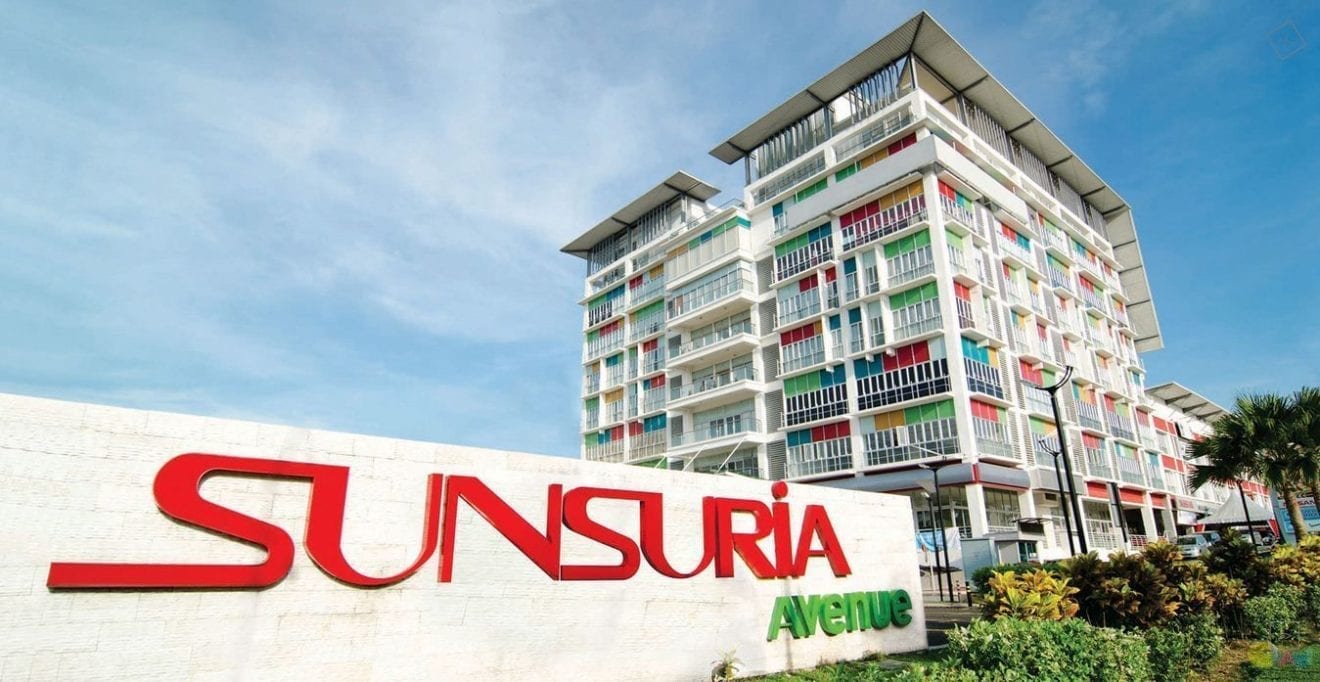
    Property developer Sunsuria, which will be launching projects with total gross development value (GDV) in excess of RM1.55bil next year, is cautiously optimistic about the outlook of the market in 2017 – in spite of what the naysayers say.

    Sales and marketing director Simon Kwan says the outlook for 2017 “should be good”, which is why the company is embarking on the launches.

    “We are optimistic. Even though the market is challenging, the piece of cake will still be there – just a little smaller,” he tells.

    Among the projects in the pipeline is the first residential development of Sunsuria City, The Olive condominium, Bell Suites serviced apartments that face the main entrance of Xiamen University Malaysia and an upcoming landed residential development known as Monet Residences.

    Apart from the township projects, Sunsuria will also focus on the second-phase expansion of its mixed commercial development, dubbed The Forum, in Setia Alam.

    The company is targeting to launch phase two by the final quarter of 2017.

    The mixed integrated development is situated in Sunsuria Seventh Avenue, within Setia Alam. Located on 6.6 acres of freehold land, the second phase will comprise retail units, an office tower (21 storeys), SoHo service suites (33 storeys) and service apartments (41 storeys).

    “There will be 150,000 sq ft of lettable retail space in phase two. We sold the retail units in the first phase, but we’re holding the new units and will rent them out in the second phase, says Kwan.

    The first phase of The Forum, which was launched in 2015, comprised 172 units of office space and 61 units of retail space.

    “All of the office units have been sold, while about 40 units of the retail units have been snapped up,” says Kwan.

    The retail portion of the first phase has been taken up by tenants such as Village Grocer, Secret Recipe, Baskin Robbins and Focus Point.

    Kwan feels that these household names will help to attract new retail tenants in phase two of The Forum.

    He says Village Grocer, which has taken up about 25,000 sq ft in the first phase, has taken 10,000 sq ft in the second phase.

    Kwan is naturally optimistic about the prospects for The Forum.

    “Setia Alam is a mature area already and we believe it is self-sustainable. The site is strategically located within the vicinity of Setia Alam commercial hub, Sunsuria Seventh Avenue, Setia Eco Park, Klang and Shah Alam.

    “There is convenient access to major highways such as Persiaran Setia Alam, the New Klang Valley Expressway, Shapadu Highway, Elite Highway and the Federal Highway. We have 90 acres in Setia Alam and the second phase will be the last piece. So we want to do our best,” he says.

    Kwan also feels that the Malaysian retail sector will still be steady in 2017.

    “Malaysians like to go to malls. Online shopping is a new trend and, yes, it’s growing. But many families like to go to shopping centres and we believe this trend will continue.

    “It’s a favourite pastime for Malaysians. A lot of us go to malls – we won’t necessarily shop but may spend the day at food and beverage or entertainment outlets.”

    The Olive

    Another highly-anticipated project for the Sunsuria group in 2017 is the company’s high-rise development, The Olive.

    Initially slated for a 2016 launch, a delay in obtaining the advertising permit and developer’s licence has forced the company to push the launch to next year.

    Located at Sunsuria City at Putrajaya South, Salak Tinggi, Kwan says the project, which comprises three blocks, is already open for booking and has been well received.

    “Block A has been fully taken up, while Block C has achieved a take-up rate of about 75%. We will launch Block B next year,” Kwan says, adding that The Olive will comprise 21-, 19- and 18-storey blocks, housing a total of 240, 216 and 207 units respectively.

    The units come with a built-up of 818 sq ft and each floor houses 12 units. The space within each unit has been carefully planned so as to construct living space that can be utilised effectively. Kwan says the non-bumiputra lots start from RM420,000.

    “The take-up rate has been quite fast. We initially targeted the units to be fully taken up by September next year. But looking at the rate of acceptance, we expect it to be fully sold by the first quarter of 2017,” he says.

    Kwan explains that the name “The Olive” was inspired by Ceferí Olivé, a Spanish watercolor painter.

    “The Olive is the first high-rise residential development in Sunsuria City,” he says, adding that the company is targeting students and residents from within the Putrajaya and Cyberjaya areas for the high-rise project.

    “We’d also like to target upgraders,” says Kwan.

    It’s no coincidence that Sunsuria City envelops the G2G-initiated Xiamen University Malaysia campus, the first Chinese university campus on foreign soil.

    Sunsuria posted a 137% growth in revenue of RM202.4mil and a 230% increase in net profit to RM43.8mil compared to the previous financial year.

    This was attributed to the company’s strong sales force, customer-centric practice and the ability to deliver quality projects and developments, namely the upcoming Suria Residence in Bukit Jelutong, commercial development The Forum in Setia Alam and several new commercial projects situated in Sunsuria City, such as Bell Avenue and Jasper Square.

    The roots of the Sunsuria group dates back to 1989, when its founder and owner, Datuk Ter Leong Yap, started to develop various residential, commercial and industrial property projects in the Klang Valley.

  • Dasin Retail Trust seeks Singapore IPO to raise at least $122.5m

    Dasin Retail Trust seeks Singapore IPO to raise at least $122.5m

    Dasin Retail Trust is seeking to raise at least 586.4 million yuan (S$122.5 million) through a Singapore initial public offering, according to a preliminary prospectus lodged with the Monetary Authority of Singapore on Wednesday (Dec 28).

    The trust, sponsored by Zhongshan Dasin Real Estate Co, will have an indicative market cap of S$439.7 million, based on its offer price which was not disclosed in the document.

    Dasin Retail Trust’s key investment mandate is to invest in, own or develop land, uncompleted developments and income-producing real estate in Greater China, mainly for retail use.

    The trust’s initial portfolio will comprise three retail malls in Zhongshan City – Xiaolan Metro Mall, Ocean Metro Mall and Dasin E-Colour – which have a total gross floor area of about 314,884.9 square metres. The portfolio was valued at 4.6 billion yuan as at June 30, 2016.

    Units will be offered to institutional investors under a placement tranche as well as a public offering here, subject to over-allotment options, said the trust manager Dasin Retail Trust Management in the preliminary prospectus.

    It added that Dasin Retail Trust will benefit in terms of acquisition growth in the Pearl River Delta region where the sponsor has an “active real estate presence”.

    The sponsor has been granted right of first refusal (ROFR) to the trust manager for 14 completed and uncompleted properties.

    In addition, the trust has also secured 120.8 million yuan (S$25 million) from two cornertone investors – China Orient Asset Management (International) Holding and Haitong International Investment Fund SPC.

    The sole financial adviser, global coordinator and issue manager for the offering is DBS Bank, which is also the joint bookrunners and underwriters, alongside Bank of China and Haitong International Securities.

  • Cambodia’s Grand Lion Group to Open Marriott Branded Hotel in Siem Reap

    Cambodia’s Grand Lion Group to Open Marriott Branded Hotel in Siem Reap

    Preparations are under way for Cambodian-based Grand Lion Group to open the very first Marriott International branded hotel in Cambodia, a 233-room Courtyard by Marriott Siem Reap Resort in April 2017.

    The Courtyard by Marriott Siem Reap Resort is strategically sited 15 minutes away from the UNESCO World Heritage site of Angkor Archaeological Park, one of the world’s renowned tourist sites which drew over two million global visitors in 2015. In June this year, the European Council on Tourism and Trade (ECTT) announced Cambodia as the ‘World’s Best Tourist Destination’ for 2016, out of 29 candidate countries. Simultaneously, Cambodia was also declared the ‘Favourite Cultural Destination’. The top three source markets to Cambodia are Asia, Europe and the Americas.

    Courtyard by Marriott Siem Reap

    The Courtyard by Marriott Siem Reap Resort will feature 233 stylishly-designed guestrooms with four-fixture bathrooms. In-room amenities will include Marriott’s famous plush bed and bath linen and amenities, high-definition flat-screen television, high-speed internet access, mini-bar and safe. Dining and entertainment options include a casual, all-day dining restaurant, a rooftop bar called The View with stunning views of Angkor Wat, a grand ballroom and a lobby lounge. Recreational facilities will include an outdoor swimming pool and a fitness centre as well as a full-service spa including a relaxation lounge and a foot reflexology area.

    The property will also feature approximately 600 sq m of function space and is expected to create over 200 employment opportunities.

    The Grand Lion Group also plans to open a 250-room resort Marriott branded resort in Cambodia’s beachside playground of Sihanoukville adjacent to a 688-unit residence and a retail mall. Slated to break ground in the 4th quarter of 2017, the sleek USD160 million project designed by Blink Architects, is dramatically designed to change the skyline of Sihanoukville and inject real luxury into this region. Sited four hours by road from Phnom Penh in the south west of Cambodia, the Resort is scheduled to open in 2020.

  • Lippo Malls Indonesia Retail Trust Has A Yield Of 9%: 3 Things Investors Should Know

    Lippo Malls Indonesia Retail Trust Has A Yield Of 9%: 3 Things Investors Should Know

    Lippo Malls Indonesia Retail Trust was listed over nine years ago on November 2007. It was the first real estate investment trust that focused on Indonesian retail malls in Singapore’s stock market.

    Today, LMIRT remains the only REIT in Singapore with that focus. The REIT currently has a portfolio of 19 retail malls and seven retail spaces that are all located in Indonesia. At end-2015, LMIRT’s portfolio had a total net lettable area of over 765,000 square metres.

    At its current price, the REIT has a distribution yield of 9%. For perspective, this is nearly three times higher than the SPDR STI ETF‘s yield of 3.2%. The SPDR STI ETF is an exchange-traded fund that tracks Singapore’s market barometer, the Straits Times Index.

    Here are three things that current and prospective investors in LMIRT may want to know about now:

    1. Performance in the first nine months of 2016

    In the first nine months of 2016, LMIRT saw growth in a number of important metrics in Singapore dollar terms. Its gross revenue, net property income, unitholders’ distribution, and distribution per unit saw year-on-year growth of 8.6%, 7.5%, 13.2%, and 10.9%, respectively.

    2. Historical growth

    lmirt-results-chart
    Source: LMIRT 7th annual general meeting presentation

    From the two charts above, we can see that LMIRT has managed to grow its revenue, net property income, and distribution income over the past five years from 2011 to 2015 in rupiah terms. The growth rates have been strong, with the REIT’s revenue and net property income more than doubling and distribution income climbing by 80%.

    There’s growth in Singapore dollar terms as well for LMIRT, but the depreciation of the rupiah against the Singapore dollar over the past few years has left its mark. For instance, the REIT’s distribution income has stepped up by only around 30% from 2011 to 2015 in Singapore dollar terms.

    This highlights the fact that investors in LMIRT are subject to currency risks.

    3. The diversity of the REIT’s income sources

    It is important that a trust does not depend too heavily on any particular trade sector for its rental income so as to prevent high concentration risk.

    The chart below shows the trade sector breakdown for LMIRT’s property portfolio by rental income and net lettable area:

    lmirt-trade-sector-breakdown
    Source: LMIRT 2016 third quarter earnings presentation

    We can see that the REIT does not depend on any individual trade sector for more than 17.6% of its rental income.

    But, LMIRT is still exposed to some form of concentration risk since all its assets are related to the retail industry in Indonesia. So, any downturn in Indonesia’s retail scene could affect the REIT’s earnings.

    Investors can perhaps rest a little easy for the time being given that Indonesia’s economy is forecast to grow by 5% in 2016 and 5.1% in 2017, according to data from the Asian Development Bank. From 2011 to 2015, the country’s economy has expanded at an annual rate of between 4.8% and 6.2%.