Category: Real Estate

Retail News Asia is committed to providing both local and global retailers with the latest Real Estate news throughout the Asian market. This on a daily base.

  • CapitaLand Mall Asia inks its first third-party management contract in China

    CapitaLand Mall Asia inks its first third-party management contract in China

    The contract with Changsha Pilot Investment Holdings Group Co is for Fortune Finance Center, an integrated development in Changsha, the provincial capital of Hunan in central China, CapitaLand announced on Wednesday (Aug 31).

    It said the deal marks the beginning of an enhanced asset-light strategy to enlarge its mall network through third-party management contracts to complement its core strategy of developing, owning and managing malls.

    The scope of the contract covers asset planning, pre-opening and retail management for a total gross floor area, excluding car park, of 95,000 square metres (about 1 millio square feet) that spans seven levels – five levels above ground and two basement levels.

    Currently under construction, the mall is targeted to commence operations in end 2018. It is owned by Changsha Pilot Investment Holdings, a Chinese state-owned developer which currently has seven projects in Changsha.

    Said Mr Jason Leow, CEO of CapitaLand Mall Asia: “We continue to be on the lookout for suitable acquisition opportunities to grow our mall portfolio even as we seek to enlarge our network through third-party management contracts. By managing quality third-party malls for which we have a right of first refusal to acquire, we are also paving the way for future acquisitions.

    “Through this multi-pronged approach, we will be able to maximise opportunities to expand our mall and retailer network, increase recurring income and further strengthen our leadership in the shopping mall sector in the region.”

    With this contract, CapitaLand doubles its presence in Changsha, where it currently owns and manages CapitaMall Yuhuating, a 62,000 sqm mall, approximately 10 km) from Fortune Finance Center.

    It is also expanding its presence in China, where it has a network of 65 malls. Across Asia, CapitaLand now manages a total of 104 malls in Singapore, China, Malaysia, Japan and India.
  • A Battle of 2 of Singapore’s Largest Real Estate Investment Trusts

    A Battle of 2 of Singapore’s Largest Real Estate Investment Trusts

    Singapore’s stock market is gaining popularity as a centre for real estate investment trusts.

    The first REIT here appeared some time back in 2002. But even in recent years, Singapore has seen the listing of some huge billion-dollar REITs such as Frasers Logistics and Industrial Trust.

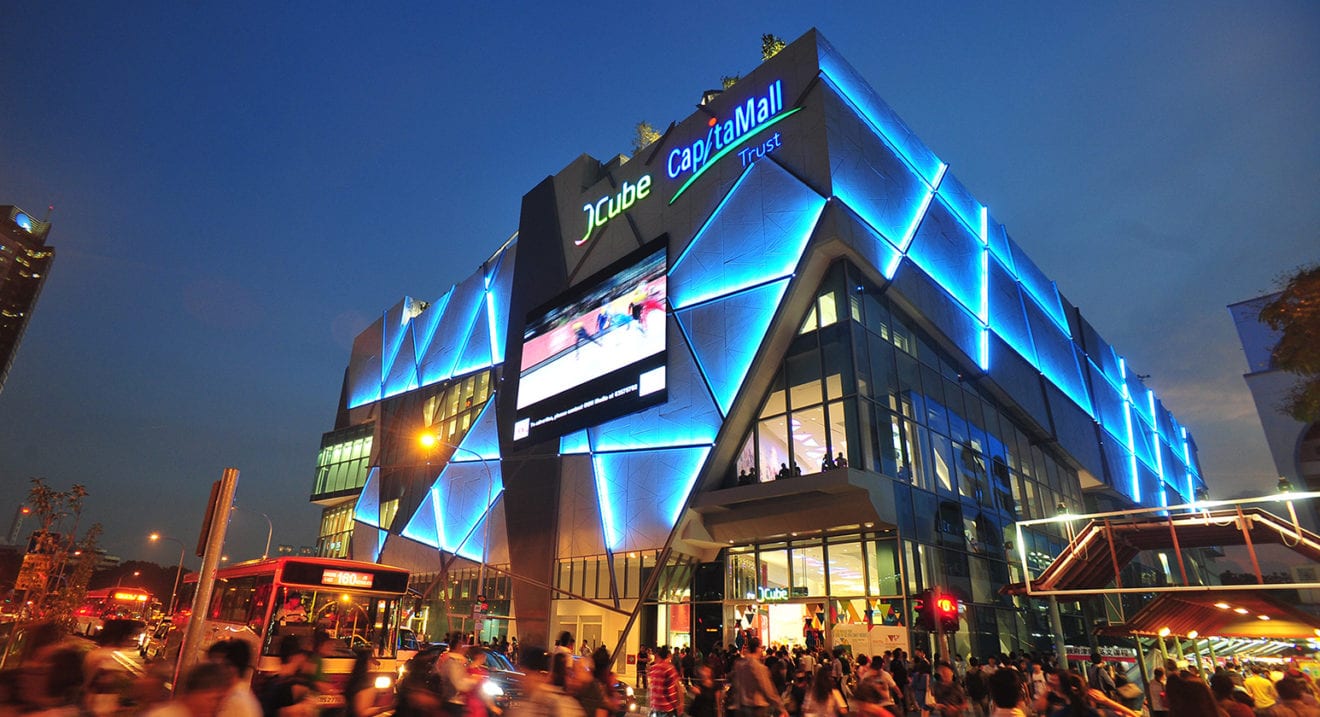
    In this piece, I want to take a look at two of the largest REITs listed here in Singapore and compare them. Meet the contenders, CapitaLand Mall Trust and Ascendas Real Estate Investment Trust.

    Asset class

    The most obvious difference between the two REITs is their area of focus. CapitaLand Mall Trust, as its name suggests, focuses on retail properties (it dabbles a little in some commercial assets as well).

    Ascendas REIT on the other hand, deals with industrial properties such as business & science parks, factories, data centres and more.

    Going international

    Another area of divergence between the two is their geographical focus.

    Ascendas REIT has invested in overseas properties over the years and now has assets in China and Australia. It seems the trust would continue to pursue international investments going forward. Today, Australia and China contribute roughly 11% and 2%, respectively, to the REIT’s overall portfolio value. The rest comes from Singapore.

    CapitaLand Mall Trust, on the other hand, only owns properties in Singapore. That said, it also has a 14.55% stake in CapitaLand Retail China Trust, which invests in retail properties in the Greater China region.

    Both CapitaLand Mall Trust and CapitaLand Retail China Trust are sponsored by the local real estate giant CapitaLand Limited.

    CapitaLand has stakes in other REITs and even private property funds that invest outside Singapore. This means that CapitaLand Mall Trust would most likely not invest directly in international markets since its sponsor would be heading any overseas venture.

    A long history

    Now, CapitaLand Mall Trust and Ascendas REIT do have things in common.

    They mostly have assets located in Singapore; they have market capitalisations of around S$7.0 billion each; and they both were listed in 2002 and so have long histories of growth as a listed REIT.

    Since their IPOs, CapitaLand Mall Trust and Ascendas REIT have generated total returns (where gains from reinvested dividends are factored in) of more than 420% and 554%, respectively.

    Summary

    Both Ascendas REIT and CapitaLand Mall Trust have proven themselves in the market by providing strong returns for their unitholders. But, the two trusts have significant differences related to their asset classes and growth strategies. This thus results in different risk profiles and that’s something investors would have to keep in mind.

  • The new tallest building in Thailand looks like a pixelated image in mid-download

    The new tallest building in Thailand looks like a pixelated image in mid-download

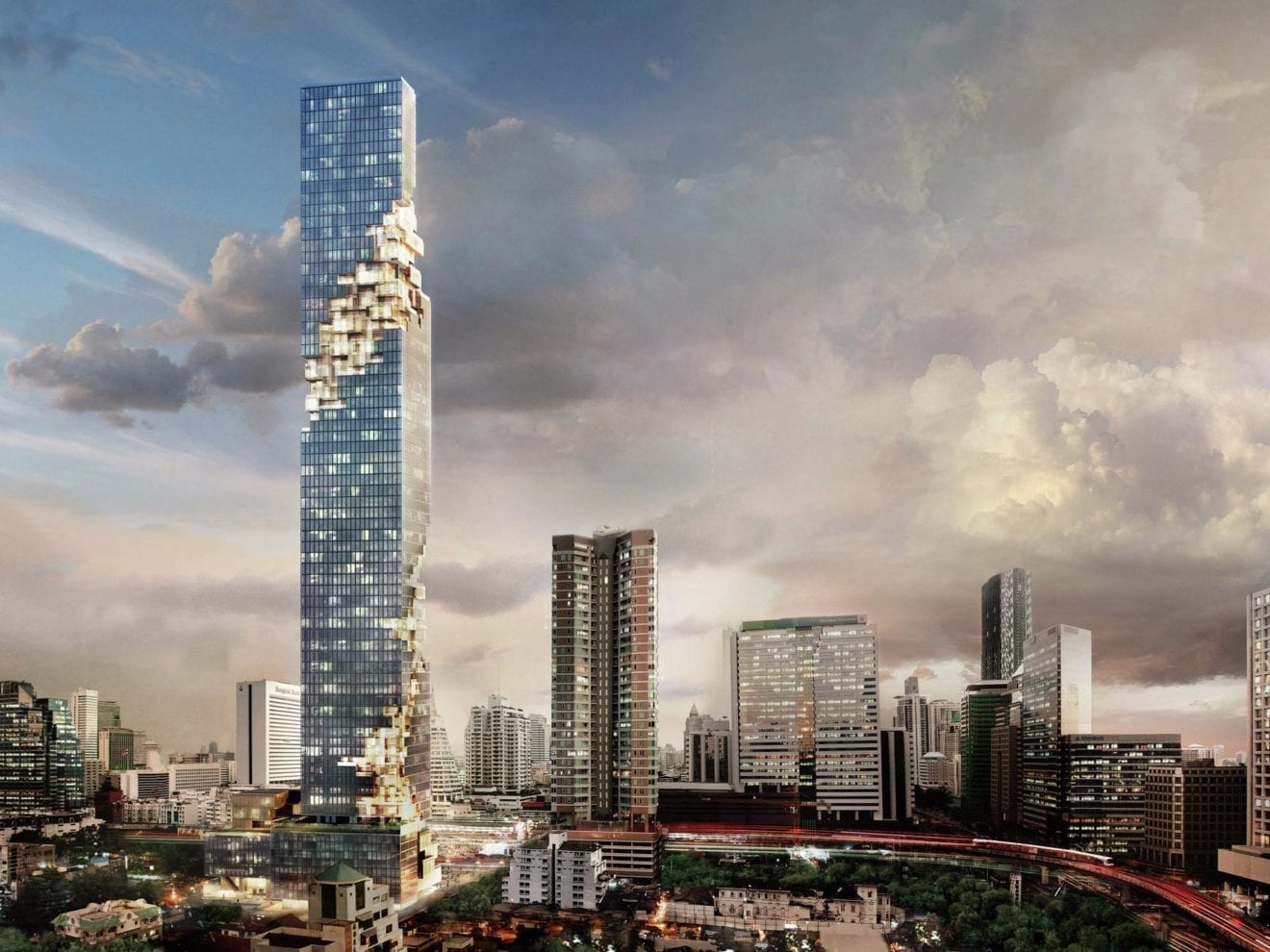
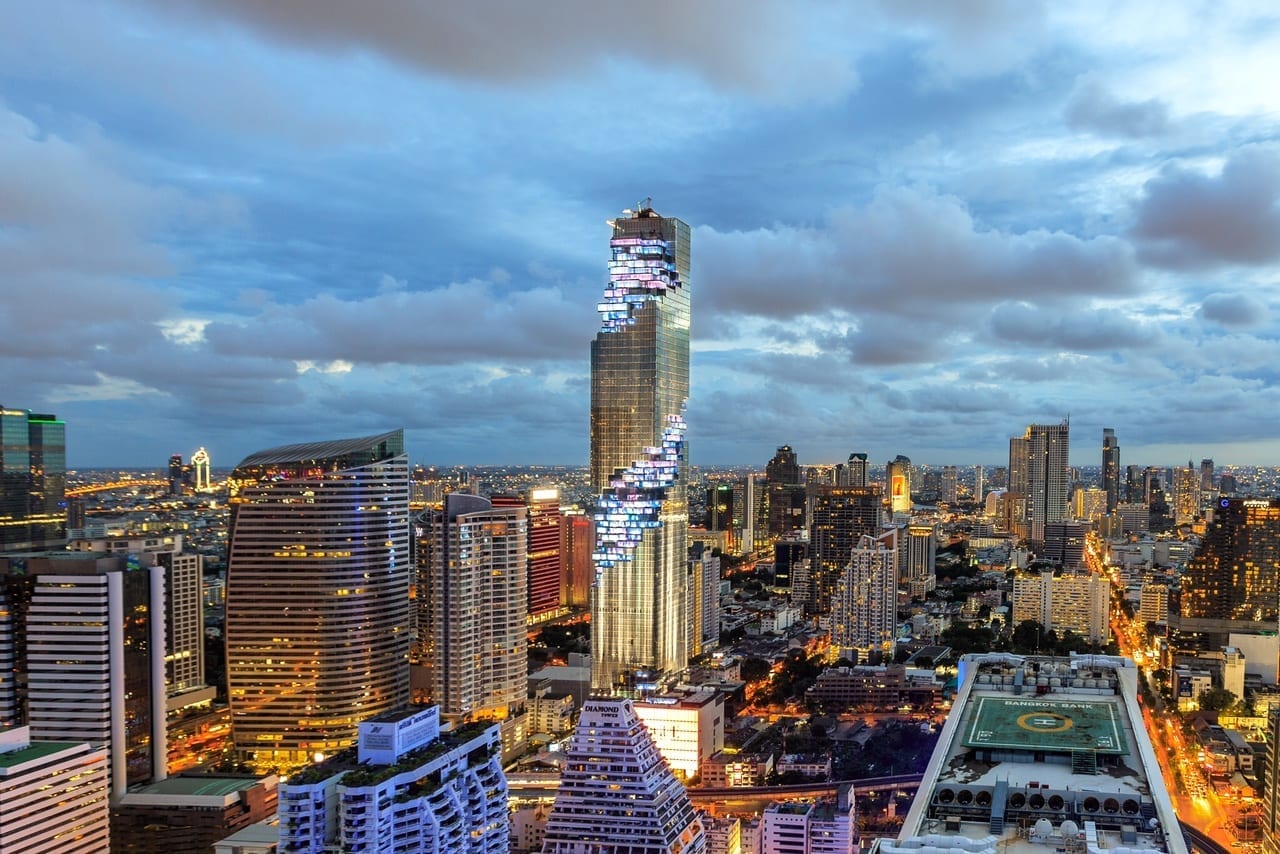
    At 1,029 feet, the MahaNakhon is now the tallest building in Thailand. The 77-story tower beats the skyscraper that previously held the title, Baiyoke Tower II, by 33 feet.

    To celebrate its debut on August 29, the building lit up Bangkok’s skies with a fantastic light show. The skyscraper’s signature ribbon, which is made to like a partially-downloaded spiral of pixels, lit up, creating a beacon in the capital city’s skyline.mahanakhon-oma_ole_scheeren_v_4

    The building is designed for a mix of retail, hotel and residential use — it holds 200 condo units managed by Ritz-Carlton Residences.

    The Office for Metropolitan Architecture — the firm founded by famed Dutch architect Rem Koolhaas — announced plans for the building in 2009, but the final design was completed by international architecture firm Büro Ole Scheeren. The firm teamed up with Thai residential property developer PACE Development, and the building reportedly cost 18 billion baht ($520 million) to complete.

    PACE hopes to sell some of the hotel space and observation decks to a local real estate investment trust next year, the Bangkok Post reports. Some of the revenue from that sale will likely recoup construction costs — as will ticket sales for the building’s observation deck, and rents from the other hotel and retail spaces. Gourmet grocery store Dean & Deluca is also expected to open in the building.

    But it might not stay Thailand’s tallest skyscraper for long. A new structure, the Rama IX Super Tower, is proposed to be built in 2019. At 2,018 feet tall, it would be almost twice the size of the MahaNakhon.

  • Pop-star eateries for Bangkok’s Show DC complex

    Pop-star eateries for Bangkok’s Show DC complex

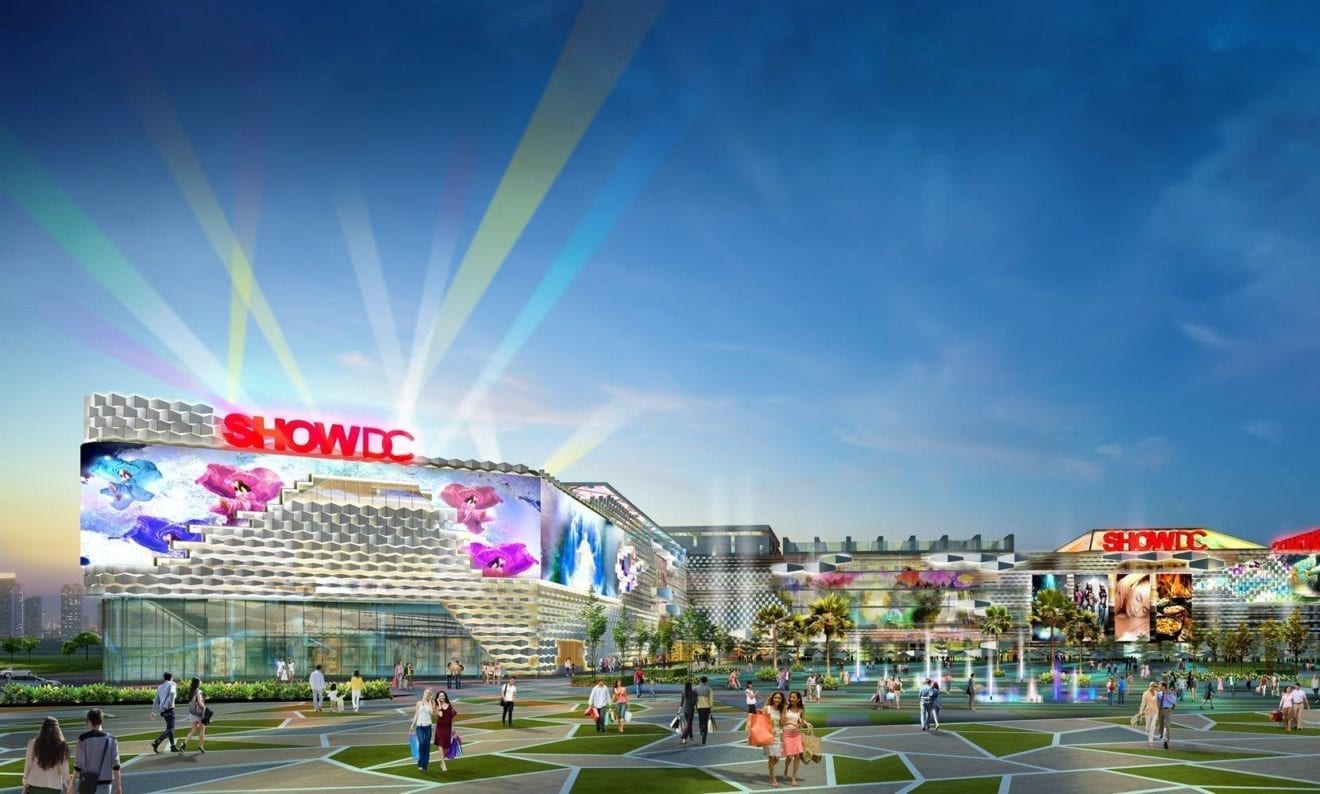
    K-pop star Psy of Gangnam Style is one of several celebrities who will have eateries at the upcomingShow DC/YG Republique integrated food and entertainment complex in Bangkok.

    He will have a noodle house, while other Korean stars featured are singer Rain with After The Rain restaurant, and boy band BTS (Bangtan Boys) with Brick Cafe.

    Mr. Chayadit Hutanuwatra, Chairman of SHOW DC Corp Ltd (Right) and Dr. Julianne Hur, Vice President of The The Mall OF Korea (Left)

    Mr. Chayadit Hutanuwatra, Chairman of SHOW DC Corp Ltd (Right)
    and Dr. Julianne Hur, Vice President of The The Mall OF Korea (Left)

    This was revealed at a media update event, which featured a K-pop fashion show featuring Thai model Rawiwan Bunprachom (“Yoghurt”).

    Show DC 5

    Mr. Chayadit Hutanuwatra, Chairman of SHOW DC Corp Ltd (Center), Mr. Thammarat Thuratong, Celeb E-san’s owner (Far Right), Dr. Wichuda Na-Songkhla Sriyaphai (Far Left), Deputy Managing Director of Wandee Culinary Art School

    Near Rama IX Road the Bht9.5 billion (US$274.8 million) project is 90 per cent complete and on track to open in November. It covers 18,000 sqm over six levels, and more than 400 brands have already signed up 93 per cent of the retail space.

    Show DC 1

    K-District @Show DC will be the largest K-Pop town outside Korea. As well as retail and restaurants, it will showcase an acting and talent academy from Korea, plus Korean plastic surgery clinics, cosmetics, fashion and lifestyle shops.

    Show DC 2

    “Our plan is also to stimulate the economy and promote Thai products by putting together best-in-class Thai products at the Thai Thai Market, covering 2500 sqm on the fourth floor,” says Show DC chairman Chayadit Hutanuwatra. The market will feature 150 shops.

    Outlets at the project’s “Shop & Enjoy” experience include Asia Herbs Association, Hot Star (Taiwanese snacks), Kanna (health food), Krua Wandee Culinary Art School and Stick House (Italian-style ice cream), along with fashion brands BKK Original and H&M.

  • CBRE Research urges landlords to engage

    CBRE Research urges landlords to engage

    Online and offline retailing in Southeast Asia is expected to merge further, according to a new study by CBRE Research Singapore.

    Its report It’s All About Place-making urges landlords to play their part to stay ahead in a fast-changing retail landscape where consumers transit seamlessly from physical to digital platforms.

    CBRE Research projects that nearly 4 million sqm of city retail stock across Malaysia, Singapore, Thailand and Vietnam will be completed in the next three to five years. CBRE studied retail stock in Bangkok, Hanoi, Ho Chi Minh City, Jakarta, Kuala Lumpur and Singapore.

    “Some retail developments across these six cities have had to shut down in the face of high vacancy rates and low footfall as they failed to capture consumers and retain tenants,” says the report. “One suggestion is for landlords to acquire eCommerce platforms or set up logistics networks to give consumers the fully integrated omnichannel experience.”

    Established shopping centres with online platforms that provide “click-and-collect” or “store-to-door” services give consumers a higher sense of reliability and earn trust as well, says the report.

    “Both physical and online-only retailers are also more inclined to expand their footprint in these shopping centres in their bid to incorporate an omnichannel strategy.”

    Wave of change

    Combining both online and offline channels is one of five strategies CBRE Research recommends to landlords as Southeast Asian economies cope with structural shifts in the face of disruptive technologies.

    This wave of change has affected retail sales across the markets, with CBRE Research using the PLACE acronym…

    Place-making: Conceptualising shopping developments with the consumer’s experience at the forefront. A good social experience makes a strong positive association on the consumer and is tougher to replicate on the digital platform, says the company.

    Leveraging technology: Landlords should take advantage of the high internet and smartphone penetration among SEA consumers to improve the offline shopping experience. Technology can provide consumer insights and interaction while helping boost foot traffic and sales.

    Actively engaging: Forging personal connections with consumers is imperative for landlords to stand out from the competition and gain loyalty. Tenant engagement, and landlords need to find ways to show support.

    Combining channels: Landlords can break down the silos between online and offline by helping tenants incorporate an omnichannel strategy through vertical and horizontal integration, such as acquiring an eCommerce platform or setting up a logistics network to fulfil delivery needs.

    Engaging digital tenants: Landlords should seek to lease space to up-and-coming eCommerce retailers as they are likely to be more savvy about digital marketing and in tune with modern consumer needs.

    New needs

    “The onus of ensuring that stores in shopping centres remain an important and relevant touch point for consumers should not lie with retailers solely,” says CBRE Research Singapore/Southeast Asia head Desmond Sim. “The roles of the asset manager, landlord and shopping centre need to evolve to cater to the new needs of retailers and consumers amid stiff competition.

    “This task is all the more urgent as the market is anticipating a surge in internet use among developing countries, particularly Indonesia and Vietnam where mobile phone use has the greatest potential to increase.”

    Store-based retailing will stay the key point of purchase among SEA consumers in the next five to 10 years and account for at least 90 per cent of total sales value, says CBRE Research. However, landlords will face increasing pressure to make every visit to the shopping mall a memorable experience.

    With its headquarters in Los Angeles, CBRE Group is a commercial real-estate services and investment firm with more than 400 offices worldwide.

  • New Marriott wing at Resorts World Manila opens Sept

    New Marriott wing at Resorts World Manila opens Sept

    The new west wing of the Marriott hotel at casino resort Resorts World Manila will be in operation by next month, said on Tuesday Genting Hong Kong Ltd.

    Resorts World Manila – located in the Philippines capital Manila, next to the city’s international airport – is owned and operated by Travellers International Hotel Group Inc. The latter is a venture between Philippine-based Alliance Global Group Inc and Genting Hong Kong.

    Resorts World Manila – already featuring three hotels – is currently undergoing a phase three expansion. “Ongoing developments which will introduce three new hotels – Hilton Manila Hotel, Sheraton Hotel Manila and a new Maxims hotel – are expected to be completed by the end of 2017,” Genting Hong Kong stated in its unaudited interim report for the six months to June 30. The document was filed with the Hong Kong Stock Exchange on Tuesday after trading hours.

    The firm added that the new expansion would “include additional gaming and retail facilities.”

    “Looking ahead, Resorts World Manila’s phase four development will give way to more retail alternatives and another international hotel brand,” Genting Hong Kong stated.

    The new wing at Marriott will add 228 new hotel rooms to Resorts World Manila, according to previous releases. Total room count for the exiting three hotels – Maxims Hotel, Remington Hotel and Marriott Hotel Manila – stood at 1,226 in the second quarter of 2016. Hotel occupancy rate during that period was 87 percent, according to Travellers International.

    Travellers International’s net profit for the second quarter of 2016 amounted to PHP638.2 million (US$13.7 million), an increase of 3.1 percent from a year earlier, the company reported on August 15.

    Genting Hong Kong’s share of profit from Travellers International totalled US$19.1 million in the first half of 2016 compared with US$22.6 million in the prior-year period. Genting Hong Kong said the decline was “primarily due to increase in general marketing and depreciation expense during the period.”

    Cruise business

    Genting Hong Kong – also an operator of casino cruise ships – reported a net loss of US$54.6 million for the six months ended June 30. The loss compared with a net profit of US$2.2 billion for prior-year period.

    The company said the net loss was mainly attributable to the absence of a one-off accounting gain of US$1.57 billion following the reclassification of Genting Hong Kong’s investment in Norwegian Cruise Line Holdings Ltd and the absence of a gain of US$599.6 million from the disposal of shares in Norwegian Cruise. Both of these operations were completed in the first half of 2015.

    Genting Hong Kong, a subsidiary of Malaysian conglomerate Genting Bhd, has accelerated its expansion plans for its cruise business. “The company continues to develop its three-brand cruise portfolio with focus on each of the major cruise market segments – Crystal Cruises for the ultra-luxury segment, Dream Cruises for the premium segment and Star Cruises for the contemporary segment,” Genting Hong Kong stated in its Tuesday interim results report.

    The company last month announced it would invest more than EUR100 million (US$113.1 million) to upgrade the three shipyards in Germany that it acquired in April. The move follows the company’s earlier purchase of the Lloyd Werft Bremerhaven shipyard in Germany last year. Genting Hong Kong plans to build new cruise ships to expand its fleet.

    The firm’s new Asian cruise line, Dream Cruises, is scheduled to start operations in November, according to Tuesday’s report.

  • Singapore REITs’ performance falls flat in 2Q

    Singapore REITs’ performance falls flat in 2Q

    Overall DPU growth sits at -0.1%.

    While its retail sector remained resilient, other sectors such as hospitality and industrial have continued to impede Singapore real estate investment trust (REITs)’s growth, registering a flat -0.1% improvement in 2Q16.

    Even with the dismal performance, OCBC Investment Research said the REITs’ performance in 2Q is in line with the expectations.

    OCBC noted that the strong performances of OUE Commercial Trust, Lippo Malls Indonesia Retail trust and Mapletree Greater China Commercial Trust have offset the underwhelming performance of their peers in the hospitality and industrial sector.

    The three registered DPU growths of 34.7%, 16.4%, and 9.1%, respectively.

    Overall, the flat REIT DPU growth was amid the decent uptick in net property income at 8.2% and distributable income 5.2%.

    “This can be attributed to the regular issuance of new units as partial/full payment of management fees, coupled with REITs which have recently carried out equity fund raising exercises,” OCBC explained.

    Meanwhile, it explained how hospitality sector have remained the main drag during 2Q, pointing out to the weakness in revenue per available room for Singapore hotels and revenue for available unite in serviced residences.

    “Most industry players highlighted that June was a particularly poor month. We believe this could be attributed largely to the absence of the SEA Games which took place in June last year. Another key factor for the muted performance was due to weaker demand from the corporate sector,” OCBC said.

    For the industrial sector, its poor performance came from small-mid cap REITs.

    Looking forward, OCBC said the operational performance of the REITs would continue to be be pressured by the macroeconomic uncertainties and supply concerns.

    More so, it explained that some REIT managers are making use of the soft environment to carry out asset enhancement initiatives to reposition their assets in the future.

    These projects, the report warned, would result in a fall or loss of income contribution in the near future and will eventually mute DPU growth.

  • Cheung Kong puts The Center up for sale as Li Ka-shing trims Hong Kong assets

    Cheung Kong puts The Center up for sale as Li Ka-shing trims Hong Kong assets

    Hong Kong’s wealthiest man is putting his tallest building in the city up for sale, garnering bids from several Chinese buyers that point to the increasing trend of mainland companies with deep pockets snapping up local assets.

    Li’s Cheung Kong Property Holdings Co. has put The Center on the market with little fanfare for six months, according to a property agent involved in the deal, who declined to be named. A handful of keen buyers are bidding on the 73-storey tower, valued at HK$35 billion, the agent said.

    At that price, The Center will be Hong Kong’s most expensive real estate transaction.

    Analysts point to China’s state-owned companies with deep pockets as the most likely buyers for the tower in downtown Central, which has 1.2 million square feet of office space, 13,000 square feet of retail space and 402 car parking lots.

    “Only state-owned enterprises can afford such a sum,” said Knight Frank’s head of valuation and consultancy Thomas Lam.

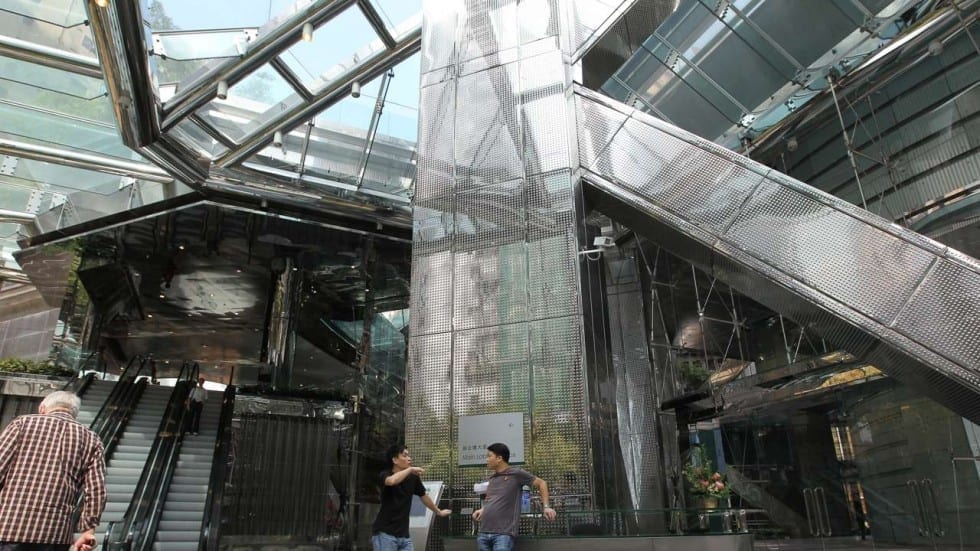
    The building, completed in 1998, is an entire steel structure without a concrete core. Its iconic lobby was featured in the Hollywood movie The Dark Knight.

    Cheung Kong owns 48 storeys in the building after Malaysian developer Guoco Group bought 11 floors in 1997. Nine of the 11 floors were sold to Singapore’s DBS Group Holdings Co. in 1998, while Cheung Kong sold the 60th and 79th floors in 1999, according to The Center’s sales brochure.

    Li has sold more than 20 billion yuan (HK$23 billion) of commercial properties in Shanghai, Beijing and Guangzhou since 2013. The tycoon’s business empire covers container ports, phone networks, power plants, real estate, retail outlets with assets in Asia, Europe and North America.

    Cheung Kong’s officials were unavailable to comment in Hong Kong.

    ICBC Asia, a subsidiary of China’s largest bank, is in discussions to buy the Center for HK$34.8 billion, Hong Kong’s Chinese-language media reported on Tuesday. The Hong Kong unit of the Industrial & Commercial Bank of China denied it’s involved in the talks.

    Cheung Kong is taking advantage of an explosive demand of office real estate by mainland Chinese companies in Hong Kong, analysts said. The decline in the Chinese yuan against the US dollar has also made it more attractive for mainland banks to seek better returns by parking their capital in real estate.

    “Chinese companies are eager to set up headquarters in Hong Kong’s central business district amid rapid business expansion,” Knight Frank’s Lam said. “They will be the key driver of new take up and office acquisition in the coming years.”

    Mainland Chinese companies hogged the limelight last year when two of them acquired two office blocks from Hong Kong-based property companies.

    China Life Insurance Co., the country’s largest insurer, paid HK$5.85 billion in November last year for Wheelock & Co.’s One HarbourGate office tower and retail podium in Hung Hom. On the same day, China Evergrande Group, the country’s second-largest developer, forked out a record HK$12.5 billion for the 26-storey Mass Mutual Tower in Wan Chai from Chinese Estates Holdings.

  • Pop-Up Stores In Hong Kong: Fad Or The Future?

    Pop-Up Stores In Hong Kong: Fad Or The Future?

    With vacancy at less than 1% in Hong Kong’s prime shopping malls, is it any wonder why brands, particularly those new to the market, are opting to grab a slice of the action by entering the market by doing a pop-up store. So what is a pop-up?

    • žžPop-up retail, also known as pop-up store or flash retailing, is a trend of opening short-term sales spaces.
    • žžA pop-up retail space is a venue that is temporary — the space could be a sample sale one day and host a private cocktail party the next evening.
    • The trend involves “popping-up” one day, then disappearing anywhere from one day to several months later.
    • žžThese shops, while small and temporary, can build up interest by consumer exposure.
    • žžPop-up retail allows a company to create a unique environment that engages their customers, as well as generates a feeling of relevance and interactivity.
    • žžPop-up retail also provides retailers to “prove” themselves in certain locations before the landlord decides whether they will provide them a shop on a long-term basis.

    Many brands are entering Hong Kong using the pop-up store model as a way to showcase their products. Although the stores are on a small scale and in a confined space, when done correctly, they allow customers to get a taste and a feel for the brand.

    Advantages for the landlord

    • Limited risk. It is allows the brand to occupy a small area that would otherwise be an open void space, a vacant shop or a shop that is undergoing some alteration work. This allowsthe landlord to maximise occupancy levels and revenues in what would otherwise be deemed as “dead space”.
    • žžAllows the brand to showcase their products and for the landlord to assess whether the brand is potentially worthy of securing a longer term store within the mall.
    • žžAllows the landlord to assess how the brand operates, how the staff interact with the customers and assess how good their customer service is.
    • žžKeeps the mall interesting and competitive.

    Advantages to the brands

    • žžWith competition for space in Hong Kong being extremely fierce, many brands are left to wait and wait for a prime location to be made available to them. A pop-up store allows them to enter the market more quickly.
    • žžBuild rapport with the landlords.
    • žžShowcase their products and designs to the landlord and use this as a platform to test their merchandise with the discerning Asian customer. In particular, mainland Chinese consumers, whose attention many brands are eager to capture.
    • žžAllows the brand to be uber creative in their design in a small space.
    • žžPop-up stores are usually located in areas with high footfalls which provide maximum exposure and opportunity to the brand.
    • žžRelatively low costs involved.

    Take an example such as Penhaligon’s, a new-tomarket brand that set up a lovely pop-up store in Harbour City and was able to parlay the success of the store to be offered permanent stores in prime locations in Hong Kong and Macau. Goes to show there are advantages to this approach.

    Disadvantages

    • žžLarge amount of investment is often required for what is a small and temporary space.
    • žžLimited time to recoup initial investment, produce impactful marketing and moreover showcase the brand and its DNA.
    • žžSometimes the tenant mix may not be ideal for the brand.
    • žžLocations are often isolated which means the brand has to work harder on the design, customer service and marketing to entice people into the pop-up store.

    Will the pop-up phenomenon remain? From what we can see in terms of market fundamentals and the success many popup concepts are enjoying, the answer is an overwhelming yes. With no let up on demand from brands seeking to expand, space availability being extremely limited and rentals not looking to subside any time soon, pop-up stores will become a more and more enticing option. However it is not all good news, many pop-ups, due to their limited time period and inability for the brand to showcase a sufficient range of products, can sometimes be detrimental to a brand. Take a fashion brand for example. They have hundreds of Stock Keeping Units (SKU’s) in their normal stores but this is often limited to a 10th of that in a pop-up. This could potentially damage the brand’s reputation, perception, sales and ultimately the brand’s ability to expand in Hong Kong. Overall, however, we believe that the positives outweigh the negatives but brands still need to be conscious of what they are doing. They need to have a strategy in place and ultimately know exactly what they are trying to achieve by having a pop-up.

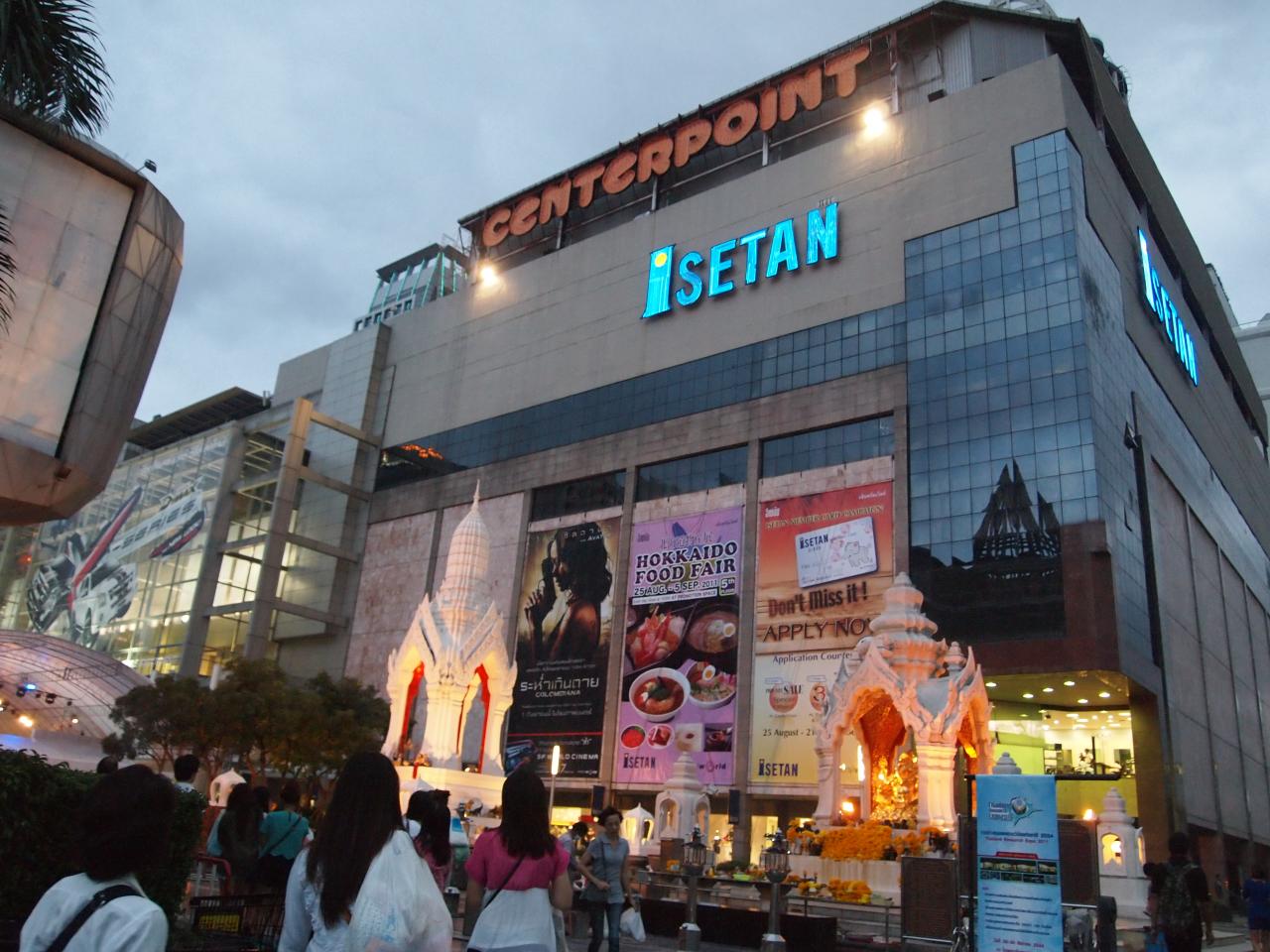
  • Isetan Philippines in planning

    Isetan Philippines in planning

    A Japanese department store operator has set its eyes on the Philippines to build commercial-residential facilities by 2022.

    Isetan Philippines will work with Nomura Real Estate Holdings to build properties in Manila. The project is projected to reach approximately $500 million.

    The developer, a rival of Takashimaya, plans to erect four 40-story condo buildings with more than 1500 residential units on a 15,000 sqm lot.

    Isetan’s parent, Isetan Mitsukoshi, will operate a department store and other commercial facilities on the lower levels of the buildings. The retail giant plans to offer products developed in-house in addition to local favourites..

    According to reports, the Philippine project is part of Isetan Mitsukoshi’s Asia’s expansion amid Japan’s shrinking domestic market.

  • Saigon underground mall planned

    Saigon underground mall planned

    Ho Chi Minh City can expect its first underground shopping mall by 2020.

    According to local news sources, the city’s government has sought central government approval to build a four-level Saigon underground mall beneath a station in its first metro route, from Ben Thanh market to Suoi Tien theme park.

    The underground complex will include a shopping mall, walking streets, a square, and other infrastructure.

    The mall is said to cover 40 per cent of the 45,000sqm area, starting from/under Ben Thanh market, going along Le Loi St and ending at the city center’s iconic Opera House.

    The US$303 million project will be constructed jointly by Toshin Development and other consortiums, including Nikken Sekkei Civil Engineering, Osaka Chikagai, and Join.

  • Shopping malls generate HK$1.3b rental income for Swire Properties

    Shopping malls generate HK$1.3b rental income for Swire Properties

    Shopping malls generate HK$1.3b rental income for Swire Properties

    Swire Properties (1972) shopping malls including The Mall at Pacific Place, Cityplaza in Taikoo Shing and Citygate Outlets at Tung Chung generated gross rental income of HK$1.35 billion in the first half, the company reported today.
    At June 30, 2016, the retail properties in Hong Kong were valued at HK$52.79 billion. Of this amount, Swire Properties’ attributable interest represented HK$46.46 billion.

  • Premium Indian mall rents rise

    Premium Indian mall rents rise

    Premium Indian mall rents have risen “significantly” in the first six months of 2016.

    A report by property consultant CBRE South Asia shows rental rates at India’s more up-market shopping centres were led by major cosmopolitan mall clusters Noida (rising by 45 per cent), Gurgaon (by 30.8 per cent), Vasant Kunj (28.6 per cent), and East Bangalore (10.5 per cent).

    By region, rental rates have increased in the National Capital Region centered around Delhi (Vasant Kunj, Saket, and Gurgaon), Mumbai (Kurla, Ghatkopar and Lower Parel), and Bangalore (Whitefield, Ulsoor, and areas in West Bangalore).

    The steep rise in rent is due to the robust demand led by international retailers, and rapid expansion plans of established retailers. For example, during the first half of 2016, Swedish clothing retailer H&M, US clothing company Gap, Japanese lingerie brand Wacoal, and Dutch brand Hunkemoller opened new stores in India, while the more established retail stores – Shoppers Stop, Levi’s, Puma, Pepe Jeans, Fabindia, Gap, Haagen-Dazs, and Mebaz – further expanded their outlets.

    A gap between the demand and supply is also to blame, as building malls is a capital intensive activity and completion of projects may take up four to six years.

    However, the rise in rent and demand is restricted to premium markets. In another report, by property consultant Jones Lang LaSalle (JLL) India, findings indicate that tier 2 cities and even average and poor malls in tier 1 cities, continue to struggle with high vacancy rates, which began with the global financial crisis of 2008. Poor consumer and retailer sentiment has also prompted several mall developers to shelve or defer new projects across the country.

    JLL estimates that rental rates in premium markets will stay constant or increase till the gap between demand and supply gets bridged in about five to seven years.

    • This article was first published by Dezan Shira & Associates which, since its establishment in 1992, has been guiding foreign clients through Asia’s complex regulatory environment and assisting them with all aspects of legal, accounting, tax, internal control, HR, payroll, and audit matters. Dezan Shira & Associates is a full-service consultancy with offices across China, Hong Kong, India, and ASEAN.
  • CapitaLand Retail China Trust to buy shopping mall in Chengdu for 1.5b yuan

    CapitaLand Retail China Trust to buy shopping mall in Chengdu for 1.5b yuan

    CapitaLand Retail China Trust (CRCT) is acquiring a shopping mall in Chengdu for 1.5 billion yuan (S$303 million).

    Galleria is located in the Xinnan Tiandi retail precinct of Gaoxin District in the south of Chengdu, a major shopping belt in the city.

    The mall has been valued at 1.52 billion yuan by Savills Valuation & Professional Services as at July 26. Including acquisition-related expenses, the total investment cost for the mall is expected to be about 1.527 billion yuan. CRCT plans to finance the purchase with a mix of existing cash and additional debt.

    When the transaction is completed, the acquisition will enlarge CRCT’s portfolio size by about 14 per cent to 12.55 billion yuan. The mall has a current net property income yield of about 5.4 per cent and the acquisition is expected to be distribution per unit-accretive for CRCT.

    Tony Tan, chief executive of the manager of CRCT, said: “The proposed acquisition will diversify CRCT’s income and strengthen the resilience of our portfolio to deliver sustainable growth. With the opportunity to tap on CapitaLand’s network of five existing malls in Chengdu, the proposed acquisition is aligned with CRCT’s investment strategy to expand our footprint by leveraging on our sponsor’s strong presence in key Chinese cities where it has a competitive edge.”

    Leases accounting for about two-thirds of the mall’s total rent are up for renewal by 2018, which will give it an opportunity to boost rental income by adjusting the tenant mix, he added.

    The six-storey mall, which opened its doors in 2010, has a gross floor area, excluding car park, of about 53,619 square metres and 900 car park spaces. As at end-May, it was fully occupied.

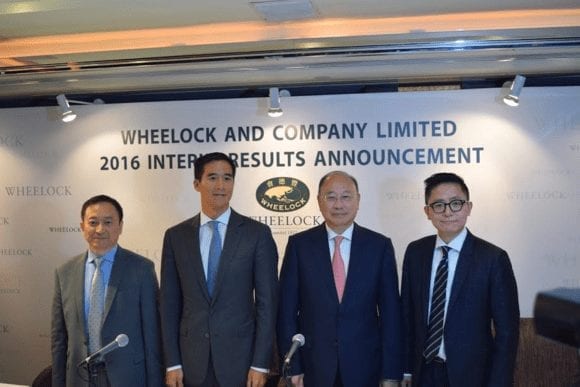
  • Fall of 5-10% in Hong Kong property prices ‘not abnormal’ — Wheelock

    Fall of 5-10% in Hong Kong property prices ‘not abnormal’ — Wheelock

    Hong Kong’s property market has yet to stabilize and could fall by 5-10% in the second half of the year, according to leading developer Wheelock.

    “Given the global uncertainties arising from Brexit and volatility in the currency market and oil prices, a 5-10% fluctuation in [home] prices in Hong Kong is not something abnormal,” said Chairman and Managing Director Douglas Woo Chun-kuen in an earnings briefing on Monday.

    In his late thirties, Woo, an architecture graduate from Princeton University, has become a third-generation owner to take the helm of the Hong Kong-listed property conglomerate after a stint at UBS. He assumed the chairmanship from his father Peter Woo Kwong-ching in 2014.

    Woo’s cautious outlook came after his group reported a 29% plunge in net profit to 5.66 billion Hong Kong dollars ($730 million) in the six months ended June. Underlying profit, excluding the impact of property revaluation, fell 19% to HK$5.13 billion on the year, despite a surge in property sales amid a housing downturn in previous months.

    Contracted sales reached HK$11.8 billion as of mid-August this year, primarily driven by the sale of three residential projects and the en-bloc sale of OneHabourGate East office tower and shops for HK$4.5 billion. The four projects already accounted for nearly 91% of its full-year sales target last year but the group would not say if it had plans to raise its target.

    Wheelock attributed the weaker bottom line to the high base of last year’s earnings, which was boosted by a significant contribution from the sale of One HarbourGate West office tower and shops to the overseas unit of China Life Insurance for HK$5.9 billion.

    The developer’s earnings are affected by the performance of Wharf Holdings, which accounts for a fifth of its core profits. Wharf, a landlord 60%-owned by Wheelock, saw a 7% increase in rental income from its malls despite a retail slump in Hong Kong, caused primarily by a dwindling number of wealthy mainland Chinese tourists to the territory.

    Analysts at Macquarie Securities maintain an “outperform” rating for Wheelock, citing its healthy residential and office sales. Thanks to strong demand and low average vacancy for Grade A-offices in Hong Kong’s central business districts, “we think this is a solid support for Wheelock’s sales due to keen expansion interest from mainland [Chinese] financial institutions,” according to a Macquarie note.

    Asked about competition from mainland Chinese developers on land acquisitions, Woo said Wheelock would “do its own math” and be “selective” in making acquisitions particularly in commercial land sites launched by the government.

    The developer has a land bank of 8.3 million sq ft and of that, 95% is in urban areas. This is however dwarfed by its rivals’ — Sun Hung Kai Properties has 50.8 million sq ft and Henderson Land Development has 24.4 million sq ft.

    Wheelock’s stock closed 0.35% higher at HK$43.3, before its earnings were announced. Its shares have advanced 32.62% since the start of this year, against the Hang Seng Index’s 4.65% gain. It declared a first interim dividend of HK$0.45, up 6% from a year earlier.