Category: Real Estate

Retail News Asia is committed to providing both local and global retailers with the latest Real Estate news throughout the Asian market. This on a daily base.

  • Sunway Malls Adopt New Strategy in Elevating Customer Service

    Sunway Malls Adopt New Strategy in Elevating Customer Service

    Malaysia’s mall industry, already faced with stiff competition is expected to intensify as another 27.28 mil sq ft of new retail space will be entering the market according to National Property Information Centre (Napic) data.

    Of the 27.28 mil sq ft supply, 16.2 mil sq ft is at various stages of construction while the remaining 11.08 mil sq ft is are being planned. This will add on to the 148.85 mil sq ft of existing retail space in the market and brings Malaysia’s total retail space supply to 178.13 mil sq ft.  

    The increase in retail space comes at a time when retailers are already hard pressed with slower retail sale growth and lower margin amid weak consumer sentiments.

    In the latest quarter results by Retail Group Malaysia (RGM), Q2 2016 registered a growth rate of 7.5% against the forecast of 9.9% – 24% lower than expected. RGM termed the results as ‘below market expectation’. In contrast, retail sales fell 4.4% in Q1 2016.

    In a bid to increase, sustain and retain footfall and sales, Sunway Malls re-strategise their human capital enhancement by recruiting ex-flight attendants into the customer service division to better serve its shoppers.

    While known for delivering quality service, the hiring of ex-flight attendants also allows Sunway Malls to leverage on the crew’s training and experience in safety and emergency handling which serves as an added advantage for group’s front-line service.

    The initiative has so far seen the recruitment of nine ex-flight attendants from a local carrier in both Sunway Pyramid and soon- to-be-opened Sunway Velocity Mall. Recruitment effort is also underway to place more ex-attendants in Sunway Putra Mall in Kuala Lumpur and Sunway Carnival Mall in Penang.

    “With increasing competition, it is imperative that the creation of good customer service experience in malls takes precedence as both a strategic differentiator and a loyalty tool in a saturated market,” says Kevin Tan, Chief Operating Officer of Sunway Malls.

    “From the moment a customer steps into the mall, we strive to provide world class service through our touching hearts philosophy to create a warm, welcoming and wholesome lifestyle experience. We value the different needs of each and every customer in spite of background, gender and age hence we are creating diversity in the Concierge so they can engage with the various shopper profiles we have and extend assistance every time it’s necessary,” he continues.

    The group’s effort in delivering good customer service was also acknowledged by Professor Philip Kotler, the Father of Modern Marketing when he awarded Sunway Pyarmid with My Branded Service Award in recognition of its outstanding customer service back in 2009.

    Its earlier customer service initiatives among others included carpark guiding system, powered wheelchairs, child distance monitors and auxiliary police force were known as the mall industry’s firsts.

    Although Sunway Malls is hiring ex-flight attendants as part of their new retail strategy, the brand still welcomes all who have interest in the service line.

    “Some of our best customer service employees are not from the airline industry but they have the passion and the willingness in serving customers and that’s the most important criteria of all,” says Kevin.
  • Aeon Mall inviting foreign firms to be tenants

    Aeon Mall inviting foreign firms to be tenants

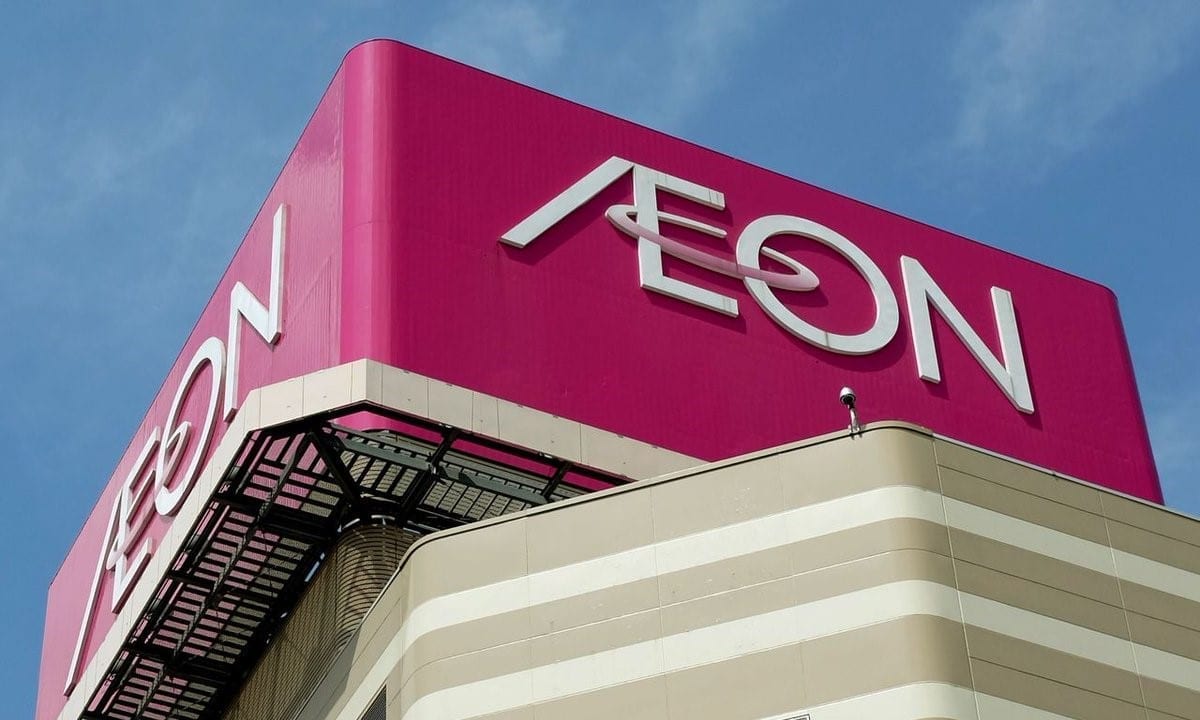
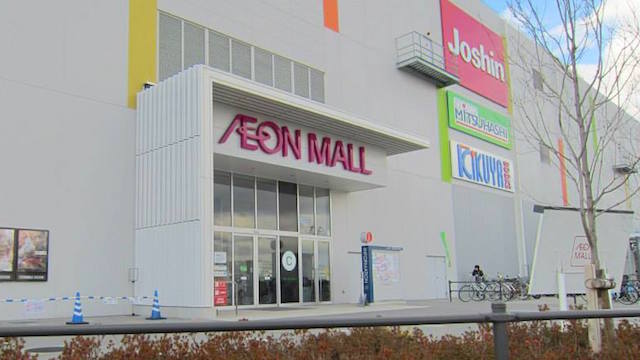
    Aiming to add variety in the face of intensifying competition, Japanese retail giant Aeon Mall is inviting foreign businesses to sign on as tenants in Japan.

    Aeon Mall, which has about 150 shopping centres across Japan, will aim to have its first new-look location open next spring. A new dedicated department includes two staff members assigned to Chinese businesses and three to businesses from members of the Association of Southeast Asian Nations (ASEAN). Tenants from other areas, such as Europe and the US, are also sought.

    A broad range of sectors is being considered, including restaurants, apparel, home products and services. As well as major chains, Aeon is interested in small businesses in the tourism sector.

    Aeon Mall is negotiating arrangements with more than 30 companies already. By inviting multiple tenants all at one time, the company seeks to recreate the feel of an Asian-style “restaurant alley”, for example.

    aeon-mall-japan

    Targeted candidates include foreign companies interested in doing business in Japan but hesitant because they lack knowledge of the market. To help deepen their understanding, Aeon will offer tours of its malls in Japan and abroad.

    Japan’s shopping centre market grew 4.5 per cent last year to 31 trillion yen (US$302 billion), according to the Japan Council of Shopping Centers, but was treading water on an existing-store basis.

    The market’s medium- to long-term outlook is also dim with the shrinking Japanese population and the rise of online shopping.

    “Mass-producing the same type of shopping mall will not lead to substantial growth going forward,” says Aeon Mall president Akio Yoshida. The company last year opened a more experience-focussed mall with an athletic track and racetrack.

  • Keppel Land China, Alpha divest stakes in Sparkle Bright for $516.9m

    Keppel Land China, Alpha divest stakes in Sparkle Bright for $516.9m

    Keppel Land China and Alpha signed an agreement with Star Champ Development Ltd, a wholly-owned subsidiary of the Chongbang Group (Chongbang), for the transaction.

    Sparkle Bright owns retail mall Life Hub @Jinqiao (Life Hub), a mixed-use development in Shanghai, China. Chongbang owns the other 20 per cent stake in the development.

    Keppel Land China holds a 42.5 per cent interest, while Alpha Asia Macro Trends Fund II and a co-investor hold the remaining 57.5 per cent in the 80 per cent stake in Sparkle Bright.

    Keppel Land China and Alpha are wholly-owned subsidiaries of Keppel Land Limited and Keppel Capital Holdings, respectively.

    Life Hub features about 114,730 sm gross floor area of retail shops spread over 10 low-rise retail buildings as well as a 10-storey office tower with a retail podium. It has been one of the popular attractions in Shanghai’s Pudong District since 2009.

    The retail mall is currently 97 per cent leased while the office tower is fully occupied.

    The divestment is expected to be completed by the end of September 2016. The Group expects to recognise a gain of approximately S$73 million from the divestment.

    Keppel Land CEO Ang Wee Gee said the divestment is in line with Keppel Land’s strategy to continually recycle assets to seek higher returns.

    “Keppel Land China’s collaboration with Alpha reflects how different business units are working closely together to harness the collective strengths of the Keppel Group,” Gee said.

    Since the acquisition of the property in 2013, Keppel Land China and Alpha have been working with the mall operator to continuously enhance the tenant mix and shopping experience.

    Christina Tan, CEO of Keppel Capital and managing director of Alpha, disclosed they have been able to realise an internal rate of return of over 20 per cent on the sale of the development.

  • Labels lining up at new Macau resorts

    Labels lining up at new Macau resorts

    As Macau resorts swing the spotlight from gaming to shopping, designer labels are lining up to open their first stores in the former Portuguese colony.

    Established brands have already led the way, and the opening of two major resorts has introduced a broad choice of new retail space.

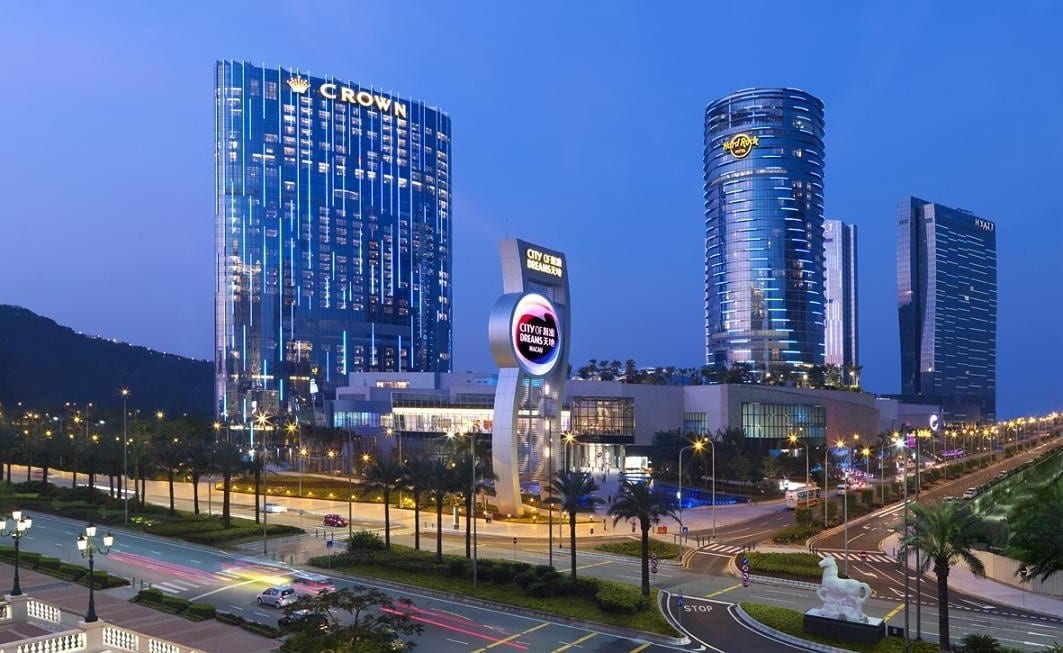
    Both the US$4.2 billion Wynn Cotai Palace and the new $2.7 billion Parisian Macao offer 18,580 and 28,000 sqm respectively of luxury retail space – together, more than 200 shops. However, established integrated resorts are also benefiting from the retail boom, with Swiss watchmaker Omega opening a corporate boutique in Studio City Macau and Paris designer Christian Dior launching its first boutiquein City of Dreams Macau.

    The all-new Wynn Cotai Palace is welcoming luxury brands such as Chanel, Chopard and Hermes, while watchmaker Franck Muller is launching the Vanguard Wynn Palace Boutique Exclusive, its third opening in the city. A new boutique inside Wynn Palace is also the third Macau outlet for luxury watch brand Panerai.

    Cotai Strip’s newest resort, The Parisian Macao, has set up the Shoppes at Parisian with more than 150 luxury and lifestyle retail boutiques. The shops are housed in different precincts named after some of the most stylish streets and arcades of Paris, including the Champs-Élysées. The fashion on offer includes a mix of both Parisian brands and couture new to Macau, including labels like Antonia, Garel Paris, Herzo, Isabelle Langlois, Sonia Rykiel and Temptation.

    To mark the opening of the Shoppes at Parisian, The Parisian Macao is hosting an exclusive designer runway show, Front Row, tomorrow evening. It will showcase crystal looks from Swarovski plus styles from selected retailers. Celebrity guests include China’s first fashion model Xiao Wen, the current face of Marc Jacobs.

    There will also be runway shows on September 15 and 16, plus other launch events.

  • Hong Kong losing status as China’s ‘great mall’

    Hong Kong losing status as China’s ‘great mall’

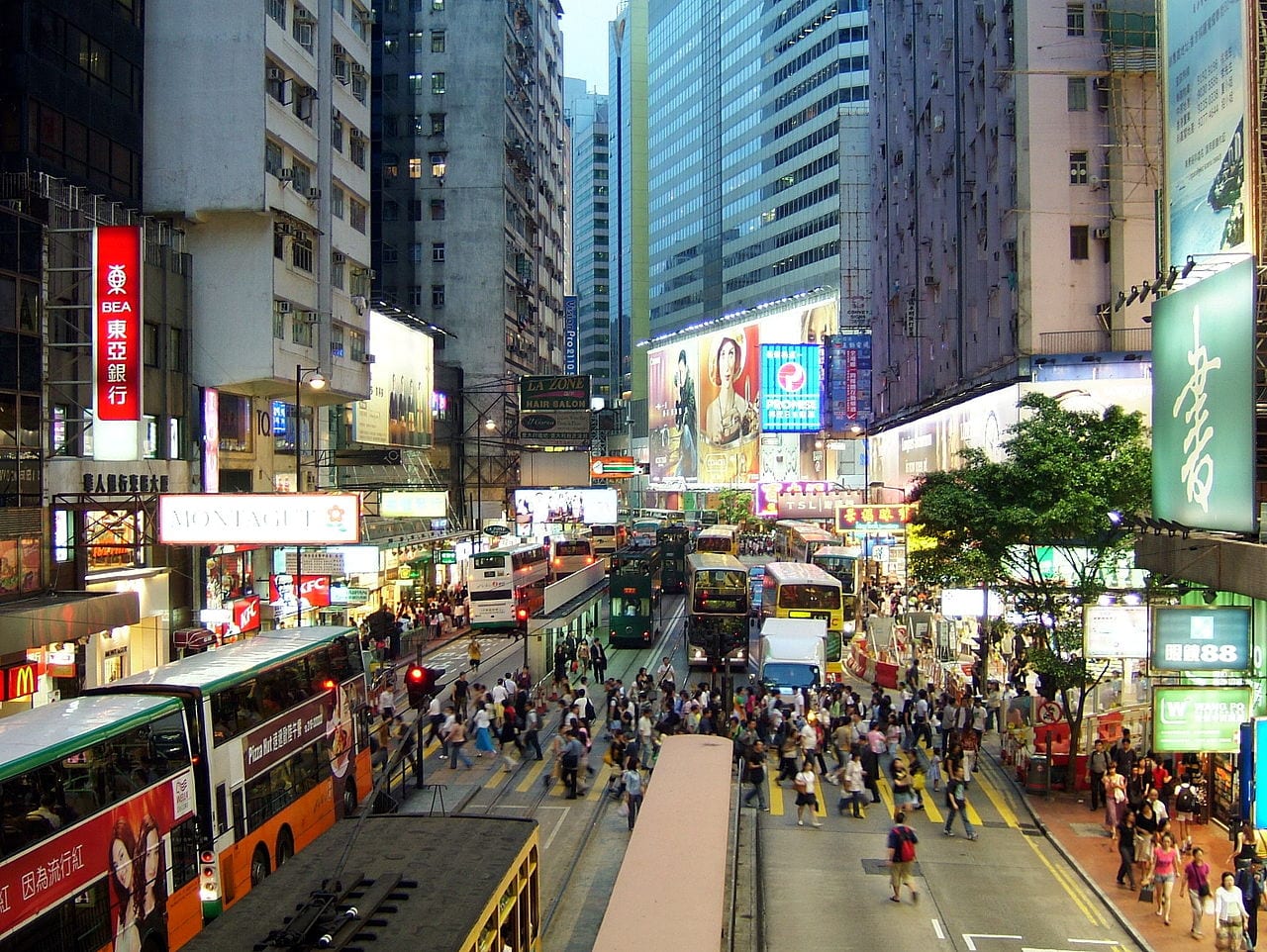
    Kingdom Jewellery is trying to stand out among the eerily quiet luxury stores in Hong Kong’s Causeway Bay, once the world’s most expensive shopping district in terms of rents. But while it has hung signs promoting a “crazy sale” and payment by installments in the window, buyers are still scarce.

    “Our customer flow has dropped 60 to 70 per cent” since the peak of Chinese luxury spending in 2013, said manager Jacky Sze. “I don’t have much hope for the rest of this year, or next.”

    Before demand was hit by President Xi Jinping’s corruption crackdown and the economic slowdown, Chinese tourists were happy to spend up to HK$100,000 (S$17,555) on a single purchase at Kingdom. Now, many customers are reluctant to spend more than HK$1,000 at a time, according to Mr Sze.

    The jewellery shop next door has closed down after decades of thriving business, as have many other luxury goods stores across Hong Kong, which is losing its status as the great mall of China.

    Retail sales in Hong Kong fell by 10 per cent in the first seven months of the year, compared with the same period in 2015, with purchases of jewellery and watches declining by 22 per cent.

    Ahead of Hong Kong’s annual watch fair last week, the Chinese territory was overtaken by the US as the world’s biggest market for Swiss watches after eight years in the top spot.

    Part of the problem for Hong Kong, which relies on the retail sector as an economic driver, is its increasingly testy relationship with mainland China. That has deterred many Chinese visitors, with numbers falling by 9 per cent year on year to 24 million in the year to July.

    But there is a bigger structural problem for the global luxury goods industry, which has grown to rely on demand from China’s growing ranks of nouveaux riches.

    Analysts at UBS estimate that Swatch, the Swiss watch group, made 47 per cent of its sales to Chinese customers last year, while for Richemont, the Swiss luxury goods company that owns Cartier, Jaeger-LeCoultre and Montblanc, it was 38 per cent.

    Mr Edward Olver, CEO of Britannia Elevation, which promotes British luxury brands abroad, said too many companies took a “combine harvester” approach to selling in China and are now paying the price for over-expansion.

    “There was a tremendous period of people making money very quickly in China and a lot of Italian and French brands thought there’s a lot of corn to be harvested,” he said.

    Ms Sarah Quinlan, the head of market insights for the analytics division of credit card company MasterCard, said consumer spending patterns are changing in China, with a greater focus on experiences rather than expensive products.

    “There’s a real debate as to whether what we call traditional luxury — handbags or watches — will come back to the same extent that we saw before, because there’s been a huge behavioural shift,” she said. “We still see the Chinese travelling extensively, but spending on goods has moderated and spending on hotels, restaurants and entertainment has gone up.”

    Hong Kong needs a “permanent restructuring” because it cannot wait for demand from high-spending Chinese tourists to come back, according to Mr Ramesh Tainwala, CEO of Samsonite, the luggage maker. His own company has been changing tack, promoting less-expensive products in the Chinese market as it tries to emphasise the practical advantages of its suitcases rather than their luxury appeal.

    Other companies are also being forced to trade down, selling simpler, cheaper products to customers who are growing more interested in specifications and value rather than mere status symbols.

    Mr Timothy Kao, vice-president of the Hong Kong Watch Manufacturers Association, explains that previously Chinese buyers were simply attracted to the most expensive products. “But now, practical watches with a realistic price sell better,” he said.

    Ms Liz Lee, assistant marketing manager at Doxa, a Swiss maker of diving watches, said that another response to the decline is to seek out new markets. “The greater China market is saturated right now,” she said. “We are looking to diversify our market to the Middle East; places like Iran have great potential too.”

  • Wal-Mart China expanding in Yunnan province

    Wal-Mart China expanding in Yunnan province

    Supermarket retailer Wal-Mart China says it will build four more outlets in the southern Chinese province of Yunnan, including one in Kunming, before the end of the year.

    It also expects to launch more than 20 stores in Yunnan, including 12 in Kunming, before the end of 2020.
    Wal-Mart China COO Jim Thompson says the company has always been confident about the Chinese market, which it entered 20 years ago.

    In Yunnan, it will not only invest more than CNY60 million (US$8.9 million) to upgrade its stores in Kunming, but will also open four outlets in the province before the end of this year.

    Wal-Mart has been enhancing its stores while adding new ones across China. So far, it has invested more than CNY350 million in its upgrade program, improvements including high-performance air-conditioning pumps, LED lighting and leaf-vegetable spray racks.

  • Paradigm Mall Petaling Jaya eyes 100pc occupancy

    Paradigm Mall Petaling Jaya eyes 100pc occupancy

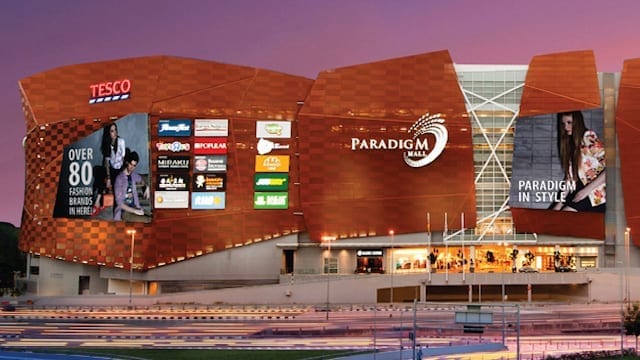
    WCT Holdings’ Paradigm Mall Petaling Jaya hopes to achieve 100 per cent occupancy soon following the opening of 22 outlets.

    It has welcomed new brands such as JDF, MC Vogue, Nathan’s Famous, Vareo and F&B offerings including Hong Kong Sheng Kee Dessert, MyeongDong Topokki, Pho Street, Pizza Hut Restaurant, Seaweed Club & Hot Wings and Taiwan Spicy Noodle House.

    New merchandise and service outlets include Dunlopillo, Majestic Leather Restore, Okashi World, Sunday’s, TMPoint and Wax Zone.

    “Our mall has an occupancy rate of 93 per cent, out of which 8 per cent are new tenants,” says WCT Malls Management GM Vincent Chong. “With the encouraging response, we hope to hit 100 per cent occupancy in the very near future.”

    paradigm-mall-outside
    Paradigm Mall from the outside

    More brands will be coming aboard in the fourth quarter, including DJI, FOS, Hokkaido Baked Cheese Tart, Mammamia Gelato Italiano and Sensuous Lingerie.

    Chong says Paradigm Mall PJ is part of WCT’s Paradigm Integrated Commercial Development which also comprises The Ascent Paradigm, The Azure serviced residences and the soon-to-open New World Petaling Jaya Hotel.

  • Grand opening for Olympia 66 in Dalian

    Grand opening for Olympia 66 in Dalian

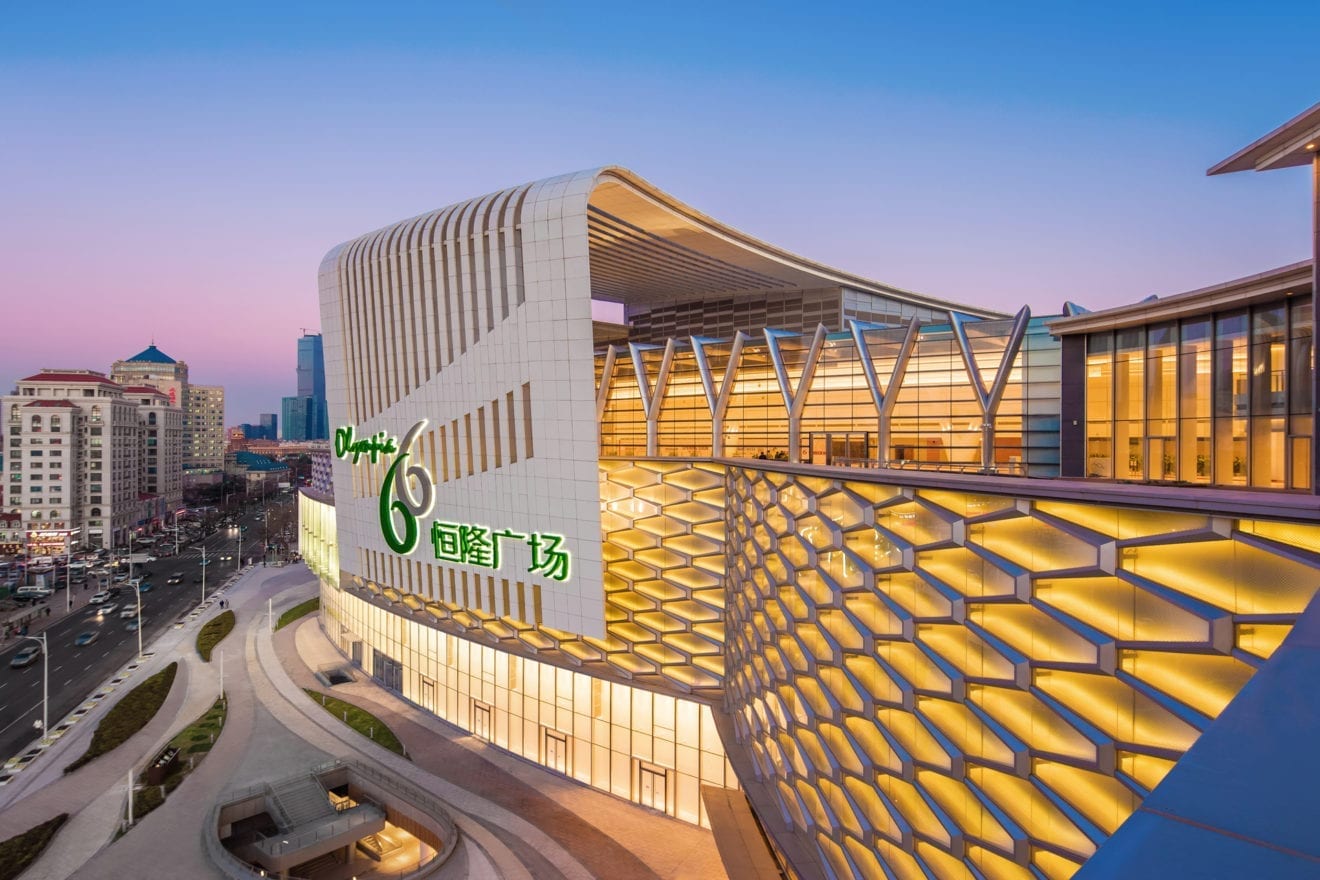
    Hang Lung Properties has staged a grand opening for Olympia 66 in Dalian, the Hong Kong-based developer’s eighth commercial complex in China.

    Located in the Xigang business and financial district of Dalian, the megamall joins Hang Lung’s other world-class projects in the northeast, namely Palace 66 and Forum 66 in Shenyang, and Riverside 66in Tianjin.

    Chairman Ronnie Chan and MD Philip Chen officiated at the event with senior management and guests.

    “Although China’s economy remains weak, Olympia 66 has performed on par with expectations since its soft opening in December,” says Chan.

    With more than 220,000 sqm of retail space, plus parking for 1200 cars, the mall’s design is based on the design concept of Tai Chi twin dancing carps. It has a 300m-long façade decorated with about 3000 glass ornaments shaped like fish scales, and 9900m of LED lights that can display images and text.

    More than 40 brands have made their debut at Olympia 66, including Apple, Cos, Coterie, Nannini and Under Armour. F&B outlets account for 30 per cent of the trade mix, and the mall has an ice-skating rink as well as Dalian’s first Palace cinema with 1600 seats in 10 theatres.

    Olympia 66 is the second Hang Lung mall in China to implement the company’s EST (experience, service and technology) program. This enables customers to combine online services with offline shopping, and a WeChat app offers mall news and promotions. There is also a location service to find particular stores, a digital queuing service for F&B outlets, a car-parking tracker and, to be introduced soon, mobile payment at the car park.

  • Chinese Think Tank Says 1/3rd of Mainland Malls to Close Within 5 Years

    Chinese Think Tank Says 1/3rd of Mainland Malls to Close Within 5 Years

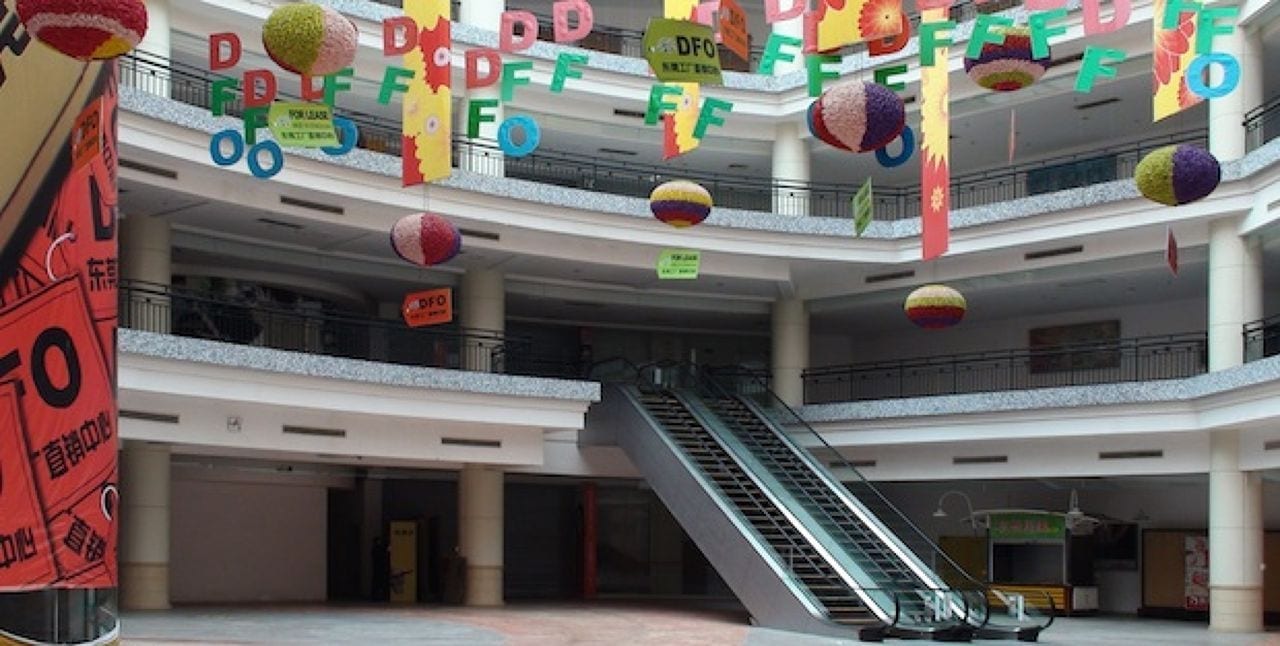
    More bad news for China’s struggling brick and mortar retailers as a recent report from the Chinese Academy of Sciences and Social Sciences Academic Press predicted as many as one-third of all shopping centers in China will close their doors during the next five years.

    With ecommerce heavyweights Alibaba and JD.com dominating the retail sales, some of China’s largest mall operators are already feeling the pinch. Joy City Property and Maoye International posted profit warnings earlier in the year as buyers opt to shop online.

    Change Predicted for All Mainland Retail Centres

    The report by the respected central government think tank predicted change across the board for Chinese shopping centres, foreseeing that, in addition to the malls expected to close, another third will be transformed into experiential shopping centres, while the remaining third will adopt an online to offline (O2O) model that integrates the Internet with physical shopping.

    While two decades ago China had an undersupply of malls, the country has quickly overcome the deficit, with the mainland now home to 4,000 shopping centers — three times the US total. That population of malls is expected to grow to 10,000 by 2025, according to the CASS report. Research from JLL revealed 40 million square metres in new mall space is expected to enter the market between 2015 and 2017.

    Department stores in the country fared still worse than shopping centres, with sales growth contracting 0.7 percent during 2015, according to data from the Fung Business Intelligence Centre.Malaysia-based department store Parkson, which operates 59 outlets in China, announced it was selling assets to offset heavy losses in the country.

    Chinese Shoppers Swap Malls for the Internet

    Jack Ma big mouth

    Jack Ma’s ecommerce empire has been taking a bite out of China’s traditional retail sector

    According to Reuters, Suning, one of China’s largest retail chains, needed 12 months to bring in the same amount of sales that Alibaba’s Tmall website generated in two months. And while the electronics retailer is able to keep the lights on, others have not been so lucky.

    A total of 138 department stores, 262 supermarkets and 9,464 clothing stores closed in China between 2012 and 2015 according to data from the Business Economics Institute under Beijing Technology and Business University. That goes hand-in-hand with findings from the McKinsey Global Institute that showed ecommerce accounted for 20 percent of all clothing purchased and 15 percent of all household goods purchased in 266 cites in China.

    McKinsey predicts ecommerce marketplaces will bring in anywhere from $420 billion to $650 billion in sales by 2020. That is in stark contrast to the slowing sales physical retailers are coping with.

    Data from Fung Business Intelligence Centre showed there was 4.3 percent sales growth last year among China’s top 100 retail chain operators, the lowest total since 2007.

    Physical Stores Not Going Down Without a Fight

    While the mainland’s earth-bound retail sector has been taking a beating, not everyone is ready to give up. China Properties Group, a Shanghai-based developer which owns and operates the Concord City mixed-use project and the World Trade Plaza in Chongqing, took out a full page ad in the New York Times international edition late last year pleading with consumers to boycott online shopping.

    Other retailers are opting for a more modern way to fight back against China’s growing ecommerce sector.

    Of China’s top 100 retail chain operators, 83 currently have their own online stores in 2015. Of this number, 20 also have a mobile shopping app for consumers to use.

    “Physical stores should abandon the old model. They can use online shopping and WeChat to facilitate transactions and provide more convenient service,“ Hong Tao, director of the Business Economics Institute, proclaimed.

  • Govt asked to freeze shopping mall licences

    Govt asked to freeze shopping mall licences

    The Malaysia Retail Chain Association (MRCA) has asked the government to temporarily freeze issuing licences for new shopping malls to curb the oversupply of retail space.

    Its deputy president, Valerie Choo, said the number of shopping malls was likely to grow between 2017 and 2018 and this would strain the retailers’ margins.

    “There will be over 50 per cent increase in shopping mall space (once the new shopping malls are ready).

    “Too many shopping malls can be tough on the retailers as well,” she told reporters at the “MRCA Engaging with the Media” session here today.

    Choo said the retail industry has been impacted by the economic slowdown and the weakening ringgit had led to an increase in overhead costs.

    “We depend on imported goods, which have increased tremendously. We have been trying our best not to raise prices, but how long can we do it,” said Choo.

    She said Indonesia had decided to freeze shopping mall development to curb oversupply, which has slowed the growth of its retail industry.

    Choo also urged the government to spur the tourism industry to help boost sales of retailers in shopping malls.

    “The tourists can take advantage of the weaker ringgit. It will help to increase spending in shopping malls,” said Choo.

    MRCA represents over 300 retailers in Malaysia covering over 20,000 outlets and who provide over 100,000 jobs.

  • TCC aims to dominate river view

    TCC aims to dominate river view

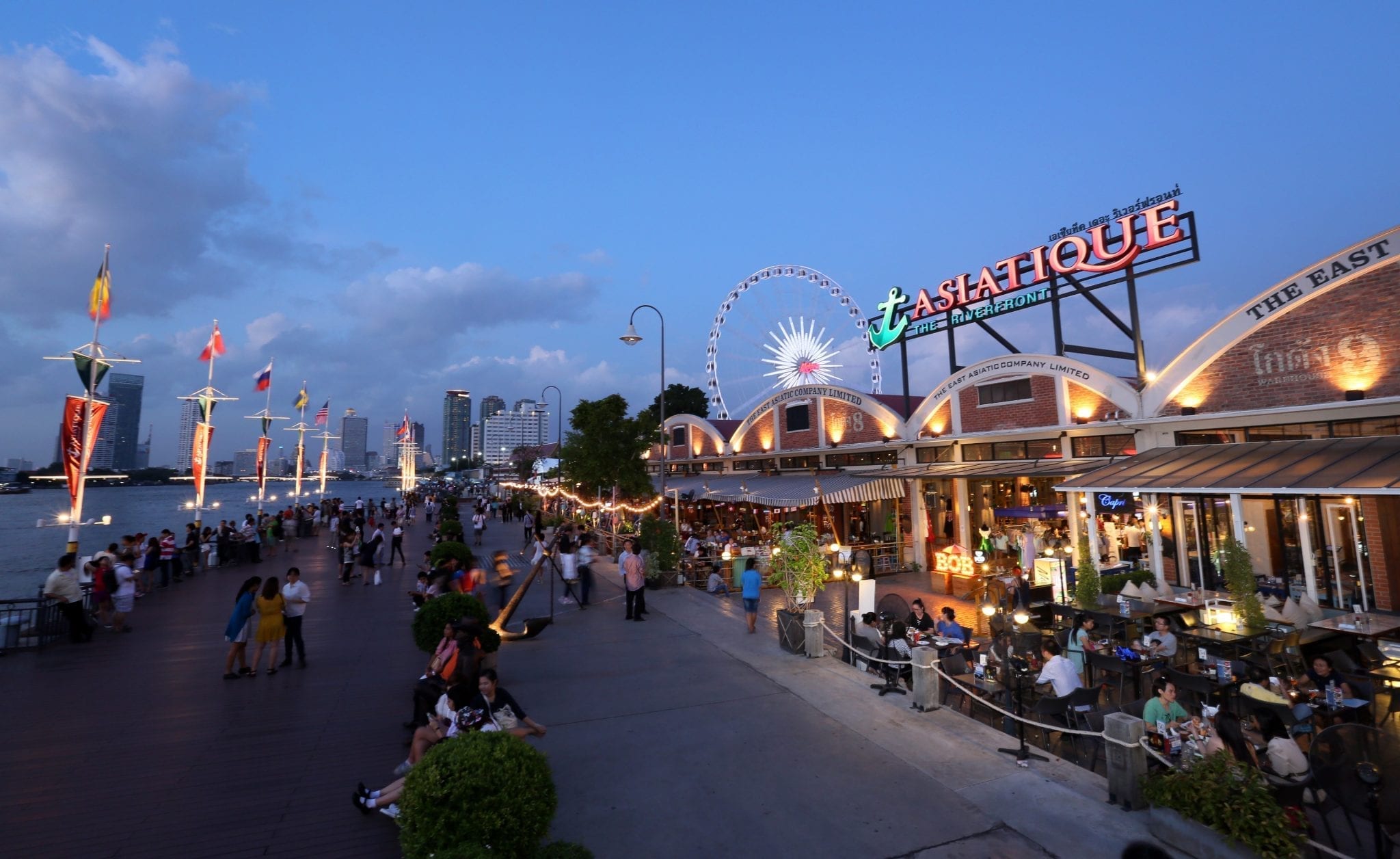
    Asiatique already dominates much of the night time Chao Phraya view with its night bazaar and Asiatique Sky Ferris wheel, built on the site of historic East Asiatic Company on riverside Charoen Krung (New) Road. (Creative Commons via Wikipedia)

    TCC Land Asset World Co, the retail arm of tycoon Charoen Sirivadhanabhakdi’s TCC Group, will invest 10 billion baht to build a five-star hotel near Asiatique the Riverfront, aiming to serve meeting and exhibition guests as well as a growing number of tourists.

    Surasit Manawatanakij, TCC Land’s asset manager, said the meetings, incentives, conferences and exhibitions (Mice) business has been growing significantly and Thailand is expected to be a regional hub for the segment because of its tourism infrastructure and staff.

    Located on the banks of Chao Phraya River, the hotel will have 800 rooms with a 3,000-square-metre conference hall, mainly to accommodate Mice customers. The luxury hotel is due to start construction in 2018 and finish in 2020.

    “This hotel is likely to be managed by Maryland-based hotel management chain Marriott International,” he said.

    TCC Hotel Group has Marriott managing its hotels in Bangkok, Phuket and Hua Hin.

    Mr Surasit said the strong growth of Mice has been backed by the country’s tourism attractiveness and Thai hospitality.

    Last year, Thailand welcomed 29.8 million foreign tourists and the arrival figure is expected to rise to more than 30 million this year.

    Apart from Mice business, TCC Land expects its Asiatique mall on Charoen Krung Road to welcome 24 million tourists in the next two years, up from 12 million last year.

    The project has become a tourist attraction with a giant Ferris wheel, restaurants and retail shops.

    The nearby area is booming with new retail development including Iconsiam located on the opposite side of the river. The cabinet recently approved the construction of a 2.68-kilometre Gold Line monorail in Thon Buri district not far from this area.

    TCC Land plans to earmark 300 million baht to build two new warehouses for the Urbano fashion zone and expand its pier at Asiatique to accommodate rising foreign and local tourists, especially foreign independent travellers (FITs), which have grown enormously in the past few years.

    “FITs have three times the spending power of those from tour groups,” Mr Surasit said.

    TCC Land also wants to alter the ratio of FITs and tour group customers to 60:40 next year from 50:50 last year.

    The company will partner with potential sponsors expected to be Thai Beverage, the Tourism Authority of Thailand and some tour agents to promote Asiatique during the festive season with a budget of almost 240 million baht, he said.

    “Thanks to very good feedback from tourists the past five years, Asiatique will keep developing itself to become a tourism landmark for Bangkok,” Mr Surasit said.

    TCC Land targets 500 million baht in revenue for Asiatique this year, mostly from retail rents and activities during the year-end festive season, before reaching 550 million in 2018.

    Last year, Asiatique’s revenue stood at 423 million baht.

    Asiatique has 1,500 shops and 45 restaurants and bars, including entertainment activities such as theatre, puppetry and a Ferris wheel overlooking the river.

    The company plans to bring more Asiatique projects to Pattaya and Chiang Mai in coming years to serve a sharp rise of tourists.

    Apart from Asiatique, TCC Land operates many retail projects in Bangkok including Gateway Ekamai, Centerpoint Siam Square, Pantip Plaza and Box Space.


  • Koreans offer hottest properties for sale

    Koreans offer hottest properties for sale

    Region’s property investors get a glimpse of Korea’s hottest properties being displayed at the Global Cityscape 2016, which will conclude today.

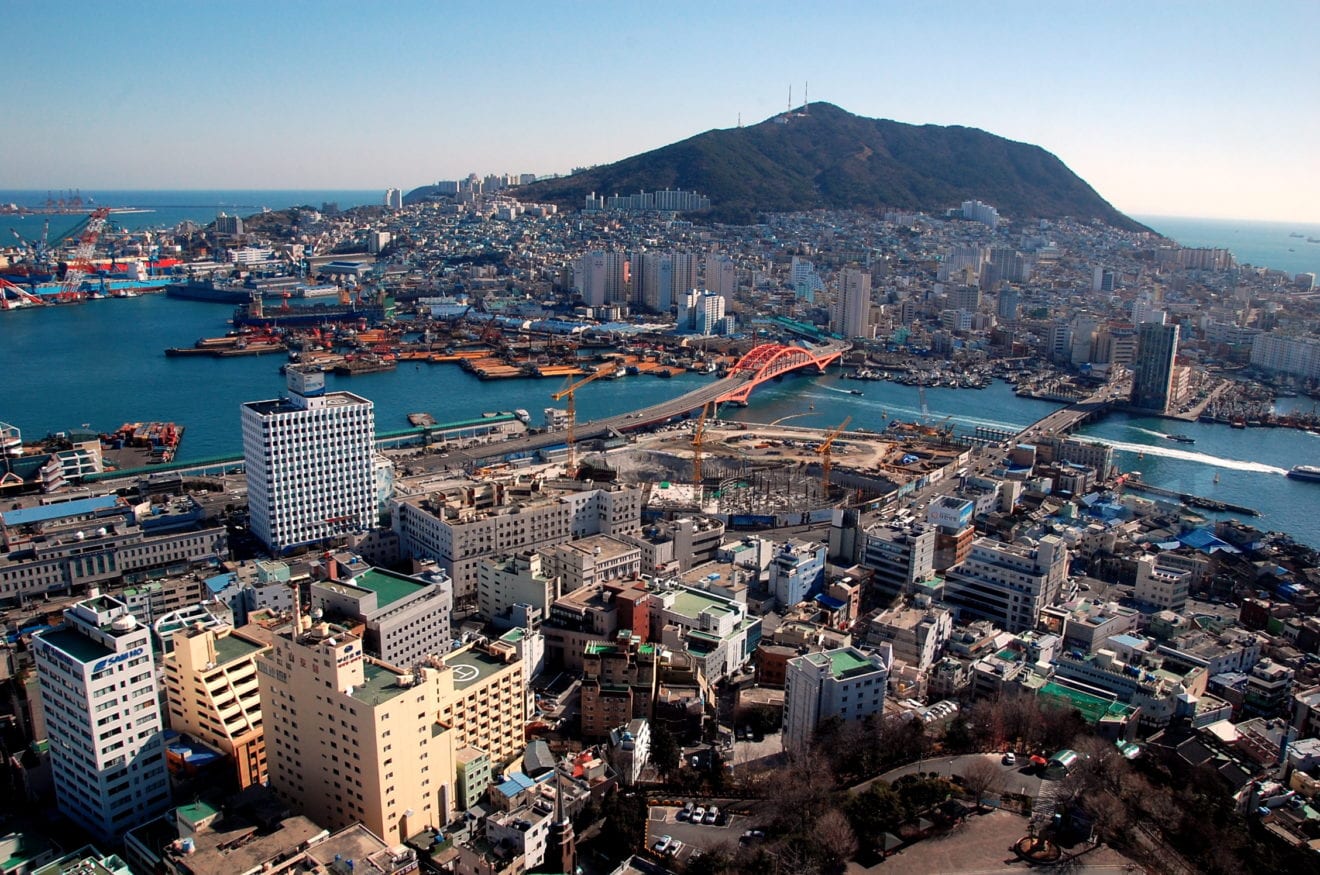
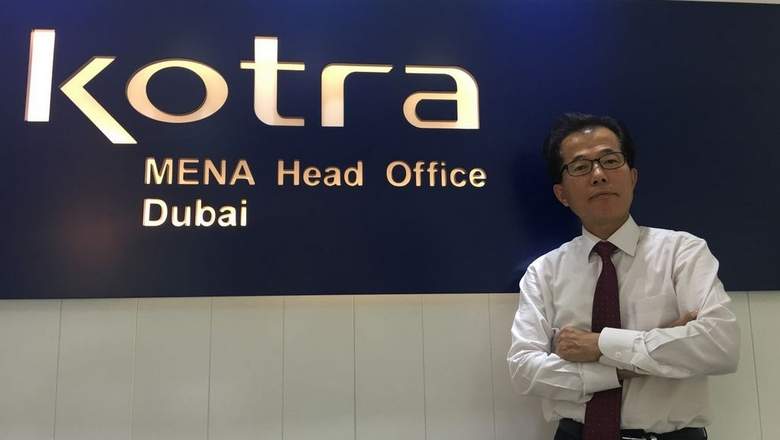
    “The two Korean free zones Incheon and Busan are participating in the three-day exhibition to showcase new property projects in Korea,” said Yong Suk Kwon, regional president Middle East and North Africa of Trade and Investment Promotion Office (Kotra).

    koreaeconomy

    Korea has long been focused on the UAE and GCC to attract investments into the second biggest Asian economy. In recent years, Korean real estate projects have done well in attracting foreign direct investment.

    “South Korea scored a total return rate of 7.1 per cent in 2015. It is a high and competitive return rate compared to other Asian countries. The returns are much higher than China (5.7 per cent) and Singapore (6.2 per cent), said Kwon.

    He said foreign investment companies including the State Oil Fund of Azerbaijan (SOFAZ), Abu Dhabi Investment Authority (ADIA), Kohlberg Kravis Roberts (KKR), ARA Asset Management Limited and Blackstone, have entered South Korea’s office building market.

    Referring to CBRE’s 2016 research, he said Korea secured 39 per cent of investors’ interest in most attractive countries to invest. “The hottest sectors were offices with 39 per cent, multifamily/leased residential units 26 per cent and shopping centres 17 per cent,” Kwon said, adding that investments also went into storages and infrastructure.

    Korea’s retail market is showing solid growth at 2.4 per cent in 2015 at $246 billion. Online shopping market showed the biggest growth with 14.3 per cent fuelled by the expansion of e-commerce and payments from mobile phone or mobile commerce. Complex shopping malls are showing robust growth displacing department stores and consolidating smaller forms of retail stores.

    “South Korea is seeing a record-breaking foreign direct investment influx,” Kwon said. In 2015, Korea received $20.3 billion in FDI, the largest amount till date. And in the first half of 2016, about $10.5 billion worth FDI was invested in Korea, also breaking the previous record so far.

    The government of South Korea designated so called “Korean Free Economic Zones” to improve the business and living environment for foreign-invested firms in Korea, Kwon said.


  • Henderson unveils prices for mini flats

    Henderson unveils prices for mini flats

    Discounted prices for Henderson Land’s “mini flats” at its One Prestige project in North Point are as low as HK$3.67 million or HK$22,130 per salable square foot, according to the first price list that the developer issued yesterday.

    The price list is for 50 flats of sizes between 163 to 170 ssf. The discounted prices range between HK$3.67 million and HK$4.54 million or in per ssf terms between HK$22,130 and HK$26,892.

    The lowest discounted price at Henderson Land’s project is 20 percent higher than a 163-sq-ft second-hand flat sold in July at The Harbourside, a housing project also in North Point but built 13 years ago.

    Henderson Land general manager Thomas Lam Tat-man said units at the One Prestige project will be on sale from next week at the soonest.

    Meanwhile, Sino Land this week launched an additional 30 flats in its Park Mediterranean project in Sai Kung. Associate sales director Victor Tin Sio-un said listed prices range from HK$5.64 million to HK$10.14 million.

    He said prices had gone up by about 2-3 percent from the launch of the first batch of flats, adding more flats will be offered for sale on Sunday.

    China Overseas (0688) launched the fourth price list for One Kai Tak, dubbed as “Hong Kong Property for Hong Kong People.” The latest price list covers 121 flats with sizes between 376 and 850 ssf. Listed prices for the units range between HK$7.22 million and HK$19.49 million. The company will offer for sale 221 flats on Sunday.

    park-mediterranean

    In related action, CBRE, a global real estate services and investment firm, said owners of commercial premises in Hong Kong have shown more willingness to rent out spaces to food and beverage operators amid changes in the local retail landscape.

    “The transformation of Hong Kong’s retail market is structural and is likely to continue in the foreseeable future,” said Joe Lin, executive director at CBRE Hong Kong’s retail advisory and transactions services unit.

    “This represents an ideal time for food and beverage operators to negotiate better leasing terms with retail landlords to expand their footprint,” Lin said.

  • Shinsegae to open all-in-one shopping complex

    Shinsegae to open all-in-one shopping complex

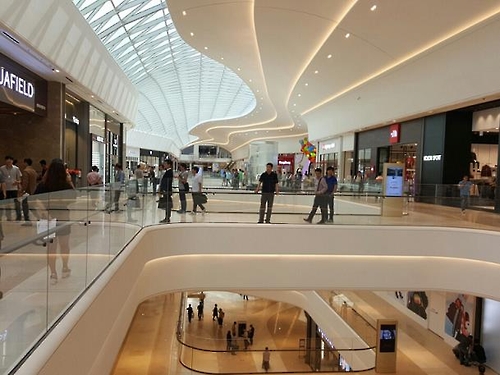
    Shinsegae Group is set to open South Korea’s largest shopping theme park in Hanam, southeast of Seoul, on Friday to offer a wide variety options for shopping, leisure and culinary experiences.

    “Starfield Hanam” is a three-story building with four underground floors, covering an area spanning 460,000 square meters located some 20 kilometers southeast of Seoul. It’s equivalent to 70 football fields, big enough for visitors to day trip to without leaving the shopping mall that houses 750 brand stores and a parking space for 6,200 vehicles.

    Shinsegae Group opens "Starfield Hanam," South Korea's largest shopping theme park on the southeastern outskirts of Seoul on Sept. 9, 2016. (Yonhap)

    Shinsegae Group opens “Starfield Hanam,” South Korea’s largest shopping theme park on the southeastern outskirts of Seoul on Sept. 9, 2016.

    The 1 trillion won (US$916.5 million) joint investment with Taubman, a U.S. shopping mall owner and operator, is the Korean retail giant’s ambitious project to revitalize its offline retail channel in the face of tougher competition with emerging online and mobile malls.

    “This is Korea’s largest suburban shopping mall that provides shopping, leisure and rejuvenating experiences in one place,” Lim Young-lock, vice president of Shinsegae Property, the group’s property development unit, said during a press meeting on Monday. “We hope that it will become the ultimate destination for a one-day shopping trip for customers in the Seoul metropolitan areas and potentially, across the nation.”

    Starfield Hanam targets to post 820 billion in sales in the first year, hoping to raise it to 5 trillion won within 4-5 years, Lim said.

    Women’s clothing stores as well as open cooking studios and ceramic workshops are located on the first floor, differentiating itself from traditional department stores that have cosmetic and luxury brands on the first floor.

    On the second floor, about 30 luxury brands, including Louis Vuitton, Gucci and Prada, are lined up along with contemporary fashion brands.

    Shinsegae placed its affiliate stores in the first basement floor, including E-Mart Traders, a warehouse-style supermarket similar to U.S. chain Costco, and Electro Mart, the group’s electronic retail shop.

    Apart from other malls that mostly focus on shopping experiences, Starfield offers various options for men to see, experience and buy.

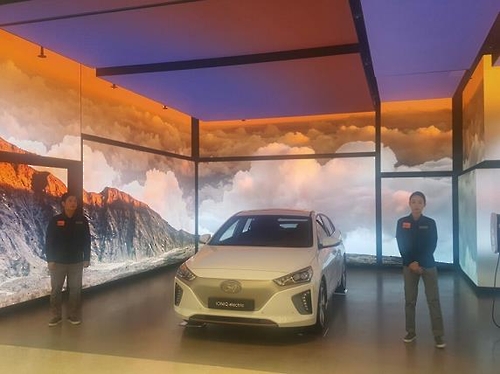
    Hyundai Motor Co., South Korea’s largest automaker, has a showroom on the first floor to showcase its Ioniq green car and luxury sedan Genesis brands.

    The Ioniq showroom features the Ioniq line, which includes the firm’s first pure electric vehicle built on a dedicated platform. In addition to the electric version, the Ioniq also comes in plug-in hybrid and traditional hybrid models.

    Hyundai Motor displays plug-in Ioniq model at its showroom at Starfield during a pre-opening event on Sept. 5, 2016. (Yonhap)


    Foreign automakers and motorcycles are also heating up the competition to attract male customers.

    BMW MINI launches Asia’s first “City Lounge” where customers can see and test drive the German automaker’s MINI models, and American motorcycle Harley Davidson’s shop displays its latest models and sell related products.

    In November, American electric car maker Tesla Motors is set to launch its first dealership to prepare for its entry into the Korean market.

    “Traditional shopping malls usually have a lack of options for male customers, but Starfield offers things to do and see for men like me, who like cars and electronic gadgets,” Kim Min-seok, a 24-year-old from Seoul, said during a pre-open event. “I’m looking forward to seeing Tesla’s electric cars when it opens a new shop.”

    The shopping theme park has a lot to offer to family visitors as well.

    Aquafield, an indoor and outdoor waterpark, and Sports Monster, an electronic sports field, are located on the third and fourth floor.

    Aquafield at Starfield Hanam on the third floor. (Yonhap)

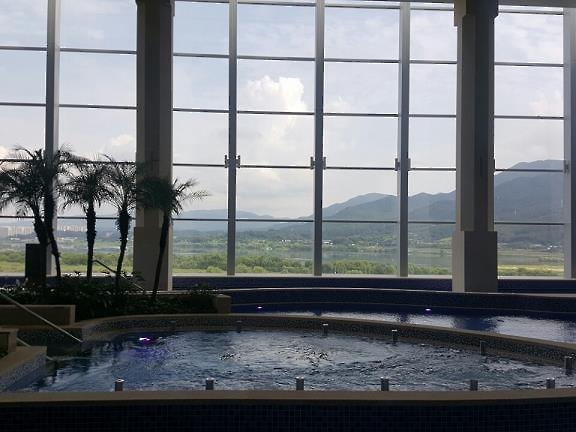
    Aquafield covers an area of 13,000 square meters, with an indoor swimming pool that has a panoramic view of the Han River and the surrounding mountain, a water park and an upscale spa.

    At Sports Monster, people can enjoy basketball, volleyball and badminton as well as rock climbing and bouncing on a trampoline.

    It also displays an “e-sports arena” that combines virtual reality (VR) gadgets and 4D technology for such sports as surfing, snowboarding, horse racing and rowing.

    “I felt almost like I was falling from a cliff while getting on a roller coaster in this virtual reality,” Shin Min-hee, a 20-year-old, said, taking off a pair of VR goggles.

    There are also various restaurants, cafes and desert places and a food market for fresh ingredients.

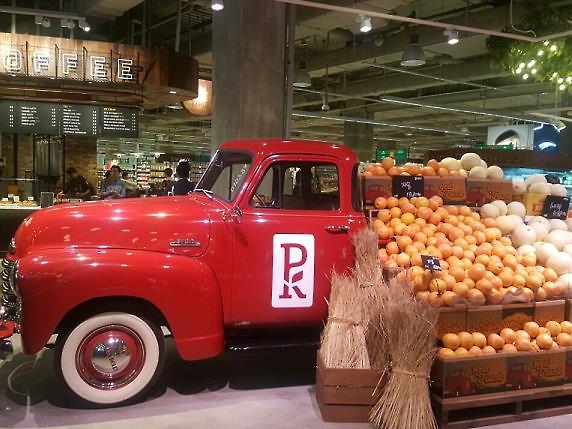
    PK Market, a food market that has “Live to Eat” slogan, sells international food ingredients, vegetables, fishery and meat.

    PK Market sells fresh vegetables, fishery and meat as well as international food ingredients. (Yonhap)

    “Eatopia” (a compound for eat and utopia), and “Gourmet Street” feature branches of famous local and international restaurants.

    “I was surprised to see many visitors even during the pre-opening events, which far exceeded my expectations,” said Lim, after touring the mall. “I hope Starfield can change customer expectations for an offline shopping mall through new experiences.”


  • Hong Kong Housing Prices to Fall a Further 10%, Nomura Says

    Hong Kong Housing Prices to Fall a Further 10%, Nomura Says

    Hong Kong home prices will fall a further 10 percent as a pipeline of new developments is met by stalling income growth and looming interest rate hikes, Nomura Holdings Inc. said in a report.

    “We are bearish on the physical property market, on a weakening economy, deteriorating affordability, declining retail sales and stagnant real household income growth,” analysts led by Jeffrey Gao wrote in a note Tuesday. Prices will decline over the medium term, the analysts said, without being more specific.

    Gao said in an interview earlier this month that a rebound in property prices during the second quarter was just a pause in a multi-year correction. Hong Kong home prices are 9.4 percent below their September peak, having fallen as much as 12.8 percent at the end of March, according to data from Centaline Property Agency Ltd.

    Mortgage rates in Hong Kong, which are linked to the Federal Reserve rate via the pegged currency, may rise after Fed Chair Janet Yellen said last week the case to raise interest U.S. rates is getting stronger.

    Nomura also sounded a bearish note on Hong Kong’s retail property market, predicting a 5 percent drop in rental returns in fiscal 2017, as tourist arrivals decline and sales fall. Office rents may also fall as much as 5 percent as leasing demand slows, the report said.

    Despite the negative outlook, Nomura remains “positive on HK property names overall,” citing their healthy debt levels, solid balance sheets and potential for share buybacks. The analysts’ top picks are Sun Hung Kai Properties Ltd. and Kerry Properties Ltd., which are both trading at a discount to their net asset value.

    Sun Hung Kai Properties shares have risen 17 percent this year and Kerry Properties have gained 6.9 percent, outperforming an 11 percent increase by the Hang Seng Property Index.