Category: Real Estate

Retail News Asia is committed to providing both local and global retailers with the latest Real Estate news throughout the Asian market. This on a daily base.

  • Parkson confident new China mall will do well

    Parkson confident new China mall will do well

    Parkson Retail Group Ltd (PRG), a unit of Parkson Holdings Bhd, is confident its new shopping mall in Qingdao, China, which opens later this month, will attract strong retail interest, even as rapid economic growth in China cools down.

    The Asian Development Bank has predicted the Chinese economy to grow 6.5% this year. Retail sales in the world’s second largest economy expanded 10.6% in the first two months of this year.

    PRG currently operates and manages 57 department stores in China, of which two are located in Qingdao, including the new Lion Mall, expected to open its doors later this month,

    The group has already forked out close to RM1bil for the acquisition of the mall from Shanghai Industrial Qingdao Development Co Ltd, via its indirect unit Qingdao Lion Plaza Retail Management Co Ltd.

    For the financial year ended June 30, 2015, the group’s China operations contributed about 70% to both the revenue and profits of Parkson Holdings.

    Parkson said its first store in Qingdao has been in operation since 1998 and has since established strong brand equity, providing the platform for the group to further increase its market share and strengthen its foothold in the fast-growing market with the new mall.

    “In order to maintain the group’s competitive edge and continue to further capitalise on the growth of the retail industry in Qingdao, there is a need to further expand its operations in the east side of Qingdao city where Lion Mall Qingdao is located,” a spokesperson from Parkson told StarBiz.

    “With the ideal size and modern infrastructure, Lion Mall will provide a fully integrated shopping experience to customers, with comprehensive offerings such as Parkson department store and Foodpark serving as one of the anchor tenants, coupled with cinema, fast fashion brands, international cosmetics and accessories brands, F&B, entertainment and other amenities,” the spokesperson said.

    The mall will be located at the Laoshan district of Qingdao, which is the new financial and commercial hub of the city, and will be part of a fully integrated development project, known as Beer City Project.

    It has a total gross floor area of about 230,000 square metres, of which about 130,000 square metres are for retail use and the balance for ancillary and 2,000 car park lots.

    The spokesperson said the mall had a planned exit gate to be directly linked to the subway line M2, which is currently under construction and will commence operations next year.

    The company has spent some 1.5 billion yuan (RM905.78mil) on the acquisition, including the costs related to payment of underground land premium, following a new law imposed by the Government there.

    In January 2015, the Qingdao Government implemented the management rules which set out, among other things, the procedures and requirements for registration of titles to properties situated underground.

    It also outlined the mandatory payment of land premium to the Government for those underground properties which are to be used for commercial purposes.

    Following this new ruling, Parkson had entered into a supplemental agreement on Feb 25, 2016 to provide for the additional land premium payment.

    On the group’s future plans, the spokesperson said an upcoming Lion Mall Phnom Penh in Cambodia was currently under construction with foundation works almost completed.

    “Another development is Parkson City Centre in Phnom Penh where Parkson has taken a lease of 36,500 square metres in the building and will open the first Parkson department store in Cambodia together with other sub-tenants in the fourth quarter of 2016. Notable names within Parkson City Centre are Golden Screen Cinema making its debut in Cambodia, and Giant Supermarket opening its second store in the country,” he said.

  • Bribery probe hammers shares of Indonesian property firm Agung Podomoro

    Bribery probe hammers shares of Indonesian property firm Agung Podomoro

    Shares in property developer PT Agung Podomoro Land Tbk plunged 10 percent on Monday, after Indonesia’s anti-graft agency launched an investigation that raised concerns that a multi-billion-dollar project could be delayed.

    Ariesman Widjaja, the firm’s chief executive officer, is suspected of bribing a member of the Jakarta provincial assembly to influence the regulation for a land reclamation, the Corruption Eradication Commission (KPK) said in a statement dated Friday.

    The anti-graft agency said it had caught the Jakarta official receiving 1.14 billion rupiah ($86,725) in cash from an Agung Podomoro employee at a shopping mall a day earlier.

    Agung Podomoro has plans for a project called Pluit City, which is estimated to be worth billion of dollars, on the northern coast of the Indonesian capital.

    The firm issued a statement late on Friday acknowledging that KPK had named Widjaja as a suspect, but gave no other details. The company’s directors and legal team are studying the case and are committed to obey the law, it added.

    Widjaja could not be reached for comment.

    Agung Podomoro Director Cesar M. Dela Cruz declined to comment.

    Agung Podomoro shares plunged as much as 10 percent after the market opened on Monday, hitting their lowest in more than four months. The broader Jakarta stock exchange was up 0.1 percent.

    With Agung Podomoro “on the hot seat”, the company’s mega project may be delayed indefinitely, broker Trimegah Securities said.

  • Here’s How CapitaLand Mall Trust Wants to Bring Shoppers to Its Malls

    Here’s How CapitaLand Mall Trust Wants to Bring Shoppers to Its Malls

    CapitaLand Mall Trust, an owner of retail malls in Singapore, is the largest listed real estate investment trust (REIT) in Singapore.

    But, mere size alone does not guarantee that shoppers will keep coming back to its portfolio of malls. To ensure a steady stream of shoppers, the REIT has to keep itself plugged into the latest consumer trends.

    One big retail trend is online shopping.

    In my view, shopping online has three major benefits. One, there may be a wider variety of products. Second, the cost of similar products may also be cheaper online. Finally, there is the convenience of having items delivered to one’s doorstep. All three benefits could lead to lower shopper traffic to retail malls in general and thus potentially pressure CapitaLand Mall Trust.

    Threat or opportunity

    For malls, online shopping could be seen as a threat. But for Wilson Tan, the chief executive of CapitaLand Mall Trust’s manager, it is also an opportunity. He shared his thoughts on ecommerce in a recent interview conducted by bourse operator Singapore Exchange Limited  (SGX: S68):

    “We need to be digitally more savvy. We could consider the Internet as a threat, but the issue really is how we harness and ride this horse.”

    With the above in mind, Tan shared two key initiatives that CapitaLand Mall Trust is working on. The first one is a loyalty program that comes from CapitaLand Mall Trust’s sponsor and manager, the real estate outfit CapitaLand Limited (SGX: C31). The report of the interview explains:

    “CapitaLand’s CAPITASTAR loyalty programme – which boasts over 2.6 million members across the five Asian countries where CapitaLand malls operate, and includes more than 800,000 members in Singapore – is one approach to better understand shopper behaviour.”

    The CAPITASTAR loyalty program allows members to accumulate points and thereafter, claim discount vouchers to use in CapitaLand’s family of malls (this includes CapitaLand Mall Trust’s malls). This could encourage shoppers to shop at the REIT’s malls. Tan also said that the loyalty program gives the REIT deeper insight into shopper preferences.

    The number of CAPITASTAR loyalty card holders in Singapore – over 800,000 – can be considered impressive, given that Singapore has a population of only around 5.5 million people.

    There’re more plans on the way. CapitaLand Mall Trust is also testing an online delivery platform at Raffles City Shopping Centre, as the interview report mentioned:

    “Its online order and delivery platform Food to Go, which involves participating food and beverage outlets at Raffles City Shopping Centre, is another initiative. The current beta programme runs until 30 June, and plans for enhancements are underway.”

    Tan feels that this digital effort could help the REIT’s tenants increase their sales. Helping tenants achieve higher revenue could be beneficial for the REIT as it could lead to better rental rates down the line.

    Foolish takeaway

    In my view, online shopping is here to stay and might take up a bigger share of the retail market over time. It is up to Singapore malls to decide whether the trend is a threat, or as Tan sees it, an opportunity.

  • The Queen of Siam: Chadatip Chutrakul Aims To Energize A District In Bangkok

    The Queen of Siam: Chadatip Chutrakul Aims To Energize A District In Bangkok

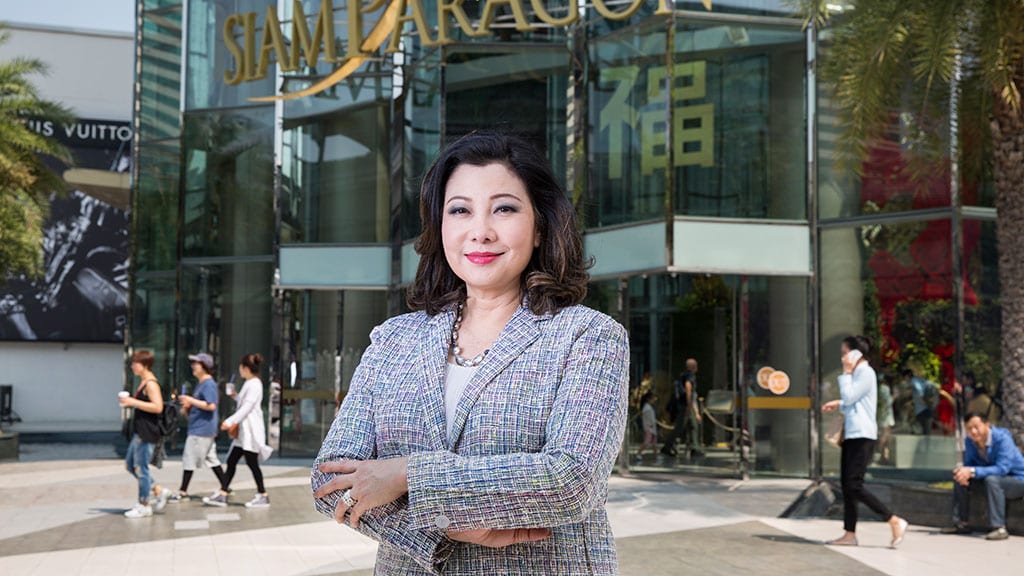
    A lot of people thought we dreamed the impossible dream,” chuckles Chadatip Chutrakul, recalling initial reaction to her newest–and biggest–project, Icon Siam. The 55-year-old CEO of Siam Piwat is best known as first lady of Siam Paragon, her signature mall. Much more than a Bangkok institution, it’s a global sensation, one of the world’s most posted sites on Instagram, alongside Disneyland and the Eiffel Tower.

    Siam Piwat has evolved over nearly six decades from a hotel and shopping center built by Chadatip’s father into a complex of flashy malls in a central Bangkok district so dominated by this family-run firm it’s also called Siam. As rivals in Thailand’s hypercompetitive retail industry have expanded to the suburbs, around the country, even overseas, Siam Piwat has stayed put, remodeling regularly, staking its fame and bottom line on Paragon and its adjacent shopping plazas, Siam Discovery and Siam Center.

    So Icon is a quantum leap, from the comfort zone of Siam across the Chao Phraya River, to the no-man’s-land of Thonburi. Centuries ago Thonburi predated Bangkok as Thailand’s capital, but development long ago flowed across the river to the Bangkok side, then uptown to Sathorn and Sukhumvit. A run-down area of concrete shop houses, it hardly seems a likely launching pad for an upscale shopping mecca.

    Yet this Bangkok native has grand plans to revive the River of Kings, as Chao Phraya translates into English. At $1.57 billion, Chadatip says Icon is the largest privately funded project in Thai history. Besides 5.5 million square feet of retail space, the site will include two high-rise residential towers, a museum, a half-kilometer-long river walk, extensive art, theater and conference facilities, plus docks for river cruisers and private yachts.

    Bangkok plans several new bridges and subway lines across the river, and Icon will link to them by a new monorail, dubbed the Gold line. Siam Piwat will bankroll the $62 million cost, the first time a company has paid for a subway line and donated it to Bangkok.

    Siam Piwat lacks experience in residential development, so has teamed with high-end property specialist Magnolia Quality Development, securing the blue-chip backing of Charoen Pokphand Group. CP is Thailand’s biggest company, run by Dhanin Chearavanont, who tops the FORBES ASIA Thai rich list. His daughter Tipaporn Chearavanont runs Magnolia. CP and Magnolia each have a 25% stake in Icon, leaving Siam Piwat with 50%.

    While it was still only a dirt lot in 2014, Icon sold all 379 units in one residential tower at prices equal to those of top-tier downtown properties, according to local real estate firms. “The launch of the condos did very well and helped put the project on the map,” notes Simon Landy, Thailand chairman of Colliers International.

    Chadatip says of the scheme: “This is not only about Icon, it’s about the future of the river. It’s about how we elevate the importance of the river in every aspect, meaning the historical places, culture, the art, the festivals–all the values on the river have to be integrated.”

    Since Siam Piwat announced its plan for the 20-acre site in 2014, there have been signs of a Thonburi revival. Nearby, at the Jam Factory, hip architect Duangrit Bunnag has converted old warehouses into chic restaurants, shops and an art gallery. “The river is happening,” he says.

    Still, it’s a high-stakes gamble, even for a risky investor–something Siam Piwat has never been–in an especially precarious time for Thailand. The past decade has been marked by political strife and a series of coups. Pitched street battles in 2010 claimed an estimated 100 lives; Central World, a shopping center near Siam, was razed. When massive street protests crippled Bangkok in 2014, the military mounted another coup, promising a quick return to democracy. Two years on, the junta remains entrenched. The economy trails regional growth, and some say it’s teetering on recession.

    “We’ve gone through lots of cycles,” Chadatip concedes, but she notes that revenue has recovered since the protests and coup of 2014. Even after a devastating bombing in the capital last August, Siam Piwat’s sales for 2015 were up 10% from 2014 and grew 18% from 2013. And Chadatip says there are waiting lists of years for space in malls, a figure confirmed by retailers and local analysts.

    “This is exactly the kind of project Thailand needs now,” says Chadatip, noting that Siam Piwat isn’t a stranger to making tough investments in critical times. She recalls that soon after Siam Discovery was launched, the country plunged into the 1997 Asian Financial Crisis. That was under the watch of her father, Chalermchai Charuvastr, a former military general who served in the 1950s on the staff of Field Marshal Sarit Thanarat, who led a coup and became prime minister in 1957.

    Chalermchai was governor of the Tourism Authority of Thailand and pioneered aviation agreements that helped usher in the era of international travel in Southeast Asia. Tourism remains a major bright light for Thailand, with 29 million visitors last year, providing 10% of gross domestic product, according to official statistics.

    In 1959, when tourists numbered under 100,000 a year and airlines were pushing for proper lodging for crews and passengers, Chalermchai brokered a lease for 29 acres of royal parkland around the Sra Pathum Palace, then founded Bangkok Inter-Continental Hotels, which built Siam Intercontinental Hotel.

    According to Chadatip, the government put up 20% of Bangkok Inter-Continental Hotels, InterContinental Hotels Group added 30%, and the rest came from local banks and about 500 private shareholders. The company was renamed Siam Piwat in 2003 but remains unlisted and doesn’t release earnings numbers. However, one local businessman calls Siam Piwat “a mint. They are printing money there.” How much flows to the family, Chadatip won’t say. “My family has some shares,” she says, “but a very, very small amount.”

    Chadatip says her father had a vision “to build a city of the future, not just one project. What he saw was that he would build the hotel and the first shopping mall and office building, the first high-rise in Thailand–30 stories–in 1965,” all on the same site where Paragon and other Siam Piwat malls now stand. Where once “this was nothing. It was orchards,” Chadatip says, now there are fountains, a towering LED screen and 250,000 visitors a day.

    Chalermchai ran the company until his death in 2009. Although Chadatip is the youngest of three children, he groomed her to take over, and she has spent virtually her entire career as first lady of Siam. Two older brothers, Charnchai and Charlie Charuvastr, have held posts with the company but largely made their marks outside. Charnchai served as CEO of telecom company Samart and prior to that was general manager of IBM Thailand. He was also chairman of Siam Paragon until he died in 2011. Charlie is a corporate relations advisor for Siam Piwat, having previously worked for PTT Exploration & Production, one of Thailand’s biggest energy companies.

    Born in 1961, Chadatip attended prestigious Chulalongkorn University in Bangkok, graduating in 1982 with a B.A. in banking and finance. She spent the next few years with a pair of British insurance firms, Sedgwick Offshore Resources and Willis Faber & Dumas, before coming back to Thailand, managing energy insurance services for domestic firm Dhipaya Insurance.

    She has been with Siam Piwat since 1986, starting in accounting, then sales and promotion. An admitted workaholic, she is often the last to leave the office, arriving home long after dark to more e-mails and work calls. Her husband, Apichart Chutrakul, understands the pace; he is founder and CEO of luxury property developer Sansiri. They have one grown daughter.

    Colleagues describe Chadatip as a human dynamo with boundless energy. “She’s really a superwoman. She works 24/7,” says one of her closest co-workers, who, like others at Siam Piwat, requested anonymity. “We get e-mails from her at all hours,” she says, adding, “She’s intensely involved in everything. Siam is her life, and it’s her passion.”

    Thailand’s other major shopping firms are also run by women. “I think it’s the nature of the business,” Chadatip says, noting that women have a keen eye for detail (Siam Piwat jointly owns Siam Paragon 51%-49% with Thailand’s Mall Group, also run by a woman, Supaluck Umpujh (see profile, p. 58).

    Chadatip doesn’t believe gender plays a big role in Thailand. “In this country we have the freedom to go as high as we want,” she says. “We’ve had a lady prime minister, we’ve had many lady ministers.” In Thai culture women have equality, she says. “There is no ceiling.”
  • Philippines office rates among cheapest in Asia

    Philippines office rates among cheapest in Asia

    The average office rental rate in the Philippines is much cheaper than anywhere else in Asia-Pacific but this segment is very lucrative because brisk demand from business process outsourcing (BPO) is driving growth at a “healthy” pace, experts from global property consulting firm Jones Lang LaSalle said on Wednesday.

    Apart from office property, JLL sees bright investment prospects for upper mid-end residential assets or those worth between P15 and P18 million particularly in Bonifacio Global City and Makati, JLL country head David Leechiu said in a briefing.

    JLL is also upbeat on investment prospects in budget hotels—referring to two- and three-star accommodations—across the country outside of Makati, Bonifacio Global City and the Manila Bay area as it expects tourism to be the next big thing in terms of Philippine real estate growth.

    In the office segment, local rental rates have risen but they are still 33 percent below the peak levels seen in 2007 or before the US-induced global financial crisis erupted. As of the second quarter, average rental rates for Grade A office in Manila amounted to $209 a square meter a year compared to $1,758 in Hong Kong, $683 in Beijing, $504 in New Delhi and $441 in Sydney, based on estimates by JLL.

    “Manila is much cheaper than anywhere else,” said Alastair Hughes, Jones Lang LaSalle chief executive officer for Asia Pacific. But such low rental prices should also allow the Philippines to be more competitive in attracting more BPO firms, Hughes said.

    This year, Hughes said rental rates in Manila could rise an average 10 percent, which he described as “a good level of sustainable rental growth.”

    Average office rental rates in Makati are estimated at between P600 and P900 a square meter a month; in Bonifacio Global City, P600-P800/sq.m.; in Pasig City, P500-P700/sq.m., Quezon City, P400-P600/sq.m., and in Manila Bay area, P500-P550/sq.m.

    Leechiu said the most lucrative areas for office investments were still in Bonifacio Global City, Makati and Quezon City. JLL estimated that average annual demand for office property would reach at least 300,000 sq.m. in gross leasable area a year up to 2015. Based on the number of buildings under construction, it projected an office supply deficit of about 200,000 sq.m. by 2015 if demand would go up to 360,000 sq.m.

    But outside Metro Manila, he said the opportunities were limited because demand for office space was mostly driven by BPOs that mostly thrive in Metro Manila, which produces the biggest bulk of skilled manpower required by this industry.

    Within the metropolis, he said there was very little office space left for rent. “BPOs have wiped them out,” he said. For the first time in three years, he noted there were BPO companies now signing lease contracts ahead of building completion.

    “The Philippines has become a part of the anti-crisis solutions of many companies. They’re thinking of cost and to address that cost, [offshoring to the Philippines] is part of the answer,” Leechiu said.

    On residential property, Leechiu said upper mid-end residential assets in Bonifacio Global City and Makati would be most promising. On the other hand, he said it was “very dangerous” now to invest in residential mid-market property, noting that there were 15 big property developers out there competing for this market.

  • Hui Xian Reit sees steady growth despite slowing Chinese economy

    Hui Xian Reit sees steady growth despite slowing Chinese economy

    Hui Xian Real Estate Investment Trust, the first yuan-denominated reit listed in Hong Kong, said on Tuesday that its amount available for distribution rose 8.4 per cent last year despite the weak growth in the mainland Chinese economy and the ongoing global slowdown.

    The reit said the amount available for distribution grew to 1.48 billion yuan from 1.36 billion yuan a year ago, with 98 per cent to be distributed to unit holders. Distribution per unit for the second half of the year was about 13.4 fen.

    Together with the interim amount announced earlier, the total distribution per unit for the year rose 5.2 per cent year on year to 27 fen. Its distribution yield was 8.11 per cent, based on the closing unit price of 3.33 yuan on December 31, 2015.

    “Last year was challenging, marked by a worldwide economic slowdown and increased international volatility,” said Kam Hing-lam, chairman of Hui Xian Asset Management, the manager of the reit, which is partly owned by Cheung Kong Property Holdings.

    Nonetheless, Hui Xian Reit managed to maintain the growth momentum, Kam said, adding that the increase was mainly driven by the organic growth of its existing leasing and hotel portfolio. The reit also gained from the additional income contributed by the newly acquired Chongqing Metropolitan Oriental Plaza from March 2 last year.

    Total revenue for the period was 3.05 billion yuan, up 9.1 per cent on an annual basis, while net property income rose 9.9 per cent to 2.04 billion yuan.

    Hui Xian Reit said its core asset, the Oriental Plaza in Beijing, achieved stable growth as it had heavy visitor flows despite a gloomy retail environment in mainland China.

    The average monthly passing rent surged 9 per cent to 1,193 yuan.

    Last year was challenging, marked by a worldwide economic slowdown and increased international volatility
    KAM HING-LAM, CHAIRMAN, HUI XIAN ASSET MANAGEMENT

    The reit said its offices and serviced apartments showed stable income growth while the hotel sector showed signs of stabilising.

    The average occupancy rate at Grand Hyatt Beijing improved to 58.8 per cent from 55.9 per cent a year ago, with the average room rate per night down 7.9 per cent year on year to 1,461 yuan.

    Hui Xian said all its existing projects were in mainland China, generating revenue in yuan. The currency’s exchange rate volatility, however, did not have a significant impact on the performance of the reit’s projects.

    Though most of its borrowings are in Hong Kong dollars, its yuan exposure will become visible when the currency’s exchange gain or loss is realised upon repayment.

  • Dubai Mall named world’s best for shopping experience

    Dubai Mall named world’s best for shopping experience

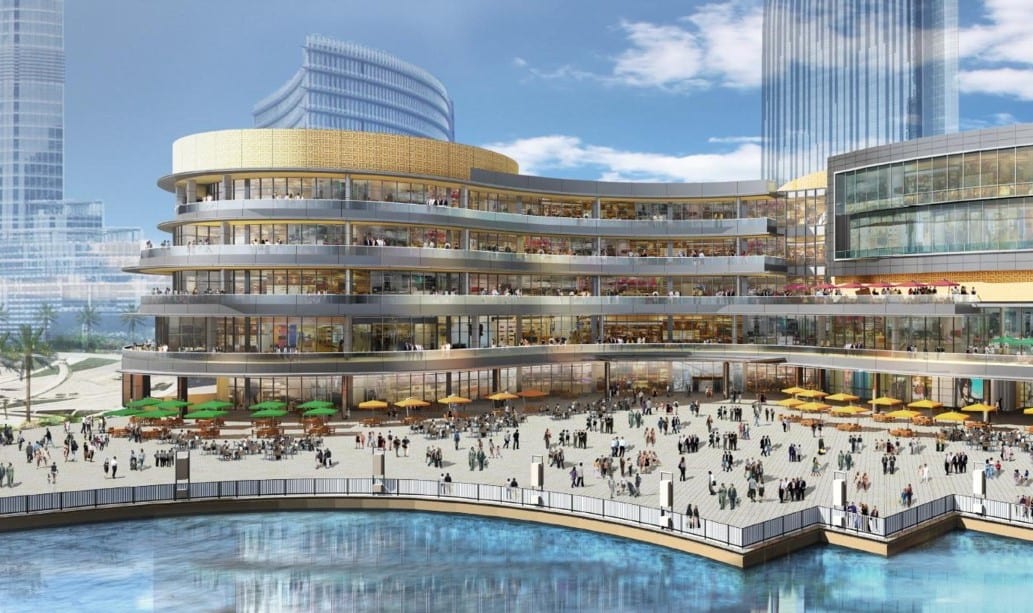
    Dubai Mall has ranked higher than London’s Regent Street, New York’s Fifth Avenue and the Champs-Elysees in Paris in terms of the overall quality of its retail facilities and amenities, according to the latest Global Retail Destination Index 2016 from Savills.

    The report measures the various retail attributes held by London’s West End and compares them to six other leading cities – Dubai, New York, Paris, Milan, Hong Kong and Singapore.

    The Dubai Mall locations were based on their brand positioning in comparison to the key retail destinations in the West End. As a result, each strip of the mall – Star/Grand Atrium strip, Fashion Catwalk and Fashion Avenue – was treated like a ‘street’.

    The report said: “Dubai is forecast to report the strongest growth in retail sales over the next five years of the seven global cities examined, potentially challenging London’s West End’s current global position.”

    The top ranking global retail city from the analysis was New York. London’s West End ranked second alongside Hong Kong, followed by Dubai.

    According to the Mastercard Global Destination Cities Index 2015, there were 14.3 million overnight visitors to Dubai last year, which commanded a total spend of $11.7 billion, an average of $819 spent per visitor. This was some way behind New York’s average spend of $1,416.

    Dubai Mall was named the least expensive in terms of indicative prime total occupational costs as of Q4 2015 – prime rent per sq ft $240; additional occupational costs per sq ft $60; total occupational costs per sq ft $300. This compared to the total occupational costs per sq ft in New York’s Fifth Avenue of $3,900.

    According to a survey response in the report, 88.4 percent of people said Dubai has the best choice and quality of shops in the world.

    Dubai outperformed London, Paris, Singapore and Milan for shopper experience, which included ease of shopping, connectivity, service levels and directional signage.

    David Godchaux, CEO of Core Savills, said: “Dubai is now perceived as a top global retail destination. But this is only the tip of the iceberg as we now start seeing developers trying to improve the shopping experience not only for tourists as in the past 15 years, but also for residents.

    “This trend of moving away from the ‘bigger is better’ approach, to more user and resident friendly retail developments, bringing a real city experience and European-style shopping to areas of Dubai similar to those found in London, Paris and Milan, is something that was much awaited by the market and that we see finally happening.”

  • Croesus Retail Trust buys Hiroshima mall for over $40m

    Croesus Retail Trust buys Hiroshima mall for over $40m

    It is expected to provide stable income.

    According to KGI Fraser, Croesus Retail Trust (CRT) is acquiring Fuji Grand Natalie, a suburban retail property in Hiroshima Prefecture.

    It added, “The NPI yield of the acquisition is 6.3 percent using the purchase consideration of JPY3.3b. The total acquisition cost is JPY3.63b (S$44.3m), funded by equity using part of the net proceeds from the private placement raised earlier.”

    In its report KGI Fraser cited steady income stream as the property “is master-leased to Fuji Co Ltd/Ehime (8278 JP) till end-March 2024 on a fixed monthly rent basis.”

    RHB meanwhile described Fuji Grand Natalie as an income-producing large scale suburban retail mall in Hatsukaichi City with 100 percent level of occupancy.

    The acquisition, according to RHB, will be accretive to CRT’s shareholders.

    – See more at: https://sbr.com.sg/retail/more-news/croesus-retail-trust-buys-hiroshima-mall-over-40m#sthash.6auQqA0v.dpuf

  • New Bukit Bintang mall for Kuala Lumpur

    New Bukit Bintang mall for Kuala Lumpur

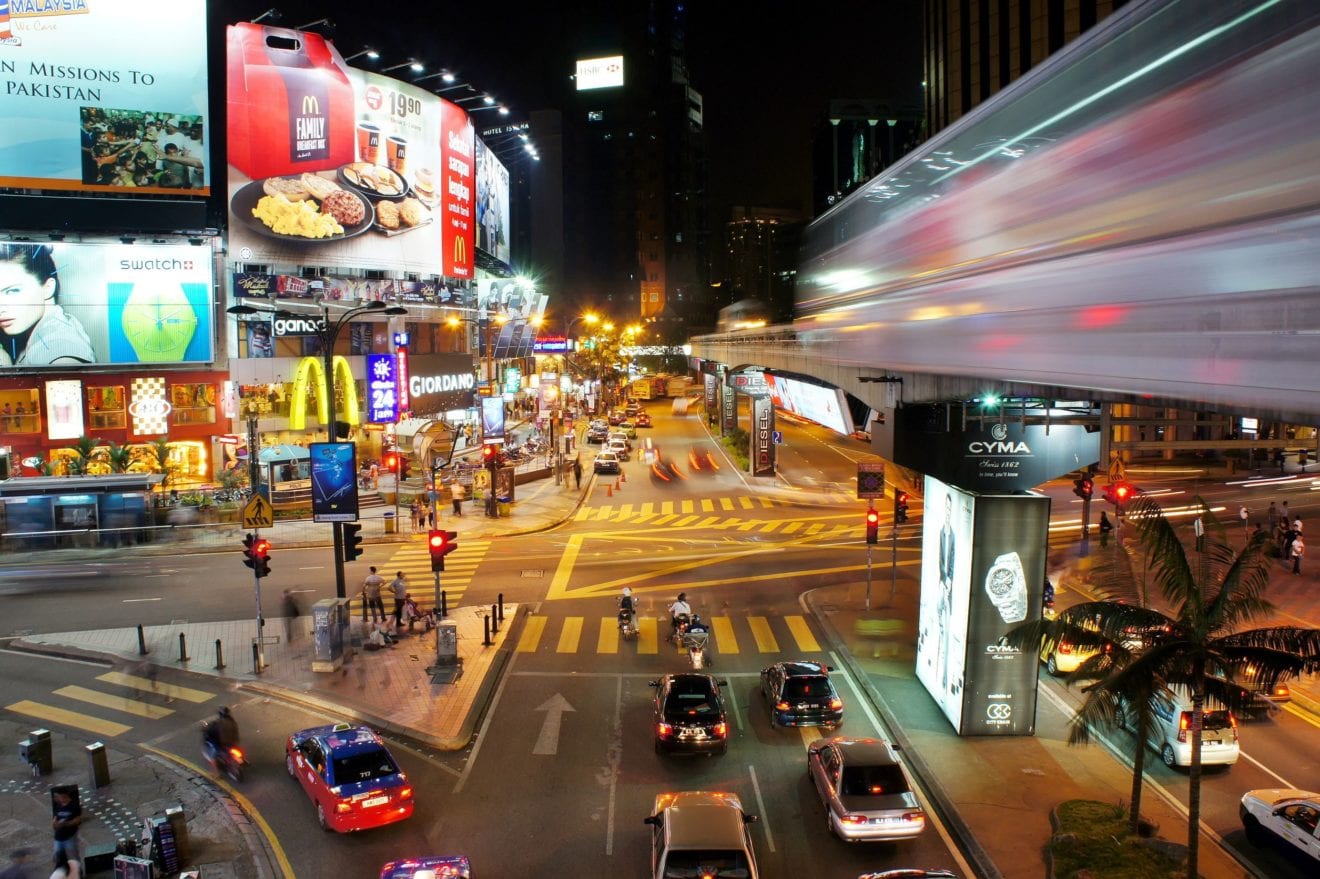
    Retail, entertainment and hospitality brands will feature in a planned City Centre development including a Bukit Bintang mall in Kuala Lumpur.

    “The mall will transform the retail landscape in Kuala Lumpur, catering to all shopping needs with the introduction of home-grown and new-to-market international brands,” says Eco World Development, which is part of the joint venture planning the $400 million project.

    Other signatories to the heads-of-terms agreement signed in Kuala Lumpur are BBCC Development,Mitsui Fudosan (Asia) and Zepp Hall Network. Eco World Development says the project will have an estimated gross development cost (GDC) of RM1.6 billion (US$400 million) and cover 19.4 acres (7.8ha) of mixed residential and commercial development, with UDA Holdings and the Employees Provident Fund (EPF) also as partners.

    Under the agreement, the retail mall will be owned and run through a joint-venture company, Mall JVCo.

    Phase one of the project will be a 45-storey block of strata offices and two blocks of serviced residences, comprising of 680 units, with construction to begin in the third quarter of this year.

    Mitsui Fudosan will jointly develop a 1.4 million sqft (126,000 sqm) lifestyle retail mall, while Zepp Hall is investing in a 2000-seat event hall, the first of its kind outside Japan. Zepp Hall is a subsidiary of Sony Music Entertainment (Japan), and its core business is running venues. Its concert hall will be in the Entertainment Block in BBCC, next to the mall.

    The project is expected to also get underway in the third quarter, and take eight to 10 years to develop. The Mall JVCo is proposed to be equally owned by Mitsui Fudosan Asia and the shareholders of BBCC.

    “This substantial investment by Mitsui Fudosan Asia represents the largest retail investment to date by the group outside Japan,” says Eco World.

    The mall will be developed under the Mitsui Shopping Park LaLaport brand, a regional mall concept conceived by Mitsui Fudosan more than 35 years ago. The concept has evolved from “a place where people gather” to “a place where people interact”.

    BBCC also signed a MoU with Ascott, a member of Singapore’s CapitaLand and the largest international serviced-residence owner-operator in the world, with more than 45,000 units in 290 properties, spanning 100 cities in 27 countries.

  • MRCB to build Giant’s RM56.8m processing and distribution centre

    MRCB to build Giant’s RM56.8m processing and distribution centre

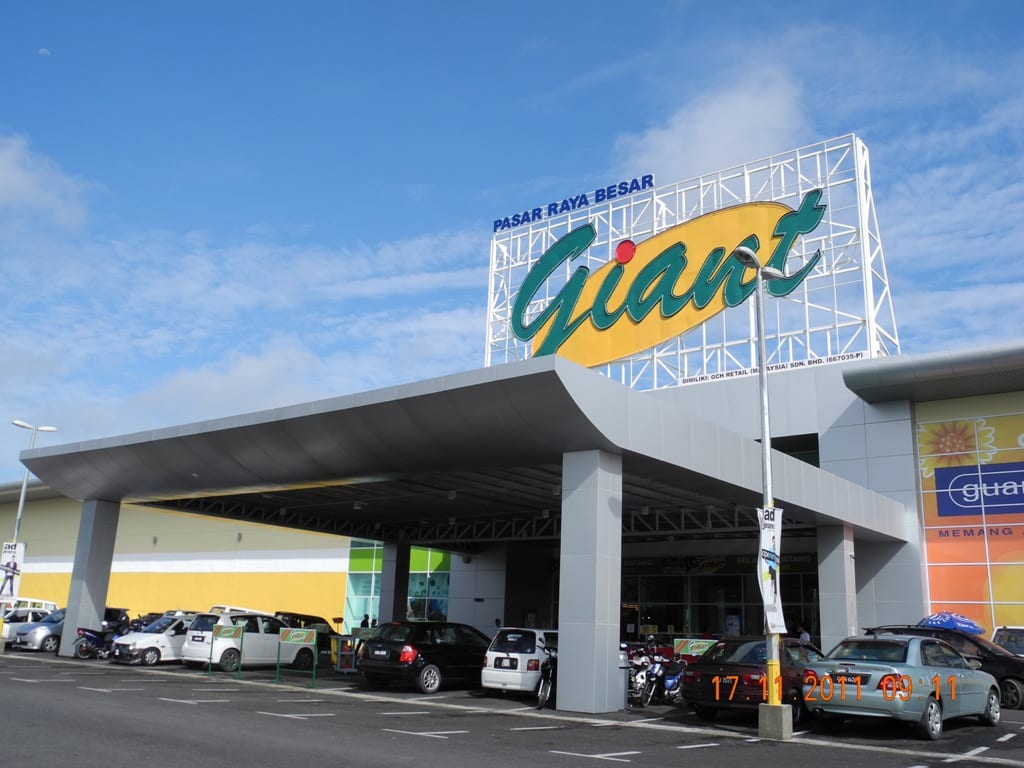
    Malaysian Resources Corp Bhd (MRCB) will build a RM56.8 million cold storage processing and distribution centre in Kajang, Selangor, for the Giant retail chain.

    MRCB’s wholly-owned subsidiary MRCB Builders Sdn Bhd today signed a contract with GCH Retail (M) Sdn Bhd, through Jupiter Lagoon Sdn Bhd, a wholly-owned subsidiary of Hong Kong-based Dairy Farm International Holdings Ltd and an associate of GCH Retail.

    GCH Retail operates the Giant chain of hypermarkets and supermarkets in Malaysia.

    The 140,000 sq ft processing and distribution centre will be built on a five-acre site in Kajang. The distribution centre will be built on a 12-month fast track basis and is expected to be completed in August next year.

    Speaking to reporters after the signing ceremony, GCH Retail regional director for Malaysia and Brunei Datuk Tim Ashdown said it is an important development for the group as it currently has a small fresh food facility measuring 40,000 sq ft in the country.

    “This will allow us to control the supply chain much more actively,” he said, adding that the new facility will further bring down the cost of logistics and deliver lower prices to its customers.

    Ashdown also said the group plans to open five new Giant stores this year.

    Over the years, MRCB has constructed 12 Giant outlets in Malaysia, valued at over RM500 million. A RM52 million outlet in Setapak here is set to be delivered this month.

    MRCB shares closed unchanged at RM1.23 in the morning session with 259,300 shares traded, for a market capitalisation of RM2.2 billion.

  • Prime Central Rents Rise by 5.3% in a Quarter

    Prime Central Rents Rise by 5.3% in a Quarter

    In a review of the Hong Kong office and retail property markets today, DTZ/Cushman & Wakefield, a global leader in commercial real estate services, pointed out that office rents in core business districts continued to rise in Q1 2016, with Prime Central and Greater Central leading the pack with a surge of 5.3% and 4.3% quarter-on-quarter to HK$128.88 and HK$115.64 per sq ft per month respectively.

    The continuous surge in Greater Central’s rentals was underpinned by the demand from Mainland Chinese financial companies, which accounted for 49% of the major new lease in terms of size in Greater Central. In fact, insurance and banking & finance companies remained the main drivers of new lease demand in Q1, accounting for 80% of the total size of all major new lease in the quarter.

    The overall absorption at approximately 262,000 sq ft in Q1 was largely due to the purchase of One Harbour Gate (West Tower) in Hung Hom by China Life. Apart from this, most of the districts had negative absorption. Mr Andy Yuen, DTZ/Cushman & Wakefield’s Director of Office Agency in Hong Kong, noted, “The released stock in the core districts is evidence that the flight to premises with greater space and cost efficiency continued, as many companies relocated for consolidation purpose. This led to better absorption levels in non-core areas such as Hong Kong South and Kowloon West.”

    In the face of high rents, this quarter some traditional Central tenants began to decentralize. For example, legal firm Ince & Co. has committed to move from Citibank Plaza in Central to One Island East in Quarry Bay, and Mizuho Financial Group from Chater House, Two Pacific Place and The Gateway to K11 office in Tsim Sha Tsui.

    Mr John Siu, DTZ/Cushman & Wakefield’s Managing Director, Hong Kong, commented, “Although rental growth is expected to slow in Q2 due to corporations’ concern about the prospects of the global and China markets, the high rentals in Hong Kong is contributing to a growing gap between the city and some other key regional business centers. For example, between the CBD Grade A1 office rentals in Singapore and Hong Kong, there is a gap that grew from 37.0% in Q1 2015 to 54.3% in Q1 2016, and the difference in prime rentals2 was even bigger, from 29.9% in Q1 2015 to 57.3% in Q1 2016. This substantial gap is likely to affect MNCs’ decision to office location and might hurt Hong Kong’s competitiveness in the long run.”

    For the retail market, falling visitor volume – total volume in January and February declined by 13.6% year-on-year, Mainland tourist volume by 18% – and falling sales for all sectors of goods in January and February, led by jewelry and watches (down 24.2%) and electrical goods (down 26.7%), continued to undermine the rental level. Rent on high street, as indicated by general index, fell by another 5-7% quarter-on-quarter in Q1, with rentals in Causeway Bay falling by 51% from the peak level in 2013.

    In addition, concerns of economic slowdown and social instability are prompting some retailers to seek earlier termination of their leases, in an attempt to save on rental expenses. Should this become a broader trend, the general high street rent could see another drop of 10-15% from the current level in this year.

    Mr Kevin Lam, DTZ/Cushman & Wakefield’s Head of Business Space, Hong Kong, said, “Despite this, retailers are taking the opportunity of the falling rental level to re-enter the core retail areas. There are fashion, accessories, shoes, cosmetic companies taking up street frontage shops vacated by companies of luxury goods, as those trades are sustained by a broader base of demand.”

    “Foreign brands are also benefitting from the more affordable rents to enter the Hong Kong market. Recently more Japanese and Korean brands from fashion, cosmetics, lifestyles to the food & beverage sector are aiming at the Hong Kong retail scene.”

    Another positive development of the retail market is that rents for F&B venues maintained a gradual upward trend, rising by 0.3-1.0% quarter-on-quarter in Q1. Mr Lam commented, “Demand for F&B spaces remains keen, although for new F&B operators, they are more interested in upstairs venues of moderate size in the key retail areas instead of ground shops, as a way of better cost control.”

    The successful merger of Cushman & Wakefield and DTZ closed September 1, 2015. The firm now operates under the iconic Cushman & Wakefield brand and has a new visual identity and logo that position the firm for the future and reflect its trusted global legacy and wider history. The new Cushman & Wakefield is led by Chairman & Chief Executive Officer Brett White and Global President Tod Lickerman. The company is majority owned by an investor group led by TPG, PAG, and OTPP.

  • Lotte El Cube – Korea’s new compact mall

    Lotte El Cube – Korea’s new compact mall

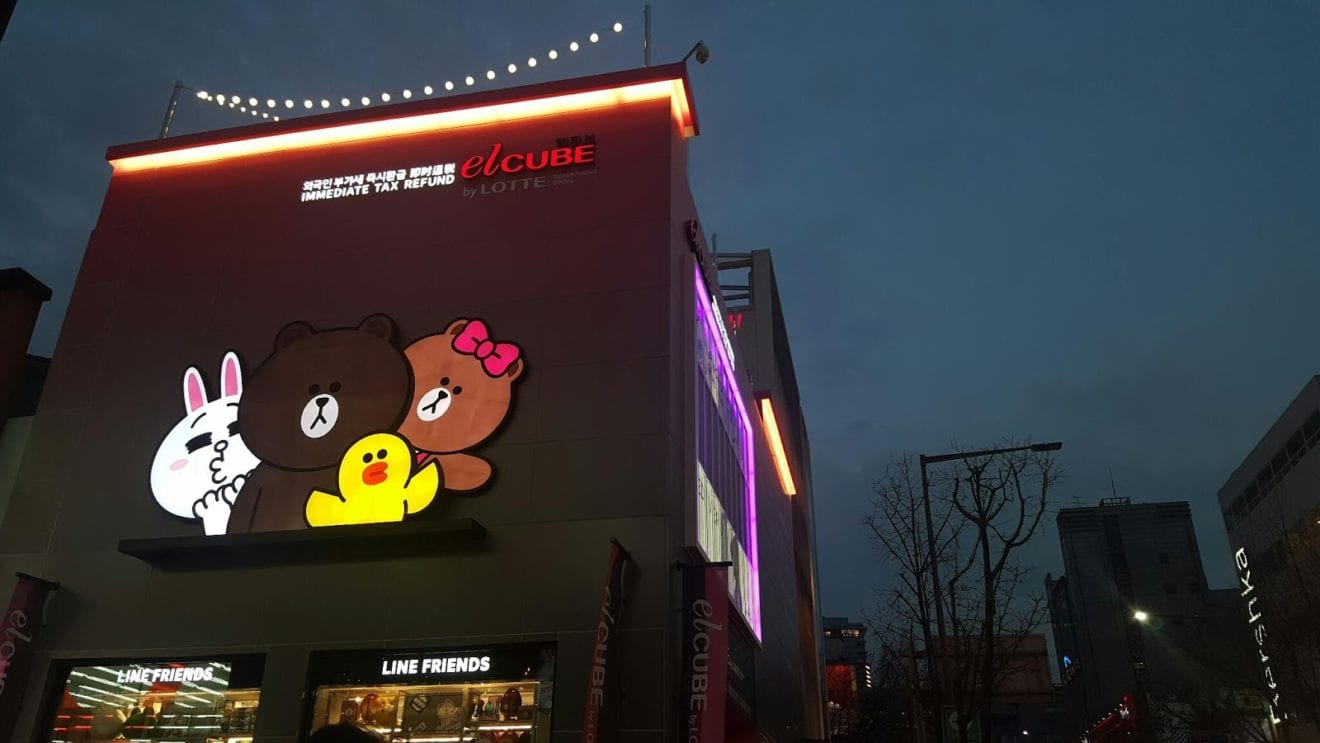
    In a bid to overturn the sluggish growth of traditional brick-and-mortar retail, Lotte Department Store is launching a new type of shopping mall in Seoul, the Lotte El Cube.

    In a trendy university neighborhood, the relatively small store focuses specifically on young, fashion-conscious shoppers – a departure from the retailer’s usual strategy of offering something for everyone at its department stores.

    Lotte El Cube 4

    Covering 630 sqm in a three-storey building, the Lotte El Cube houses 20 clothing brands, mostly casual in style. Featured labels include Pigment, PlayNoMore and Tomotom’s.

    “El Cube can adopt different concepts and focuses, such as beauty and lifestyle, depending on the location and needs of consumers,” says Lotte, which plans a second such outlet also in Seoul within a year.

    Lotte says it took its cue from Japan’s Isetan Department Store, which has several branches with different offerings. Isetan Mirror is dedicated to cosmetics and beauty products, while its Alta mall targets shoppers in their 20s.

    Lotte El Cube 5

    Known for its urban art and indie music culture, the neighbourhood where El Cube has set up is also attracting start-ups. The average number of daily users of nearby Hongik University Station grew from 72,000 in 2014 to 78,000 last year, and the neighborhood is also expanding in size.

    Lotte El Cube 1

    Annual combined sales at South Korea’s department stores – Hyundai and Shinsegae as well as Lotte – have had negative growth since 2014. Lotte is confident El Cube will attract new customers and become a fresh source of revenue amid unfavorable market conditions.

    “The key is to find new consumers as department stores are expected to face headwinds and low growth,” says Lotte merchandise strategy division head Woo Gil-jo.

    To match other stores in the area, El Cube will have extended shopping hours, from midday to 10pm.

  • Aeon Mall plans ASEAN expansion

    Aeon Mall plans ASEAN expansion

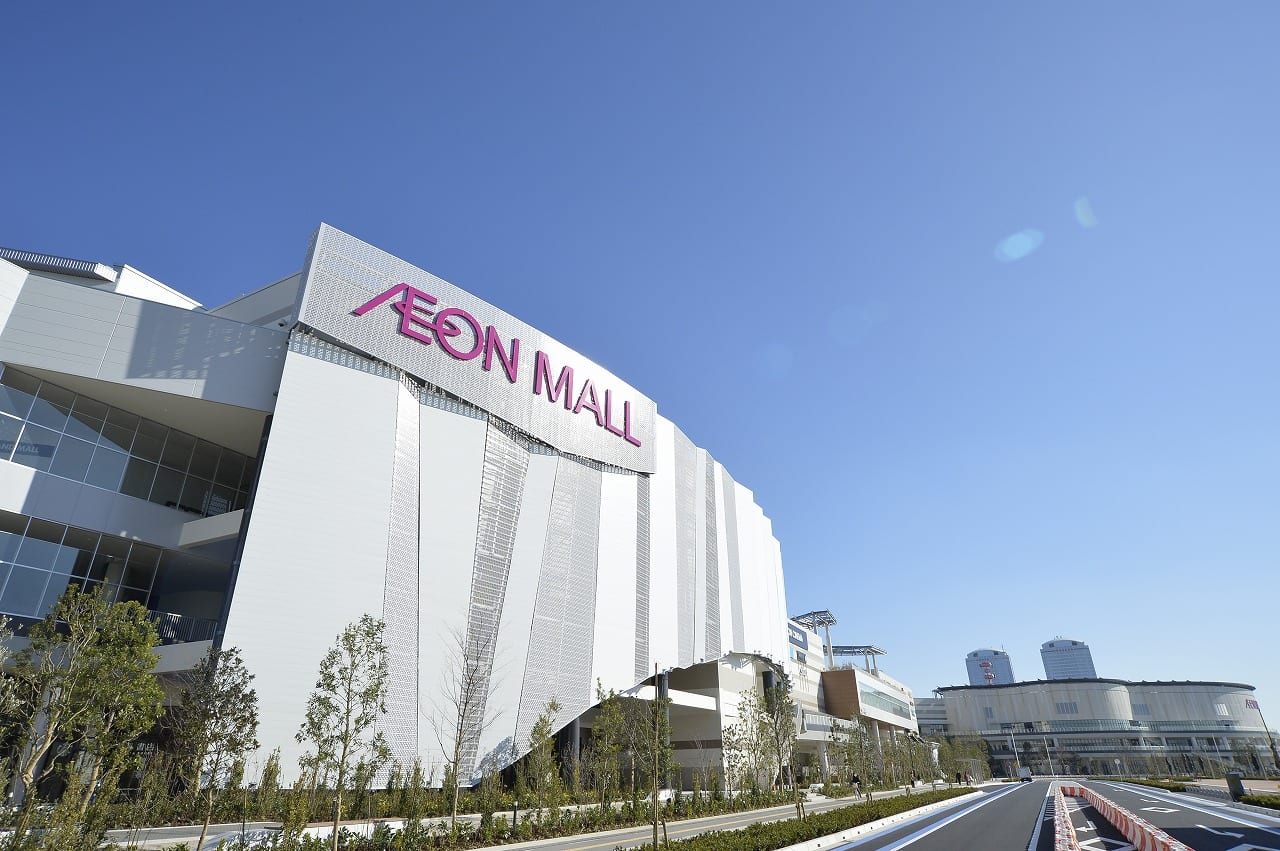
    Japan’s Aeon Mall plans more shopping centres in Indonesia and Vietnam, and is also looking at possibilities in Laos, Myanmar and Thailand.

    Under its 2020 strategy, it is planning five more outlets for Jakarta, after entering the 250-million-strong market with its first Aeon Mall in Indonesia last year, and will also add three more branches in Ho Chi Minh City and another in Hanoi.

    Aeon Mall’s ASEAN division director and executive GM Mitsugu Tamai says the company is also studying the feasibility of business development in Thailand, Laos, Myanmar and Thailand.

    He says the aim is to have its first Aeon Mall in Thailand by 2020, probably on the outskirts of Bangkok. The project would be undertaken either through its own investment or via a joint venture.

    As well as Aeon Mall BSD City in Indonesia, the group has 24 locations in Malaysia and another mall in Phnom Penh, with another on the books for the Cambodian capital. For this, the Japanese retailer will continue its collaboration with Bangkok-based Major Cineplex Group with a Major Cineplex at the mall.

    Major Cineplex chairman Vicha Poolvaraluk says his company is investing about Bt200 million (US$6.5 million) on a 10-screen theatre, including an IMAX laser theatre, as well as 20 bowling lanes.

    Other Thai companies, including Black Canyon Coffee, Fuji Restaurant, Jaspal and S&P, are also interested in opening branches at the mall, which will cover 100,000 sqm in Pong Peay district, and is scheduled to open in the first half of 2018.

    Aeon Mall is also looking at China as a key destination for overseas expansion. It already has 11 malls there, and by 2020 hopes to have more than 10 per cent of its revenue contributed by overseas business, up from 2 to 3 per cent now.

    “With aggressive outlet expansion, the company aims to see a 120 per cent year-on-year increase in terms of revenue from overseas markets,” says Tamai.

  • eCommerce won’t dent Asian retail real estate demand

    eCommerce won’t dent Asian retail real estate demand

    Growing online sales will not undermine demand for Asian retail real estate, according to the last CBRE study of major international brands.

    For the seventh edition of How Active Are Retailers Globally?, the real-estate company looked at more than 150 major international brands based in Americas, Asia Pacific and EMEA (Europe, the Middle East and Africa) countries.

    China is the top target market in the Asia Pacific (APAC) and fourth-ranked globally, with 27 per cent of retailers looking to expand there. Hong Kong follows in sixth position (24 per cent), Japan in seventh (22 per cent) and Singapore in ninth (21 per cent). The top three globally were Germany (35 per cent), France (33 per cent) and the UK (29 per cent).

    China and Hong Kong maintained their placings, while Japan, Singapore and Australia (11th) all rose higher in the ranking, up from 13th, 18th and 15th positions respectively.

    “Hong Kong will remain a desirable market for retailers, particularly as it continues to serve as a popular shopping destination for mainland Chinese tourists,” says CBRE Hong Kong executive director for retail services Joe Lin.

    “The main difference is a shift from luxury to mid-range brands. This is forcing luxury retailers to consolidate their footprint, leading to a drop in rental cost in prime locations and therefore opportunities for non-luxury retail brands.”

    Most APAC markets saw increased interest for this year, with the exception of China and South Korea. Malaysia (10 per cent), Indonesia (9 per cent), Thailand, Vietnam and The Philippines (all 8 per cent) received more than double the interest they saw last year, when all markets secured between 1 and 3 per cent.

    Asked about the risk factors for the coming year, brands indicated that real-estate cost escalation (56 per cent) and unclear economic prospects (42 per cent) continue to be at the forefront of their minds.

    “We’re seeing more of a challenging economic environment, and concerns such as high operating costs and a lack of quality space means retailers are somewhat more wary this year,” says CBRE head of Asia Pacific research Dr Henry Chin. “However, even as markets such as China and Hong Kong are experiencing a slowdown, we see increasing numbers of opportunistic retailers looking to enter markets like Hong Kong, supported by strong underlying consumer demand.

    “Japan and Australia remain attractive, while Southeast Asia showed strong growth because of opportunities for retailers around an expanding middle class and stronger economic growth.” CBRE senior director and head of retailer representation for Asia Joel Stephen says there are still opportunities for retailers to grow their business in Asia, underscored by the region having four of the 10 most popular destinations. “The goal now for all brick-and-mortar retailers is to build an engaging offer that encourages people to stay longer and spend more.”

    The survey shows that 83 per cent of brands suggest their physical store expansion plans for this year will not be affected by the growth of eCommerce. From a retailer perspective, only 22 per cent of the brands see stiff competition from online retailing as a threat to their business.

    At the same time, retailers are cautiously optimistic on physical expansion. Of those canvassed, 17 per cent have large-scale ambitions, many of them looking to open more than 40 stores this year (up from 9 per cent last year), while 67 per cent plan to open up to 20 stores.

    “A physical store presence in key locations is still critical to the strength of a brand’s image,” says Stephen. “Customers still feel a need to go into stores, to physically touch a product and enjoy the feel-good factor associated with a particular brand experience. The store is integral to the shopping journey and can be used in different ways, such as to click and collect, research of the product or brand, or to test the product. It isn’t solely about the transactional side.”

    A new trend is brands looking to expand into travel hubs, such as airports and train stations, giving them access to high footfall in busy locations. But for APAC retailers, shopping malls are still the preferred destination by far, at close to 90 per cent.

    While globally the key concern for brands in negotiations for premises is lease length, APAC retailers are most concerned with turnover rent clauses (GP). They are also particularly concerned about changing consumer behaviour (40 per cent), which is higher than the global average (31 per cent).

  • Kuala Lumpur MRT retail spaces up for grabs

    Kuala Lumpur MRT retail spaces up for grabs

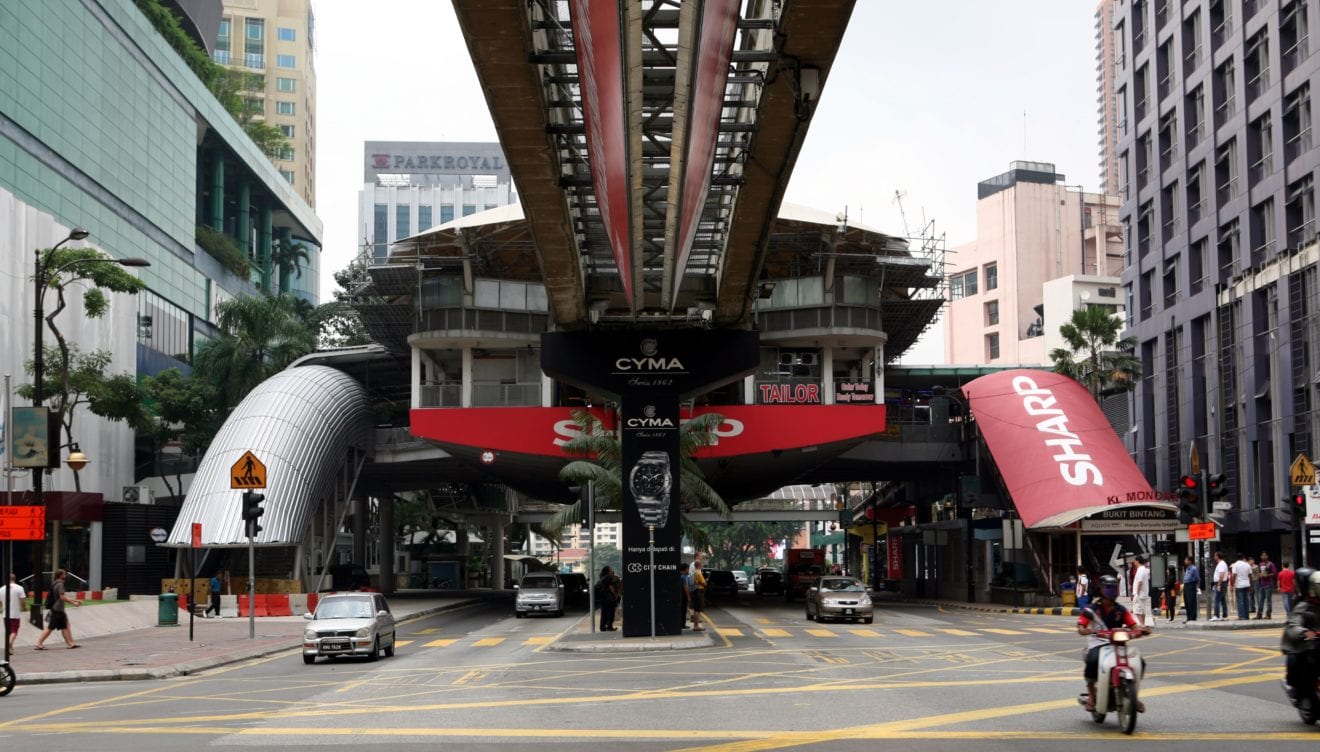
    Kuala Lumpur MRT retail spaces – 41 spots at 21 stations – have been put to tender.

    The Mass Rapid Transit Corp (MRT Corp) says proposals and bids for the spaces, on the upcoming MRT Sungai Buloh-Kajang line, must be submitted by April 18.

    Commercial land management director Datuk Haris Fadzilah Hassan says the company hopes to announce successful applicants by the end of June.

    About 30 per cent of the units have been set aside for indigenous entrepreneurs, and Haris says the company is seeking retailers for the balance who have “exciting business ideas and services, suitable for commuters with fast-paced mobility and urban lifestyle”.

    Small and local businesses are encouraged to apply, and more retail spaces will become available in the future.

    The Sungai Buloh-Kajang line will open near the end of this year.