Category: Telecom

Retail News Asia is committed to providing both local and global retailers with the latest Telecom & Telco news throughout the Asian market. This on a daily base.

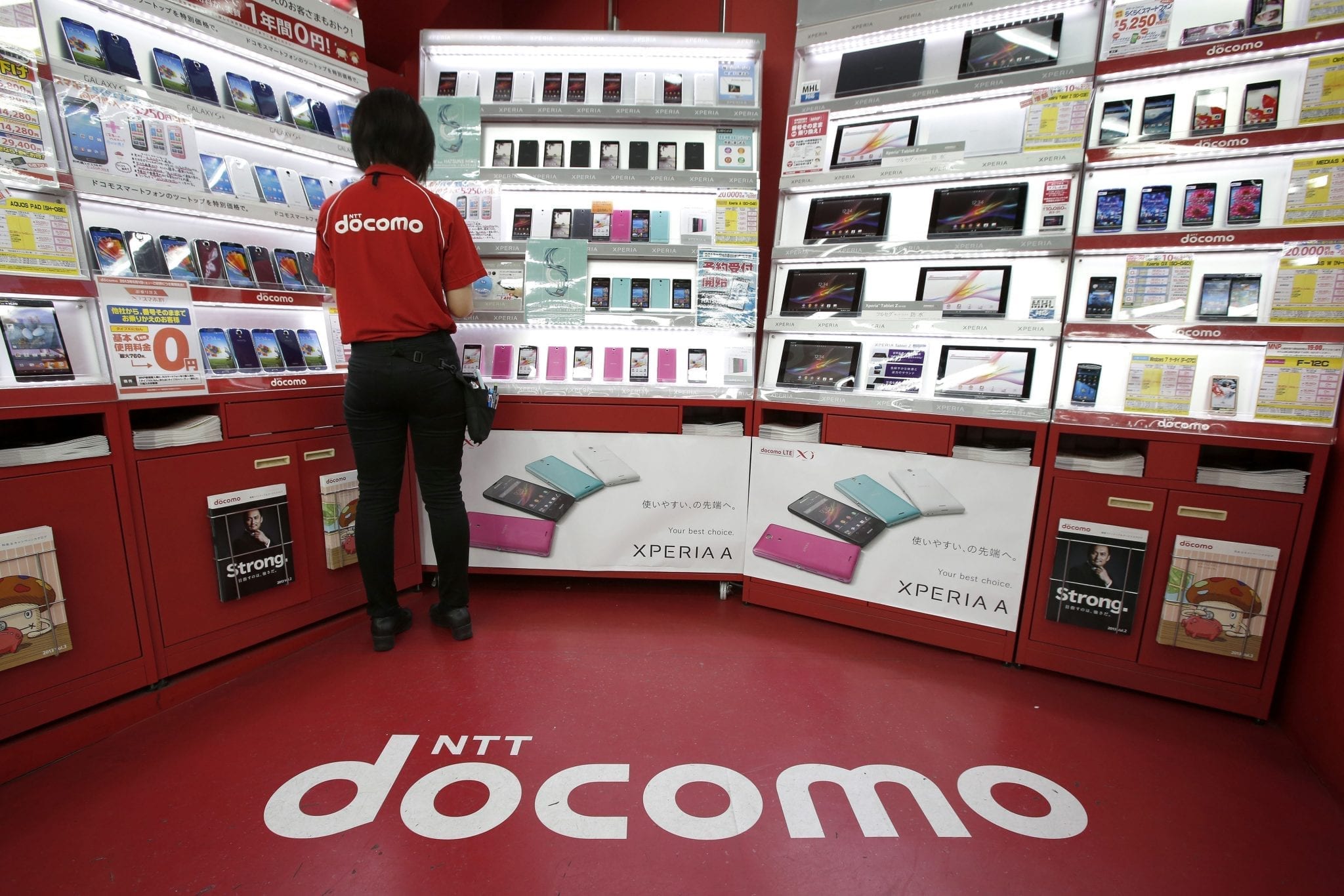
  • DoCoMo trials 4K video streaming for cars over 5G

    DoCoMo trials 4K video streaming for cars over 5G

    NTT DoCoMo joined forces with Toyota, Ericsson and Intel on a trial of 5G technologies for automobiles, achieving data speeds of up to 1Gbps in a vehicle traveling at 30km/h.

    The trial of 4K video communications was conducted along Tokyo’s Odaiba waterfront. It involved a moving vehicle mounted with an Intel GO 5G automotive platform terminal equipped with an on-board antenna head.

    The trial environment was constructed by DoCoMo using multiple Ericsson base stations and the Cloud RAN platform. Live 4K video was streamed at data speeds of up to 1Gbps downlink and 600Mbps uplink.

    Further trials will be conducted by the four companies to test the practicality of advanced services for 5G connected cars and other applications.

    The technology will also be demonstrated at the National Museum of Emerging Science and Innovation in Tokyo from November 9 to 11 as part of the DoCoMo R&D Open House 2017.

    NTT DoCoMo parent company NTT Group and Toyota have meanwhile agreed to collaborate on the research and development of an ICT platform for 5G connected cars.
  • SK Telecom Q3 revenue grows 4.7%

    SK Telecom Q3 revenue grows 4.7%

    SK Telecom has reported a 4.7% year-on-year increase in revenue for the third quarter to 4.44 trillion won ($3.99 billion), on the back of a solid performance across the operator’s core segments.

    Net profit surged 146.2% year-on-year to 793 billion won due to higher gains on the operator’s equity method investment in chipmaker subsidiary SK Hynix.

    Mobile service revenue grew 1.7% over the same period to 2.74 trillion won, driven by solid subscriber and data usage growth.

    SK Telecom’s total customer base increased by 705,000 to 30.16 million, with LTE data users accounting for 74.8% of these subscribers.

    Broadband subsidiary SK Broadband meanwhile reported a 1.2% increase in revenue to 760.2 billion won due to growth in IPTV subscription and paid content sales. High speed internet customers increased 1.1% sequentially to 5.4 million.

    Internet platform unit SK Planet posted a 5.8% improvement in revenue to 285.1 billion won, due primarily to the growth of its online commerce business, but still reported a loss of 55.2 billion won.

    Overall capex increased 5.3% year-on-year and 68.3% quarter-on-quarter to 556.7 billion won, while marketing expenses were up 10.8% year-on-year to 797.6 billion won.

    Looking ahead, SK Telecom said it continues to explore opportunities in new businesses such as AI, IoT and autonomous driving to ensure mid- and long-term growth.

  • Telstra buys MTData to bolster connected vehicle business

    Telstra buys MTData to bolster connected vehicle business

    Telstra has announced the acquisition of GPS and telematics fleet management solutions provider MTData in a bid which the incumbent says will boost its IoT offerings in the global connected vehicle market.  Financial terms of the deal were not disclosed.

    MTData was founded in 2003 and has operations in New Zealand, the US, Canada and the Middle East as well as Australia.

    According to Telstra, MTData provides GPS telematics and fleet management services that assist customers with compliance and safety, improving productivity and reducing operating costs.

    Michelle Bendschneider, executive director of Telstra Enterprise, said the acquisition will provide Telstra with the technical capability and software expertise necessary to help fast track the operator’s enterprise connected vehicle offering as part of its growing business-ready IoT ecosystem.

    “The MTData acquisition provides Telstra with advanced technology and deep domain expertise in connected vehicle solutions,” said Bendschneider.

    “This strategic acquisition will enable us to capitalize on the business ready IoT capability on our network, deliver IoT solutions to our customers in the heavy vehicle industry and supports a natural transition towards future autonomous vehicle technologies.”

    Commenting on the acquisition, Matthew Bellizia, CEO and co-founder of MTData, said, “There are strong synergies with our technology and customer focused cultures and through our integration we will provide customers with access to new and existing technologies like Telstra’s IoT offerings.”

    The acquisition by Telstra will allow MTData to provide connected vehicles, asset tracking and location insights, in the utilities, agriculture and resources industries, Bellizia said.

  • StarHub Q3 profit falls 11%

    StarHub Q3 profit falls 11%

    Singapore’s StarHub has reported an 11% decline in net profit for the third quarter of 2017 to S$77 million ($56.6 million), partly as a result of lower core service revenue.

    Service revenue fell 0.7% to S$545 million, with mobile revenue down 2.3% to S$297 million, broadband revenue declining 1.5% to S$53.2 million and pay TV revenue falling 7.9% to S$85.7 million.

    Enterprise fixed line revenue by contrast increased by a healthy 11.1% to S$109.4 million, growing to account for 18.8% of total revenue (including device sales).

    This quarter, we are further seeing the fruits of our growth strategy as shown by the encouraging double-digit increase in our enterprise fixed revenue. We will continue investing in the enterprise space to drive our future growth,” StarHub CEO Tan Tong Hai commented.

    “We have recently struck Singapore’s first bank-telco strategic partnership with OCBC Bank. By harnessing our collective data insights, we can better understand customers’ needs and deliver even more relevant services to enhance their connected lifestyles.”

    For the first nine months of the year, service revenue likewise fell 1% to S$1.62 billion with net profit down 18% to S$235 million. Mobile service, broadband and pay TV revenues declined 0.8%, 1.8% and 7.7% respectively but enterprise fixed service revenue grew 5%.

    StarHub’s postpaid mobile customer base decreased by 11,000 year-on-year due to a termination of 23,000 inactive legacy data-only lines. Postpaid ARPU dipped by S$1 to S$69, while prepaid ARPU declined from S$16 to S$15.

    Broadband customers meanwhile decreased by around 1,000 to 466,000 but ARPU remained stable at S$37.

    For the full year, StarHub is projecting roughly flat revenue, but expects total capex to decrease to around 10% of total revenue.

  • RCom to stop offering 2G voice in eight circles

    RCom to stop offering 2G voice in eight circles

    Struggling Indian operator Reliance Communications will stop offering 2G voice services in eight circles from December as a cost saving measure.

    Telecoms regulator Trai has issued a direction stating that RCom plans to discontinue 2G GSM services in eight telecoms circles after the closure of the merger between RCom and Sistema Shyam Teleservices (SSTL), providing only 4G data services.

    RCom also plans to use the merger to upgrade its network from CDMA to LTE using the 800-MHz band in nine circles including Delhi.

    Trai has requested that all operator honor any porting requests from existing RCom customers and directed RCom not to deny any such requests from its own subscribers until the end of the year.

    RCom has been reconsidering its operations after failing to clinch a proposed merger with Aircel due to regulatory uncertainty and the objections of some creditors.

    The operator is grappling with debt of around 450 billion rupees ($6.95 billion) and had been hoping that the merger could help it reduce this burden.

    The RCom-SSTL share swap merger by contrast was approved last month. RCom will acquire around 2 million new customers, as well as 30 MHz of 800-MHz spectrum in eight of India’s 22 telecoms circles including Delhi.

  • Fortinet extends security fabric to IIoT

    Fortinet extends security fabric to IIoT

    Fortinet has extended its FortiGuard threat intelligence service to the industrial IoT (IIoT).

    The new FortiGuard Industrial Security Service (ISS) builds on the threat intelligence services of FortiGuard Labs by providing application control and defensive signatures specific to critical infrastructure and industrial sector organizations.

    The company is particularly targeting the utility, oil and gas, transportation, and manufacturing sectors.

    FortiGuard ISS protects the most widely-used industrial control system (ICS) and supervisory control and data acquisition (SCADA) devices and applications. The service provides vulnerability protection, visibility and granular control over ICS and SCADA systems and is backed by real-time threat intelligence updates.

    Enterprise and consumer demand has created an explosion in the number of IoT devices connecting to global networks. McKinsey estimates that 20 to 30 billion IoT devices could be connected globally by 2020, up from 10 billion to 15 billion devices in 2015. However, as devices proliferate, security risks also increase.

    Traditionally, commercial and industrial networks and their IoT devices have operated in isolation, but the mainstreaming of things like smart cities and connected homes have begun to merge these devices within local, national and global infrastructures.

    This is requiring organizations to rethink how they secure increasingly converged IT, OT and IoT networks and devices. Integrating distinct security tools into a unified Security Fabric enables organizations to collect and correlate threat intelligence in real time, identify abnormal behavior and automatically orchestrate a response anywhere across this complex IoT attack surface.

  • TrueMove aims for 33% market share

    TrueMove aims for 33% market share

    Thai operator TrueMove aims to increase its share of the mobile market to 33% next year, as the second-ranked operator takes aim at market leader AIS.

    The operator plans to invest in data capacity and introduce innovative new services and products to meet its expansion goals, the Bangkok Post reported.

    TrueMove currently has a market share of around 29% and a revenue market share of about 26%, which compares to 44.8% and 48.6% respectively for for AIS.

    In an interview, True Corp co-president for commercial management Vichaow Rakphongphairoj expects the arrival of 5G and the IoT to increase the penetration rate for mobile numbers and SIMs from the current 140% to up to 1,000%.

    While the operator will need to expand its spectrum holdings to develop the capacity to launch new services, Vichaow told the publication it is too early to say whether TrueMove will join the planned 5G auction for 1800-MHz and 850-MHz spectrum planned for next June. The operator’s participation will depend on the final conditions for the auction and the results of the operator’s feasibility study.

    True Move currently holds the highest amount of bandwidth among Thai mobile operators with 55MHz spread out across the 850-MHz, 900-MHz, 1800-MHz and 2100-MHz bands.

  • Zong upgrades backbone network to 100G

    Zong upgrades backbone network to 100G

    China Mobile’s Pakistani subsidiary Zong has upgraded its backbone network with 100Gbps technology to accommodate demand from its growing customer base.

    The operator has expanded its backbone capacity by over 10 times compared to its previous 10Gbps backhaul network.

    Zong launched 4G services in 2014 and currently operates the country’s largest 4G network with around 10,500 cell sites nationwide. The company currently has a more than 70% share of the 4G market.

    The operator is expanding its OTN backbone network to ensure ample capacity for its 4G subscribers and to future proof the network for later core network upgrades.

    “We are extremely excited to have successfully implemented this upgrade in record time, without any outages or downtimes on our network,” Zong head of corporate affairs and strategy Maham Dard said.

    “Zong 4G is the only cellular operator that remains committed to investing in nothing less than the cutting edge, continuously employing some of the most advanced technology available. I am confident that, this enhancement to our network infrastructure will contribute greatly to quality of service and end-user experience for many years to come.”

  • NTT Com launches lowest latency Tokyo-Chicago link

    NTT Com launches lowest latency Tokyo-Chicago link

    Japan’s NTT Com has launched a new ultra-low latency connectivity service between the financial markets of Tokyo in Japan and Chicago in the United States.

    The operator said the JPX-Chicago Co-Location Direct service offers the industry’s lowest latency for connectivity between Japan Exchange Group’s (JPX) colocation centre and the Cermak data center used by Chicago’s financial market.

    A point of presence in the JPX colocation center links directly to NTT Com’s PC-1 subsea cable to support high frequency trading between the two markets.

    Customers will be able to seamlessly use cross connections in both centres to ensure trades are implemented as quickly as possible.

    NTT Com also delivers connectivity services between JPX and financial markets in Hong Kong and Singapore.

  • Malaysia Airlines moves fully to the cloud

    Malaysia Airlines moves fully to the cloud

    Tata Consultancy Services has implemented an industry-first transformation project to migrate Malaysia Airlines’ data center to a 100% hybrid cloud model.

    To better enable a competitive-edge and future readiness for the airline, TCSorchestrated the large and complex project to migrate the airline’s core mission-critical data center infrastructure and myriad applications to a hybrid-cloud model operating 80% on Microsoft Azure and 20% on a private cloud.

    The pioneering move makes Malaysia Airlines the world’s first full-service airline to completely replace its existing data centers and adopt full-scale cloud solutions for its entire range of nearly 200 applications running mission critical commercial, operations and corporate systems.

    “We set out with an ambitious goal to digitally transform core IT operations to an as-a-service model, to achieve a quantum leap in cost savings, scalability, efficiencies, agility, and other key factors,” Malaysia Airlines CIO Tan Kok Meng said.

    The cloud-centric model is achieving exemplary results, including a 51% cost reduction forecast over the a 5-year period from mid-2016; productivity improvements up to 80% for core applications; application delivery times accelerated from days to hours in some cases; enhanced security and compliance capability and reporting.

    TCS Asia Pacific president Girish Ramachandran said this industry-first transformation not just drives improved value and enhanced operational efficiencies, but equally important, it enables Malaysia Airlines to deliver a better customer experience that results from a digitally-reimagined all-cloud IT model.

    As primary service partner, TCS collaborated with Microsoft, SAP, and numerous other vendors to ensure Malaysia Airlines’ current phase of digital evolution is seamless and cost-efficient and delivered without business disruption.

    The project scope included re-platforming of legacy applications for cloud compatibility and network service provisioning for large and complex airline operations. See the cloud transformation story in a single snapshot here.

  • DoCoMo achieves URLLC with outdoor 5G trial

    DoCoMo achieves URLLC with outdoor 5G trial

    Japan’s NTT DoCoMo has claimed two new world first with recent 5G trials, including the first successful outdoor trial of 5G technologies for ultra-reliable low latency communications (URLLC).

    The trial, conducted with Huawei in the 4.5-GHz bands, involved a stationary mobile terminal receiving signals at distances of up to 1km from the base station.

    DoCoMo said the trial achieved an over-the-air latency of less than 1ms with a packet transmission success rate of more than 99.999% – both prerequisites for URLLC under 3GPP and ITU-R standards.

    These standards were achieved at distances of 0.3km to 0.6km from the base station when the terminal was moving at around 25km/h. Both tests achieved actual over-the-air latency of around 0.65ms downlink and 0.57ms uplink.

    Separately, DoCoMo conducted a joint trial with MediaTek involves using a self-developed non-orthogonal multiple access (NOMA) chipset designed to increase the spectral efficiency of mobile devices by up to 2.3 times compared to existing LTE technology.

    This marked the first 5G trial using a smartphone-sized NOMA chipset embedded device to increase spectral efficiency, DoCoMo said. The chipset also used MediaTek’s multi-user interference cancellation technology, a prerequisite for NOMA.

    Finally, DoCoMo also announced it has teamed up with Sony to conduct a joint trial involving real-time transition of HD video over 5G to Sony’s experimental New Concept Cart high-tech vehicle (see the picture below).

  • SKT steps up efforts to launch 5G earlier

    SKT steps up efforts to launch 5G earlier

    SK Telecom has accelerated its efforts to deploy 5G services earlier than expected with the demonstration of key 5G enabling technologies in a real-world setting.

    The operator has implemented a 5G relay repeater operating in the 28-GHz and 3.5-GHz 5G-candidate frequency bands at its Bundang office. SK Telecom has deployed a 5G trial network at this office.

    Using the in-building 5G relay repeater, SK Telecom was able to achieve speeds of up to 4Gbps.

    While 28-GHz spectrum has a higher potential capacity than lower-band spectrum radio waves in this band are more likely to move in straight lines, meaning they are blocked more sharply by obstacles and have significantly shorter radio coverage. This effect is particularly strong inside buildings where areas are divided by walls.

    The 5G repeater is aimed at improving the quality of indoor service, a key prerequisite for the development of a 5G service.

    SK Telecom has also worked with SK Telesys to develop an in-building relay repeater capable of delivering 5G radio signals over 3.5-GHz using a building’s existing mobile infrastructure. The station uses the existing antennas for 2G, 3G and LTE services, reducing the time needed to build an indoor network for 5G.

    SK Telecom has also demonstrated a 360-degree virtual reality video call using a tablet size device over the trial 5G network between SK Telecom’s Seoul headquarters and an area nearby.

    The demonstration was performed in the CBD and used expected 5G technologies including beamforming as well as network virtualization.

    “The success of 5G wireless communications in the real-world environment will give us momentum to accelerate our effort to roll out 5G service earlier than expected,” SK Telecom SVP and head of network technology R&D Park Jin-hyo said.

    “We at SK Telecom will continue to develop our capabilities to rollout 5G networks in order to offer differentiated services to our customers.”

  • DoCoMo finally exits Tata Teleservices

    DoCoMo finally exits Tata Teleservices

    Japan’s NTT DoCoMo has finally completed its exit from Indian joint venture Tata Teleservices, following the acquisition of Tata Teleservices’ consumer mobile business by Bharti Airtel.

    DoCoMo disclosed it has received the payment awarded by the Delhi High Court in the legal dispute with the Reserve Bank of India over DoCoMo’s planned exit from the venture. The company has received 144.9 billion yen ($1.27 billion).

    The dispute was related to DoCoMo’s original agreement when it first invested in Tata Teleservices back in 2008. The investment had the condition that DoCoMo was entitled to sell its stake in the venture at a predetermined sum if it chose to.

    DoCoMo first attempted to exercise the option in 2014 after being unsatisfied with the performance of the venture, but the RBI blocked the transaction on the grounds that it violates Indian regulations restricting the sale of shares at a price higher than market value.

    DoCoMo entered international arbitration with Tata Sons and Tata Teleservices over the dispute, and the court awarded DoCoMo with $1.17 billion in damages. But the RBI again objected to the transaction, prompting DoCoMo to file a case with the Delhi High Court.

    With the court finding in DoCoMo’s favor and Tata Group having now sold off Tata Teleservices’ consumer mobile business to Airtel, DoCoMo was finally able to collect on the settlement.

    The 144.9 billion yen payment included the original damages awarded as well as interests earned and other cots awarded. DoCoMo has now transferred all its shares in Tata Teleservices to Tata Sons and companies designated by Tata Sons.

    Due to the payout DoCoMo has adjusted its forecast for the financial year ending in March 2018 to predict net income of 740 billion yen, up from the initial forecast of 655 billion yen.

  • Honeywell’s enterprise tablet provides real-time connectivity, fast data capture capabilities

    Honeywell’s enterprise tablet provides real-time connectivity, fast data capture capabilities

    Honeywell’s new enterprise-ready tablet, the ScanPal™ EDA70, provides workers with real-time connectivity for business-critical applications and efficient data capture capabilities. The lightweight, rugged tablet is built on the Android 7 (Nougat) platform and is ideal for scan-intensive workflows such as customer engagement and on-demand delivery. The device keeps mobile workers always connected to crucial information to place orders, check stock, look up order status or scan items as they are removed for delivery.

    “Our customers and their mobile workers need a truly mobile office with reliable access to communication and information,” said Raj Singh, vice president and general manager of Honeywell Safety and Productivity Solutions. “We designed the EDA70 for the connected mobile worker, who needs to facilitate large file transfers, use video streaming and gain remote access to business applications quickly to manage a wide variety of tasks. The large screen allows workers to view more data, such as inventory stock or schematics, and the rugged casing protects the unit from accidental drops and falls that would damage consumer-grade tablets.”

    The ScanPal EDA70 features:

    • A fast processor;
    • 1D/2D barcode scanning;
    • A built-in camera;
    • A vivid 7-inch Corning Gorilla Glass display readable in bright light;
    • Ample battery life to power through a full shift and beyond.

    The ScanPal EDA70’s design also features a sleek exterior and modern, all-touch interface for a contemporary appearance in customer-facing applications, as well as multiple input modes to save valuable time and minimise data entry errors. Honeywell also offers a full suite of accessories for the device, including desktop charging/docking systems and battery charging base.

    Honeywell Safety and Productivity Solutions provides products, software and connected solutions that improve productivity, workplace safety and asset performance for customers across the globe.

  • China Telecom signs IoT deal with Bridge Alliance

    China Telecom signs IoT deal with Bridge Alliance

    China Telecom has forged an IoT business partnership agreement with APAC and MEA mobile industry group Bridge Alliance.

    Under the agreement, China Telecom will be able to provide IoT and M2M services to multinational enterprise customers across Bridge Alliance’s footprint of 34 markets.

    Bridge Alliance members will likewise be able to take advantage of the partnership by extending their own IoT services into China.

    The partnership will leverage Bridge Alliance’s technical and commercial capabilities to provide homogeneous solutions across its footprint, taking advantage of the simplicity of a single point of integration with China Telecom.

    Both China Telecom and Bridge Alliance members have deployed common connectivity platforms to provide customers with a unified experience when deploying their solutions across multiple markets.

    The Asia-Pacific excluding Japan IoT market is predicted to surge to $455 billion in 2021, making it the top region for IoT investments in the world, according to IDC.

    “We are excited to join Bridge Alliance as a business partner. China Telecom has a strong portfolio of multinational enterprise customers who are looking to deploy their products and services across the Asia Pacific, Middle East and Africa regions. Bridge Alliance is the ideal partner to fulfil such requirements,” Chian Telecom managing director of global business Deng Xiao Feng.

    “Likewise, China Telecom is also ready to support any inbound opportunities from the member operators into China. With the supporting common platform and the business opportunities across these different regions, we are confident this partnership will be a mutually beneficial and win-win business collaboration.”