Category: Telecom

Retail News Asia is committed to providing both local and global retailers with the latest Telecom & Telco news throughout the Asian market. This on a daily base.

  • Latest telco Yoodo targets niche online shoppers segment

    Latest telco Yoodo targets niche online shoppers segment

    Yoodo, a new telco which made its debut in the Malaysian market today, is offering customised mobile plans via an online platform especially targeted at the digitally savvy population.

    The telco allows customers to customise their plans by choosing their preferred voice, data, messaging and content offerings–all of which can be done online via its mobile application which is currently available on Google Play Store and Apple App Store. It offers up to 100GB of data, 2,000 mins of voice and 2000 SMSes—from which customers can customise their plans according to their needs.

    A package with data, voice and sms ranges from between RM28 and RM182.

    “Traditional mobile operators design plans based on what they want to sell the customers, developing various plans and features that don’t fit most customer’s individual needs. We’ve flipped that on it’s head and enabled users to customise their own mobile plans, with everything done online to give our customers full control, because frankly, they would do it better,” said the telco’s head, Farid Yunus on Yoodo’s concept.

    With no brick and mortar outlets in place, customers will have to sign up, activate and authenticate their SIM cards via the mobile app, and the SIM will then be delivered to them for free in between one to three days.

    Meanwhile, customers who opt for premium delivery which costs RM15, will receive their SIM cards within two hours. The premium delivery is only available within the Klang Valley, at this juncture.

    As for payment options, bill payments will be auto deducted from customer’s registered credit and debit card.

    For its roaming services, Yoodo offers the Roam Like Home service which enables users to use their domestic data plan while roaming. The service is currently available in 12 countries which includes Bangladesh, India, Myanmar, Singapore, Brunei, Indonesia, Nepal, Sri Lanka, Cambodia, Laos, the Philippines and Thailand.

    Yoodo is owned and operated by Celcom Axiata Bhd and leverages on Celcom’s network.

    “There is a distinction between Yoodo and Celcom. Yes, we are owned and operated by Celcom, but we really operate independently. Essentially we are like a start-up and they funded us… in a way we are a guinea pig to try something new… to try something different not just with a different technology, a different mindset, different rules, different governance even,” Farid explained on the connection between Yoodo and the country’s oldest mobile telecommunications provider.

    Yoodo will also be leveraging on fellow overseas telco subsidiaries of Axiata such as Dialog, Ideas and others, for its roaming services.

    The telco is targeting the digital savvy segment, particularly online shoppers.

    “Well we did our initial research, there are about five million Malaysians who regularly shop online and this is our target market,” explained Farid.

    He said for starters, he “will be happy” if the telco could hit 200,000 subscribers by year end.
  • Singtel appoints global cyber security chief

    Singtel appoints global cyber security chief

    Singtel has appointed Arthur Wong (pictured) as its new CEO of global cyber security to help fulfil the operator’s ambition of becoming a global leader in the cyber security market.

    Wong joins Singtel from IT services company DXC Technology, where he served as SVP and general manager of the company’s security business.

    DXC was formed from the $25.6 billion merger of Hewlett Packard Enterprise Services (HPE) and Computer Sciences Corporation (CSC), which closed in April.

    Wong has also previously with companies such as HP, Symantec and McAfee in various executive roles. Wong is also the founder of five startups, including IT security companies Secure Networks and SecurityFocus.

    “We are very pleased to bring Art on board as we step up efforts to drive growth in our cyber security business,” Singtel CEO Bill Chang said.

    “This newly-created position reflects our commitment to scaling the Group’s cyber business and accelerating our journey to becoming a global leader in the cyber security space. Art’s wealth of industry experience will help us optimise our cyber security assets and sharpen our business unit’s focus.”

    Singtel’s cyber security revenues grew 84% S$473 million ($361.5 million) in the year ended in March last year and are expected to reach around S$550 million this financial year.

    The company employs over 2,000 cyber security professionals across nine advanced security operations centers in APAC, Europe and the Americas, as well as through its Trustwave managed security services business, which the company acquired in 2015.

  • Malaysia’s local telco industry needs consolidation

    Malaysia’s local telco industry needs consolidation

    Celcom Axiata Bhd CEO Michael Kuehner, while welcoming the expected entry of a new player in the local telco scene next week, pointed out that what the industry needs is consolidation and not another player.

    Yodoo is expected to launch its mobile data plan next Tuesday.

    “The market has too many (telcos) than too few. Customers have ample choice in Malaysia, from all price range, from all types of network experience, there is enough to choose from. There is no need for another one coming in.

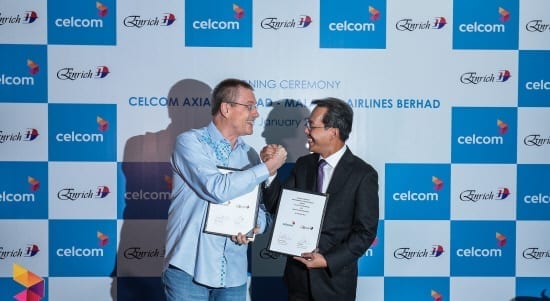
    “No worries about competition. Very happy with competition. We’re strong enough to stay in competition and be successful. Of course there is always the element of competition when it comes to pricing, which possibly has an impact on revenue, but it’s about how strong you are, how much value you deliver to customers and that makes you successful,” Kuehner said after signing a memorandum of understanding (MoU) with Malaysia Airlines Bhd (MAB) to collaborate in enhancing digital lifestyle for travellers today.

    He expects industry growth for 2019 to be flattish after industry revenue fell for the last three years.

    “After three years of shrinking revenue for telcos, maybe a bit of stabilisation possibly on telcos’ revenue side next year, so we’re slightly positive,” Kuehner said.

    Earlier, Celcom Axiata and Malaysia Airlines inked an MoU to provide benefits spanning multiple areas across both companies, including Enrich rewards, flight discounts for Celcom customers, attractive roaming plans and more.

    Kuehner said both Celcom and Enrich customers will enjoy innovative digital offerings and rewards, starting Feb 1. Both companies are still in the exploratory stage to discuss the details.

    On anotehr matter, Kuehner said a merger between Axiata Group Bhd and Telekom Malaysia Bhd (TM) makes sense in terms of scale , delivery and network perspectives.
    He said fixed mobile convergence is a trend worldwide and it is also relevant in Malaysia, adding that TM is strong on the fixed line side while Axiata is strong on the mobile side.

    “It (the merger) makes sense and this is where rumours come from, because a lot of people are talking about it. But not everything that makes sense will always happen. It’s difficult to predict,” Kuehner

    “It (merger) is up to the shareholders. I don’t have an opinion. I’m not the one calling the shots,” said Kuehner, adding that there is no indication on the merger from parent Axiata Group.

    News of a possible merger between the two emerged some nine months ago, with both companies deniying news of a reunion after a demerger in 2008. Analysts are still banking on the merger to set the tone for an industry consolidation, which is deemed as the logical route forward.

  • Telstra sets speed record with metro network trial

    Telstra sets speed record with metro network trial

    Australia’s Telstra, Ericsson and Ciena say they have achieved the world’s fastest speeds during a demonstration using Telstra’s transmission network in Melbourne.

    The companies achieved 400Gbps speeds over 61.5-GHz spectrum using Telstra’s transmission network, representing the highest spectral efficiency per fiber pair achieved in a live environment.

    This represents transmission speeds of up to 30.4Tbps per fiber pair, a significant improvement from the previous record of 25.6Tbps.

    Such speeds were made possible using software programmable wavelengths controlled by Ciena’s WaveLogic Ai modem technology and Blue Planet manage control plan and Liquid Spectrum applications.

    Telstra plans to introduce the technology as part of an upgrade to its long haul, metro and regional optical networks. Ericsson is providing end-to-end systems integration for the project and managed the deployment of technology for the demonstration.

    Telstra has already deployed Ciena’s industry-first programmable coherent modem, which offers up to three times the data capacity of the earlier modem technology deployed on the Telstra network.

    “Over the next five years we forecast traffic on our network will grow by five times. We are investing in our network and developing these innovations to meet this growing demand by providing unprecedented levels of scale, automation and intelligence,” Telstra director of IP and transport engineering David Robertson said.

    “This technology will be deployed in our domestic transmission network and we will look for opportunities to use it in Telstra’s international subsea cable network, which is the largest in the Asia-Pacific region.”

  • Idea Q3 revenue falls 25% from MTR cut “body blow”

    Idea Q3 revenue falls 25% from MTR cut “body blow”

    India’s Idea Cellular has reported a steep 24.9% decline in Q3 revenue and a surge in net losses as a result of the “body blow” from regulator Trai in the form of a mobile termination charge cut.

    Revenue for the quarter fell to 65.1 billion rupees ($1.02 billion), and the operator’s standalone net loss climbed 182.3% to 13.52 billion from 4.78 billion a year earlier.

    The decision by regulator Trai to reduce mobile termination rates from 0.14 rupees to 0.06 rupees per minute resulted in a steep 57% decline in interconnection usage charge rates, which Idea said negatively impacted revenue for the quarter by 8.2 billion rupees.

    “The new domestic MTC rate and recently announced drop in ‘International mobile termination’ settlement charges effective 1st February, 2018 from 53 paisa (0.53 rupees) to 30 paisa per minute, remains a body blow to all operators and reduces investable funds for the critical ‘Digital India’ program,” Idea said in its quarterly report.

    “The international IUC rate drop only benefits the foreign operators, with no commensurate benefit to Indian consumers but with significant foreign exchange and revenue loss to the Indian exchequer.”

    Idea also blamed ongoing “unrelenting rate pressure on voice and mobile data services as high ARPU consumers migrate to unlimited voice bundled data plans.”

    Despite its financial woes, Idea said that the company had managed to accrue 7.5 million net customer additions for the quarter due in part to a large influx of subscribers porting to the company from operators exiting the market in India’s wave of consolidation.

    This took Idea’s total customer base past the 200 million milestone for the first time to 203 million.

    The adoption of unlimited voice bundled data plans also led to an explosion in voice volumes for the quarter, with voice minutes of use growing 10.8% sequentially. Data usage per data subscriber also surged to 4.74GB per month during the quarter, from just 703MB a year earlier.

    Idea said it is in the final stages of the approval process for its planned merger with Vodafone India, which is expected to close in the first half of the year. The proposed $23 billion merger would create India’s largest operator by subscribers with around 400 million customers.

  • TransCo close to deal to bolster third telco bid

    TransCo close to deal to bolster third telco bid

    The Philippines’ state-run National Transmission Corporation (TransCo), the owner of the nation’s power grid, is close to a deal with the private operator of the grid National Grid Corp (NGCP) to use NGCP’s transmission facilities as the backbone for its bid to become the nation’s third operator.

    TransCo has sent a draft memorandum of agreement for a deal involving use of the grid’s inter-plant fiber transmission equipment for telecoms facilities, ABS-CBN News reported.

    TransCo has previously expressed an interest in forming a partnership to apply for the third telco license. The government has meanwhile reportedly approached the Chinese government with an offer for one of China’s state-run operators to play the role, and plans to hold the allocation as a beauty contest.

    But according to the report, while NGCP has stated that it is eager to participate in the government’s plan to improve telecoms services in the nation and break the PLDT-Globe duopoly, it does not agree that TransCo should be party to the deal.

    An NGCP spokesperson told the publication that any deal involving allowing a third party or the government to use NGCP’s available network capacity should be negotiated with NGCP.

    The company also said it is not interested in ownership in a third player and is willing to allow use of the equipment at minimum or even no cost.

  • Singapore completes public safety trials with NEC

    Singapore completes public safety trials with NEC

    NEC and NEC Asia Pacific have announced the completion of three safety and security test bed projects, held in and near Singapore’s Jurong Island, under the Safety and Security Industry Program (SSIP) 2020.

    The SSIP 2020 is led by the Ministry of Home Affairs (MHA), Singapore Economic Development Board (EDB) and is being conducted in collaboration with JTC.

    The three trials were conducted over a period of 12 months from September 2016, and were aimed at using data analytics and security insights to address Singapore’s safety and security needs.

    They involved early detection of suspicious behavior, off-site security clearance of authorized personnel and on-the-spot enrollment for first-time visitor access to controlled areas.

    In the first trial, NEC provided and tested a system that utilized its high performance NeoFace Facial Recognition software together with the Intelligent Complex Event Processing engine which correlates audio and video analytics, to detect suspicious behavior and identify Persons of Interest (POIs) in both indoor and outdoor areas.

    The second trial facilitated off-site security clearance for entry of authorized personnel into Jurong Island, thus reducing congestion at checkpoints. NEC provided and tested a Bus Sensors Monitoring Management System using customized tamper-proof security sensors to prevent unauthorized opening of vehicle doors during bus journeys.

    The third trial tested the feasibility of an automated system to provide a more efficient method of enrolling first-time visitors for entry into Jurong Island. The system leveraged NEC’s biometric solution to expedite clearance of such visitors via on-the-spot facial and fingerprint recognition enrollment at car inspection bays.

    For all the three trials, the technologies provided real-time monitoring and alerts to the simulated Command Center, to inform the authorities of activities which may require law enforcement action.

  • APAC companies reaping the benefits of IoT

    APAC companies reaping the benefits of IoT

    Companies across Asia-Pacific are already seeing the benefits of IoT, according to a new report conducted by Forbes Insights.

    Sponsored by Hitachi Vantara, the report found that 76% of APAC companies are operating IoT programs that generate revenue while 60% agree that IoT programs are generating data that is very useful to their business. As a result, 88% expect to see increases in their IoT budgets over the coming fiscal year.

    “Across the Asia Pacific region, it is clear that executives see the value in IoT initiatives,” Forbes Media chief insights officer Bruce Rogers said.

    “With 70% stating that they see IoT as either important or very important to their business, it is fast becoming a competitive differentiator that will affect almost every industry.”

    The report also reveals that 70% of companies in the region believe IoT is important or very important to their current business, and 87% believe IoT will be important to the future of their business. Of all emerging technologies, executives in Asia Pacific believe IoT, artificial intelligence (AI) and robotics will be the most important.

    Nearly three quarters (72%) of respondents say their company has significant or pilot IoT programs in operation, and 11% say that IoT programs are already a major contributor to their business.

    When building out IoT capabilities, companies say their greatest challenges are keeping the IoT secure (31%), ensuring cross-department cooperation (31%) and availability of skilled staff (31%). The inability to present a compelling return on investment (30%) and integration of disparate data (28%) are other significant challenges.

  • Ericsson unveils 5G small cell solution

    Ericsson unveils 5G small cell solution

    Ericsson has unveiled a new small cell solution designed to meet the indoor mobile broadband performance requirements that will be demanded by 5G.

    The new 5G Radio Dot small cell radio will support the new 5G mid-bands between 3-GHz and 6-GHz, delivering speeds of up to 2Gbps.

    The new solution is also deigned to support emerging 5G industrial applications such as connected factories, connected hospitals and connected mining operations.

    Operators will be able to deploy 5G Radio Dot next to 4G solutions using the same cabling infrastructure, architecture and locations as existing 4G Radio Dot deployments. Radio Dot systems are used in many large buildings including office blocks, shopping malls, hospitals and airports.

    “Now that first 5G standards are here, vendors are going to need multiple radio solutions to help operators roll out their new 5G networks. Ericsson takes an important initial step in this direction by adding indoor small cell 5G solutions to its already existing outdoor 5G RAN portfolio,” Ovum practice leader Daryl Schoolar commented.

    “This new indoor solution from Ericsson is going to be attractive for operators wanting to offer enterprises good indoor performance for enhanced mobile broadband and new industrial applications that can’t be met by Wi-Fi or 5G base stations deployed outdoors.”

    Ericsson head of network infrastructure Nishant Batra commented that adding small cell solutions to its 5G portfolio is a natural part of the evolution to 5G.

    “Enterprises have been asking for first-rate connectivity indoors, as well as higher speeds and capacity to serve advanced use cases that cannot be addressed by traditional indoor systems. Our 5G portfolio, bolstered by small cells, will enable operators to meet these demands,” he said.

    The 5G Radio Dot will undergo trials in late 2018 and will be commercially available in 2019.

  • Telstra to invest in two HK-US cables

    Telstra to invest in two HK-US cables

    Australia’s Telstra has announced plans to invest in two new subsea cable systems connecting Hong Kong to the west coast of the US.

    The company will invest in a half fiber pair on the Hong Kong Americas (HKA) cable and the equivalent of 6TBps over the Pacific Light Cable Network (PLCN).

    The HKA cable is expected to be ready for service in 2020 and the PLCN to be complete in 2019.

    Once complete, the two cables will be able to act as more direct routes between the US and Asia than Telstra’s part-owned Asia-America Gateway (AAG) cable system, helping to reduce latency and meet increasing demand for connectivity between Greater China, ASEAN and the US.

    “As economic growth continues in China and South East Asia, so too does the demand for data. Together with the current AAG cable on which Telstra carries the most traffic today, these two investments will provide us with increased capacity across the important Hong Kong to US route, one of the fastest growing routes in the world for capacity demand,” Telstra group managing director of global services and international David Burns said.

    “Our investment in capacity on PLCN and HKA will also provide our customers with greater resiliency due to bypassing areas prone to natural disasters and offering two direct, alternative paths to the AAG cable which connects South East Asia to the US west coast via Hong Kong, Guam and Hawaii.”

    Meanwhile fellow Australian operator Vocus Communications has selected the ST Telemedia Global Data Centres (STT GDC) STT Tai Seng 1 data center to act as the point of presence in Singapore for its planned Australia Singapore Cable (ASC) subsea cable system.

    The 4,600km ASC will link Singapore with Perth in Western Australia via Indonesia. It is expected to be completed in the third quarter.

  • ZTE launches 5G core product based on SBA

    ZTE launches 5G core product based on SBA

    ZTE has launched a new 5G core product based on service based architecture (SBA) and fully compliant with the 3GPP Release 15 standard from September.

    The ZTE Cloud ServCore consists of 3GPP network function services and common network function services in the control plane, and distributed media planes supporting flexible deployment and high-performance forwarding.

    These distributed planes interwork with the control plane through Packet Forwarding Control Protocol (PFCP).

    It is based on the micro-service cloud native architecture ad utilizes micro-service components, DevOps tools and containerized deployment.

    The platform uses a fully virtualized architecture decoupled from the underlying cloud platform, and supporting hardware and software acceleration.

    ZTE said it anticipates that China Mobile could adopt the technology as part of its 5G core trials. The China Mobile Research Institute has been conducting joint research with ZTE in its 5G Core Lab and has praised the design of the Cloud ServCore product.

  • Teletalk and Robi sign network sharing deal

    Teletalk and Robi sign network sharing deal

    Bangladesh operators Teletalk and Robi Axiata have arranged to share network sites across the country to improve the network experience for their respective customers.

    The two operators have signed an agreement on the network sharing deal at a meeting this week attended by company executives including Robi CEO Mahtab Uddin Ahmed and Teletalk managing director Kazi Md Golam Kuddus.

    The agreement is also aimed at accelerating the 4G network rollout process once LTE licenses are awarded to mobile operators.

    Bangladesh’s 4G auction is scheduled to take part in February, and is expected to draw participation from the two operators as well as Grameenphone and Banglalink.

    CityCell, which recently had its operations suspended as a result of failure to pay required license and related fees, has also raised the prospect of participating in the auction in order to re-enter the market.

    The auction will encompass spectrum in the 2100-MHz, 1800-MHz and 900-MHz bands. The deadline for applying to take place is January 14 and the auction will be held on February 14. Operators will need to deploy a 4G network nationwide within 36 months as part of the auction terms.

  • Ncell Axiata expands LTE network

    Ncell Axiata expands LTE network

    Nepal’s Ncell Axiata has revealed it has expanded its LTE network to cover two more cities – Lahan and Dhangadhi.

    The operator’s 4G network now spans 21 cities, giving Ncell the widest 4G coverage in the market at more than 15% of the population.

    Ncell launched 4G mobile broadband in the 21 cities last week. The company is giving customers the ability to acquire a 4G SIM with the same mobile number for just 1 rupee ($0.0098).

    The new SIM will be bundled with 1GB of 4G data valid for three days, as well as a buy 1 get 1 free offer providing the equivalent of double the 4G data for any data packs. The offer will also be bundled with a 30 day subscription to the Yonder Music digital music library.

    As well as the two new cities, Ncell’s 4G network covers Nagarkot, Banepa, Dhulikhel, Pokhara, Damauli, Biratnagar, Birtamode, Damak, Dharan, Bharatpur, Hetauda, Birjung, Bhairahawa, Butwal and Nepalgunj, Kolhpur and Birendranagar.

    “We are very much delighted to announce introduction of 4G service in Lahan and Dhangadhi, bringing more people into access of new technology based high speed mobile connectivity,” Ncell corporate services director Pranay Acharya said.

    “By making the 4G service accessible to more than 15% of population, we have been able to swiftly deliver on what we have committed, contributing towards the goals of National Broadband Policy and Digital Nepal.”

    Expansion to other parts of the country is already underway.

  • Akamai could be up for sale

    Akamai could be up for sale

    A recent report claims that Akamai is working with Morgan Stanley to explore strategic alternatives. On the table, apparently, is a sale of the company. To whom, though?

    The move may be in response to pressure from Elliot Management Corp, which holds a 6.5% stake in Akamai and has been pushing the company to consider ways to maximize shareholder value. The thesis is that Akamai’s core business is being challenged by big content’s moves to bring such capabilities in-house.

    Now, it’s not the first time Akamai has faced overall trends that threatened to divert revenue away from the middle man, yet the company always seems to come out on top. We believe that this time is the same, but just as a theoretical exercise let’s consider who might do the buying.

    From the network infrastructure side, it would probably take a major network operator like Verizon or AT&T or Comcast or CenturyLink to do such a deal. In particular, Verizon’s appetite for Yahoo and other content certainly could fit well with Akamai. If the opportunity were right, We think they might jump at it. But We doubt they’d pay the premium required in this case.

    It’s a bit more interesting from the content/cloud side of course. Since they are building such infrastructure in-house, it’s not such a stretch to think that one of Google, Microsoft, Facebook, Apple, or Amazon could decide to drop $12 billion to 15 billion to instantly scale it. But there are channel conflicts in there that give me pause.

    The other option would be for private equity to move in and take the company private. If there is private equity out there that thinks Akamai isn’t taking advantage of all the opportunities on its plate and that it could grow faster and more profitably if not tethered to a publicly floated stock, then sure. But again, it’s not as if Akamai is hurting for resources to invest.

  • Idea Cellular plans to raise $1b

    Idea Cellular plans to raise $1b

    Indian operator Idea Cellular said Thursday that its board has approved plans to raise up to 67.5 billion rupees ($1.06 billion) in the sale of new shares, in a bid to strengthen its capital position ahead of completing its planned merger with Vodafone India.

    The company, which is poised to merge with Vodafone’s India unit to create the country’s biggest mobile carrier, will raise 32.5 billion rupees by selling shares to its controlling shareholder the Aditya Birla Group (ABG) and raise the remaining 35 billion rupees by selling shares to institutional investors or a rights issue, the company said.

    As a result, ABG will buy a minimum of 2.5% of the merged entity from Vodafone, or such higher stake as required in order for ABG to ultimately own at least 26% of the merged entity.

    The purchase of the 2.5% interest by ABG follows the increase in its ownership in Idea to 47% from 42%, as a result of a fundraising by the Indian carrier.

    Under the original merger agreement, ABG is expected to reach a shareholding of 26% in the merged entity.

    Vodafone will receive minimum proceeds of 19.6 billion rupees from such sale and its ownership in the combined entity is expected to be approximately 47.5% at the completion of the merger.

    The companies said such changes to the capital structure were already contemplated in the scheme of arrangement for the merger. Vodafone’s stake in the combined entity in excess of 45.1% will not be subject to any lock-up.

    The merger of Vodafone India with Idea Cellular — the country’s second and third-largest mobile operators, respectively–was announced in March 2017. The proposed deal has already been approved by shareholders and creditors and the Competition Commission of India, but still needs clearance from the Department of Telecom and the National Company Law Tribunal.

    The companies expect to complete the merger in the first half of calendar 2018.