Category: Telecom

Retail News Asia is committed to providing both local and global retailers with the latest Telecom & Telco news throughout the Asian market. This on a daily base.

  • Huawei Marine to deploy subsea cable for NGCP

    Huawei Marine to deploy subsea cable for NGCP

    Huawei Marine has commenced the second phase of its Sorsogon-Samar Submarine Fiber Optical Interconnection Project (SSSFOIP) for the National Grid Corporation of the Philippines (NGCP).

    The phase two rollout, which involves the deployment of a 12.8Tbps subsea cable connecting Sorsogon and Samar, is expected to be complete in the third quarter.

    The dedicated cable will replace the existing microwave technology for the power transmission network.

    NGCP selected Huawei for the upgrade project through a public tender in 2016, aimed at enhancing branch network data exchange capabilities for the national grid. The first phase of the project, involving a marine route survey, was completed in 2016.

    “The transmission line between Sorsogon-Samar is an important branch of the network for the country,” NGCP network director for telecoms Ferdinand Dicon said.

    “During the first phase of exploration, Huawei Marine demonstrated their project delivery capabilities and experience as a world-class turnkey submarine cable supplier. We believe that in the second phase of construction, Huawei Marine will successfully deploy their leading-edge product technology with their customer focus support services.”

    Huawei Marine chief executive Mike Constable added that this project is the company’s first power grid project.

    “Based on the results of the first phase of exploration, we will deploy the latest technology to build a fit-for-purpose communication network which will transform the NGCP’s network capabilities,” he said.

  • Spark launches LoRa IoT network across NZ

    Spark launches LoRa IoT network across NZ

    New Zealand operator Spark has announced the commercial launch of its nationwide IoT network for businesses across the nation, with coverage reaching 60% of the country’s population.

    The IoT network, using the LoRaWAN technology, has been switched on in Auckland, Tauranga, Hamilton, Rotorua, Palmerston North, Shannon, Wellington, Nelson, Blenheim, Christchurch and Dunedin. Sites in Hastings and Invercargill will go live in the next few weeks, the telco said in a company statement.

    The network consists of gateways and antennas installed on Spark’s 4G cell sites. Spark is using Actility’s ThingPark Wireless platform, Kerlink’s gateways, and Kordia to build and maintain the network.

    Spark initially announced its LoRaWAN plans in July 2017, and details of coverage plans in December 2017.

    “Our IoT capability is really gathering pace, and now we’ve got this critical mass of coverage we’re able to make the network commercially available. This is a real milestone for Spark as we help New Zealand organizations win big in IoT,” said Michael Stribling, Spark’s general manager of IoT solutions.

    “While we currently have 60% of rural and urban New Zealand covered, we’ll be working to extend that to 70% by July this year. We’re also looking to partner with organizations to extend coverage into areas where they need it.”

    With its LoRaWAN IoT network, Spark said, business and local governments can deploy sensors across on a range of objects including vehicles, waterways, rubbish bins, machinery, carparks and livestock, with the sensors sending such information as the volume of rubbish in a public bin or water pH in a stream, over the network to the people managing these objects.

    Spark said LoRaWAN technology, which carries small amounts of data over long distances, uses less power than cellular networks, making it an affordable IoT solution.

    Compared to cellular connectivity, it works with a wide range of low-cost sensor technologies that are significantly cheaper on average than sensors for cellular networks. The cost to use the network is based on the number of sensors connected, and the number of messages those sensors send each month, the telco explained.

    For example it would cost a local farmer around NZ$1.79 ($1.29) per cow each month to track location and body temperatures of their cows using the LoRaWAN IoT network, Spark said.

    Spark has been testing LoRaWAN technology on trial sites for well over a year, with partners from a range of industries, including agriculture, marine and smart buildings.

    Some of its early adopters of the new commercial network include Levno, which has signed up as Spark’s first customer and will be working with the telco to extend network coverage to other areas. The Pamerston North-based agriculture firm is using Spark’s network to connect its fuel tank monitoring sensors.

    NB Smartcities NZ, a local firm offering smart city services, will also use Spark’s connectivity for smart outdoor lighting across the country.

    Claus Oustrup, director NB Smartcities NZ said the Spark network enables its council customers to leverage a range of smart city applications in addition to smart light technology.

    “For many councils, having real-time data, asset information and being in control of these devices can increase customer service response times and create real benefits for communities. For example, street lighting can account for as many as 50% of call center complaints. By having adaptable street lighting managed with real-time systems, these complaints can be quickly addressed, and their volume decreased,” said Oustrup.

    According to Stribling, the new LoRaWAN network will also enable more IoT technologies from overseas, like smart street lighting, to be adopted in New Zealand. At the same time, it is expected to give New Zealand developers of IoT technologies the chance to launch their products locally.

    “We’ve worked with the International LoRa Alliance to agree on Asia-Pacific standards so that products developed on LoRaWAN in New Zealand will work the same way on LoRaWAN networks in other countries,” he said.

    In addition to LoRaWAN, Spark has also deployed an IoT network using the 3GPP-compliant LTE CAT-M1 standard to cater different use cases. The company is also monitoring the global progress of the emerging Narrow Band (NB-IoT) standard and will invest in it when the use cases and ecosystem for NB-IoT become more mature.

    Last week, Spark also kicked off a 5G trial in Wellington, making it the country’s first mobile carrier to do so. The 5G trial came weeks after Spark announced changes to its management team as part of the company’s restructuring.

  • MyTel launches 4G services

    MyTel launches 4G services

    Myanmar’s fourth operator MyTel has launched 4G services, and plans to expand its network to all 15 states and regions of the nation next month.

    The operator started selling SIM cards in Nay Pyi Taw, eastern Bago and Kayin State earlier this month.

    MyTel plans to differentiate by focusing its rollout more in regional areas and provinces away from large cities. The company has previously indicated plans to cover around 90% of the population with 4G-only services by the end of 1H18.

    The operator has set its base rates at 10 kyat ($0.0075) per minute for in-network calls and 23 kyat per minute for out of network calls, and 10 kyat per SMS.

    As a promotion, MyTel has also introduced a new plan offering 750MB of data and a 100 minute welcome bonus, as well as 50% top-up bonuses per recharge.

    MyTel completed its first call over its network last month during a ceremony in Nay Pyi Taw.

    MyTel is 49% owned by Vietnamese state-owned operator Viettel and 51% owned by a consortium of 11 local ICT companies. The joint venture was established to secure Myanmar’s fourth and last telecoms license.

  • DoT orders telcos to surrender 3.3-GHz spectrum

    DoT orders telcos to surrender 3.3-GHz spectrum

    India’s Department of Telecom (DoT) has instructed operators including incumbent Bharti Airtel to vacate spectrum in the 3,300-MHz to 3,400-MHz range by the end of September so it can be included in a new auction.

    The operator has written to all existing licensees of spectrum in the band to vacate it within six months.

    The 3.4-GHz band is expected to be one of the first frequencies to be used for 5G rollouts globally.

    Other licensees of the band include Reliance Communications – which is selling its wireless assets to Reliance Jio Infocomm, Tata Communications – whose parent company is reportedly looking to exit the telecoms business, and wireless ISP Dishnet Wireless.

    According to the report, Dishnet parent Aircel has already surrendered the spectrum. The operator filed for bankruptcy last month.

    The DoT plans to hold a major auction for spectrum in the 700-MHz, 800-MHz, 900-MHz, 1800-MHz, 2100-MHz, 2300-MHz, 2500-MHz, 3300-MHz, and 3400-MHz to 3500-MHz bands during the next auction.

    The ministry appears to be pressing ahead with the auction despite fears over the perilous financial state of the mobile industry, and against the wishes of operators who had asked for more time to pay off existing spectrum fees and other debts.

  • M1 joins StarHub in electricity play

    M1 joins StarHub in electricity play

    Singapore’s M1 has joined StarHub in looking to carve out a share of Singapore’s new open electricity market.

    M1 has announced a collaboration with Keppel Electric, a participating electricity retailer in Singapore’s Jurong open electricity market (OEM) soft launch, to offer electricity bundled with telecoms services.

    New and re-contracting mobile customers are being offered the ability to sign up for discount electricity plans at the M1 Shop In Jurong, as well as either S$80 off the price of the Samsung Galaxy S9 and S9+ or six months worth of extra data allocations.

    “We are delighted to partner Keppel Electric to offer our customers greater value and flexibility in the liberalized energy market,” M1 chief marketing officer P. Subramaniam said.

    “We look forward to working closely with Keppel Electric to provide new service development and product bundling for its provision of its electricity offerings in this town and nationwide in time to come.”

    Earlier this month StarHub announced a joint initiative with renewable energy startup Sunseap to enter Singapore’s open electricity market to offer joint electricity plans, collaborating on areas including sales, customer service and billing.

    Singapore plans to liberalize the nation’s electricity market to allow customers to seamlessly switch electricity retailers with no disruption to supply. The new open market  has been soft-launched in Jurong and will be rolled out city-wide later this year.

  • Indonesia’s Telkomtelstra expands cloud service business

    Indonesia’s Telkomtelstra expands cloud service business

    Indonesia’s managed services provider PT Teltranet Aplikasi Solusi (Telkomtelstra) plans to open several more data centers in a bid to expand its cloud services across the country.

    Currently, the company has one data center for its cloud business in Serpong, Banten, which started operations in December, 2017.

    “We will have one new data center in Sentul, West Java. It’s expected to be ready by the end of next month,” Agus F. Abdillah, Telkomtelstra chief of product and synergy, said on Tuesday, adding that another data center would be opened in Surabaya in July.

    Telkomtelstra is a joint venture company established by state-owned Telekomunikasi Indonesia (Telkom) and Australia telecommunication giant (Telstra) to provide network application and services to Indonesian enterprises, multi-nationals and Australian companies operating in Indonesia.

    The company started to tap into Indonesia’s growing cloud services market in August last year, when it launched Azure Hybrid Cloud with Azure Stack Platform in collaboration with PT Microsoft Indonesia.

    Cloud technology allows individuals and businesses to access or process data via the internet from anywhere anytime.

    On Tuesday, Telkomtelstra introduced several cloud-based products, including a cloud-based video analytic product that can help businesses analyze customers characteristics to get a better idea of who visits their sites.

    The company also introduced a cloud-based desktop, Citrix, allowing users to remotely access a desktop environment with software from any device.

    Agus said Telkomtelstra was eyeing customers in several segments, including private enterprises, banks, government agencies and education institutions. “Three companies have signed contracts with us after we gave trials to 14 companies since December last year,” said Agus.

  • KT Korea to launch 5G soon

    KT Korea to launch 5G soon

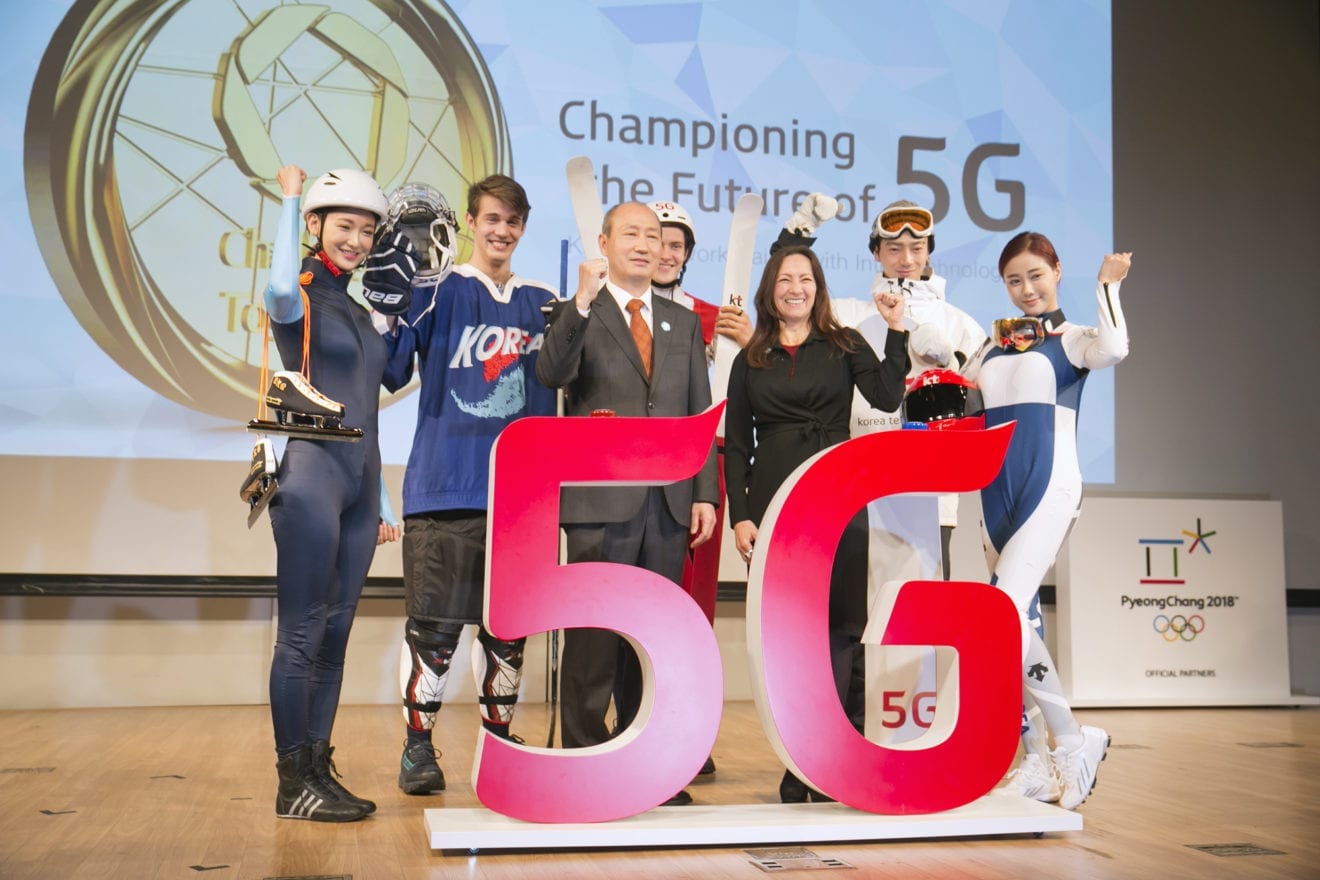
    KT plans to roll out its next-generation 5G network to users as soon as next March after its test run at the PyeongChang Olympics proved a success.

    The country’s second-largest mobile carrier said Thursday that its 5G system will offer true wireless service as opposed to fixed wireless service. Verizon is preparing to launch the first fixed wireless 5G service in the United States later this year. Fixed wireless 5G service requires the use of a router, and can only produce small networks for homes or offices.

    “We are not going to say we have commercialized a 5G network after offering fixed wireless service for homes,” said Oh Seong-mok, the head of KT’s network division, at a press briefing Thursday at the company’s Gwanghwamun headquarters in central Seoul. “We can offer fixed wireless services for those who really need them, like households in rural areas with poor network infrastructure, but it will not be our focus.”

    According to KT, the key to commercializing 5G is making sure users don’t lose connectivity as they move between the ranges of base stations which broadcast the signals.

    A KT spokesperson said that the strategies behind deploying fixed wireless 5G in the United States and Korea differ because of the two countries’ telecommunications infrastructure. The United States still has many areas without the fiber cables that enable broadband service, and laying down the cables is costly. Fixed wireless 5G could prove to be a cheap, efficient alternative, delivering high-speed internet to customers who are currently poorly served.

    KT wants to take the lead in Korea’s advanced telecommunications market by becoming the first company to provide a seamless mobile 5G network. Oh said that though its service will be first rolled out in major Korean cities, it aims to eventually create a nationwide network.

    The company is also working to set up its 5G Open Lab, a research and development center in Seocho District, southern Seoul, that will share 5G technologies with small and medium-sized businesses. KT expects to open the lab within the next few months.

    Even if KT manages to offer 5G by next March, customers will have to wait a little longer for 5G-enabled phones to hit the market. Global manufacturers are expected to launch the first 5G-capable commercial phones by the second quarter of next year.

    KT said its first customers will likely be enterprise clients that can use the 5G network on their own devices.

  • Axiata share price down slightly after buying stake in Sri Lankan data centre firm

    Axiata share price down slightly after buying stake in Sri Lankan data centre firm

    Axiata Group Bhd’s share price fell 0.18% this morning following news that its unit is acquiring a 35% stake in data centre company Digital Reality (Private) Ltd (DRPL) for 262.5 million Sri Lankan rupees (RM6.55 million) cash to form a data centre business in Sri Lanka.

    At 11.08am, Axiata stood at RM5.48 with 882,800 shares changing hands.

    The group yesterday said Dialog Broadband Networks (Private) Ltd (DBN) has entered into a deal with St Anthony’s Property Developers (Private) Ltd (SAPD) for the stake acquisition.

    DBN, which is Sri Lanka’s second largest fixed telecommunications provider, is a wholly owned subsidiary of Dialog Axiata Plc which in turn is an 83.32% subsidiary of Axiata.

    SAPD is a member of St Anthony Group and is the main developer of Sri Lanka’s largest privately held IT park, “Orion City”.

  • Singtel to link mobile wallets across Asia

    Singtel to link mobile wallets across Asia

    Singtel expects the service to launch mid-2018 in 20,000 points in Singapore and Thailand.

    Travellers with Singtel’s mobile wallets could soon continue to use their home wallet app to make payments when overseas.

    Singtel will link its mobile wallets across different ecosystems through an interoperable platform. It will begin with the mobile wallets of the company and its regional associates through the first commercial launch between Singtel and AIS, it said in an announcement.

    “This will be the first time that different mobile wallets across different markets are connected to offer seamless cross-border payments at physical merchants,” Singtel said, “The initiative to expand the Group’s mobile wallet services underscores the continued commitment of Singtel and its regional associates to enhance the mobile payments experience for customers.”

    The telco also noted that this will enable its 590 million mobile customers to securely and conveniently pay with their mobile wallets when they travel in Asia. “Other mobile payment apps can, in future, plug into the platform and gain ready access to the Group’s merchant and customer bases across the region,” it added.

    Singtel International Group CEO Arthur Lang noted that the mobile payments scene in Asia today is fragmented with many different systems and this poses a challenge to the adoption of mobile payments. “As a Group, we believe we can bring about change through our cross-border interoperable platform and collaboration with like-minded partners. Our vision is to unlock the growth potential of mobile payments in the region by providing customers with a convenient, seamless experience, and helping small merchants widen their reach to millions of consumers.”

    In 2017, there were more than 80 million tourist arrivals into Singtel Group’s markets in Asia. “As many small merchants are still unbanked in this region but smartphone penetration is high, mobile payments provide a simple and secure alternative to travellers who might not want the hassle of carrying large amounts of foreign currency with them,” Singtel said.

    “With our customers’ digital lifestyles and the growth in intra-region travel, it is a natural progression for us to take our local mobile wallets regional first, by leveraging the strengths and reach of the Singtel Group in Asia,” Lang added.

    The commercial launch of the service is planned for mid-2018 between Singapore and Thailand where Singtel and AIS have obtained regulatory clearance. This will enable over 1.5 million visitors travelling between Singapore and Thailand each year to use Singtel Dash and my AIS apps at a total of more than 20,000 retail merchant acceptance points in Singapore and Thailand.

    The Group plans to progressively expand this service from the second half of 2018 to other regional associates, which include Airtel, Globe and Telkomsel, taking into consideration the respective country’s regulations.

    Telkomsel CEO Ririek Adriansyah said, “Once we obtain regulatory clearance, we can provide TCASH customers greater convenience whether they are transacting locally or overseas, and give our local merchants new income opportunities from regional travellers.”

  • Vietnam’s MobiFone, AVG cancel acquisition agreement

    Vietnam’s MobiFone, AVG cancel acquisition agreement

    Vietnam Mobile Telecom Services Corporation (MobiFone) and shareholders of multimedia company Audio Visual Global (AVG) on Monday decided to cancel the share transfer agreement between the two companies.

    The decision was made several days after the Party Central Committee (PCC)’s Secretariat asked the Government to soon release the inspection results of a VNĐ8.89 trillion (US$395 million) acquisition by communications giant Mobifone

    Accordingly, MobiFone and AVG agreed to cancel the transfer of 344.66 million shares and refund each other the amount received under the agreement.

    AVG shareholders will refund the entire amount paid by MobiFone, while MobiFone will return to AVG the number of shares and assets transferred. At the same time, the two sides will try to not let the other party suffer more damages.

    Phạm Nhật Vũ, representative of AVG in the negotiations with MobiFone, agreed not to impose a fine and claim compensation while cancelling the deal.

    In addition to the amount paid to AVG, MobiFone said it had to pay some related expenses, such as hiring consultants. AVG has agreed to share this expense with MobiFone.

    AVG has made a deposit of VNĐ450 billion to proceed the agreement cancelation, MobiFone said in a press release on Tuesday.

    According to the AVG representative, there are many reasons for them to cancel the contract. First, since its acquisition, MobiFone has not operated and developed the AVG brand as planned and missed many opportunities and potential of AVG.

    Second, Vũ said since the contract was in effect, MobiFone had paid 95 per cent of the contract value. The deadline was over but MobiFone had not yet fulfilled its obligations to pay the remaining 5 per cent despite repeated requests by AVG.

    Since the inspection of the contract, the process of operating the AVG brand had caused many problems, damaging the reputation of both the parties. According to MobiFone and AVG, the cancellation of the contract is aimed at salvaging the damage.

    At the meeting, a MobiFone leader said the inspection process had impacted the completion of payment to AVG. He also said due to problems faced by AVG, the market had changed and MobiFone was not able to concentrate on developing AVG.

    In early 2016, Mobifone formally announced the acquisition of AVG to expand its television network, one of the company’s four main business areas. The details of the deal, however, were not disclosed.

    At the beginning of August 2016, the Government promulgated Document No 1344/TTg, asking the Government Inspectorate to investigate the acquisition. The Inspectorate found serious violations in the acquisition.

    Last Thursday, the Party Central Committee’s Office issued official letter No 6106-CV/VPTW on the handling of Mobifone’s acquisition of 95 per cent of AVG shares, which says that this is a serious, complicated and sensitive matter.

    The Secretariat said that the Government and the Inspectorate must be responsible for reviewing and settling cases in an objective and accurate manner under the law to ensure that punishment is given to the right person and lost State assets are revoked.

    Read more at https://vietnamnews.vn/economy/424281/mobifone-avg-cancel-acquisition-agreement.html#7mlG6OWYcGVqGrou.99

  • SmarTone 1H17 profit falls 17%

    SmarTone 1H17 profit falls 17%

    Hong Kong’s SmarTone has reported a 17% year-on-year decline in net profit for the last six months of 2017, due largely to intense competition, increased spectrum expenses and lower handset sales.

    Profit for the six-month period fell to HK$328 million ($41.9 million), with revenue declining 23.5% to HK$4.1 billion.

    Service revenue fell 6% year-on-year but improved 1% sequentially to HK$2.52 billion, as a result of ongoing migration to SIM only plans.

    This and lengthening handset replacement cycles led to a steep 41% year-on-year decline in handset and accessory sales to HK$1.58 billion, although this was an 85% improvement on the previous half-year period.

    Net of handset subsidy amortisation, postpaid service revenue was flat year on year and increased 3% from 1H17.

    SmarTone increased its Hong Kong customer base by 7% over the course of the six-month period to 2.2 million, while postpaid customer churn fell to a low of 0.8%. But mobile postpaid ARPU fell 13% year-on-year to HK$262.

    During a presentation announcing the company’s results, SmarTone CEO Anna Yip detailed plans to roll out licensed assisted access (LAA) five component carrier aggregation (5CC CA) and improve its network speed to over 1Gbps in mid-2018, and deploy FDD Massive MIMO in 2H18.

    But she warned that the challenges facing Hong Kong’s mobile industry are expected to continue, including ongoing price pressure from the intense competitive environment and ongoing declines in voice roaming revenues.

  • China strikes telecoms from list of “sensitive” outbound sectors

    China strikes telecoms from list of “sensitive” outbound sectors

    The Chinese government has reportedly taken the telecoms sector off a list of “sensitive sectors” that require special approvals for outbound investment.

    The list compiled by the National Development and Reform Commission (NDRC) names the industries that Chinese planning to invest in an overseas company or project need to secure approval for.

    Starting from next month, companies investing in overseas telecoms projects will instead only need to file the same records with authorities as required for investment in other non-sensitive sectors.

    The telecoms sector has been considered sensitive since the previous list was published in 2014.

    The change comes at a time that the Philippines government is courting Chinese investment in its mobile market through a proposed 60-40 venture that would become the nation’s third telco.

    Xinhua noted that China’s outbound direct investment outside of the financial sector fell 29.4% in 2017 to $120 billion.

    As part of the reforms to the sensitive sector list, the energy sector has also been removed while the arms industry, properties, hotels, cinemas, entertainment, sports clubs, and equity investment funds have been added.

  • Softbank 9m17 Profit Grows 20 Procent

    Softbank 9m17 Profit Grows 20 Procent

    Japan’s SoftBank has reported a solid 20% increase in net profit for the nine  months ending in December to 1.01 trillion yen ($9.35 billion), partly as a result of cost cutting at US subsidiary Sprint.

    Net sales for the first nine months of SoftBank’s financial year grew 3.5% to 6.58 trillion yen, with revenue increasing across all the company’s market segments.

    Domestic telecoms revenue grew slightly to 2.406 trillion yen despite a 1.4% decrease in telecoms service revenue to 1.8 trillion yen.

    Mobile service revenue fell 5% to 1.36 trillion yen, but broadband revenue improved 23.2% to 240.02 billion yen and fixed telecommunications revenue edged up 0.5% to 200.86 billion yen.

    Smartphone net additions for the nine-month period grew to 1.13 million, with the operator’s total mobile customer base growing to just under 33 million, while churn fell slightly to 0.84%.

    SoftBank’s FTTH subscriber base meanwhile reached 4.67 million, up from 3.14 million as of the end of 2016.

    Net sales at Sprint increased 2.6% to 2.72 trillion yen, while the unit’s adjusted ebitda grew 19.1% to 938.8 trillion won on the back of cost reduction efforts that resulted in nearly $1 billion in savings. Net sales from Yahoo Japan increased from 630.8 billion yen to 651.5 billion yen.

  • Singtel Q3 profit falls 9%

    Singtel Q3 profit falls 9%

    Singtel has reported a 9% decline in profit for its fiscal third quarter to S$890 million ($671.7 million) as a result of declining voice revenues, higher costs and lower earnings from the operator’s regional mobile associates.

    Revenue for the December quarter grew 4% to S$4.6 billion as a result of higher earnings from Singtel’s wholly-owned Australian subsidiary Optus and strong contributions from the group’s digital businesses.

    Optus reported an 8% increase in revenue on the back of strong postpaid mobile and NBN customer growth. During the quarter, mobile revenue grew 4% and 125,000 new postpaid customers were added. Optus’ 4G population coverage meanwhile reached 96.6%.

    But Singapore consumer revenues fell 6% due to ongoing voice to data substitution and lower equipment revenues, partially offset by solid mobile data growth.

    Group enterprise revenue also fell 4% for the quarter, while Singtel’s Group Digital Life revenues more than doubled.

    Pre-tax earnings from Singtel’s network of regional mobile associates meanwhile fell 17.8% to S$523 million, largely as a result of the lower contribution from India’s Bharti Airtel due to the mobile termination rate cut and ongoing intense competition.

    Earnings also fell at Indonesia’s Telkomsel as a result of growing competition and at the Philippines’ Globe Telecom due to higher network investment related costs, but profit contributions from Thailand’s AIS rose due to solid revenue growth.

    “We see our investments in network infrastructure and spectrum as critical to our future growth and longer term returns in this digital world. Already, our transformation strategy is delivering with digital and ICT services accounting for 23% of our revenue this quarter,” Singtel group CEO Chua Sock Koong said.

    “Despite the current business headwinds, our regional associates’ markets remain attractive with strong mobile data growth. The ongoing consolidation in India will also pave the way for a healthier industry. We believe our associates’ investments in networks and spectrum, strategic partnerships and focus on innovation will pay off.”

    Singtel recently arranged to pay $412.6 million to indirectly increase its stake in Bharti Airtel to 39.5%.

  • Myanmar’s cellcos reach a combined 50m subs

    Myanmar’s cellcos reach a combined 50m subs

    Myanmar’s mobile operators – MPT, Ooredoo Myanmar and Telenor Myanmar – have announced they have reached a collective 50 million subscribers.

    Extrapolating from the latest UN estimates, Worldometers projects that the total population of Myanmar is around 53.6 million, meaning the nation’s mobile penetration is approaching 100%.

    In a joint statement announcing the milestone, the three operators committed to further develop their mobile networks, particularly in rural areas, and to provide the investment needed for the deployment of 4G infrastructure and services for the market.

    The companies also agreed to abide by “sound price competition practices”, including by complying with recently imposed floor pricing on mobile offerings.

    The Myanmar Post and Telecommunications Department’s pricing and tariff regulatory framework, introduced in June last year, prohibits behavior such as free distribution or sales of SIM cards and supplying services and handsets at below cost.

    “MPT, Ooredoo and Telenor are firmly committed to competing based on the stated guidelines and the relevant laws of the country that as the telecommunications operators in Myanmar, they are bound to,” the statement reads.