Category: Telecom

Retail News Asia is committed to providing both local and global retailers with the latest Telecom & Telco news throughout the Asian market. This on a daily base.

  • GSMA launches mobile money certification scheme

    GSMA launches mobile money certification scheme

    The GSM Association (GSMA) has launched a new global certification scheme for mobile money services.

    The certification will involve an independent assessment of a mobile money provider’s ability to provide secure and reliable services, protect customer privacy and combat money laundering and terrorism financing.

    The new scheme has been developed based on three years’ feedback from the GSMA’s consultations with providers in Asia, Africa and Latin American. It will be open to all mobile money providers, including mobile operators, banks and digital service providers.

    Easypaisa Pakistan – provided by Telenor Microfinance Group – is among the five initial recipients of certification under the scheme.

    Independent scheme operator Alliances Management will assume responsibility for training and overseeing independent assessors under the scheme.

    Recipients will need a 100% pass mark on criteria covering eight principles – safeguarding funds against the risk of cyber loss, combating crime and fraud, managing staff and agents, operating the service reliably, ensuring the security of systems supporting the service, ensuring transparency in fees and terms, providing effective customer service and protecting data privacy.

    “The GSMA Mobile Money Certification is a consumer-focused initiative, aimed at giving customers confidence that a provider has taken steps to ensure their funds are in safe hands, their rights are protected and they can expect a high level of customer service,” GSMA chief regulatory officer John Giusti said.

    “With over 690 million accounts globally, the mobile money industry is having a clear impact on the global effort to expand financial inclusion, providing access to life-enhancing financial services and serving as a gateway to the digital economy.”

  • Singapore among top five destinations for IoT attacks

    Singapore among top five destinations for IoT attacks

    Singapore is in the top five destinations globally for IoT attacks, the latest installment of F5 Networks’ The Hunt for IoT series shows.

    The report, The Growth and Evolution of Thingbots Ensures Chaos, suggests the island nation has a sizable and vulnerable IoT deployment.

    The other destinations in the top five are United States, Spain, Italy, and Hungary. However, the top 5 destinations collectively only received 27% of China’s attacks; the other 73% were globally dispersed to countries that didn’t even account for more than 1% of the total attack volume.

    With 8.4 billion devices currently in use, and over 30 billion devices projected to be deployed by 2020, unprotected devices are a goldmine for hackers, as they find new ways to exploit numerous protocols beyond telnet (an underlying TCP/IP protocol for accessing remote computers) to ensure they capture as many vulnerable IoT devices as possible.

    Thingbots are botnets compromising of infected IoT devices which are typically unmanaged, providing a low likelihood of being discovered by their owner and remediated.

    Thingbots are capable of globally destructive attacks, and the worrying fact is that the security industry has only started discovering them with increasing frequency. Massive, well known thingbots such as Mirai and Persirai have been wreaking havoc around the world, and show no signs of slowing down.

    A new variant of the notorious Mirai malware is exploiting kit with ARC processors. Dubbed the Okiru, is the first capable of infecting devices powered by ARC CPUs which is responsible for running a variety of internet-connected products including cars, mobiles, TVs, cameras and more.

    In fact, despite broad awareness of their existence and threat, it is reported that Persirai infected IP cameras still exist all across Asia with the heaviest concentrations in Thailand, China, South Korea, Japan, Taiwan and Malaysia. There is even a website that collects the streaming footage from over 73,000 hacked IP cameras worldwide. These live feeds range from parking lots and store surveillance to the bedrooms of unknown individuals.

    While China, the US and Russia are clearly the top three attacking countries, the report suggests that because vulnerable IoT devices are deployed globally without bias, there is no standout IoT attack destination.

  • Global telcos form cybersecurity alliance

    Global telcos form cybersecurity alliance

    Singapore’s Singtel and Japan’s SoftBank have teamed up with UAE-based Etisalat and Spain’s Telefonica to create the first global telco security alliance.

    The new partnership is aimed at providing enterprises with access to a comprehensive portfolio of cyber security services.

    The alliance has a combined 1.2 billion customers with a presence in over 60 countries across APAC, Europe, the Middle East and the Americas, operate 22 security operations centers (SOCs) and employ more than 6,000 security experts.

    Under the agreement, the four operators will share network intelligence on cyber threats and support each other’s customers in allowing them to rapidly respond to cyber threats.

    The operators also plan to develop a joint technology roadmap for creating advanced cyber security applications for the IoT, and consider joint investments in new SOCs, cyber security platforms and startups.

    “We need swift and coordinated global responses to defend enterprises that operate across transnational borders as cyber threats are increasing in frequency, scale and sophistication,” Singtel CEO of global cybersecurity Art Wong said.

    “Singtel and its US-based subsidiary Trustwave are both well-established security leaders across the Asia Pacific, Europe and the Americas. The group’s resources, combined with those of its alliance partners, will provide a robust cyber security platform to protect our global customers, allowing them to thrive in the digital economy.”

    SoftBank head of cloud and cyber security Andrew Schwabecher added that “hackers have well-established and organized communities where they cooperate to produce cyber threats – it’s time that the world’s largest network of operators formed a global alliance to strengthen our defense against these attacks.”

  • Duterte sets up third telco oversight committee

    Duterte sets up third telco oversight committee

    Philippines president Rodrigo Duterte has established an oversight committee to support his ongoing goal of attracting a third telco player into the market.

    The president has signed an administrative order establishing the committee, which will work to ensure that the entry of a new major player into the telecom market is undertaken in “an integrated and transparent manner.”

    The committee will consist of a representative from the department of ICT as a chairperson, from the department of finance as a vice-chair, from the Office of the Executive Secretary and from the National Security Adviser.

    It will be tasked with assisting regulator NTC with the formulation of terms of reference for the selection and assignment of radio frequencies to the proposed new player and oversee timely implementation of the third telco policy.

    The committee will also have the power to call on government agencies for assistance if needed.

    Duterte has been pushing for some time to introduce a third player to break the PLDT-Globe duopoly. The ICT department has previously indicated plans to hold a “beauty contest” selection process some time this year, and Duterte has been courting Chinese operators to take a minority interest in the proposed new player.

    But the government has missed its deadline of ensuring a third player was up and running by March, and has now moved this deadline until the end of June or July.

  • Warnings of ‘online catastrophe’ in domain name industry

    Warnings of ‘online catastrophe’ in domain name industry

    A long-simmering dispute between the .au Domain Administration (auDA), the industry self-regulatory body tasked with managing the country’s top-level domain, and its members has erupted this week, with some members calling for the resignation of the organisation’s CEO, Cameron Boardman, and three directors.

    Jim Stewart, chief executive of digital marketing firm StewART Media and a signatory to the letter calling for Boardman’s resignation, said the situation has become untenable and demanded a special general meeting to discuss Boardman’s position.

    The auDA in recent months has held public hearings and received submissions on the development of an implementation process to add a direct registration option to Australia’s domain space. This would allow website owners to register a domain ending in .au, rather than .com.au, .net.au, .org.au and so on.

    However, some auDA members say the panel has failed to make a business case for direct registration, nor has it fully complied with its obligation to include a peak industry body representative on the review panel, despite repeated calls to do so.

    “Business has not been consulted on this at all,” Stewart told.

    “The auDA were meant to have a peak industry body rep on a panel going over the .au proposals, but they only appointed someone last month, after submissions closed.

    “And the person they appointed works for Canstar…you wouldn’t call Canstar a peak industry body,” he said.

    Weighing up the costs and benefits

    According to Stewart, the implementation of direct registration could result in businesses disappearing from Google searches, cybersquatters claiming desirable .au domains and holding them ransom, widespread confusion among consumers and internet users and potential security issues.

    “Most people don’t fully understand the implications. For instance, a competitor may secure your domain name without the dot com. When the changes come into effect, any company can register say commbank.au or bhpcom.au causing confusion and cybersecurity issues. If a company was able to register their name.au and just switched it on that would be a disaster, you would lose all your Google search traffic,” he said.

    “By switching your current domain name (for example ‘.com.au’ to ‘.au’) you’re effectively creating a new website.

    “This means you run the risk of disappearing from Google searches. Imagine if you were an Australian retailer, what would that do to your business?”

    Stewart said the benefits – shorter, more appealing and memorable domain names, according to the auDA – pale in comparison to the risks. He also questioned the need for the change, noting that more than 100 million .com domains have been registered, compared to only around three million .com.au domains.

    Panel member resigns

    A spokesperson for the auDA told Inside Retail the reform is intended to preserve the value of the .au domain and pointed out that countries like Canada, the UK and New Zealand all offer direct registration.

    “Currently, Australia is among only a minority of G20 nations that do not offer a direct registration option. There is a risk that […] .au could diminish in value and usefulness,” an auDA spokesperson said.

    The auDA also said the review panel has consulted with a range of industry representatives and that the views and interests of business are always a leading consideration.

    However, a member of the review panel, Luke Summers, owner of The Lucky Country, recently resigned his position, citing a lack of confidence in the panel’s ability to act in the best interest of the Australian internet community.

    “The size and composition of the panel is entirely inappropriate for a policy review of this scale and significance,” he wrote in a letter of resignation to the panel chair, John Swinson, on 7 April.

    “I am greatly concerned that the panel lacks objectivity, and that stakeholder feedback is being overwhelmingly overlooked in favour of personal views held by some panel members.

    “Many of the policy reforms being pushed for by the panel are in direct opposition to the majority of views expressed by stakeholders; and should these reforms be implemented, then a large number of stakeholders’ concerns will ultimately be realised.”

    Acting in whose interest?

    There are two types of auDA members: domain name holders, which include internet users the general public, and domain name industry participants, which include registry operators, registrars and resellers.

    According to Stewart, the push for direct registration is being driven by the industry participants to the detriment of the other members.

    A law firm acting on behalf of the auDA responded on Tuesday to the letter signed by Stewart, saying the auDA is currently considering the request for a special general meeting.

    The panel is due to present its findings to the auDA board by the end of this year.

  • Singtel, VMware to accelerate DX in APAC

    Singtel, VMware to accelerate DX in APAC

    Singtel has entered a partnership with VMware International to set up a Digital Transformation Foundry in Singapore.

    The new facility will be designed as a virtual sandbox for customers to conduct proof-of-concept experiments aimed at bringing digital solutions to market more quickly.

    Enterprises will be able to test their solutions in a hybrid cloud environment before deploying them across the organization.

    The companies will initially focus on providing a suite of four cloud services aimed at allowing customers to modernize their data centers, integrate public and private clouds, improve information security and develop cutting edge digital workspaces.

    These include a private cloud service that aims to provide similar agility and scalability to public clouds, a hybrid cloud service designed to facilitate seamless application mobility, disaster recovery and migration across multiple clouds, and a multi-cloud managed security service.

    Singtel and VMware also plan to establish similar cloud foundries in Australia and Hong Kong in the future.

    “Digitalization lies at the heart of most companies’ transformation. Many companies share the need to migrate to and operate in the cloud, get their networks software-driven in order to create workplaces of the future,” Singtel CEO group enterprise Bill Chang said.

    “The Foundry will empower customers to implement an integrated cloud solution with ease. We will help them design, secure and deploy cloud-enabled solutions, in short, customize the flexible infrastructure they need to accelerate digital transformation, adopt new and disruptive technologies, and boost competitiveness.”

  • Telenor Pakistan taps Nokia to manage network

    Telenor Pakistan taps Nokia to manage network

    Telenor Pakistan has contracted Nokia to expand and modernize its network based on a new customer centric network operating model.

    Under the terms of the deal, Nokia will manage the complete multi-vendor network operations for Telenor Pakistan using the Nokia Global Service Delivery Tools.

    Nokia will also deploy its AVA cognitive services platform to enable predictive and customer-centric approaches to network planning, optimization, operations and maintenance.

    Nokia’s cognitive analytics for customer insight software will also help Telenor Pakistan prioritize network investments based on insights collected from customers, using a combination of cloud service delivery, intelligent analytics and automation.

    Under the new operating model, 233 engineers and technology experts from Telenor Pakistan will work with Nokia to develop new ways of delivering services. Telenor Pakistan will increase its focus on network governance strategy while Nokia will exclusively manage field operations.

    “The decision to onboard Nokia is in line with Telenor Pakistan’s ongoing strategy for network expansion, transformation and virtualization,” Telenor Pakistan CTO Khurrum Ashfaque said.

    “Our ambition is to set up data ready operations by bringing capabilities of automation, intelligent field operation, smart planning and customer insights with new and advanced tools which we shall leverage through our new global partner.”

  • SKT raises $500m to refinance debt

    SKT raises $500m to refinance debt

    SK Telecom has raised $500 million in offshore private loans to help refinance existing debt and secure enough capital to weather a destabilized global economy.

    The company has issued five-year loans at a coupon rate of 3.75% after holding financial roadshows across Asia, the US and Europe, receiving favorable responses from around 60 global bond investors.

    Despite the impact of the recent US-China trade war on the global financial market, SK Telecom managed to draw a positive response from global investors due to its high credit rating, stable cash flow and strong growth potential, the company said in a statement.

    The offer was around seven times oversubscribed from SK Telecom’s estimated bond issuance of $500 million, and the final interest rate was set at 22.5 basis points lower than the initially proposed level.

    “Diversifying the loan maturity structure is expected to improve the company’s financial structure,” SK Telecom said in a statement.

  • China hosts 50% of smart cities in Asia

    China hosts 50% of smart cities in Asia

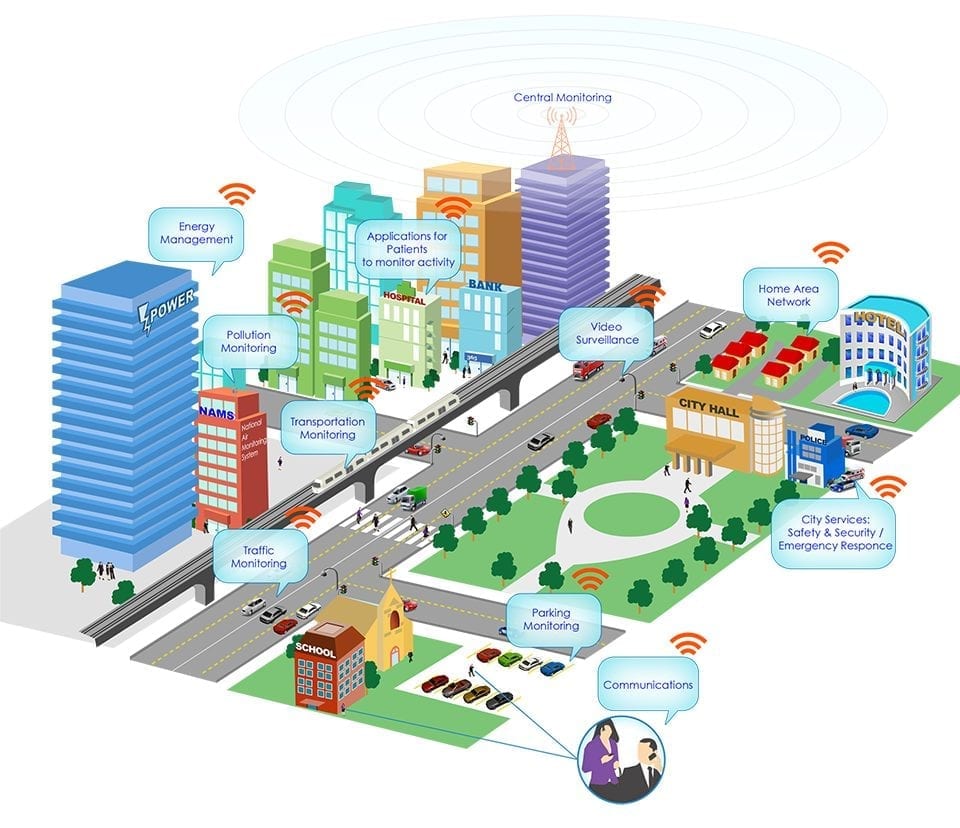
    Smart city projects in China are expected to generate $320 billion for the nation’s economy by 2025, according to Frost & Sullivan.

    China is expected to account for 50% of the smart cities in Asia, the research firm said in a new report. The global smart city market is expected to grow to over $2 trillion by 2025.

    Asia-Pacific is also expected to be the fastest growing region in the smart energy – or distributed energy generation – space over this time.

    Smart energy will be one of a number of key technologies that will be the technological cornerstones of smart cities in the future, with others including AI, robotics, advanced driver assistance systems and personalized healthcare.

    AI will play a key role in smart cities in areas such as smart parking, smart mobility, smart energy grids, adaptive signal control and waste management, Frost & Sullivan said. Major corporations such as Google, IBM and Microsoft remain the primary drivers of AI adoption.

    Smart city projects will meanwhile take on a more urgent imperative due to the projection that by 2050, over 80% of the population in developed countries and 60% in the developing world will live in cities.

    Another key enabling technology for smart cities is the internet of things (IoT).

    “Currently most smart city models provide solutions in silos and are not interconnected. The future is moving toward integrated solutions that connect all verticals within a single platform. IoT is already paving the way to allow for such solutions,” Frost & Sullivan visionary innovation senior research analyst Vijay Narayanan said.

  • Nokia to build new OTN for China Mobile

    Nokia to build new OTN for China Mobile

    Nokia announced that it will be providing China Mobile with an optical transport network that will enable the operator to become 5G-ready.

    China Mobile is currently building a new optical transport network that will support improved data center interconnection, consumer broadband services and 4G backhaul. Looking ahead, the new optical backbone will be a key part of the next-generation mobile services, namely 5G.

    “We are very pleased to work closely with China Mobile to provide the optical technology for its most advanced networks today and in the future. We’ll continue to fulfill our mission by making people’s life easier as we create the technologies that connect the world,” said Yu Xiaohan, head of the China Mobile customer team at Nokia Shanghai Bell, in a press release.

    Nokia described its solution as a dynamic, programmable optical network that can support virtualization and cloud technologies associated with 5G.

    According to Kyle Hollasch, head of marketing for Nokia’s optical business, China is the fastest growing region in the optical market.

    “As the only non-Chinese vendor with significant market share in China, Nokia is thrilled to be part of this strategic build-out for China Mobile,” Hollasch said in a statement.

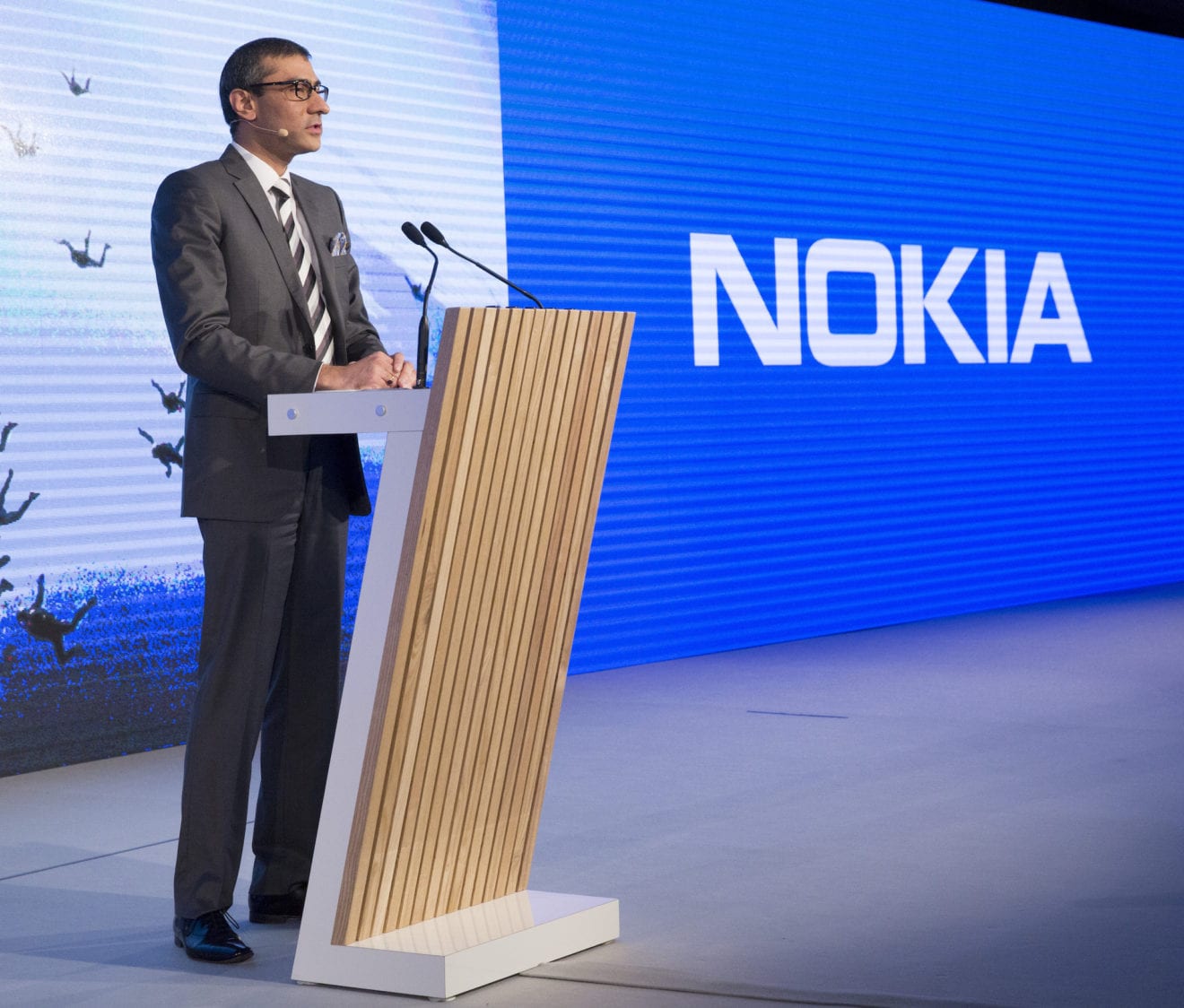
    Nokia’s aspirations in China are well known. At Mobile World Congress (MWC) 2018 in Barcelona, Nokia CEO Rajeev Suri highlighted the race to 5G, saying it’s a battle between the US and China in terms of who gets there first. Both China and the US will move fast and they will be well ahead of pretty much every other part of the world, he said.

    Nokia and China Mobile used the MWC event to announce that they had signed an agreement under which the companies are jointly investigating how China Mobile can extend its service offerings for vertical markets using 5G. Their research is focused on how industries can benefit from the growth of smart cities, smart transportation and intelligent video analytics.

    The companies also are jointly testing use cases using Nokia 5G Future X network architecture as well as NB-IoT and MEC, and they’re expanding an existing Car2X trial ecosystem in Wuzhen to advance the use of automated vehicles, as well as technologies that improve vehicle safety.

    Nokia’s Nuage Networks was chosen by China Mobile (Suzhou) Software Technical Company, a subsidiary of China Mobile, as the SDN platform for China Mobile’s public and private enterprise cloud services offering. The platform is based on the Nuage Networks VSP and includes cloud implementations on virtual machines, Kubernetes (K8S) containers and OpenStack Ironic-based bare metal servers.

    Last year, China Unicom said it would use the Nokia Flexi Zone portfolio to densify its network where it isn’t possible to add a macro base station due to space or cost constraints.

  • Rakuten receives confirmation for MNO launch

    Rakuten receives confirmation for MNO launch

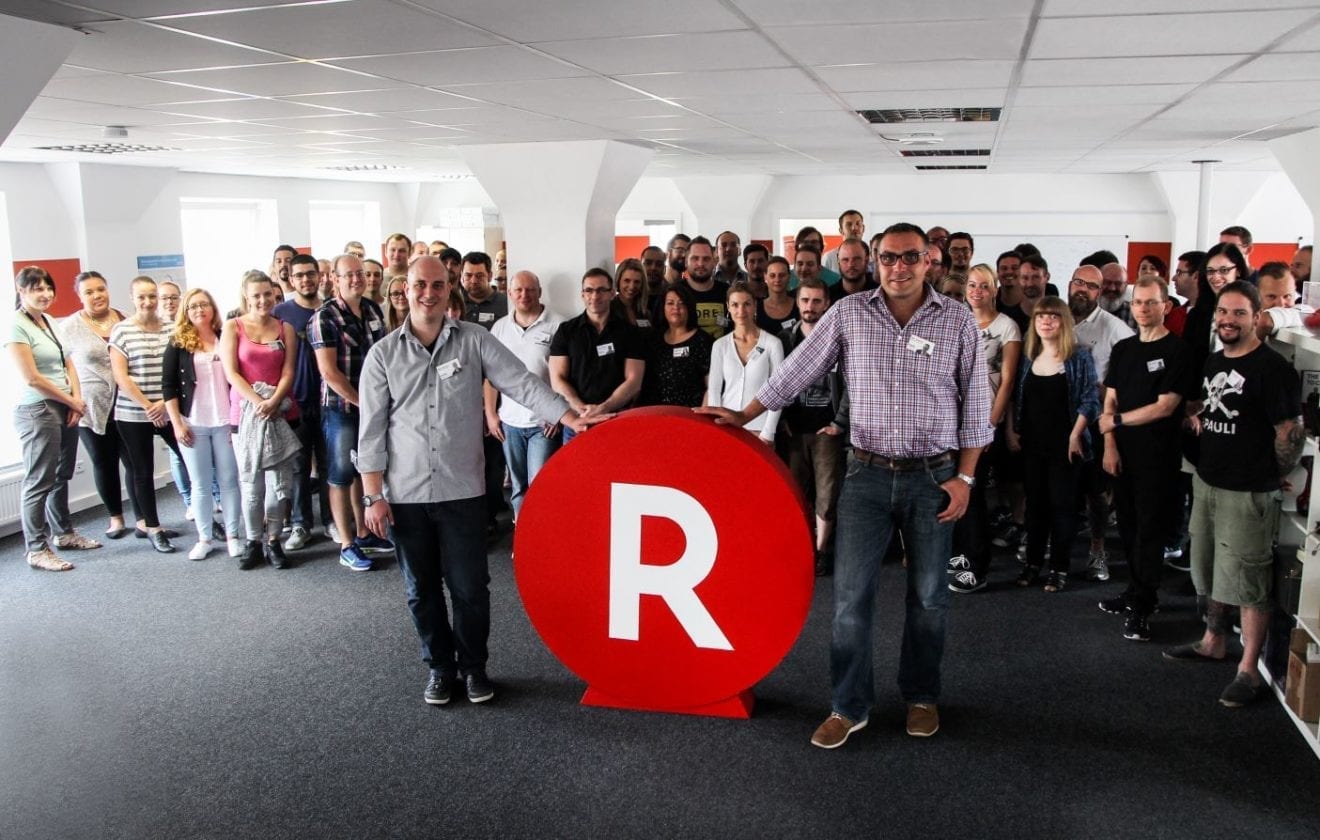
    Japanese e-commerce giant Rakuten has secured government approval to deploy 4G mobile services in the 1.7-GHz frequency band, and now plans to launch as the nation’s fourth mobile operator in October.

    New subsidiary Rakuten Mobile Network plans to raise up to 600 billion yen ($5.6 billion) to pursue its mobile business, including through an up to 200 billion yen investment by its parent company.

    Rakuten announced its intention of entering the mobile market in December last year. Last month, the company signed agreements  with Chubu Electric Power, TEPCO Group and Kansai Electric Power Co to use the utility companies’ telecoms and transmissions towers and other infrastructure for the planned 4G deployment.

    The company is considering similar tie-ups with other electric utilities to support its goal of achieving nationwide service coverage.

    When announcing its intention to enter the mobile market, Rakuten said household spending on telecoms services in Japan is rising every year and reducing telecoms expenses is considered a major social issue.

    The current mobile market – which is dominated by NTT Docomo, KDDI and SoftBank – is also often criticized as a “coordinated oligopoly”, and the government is in the middle of a thorough industry review aimed at ensuring fair competition, the company added.

    Rakuten has been providing MVNO services under the Rakuten Mobile brand since October 2014, using NTT Docomo’s mobile network, and has racked up around 1.5 million customers.

    The company is targeting at least 15 million subscribers with its mobile operations, which compares to 39 million for third-ranked SoftBank. Rakuten’s foray into the mobile market was contingent on it securing 4G spectrum from the ministry of internal affairs and communications (MIC), which has now granted approval for Rakuten’s plan.

  • NBTC backs down on financial relief for AIS, True

    NBTC backs down on financial relief for AIS, True

    Thai telecoms regulator NBTC has backed down on its recommendation of providing financial relief for mobile operators AIS and TrueMove in the face of criticism from academia and the public sector.

    The regulator will no longer support a plan to provide relief from the operators’ 900-MHz license payment obligations.

    The ultimate decision will be down to the National Council for Peace and Order (NCPO) and the government, but the NBTC will not oppose a plan that would ease the financial burden of digital TV operators but leave 900-MHz license winners out.

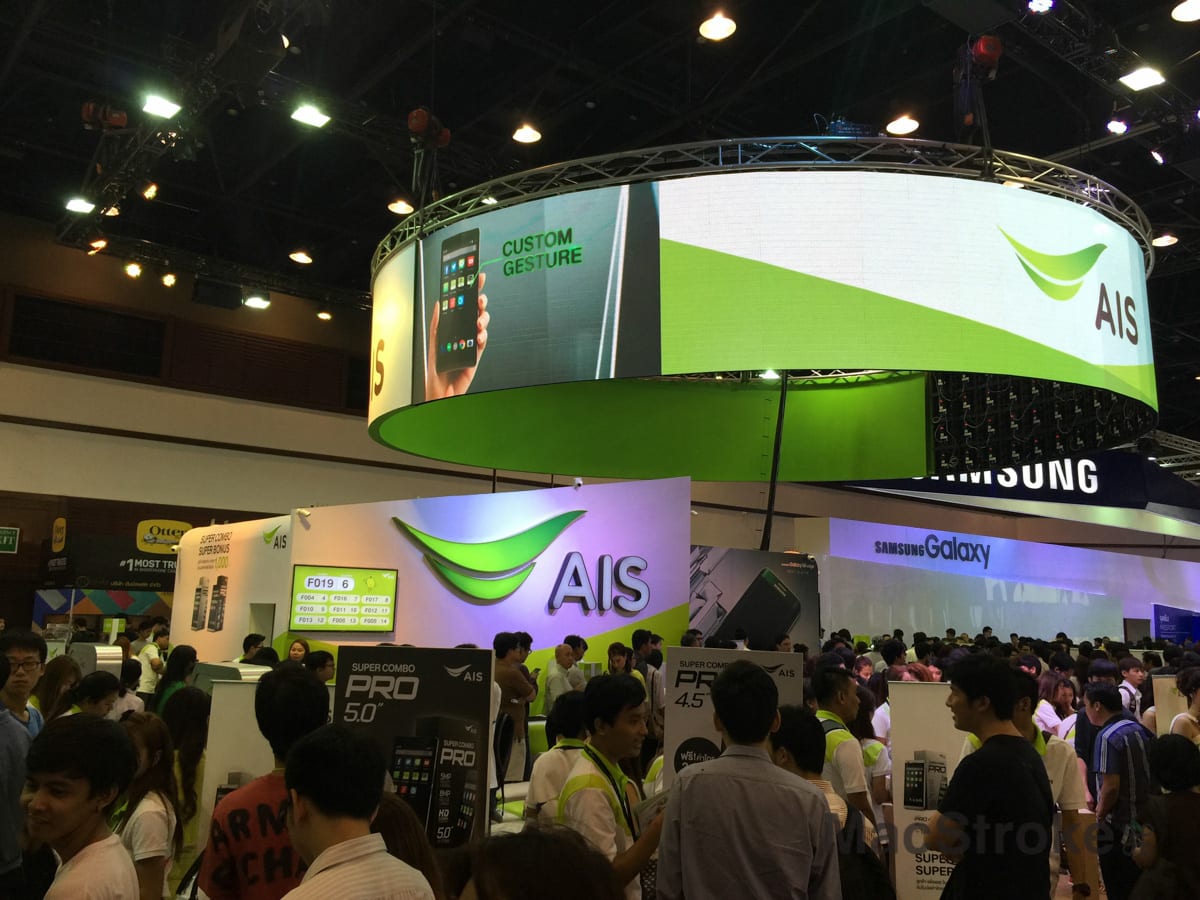
    AIS and TrueMove both petitioned the NCPO in September requesting assistance in easing their license payment terms. The NBTC had drawn up a proposal to grant five year extensions for the payments of the final 900-MHz license payments, but the proposal was controversial.

    TrueMove noted that the winning prices of the 2015 900-MHz spectrum auction were six times higher than the reserve price and the highest in APAC, and has warned that without financial relief the company will have limited capital for investment in services including 5G and the IoT. The company could also be hampered in its participation in the upcoming 1800-MHz auction.

    AIS has likewise argued that relaxing the 900-MHz payment scheme would allow the company to invest in expanding and upgrading its mobile network, benefiting consumers.

  • Chunghwa Telecom upgrades video security framework

    Chunghwa Telecom upgrades video security framework

    Taiwan’s Chunghwa Telecom is upgrading its video security framework as it seeks to expand its multimedia-on-demand (MoD) service offering to include 4K ultra-high definition video streaming.

    The operator has upgraded to the latest generation of the Verimatrix Video Content Authority System (VCAS), VCAS Ultra, to support new delivery models and next-generation streaming services for its MoD offering.

    VCAS Ultra is designed to allow operators to provide premium ultra-HD services and advanced hybrid network deployments. It includes enhanced content security profiles to meet the service requirements for UHD including multi-network video watermarking technology.

    “As we enter this exciting new domain of premium video delivery, we couldn’t be more pleased to already have such a deep level of confidence in our security framework and trust in Verimatrix to navigate us through the complex requirements associated with UHD/4K services,” Chunghwa Telecom deputy principal engineer Dr. Chih-Cheng Lo said.

    “Selecting VCAS Ultra was an easy decision, but we also know it is the optimal solution to support our future goals as we continue to evolve to stay ahead of the competition.”

    In October, Chunghwa Telecom announced plans to develop original video programming and films to drive growth and allow expansion overseas, in the face of growing competition from local cable TV companies.

    The operator announced an ambition to transition into a digital media company with both a telecoms and multimedia presence.

    But Chunghwa’s video on demand service has reportedly lost NT$30 billion ($1.02 billion) since launching 13 years ago.

  • AWS launches Aurora via Singapore cloud region

    AWS launches Aurora via Singapore cloud region

    Amazon Web Services has announced the availability of Amazon Aurora in the AWS Asia Pacific (Singapore) region.

    Amazon Aurora is a MySQL and PostgreSQL compatible database engine for the Amazon Relational Database Service (Amazon RDS) that aims to combine the speed and availability of high-end commercial databases with the simplicity and cost-effectiveness of open source databases.

    Amazon Aurora provides up to five times better performance than the typical MySQL and is three times faster than standard PostgreSQL databases. Customers pay a simple hourly charge for each Amazon Aurora database instance they use and Amazon Aurora can automatically scale storage capacity with no downtime or performance degradation.

    “Historically, customers have had to choose between performance and price when evaluating database solutions. Our customers have consistently told us that they wished for an easier way to get the performance of commercial databases, at the price of open source engines,” said Nick Walton, Managing Director, ASEAN, AWS.

    “Amazon Aurora is a database engine that gives customers the best of both worlds – the performance and availability of the highest-grade commercial databases at a cost more commonly associated with open source.”

    Amazon Aurora automatically replicates data across multiple Availability Zones and continuously backs up data to Amazon Simple Storage Service (Amazon S3), which is designed for 99.999999999% durability without performance impact.

    Amazon Aurora is designed to offer greater than 99.99% availability, and to automatically detect and recover from most database failures in less than 60 seconds, without crash recovery or the need to rebuild database caches. Amazon Aurora continually monitors instance health and if there is a failure, it will automatically failover to a read replica without loss of data.

  • RCom gets court approval to sell wireless business

    RCom gets court approval to sell wireless business

    India’s Supreme Court has cleared Reliance Communications (RCom) to sell its wireless assets to Reliance Jio Infocomm for 250 billion rupees ($3.85 billion), vacating two stay orders on the sell-off.

    The court has vacated a stay on the sale of spectrum, media convergence nodes and real estate, and has directed the National Company Law Appellate Tribunal (NCLAT) to vacate the stay on the sale of the operator’s tower and fiber assets, RCom announced.

    In an interim order, the NCLAT has complied with the Supreme Court’s direction, but will require the proceeds from the tower and fiber asset sale to be deposited into an escrow account.

    Distribution of the proceeds will be subject to a final decision by the NCLAT expected next Wednesday.

    RCom arranged to sell off its wireless business to Reliance Jio Infocomm as part of a radical debt reduction program.

    But the tribunal issued an order prohibiting the sale of assets without court permission in response to an insolvency petition from Ericsson seeking a recovery of around $177.8 million in unpaid dues.

    According to RCom, minority investors are making a claim for part of the proceeds of the sale of its tower and fiber assets, a claim that the operator fully disputes. Based on legal advice, RCom estimates that this claim can be for at most 2 billion to 3 billion rupees worth of the proceeds.