Category: Telecom

Retail News Asia is committed to providing both local and global retailers with the latest Telecom & Telco news throughout the Asian market. This on a daily base.

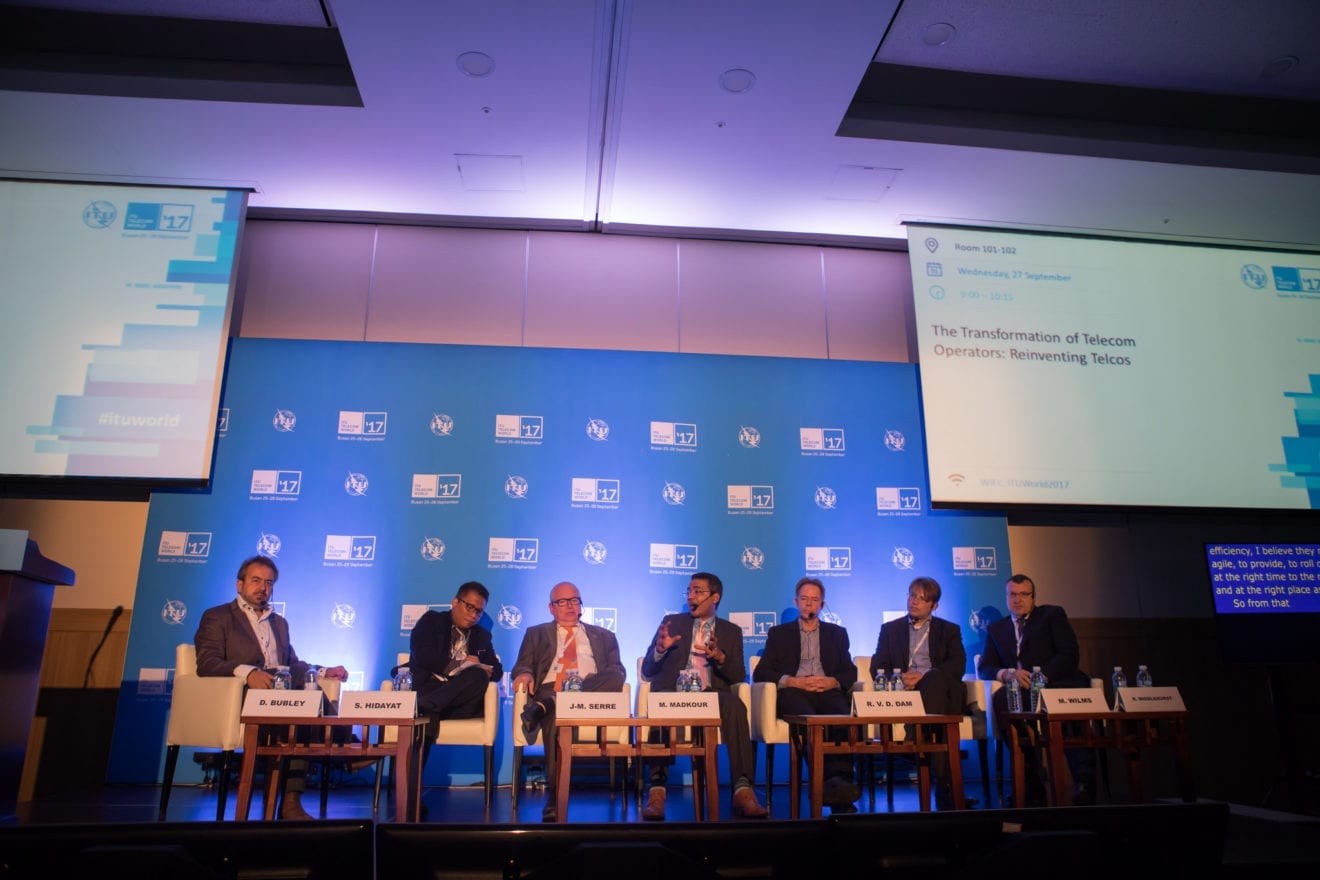
  • Innovation for a smarter world: ITU Telecom World 2018

    Innovation for a smarter world: ITU Telecom World 2018

    Creativity and innovation have driven human development throughout the course of history.  From agriculture to industry to the information age, revolutionary innovations in technology have marked major leaps forward in the development of our societies. As the pace of technological innovation increases, the gaps between those revolutions reduce, so that today, just ten years after the arrival of the smart phone, we are already on the cusp of the next major leap: the smart revolution.

    Two aspects of the smart revolution stand out as significantly different. It provides the possibility for less developed markets and nations to leapfrog in developmental terms, not just to leap forward. And the creativity and innovation driving it will not only be human.

    Artificial intelligence (AI) is one of the great enablers of smart society. AI is a blend of advanced analytical and machine learning applications which can perform processes or actions that would traditionally require human intelligence – and at an often greatly accelerated pace.

    The use cases and benefits of AI are multiple, varied – and developing rapidly, with tremendous potential to serve purposes and provide solutions to problems we are not yet aware of, in ways we cannot yet imagine.

    One key aspect is AI’s ability to swiftly and effectively analyse the ever-increasing wealth of sensor data available as the growing power and falling costs of computing provides for much faster and richer data analysis. Practical outcomes include identifying and treating disease, accelerating financial and machine to machine transactions, enhancing public safety, and improving city services, from provision of utilities to driverless public transport and city management. The aim is to save energy, time and lives through AI-enabled smart solutions.

    AI will not be working alone, however. The data it feeds from is set to grow exponentially in volume as the Internet of Things continues to connect billions of sensors and devices to each other, to the internet and to humans. As the IoT develops and refines, it opens the door to innovation across all vertical sectors, including health, media, transport and energy – and manufacturing, as the paradox of personalized mass production increasingly becomes a reality.

    Innovation needs new tools to thrive, and 5G software-defined networks promise a rich playing field for creative minds. The exponential increases in bandwidth, speed, reliability and flexibility offered by 5G will create a powerful critical infrastructure capable of providing solutions to the economic, social and environmental needs of an expanding and increasingly urbanised global population.

    Our smarter world will be enabled by these three key technological developments, in parallel and in overlap: AI, IoT and 5G. Three acronyms driving innovation, with the potential to drive human development at a greater speed and with greater impact than ever before. In developing markets and nations in particular, smart can power the leapfrog effect, bypassing earlier stages of development, taking villages in Asia or Africa straight from no connectivity to 3G or 4G networks, from no access to education or health to world-class professionals available online, providing entry to the knowledge economy for the millions of digitally disenfranchised.

    But for innovation to flourish, it needs to work in a supportive and positive environment. And for innovation to be fair, it – and the services, applications and products it ultimately produces – must be open to all.

    Providing modern and fit-for-purpose regulatory frameworks as far as possible throughout the world of tech is critical to the success of smart innovation. Taking ideas to scale and maximising impact can only happen with international standardization. Privacy, security, trust and reliability are all huge issues when discussing or dealing with data as the life blood of innovative products and services. And the debate on ethical and regulatory frameworks for AI has only just begun.

    Making a smarter world for all, not just for the elite minority, is an even greater, multi-faceted challenge. It starts, of course, with connectivity for all as a basic human right. Just providing access to the internet and the benefits of the services, applications and knowledge it offers, is not enough, however – even if this can be done at affordable prices, with available devices. There is an urgent need to create awareness of, and demand for, the internet; to provide apps and services in local languages, with local contexts and the needs of local communities at the forefront; and to train, educate and develop the skills to use the internet and bring whole new populations and generations online, releasing untapped human potential for innovation across the world.

    Exploring the innovations in technology, policy, and strategy that are driving a smarter world – and the challenges we face in getting there – is at the heart of ITU Telecom World 2018. The leading tech event for governments, large businesses and SMEs, it is organized each year by ITU, the UN’s key agency for ICT matters. This year’s event will be held at the Durban International Conference Centre, Durban, South Africa, from 10 – 13 September, 2018.

    The event features an international exhibition of tech solutions and projects, a world-class forum of interactive, expert-led debates, a networking programme connecting organizations, individuals and ideas, and an acclaimed Awards programme recognising innovative ICT-based solutions with real social impact.

    As an important regional commercial hub with a diverse, multicultural outlook and a dynamic, growing economy, Durban offers an invaluable perspective as a venue for experts and leaders from public and private sectors around the world.  And given ITU’s key role in allocating spectrum and establishing international consensus on industry standards, as well as supporting the critical role of ICTs and smart technologies in meeting the UN’s Sustainable Development Goals, the event is certain to provide informed, interesting and valuable input on the power of innovation to drive a smarter world.

    ITU’s authority and expertise enable it to convene a unique and influential global audience. Heads of state and government will come together with ministers, regulators, leading industry CEOs from major players and SMEs, organizations, associations and consultants. As a UN event, it delivers a truly international perspective on innovation in technology, policy and regulation from emerging and developed markets from all around the world.

    Visit telecomworld.itu.int to find out more ITU Telecom World 2018 and how to take part in Durban this September.


  • SoftBank to phase out PHS services

    SoftBank to phase out PHS services

    Japan’s SoftBank has revealed plans to stop providing personal handphone services (PHS) for general users from mid-2020.

    SoftBank stopped accepting new contracts for individual PHS services in March and will phase out existing services for general users from July 2020.

    SoftBank is the only operator in Japan to still be providing services based on the Japanese-developed PHS standard.

    The company has been selling PHS handsets using its Ymobile budget brand.

    SoftBank will also stop providing new PHS contracts for inter-device communications, such as for vending machines and marking units, from March next year, but will continue services for existing users.

    The PHS standard was originally developed by NTT Laboratory in 1989, and services first launched in Japan in 1995.

  • 5G devices to save smartphone makers

    5G devices to save smartphone makers

    Global demand for smartphones will continue to be slow until 2022 when 2.02 billion phones are forecasts to be sold. The telecom industry is banking on 5G devices to reignite sales, but momentum will only begin from 2021. CCS Insight expects over 600 million 5G-enabled mobile phones will be sold in 2022.

    With new smartphones offering little more than an incremental update on previous models, the research firm fears that demand is unlikely to grow significantly for the next few years. Marina Koytcheva, CSS Insight VP adds, “Consumers in mature markets have been underwhelmed by the latest crop of flagship smartphones. Price hikes for top-end devices, with some of the latest and greatest devices hitting $1,000, have certainly not helped, and it’s little surprise more customers have decided they might as well stick with the device they already own.”

    Koytcheva notes that it’s not all doom and gloom [US and European markets]: “Although mature markets are suffering, there’s still growth potential in Africa, the emerging markets of Asia-Pacific, and India.

    CCS Insight believes the balance between developed and emerging markets will remain relatively stable, resulting in the global market for mobile phones edging up very slightly over the next five years, eventually delivering sales of more than 2 billion units in 2022.

    CCS Insight also believes that manufacturers are increasingly looking to 5G technology to reignite growth in mature markets. “The arrival of 5G handsets offers a glimmer of hope for embattled smartphone makers. They’re betting that this new, faster technology will give consumers a reason to upgrade their phones,” Koytcheva comments.

    She cautions, however, that phone-makers will have to be patient as they wait for this next wave of upgrade activity. “Although we expect the first 5G smartphones will hit the market in 2019, really significant demand won’t start until 2021, eventually having a positive impact in 2022, when we expect over 600 million 5G phones will be sold, accounting for 31% of the global market.”

    CCS Insight also notes that while advanced markets are focused on the transition to 5G, consumers in emerging markets are taking up smartphones more slowly than previously expected. Koytcheva comments, “The rising cost of components for entry-level smartphones and the arrival of affordable feature phones that support 4G networks mean that many people who otherwise might have bought their first smartphone are sticking with a feature phone for now”.

    CCS Insight’s research indicates that the trend is most prominent in India, but is also evident in other emerging markets. As a result, the research company believes smartphones will account for less than half of all mobile phones sold in India, emerging markets in Asia-Pacific and Africa in 2018.

    Koytcheva is optimistic: “Although the next couple of years are going to be tough, we’re certain that the shift to smartphones in emerging markets hasn’t evaporated — it’s merely been delayed. This year worldwide sales of smartphones will top 1.8 billion units by 2022.”

  • StarHub ends HFC rollout

    StarHub ends HFC rollout

    Singapore’s StarHub has announced that it will cease further rollout of its hybrid fiber coaxial (HFC) network to new residential and commercial buildings in the city state starting from next month.

    In a statement, StarHub said it will deliver its broadband, pay TV and fixed voice services over the Nationwide Broadband Network (NBN) or via its own fiber infrastructure for customers moving into new buildings that obtain “Temporary Occupation Permit” status after April 30.

    StarHub had 458,000 pay TV and 467,000 broadband customers by the end of 2017.

    Chong Siew Loong, chief technology officer at StarHub, said the telco has been steadily expanding its own fiber infrastructure in the past few years and “a significant number” of its customers already moved to fiber networks.

    “StarHub’s own fiber optic network today connects key commercial developments directly, providing companies with diversity in broadband internet access,” Chong said. “Where it is economically viable, we will expand our fiber optic network to connect more commercial buildings to serve customers.”

    Chong said StarHub will continue to help the rest [of its customers] to get their homes and offices onto fiber, adding that the company is currently reviewing its options for the existing HFC infrastructure and will inform them in due course.

    Offering Google Home with bundled plans

    Separately, StarHub has introduced new plans bundling its fixed voice, pay TV and broadband services with Google Home and Home Mini. The launch comes as StarHub said it has become Google’s exclusive telco retail partner for Google Home in Singapore.

    Starting from April 20, StarHub said, the Home Mini will be available free for customers who sign up for its new hubbing plan, dubbed HomeHub Plus, for S$68.8 ($52.20) each month. The  plan bundles four services including 1Gbps fiber home broadband, up to 77 channels on fiber TV, home phone line and mobile broadband.

    HomeHub Plus customers can choose to upgrade to the larger Google Home for S$120, StarHub said, adding that they can buy Wemo Switch smart plug at S$59 each to “augment the smart home experience”. With hands-free help from the Google Assistant, these plugs can be used to control lights and home appliances using simple voice commands.

    StarHub is also selling the Google voice-enabled speakers at a discount for existing or new customers who sign up for StarHub’s mobile, pay TV or broadband service.

    The operator will also give out a free Google Home for enterprise customers who subscribe to StarHub’s 1Gbps or 500Mbps business broadband plans starting May 1.

    The announcements came on the same day that StarHub appointed Peter Kaliaropoulos as its next chief executive officer.

  • ZTE calls US export ban “unacceptable”

    ZTE calls US export ban “unacceptable”

    ZTE has objected to the imposition of a seven-year ban on importing any US components as part of the ongoing fallout over allegations that the company violated US sanctions by selling equipment with US components to Iran and North Korea.

    In a statement, ZTE said it is “unacceptable” that the US Department of Commerce’s Bureau of Industry and Security has imposed the most severe penalty on the company even before the completion of the investigation of facts.

    The Department of Commerce last week activated a seven year prohibition on US companies exporting products to ZTE.

    The prohibition had been imposed in March last year, when ZTE agreed to pay $892.3 million to settle the US investigation into the sanctions case. The ban, as well as a $300 million additional penalty, were suspended for a seven-year period as long as ZTE complied with the requirements of the settlement agreement.

    But the Department of Commerce has now imposed this ban after accusing ZTE of making false statements during settlement negotiations and the probationary period relating to disciplinary actions the vendor claimed it was taking on senior employees embroiled in the sanctions case.

    The action has been taken on the grounds that ZTE did not reduce bonuses offered to the employees or issue them letters of reprimand in a timely manner.

    But the company said this ignores the disciplinary action that has been taken and the fact that the company has engaged a prestigious US law firm to conduct an independent investigations.

    “The Denial Order will not only severely impact the survival and development of ZTE, but will also cause damages to all partners of ZTE including a large number of US companies,” ZTE said.

    “In any case, ZTE will not give up its efforts to resolve the issue through communication, and we are also determined, if necessary, to take judicial measures to protect the legal rights and interests of our company, our employees and our shareholders, and to fulfill obligations and take responsibilities to our global customers, end-users, partners and suppliers.”

    The department’s decision comes in the wake of the recent ban on US government departments buying devices and equipment from fellow Chinese vendor Huawei.

    At the Huawei Analysts Summit in Shenzhen last week, Huawei rotating chariman Eric Xu appeared to acknowledge that the company has been largely locked out of the US market.

    ”For Huawei, we still focus on doing our own things well. No matter what difficulties we encounter, we can only survive and thrive by doing our own business well and serving our customers better,” he said.

    “There are things we cannot change its course, and it’s better not to put it on top of your mind. In this way, we have more energy and time to serve our customers, and to build better products to meet the needs of our customers. In some cases, just let it go and we’ll feel at ease.”

    The timing of the two decisions have spurred speculation that Huawei and ZTE may have been casualties in the ongoing trade war between the US and China, which has also led to the imposition of tariffs on the importation of multiple categories of products.

    There has also been speculation that China may be retaliating by holding out on providing US chipmaker Qualcomm with regulatory approval to acquire NXP Semiconductors.

  • Ericsson recovering but still posts Q1 loss

    Ericsson recovering but still posts Q1 loss

    Ericsson has reported its sixth straight quarterly net loss for the first quarter, but the vendor significantly improved its performance year-on-year.

    Ericsson posted a net loss of around 700 million kronor ($82.7 million), but this compared to a loss of 10 billion kronor in the first quarter of 2017.

    The vendor’s operating loss was meanwhile reduced to 300 million kronor from 11.3 billion kronor.

    Revenue for the quarter fell 9% year-on-year to 43.4 billion kronor, but adjusted for currency fluctuations revenue fell just 2%.

    Gross margins meanwhile improved significantly to 34.2%, from 15.7% a year earlier and 21.6% during Q4.

    During the quarter, Ericsson also cut its global workforce by a further 3,000 jobs, to take the number of positions eliminated since July up to 18,000.

    Ericsson CEO Börje Ekholm said the results indicate that the vendor is making strong progress with its ongoing turnaround program. To date the annual run-rate effect of the cost reduction program is around 8.5 billion kronor, he said, which compares to a target of 10 billion kronor for mid-2018.

    “We have continued to execute on our focused business strategy creating solutions that help our customers improve their business. Our efforts to improve efficiency in service delivery and common costs are starting to pay off,” he said.

    “The improvements in the quarter are encouraging. However, more work remains to be done. We have confidence in the strategic direction laid out and remain fully committed to our long-term targets.”

  • Telenor presents ‘Motorcycle Girl’, an adventure based on the life of motorcyclist, Zenith Irfan

    Telenor presents ‘Motorcycle Girl’, an adventure based on the life of motorcyclist, Zenith Irfan

    ‘Motorcycle Girl’, a biopic on the achievements of Zenith Irfan, the first female biker to take a solo journey to Pakistan’s northern areas, was premiered in Karachi. Showcasing the feat of a young girl challenging stereotypes, the movie fits perfectly with Telenor’s brand philosophy of empowering Pakistanis so that they become the better version of themselves.

    The movie tells the story of Zenith Irfan, an 21-year old girl who makes the bold decision to break free from societal shackles and embark on a solo motorcycle trip to the Northern areas of Pakistan to fulfil her deceased father’s dream of travelling to Khunjerab Pass on a motorbike. Zenith’s valiance and determination led her to undertake a difficult journey, which even men would think twice to undertake given the dangers involved; making her the first Pakistani woman to achieve this remarkable feat.

    Starring Sohai Ali Abro and Ali Kazmi, Motorcycle Girl has been directed, written and co-produced by Adnan Sarwar, a talented young Pakistani actor, director, musician, screenwriter, and producer who made his film debut in the biopic, Shah. The movie is the second installment of Adnan Sarwar’s planned ‘Heroes Trilogy’ as he brings another real-life story of a Pakistani hero to the big screen.

    “At Telenor Pakistan, we have always been a strong advocate of individual empowerment. Telenor wants to enable Pakistanis with the power of its data so that they can achieve more and become a better version of themselves. Zenith’s story is a strong voice with which we can perfectly match our brand philosophy of doing more and achieving more,” said Umair Mohsin, VP Circle South at Telenor Pakistan. “The way Zenith turned her father’s unmet dream into a reality by showing unwavering strength and commitment to her passion against all odds should serve as an inspiration for all Pakistanis to listen to their inner voice and make things happen independently. This is what Telenor believes in and through its data, Telenor wants to enable its audiences in this journey.”

    “This is a story of Zenith’s determination in the face of all the resistance and noise trying to hold her back from her ultimate goal. Her story is representative of the problems faced by any girl in our society,” said Adnan Sarwar. “The movie is important because at such a young age, Zenith is doing things that challenge stereotypes which are deeply engrained in the fabric of our society.”

    Motorcycle Girl drew applause and positive initial feedback from the audience. The movie will now be screening at all major cinemas across Karachi, Lahore, and Islamabad among other cities from April 20, 2018.

  • StarHub appoints Peter Kaliaropoulos as CEO

    StarHub appoints Peter Kaliaropoulos as CEO

    Singaporean telecoms operator StarHub has appointed Peter Kaliaropoulos (pictured)  as its next chief executive officer.

    In a statement, StarHub said Kaliaropoulos will take over as Group CEO on July 9. He replaces Tan Tong Hai, who will step down from his roles as CEO and executive director from May 1.

    Kaliaropoulos, who was most recently CEO of Zain Saudi Arabia, has 35 years of experience in the global Information and communication technology sector.

    He has previously worked at telcos across Asia Pacific and the Middle East including BT, Telstra, Optus, Clear, Batelco and Ooredoo. Kaliaropoulos was even with StarHub way back in 2000 when the company began operations in Singapore, the Singapore telco said.

    Kaliaropoulos has also led a significant number of acquisitions and contributed as a board director to a number of telcos and ICT start-ups in Australia, USA, Singapore, India and the Middle East.

    In selecting its new CEO, StarHub said key criteria included strong leadership beyond conventional frameworks; understanding of the new market dynamics around intense competition; and one with diverse experience in the telco industry to better lead the team to deal with the rapid changes in the highly competitive environment.

    “This appointment is the result of an extensive and rigorous global executive search. As a telco veteran with a proven track record of achievements across a wide range of markets, and broad industry knowledge, the board is confident that Peter is well qualified to lead StarHub in pursuing new opportunities and managing the challenges that operators face today,” Terry Clontz, chairman of StarHub, commented.

    “My fellow directors and I are delighted to welcome Peter to the StarHub Group and look forward to working closely with him.”

  • APAC cloud video collaboration market booming

    APAC cloud video collaboration market booming

    New business models and advances in cloud computing capabilities are driving adoption and expansion of the Asia-Pacific cloud video collaboration market, according to Frost & Sullivan.

    Cloud video conferencing services grew a strong 43.1% in 2017, and the total video collaboration market is on track to grow at a CAGR of 11.3% over the next five years, the research firm predicts.

    But while newer and agile cloud services are allowing providers to fuel the direction of next-generation video conferencing, a complete overhaul of business models will be required for video conferencing device vendors to match pace with evolving market trends.

    “Cloud, mobility, and innovative use cases are set to drive new growth opportunities within the Asia-Pacific video collaboration market with cloud penetration rates to be around 30% by 2022,” Frost & Sullivan Research Manager Jesse Yu said.

    “Vertically customized solutions and video analytics will become strong areas for differentiation and new growth opportunities.”

    Yu recommends cloud vendors looking to gain a competitive advantage focus on product innovation to support compatibility with Skype for Business or Cisco Spark and offer a flexible approach to cloud services.

    Providers should adopt agile business models that can target SMEs and mid-market customers, pursue collaborations with local telecoms operators on specific industry verticals and use cases and move to reduce bandwidth usage, complexity and costs to improve the user experience.

    “Furthermore, players should explore different strategies to enter the market; for example, local channel partnerships, all-in-one UC/collaboration bundles, freemium deals, eCommerce, and free trials. This will enhance their customer base and reinforce the advantages of video conferencing,” Yu said.

  • HKBN profit surges 423.4% in 1H18

    HKBN profit surges 423.4% in 1H18

    Hong Kong’s HKBN has reported a strong 423.4% increase in net profit for the six months ending in February to HK$241 million ($30.7 million), partly as a result of strong residential and enterprise growth.

    Adjusted for amortisation and non-recurring finance costs, profit grew 70% year-on-year to HK$295.4 million, the operator said.

    Revenue for the six month period increased 22% to HK$1.86 billion, with residential revenue up 17% to HK$1.1 billion and enterprise revenue growing 19% to HK$679.2 million.

    Total residential customers grew 8% to just over 1 million. HKBN’s mobile customer base grew fourfold year-on-year to 222,000, but broadband subscriptions declined 1% to 872,000 and voice subscriptions fell 2% to 515,000 over the same period.

    The company attributed its strong performance to the introduction of its quad-play broadband, voice, mobile services and OTT video strategy.

    HKBN’s enterprise customer base meanwhile increased 10% to 56,000, and enterprise ARPU increased 4% to HK$1,526.

    “We are proud to have delivered remarkable, across-the-board growth in the industry, executing in line with our pledged J-curve strategy,” HKBN CEO William Yeung said.

    “We are moving full steam ahead to harvest higher returns for our investors in the years to come, and simultaneously bring exceptional value for our customers.”

  • Chunghwa may need to change bands for ST-2 satellite

    Chunghwa may need to change bands for ST-2 satellite

    Taiwan’s Chunghwa Telecom could be required to the change frequencies it is using for its ST-2 satellite in order to accommodate the use of 5G on the 3.4-GHz to 3.6-GHz frequency range.

    Taiwanese regulator NCC plans to conduct experiments to see if the operator’s satellite system can coexist with 5G servicesv.

    If it is found that there are potential interference problems, the regulator may order Chunghwa Telecom to use different frequencies for its satellite service, which is used by a number of TV channels to transmit broadcast signals.

    The NCC believes that the order would not cause much disruption as it would affect only one transponder of the satellite system.

    The ST-2 contains 10 transponders in the frequency band in question – the C-band in satellite parlance, which uses 3.7-GHz to 4.2-GHz spectrum for downlink and 5.9-GHz to 6.4-GHz for uplink. It also has 41 transponders in the 12-GHz/14-GHz Ku-band.

    The report adds that the NCC may offer compensation to Chunghwa Telecom to cover the costs of the spectrum relocation.

    Meanwhile the Taiwanese government is expected to make its final decision over the use of spectrum in the 3.4-GHz to 3.6-GHz range for 5G by June, while the NCC has established a taskforce to draw up the rules for a 5G auction.

  • RCom faces fresh hurdle over wireless asset sale

    RCom faces fresh hurdle over wireless asset sale

    Reliance Communications has been hit with a fresh roadblock to its attempt to sell its tower and fiber assets to Reliance Jio Infocomm.

    India’s National Company Law Appellate Tribunal (NCLAT) has withdrawn aninterim order that had cleared RCom to proceed with the asset sale.

    RCom has instead been instructed to wait until the outcome of an NCLAT ruling to be released next Wednesday.

    The NCLAT’s about face was prompted by a Supreme Court decision staying the interim order, which was in response to a petition to India’s apex court from HSBC Daisy Investments, which represents a group of investors holding nearly 5% of RCom.

    RCom is still free to proceed with the sale of its spectrum, real estate and media convergence node assets as part of its 250 billion rupee ($3.02 billion) asset fire sale.

    The operator is planning to exit the wireless market and monetize other assets in order to avoid insolvency as a result of mounting debt. The zero writedown debt restructuring program is expected to reduce RCom’s residual net debt by around 390 billion rupees ($5.89 billion).

  • Docomo trials 5G for remote healthcare

    Docomo trials 5G for remote healthcare

    Japan’s NTT Docomo has completed a trial involving the use of 5G technology to conduct remote medical examinations.

    The trial in the sparsely populated Wakayama Prefecture used base station equipment provided by NEC.

    It was conducted in collaboration with the Wakayama Prefectural Government and Wakayama Medical University and hosted by Japan’s Ministry of Internal Affairs and Communications (MIC).

    The Wakayama Prefecture has previously established  a remote medical support internet based video conferencing system to connect 13 prefectural medical institutions and Wakayama Medical University, allowing doctors to receive advice from specialists, even in towns in mountainous areas.

    But the system has frequently met with problems including unclear images and transmission delays due to the underlying internet infrastructure.

    The trial marks an attempt to overcome these issues. It involves the deployment of a fiber cable to establish a remote medical examination service by using 5G to connect Wakayama Medical University and the Hidakagawa Kokuho Kawakami Clinic about 30 km from the university.

    An NEC base station supporting the 28-GHz band and meeting 5G specifications was deployed to enable real-time sharing of images taken by a 4K close-up camera, as well as HD echocardiographic video and MRI images.

    The trial demonstrated that using HD large-screen monitors and high-capacity data transmission it is possible for remote doctors to view the condition of a patient in minute detail, and to communicate more intimately with patients compared to the use of standard videoconferencing equipment.

    “Ultra-high-speed 5G communications are often associated with the entertainment industry. However, these trials showed us that 5G can play a role in solving social issues, such as reducing regional disparities in the delivery of health care,” NTT Docomo senior research engineer for 5G radio access network research Jun Mashino said.

    “We plan to create new business models and value by continuing to take advantage of 5G technologies in collaboration with ICT vendors, and a wide variety of companies and organizations in the near future.”

  • Telin Singapore enters partnership with SGIX

    Telin Singapore enters partnership with SGIX

    Telin Singapore has teamed up with the Singapore Internet Exchange (SGIX) to enhance internet connectivity for business customers.

    Under the agreement, SGIX has set up a PoP within the Telin-3 data center to provide low latency internet peering services to customers using the data center.

    Telin Singapore, a wholly-owned subsidiary of Indonesia’s PT Telkom, operates Singapore’s only Uptime Institute Tier-IV certified data center.

    Telin-3 is operated on a carrier neutral basis and has been designed to support growing demand for reliable and secure interconnectivity among customers operating in Singapore.

    Carrier-neutral internet exchange service SGIX was meanwhile established by key players from Singapore’s infocomm industry and has the support of regulator IMDA. The company offers internet peering services to customers including ISPs, CDN providers, cloud service providers and carriers.

    “We’re delighted to come on-board SGIX. With the ever-increasing business demand for higher bandwidth and better performance, this partnership will enhance Telin-3’s suite of services and value-add to its world-class facilities,” Telin Singapore CEO  Andreuw Th. A.F said.

  • Huawei chief downplays 5G expectations

    Huawei chief downplays 5G expectations

    Eric Xu, rotating chairman of Huawei, has downplayed the expectations on 5G, warning that consumers will not likely see a fundamental difference between 5G and 4G.

    “Over the last couple years the entire industry, especially governments around the world, regards 5G too high, as if it’s a digital infrastructure for everything, Xu told attendees at Huawei’s Analyst Summit in Shenzhen on Tuesday.

    He said Huawei did have expectations on 5G, but they were not as big as some people might think. “[5G]It’s just a natural evolution of technology, from 2G to 3G to 4G, and now 5G,” he said. “If you look across the entire portfolio of Huawei business, 5G is just one product.”

    “We’re going to have 5G, but you don’t have a fundamental difference between 5G and 4G… you don’t’ have a material difference between 4G and 5G.” he said

    For the average consumer, he noted, they would only perceive a difference in speed.

    He pointed out that the full 3GPP Release 15 – which is expected in June this year – will only address part of future use cases for 5G, which is the enhanced mobile broadband for consumers. Only until 2019 will the industry have full 5G-compliant standards that cover massive connectivity and lower latency.

    Xu said the current 4G infrastructure is “pretty robust” and good enough to support most use cases and he doesn’t see many clear use cases or applications which can only be supported with 5G.

    That said, Xu is not expecting 5G to be used for nationwide coverage, at least to begin with. Instead, he expects 5G to be used for specific, more localized deployments where there is a need for increased speed and bandwidth.

    However, he noted, this doesn’t mean it’s not worth investing in 5G. “If you’re not investing in 5G, your customers won’t invest in your 4G,” Xu said.

    “It’s the same case for telecoms operators. They are driven by competition, if one telco in the market says, ‘I have 5G-enabled services,’ the other service providers will have to launch 5G, for marketing and branding reasons.”

    Xu said Huawei will continue to be committed in 5G investment and the company’s progress in this area is quite “encouraging.”

    “By the second half of this year we will launch end to end 5G solution to cater our operators customers who do have requirements for 5G. And we are going to launch 5G-capable smartphones in the third quarter of next year.”