Category: Telecom

Retail News Asia is committed to providing both local and global retailers with the latest Telecom & Telco news throughout the Asian market. This on a daily base.

  • Operator capex to return to growth in 2018

    Operator capex to return to growth in 2018

    Global operator capex will to return to growth this year after two consecutive years of decline, research firm Dell’Oro predicts.

    The company is expecting a compound annual growth rate of 1% in constant currency terms between 2017 and 2020. This is an improvement on the company’s previous forecast for the period.

    The more optimistic projection is largely due to signs of improvement in both the US and Chinese markets, Dell’Oro carrier economics lead Stefan Pongratz said in a blog post.

    But total capex spend in China [Figure 1] is still expected to decline year-on-year in 2018 and stay flat in 2019 before returning to growth in 2020.

    Pongratz noted that constrained operator revenue growth is expected to be one of the primary inhibitors of further capex acceleration that could be expected with the introduction of 5G.

    Currency adjusted operator revenues are projected to remain flat between 2017 and 2020, with operators expected to struggle to find new revenue streams to offset slower smartphone revenue growth.

    Likewise, while the IoT has long-term revenue generation possibilities, there is expected to be limited benefit over the next few years. Dell’Oro estimates that carrier IoT revenues will account for just 2% of total mobile revenues by 2020. This could be even lower if current pricing trends prevail.

  • Optus demos 5G during Commonwealth Games

    Optus demos 5G during Commonwealth Games

    Australian operator Optus is using the Commonwealth Games on the Gold Coast to showcase 5G use cases including 8K video streaming on its live 5G trial network.

    The showcase aims to provide visitors with a hands-on 5G experience in advance of a planned initial commercial rollout in 2019.

    The showcase will be open for the duration of the Games, which ends on Sunday. It includes demonstrations of technologies including a 5G and motion detection controlled robotic arm as well as a game of rock paper scissors with a robotic hand using the high speeds and low latency of 5G and machine learning to predict the player’s moves.

    Optus is also showcasing demonstrations of VR football, cycling and driving and 360 degree video streaming from the games themselves.

    Meanwhile Optus has demonstrated 8K video streaming in motion through a 5G van equipped with an 8K television and a prototype 5G device.

    “What we have here today is a spectacular simultaneous demonstration of 5G capability, powered by a live 5G network, rather than through simulations,” Optus managing director of networks Dennis Wong said.

    “For people to be able to walk off the street and interact with real 5G technology is an incredibly exciting development as we continue towards leading in the delivery of the first phase of 5G technology in 2019.”

    Optus subsidiary Optus Business was selected along with Cisco, to build the network for the 2018 Commonwealth Games. The company is providing free Wi-Fi services for 6,600 athletes as part of the contract.

    Rival Telstra  recently launched 5G-enabled Wi-Fi hotspots on the Gold Coast as part of the 5G trials from its newly launched 5G innovation center in the city.

  • China to capture 40% of 5G subs by 2025

    China to capture 40% of 5G subs by 2025

    China is expected to dominate the 5G market by 2025, accounting for 40% of all subscriptions, according to CCS Insight.

    South Korea, Japan and the US are expected to be first out of the blocks with 5G, with launches planned on a limited scale as early as late 2018. But China will quickly take over, achieving 100 million connections in 2021 and over 1 billion in 2025, the research firm forecasts.

    Globally, 5G subscriptions are on track to reach 280 million in 2021 and grow to 2.7 billion in 2025, with most markets having deployed 5G by this time.

    CCS Insight has meanwhile raised its estimates for total 5G connections in 2020 by more than 50% from its previous forecast in October to nearly 60 million. Its projection for 2021 has also been increased by 25%.

    “The industry might be struggling to establish the business models for investment in 5G, but this isn’t stopping leading operators battling for bragging rights to launch the first networks,” CCS Insight principal analyst for operators Kester Mann said.

    “Competitive forces and the need for capacity are the leading drivers of early deployment, although we caution this could set unrealistic expectations for initial network capability.”

    Meanwhile the first 5G smartphones are expected to emerge in 2019, but there will be relatively few by this time, the company said. The real ramp up is expected in 2021, by which time over 350 million 5G handsets will be sold worldwide.

  • Construction begins on Japan-Guam-Australia cable

    Construction begins on Japan-Guam-Australia cable

    A consortium led by RTI Connectivity has commenced construction of a new subsea cable linking Japan, Australia and the US territory of Guam.

    The Japan-Guam-Australia Cable System (JGA) is being built by a consortium consisting of RTI Connectivity, Australia’s Academic and Research Network (AARNet) and Google. It is being supplied by Alcatel Submarine Networks and NEC.

    The 9,500km subsea cable system will have a design capacity of over 36Tbps. It is expected to be ready for service in the fourth quarter of next year.

    At Guam, the JGA will interconnect to the SEA-US cable, which is operated by a consortium that includes RTI Connectivity, as well as the upcoming HK-G Hong Kong-Guam.

    The JGA will contribute to the expansion of communications networks from Japan and Australia to Asia and the US and expand onboard connectivity options in Guam.

    The cable is being built in two sections also linking in Guam, with JGA South being funded by AARNet, Google and RTI Connectivity, while JGA North will be wholly-owned by RTI Connectivity.

    “Hyperscale cloud providers and enterprise companies are fuelling exponential data-growth between Asia, Australia, and the United States. These customers require alternative paths, enhanced quality of service, and cost-effective bandwidth solutions,” RTI Connectivity CEO Russ Matulich said.

    “By adding JGA to our existing cable investments, RTI is well positioned to serve these massive data-growth needs. JGA’s unique design will also improve latency between Tokyo-Sydney, while greatly reducing provisioning timeframes.”

  • Japan’s Rakuten teams with electric utilities for MNO business

    Japan’s Rakuten teams with electric utilities for MNO business

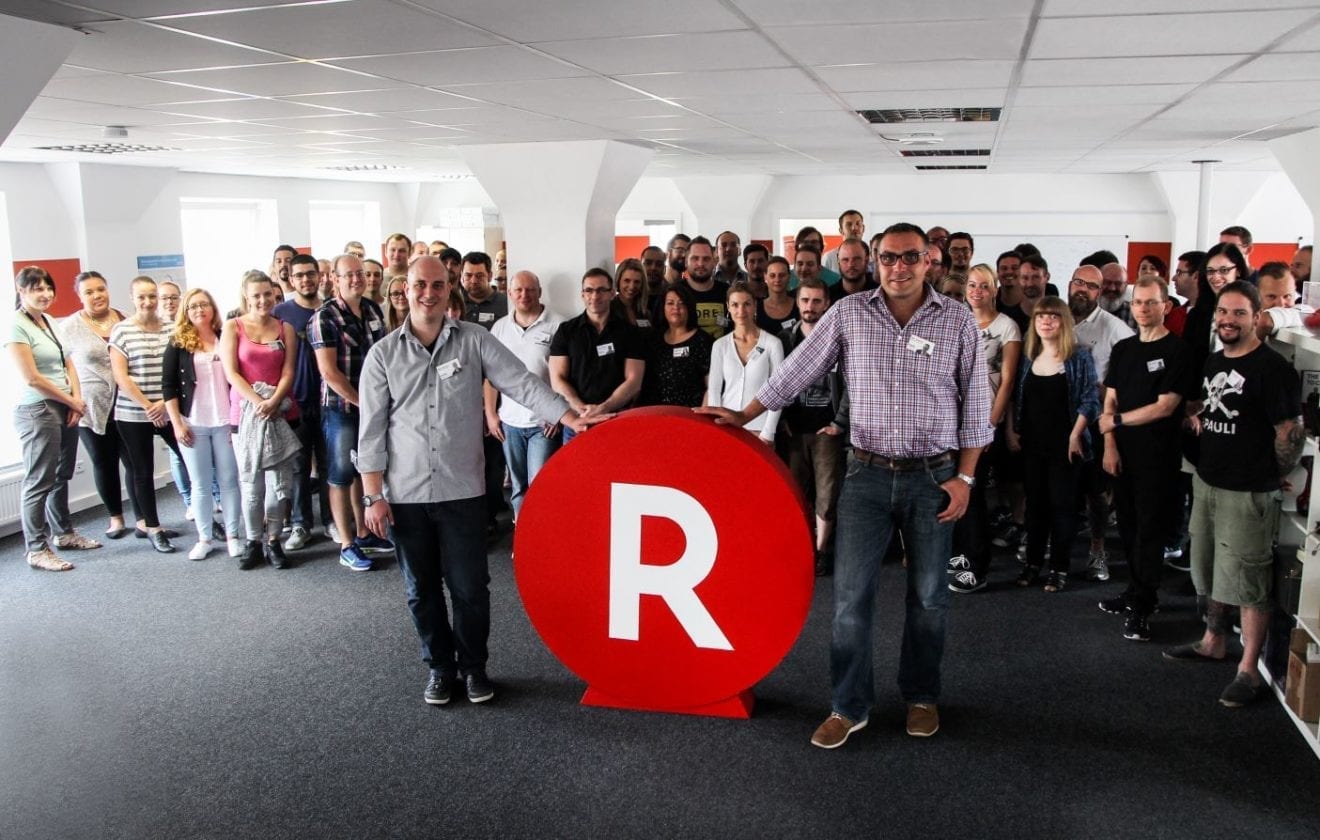
    As part of its plan to become the country’s fourth mobile carrier, Japanese e-commerce giant Rakuten is teaming up with a handful of local electric utilities to leverage the latter’s infrastructure and facilities to build its own 4G mobile network in Japan.

    The e-commerce firm signed an agreement last week with Kansai Electric Power Co that enable Rakuten to utilize the utility firm’s transmission towers, utility poles, telecoms towers and other facilities and equipment for its planned 4G network.

    At present, Rakuten operates as a mobile virtual network operator (MVNO) leasing network capacity from market leader NTT Docomo. The company announced last December its intention to enter the mobile network operator (MNO) business and has applied to Japan’s Ministry of Internal Affairs and Communications for a mobile license to build its own 4G network operating on the 1.7-GHz and 3.4-GHz bands.

    If the frequency band allocation is granted, Rakuten said, it plans to make use of Kansai Electric Power’s transmission towers, utility poles, telecoms towers and other infrastructure in and around Japan’s Kansai region for its base station locations.

    As well as Kansai Electric Power, Rakuten also signed similar agreements with Chubu Electric Power Co and TEPCO Group in March, in a bid to build its mobile network in the most efficient way.

    Rakuten, which plan to invest up to ¥600 billion ($5.6 billion) to build the mobile network, said it will also consider similar tie-ups with other electricity utilities to achieve nationwide service coverage, as it prepares for entry into the MNO business.

    Rakuten launched its MVNO business under the Rakuten Mobile brand in October 2014.  As of January 2018, Rakuten Mobile has over 1.5 million MVNO subscribers.

  • Teletalk to launch 4G in August

    Teletalk to launch 4G in August

    Bangladeshi state-owned operator Teletalk has announced plans to launch 4G services in August, six months after its private rivals.

    The company will initially limit its rollout to major cities.

    Teletalk has faced parliamentary criticism for its plans to invest just 2 billion taka ($23.8 million) of its own funds to deploy 4G services.

    According to the report, since inception  incumbent Grameenphone has invested 390 billion taka, Robi has invested 290 billion taka and Banglalink 192 billion taka, while Teletalk has only invested 38.4 billion taka.

    The operator has a minimal presence outside of capital city Dhaka, and parliamentarians have expressed concerns that it won’t be able to increase its presence and compete effectively without substantial investment.

    Teletalk has so far only revealed plans to upgrade around a quarter of its network sites to 4G. But the company insists it aims to ensure 4G coverage to 98% of the country’s geographical area by 2020, including every upazila (sub-district) by 2019.

    The operator also expects to be able to improve its active customer base from the current 4 million to 10 million by 2020.

    Teletalk secured a 4G license in February along with its larger rivals, but faced delays rolling out services due to a lack of funds.

  • Anant Kaewruamvongs to take helm at Thaicom

    Anant Kaewruamvongs to take helm at Thaicom

    Asian satellite operator Thaicom Public Company Limited (Thaicom) has appointed Anant Kaewruamvongs as chief executive officer and director of the board, effective May 1.

    Anant takes over from Paiboon Panuwattanawong, who resigns from his positions as director, member of the executive committee and CEO, after severing Thaicom for over 25 years.

    Commenting on the appointment, Thaicom chairman Prasert Bunsumpun said [PDF] Anant “is the right person to lead and move Thaicom forward.”

    “The Thaicom board of directors and I welcome Anant Kaewruamvongs as new CEO. We believe his extensive experience makes him the ideal candidate to lead the company as we navigate through the next stage of growth and diversification of our business,” said Prasert, who took over as chairman at Thaicom in March.

    He said Paiboon’s contributions and dedication to Thaicom and the Thai satellite industry have been “immeasurable”.

    “We would like to thank Mr. Paiboon for taking on the challenge as CEO and for steering the company to new horizons. He and his leadership team have successfully embarked on a difficult restructuring process of our business and organization during difficult times for the satellite industry and Thaicom,” Prasert said.

  • Vodafone India completes tower sale to ATC

    Vodafone India completes tower sale to ATC

    Vodafone India has taken another step towards the closure of its planned merger with Idea Cellular, after the company completed Tuesday the sale of its standalone tower business to ATC Telecom Infrastructure Private Limited (ATC) for 38.5 billion rupees ($592.9 million).

    The company announced in November 2017 that it plans to sell its tower business along with Idea Cellular’s to ATC for a combined $1.2 billion, as part of its plan to merge with Idea Cellular to form the largest mobile player in India.

    With the completion of the sale of Vodafone’s tower business, a similar announcement is expected from Idea Cellular in the coming months, Vodafone said in a company statement.

    “In the Vodafone India / Idea merger announcement of 20 March 2017, both parties announced their intention to sell their individual standalone tower businesses to strengthen the combined financial position of the merged entity. The merger is expected to complete in the first half of the current calendar year,” Vodafone added.

    “Completion of Idea’s sale of its standalone tower business to ATC is also expected in the first half of this calendar year.”

    In addition, Vodafone and Idea Cellular have also announced a new executive team to lead the merged entity, which will come into effect after the Vodafone India / Idea merger has been completed.

    Aditya Birla Group chairman Kumar Mangalam Birla will be the non-executive chairman of the merged Vodafone-Idea entity, while Vodafone India COO Balesh Sharma has been named CEO, Idea’s Akshaya Moondra CFO and his colleague Ambrish Jain COO, Vodafone said in a company statement released late March.

  • True taps Comarch for loyalty management

    True taps Comarch for loyalty management

    Thailand’s True Corporation has selected Comarch to help the operator overhaul its loyalty management services.

    True – parent company of mobile operator TrueMove H, ISP True Internet and cable TV provider TrueVisions – will use Comarch’s solution to replace its legacy in-house application True You.

    True You Loyalty is one of the most successful loyalty programs on the Thai market with around 11 million members. The operator has decided to replace its present application with a more future oriented and expandable solution to enhance flexibility and help support further growth.

    Comarch plans to complete the deployment in stages, with the first of these expected to be operational in the fourth quarter.

    In addition, the solution will be expandable in the future to allow for upgrades including gamification, business intelligence or managed hosting services.

    True You Loyalty is a unit of True Corporation’s digital arm True Digital and Media Company. Other units under this umbrella include True Mobile Applications and True Digital Content Business.

    Comarch is a Polish IT business solutions provider with employees in 30 countries. The company was founded in 1993.

  • Globe commissions pre-fab data center

    Globe commissions pre-fab data center

    Prefabricated data center provider Flexenclosure has secured a multi-million dollar order to build a facility for the Philippines’ Globe Telecom.

    Flexenclosure will provide its eCentre modular prefabicated data center product to the operator for deployment on the island of Mindanao.

    The data center will be assembled and tested at Flexenclosure’s manufacturing plant in Sweden before being shipped to the Philippines for on-site construction. It is expected to be fully operational by early in the third quarter.

    The company is delivering the contract in partnership with Manila-based system integrator Orissa Wicomm.

    Globe CTO and chief strategy officer Gil Genio said the company plans to use its new data center to support its efforts to ramp up capacity and provide innovative new services for its customers in the broadband, enterprise and consumer segments.

    “We are committed to delivering market-leading services to our customers; on the network infrastructure side, this means flexible, modular and low cost,” he said.

    “Our new data center in Mindanao… employs this modular architecture that allows us to rapidly add infrastructure with growth.”

    The deal marks Flexenclosure’s first project in the Philippines but is the latest in a line of recent wins in Asia-Pacific, which included projects in Australia, Palau, Samoa, Fiji and Myanmar announced last year.

  • NBTC reverses decision on 1800-MHz spectrum split

    NBTC reverses decision on 1800-MHz spectrum split

    Thai regulator NBTC has reversed a decision to split the 1800-MHz spectrum due to be reallocated in a spectrum auction into nine 10 MHz blocks.

    The regulator plans to revert to the plan to instead auction the spectrum in three 30 MHz lots.

    The about face was motivated by complaints from operators that the decision to carve the spectrum into 10 MHz blocks would hurt their long term business strategies, and to bring the upcoming auction in line with the two previous 1800-MHz auctions in 2015.

    Meanwhile JAS Mobile Broadband has been banned from participating in the planned auction after it defaulted on its first license payment in 2016.

    The 1800-MHz spectrum due to be allocated in the auction is currently used by private operator Dtac as part of its old concession agreement with state-owned CAT Telecom. But this concession is set to expire at the end of September, before the auction is planned, potentially leaving Dtac without the required spectrum to maintain service continuity for customers.

    Dtac has insisted that there will be no disruption, but the operator is facing a profit hit as a result of the decision. One option would require Dtac to operate using remedy measures, which would require it to transfer all earnings after expenses to the government as a result of being able to continue operating without a license for the required spectrum.

  • Singaporeans interested in biometric authentication

    Singaporeans interested in biometric authentication

    Singaporeans are interested the use of biometric methods to verify identity (97%) and make payments (96%), while recognizing that biometrics are faster, easier and more secure than traditional passwords, according to a recent Visa survey on biometric authentication for payments.

    The survey titled “Biometrics in Payments: Singapore” was conducted by AYTM Market Research late last year. Respondents consisted of 500 adult consumers in Singapore who used at least one credit card, debit card and/or mobile payment method.

    According to the survey, more than half of the respondents have already used at least one form of biometric authentication including fingerprint recognition (88%), facial recognition (56%), iris scanning (50%) and voice recognition (49%). Among the range of biometric solutions, consumers were most familiar with fingerprint recognition, with 51% of them using it regularly.

    Survey results showed one in five Singaporeans currently use fingerprint authentication or facial recognition from their respective banks or mobile phone providers. For those who have not used biometric authentication, 91% stated that they would be likely to use fingerprint or facial recognition authentication from their banks in future.

    More than half (55%) of the respondents agree that the use of biometrics eliminates the need to remember and key in multiple passwords, and PINs, for their respective accounts. Forty one per cent said that biometric authentication is more secure compared to passwords and PINs as they can better confirm individual identities.

    Singaporeans believe that fingerprint recognition is the most desired biometric authentication, followed by eye scanning and facial recognition for both online payment and in-store purchases. For online payment authentication, Singaporeans are keen to use it for large purchases (more than $100) and small purchases (under $100), and transfer of funds to family. The preference is similar for in-store purchases, including using biometric authentication to pay for a meal at the bar or restaurant and buy tickets for transportation.

    Mandy Lamb, Group Country Manager, Regional Southeast Asia for Visa, said, “Singaporeans are early adopters of technology and many of them already have experience with biometrics authentication. With the proliferation of biometric authentication solutions used by mobile providers and banks, Singaporeans recognize the value these new technologies bring to their everyday lives. As the country continues its Smart Nation journey, we believe more people will start to adopt biometric authentication.”

  • India imposes import duty on smartphone components

    India imposes import duty on smartphone components

    The Indian government has introduced a 10% import duty on key smartphone components as part of its ongoing efforts to stimulate local handset and component manufacturing.

    The new duty covers PCBs, camera modules and connectors and is likely to increase prices of mobile phones for companies that do not source these components locally.

    In February, the government introduced a 20% basic customs duty on imports of full mobile phones, as well as duties of between 5% and 20% on components including LCD panels, PCBs for chargers, lithium batteries and other components including keypads, battery packs and antennae.

    The report notes that currently more than 80% of phones sold in India are assembled locally, and sales volumes for mobile phones made in India are projected to improve 55% this year. Major contract manufacturers including Foxconn, Wistron, Flex and several Chinese handset makers have established local manufacturing to reduce costs.

    But Samsung remains the only major brand to locally assemble PCBs, which account for around half the cost of manufacturing a handset, prompting the government to attempt to stimulate market growth.

  • IT leaders aim to “consumerize” cloud access

    IT leaders aim to “consumerize” cloud access

    The proliferation of cloud applications and use of a disparate range of devices within businesses has led nearly two-thirds (64%) of IT leaders and their security teams to consider implementing consumer-grade access to cloud services for employees, finds new research from Gemalto.

    Surveying more than 1,000 IT decision makers globally, Gemalto’s 2018 Identity and Access Management Index revealed that the majority (54%) believe that the authentication methods they implement in their businesses are not as good compared to those found on popular sites including Amazon and Facebook.

    With a growing number of cloud apps in use, more employees working remotely and pressure mounting to make authentication stronger while ensuring ease of use, IT decision makers are keen to ‘consumerize’ the login process. In fact, 70% of IT professionals believe that authentication methods applied in the consumer world can be applied to secure access to enterprise resources.

    Despite this, 92% of IT leaders express concern about employees reusing personal credentials for work. This comes as 61% admit that they are still not implementing two-factor authentication to allow access to their network, potentially leaving themselves vulnerable to cyber criminals.

    At the same time, there seems to be increasing recognition that new approaches to cloud access can contribute to alleviating these issues. 62% of respondents believe that cloud access management tools can help simplify the login process for users, while 72% stated that a strong consideration for implementing a cloud access solution is the desire to reduce the threat of large scale breaches.

    The fact that 61% of respondents also stated that inefficient cloud identity management would be a key factor in adopting a cloud access management solution shows that scalability and management overheads are also of high concern to IT professionals, Gemalto said.

    “These findings clearly show that IT managers are struggling to balance the need for a simple and easy login experience with security,” said Francois Lasnier, SVP Identity and Access Management at Gemalto.

    “While there is a need to make things easier for employees, there is a fine line to be walked. IT and business line managers would do best to figure out the risks and sensitivities associated with the various applications used in their organizations and then use access management policies to manage risk and apply the appropriate authentication method. In this way, they can ensure a convenient login experience for their users, while still maintaining access security.”

    With the growth in remote working, the cloud and secure access to applications have become important for organizations. As a result, almost all (94%) respondents believe that cloud access management is integral to adopting cloud applications.

    In fact, nine in 10 also feel that ineffective cloud access management can lead to issues for their company, such as security (52%), IT staff’s time being used less efficiently (39%) and increased operational overheads and IT costs (38%).

    Despite this focus on protecting cloud applications, just three of the 27 applications used on average by organizations are protected with two-factor authentication.


  • Telstra launches 5G-powered Wi-Fi hotspots

    Telstra launches 5G-powered Wi-Fi hotspots

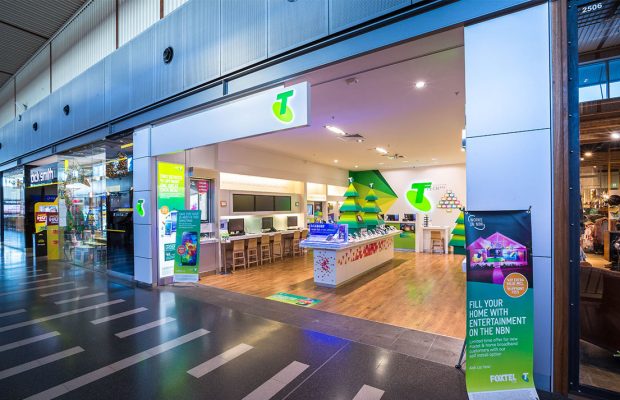
    Australia’s Telstra has launched what it says are the first 5G-enabled Wi-Fi hotspots in the world as part of its ongoing evaluation of 5G technology.

    The new hotspots on the Gold Coast in Queensland will provide locals and visitors with access to free broadband services during the evaluation period. The open hotspots will provide up to 10GB of downloads per device per day.

    They will be managed by Telstra’s recently-launched 5G innovation center on the Gold Coast. Telstra has connected 5G backhaul and related infrastructure in the Southport Exchange in the city to allow connections to the 5G network over Wi-Fi on existing devices.

    “Wi-Fi has limited throughput so a single hotspot alone cannot come close to reaching the limits of 5G at our Innovation Center,” Telstra group managing director for networks Mike Wright said.

    “By using multiple hotspots with potentially hundreds of smartphone users served through a single 5G device we are able to get closer to demonstrating 5G in a real world environment. Our 5G backhaul is capable of delivering download speeds of more than 3 Gbps.”

    Telstra is also using its new 5G innovation center to power a connected car trial using the Intel 5G Automotive Trial Platform.

    Wright said the trial is in the very early stages of development but the company is still achieving download speeds approaching 1Gbps inside the car, which is also equipped with a Wi-Fi access point.